2023 is coming to a close, so I’d like to take stock of some great music I’ve enjoyed over the past 12 months. These are my personal favorites, not the official list of Spirit of Cecilia (but we have reviewed quite a few of them!)
#10 – Haken: Fauna
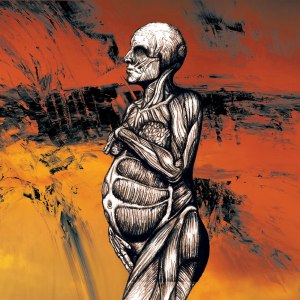
Have these guys ever made a bad record? I don’t think so. No band better combines heaviness with soaring vocals and great melodies. There are moments of true beauty – the intro to “Nightingale” – alongside blistering guitar-driven rock – “Beneath the White Rainbow”. And the artwork is a total hoot!
#9 – Galahad: The Long Goodbye
Brad Birzer and I reviewed this excellent album recently here at Spirit of Cecilia. You can read our thoughts on it here.
#8 – Downes Braide Association: Celestial Songs
I know that Yes released a new album in 2023, but I ended up listening to this one much, much more. I think Geoff Downes is saving his best songs for DBA, and Chris Braide is the perfect collaborator for him. This is a uniformly excellent set of pop-prog songs. Majestic, intimate, and altogether pleasing to the ear. Also, it features one of Roger Dean’s finest album covers.
#7 – Cyan: Pictures From The Other Side
Again, Brad Birzer and I reviewed this one recently. It is a rerecording of earlier songs, but what a fine set of songs to work with! You can read our thoughts on it here.
#6 – Kite Parade: Retro
I reviewed this delightful album back in April. What a fun blast of “retro” sounding songs that please the power pop lover in me.
#5 – Bruce Soord: Luminescence
This offering from the Pineapple Thief’s frontman impressed Carl Olson, Brad Birzer, and me so much that we posted a discussion of it back in early November. Check it out here.
#4 – Riverside: ID.Entity
Our own Erik Heter wrote a masterful review of this phenomenal album in January. I couldn’t possibly improve on it, so check it out here.
#3 – Glass Hammer: Arise
Glass Hammer is a perennial favorite of Spirit of Cecilia, and Arise continues their streak of excellence. Steve Babb and company blast off for a very spacey adventure in this album. You can read my detailed review of it here.
#2 – North Atlantic Oscillation: United Wire
It is Brad Birzer’s and my firm belief that Sam Healy is a musical genius. United Wire confirms that belief. You can read our discussion of this wonderful suite of songs here.
#1 – Southern Empire: Another World
I only recently was able to listen to this, Southern Empire’s third album, and it has not left my CD player and car stereo. What an achievement! Sean Timms has really come into his own as a composer, and wow, what a terrific sound he and his group create here. Sean Holton is the vocalist now, and he is amazing. The 20-minute epic “White Shadows” is the finest song I have heard in a long, long time. The overall feel of the album reminds me of Spock’s Beard when they had Neal Morse writing all of their material. Another World is one of those rare albums that I can listen to multiple times in a row and not tire of it. In a year of incredibly good music, Southern Empire has jumped out to lead the pack.
Well, that’s it for another year. If I sat down to do this again tomorrow, I’d probably come up with a different one (that included, perhaps, Steven Wilson’s Harmony Codex, Steve Thorne’s Malice in Plunderland, Katatonia’s Sky Void Of Stars, or Damanek’s Making Shore)!
Happy New Year, and thank you for following us at Spirit of Cecilia!
Brad Birzer, Carl Olson, and Tad Wert are all big fans of Bruce Soord (check out Brad and Tad’s earlier dialog on the deluxe reissue of The Pineapple Thief’s first 7 albums!). Bruce has released his third solo album, Luminescence, and so, of course, we had to share our thoughts on it.
Tad: Brad and Carl, I really enjoy Soord’s solo work; sometimes I think he saves some of his best songs for it! They tend to be more lowkey and relaxed than his music with The Pineapple Thief – more straightforward rock/pop. I’ve been listening to Luminescence quite a bit, and I find it very charming. “Olomouc” is a winner, in my opinion, with its lush string accompaniment. On the other hand, the stripped-down (and aptly titled) “So Simple” is a real gem of acoustic beauty that ends too soon. What are your first impressions?
Carl: Gents! A couple of quick thoughts about Soord’s impressive, beautiful album. I expected it to be “good,” but I’ve become a bit obsessed with it, having now listened to it at least 30 times or more. The songs are subtle, but perfectly constructed. The playing and production are both exceptional: warm, intimate, engaging. There are a lot of layers, but also a lot of space, which is no small feat sonically. I especially like the combination of electronica sounds and beats with acoustic guitar (see “Lie Flat”). Vocally, Soord is both understated and emotive in perfect pitch (both musically and emotionally). Who knew a “prog” guy would create such a remarkably good pop album?
Brad: Tad and Carl, great to be talking with you both! And, what a beautiful album to discuss. I only started listening to it about a week ago, but I’ve been listening to it non-stop. Carl, I will admit, I’m not surprised that Soord–a prog guy–could create such a remarkably good pop album. The album, for what it’s worth, reminds me very much of mid-period Tears for Fears, especially Raoul and the Kings of Spain. Soord, like Roland Orzabal, is really a master of mixing beautiful melodies in complex ways. Tad, I think “charming” is exactly the right word for this album.
Carl: I cannot speak to the Tears for Fears comparison (although I completely believe you!), but will bring up two artists that this album brings to mind, in very positive ways. The first is Charlie Peacock, a very eclectic American singer, songwriter, producer, keyboardist, etc., who is known for his work in contemporary Christian music, but has worked in jazz, country, Americana, and more. He’s a brilliant producer/writer, as can be heard on the 2021 album “Skin and Wind,” which mixes electronic and acoustic instrumentation—including strings—brilliantly, in the service of concise songs filled with longing and questioning, just like Soord’s fabulous album. The other is the better-known Duncan Sheik, especially his first three albums (1996, 1998, and 2002), which were quite successful commercially. Their voices are similar, and songs such as Soord’s “Instant Flash of Light” is very “Sheik-ish,” right down to the really lovely small chamber strings. These comparisons are, in my book, very high compliments.
Tad: Holy cow, Carl, your evocation of Charlie Peacock brought back some nice memories! I was very much into his music in the early to mid-90s, and now that you mention it, there is a lot of similarity between his style and Soord’s. And, Brad, you also made a connection I hadn’t thought of, but is very true: TFF’s Raoul and the Kings of Spain is a worthy ancestor and influence of this album.
Carl, you mentioned Soord’s use of electronica, and I’d like to jump off of that to say a little bit about another song I really, really, like: “Nestle In”. It begins with a police siren wailing, and as it becomes slightly distorted, a gentle wash of electronica begins to pulse. Soord’s vocals are mixed up front, and if you listen on headphones, it’s as if he were singing right at your shoulder. Whoever is playing drums on this track is outstanding – beautiful fills as Soord sings “The storm is approaching/And no one dares to look”. The distorted siren returns, and the song is over. I know my description makes it sound like it is cacophonous and noisy, but it isn’t at all. It’s oddly comforting, as a song entitled “Nestle In” should be.
Brad: Tad, the first time I heard “Nestle In,” I was immediately sure that a police car had just passed by, and I offered up a quick prayer for the person involved in whatever altercation there might be!
Then, I realized my mistake.
Also, Tad, I should note that I think both Orzabal and Soord share an absolute earnestness in their music. I especially think the influence is strong with Tears for Fears’ “Falling Down,” arguably the most earnest (the beautiful) song Orzabal has written.
Carl, thanks, too, for such good insights. I’m not familiar with the artists you mentioned, but it sounds like I should be.
I must admit, as much as I love the entire Soord album, I’m most partial to the album opener, “Dear Life.” The song just immediately grabs me and wants me/begs me/asks me to listen to the rest of the album.
I like the lyrics, too:
This sight
Barely changed
Just the shadows cast over our remains
With the wounded leaves
We’re still clinging on for dear life
Don’t wish it away
Don’t wish that it will all be over
In the sweetest blink of an eye
This light
The reddest glow
Barely time to dry those saddest eyes I know
After all we have seen
We’re still clinging on for dear life
For this dear life
They’re not only nice lyrics, but they match the music, perfectly.
Carl: All three of us had a similar experience with “Nestle In”! I live in the country and we never heard police sirens. But when the song first came on, I was out of my chair and opening the door: “What is that…?” I continued to be really riveted by the combination of intimacy and space in this album. Tad, you highlighted this perfectly in saying it’s like Soord is singing at your shoulder. It would be fascinating to talk to Soord about how he recorded and produced the album. It sounds so incredibly good.
Every song is excellent, but “Lie Flight” is probably my favorite, at least at the moment. It’s deceptively simple, but with a wonderful drums/bass sound that really locks you in. I tend to like lyrics that allow multi-interpretations/levels, and these certainly fit the bill:
Finally I’ve made some sense of it all
How could I not have known this all before?
I’m coming home
Is it too late for me?
It plays so differently with one eye on the soul
It could be about a romantic relationship. Or could it be about something more spiritual, pertaining to God and transcendence? “It plays so differently with one eye on the soul” is so good; it’s both simple and very mysterious. And maybe that’s this album’s greatest attribute: it’s immediate and accessible, but really mysterious at the same time.
Tad: Okay, since we began this discussion, I bought a hard copy of Luminescence (if I find an album I really love, I don’t trust streaming services to keep it always available). I’ve had some time to go over the lyrics, and they seem to be documenting the collapse of a relationship. There is a consistent theme of loss and regret running through every song. However, I like the tack you take, Carl, and I’m going to assume there’s a higher yearning involved here.
Also, that drummer I singled out for praise is Soord himself! The only instruments he doesn’t play are the strings that accompany him on several songs.
I have one more thing to add to our conversation – I have fallen in love with two songs near the end of the album: “Stranded Here”, and “Read to Me”. To my ears, they go together, because the acoustic guitar line from the former flows seamlessly into the latter. Soord has overdubbed a couple of acoustic guitars in this mini-suite, and their interplay is simply wonderful.
Gentlemen, it looks like this is a good place to wrap things up. Gentle readers, please take our advice and give Bruce Soord’s Luminescence a listen!
Here’s the video for the first single, “Dear Life”:
The Pineapple Thief has just released a huge box set that reissues its first five albums along with two bonus albums. It’s entitled How Did We Find Our Way, and it includes remixed and remastered versions of Abducted At Birth, One Three Seven, Variations On A Dream/8 Days, 10 Stories Down/8 Days Later, and Little Man. There is also a Blu-ray disc that has 5.1 and Atmos mixes of seven albums. The discs come in a beautiful 64 page hardcover book with enlightening notes for every album from Bruce Soord, Jon Sykes, and Steve Kitch, as well as reminiscences of the band’s early years by French journalist Julien Monsenego.
Brad Birzer and Tad Wert are so excited about this release, they decided to do a joint dialogue/review:
Tad: Brad, it’s good to be doing another music review with you!
I already had all the albums in this set from the versions KScope Music released earlier. However, based on the fact that there are quite a few unreleased bonus tracks in this new set, as well as the surround sound mixes, I bit the bullet and bought it. I have to say, I do not have any regrets! The new mixes are fantastic – they really open up the soundstage and allow every instrument to be heard clearly. What led you to splurge on it?
Brad: Dear Tad, my friend, it is great to be doing these reviews with you again. Too much time has elapsed since our last such outing. I blame myself–the summer has been wonderfully crazy. Wonderful, but crazy! Anyway, very glad we’ve got the band–so to speak–back together.
I’ve been a huge fan of The Pineapple Thief and Bruce Soord ever since Tightly Wound came out in 2008. That was my introduction to Soord’s music. So, coming up on fifteen years now. That album, pop rather than prog, demonstrated to me the brilliance of Kscope. I thought (and still think) that Soord created a genius album, a pop masterpiece, with Tightly Wound. From there, I began to explore The Pineapple Thief’s music, going backwards in time. Much to my joy, I found that I loved everything the band had done up to that point, but I was especially taken with One Three Seven and What We Have Sown (not included in this package). Little Man, too, really grabbed me. You might remember that 3000 Days came out right after Tightly Wound. Though I’m not generally a “greatest hits” or compilation kind of guy, I loved 3000 Days, and it certainly introduced me to the best of Soord’s music.
As to How Did We Find Our Way. . . I actually own all the early The Pineapple Thief cds as well, but I was happy to spend the money on these remixed and remastered versions, and I especially wanted the blu-ray. So, I asked for the set for Father’s Day! What are dads for???
Let me also state, at this point in our dialogue, that I absolutely love Kscope’s packaging. When Porcupine Tree released their latest last year, I was sorely disappointed that they went with a company (Sony) other than Kscope. I bought the album, of course, and I loved it, but I was very disappointed with the packaging. Kscope, though, always does things with excellence, and I now have a very tidy collection of releases in this earbook (is this the right term) format from Gazpacho, The Pineapple Thief, and others.
Tad: Brad, it looks like our Pineapple Thief experience is remarkably similar. I too first heard them via KScope’s release of Tightly Wound, and I enjoyed it so much I sought out their earlier releases.
Okay, on to the current set: as I mentioned earlier, I think it’s worth buying just for the new mixes. In addition to them, though, we also get to hear all of these classic albums in 5.1 mixes, which is wonderful! I spent an entire afternoon reading and listening to them, and it was as if I was hearing them for the first time.
Also, there are quite a few very good bonus tracks that were not included on any of KScope’s reissues. One of my all-time favorite songs of Soord’s is Watch the World Turn Grey, which was included on the infamous 12 Stories Down – the album that Soord quickly pulled from the market because of mastering issues. It’s a beautiful little gem of a song that, for some reason, he never included in any reissue or compilation.
In the liner notes, Soord mentioned that, while going back and remixing his back catalog, he had neglected some songs that were actually quite good. Yes, Bruce! I’m glad we now have a complete set of early TPT tunes.
Speaking of the liner notes, I learned so much about the early history of The Pineapple Thief. I was really surprised to discover that the first three albums were basically solo albums recorded in his home. In the original albums’ credits, he made up names of musicians to make it look like The Pineapple Thief was a real group!
When Variations On A Dream was reissued by Kscope, I reviewed it on Amazon, and I wrote that Soord’s music would appeal to fans of minimalist composers like Steve Reich, Philip Glass, and Arvo Part. Sure enough, in his commentary here for that album, he says that seeing an ensemble performing some Reich compositions was an important formative experience for him.
Before this set, if I had to pick a favorite early Pineapple Thief album, I would go with Variations On A Dream. However, after my marathon listening session, I am now thinking Little Man is the best. It takes on real emotional heft for me, now that I know the context in which it was written and recorded. In his commentary, Soord explains it was put together in the aftermath of the tragic loss of his prematurely born son.
Are you able to pick a favorite, Brad?
Brad: Tad, thanks so much for your enthusiastic and very interesting response. Great that we came to the band at the same time. Obviously, the band’s switch to Kscope introduced them to an entirely new audience.
You ask what my favorite album is. I must admit, I’m not entirely sure. I’ve been listening to these albums for at least fifteen years, so they kind of have become just a part of my life, at least autobiographically speaking. Re-listening to them again, especially in this new package, I find that I’m still relatively neutral when it comes to ranking them. That is, they all seem rather extraordinary to them.
Of this new set, though, I can state unhesitatingly that my favorite music are/is the “leftover” albums–Eight Days and Eight Days Later. I love the idea that Soord spontaneously recorded each of these after finishing massive album projects. There’s something deeply special, original, and wholesome about music so created. It’s almost like giving rock a jazz-sheen.
Before we finish this review and dialogue, I also want to note that I’m a rather proud The Pineapple Thief fan. This set shows that Soord was inventive from the beginning and that he possessed, again from the beginning, an immense amount of integrity. It makes the more recent albums–I especially love Your Wilderness–shine even more. Truly, Soord has progressed, but really from excellence to excellence.
Tad: I agree that there is something very fresh and endearing about the Eight Days and Eight Days Later albums. In my aforementioned Amazon review from many years ago, I made the same point. Soord seems to work well under pressure, when he isn’t able to “fix” every little detail of the songs. I think that works to their benefit.
Brad, thanks again for resurrecting with me our dialogues on music. And thank you, Spirit of Cecilia followers for reading! We are already planning to discuss the recently released North Atlantic Oscillation album, United Wire, so stay tuned for that!
John Bassett was very active in the mid 2010s with his KingBathMat, solo, and Arcade Messiah projects. KingBathMat was a quirky prog group that released five excellent albums of melodic metal, while Arcade Messiah began as an instrumental outfit. AM has released a few EPs since 2016’s III, but Bassett is back with a vengeance in 2020, and it sounds like he never left. In fact, he has taken the best elements of KingBathMat and Arcade Messiah and melded them into a sleek prog-metal machine. He’s now working exclusively under the Arcade Messiah moniker, and their latest effort is The Host. It features his trademark gift for a memorable melody delivered with crunching guitars. If you like your prog rock on the heavy side while remaining hummable, then your can’t go wrong with Arcade Messiah’s latest.
Katatonia’s City Burials is their followup to 2017’s magnificent The Fall of Hearts. This is a set of songs that explore the sadness and sense of loss one gets as one realizes that the past is buried forever. “Behind The Blood” is a ferocious rocker in the tradition of past Katatonia, but the majority of tracks are more hushed and tender. Jonas Renkse’s vocals have never been more warmer and more expressive as they are here. “Vanishers” features a beautiful duet between Renkse and Anni Bernhard that is a highlight. Katatonia’s evolution from extremely dark metal to melodic prog has been fascinating, and City Burials is their strongest effort yet.
Speaking of evolutions, The Pineapple Thief has fully emerged from their Radiohead/minimalist origins, and with Versions Of The Truth they are now one of the finest prog/pop groups active today. In the early 1980s, The Police were one of the biggest groups in the world. Their secret power was letting Stewart Copeland’s drums take the lead, and having Andy Summers’ guitar provide the rhythm.
With Gavin Harrison, The Pineapple Thief have a percussionist as gifted as Copeland, and his drums are way up in the mix, propelling the entire project. Every song is credited to both Harrison and Bruce Soord, and these are the finest set PT has ever recorded. Gone are the 20+ minutes-long meandering explorations, to be replaced by perfectly crafted pop miniatures. Even the longest one – “Our Mire” at 7:26 – is a masterpiece of concision. Stylistically they range from the laconic “Driving Like Maniacs” to the pulverizing “Break It All”, and there isn’t a clunker in the lot.
Three albums, three winners. 2020 isn’t a total disaster!
Well, we’ve reached the end of the decade, and the end of our retrospective. Whew!
2019 proves that prog rock’s current renaissance is showing no signs of slowing down. We finish this decade with another year providing a surfeit of wonderful music. I’ve picked 11 representatives from 2019 for your listening pleasure. Here they are, in alphabetical order.
Big Big Train: The Grand Tour
Big Big Train went for the big ideas on this one. It’s loosely based on the concept of a “grand tour” that educated Europeans took in the 1700’s and 1800’s. They manage to pull together such disparate topics as St. Theodora, the poet Shelley, and the Voyager spacecraft. Believe it or not, it all works!
Cyril: The Way Through
Both Manuel Schmid and Marek Arnold are in Cyril, and I recently wrote a review of their excellent 2019 release, The Way Through. It’s about a man who has a near-death experience, and the struggles he has to overcome to reunite with his earthly body. A great prog effort!
Flying Colors: Third Degree
This supergroup just gets better and better. On their third album, Flying Colors branches out into a diversity of styles, and come up with one of the best of the entire decade. “Last Train Home” is my favorite, “Geronimo” is funky blast of fun, and “Love Letter” sounds like a lost Raspberries classic.
In Continuum: Acceleration Theory
In Continuum is another Dave Kerzner project that rose from the ashes of a planned Sound Of Contact reunion. It is a concept album about an alien who falls in love with a human, before Earth is scheduled to be destroyed. Kerzner recruited the cream of the crop to play on this, and it is a fine addition to his already impressive resume.
Izz: Don’t Panic
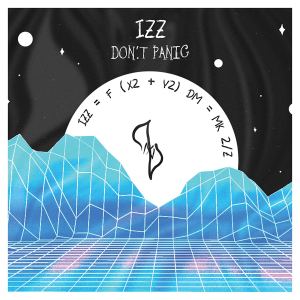
Izz released one of the most enjoyable albums of 2019. “42” is about Jackie Robinson breaking baseball’s color barrier. While “Age Of Stars” features interweaving vocals and a driving beat. Their previous album, Everlasting Instant, was good, but Don’t Panic has more focus and confidence.
Moron Police: A Boat On The Sea
Goofy name, amazing music! These guys sound like a hybrid ska/prog/new wave band with an incredible vocalist. They have terrific playing chops, and their ability to switch styles mid-song makes my head spin. I found them via Tony Rowsick’s indispensable Progwatch podcast, and you can’t beat them if you just want to have something fun to listen to. “Captain Awkward” is a great track to start with, if you’re curious.
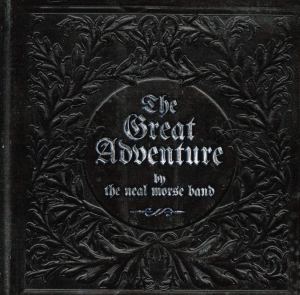
Neal Morse Band: The Great Adventure
The Neal Morse Band pick up the story where Similitude Of A Dream left off. In this installment, the son of the protagonist from Similitude must battle his own demons and find salvation. I actually like this album better than Similitude, because there is more variety in the songs. There are so many good ones, but “Vanity Fair” really stands out.
Pattern-Seeking Animals
Since Pattern-Seeking Animals consists of current and former Spock’s Beard members, you would expect this to sound somewhat Beard-like. However, the Pattern-Seekers come up with their own individual style that sets them apart. Ted Leonard is excellent on vocals and guitars, and John Boegehold steps up and takes a more visible role. “No One Ever Died and Made Me King” is the key track.
Bruce Soord: All This Will Be Yours
Often a much-loved album doesn’t make a positive first impression on me. That was the case with Bruce Soord’s (The Pineapple Thief) second solo album, All This Will Be Yours. On first listen, it is an unassuming set of songs, softly sung by Soord over a bed of mostly acoustic guitar and murmuring electronics. However, the more I listen to it, the more I am taken by it. “One Misstep” in particular is an engaging tune, with a mournful melody as Soord sings of his determination to make a broken relationship whole. As a matter of fact, I like this record better than the Thief’s much-acclaimed Dissolution, which was also released this year.
Tool: Fear Inoculum
This was the biggest news in progworld in 2019 – after more than a decade, Tool reunited and recorded this massive groove-laden record. All of the songs segue into each other, and the result is almost trance-inducing. I was not a huge fan of Tool’s early work, but I love this one. Maynard James Keenan seems to be rejuvenated these days (as last year’s Eat The Elephant illustrated), and that is good news.
Devin Townsend: Empath
After recording several albums with his Devin Townsend Project, Townsend decided to go solo for the highly personal Empath. Once again, his patented wall-of-sound production is in play, and his incorporates choirs, strings, and guitars. Lots of guitars. Devin can be inconsistent, but Empath is one of his best.
And that completes our look back at the decade from 2010 – 2019. There were some exciting new artists that emerged, like Damanek, Evership, Perfect Beings, and Southern Empire, while veterans like Big Big Train, Gazpacho, Glass Hammer, Katatonia, and Neal Morse released some of the best music of their careers. Several surprise reunions bode well for the future: it was great to see Kino, A Perfect Circle, Tool, and Slowdive back in action.
I hope this series of posts inspired you to check out somebody you may not have been aware of, or go back a revisit an old musical friend. If you are interested in hearing more prog news and music, check out the podcasts ProgWatch and The Prog Report. Both are excellent resources for learning about and hearing new music in progworld.
Merry Christmas, Happy New Year, and Happy New Decade!
XTC as Dukes. Does it get much better? Yes, Steven Wilson as Porcupine Tree remixes.
Tomorrow, our wonderful poet-in-residence, Kevin McCormick, is turning 52. Just a good deck of cards.
On November 22, the website turns one. How great is this? Too great, to be sure.
Very recently, some excellent music has shown up in the Spirit of Cecilia mailbox. New Flower Kings, new Cure (well, new live Cure), new Elbow, new old Peter Gabriel, and new old Dukes of Stratosphear. Some new Bruce Soord, too. A blessing of riches. If all goes well, Glass Hammer’s remixed and renewed LEX REX should show up tomorrow.
Reviews forthcoming. . .
And, of course, expect great pieces from Tad, Erik, Mahesh, Richard, and Alex and others! All to the good.



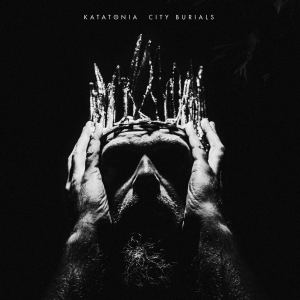 Katatonia’s City Burials is their followup to 2017’s magnificent The Fall of Hearts. This is a set of songs that explore the sadness and sense of loss one gets as one realizes that the past is buried forever. “Behind The Blood” is a ferocious rocker in the tradition of past Katatonia, but the majority of tracks are more hushed and tender. Jonas Renkse’s vocals have never been more warmer and more expressive as they are here. “Vanishers” features a beautiful duet between Renkse and Anni Bernhard that is a highlight. Katatonia’s evolution from extremely dark metal to melodic prog has been fascinating, and City Burials is their strongest effort yet.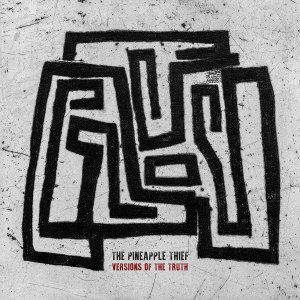







 Spirit of Cecilia
You must be logged in to post a comment.