
To complement Brad, Tad & Carl’s fine “Best of” selections, herewith a sampler of favorites and notable releases from the year in both classical music and jazz. As often as I drift away from both genres, I return to them on a regular basis — and it happened again to fine effect in 2024! Listening links are included in the album titles.
Highlights in Classical Music
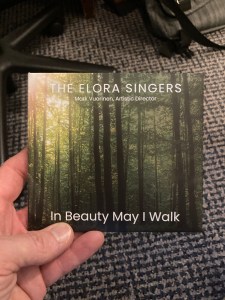
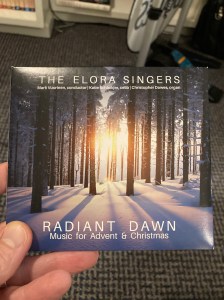
If you followed my series To the True North this past summer, you learned how impressed I was by Canada’s Elora Singers and their annual Festival. The Singers’ latest album In Beauty May I Walk was released in time for this year’s closing festival weekend; a collection of contemporary works drawing inspiration from the theme of revelation, it offers an absorbing balance of breathtaking precision and deeply felt emotion. Eriks Esenvalds “In Paradisum” and “Only in Sleep”, Jonathan Dove’s title piece and Stephanie Martin’s “A Frost Sequence” are highlights, but every composition (whether musing on nature, the search for God or time’s inevitable passage) draws in the listener and cuts to the heart. Never indulging in sentimentality, conductor Mark Vuorinen and the Singers nonetheless lay bare the human condition and affirm life’s inherent value; this is choral singing at its finest, and an official 2024 Favorite. (The Singers’ recent Christmas album Radiant Dawn is well worth hearing this time of year, too.)
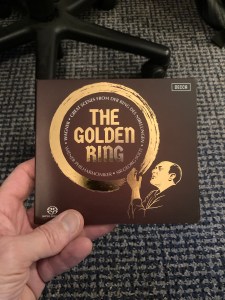
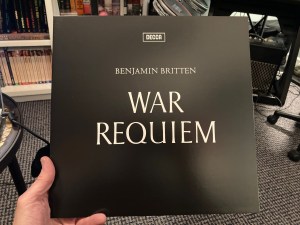
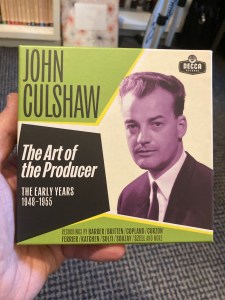
This year was the centennial of John Culshaw, who pioneered stereo recordings of opera and classical music as a producer for Decca Records in the decades following World War II. Unbeknownst to me, Decca had already completed new high-definition transfers of two Culshaw classics: the first complete set of Richard Wagner’s marathon operatic cycle The Ring of the Nibelungs (with the Vienna Philharmonic plus a bevy of postwar vocal talent, conducted by a young Georg Solti; consistently considered one of the recording industry’s greatest achievements); and the recorded premiere of Benjamin Britten’s War Requiem (the composer’s shattering anti-war masterwork, this album changed my life) — longtime Favorites which I snapped up new versions of straightaway. Now the actual centenary sees the release of John Culshaw, The Art of the Producer – The Early Years, 1948-1955. The first impression of this 12-disc set, recorded entirely in mono, is how fresh and vivid everything sounds; whether working live or in controlled conditions, Culshaw’s keen ear and finely honed production skills place you in the room with the performers. Wagner operas staged live at Bayreuth, Britten performing at his own Aldeburgh Festival and Samuel Barber conducting his music in the studio stand out, but even an underprepared Brahms German Requiem (with Solti squeezing the best he can out of overmatched forces) has its charms. Beyond sheer documentary value, this set demonstrates how essential Culshaw’s sonic discernment, organizational skills and empathetic rapport with artists was in developing the lifelike recorded sound we take for granted today.
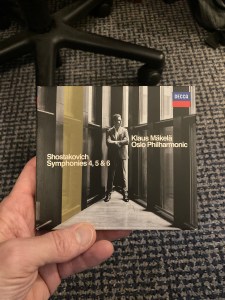
Even as it’s been swallowed up by one multinational conglomerate after another over the decades, Decca has maintained its commitment to both vivid, dynamic sound and talented artists in development. The latest case in point: the youthful Finnish conductor Klaus Mäkelä, who’s quickly made waves in the orchestral world with fully grounded yet remarkably fresh readings of 20th-century classics, from Jean Sibelius’ organically evolving symphonies to Igor Stravinsky’s kaleidoscopic early ballets. At the helm of the Oslo Philharmonic for Symphonies 4, 5 & 6 by quintessential Russian modernist Dmitri Shostakovich, Mäkelä reaches new heights: the 4th’s macabre, Mahlerian grotesquerie (suppressed for a quarter-century due to Soviet disapproval) and the 6th’s journey from ethereal beauty to dry, exhausted humor unfold relentlessly, while a less- pressurized-than-usual 5th revels in cool control that builds to an appropriately tumultuous climax, all captured for maximum impact. Recently headhunted to lead both Amsterdam’s Concertgebouw Orchestra and the Chicago Symphony (where I’ll be seeing him conduct next spring), Mäkelä is a classical superstar in the making, and this double set (definitely on the Favorites list) shows both his already prodigious skills and his rich potential.
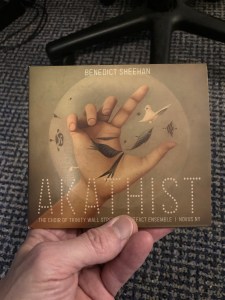
Finally, toward year’s end I stumbled across a wonderfully eclectic oratorio, Benedict Sheehan’s Akathist. Setting a lengthly Russian Orthodox prayer that literally thanks God for everything, Sheehan’s musical approach is anything but predictable: chant from both Western and Easter traditions rubs elbows with Baroque polyphony, Romantic impressionism, Gospel and jazz. And yet, the broad, inevitable arch of the piece readily encompasses the multiplicity of text and texture, gathering up protest against the wounds of the world, cameraderie as comfort amidst pain, and overwhelming gratitude for blessings great and small into a moving, integrated whole. The assembled forces of The Choir of Trinity Wall Street, Artefact Ensemble and Novus NY pull off this music with style and panache to spare. Not just a Favorite; if there’s an essential classical recording for 2024, I’d argue this is it.
(Highlights in jazz follow the jump . . .)
Continue reading A 2024 Coda: kruekutt’s Highlights in Classical & Jazz Spirit of Cecilia
You must be logged in to post a comment.