Phineas Finn is the second Anthony Trollope novel I’ve read (you can read my review of Can You Forgive Her? here), and the second in his Palliser series. In this novel, our hero, Phineas Finn, is a good natured, very attractive, and upstanding young man who is the son of an Irish country doctor. His father has paid his expenses while he studies under Mr. Low, a London barrister (lawyer). While dining at his club, young Finn is approached by his friend, Barrington Erle, and convinced to run for a seat in parliament for the borough of Loughshane. It’s a dead certainty he will win it, since there will be no serious opposition. The only problem is that members of parliament (MPs) do not get paid, and Phineas is entirely dependent on his father for his expenses!
Despite his father’s and Mr. Low’s very good arguments against running, Phineas decides to do it, and before he knows it, he is seated in Parliament. His longsuffering father agrees to continue his allowance until he can somehow figure out a way to pay his own way. Soon, he is swimming in the high society of London, but he manages to keep his head and remain humble. He becomes friends with another Irish MP, Laurence Fitzgibbon, a glib and somewhat dissolute young man who wastes no time convinces Finn to guarantee a bill for 250 pounds, assuring him that he will have the money in a couple of weeks, and there is nothing to worry about.
He also is befriended by Lady Laura Standish, who takes Phineas under her wing, because she sees such promise in him. She is another character of Trollope’s who illustrates the frustrating position upper class women in Victorian England were in: she is smart and well educated, and she has good ideas about what legislation should be passed by Parliament, but there is no way she can bring them to fruition, given she has no vote, let alone no way to run for parliament. Phineas is convinced he’s in love with Lady Laura and proposes to her, but she turns him down, because he is penniless, and she has given all of her money to her brother, Lord Chiltern, so he can settle some enormous debts he’s acquired through questionable life choices.
Lord Chiltern is a bit of a wild man – he despises social conventions and proper manners, preferring to spend his time hunting and traveling around England and Europe. He is in love with the beautiful Violet Effingham, who stands to inherit a large fortune when she marries. He has proposed to her three times (not very tactfully, it must be said), and she has flatly refused him because of his poor reputation and erratic behavior. To make things worse, Chiltern’s father has had nothing to do with him since his sister squandered her share of the family fortune to settle his obligations.
Lady Laura convinces Phineas to befriend Chiltern, in the hopes that he will be a moderating influence on him. They become friends, until Phineas meets Violet and decides he wants to marry her! The good friends become deadly rivals.
As a backdrop to all of this drama, Trollope chronicles all of the political intrigue involved in the passage of the Reform Bill of 1866. The reader is shown in exhausting detail how parliament works, and, by and large, it’s not pretty. What is interesting is how Finn, as a tyro MP, gradually gains confidence. At first, he is too terrified to even stand up and make a speech. Eventually, he finds his legs, and he becomes a trusted member of the Liberal party, led by the Prime Minister William Mildmay. Finn’s greatest asset is his ability to keep his mouth shut when necessary and to make pleasant conversation with the right people. Very soon, he is elevated to a paying position in the cabinet. Regardless of his rapid rise in society, he remains a very likeable character, due to his total lack of vanity.
As the novel progresses, Trollope uses various characters to illustrate different issues that were present in Victorian England. Phineas is an ambitious, yet talented and altruistic, young man from whose presence parliament would benefit, yet it is nearly impossible from him to affect legislation, even when he is made a government minister. The crisis of the novel occurs when he has to decide whether he will support a bill that will help his fellow Irish but goes against the policy of the governing party, of which he is a member. If he votes according to his conscience, he will be required to submit his resignation and lose his salary.
Lady Laura is the most tragic figure. Moments before Phineas proposes to her, she accepts Robert Kennedy’s offer of marriage. He is another MP, and one of the richest men in the UK. She feels that through him, she might be able to influence English politics. Unfortunately, Mr. Kennedy is an insufferable prig who insists Laura submit herself to the proper duties of a wife and have no independence at all. Their marriage degenerates to the point where they can barely communicate.
“Laura”, he said, “I am sorry that I contradicted you.”
“I am quite used to it, Robert.”
“No; – you are not used to it.” She smiled and lowered her head. (ii, p. 109, Oxford Univ. Press Ed., 1991)
There is also a Madame Marie Goesler, a wealthy German widow, who moves in the highest circles of London society, but feels trapped by the fact that she can do nothing but attend parties and host them herself.
Phineas becomes very good friends with Joshua Monk, a “radical” MP who helps Phineas get his confidence during his first term in parliament. Mr. Monk, though, when he is offered and accepts a post in the government by the Liberals, loses his effectiveness as a debater, because he is forced to support the Liberals’ policies, even when he disagrees with them.
Trollope paints a fascinating and detailed picture of how politics worked in Victorian England. There was much frustration at the demands placed upon MPS to toe the party line, yet enforcing party discipline was the only way to get important legislation passed. Like today, opposing parties had to compromise, and everyone gave up something to get something in return. Near the end of the book, Monk’s and Finn’s bill to help Irish tenants fails on the second reading. Finn is dejected, but Monk makes this observation:
“Many who before regarded legislation on the subject as chimerical, will now fancy that it is only dangerous, or perhaps not more than difficult. And so in time it will come to be looked on as among the things possible, then among the things probable; – and so at last it will be ranged on the list of those few measures which the country requires as being absolutely needed. That is the way in which public opinion is made.” (ii, p. 341)
Like almost all Victorian novels, Phineas Finn is long – 712 pages in the edition I read. However, it is an interesting complement to Charles Dickens’ David Copperfield, another tale of a self-made young man. While Dickens was the master of chronicling the travails and triumphs of England’s lower and middle classes, Trollope gives us accurate portraits of what it was like to move in the highest social strata of Victorian society. He isn’t afraid to point out the contradictions and injustices of the governing class, yet all of his characters are real. Phineas Finn is amazingly successful at first, but he has his flaws. His fellow MPs all exhibit human foibles – they each have good qualities as well as lesser ones. However, it’s the female characters that are the most fleshed out by Trollope – he has sincere sympathy for the plight they are in. They have very limited choices: either marry or be an “old maid”, but in neither case can a woman be an active political force. And once a young woman marries, she has no rights to any property or personal agency. If a young woman is due to inherit wealth, there is no guarantee she will be allowed to use it to live independently. However, lest one think Phineas Finn is all angst and frustration, Trollope sprinkles a lot of humor to leaven the drama. At heart, he loves his country and its people.
There are lots of free digital versions of Phineas Finn (you can download a nicely formatted one here.), but I really appreciated my Oxford University Press edition, because it had lots of helpful notes that explained the political events that were occurring at the time the novel is set in, as well as the meanings of slang phrases, references to other literary works, etc. I’ve read two of the six Palliser novels, so I guess I’d better get ready to tackle Phineas Redux next!
Vanity of vanities, says the Preacher, vanity of vanities! All is vanity. What does man gain by all the toil at which he toils under the sun? A generation goes, and a generation comes, but the earth remains forever. – Ecclesiastes 1:1-3
Imagine being a woman on the threshold of adulthood – ready to set out and make a life for yourself. For a woman in late nineteenth century Nebraska, that likely means marrying and settling down on your own farm. But then your father’s dying wish is that you carry on his life’s fruitless endeavors. He unshackles the albatross from his neck and chains it to yours, since your brothers have no imagination and your mother wishes she had never left her home country. And you have a young brother you must now essentially raise as your own child. A burden far too much for a 20-year-old woman to bear.
Willa Cather’s O Pioneers! masterfully portrays the ruggedness of a harsh landscape as it was broken and transformed by the blood, sweat, tears, and lives of European immigrants who moved to America in search of something better than they had. Cather’s depiction of their lives suggests they didn’t find it, but maybe they made a better life for their grandchildren, although the emergence of the Dust Bowl a few decades after this book ends suggests they didn’t. In fact, their very efforts to remake the landscape likely caused the ecological disaster that ensued, which then spurred a new emigration, this time to California. In the end, their efforts to remake the land were futile. Their life’s work literally blown away on the wind.
O Pioneers! is generally thought of as an homage to the strength of the American prairie and the strength of the people who supposedly conquered it. At face value, that is true. At the time of publication (1913), the widespread drought to hit the American prairie region was still decades away. It is also often held up as a pillar of feminist triumph, with a strong female lead who is fiercely independent in her efforts to tame the land. That is a superficial and ultimately inaccurate reading, since Alexandra Bergson ultimately realizes her life’s meaning cannot be found in toiling over the land or crunching numbers in an account book.
Cather’s greatest strength in this novel is her ability to say so much with so few words. This brevity reflects the openness of her prairie home. She’ll often use brief phrases in the voices of her characters to make brief but deep statements, often in the mouth of Carl Linstrum, Alexandra love interest. Carl is the one who leaves the Divide as a teenager once his family decides to give up and return to St. Louis. Carl spends his life drifting, working as an engraver and dabbling in art. As an aside, that gave me a chuckle as my Swedish great-grandfather Oscar Engstrom worked as an engraver, and I grew up surrounded by his framed watercolors. Though he died before my grandparents even met, he has cast a long shadow over me, inspiring my own interest in watercolor.
Perhaps Cather is reflecting herself in Carl’s character as someone who left Nebraska yet found herself haunted by it, as evidenced in her work. One of Carl’s more poignant quotes is telling:
Freedom so often means that one isn’t needed anywhere. Here you are an individual, you have a background of your own, you would be missed. But off there in the cities there are thousands of rolling stones like me. We are all alike; we have no ties, we know nobody, we own nothing. When one of us dies, they scarcely know where to bury him. Our landlady and our delicatessen man are our mourners, and we leave nothing behind us but a frock-coat and a fiddle, or an easel, or a typewriter, or whatever tool we got our living by.
All we have ever managed to do is pay our rent, the exorbitant rent that one has to pay for a few square feet of space near the heart of things. We have no house, no place, no people of our own. We live in the streets, in the parks, in the theaters. We sit in restaurants and concert halls and look about at the hundreds of our own kind and shudder.”
– O Pioneers! – Part II, Chapter IV
Today we might leave behind a smartphone, a video game console, and a pantry full of mass-manufactured chemicals masquerading as food. Apart from that, little has changed. We live lives of brutal obscurity. At best we might wave at our neighbors while taking the dog out, but deep down we know we won’t be missed when we move from one apartment to another or one job to another. We are cogs in a machine. Rolling stones that gather no moss. Carl (and Cather) comment on the same obscurity and brutality of life that Steven Wilson brilliantly analyzed in his album Hand. Cannot. Erase. just over 100 years after Cather wrote O Pioneers! Nothing is new under the sun.
Cather had the opportunity to experience both the ruggedness of the open land and the suffocating closeness of the city. She writes as someone who knows the futility of city life firsthand. And yet she never moved back to Nebraska, despite multiple novels ostensibly romanticizing rugged prairie life.
Or is she really romanticizing it? She did leave, after all, something her main character wanted so strongly for her little brother, Emil. Having not grown up in the Great Plains, I can’t exactly relate to Cather’s nostalgia. (I grew up in northern Illinois, though, and I will likely always have a soft spot in my heart for the flat fields of corn speckled with farms and distant treelines.) Yet after reading O Pioneers! I am left with a torn sentiment of the landscape so masterfully described, conquered, and lived in. It seemed to keep its more thoughtful inhabitants enthralled. They both hated and loved it. Both Alexandra and her father seemed to love it passionately, yet it is clear Alexandra is yoked to it.
As the book rolls through Alexandra’s life, the reader begins to wonder what she has to show for it? Yes, she has tamed the land, and she has even shown herself to be shrewd with business. She saw the potential her father saw in the land that others missed and even abandoned in hard times, buying their plots on credit and paying off the debt once the land soared in value. But beyond the land and some employees, what does she have? Two brothers who can’t stand her and another brother who doesn’t fit with the landscape, much like her lost, found, lost, and found again lover, Carl. She has no family of her own, no meaningful life beyond the day-to-day existence. It’s as if she, like her deceased father lying in his grave, is being swallowed up by the land while still alive. What is the point of her life? To continue fighting the land and the stubborn people who inhabit it?
Same old song Just a drop of water in an endless sea All we do Crumbles to the ground though we refuse to see
Dust in the wind All we are is dust in the wind
– Kansas (Kerry Livgren) – “Dust in the Wind”
Every time Carl walks back into Alexandra’s life, a subtle sense of regret pops up, as if she knows life has more to it than what she has created. She wishes she could go with him wherever he might go, live how he lives, be with the only man who ever seemed to understand her. From the get-go in this story, he’s the only other character besides Emil who seems to have a strong sense of empathy (he rescues little Emil’s kitten from a telegraph pole on a blustery winter day). And yet his sensitivity is what makes those around Alexandra dislike him. Her brothers call her foolish for considering marriage at the age of forty.
Sadly it takes extreme tragedy for Alexandra to finally break free from the yoke her father placed on her and make her own choice. Or more accurately, it was an outside force that broke the yoke – the murder of Emil and Marie. Once this yoke is gone, then Carl is willing both to return and to stay, something he never seemed able to do before. While the story ends on the rosier implication that Alexandra has finally found peace with her lover returning to the Divide, she actually finds that peace a couple chapters earlier. The death of Emil rocks her world unlike anything else she has experienced. Her emotional breakdown culminates in her being caught out in an evening storm in the graveyard at the graves of her father and brother. Her friends find her and bring her home and put her to bed. As she nods off, she revisits a dream she has had repeatedly since her youth, yet this time the dream is fulfilled:
As she lay with her eyes closed, she had again, more vividly than for many years, the old illusion of her girlhood, of being lifted and carried away by some one very strong. He was with her a long while this time, and carried her very far, and in his arms she felt free from pain. When he laid her down on her bed again, she opened her eyes, and, for the first time in her life, she saw him, saw him clearly, though the room was dark, and his face was covered. He was standing in the doorway of her room. His white cloak was thrown over his face, and his head was bent a little forward. His shoulders seemed as strong as the foundations of the world. His right arm, bared from the elbow, was dark and gleaming, like bronze, and she knew at once that it was the arm of the mightiest of all lovers. She knew at last for whom it was she had waited, and where he would carry her. That, she told herself, was very well. Then she went to sleep.
O Pioneers! – Part V, Chapter I
This passage is the most important in the book, yet it is very easy to miss or dismiss: a dream following an exhausting physical and emotional experience. Yet Cather writes that this has been a recurring dream for Alexandra, one that only now in the midst of tragedy is made clear. Alexandra finds her peace, meaning, and purpose in the true source of peace, meaning, and purpose – Jesus Christ.
Why, might you ask, do I conclude that Cather is referring to Jesus in this passage? Let’s look at the description of Jesus in His glory as seen in the book of Revelation:
Then I turned to see the voice that was speaking to me, and on turning I saw seven golden lampstands, and in the midst of the lampstands one like a son of man, clothed with a long robe and with a golden sash around his chest. The hairs of his head were white, like white wool, like snow. His eyes were like a flame of fire, his feet were like burnished bronze, refined in a furnace, and his voice was like the roar of many waters. In his right hand he held seven stars, from his mouth came a sharp two-edged sword, and his face was like the sun shining in full strength.
– Revelation 1:12-16 (ESV)
Cather’s description of this “mightiest of all lovers” mirrors the description of Christ from Revelation. The description of his skin as a bronze color is a direct reference, and I think that is the clear giveaway. Everyone else in this story is almost assuredly of extremely fair skin. The major characters are either Scandinavian or Bohemian, not races known for dark complexions. In Cather’s description, this individual is shown with a white cloak that “was thrown over his face.” The description of Jesus in Revelation explains why his face might need to be covered in this interaction with Alexandra: eyes like a flame of fire and a face shining like the sun in full strength. Not exactly something which someone experiencing traumatic emotions would want to be confronted.1
With this encounter with Jesus, Alexandra is changed. Following this she travels to the prison in Lincoln to visit her brother and friend’s killer and offer him forgiveness. The grip the land has over her is loosened, allowing her finally to open her heart to Carl Linstrum and embrace the beauty, meaning, and purpose God gives us with love and marriage. Her breakdown in the cemetery and encounter with God in a dream shows her that what really matters is far more than what we build and grow with our hands and sweat. The people we love and the connections we make is what matters. How we treat others, how we care for those who need it, how we treat the world around us: those are things that matter. No matter what we build, it won’t ultimately give us the satisfaction we seek, no matter where we live or what we do. Carl Linstrum was right: “there are only two or three human stories, and they go on repeating themselves as fiercely as if they had never happened before; like the larks in this country, that have been singing the same five notes over for thousands of years” (Part II, Chapter IV). Or as Solomon put it, “there is nothing new under the sun” (Ecclesiastes 1:9).
I came to this conclusion before consulting any secondary readings on O Pioneers! Some literary scholars (but not all) disagree with what I believe is an obvious interpretation of this passage. Many critics identify the person Alexandra sees in her dream as Death, going so far as to say that she had a death wish. David Stouck says as much, using rather bizarre language to describe the transformation Alexandra undergoes after the dream: “The final possibility of a marriage between Carl and Alexandra is perhaps sheer wish-fulfillment on the author’s part (that desire to be united with the eternal mother), but it is always held in perspective by the repeated account of Alexandra’s dream wherein only the mightiest of all lovers can carry her off, that lover being identified towards the end of the novel as none less than Death” (Stouck, 30). This is a remarkably inaccurate reading of this passage, especially considering how Alexandra’s behavior changes in the aftermath. Maire Mullins points out that it is following this dream that Alexandra goes to visit Frank Shabata in prison to offer him forgiveness for killing Emil and Marie. Mullins rightly recognizes the Christlike imagery in this dream. Mullins interprets the earlier dreams as Alexandra wrestling with her suppressed erotic desires. She argues that Alexandra spends the majority “of her life sublimating the erotic power that lies within her,” focusing on her farm instead. When she had these dreams Alexandra would try and block them out by taking a vigorous bath, even literally pouring cold water over herself in an effort to scrub out any hint of sexuality. Mullins accurately acknowledges the presence of Christ in the ultimate satisfying dream that Alexandra has, but she oddly claims the dream merges Christianity with Native American myths, a theme she tries to draw from other parts of the text. I believe this is reading something into the passage that simply is not there. Further, she limits the transformative power of Christ in Alexandra’s life. Mullins concludes that this encounter in the dream allows her to forgive Shabata and finally connect with Carl Linstrum through “the conscious connection to the erotic and spiritual power within.” This is the problem with the overarching feminist theory Mullins applies to her reading from the beginning of her article. It discounts the power of Christ to truly transform a person’s desires, instead limiting it to some vague sense of self-realization where Alexandra accepts her sexuality. In actuality, she finds the peace and meaning she has been searching for all along, finding that it is not in the land or in the sexuality she seeks to repress. It is in Jesus. With that ultimate realization, she is finally able to let Carl into her life since his presence will not impact her value or worth, just like her impact on the land will not impact her value or worth. Those things are inherent through her relationship to God. ↩︎
Works Cited
Mullins, Maire. “Alexandra’s Dreams: ‘The Mightiest of All Lovers’ In Willa Cather’s ‘O Pioneers!'” Great Plains Quarterly 25, no. 3 (2005): 147–59. http://www.jstor.org/stable/23533606.
Stouck, David. “O Pioneers!: Willa Cather and the Epic Imagination.” Prairie Schooner 46, no. 1 (1972): 23–34. http://www.jstor.org/stable/40629091.
All Hallows Eve is Charles Williams’ seventh novel, and one of his best. In 2024, I began working my way through all of the novels of this member of The Inklings, the famous literary group of friends that included J. R. R. Tolkien and C.S. Lewis. Williams’ fiction is definitely darker and more philosophical than the writings of either of the his more well known colleagues.
All Hallows Eve begins with a startling scene: a young woman, Lester Furnival, is standing on a street in nighttime London, and there are none of the usual sounds and traffic around her. She soon realizes that she is dead. She and a friend, Evelyn Mercer, were supposed to meet each other for a get-together, but they were killed by a plane crashing into the area. It appears that Lester and Evelyn are in some sort of purgatory – they can interact with each other, but they do not perceive any other beings. The only way they know it’s night is when the lights come on in the houses around them. There is no sun or moon, just a diffuse, gray light.
Back in the land of the living, Lester’s grieving husband, Richard, visits his artist friend, Jonathan Drayton. Drayton is a talented painter who shows Richard his latest work: a painting of a charismatic religious leader who goes by the moniker Simon the Clerk, or Simon Leclerc. It has been commissioned by Lady Wallingford, a devoted disciple of Simon. Jonathan Drayton is in love with her daughter Betty, but she will not allow them to get engaged.
Lady Wallingford drops by to view the painting, and she is extremely disappointed. In her eyes, Simon looks malevolent, and the people in the congregation look like insects. Later, Simon himself visits Drayton to view the painting, and he proclaims it a masterpiece that captures him perfectly.
What follows is a very dark tale of necromancy and all-consuming greed for power. Simon was conceived and born during the French revolution, and he has plans for world domination that involve breaking through to the spiritual plane where Lester and Evelyn are. Lady Wallingford’s daughter, Betty, is the hinge through which this will happen. Things get very creepy as the story unfolds – I was put in mind of Rosemary’s Baby as the pieces fell into place.
As a favor to Jonathan, Richard Furnival agrees to attend a meeting of Simon’s followers, and see if he is legitimate. Simon uses some sort of spell to put everyone under his will. At the end of the meeting, Simon speaks to Richard, and Richard recounts their disturbing conversation to Jonathan:
“He [Simon] said: ‘I won’t keep you, Mr. Furnival. Come back presently. When you want me, I shall be ready. If you want your wife, I can bring her to you; if you don’t want her, I can keep her away from you. Tell your friend I shall send for him soon. Good-bye.” So then I walked out.
He lifted his eyes and looked at Jonathan, who couldn’t think of anything to say. Presently Richard went on, still more quietly: “And suppose he can?”
“Can what?” asked Jonathan gloomily.
“Can,” said Richard carefully and explicitly, “do something to Lester. Leave off thinking of Betty for a moment; Betty’s alive. Lester’s dead, and suppose this man can do something to dead people?
CHARLES WILLIAMS. All Hallows’ Eve (Kindle Locations 1850-1855). Delphi Classics. Kindle Edition.
As the story unfolds, there is a contrast between the characters who grow and mature, and the ones who degenerate. Betty, who is initially a slave to Simon’s will, gradually comes into her own and is able to resist him. Lester also matures spiritually as she learns to navigate the purgatory she is in. Both she and Richard remember their brief marriage, regret the mistakes they made, and come to a much deeper love than they had when she was alive. Even Jonathan’s art takes on a life of its own, becoming more transcendent.
On the other side, Lady Wallingford becomes less and less of an individual with actual agency, Evelyn undergoes a horrific degeneration into petty hatred, and Simon Leclerc reaps the rewards of his dark magic.
All Hallows Eve is one of Williams’ most accessible reads, as well. In a few of his earlier novels, particularly Descent Into Hell, his prose was very dense and unwieldy, and his dialog hard to follow. Every conversation in All Hallows Eve is terse and to the point. I thoroughly enjoyed this novel, even though it creeped me out at times. I wonder if the creators of Netflix’s Stranger Things are familiar with it, since there are definite similarities in the basic premise of both tales. Anyway, for fans of fantasy with a very dark edge (but a happy ending), I highly recommend All Hallow Eve.
I know it’s been a while since I posted a book review, but I have a good excuse – my latest book is Leo Tolstoy’s War and Peace! Why did I choose to tackle this famously large tome? Well, I read War and Peace many years ago when I was a senior in college. One of my roommates was a Russian Studies major, and he got me hooked on Russian literature: Tolstoy, Dostoyevsky, and Bulgakov, primarily. I decided to reread War and Peace to see if the benefit of age and experience would increase my appreciation of it. I can definitely say “Yes” to that question!
My immediate takeaway is what a wonderful job Tolstoy does of describing his main characters’ development and maturation. The story revolves primarily around two families, the Rostovs, and the Bolkonskys. The Kuragins and Pierre Bezukhov are also major players. My Kindle edition had a helpful listing of the main characters, which I printed out and referred to often:
BEZUKHOVS
COUNT Cyril BEZUKHOV.
PIERRE, his son, legitimized after his father’s death, becomes Count Peter BEZUKHOV.
Princess CATICHE, Pierre’s cousin.
ROSTOVS
COUNT Ilya ROSTOV.
COUNTESS Nataly ROSTOVA, his wife.
Count NICHOLAS Rostov (Nikolenka), their elder son.
Count Peter ROSTOV (PETYA), their second son.
Countess VERA Rostova, their elder daughter.
Countess Nataly Rostova (Natasha), their younger daughter.
SONYA, a poor member of the Rostov family circle.
BERG, Alphonse Karlich, an officer of German extraction who marries Vera.
BOLKONSKYS
PRINCE Nicholas BOLKONSKY, a retired General-in-Chief.
PRINCE ANDREW Bolkonsky, his son.
PRINCESS MARY (Masha) Bolkonskaya, his daughter.
Princess Elizabeth Bolkonskaya (LISE), Andrew’s wife.
TIKHON, Prince N. Bolkonsky’s attendant.
ALPATYCH, his steward.
KURAGINS
PRINCE VASILI Kuragin.
Prince HIPPOLYTE Kuragin, his elder son.
Prince ANATOLE Kuragin, his younger son.
Princess HELENE Kuragina (Lelya), his daughter, who marries Pierre.
OTHERS
Princess Anna Mikhaylovna Drubetskaya.
Prince BORIS Drubetskoy (Bory), her son.
JULIE Karagina, an heiress who marries Boris.
MARYA DMITRIEVNA Akhrosimova (le terrible dragon).
BILIBIN, a diplomat.
DENISOV, Vasili Dmitrich (Vaska), an hussar officer.
Lavrushka, his batman.
DOLOKHOV (Fedya), an officer and desperado.
Count Rostopchin, Governor of Moscow.
ANNA PAVLOVNA Scherer (Annette), Maid of Honour to the ex-Empress Marya Fedorovna.
Shinshin, a relation of Countess Rostova’s.
Timokhin, an infantry officer.
Tushin, an artillery officer.
Platon KARATAEV, a peasant.
So what can I possibly add to all that’s been written about one of the most famous works of literature ever? Well, first of all, I’m not sure exactly whatWar and Peace is – it’s not strictly a novel, even though one could say that Pierre Bezukhov is the “hero” of it; it’s sort of an historical account of Napoleon’s invasion of Russia, covering the period from 1809 – 1813; it’s a philosophical treatise where Tolstoy uses various characters to espouse his religious and sociopolitical beliefs. Which is why, I think, War and Peace is such an enduring classic: the reader can enjoy it on multiple levels.
Superficially, it’s an adventure story. As it becomes clear that war with Napoleon is inevitable, all the young men in Russia are thrilled for the opportunity to display their bravery. Battles are grand fun:
“Now then, let’s see how far it will carry, Captain. Just try!” said the general, turning to an artillery officer. “Have a little fun to pass the time.” “Crew, to your guns!” commanded the officer. In a moment the men came running gaily from their campfires and began loading. “One!” came the command. Number one jumped briskly aside. The gun rang out with a deafening metallic roar, and a whistling grenade flew above the heads of our troops below the hill and fell far short of the enemy, a little smoke showing the spot where it burst. The faces of officers and men brightened up at the sound. Everyone got up and began watching the movements of our troops below, as plainly visible as if but a stone’s throw away, and the movements of the approaching enemy farther off. At the same instant the sun came fully out from behind the clouds, and the clear sound of the solitary shot and the brilliance of the bright sunshine merged in a single joyous and spirited impression.
LEO TOLSTOY. War and Peace (Kindle Locations 3473-3482). Delphi Classics. Kindle Edition.
However, it isn’t long before we are plunged into the horrific chaos and carnage that occurs during the battle of Borodino. No one knows what they are supposed to be doing, and men are getting slaughtered by bullets and cannonballs. Over and over again, Tolstoy explains that Napoleon and the Russian Supreme Commander, Kutuzov, are not in control of events, but merely fulfilling roles that the moment requires. As a matter of fact, in the second and final epilogue, Tolstoy spends fifty pages exploring the paradox of humanity exercising free will in a universe that seems to be moving with inevitability towards some end. Tolstoy believes that a benevolent God is in control, and he doesn’t give much credit to “great men” like Napoleon for affecting history.
As I mentioned earlier, Tolstoy uses characters to illustrate various beliefs. Pierre is the main person who develops and matures throughout the book. In the opening scene, he is at a fashionable salon party, and it is clear he is out of his depth. Everyone around him is having witty conversation and impressing each other. Pierre is physically large and clumsy, and verbally uncultured. To top things off, he is the illegitimate son of the fabulously wealthy Count Bezukhov. Also at this party is Prince Andrew Bulkonsky, who is another main character. He is married to Lise, who fits right in with fashionable Petersburg high society. Andrew, however, despises that social scene, and he no longer loves his wife.
The other main family are the Rostovs. The father, Count Ilya Rostov, is very popular in Moscow high society, because he and his wife throw extravagant parties. Unfortunately, they cannot afford them, and are increasingly mired in debt. The elder son, Nicholas, goes off to war as a superficially principled but callow youth. In one scene, he takes offense at something Prince Andrew says, but the older and wiser prince puts him in his place:
“And I will tell you this,” Prince Andrew interrupted in a tone of quiet authority, “you wish to insult me, and I am ready to agree with you that it would be very easy to do so if you haven’t sufficient self-respect, but admit that the time and place are very badly chosen. In a day or two we shall all have to take part in a greater and more serious duel, and besides, Drubetskoy, who says he is an old friend of yours, is not at all to blame that my face has the misfortune to displease you. However,” he added rising, “you know my name and where to find me, but don’t forget that I do not regard either myself or you as having been at all insulted, and as a man older than you, my advice is to let the matter drop.
LEO TOLSTOY. War and Peace (Kindle Locations 5253-5256). Delphi Classics. Kindle Edition.
Fortunately, as Nicholas gains experience in battle, he matures into a fine young man, even rescuing Prince Andrew’s sister, Mary, who is caught between the advancing French forces and rebellious serfs.
Nicholas’ sister, Natasha, is another major character. Early in the story, she is a charming 13-year-old who already turns heads. She is beautiful, talented, and sincere. As the book progresses, she undergoes trials that forge her into a strong and outstanding person.
All of these characters will come into contact with each other and separate multiple times, each time having undergone some degree of transformation and maturation.
Pierre is the one person who undergoes the most varied trials. Before his father, Count Cyril, dies, he makes Pierre legitimate so that he can inherit his estate. Suddenly, all of Petersburg high society that previously looked down on him, decides he is now the most fascinating man in Russia! He is taken under Prince Vasili Kuragin’s wing and married to Vasili’s daughter, Helene. Vasili takes advantage of Pierre, using his wealth to pay off his family’s debts, while Pierre’s marriage to the beautiful Helene is a disaster. There is no love on either side, and Pierre’s friend, Dolokhov, has an open affair with Helene.
Pierre dabbles in Masonic philosophy, then devotes himself to reforming his estates so that his serfs are treated better, then lives a life of dissipation with a group of high-living men. None of these satisfy him. He then gets caught in the middle of the horrifically bloody battle at Borodino. It isn’t until he spends time as a prisoner of the French and becomes friends with the wise and stoic peasant, Platon Karataev, that Pierre finally finds peace.
Meanwhile, there is a war going on! The French consider themselves to be invincible, and after they take the city of Smolensk, they turn to Moscow. They incur enormous losses at Borodino, but the Russians lose even more men. However, the French have been dealt a mortal blow. Even though the Russian general retreats beyond Moscow and leaves it undefended, he knows that the French are on their last legs.
There is a humorous scene where Napoleon marches triumphantly into Moscow, only to find it deserted. He can’t find any official delegation to surrender to him. He is disappointed and angered that the Russians didn’t fall at his feet the way the Austrians and Prussians did. The French soldiers disperse and begin sacking the city, while fires spring up everywhere. All military discipline is gone, and Napoleon realizes he is like a dog who has caught the car: he doesn’t have the resources to govern an ungovernable people. So, he turns and flees back to France. The rest of the book details the privations the Russian people and the ragged French armies undergo while the French retreat in chaotic fashion.
War and Peace is a fascinating, sprawling work that tries to capture an entire people’s character in a time of extreme distress. Most of the book’s characters are drawn from the Russian upper class, so they, for the most part, have no worries about money. They all own serfs, who are portrayed as happy and content with their lot. Throughout the book, each character wrestles with timeless questions: “What is the purpose of life?”, “How should a virtuous person live?” At one point, Tolstoy writes of Pierre,
He had the unfortunate capacity many men, especially Russians, have of seeing and believing in the possibility of goodness and truth, but of seeing the evil and falsehood of life too clearly to be able to take a serious part in it.
LEO TOLSTOY. War and Peace (Kindle Locations 11631-11633). Delphi Classics. Kindle Edition.
By the end of the tale, though, Pierre has peace and the answers to his anguish:
He could not see an aim, for he now had faith — not faith in any kind of rule, or words, or ideas, but faith in an ever-living, ever-manifest God. Formerly he had sought Him in aims he set himself. That search for an aim had been simply a search for God, and suddenly in his captivity he had learned not by words or reasoning but by direct feeling what his nurse had told him long ago: that God is here and everywhere. In his captivity he had learned that in Karataev God was greater, more infinite and unfathomable than in the Architect of the Universe recognized by the Freemasons. He felt like a man who after straining his eyes to see into the far distance finds what he sought at his very feet. All his life he had looked over the heads of the men around him, when he should have merely looked in front of him without straining his eyes.
In the past he had never been able to find that great inscrutable infinite something. He had only felt that it must exist somewhere and had looked for it. In everything near and comprehensible he had only what was limited, petty, commonplace, and senseless. He had equipped himself with a mental telescope and looked into remote space, where petty worldliness hiding itself in misty distance had seemed to him great and infinite merely because it was not clearly seen. And such had European life, politics, Freemasonry, philosophy, and philanthropy seemed to him. But even then, at moments of weakness as he had accounted them, his mind had penetrated to those distances and he had there seen the same pettiness, worldliness, and senselessness. Now, however, he had learned to see the great, eternal, and infinite in everything, and therefore — to see it and enjoy its contemplation — he naturally threw away the telescope through which he had till now gazed over men’s heads, and gladly regarded the ever-changing, eternally great, unfathomable, and infinite life around him. And the closer he looked the more tranquil and happy he became. That dreadful question, “What for?” which had formerly destroyed all his mental edifices, no longer existed for him. To that question, “What for?” a simple answer was now always ready in his soul: “Because there is a God, that God without whose will not one hair falls from a man’s head.”
LEO TOLSTOY. War and Peace (Kindle Locations 23766-23782). Delphi Classics. Kindle Edition.
War and Peace is deservedly a literary classic. It engages the reader, and forces him or her to wrestle with difficult questions. At the same time, it’s a lot of fun to read – I found myself truly caring about Andrew, Natasha, and Pierre, as well as a host of lesser characters. There’s a reason some works survive for centuries; they address, in an entertaining way, the eternal questions that humanity has been asking since time began.
I mentioned at the beginning of this post that I originally read War and Peace when I was 21 and in college. At the time, I enjoyed it because it was full of adventure and intrigue with some humor and romance thrown in. Now that I am on the downhill side of my life, I have a much greater appreciation for what Tolstoy is trying to convey. Life is so much more than worrying about what others think of you, or how much wealth you have accumulated. The Epilogue of War and Peace is one big joyous celebration of family: the delight of raising small children, the pleasure of good conversation with friends and relatives, the mutual love and respect of husband and wife. Tolstoy’s vision of the good life is one that we should still aspire to.
“One ought, every day at least, to hear a little song, read a good poem, see a fine picture, and, if it were possible, to speak a few reasonable words.” ― Johann Wolfgang von Goethe, Wilhelm Meister’s Apprenticeship
That’s certainly is my motto FOR THE GOOD LIFE.
And this shall be for music when no one else is near The fine song for singing, the rare song to hear! That only I remember, that only you admire Of the broad road that stretches and the roadside fire!
(R L STEVENSON)
***
O I had ance a true love, now I hae nane ava; And I had three braw brithers, but I hae tint them a’. My father and my mither sleep i’ the mools this day – I sit my lane amang the rigs, aboon sweet Rothesay Bay.
It’s a bonnie bay at morning, and bonnier at noon, But bonniest when the sun draps and red comes up the moon. When the mist creeps o’er the Cumbraes and Arran peaks are gray, And the great black hills, like sleeping kings, sit grand roun’ Rothesay Bay.
Then a bit sigh stirs my bosom, and wee tear blin’s my e’e, And I think of that far countrie wha I wad like to be. But I rise content i’ the morning to wark while I may – I’ the yellow har’st field of Ardbeg, aboon sweet Rothesay Bay.
This old Scottish song, which I have known for most of my life, reminds us there is beauty in this world but also sadness, loneliness, loss, and separation. But we should rise content each morning to work and study while we may and if we have lost loves and homelands we should be grateful that we have known friendship and love.
Working as a tour guide in Segovia Spain in the early 1980s. AMOR BRUJO TOURS and TRANSLATIONSI don’t have a lot of cash on hand but I always have a leather purse with $20 worth of half dollars at hand and I have a bag with about $150 of change hidden away. I don’t normally carry a lot of cash. Most of my purchases are by credit card. I never use a debit card.
I have a chance for a long life.
Already I am grateful for the years I have lived (mostly in good health). I am 68 years old and older than many people I worked with, studied with or loved. I have known people who died in their teens, in their twenties, in their thirties in their forties, in their fifties, and in their early sixties. I once saw a Sea Knight Helicopter fly away and cursed the fact I was not on it. It hit bad weather and crashed about 15 minutes later 23 Marines were killed including some people I knew. Our company commander canceled our trip and we had to march more than 20 miles back to camp in bad weather. Sometimes as Auld Pop used to say your number is up.
One lesson I have learned in life is that the body is a fragile vessel and that we are all mortal. Every day of good health is a gift. I think being married has kept me reasonably happy and healthy. Choosing a good spouse is one of the most important decisions one can make for one’s happiness and health. I have been married for almost forty-two years to my best friend of the last fifty years. John Joseph Powell in The SECRET OF STAYING IN LOVE wrote: “It is an absolute human certainty that no one can know his own beauty or perceive a sense of his own worth until it has been reflected back to him in the mirror of another loving, caring human being.”
Yes, no one can know true happiness unless they know the love of a husband and wife or of a child. I know when I first saw my grandchildren it was love at first sight! I do believe in enthusiasms and love at first sight.
Yes, no one can know true happiness unless they know the love of a husband and wife or of a child. I know when I first saw my grandchildren it was love at first sight! I was happy the day I was married -but not as happy as my parents I think and I was happy when our children were born -a very special gift for which I am eternally grateful- but there is no joy like the surprise or extra-inning gift of grandchildren. Children mean sacrifice and a lot of hard work but they pay dividends a hundred times over. Hugh Heffner with his multitudinous and mostly sterile dud in the mud sex was really a chump, not a champion. He thought he knew what life was but wasted most of his life in hedonistic trivialities. He thought he knew what love was but he knew only a fraction of the Four Loves.
This is the actress MAUREEN O’ HARA (1939) as Esmeralda in the film HUNCHBACK OF NOTRE DAME. Who with eyes and heart in breast could not fall in love with such a smile?
To be happy one has to be in reasonable health. One has to have something to do with your time. So it is important to have hobbies and intellectual interests and a few good friends. One should be loved and have someone to love, have a roof over your head, some soup at the boil, some tasty food to eat, One needs plenty of water to drink and wash, One thing l learned is that one can go days even weeks of light eating but one cannot go very long without water. So water is my favorite beverage!
To be happy one has to have some dreams and something to hope for. Many of my personal dreams are unrealized but I had fun trying to achieve those dreams. I hiked many mountains I climbed many ruins in Sicily, Crete, Madeira, in Portugal, Spain, Scotland, Greece and Italy. I kissed a few pretty girls and they kissed me back. I have gone deep sea fishing in the Atlantic and Pacific. I played a lot of baseball and became in the words of a local athlete “decent”. I served honorably in the Marine Corps. I have published a few articles and one-act plays but never have written (a published book). I have written (privately) three volumes of essays and personal recollections that my daughter published. They are primarily for my grandchildren. I have taught many classes in history, literature, and languages and helped many students. I have coached sports teams and seen great athletes at play. All of our children and grandchildren are bilingual and were or are being raised as native speakers of Spanish and English.
I love monumental public memorials and sculptures though Shakespeare sang in the Sonnets of the immortality of literature:
“Not marble nor the gilded monuments
Of princes, shall outlive this powerful rhyme,
But you shall shine more bright in these contents
Than unswept stone, besmeared with sluttish time.”
When I visit the cemetery or war memorials, I walk past hundreds or even thousands of names that represent life stories now silenced forever.
Oh, they are the Silent Ones. May the many monuments that abound around the globe to those who have fought to protect our freedom and national independence remind us of duty, the cardinal virtue of courage, the inestimable value of valor, the honor evoked by such sacrifice!
Look at and contemplate {those}
” names …inscribed on the parchment of fame;
Heroes whose seeds were a noble example
That others might follow and honour thy name.”
I know that recorded history holds the adventures of a few who managed to be inscribed in the parchment of fame.
I have never thought I needed to live a life worthy of being recorded.
I never really sought fame or wealth but contentment and the quiet and security of a nice house and library. ] I enjoy quiet cafes, quiet rivers, quiet museums, and quiet walks in the park or in a forest. I have always wanted to live an honorable life of service to my school, my country, my family, and my God. “non mihi non tibi sed nobis as the Romans said, “not for me alone nor for thee all but for the common good of all.”
I knew all about the world of books. For most of my life, they were my biggest adventure. Books could take you into a better world. A world where there were fine songs for singing, moving laments, sports heroes, romance, adventures, tragedies, military adventures, explorations, mysteries, prayers, legends, and yes, even magic. Of course, the articles, stories, songs, and books ended eventually. Then you had to go back to being yourself.
So in the final analysis bookish adventures are not enough. A man craves the freedom to see places and do things. And when you are old you can look back and remember. This is one of the reasons I enlisted in the Marine Corps , worked in construction as a laborer (I helped build Bill Gate’s home in Bothwell, Washington), and why I lived and traveled in Latin America, Spain, and Europe as much as I could. I knew my time, my health, my freedom, and my financial independence were limited. My father always said, “You have to take chances in life. The door of opportunity opens and then closes. If you don’t move ahead when you have the chance you can lose out forever. You have to decide if it is worth taking the chance.”
I realize I am the biggest threat to my emotional, financial, and physical health.
So what do I do?
Number one I have a wife, children, life insurance, some savings, and some property. I am not a doomsday prepper by any means but I believe in having emergency food, water, and medicine just in case of some natural catastrophe. I have a solar crank radio, a solar charger, flashlights, batteries, candles. a first aid kit, an emergency stove, extra medicine, and spare glasses. That is not excessive. If one wants to have a long life one must be prepared to take care of oneself in case of an accident or an emergency.
One thing I hope is that I do not outlive my wife, my children, or my grandchildren. I hope I live long enough so that my grandchildren have memories of me and get to know and love me. That is an important goal in my life. I look forward with joy to every spring. I love the birds who come to visit and feed in our garden. I love the plants and flowers that bloom.
Leo and Laney enjoy our garden too Jan 2024
I do a lot of serious reading (classics, non-fiction, biography) but I enjoy lighter fare such as adventure tales, mysteries and westerns. I enjoy reading jokes and joke books.
I love reading about baseball and listening to games (chiefly) via MLB at Bat. I listen to games in Spanish and English. I first listened to baseball games in Spanish in the 1970s and it helped develop my Spanish.
Otherwise, I don’t spend a lot of time on spectator sports. I glance at the newspaper but that’s about it. Most of the time I am happy to read about the final score.
I try to set time aside for PHYSICAL EXERCISE and JOY ( I try to walk daily in the park and clean the pool and garden). When the weather is good I swim once or twice a day. I love reading and listening to classical music so I have CD’s and a nice BOSE player, plus SPOTIFY plus ITUNES for my phone.
I love to read the papers -The Wall Street Journal and our local paper every morning or Commentary magazine. I listen to LONDON TIMES radio reports as well as the Daily Telegraph and some Israeli news as well.
I spend some time on PERSONAL GROWTH. I love studying languages and spend about 2-3 hours a day studying new languages and reading ones I know. I have taken up a new hobby! Drawing. I always have drawn a little bit in my language studies but I have decided I can improve the quality of my notebooks! I enjoy singing or humming songs. I enjoy reciting poetry by heart just for fun. I also set aside time for relaxation. If I am tired or have a headache I rest and have some tea with lemon, Splenda or honey. I make a thermos of it to sip all afternoon.
I love doing FACETIME with our grandchildren it is so wonderful to talk to them and see them so full of joy and happiness. It feels good to hear them say “YAYO, WHEN ARE YOU COMING TO VISIT?”
I enjoy phone conversations with a few friends but am not really a phone person. I have to plan to call someone. Basically, I think calling can be an intrusion. And I know some people don’t like long or serious conversations. So my conversations with books are more satisfying than most phone chit-chatting. But I call people who call me. People who don’t call me or write to me I pray for but don’t worry about. It’s sad when old friends drift away but the truth that’s life.
So I prefer to write on my blog,The Spirit of Cecilia or THE GILBERT HIGHET SOCIETY on FB or email people. I text some family and friends and share book titles via Audible.
I try to be moderate in what I eat and drink (I primarily drink water coffee and tea). I have a physical once or twice a year and take my medicines.
I know that if one is to enjoy a LONG LIFE one has to do what one can to stay as healthy as possible. Then the chances for a happy long life are better.
As a young man and in middle age I traveled a lot so I am happy that I had that experience. But now I really have lost my wanderlust. I only want to travel to visit our grandchildren. Most days I am at home, on the porch, in the garden, in my library, in the TV room , or listening to podcasts or books on tape in bed. My wife and I enjoy JEOPARDY and British mysteries and shows on Masterpiece Theater. I don’t drive very much anymore perhaps once a month or less! I spend some time on Twitter (X) and Facebook and check my email at least every other day. I enjoy corresponding with people in Italy, Scotland, Israel , and throughout the English-speaking world.
I have always had the Munro motto in mind which is Dread God (and obey his commandments because that is the whole duty of man). BIODH EAGAL DHE OIRRE in Gaelic or Reverence you unto God. It is a very ancient motto and reminds us that Munro is a Christian name -it means the descendant of the Men of the Halo River the Roe (the Saint’s River) a place name in Ireland. That is probably the first Bible quote I ever knew and I heard it at least from 1959. I think It helps to have God and a little religion in your life. But that’s just my opinion. People should have freedom of conscience and choose their own paths. The only thing I go do is set a good example and invite people to consider the Good Life as I see it and seek it.
An ancient motto I have known since at least 1960 is NE OBLIVISCARIS do not forget. This was the Regimental motto of my grandfather’s old Regiment 1914-1919, the Thin Red Line of Heroes (The Argyll and Sutherland Highlanders) At Balaklava in the Crimean War, the Argylls were called the Gaelic Rock. If they had failed the entire British and Allied army may have been destroyed but they calmly spread out in a thin line of two, fixed bayonets and fired aimed volley after volley from their Enfield Rifles. Their commander Sir Colin Campbell said, “Lads, we have to stop them or fall in the effort.” The Argylls near him said to him laconically, “Aye, we’ll stand until you give the order.” The war correspondents who were present were astonished at their discipline and cool courage. The Thin Red Line of Heroes became a symbol of the courage and professionalism of the British Army but especially the Scottish Highland Regiments. Many of my ancestors served in Highland Regiments.
And of course, I am a loyal man so SEMPER FIDELIS (always faithful) is a motto also. This is the motto of the US Marine Corps.
Another motto is CUIMHNICH AIR NA DAOINE BHON TAINIG TUSA (REMEMBER THE PEOPLE YOU CAME FROM).
I believe marriage is a sacrament and I have always been loyal to my wife and family putting their security and happiness above everything else.
I face firmly towards the future but never forget the past. I know in a long journey some things have to be left behind.
I only wish for my granddaughters and future grandchildren that they will have strong faith, good values, a good education, and the warmth and security of a good family.
For that is the duty of a good man, a good father, and a good husband. If you live a good life you will want to live a long life and I think you have a better chance for achieving a long life.
Daily writing prompt
What are your thoughts on the concept of living a very long life?
Figure 1 United Kingdom of Great Britain since 1707
Figure 2 William Shakespeare
After the King James Bible, the most influential English works are the plays, poems and of William Shakespeare (1564-1616). Shakespeare is probably the most translated English author in history.
But more than English speakers have reason to be grateful. If a British Council survey of 18,000 people across 15 countries is to be believed, Shakespeare is more appreciated by those in the developing nations (Brazilians, Chinese, Mexicans, Indians and Turks) than by his fellow British. Across the globe he boasts a favorability rating—76% of those surveyed said they liked him—that Donald Trump and Hillary Clinton can only envy. [1]
Cole Porter memorably said:
Brush up your Shakespeare, start quoting him now Brush up your Shakespeare and the women you will wow
Just declaim a few lines from “Othella” And they’ll think, you’re a helluva of a fella If your blonde won’t respond when you flatter ’er Tell her what Tony told Cleopaterer If she fights when her clothes, you are mussing What are clothes? “Much Ado About Nussing” Brush up your Shakespeare and they’ll all kowtow[2]
Shakespeare himself coined many new expressions and words and wove them all together in the most artistic and imaginable way possible.
Polonius ……What do you read, my lord?
Hamlet. Words, words, words. HAMLET act 2, scene 2
An entire book could be written just on the words coined by Shakespeare but I think it is also true that he passed on or revived many traditional sayings which otherwise might have been lost and forgotten such as “Every dog has his day” (Hamlet, Act 5, scene 1), “the naked truth” (sonnet 103), “something in the wind” Comedy of Errors (Act 3, scene 1). These are not original to Shakespeare but were certainly preserved and popularized by his works. As strange as it may seem it was Shakespeare who invented the word “to educate”; prior to his time the word used was “breeding” which indicated informal home schooling rather than formal instruction.[3] Shakespeare also coined the expressions well-read, well-educated and well-bred. Shakespeare used the term “ship-wrecked” for the first time and “skim milk.” He also coined the words “far-off”, eyeball, to champion, basta! (enough), Academe (higher education), amazement, uncomfortable and addiction. Here is a list of famous phrases from Shakespeare with their source.
Shakespeare quotation
source
Character ; commentary
“All the world’s a stage”
AS YOU LIKE IT, act 2, scene 7
Jacques; we are all “players” on the world stage
“The be-all and the end-all” (Everything)
MACBETH, Act 1, scene 7
Something superlative or extreme a paragon; Hitler thought he was the be-all and the end-all. The Alpha and Omega.
“For goodness’ sake” consider what you do! (WATCH IT!) interjection
HENRY THE EIGHTH, Act 3, scene 1
= for God’s sake due to Puritan influence many Protestants stopped referring directly to Mary, God or the Saints.
“Yond Cassius has a lean and hungry look, he thinks too much; such men are dangerous.”
JULIUS CAESAR Act 1, scene 2
Ironically Caesar sees through Cassius’ noble exterior but Mark Anthony does not. Caesar dies but Anthony survives.
“Hath not a Jew eyes?” (has)
THE MERCHANT OF VENICE Act 3 , scene 1
Shylock says Jews are human too; both Shylock and the Christians have lessons to learn about forgiveness, humility and human decency.
“green-eyed monster” (envy)
OTHELLO, Act 3, scene 3
Iago tells this to Othello and ironically will encourage him to think the fortunate man KNOWS his wife is cheating, the unlucky man only SUSPECTS it. Iago plants doubt in Othello’ s mind and later Othello will murder his wife.
“good riddance” menudo alivio
TROILUS AND CRESSIDA Act 2, scene 1
“Thank God he’s gone” “What a relief!”
“..a forgone conclusion”
OTHELLO, act 3, scene 3
A predetermined outcome that anyone could have predicted. If you don’t study or train the result is a forgone conclusion.
“let slip the dogs of war….”
Julius Caesar Act 3, scene 1
The dogs personify the terror of war. The Spanish conquistadores uses mastiff’s to terrorize the Aztecs. (mastín: perro enorme y feroz)
“..our dancing days”
Romeo and Juliet Act 1, scene 5
Days of youth and strength; a famous Irish song says “Indeed your dancing days are done, faith, Johnny, we hardly knew ye.”
“brave new world” We don’t know if the future is going to be good or bad
The Tempest Act 5, scene 1
Prospero and his daughter Miranda are exiled on an uncharted island for years; this play was adapted into a classic science fiction movie: ”Forbidden Planet” (1956) Aldous Huxley wrote a famous novel about a future dystopia called Brave New World (1932)
Of course, this very brief overview of some famous quotations of Shakespeare cannot do justice to his greatness as an author. The plays written by Shakespeare are the very greatest in English literature and Shakespeare himself is the only possible peer of the ancient Greek playwrights such as Aeschylus, Euripides and Sophocles and authors and poets such as Dante, Goethe and Cervantes. People are terrified at the idea of Shakespeare because of the dark seriousness of some of his tragedies or histories. But Shakespeare was also a popular poet and song writer and wrong many delightful comedies. My own introduction into Shakespeare came “with a spoonful of sugar” when I saw “Kiss me Kate” by Cole Porter which features scenes from “The Taming of the Shrew.” Then I believe one can appreciate some of his love songs and then the sonnets. In the past it was very common to study famous soliloquies or scenes of Shakespeare. In this very brief introduction to Shakespeare we will present several sonnets.
Shakespeare wrote 154 sonnets. They have been called “the most profound and suggestive poetry in the world.” They are of unsurpassed lyric beauty. A sonnet is a lyric poem of fourteen lines (originally Italian). A Shakespearean sonnet has four basic divisions: three quatrains (four line stanzas), each with a rhyme of its own followed by a rhymed couplet (two lines of verse with similar end rhymes). The typical rhyme scheme for his sonnets is abab cdcd efef gg. [4] I note the influence of Latin poetry, particularly Horace and Ovid. Shakespeare is said to have written these poems when he was on an enforced vacation from the Globe Theater themes in the 1590’s when the theaters were closed due to plague. I imagine Shakespeare may have taken refugee on the country estate of a wealthy friend because of the bucolic background of the poems but as always we really know very little about the personal life of the Bard of Avon. such as the passage of time, love, beauty and mortality. The first 126 sonnets by tradition, are addressed to a handsome young man of high (noble) birth; the last 28 to mysterious “dark woman.” [5] There has been much controversy as to the identity of this “dark woman”; it is possible she was exotic beauty of Black, Latin[6] or Hispanic immigrant stock. [7] We really don’t know for sure who this person was or if she was a fictional creation of Shakespeare’s inspired by someone he knew, admired, loved or met. Nonetheless, like Helen of Troy the Dark Lady is one of the great beauties of world literature. It would not be impossible that this woman was, perhaps, African or a mixed race person of North Africa or Mediterranean origin. Shakespeare populated his plays with people from many countries and cultures and one of his most famous protagonists was Othello, an African Capitan in service of the Venetians.
A DARK LADY A DARK LADY
Sonnet CXXX
My mistress’ eyes are nothing like the sun; Coral is far more red, than her lips red: If snow be white, why then her breasts are dun; If hairs be wires, black wires grow on her head. I have seen roses damasked, red and white, But no such roses see I in her cheeks; And in some perfumes is there more delight Than in the breath that from my mistress reeks. I love to hear her speak, yet well I know That music hath a far more pleasing sound: I grant I never saw a goddess go, My mistress, when she walks, treads on the ground: And yet by heaven, I think my love as rare, As any she belied with false compare.[8]
(Summary: My lover’s eyes are not like the sun nor like red coral nor are her breast white like snow but dun (dark brown or swarthy). Her hair is like black wires.Her cheeks are not red like the rose. Her breath is not like perfume but reeks (perhaps of garlic?) I like her voice but let’s face it music is lovelier. I don’t know about goddesses but she walks on the ground like any woman. And yet I think her as sexy as any woman praised by false comparisons.)
Sonnet XVIII. [9] “Shall I compare thee to a summer’s day?”
So long lives this, and this gives life to thee.[10](SUMMARY: You are lovelier than a summer’s day and and moremore temperate (neither hot nor cold) Summer days are short and may bespoiled by heat, clouds or heavy winds. Everything beautiful is beautiful onlyfor a while. But your summer will not fade. Your beauty will live forever in thesepoems.)
Sonnet XXIX.
“When in disgrace with fortune and men’s eyes”
WHEN in disgrace with fortune and men’s eyes
I all alone beweep my outcast state,
And trouble deaf heaven with my bootless cries,
And look upon myself, and curse my fate,
Wishing me like to one more rich in hope,
5
Featur’d like him, like him with friends possess’d,
That then I scorn to change my state with kings.[11]
Summary (When I think of my problems and failures, I weep and curse my bad luck. Envying those who seem to be better off than myself. But when I think of you and your love I sing at the gates of heaven and glory at my happiness and good luck.
(SUMMARY When there is the joining of true minds. Let nothing come between them even if there is physical change or physical absence . Love is like a beacon light that is immovable in the storm the Pole Star to every travelling ship. Love’s not time’s slave even though youth and beauty will fade and be cut down by Father Time. True love lasts forever. If I am proved wrong in this I never wrote nor no man ever loved.)
Figure 3 ever fixed mark
Figure 4 Father Time with bending sickle
Figure 5 an old married couple
. .
Close behind influence to the Bible and Shakespeare was Samuel Johnson’s dictionary first published in fateful year of 1755.[13] His English dictionary which was according to Thomas Pyles “the most important linguistic event of the eighteenth century…for it to a large extent “fixed” English spelling and established a standard for the use of words. The purpose was, in Johnson’s words, “to produce a dictionary by which the pronunciation of our language may be fixed, and its attainment facilitated; by which its purity may be preserved, its use ascertained and its duration lengthened.” Johnson’s use of illustrative quotations from a wide range of works –including technical and specialist manuals- was a notable innovation; there is no question Johnson understood, intuitively, the best way to understand and teach a word was by seeing it in context. John said, “In all pointed sentences, some degree of accuracy must be sacrificed to conciseness.”[14] His dictionary ran through five editions in his lifetime the fourth edition was in 1775. Johnson’s Dictionary contains over 40,000 words, illustrated by approximately 114,000 quotations taken from every field of learning and literature reflecting a lifetime of wide-reading. It is still highly readable[15] and Johnson’s quotations form a veritable anthology of classic English prose and poetry which helped define the Canon of English literature. Johnson remains one of the most quotable English writers. Here are some examples:
That man is little to be envied whose patriotism would not gain force upon the plain of Marathon, or whose piety would not grow warmer among the ruins of Iona.
Journey to the Western Islands: Inch Kenneth.
Sir, I think all Christians, whether Papists or Protestants, agree in the essential articles, and that their differences are trivial, and rather political than religious.[16]
Life of Johnson (Boswell). 21Vol. ii. Chap. v. 1763. Dictionaries are like watches; the worst is better than none, and the best cannot be expected to go quite true. Johnsoniana. Piozzi, 178. Patriotism is the last refuge of a scoundrel. Life of Johnson (Boswell). 44 Vol. v. Chap. ix. 1775. It matters not how a man dies, but how he lives. Life of Johnson (Boswell). 33 Vol. iii. Chap. iv. 1769.
Johnson’s Dictionary became a standard authority in the English-speaking world and remained unrivalled until the appearance of the Oxford English Dictionary in 1888 until this present day. [18]
Here are some examples of his definitions:
Distiller: One who makes and sells pernicious and inflammatory spirits.
Dull: Not exhilaterating (sic); not delightful; as, to make dictionaries is dull work.
Excise. A hateful tax levied upon commodities
Oats: A grain, which in England is generally given to horses, but in Scotland appears to support the people.
Tory: One who adheres to the ancient constitution of the state, and the apostolical hierarchy of the church of England, opposed to a Whig.
Whig: The name of a faction. {Johnson was a Tory}
The German linguist John Christopher Adelung (1732-1806) examined Johnson’s Dictionary The title of his essay about it, ‘On the Relative Merits and Demerits of Johnson’s English Dictionary’, admitted the shortcomings of Johnson’s work but he said ‘The merit of this Dictionary is so great, that it cannot detract from it, to take notice of some defects’, ‘Any man who is about to compose a dictionary, or rather a grammar of the English language, must acknowledge himself indebted to Mr. J. for abridging at least on half of his labour’.[19] In Vanity Fair, first published in book form in 1848 and set in the teens of the nineteenth century, Thackeray makes plain the established nature of Johnson’s Dictionary as a reference work. Miss Pinkerton, who constantly refers to Johnson, invariably presents the scholars departing from her academy for young ladies with a copy of the work (price two shillings and nine pence). Chapter one ends with the anti-heroine, Becky Sharp, flinging her copy out of the carriage window back into the academy garden. Becky’s repudiation of the Dictionary is an act of rebellion equivalent to her parting cries of ‘Vive la France! Vive l’Empereur! Vive Bonaparte!’
The classical writers of 18th century (Gibbon, Pope, Swift, and Boswell) used a highly polished syntax and an elaborate vocabulary borrowing many words from French, Latin and Greek with many classical allusions. Boswell’s Life of Johnson was a landmark in biography and preserved many anecdotes and quotations of Johnson himself. Pope made famous translations of Homer into verse plus wrote didactic poetry. Gibbon wrote, perhaps, the greatest literary history in history, The Decline and Fall of the Roman Empire (1776).
Here are a few exemplary quotations from Gibbon:
If a man were called to fix the period in the history of the world, during which the condition of the human race was most happy and prosperous, he would, without hesitation, name that which elapsed from the death of Domitian to the accession of Commodus. The vast extent of the Roman empire was governed by absolute power, under the guidance of virtue and wisdom. The armies were restrained by the firm but gentle hand of four successive emperors, whose characters and authority commanded involuntary respect. The forms of the civil administration were carefully preserved by Nerva, Trajan, Hadrian, and the Antonines, who delighted in the image of liberty, and were pleased with considering themselves as the accountable ministers of the laws. Such princes deserved the honor of restoring the republic, had the Romans of their days been capable of enjoying a rational freedom.[20]
***
Vicissitudes of fortune, which spares neither man nor the proudest of his works, which buries empires and cities in a common grave.[21]
Pope also is highly quotable:
POPE:
A little learning is a dangerous thing; 1 Drink deep, or taste not the Pierian[22] spring: There shallow draughts intoxicate the brain, And drinking largely sobers us again.
Essay on Criticism. Part ii. Line 15
A needless Alexandrine ends the song, That like a wounded snake drags its slow length along.
Essay on Criticism. Part ii. Line 156.
True ease in writing comes from art, not chance, As those move easiest who have learn’d to dance. ’T is not enough no harshness gives offence,— The sound must seem an echo to the sense. Essay on Criticism. Part ii. Line 162. The day shall come, that great avenging day Which Troy’s proud glories in the dust shall lay, When Priam’s powers and Priam’s self shall fall, And one prodigious ruin swallow all. The Iliad of Homer. Book iv. Line 196 Injustice, swift, erect, and unconfin’d, Sweeps the wide earth, and tramples o’er mankind. The Iliad of Homer. Book ix. Line 628.
Jonathan Swift was the master of satire in the tradition of the Roman Juvenal in works such as A Modest Proposal (1729) and his famous Gulliver’s Travels (1726).
SWIFT:
So geographers, in Afric maps, With savage pictures fill their gaps, And o’er unhabitable downs Place elephants for want of towns. 1
Poetry, a Rhapsody.
Wisdom is a fox who, after long hunting, will at last cost you the pains to dig out; it is a cheese which, by how much the richer, had the thicker, the homlier, and the coarser coat; and whereof to a judicious palate, the maggots are best. It is a sack posset, wherein the deeper you go, you’ll find it the sweeter. Wisdom is a hen, whose cackling we must value and consider, because it is attended with an egg. But lastly, it is a nut, which, unless you choose with judgment, may cost you a tooth, and pay you with nothing but a worm.[23]
GOOD manners is the art of making those people easy with whom we converse.
1
Whoever makes the fewest persons uneasy is the best bred in the company. ***
Therefore I insist that good sense is the principal foundation of good manners; but because the former is a gift which very few among mankind are possessed of, therefore all the civilized nations of the world have agreed upon fixing some rules for common behaviour, best suited to their general customs, or fancies, as a kind of artificial good sense, to supply the defects of reason. Without which the gentlemanly part of dunces would be perpetually at cuffs, as they seldom fail when they happen to be drunk, or engaged in squabbles about women or play. And, God be thanked, there hardly happens a duel in a year, which may not be imputed to one of those three motives. ***
8
As the common forms of good manners were intended for regulating the conduct of those who have weak understandings; so they have been corrupted by the persons for whose use they were contrived. For these people have fallen into a needless and endless way of multiplying ceremonies, which have been extremely troublesome to those who practise them, and insupportable to everybody else: insomuch that wise men are often more uneasy at the over civility of these refiners, than they could possibly be in the conversations of peasants or mechanics.[24]
Swift: “A Treatise on Good Manners and Good Breeding
“They name thee before me, A knell to mine ear; A shudder comes o’er me– Why wert thou so dear? They know not I knew thee, Who knew thee so well– Long, long I shall rue thee, Too deeply to tell.
In secret we met– In silence I grieve, That thy heart could forget, Thy spirit deceive If I should meet thee After long years, How should I greet thee?– With silence and tears.”
from When We Two Parted, George Gordon, Lord Byron
Here is an example of modern (British) English. The spelling is almost identical with American usage EXCEPT for the use of “s” f rather than “z” in words like paralysed (sic) –paralyzed in American usuage and “-our” in “neighbour (sic) rather than “neighbor”. Among most productive English language authors of the modern era are Charles Dickens, George Bernard Shaw, Gilbert Keith Chesterton and Winston Churchill.
In Tale of Two Cities” by Charles Dickens has one of the most famous and original introductions of any novel:
It was the best of times, it was the worst of times, it was the age of wisdom, it was the age of foolishness, it was the epoch of belief, it was the epoch of incredulity, it was the season of Light, it was the season of Darkness, it was the spring of hope, it was the winter of despair.
Here Dickens uses parallelism –repetition of the grammatical structure …it was….as well as antithesis (contrast)…LIGHT….DARKNESS…HOPE…DESPAIR).
Taken fromOliver Twist, 1838, by Charles Dickens:
The evening arrived: the boys took their places; the master in his cook’s uniform stationed himself at the copper; his pauper assistants ranged themselves behind him; the gruel was served out, and a long grace was said over the short commons. The gruel disappeared, the boys whispered each other and winked at Oliver, while his next neighbours nudged him. Child as he was, he was desperate with hunger and reckless with misery. He rose from the table, and advancing, basin and spoon in hand, to the master, said, somewhat alarmed at his own temerity—
“Please, sir, I want some more.”
The master was a fat, healthy man, but he turned very pale. He gazed in stupefied astonishment on the small rebel for some seconds, and then clung for support to the copper. The assistants were paralysed with wonder, and the boys with fear.
“What!” said the master at length, in a faint voice.
“Please, sir,” replied Oliver, “I want some more .”
The master aimed a blow at Oliver’s head with the ladle, pinioned him in his arms, and shrieked aloud for the beadle.[25]
Here is Gilbert Keith Chesterton’s commentary on Dickens’s Oliver Twist.
In considering Dickens, as we almost always must consider him, as a man of rich originality, we may possibly miss the forces from which he drew even his original energy. It is not well for man to be alone. We, in the modern world, are ready enough to admit that when it is applied to some problem of monasticism or of an ecstatic life. But we will not admit that our modern artistic claim to absolute originality is really a claim to absolute unsociability; a claim to absolute loneliness. The anarchist is at least as solitary as the ascetic. And the men of very vivid vigour in literature, the men such as Dickens, have generally displayed a large sociability towards the society of letters, always expressed in the happy pursuit of pre-existent themes, sometimes expressed, as in the case of Molière or Sterne, in downright plagiarism. For even theft is a confession of our dependence on society. In Dickens, however, this element of the original foundations on which he worked is quite especially difficult to determine. This is partly due to the fact that for the present reading public he is practically the only one of his long line that is read at all. He sums up Smollett and Goldsmith, but he also destroys them. This one giant, being closest to us, cuts off from our view even the giants that begat him. But much more is this difficulty due to the fact that Dickens mixed up with the old material, materials so subtly modern, so made of the French Revolution, that the whole is transformed. If we want the best example of this, the best example is Oliver Twist.[26]
Eliza Doolittle
Figure 7Eliza Doolittle in Shaw’s Pygmalion
One of the funniest and most influential English language playwrights (he also wrote movie scripts) is George Bernard Shaw. Here is a famous fragment of his play Pygmalion, which was filmed several times including in am musical version called My Fair Lady which uses much of the dialogue of the original play. It features Shaw’s simplified orthography and phonetic rendering of English dialects. Here Professor Higgins meets his future student Eliza Doolittle:
All the rest have gone except the note taker, the gentleman, and the flower girl, who sits arranging her basket, and still pitying herself in murmurs.
THE FLOWER GIRL. Poor girl! Hard enough for her to live without being worrited and chivied.
THE GENTLEMAN [returning to his former place on the note taker’s left] How do you do it, if I may ask?
THE NOTE TAKER. Simply phonetics. The science of speech. Thats my profession: also my hobby. Happy is the man who can make a living by his hobby! You can spot an Irishman or a Yorkshireman by his brogue. I can place any man within six miles. I can place him within two miles in London. Sometimes within two streets.
110
THE FLOWER GIRL. Ought to be ashamed of himself, unmanly coward!
THE GENTLEMAN. But is there a living in that?
THE NOTE TAKER. Oh yes. Quite a fat one. This is an age of upstarts. Men begin in Kentish Town with £80 a year, and end in Park Lane with a hundred thousand. They want to drop Kentish Town; but they give themselves away every time they open their mouths. Now I can teach them—
THE FLOWER GIRL. Let him mind his own business and leave a poor girl—
THE NOTE TAKER [explosively] Woman: cease this detestable boohooing instantly; or else seek the shelter of some other place of worship.
115
THE FLOWER GIRL [with feeble defiance] Ive a right to be here if I like, same as you.
THE NOTE TAKER. A woman who utters such depressing and disgusting sounds has no right to be anywhere—no right to live. Remember that you are a human being with a soul and the divine gift of articulate speech: that your native language is the language of Shakespear and Milton and The Bible; and dont sit there crooning like a bilious pigeon.
THE FLOWER GIRL [quite overwhelmed, and looking up at him in mingled wonder and deprecation without daring to raise her head] Ah-ah-ah-ow-ow-ow-oo!
THE NOTE TAKER [whipping out his book] Heavens! what a sound! [He writes; then holds out the book and reads, reproducing her vowels exactly] Ah-ah-ah-ow-ow-ow-oo!
THE FLOWER GIRL [tickled by the performance, and laughing in spite of herself] Garn!
120
THE NOTE TAKER. You see this creature with her kerbstone English: the English that will keep her in the gutter to the end of her days. Well, sir, in three months I could pass that girl off as a duchess at an ambassador’s garden party. I could even get her a place as lady’s maid or shop assistant, which requires better English. Thats the sort of thing I do for commercial millionaires. And on the profits of it I do genuine scientific work in phonetics, and a little as a poet on Miltonic lines.
THE GENTLEMAN. I am myself a student of Indian dialects; and—
THE NOTE TAKER [eagerly] Are you? Do you know Colonel Pickering, the author of Spoken Sanscrit?
THE GENTLEMAN. I am Colonel Pickering. Who are you?
THE NOTE TAKER. Henry Higgins, author of Higgins’s Universal Alphabet.
125
PICKERING [with enthusiasm] I came from India to meet you.
HIGGINS. I was going to India to meet you.
PICKERING. Where do you live?
HIGGINS. 27A Wimpole Street. Come and see me tomorrow.
PICKERING. I’m at the Carlton. Come with me now and lets have a jaw over some supper.
130
HIGGINS. Right you are.
THE FLOWER GIRL [to Pickering, as he passes her] Buy a flower, kind gentleman. I’m short for my lodging.
PICKERING. I really havnt any change. I’m sorry [he goes away].
HIGGINS [shocked at girl’s mendacity] Liar. You said you could change half-a-crown.
THE FLOWER GIRL [rising in desperation] You ought to be stuffed with nails, you ought. [Flinging the basket at his feet] Take the whole blooming basket for sixpence.
The church clock strikes the second quarter.
135
HIGGINS [hearing in it the voice of God, rebuking him for his Pharisaic want of charity to the poor girl] A reminder. [He raises his hat solemnly; then throws a handful of money into the basket and follows Pickering].[27]
***
Winston Churchill’s style, as mentioned was greatly influenced by the Bible, Gibbon, Dickens but he had a style all of his own. Churchill’s greatest speeches were during the WWII and early Cold War era. For those speeches and for his biographies and histories Churchill was awarded the Nobel Prize for Literature. On Monday, May 13, 1940, Winston Churchill made his first speech as Britain’s Prime Minister. Hitler and the Nazis appeared to be on the brink of dominating all Europe having conquered Czechoslovakia, Poland, Holland, Belgium, Denmark, and Norway; Hitler was allied to Russia, Rumania, Hungary; Hitler’s U-boats threatened Britain’s trade routes from which she derived her food and war material. The USA was neutral and Britain stood alone against the greatest army and air force the world had ever seen. Many people believed England would surrender rather than see London bombed and thousands of civilians killed. Churchill then made a relatively brief and subdued speech which became one of the most famous speeches of all time in which he recognized the situation was desperate but that surrender to “a monstrous tyranny” was out of the question and though Hitler was very powerful he was confident that “our cause will not be suffered to fail among men” meaning that Britain’s cause was the cause of freedom and Churchill fully expected many volunteers to come to Britain’s aid and eventually many countries would join the Allied cause and that cause would achieve, in the end final victory.
Mister Speaker, on Friday evening last I received His Majesty’s commission to form a new Administration……
I would say to the House, as I said to those who have joined the government: “I have nothing to offer but blood, toil, tears and sweat.”
We have before us an ordeal of the most grievous kind. We have before us many, many long months of struggle and of suffering. You ask, what is our policy? I will say: It is to wage war, by sea, land and air, with all our might and with all the strength that God can give us; to wage war against a monstrous tyranny, never surpassed in the dark and lamentable catalogue of human crime. That is our policy. You ask, what is our aim? I can answer in one word: victory; victory at all costs, victory in spite of all terror, victory, however long and hard the road may be; for without victory, there is no survival. Let that be realized; no survival for the British Empire, no survival for all that the British Empire has stood for, no survival for the urge and impulse of the ages, that mankind will move forward towards its goal. But I take up my task with buoyancy and hope. I feel sure that our cause will not be suffered to fail among men. At this time I feel entitled to claim the aid of all, and I say, “Come then, let us go forward together with our united strength.”[28]
Shortly after this speech in June 1940 France surrendered to Nazi Germany; Italy also declared war on Britain. Winston Churchill then spoke to the House of Commons about the Fall of France and what it meant. Did it mean the end of civilization? Did it mean they would come under murderous attack any day? Did it mean Hitler might starve the British Isles into submission? Churchill responded with his “Battle of Britain” speech. He told his listeners later that “all our hearts go out with the fighter pilots” and he knew that many of these gallant young men would be killed as they tried to fight against almost insurmountable odds against Hitler’s Luftwaffe (Air Force). Churchill told his daughter in law that she need not fear did and he did not fear death because he said, echoing the Bible, “There is a time to live, a time to love and a time to die.”
I spoke the other day of the colossal military disaster which occurred when the French High Command failed to withdraw the northern Armies from Belgium at the moment when they knew that the French front was decisively broken at Sedan and on the Meuse. This delay entailed the loss of fifteen or sixteen French divisions and threw out of action for the critical period the whole of the British Expeditionary Force. Our Army and 120,000 French troops were indeed rescued by the British Navy from Dunkirk but only with the loss of their cannon, vehicles and modern equipment. This loss inevitably took some weeks to repair, and in the first two of those weeks the battle in France has been lost……… This brings me, naturally, to the great question of invasion from the air, and of the impending struggle between the British and German Air Forces. It seems quite clear that no invasion on a scale beyond the capacity of our land forces to crush speedily is likely to take place from the air until our Air Force has been definitely overpowered. In the meantime, there may be raids by parachute troops and attempted descents of airborne soldiers. We should be able to give those gentry a warm reception both in the air and on the ground, if they reach it in any condition to continue the dispute. But the great question is: Can we break Hitler’s air weapon? ….. In the defense of this Island the advantages to the defenders will be much greater than they were in the fighting around Dunkirk. We hope to improve on the rate of three or four to one which was realized at Dunkirk; and in addition all our injured machines and their crews which get down safely–and, surprisingly, a very great many injured machines and men do get down safely in modern air fighting–all of these will fall, in an attack upon these Islands, on friendly soil and live to fight another day; whereas all the injured enemy machines and their complements will be total losses as far as the war is concerned……. What General Weygand called the Battle of France is over. I expect that the Battle of Britain is about to begin. Upon this battle depends the survival of Christian civilisation.[29] Upon it depends our own British life, and the long continuity of our institutions and our Empire. The whole fury and might of the enemy must very soon be turned on us.
Hitler knows that he will have to break us in this Island or lose the war. If we can stand up to him, all Europe may be free and the life of the world may move forward into broad, sunlit uplands. But if we fail, then the whole world, including the United States, including all that we have known and cared for, will sink into the abyss of a new Dark Age made more sinister, and perhaps more protracted, by the lights of perverted science.
Let us therefore brace ourselves to our duties, and so bear ourselves that if the British Empire and its Commonwealth last for a thousand years, men will still say, ‘This was their finest hour.’
Churchill would give many famous speeches including his post war “Iron Curtain Speech” and he would write many more books including the “History of the English-speaking Peoples” but his finest hour speech was surely his most memorable and most famous.[30]
Figure 8 RAF scramble; Hitler is coming!!
Figure 9 Winston Churchill speaking
Figure 11 JFK giving his famous speech on religious tolerance Sept 12 1960
John F. Kennedy listened to Churchill’s speeches on the radio and heard him speak in Parliament in 1940. Kennedy read and studied all his speeches. In 1963 John F. Kennedy even asked Congress to make Churchill an honorary U. S. citizen. Kennedy was an avid reader and historian and became an orator second only to Churchill or Lincoln. John F. Kennedy often quoted the Bible and always traveled with his own personal Bible so another great influence on his speeches is the Bible itself as was true in the case of Lincoln and Churchill. [31]Matthew 5:14 states, “You are the light of the world. A city that is set on a hill cannot be hidden.” Those words are quoted in a speech of President-elect John F. Kennedy, Jan. 9, 1961. He is describing the type of leadership he would like to display when he is President. This speech foreshadows Kennedy’s great inaugural address and his famous speech on Civil Rights in 1963. In this speech, as in many of Kennedy’s public utterances we see the hand of a master rhetorician; his speeches are not for a day but are literature for all time.
***
But I have been guided by the standard John Winthrop set before his shipmates on the flagship Arbella three hundred and thirty-one years ago, as they, too, faced the task of building a new government on a perilous frontier.”‘We must always consider,’ he said, ‘that we shall be as a city upon a hill—the eyes of all people are upon us.’
History will not judge our endeavors—and a government cannot be selected—merely on the basis of color or creed or even party affiliation. Neither will competence and loyalty and stature, while essential to the utmost, suffice in times such as these.
For of those to whom much is given, much is required. And when at some future date the high court of history sits in judgment on each one of us—recording whether in our brief span of service we fulfilled our responsibilities to the state—our success or failure, in whatever office we may hold, will be measured by the answers to four questions:
First, were we truly men of courage—with the courage to stand up to one’s enemies—and the courage to stand up, when necessary, to one’s associates—the courage to resist public pressure, as well as private greed?
Secondly, were we truly men of judgment—with perceptive judgment of the future as well as the past—of our own mistakes as well as the mistakes of others—with enough wisdom to know that we did not know, and enough candor to admit it?
Third, were we truly men of integrity—men who never ran out on either the principles in which they believed or the people who believed in them—men who believed in us—men whom neither financial gain nor political ambition could ever divert from the fulfillment of our sacred trust?
Finally, were we truly men of dedication—with an honor mortgaged to no single individual or group, and compromised by no private obligation or aim, but devoted solely to serving the public good and the national interest.
***… “And these are the qualities which, with God’s help, this son of Massachusetts hopes will characterize our government’s conduct in the four stormy years that lie ahead.
Humbly I ask His help in that undertaking—but aware that on earth His will is worked by men. I ask for your help and your prayers, as I embark on this new and solemn journey.[32]
In his last speech never spoken[33] Kennedy said this, echoing the 127th Psalm:
We in this country, in this generation, are–by destiny rather than choice–the watchmen on the walls of world freedom. We ask, therefore, that we may be worthy of our power and responsibility, that we may exercise our strength with wisdom and restraint, and that we may achieve in our time and for all time the ancient vision of “peace on earth, good will toward men.” That must always be our goal, and the righteousness of our cause must always underlie our strength. For as was written long ago: “except the Lord keep the city, the watchman waketh but in vain.” [34]
The Enlightenment, the World Wars and the Cold Wars have added some German and Russian expressions to English. Some have sinister connotation as they are related to Hitler and the Nazis (National Socialists): Der Führer (Hitler) Gestapo (secret police), Blitzkrieg (lightning war), ersatz (substitute),panzer, stuka (dive bomber), V-2 (vengeance rocket), U-boat (submarine), Herrenvolk (master race), swastika[35] (Nazi symbol), stormtroppers, anschluss (annexation of Austria to Germany), Zyclon B (poison gas), einsatzgruppen(action commandos or extermination squads), the Final Solution[36] , life unworthy of life[37], to strafe, Luftwaffe (Nazi air force), lebensraum (living space),Quisling (traitor/secret Nazi),Reich (Nazi empire),bunker, Wunderwaffe (wonder weapons)and of course, vertbotten (forbidden), kaput (meaning dead, finished). Some German terms in English go back to a quieter time: kindergarten (“a garden for children”), weltanschauung (world view or philosophy), angst (fear or anxiety about life), kitsch (trashy sentimentality), leitmotiv (dominant or recurring theme in music or a novel), wunderkind(child prodigy),and wanderlust ((desire to travel). Russian has given us gulag (Communist slave labor camp), zek (prisoner in Russian gulag), ukase (edict or command from Tsar or dictator), cosmonaut (communist astronaut), and sputnik (first Russian satellite in 1957. Also more recently we find Glasnost (openness).
The rise of the British Empire (c. 1600-1948) led to the spreading of English all over the world (Australia, New Zealand, South Africa, India[1], Canada, Bahamas, Jamaica, the Thirteen Colonies) After Independence American English consciously developed as a separate dialect with its own spellings , grammar and jargon. After the industrialization of Britain and then the USA, the English-speaking peoples became a world-wide military, naval and commercial powers often trailblazing new business techniques and new technologies. There is a joke that the reason why the French or the English don’t speak German is, because of June 6, 1944 (D-Day). But there is great truth to the statement that 1914-1945 prevented the homeland of the French from being occupied (perhaps permanently) by the Germans and simultaneous seriously undermined the popularity of German in the world, particularly in the USA. [2] At the same time both the Cold War and the World Wars strengthened and internationalized English to its greatest extent ever. In the modern era English has had many great and prolific authors, Dickens, Twain, Cather, Crane, Wharton, Hemingway, Shaw and magnificent orators such as Lincoln, the Roosevelts, Winston Churchill (Nobel Prize for Literature) and more recently John F. Kennedy[3](Pulitzer Prize) and Martin Luther King, Jr (Nobel Prize for Peace). English bestsellers are translated to dozens of languages and most of the great books of the world are translated into English. English is the de-facto standard language of software engineers and air traffic controllers. English has become a sine qua non in business, law, medicine, computers, and education. English and American sports have become popular all over the world bringing their own specialized vocabulary.[4] English has a vast and famous literature, an influential musical culture and arguably the greatest film and entertainment industry in the modern world.
The great age of the primacy of the English-speaking peoples have reached its apogee but I think it is a fair bet that English will remain important in my lifetime and for the rest of the 21st century. The story of English is far from over; we must, as John F. Kennedy said of Churchill, “face firmly towards the future” though we may “never forget the past.” Keep learning the “right true Saxon tongue”; continue studies in the excellent English language.[5]
[1] India is one of the largest English-speaking countries in the world with over 300 million speakers; Some Hindi words in English are bungalow, dungaree, pajamas, pundit, sahib (Mr.), shampoo, thug, jungle, loot, khaki and sari.
[2] It is estimated that 36 million Germans speak English more than Canada and of course 41 million Nigerians speak English and more than 200 million Indians speak English.
[3] Compare the Spanish saying Para la virtud , la educación y para la ciencia la instrucción. “First teach manners for virtue (discipline) then instruct for knowledge”.
[4] Rhyme scheme: the pattern or sequence in which the rhyme sounds occur. These rhyme schemes for purpose of analysis are presented by the assignment to each similar sound of the same letter of the alphabet. Shakespeare himself did not think of rhyme in these terms nor did he consciously seek to use elements of style or literary style. Like Winston Churchill centuries later, Shakespeare assimilated rhetoric from the classical education he received in school and by his reading of classics. To Shakespeare language was a tool to communicate ideas. Therefore, the most important thing about Shakespeare is to enjoy his messages and his sheer beauty and originality of language.
[5] “The Dark Lady of the Sonnets” is a 1910 short comedy by George Bernard Shaw in which William Shakespeare, intending to meet the “Dark Lady”, accidentally encounters Queen Elizabeth I and attempts to persuade her to create a national theatre.
[8] ANALYSIS: SONNET 130 C XXX. Structure (sonnet with three quatrains and summarizing rhyming couplet More than three quarters of the words are Anglo-Saxon monosyllables and hence are very hot and direct. Are they perhaps directed to a person without much education? The poem is interesting is that it has a series of negative similes and metaphors that seems to mock in ECHO (indirect allusion) the hyperbole and clichés of romantic songs of that era. The rhyme scheme is simple ABAB CDCD EFEF GG. Lines three and for have anaphora in the repetition of “if”. Repetition…RED…RED…WIRES…WIRES….ROSES…ROSES…. CONTRAST (antithesis) perfume/breath that reeks. There is strong IMAGERY of color and sight (brightness of the sun) red, white,black,pink,red dun,gold, IMAGERY of smell IMAGERY of human warmth, Then there is parallelism in the use of similar grammatical structures….I have seen, see I, I love, I know. I grant I never saw, I think. There is alliteration: M….M….S…S…S….R…R…R…R..R..Wh..Wh…B…B…H…H…then R…..R…..R…S…S…G….G…G.
ANALYSIS: SONNET 18 (XVIII) The poet begins with the stock convention of comparing one’s love or friend to something special or beautiful. One recalls Wordsworth’s lines: We’ll talk of sunshine and of song, And summer days when we were young, Sweet childish days which were as long As twenty days are now.
ANALYSIS: Structure (sonnet with three quatrains and summarizing rhyming couplet. The rhyme scheme is simple ABAB CDCD EFEF GG . We begin with contrast comparing lovely young person to a summer day. Repetition: more…more. Alliteration…DAY>>>DO>>>>DARLING. The sun is an “eye of heaven” (metaphor). And summer’s lease hath all too short a date; this is a legal metaphor and the idea is that summer holds a lease for a limited time only. Shakespeare must have been experienced renting theaters or rooms. Eternal summer is a metaphor for immortality found in art and literature. Death is personified as a boasting devil. The Elizabethan use of “his” where we might say “its” helps personify the summer. Nature’s course “untrimmed” is a sailing metaphor for to trim is “to adjust the sails. Fair means beautiful or good weather as in fair weather. Death’s shade is a metaphor that goes back to the Bible and Psalm 23 ‘Yea, though I walk through the valley of the shadow of death…” In Latin literature the shades wandered helplessly in the underworld like groaning ghosts. Shakespeare surely knew Virgil’s account of Aeneas’ descent into hades in Aeneid Bk. VI; this is an echo or indirect allusion. So long as men can breathe or eyes can see is a hyperbole for as long as English-speaking civilization or Western civilization exist.
[11] ANALYSIS: SONNET 19 (XIX). Structure (sonnet with three quatrains and summarizing rhyming couplet. The rhyme scheme is simple but not complete ABAB CXCX EFEF GG. Possessed does not rhyme with least. We have simple repetition…and, and and. Chiasmus –parallelism in reverse order- is varied with antithesis (contrast): this man’s art, and that man’s scope. There is alliteration with FORTUNE….FATE….FEATURED….FRIENDS. There is the strong contrast that the poet is wretched but then awakes to count his blessings: “Haply I think on thee…” How happy are the small birds said one poet and surely the song of the bird –in this case a lark has to be one of nature’s most joyous sounds with the beautiful imagery of the lark rising and singing and the simile of the poet’s spirit rising like a happy bird. Of course, birds don’t sing hymns this metaphor is an exaggeration or poetic hyperbole. One wonders if Shakespeare actually suffered a financial setback or some great disappointment in his career but of that we have no evidence except the evidence of experience: everyone has ups and downs in life. Luck has turned against the author and he feels that he does not belong any more to society but is instead an “outcast.” Bootless means bringing no profit; useless. The earth is “sullen earth” sad because it perhaps represents mortality and death. He was all alone, not among friends but he remembers his great friend his great love. The poet reminds us that material wealth and worldly status (fame) are not important as love, friendship and happiness. A most beautiful poem which is the epitome of perfection of human utterance.
[12] ANALYSIS SONNET 116 (CXVI) This is a famous paean to true love, eternal love that endures. ). Structure (sonnet with three quatrains and summarizing rhyming couplet. ABAB CDCD EFEF GG COME and DOOM is an off rhyme or perhaps a rhyme in Elizabethan English; PROVED and LOVE are similar. . We see alliteration here …marriage….MINDS…admit….impediments….mark….LET…LOVE…LOVE…..SICKLE ….COMPASS…COME…>BENDING….BRIEF>>>>.BUT…>BEARS….. There is REPETITION and polyptoton (the repetition of a word in a different form) remover…remove….alters…alteration…There is an echo of religious or biblical language with “let not.” There is strong IMAGERY of the “wand’ring bark” and the beacon light of the lighthouse: “‘ever fixed mark.” The mark or sea-mark is vividly personified as he looks on tempests like a living friend. This is a frequent metaphor in Shakespeare. Julius Caesar boasts of being immovable, like the northern (Pole star: But I am constant as the northern star, Of whose true-fix’d and resting quality There is no fellow in the firmament. JC.III.1.60-2.
We have a metaphor of the bark (ship) as for the journey of life and love as the beacon of hope and happiness. The remover in the poem is the partner who goes on a physical journey or the partner who has strayed. Rosy lips and cheeks are a metaphor for youth and beauty. There is an allusion to astrology that a star might have an “worth” or influence like a “lucky star” The edge of doom; doom is a sad, irrevocable destiny: old age and death.
[13] In 1755 the French and Indian War began . One of its first participants was George Washington; this war guaranteed a certain marginalization to the French language in North America and led to the establishment of the USA.
[14] On the bravery of the English Common Soldier (1787) Vol. X, p 286
[15] I have heard it said that Johnson’s etymologies are poor but they are generally accurate in so far as Greek and Latin roots are concerned; Johnson was constrained by he level of etymological knowledge of his time and of course he did not know Old English, German, Welsh, Old Norse, Irish Gaelic or Scottish Gaelic.
[16]Compare to Emerson : I do not find that the age or country makes the least difference; no, nor the language the actor spoke, nor the religion which they professed,—whether Arab in the desert, or Frenchman in the Academy. I see that sensible men and conscientious men all over the world were of one religion of well-doing and daring.—Ralph Waldo Emerson The Preacher. Lectures and Biographical Sketches, p. 215.
[17] Just outside Samuel Johnson’s house at 17 Gough Square in London stands this statue of Johnson’s cat Hodge, perched atop Johnson’s Dictionary. He was a black cat, as depicted here, and by his owner’s account “a very fine cat indeed.” Johnson fed him fresh fish and oysters.
[29] British spelling also correct; in America would we write “civilization”
[30] It is also among the most lampooned; in the 1970’s Purina Dog Chow ran a commercial in which they “interviewed” dogs about the quality of the new dog chow. An English bulldog says, majestically, “this is dog food’s finest hour.”
[36] Translation used by Himmler head of the SS (die Endlösung der Judenfrage) Final Soluiton of the Jewish question.
[37]Lebensunwertes Leben, Term used for people with incurable mental health problems, serious birth defects who should be euthanized (murdered) for the “good” of Germany.
[38] India is one of the largest English-speaking countries in the world with over 300 million speakers; Some Hindi words in English are bungalow, dungaree, pajamas, pundit, sahib (Mr.), shampoo, thug, jungle, loot, khaki and sari.
The King James Bible was published in 1611 and is the most influential English book of all time. We all know many words that are ultimately Hebrew words such as amen, behemoth (monster),cherub (angel), hallelujah, jubilee, rabbi, Sabbath, seraph (angel), shekel (money), Satan[1] Many Hebrew or Yiddish words have entered via American English: such as nosh (to snack), meshughe (crazy), mavin (expert), shiksa (non-Jewish girl), chutzpah (nerve, audacity)[2],goy (gentile person; non-Jew) goyim (plural), nudnik (pest; idiot); schmooze (gossip) and mensch[3] (a real man of honor, a decent, responsible person). The Bible has often given us many metaphors and allusions such as “David and Goliath”, “ The Good Samaritan”, The Prodigal Son”, “A City on a Hill,” “a Flaming sword”, “Sodom and Gomorrah”, “Love thy Neighbor”, “Am I my brother’s keeper?” to list a few. . Lincoln, FDR, Churchill and Kennedy often quoted the Bible. Matthew Arnold read the Bible, not as a Christian but as literature and poetry. Churchill himself said, “English literature is a glorious inheritance in the English language and in its great writers are great riches and treasures, of which of course the Bible and Shakespeare stand alone on the highest platform.”[4]In May 1908 Churchill said in Scotland of the broadness and diversity of the British Commonwealth:
Cologne Cathedral took 600 years to build. Generations of architects and builders lived and died while the work was in progress….So let it be with the British Commonwealth. Let us build wisely, let us build surely, let us build faithfully, let us build, not for the moment but for future years, seeking to establish here below what we hope to find above—a house of many mansions, where there shall be room for all.[5]
Of course this is from John, Chapter 14, “ Let not your heart be troubled: ye believe in God, believe also in me. 2. In my Father’s house are many mansions…” Later during the darkest days of WWII, Churchill found use of these fine words again, this time to assure via radio to Europeans crushed beneath the wheel of Nazi tyranny that their day of deliverance and liberation would come:
The day will come when the joybells will ring again throughout Europe, and when victorious nations, masters not only of their foes, but of themselves, will plan and build in justice, in tradition, and in freedom, a house of many mansions where there will be room for all[6]
Biblical poetry uses vivid images, similes, metaphors, and other rhetorical devices to communicate thoughts and feelings. The Psalms in particular have been called “the pastoral heart of England”.[7] For centuries they were among the best known poems in the English-speaking world and of course throughout the West in Latin and in other vernacular tongues. Repetition and parallelism are literary devices used very effectively in the psalms. In synonymous parallelism there is a repetition of the same idea with different words: “Hear my crying O God: Give ear unto my prayer.” In antithetical parallelism there is contrast: “A merry heart doth good like medicine: But a broken spirit drieth the bones.”
Here are some other famous examples:
Simile (the simplest of all the figures of speech in which there is a comparison to two different things that resemble each other in some way using like or as. The poem says I have self-control like a young child carried by its mother and that I am content and safe in your love like that child.
Example 1: Psalm 131
131 Lord, my heart is not haughty, nor mine eyes lofty: neither do I exercise myself in great matters, or in things too high for me.
2 Surely I have behaved and quieted myself, as a child that is weaned of his mother: my soul is even as a weaned child. {SIMILE}
3 Let Israel hope in the Lord from henceforth and for ever.[8]
Metaphor: a figure of speech in which a word or phrase that ordinarily designates one thing is used to designate another without the use of a word of comparison as in “like” or “as.” Psalm 23 is filled with rich figurative language. Here the poet says God is “a shepherd” who protects his flock of sheep. God is not literally a “shepherd” but is compared to a shepherd because of his patience, his care, his love, his constancy, his protection.
Example2 : Psalm 23
The Lord is my shepherd; I shall not want. {METAPHOR}
2 He maketh me to lie down in green pastures: he leadeth me beside the still waters.
3 He restoreth my soul: he leadeth me in the paths of righteousness for his name’s sake.
4 Yea, though I walk through the valley of the shadow of death, I will fear no evil: for thou art with me; thy rod and thy staff they comfort me.
5 Thou preparest a table before me in the presence of mine enemies: thou anointest my head with oil; my cup runneth over.
6 Surely goodness and mercy shall follow me all the days of my life: and I will dwell in the house of the Lord for ever.
Hyperbole This is the use of exaggeration to stress a point. No matter how great the storm ships do not literally get blown up into heaven and sailors may be taxed to the point of exhaustion but their “souls do not actually melt” though this is a metaphor for their sweat, tears and supreme effort. Note also the very memorable language (often quoted): “down to the sea in ships…” and “at their wit’s end.”
Example 3: Psalm 107
***
23 They that go down to the sea in ships, that do business in great waters;
24 These see the works of the Lord, and his wonders in the deep.
25 For he commandeth, and raiseth the stormy wind, which lifteth up the waves thereof.
26 They mount up to the heaven, they go down again to the depths: their soul is melted because of trouble. {HYPERBOLE}
27 They reel to and fro, and stagger like a drunken man, and are at their wit’s end.
***
Rhetorical question: A question to which no answer is expected but is used for rhetorical effect.
Example 4: Psalm 106
Praise ye the Lord. O give thanks unto the Lord; for he is good: for his mercy endureth for ever.
2 Who can utter the mighty acts of the Lord? who can shew forth all his praise? {RHETORICAL QUESTION}
Antithesis: a figure of speech in which sharply contrasting ideas are juxtaposed in a balanced or parallel phrase or grammatical structure. The warlike youth (the “young lions” will not find glory but want and hunger; the righteous God-fearing person will not want for the good things in life.
Example 5 :Psalm 34
10 The young lions do lack, and suffer hunger: but they that seek the Lordshall not want any good thing. { ANTITHESIS}
Life is a mystery as a medieval copyist wrote “omnia exeunt in mysterium”[9] (all things vanish into mystery. Man proposes but God disposes; no one can predict the right season for anything. No man is master of the line of his life. It is beyond human knowledge to know. We can control some things but there is always chance, evil and death; our bodies are fragile, mortal vessels. Note the use of repetition: “A time to…” A distinctive feature of the Bible is the prodigious extent to which what is called parallelism prevails in it, that is a literary device by which similar or contrasting ideas are expressed by various forms of antithesis.
Example 6 Ecclesiastes 3
To every thing there is a season, and a time to every purpose under the heaven:
2 A time to be born, and a time to die; a time to plant, and a time to pluck up that which is planted; { Contrast/antithesis}
3 A time to kill, and a time to heal; a time to break down, and a time to build up;
4 A time to weep, and a time to laugh; a time to mourn, and a time to dance;
5 A time to cast away stones, and a time to gather stones together; a time to embrace, and a time to refrain from embracing;
6 A time to get, and a time to lose; a time to keep, and a time to cast away;
7 A time to rend, and a time to sew; a time to keep silence, and a time to speak;
8 A time to love, and a time to hate; a time of war, and a time of peace.
***
16 And moreover I saw under the sun the place of judgment, that wickedness was there; and the place of righteousness, that iniquity was there.
17 I said in mine heart, God shall judge the righteous and the wicked: for there is a time there for every purpose and for every work.
18 I said in mine heart concerning the estate of the sons of men, that God might manifest them, and that they might see that they themselves are beasts.
19 For that which befalleth the sons of men befalleth beasts; even one thing befalleth them: as the one dieth, so dieth the other; yea, they have all one breath; so that a man hath no preeminence above a beast: for all is vanity.
20 All go unto one place; all are of the dust, and all turn to dust again.
21 Who knoweth the spirit of man that goeth upward, and the spirit of the beast that goeth downward to the earth?
22 Wherefore I perceive that there is nothing better, than that a man should rejoice in his own works; for that is his portion: for who shall bring him to see what shall be after him?
The author in Ecclesiastes 3 sees the intractability of injustice in the world.The heart knows that history is not meaningless, but is frustrated in its efforts to discern the pattern of events. We are all mortal, like the animals of the field, nonetheless the distinction between the good men and evil men is not obliterated by death but in the end everyone will come before the “Great Judge” for final judgment. Being a man may have its advantages over being an animal and being wise may have its advantages over being foolish yet like many streams flowing out to a great ocean death is a great equalizer. It is a certain fate awaiting all living beings be they good or evil. Yet even with death we should not lose hope. The physical body will return to dust but the immortal soul shall be joined with God. The following reading, Ecclesiastes 3, was dear to President John F. Kennedy and it was read at his funeral along with excerpts from his speeches as well as his complete inaugural address. Mrs. Kennedy, who was very composed during most of the state funeral, visibly wept in the church upon hearing it and the music that followed.[10]There is no question that President Kennedy’s murder shocked the American people and the world. It seemed to come “out of season” as it was just days before his son’s third birthday, just days before Thanksgiving and only five weeks before Christmas. Death came like a thief in the night reminding us all that “sergeant death is strict in his arrest.”[11]
[1] Satan is Hebrew, Demon is Greek and Devil is Latin. Lucifer is Latin.
[2] Some one once said the definition of chutzpah is when a boy who murdered both his parents asked the judge for mercy on the ground that he was an orphan!
[3] What the Scots would call a :”leal n’ true mon” and the Spanish un hombre de bien un hombre de honor
[4] James C. Humes The Wit and Wisdom of Winston Churchill p 33. Mr. Dooley of course disagreed he said, in Finley Peter Dunne’s Irish dialect “They’re on’y three books in th’ wurruld worth readin’ –Shakespeare, th’ Bible, an Mike Ahearns histhry iv Chicago. I have Shakespeare on thrust, Father Kelley r-reads th’ Bible f’r me, an’ I didn’t buy Mike Ahearn’s histhry because I seen more thin he cud put into it. Mr. Dooley in Peace and War, p 66
[9] Gilbert Highet, Man’s Unconquerable Mind (1954) p.35
[10] Shortly afterwards Mrs. Kennedy requested an eternal flame for her husband’s grave. She drew inspiration from the eternal flame at the Tomb of the Unknown Soldier at the Arc de Triomphe in Paris which she had visited with President Kennedy in 1961. [10] In addition, the flame itself is an indirect allusion to Camelot; the fourth book of the Once and Future King by T. H. White is called The Candle in the Wind. The book was the basis of the popular 1960 Broadway musical Camelot which they had seen together in happier times and whose cast recording they often played during quiet evenings together.
[11] Shakespeare, Hamlet Act V scene ii. Kennedy was buried two weeks from the day he last had visited Arlington on Veteran’s Day November 11, 1963.
New concepts, new ideas, new discoveries and new inventionsdemanded new words for English during the Age of Discovery (1492-1750) Some of these words were borrowed from Spanish, Portuguese, Arabic or indigenous languages mostly for new plants, new animals, new fruits, new foods, music, exotic dress, religions and customs. There are some but relatively few American Indian words in English (most are from Spanish). Here are a few: tobacco, squaw, papoose (baby), tomahawk (hatchet) ,cigar moccasin, moose, puma, ocelot, opossum (playing ‘possum means playing dead), how (greeting), potato, caribou, raccoon (or “coon”) shack, canoe and perhaps OK(okay)[1] or” eh huh?(meaning yes).”
Some examples of Spanish loan words are corral, rodeo, bronco, lasso, mustang, tomato, chocolate, vanilla, jaguar,aficionado, ranch, maize, Negro, Mestizo,[2], mulatto (originally Arabic). Alligator, cannibal, armada, anchovy, avocado, cargo, hammock, hurricane guitar, mosquito, sombrero, barbecue, canyon, bonanza, lariat, , stampede , guerilla and bandolier (bandolera). In modern times Spanish words and expressions continue to creep into English such as macho, machismo, “tornado”, “pronto”(right away) and “mi casa es tu casa” (my house is your house). Many are foods, dances and drinks: paella, quesadilla, sherry, margarita ,tequila ,piña colada, salsa, rumba, nacho, tango, burrito, taco, tortilla, tamale, enchilada as well as sports terms such as “punched out” (struck out in baseball”ponchado”),aficionado, olé, torero, matador, corrida, churro, chipotle (smoked jalapeño) anda favorite, a calque:“ten-gallon hat” from the Spanish “tan galán”(so gallant looking!) [3]
Spanish Empire in 16th-18th century
Later some Spanish words were popularized by Hemingway such as “nada” (nothing)“mano a mano” (hand to hand)and “a moment of truth” (momento de verdad) and the surprising “cojones”. In Death in the Afternoon Hemingway wrote “It takes more cojones,” he wrote, “to be a sportsman where death is a closer party to the game.”Surprising because not only is this word used on live broadcast television during sports programs but also by politicians and television announcers instead of I suppose, the vulgar “balls.” In English “cojones” has literary cachet because it comes from Hemingway a famous author but in Spanish[4]cojones is a quite vulgar expletive that one would hear in a bar or in a trench or at a bullfight but not during the nightly news! Here is another example of Hemingway using Spanish words in The Old Man and the Sea:
He always thought of the sea as ‘la mar’ which is what people call her in Spanish when they love her. Sometimes those who love her say bad things of her but they are always said as though she were a woman. Some of the younger fishermen, those who used buoys as floats for their lines and had motorboats, bought when the shark livers had brought much money, spoke of her as ‘el mar’ which is masculine. They spoke of her as a contestant or a place or even an enemy. But the old man always thought of her as feminine and as something that gave or withheld great favors, and if she did wild or wicked things it was because she could not help them. The moon affects her as it does a woman, he thought.”
Hemingway’s For Whom the Bell Tolls is also probably the last modern English book to use the second person singular “thou” frequently. We now think of that kind of language a biblical, archaic or Shakespearean. After making love with Robert Jordan the innocent Maria says “But did thee feel the earth move?” Robert Jordan says “I love thee and thou art so lovely and so wonderful and so beautiful and it does such things to me to be with thee that I feel as though I wanted to die when I am loving thee.” Also “I am thee and thou art me and all of one is the other.” To me, Hemingway captures the tone of an intimate, poetic, romantic Spanish language conversation almost perfectly.[5] Only someone who knew Spain and Spanish as well as Hemingway could have written that. Pilar says “Do you know how an ugly woman feels? Do you know what it is to be ugly all your life and inside to feel that you are beautiful? It is very rare.” Here “rare” is used in the Spanish sense of “raro” meaning peculiar and Hemingway intentionally uses what would normally be a false cognate.
Hemingway writing; he was quite well-read in world literature and read much Spanish literature in SpanishAnother great book by Hemingway which almost reads like a translation from Spanish
I have always thought Hemingway’s use of archaisms in English was his way of saying his contemporary Spain of the 1930’s was really closer in many ways to John Donne’s 17th century England than 20th century America or England. Edmond Wilson, a well-known literary critic of the mid 20th century thought Hemingway’s diction in the novel was bizarre and created “a strange atmosphere of medievalism” and the did not mean this as a compliment.[6] Arthur Waldorn, writing in 1972, did not agree: “Some of Hemingway’s most poetic writing…colors these passages about time and transcendence. There can be no argument about their adding a certain depth and dimension to an otherwise flaccid love affair.”[7] Hemingway’s Robert Jordan urges Maria to escape to safety saying, “ Not me but us both. The me in thee. Now you go for us both. “[8]But the main character of the book, Robert Jordan is a Spanish teacher speaking Spanish to Spaniards and the entire book reflects this and is an implied translation. Robert Jordan’s status as un hispanista or hispanófilo (lover of the Spanish) is a crucial element to the plot.
He was lucky that he had lived parts of ten years in Spain before the war. They trusted you on the language, principally. They trusted you on understanding the language completely and speaking it idiomatically and having a knowledge of the different places. A Spaniard was only really loyal to his village in the end. First Spain of course, then his own tribe, then his province, then his village, his family and finally his trade. If you knew Spanish he was prejudiced in your favor, if you knew his province it was that much better, but if you knew his village and his trade your were in as far as any foreigner ever could be. He never felt like a foreigner in Spanish and they did not really treat him like a foreigner most of the time; only when they turned on you.
Of course they turned on you. They turned on you often but they always turned on everyone. They turned on themselves, too.[9] (11.77-78)
Hemingway may not be entirely successful in trying to reproduce the atmosphere and color of Spanish repartee but in my view he comes very close. In fact, Hemingway does something even more unusual; he unites Spanish and English literature as no other author has done except Cervantes. And there is no question no English language author has done as much to assimilate Spanish words and phraseology into English.
Some Portuguese loanwords are albino, commando (via Afrikaans) flamingo, molasses, Madeira (wine), pagoda, pickaninny (small). Some Italian load words are zero, allegro, largo, opera, piano, solo, maestro, soprano, balcony, balloon, bandit, cameo, ghetto, grotto, incognito, inferno, lagoon, malaria, miniature, motto, piazza, replica, scope, studio, torso, also paparazzo , mafia, macaroni, spaghetti, ravioli, pasta, pizza, lasagna etc.
Most Arabic words English have come to us via French, Spanish and Latin such as elixir, alchemy, sugar, syrup, orange, admiral, cotton, zenith, algebra, hazard, alcohol, azure, adobe, candy, assassin, lemon, magazine (store house), tariff, wadi, coffee, tarboose (cap), salam (peace like the Hebrew shalom) (via Turkish). Fellah (peasant or farm worker). Islam is the religion founded by Muhammed.[10]
It is obvious that the Muslim world has been in crisis since about 1970 and the reasons why are beyond the scope of this short essay. Therefore Arabic words slip into English by mere repetition via news reports. A mullah is a religious leader and the highest title a mullah can hold is “ayatollah” which means “reflection of Allah.” Allah. Arabic word for God. Allahu Akbar is an Islamic phrase, called Takbir in Arabic, meaning “God is greater” or “God is [the] greatest”. Imam is a cleric more or less equivalent to minister. Fatwa is a religious decree. Bin Laden issued a fatwa in 1998, before the attacks on U.S. embassies in Kenya and Tanzania, declaring jihad against the United States. The fatwa said every Muslim must obey “God’s order to kill the Americans and plunder their money.”
Religious schools in Pakistan are called madrasas or madrasah and teach the strict Wahhabi version of Islam. Pakistan has 15,000 madrasahs similar to those where the Taliban studied. They do not teach other academic subjects, but do teach military strategy and tactics as well as anti-Zionist and anti-Western propaganda. Some more modern borrowings from Arabic are Suffi, Sunni, Shiite, Shaira, fatwa, fedayeen (commandos/guerillas), mujahedeen (holy warriors; the Marines call them the “Muj”[11]), Madhi (the expected one) and of course Al-Qaeda (literally “the (terrorist) base.”
Taliban (is the plural of Talib), Pashto word for students of Islam or seekers of knowledge. Clerics trained at madrasahs in Pakistan called themselves the Taliban (“Students of Islam”) when they started a rebellion against the Afghan government in 1996. Boko Haram, an Africa Muslim extremist group means Western Culture or education is “haram” or forbidden.[12] ISIS or Islamic state is also known as “Daesh” (the acronym for the name in Arabic). A Kafir is an infidel who becomes a dhimmi (inferior vassal), Shaheed[13] is a martyr or “suicide bomber.” If a terrorists kills or dies in a terrorist act he is guaranteed eternal life in paradise. A Shaheed could be a terrorist according to the shariah (Islmaic law), Dar al Islam is the Islamic World and the Dar al Harb is the Non-Islam world where conquest, murder and terrorism are allowed even encouraged. Non-Muslims must pay the special jizya tax as the price of their being allowed to live under shariah in the ummah. Hawala. Is the paperless financial system that al Qaeda is suspected of using. From the Hindi for “in trust,” the system works on cash and promises of repayment, making tracing of transactions difficult. Wahhabi is an18th Century Islamic movement that rejected all innovations in Islam and insisted on a strict, puritanical behavior code.[14] The Taliban and other fundamentalist (extremist) Muslims today are Wahhabis or are influenced by Wahhabism.[15] A burka is a full body covering required of modest Muslim women under the Taliban. Hijab is a headscarf. The Niqab is a veil for the face that leaves the area around the eyes exposed.
[1] The origins of “OK or OKAY are much disputed but there is no question it is an Americanism. Some say it was joke based on “OLL KORRECT” (all correct)..It was also widely used a slogan for Martin Van Buren who was born in Kinderhook, New York and so was known as Old Kinderhook or OK. However, this doesn’t explain why it was used frequently by Native Americans though it is possible they borrowed it from American slang. Unless we can time travel we will never know for sure.
[2] In the Caribbean on English-speaking islands they use the term “Mustee” (or Mestee) meaning mixed race. At one time it probably had some legal significance.
[3] And of course English has influence Spanish in baseball terminology as well. Here are some examples
Guirao! (You’re out /Get out of here) “estatua de la libertad”(statue of liberty-an umpire who consistently makes calls that go against one team!), tubey (a double or two-base hit), tribey (a triple or three base hit), tripleplei (triple play) jom (home plate) hit or jit de oro (clutch hit/key hit) una bola fául ( a foul ball); bola fer (fair ball) cachucha (baseball cap; catcher’s cap)
[5] As the Irish are more lyrical in their English than the average American so is the average Spanish-speaking more lyrical and romantic in his or her intimate moments. Spanish popular music of today (2020) has an innocence of American music of the 1930’s and 1940’s.
[6] Edmund Wilson, ” Return of Ernest Hemingway” (Review of For Whom the Bell Tolls) New Republic, CIII (Oct. 28, 1940)
[7] Arthur Waldorn, A Reader’s Guide to Ernest Hemingway, Farrar , Straus and Giroux, New York (1972)
[8] Ernest Hemingway, For Whom the Bell Tolls (1940)
[10] Pillars of Islam. Five practices required of Muslims: the profession of faith, the five daily prayers, almsgiving, fasting during Ramadan and a pilgrimage to Mecca.
[11] Other military jargon used by the Marines and others for the enemy: “Ali Baba”; haji:
1: Arabic word for someone who has made the pilgrimage to Mecca (FORMAL CONNOTATION)
[14] Founded by Syrian Ibn Abd al-Wahhab, it attacked and purged shrines in Saudi Arabia in the 19th Century. It is a religious movement or branch of Sunni Islam Strict Wahhabis believe that all those who don’t practice their form of Islam are heathens (infidels) and enemies. They often call their enemies (Muslim) “hypocrites” and non-Muslims “polytheists” or Nazarenes (Christians).
[15] Islamic fascism (first described in 1933), also known (since 1990) as Islamofascism, draws analogy between the ideological characteristics of specific Islamist movements and a broad range of Europeanfascist movements of the early 20th century, neofascist movements, or totalitarianism.
MARY QUEEN OF SCOTS COLOURS (FLAG OF THE GARDE Écossais
Chapter 4: Twilight of French dominance & the rise of Britain
French remained the spoken language par excellence for the elite in Scotland until the 17th century and 18th century. Until the Reformation, many Scots served in the French King’s Bodyguard Garde Écossaise (The Scottish Archers) and so became bilingual[1] and dual nationals.[2] Charles de Gaulle, visiting Scotland at the height of WWII said in 1942: “In every combat where, for five centuries, the destiny of France was at stake, there were always men of Scotland to fight side by side with men of France”. [3] Of course, this was less true after the Scottish Reformation and the exile of the House of Stewart from France in 1748 but always remained literally true for a small band of “leal n’ true men”. Mary Queen of Scots, previously the Queen of France, never spoke English as the Queen of Scotland but habitually spoke French (or Latin). General Wolfe used French-speaking Highlanders as interpreters and as scouts who could penetrate the French lines at will as they did at Quebec in 1759. French remains an important foreign language in the British Isles as well as Canada and there are many mixed Belgian-English and French-English families who are completely bilingual and of course millions of Canadians speak French and English. I daresay one of the differences between educated British English and American English is that British English uses far more French words and phrases than does American English. In any case, thousands of French words are identical or nearly identical to their English cognates. Though English continues to influence French as it does other languages, French continues to influence English. In any case, the debt of English to French is very great.
Other important early developments during the 15th century include the stabilizing effect on spelling of the printing press in. William Caxton published the first printed English book in England in 1474. This began a long process of standardization of spelling though sometimes this has resulted in the retention of silent letters in words like “debt”, “thought” and many “irregular” sight words such as “he does” as opposed to the “does.[4]” English is, at best, only partially phonetic. Nonetheless, I know from many years of experience that English learners benefit enormously from studying English phonics, orthography and word origins.
The new learning in the 15th and 16th centuries revived the study of ancient Greek and led to new translations, among them an important one by the Dutch humanist Desiderius Erasmus, who in 1516 published a dual language edition of the Greek New Testament with his own translation into Latin. During the Renaissance, there was a large influx of neologisms[5] from Latin and Greek in this great age of translations from Hebrew, Latin and Greek. Until this time most Hellenisms came into English indirectly via French and Latin. We see this in the names of mythological figures; we know them by their Latin forms: Jupiter, Hercules, Ulysses, Mars, Mercury, Diana, Minerva and so forth. The first official full time university post in ancient Greek was established in Oxford in 1492.
But while Spain and France created grammars and dictionaries for their national vernacular languages as early as the 15th and 16th centuries, England lagged behind.[6]It must be remembered that in the 16th and 17th centuries the scholarly languages of the schools and universities of England and Scotland were principally Latin, followed by French and supplemented by Greek (always very elite).An Latin–English vocabulary was by the scholar John Stanbridge, published by Richard Pynson in 1496. The most comprehensive English–Latin dictionary was the Promptorius puerorum[7](“Storehouse [of words] for Children”) brought out by Pynson in 1499. In the 16th century the most important dictionaries were bilingual such as an English–French one by John (Palsgrave in 1530, Lesclaircissement de la langue francoise (“Elucidation of the French Tongue”). First English dictionary A Table Alphabeticall (1604) by schoolmaster Robert Cawdrey. With the restoration of the monarchy in 1660, men again looked to France. John Dryden admired the Académie Française and greatly deplored that the English had “not so much as a tolerable dictionary, or a grammar; so that our language is in a manner barbarous” as compared with elegant French. In 1662 Dryden attempted to establish a Royal English Academy on the lines of France or Spain. He failed and since this time usage has been determined primarily by influential dictionaries and influential grammars both in England and America. Nathan Bailey’s Dictionarium Britannicum (1730) incorporated and supplanted his Universal Etymological English Dictionary (1721). It was popular throughout the eighteenth century and was in the libraries of Thomas Jefferson and John Adams. Samuel Johnson used the 1736 edition of Bailey’s dictionary as the basis of his own lexicon. The most influential grammar of the 18th century was the Short Introduction to English Grammar (1762) by Robert Lowth. Lowth was a very strong advocate of proscriptive grammar that is to say believing absolutely in a system of strict rules for usage and spelling. An example of early modern English is Milton. The spelling is not strictly modern and there are many biblical and classical references.
From Paradise Lost by John Milton, 1667:
Of Mans First Disobedience, and the Fruit Of that Forbidden Tree, whose mortal tast Brought Death into the World, and all our woe, With loss of Eden, till one greater Man Restore us, and regain the blissful Seat, Sing Heav’nly Muse, that on the secret top Of Oreb, or of Sinai, didst inspire That Shepherd, who first taught the chosen Seed, In the Beginning how the Heav’ns and Earth Rose out of Chaos: Or if Sion Hill Delight thee more, and Siloa’s Brook that flow’d Fast by the Oracle of God; I thence Invoke thy aid to my adventrous Song, That with no middle flight intends to soar Above th’ Aonian Mount, while it pursues Things unattempted yet in Prose or Rhime.
Dryden a made a famous, influential–and still felicitous- influential English translation of Vergil’s Aeneid (1697)The publication of the translation of Vergil’s works was a sensation and brought Dryden the sum of ₤1,400 a huge sum for the time. It was the version studied by many of the Founding Fathers and remains in print. Gilbert Highet wrote in the Classical Tradition:” His {Dryden’s} translations from Roman and Greek classics are of purity rare at any time, and of a range which many professional scholars could not now equal.”[8] In The American Scholar (1837), Emerson wrote:
It is remarkable, the character of the pleasure we derive from the best books. They impress us with the conviction that one nature wrote and the same reads. We read the verses of one of the great English poets, of Chaucer, of Marvell, of Dryden, with the most modern joy,—with a pleasure, I mean, which is in great part caused by the abstraction of all time from their verses. There is some awe mixed with the joy of our surprise when this poet, who lived in some past world two or three hundred years ago, says that which lies close to my own soul, that which I also had well-nigh thought and said.[9]
Dryden was the dominant literary figure and influence of his age. He established the heroic couplet as a standard form of English poetry by writing successful satires, elegies, epigrams, prologues, and plays with it; he also introduced the alexandrine[10] and triplet[11] into the form. In his poems, translations, and criticism, he established a poetic diction appropriate to the heroic couplet In the Restoration (17th century), poetry written in couplets is sometimes varied the introduction of a triplet in which the third line is an alexandrine, as in this example from Dryden, which introduces a triplet after two couplets:
But satire needs not those, and wit will shine
Through the harsh cadence of a rugged line:
A noble error, and but seldom made,
When poets are by too much force betrayed.
Thy generous fruits, though gathered ere their prime,
Still showed a quickness; and maturing time
But mellows what we write to the dull sweets of rhyme.
EXAMPLE 1: I am as free as Nature first made man, Ere the base laws of servitude began, When wild in woods the noble savage ran. {TRIPLET}
The Conquest of Granada. Part i. Act i. Sc. 1
EXAMPLE 2 Three poets, in three distant ages born, Greece, Italy, and England did adorn. The first in loftiness of thought surpass’d; The next, in majesty; in both the last. The force of Nature could no further go; To make a third, she join’d the former two.17 {HEROIC COUPLET}
Under Mr. Milton’s Picture.
EXAMPLE 3
O happy friends! for, if my verse can give Immortal life, your fame shall ever live, Fix’d as the Capitol’s foundation lies, And spread, where’er the Roman eagle flies! The conqu’ring party first divide the prey, Then their slain leader to the camp convey. With wonder, as they went, the troops were fill’d, To see such numbers whom so few had kill’d. {HEROIC COUPLET}
Aeneid of Vergil, translated John Dryden. Book IX
EXAMPLE 4
Nor let him then enjoy supreme command;
But fall, untimely, by some hostile hand,
And lie unburied on the barren sand!
(Aeneid ll. 890-892) {TRIPLET}
Example 5
Her lofty courser, in the court below, {courser: horse}
Who his majestic rider seems to know,
Proud of his purple trappings, paws the ground,
And champs the golden bit, and spreads the foam around.
( Aeneid ll. 190-193) {ALEXANDRINE}
Example 6
My Tyrians, at their injur’d queen’s command,
Had toss’d their fires amid the Trojan band;
At once extinguish’d all the faithless name;
And I myself, in vengeance of my shame,
Had fall’n upon the pile, to mend the fun’ral flame.
( Aeneid ll. 867-871) {Alexandrine and Triplet}
From the 16th century on English borrowed more and more words directly from Latin and Greek rather than French. Michael Grant has specifically identified Latin words by Cicero-inspired by Greek philosophical concepts- and popularized by translations of his works. None of these words or concepts existed in Anglo-Saxon.[13] It becomes clear that without the “brain boost” of Latin and Greek neither the Renaissance, nor the Enlightenment, nor the Declaration of Independence nor the Constitution nor the Industrial Revolution could have been possible.
Quality…an inherent or distinguishing characteristic
Individual…a single human being considered as a unique person apart from human society
Vacuum…space empty of matter
Moral…concerning with the judgment of the goodness or badness of human action and character
Property….something tangible or intangible to which is owner has legal title or possession by law, custom or tradition.
Induction….the process of deriving general principles from particular facts or instances.
Element…a fundamental, essential or irreducible constituent of a composite entity.
Definition….a statement of meaning of a word, phrase or term.
Difference….the quality or condition of being unlike or dissimilar
Notion…belief or opinion
Comprehension….act of grasping the meaning, nature or importance of understanding
Infinity….the quality of being infinite which is having no bounds or limits.
Appetite….instinctive physical desire for food, drink, sexual pleasure or learning
Instance….an example that is cited to prove or invalidate a contention or illustrate a point; an example; evidence.
Science….knowledge, especially knowledge gained through experiments or experience.[14]
Image…a reproduction of the form of a person or object
Species….an organism belonging to a fundamental category of taxonomic classification.[15]
Many of these words were taken over to serve the expanding world of secondary and university education since it was felt that English was not sophisticated enough to meet the demands of the new learning in science, biology, geography, technology and mathematics. English Scholars could not be help be aware that Italian, French and Spanish had grown markedly in strength, flexibility, subtlety and precision by assimilating Latin and Greek ideas, concepts and vocabulary. Without hesitation the scholars of the English Renaissance borrowed Latin words through French, or Latin words direct; Greek words through Latin, or Greek words direct. Their Latin was no longer limited to Church Latin: it embraced all Classical Latin. For a time the whole Latin lexicon became potentially English. It is not possible to delineate exactly the origins of all English words of French, Latin or Greek origin because at the same time English was growing French was also assimilating many Greek and Latin words and it was the French style to imitate Latin spellings even if they did not pronounce them that way. Some English words came directly from Latin such as et cetera, versus, arbitrator, explicit, finis, gratis, imprimis, item, memento, memorandum , data, neuter, simile. And of course there are many Latin expressions (still) which are every day words for educated people such as A.M, P.M, alumnus, alumna, alumnae, cum laude, summa cum laude, subpoena, rigor mortis, R.I. P., persona non grata, ipso facto, de facto, de jure,bona fide, ad hominem, amicus curiae, ad infinitum, and ad hoc.
subpoena
A court order to appear to testify.
Persona non grata
In diplomacy, a persona non grata (Latin: “person not appreciated”, plural: personae non gratae) is a foreign person whose entering or remaining in a particular country is prohibited by that country’s government. Being so named is the most serious form of censure which a country can apply to foreign diplomats, who are otherwise protected by diplomatic immunity from arrest and other normal kinds of prosecution.
Ispo facto
By the fact itself; by that very fact: An alien or non-citizen, ipso facto, has no right to a US passport.
De facto
in fact, or in effect, whether by right or not: BY CUSTOM
De jure
according to rightful entitlement or claim; BY WRITTEN LAW.
Ad hoc (Ad hoc is a Latin phrase meaning “for this”.)
ad hoc committee ad hoc group ad hoc basis something done informally. I tutor after school without pay on an ad hoc basis.
AM (Ante Meridiem) Latin = “before midday”
Before noon
PM (Post Meridiem) Latin = “after midday”
After noon
RIP (Requiescat In Pace)
Rest in peace
Words that had already entered English through French were borrowed again. These are called doublets or “etymological twins” (or triplets as the case may be!). Spanish has many doublets also.[16]
French/Latin DOUBLETS IN ENGLISH
Word of French origin
Word of Latin origin
Commentary
benison
Benediction
Blessing (benedicción)
Blame (culpar)
Blaspheme (blasfemiar)
Semantic change
Chance (suerte)
Cadence (cadencia)
=balanced rhythmic flow
Count (contar)
Compute (computar)
Dainty (fino)
Dignity (dignidad)
Frail (débil)
Fragile (frágil)
Poor (pobre)poverty
Pauper (person)
Pauper=pobretón
Purvey (proveer comida) to sell food etc
Provide (proveer)
Semantic change Purveyor of fine foods Purveyor of lies
Ray (rayo)
Radius (el radio)
Semantic change
Sever (cortar/romper)
Separate (separar)
Semantic change
Strait 1)narrow water (estrechos) Strait2) (difficulty)( dificultad)
Strict (estricto)
Semantic change
Sure (seguro, cierto)
Secure (seguro)
Royal (Real Madrid)
regal
≠ real estate (fixed property (land)
Loyal (leal)
Legal (legal)
Leal (triplet) literary
Chattel (property/slave) bien/esclavo
Capital (dinero)$$$
Cattle (triplet) ganado
Wage/gage or gauge (salario base/
GERMANIC ORIGIN
To gage=to measure Gage= indicator Fuel gage
Warranty/guarantee (garantía)
Warrant=court authorization (orden)
guarantee/warranty are fairly close in form and have almost the same meaning
BANK of a riverBANK (financial institution) BENCH (to sit on)
Indo-European andGermanic origin
Related wordBankrupt (en bancarota)
Words about political theory and economics are Greek such as monarchy, democracy, tyranny and economics. Almost all literary terms[18] are Greek, Latin and French in origin and almost all grammar terms are Latin in origin.[19] The names of the seven liberal arts of the classical curricula (the trivium and the quadrivium), it is true, were all Greek in origin—grammar, logic, and rhetoric; arithmetic, geometry, astronomy, and music—but they had come into English by way of Latin and French. The Spanish words are cognates (translations from Latin). [20]
GRAMMAR
a particular analysis of the system and structure of language or of a specific language.
LOGIC
reasoning conducted or assessed according to strict principles of validity. “experience is a better guide to this than deductive logic”
RHETORIC
the art of effective or persuasive speaking or writing, especially the use of figures of speech and other compositional techniques.
Arithmetic
the branch of mathematics dealing with the properties and manipulation of numbers.
GEOMETRY
The area of mathematics that deals with points, lines, shapes and space.
Plane Geometry is about flat shapes like lines, circles and triangles.
Solid Geometry is about solid (3-dimensional) shapes like spheres and cubes.
ASTRONOMY
the branch of science that deals with celestial objects, space, and the physical universe as a whole
MUSIC
vocal or instrumental sounds (or both) combined in such a way as to produce beauty of form, harmony, and expression of emotion.
List of terms for specialists in Medicine from Greek
Medical Specialist
practice
meaning
Obstetrician (obstetra)
Obstetrics (obstétrica)
Providing care for pregnant women
Gynecologist (ginécologo)
Gynecology (ginecología)
Study of diseases peculiar to women
Pediatrician (pedíatra)
Pediatrics (pediatría)
Providing care for infants and young children
Podiatrist (pedicuro)
Podiatry or chiropody (podopatía/ quiropodía)
Treats aliments or injuries of the feet
Osteopath (osteópata)
Osteopathy (osteopatía)
Diseases of bones and blood.
Ophthalmologist (optamólogo)
Ophthalmology (optamología)
Diseases of the eye
Optometrist (not a doctor); optician (Optómetro)
Optometry (Optometría)
Not a doctor; checks vision and fits eyeglasses
Dermatologist (dermatólogo)
Dermatology (dermatología)
Treats diseases of the skin
Psychologist (Psicólogo)
Psychology (psicología)
Specialist in mental ailments, emotional problems &psychoses
Orthodontist (ortodontista)
Orthodontia (ortodoncia)
Specializes in correcting crooked teeth.
[1] Multilingual in many cases, speaking Gaelic, Scots, English as well as French.
[2] Scottish-French dual nationality remained in effect until 1906.
[5] Neologisms: new words or phrases as yet unsanctioned by good usuage. De Quincy said “Neologism is not an infirmity of caprice…but a mere necessity of the unresting intellect.” Letters of a Young Man, p161.
[6] Antonio de Nebrija made the first grammar for a modern European language (Spanish)as early as 1492.Many literary men felt the inadequacy of English dictionaries, particularly in view of the continental examples. The Accademia della Crusca, of Florence, founded in 1582, brought out its Vocabolario at Venice in 1612, filled with copious quotations from Italian literature. The Académie Française produced its dictionary in 1694, but two other French dictionaries were actually more scholarly—that of César-Pierre Richelet in 1680 and that of Antoine Furetière in 1690. In Spain the Royal Spanish Academy (Real Academia Española), founded in 1713, produced its Diccionario de la lengua Castellana, 1726–39, in six thick volumes. The foundation work of German lexicography, by Johann Leonhard Frisch, Teutsch-Lateinisches Wörterbuch, in 1741, freely incorporated quotations in German.
[7] It is better known under its later title of Promptorium parvulorum sive clericorum (“Storehouse for Children or Clerics”) commonly attributed to Geoffrey the Grammarian (Galfridus Grammaticus), a Dominican friar of Norfolk, who is thought to have composed it about 1440.
[8] Gilbert Highet, The Classical Tradition (1949) p. 295.
[10] An alexandrine is a line of poetic meter comprising 12 syllables Alexandrines in French poetry were popularized by Lambert Le Tort and Alexandre de Bernay in The Romance of Alexander; it is popular in German, French, Spanish and English poetry of the Neoclassical (Baroque) period and beyond.
[12] is an elegy written by John Dryden (1631–1700), commemorating the death of the poet John Oldham Greenblatt, Stephen et al. “John Dryden.” The Norton Anthology of English Literature. Ed. Stephen Greenblatt et al. Vol. 1. 8th ed. New York, London: Norton, 2006. 2083-2084.
[13] Michael Grant, On the Good Life Penguin, 1971 p. 21
[14] Later “science” came to mean the “observation, identification, description experimental investigation and theoretical explanation of phenomena.” The reader will note the key word are all Latin and Greek.
[15] Today animals and plants are still known by their scientific names in Latin: a horse is Equus caballus, a lion is Panthera leo the capitalized name is the genus name. For example, dogs are Canis domesticus, the wild dogs are wolves (Canis lupus) and coyotes (Canis latrans) All arose from a recent common ancestor, they are placed in the same genus: Canis. It is still possible to cross wolves with dogs and dogs with coyotes. Red foxes (Vulpes vulpes) are wild dogs but they are not as closely related to wolves or coyotes and so they are placed in a different genus: Vulpes. Felis Catus is the domesticated cat. A Puma, formerly Felix concolor but since 1993 Puma concolor, is known by many popular names but is not closely related to Leopards or Lions. Cougar and Puma are indigenous names for this cat; early colonists called the cat the “Mountain Lion”, the “Panther” or “Painter” or “Catamount.” Cicero (and Aristotle before him) did not invent this system of categorization but they laid the foundations for modern scientific and philosophic language. Animals and plants can be known by many names in many languages and this can cause confusion. Karl von Linné—a Swedish botanist better known as Carolus Linnaeus—solved the problem by using Latin as a universal scientific language. In 1758, Linnaeus proposed a system for classifying organisms. He published it in his book, Systema Naturae. In this system, each species is assigned a two-part name; for this reason, the system is known as binomial nomenclature. The names are based in the universal language: Latin. The first part of the scientific name is the genus, and it is always capitalized. (The plural is “genera”). The second part is the species epithet. The entire name is written in italics. Our own species, for example, was given Homo sapiens (it means “man who is wise”).Linnaeus’ system gives each species a unique identity. The system also fulfilled a second need of humans: the need to classify things. Living things were first classified as plants or animals. These kingdoms were subdivided into smaller categories called classes, and these into still smaller divisions: genera.
[17] Saki (H.H. Munro) said “ a look intended to convey sympathetic comprehension.” A wonderful description. AHD.
[18] Such as protagonist and antagonist, poem, metaphor, character, persona, drama, history, comedy, irony, meter, syllable, rhetoric, hyperbole and so forth.
[19] Such as the tenses (future, preterit, present perfect, present progressive etc.) and the eight parts of speech: substantive Nouns, Adjectives, Verbs Adverbs, (“NAVA “in English only they can take prefixes and suffixes), pronouns, preposition, conjunctions, interjections (“PCPI”;in English these function words never change).
Anglo-Saxon and barbarian invasions of Britain (England)
Christianity came relatively late to the pagan Anglo-Saxons of whom it was said, “Neither numbers, nor letters, nor God.” Missionaries from Roman Britain spread Christianity to the Scotti (Gaels) of Ireland and the Picts of Scotland (St. Patrick c 432, St. Columba c. 563 and St. Mungo c 560. for example) thus preserving the ancient faith and knowledge of schooling, books and the Roman alphabet. [1]
In turn, these Celtic missionaries reintroduced Christianity to southern Britain –now known as England- and the Latin alphabet to the Anglo-Saxons. The Irish Gaels were instrumental in this time period in fomenting education and Christianity not only in England but on the continent as well planting an early missionary base on Lindisfarne Island as well as schools in Charlemagne’s empire (present day France, Germany and Switzerland). [2]
Figure 9 THE ROMAN ALPHABET The Latin alphabet originally had 20 letters; the Romans themselves added K plus Y and Z for loan words transcribed from Greek.
Figure 10 Book of Kells
Another force in Christianizing the Saxons came from Rome beginning with the mission of St.Augustine to Aethelbert, King of Kent, in AD 597. Aethelbert was chosen because he was married to a Frankish Christian princess[3] who encouraged the new religion. The story goes that Aethelbert, afraid of the powers of the Christian “sorcerers”, chose to meet with them in the open air to ensure that they wouldn’t cast a wicked spell over him! In any case, St. Augustine, “the Apostle of the English” laid a solid cultural foundation for English Christianity and the English language.
St. Augustine
Augustine’s original intent was to establish an archbishopric in London, but at that time the London English were hard-core pagans, slavers and polygamists and so were very hostile to Christians. Therefore, Canterbury, the capital of the Kentish kingdom of Aethelbert, became the seat of the pre-eminent archbishop in England. The Church was a very important force in medieval English society. It was the only truly national entity –international really- tying together the various warring Anglo-Saxon kingdoms. It is significant to report that no written records of the Anglo-Saxon language survive from before the seventh century AD. The earliest substantial literature of the Anglo-Saxons is Beowulf[4]:
O flower of warriors, beware of that trap. Choose, dear Béowulf, the better part, eternal rewards. Do not give way to pride. For a brief while your strength is in bloom but it fades quickly; and soon there will follow illness or the sword to lay you low, or a sudden fire or a surge of water or jabbing blade or javelin from the air or repellent age. Your piercing eye will dim and darken; and death will arrive, dear warrior, to sweep you away.” (translation Seamus Heaney)
If the Anglo-Saxons had remained pagan it is possible that their language may never have been widely written and so may not have survived its many travails.
Figure 11 Lindisarne Gospels
Anglo-Saxon England’s most famous historian and Doctor of the Church , the monk Bede, known as the Venerable Bede, lived most of his life at the monastery of Jarrow, in Northumbria (died 735). Nearby, the monastery of Lindisfarne is famous for its’ celebrated hand-colored illuminated Bible, an 8th century masterpiece of Celtic- inspired art, which is now in the British Library.[5] Lindisfarne Gospels, is a Latin Vulgate text with interlined Old English paraphrase. So it is very important in the history of the English language.
This is evidence that the Masses were given in Latin but the sermons were given (usually) in English. King Alfred’s circle of (Old) English-speaking teachers (Plegmund, Waerferth, Aethelstan, and Werwulf) led to a late 9th century revival of learning in Latin as well as the growth of Anglo-Saxon literature. The Anglo Saxon Chronicle, for example, was written in Old English not Latin). Alfred the Great’s unique importance in the history of English letters came from his conviction that a life without knowledge or reflection was unworthy. Alfred’s enthusiasm to spread learning to the people in English may have been a turning point for the survival of English. Under the auspices of Alfred the Great church schools were encouraged for common people, and many Latin works were translated into English. English was becoming a literary language and a language of local commerce. French was still important for the nobility and Latin for higher education but English soldiers, sailors and merchants continued to speak, to sing and to pray in English among themselves. And, increasingly, keep records and write in English. English became strong enough even to survive the catastrophic subjugation of the English which came after 1066.
Figure 12 Manuscript of Beowulf (Anglo-Saxon)
During this time the influence of Church Latin and St. Jerome’s Latin version of the Bible (known also as the “Vulgate” was colossal. Churches were almost the only forum for higher education[6] during the middle Ages. The higher church officials also played important secular roles; advising the king, witnessing charters, and administering estates of the church, which were extensive. The Magna Charta (1215) was written in Latin and so was the Scottish Arbroath Declaration of 1320. Previously Anglo-Saxon had a few Latin words most of them products or indicating spheres in which the Romans excelled such as road-building, commerce, travel and communication. These early Anglo-Saxon borrowings from Latin or Greco-Latin include, anchor, butter, candle, chalk, cheap[7], cheese, kettle, kitchen, to cook, dish mile, mint, crisp, pepper, port, pound, sack, school (originally Greek) ,shrine, street (paved road), tile and wall. Now with the introduction of a literate Latin Christian culture we have many new words (many originally Greek like the word Bible meaning in Greek “books”)[8]Hundreds of words come into English at this time from Latin and here are just a few: altar, apostle, circle, crystal, monastery, martyr, monk, nun, priest, clerk[9], commandment, devil, demon, relic, cat, fork, creed, mass, camel, psalm, paper, chapter, verse, lily, temple, and trout.
The early monasteries of Northumberland were vital centers of learning and the arts until they were wiped out by savage Viking raids of the 9th century.[10] Much of England, Ireland and Scotland were conquered by the Vikings (c.800-1263) but the Vikings dominated the off shore islands, the sea and the coasts not the hinterland.
Figure 13 Viking attack on Christian monastery
The northern dialects of English were very influenced by Old Norse (an ancestor of Norwegian and Swedish but Germanic like Anglo-Saxon). Some examples of Old Norse (Viking) words are fellow, hit, sly, take, skirt, scrub, gill, kindle, kick, get, give, window, skipper, sister, thrall (slave),earl(warrior/noble), want and dream (it meant ‘joy’ in Anglo-Saxon.). [11] Yet despite these sporadic attacks both English and Christianity set deep roots. I cannot but help think that the Vikings were vanquished not only by the sword but by the faith and virtue of young Christian maidens with whom the Norseman cohabited and later married. In time language and religion assimilated and transformed the invader.
[1] After its adoption by the English, this 23-letter Roman alphabet developed W as a doubling of U and later J and V as consonantal variants of I and U. The resultant alphabet of 26 letters has both uppercase, or capital, and lowercase, or small, letters.
English spelling is essentially based on 15th century orthography, but pronunciation has changed considerably since then, especially that of long vowels and diphthongs.
[2] See Thomas Cahill’s charming small book How the Irish Saved Civilization
[7] Cheap comes from the Latin caupo meaning “wine-seller”; a Chapman was original a merchant.
[8] Of course, the Anglo-Saxons called the Bible the Gospels, or the Good Book or the Old Book; these are expressions still used in modern English today.
[9] In Britain “clerk” is pronounced like “Clark” as in Clark Kent (Superman); it almost sounds like “clock”.
[10] There was an ancient prayer known round the Isles that went like this: A furore normannorum libera nos domine (“From the fury of the Norsemen deliver us, O Lord!”).
[11] Thomas Pyles and John Algeo The Origins and Development of the English Language Harcourt Brace, 1982 p299-300.



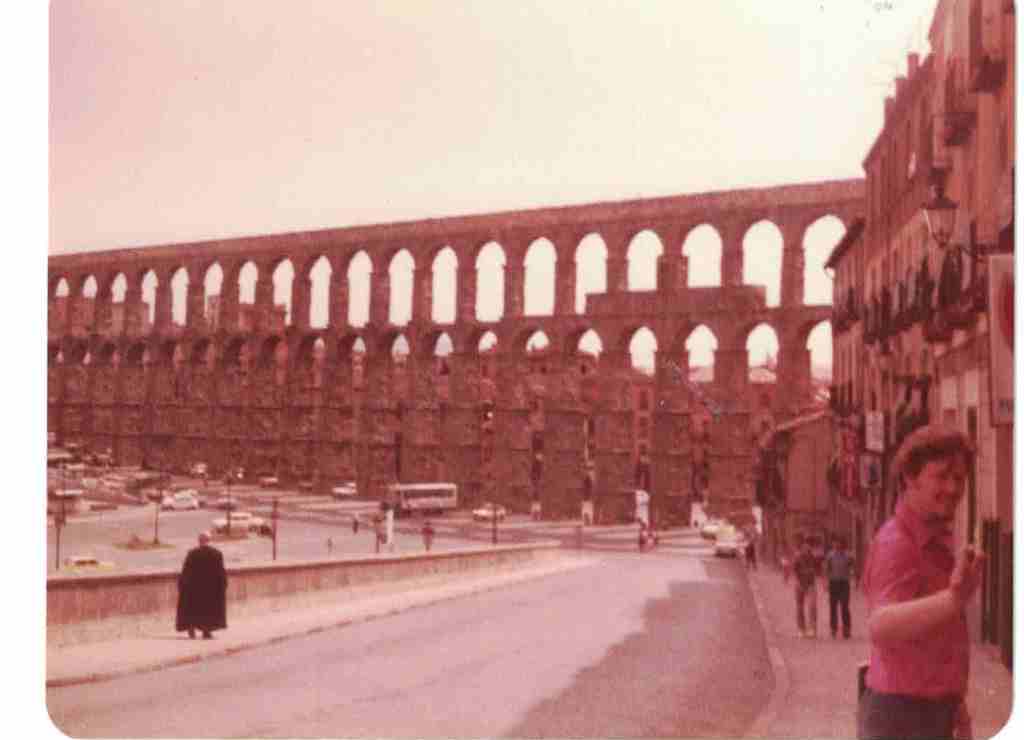

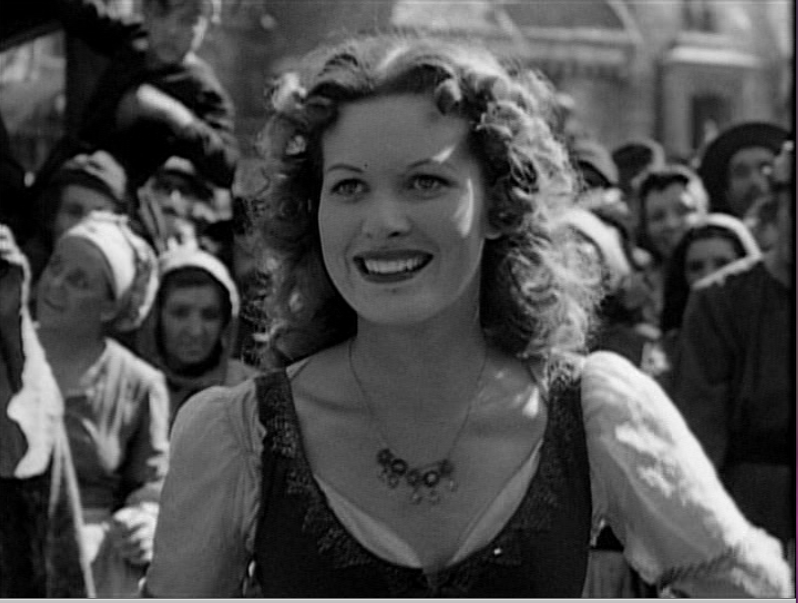
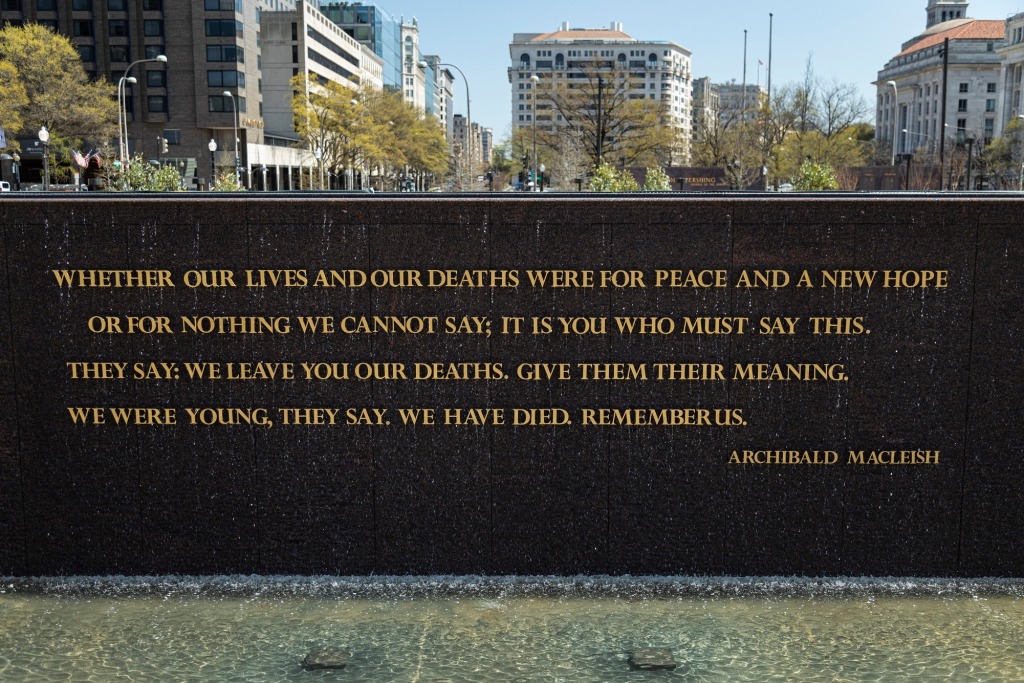





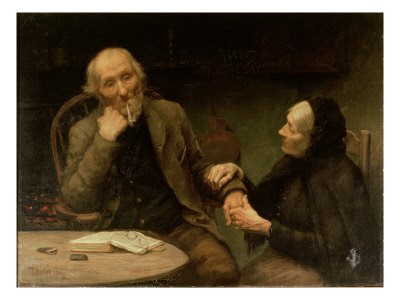
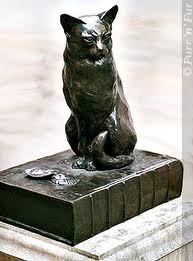





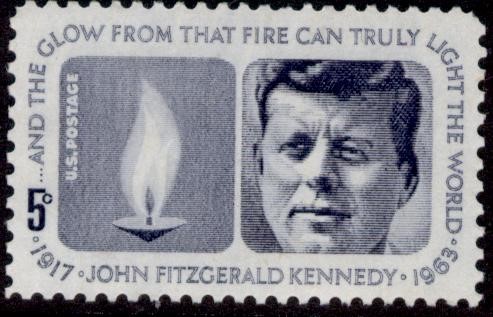
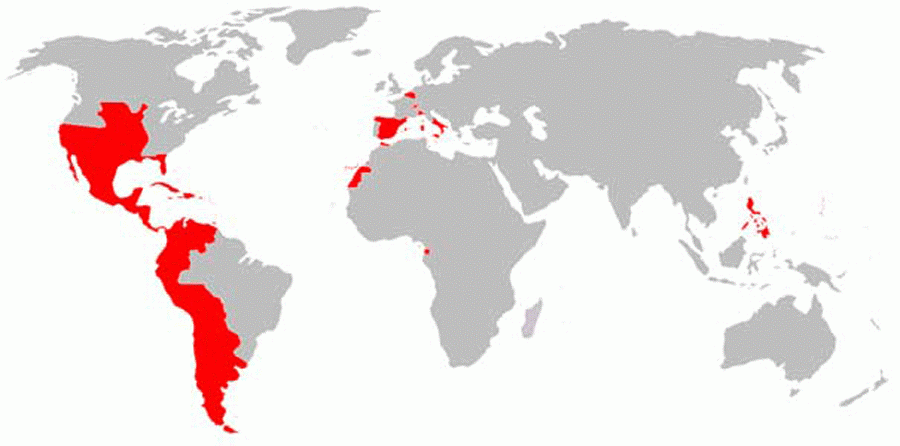

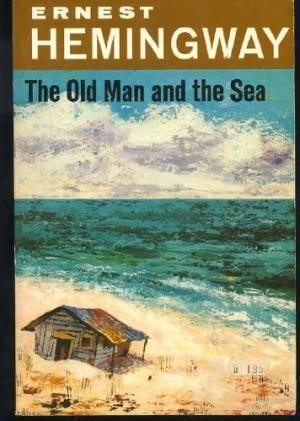


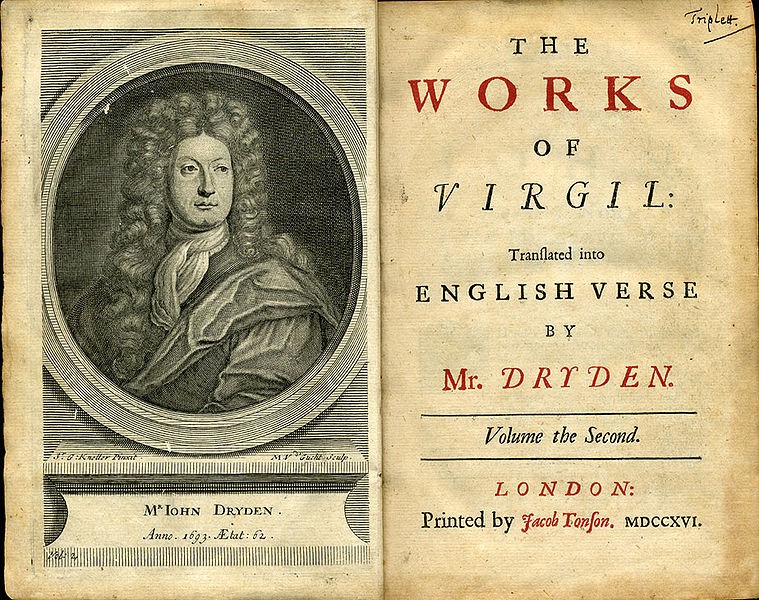


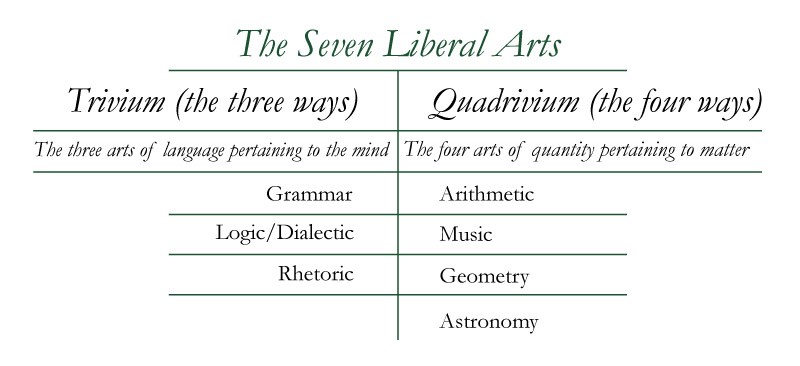


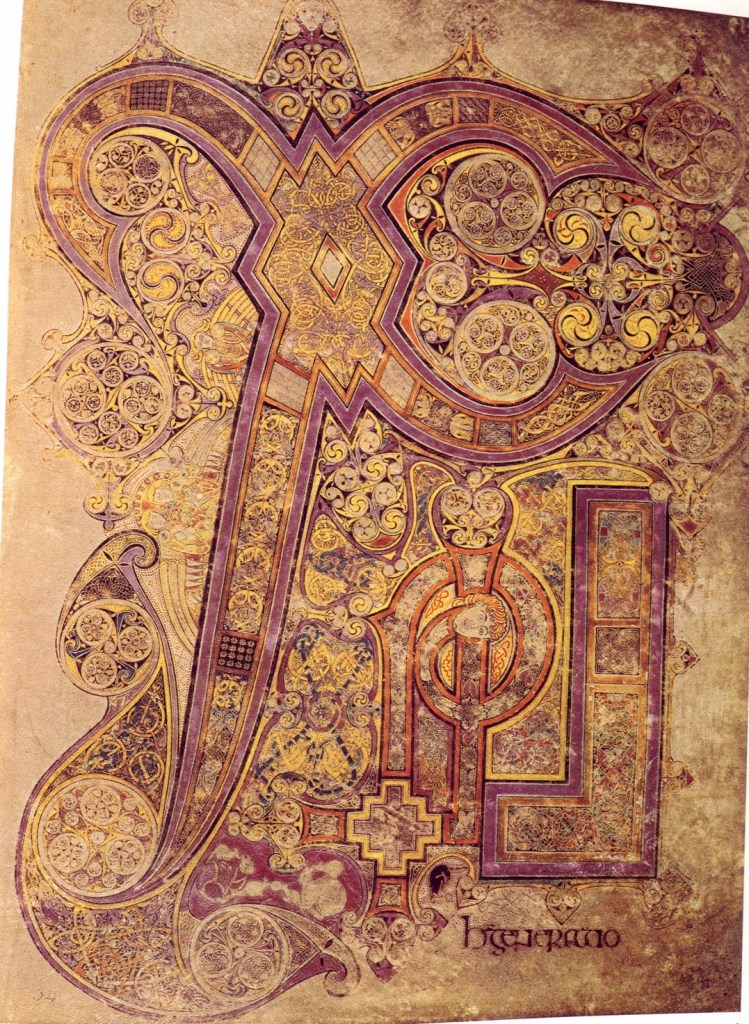

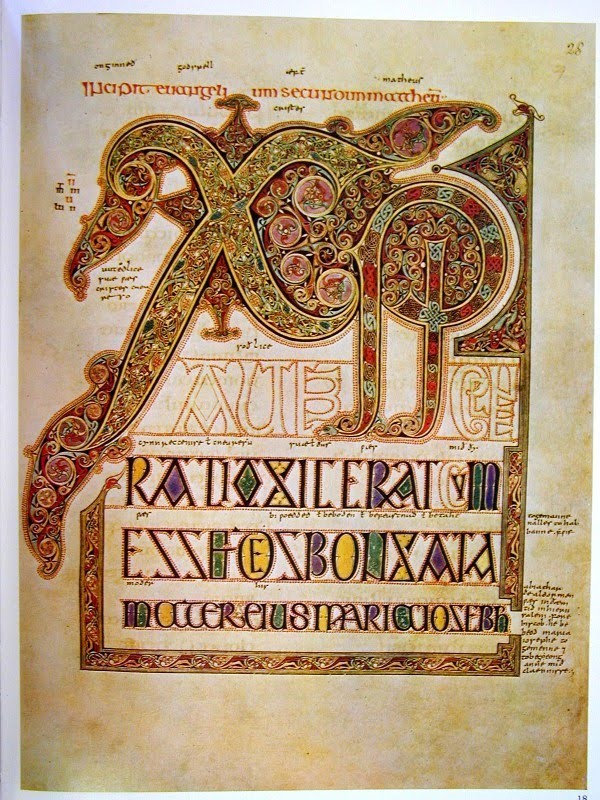


![raid[1]](https://spiritofcecilia.com/wp-content/uploads/2020/05/viking-attack.jpg?w=250)
 Spirit of Cecilia

.svg)


You must be logged in to post a comment.