Kruekutt set the table for looking back at 2025 with his excellent post listing his favorite classical and jazz releases of that year. In the same spirit, here are my favorite albums from 2025.
Maybe it’s a function of getting old, but I tended to stick with familiar artists this past year. There are a few that I trust to always produce excellent music, and I usually devote my limited listening time to keeping up with them.
10. Steven Wilson: The Overview I love everything Wilson releases, even his so-called “pop” albums. The Overview is unabashedly progressive, though, with two side-long tracks that overflow with beautiful melodies. Here’s a conversation Brad Birzer and I had about it.
9. Kevin Keller: Arcadia This is more classical than rock, and it is simply beautiful. Here’s my review of it when it was first released.
8. Dave Bainbridge: On the Edge of What Could Be Bainbridge is a phenomenal guitarist with an immediately recognizable style. He combines Celtic, jazz, and rock elements to create a unique sound. On the Edge of What Could Be is a double album chock full of fantastic songs.
7. The Flower Kings: Love Another excellent album from the Flower Kings. I think they are making the best music of their long career. Here’s the conversation I had with Brad Birzer about our love for Love.
6. Gazpacho: Magic 8 Ball Another one from some old favorites. However, they sound like they’re having a party this time! Here’s the link to our conversation about it.
5. Glass Hammer: Rogue Speaking of old favorites, Glass Hammer is a perennial one! Rogue is a fascinating story of a man at the end of his life looking back. Here’s my longer review.
4. Karmakanic: Transmutation Here’s a new one (for me, at least!). This album has spent quite awhile on my stereo, and I think it’s a beautiful work. Led by Jonas Reingold of Sweden, it features John Mitchell on vocals. The epic title track is terrific.
3. Jonas Lindberg and The Other Side: Time Frames Another set of songs that is bursting with fun melodies and top notch musicianship. I had the pleasure of interviewing Jonas, and you can read it here.
2: Echolyn: TimeSilentRadioII & VII Echolyn returns after a long absence with two of their best albums ever. The edit from “Water In Our Hands” is my favorite song of 2025. Here’s our conversation about these albums.
1. Lunatic Soul: The World Under Unsun My favorite album of 2025 (at least for today!). A double disc of uniformly wonderful songs. Everything Mariusz Duda has done under the Lunatic Soul moniker comes to fruition on this fantastic album.
Check out the extraordinarily informative interview our own Erik Heter conducted with Duda here.
I hope you’ve enjoyed this list of albums from 2025 – it was a very good year! Let us know what your favorites were in the comments. Thanks for reading, and I hope you have a wonderful 2026.
“To believe that there must be a Creator is merely a lack of imagination, but to go so far as to think that he cares about humans at any level strikes me as supremely arrogant.” A non-believer.
Ah, of course, but it is a fond hope of many. However, it is a matter of faith, not science. And yes there is much pride and arrogance in religion -this is a grievous fault. I have no final answers …there is great mystery in life and death and creation. RICHARD K MUNRO
NON-BELIEVER: “I agree about mystery — it seems to me that confronting life, the universe, and everything head-on with reason is more powerful and more honest and more challenging than relying on faith to explain away certain mysterious aspects of nature.”
·
Richard K. Munro:
“That is the enlightenment view. But as a survivor who has seen death and killings and has beaten cancer and unemployment and near homelessness, I am glad to say that man’s final weapon -prayer is a powerful instrument. “Except for the Lord the watchman waketh in vain.” (Ps 127)
(Friend )MurphyWong:
Richard, if God did not exist, he would have to be invented for people like you and me, for we have become “fine-tuned” for God.
San Joaquin Valley, California, USA February16, 2015 and 2025
As I have written before there aren’t many atheists in foxholes.
Hard experiences in life -brushes with death- tend to bring out the religious and philosophic view of life. We accept many things on faith. God’s voice is not audible to all. Someone hard of hearing in his soul will not hear God speaking. Jesus said, “Let him who has ears hear” (Matt 11:15) The Manichees, like Tom Paine, were proud of their emancipation from tradition and boasted they had no need to defend their teachings by appealing to tradition, authority, or any sacred scriptures. For them reason alone was sufficient.
But as I have said we all rely on faith, for example for historical knowledge. There is no way to prove that Caesar was murdered by the Senators or Cicero was executed by Mark Anthony. We know seven times seven is 49. But any event that happens in the long past of human history is always dependent on sources which are someone else’s word. The distinctive feature of historical knowledge is that it is based on testimony or sources that are “worthy of trust.” The rest usually works itself out. That’s true for the historical examples, but frequently NOT true in science. Often there are direct remains from past events (e.g., fossils, geological formations), which can be examined firsthand, not having to take someone else’s word for it. And in astronomy, we see the past directly, due to the time it has taken for light from distant objects and events to reach us.
I recall Augustine spoke of AUTHORITY in his discussion on faith. We owe our beliefs to a large extent on AUTHORITY. I am for example an authority on Spanish grammar and accentuation (I’=am an AP Reader for ETS in essays). But all my life I have relied on Spanish grammars and dictionaries. In everyday life, we all have to accept the authority or special opinion or knowledge of someone else. Without faith, that is without confidence in the truthfulness of others, the “sacred bond of the human race” would be broken. Nothing is stable if we are stubbornly determined to believe NOTHING can be believed with absolute certainty. As a teacher my student has to believe me that I know English grammar that I know Spanish grammar and that I know things about history.
I wanted to clean my DE pool filter. At first I wanted to rely only on my reason. But upon examining it I determined I needed the advice of someone with experience in cleaning DE filters. I did research on the Internet and found a “how to do it with photographs.” And with the help of my wife I did it. But I also learned that by doing what I did I risked permanently damaging the filter and making it useless.
I determined that it wasn’t worth it to spend almost seven hours cleaning and reassembling the filter. So I pay a certain amount of money to a workman who is an expert in this. Now I watch him to see what I can learn but I know what I can do successfully and without economic risk and what is not worth the economic risk.
In other words, I have learned that reason alone is not the way to fix my roof or maintain my car. Because not all can be known. But I was glad for the experience. I have learned a lot about pool maintenance and do most of it myself. However, I seek the experience of experts and specialists to resurface the pool or repair the pump and vacuum. Those things I can clean and maintain and troubleshoot but I know the limits of my skill and knowledge.
Authority in religion at its best and wisest does not impose or coerce.
Similarly, I cannot command someone to learn Spanish or English. I can only invite them to enjoy the wonderful adventure it is to learn and study and use languages. I delight in my grandchildren writing me notes in Spanish and the best I can do is praise them and encourage them!
A good teacher does not strong arm students and say like Hitler OBEY ME because I AM THE TEACHER. A good teacher is patient and earns the confidence of his students by experience ,by reputation, my knowledge, by insight and of course by the truth. And a student cannot merely memorize (or cheat); he has to understand and understand how to learn. I think there can be no knowledge of God without faith for faith is the only way we can know God. Faith in this life is always incomplete. As Paul said, “Now we believe in part.” “Happy is the people whose God is the Lord.” PS 144·
FAITH vs REASON. I remember as a young man tending towards the enlightenment/skeptical/Tom Paine point of view.
But I was never entirely atheistic. I tended towards agnosticism-perhaps I still do.
But life experience plus Thomas Merton plus C.S. Lewis plus Chesterton built upon what tendency I had towards Christianity. I also experienced directly and indirectly sectarian hatred of evangelical Protestants versus Catholics and hatred towards Jews. (as a young man I had little or no contact with Mormons, Muslims or Buddhists) This hatred and prejudice almost turned me against religion entirely.
But then I gradually realized that the sectarian feeling of Irish Catholics against Scottish Protestants for example was more political and nationalistic than theological. And similarly, hatred of the Jews was pathological and based on jealousy. I have always felt Christians ought to be very grateful to the Jews for giving us the philosophic and literary and religious basis of our faith. So falling into a prideful hatred of others is an unfortunate tendency found in many but one we should reject.
But the true message of Christianity is love. I did not really understand love as a boy or young man. When Eros awoke in me in my teens I sensed that kind of love was the most powerful love.
However I became aware of the fact that there were many kinds of love -I am sure you know them -storge for affection, agape (caritas) for altruistic love or care for others, philia or the love of comrades or friendship and of course eros or erotic physical love. Philia love I learned both in the service and as a faculty member at my schools and as a coach. Storgic love and agape love I learned from my mother; eros became a fixation in late adolescence as I became physically infatuated with women aged 16 to 30 plus. I suppose I always like mature women more than silly girls so even as a young man voluptuous 30-something women were very attractive to me. But I quickly learned that erotic attraction was as much a thing of imagination and passing fancy as anything else.
And I found, in my experience, most very beautiful women were not necessarily kind or good. But I was lucky in a way. I did not travel in rich circles and nor did I have much money of my own or glorious career aspirations. So the most physically beautiful women just passed me by and did me a favor.
And of course looks don’t last. Some women have a high lifetime batting average -they are attractive from age 17 to 60 and some are flashes in the pan who lose their looks and figures early . There are women who are stunningly beautiful from late adolescence until their early20’s and then completely let themselves go. I could tell you stories of my near escapes.
But I think it true that I was basically a kind man who did not take advantage of women or mistreat them. If anything women used their sexuality to take advantage of me (at least briefly). But I was wise enough not to get caught up in that honey trap. It is a card women play if they really want something. But of course unless they aren’t sincere it isn’t worth much.
If a man wants a spouse for life -he should choose character and someone with a prospects of a good lifetime batting average for attractiveness.
Money per se was not important to me. I think to marry for money is even more stupid than to marry for sex. One should avoid people who have MONEY PROBLEMS (huge debts; spending problems). But one should ignore financial gain when one marries. It is better to marry for love ,in my opinion.
My father said to me, “#1 never date a woman who would not be a good mate -you won’t get dragged down or distracted that way.
#2 Look at the mother and aunts. That probably is that the daughter will look like in her 30’s 40’s and 50’s. Say to yourself if you would be satisfied with a woman like that.” I think this was wise advice. I also think the family of a woman (or man) says a lot about that person. My wife, for example, was the favorite niece of her uncles, and much beloved by her grandfather.
She was very kind to her younger cousins; she was involved in teaching young people in a religious youth program. She was religiously devout much more so than I was. But gradually I changed my views and realized I was comfortable with her worldview and I wanted to share her faith totally. I had seen a lot of divorce a lot of bitter breakups in New York and I did not want that to be part of my life. We talked about marriage and she considered it a sacrament something holy and something for life.
Of course, that was exactly how my non-Latin but Catholic parents and grandparents felt and I realized that my views on marriage were strongly influenced by my parent’s experience even though I did not, at the time, think those values were especially “Catholic” merely “traditional.”
Of course, in my life it was a balance between character and intellectual interests and sexual attraction. I knew women who were attractive to me but I was not attractive to them “no chemistry”they said.
And similarly I liked women who were nice, had nice families and were good cooks and pleasant companions but I didn’t think we could ever have children. In this case there was little chemistry on myside. One need not burn with erotic passion like a wild rutting beast all of one’s life but I think it is good to have shared young passionate love with a spouse. The memory of that passion and that oneness is the basis for a sense of permanent connection and gratitude, particularly when that passion is not merely what my grandfather called “dud in the mud sex” that is contracepted sex that produces no children.
I suppose for me the chief qualification for a woman is that I wanted her physically to be the mother of my children and spiritually and intellectually the mother of my children.
I crossed out any ZPGer’s or Radical Feminists and it is true that in time when on I only dated women from my faith tradition. I tried to date women from other backgrounds but our philosophies of life were too different. In variably we would argue. I was called “medieval” (and worse).
I found personally, that I liked Latin women better than the American women I met chiefly because they had more traditional values and I realized as a son of an immigrant I had more traditional values than the average New Yorker, certainly.
Interestingly enough my son also married a Latin and our daughter also married a Latin. It is a cognate fact that no one in my family for a thousand years has married a native-English speaking woman. Of course, my people came from the fringe of the English-speaking (and Protestant) world. Prior to 1890-1920 most of my family were non-native speakers of English. Because of this we have always tended to be “amphibious” and cosmopolitan. Working in Latin America we learned Spanish; living in Canada we learned French. Serving in the 27th Division (1914-1919) my grandfather learned spoken Hindi and Punjabi. Serving in the Philippines, my father who already spoke French learned Spanish and Tagalog. Even as we lost to old language we retained an openness and interest in other languages and a love of music, song and poetry. So I can never remember a time when I lived in a monolingual English-only household. There is no question as a Gael (by ancestry) I feel a connectedness to the ancient bonds of Christendom and to Rome. We never looked exclusively to London or Paris or New York or Washington.
And I suppose if one grows up with stories of saints and missionaries one never loses that connectedness entirely. And like a loadstone, the wandering heart drifts back to true north.
And faith and love. My grandfather came to America with very little except a strong faith and a strong desire to work and thus remain free. Though we no longer share his nationality nor his native language with our children I think he would be very satisfied that we were ‘bydan free’ (saorsa gu brath/ forever free) and that we were stable in our faith traditions. I believe his faith inheritance was more important to him than his race or nationalist considerations. This is expressed in the fact that he did not marry a woman of his national origin (nor did I). There was never a question that we would marry people only from his region of Scotland or his language –in our faith life there were people from every race and every corner of the globe. And in the 21st century I fully expect to have grandchildren who bear the races and lines of many peoples and three or four continents. But as my grandfather, Auld Pop, used to say, “the important thing about grandchildren is HAVING THEM; the next important thing is that they are HEALTHY; the last important thing is that they are LOVED and CARED FOR.”
The rest usually works itself out. That seems REASONABLE TO ME by experience
But It all began with FAITH that all will yet be well and knowledge that one of the most powerful wisdoms is REVERENCE FOR LIFE and REVERENCE FOR GOD. The earliest Bible quote I knew was this: “DREAD GOD and OBEY his commandments for that is the whole duty of man. “
“How much better to get wisdom than gold, to get insight rather than silver!” Proverbs 16:16
Walking across the sitting-room, I turn the television off Sitting beside you, I look into your eyes As the sound of motorcars fades in the night time I swear I saw your face change, it didn’t seem quite right And it’s hello babe, with your guardian eyes so blue Hey my baby, don’t you know our love is true
Coming closer with our eyes, a distance falls around our bodies Out in the garden, the moon seems very bright Six saintly shrouded men move across the lawn slowly The seventh walks in front with a cross held high in hand And it’s hey babe your supper’s waiting for you Hey my baby, don’t you know our love is true?
I’ve been so far from here Far from your warm arms It’s good to feel you again It’s been a long long time Hasn’t it?
I know a farmer who looks after the farm With water clear, he cares for all his harvest I know a fireman who looks after the fire
You, can’t you see he’s fooled you all Yes, he’s here again Can’t you see he’s fooled you all? Share his peace, sign the lease He’s a supersonic scientist He’s the guaranteed eternal sanctuary man Look, look into my mouth he cries And all the children lost down many paths I bet my life you’ll walk inside Hand in hand Gland in gland With a spoonful of miracle He’s the guaranteed eternal sanctuary We will rock you, rock you little snake We will keep you snug and warm
Wearing feelings on our faces while our faces took a rest We walked across the fields to see the children of the West But we saw a host of dark skinned warriors standing still below the ground
Waiting for battle
The fight’s begun, they’ve been released Killing foe for peace, bang, bang, bang Bang, bang, bang And they’ve given me a wonderful potion ‘Cause I cannot contain my emotion And even though I’m feeling good Something tells me I’d better activate my prayer capsule
Today’s a day to celebrate, the foe have met their fate The order for rejoicing and dancing has come from our warlord
Wandering in the chaos the battle has left We climb up the mountain of human flesh To a plateau of green grass, and green trees full of life A young figure sits still by a pool He’s been stamped “Human Bacon” by some butchery tool He is you
Social Security took care of this lad We watch in reverence, as Narcissus is turned to a flower A flower?
If you go down to Willow Farm To look for butterflies, flutterbyes, gutterflies Open your eyes, it’s full of surprise Everyone lies like the fox on the rocks And the musical box Oh, there’s Mum and Dad, and good and bad And everyone’s happy to be here
There’s Winston Churchill dressed in drag He used to be a British flag, plastic bag, what a drag The frog was a prince The prince was a brick, the brick was an egg, the egg was a bird (Fly away you sweet little thing, they’re hard on your tail) Hadn’t you heard? (they’re going to change you into a human being!) Yes, we’re happy as fish and gorgeous as geese And wonderfully clean in the morning
We’ve got everything, we’re growing everything We’ve got some in, we’ve got some out We’ve got some wild things floating about Everyone, we’re changing everyone You name them all, we’ve had them here And the real stars are still to appear (All change!)
Feel your body melt Mum to mud to mad to dad Dad diddley office, Dad diddley office You’re all full of ball Dad to dam to dumb to mum Mum diddley washing, Mum diddley washing You’re all full of ball
Let me hear your lies, we’re living this up to the eyes Ooh, aah, na-na-na Momma I want you now
And as you listen to my voice To look for hidden doors, tidy floors, more applause You’ve been here all the time Like it or not, like what you got You’re under the soil (the soil, the soil) Yes, deep in the soil (the soil, the soil, the soil!) So we’ll end with a whistle and end with a bang And all of us fit in our places
With the guards of Magog, swarming around The Pied Piper takes his children underground Dragons coming out of the sea Shimmering silver head of wisdom looking at me He brings down the fire from the skies You can tell he’s doing well by the look in human eyes Better not compromise, it won’t be easy
666 is no longer alone He’s getting out the marrow in your backbone And the seven trumpets blowing sweet rock and roll Gonna blow right down inside your soul Pythagoras with the looking glass reflects the full moon In blood, he’s writing the lyrics of a brand-new tune
And it’s hey babe, with your guardian eyes so blue Hey my baby, don’t you know our love is true? I’ve been so far from here, far from your loving arms Now I’m back again And babe, it’s gonna work out fine
Can’t you feel our souls ignite? Shedding ever-changing colours In the darkness of the fading night Like the river joins the ocean As the germ in a seed grows We have finally been freed to get back home
There’s an angel standing in the sun And he’s crying with a loud voice “This is the supper of the mighty one” Lord of Lords, King of Kings Has returned to lead his children home To take them to the new Jerusalem
Talk about biting the hand that feeds Sitting there watching as it bleeds Try your best in the winter light When it really should be summer night
Is it too late, baby? Too late now Too late, baby? Too late now Too late for you to realize Everything could have been alright
Is it been to long? Yeah Is it too long now Is it too long for you to make the change? Gotta love yourself to make a better day
I hate the way you don’t want to move What’s the matter? Money rules the groove now What we’re doing here today Won’t make the bad life go away
You gotta grow the beard Find the doubt And maybe you’ll work Something out, hey
Is it too long baby? Too long now yeah Too long for you to make the change You got to love yourself To make a better day, better day
Look out
And recognize your soul And everything’s alright You gotta see the whole And everything’s alright
Come on give yourself a break Everything’s alright We’ll be breathing deep And everything’s alright
Well, come on come on come on Everything’s alright
In a dream I was crossing African plains And elephant’s graveyard, a bone dry place And I was wondering why there was no more rain And in a pile of bones, I saw your face
I’m not a particularly good poet. In fact, I’ve very rarely dabbled in writing poetry. But a couple years ago as a way of processing some difficult emotions, I found poetry flowing from my pencil, rhyme and all. I shared it with a friend (and Twitter) a couple months ago, and that friend asked if he could publish it on the Conciliar Post. Since I was about to move from St. Louis to Bowling Green, Kentucky, I had to delay that since it was handwritten. When I got a chance to transcribe it, I found it needed more melancholy at the beginning to balance out the joy of the Sabbath. And some of the rhyming needed help. A very recent breakup inspired some new melancholy, too. Anyways here’s the beginning stanzas, with the rest at the link: https://conciliarpost.com/the-arts/poetry/sunday/
The rolling emptiness of a Sunday afternoon, The deafening silence of a vacant room, The brutal roar of a mind gone mad, After years of loneliness leave a soul unclad.
Reaching a loved one in search of a friend, An unforeseen blow reveals this is the end. A vacuous pang sucking life from my eyes, But after all else this should have been no surprise.
Disjointed and pondering, unsteady and shamed, Bloodcurdling abuse tearing a heart that’s been maimed, Crying and tearing the sheets on the bed, Pained by a future that only fills me with dread.
Suffering drowned by years of neglect, A soul grown numb longing to connect, When out of the silence a trumpet rings clear Letting me know my Messiah is near.
“One ought, every day at least, to hear a little song, read a good poem, see a fine picture, and, if it were possible, to speak a few reasonable words.” ― Johann Wolfgang von Goethe, Wilhelm Meister’s Apprenticeship
That’s certainly is my motto FOR THE GOOD LIFE.
And this shall be for music when no one else is near The fine song for singing, the rare song to hear! That only I remember, that only you admire Of the broad road that stretches and the roadside fire!
(R L STEVENSON)
***
O I had ance a true love, now I hae nane ava; And I had three braw brithers, but I hae tint them a’. My father and my mither sleep i’ the mools this day – I sit my lane amang the rigs, aboon sweet Rothesay Bay.
It’s a bonnie bay at morning, and bonnier at noon, But bonniest when the sun draps and red comes up the moon. When the mist creeps o’er the Cumbraes and Arran peaks are gray, And the great black hills, like sleeping kings, sit grand roun’ Rothesay Bay.
Then a bit sigh stirs my bosom, and wee tear blin’s my e’e, And I think of that far countrie wha I wad like to be. But I rise content i’ the morning to wark while I may – I’ the yellow har’st field of Ardbeg, aboon sweet Rothesay Bay.
This old Scottish song, which I have known for most of my life, reminds us there is beauty in this world but also sadness, loneliness, loss, and separation. But we should rise content each morning to work and study while we may and if we have lost loves and homelands we should be grateful that we have known friendship and love.
Working as a tour guide in Segovia Spain in the early 1980s. AMOR BRUJO TOURS and TRANSLATIONSI don’t have a lot of cash on hand but I always have a leather purse with $20 worth of half dollars at hand and I have a bag with about $150 of change hidden away. I don’t normally carry a lot of cash. Most of my purchases are by credit card. I never use a debit card.
I have a chance for a long life.
Already I am grateful for the years I have lived (mostly in good health). I am 68 years old and older than many people I worked with, studied with or loved. I have known people who died in their teens, in their twenties, in their thirties in their forties, in their fifties, and in their early sixties. I once saw a Sea Knight Helicopter fly away and cursed the fact I was not on it. It hit bad weather and crashed about 15 minutes later 23 Marines were killed including some people I knew. Our company commander canceled our trip and we had to march more than 20 miles back to camp in bad weather. Sometimes as Auld Pop used to say your number is up.
One lesson I have learned in life is that the body is a fragile vessel and that we are all mortal. Every day of good health is a gift. I think being married has kept me reasonably happy and healthy. Choosing a good spouse is one of the most important decisions one can make for one’s happiness and health. I have been married for almost forty-two years to my best friend of the last fifty years. John Joseph Powell in The SECRET OF STAYING IN LOVE wrote: “It is an absolute human certainty that no one can know his own beauty or perceive a sense of his own worth until it has been reflected back to him in the mirror of another loving, caring human being.”
Yes, no one can know true happiness unless they know the love of a husband and wife or of a child. I know when I first saw my grandchildren it was love at first sight! I do believe in enthusiasms and love at first sight.
Yes, no one can know true happiness unless they know the love of a husband and wife or of a child. I know when I first saw my grandchildren it was love at first sight! I was happy the day I was married -but not as happy as my parents I think and I was happy when our children were born -a very special gift for which I am eternally grateful- but there is no joy like the surprise or extra-inning gift of grandchildren. Children mean sacrifice and a lot of hard work but they pay dividends a hundred times over. Hugh Heffner with his multitudinous and mostly sterile dud in the mud sex was really a chump, not a champion. He thought he knew what life was but wasted most of his life in hedonistic trivialities. He thought he knew what love was but he knew only a fraction of the Four Loves.
This is the actress MAUREEN O’ HARA (1939) as Esmeralda in the film HUNCHBACK OF NOTRE DAME. Who with eyes and heart in breast could not fall in love with such a smile?
To be happy one has to be in reasonable health. One has to have something to do with your time. So it is important to have hobbies and intellectual interests and a few good friends. One should be loved and have someone to love, have a roof over your head, some soup at the boil, some tasty food to eat, One needs plenty of water to drink and wash, One thing l learned is that one can go days even weeks of light eating but one cannot go very long without water. So water is my favorite beverage!
To be happy one has to have some dreams and something to hope for. Many of my personal dreams are unrealized but I had fun trying to achieve those dreams. I hiked many mountains I climbed many ruins in Sicily, Crete, Madeira, in Portugal, Spain, Scotland, Greece and Italy. I kissed a few pretty girls and they kissed me back. I have gone deep sea fishing in the Atlantic and Pacific. I played a lot of baseball and became in the words of a local athlete “decent”. I served honorably in the Marine Corps. I have published a few articles and one-act plays but never have written (a published book). I have written (privately) three volumes of essays and personal recollections that my daughter published. They are primarily for my grandchildren. I have taught many classes in history, literature, and languages and helped many students. I have coached sports teams and seen great athletes at play. All of our children and grandchildren are bilingual and were or are being raised as native speakers of Spanish and English.
I love monumental public memorials and sculptures though Shakespeare sang in the Sonnets of the immortality of literature:
“Not marble nor the gilded monuments
Of princes, shall outlive this powerful rhyme,
But you shall shine more bright in these contents
Than unswept stone, besmeared with sluttish time.”
When I visit the cemetery or war memorials, I walk past hundreds or even thousands of names that represent life stories now silenced forever.
Oh, they are the Silent Ones. May the many monuments that abound around the globe to those who have fought to protect our freedom and national independence remind us of duty, the cardinal virtue of courage, the inestimable value of valor, the honor evoked by such sacrifice!
Look at and contemplate {those}
” names …inscribed on the parchment of fame;
Heroes whose seeds were a noble example
That others might follow and honour thy name.”
I know that recorded history holds the adventures of a few who managed to be inscribed in the parchment of fame.
I have never thought I needed to live a life worthy of being recorded.
I never really sought fame or wealth but contentment and the quiet and security of a nice house and library. ] I enjoy quiet cafes, quiet rivers, quiet museums, and quiet walks in the park or in a forest. I have always wanted to live an honorable life of service to my school, my country, my family, and my God. “non mihi non tibi sed nobis as the Romans said, “not for me alone nor for thee all but for the common good of all.”
I knew all about the world of books. For most of my life, they were my biggest adventure. Books could take you into a better world. A world where there were fine songs for singing, moving laments, sports heroes, romance, adventures, tragedies, military adventures, explorations, mysteries, prayers, legends, and yes, even magic. Of course, the articles, stories, songs, and books ended eventually. Then you had to go back to being yourself.
So in the final analysis bookish adventures are not enough. A man craves the freedom to see places and do things. And when you are old you can look back and remember. This is one of the reasons I enlisted in the Marine Corps , worked in construction as a laborer (I helped build Bill Gate’s home in Bothwell, Washington), and why I lived and traveled in Latin America, Spain, and Europe as much as I could. I knew my time, my health, my freedom, and my financial independence were limited. My father always said, “You have to take chances in life. The door of opportunity opens and then closes. If you don’t move ahead when you have the chance you can lose out forever. You have to decide if it is worth taking the chance.”
I realize I am the biggest threat to my emotional, financial, and physical health.
So what do I do?
Number one I have a wife, children, life insurance, some savings, and some property. I am not a doomsday prepper by any means but I believe in having emergency food, water, and medicine just in case of some natural catastrophe. I have a solar crank radio, a solar charger, flashlights, batteries, candles. a first aid kit, an emergency stove, extra medicine, and spare glasses. That is not excessive. If one wants to have a long life one must be prepared to take care of oneself in case of an accident or an emergency.
One thing I hope is that I do not outlive my wife, my children, or my grandchildren. I hope I live long enough so that my grandchildren have memories of me and get to know and love me. That is an important goal in my life. I look forward with joy to every spring. I love the birds who come to visit and feed in our garden. I love the plants and flowers that bloom.
Leo and Laney enjoy our garden too Jan 2024
I do a lot of serious reading (classics, non-fiction, biography) but I enjoy lighter fare such as adventure tales, mysteries and westerns. I enjoy reading jokes and joke books.
I love reading about baseball and listening to games (chiefly) via MLB at Bat. I listen to games in Spanish and English. I first listened to baseball games in Spanish in the 1970s and it helped develop my Spanish.
Otherwise, I don’t spend a lot of time on spectator sports. I glance at the newspaper but that’s about it. Most of the time I am happy to read about the final score.
I try to set time aside for PHYSICAL EXERCISE and JOY ( I try to walk daily in the park and clean the pool and garden). When the weather is good I swim once or twice a day. I love reading and listening to classical music so I have CD’s and a nice BOSE player, plus SPOTIFY plus ITUNES for my phone.
I love to read the papers -The Wall Street Journal and our local paper every morning or Commentary magazine. I listen to LONDON TIMES radio reports as well as the Daily Telegraph and some Israeli news as well.
I spend some time on PERSONAL GROWTH. I love studying languages and spend about 2-3 hours a day studying new languages and reading ones I know. I have taken up a new hobby! Drawing. I always have drawn a little bit in my language studies but I have decided I can improve the quality of my notebooks! I enjoy singing or humming songs. I enjoy reciting poetry by heart just for fun. I also set aside time for relaxation. If I am tired or have a headache I rest and have some tea with lemon, Splenda or honey. I make a thermos of it to sip all afternoon.
I love doing FACETIME with our grandchildren it is so wonderful to talk to them and see them so full of joy and happiness. It feels good to hear them say “YAYO, WHEN ARE YOU COMING TO VISIT?”
I enjoy phone conversations with a few friends but am not really a phone person. I have to plan to call someone. Basically, I think calling can be an intrusion. And I know some people don’t like long or serious conversations. So my conversations with books are more satisfying than most phone chit-chatting. But I call people who call me. People who don’t call me or write to me I pray for but don’t worry about. It’s sad when old friends drift away but the truth that’s life.
So I prefer to write on my blog,The Spirit of Cecilia or THE GILBERT HIGHET SOCIETY on FB or email people. I text some family and friends and share book titles via Audible.
I try to be moderate in what I eat and drink (I primarily drink water coffee and tea). I have a physical once or twice a year and take my medicines.
I know that if one is to enjoy a LONG LIFE one has to do what one can to stay as healthy as possible. Then the chances for a happy long life are better.
As a young man and in middle age I traveled a lot so I am happy that I had that experience. But now I really have lost my wanderlust. I only want to travel to visit our grandchildren. Most days I am at home, on the porch, in the garden, in my library, in the TV room , or listening to podcasts or books on tape in bed. My wife and I enjoy JEOPARDY and British mysteries and shows on Masterpiece Theater. I don’t drive very much anymore perhaps once a month or less! I spend some time on Twitter (X) and Facebook and check my email at least every other day. I enjoy corresponding with people in Italy, Scotland, Israel , and throughout the English-speaking world.
I have always had the Munro motto in mind which is Dread God (and obey his commandments because that is the whole duty of man). BIODH EAGAL DHE OIRRE in Gaelic or Reverence you unto God. It is a very ancient motto and reminds us that Munro is a Christian name -it means the descendant of the Men of the Halo River the Roe (the Saint’s River) a place name in Ireland. That is probably the first Bible quote I ever knew and I heard it at least from 1959. I think It helps to have God and a little religion in your life. But that’s just my opinion. People should have freedom of conscience and choose their own paths. The only thing I go do is set a good example and invite people to consider the Good Life as I see it and seek it.
An ancient motto I have known since at least 1960 is NE OBLIVISCARIS do not forget. This was the Regimental motto of my grandfather’s old Regiment 1914-1919, the Thin Red Line of Heroes (The Argyll and Sutherland Highlanders) At Balaklava in the Crimean War, the Argylls were called the Gaelic Rock. If they had failed the entire British and Allied army may have been destroyed but they calmly spread out in a thin line of two, fixed bayonets and fired aimed volley after volley from their Enfield Rifles. Their commander Sir Colin Campbell said, “Lads, we have to stop them or fall in the effort.” The Argylls near him said to him laconically, “Aye, we’ll stand until you give the order.” The war correspondents who were present were astonished at their discipline and cool courage. The Thin Red Line of Heroes became a symbol of the courage and professionalism of the British Army but especially the Scottish Highland Regiments. Many of my ancestors served in Highland Regiments.
And of course, I am a loyal man so SEMPER FIDELIS (always faithful) is a motto also. This is the motto of the US Marine Corps.
Another motto is CUIMHNICH AIR NA DAOINE BHON TAINIG TUSA (REMEMBER THE PEOPLE YOU CAME FROM).
I believe marriage is a sacrament and I have always been loyal to my wife and family putting their security and happiness above everything else.
I face firmly towards the future but never forget the past. I know in a long journey some things have to be left behind.
I only wish for my granddaughters and future grandchildren that they will have strong faith, good values, a good education, and the warmth and security of a good family.
For that is the duty of a good man, a good father, and a good husband. If you live a good life you will want to live a long life and I think you have a better chance for achieving a long life.
Daily writing prompt
What are your thoughts on the concept of living a very long life?
Thomas Munro jr. circa 1945 in Manila while serving in the US Transportation Corps. The cagardores called him the GOOD LIEUTENANT (Mbuti Teniente)
“Some people bring out the best in people. Try to be that person. It especially happens when you believe in greater values than merely your own self-interest. When you believe in something bigger than yourself -in your school, your nation, in the human brotherhood, in God, in your school, your Regiment, your unit- you rise to the occasion because you are part of a team with a definite goal and you don’t want to let down your comrades in arms.
Remember you can’t do it by yourself and you owe a lot to your family, your country, your Regiment, your school, your team, your friends, your teachers. Above all, cultivate the virtue of gratitude. One can never promote one’s own highest good without at the same time furthering the good of others. A life based on narrow self-interest cannot be considered honorable by any measurement.
God made us strong only for a while so that we can help others. Our human social contract is not only with the few people with whom we have daily dealings and with whom our personal lives are immediately entwined, nor to the rich or the prominent or the famous or the well-educated but is with all our human brethren. View yourself as a citizen of the world as well as an American -Kosmopolites- and act accordingly. This is the only life you have this side of paradise. Don’t be an S.O.B. ”
“Mbuti Teniente” (the Good Lieutenant) THOMAS MUNRO, Jr. 1915-2003 1st Lt. USAR 1942-1953 US military police 1942-1943; US Transportation Corps 1944-1946, Pacific Theater. Hawaii, Guam, Tinian, Saipan, and the Commonwealth of the Philippines.
He was a kind and generous soul. He was a wise man who valued wisdom over wealth. He was a faithful husband and a good father. I remember the afternoon he died. I recalled an old Western we both loved. GARDEN OF EVIL. Richard Widmark, the gambler is mortally wounded. The sun is setting. He says to Gary Cooper “THERE IT GOES HOOKER. Every day it takes someone. Now it’s me.” I stopped the car and watched the sunset. remembering my father and realizing I would never again wake to a morning with my father but grateful he was in my life for 47 years.
My father was educated in Scotland up to age 12 1/2. When my father finished the sixth grade in Scotland in 1927 his mother was told he had only two choices “the Army or the docks.” She was so horrified at this news that she reportedly answered angrily, “Och no, there is a third choice, America!.” So she decided finally to immigrate in October 1927 and they came on the SS Transylvania via Ellis Island. My father said, “All that I am or ever hope to be, I owe to America and to my angel mother.” Love wins out and endures.
I like to think if Mary Munro were looking down from heaven would see my wife and my daughter and daughter in law and say,:
“Love conquers all. Faith never dies. One generation passeth away, and another generation cometh; but the earth abideth forever… The sun also ariseth….”
Mrs. Munro (Mary Munro) circa 1915 in Glasgow Scotland. She volunteered to work in a munitions factory after her two broths and brother in law were killed on the Western Front serving with the Highland Light Infantry.Mary Munro circa 1920’sfamily portrait March 17, 1915 St. Anthony’s. Her husband THOMAS MUNRO, SR was served in the trenches at Ypres. My grandfather had been listed as missing in action when my father was born on March 10. Mary Munro held off the baptism a few days until she heard the news her husband had been saved by Indian soldiers and his friend American Johnny Robertson.
“Liberty, Sancho, is one of the most precious gifts that heaven gave to men; with her the treasures that the earth or the sea conceals cannot be equaled; for freedom, as well as for honor, life can and should be ventured, and, on the contrary, captivity is the greatest evil that can come to men. ” (CERVANTES) “Is it not the interest of the human race, that every one should be so taught and placed, that he would find his highest enjoyment to arise from the continued practice of doing all in his power to promote the well-being, and happiness, of every man, woman, and child, without regard to their class, sect, party, country or colour?” (Robert Owen)
Violence is a deadly form of hypocrisy, particularly for the believing Christian. The Great Teacher rejected all manner of violence as evil, whether it be the psychological violence of class or racial oppression as well as physical brutality that wreaks inhuman harm.
“Blessed are the peacemakers for they will be called the children of God.” “If we cannot end now our differences, at least we can help make the world safe for diversity. For, in the final analysis, our most basic common link is that we all inhabit this small planet. We all breathe the same air. We all cherish our children’s future. And we are all mortal.”
(John F. Kennedy Commencement Address at American University, June 10 1963)
Peace cannot be kept by the hard hand of force; it can only be achieved by understanding and mutual respect.
“Thou shalt love thy neighbour as thyself. There is none other commandment greater than these.” (Mark 12:31)
“I am” is reportedly the shortest sentence in the English language. Could it be that “I do” is the longest sentence?” ― George Carlin
John Coltrane & Johnny Hartman / “My One and only Love”
In memoriam: Mrs. T.
Rainer Maria Rilke wrote: “To love is good, too: love being difficult. For one human being to love another: that is perhaps the most difficult of all our tasks, the ultimate, the last test and proof, the work for which all other work is but preparation.” Victor Hugo wrote: “When you shall have learned to know, and to love, you will still suffer. The day is born in tears. The luminous weep, if only over those in darkness.” On March 31,2020, the much beloved wife of a Terry Teachout died. She had been very sick and recently had had major surgery. She did not die of coronavirus though these are time of plague and death and people are painfully separated from loved ones and sometimes these same loved ones are snatched away. Terry wrote, very movingly, “To lose the love of your life at the very moment when you expected her to be saved is painful beyond words, beyond belief, beyond understanding. To be comforted as I have been comforted is…well, it, too, “passeth all understanding.” I wrote to him “My dear fellow you have my sincerest condolences. ‘six angels at her back, two to sing, and two to pray and two to carry her soul away.’ May God bless you both and let it be a comfort you knew true love this side of paradise. Requiescat in pace domine T. (Mrs. T) Pax vobicum. Ave et vale.” Events like these remind us that no one is untouched by human tragedy. Yet the story of Mr. and Mrs. T. also reminds us that love is the raison d’ etre of our brief lives on earth. Many cling to a low level of consciousness and selfishness and they seek only hedonist pleasures, fleeing from pain and difficulties. Brave Terry Teachout is that leal n’ true mon, a good husband -a mensch-who stayed to know and cherish true love until the very end despite every difficulty. What a great example he is to us all. My parents were also an example to me; they were married for 59 1/2 years separated only by war and death. I only vaguely understood what love was as a young man but over the years I slowly began to understand love more deeply and broadly. I knew love was good but how to find it and how to keep it and make it grow?
As a very young boy I heard the word “divorced” at elementary school. I had never heard it before. I imagined it meant something like giving Christ a poke with a spear; it was after all “the vorced”( worst). At home I had never heard this d-word but I was ashamed to ask at school because everyone else seemed to know what it was. But I knew it was bad. No kid ever smiled saying, “Hey, guess what kids? My parents are divorced!” As soon as I came home I asked Auld Pop, my Scottish grandfather, what this strange dark utterance was and what it could mean. He looked at me with surprise, paused a moment and answered, “Dinna worry aboot thAAt, laddie! That’s something they do in Amerrrica! Aye!” But I was confused,and said, “But, Pop, we ARE living in America now.’ He responded immediately, “That doesn’t mean we have to pick up their bad habits, aye! ‘Strrruth!” He didn’t want to talk about it any more. So in hour household, four-letter words, divorce , euthanasia, abortion, the New York Yankees, Communism and cannibalism were taboo. My father said I could marry anyone I liked, thin or fat, fair or dark, Christian or Jew but never a Communist. Like my parents Auld Pop had been married for 32 1/2 years and separated only by war, by part of the Great Depression, when he worked in America as bird of passage, and by death. But as I grew up I heard more and more about that dread social disease but thanks be to God it never came close to home something for which we were all very glad. My parent’s marriage was like the Rock of Gibraltar. How did it get that way? How did it stay that way?
I can’t even imagine what my grandfather or parents would have thought of Gay Marriage or “marriage equality.” I am sure they would have been dumbfounded at the the statute definition of marriage in California since January 1, 2015:
Marriage is a personal relation arising out of a civil contract between two persons, to which the consent of the parties capable of making that contract is necessary.
So that is Society’s law and idea of civil marriage and of course I can and I will peacefully coexist with this law. I have no interest in the marriage patterns of other individuals and other religions. I have zero interest in the social contracts of consenting adults and what they do in the privacy of their own homes. I hope they are very happy with their personal choices and beliefs. But it doesn’t change my deep belief that secular society (the State) does not value nor understand traditional marriage or sacramental marriage. Changing the definition of marriage in the dictionary to me does not change the etymology of the word nor its traditional meaning.
And everything I write about marriage and marital love I write about from the point of view of a traditional Christian marriage. Not Muslim, not Jewish, not Buddhist, not Atheist not secular. I am not telling anyone how they should lead their lives, lead their love lives or lead their marriages. I just invite those who are sympathetic to consider the joys and strengths of true spousal love between a man and a woman. But people need to choose. The tragedy comes when one person is serious about his or her marriage vow and the other is not. For this reason, I believe husband and wife should share the same religious faith. Husband and wife should decide in what religious tradition they are going to raise their children.
If I have a criticism of my parent’s marriage it was that they never made a decision to belong to any church community one way or another after marriage as part of their own articles of peace. But it hurt us all to some degree as we only had our small family community and no extended community to belong to. It didn’t bother me as a small child but as I grew up I felt the lack and was alienated from others due to my relative agnosticism and disbelief. I felt the need to identify with one specific tradition or another. I had traditional values and mores but did not belong to a community which held similar beliefs. My father tried to be a philosopher and a good Catholic without God or a church community but that was all right only for him. My mother suffered (quietly) because of the lack of a church community. So as an adult I was baptized as a Christian in the Roman Catholic rite and my wife and I were married sacramentally in the Roman Catholic church. Two of our three children are married and both married in the Roman Catholic church.
Love is a joyous. Love is spontaneous, sincere and honest. Love is merciful as our heart is open to the feelings of others, especially those who are hurting, lonely or distressed. My mother, Ruth Munro, was a RN, a loving mother and a gentle teacher. Singing she had the voice of an angel and speaking in person or on the phone she had a sweet and kindly voice. She had what is called a sonsie face (which means goodnatured, happy, attractive) “Hel-OOOH!” she would say and “TA-TA! Too-da-loo!” (Goodbye). God gave her a sensitivity for the suffering of others and a passion to help them. During the war she tended to seriously wounded soldiers who were far from their homes and families and who had literally hours or minutes to live. Some were as young as nineteen. She sat with them to the very end, talking to them gently praying with them. Some were blind; most responded to her voice though some were silent except for their labored breathing. Then they died. She saw to it their bodies were treated with dignity. They say God’s love is completely pure and unselfish not expecting anything in return. My mother’s love for her dying patients had to be close to this kind of love.
So true love is spontaneous and never a unhappy duty. Perhaps this is true of eros or agape which are perhaps the most intense loves. But we have a duty to love others and other things. What would love be without faithfulness? What would freedom be if men did not love it faithfully to death? Unfaithful love is a selfish love, a love that forgets what it has loved or once loved. Unfaithful love is often, if not always, somewhat dishonorable. It lacks commitment. Marital love has to have gratitude, friendship, memory and deep commitment. Love grows with youth and beauty but also with the years. It is a wonderful thing, to have memories of love and friendship going back 20,30,40,50 years. Sang the Scottish bard Burns:
My love is like a red, red rose That’s newly sprung in June: My love is like the melody That’s sweetly played in tune.
How fair art thou, my bonnie lass, So deep in love am I; And I will love thee still, my dear, Till all the seas gang dry.
Till all the seas gang dry, my dear, And the rocks melt with the sun; I will love thee still, my dear, While the sands of life shall run.
And fare thee weel, my only love. And fare thee weel awhile! And I will come again, my love, Though it were ten thousand mile.
I recited Burn’s poem from memory and translated it at my wedding on St. Columba’s Day (June 9, 1982) . Then I sang it a cappella. The Spanish band didn’t know many Scottish songs but when I finished they played my surprise and delight surprise of all Scots and Americans present AULD LANG SYNE which everyone recognized. Everyone cheered and applauded. My wife then gave me red sash with the coat of arms of her home province (Soria, Spain) with a handknit woolen purple thistle and a kelly green woolen shamrock (representative of my Gaelic and Christian heritage) sewed upon it. The coat of arms has a castle and a fragment of the poem to Soria by the poet Antonio Machado in his book Campos de Castilla:
¡Soria fría, Soria pura, cabeza de Extremadura, con su castillo guerrero arruinado, sobre el Duero; con sus murallas roídas y sus casas denegridas!
Soria cold!, Soria pure! head of Extremadure!, with her ruined warrior castle upon, the old Duero with its worn away eroded walls and its blackened houses!
The band then played Que Viva España!
A very happy and joyous memory!
I still have that sash with its symbols representing the marriage of two traditions in one, that of our common Christendom. The Gael I think, and I speak here as a Gael not as an American, has a strong memory of Christendom and therefore feels at home in Italy, Spain, France and Portugal or Latin America. It is a cognate fact that no Munro of my race or line has married an English-speaking woman in many generations and this includes my son. What is it that makes us travel the fringe of the English-speaking world and feel at home with Gaelic-speaking women, French-speaking, Italian speaking and Spanish speaking women? Part of the reason must be culture. My people were not city dwellers but Islanders and Highlanders. They were more traditionalist and not avant-garde. So perhaps modest women, more traditionalist women appealed to them and to me. And coming from a multilingual background speaking English was not a prerequisite. I love the English language and read it and write it and speak it every day but I love other languages equally well. Now, that we are isolated during this plague year I notice that I might go many hours without hearing or speaking English. Of course, I lived in Spain on and off for years and went weeks and months without speaking or hearing English from anyone (I still wrote letters and read in English every day). So it was in the cards for me that my spouse would probably not be monocultural and would have traditionalist values and a love for classical and traditional music. The coat of arms of Soria was fitting a proper because in way Antonio Machado (representing poetry, the Spanish language and Spanish literature) brought me to Spain. Machado and I have a few things in common (though of course he is a great poet and I am not). Like Machado I loved Soria. Like Machado I walked the same hallways and sat in the same classroom where he taught now called the Instituto Antonio Machado and like Machado I married a Sorian native. We still have close ties to Soria and it is a well known place to all of children. One of our daughters was baptized in an ancient church where El Cid and his wife Ximena worshipped. In normal years my son leads pilgrimages with his students in Spain during the summer.
Antonio Machado by Joaquin Sorolla. Like Machado my wife was a native of Soria, Spain
What is love? Love is not just an emotion or a passing feeling. Love is not just lust or sex. Love is not only nor primarily physical or sexual. C. S Lewis wrote: “poster after poster, film and film, novel after novel associate the idea of sexual indulgence with the ideas of health, normality,youth, frankness and good humour. Now this association is a lie.” It’s a lie because the Hugh Heffner love is a very narrow love. I was struck by the fact he would wake up with women whose names he did not know and that he did not share his PIN numbers with them? If he had been poor or old or sick would these young women have shared their bodies with him? Probably not which means, essentially, Hefner bought their companionship. That’s not true love. True love means we respect the one one love especially in the power and use of sex. True love cannot be forced like a man demanding a woman give in to him sexually whenever he wants regardless of her feelings or health. True love, mature love is patient ad requires discipline, self-control and sometimes sacrifice.
One of my favorite “sex stories” -strictly PG- was when I was in Scotland some years ago with my brother-in-law who was born in Panama but educated in America and so spoke English fluently. I told him I would be his interpreter in Scotland. He was annoyed by this and couldn’t imagine why he would need an interpreter. After all isn’t England part of Scotland? Isn’t Scotland an English-speaking country? The answer to the first question is no and the answer to the second question is sometimes. On the first night we were in Scotland, the very first Scottish person my brother-in-law ever met was a sonsie red-haired Scottish waitress who asked him, “Sir, do you want stars?” My brother in law was perplexed and looked up at the starry night and said to her, “Yes, it is a nice evening.” She repeated, “Stars, sir wad ye like stars?” Again my brother-in-law hesitated, speechless.
I intervened on his behalf, “I said to the young woman , ” Yes,we would be delighted to have some appetizers! May I have the Bill o’fare?” She smiled gave us the menu and took our order. She had said, starters or star’ers! It sounded like “stars” to the uninitiated. Now for the rest of the story.
My brother in law still didn’t believe he needed an interpreter in Scotland and a few days later we were in Edinburgh. We stopped at a very posh shop for sweets on the Royal Mile and were attended by an absolutely ravishing dark-haired Scottish woman in her early 20’s. My brother in law handed her some sweets and biscuits and she said to him, “Sir, do you want sex?” He hesitated and she repeated, “Sir, do you want sex? ” He looked at me and I said, “She wants to know if you want a bag with your purchase?” (sacks=sex). This time my brother in law could not help but chuckle. He said, to me, afterwards “What a country! You are right -maybe I do need an interpreter! How is it they don’t get mixed up themselves?” I replied, “That’s easy. They don’t talk about it. They just do it!” Now my sister and brother-in-law were laughing heartily.
So, my brother-in-law said, “What else to the Scots do?”
“Hoot mon, ” I said playfully. “The Scots play “neive-nick-nack” a guessing game with their closed fists and if you are lucky it might end up in “neukie.” Once again my Latin brother-in-law had a blank look on his face. He said “what in Heaven’s name is THAT?? ” To which I responded waving a bag of candy, “Neukie, mon! SACKS! (sex)
My sister laughed and laughed. “Aye,” she said, “Like wantin’ pumped the nicht? Whan thir is nae much oan telly.” (TRANSLATION Do you feel like sex tonight? There isn’t much on TV) Now the Scots around us just howled with laughter. It was contagious. We laughed and laughed. I couldn’t help but wave the bag of sweets and said, “Sir, wad ye like sex? How aboot it , Sir, Sex?” He laughed and laughed and is probably still laughing when he thinks about it. Sex like sacks is just a word. But all words are better with a laugh. Love and marriage need to have a few laughs from time to time. It’s essential.
Sex is only a small part of love or a relationship perhaps the easiest part particularly for young people. Viktor Frankl wrote:” Normally, sex is a vehicle of expression for love. Sex is justified, even sanctified, as soon as, but only as long as, it is a vehicle of love. Thus love is not understood as a mere side-effect of sex; rather, sex is a way of expressing the experience of that ultimate togetherness which is called love.”
If love were just sex one could just relieve one’s urges with a sexbot or sex doll and just get it over with.
Doesn’t seem a very happy way of loving. To me it seems very dull. The lowest bordello would be more engaging. “This is a recording. (robot voice) I love you. Bang, bang, Marine? Pleasure me again, Dirk! ” What existential loneliness to be all alone in a dark room, humping a lubed-up sexbot! The tragedy and pathos of Johnny Guitar would not have worked with a robot. An ageless sexbot cannot ever compete with an aging Joan Crawford pushing 50 with many years and sorrows etched on her face with a body that has known much sexual action but with a heart empty of true love.
There is much more to marriage and love then merely sex. A relationship built mostly on youthful lust will probably fail. The Highlanders of old had a lovely saying: “Tis modesty the true beauty of womankind.” (Is i ‘n aileantachd maise nam ban) Youth cannot believe age will come but it will come. ” Beauty ’tis like the rainbow, when its shower is past its glory is gone. But beauty remains for the bard, he sees her in youth, unchanged, unmarred.” True love outlasts the brief fires of youth. Youth passes away, drop by drop, breath by breath unseen, in a sigh, in a flash – together with the youth and its strength.
Paul Coelho in Na margem do rio Piedra eu sentei e chorei (By the River Piedra I sat and wept) ,wrote: “Those who are truly enlightened, those whose souls are illuminated by love, have been able to overcome all of the inhibitions and preconceptions of their era. They have been able to sing, to laugh, and to pray out loud; they have danced and shared what Saint Paul called ‘the madness of saintliness’. They have been joyful – because those who love conquer the world and have no fear of loss. True love is an act of total surrender.” When men and women love one another they can love generously or thoughtlessly and selfishly. The less selfish the love, the purer and more long lasting it is.
Leo Tolstoy, in Anna Karenina wrote of this broader love: “I think love, both kinds of love, which you remember Plato defines in his “Symposium” – both kinds of love serve a touchstone for men. Some men understand only the one, some only the other. Those who understand only the non-platonic love need not speak of tragedy. For such love there can be no tragedy. “Thank you kindly for the pleasure, good bye,” and that’s the whole tragedy. {Expense of spirit in a waist of shame} And for the platonic love there can be no tragedy either, because there everything is clear and pure.”
Loving should be wonderful, without shame or regret and is best of all when it is fruitful. My Auld Pop (Thomas Munro, Sr) used to speak of “Dud in the Mud” neukie (i.e. sex). There is a way of loving that is lustful, shameless, vile and unfaithful. I think C.S.Lewis came closest to explaining the wide splendor of love by saying there were four loves and sexuality (eros) was only one and perhaps not the most enduring. My father took delight in the girl he loved (Ruth, my mother) and was strongly attracted to sexually as a woman (eros) but also as a person with a good character and mind (philia love). And he told my son (who laughed heartily), “Forget all that. Your grandmother was a knockout. She was irresistibly sexy. That’s where it all started. I had to have her in my life or die.” Perhaps that’s how it all began but my father of course loved my mother for much more than her figure.
My father loved my mother as I did for her selflessness and her broad kindness, spontaneous feeling and charity for others . It was clear to my father when he met my mother in 1940 when she was working tirelessly as a nurse in the ICU in the Norwegian Hospital and the night shift that she worked as she felt an deep and intense social and communal obligation towards all the people of society, young and old, rich and poor. He asked my mother where she got such energy and devotion . My mother, who knew the Bible backwards and forward said: “In all things I have shown you that by working hard in this way we must help the weak and remember the words of the Lord Jesus, how he himself said, ‘It is more blessed to give than to receive.’” (Acts 20:35) and “I was a stranger, and ye took me not in: naked, and ye clothed me not: sick, and in prison, and ye visited me not.” (Matthew 25:43). My mother believed every man, woman and child had within a spark of divinity, a deep humanity and these sacred bonds connected every soul. And as brothers and sisters it was only decent and proper to treat each individual person you met with respect, goodness, generosity and kindness. If ever a person exemplified philanthropia that natural proclivity to love others, it was my mother Ruth L Anderson, RN. If every a person exemplified Agape love it was she and I think my father recognized that in her also.
Viktor Frankl who knew true love briefly as a young man -his wife was murdered during the Holocaust- wrote:
Love is the only way to grasp another human being in the innermost core of his personality. No one can become fully aware of the very essence of another human being unless he loves him. By his love he is enabled to see the essential traits and features in the beloved person; and even more, he sees that which is potential in him, which is not yet actualized but yet ought to be actualized. Furthermore, by his love, the loving person enables the beloved person to actualize these potentialities. By making him aware of what he can be and of what he should become, he makes these potentialities come true.
I think back on the love and marriage of my parents -married for fifty nine and a half years separated only by war and death. My father said their love was born in passion and eros but said he had been moved as to how kind she was to others including other patients, other nurses, pet dogs, the newspaper boy on the street. He noticed how much others loved my mother. (she was a very sweet, kindly soul).
I would like to write that he was so moved by her faith and goodness that he went through a conversion and became a practicing Christian and a member of a Church community his entire life. But that was not so for a number of reasons. Reasons that are very instructive.
My father had been raised as a Catholic up to the age of 12, in Scotland. He went to a Catholic school, most of his friends and teammates on his football (soccer) team were Catholic (if not all) and he was popular and well-liked. Not so in America. From almost the beginning he was alienated by the people in his American parish which was heavily Italian, Polish and especially Irish-American. As recent immigrants with strong accents he and his elder brother Jos were ruthlessly tormented and attacked after school by these so-called brothers in Christ. It got to the point my father and uncle would leer at the families of the other boys as they went in the Church but not enter themselves. This violence was a very hurtful form of hypocrisy. Worst of all the Irish-born priest of his American parish had a deep hatred of the British, the British Army and all Protestants.
Of course, most of my father’s family, including his father (and all his Catholic relatives) had served in the British Army (even his Irish relatives). My father had been aware of sectarian hatred in Scotland but he had never met the more virulent Northern Irish kind. So his relationship with his American parish priest was very tenuous (though his mother and sister were loyal and practicing Catholics). My father and uncle took them to church every Sunday but stayed outside and smoked. So even though my parents fell in love almost immediately upon dating their relationship was without family conflict and direct hostility from some family members and clergy. That was something they had to overcome.
So my father was indifferent to his Catholic faith by 1940 at age 25. My mother , of course, came from a Free Church (Evangelical Protestant) background. Her family hated the Pope and the Catholic Church the way my father’s parish priest hated the King of England, and Protestants, especially British protestants.
But my father loved his mother and my mother loved my father so they agreed to get married in the local parish church. Now, in Scotland mixed marriages were fairly common. My grandmother had never seen any hostility to marriage with a person who agreed to marry in the church and raise the children as Catholics. So she innocently set up an appointment for her son to see the priest. And as a dutiful and loving son my father went.
My father tried to be very respectful but from the start the priest was very aggressive. My mother came with her best friend, Katherline Law Brennan, who was of Irish and Scottish descent BUT she her parents and grandparents were all Protestants – they had come from the North of Ireland. (At little bit like Fawlty Towers “Whatever you do DON’T MENTION the war!”) So the priest said: (incredibly) “And who is this? I have never seen her in this parish at all!” My father said, “Father, this is Kay Brennan, Ruthie’s classmate from high school and her best friend.” “Also a Protestant? ” the priest growled. “Yes, father but we are not going planning to marry in her church or my wife’s church but in your church. My mother’s church.” “And NOT YOUR CHURCH, young man? NOT YOUR CHURCH.?”
And then he said the most unkindest cut of all. The priest said, “I don’t see why you have to drag a Proddy dog off the street when there are so many fine Catholic girls in the parish.” Those were his exact words. No wonder the Irish Civil War was such a bitter internecine conflict!
At that my father grew angry and shouted at the priest, “You are lucky, father that there are women present and you are an old man because if they were not the case I would make you wish you were a Protestant Son of a Bitch instead of a miserable excuse for a Christian and a hypocritical Catholic Son of A Bitch. ”
Needless to say, others came to the rescue of the priest and basically my father was thrown out the church. Kay Brennan got in between them and said, “Gentlemen, NO MORE OF THIS.” In those days no man would hit a lady. So blessed are the peacemakers. And whoever said, “God is love” had never been to Belfast in Northern Ireland. There nationalist hatred and pride cancelled out all charity. I think the roots of C.S.Lewis’ ecumentical Christian feeling was based on the sectarian hatred he had to have known as a boy in Ireland.
My mother was completely overwhelmed with grief at the whole nasty incident. She innocently thought that agreeing to marry in the Catholic church would satisfy everyone and that there would be no problem. Now she was weeping uncontrollably say, “Now we can never get married, Never! And Tommy you can’t get married in MY church they are as wicked and as bigoted as that Irishmen! Oh, God help me I have never been so unhappy.”
The only one who was completely cool and collected was Kay Brennan. Kay said, “I know what to do. Let me make a few phone calls.” She left my father and mother in a bar when they nursed a beer. After a short while she came back and said, “We are all taking a ride to Manhattan. Tommy, buy some flowers. Your and Ruthie are getting married. TODAY.” Kay told me later she never saw such a smile on my father’s face. My mother’s face just showed astonishment.
This is where my parents, Thomas and Ruth Munro married on the afternoon of June 14, 1941. They had one witness, Katherine Law Brennan our closest family friend and godmother.
So they went by subway from Bay Ridge to 34th street and walked a few blocks to Little Church Around the Corner (Church of the Transfiguration), an Episcopal church on 1 29th street between Madison and Fifth Avenue and got married there on Flag Day June 14, 1941.
There was a very simple ceremony. My mother had a bouquet of flowers. They wore nice clothes but nothing special. The Anglican priest declared them man and wife (he was aware of the difficulties my mother had endured) He said, “Everyone is welcome here. Even Scots.” He gave my father a wink. And Kay Brennan was the witness.
Kay said, “Now you are legal. What does it say in the old Book? “Wherefore they are no more twain, but one flesh. What therefore God hath joined together, let not man put asunder.” “Matthew 19:6” my mother added.
They then went home to his mother’s house in Brooklyn and granny said, smilingly, when they came “And how was the meeting Father X? I know he is a difficult Irishman but….”
Total silence. Then granny saw the wedding ring.
My father said, “it didn’t work out, Mother. We tried but that Irish bastard….” Tommy she chastised him for his coarse language and said quietly but firmly shaking her head. “And , Tommy….. Ruthie you are NO’ MARRIED in the eyes of the Churrrrch!” That was a mortal sin to her. Something impossible. Something unforgiveable.
They didn’t argue with her at all. And loving son that he was my father said, “Mother, don’t worry I will fix everything. Ruthie wants to get married in the Catholic Church, don’t you Ruthie? ”
And my mother who had never once in her life thought about the possibility of being married in the Catholic church, and after that morning had every reason NOT to get married in the Catholic Church said, said. “Of course, Tommy and I are making plans.” That was the kind of woman she was. She wasn’t going to hate Mrs Munro or the entire Catholic Church for one well let’s say it one bad egg.
Sacred Heart Church in Brooklyn where my parents were married a second time to make it “official” for granny
Fortunately the Scottish immigrant community was very diverse so Mrs. Munro and my father found a Scottish Roman Catholic priest, a certain Father Garvey (known affectionately as Father Gravy) of whose mother had been an Anglican Scottish Episcopalian or Church of Ireland -anyway his mother was Protestant- and he was known as the go to guy for mixed marriages. I heard he even married Jew and a Gentile girl once. So he married my parents “officially” at his church (Sacred Heart) but they always celebrated the first one as their anniversary. They were not planning on any honeymoon at all but as destiny conspired they drove to Florida and caught a flight to Cuba unders somewhat unusual circumstances. But that’s another story! They lived happily ever after.
So my parents never really had a wedding part of any kinds or wedding gifts. They had Scotch meat pies and beer at Mrs. Munro’s house with a few guests but none of my mother’s relatives not even her mother. I think she was considered a scarlet woman by her strict church community.
Pale Anglicans after all all were just one notch higher than Roman Catholics and you couldn’t get lower than than except of course a Jew or Communist (they hated them too). Proof you don’t need a big wedding to have a good marriage. They had only one witness at their first marriage (my godmother) and only two witnesses at their “official” (to my grandmother) Catholic wedding a week later (my grandmother and my father’s sister.)
I still find it unbelievable my mother’s mother did not go to either celebration (even though my mother was an only child) My uncles Norman and Donald (we called them uncles but they were in fact my mother’s cousins) said they would have gone if they had known. As a matter of fact from June 14,1941 until August 1948 when my eldest sister was born my mother’s mother had no contact with my mother and father at all.
As a result my sisters and I were raised as lukewarm non-denominational Christians and sectarian differences were not argued over or discussed. We did have some religious education via the Bible my mother took us to see the TEN COMMANDMENTS, QUO VADIS and BEN HUR. We did attend church services occasionally but never formally belonged to any church. And like my mother I was not baptized until I was an adult .
I gradually learned that the Episcopal Church (Anglican) of my relatives was slightly different from the Roman Catholic Church -it had fewer statues and children though I didn’t know why. And my mother had close ties with her cousins Norman and Donald so they gradually began what could only be described as a slow and painful reconciliation with the Calvinist and non-baseball side of the family. And that as the old Tom Lehrer song went “the Protestants hate the Catholics, and the Catholics hate the Protestants, and the Hindus hate the Moslems and everybody hates the Jews.” That song I understood immediately. When visiting my mother always attended the religious services of the people she was visiting and insisted we go with her and behave. She taught me it was good manners to respect the religions of others in so far as it was possible. So I didn’t know much about religion except that it seemed to cause problems and that sectarian hatred and jealousy was something to be avoided.
There is a warmth of natural affection what C.S. Lewis called the humblest love or storge (natural affection) as well as philia love (friendship) for sharing many interests. Viktor Frankl also wrote: “For the first time in my life I saw the truth as it is set into song by so many poets, proclaimed as the final wisdom by so many thinkers. The truth – that Love is the ultimate and highest goal to which man can aspire. Then I grasped the meaning of the greatest secret that human poetry and human thought and belief have to impart: The salvation of man is through love and in love.” My father felt the same. His greatest joy was in his marriage and in his love for his wife, his family and his grandchildren. He was faithful his entire married life. All that was more important than career or money. He sacrificed career opportunities to provide us a stable home and a stable education. He drove a 1954 Ford for many years only selling it when it couldn’t pass the state inspections (due to a minor problem not the engine). He didn’t care about fancy cars. The fanciest car he ever had was a 1978 Oldsmobile that he got through work and then he kept it for almost 20 years. He spent most of his money on books, tapes, records going to the opera, plays, concerts and foreign travel for educational reasons. He also liked baseball and we went to many games together as a family. He didn’t like camping out but liked day hikes. He especially enjoyed outings to museums like the Cloisters or the Metropolitan Museum of Art or concerts or plays or the occasional “good movie.” As as boy our next door neighbor was tenor Bill Tabbert (once well-known for South Pacific) and we played with his children Chris and Cappy. I remember we went to a patriotic concert to see Bill Tabbert and Robert Merrill. One thing my never did (and my mother I know suffered because of this) as join a church community ANY church community. He only went to weddings or funerals. My mother attended Mass with my father’s sister for as long as she lived and had many Catholic friends. She belonged to a Church bowling league. But she never joined the Catholic Church herself. Her two cousins (we called them unclsa) were brought up in the same Free Church Calvinist Church as she but left it as soon as they were adults. I think they were influenced by the shabby treatment of my mother’s mother and her sister and the church community of my mother.
One of the cousins, Donald, married an Irish-American girl and became a Catholic . He was a devout Catholic to the day he died. The other Norman, became an Episcopal Deacon. Norman and Donald warned my father that that having a lack of community might be fine for HIM but it was hard on Ruthie and it might come back to hurt the children. ‘They don’t belong to anyone, Tom. You have a wonderful family but it is completely insular. Kids grow up. They need to meet nice young men and nice young girls with similar values.” But at that time (late 50’s early 60’s) my father felt that most Americans had good values and his children could choose their own faith freely on their own when they grew up. But the 60’s were a shock for him.
THOMAS MUNRO JR. (1915-2003; CIRCA 1937 age 21 UPON GRADUATION FROM BROOKLYN COLLEGE
Ruth L Munro, RN (nee Anderson) circa 1940 age 24
So my parents had a tumultuous early marriage and were separated for most of the war years 1943-1946. A. J. Cronin wrote: “Life is no straight and easy corridor along which we travel free and unhampered, but a maze of passages, through which we must seek our way, lost and confused, now and again checked in a blind alley. But always, if we have faith, a door will open for us, not perhaps one that we ourselves would ever have thought of, but one that will ultimately prove good for us.” And in the early 1930’s my parents were like “ships that pass in the night.” They graduated from the same high school in the same year but never met or saw each other as far as I know. Then the years rolled by 1934,1935, 1936, 1937, 1938, 1939, 1940. The poet Dunbar wrote:
O Earth, O Sky, O Ocean, both surpassing, O heart of mine, O soul that dreads the dark! Is there no hope for me? Is there no way That I may sight and check that speeding bark Which out of sight and sound is passing, passing?
But there is I think a strange force behind destiny. A loving force. In 1940, seven years after they had graduated from the same high school they were introduced by a strange quirk of fate. My mother was working as a Registered Nurse in the Norwegian Hospital (4520 Fourth Avenue,Brooklyn ; its modern incarnation is the NYU Langone Hospital). My father, who had graduated from Brooklyn College in 1937, was working the night shift at City Bank. One late night as he was returning home to Brooklyn by car another car was driving at a high speed in the wrong lane straight at my father’s car. He veered to avoid a head-on collision but instead smashed into a light pole totally his car. There were no seat belts in those days. The other driver did not stop. My father was bleeding from his head and unconscious when he was taken by ambulance to the nearest hospital which was, as the fates would have it, the Norwegian Hospital.
And who was the nurse on the night shift?
Ruth Anderson, of course. Who else?
Miss Ruth L. Anderson a pretty 24 year old nurse born of immigrant parents. Her father Eric Anderson was killed in an industrial accident at the end of World War One when she was a baby so she never knew her father.
When my father woke up in the hospital he thought he saw and angel in heaven. So that was not going to be his last day but in a way the very first day of the rest of his life. “No man can avoid the spot where birth or death is his lot.” is an old Highland saying (Bheir foid a bhreith ‘s bhais fear gu aite air eiginn) . Can any question the curious phenomenon that some people come into your life, almost by chance and then your entire life changes? La forza del destino my father would say, it’s-the force of destiny! You cannot escape destiny!
A favorite opera of my parents based on the work by Spanish playwright the Duque de Rivas
According to my mother’s stories, my father slept all day so he could stay up all night and could be able to talk to her. Since he had worked incessantly since age 12 this was , in effect, his first vacation in his life. It was not love at first sight, certainly not on my mother’s side. They became acquainted those nights; learned that they had, by coincidence, graduated from the same high school and did not live far from each other. My father now had the phone number and address of my mother and he called her about a week after he left the hospital to ask her for a date.
My mother was very charming and polite but turned him down. She said, quite truthfully, she had another previous engagement but that my father as welcome to call another time. My father called a second time and again my mother said, she was sorry but she had an engagement but perhaps next week. My father was starting to think he was getting the cold shoulder and he told us later he was only going to call her one time more time and then tear up her number. (we didn’t believe him) So he called my mother again (trying to be as calm as possible). This time she accepted. She said she would have accepted the other times but she wasn’t going to drop everything -her friends- for some eager guy.
I think one of the nights she went to the movies with my godmother, her best friend Katherine Law Brennan. Kay and my mother used to joke it was a good thing they didn’t make plans for the movies the week of her first date! Kay had gone on a trip with her father. I always thought his was an amazing story because if they had never had that first date I wouldn’t be here now!
Kay was a lovely woman and a great patriot who served her country for many years (I won’t say more than that). I see her large portrait in our living from from where I sit. It looks down kindly upon us every morning, every afternoon, every night. She was one of the most important influences not only in my parent’s lives but in our lives. She went to NYU and I went to NYU. When I graduated from Marine Corps OCS she was there. She gave me a Japanese Naval Lieutenant’s Samurai Sword captured at Saipan by the Marines. Naturally, she came to OUR weddings as well but sadly never married herself. Yes, there was once a US Marine but that is another story…..that did not come true. for her. ) She had an especial love for US Marines and as she visited dozens if not hundreds of US Embassies she was always glad to see them and often shared drinks with them.
My father when he told the story said said rejection is part of life. You are going to get turned down for jobs and dates your whole life. Don’t take it personally. It doesn’t mean that you are worthless and that you will never get a job or date.
So times love and opportunity are not in the cards. So go play another time with other players. “Patience and shuffle the cards” (paciencia y barajar” said Cervantes.
But this time luck was on his side. So they began a courtship which lasted about 8 months.
Everything happens for a reason, they say, and it is all part of God’s plan for us as Mairi MacInnes told me once. I have been lucky in life to have had many good Christian friends and encouragers from many persuasions Catholic , Orthodox and Protestant.
Challenges will come but we must see them for what they are—opportunities we have to respond to. Each choice we make leads new paths and new persons or in this case my father’s future mate. My father was strongly of the belief that one should not “play the field wildly” with partners who could distract you and keeping finding your life partner. “MORES CVIQVE SVI FINGVNT FORTVNAM” he liked to quote Cornelius Nepos “Character is fate ” . In other words we each find the destiny and path created by our character,
My mother hadn’t dated much before my father. I know she didn’t date at all in high school. She grew up in a very religious household and I remember she said she had an adult baptism at age 21 in her church. Her mother and father both belonged (I think they were converts) to a small Free Church what we would call Evangelical Protestant today. They were very Calvinist and very socially conservative. They didn’t dance or place cards or gamble or play with dice. I remember she said they would practice hymn but with nonsense words because it was considered a sacrilege to sing the hymns except on the Sabbath. Frankly, as a small boy my mother’s mother and her sister scared me and I dreaded spending weekends with them. It meant no baseball cards, no stratomatic baseball, no TV. I used to smuggle toy soldiers in my coat and then stay in the bathroom for hours “washing”.
I remember my mother said once she had a boyfriend who used to go skiing on weekends and he would claim to get snowed in and so stood her up. He called long distance and begged for forgiveness but my mother told him “Listen, Buster. Get lost!) She said she didn’t like the idea of waiting up nights for an itinerant boyfriend. What would he be like as a husband? My mother said calling when you say you’re going to is the very first brick in the house you are building of friendship, love and trust. If a man can’t lay this one brick down you know you are never going to have any lasting relationship. My mother had her rules for dating also which were based on common sense and respect.
HERE are Ruth Munro’s Rules for Dating:
1. You can look but don’t touch the merchandise 2. Never take out your false teeth on the first date. (a lot of people had bad teeth in those days) 3. Never say: “Do you have any aspirin? I have a splitting headache”… you can save that for later. 4. Never talk about politics ,religion or individual denominations. Let hints come out naturally. They can hate you later.
Thomas Munro, jr in later years; the author Richard K. Munro wearing the Munro tartan kilt his mother gave him; Mrs. Munro (Ruth L. Munro nee Anderson)
5. Never order the most expensive thing on the menu. Let him do it. 6. Don’t tell your date: “What a slob you are!” Just take mental notes and make polite suggestions. 7. Never say: “How much money do you make anyway?” You can tell a lot by someone’s manner, clothes and way of speaking. And money isn’t everything.
8) Be open to try something new but stick to beer or ginger ale on the first date.
9)Never be afraid to say, No, No thank you and I prefer not to.
10) Shake hands when you say goodnight unless you want to encourage him. Save your kisses for people you really like.
My mother said all good dates will have at least three things: food and or drink, some entertainment and and least some suggestion of affection. Her advice was to go slow and play hard to get. She said as one began a series of dates one could gradually reduce the entertainment,the quality of the food and drink and then show more affection if you thought the relationship was going someplace.
Like my father she worried if I dated someone who was that older and wiser woman. She said of one female companion I actually brought home, “Where did you pick her up. She is not spring chicken! . She is 30 if she is a day.” But wise woman she was she later said, “She was good for you but just not the right girl for you.” Of course, THAT ONE: she lied about her age the first time I met her (she was 29 not 23 and I was 22.) THAT ONE lied about her male relationships (she had quite a few and could have been classified as a courtesan). Naturally, I didn’t want to share ‘neukie’ with anyone. I could forgive the past. I could forgive ten or twenty extra pounds. But I couldn’t tolerate or forgive current and constant infidelity. Yes, she as true to me in her fashion which meant when she felt like it. Not a girl like mother! My father said, “When you finish with her get a blood test!” I did. Thank God I was clean.
My mother said to beware of a relationship where the physical affection was the entertainment. Men of course love relationships like that and when I was a young man I was not much different. If you had told me to jump off the Brooklyn Bridge to get a girl into bed I would have done it. As I said my father was a lapsed Catholic. He rarely if ever talked about religion to anyone. Many people knew him his entire life and never knew he had been born, raised and educated a Catholic. He was very closed lipped about his private life. I remember once were were in Ireland and someone asked if we were Catholic and he just lied and said, “Of course, not. The name is Munro. We’re Protestant.” He said to me privately soon afterwards, “This is Northern Ireland. You never tell the truth to strangers. Answer what you think is the safest answer. The woman had a picture of the Queen of England on the wall. What do you think she was? We are just passing through. We are not here for theological or political discussions.” My father was, normally very truthful but he was pragmatic and wise.
I know what my parents did on THE date in 1941 (when my mother said yes) because it became part of family lore. They went to see Wendy Hiller and Rex Harrison in Manhattan in the film version of Shaw’s play Major Barbara. Going to and from the theater on the long subway rides from Brooklyn my parents talked about concerts they had attended as well as films and plays they had liked such as Pygmalion with Leslie Howard and Wendy Hiller (still an excellent film though it is hard to watch without thinking of MyFair Lady its musical clone).
I remember my mother saying of my father “he and I always had something to talk about movies, plays, poetry, books, music” and she was very impressed my father knew who Wendy Hiller was -my mother’s favorite actress. Hiller is not well-known today because she was primarily a stage actress.Joel Hirschorn described Hiller as “a no-nonsense actress who literally took command of the screen whenever she appeared on film”.
Both my parents before getting to know each other had seen Hiller independently in the hit play Love on the Dole in 1936 in New York. They had also seen Leslie Howard and Humphrey Bogart in 1935 in Robert Sherwood’s Petrified Forest. They both loved Shaw and Shakespeare and I have to first book of poetry my father gifted my mother, the Rubaiyat of Omar Khayyam. And of course they both loved the Brooklyn Dodgers as well!
My father didn’t have much money or a big job but my mother said, “I felt he had potential.” He never really made much money until after the war when he got an MBA at NYU on the GI Bill. My mother was impressed with my father’s character he helped support his own family and still lived with his mother whom she came to know very well. The religious difference in their backgrounds was never a problem for them. My father’s mother had many Protestant neighbors and friends in Scotland -Jewish ones also. There was a Gaelic choir in Govan she and her sister Annie sang in and some of the people were Protestant of different denominations. And when the war came in 1914 all the men in Govan served together Catholic, Protestant and Jews. The HLI (Highland Light Infantry) had Protestant, Catholic and Jewish Chaplains. I know my grandmother and her sister attended the funerals of Scottish Jewish soldiers during the war. My father best friend, Manny Sussman, who served with the RAF during WWII was an English Jew.
Ironically, as I said, my mother and father had gone to the same high school Manual Training High School in Brooklyn (now defunct) and graduated the same year but had never met each other though they had some friends in common (Alexander Scourby and Alfred Drake who also had some of the same teachers; they were later well-known actors). I think an important reason they never met in high school is that my father worked many hours after school at several jobs and so had no time for social events. He worked nights at slaughter house that used to be where the United Nations is today. Sometimes he would have blood stains on his homework papers and Mr. Sullivan his 11th grade teacher angrily chastised him for the stains on his essays. My father innocently, would say, “I am very sorry sir but in the semi-darkness of the slaughter house I can’t be sure if it is sweat or blood falling on the paper.” Mr. Sullivan was taken aback when hearing this and after that never even got angry with my father even if on hot afternoons he fell asleep in the back of the classroom. Tattletales would say, “Mr. Sullivan, Tommy Munro is sleeping!” Mr. Sullivan said, “Mr. Munro works more in a hour than you work in a week. I sure he had had a hard night working in the slaughterhouse. But I know he will turn in his homework tomorrow. How about you? Let him sleep a while in peace. The bell will ring soon.” And when the bell rang, my father would apologize to Mr. Sullivan but the kindly teacher said, ” Never mind that now. Go catch your train home to your family.” So my father had to work since age 12 but he attended school regularly, concentrated and persevered and tried to complete all his assignments. He did well enough to graduate and go on to college getting A’s in French, English and Latin and what he would say “reasonable” grades in science, math or shop (where he had to make horseshoes).
This is where Ruth Anderson trained as a nurse in the 1930’s and where she met my father when he was a patient there in 1941.Nurses in the 1930’s giving the Florence Nightingale Pledge (some what different today: here is the 1935 version my mother would have said.
I solemnly pledge myself before God and in the presence of this assembly to pass my life in purity and to practise my profession faithfully. I will abstain from whatever is deleterious and mischievous, and will not take or knowingly administer any harmful drug. I will do all in my power to maintain and elevate the standard of my profession and will hold in confidence all personal matters committed to my keeping and all family affairs coming to my knowledge in the practice of my calling. With loyalty will I aid the physician in his work, and as a missioner of health, I will dedicate myself to devoted service for human welfare
My parents loved faithfully, passionately and joyously especially when they were young. But how can this kind of love last? He would quote the Greek Euripides his favorite poet: “Never say that marriage brings more joys than tears.” He often spoke of unhappy marriages and mediocre marriages. What is needed? My father gave me some advice. Number one was this: to get to know the parents of my love interest and something of her background, education and upbringing. My father also told me never to date a girl who would be a good mate. He also said never to marry for money or advantage (alone). He said you should only marry someone you love and trust and want to spend the rest of your life with (ideally). The generation of ’68 in a nutshell hated their parents most shamefully, cutting themselves off from this tradition all too often. I observed to my shock young people who did not honor, love or respect their parents. To me, that was the ultimate in ingratitude. Society can only survive if children honor their parents. A society that does not honor parents and elders is doomed.
So as many people became more secular in the 1960’s I gradually become less of an Atheist/Pagan and more of an agnostic Christian/Jewish sympathizer. Society became more radical I became more conservative.
My father was a pragmatic Scot. He said get to know a girl’s mother or aunts and take a good look at them. He warned me that most young women aged 16-25 had sex appeal. But what would they look like in 20 or 30 years? My father bluntly said: “Look at the mother, always look at the mother. ” Could you possibly be sexually attracted to the mother of your potential beloved? Did she have any charm or sex appeal left?” One had to allow for the inevitable toll of years and for most women a more matronly figure in later years. But what he told me something that is certainly true: most young women have considerable sexual attractiveness for a few short years but this peak does not last long. A happy passionate relationship in the springtime of youth is, my father said, a bonnie thing, a touching thing. But he said that kind of love is fueled mostly by sex (eros). He said that wasn’t enough for a relationship or marriage to last over the long haul. Getting to know the mother and older female relatives could give you a reasonable good idea of what the potential beloved would like like when she was 40 or 50 and after 2, 3, 4 children.
Some women he said were exceeding beautiful in their peak years (16-25) but had as he put it “low lifetime batting averages.” Other women, he said, had the talent or discipline to maintain their beauty at a high level throughout many years. They had as he put it “high lifetime batting averages.” Over a twenty five year career who would you rather have on your team, Norm Cash or Hank Aaron? Warren Spahn or Jim Nash? Deborah Kerr or Shelley Winters? Julie Andrews or Anita Ekberg? I got the picture. The baseball and Hollywood metaphors sufficed. My father, by the way, never used coarse or sexual language when speaking of women which is why he preferred baseball metaphors. I understood Earned Run Averages, batting averages, the Big Stick and getting to first base.
It went without saying that neither he nor I would ever marry a woman who did not want children. Marriage to us, to our way of thinking, meant openness to children. Of course, it was always interesting to realize my father was not a Catholic in a way but in another way he was very Catholic in his values. I used to joke with him that that he was a Greek Philosopher, a Catholic Greek philosopher without God. So I have traditional values. FOR ME. People have to make their own choices in life. I have nothing against people who get divorced. It is a very personal question. Perhaps some marriages are intolerable and need to be dissolved. What do I know?
I feel I have been luckier than most. Today we have Gay Marriage. I still believe, personally that sacramental marriage is between one woman and one man. But I can accept and peacefully coexist with secular society’s modern customs. But now I know people who have been divorced from their husbands and now are remarried to another woman whom they call their husband. And God bless them if they are faithful friends and lovers and happy. It’s not for me but I respect their choices.
I have always loved women and never been interested in anything (physically)except females from about the age of 16 to 60. I have always had many female friends by the way. In fact most ot the people I have corresponded with in my life were women with a few exceptions.
Julie Andrews and Christopher Plummer circa 1964. Both had very high lifetime batting averages.
Many young women seem like enchanted princesses;many young men act and seem like Prince Charming at the start. But the slim or sexy zaftig princess can change into a wicked, nagging queen without a shape. Then what? And the ex-Prince Charming perhaps balding, smelly and portly himself thinks only about his career and sexual satisfaction loves his wife less and less. As the years go by many active men meet younger women and sexier women by comparison to his aging, boring nagging wife. The temptation to cheat is very great especially if he is living in a morose marriage that seems to drag on and on punctuated by petty squabbles.
The ex-Prince Charming blames the ex-Princess for letting herself go. She blames him for not paying attention to her. She wants companionship, happiness in joint activities as a family and trips and in the end some kindness and passion. He wants to play golf and do activities with his male friends or business associates. The Ex-Princess is no longer what the husband desired and if they have no children in common that could cause additional resentment. And often end in a bitter divorce.
I have seen a lot of marriages -childless marriages- break up for this reason. A man I knew married an absolute knockout -she won beauty contests- but she was career minded and didn’t want any children. At first he didn’t want any either. So they led a self-indulgent yuppie lifestyle. But that man came to know the godchildren of his parents and began in his 30’s to think about wanting a family.
By this time his wife was pushing 40 (she was slightly older) and had gained, easily 50, 60 pounds since they were married They argued constantly and it was obvious it was a troubled relationship. I could be wrong but a formerly beautiful woman might especially resent being called “tubby” or “thunder thighs” in front of company. What a transformation! Eros had fled completely !
So they were divorced.
Eros is essential but needs to be reinforced by other loves. But Eros cannot be entirely absent in normal happy marriage. Once again my father said the main reasons for divorce were three: 1) not believing marriage was a sacrament to death to us part 2) too much money and too much sex (infidelity)3) not enough money and not enough sex (money and sexual problems).
Most men I know are genuinely grateful for their home and families. Sharing kids helps families stay together but it is not enough in itself. Most women who let themselves go have had multiple pregnancies, Some women I have met (such as Pamela Harriman whom I met in 1976 with Averell Harriman) work had at being in great shape but have few or no children. It is easier to keep your figure if you don’t have any kids . So in my opinion a man has to accept his wife’s somewhat matronly figure past 40 or so if she has had two or more children. Then some women breastfeed. For a year or more you have a wee one demanding “chichi”(milk) . (some women report that breastfeeding helps them keep their weight down). Once the kid is weaned they still take up a lot of time. It is then when many women neglect (to some extent) their husbands.
The husband if he is smart will understand and try to do everything he can to make his wife’s life easier. But more than one man began to stray after his wife’s pregnancies. I don’t believe men are, by nature, monogamous. They have to work at it and exercise self-discipline. I have been tempted by available single women but I avoided making big mistakes by frankly saying I was married. Viktor Frankl wrote: “…. today’s society is characterized by achievement orientation, and consequently it adores people who are successful and happy and, in particular, it adores the young. It virtually ignores the value of all those who are otherwise, and in so doing blurs the decisive difference between being valuable in the sense of dignity and being valuable in the sense of usefulness. If one is not cognizant of this difference and holds that an individual’s value stems only from his present usefulness, then, believe me, one owes it only to personal inconsistency not to plead for euthanasia along the lines of Hitler’s program, that is to say, ‘mercy’ killing of all those who have lost their social usefulness, be it because of old age, incurable illness, mental deterioration, or whatever handicap they may suffer.” The leal n’ true mon -the mench- is a faithful lover.
As Shakespeare wrote (sonnet 116 a sonnet my father knew by heart):
Let me not to the marriage of true minds Admit impediments. Love is not love Which alters when it alteration finds, Or bends with the remover to remove. O no! it is an ever-fixed mark That looks on tempests and is never shaken; It is the star to every wand’ring bark, Whose worth’s unknown, although his height be taken. Love’s not Time’s fool, though rosy lips and cheeks Within his bending sickle’s compass come; Love alters not with his brief hours and weeks, But bears it out even to the edge of doom. If this be error and upon me prov’d, I never writ, nor no man ever lov’d.
Ambrose Bierce said love was a temporary insanity curable by marriage. If one is speaking only of Eros (sexual) love he might have had a case. I have come to believe that marriage cannot be about usefulness. There has to be humor. I think my parents laughed an joked every day. I try to share a joke or funny cartoon with my wife every day. Agatha Christie said “An archaeologist is the best husband a woman can have. The older she gets, the more interested he is in her.” Of course, Fulton Sheen wrote “It takes three to make love, not two: you, your spouse, and God. Without God people only succeed in bringing out the worst in one another. Lovers who have nothing else to do but love {eros}each other soon find there is nothing else. Without a central loyalty life is unfinished.”
Storgic love (spontaneous daily affection) should be there, philia love is necessary any long marriage is a long friendship and eros (desire) or its memory has to have been a part of any successful marriage. “Its flashes are flashes of fire, a most vehement flame.” (Song of Songs 8:6).
But as Peter Kreeft wrote “A marriage made wholly of the fire of eros with none of the surrounding walls of affection would not be livable for long. ” My father often said of my mother: “This is my beloved and this is my friend” (Song of Songs 5:16) .There has to be acceptance and forgiveness in marriage. One can’t find fault with the other. I think a couple should work together as a team. There has to be agape love and self-giving. My mother had agape love from the very first day of her marriage in in the long years afterwards. And with only prayer and only love my father came close to embracing the four loves. But not quite I think. In one of his last talks to me, he was much chastened but sighed and said, “It is too good to be true.”
W. H. Auden said:
“In my own person I am forced to know How much must be forgotten out of love, How much must be forgiven, even love.”
One has to have patience in a marriage.
People fail. They make mistakes. Everyone makes mistakes. Everyone gets older -if they are lucky.
Song of Songs 7:10-13
10 I belong to my beloved, and his desire is for me. 11 Come, my beloved, let us go to the countryside, let us spend the night in the villages.[a] 12 Let us go early to the vineyards to see if the vines have budded, if their blossoms have opened, and if the pomegranates are in bloom— there I will give you my love. 13 The mandrakes send out their fragrance, and at our door is every delicacy, both new and old, that I have stored up for you, my beloved.
AVE et VALE Tommie Munro (March 10, 1915- September 27, 2003)
My father had said the day before the Ruthie had sung to him in his dreams. She sang, he said:
16 My beloved is mine and I am his; he browses among the lilies. (Song of Songs 2:16)
My sister had served him his favorite breakfast and he said with a smile, “Pat, I think this is the best breakfast I have ever had!” Then he put his head on the table and spoke no more. On his final day -I was many thousands of miles away- I paused my car a short while by my house and watched as the sun set. “There it goes, Hooker,” my father used to quote from a favorite Gary Cooper movie, “and each day it takes someone with it. Today it is me. ” Somehow I knew he was dead.
Ruth Anderson my jo, Ruth, We clamb the hill thegither, And monie a cantie day, Ruth We’ve had wi’ ane anither; Now we maun totter down, Ruth, And hand in hand we’ll go, And sleep thegither at the foot, Ruth Anderson, my jo!
And when I came home after a very short time the long distance call came from Munich, Germany. “Jaja” was gone. As so we had heard the last notes a a “sweet auld sang.” I had several great consolations: our children who loved and knew both their grandparents, and my own beloved wife to whom I said,”I love you! I am so glad I am not alone on this day, in this moment.” I was so glad Ruthie and Tommie Munro taught me the secrets of an enduring love. An Irish bard sang:
Beauty ’tis lke the rainbow
when the shower is past
its glory is gone.
But beauty remains for the bard
He sees her in youth,
unchanged, unmarred
And loves her all the more.
“John Anderson My Jo” based on the Robert Burns poem by James Stokeld (1877)‘Y’know, I’m glad we kept it small.’

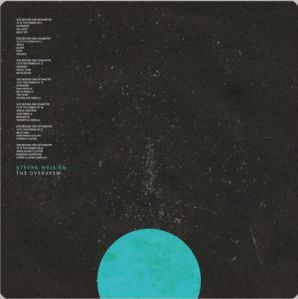

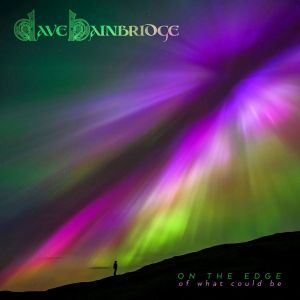




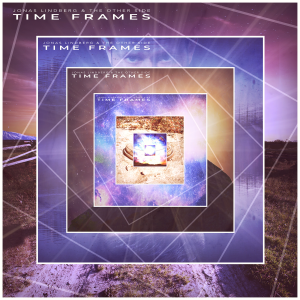


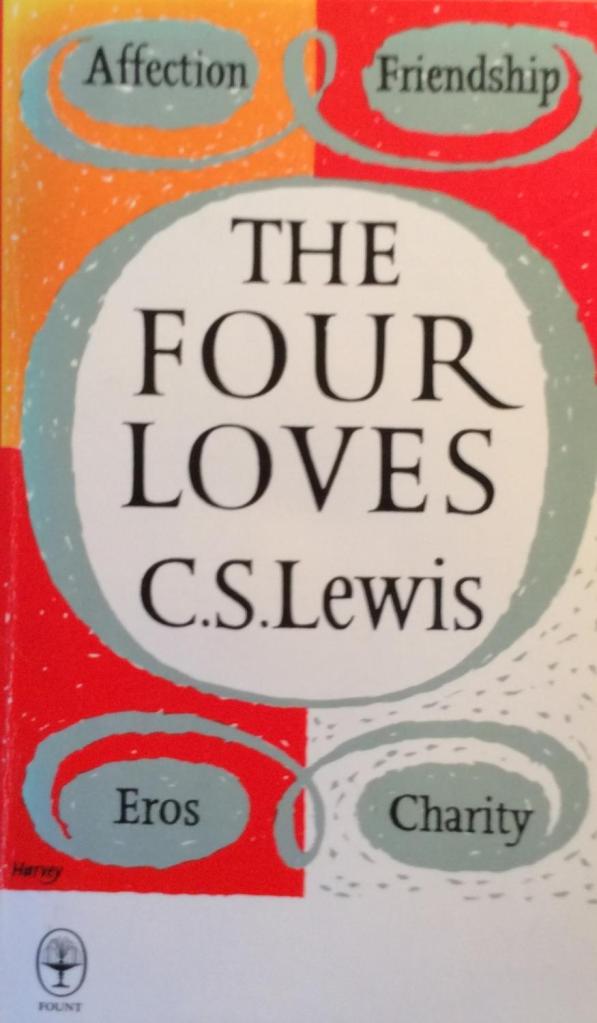


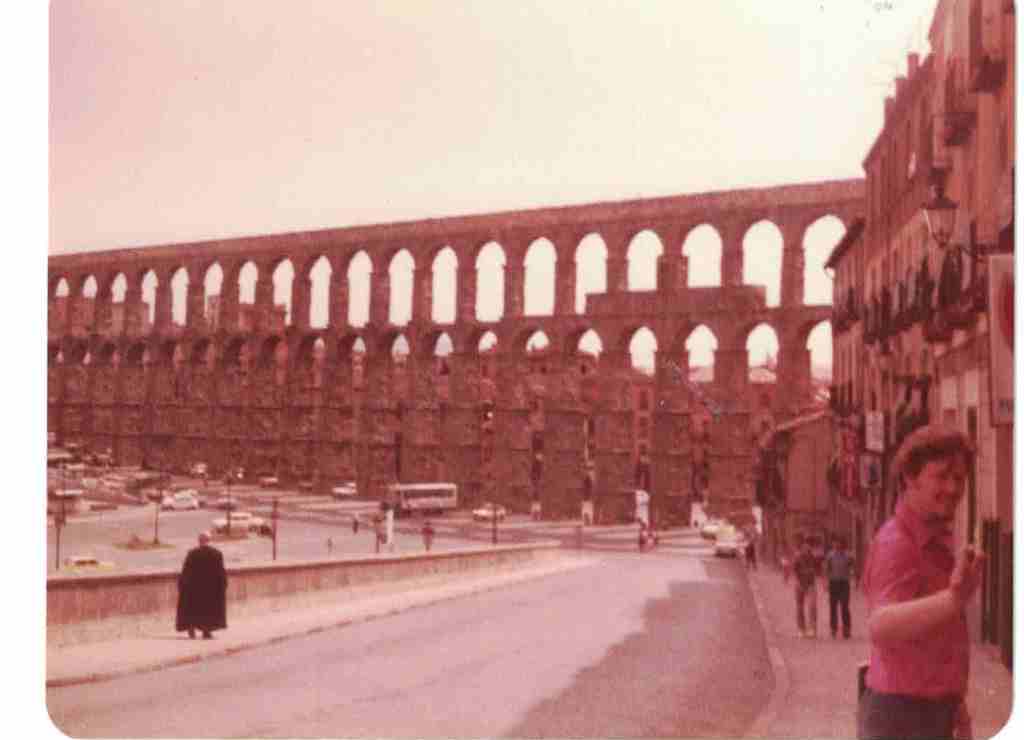

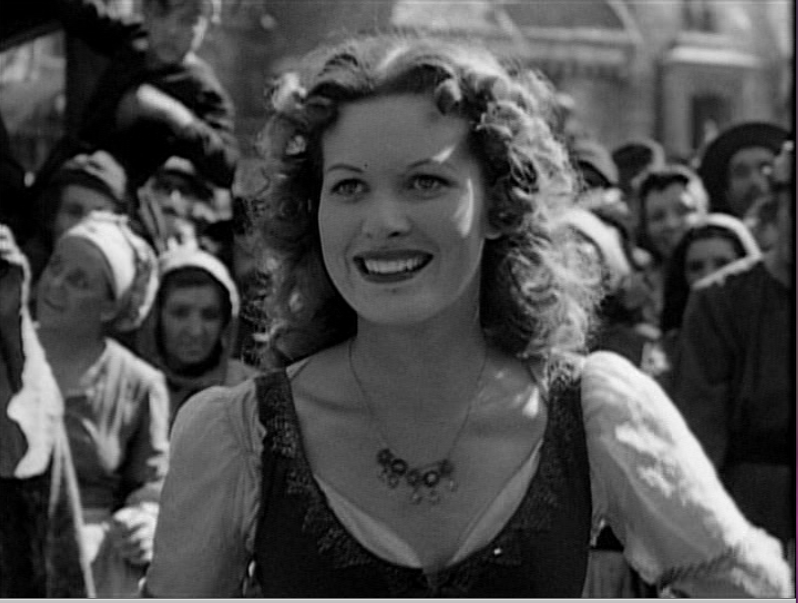
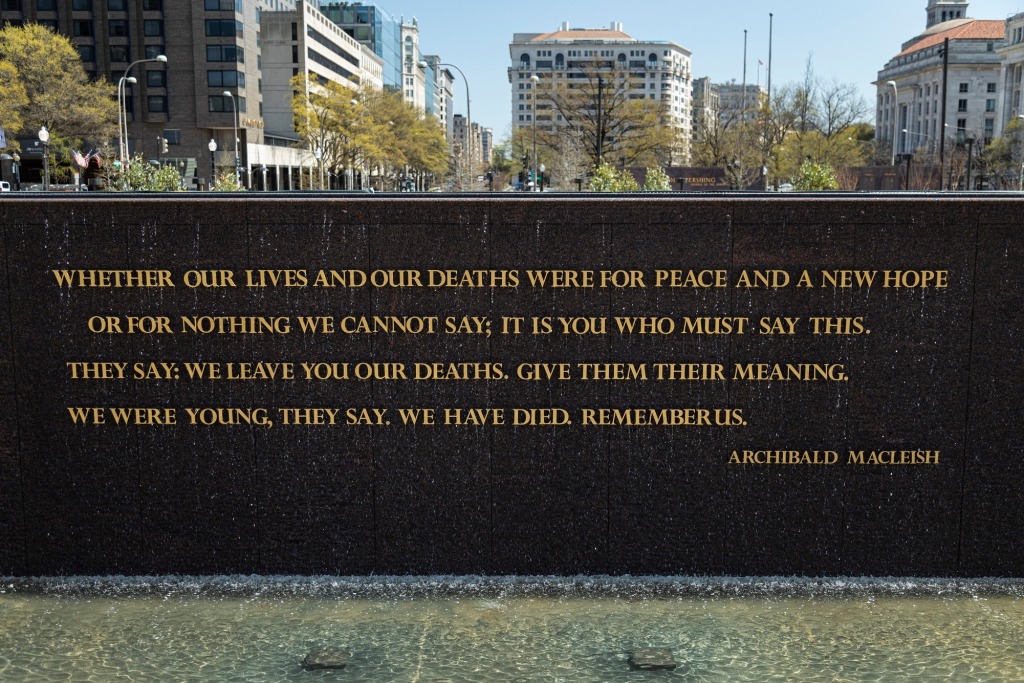

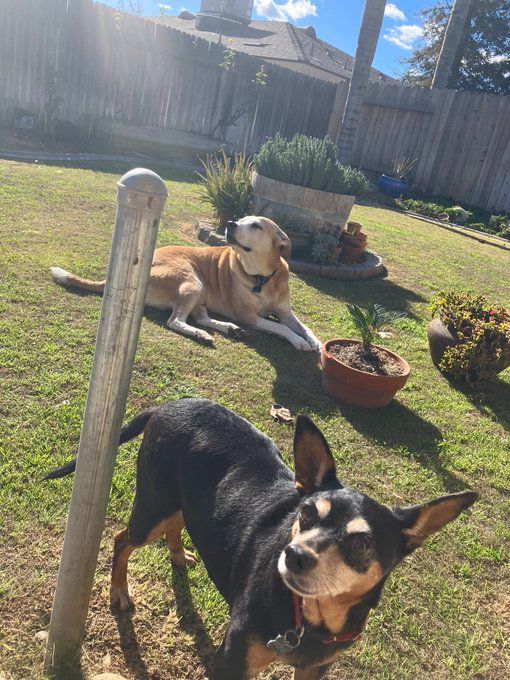
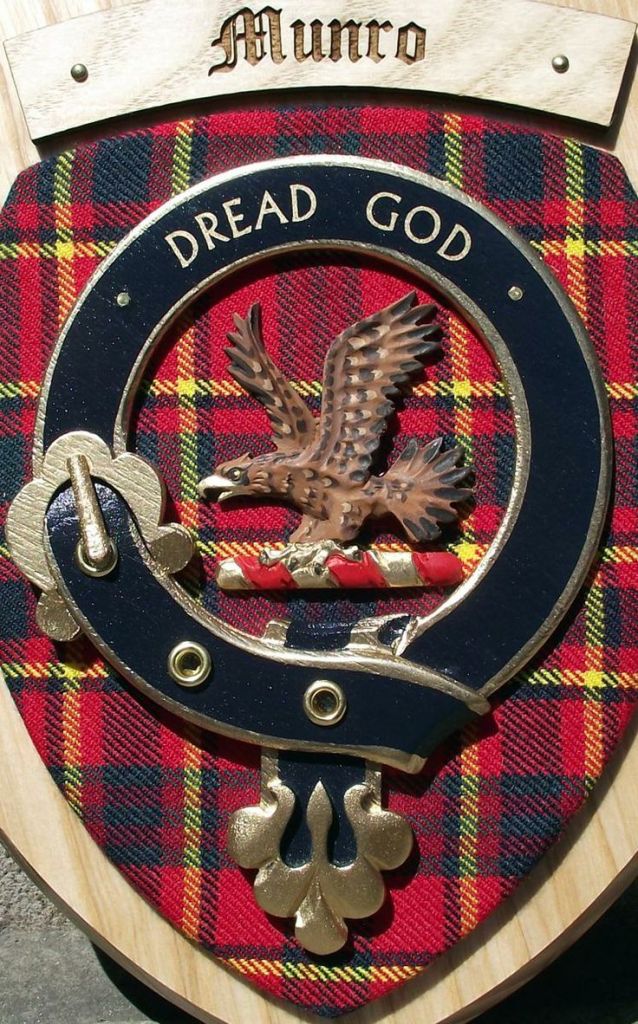


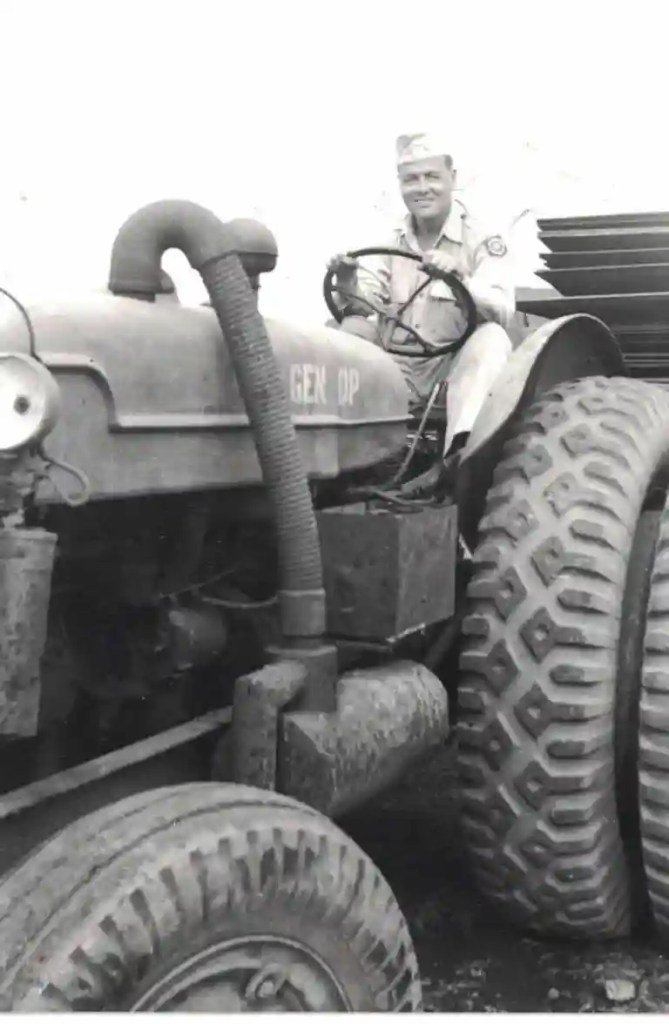

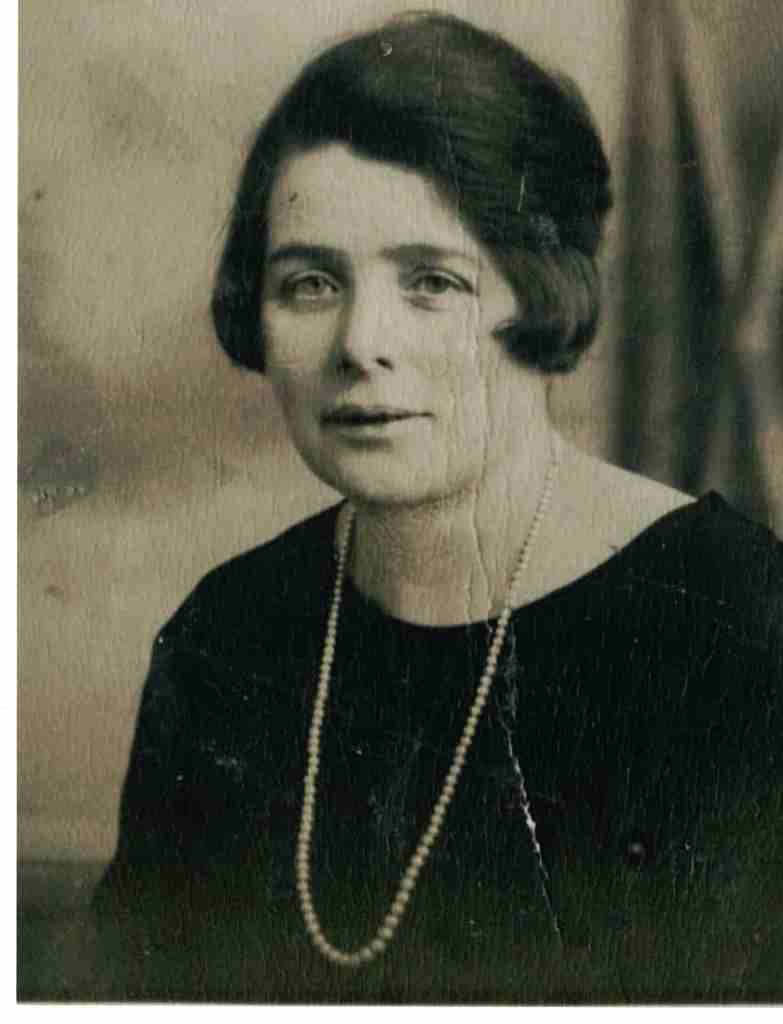





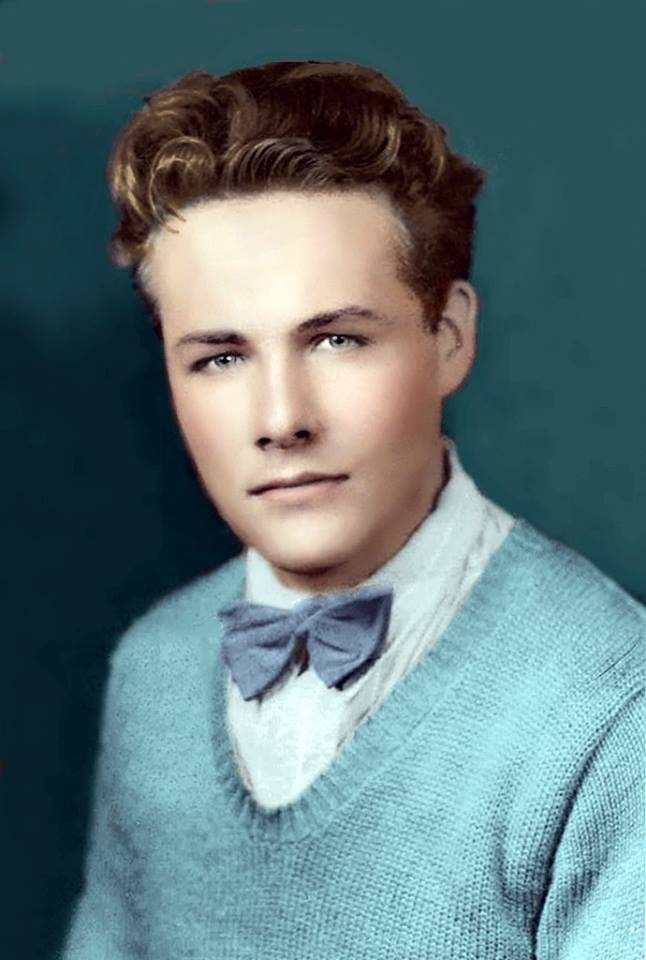


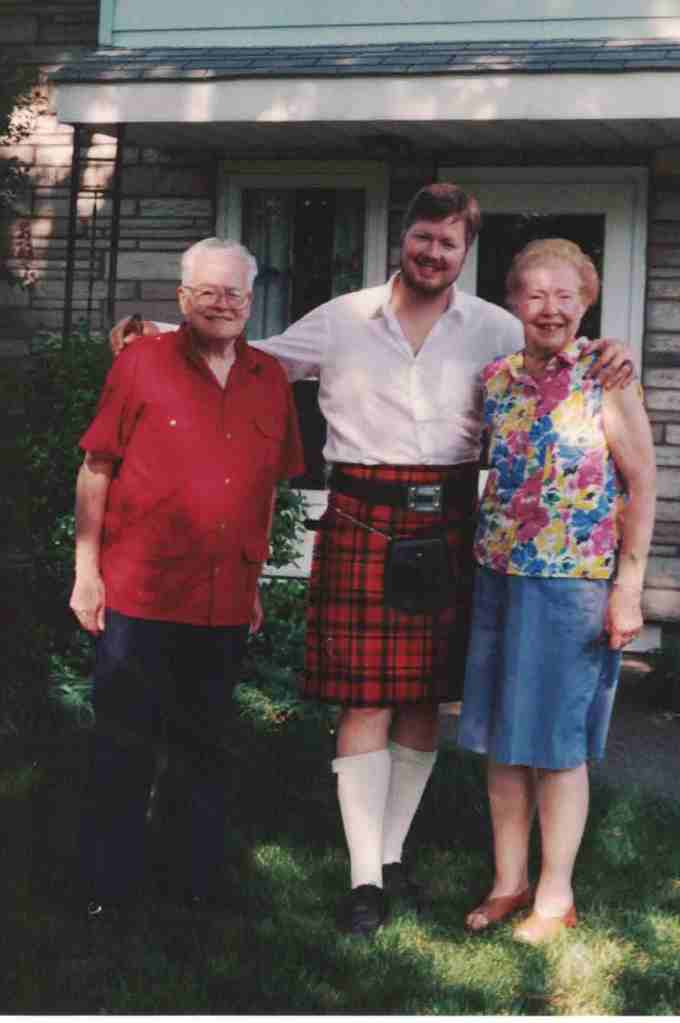
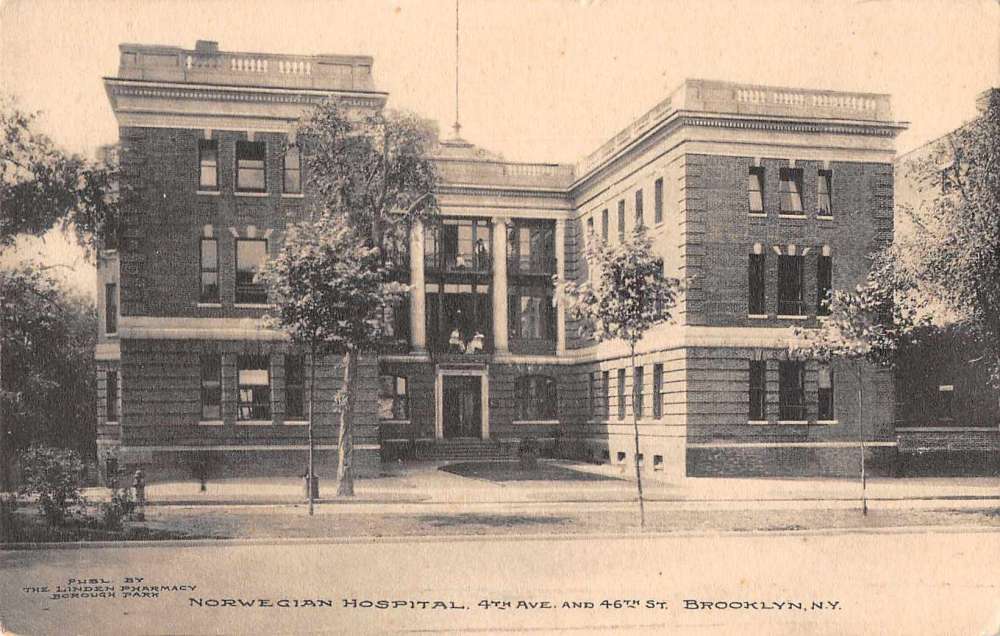




 Spirit of Cecilia
You must be logged in to post a comment.