The Gay-Conservative Conspiracy of the 1950s

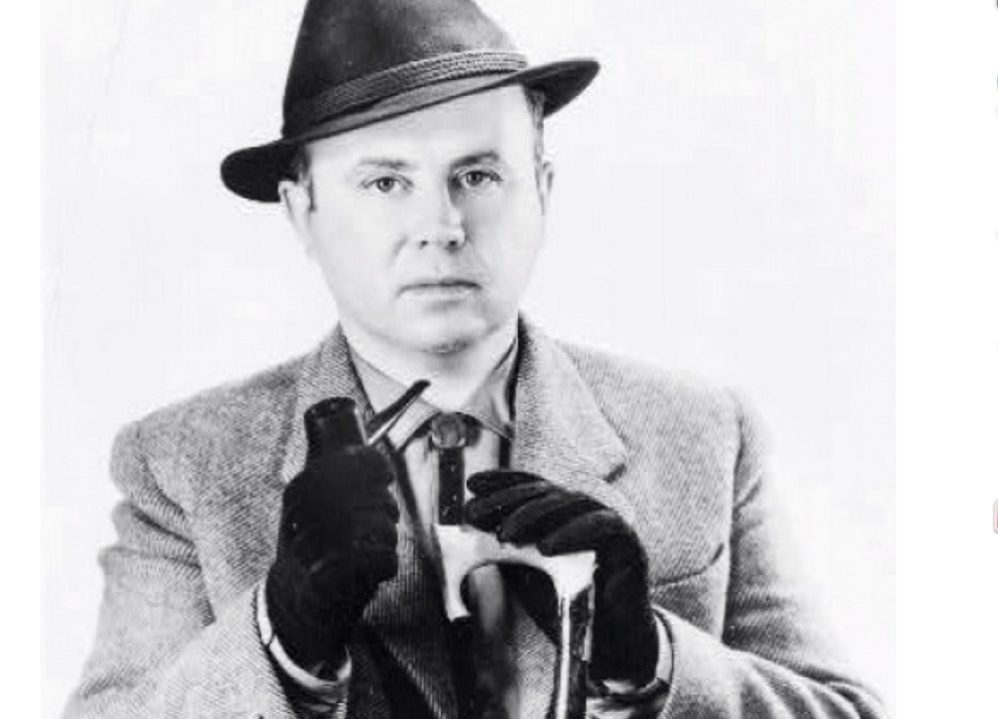
Russell Amos Kirk, 1950s

That most overrated academic fop of the twentieth-century, Peter Gay, spent a considerable amount of time and vitriol in the 1950s taking swipes at Russell Kirk, believing the duke of Mecosta a superficial romantic, stuck in the past, fighting for the most worthless and transient of causes. In 1961, he finally wrote something of substance (if poorly argued) against Kirk, replacing the one liners of the previous decade. Taking the efforts of Kirk and his allies into account, Gay lamented. “But the prevailing mood in the historical profession, always timidly sensitive to the drift of the times, is conservative,” he wrote in the prestigious Yale Review, a journal for which a number of prominent conservatives wrote as well. 

“The decline of Whiggism and Marxism has been accompanied by the rise of Toryism and Cosmic Complaining. Consider the adulation and exploitation of Tocqueville, a conservative too important to be left in the hands of conservatives; consider the absurdly inflated reputation of Burke, whose shrewd guesses and useful insights are placed like a fig leaf before his malicious incomprehension, confused politics and unashamed ignorance.” So much for all of the work of Russell Kirk, Leo Strauss, and Robert Nisbet. 

“Hogwash” Gay might as well have cried in his obvious frustration. 

“Consider the brave new words on the lips of philosophical historians: ‘complexity,’ ‘the human condition,’ ‘the crisis of our time.’ A bill of these things suggest that the assault of Whig clichés has laid us open to an assault by counter-clichés.” It should be noted here that both Friedrich Hayek and Kirk understood well the word, “Whig,” and they employed it properly, in ways that Gay simply failed to understand. Others, such as Caroline Robbins Douglass Adair, though not allied with the Kirks and Hayeks of the world, would have understood it as had Kirk and Hayek. “In discarding the liberal view of history, we have not replaced falsehood with truth, but one inadequate scheme of explanation by another. Conservative ideologues have been much helped, of course, by the effects of the recent researches which have torn so many holes in the fabric of liberalism. But superior information, while never in itself a Bad Thing, does not insure superior wisdom.”

There are probably many proper critics that could be leveled at Kirk, but superficiality and lack of wisdom would not spring to the mind of any sane critic. Perhaps not too surprisingly, Kirk’s close friend, Peter Stanlis, wrote a letter of unadulterated glee and mischief after reading Gay’s piece in the Yale Review. They had successfully gotten under the Columbia’s historian’s skin. 

Yet, it is well worth considering Gay’s critique, no matter how false it was. Though Gay failed to articulate his position well, he clearly “felt” some kind of upheaval in the history profession. Not being a part of the cause of that upheaval, the priggish Gay chose to lash out at Kirk and his fellow conservatives in an anti-quasi conspiratorial way.

Had Gay lost his mind, or, in his muddled confusion, was he on to something vital in the conservative movement?

Kirk, Hayek, Nisbet, and Strauss—along with Eric Voegelin and Peter Stanlis and others—had changed the debate. They had each—though to varying degrees—understood how important Burke and Tocqueville were as symbols in a way to bolster the West’s understanding of itself as it had defeated German fascism and Japanese imperialism, but now confronted Soviet and Chinese communism. With much effort, the great non-leftist academics had spent the decade and a half after the conclusion of World War II doing everything possible to promote the newly discovered figures of Burke and Tocqueville as the quintessential thinkers of the modern era to combat modernity. Not only had they networked with one another in person, they had professionally and quietly encouraged this or that scholar to debate this or that opponent of Burke and Tocqueville, whether in mass media, or in journals or periodicals, or at conferences. Often the defenses and attacks were open and direct, but, just as often, the conservatives and libertarians promoting Burke and Tocqueville came from the side or even the rear. 

In one telling example, Kirk attacked the well-recognized and most important 20-century scholar of Samuel Johnson, Donald Greene, using his review of the man’s book to promote the excellence of brilliance of Leo Strauss. If only Greene would read Strauss, Kirk suggested, he might be able to overcome his “logical positivism” and “latter-day liberalism.” Indeed, Kirk suggested that readers should merely pity Greene for being so uneducated. Once he read Strauss, Kirk continued, Greene would not only see the errors of his ways, but he would become a member of the “Great Tradition” of the western great books, thus seeing Johnson and Burke properly.

Not long after Kirk’s death in 1994, Peter Stanlis revealed just how detailed and intimate their concerted plan of attack had been. Because of the rise of Strauss and Nisbet, the two men believed that the western world had come to a “Burkean moment.” As much as each man loved and respect Edmund Burke, they clearly loved him for real and actual self as much as they loved him as a symbol. Socrates, Plato, Aristotle, Cicero, St. John, St. Augustine, Thomas Aquinas, Petrarch, and Thomas More could each be found in the thought of Burke, thus allowing the Anglo-Irish statesman to become a stand-in for all of the greats of western civilization. “The philosophical roots of modern political conservatism extend back over many generations through Burke and the natural law to the Middle Ages and classical antiquity,” Stanlis revealed in his 1994 talk about his secret alliance with Kirk. With Burke, Kirk and Stanlis could promote not only a just and humane conservatism but, perhaps more importantly, a vibrant, living Christian Humanism. That is, they could not only critique what was liberal and progressive and wrong in the modern world, they could also, perhaps more importantly, defend something positive from the past, a conserving of the true, the good, and the beautiful. And, they could do so in a gay and willing pride.

From Venus to Virgin

“Lustrous among the cloudbanks,” the goddess Venus descended into the grove of oak trees, telling her son, Aeneas, that her gifts were of divine origin, forged by the fires of her husband, Vulcan. Venus embraced Aeneas as she offered him the weaponry and armor. He, amazed, looks each piece over, one by one, unsure whether to be more shocked that his mother was a goddess or that she had defied her own father to aid him.

He cannot get enough of them, filled with wonder,

turning them over, now with his hands, now his arms,

the terrible crested helmet plumed and shooting fire

the sword-blade honed to kill, the breastplate, solid bronze,

blood-red and immense, like a dark blue cloud enflamed

by the sun’s rays and gleaming through the heavens.

Then the burnished greaves of electrum, smelted gold,

The spear and the shield, the workmanship of the shield,

No words can tell its power.

For there, upon the shield, was the entire story of Rome, its past, its present, and its future, for Vulcan possessed the power of the seer, and directed by his wife, he had written it all.

Armed by his mother’s confidence and gifts, the half-god Aeneas of the destroyed city of Troy conquered his Latin foes, creating a new people that would rule the Mediterranean for over a millennium.

As Socrates awaited his execution by the hands and vote of the Athenian people in 399BC, a “woman in white” appeared to him in a dream, assuring him that in three days, he would spend eternity with his people and the gods in the land of Phthia. Socrates found more comfort in this dream, than in all of his own logic or the reassurances of his best friend, Crito.

When two Lakota warriors—the first representatives of their people—traveled onto the Great Plains of North America, they encountered a vision of the Great Buffalo Woman, a being shrouded in white light. One of the Lakota could not see passed her beauty and immediately felt lust in his heart. The other, though, saw her for what she really was, the lawgiver. The Great Buffalo Woman destroyed the lustful one, but she rewarded the other with the laws to govern his people, the laws by which all good Lakota would live.

At the moment a young Celtic man needed a tangible sign to unify his warring peoples, the Lady of the Lake emerged to offer him the sword, Excalibur, to unite and lead his people into virtuous victory. So armed, Arthur created a brotherhood the ushered in a Kingdom of Summer. . . for a while.

At Princeton, an eager and enthusiastic young student asked T.S. Eliot just why were there three leopards in his poem of conversion, Ash Wednesday, and who was the lady?

Lady, three white leopards sat under a juniper-tree
In the cool of the day, having fed to satiety
On my legs my heart my liver and that which had been contained
In the hollow round of my skull. And God said
Shall these bones live? shall these
Bones live? And that which had been contained
In the bones (which were already dry) said chirping:
Because of the goodness of this Lady
And because of her loveliness, and because
She honours the Virgin in meditation,
We shine with brightness. 

To which, Eliot replied, is it not enough that the lady honors the Virgin? Pagan or not, does she not point to the Blessed Mother of God, and, thus, to God? It is more than enough, Eliot assured his audience.

When another frustrated king, an Anglo-Saxon who would one day be known as Alfred the Great, begged of God aid in his battle against the heathen Danes, not God, but the Blessed Virgin appeared to him.  As Chesterton recorded it:

“Out of the mouth of the Mother of God,

More than the doors of doom,

I call the muster of Wessex men

From grassy hamlet or ditch or den,

To break and be broken, God knows when,

But I have seen for whom.

“Out of the mouth of the Mother of God

Like a little word come I;

For I go gathering Christian men

From sunken paving and ford and fen,

To die in a battle, God knows when,

By God, but I know why.

And, yet, like most of us, Alfred craved sureity.  If he put his faith in Mary and in God, would he be rewarded.

And this is the word of Mary,

The word of the world’s desire

No more of comfort shall yet get,

Save that the sky grows darker yet

And the sea rises higher.

Then silence sank.

Venus might promise victory, but Mary, rightly, only offers hope.  Yet, it is a hope that breaks the bounds of the world, and shows us eternity.

Placing a Transatlantic Call

In the latest Spirit of Cecilia dialogue, Editor-In-Chief Brad Birzer and Arts Editor Tad Wert exchange thoughts on the massive set of new releases from progrock’s supergroup, Transatlantic. There are several different versions of The Absolute Universe (you can check them out here), and each one has its own charms.

Brad: Tad, I just finished watching the Transatlantic Roine Stolt interview (available on Youtube as a part of a series), and I couldn’t help but think of you.  I also couldn’t help but think–yet again–what a grand gentleman Stolt is. So interesting and intelligent. Prog musicians are articulate in general, to be sure, but Stolt is exceptional even among exceptional people. Does my soul good. He is, truly, The Flower King. 

I know that you like the new album(s), The Absolute Universe, from Transatlantic, and I very much do as well.  Indeed, I’m rather in love with the extended edition, and I’m growing very fond of the abridged version as well.  The more I listen to each, the more I realize how different (and yet so complementary) each is to the other.

What’s interesting to me is that from the opening minute, you know it’s a Transatlantic album.  There’s something about the instruments, the voices, and, especially, the energy that is uniquely Transatlantic.

As I’ve been devouring the new album(s) and anticipating the massive box set on its way in three or so weeks I’ve been waxing nostalgic.  I bought the first Transatlantic album, SMPTe, shortly after it came out.  A student (now a colleague in the philosophy department) had lent it–along with Flower Power by the Flower Kings–to me, and I was immediately taken with both.  Since then, I’ve bought every Transatlantic album–studio and live–as they’ve come out.  In many ways, my last twenty years have, in some way, been shaped by Transatlantic.

Then, of course, there’s the distinctive Transatlantic art.  The great Transatlantic ship is wonderful, and the band has, probably, the best font for any band since Yes’s classic signature.

Tad: Brad, you and I are on the same wavelength. I have been immersing myself in both versions of The Absolute Universe (How’s that for a provocatively countercultural title?), and I am increasingly drawn to the extended version. It turns out that Roine is the main mastermind behind that set, while Neal Morse is the one who put together the abridged version. 

I have not seen the Stolt interview, but Morse has begun his own podcast and his first guest is none other than Mike Portnoy! It is also on YouTube, and it is such a pleasure to watch and listen to two very close friends discuss all kinds of topics. I highly recommend you check it out.

I also grabbed my copy of SMPTe to listen to again, and it holds up incredibly well. I think it has stood the test of time – has it really been 21 years since it first came out? – and it can now be considered a progressive rock classic. Those first chords of All Of The Above are so stirring to me; I almost get emotional listening to them now. And as you mentioned, from the opening notes of Overture from The Absolute Universe, you know you’re listening to a Transatlantic album! When Portnoy’s drums kick in gear and start propelling the entire band – that is a very satisfying listening experience for me. Also, Morse’s organ playing the opening melody of Heart Like A Whirlwind (extended version)/Reaching For The Sky (abridged version) is a special moment.

I think you would agree with me that Morse dominated the first two Transatlantic albums (and probably the third) but on this one I get the sense that all the members had relatively equal input. I am especially pleased to hear Pete Trewavas stepping up and singing more lead vocals. His songwriting contributions are more accessible – in other words, poppier – than Stolt’s and Morse’s, which keeps things grounded. Hopefully this album will greatly expand their audience.

Brad: Excellent responses, Tad.  I didn’t know about the divided duties regarding two different versions of The Absolute Universe. I must admit, while I love both versions, I’m still much more taken with the extended version.  For two reasons, really.  First, I love all of Stolt’s guitar and vocal parts.  And, second, because my favorite track–”The World We Used to Know”–is only on the extended version.  “The World We Used to Know” is the quintessential Transatlantic song, blending the old so perfectly with the new. It’s clear that the band is honoring Yes and Rush in the song, but the song remains completely a Transatlantic track, despite its influences.

If I were forced to rank Transatlantic’s first four albums, I would rank them: SMPTe; The Whirlwind; Bridge Across Forever; and Kaleidoscope, recognizing that each is great.  That is, there’s not a huge difference between No. 1 and No. 4 in terms of quality.  I have to give the first place to SMPTe, mostly because of the memories associated with my first listen to it, twenty-one years ago.  Those opening chords still ring in my soul and play in my mind.  It’s such a classic.

Now, after having given The Absolute Universe several spins, I would place it in the No. 2 spot.  It might, in some ways, be better than No. 1, but I’m still too taken with SMPTe–even after 21 years–to rank it anything other than No. 1. Regardless, The Absolute Universe is truly special, and life is better because it exists.

Tad, what version did you end up buying?  At first, I ordered individual copies of the abridged and the extended, along with the blu-ray.  I quickly changed my mind, however, cancelled that order, and then ordered the deluxe package from Radiant Records.  I was a bit hesitant at first to do this, given the money involved, but now that I’ve heard and devoured The Absolute Universe, I regret nothing!

One thing that strikes me as interesting.  There’s definitely an overlap of style when one considers the Neal Morse Band, The Flower Kings, and Transatlantic, and these three bands have so critically defined Third-wave prog.  Yet, they have hardly any imitators.  It’s impossible to imagine the current prog movement without, for example, Steven Wilson and all of his imitators.  Why isn’t the same true of Stolt, Morse, Portnoy, and Trewavas?

Tad: Good question, Brad, and one that had not occurred to me until you asked it. My first answer is because they are all such incredibly talented artists that any attempts at imitation would pale in comparison! But I also think Portnoy doesn’t get enough credit for his role as arranger and producer in Transtlantic, and he is simply inimitable in the music world. WIthout his energy and guidance, TA would not be near the artistic force they are. 

Like you, the more I listen to both versions, the more I prefer the extended one, Forevermore. I go into greater detail why in my earlier post on this album.

My ranking is the same as yours, except I would place Bridge Across Forever ahead of The Whirlwind. I think the melodies are stronger on BAF. Also, I always get a kick out of Suite Charlotte Pike, because Charlotte Pike is a road near my home that I often drive on!

As far as what edition(s) I ordered, I went with both the extended and abridged versions, but I am very tempted to go for the big box like you did. I imagine some people might consider the release of so many different versions a crass commercial move, but it’s really not. Every version is a separate work that stands on its own, and I am grateful to Morse, Portnoy, Stolt, and Trewavas for bestowing so much music on us.

I Want My MTV Mixtape

I don’t think I’m alone in finding music in the streaming era frustrating. As a musician, even though it is easier and less expensive than ever to make your music available, it very difficult to get your music heard. When I was growing up, if you made it on to MTV – you made it. If you made it onto mixtapes, you were at least cool. I’ve resolved to make an extra effort to look for other artists making high quality music and help to bring them some attention. I learned about the first three bands on Time Hinely’s Dagger Zine.

Also, consider this a mix tape from a friend. A short mix tape because who has 60 or 90 minutes anymore? If you like it, there will be more.

Swansea Sound – Corporate Indie Band If Swansea Sound reminds you of something you heard on college radio in the late 80s or early 90s, you are correct. It could have very well been one of Amelia Fletcher and Rob Pursey’s early bands Talulah Gosh or Heavenly.

The Bats – Beneath The Visor From New Zealand, they have been around since 1982. (Hey Mark, Don’t these guys remind you of The Vulgar Boatmen? Yes. I can’t help myself.)

Louis Philippe & The Night Mail – Living On Borrowed Time Just check out the walking bass line. (I’ve listened to this song five times in a row writing this post.)

To the Music World Unknown – The Mixus Brothers A band from Pittsburgh that is much, much artier than it may appear on the surface, as this video shows.

The Deep Roots – Over Our Heads Rather than shameless self-promotion, I’d like to consider this as a credibility check. It also fits with the theme.

Mark Sullivan is the guitarist in The Deep Roots

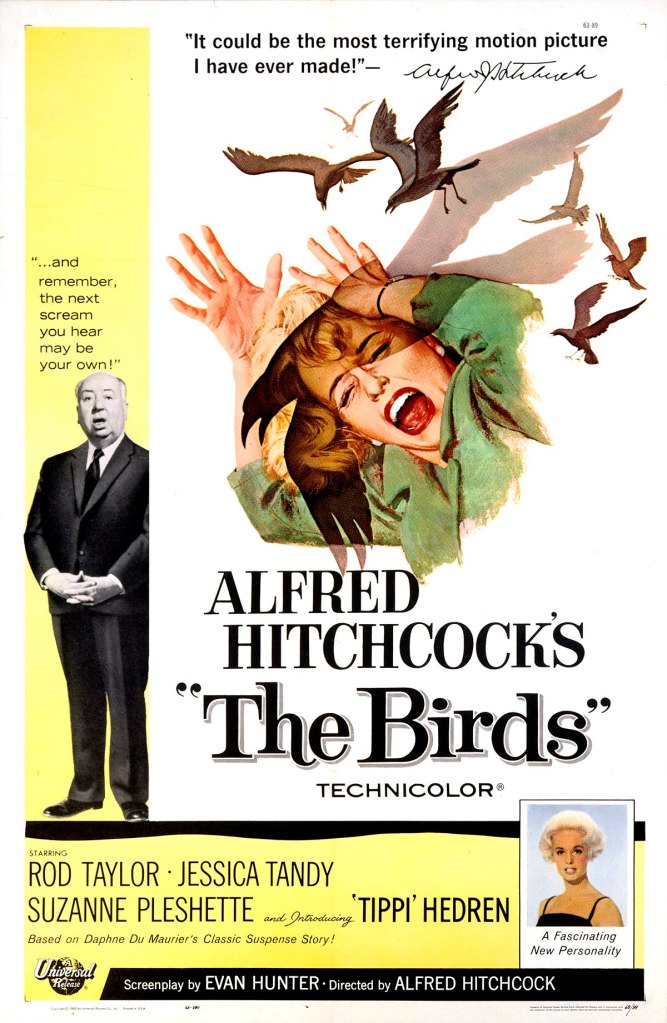
Hitchcock’s The Birds

The Idyllic Torn Asunder: Hitchcock’s The Birds

“I am neither poor nor innocent”—Melanie Daniels, protagonist of Hitchcock’s The Birds

Cinema as Art

From the time I was thirteen or so, I had fallen deep in love with movies.  I didn’t actually grow up watching a lot of TV shows, but I certainly loved renting movies and enjoying them in the comfort of my house, especially when my parents were out playing Bridge or doing something similar with their friends. 

For me—then and now—the more intense the movie, the better, though I also loved stupid, slapstick comedies.  Several of my high school friends appreciated and understood the actual art of cinema far more than I did, and I learned a great deal from them about directors, cuts, camera angles, actors, lighting.  Even to this day, I can’t watch anything other than comedy without analyzing every aspect of the film.

College didn’t give me much time for movies, but two events in graduate school not only re-awoke my passion but increased it exponentially.  The first, and less important of the two, was the attending of a film studies class on the 1956 version of Invasion of the Body Snatchers.  Everything my friends in high school had taught me sharped to a finely and intellectually honed blade of finest steel as the professor explained how to study a film—similar to a novel, but with a different kind of depth—walking through the film, scene by scene.  I was, to put it crudely, rather blown away. 

Hitchcock, His Women, and Me

Additionally, while in graduate school, two friends really shaped my view on films.  The first was Craig, an apartmentmate as well as office buddy.  As it turned out, Craig knew British film really well.  I’d never appreciated it or PBS before, but he gave me that love of both.  Second, I found out that another close friend was also a Alfred Hitchcock (1899-1980) fanatic.  Tamzen (my great friend to this day) and I spent many hours watching and analyzing Hitchcock.  These moments with Craig and Tamzen are ones I still treasure.

Like Tamzen, I considered myself a Hitchcock fanatic as well, preferring a Hitchcock film even to a science fiction one.  I especially loved, in order, Rope, Vertigo, Psycho, Strangers on a Train, and North by Northwest.  I never fell for Kim Novak or Vivian Leigh, but I have always thought Grace Kelly and Tippi Hedren two of the most beautiful women I’d ever seen.  Phew.  I still do, though, of course, Kelly played attractive characters while Hendren played repulsive ones.  To my mind (that is, in the world of celebrities), only Morena Baccarin rivals Kelly.

[To continue reading, please scroll down and hit the page 2 button]

WHAT CARE FOR THE ELDERLY REALLY COSTS US

In Henri Nouwen’s book Aging: The Fulfillment of Life, he tells this anecdote:

Not too long ago a thirty-two-year-old, good-looking, intelligent man, full of desire to live a creative life, was asked: “Jim, what are your plans for the future?” And when he answered: I want to work with the elderly and I am reading and studying to make myself ready for that task,” they looked at him with amazement and puzzlement. Someone said, “But Jim, don’t you have anything else to do?” Another suggested, “Why don’t you work with the young? You’ll really be great with them.” Another excused him more or less, saying: “Well, I guess you have a problem which prevents you from pursuing your own career.” Reflecting on these responses, Jim said: “Some people make me feel as if I have become interested in a lost cause, but I wonder if my interest and concern do not touch off in others a fear they are not ready to confront, the fear of becoming an old stranger themselves.”

Commenting on this, Nouwen expounds, “Thus care for the elderly means, first of all, to make ourselves available to the experience of becoming old.” And, in another place he asks, “How can we be fully present to the elderly when we are hiding from our own aging? How can we listen to their pains when their stories open wounds in us that we are trying to cover up?”

This, Nouwen diagnoses, is the true cost to caring for the elderly – that we embrace the vulnerability of our own aging selves.

Are we prepared to dispense with “the illusion that life is a property to be defended and not a gift to be shared”?

Care for the elderly, insists Nouwen, does not only consist in practical acts of service that, in fact, “are often offered in order to keep distance rather than to allow closeness.” Instead, caring costs us our entire aging selves.

“Only as we enter into solidarity with the aging and speak out of common experience, can we help others to discover the freedom of old age,” says Nouwen.

Only by awakening to the realization that we are all aging can we begin to shift our culture from one of segregation to one of solidarity.

To get a weekly roundup of posts like these, sign up here at DyingToMeetYou.ca

Quoted: The Federalists and Anti-Federalists

During times of national crisis, turmoil, and dissatisfaction, we should always return to first principles and right reason.

Some of my favorite quotes from the Federalists and Anti-Federalists:

The Federalists

“We may define a republic to be, or at least may bestow that name on, a government which derives all its powers directly or indirectly from the great body of the people; and is administered by persons holding their offices during pleasure, for a limited period, or during good behaviour.  It is essential to such a government, that it be derived from the great body of the society, not from an inconsiderable proportion, or a favoured class of it; otherwise a handful of tyrannical nobles, exercising their oppressions by a delegation of their powers, might aspire to the rank of republicans, and claim for their government the honourable title of republic.” (Fed 39)

“A handful of tyrannical nobles” controlled the states, and the federal government could intervene to protect the rights of the citizens of those states.  And yet, Madison continued in Federalist 39, “federal” did not mean the same thing as “national,” for the ratification demanded the “assent and ratification of the several states, derived from the supreme authority in each state,” the citizens of the respective state.  In deciding whether or not to ratify the Constitution, each state “is considered as a sovereign body, independent of all others, and only to be bound by its own voluntary act.” (Fed 39)

“Justice is the end of government,” Madison stated bluntly in Federalist 51, following Plato and Aristotle.  “It is the end of civil society.”

In discussing the need for a strong executive branch in Federalist 70, Hamilton explained: “A feeble executive implies a feeble execution of the government.  A feeble execution is but another phrase for a bad execution: and a government ill executed, whatever it may be in theory, must be, in practice, a bad government.” Arguments for energy applied to more than just the executive branch. 

“Energy in government is essential to that security against external and internal danger, and to that prompt and salutary execution of the laws, which enter into the very definition of good government.  Stability in government is essential to national character, and to the advantages annexed to it, as well as to that repose and confidence in the minds of the people, which are among the chief blessings of civil society.” (Fed 37)

The Anti-Federalists

Though never the cohesive force the Federalists proved to be, the Anti-Federalists feared what they considered to be the objective of the Constitution: a consolidated, national government.  Such a desire, the Federal Farmer, a leading Anti-Federalist, argued, mostly likely came from “those who expect employments under the new constitution; as to those weak and ardent men who always expected to be gainers by revolutions, and whose lot it generally is to get out of one difficulty into another.” Federalists merely played on the fears of the people, promoting the notion that the current government is fully in a crisis.  The result, the Federal Farmer claimed, is predictable.  “Instead of being thirteen republics under a federal head, it is clearly designed to make us one consolidated government,” he wrote.  “This consolidation of the states has been the object of several men in this country for some time past.”

Another Anti-Federalist, Brutus, claimed the constitution would render the states obsolete through the “necessary and proper clause” of Article I, Section 8. Though the Federalists might write in placating tones regarding the status of states prior to the ratification of the Constitution, the tone would necessarily change once the Constitution was implemented.  “It will be found that the power retained by individual states, small as it is, will be a clog upon the wheels of the government of the United States,” Brutus wrote.  This will follow the law of nature, as “every body of men, invested with power, are ever disposed to increase it, and to acquire a superiority over every thing that stands in their way.”

Old Whig: “Before all this labyrinth can be traced to a conclusion, ages will revolve, and perhaps the great principles upon which our late glorious revolution was founded, will be totally forgotten.  If the principles of liberty are not firmly fixed and established in the present constitution, in vain may we hope for retrieving them hereafter.  People once possessed of power are always loth to part with it. . . . The legislatures of the states will be but forms and shadows, and it will be the height of arrogance and presumption in them, to turn their thoughts to such high subjects. . . . The great, and the wise, and the mighty will be in possession of places and offices; they will oppose all changes in favor of liberty, they will steadily pursue the acquisition of more and more power to themselves and their adherents.  The cause of liberty, if it be now forgotten, will be forgotten forever.” 

Old Whig: “But yet we find that men in all ages have abused power, and that it has been the study of patriots and virtuous legislators at all times to restrain power, so as to prevent the abuse of it.”

Brutus: “The nations around us, sir, are already enslaved, and have been enslaved by those very means; by means of their standing armies they have every one lost their liberties; it is indeed impossible that the liberties of the people in any country can be preserved where a numerous standing army is kept up.”

The “Awesome” ‘80s: Remembrances of Fear and Excellence

[This originally appeared at The Imaginative Conservative]

It’s hard not to laugh when my students think they’re imitating or comprehending the zeitgeist of—whether to honor or mock—the 1980s. 

Though, in almost every way, it’s impossible to fault them for this.

The individual members of the incoming freshman class will have entered this world sometime in 1996 or 1997, a full seven to eight years after the collapse of the Berlin Wall.  To their active and eager minds, the 1980s meant lots of repetitive electronic pop music, an MTV that actually played music videos, leg warmers, bright colors, big checks and plaids, baggy pants and oversize shirts, top siders, goofy hair styles, televangelists, “duck and cover” safety from nuclear weapons, general happiness and prosperity, and John Hughes movies.  It was a time before time, an era without wardrobe malfunctions, wacky chief executives, or reality TV.

Not all of these memories are wrong, of course, just selective. 

From what I can tell, most current students idealize the decade in much the same way my generation—coming of age in the 1980s—viewed the 1950s.  That nearly perfect decade represented peace, prosperity, primitive rock music, American assertion of power without lots of consequent deaths, innocence and naiveté, white t-shirts with packs of cigarettes rolled up in one’s sleeve, poodle skirts, leather jackets, James Dean shades, motorcycles, Marlan Brando cool, and tail fins on huge cars. 

Everything, of course, was in black and white as well in the 1950s.

Well, so we thought.

But, two things must be remembered by those of us who lived in the 1980s and who want to teach our students the truth. 

[Scroll down a bit to go to Page 2 of this article]