Ray Bradbury’s Last Interview by Sam Weller

A review of Sam Weller, ed., Ray Bradbury: The Last Interview and Other Conversations (Brooklyn, NY: Melville House, December 2014), xii + 93 pp.

One of the hardest things I’ve had to assess in my professional life as a historian and a biographer is just how much to take seriously in a person’s life.  I consider, pass, and render judgments on a moment-by-moment basis!  Judge not, lest you be judged.  Oh boy.  I’m in trouble. I must always ask, how much do I credit something said on day X vs. day Y?  I can assure you, it’s not easy.  One of the many things I love about biographers such as Joseph Pearce and Steve Hayward and David McCulloch is that they take chances.  The biographer is not a mere antiquarian, but an observer who has to place his own being within the soul, eyes, and brain of his subject.  It was very difficult with Kirk.  He had a great fondness for self-proclaimed individualists such as Albert Jay Nock and Isabel Paterson, but he despised individualism as an ideology.  How does one take all of this in?  And, Kirk was much more skeptical in his younger years of government than in his later years?  As a biographer and scholar, do I claim the later attitude destroys the younger?  Surely, there must be a continuity rather than a breach?

And, then, sometimes, we can only go on what evidence we have.  We barely know person A, but she left a diary that covered three months of her life in 1778.  Do we extrapolate a life from three months of intimate revelations?  Sometimes, it is all we can do, and we have to make the best of it.

With Ray Bradbury, the problem is not too little information, but too much.  And, not just “too much,” but an avalanche, a tidal wave, a flood, an F5 tornado just having passed through the feed lot. . . well, you get the idea.  And, yet, with Bradbury, more is never enough.  Amazing that God just makes a few of those in His image so endlessly fascinating.  Bradbury is one of those.  What was God thinking when he made Ray?  The man just overflowed with creativity, life, imagination, and everything else that matters in our whirligig of existence.

Melville House, a publisher on the move, has recently published a series of “Last Interviews” with great authors.  Thus far, the series includes Kurt Vonnegut, Jacques Derrida, Hannah Arendt, and a few others.  Sam Weller, who spent that last dozen years with Bradbury, put together this book.  Weller, it should be noted, does incredible work, and he does not take the trust that Bradbury showed in him lightly.  At the very end of his life, Bradbury admitted that Weller probably understood him better than he, himself, did.  And, very touchingly, during their very last meeting, Bradbury admitted that he considered Weller the son he’d never had.

I don’t want to give too much away, but here are a few tidbits from the book to give you a sense of its beauty and why you should own a copy and treasure it.

The secret of life:

The secret of life is being in love.  By being in love, you predict yourself.  Whatever you want is whatever you get.  You don’t predict things.  You make them.  You’ve gotta bee a Zen Buddhist like me.  Don’t think about things.  Just do them.  Don’t predict them.  Just make them (4).

On comic strips and books:

Because I’ve been collecting comic strips all of my life.  I have all of Prince Valiant put away.  I have thirty years of Prince Valiant Sunday illustrations put away.  I have all of Buck Rogers put away, too.  I put those away starting when I was nineteen years old.  So my background in becoming a writer was falling in love with comic strips. (8)

On the moment:

Every single moment.  Every single moment of my life has been incredible.  I’ve loved it.  I’ve savored it.  It was beautiful.  Because I’ve remained a boy.  The man you see here tonight is not a man, he’s a twelve-year-old boy, and this boy is till having fun.  And I will remain a boy forever. (10)

On science fiction vs. fantasy

I had a hell of a lot of fun writing [Fahrenheit 451].  It just came with its own spirit.  But now that it’s everywhere, I’m so happy that so many people love it.  I love that book too.  Remember this—I am not a science fiction writer.  All of my books are fantasy writings.  All my books are fantasies.  But the one book that I’ve written that pure science fiction is Fahrenheit 451.  So I’m glad that I wrote it, and I’m glad that you feel that way about it, too (20).

Let me also state—especially in this world of intangibles and ebooks and other bizarrenesses—this is a beautiful book.  A nice cardboardish cover with fine paper, Ray Bradbury: The Last Interview is a joy to hold.  It’s also delightfully short.  I mean this in the best way.  It’s the kind of book you can spend a later afternoon and evening enjoying.  Frankly, serious publishers need to offer such diversity in length and topic more often.  There are nights that demand serious reading and full immersion.  Other nights call out for a sprinkling and thoughts of goodness but not of life-or-death import.  Bradbury was a truly wise man, a gifted artist, and Weller captures and conveys that Bradbury that we all want to know and love perfectly. 

Ray Bradbury was a national treasure—indeed a treasure of western civilization—and Weller’s work on and with the great author is a Godsend.  There is not a page, let alone a paragraph, in which Bradbury does not share a thought worthy of reflection and meditation.

Like Russell Kirk, Bradbury despised modern technology and especially automobiles.  Unlike Kirk, however, Bradbury got to pilot the Mars rover from the Jet Propulsion Laboratories.  “So while he hasn’t driven on the 405 Freeway, he’s driven across the sand dunes of Mars—and they actually gave him a little Mars driver’s license” (19).

How fitting.

Porcupine Tree’s Delerium Years: The Best Boxset You Don’t Own

Image borrowed from the Burning Shed website.

Few bands in the prog world have done as much to shape the last quarter century of the genre as has Porcupine Tree.  In many ways, they defined what is often called “third-wave prog,” giving it a certain psychedelic and hard edge. 

The glorious Delerium Years, 1991-1997, boxset captures the earliest part of the band’s history in a rich way.  Indeed, I would go so far as to say it’s the nicest boxset I now own, and I’m comparing it against/to boxsets/earbooks from Rush, Big Big Train, Spock’s Beard, Yes, Chris Squire, Ayreon, Dave Brubeck, Steven Wilson (solo), and others. 

The Delerium Years comes with the latest mixes of the five major releases from the band: On the Sunday of Life; Up the Downstair; The Sky Moves Sideways; Signify; and the live Coma Divine.  Each CD is individually packaged within the larger box set, though absent the individual booklets with lyrics and liner notes.  One can find all the liner notes and lyrics in the book that comes with the set—more on this below.  The Delerium Years also—rather wonderfully—includes the more experimental Voyage 34; Staircase Infinities; Insignificance; and Metanoia. Best of all, at least in terms of CDs is the inclusion of Transmission IV, a wild 40-minute improvisational rock epic, “Moonloop,” and a disk of previously unreleased tracks, The Sound of No One Listening. Though I love all the music, I’m most taken with “Moonloop.”

[Please scroll down to go to Page 2]

Decorum and the Conservative Soul

[This piece is originally from 2015]

While my memories might verge on the edge of fuzzy nostalgia from time to time, I remember quite clearly what the women and men of the 1970s did in small-town neighborhoods.  In those years, I absolutely loved reading (and researching and writing—though, this would be another post), but I also loved running, biking, and exploring.  I could be. . . rather. . . well. . . hyper.  When I got too hyper and misbehaved, neighbors (usually women, as the men were at work) corrected me.  I don’t ever remember being spanked by a neighbor, but I certainly remember receiving stern “talking to”s.  The worst, of course, came if the neighbor decided to call my mom and let me know that I’d misbehaved.  If it went that far, I’d embarrassed not just myself but my entire family.

Regardless, in the 1970s, it was not just the right but the actual duty of the neighbor to discipline when necessary.  I certainly never questioned this, though I did sometimes fear it.

I also remember eating at a good but not excellent restaurant in my hometown of Hutchinson, Kansas, when I was in fourth or fifth grade.  A man at another table cussed.  When he did, heads turned, but everyone let is slide, presuming it was a one-time outburst.  When he continued to offer foul language at full volume, however, the other men in the restaurant became agitated, formed a small group, and approached the offender, letting him know in no uncertain terms that he had crossed a line and needed to cease such behavior.  My memory is that he needed no more persuasion after the others approached him.  Most likely, the men who approached the offender didn’t know each other, but they had a common purpose once he disrupted the atmosphere.  They knew it, and so did everyone else in the restaurant. 

Why these autobiographical stories?  Because, in 2015, I’m lucky if I can get out of a Wal-Mart without overhearing another shopper dropping the f-bomb, usually at her or his own kids.  What happened between 1975 and 2015?  A lot, apparently.  But, it’s not just Wal-Mart.  It’s in nearly every airport (once distinguished by some class—in dress as well as language), in nearly every shop, and certainly at every gas station.  But, if course, such horrific language is not just in person to person to communication.  TV shows—at least the science fiction ones I like—use sh*t without even the pretense of restraint, and podcasts about culture drop the f-bomb without any semblance of discrimination.

[To continue reading, please scroll down a bit to hit page 2]

A Deluge Of Music From Transatlantic

Prog supergroup Transatlantic (Mike Portnoy, Neal Morse, Pete Trewavas, and Roine Stolt) are releasing their fifth album next month, and it is an unprecedented project. Fans have a choice of not one, but TWO versions of the new album, entitled The Absolute Universe – a two-disc edition and a single-disc one, or a huge 5-LP, 3-CD, Blu-Ray boxset that includes both. In case you’re assuming the single-disc album is merely an edited, shorter version of the two-disc one, let me set you straight: these are two different albums that share some of the same musical themes and a few songs.

Let’s start with the single-disc version, The Breath of Life. The most obvious comparison is to Transatlantic’s third album, The Whirlwind, because TBOL is also one long song divided into sections. I think it is superior to The Whirlwind due to a greater variety of melodies and musical styles. The band has never sounded tighter, either. Portnoy’s drum work is phenomenal, particularly on the King Crimsonesque Owl Howl. All the members take lead vocals for various sections, and they all contribute music compositions. Trewavas’ Solitude is an especially nice passage, while Morse adds his unerring musical magic throughout the album.

Something I find fascinating is Morse’s statement in the liner notes that “everyone writes their own lyrics to their sections and we don’t usually discuss what it’s all about. Sometimes we’re writing about different things in different sections, but somehow it all works together in the end.” That four different personalities can combine to create as cohesive a work as The Absolute Universe is nothing short of miraculous.

Portnoy has stated that The Absolute Universe is a concept album, and that it touches on the events of 2020. For example, Morse’s lyrics

Where were you when everyone/Crashed and burned and fell/Into the silence of the sun/With nothing to be done

refers to his sense of God abandoning the world at the height of the pandemic.

Likewise, the lines

Where were all the seats preferred/And all the wise men winding up/The wisest of all words/And God’s love like dinner served/But now we wonder at the warning

is about lockdowns prohibiting gatherings and other social interaction.

TBOL ends on a high note with the exhilarating The Greatest Story Never Ends which segues into the spectacular finale of Love Made A Way, which is an acknowledgment that God actually has been present throughout all the tribulations of 2020. Musically, this song is one of the finest Transatlantic has ever recorded.

After listening several times to The Breath Of Life, I turned my attention to the double-disc Forevermore expecting to hear longer versions of the songs. Nope! This is a separate album from TBOL that happens to share a few musical sections. As good as TBOL is, Forevermore is even better. I can’t put my finger on exactly why I prefer it, except that it strikes me as more energetic and the songs that are unique to it are simply wonderful.

For example, if I only had TBOL, I would miss hearing Heart Like A Whirlwind, The Darkness In The Light, the delightfully poppy Rainbow Sky, and Stolt’s magnificent The World We Used To Know. Those are all essential Transatlantic songs now, and I would be much poorer for not having heard them.

So what’s my recommendation? Fans of Transatlantic will want to get both albums. True fanatics will splurge for the box set, which includes both versions on CD and vinyl, as well as a BluRay documentary of the making of The Absolute Universe. If I had to choose just one, I would pick Forevermore without hesitation. The good news is, you can’t really go wrong – it’s ALL great music, no matter what you go for. 

You can pre-order The Absolute Universe at nealmorse.com.

Update: I neglected to mention that the BluRay also has a 5.1 mix of the album, and you can purchase it separately. For those fans with surround sound systems, that is probably the best deal!

The room in which you die

One thing I found interesting while travelling throughout Europe was the various occasions on which I would behold the room in which a notable person had died or, at least, a reproduction of it.

Nowadays, it is so common for people to die in hospitals but just imagine if you died in your own room and then it became a tourist attraction for centuries to come…

Read more.

Can Conservatism and LIbertarianism still Fuse?

When the forces of American progressivism emerged in the 1880s and 1890s, those who would one day be labeled as conservatives, classical liberals, and libertarians found themselves quite ill-prepared for the intellectual and political onslaught.  Perhaps the best analyst at the time progressivism emerged, somewhat surprisingly, was E.L. Godkin, the venerable founder of THE NATION.

It was the rights of man which engaged the attention of the political thinkers of the eighteenth century.  The world had suffered so much misery from the results of dynastic ambitions and jealousies, the masses of mankind were everywhere so burdened by the exactions of the superior classes, as to bring about a universal revulsion against the principle of authority.  Government, it was plainly seen, had become the vehicles of oppression; and the methods by which it could be subordinated to the needs of individual development, and could be made to foster liberty rather than to suppress it, were the favorite study of the most enlightened philosophers.  In opposition to the theory of divine right, whether of kings or demagogues, the doctrine of natural rights was set up.  Humanity was exalted above human institutions, man was held superior to the State, and universal brotherhood supplanted the ideals of national power and glory. [Godkin, “The Eclipse of Liberalism,” NATION (August 9, 1900).]

By the end of the nineteenth century, however, Godkin lamented that most Americans found the Declaration of Independence an embarrassment, and the restraints of the Constitution antiquated.  “We hear no more of natural rights, but of inferior races,” he feared.  The great Anglo-Welsh historian, Christopher Dawson, had made a similar point, but it far more poetically jarring terms.  “When the century began, Jefferson was president of the United States, and George III was still King of England.  When it ended Lenin already was planning the Russian Revolution.”

[Please scroll down a bit to go to Page 2 of this article]

“Who are we, really, as Americans?”

Law enforcement officers scuffle with supporters of President Donald Trump attempting to breach security barriers at the U.S. Capitol in Washington Jan. 6, 2021, during a protest against Congress certifying the 2020 presidential election. (CNS photo/Jim Urquhart, Reuters)

That’s the question I take up in my new editorial at Catholic World Report:

Archbishop José H. Gomez of Los Angeles, president of the U.S. Conference of Catholic Bishops (USCCB), made the following remark as part of a longer statement about the violence in the United States Capitol: “I join people of good will in condemning the violence today at the United States Capitol. This is not who we are as Americans.”

With all due respect: who are we, really, as Americans?

Are we the Americans who demonstrate peacefully against injustices, real or perceived? Or the Americans who riot and vandalize cities such as Portland, Oregon—just 90 minutes up the road from where I live—for weeks and months on end?

Are we the Americans who tire of technocrats and experts issuing constant decrees about “pauses” and “freezes”? Or the Americans who shame and attack those who think such measures (and the virtue-signaling religion of perpetual mask wearers) should be questioned with facts and reason?

Are we the Americans who think Donald J. Trump is the savior of America, the last great hope for Christianity and freedom? Or are we the Americans who think Trump is the new Hitler and a racist demon whose tweets and hair should be condemned to everlasting (but clean-burning) fires?

Or are we the Americans who think both sides are short-circuiting zombies who cannot see the forest of reality for the trees of ideology?

Read the entire editorial at CWR.

OUR HYPOCRISY IN NOT TALKING ABOUT DEATH

A friend of mine shared this evocative quotation with me spoken by the protagonist in Aleksandr Solzhenitsyn’s novel Cancer Ward:

“Come on, tell us, what are you most afraid of in the world now? Of dying! What are you most afraid of talking about? Of death! And what do we call that? Hypocrisy!”

It may take reading those lines over a few of times in order to be startled by them.

At first glance, there seems to be no contradiction between being terribly afraid of something AND not talking about it.

But then there is an indictment, a rebuke – this is “Hypocrisy!”

Why?

To read the rest, visit DyingToMeetYou.ca

ALSO, rEMEMBERING 1990 IN mUSIC

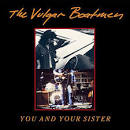
I’m the new guy at Spirit of Cecilia. In my first post, I wrote about my conflicted relationship with Prog. If I’m not a Prog guy, I should explain what I am. I’m a Vulgar Boatmen guy. Brad’s post on 1990 reminded me that I discovered The Boatmen in 1990 also. Here’s how it happened.

My friend Marc’s freshman dorm room was a half a flight of stairs from the front door. If he was around, his door would be open and there would be music playing. You couldn’t come or go from our dorm without hearing what he was listening to.

During the first week of school, he was playing Robbie Robertson’s first solo album, so I stopped in, introduced myself, and we became friends for life. The other musically obsessed guys in the dorm did the same. We congregated in Marc’s room to listen to music because it was it was centrally located, and he had the best stereo system – a Denon receiver with Polk speakers. You could really hear if the snare was recorded properly.

It was there that I heard for the first time, The Blake Babies, The Connells, Dump Truck, The Pixies, The Waterboys, John Hiatt, pre-Money for Nothing Dire Straits, Husker Du, Johnny Clegg, Camper Van Beethoven, and Toad the Wet Sprocket. To name a few, and that was just the first semester.

I loved The Band and used the guest list at The Last Waltz as my music education syllabus. When my family went to the mall, they’d let me hang out in the book store where I’d look through the books and take notes. This was before the internet. Luckily in the late 1980s, albums were starting to be reissued on CD, so I was able to buy the albums that I was reading about.

The rest of our music obsessed group, Drew, Joe, and Tim, had a similar self-directed musical educations. We would listen and talk for hours about what was good and what didn’t make the grade. At the end of the first semester, we knew what was good.

Early in our second semester in 1990, the first New Route sampler came out. The first song was “I’m Over You” by The Silos. The second was “Nothing Compares to U” by Sinead O’Connor. We flipped out over both. O’Connor broke quickly and we were soon hearing her played over the intercom in the cafeteria…a very, very, bad sign. The Silos from the first snare hit of “I’m Over You” fulfilled all that we were longing for. And then Drew borrowed a copy of their album Cuba from our college’s radio station and it was even better! There was an early thaw in the Scranton winter and all was good.

Over spring break, Marc’s brother Bill gave him a tape of the album You and Your Sister by The Vulgar Boatmen. I remember he gathered us together with some urgency to hear this new band – another band that Walter Salas-Humara from The Silos was involved with. I was either late to the session or the first song “Mary Jane” didn’t grab me, but when I heard the second, “You and Your Sister,” that was it. I had to get a guitar, I had to learn to play it, and I had to form a band. It was not an option. I had listened to music my whole life to prepare me for that moment.

I remember the term we used to describe the sound was “basic.” Not a crowning vocabulary moment for a bunch of liberal arts students. I think what we recognized in our hours and hours and hours of listening is that The Boatmen had stripped away all the non-essentials, the posturing, the over production, the politics, everything that stood between the listener and the song. It was simply beautiful. Thirty years later, it still sounds beautiful.

Mark Sullivan is the guitarist in The Deep Roots.

Socrates on Doing Wrong

From The Crito:

Soc. Are we to say that we are never intentionally to do wrong, or that in one way we ought and in another way we ought not to do wrong, or is doing wrong always evil and dishonorable, as I was just now saying, and as has been already acknowledged by us? Are all our former admissions which were made within a few days to be thrown away? And have we, at our age, been earnestly discoursing with one another all our life long only to discover that we are no better than children? Or are we to rest assured, in spite of the opinion of the many, and in spite of consequences whether better or worse, of the truth of what was then said, that injustice is always an evil and dishonor to him who acts unjustly? Shall we affirm that?

Cr. Yes.

Soc. Then we must do no wrong?

Cr. Certainly not.

Soc. Nor when injured injure in return, as the many imagine; for we must injure no one at all?

Cr. Clearly not.

Soc. Again, Crito, may we do evil?

Cr. Surely not, Socrates.

Soc. And what of doing evil in return for evil, which is the morality of the many-is that just or not?

Cr. Not just.

Soc. For doing evil to another is the same as injuring him?

Cr. Very true.