Jerome K. Jerome’s first book, Three Men in a Boat, was published in 1889, and it is one of the funniest books I’ve ever read. Apparently, it began as a serious travelogue, and there are stretches of relatively boring descriptions of picturesque towns and villages along the Thames river. However, most of the book concerns the trials and tribulations of the narrator, “J”, his two friends, George and Harris, and a dog, Montmorency, as they take a two-week holiday on a small boat up the river.
I love British humor (P. G. Wodehouse is one of my all-time favorite authors), and I can’t believe I am just now discovering Jerome K. Jerome. He has a deadpan style of narration that heightens the absurdity of the situations he and his friends get themselves into. Throughout the book, Jerome drops small jibes that had me constantly chuckling:
We arranged to start on the following Saturday from Kingston. Harris and I would go down in the morning, and take the boat up to Chertsey, and George, who would not be able to get away from the City till the afternoon (George goes to sleep at a bank from ten to four each day, except Saturdays, when they wake him up and put him outside at two), would meet us there.
Jerome’s tale also offers a fascinating glimpse into the habits of vacationing Britishers in the Victorian era. Apparently, it was a common practice to rent a large rowboat, load it up with all kinds of provisions, and head up the Thames for days at a time. To propel the boat, they either sculled (rowed), or used a towline that was pulled by one or two people of the party along a towpath on the bank of the river. in Jerome’s time, steam launches were just coming into use, and he talks about how there was often conflict between the boaters who sculled or towed themselves, and the newfangled motorized boats.
Jerome also uses his narrative to go off on all kinds of tangents, retelling several hilarious stories of his friends’ lives. For example, he talks about a time one of his friends asked him to take home to London a couple of very ripe cheeses. Jerome brought them with him onto the train, and they smelled so awful that no one could stay in the same compartment with him:
From Crewe I had the compartment to myself, though the train was crowded. As we drew up at the different stations, the people, seeing my empty carriage, would rush for it. “Here y’ are, Maria; come along, plenty of room.” “All right, Tom; we’ll get in here,” they would shout. And they would run along, carrying heavy bags, and fight round the door to get in first. And one would open the door and mount the steps, and stagger back into the arms of the man behind him; and they would all come and have a sniff, and then droop off and squeeze into other carriages, or pay the difference and go first.
From Euston, I took the cheeses down to my friend’s house. When his wife came into the room she smelt round for an instant. Then she said:
“What is it? Tell me the worst.”
I said: “It’s cheeses. Tom bought them in Liverpool, and asked me to bring them up with me.”
And I added that I hoped she understood that it had nothing to do with me; and she said that she was sure of that, but that she would speak to Tom about it when he came back.
And here is an excerpt describing how entertaining Harris is at a dinner party. It’s rather long, but it’s so funny I had to include it in its entirety:
I will just give you an idea of Harris’s comic singing, and then you can judge of it for yourself.
Harris (standing up in front of piano and addressing the expectant mob): “I’m afraid it’s a very old thing, you know. I expect you all know it, you know. But it’s the only thing I know. It’s the Judge’s song out of Pinafore — no, I don’t mean Pinafore — I mean — you know what I mean — the other thing, you know. You must all join in the chorus, you know.”
[Murmurs of delight and anxiety to join in the chorus. Brilliant performance of prelude to the Judge’s song in “Trial by Jury” by nervous Pianist. Moment arrives for Harris to join in. Harris takes no notice of it. Nervous pianist commences prelude over again, and Harris, commencing singing at the same time, dashes off the first two lines of the First Lord’s song out of “Pinafore.” Nervous pianist tries to push on with prelude, gives it up, and tries to follow Harris with accompaniment to Judge’s song out “Trial by Jury,” finds that doesn’t answer, and tries to recollect what he is doing, and where he is, feels his mind giving way, and stops short.]
Harris (with kindly encouragement): “It’s all right. You’re doing it very well, indeed — go on.”
Nervous Pianist: “I’m afraid there’s a mistake somewhere. What are you singing?”
Harris (promptly): “Why the Judge’s song out of Trial by Jury. Don’t you know it?”
Some Friend of Harris’s (from the back of the room): “No, you’re not, you chuckle-head, you’re singing the Admiral’s song from Pinafore.”
[Long argument between Harris and Harris’s friend as to what Harris is really singing. Friend finally suggests that it doesn’t matter what Harris is singing so long as Harris gets on and sings it, and Harris, with an evident sense of injustice rankling inside him, requests pianist to begin again. Pianist, thereupon, starts prelude to the Admiral’s song, and Harris, seizing what he considers to be a favourable opening in the music, begins.]
Harris: “ ‘When I was young and called to the Bar.’ ”
[General roar of laughter, taken by Harris as a compliment. Pianist, thinking of his wife and family, gives up the unequal contest and retires; his place being taken by a stronger-nerved man.]
The New Pianist (cheerily): “Now then, old man, you start off, and I’ll follow. We won’t bother about any prelude.”
Harris (upon whom the explanation of matters has slowly dawned — laughing): “By Jove! I beg your pardon. Of course — I’ve been mixing up the two songs. It was Jenkins confused me, you know. Now then.
[Singing; his voice appearing to come from the cellar, and suggesting the first low warnings of an approaching earthquake.]
“ ‘ When I was young I served a term As office-boy to an attorney’s firm.’
(Aside to pianist): “It is too low, old man; we’ll have that over again, if you don’t mind.”
[Sings first two lines over again, in a high falsetto this time. Great surprise on the part of the audience. Nervous old lady near the fire begins to cry, and has to be led out.]
Harris (continuing): “ ‘ I swept the windows and I swept the door, And I—’ No — no, I cleaned the windows of the big front door. And I polished up the floor — no, dash it — I beg your pardon — funny thing, I can’t think of that line. And I — and I — Oh, well, we’ll get on to the chorus, and chance it (sings):
“ ‘ And I diddle-diddle-diddle-diddle-diddle-diddle-de, Till now I am the ruler of the Queen’s navee.’
Now then, chorus — it is the last two lines repeated, you know.
General Chorus: “And he diddle-diddle-diddle-diddle-diddle-diddle-dee’d, Till now he is the ruler of the Queen’s navee.”
And Harris never sees what an ass he is making of himself, and how he is annoying a lot of people who never did him any harm. He honestly imagines that he has given them a treat, and says he will sing another comic song after supper.
I can glean a few interesting facts about entertaining guests in a Victorian home from this passage: first, it seems to be common practice for guests to volunteer to perform at dinner parties; second, there was no shortage of people who were proficient piano players and familiar with the music of Gilbert and Sullivan; and third, people provided their own entertainment. The popularity of recorded music, then radio, and finally television put an end to that practice, which is a shame.
Jerome, Harris, George, and Montmorency have a generally pleasant and leisurely trip up the Thames, all the way to Oxford. Along the way, Jerome makes humorous observations of local cemeteries, pubs, inns, and other boaters. Montmorency, a fox terrier, tangles with other dogs and the tea kettle. There’s no plot whatsoever, and the intrepid voyagers eventually make it back to London in one piece. If you’re looking for something that is very funny and enjoyable, you couldn’t do much better than Three Men in a Boat. You can download a free digital version here.
Hello Spirit of Cecilia Readers, it’s with great pleasure that Tad and Brad review the latest release from their beloved Flower Kings, Love (Insideout Music). Here are their thoughts.
Brad: As always, a great pleasure to do this with you, my friend. As you and I have talked before, I’ve been a Flower Kings fanatic (and yes, I mean a fanatic, a hyper fan!) for twenty-five years now. A wonderful student–now one of my colleagues in the philosophy department at Hillsdale–let me borrow his copy of the band’s 1999 Flower Power. I immediately fell in love with it, bought it, and bought my favorite album by the band, Space Revolver, to me one of the absolutely quintessential prog albums of all time. Once I had Flower Power and Space Revolver, I bought everything before that: Stolt’s The Flower King, Back In the World of Adventures, Retropolis, Stardust We Are. From Space Revolver to the present, I’ve bought every studio album, every DVD, every live album, every compilation, and both box sets on the day each has been released. I have two of their fan release albums, too, and two of their official bootlegs, but they’re really hard to come by. Every once in a while they pop up on Ebay, andI pounce on them. My point being, though, I’m a definite completist when it comes to Roine Stolt, just like I am with Steven Wilson. Proudly so. Both, absolutely amazing talents.
Through Facebook, I’ve had a few moments of correspondence with Stolt, and he’s a total gentleman. Frankly, he’d be a blast over a beer.
But, Tad, let’s start with you. You’re relatively new to the Flower Kings. What made you change your mind about them, or what made you finally embrace them?
Tad: Brad, it is great to discuss this group’s music with you, and I have you to thank for introducing me to them. I knew about them for years, but I really didn’t get into their work until I picked up Space Revolver in a used record store. All of a sudden, things clicked, and I was able to appreciate what Stolt and his fellow Flower Kings were doing. I have since acquired all of their albums (but not the bootlegs and limited editions you have).
I have to say, they are some of the most prolific artists working today. They release an album practically every year, which are often two-disc sets. Even their single-disc albums are filled to the brim, including their latest, Love, which contains 71 minutes of music. What are your initial impressions of this one?
Brad: Tad, so glad you found and fell in love with Space Revolver. Definitely a top-20 all time album for me, maybe even a top 15. I certainly think it’s a classic of third-wave prog. Everything just works on that album–the music, the shifts, the tone, the lyrics, the playfulness. Yeah, I just love that album no matter how many times I’ve listened to it.
And, yes, I’m really happy with the new album. It’s mellower, overall, than most previous Flower King’s releases, and it’s relatively tame, again compared to the band’s previous releases.
I had received the promo copy of the album from Inside Out, and I pretty much fell in love on the first listen, but, then, to make it even greater, my physical copy arrived. I was so surprised to open up the CD and have the beautiful portrait of Mary and the Child staring up at me! I’ve thoroughly enjoyed Stolt’s lyrics going all the way back to The Flower King (1994), and he’s always been respectful of Christianity. His Christianity–at least as it comes across in his lyrics–is more mythic and symbolic than tangible and concrete. Stolt especially loves making references to the “Holy Mother.” I assume that’s Mary, but I’m not sure, of course. Being Swedish, Stolt almost certainly comes for a Lutheran background. As much as Luther loved Mary (he did, adamantly), Lutherans generally don’t put much emphasis on her. So, one of the mysteries of Stolt and the Flower Kings.
Here are two examples of Stolt’s rather hippyish and cosmic take on Christianity. First, in his thank yous on Love, he writes “Remember: War is just fear and failure, FEAR manifested in small people with shady political or religious agendas–LOVE is always the winner.”
And, again, take the lyrics for track two of the album, “The Elder”:
You found your way – So come what may
You found your way – So come what may
So I have made it here
A distant light getting near
if you just knew where to begin
This holy mess you’re in – Waiting on a dream
I’ve made my peace with those who’d done me wrong
Those broken dreams that followed me along
So no more worries – If we could bury hate –
There’s nothing greater than the love we save
Betting on the love you save
Betting on the love you crave
So open up those doors – letting out the waters
And now you’re waiting on a tide
I once had a vision – behold them lights
The lights of salvation
So you look in his eyes – resurrection –
He’s risen – Came down upon me –
is it real what I’m feelin’
We can get much higher – We can start a fire
Turn away from lies – Looking eye to eye
We can catch a light – Brighten up this night
We will never die – We will never die
What you get is what you are
So give away a shiny star
Keep it closer to your heart
Do never sway – Don’t break no parts
What you give is what you are!
What was given – looking closer – Taint your soul
It’s unforgiven – cause the world has plans for you
Is it real – is it fiction? – Crucifixion
The world may soon just set you free
Here we are in silent trenches
Come this far – lived life let reckless
Waiting for the lights to change
I’m waiting for the outbound train
You found your way – So come what may
You’ve found your way
Notice, of course, the use of salvation, risen, resurrection, Crucifixion. None of it is blatant theologically, but it is blatantly symbolically and mythically.
I once tried to outline all of the albums up through 2013. It would be nice to update this, as the Flower Kings have released a lot since 2013. But, here, at least is what I thought up to that point:
And, I have to note as well, Tad, that I once had huge aspirations of writing a book about the Flower Kings, using each album as a chapter and inspiration, a theme pregnant with whole worlds.
Tad: Brad, I love your Aristotelian classification of their discography! You have some updating to do, though, don’t you? I hope you follow through on that book – I think prog fans would love it.
I also noticed and appreciated those lyrics in “The Elder” the first time I heard that track. It is one of my favorites on the album. My overall impression of Love is one of all-encompassing joy and optimism – which is not surprising, given the album’s title! The first song, “We Claim The Moon”, bursts out with a happy sound of guitars and keyboards that conjures up classic Traffic. The line, “I’ll never get over the way you brought down the moon” brings to mind Jimmy Stewart and Donna Reed in It’s a Wonderful Life.
I agree with you that this album is mellower, but, paradoxically, I think there is a lot of energy in the performances. The vocals on Love strike me as some of their best ever, with Hans Froberg and Roine Stolt trading leads and harmonizing beautifully, especially in “The Phoenix”. I love the way that track starts out acoustically with a celtic feel, and then features an outstanding guitar solo from Roine.
Another highlight is the final song, “Considerations”, which is written by Michael Stolt and Jannica Lund. It is a truly majestic track that I admire more and more as I listen to it. The “Shine on, shine on love” section is one of my favorite musical moments.
I also appreciate the way the Kings have created a unified whole from these twelve tracks. Musical motifs reappear throughout the album, as well as lyrical themes – did you notice that “Love Is” (track 10) has the line, “How can you leave us now?”, which is the title of the album’s third track! It’s little details like that that tell me Love is meant to be listened to in its entirety to fully appreciate its message. And what a message – despite all the negative forces in our world, love can conquer all. I really appreciate how bravely Flower Kings go against the cultural grain of our time: instead of complaining about hatred and division, they choose to celebrate the power of human (and spiritual) love.
Brad: You put that all so beautifully, Tad. I really like the idea that the album is really love calling on love, inspiring us to be our best. Frankly, I think that’s a perfect summation of Roine Stolt’s artistry and what he’s accomplished over the past 31 years. All rather stunning and motivating. And, so once again, I’m brought back to the beginning–I’m extremely proud to be a fanatic when it comes to the Flower Kings.
Phineas Finn is the second Anthony Trollope novel I’ve read (you can read my review of Can You Forgive Her? here), and the second in his Palliser series. In this novel, our hero, Phineas Finn, is a good natured, very attractive, and upstanding young man who is the son of an Irish country doctor. His father has paid his expenses while he studies under Mr. Low, a London barrister (lawyer). While dining at his club, young Finn is approached by his friend, Barrington Erle, and convinced to run for a seat in parliament for the borough of Loughshane. It’s a dead certainty he will win it, since there will be no serious opposition. The only problem is that members of parliament (MPs) do not get paid, and Phineas is entirely dependent on his father for his expenses!
Despite his father’s and Mr. Low’s very good arguments against running, Phineas decides to do it, and before he knows it, he is seated in Parliament. His longsuffering father agrees to continue his allowance until he can somehow figure out a way to pay his own way. Soon, he is swimming in the high society of London, but he manages to keep his head and remain humble. He becomes friends with another Irish MP, Laurence Fitzgibbon, a glib and somewhat dissolute young man who wastes no time convinces Finn to guarantee a bill for 250 pounds, assuring him that he will have the money in a couple of weeks, and there is nothing to worry about.
He also is befriended by Lady Laura Standish, who takes Phineas under her wing, because she sees such promise in him. She is another character of Trollope’s who illustrates the frustrating position upper class women in Victorian England were in: she is smart and well educated, and she has good ideas about what legislation should be passed by Parliament, but there is no way she can bring them to fruition, given she has no vote, let alone no way to run for parliament. Phineas is convinced he’s in love with Lady Laura and proposes to her, but she turns him down, because he is penniless, and she has given all of her money to her brother, Lord Chiltern, so he can settle some enormous debts he’s acquired through questionable life choices.
Lord Chiltern is a bit of a wild man – he despises social conventions and proper manners, preferring to spend his time hunting and traveling around England and Europe. He is in love with the beautiful Violet Effingham, who stands to inherit a large fortune when she marries. He has proposed to her three times (not very tactfully, it must be said), and she has flatly refused him because of his poor reputation and erratic behavior. To make things worse, Chiltern’s father has had nothing to do with him since his sister squandered her share of the family fortune to settle his obligations.
Lady Laura convinces Phineas to befriend Chiltern, in the hopes that he will be a moderating influence on him. They become friends, until Phineas meets Violet and decides he wants to marry her! The good friends become deadly rivals.
As a backdrop to all of this drama, Trollope chronicles all of the political intrigue involved in the passage of the Reform Bill of 1866. The reader is shown in exhausting detail how parliament works, and, by and large, it’s not pretty. What is interesting is how Finn, as a tyro MP, gradually gains confidence. At first, he is too terrified to even stand up and make a speech. Eventually, he finds his legs, and he becomes a trusted member of the Liberal party, led by the Prime Minister William Mildmay. Finn’s greatest asset is his ability to keep his mouth shut when necessary and to make pleasant conversation with the right people. Very soon, he is elevated to a paying position in the cabinet. Regardless of his rapid rise in society, he remains a very likeable character, due to his total lack of vanity.
As the novel progresses, Trollope uses various characters to illustrate different issues that were present in Victorian England. Phineas is an ambitious, yet talented and altruistic, young man from whose presence parliament would benefit, yet it is nearly impossible from him to affect legislation, even when he is made a government minister. The crisis of the novel occurs when he has to decide whether he will support a bill that will help his fellow Irish but goes against the policy of the governing party, of which he is a member. If he votes according to his conscience, he will be required to submit his resignation and lose his salary.
Lady Laura is the most tragic figure. Moments before Phineas proposes to her, she accepts Robert Kennedy’s offer of marriage. He is another MP, and one of the richest men in the UK. She feels that through him, she might be able to influence English politics. Unfortunately, Mr. Kennedy is an insufferable prig who insists Laura submit herself to the proper duties of a wife and have no independence at all. Their marriage degenerates to the point where they can barely communicate.
“Laura”, he said, “I am sorry that I contradicted you.”
“I am quite used to it, Robert.”
“No; – you are not used to it.” She smiled and lowered her head. (ii, p. 109, Oxford Univ. Press Ed., 1991)
There is also a Madame Marie Goesler, a wealthy German widow, who moves in the highest circles of London society, but feels trapped by the fact that she can do nothing but attend parties and host them herself.
Phineas becomes very good friends with Joshua Monk, a “radical” MP who helps Phineas get his confidence during his first term in parliament. Mr. Monk, though, when he is offered and accepts a post in the government by the Liberals, loses his effectiveness as a debater, because he is forced to support the Liberals’ policies, even when he disagrees with them.
Trollope paints a fascinating and detailed picture of how politics worked in Victorian England. There was much frustration at the demands placed upon MPS to toe the party line, yet enforcing party discipline was the only way to get important legislation passed. Like today, opposing parties had to compromise, and everyone gave up something to get something in return. Near the end of the book, Monk’s and Finn’s bill to help Irish tenants fails on the second reading. Finn is dejected, but Monk makes this observation:
“Many who before regarded legislation on the subject as chimerical, will now fancy that it is only dangerous, or perhaps not more than difficult. And so in time it will come to be looked on as among the things possible, then among the things probable; – and so at last it will be ranged on the list of those few measures which the country requires as being absolutely needed. That is the way in which public opinion is made.” (ii, p. 341)
Like almost all Victorian novels, Phineas Finn is long – 712 pages in the edition I read. However, it is an interesting complement to Charles Dickens’ David Copperfield, another tale of a self-made young man. While Dickens was the master of chronicling the travails and triumphs of England’s lower and middle classes, Trollope gives us accurate portraits of what it was like to move in the highest social strata of Victorian society. He isn’t afraid to point out the contradictions and injustices of the governing class, yet all of his characters are real. Phineas Finn is amazingly successful at first, but he has his flaws. His fellow MPs all exhibit human foibles – they each have good qualities as well as lesser ones. However, it’s the female characters that are the most fleshed out by Trollope – he has sincere sympathy for the plight they are in. They have very limited choices: either marry or be an “old maid”, but in neither case can a woman be an active political force. And once a young woman marries, she has no rights to any property or personal agency. If a young woman is due to inherit wealth, there is no guarantee she will be allowed to use it to live independently. However, lest one think Phineas Finn is all angst and frustration, Trollope sprinkles a lot of humor to leaven the drama. At heart, he loves his country and its people.
There are lots of free digital versions of Phineas Finn (you can download a nicely formatted one here.), but I really appreciated my Oxford University Press edition, because it had lots of helpful notes that explained the political events that were occurring at the time the novel is set in, as well as the meanings of slang phrases, references to other literary works, etc. I’ve read two of the six Palliser novels, so I guess I’d better get ready to tackle Phineas Redux next!
It’s time for a review of some classic music, and Brad Birzer suggested we take on four of the first six albums of the ‘80s group, Echo and the Bunnymen. Tad and Kevin join him for a conversation on them.
Tad: Brad, you know I love all things ‘80s; I think it’s the greatest decade for music in terms of diversity and creativity. I even have a Spotify playlist of favorite songs from around 1978 to 1991 that includes some big hits but mostly more obscure ones. It’s seventeen and a half hours long! However, I’m ashamed to admit that there’s a huge hole in my knowledge of new wave/alternative artists: Echo and the Bunnymen. I’ve had their best-of compilation, Songs to Learn and Sing, for years, but I’ve never delved into their albums proper until you urged me to do so. I’m glad you did! I’m looking forward to discussing Heaven Up Here, Porcupine, Ocean Rain, and Reverberation with you.Where do you want to start?
Brad: Seventeen and ½ hours! That’s brilliant, Tad. Is there a way to trade Spotify lists? I’d love to see yours. Of course, I would need to sign up for Spotify. For better or worse, I subscribe to Apple Music–which I assume is similar.
Echo. Where to start? I first encountered Echo and the Bunnymen when I was in high school through–if I remember properly–a John Hughes movie. The first song I heard from them was “Bring on the Dancing Horses.” For better or worse, my first Echo album was Songs to Learn and Sing, a greatest hits collection. I loved it, and I immediately bought their earlier albums. I was never taken with their first album, Crocodiles, though I should give it another listen, all these years later. I was, however, immediately taken with their next several albums: Heaven Up Here, by far their proggiest album; Porcupines, their most angular (like the Fixx) and claustrophobic album; and Ocean Rain, their most artful pop (much like XTC or Tears for Fears). Reverberations came out several years later, in 1990, and features a new singer, but I think it’s a truly excellent and immensely clever rock album, full of fun lyrics and really clever hooks.
I also happily own the four-disk deluxe, Crystal Days, 1979-1999, boxset. I own it mostly because it has the definitive version of my favorite Echo song, “The Killing Moon” (All Night Version) and several live tracks. Definitely worth the $100 I paid for it.
I wouldn’t even know how to classify Echo’s music overall. I realize they’re always lumped in with post-punk, but that doesn’t quite seem to capture them. As I mentioned above, I see elements of prog, New Wave, art rock, and straight forward pop rock in them. To be sure, they admired The Doors and the darker side of The Rolling Stones. And, Will Sargeant has admitted that he has a strong affinity toward prog. He even wrote a prog album under the name, Poltergeist. They only released one album, but it’s really good.
I’ve got so much I want to say about the particular albums we’re reviewing and covering, but, Tad, I’d love to know your thoughts–especially since you’re relatively new to the band. I’ve happily been listening to them for over forty years.
Version 1.0.0
Tad: Okay, I have listened to Heaven Up Here several times over the past few days, and I definitely hear the Doors influence in Ian McCulloch’s vocals. However, I always thought the Doors were overrated, and I don’t think that’s the case with Echo and the Bunnymen. What hits me first on Heaven Up Here is the terrific guitar work of Will Sergeant. He has an angular style that is similar to U2’s Edge, but still unique. It dances on the edge of dissonance, but it is always faithful to the song’s melody. I really like Over the Wall, with its lengthy, almost ambient intro – as a matter of fact, it sounds like it was produced by Brian Eno. Of course, the single, A Promise, is a standout track. The way the tension builds inexorably to the release of the chorus is wonderful. The title track is a blistering rocker right off the bat that never lets up, and I love it. It’s followed by the brief and subdued The Disease. As a matter of fact the pacing of this album is very interesting – they seemed to enjoy creating contrasts between successive tracks: energetic and fast, then relaxed and somber. Finally, I really like No Dark Things, with its slashing guitar riffs.
One thing I am impressed with is how much this album hasn’t dated itself. By 1981, everyone was cranking out synth-heavy music with booming drums. Heaven Up Here could have been recorded today, and it really wouldn’t be out of place. As you mentioned, it’s also very proggy, or at least as prog as a group could get in the early ‘80s!
Brad: What a great analysis. Thank you. And, you’re right–especially about noting the progginess of Heaven Up Here, but only to a point–as you so well note, as proggy as someone could be in 1981. Part of the progginess comes from the linking of the first three tracks, one bleeding into another. (Tad: Absolutely, Brad – I love the trilogy of the first three tracks!)
I have to make a personal note here. While I’ve been listening to this album since roughly 1985 (the local music store owner in my hometown of Hutchinson, Kansas, first recommended it to me), it wasn’t until eighteen years ago that the album really came to mean something deep to me. Shortly after our Cecilia Rose was stillborn (she would’ve been eighteen this year), I was playing this album in the car. Crazily enough, my wife (more of a Cars and U2 person) really liked the album. When I told her it was called “Heaven Up Here,” she responded: “Of course it is, just like our daughter.” I’m sure Echo never meant for this album to comfort a set of grieving parents, but it did and does. There’s something about the music–especially in those first three tracks–that is musically and lyrically relentless and driving, unstoppable. I absolutely love the buildup of those three tracks. So anxious and yet so confident. “Bounds? Of course we know no bounds.” When we finally get to “Over the Wall,” we’re really accomplished something. Somehow, we’ve breached the fort, and we’re in hand-to-hand combat with the enemy. And, they are astounded by our ferocity.
I also think “All My Colours” is, by far, the proggiest song on the album. A brilliant dirge. The lyrics are trippy:
All my colours (Zimbo, zimbo, zimbo, zimbo, zimbo)
And, “Turquoise Days” is beautiful, too.
Kevin: Coming of age in the 80s, I gained most of my knowledge about the post-punk movement from MTV. Echo was no exception. I remember the videos for “Crystal Days,” “The Cutter” and especially “Rescue” & “The Killing Moon.” They had a rough intensity that was appealing and if I remember correctly, some of these were live clips. But it wasn’t until college that I actually heard the album Ocean Rain in all of its glory! The band I was in at Notre Dame played both “Rescue” and “The Killing Moon” (both of which were highlighted by the very cool dancing, front and center, of Brad, our friend Tim, and my soon-to-be wife, Lisa). I bought Ocean Rain and fell in love with it immediately and if I remember correctly it was Brad who made tapes for me of their earlier stuff. I enjoyed the raw energy of the early recordings, but nothing was quite like Ocean Rain for my compositional sensibilities. Hearing well-crafted string parts with post-punk rock was an incredible combination and of course, the songwriting was stellar at that point in their career. So they were great songs, with great arrangements and spectacular vocals!
Version 1.0.0
Tad: Kevin, since you brought up Ocean Rain, let’s talk about that album. I notice that it was released 3 years after Heaven Up Here, and, to my ears, it’s a much slicker production. I still like it a lot. The first track, Silver, has strings and a guitar solo that sounds like it could be played on a sitar. It seems to me to be full of joy.
Brad: Kevin, those are great memories. And, it must be noted, though I knew prog extremely well when you and I met in the fall of 1986, I really knew very little New Wave beyond Kate Bush, Thomas Dolby, Echo, Simple Minds, and The Fixx. And, much of what I knew came from watching the movies of John Hughes. You’re the one who introduced me to a load of post-punk bands, and I very much loved the introductions. So, again, I’m a bit surprised (and pleased) that my influence went in that awesome direction!
Yes, Tad, I’d love to talk about Ocean Rain. Frankly, it’s an album without a flaw. It is perfect pop, perfect art, perfect art rock. Though I would rather listen to Heaven Up Here, I can’t but help recognize the brilliance that is Ocean Rain. It ranks up there with Pet Sounds, Hounds of Love, Songs From the Big Chair, Colour of Spring, and Skylarking. All some of the best pop ever written. From that opening guitar strum meshing immediately into the strings and then McCulloch’s crooning voice, the first song, “Silver,” just screams perfection. “The sky is blue, my hands untied . . .” Even the “la, la, la”s work well.
I’d be really curious to know who wrote what on this album. Did McCulloch write all the lyrics and Sergeant all the music? Was it a collaboration? Who wrote the string lines?
“Nocturnal Me” is as claustrophobic as anything on Heaven Up Here or Porcupines. I presume the song is about vampires, though I’m never sure. Definitely gothic in its tone. The piano is especially good on the track.
“Crystal Days” is a great followup to “Nocturnal Me.” It’s as sunny as the previous track was dark. “Purify our misfit ways, and magnify our crystal days.” As always, amazing lyrics. The guitar also really anticipates the shoegaze pop of the late 80s and early 90s–music by the Cocteau Twins and others.
“The Yo Yo Man” is bizarre by any standard. The guitar sounds like something you might hear on the Texas-Mexican border, but the lyrics are about the frozen north, I presume? “Cold is the wind that blows through my headstone.” So, a rumination on death.
I’ve never totally understood “Thorn of Crowns.” I would assume that McCulloch, in some drug-addled way, is acting in persona Christi. This is the Passion if addled by LSD. Certainly, there’s a mystic strain to the lyrics (one person shifting into another), and the music has a middle-eastern feel of a Led Zeppelin song; that is, this is the New Wave equivalent of a “Kashmir.”.
So ends side one. Then, we get to side two, a side so cohesive in its four songs that it could be considered akin to side two of Kate Bush’s Hounds of Love.
Arguably, “The Killing Moon” is the finest rock song ever written. Certainly it’s in the top five. It really is perfection. My only complaint is that the song isn’t long enough. As it is on the album, it’s so angular, and it needs time to breathe. For what it’s worth, I highly recommend listeners seek out the all-night version of the song. Frankly, this is the song in its Platonic form.
“Seven Seas” is the poppiest song on the album, musically. Again, though, lyrically it’s just glorious. “Seven seas, swimming there so well, glad to see, my face among them, kissing the tortoise shell.” There’s just so much joy in this song, and it allows the listener to breathe.
“Burn the skin off and climb the rooftop” and we’re in “My Kingdom,” the penultimate track. I have no idea what this song is about, but I would assume this is side two’s answer to “Thorn of Crowns.” Again, McCulloch is offering us an acid trip of a mystical journey. And, yet, unlike “Thorn of Crowns,” this song ends in bitter destruction.
B-b-burn the skin off, climb the roof tops
Thy will be done
B-b-bite the nose off and make it the most of
Your k-k-kingdom, k-k-king
B-b-b-burn the skin off and climb the roof tops
Thy will be done
B-b-bite the nose off and make the most of
Your king, kingdom, kingdom, kingdom
You’re a bitter malignous person
And the d-d-death is well overdue
And, we finally reach the conclusion, “Ocean Rain,” a song of deep contemplation and near utter calm. Yes, again, crazily disturbing lyrics. While the music seems to suggest a baptism and redemption, the sailor actually finds himself suffocating and sailing into dark harbors.
“All hands on deck at dawn
Sailing to sadder shores
Your port in my heavy storms
Harbours the blackest thoughts”
After listening to this whole album–now for the umpteenth time–I’m both satisfied and exhausted.
Kevin: I’d like to offer a somewhat nuanced take on Ocean Rain. I would agree with Brad that some of the songs are structured as artful pop. “Silver”, “Crystal Days”, “Seven Seas”, and certainly “The Killing Moon” stand out as well-crafted tunes that generally follow a verse/chorus/bridge type of construction.
But others venture into exploratory waters, both musically and lyrically. “Nocturnal Me” trips through dark and wild territory, “The Yo Yo Man” and “Thorn of Crowns” both drift around angular melodies, middle-eastern guitar counterpoint, and punk vocal aesthetics. But “Thorn” in particular has an adventurous edge that almost feels like a return to 60’s prog–like Sid-era Pink Floyd.
In fact, Brad’s reference to the Doors, reminds me that much of Echo does seem like a nod to the beginnings of rock opening into the avant garde. This live performance from the BBC program The Tube gives an excellent introduction to where the band were just before the release of the album. Even without the studio bells and whistles, the performance carries the music through. And once the 35-piece string orchestra is deftly and richly applied to these beautiful tunes, it no longer seems appropriate to apply the “pop” moniker.
And lastly, the title track is just gorgeous, classic songwriting. “Ocean Rain” could comfortably find a home in the Sinatra catalogue. I would agree that by their follow up, the eponymous Echo and the Bunnymen record, they had clearly sailed into the pop world, but this formative time just before remains for me in more of a “progressive” musical space.
Version 1.0.0
Brad: A great discussion, guys. Thank you. I’d like to turn to Porcupine. Porcupine, the band’s third album, is the most angular, the most New Wave of all their work. I get definite The Fixx vibes as I listen to this album. It’s also–in terms of music and lyrics–by far the most claustrophobic of the band’s albums.
Track one, “The Cutter,” has a blistering string intro before quickling melding into a blistering guitar, drum, and bass attack. It’s a great track, to be sure, but, I must admit, it’s hard for me to listen to, too often. Frankly, I’ve just played it too many times in my life. A good problem to have.
Track two, “The Back of Love” continues the blistering attack, but adding what sound like horns. I have no idea if those are real horns or the keyboards synthesizing horns. The lyrics matter, but they also become instruments in their employment on the song. That is, McCulloch’s voice is a blistering attack, too.
Things slow down, dramatically, with the beginning of the third track, “My White Devil,” an atmospheric song that becomes aggressive about 54 seconds in. The bass work in the song is especially strong.
Things speed up again with the fourth track, “Clay.” McCulloch’s lyrics are especially mind boggling and playful and ornery.
Am I the half of half-and-half
Or am I the half that’s whole?
Got to be one with all my halves
It’s my worthy earthly goal
Again, the song, musically and lyrically, is like a cat chasing its own tail.
The title track, “Porcupines,” track five on the album, has a funeral dirge feel to it, an anxious feeling, building slowly toward something very dark. The guitar work is especially strong, reminiscent of the soundtrack for The Good, The Bad, and the Ugly, but also very David Gilmour-esque as found on Dark Side of the Moon.
“Heads Will Roll,” the sixth track, is a song of longing.
Partly politic
Heads will roll
Mostly politic
God must call
‘Til the winning hand
Does belong to me
What if no one’s calling?
There’s no real answer to McCulloch’s anxiety, and he concludes that God must be missing.
“Ripeness,” track seven, is the most nondescript song on the album, an amalgamation of the other songs on the album.
The next two songs, “Higher Hell” and “Gods Will Be Gods” are brilliant, however. Contemplative and pregnant with anticipation, each builds to a satisfying conclusion, the lyrics mixing so well with the music. Again, the guitar work–so very angular–works so well here.
The final track, “In Bluer Skies,” plays with some wild percussion and offers a very dour ending to the album. Like with “Ocean Rain,” I’m tired after listening to this album. It’s a good and healthy tired, in that I’ve immersed myself in the art. But it’s being tired nonetheless. The album demands much of its listener. It gives much, too, but it definitely demands a lot. Yet, there’s no victory at the end of Porcupine. Rather, I feel like I’m trapped in a nightmare.
Tad: Kevin, thank you for your perceptive thoughts on Ocean Rain. Like I mentioned, I’m somewhat new to the music of these guys – hearing the albums as they came out in real time must have been fascinating, as the group matured.
Brad, I think Porcupine might be my favorite of these albums we’re discussing. The opening one-two punch of “The Cutter” and “Back of Love” is hard to beat. And even though the energy is less in the second half, I love the droniness (is that a word?) of “Gods Will Be Gods” and “In Bluer Skies”.
I’d also like to say a word about the cover art – I think the covers for Heaven Up Here, Porcupine, and Ocean Rain are outstanding, especially the glacial setting of Porcupine. It really fits the music. Whoever their art director (or directors) was deserves a lot of praise. It’s covers like these that make me appreciate the vinyl era.
Version 1.0.0
Brad: Great thoughts, guys. Thank you. Last, I’d like to turn to Echo’s 1990 Reverberation album. And, yes, I realize we’re skipping Crocodiles, the band’s first album, and the self-titled Echo and the Bunnymen from 1987. I like, but don’t love either. I do, however, really love Reverberation, perhaps their most bizarre album. It’s the only album not to feature Ian McCulloch on vocals, and it also is missing the incredible drummer Pete de Freitas who passed away in 1989. As such, it’s really only half of Echo in 1990.
Despite all these personnel changes, though, Reverberation is a beautiful album, musically as well as lyrically (which very cleverly tie together a huge number of cliches). Coming out in 1990, it’s a slice of neo-psychedelia that, I presume, had its impetus if not its origin in the extremely successful Oliver Stone movie, The Doors.
The album opens with contemplative strings that immediately transform into a rocking pop song, the guitar earnest and energetic. The new singer, Noel Burke, sounds nothing like McCulloch, but his voice is gloriously deep and crooning.
Track one immediately (without a break) segues into track two, “Enlighten Me,” thus creating a singular 9 minute opening to the album. “Enlighten Me” continues the neo-psychadelia as well as the cliched lyrics. “I’ll be, I’ll be, I’ll be enlightened,” Burke assures the listener.
Track three, “Cut and Dried,” is good, but track four, “King of Your Castle” is simply gorgeous. An anti-abuse song, lyrically, it grips the listener from the opening moments with its pulsating bass line. This is probably the best track on the album.
The next track that really soars is track seven, “Freaks Dwell.” It just simply rocks in every possible way.
Lost your reason
Lost your game plan
Sit you down
I’ll set the scene man
Brilliant
Bronze bohemians
Thought they were
A football team man
Let me take you to a hell
Where all the freaks dwell
Passed my god of woe
Pleasure pasture
Business sometimes
One more embrace
For the good times
Self-made man will
Unmake beds sure
Gagged and bound
And fights like hellock
Let me take you to the hell
Where all the freaks dwell
Passed my god of woe
I’m not totally sure what the song is about, but I assume the title should be taken literally.
Track eight, “Senseless,” is much more contemplative than “Freaks Dwell,” but still very good.
Track nine, “Flaming Red,” could easily have been a Doors’ track off of LA Woman.
The final track, “False Goodbyes” is not the strongest track on the album by any means, but it’s still really good. The strings are especially well done as the album concludes.
I realize that for most true Echo fans, Reverberation just doesn’t count because of the absence of Pete de Freitas and Ian McCulloch. And, the album was brutally bashed by reviewers when it first came out. But, I would ask any music lover to give it a second chance. There’s truly much to love here. A really brilliant pop-rock album with neo-psychedelia flourishes. Thirty-five years later, this music still stands up very well.
Tad: Brad, I can’t add anything to your brilliant and comprehensive analysis of Reverberation, except to say that when I first listened to it, it was much better than I expected. I knew McCulloch had left and they had recruited a new vocalist, and I think he does a fine job taking the group in a new direction. It’s definitely more open, bright, and poppier, and I thoroughly enjoyed listening to it.
Here’s my ranking of the albums we’ve discussed here:
Porcupine
Heaven Up Here
Ocean Rain
Reverberation
I went ahead and listened to Crocodiles and Echo and the Bunnymen, and I agree that they just aren’t up to the high standard of the other albums. Thanks for helping me fill this hole in my ‘80s alternative music knowledge!
Brad: Thanks so much, Tad and Kevin. I don’t think we ever really defined the genre that Echo best represents, but we sure had fun talking about it.
Dear Spirit of Cecilia Readers, two close friends—Kevin McCormick and Ivan Pongracic—and I recently had a lengthy email discussion about the virtues of U2. You all know Kevin as he’s a regular here and one of the SOC editors. Ivan, though, might not be as familiar. He’s a fantastic guy and friend. He’s a professor of economics at Hillsdale College, and he’s the lead guitarist of several surf bands, including Lords of Atlantis and The Madeira. As you’ll see, he’s also the most passionate about U2. Kevin and I tend to like the earlier albums. Here’s a slightly (only slightly) abbreviated version of our conversation. Yours, Brad
Version 1.0.0
Brad: Dear Ivan, since we talked a week or so ago, I’ve been listening to lots of U2. My favorite album is definitely October. Hope you’re doing well!
Ivan: Excellent! But you remain your own man, a true individual – I think almost everybody thinks of October as a bit of a backward step between Boy and War, suffering from the dreaded “sophomore jinx” syndrome! So, the fact you’d consider it your favorite, well, you’re definitely unique! 🤣 (The same goes for “Zooropa”!). Have you, BTW, checked out “No Line on the Horizon”?
Brad: Ivan, thanks for the note! I’m glad to know I’m my own man! Ha. I’m including my great friend, Kevin McCormick, on this email—just to get his input on the best U2 album.
Version 1.0.0
Ivan: Hi Kevin! Here’s my (three-tier) ranking:
Top tier: The Unforgettable Fire, The Joshua Tree, Achtung Baby, All That You Can’t Leave Behind, How To Dismantle an Atomic Bomb
Middle Tier: Boy, War, No Line on the Horizon
Bottom Tier: October, Rattle and Hum, Zooropa, Pop, and Songs of Innocence/Experience
(I should point out that there are tracks on October, R&H and Zooropa that I really love, I just find them overall a disappointment – but Gloria is amazing, and All I Want Is You is almost certainly my all-time favorite U2 song. The title track of Zooropa is killer, and there’s some good stuff on Pop, too. I can’t say the same about the last two albums, which have zero redeeming qualities, as far as I’m concerned.)
Brad: Thanks, Ivan. For me, top tier would be October, Under a Blood Red Sky, The Joshua Tree.
Mid-tier would be War, Boy, Unforgettable Fire. Rattle and Hum (I love Desire)
Ivan: I’m telling you, my friend, you’ve really GOTTA do a deeper dive into their post-’90 catalog, especially Achtung Baby, All That You Can’t Leave Behind, and How To Dismantle an Atomic Bomb. Those are just amazing albums!
Version 1.0.0
Brad: I also think that U2’s b-sides from 1980-1990 are stunning. Love them. Not as much as I love Cure b-sides, but close.
Kevin: Okay, here goes:
Top Tier: October, War, Unforgettable Fire,
Middle Tier: Boy, The Joshua Tree, Achtung Baby
I’m with Brad on the b-sides!!
Ivan: Kevin, et tu on nothing after ’91? 😁
Kevin: (I forgot to include Under a Blood Red Sky–top tier!). Here’s my honest response to the later albums. If they were made by any other band, I’d probably be more impressed. But there was such a shift toward the “rock star” thing, beginning with The Joshua Tree that it was a personal disappointment for a band that held great promise for something beyond a rock band. I don’t hold it against them anymore. That’s a tough road to travel. But it was a pretty personal thing at the time. No doubt there were many influences that shaded my reception of those albums. And you (Brad) and I have discussed it a lot. The Joshua Tree concert that I saw was really what changed things for me. To me, October has the real songs of innocence and that’s why I love it so much. Despite the rushed songwriting and lousy production, the album just shines with sincerity. And after reading Bono’s autobiography, I would say it’s much harder to keep that up once it has become your job and the salaries of other people depend on your success.
Version 1.0.0
Ivan: Quite funny how different our preferences are – even only on the ’80s albums! I’m personally just blown away that Achtung Baby would do nothing for you, Brad. Well, de gustibus non disputandum est! (dammit! 😁) And Kevin, I think I understand where you’re coming from. But I also followed them on that journey they took in the ’90s, which is that they were starting to realize that they had turned into a total caricature by the end of the ’80s, and the only way forward was to go in the opposite direction. I also remember Bono saying, who really wants a super-successful, rich and famous rock star that’s always miserable and hates his success? So, they embraced all the cliches, but in a mostly ironic way – most importantly embracing FUN along the way, which I thought was pretty brilliant. The Zoo TV tour was mind-blowingly innovative, too, really setting the stage for so much of what was to come with stadium tours over the past three decades, they did it first, going from very barebones stages and concerts to the most high-tech things available at the time. I think they absolutely had to do all that to avoid becoming even more of a joke than they were by the end of the ’80s, that super-earnest, save-the-world stuff had really worn thin. They thought that, and I think they were right. That’s my take on it, anyway. 🙂 The bottom line is I think they continued to make some amazing music, even though it was quite different from their ’80s stuff. A feature, not a bug.
Kevin: Well said Ivan. Yes, I think that Bono himself (and my brother, Colin😄) would agree with you. There’s no doubt that as an ensemble they learned to make really great music and hold themselves to a high standard. And they definitely invested a fortune on making great albums and producing incredible live shows. But that wasn’t what was so interesting about them to me. The same was true for me with R.E.M. I love the early stuff and dislike most of the later music. Not because I don’t hear some quality music in the later records, but because it lacks the charm of the earlier recordings. Not their fault. Just my preference. That early music is connected to much more than just my ears.
Ivan: Fair enough. I definitely appreciate the (potential) genius of innocence – but also the (potential) genius of experience, knowledge, and skill. They can both be wonderful. But the bottom line: the music either connects with you or it doesn’t, and nothing else matters. Obviously something that cannot be forced. I think most of Bono’s lyrics in the ’80s are very naive, very black and white, and with Achtung Baby there’s a newfound depth. He’s now truly an adult, addressing adult themes and issues, and writing from the perspective of a great deal of shades of gray and ambivalence and complexity. And that’s a pretty remarkable thing, I think. (And all this is coming from a guy that almost never cares AT ALL about lyrics with any band! 🤣) BTW, there are definitely similarities in the lyrics of AB to Rush’s Counterparts album, I think.
Brad: Ivan, you’ve inspired me to re-listen to things. Achtung, Zooropa, and Pop. Here’s what I like:
On Achtung:
I really, really like: Until the End of the World (especially the bass), Who’s Going to Ride Your Wild Horses, Ultraviolet (my favorite), and Love is Blindness
On Zooropa:
I really like: Zooropa, Some Days Are Better Than Others (again, great bass), Dirty Day (the buildup is phenomenal), and The Wanderer
On Pop:
I absolutely love Please (but nothing else on the album)
Ivan: You’ve told me that Ultraviolet is your favorite Achtung Baby track by far. And it’s funny since to me that track is the most conventionally U2 track on that album, and it seems like a betrayal of the innovative, bold, groundbreaking spirit of that album, it seems like a retreat. To use another Rush analogy, Alex has often talked about how disappointed he was that they didn’t stick to the Spirit of Radio/Free Will format of short, to-the-point songs with the rest of Permanent Waves, that he felt it was a copout and disappointment that they did Natural Science and Jacob’s Ladder, which could have nicely fit on Hemispheres or A Farewell to the Kings, and he thought they made a decision to be done with that. Anyway, that’s how I see Ultraviolet, FWIW.
Version 1.0.0
Kevin: Okay Ivan, gotta reply to your last comment on Rush. Whatever Alex thinks in hindsight, I would argue that “Natural Science” is the best song Rush ever did, by far: conceptually, lyrically, musically, compositionally. It is the summation of who Rush was/is. It doesn’t matter where they were “going” or where they wanted to be. Even “Moving Pictures” had “The Camera Eye” and “YYZ” is total prog. “Natural Science” captures it all in 9 1/2 minutes. Pure gold!
Ivan: Well, Kevin, I think you’re the first person I’ve met that feels that passionately about Natural Science! Wow. Alas, I can’t say I share your feelings about that track, though it’s fine, I don’t mind it – but on that album I much prefer the two big ones and Jacob’s Ladder, FWIW. (That may be a function of my relative “youth” 😁, as Brad mentioned, as my favorite Rush is ’80-’88, that’s the stuff I grew up with, and all the serious proggy stuff, 2112, AFTK, Hemispheres, was before my time, and still in general doesn’t do all that much for me (with a few notable exceptions.) Anyway, I think your point certainly stands that the artists themselves may be biased about particular tracks in a way that the fans are not, and their own perceptions are not ultimately really relevant. But I do feel that way about Ultraviolet. I’ve never heard any of the U2 guys talk about that track in such a way, so this is just my personal perception, and I thought that Alex Lifeson tidbit was relevant, but I could be way off!
Kevin: Ivan and Brad, I’ve enjoyed hearing our different perspectives (our “different strings” perhaps?🙃). I would never claim an objective take on any of the music I like: I’m totally partisan to what I connected with at a particular time. And Ivan I agree–I think the Alex reference is very relevant to the discussion. Your observation is quite true: the creators of the art don’t often have an objective understanding of what they’ve created for most listeners. It’s too close for them to see it. But it’s fun to talk with two people who actually know a lot about both Rush and U2 enough to discuss them in depth. I don’t suspect that there are a huge number of people who match that venn diagram.
Ivan: Thanks for the lovely email, Kevin, and I couldn’t agree more, much fun to talk about all this stuff with other knowledgeable individuals! I was thinking a bit more about this whole conversation and reflecting on my own musical background. The Beatles were my formative musical love, the band that made me develop a passion for music – and their first two albums I was exposed to were Help (’65) and The White Album (’68). Well, those two are about as far apart as two albums of music can possibly be – and I loved them both equally. So, from the beginning I loved when bands dramatically changed their sounds, evolved and grew. I’ve always tried to give maximum grace to bands I loved that engaged in such things and tried to not get stuck in the past. It obviously doesn’t always work, but I’ve discovered that stuff that the fans sometimes react badly to may actually have a lot more merit than apparent at first, if I can just open my mind and my heart to it. That’s what I’ve tried to do with U2, and I was able to hang in there with them until this most recent period, where they finally lost me. And I think it’s definitely paid off with Rush in the past, too – even if they did some albums that I don’t love, they also eventually produced stuff like Counterparts and Clockwork Angels, which I think are really excellent. Anyway, there you go! Maybe persuade you at least a bit to give some of the post-’91 U2 more of a chance (which Brad has already done – kudos to you, my friend!).
Lunatic Soul – Sign to InsideOutMusic for upcoming album release. New single “The World Under Unsun” out now!Lunatic Soul, the Polish outfit lead by Riverside’s main composer and vocalist/bassist Mariusz Duda are pleased to announce signing a new deal with InsideOutMusic for the release of their upcoming 8th studio album later in 2025.
A first new single entitled “The World Under Unsun” – recorded, mixed and mastered by Magda and Robert Srzedniccy at Serakos Studio, Warsaw, Poland – is being released today and can be streamed here: https://lunaticsoulmusic.lnk.to/TheWorldUnderUnsunEU or here: https://youtu.be/qBwDf8lwYkUMariusz Duda checked in with the following comment about the single: “This is how the new Lunatic Soul album will begin. Precisely with these sounds. The track “The World Under Unsun” is a kind of opening credits to a long, 90-minute musical film that will be released this Autumn. This film is the eighth Lunatic Soul album. On the timeline of the story, it is set between “Fractured” and “Walking on a Flashlight Beam”. Darkness and melancholy return to my music – this time bathed in the black-and-gold light of an eclipsed sun. I’ve recorded an epic, long, and highly diverse album – the first double album in my career. I didn’t want to present fragments torn from context. I simply wanted to share how this journey begins. I hope you enjoy the track and that you’ll join me on this long journey in the Autumn”.And added the following words about signing to InsideOutMusic: “I would like to sincerely thank my friends at InsideOutMusic for their trust and for welcoming Lunatic Soul under their wings. I hope this opens a few more doors to deeper discovery of this solo effort – where I always seem to wander in some strange black hood. I also hope my solo music adds something intriguing and meaningful to the label’s catalog of sounds. :)”
Lunatic Soul is the solo outfit of the creator, vocalist, and multi-instrumentalist Mariusz Duda. Duda is best known as the frontman of the Polish progressive rock band Riverside, where he is the main composer, lyricist, vocalist, and bassist. In 2008, he launched a separate outlet in which, as he says himself, he wanted to create something different and uncompromising.Lunatic Soul is inspired by artists such as Dead Can Dance, Peter Gabriel (especially his “Passion” album), Mike Oldfield, Clannad, Hedningarna and Depeche Mode. It’s an attempt to blend ambient music and electronic music with folk and rock influences. Duda plays almost all the instruments himself, with occasional guest appearances from invited musicians.While the artist doesn’t reject the label of progressive rock, he believes that “Lunatic Soul gives me more room for musical originality than Riverside”. For this reason, he doesn’t like Lunatic Soul being referred to as a “side project”. “To me, there’s nothing secondary about Lunatic Soul. Musically and conceptually, it’s an equally important musical world – if not more important. Here, I can do literally anything.”Since its inception in 2008, Lunatic Soul have released seven full-length albums. The upcoming eighth album will be released later in 2025 via Inside Out Music internationally and Mystic Production in Poland. All eight albums form what is known as the “The Circle of Life and Death”, a cohesive story in which a solitary artist-traveller journeys between life and death.Stay tuned for many more news about Lunatic Soul and their upcoming album to follow soon… Lunatic Soul / Mariusz Duda photo by Oskar SzramkaLunatic Soul online: https://lunaticsoul.com https://www.facebook.com/lunaticsoulband/ https://www.instagram.com/lunaticsoulband/INSIDEOUT MUSIC online: www.insideoutmusic.com www.youtube.com/InsideOutMusicTV www.facebook.com/InsideOutMusic www.twitter.com/InsideOutUSA www.insideoutmusicshop.com Spotify Prog Rock Playlist Spotify Prog Metal Playlist
Hello faithful Spirit of Cecilia readers. As always, thank you for joining us for our latest review. Up this time, Neal Morse’s new supergroup, Cosmic Cathedral and the band’s debut album, Deep Water. In addition to Morse himself on keyboards, the band includes Phil Keaggy on guitar, Chester Thompson on drums, and Byron House on bass. While this is a Morse-driven project, the band co-wrote much (but not all) of the music, and Morse shares credit, lyrically, with Keaggy on one song. The CD comes out from Insideout Music/Sony. Here at Spirit of Cecilia, Tad and Carl have especially praised the album. In this review, Tad and Brad (wow, our names rhyme) assess the new album.
Brad: Well, I’m not sure I’m the proper person to start this conversation, especially given how much Tad and Carl like it. I must admit, I’m still rather skeptical of the album. Parts of it, I love. In particular, I’m quite taken with the keyboards, the guitar work, bass (though, the bass needs to be higher in the mix), and drums. Each of these musicians is, simply, spectacular.
I’ve seen other reviewers refer to the album and the band as espousing “Yacht Prog,” and, for better or worse, I can see that complaint, especially with the first half of the album. I wouldn’t call it “Yacht Prog,” but I might be tempted to refer to it as “Adult Contemporary Prog,” a kind of gentle prog for the older set.
And, since I’m being negative, I’ll be negative about this as well. The lyrics are a little too evangelical for my tastes. As I hope is obvious–after all, we are dedicated to the Spirit of St. Cecilia, patron saint of music–I have no problem with one expressing his or her faith in his or her art! My gosh, most of the best art in the history of the world has been inspired by faith. But, when Morse sings “I sing for Jesus–it was for me He died/He unlocked the door to heaven/Now we can pass from death to life,” my soul cringes just a bit. It’s not that I disagree with the theology or the sentiment, but I disagree with the lack of art in the statement. Given the weight and gravity of the subject matter, these lyrics should have been deep, stirring, and beautiful–not yelled out in a vulgar fashion.
Again, though, there’s much I like about the album. Though I didn’t like the first few moments of keyboard on the first track, “The Heart of Life,” once the guitar kicks in, the song simply rocks. And, I really liked about a ⅓ of the Deep Water Suite. Again, I was especially taken with the guitar work throughout the album and very much so on the suite. It struck me as very much a Christian version of a Spock’s Beard epic.
I should also admit that I have really mixed feelings about Morse. At times in my adult life, I’ve been quite taken with him–especially with the last Spock’s Beard album, Snow, as well as with several of his solo albums, Testimony, Lifeline, and Question Mark especially. I also really like his work with Transatlantic. I’ve seen him in concert several times, and I’ve been an off and on member of his Inner Circle fan club. But, his blatant anti-Catholicism–especially on Sola Scriptura–really turns me off. I don’t see that in Cosmic Cathedral, however.
Tad: Thanks for getting this conversation going, Brad! As you mentioned, I like this album a lot. I wasn’t prepared to enjoy it as much as I do, though. I pretty much buy anything Morse releases, but his previous album with The Resonance, No HIll For a Climber, didn’t really resonate (!) with me. I listened to it several times, but nothing was very memorable.
With Cosmic Cathedral, on the other hand, I think Morse has surrounded himself with an extraordinary group of musicians. Phil Keaggy is one of the greatest living guitarists, and Chester Thompson is a phenomenal drummer – I’ve been a fan of his since the days when he toured with Genesis. I was surprised that Morse tapped Byron House to play bass, since his background is primarily in country music (Foster and Lloyd, Emmylou Harris, Vince Gill, Buddy and Julie Miller, et al.), but he’s a great choice. I’ve admired his work for years, as he brought a jazz sensibility to every project he’s worked on. These three men really push Morse, I believe.
That said, I can see why you might label this album “Yacht Prog”. I could do without “I Won’t Make It”, and “Walking In Daylight” has a definite seventies laid-back vibe to it (but Keaggy’s guitar solo redeems it in the end). But I love the first track, “The Heart of Life”. It has such an energetic intro, and it never lets up. Thompson’s drumming is fantastically driving throughout. I have a ton of Keaggy albums, and I’ve never heard him let loose like he does on this track. Melody-wise, it’s immediately recognizable as a Morse composition – lots of buildup to a satisfying resolution. Lyrically, I think this song is fairly restrained – I agree that sometimes Morse can hit you with a two-by-four when a pat on the shoulder would suffice, but I have to admire his consistency – it’s been 22 (!) years since he recorded Testimony, and he has remained true to his convictions.
Brad: Tad, thanks so much for this. I really appreciate your viewpoint. After reading this, I went back to Morse’s Sola Scriptura. Here’s a sample of his lyrics.
Giving up the time we’ve got to live a life completely
Giving over to the lust that rages in the mind
The Captain fills his place with gold while all the ship is sinking
Calls himself the Bishop-Prince and blood’s his favorite wine
Gardens grow as people know and sense the smell of slaughter
Every soul and Saxon senses something’s gone awry
The woman in the wilderness – the beast has nearly got her
Men surround the Bishop-Prince and sing their bloody cry
In the name of God you must die
All that’s not our truth is a lie
In the name of God you must die
In the name of God you must die
If you want some teeth, just ask why
In the name of God you must die
The pearl is trodden underfoot into the muck and mire
We’ll take the Roman Gods except the names will all be changed
The woman’s fed by ravens and her feet are in the fire
Cold and bare she’s holding there 1260 days
In the name of God you must die
All that’s not our truth is a lie
In the name of God you must die
In the name of God you must die
We won’t let a sleeping dog lie
In the name of God you must die
And the Captain calls
If they won’t pay they’ll soon be scratching the dungeon walls
From the highest height to the tenement halls – it’s true
Look out we’re comin’ for you!
In the name of God you must die
In the name of God you must die
He also calls the Catholic Church the “whore.”
I have the reissue of his first album with Spock’s Beard. The opening track uses the “F” word repeatedly. In the reissue, Morse warns listeners that they shouldn’t play the album in front of their kids. Honestly, I’d rather my kids hear the “F” word than his brutal and malicious attack on the Catholic Church.
Admittedly, I try not to think about these things when Morse releases new material, but it’s hard to forget.
Andy Tillison is a genius. It must stated as bluntly as possible. Tillison is a genius. He’s a musical genius and a lyrical genius, but he’s also just a genius genius. Actually, this might seem redundant, but it’s not. Only genius could properly modify genius when it comes to Tillison’s art.
As I mentioned in a previous post, anything Tillison releases is not just an event, but a moment. A real moment, not a fleeting one. A moment of seriousness and reflection.
From the first I listened to The Tangent’s The Music That Died Alone, a full decade ago, I knew there was something special going on. Not only did the cover art entrance me, but the very depth and seriousness of the music captured my then 35-year old imagination. I felt as though Tillison was speaking directly to me, asking me to remember the greatness of the musicians who came before 2003, but also inviting me–in a very meaningful fashion–to move forward with him.
The Music That Died Alone really serves as a powerful nexus between past and present, present and future, up and down, and every which way. Only the evocative power of the lyrics match the classiness and free flow (though, we all know what makes something seem free is often a highly disciplined mind and soul) of the music.
At the time I first heard them, I mentally labeled The Tangent a “neo-Canterbury band,” but I was too limited in my imagination, and I would discover this very quickly. Indeed, each subsequent The Tangent album offers new pleasures and paths for adventure, but always with that power of that Tillison nexus, connecting the past and the future with beauty.
Tillison makes this connection literal in his very fine novella, “Not as Good as the Book: A Midlife Crisis in a Minor.” The dedication lists close to 100 names, including numerous members (first names only) of the members of various bands from Yes to ELP to The Flower Kings to Spock’s Beard to XTC and to authors such as Arthur C. Clarke and J.R.R. Tolkien. None of this is contrived. Just pure Tillison expressions of gratitude.
Privileged (well, blessed, frankly, if you’ll pardon a blatant religious term) to receive a review copy of the new album, Le Sacre Du Travail (Out officially June 24, 2013 from InsideOut Music), I dove right into the music. Full immersion. With every album, Tillison has only improved. Each album has bettered the already previous excellent album with even more classiness, more intensity, and more meaning. Not an easy feat in this modern world of chaos and consumerist fetishes.
With this album, though, Tillison has moved forward the equivalent of several The Tangent albums. Again, to be blunt, the album is mind-boggingly good.
Easy listening? No. Of course not. It’s Tillison, it’s prog, and it’s excellent. What part of those three things suggests easy. No excellent thing is easy. Can’t be. It wouldn’t and couldn’t be excellent if easy.
Satisfying listening? Oh, yes. A thousand times, yes.
For one thing, Tillison has brought together some of the finest artists in the business. I was convinced of the potential greatness of this new album when I first heard David Longdon (in my not so humble opinion, the finest voice in rock today) would appear on the album. But, add a number of others in: Jonas Reingold (The Flower Kings), Jakko Jakszyk (Level 42), Theo Travis (Soft Machine), and Gavin Harrison (Porcupine Tree). And, it doesn’t stop here. Add Brian Watson (DPRP.net)’s spectacular art work and the cool dj voice of Geoff Banks (Prog Dog show). Ok, this is one very, very solid lineup of the best of the best.
1913
Ten years ago, Tillison released the first The Tangent album. 100 years ago, Igor Stravinsky released what was arguably his masterpiece and certainly one of the finest pieces of music of the twentieth-century, The Rite of Spring. While The Rite of Spring hasn’t pervaded our culture in the way the fourth movement of Beethoven’s 9th Symphony has, it’s a close second. Every person, an appreciator of music or not, knows at least part of The Rite of Spring.
Imagine for a moment 1913. It was, by almost every standard, the last great year of the optimism of western civilization. Technology upon technology had produced innumerable advancements, almost everyone in the western world believed in unlimited progress, and even devout Christian artists (such as Stravinsky) had no problems embracing the greatest elements of paganism and folk culture.
In almost every way, Stravinsky explored not only the folk traditions of his era, but he embraced and, really, transcended the modernist movement in music. He bested it. His Rite is full of tensions and dissonance, but each of these is overruled and corrected by harmony and emergent joy. The Rite, no matter how pagan, also has deep roots in the Judeo-Christian and Greco-Roman traditions. The Rite–the ritual, the liturgy–has been a part of western civilization since the pre-Socratics debated about the origins of the cycles of the world and history: earth, water, air, or fire.
2013
Imagine for a moment 2013. Well, ok, just look around. Technology remains exponential in its growth, but few would praise the development of the Atomic Bomb, the gas chamber, or the aerial bomber. But, then, there’s the iPod. And, unless you’re Steven Wilson, you probably think your iPod is ok. Certainly better than an Atomic Bomb.
Optimism? No. I don’t need to go into detail, but, suffice it state, T.S. Eliot might very well have been correct when in the late 1940s he claimed the western world in an advancing stage of darkness:
the tower overthrown, the bells upturned, what have we to do
But stand with empty hands and palms turned upwards
In an age which advances progressively backwards?
The U.S. and the U.K. are currently waging numerous wars, and there seems to be no end in sight.
The Rite of Work
As with the Stravinsky of 1913, the Tillison of 2013 surveys the cultural landscape. Unlike his Russian counterpart, the Yorkshire man finds little to celebrate in this whirligig of modernity.
The “good guy anarchist,” as he described himself in a recent interview (and, not to be too political, but more than one progarchist would be in great sympathy with Tillison on this point), Tillison observes not the Rite of Spring, but the liturgy of work. We get up, we commute, we sit in our cubicle, we commute again, we eat, we drink, we have sex, we watch a little t.v., and we sleep. The cycle beings again every Monday, Tuesday, Wednesday, Thursday, and Friday. Who made this deal, Tillison wisely asks.
Throughout it all–pure prog interspersed with very modernist musical elements from time to time–Tillison references much in our modern folk and popular culture, including The Sound of Music and Rush (2112):
In a Rush T-shirt, pony tail, 2112 tatooed on his hands
He’s a star through thick & thin
But he still gets that data in
A modern day warrior, today’s Tom Sawyer is a clerk
He’s a meta for disillusion
He’s a metaphor for life
But, interestingly enough, Tillison does all of this as a modern-day St. Thomas the Doubter.
But I don’t believe them, not ’til I see it
Until I put my finger in the holes
In every word, the lyrics rage against the conformity demanded in 2013–demanded by our corporations, our neighbors, and our governments. What have we become. . . mere ants, living in a world of bird dung. Certainly, whatever humanity remains has been given over to some institution radiating power.
And, yet, still somewhat in the persona of St. Thomas, Tillison asks us to reconsider our day-to-day rituals and liturgies. Is it worth it that we squander what little time we have in the name of the mindless and soulless cycles of modern life? By far the most powerful moment of an album of immense power (power in the good sense; not in the domineering sense):
‘Cos you can’t take it with you
There’s no luggage allowed
No you can’t take it with you
No matter how rich or proud
Your kids will sell it off on Ebay
For god’s sake don’t waste their time
‘Cos you can’t take it with you
You can leave just a little bit behind.
Summa
Well, what an album. What an artist. What a group of artists. If any one ever again complains about the superficiality of rock music, consider handing them a copy of this CD. No superficiality here. Only beautiful–if at times gut wrenching–meaning.
Billy Strings, Van Andel Arena, Grand Rapids Michigan, May 30, 2025
It took a while for my wife and I to wrap our heads around Billy Strings’ triumphant return to his home turf this past weekend. Why? Let me count the ways:
Strings’ two shows completely sold out, with around 12,000 people in attendance each night – so the concourse of our downtown sports arena was absolutely jam-packed. Restroom breaks were epic-length adventures; trips for concessions or merch were silently scratched. It’s not that we hadn’t navigated similar conditions before, but . . .
In the six years since our last show at said arena (if you must know, it was Jeff Lynne’s ELO), the majority of concerts booked there have shifted from classic rock to country, with the occasional rap and metal nights. Different genres, different, much younger clientele than the crusty old geezer I seem to have become . . .
Different clientele, different — uh, “atmosphere”. The designated standing room (the front half of the main floor) became a giant moshpit in record time, and the rowdy vibe plus a certain aroma seemed to filter throughout the arena. In our upper bowl section, the couple right in front of us seemed a bit, let’s say, chemically enhanced: standing most of the first set when they weren’t making multiple food and drink runs; constantly talking and shifting position. (It could have been worse; two guys a couple rows further down stood and danced out of rhythm all night.) I had to fight to keep my dad’s words out of my head; whenever we played pinochle, he’d eventually say: “Are we gonna talk or are we gonna play cards?” It wasn’t pretty.
With all that distracting us, we weren’t really braced for when Strings took center stage side by side with his acoustic quintet and kicked off. The sound was crystal clear but formidably loud, even without drums; the lights pulsed, strobed and flashed at Taylor Swift-level candlepower and speed. We used to love this stuff; now we felt instantly overwhelmed!
And the music got real wild and wooly, real quick. Straight bluegrass opener “The Fire On My Tongue” plowed into “Hide and Seek”, giving way to a dark, full-blown psychedelic freak-out. As Strings piled on echo and fuzztone, the band s-t-r-e-t-c-h-i-n-g out a gnarly one-chord vamp almost beyond its breaking point, I looked over at my wife — and she was not enjoying herself. And then the music went on, nonstop, for another half-hour! My prog side was thoroughly digging it; the part of me that had talked her into coming thought Strings might be reading our minds as he plowed into a double-time, pickin’ and grinnin’ take on Jimi Hendrix: “Is this love, baby, or is it – confusion?“
But then, Strings chilled things out, talking directly to the crowd. About how happy he was to be back, about memories of the local places he had played in his younger days. Then he gracefully started up what he’d called “a song about looking at the windshield, not the rearview”. Midway through “Away from the Mire”, the psychedelia was back — but this time it felt inviting, beckoning us in with open arms and a smile.
The two of us relaxed (it helped that both we and that couple in front of us were able to slip into nearby empty seats after intermission) — and just like that, we were off to the races! And as we mellowed out, we could see and hear what we’d been missing. Which is worth mentioning in full:
Strings is just an awe-inspiring musician — a virtuoso guitarist with immaculate taste and his own spin on multiple traditions, a first-rate vocalist who sings from the heart, and a songwriter with his own strikingly mature viewpoint, capturing the lives of desperate people in extremes of gloom, craziness and joy. His band members (banjoist Billy Failing, mandolinist Jarrod Walker, bassist Royal Masat and fiddler Alex Hargreaves) are equally fabulous players and harmony singers, running buddies in every sense of the term. These guys have got range — as they demonstrated at the front of the stage to close the first set, infusing bluegrass classics and “Richard Petty” (Strings’ self-improvement gospel according to NASCAR) with simple, unforced pleasure.
The second set was served up in shorter chunks, surprisingly drawn more from Strings’ back catalog than his new Highway Prayers. (The luscious title track from Home and Renewal’s devastating love song “In the Morning Light” were high points for me). Plus, Billy took impressive solo turns, unreeling one bluegrass cover after another on banjo and guitar — though I could swear he also snuck a Slayer riff in there somewhere!
Again, you could tell Billy was glad to be there from the multiple shout-outs, thank yous and anecdotes he continued to share in the back half of the show. By the end, he was fully fired up again, roughriding through “Heartbeat of America”, then dashing across the stage while belting out his trouble-in-a-small-town classic “Dust in a Baggie”. A couple of quickfire quintet covers for the encore, and just like that, 2 1/2 hours had flown by. (And astoundingly, Strings’ equally long second night setlist was completely different!)
I might be getting too cranky for 21st-century arena shows, but actually I’m here to tell you this: Billy Strings is the real deal. His respect for his musical forbears, his unabashed instrumental brilliance, his gritty evocations of small-town vice, his poetic contemplations of the bigger picture, his killer instinct for maximum musical impact — he’s got it all, brought into focus onstage with fearsome chops, a high lonesome voice and a generous soul. If you love the tradition he comes from — or if you just love good music — find some way to experience this guy, on record, streamed or live. (Personally, I’m hoping for an outdoor show next time!)

 Jerome K. Jerome’s first book, Three Men in a Boat, was published in 1889, and it is one of the funniest books I’ve ever read. Apparently, it began as a serious travelogue, and there are stretches of relatively boring descriptions of picturesque towns and villages along the Thames river. However, most of the book concerns the trials and tribulations of the narrator, “J”, his two friends, George and Harris, and a dog, Montmorency, as they take a two-week holiday on a small boat up the river.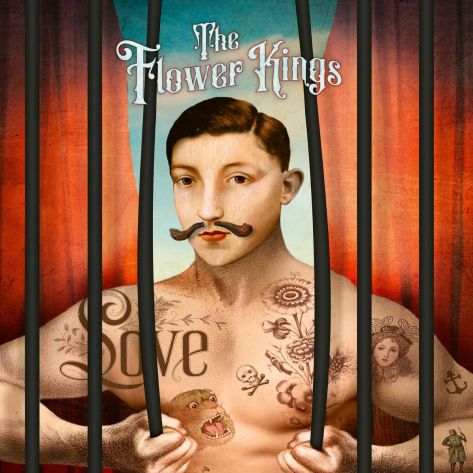
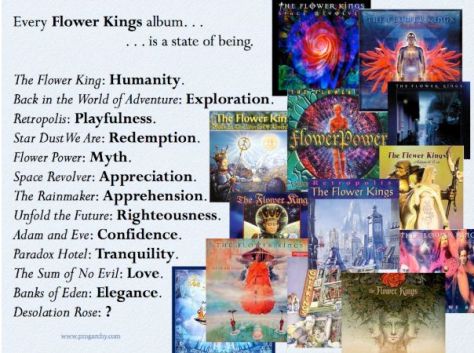


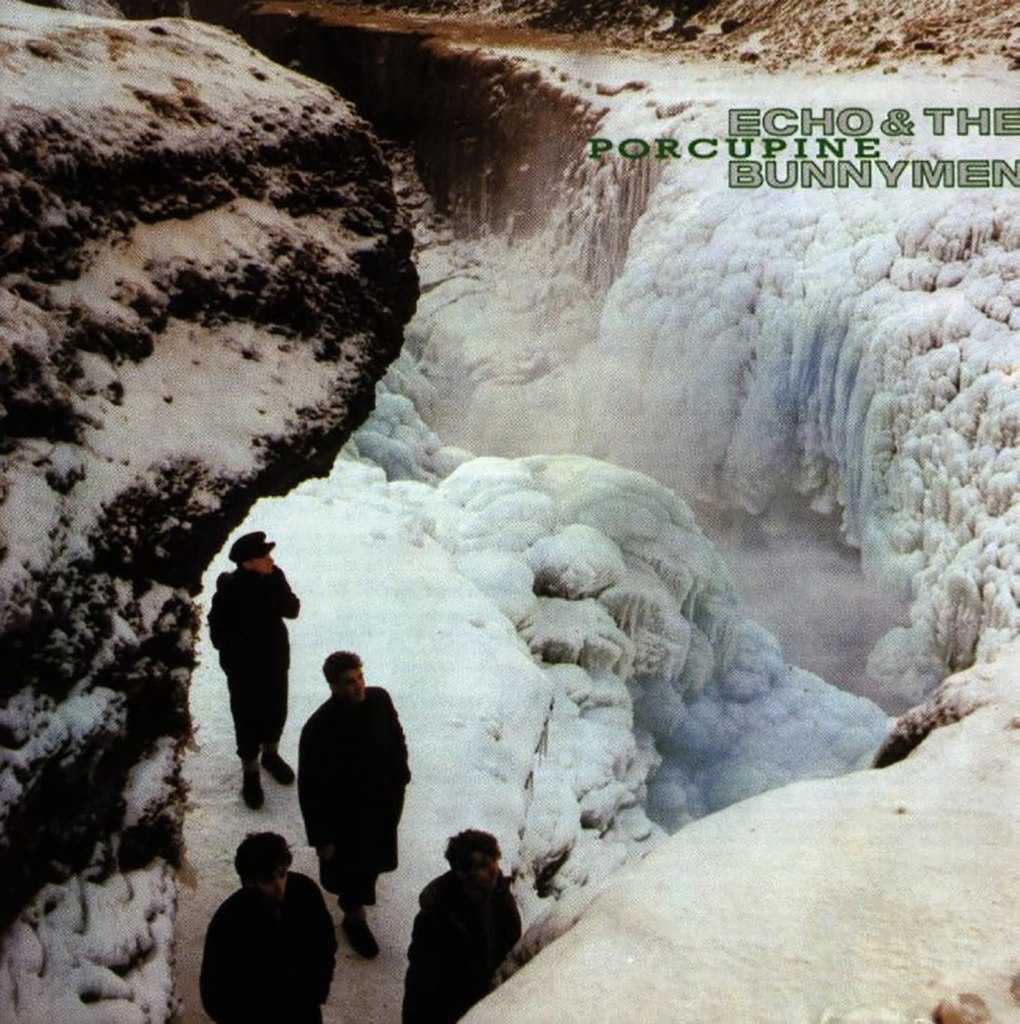
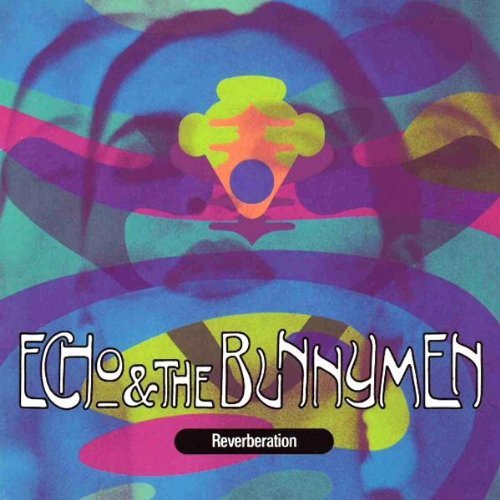


 Lunatic Soul, the Polish outfit lead by Riverside’s main composer and vocalist/bassist Mariusz Duda are pleased to announce signing a new deal with InsideOutMusic for the release of their upcoming 8th studio album later in 2025.
 Lunatic Soul / Mariusz Duda photo by Oskar SzramkaLunatic Soul online:
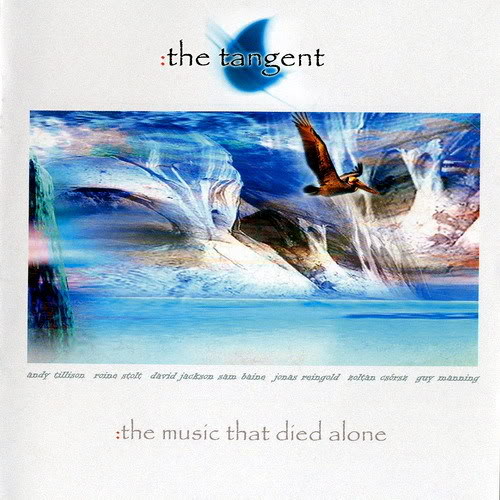
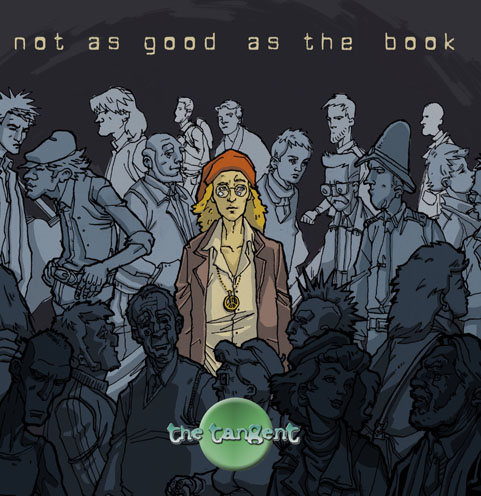



 Spirit of Cecilia
You must be logged in to post a comment.