
All posts by bradbirzer
Tad Wert on Lost Angeles
It’s 5/4: Dave Brubeck Day!
It’s 5/4–Dave Brubeck Day!
https://bradleyjbirzer.substack.com/p/54-happy-dave-brubeck-day
The Unessential Brubeck
A review of Philip Clark, Dave Brubeck: A Life in Time (New York: DaCapo Press, 2020). Xvii + 403 pp of text + discography, bibliography, and index.
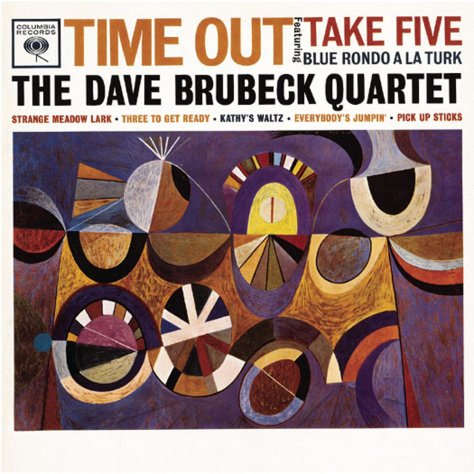
I do not remember a time in my life when Dave Brubeck’s music did not provide the soundtrack. Indeed, his music is inextricably tied up to and with my own life. Some of my earliest memories come from staring at Brubeck’s album covers—Time Out and Time Further Out by S. Neil Fujita and Joan Miro, respectively—and trying to make sense of the abstractions. And, as family lore goes, even as a kid I loved dancing to music such as “Take Five,” even waking up the entire household in the middle of the night by blaring the stereo system at full volume. As was the case with probably many of us of my generation, Time Out was one of my father’s favorite albums and Brubeck one of his favorite musicians, rivaled only by Herb Alpert. To this day, I have stacks and stacks of Brubeck CDs and boxsets, and his music plays throughout the house and the office. Maybe not daily, but certainly weekly. When my older brother, Todd, and I get together, we still talk Brubeck. Even now, as I pour through various prog and jazz albums, I’m always on the lookout for Brubeck’s influences.
As a case in point, Pat Metheny’s latest, From This Place—arguably this jazz master’s best—reflects widely and deeply the compositional structure of Brubeck’s best album, 1964’s Time Changes. The resemblance is simply too obvious to ignore. Even the theme is critical. Brubeck’s album was inspired by a short story involving two cellmates and a crust of bread. The religious essence of the album is blatant, with Brubeck trying to find that which ties all humans together, regardless of ethnicity or race. It is, for all intents and purposes, a meditation on human decency and divine agency. Metheny’s latest calls us to be the best we can expect of ourselves as Americans.
In 2012, when Brubeck died around Christmas time of that year, I vowed that I would one day write a biography of him. Despite preliminary research and reading, I’ve really not dived into this project, but Brubeck remains a profound part of my life, nonetheless.
Two stories from Brubeck’s own life mean everything to me.
First, at Ronald Reagan’s last summit with Soviet leader Mikhail Gorbachev, held in Moscow in 1988, the Reagan administration insisted that Dave Brubeck represent America as her greatest cultural achievement. Brubeck’s producer, Russell Gloyd, recognized this grand achievement for what it was. “You have to put this in perspective,” he argued. “There was Perestroika, the whole awakening of the Soviet Union, the whole concept of what was taking place at that time in world history. This was the first time there was hope of a real chance for an understanding between the East and the West,” he continued. “For Dave to be the representative artist meant everything to everyone who was close to us.”
The atmosphere was tense. Reagan was exhausted from his trip, Gorbachev’s security was worried about assassination plots, and it was a ridiculously hot and humid day in Moscow. “I walked in thinking that this was the hardest room Dave had ever had to work in his life,” claims Gloyd. After a number of lackluster diplomatic niceties in the stuffy room, Brubeck walked up to the piano, sat down, and started playing “Take the ‘A’ Train.” “It brought down the house,” Gloyd reports. “People were up and cheering. I’ll never forget Bob Dole—he looked like a little kid. He had his one good hand raised above his head like he was at a football game. He’d turn around, and there was a Soviet general, loaded with medals, doing the same thing! They looked at each other like, ‘You like Brubeck? I like Brubeck! We like Brubeck.” It was, Gloyd notes, “the greatest single twenty-minute set in his life.” The Cold War became much less frigid that day.
Second, though he came from a Presbyterian family, Brubeck converted to Roman Catholicism as an adult. “I never had belonged to any church. I was never baptized before,” Brubeck remembered. “I was the only son in the family who wasn’t baptized a Presbyterian. It was just an oversight.” To be certain, religious music—from the African-American community as well as from the white/European community—had always intrigued and influenced him. He wrote liturgical-jazz pieces about Easter, Christmas, and Martin Luther King.
Though he had written a number of specifically religious themed albums and pieces, however, his greatest expression of his Christianity came when Our Sunday Visitor (headquartered in Huntington, Indiana) commissioned Brubeck to write a Mass. He, in very Brubeck fashion, entitled it, To Hope! A Celebration, and performed it—with Gloyd conducting—at Washington National Cathedral. The premier music review website, Allmusic, writes of it: This stunning work incorporates jazz interludes into the hypnotic Responsorial “The Peace of Jerusalem” and “Alleluia,” a particularly challenging section for the choir. The vocal soloists are impressive; tenor Mark Bleeke’s feature “While He Was At Supper” is especially moving. The overall effect of this beautiful work is absolutely stunning; it resists being labeled in any one category, it is simply great music.” Fundamentally optimistic about the human experience, Brubeck had said in a commencement address in 1982: “What is really important in the community, in the worst of times, is often music. It’s the cement for the community that holds it together, and the thing that gives it hope.”
Sadly, neither of these stories can be found in Philip Clark’s just published “biography,” Dave Brubeck: A Life in Time (New York: DaCapo Press, 2020). Though the cover proclaims this to be “the definitive investigative biography of jazz legend Dave Brubeck,” there is not a single mention of Brubeck’s 1988 trip to Moscow or his conversion to Catholicism. Just how definitive is this biography by Clark? Bizarrely, Brubeck is not even born until page 302.
When I first learned of the existence of this book—on February 19—I purchased it at a Books-a-Million within a few hours of the news. Rather than wait for the cheaper Amazon.com version, I had to have the book immediately. I was thrilled it existed, and I dove right into it. Alas, rarely have I been so disappointed by a book.
When it comes to writing—on a sentence by sentence basis—Clark is outstanding. According to the dust jacket, he has written for a vast number of music periodicals as well as for the London Guardian and the London Times. There’s no doubting his grammar or style. But when it comes to composing a book of this length, he is. . . to be polite. . . lacking. It turns out that Clark knew Brubeck relatively well and had interviewed him a number of times in the last twenty years of his life. Though we learn nothing of Brubeck’s Catholicism or his trip to Moscow—both so essential to his life—we do get editorial comments such as
“As the bus breaks for the London border, with the motorway to Brighton stretching ahead, [bassist] Moore falls into earnest conversation with Iola Brubeck. Heads nod remorsefully, then Moore’s grotesque caricature of President George W. Bush’s nervy Texas drawl hits a manic crescendo reminiscent of an operatic made scene.”
Or, this tidbit:
“As I wrote all these years later, that Brubeck’s accounts of his country’s gravest shame should have such damning relevance to Trump’s America felt unbearably poignant and tragic—time overlaps, but it is also cyclic.”
I am certainly no fan—in any way, shape, or form—of Presidents Bush or Trump, but I very much fail to understand why these things matter in a biography of Dave Brubeck, who was so much better and worthy of so much more than what Clark presents in this book.
Clark is at his best in the book when not writing the biographical parts. Indeed, Clark excels at explaining Brubeck’s techniques, his influences, and his influence. During parts of the book—especially Clark’s section on Brubeck’s influence on rock and progressive rock—I was riveted. Clark is also good when it comes to Brubeck’s defying the horrific racialist laws, habits, and customs of much of 1950s and 60s America. Brubeck was not only an optimist in his view of humanity, he was deeply humane in his understanding of the dignity of the human person. He never backed down from what he believed correct, and his actions on race relations are nothing short of heroic in his own lifetime.
If you’re looking for a fan-boy appreciation of Brubeck’s talents and his understandings of race relations, Dave Brubeck: A Life in Time, is a fine outing. If, however, you’re looking for the “definitive, investigative biography of jazz legend Dave Brubeck” run as far away from this book as possible. One of the greatest talents to come out of 20th-century America, Brubeck deserves so much better.
Until someone actually does the critically hard work of looking closely at Brubeck’s life through his music as well as through his letters and papers and getting into the very bright and endlessly creative soul of Brubeck, no definitive biography yet exists. The best book on Brubeck remains Fred M. Hall, It’s About Time: The Dave Brubeck Story (Fayetteville: University of Arkansas Press, 1996). It’s an excellent book, and the stories above come from Hall’s work.
Or, just listen to Brubeck’s music. He poured himself into his art—into every note.
Tad Takes on Raymond Chandler
Wind-Blown Notes: Rush’s Grace Under Pressure
My favorite Rush album has been, at least going back to April 1984, Grace Under Pressure. I realize that among Rush fans and among prog fans, this might serve as a contentious choice. My praise of GUP is not in any way meant to denigrate any other Rush albums. Frankly, I love them all. Rush has offered us an outrageous wealth of blessings, and I won’t even pretend objectivity.
I love Rush. I love Grace Under Pressure.

I still remember opening Grace Under Pressure for the first time. Gently knifing the cellophane so as not to crease the cardboard, slowly pulling out the vinyl wrapped in a paper sleeve, the hues of gray, pink, blue, and granite and that egg caught in a vicegrip, the distinctive smell of a brand new album. . . . the crackle as the needle hit . . . .
I was sixteen.
From the opening wind-blown notes, sound effects, and men, I was hooked, completely. I had loved Moving Pictures and Signals–each giving me great comfort personally, perhaps even saving my life during some pretty horrific junior high and early high school moments.
But this Grace Under Pressure. This was something else.
If Moving Pictures and Signals taught me to be myself and pursue excellence, Grace Under Pressure taught me that once I knew myself, I had the high duty to go into the world and fight for what’s good and right, no matter the cost. At sixteen, I desperately needed to believe that, and I thank God that Peart provided that lesson. There are so many other lessons a young energetic boy could have picked up from the rather fragile culture of the time and the incredibly dysfunctional home in which I was raised. With Grace Under Pressure, though, I was certainly ready to follow Peart into Hell and back for the right cause. Peart certainly became one of the most foundational influences on my life, along with other authors I was reading at the time, such as Orwell and Bradbury.
Though I’m sure that Peart did not intend for the album to have any kind of overriding story such as the first sides of 2112 or Hemispheres had told, GUP holds together as a concept album brilliantly.
The opening calls to us: beware! Wake up! Shake off your slumbers! The world is near its doom.
Or so it seems.
Geddy’s voice, strong with anxiety, begins: “An ill wind comes arising. . .” In the pressures of chaos, Pearts suggests, we so easily see the world fall apart, ourselves not only caught in the maelstrom, but possibly aggravating it. “Red Alert” ends with possibly the most desperate cry of the Old Testament: “Absalom, Absalom!” Certainly, there is no hope merely in the self. Again, so it seems.
The second song, gut wrenching to the extreme, deals with the loss of a person, his imprint is all that remains after bodily removed from this existence. Yet, despite the topic, there is more hope in this song than in the first. Despite loss, memory allows life to continue, to “feel the way you would.” I had recently lost my maternal grandfather–the finest man I ever knew–before first hearing this album. His image will always be my “Afterimage.”
It seems, though, that more than one have died. The third song takes us to the inside of a prison camp. Whether a Holocaust camp or a Gulag, it’s unclear. Frankly, it’s probably not important if the owners of the camp are Communists or Fascists. Either way, those inside are most likely doomed. Not only had I been reading lots of dystopian literature in 1984 (appropriate, I suppose, given the date), but I was reading everything I could find by and about Solzhenitzyn. This made the Gulag even more real and more terrifying.
Just when the brooding might become unbearable, the three men of Rush seem to offer a Gothic, not quite hellish, smile as the fourth song, “The Enemy Within” begins. Part One of “Fear,” the fourth track offers a psychological insight into the paranoia of a person. Perhaps we should first look at our own problems before we place them whole cloth upon the world.
Pick needle up, turn album over, clean with dust sponge, and drop needle. . . .
Funk. Sci-fi funk emerges after the needle has crackled and founds its groove. A robot has escaped, perhaps yearning for or even having attained sentience. I could never count how many hours of conversation these lyrics prompted, as Kevin McCormick and I discussed the nature of free will. It’s the stuff of Philip K. Dick, the liberal arts, and the best of theology.
More bass funk for track six and a return to psychological introspection, “Kid Gloves.” But, we move out quickly into the larger world again with the seventh track, “Red Lenses,” taking the listener back to the themes of paranoia. When the man emerges for action, will he do so in reaction to the personal pain he has experienced, or will he do so with an objective truth set to enliven the common good?

In the end, this is the choice for those who do not lose themselves to the cathode rays. Is man fighting for what should be or he is reacting merely to what has happened, “to live between a rock and a hardplace.”
Unlike the previous albums which end with narrative certainty, Grace Under Pressure leaves the listener with more questions than it does answers, though tellingly it harkens to Hemingway and to T.S. Eliot.
Given the album as a whole, one might take this as Stoic resignation–merely accepting the flaws of the world. “Can you spare another war? Another waste land?”
Wheels can take you around
Wheels can cut you down. . . .
We’ve all got to try and fill the void.
But, this doesn’t fit Peart. We all know whatever blows life dealt Peart, he stood back up, practiced twenty times harder, and read 20 more books. That man did not go down for long. And, neither should we.
In the spring of 1987, much to my surprise, one of my humanities professors allowed me to write on the ideas of Peart. I can no longer find that essay (swallowed up and now painfully lonely on some primitive MacPlus harddrive or 3.5 floppy disk most likely rotting in a landfill in central Kansas), but it was the kind of writing and thinking that opened up whole new worlds to me. My only quotes were from “Grace Under Pressure,” drawing a distinction between nature of the liberal arts and the loss of humanity through the mechanizing of the human person. It dealt, understandably, with environmental and cultural degradation, the dangers of conformist thinking, and the brutal inhumanity of ideologies. It was probably the smartest thing I’d written up to that point in my life, and even my professor liked it.
Of course, the ideas were all Peart’s, and I once again fondly imagined him as that really great older brother–the one who knows what an annoying pain I am, but who sees promise in me anyway, giving me just enough space to find my own way.
I’m fifty seven, and I still want Neil to have been my older brother.
And, if you want more on Rush, here’s my book on Neil Peart at amazon.com.
Dave Kerzner’s New Lamb/IT

I’ve been into music—mostly progressive rock and jazz—for as long as I can remember. As I’ve mentioned before, my first love was YESSONGS—owned by two older brothers. I loved everything about it—the music, the lyrics, the art. It also just seemed like a super science-fiction project to my very young mind. I would’ve been six when YESSONGS came out.
After Yes, my second loves were Kansas and then Genesis. I encountered Kansas in 1975, sometime around age 8. In fact, living in Kansas, there was no escaping Kansas. Americans don’t often realize it, but Kansans are as proud of being Kansans and their fellow Kansans as Texans are about being Texan; they’re just not loud about it. So, yes, we lived and breathed LEFTOVERTURE and POINT OF NO RETURN.
Genesis, though, didn’t come to me until about 1978, me aged 10, when I fell in love with “Follow You, Follow Me” and purchased AND THEN THERE WERE THREE. That was one of the first albums I ever bought. Followed by DUKE, by ABACAB, by GENESIS. From there, worked backward to TRICK OF THE TALE and WIND AND WUTHERING and, especially, SECONDS OUT. I loved SECONDS OUT. I even had video recorded—through the USA Network—a concert from the SECONDS OUT period with Bill Bruford on drums.
I also really liked Peter Gabriel—especially SECURITY—but for some reason I was reluctant to take a deep dive into Gabriel-era Genesis. Honestly, I have no idea why, except that I so admired the Phil Collins period—especially TRICK and WIND.
I love the Peter Gabrel era of Genesis so much now, however, that I can barely remember a time when I didn’t love them.
So, right before I went to college (fall of 1986), I bought LAMB LIES DOWN ON BROADWAY. To state that my mind was boggled, would be an understatement. I knew “Carpet Crawlers” of course, but to listen to it in context truly floored me. At the time (remember, I was 18), I thought Lamb was either the greatest statement of prog ever written or a statement of chaos and madness. Either way, I wasn’t surprised that Gabriel chose to leave after making the album. Clearly, the album means something profound and deep in the history of prog.
It’s a strange album lyrically, as a young Puerto Rican male wants to escape from the corporate conformity imposed at every level of his life. Ah, you “progressive hypocrites.”
When Kevin McCormick—one of my all-time closest friends, a professional classical guitarist, a key contributor to this website—and I first talked Genesis (this would’ve been the fall of 1986), I expressed my love of Lamb, and he thought I was crazy. Only a true Genesis weirdo would like LAMB, just as only a true Yes weirdo would like TALES FROM TOPOGRAPHIC OCEANS. It was a funny conversation. Kevin, it should be noted, was the first friend I had who could talk music as much as I could. A high school friend, Joel, came close, but Joel was mostly into college rock and alternative music, not rock or prog. So, his opinion (or, given LAMB, his anti-opinion) really meant a great deal to me. Still, I continued to love LAMB as an act of mad genius.
Jump forward fifty years. . . and the mighty and awesome Dave Kerzner has recreated and recorded a brand new version of LAMB simply called IT. If you don’t know the work of Kerzner, you really should. He’s the great touchstone or fountainhead of our era’s (third wave or beyond) progressive rock. From Sound of Contact, through his solo work (NEW WORLD DELUXE and STATIC), through his work with In Continuum, Kerzner is a genius. He knows how to write the best lyrics, and he also knows how to write the best hooks. But, there’s one thing about Kerzner that often doesn’t get recognized. He’s a perfectionist, an audiophile at the level of Steven Wilson. Don’t get me wrong, Steven Wilson has one of the best ears out there. But, Kerzner’s is equally good.
He just gets sound.
As far as I knew there’s nothing that Kerzner has released that I don’t proudly own. So, when I heard he was remaking LAMB, I was absolutely thrilled. And, there’s nothing about Kerzner’s version that doesn’t satisfy me. From his production to its use of real strings, it’s a glorious masterpiece, so very worthy of its now-fifty-year old original. Kerzner is exactly a year younger than me, and while I don’t know him, I wouldn’t be shocked if he and I encountered the album in much the same way.
In every way, Kerzner has done justice to LAMB. For 1975, it was immaculately produced, but that simply can’t compare to the immaculate production of 2025. IT—Kerzner’s version—replicates the entire album, again always advancing the production, especially with live orchestration. Additionally, Kerzner offers a third disc with alternative versions of the classic tracks.
Even the band of IT is an all-star cast of current prog royalty: Kerzner, Francis Dunnery, Nick D’Virgilio, Fernando Perdomo, Billy Sherwood, and special guests.
Spirit of Cecilia readers, it just doesn’t get better than this. Whether it’s genius or madness, who can say? Except to note, there’s always a bit of madness in all genius, and a bit of genius in all madness. LAMB/IT is smack-dab in the center. Since Kerzner first sent me the tracks via Bandcamp, I’ve been listening obsessively. That obsession—part madness and part genius—will continue for sometime, especially as we approach the end of the semester and with finals starting to loom larger. . . .
To order IT, please click here.
On Fire: Live from the Blue Morocco/Freddie Hubbard
ON FIRE: LIVE FROM THE BLUE MOROCCO, A HEATED UNISSUED 1967 PERFORMANCE BY FREDDIE HUBBARD, DUE FROM RESONANCE AS LIMITED THREE-LP SET ON
RECORD STORE DAY APRIL 12
Legendary Trumpeter is Heard at His Ferocious Peak at Sylvia Robinson’s Bronx Club with an All-Star Combo Featuring Bennie Maupin, Kenny Barron, Herbie Lewis, and Freddie Waits
Deluxe Package, Also Available on CD on April 18, Includes New Interviews with Maupin and Barron, Notes by Jazz Authority John Koenig, Appreciations and Interviews with Charles Tolliver, Eddie Henderson, Steven Bernstein, Jeremy Pelt and More
Trumpet master Freddie Hubbard is heard at the apex of his early brilliance in the newly unearthed collection On Fire: Live from the Blue Morocco, which arrives on April 12 as an exclusive, limited three-LP Record Store Day release from Resonance Records.
Remastered from the original tapes by Matthew Lutthans, with the LPs mastered by Bernie Grundman and pressed at Le Vinylist, the previously unreleased set was captured by recording engineer Bernard Drayton in 1967 at the Blue Morocco, a jazz spot located in the New York borough of the Bronx and operated by Sylvia Robinson, later a co-founder of Sugar Hill Records. The collection was produced with the full endorsement of the trumpeter’s son and estate representative Duane Hubbard.
Hubbard’s work with Art Blakey & the Jazz Messengers, his appearances on historic recordings by John Coltrane and Ornette Coleman, and his own brilliant recordings as a leader for Blue Note and Impulse! Records led contemporary observers to hail him as the masterful successor to the late Clifford Brown. He is heard on the new release playing a storming set of his own compositions and a pair of smartly arranged standards. Hubbard is backed by his working group of the day, a skilled unit that included saxophonist Bennie Maupin, pianist Kenny Barron, bassist Herbie Lewis, and drummer Freddie Waits.
The package — which will also be issued as a two-CD set on April 18 — is co-produced by Bernard Drayton, his celebrated son and drummer Charley Drayton, and Zev Feldman, the award-winning “Jazz Detective” and co-president of Resonance Records. It includes an introductory essay by jazz scholar John Koenig; new interviews by Feldman with Maupin and Barron; and interviews and appreciations by trumpeters Charles Tolliver, Eddie Henderson, Steven Bernstein, and Jeremy Pelt; and more.
Feldman says, “This album captures Freddie Hubbard at an important point in his career. He had come fully into his own and was forging for himself an honored place in the pantheon of the world’s greatest jazz trumpet players. These live recordings represent Freddie at the height of his powers. The band on these recordings was Freddie’s working group at the time, and they certainly rose to his level.”
“We were excited about Freddie Hubbard coming to the Blue Morocco,” says Drayton, who also captured the previously unreleased recording of Kenny Dorham at the club that is being released for RSD by Resonance. “By 1967, when this album was recorded, Freddie was laying his claim, as Dizzy Gillespie put it, as the greatest trumpet player in the world. Freddie was a dynamo, full of energy and full of pepper. As you can hear, he was on fire. I’m proud to have documented this page in the annals of Freddie’s career.”
Duane Hubbard adds, “My dad, to me and millions of fans, was one of the greatest trumpet players in history. He came to New York from Indianapolis with the drive to be great. In New York, he worked with the top musicians of the time. He took every gig, and he practiced so much and worked so hard that with his natural gifts he rose to be one of the greatest jazz musicians of his, or any, generation.”
“As the performances on this album show,” Koenig writes, “it’s easy to see the qualities that allowed Freddie to make his way into the rarefied milieu of the jazz elite as an instrumentalist. But with this recording, we also have a view of Freddie coming fully into his own as a bandleader. These tracks have never before been heard publicly. They show Freddie in action in a live setting with what was his first regular working band.”
Hubbard’s gifted sidemen of the day testify that playing alongside Hubbard at the top of his game was a thrilling experience.
“Playing with Freddie was very, very intense,” Maupin says. “It was really exciting for me to be able to be a part of the group and be doing these things with him. It was a lot of fun, just great musical fun. For me, playing with someone who had been working with people like Art Blakey, who had that kind of incredible experience, I realized what I needed to do just to keep up with him: I had to really practice a lot. It inspired me to really up my game.”

© Tom Copi
“Musically, playing with Freddie was always great,” says Barron. “Always. And what was great about that band on this record is that with Freddie, we could play all kinds of music. By that, I mean, in one piece, we would go from straight-ahead to avant-garde and switch on a dime, change on a dime. Freddie was always the instigator. If you listened to him, you could tell where he wanted to go and we would just go there with him. It was a great band. I loved playing with them.”
Hubbard’s formidable legacy as a trumpeter has served as an example for his successors on the instrument.
“Hub was one of my trumpet heroes in my youth,” Tolliver says. “Initially coming out of Brownie, by slightly modifying an already great embouchure, he was able physically to fashion and create the style he was aiming for — to execute and muscle the trumpet in a saxophone-like pianistic manner resulting in incredible improvisational feats and solos never heard before, while at the same time delivering a big, sassy, warm, brass sound without ever sacrificing those crucial inherent elements of our art form — swing, the blues, and pure sophistication.”
Henderson recalls, “Freddie dominated the trumpet scene in the ‘60s, ‘70s and ‘80s. He was without a doubt the top of the hill — his trumpet expertise and prowess, his execution and facility, his range. And his compositions were so challenging, over and above what was coming out of the bebop era. They were very difficult harmonically to maneuver through.”
In an enthusiastic outburst, Bernstein says, “This recording is insane! It’s one of the most exciting live documents I’ve ever heard in my life. It’s f!cking mind-blowing. Freddie’s on fire. It’s just so damn good.”
Resonance Records is a multi-GRAMMY® Award-winning label (most recently for John Coltrane’s Offering: Live at Temple University for “Best Album Notes”) that prides itself in creating beautifully designed, informative packaging to accompany previously unreleased recordings by the jazz icons who grace Resonance’s catalog. Headquartered in Beverly Hills, CA, Resonance Records is a division of Rising Jazz Stars, Inc. a California 501(c) (3) non-profit corporation created to discover the next jazz stars and advance the cause of jazz. Current Resonance Artists include Tawanda, Eddie Daniels, Tamir Hendelman, Christian Howes and Donald Vega. www.ResonanceRecords.org
New Frost* Single
 |
FROST* launch stand-alone single ‘Western Atmosphere’ |
 |
| UK Progressive Rock group Frost* is pleased to share a new stand-alone single titled “Western Atmosphere.” This song was originally featured as a Japanese-only bonus track on the album ‘Life in the Wires,’ and sees band leader Jem Godfrey joined by Randy McStine (Steven Wilson, Porcupine Tree – live guitarist), Mike Keneally (Devin Townsend) & Nick D’Virgilio (Big Big Train).Godfrey says this about the track: “I sometimes wonder what would have happened had I stayed in bed 10 minutes longer than I did on Monday 11th of January 2010. Perhaps my life would have gone in a completely different direction and Frost* would have ended up with the lineup of myself on keys, vocals and bass, Mike Keneally on guitar, Nick D’Virgilio on drums and Randy McStine on guitar and vocals. We’ll never know, I guess.” You can check out “Western Atomosphere here:https://youtu.be/bBGzCXXT9j0 https://frost-band.lnk.to/WesternAtmosphere-Single |
| Frost* released their critically acclaimed double concept album ‘Life In The Wires’ last October. The album received rave reviews from press and fans alike, ending up on many end-of-year Best-Of lists and winning Album of the Year in The Prog Report Awards. |
 |
| Stream or purchase ‘Life in the Wires’ here:https://frost-band.lnk.to/LifeInTheWires Check out the videos from the album below: “Life in the Wires, Pt.1”“Moral and Consequence”“Idiot Box”“The Solid State Orchestra”“It’s actually a continuation from Day and Age” explains Godfrey, “the first track on the new album starts with the end of the last track from that album “Repeat to Fade,” where the static comes up and a voice says “Can you hear me?”. I remember putting that in when we did Day and Age as a possible little hook for the future; a character somewhere out there in Day and Age land trying to be heard. What does he want to say? Can anybody hear him? Day and Age kind of sets up the world that this character lives in and Life In The Wires tells his story”.The story revolves around the main character Naio, an aimless kid heading for a meaningless future in an A.I. run world. He hears an old DJ talking on the ancient AM radio his mother once gave him and decides to trace the source of the signal and find “Livewire” to see if there’s a better future out there. However, the All Seeing Eye is less than impressed at this bid for independent thought and fights back. Soon Naio finds himself pursued across the country by an outraged mob as he tries to locate the home of Livewire and his freedom. Tune in at www.lifeinthewires.com and see if you can hear Livewire on the radio.Helping create this parallel world are the “classic” Frost* lineup of guitarist John Mitchell, bassist Nathan King, and returning drummer Craig Blundell.Fans of the band’s masterful debut album Milliontown (2006) will enjoy the band revisiting the style that made that debut album one of the most successful prog rock albums of the last 20 years, a fact that was not lost on Godfrey as he was writing this new record.“With Day and Age, we made it a very specific point: we’re not doing any solos, we’ll do clever arrangements. And we enjoyed that discipline, but this time I thought it might be good to row back on that position a bit. Plus, I wanted to have a little bit of a nod to Milliontown with this album, because it’s been nearly 20 years since Milliontown came out and I’m still proud of it. The 15-minute title track has a few of those Milliontown moments in it which were great fun to do again.” |
The Muppets: Bohemian Rhapsody
The Who: Eminence Front
The sun shines
And people forget
The spray flies as the speedboat glides
And people forget
Forget they’re hiding
The girls smile
And people forget
The snow packs as the skier tracks
People forget
Forget they’re hiding
Behind an eminence front
Eminence front, it’s a put on
It’s an eminence front
It’s an eminence front, it’s a put on
An eminence front
Eminence front, it’s a put on
Eminence front
It’s an eminence front
It’s an eminence front, it’s a put on
It’s a put on, it’s a put on, it’s a put on
Come and join the party
Dress to kill
Won’t you come and join the party
Dress to kill, dress to kill
Drinks flow
People forget
That big wheel spins, the hair thins
People forget
Forget they’re hiding
The news slows
People forget
Their shares crash, hopes are dashed
People forget
Forget they’re hiding
Behind an eminence front
An eminence front, it’s a put on
It’s just an eminence front
An eminence front, it’s a put on
An eminence front
An eminence front, it’s a put on
Eminence front
It’s an eminence front, it’s a put on
It’s a put on, it’s a put on, it’s a put on
Come on join the party
Dress to
Come on join the party
Dress to
Come on join the party
Dress to
Come on join the party
Dress to kill
Dress yourself, dressed to kill
Source: LyricFind
Songwriters: Peter Dennis Blandfor Townshend
Eminence Front lyrics © Spirit Music Group
 Spirit of Cecilia
You must be logged in to post a comment.