By day, I'm a father of seven and husband of one. By night, I'm an author, a biographer, and a prog rocker. Interests: Rush, progressive rock, cultural criticisms, the Rocky Mountains, individual liberty, history, hiking, and science fiction.
So, I was at a Liberty Fund conference this past weekend in Philadelphia. It was directed by the rather awesome Hollywood screenwriter, Adam Simon. I’ve been at a number of conferences with Adam before, and he likes to refer to me as “his brother from a different mother.” Adam’s Jewish and from the left, and I’m Catholic and from the right. But, we really (as in really, really) like each other. Truly, we’re brothers from a different mother. I love the guy.
If you don’t know, Liberty Fund, which has been around since 1960, long before I was born, the institute hosts week-end conferences with, roughly, fifteen participants. This past conference, in Philly, was me and fourteen participants and two observers. We were talking about screwball comedies from the 1930s and 1940s–It Happened One Night, Philadelphia Story, the Awful Truth, Bringing Up Baby, etc–along with philosophy from Hannah Arendt and Stanley Cavell. We were trying to figure out if we could find anything deep and philosophical about the nature of rights and our right to pursue happiness in Hollywood films.
I loved all 14 of the participants, but I was especially taken with the humor and wit of Wesley. That’s all I knew about him–he was Wesley. I was told by the other participants that he had written four novel and was also big in music.
On the final night–after at least one Aviation cocktail (my favorite)–I asked Wes about his music tastes. It turned out that we both love progressive rock, and he’s even a huge fan of Jerry Ewing and PROG magazine.
I then asked him his stage name. And, much to my surprise, he told me that he was John Wesley Harding. Holy Moses, a total favorite! I was stunned and thrilled.
Here he is, way back in the early 1990s on MTV, with Adam Simon directing:
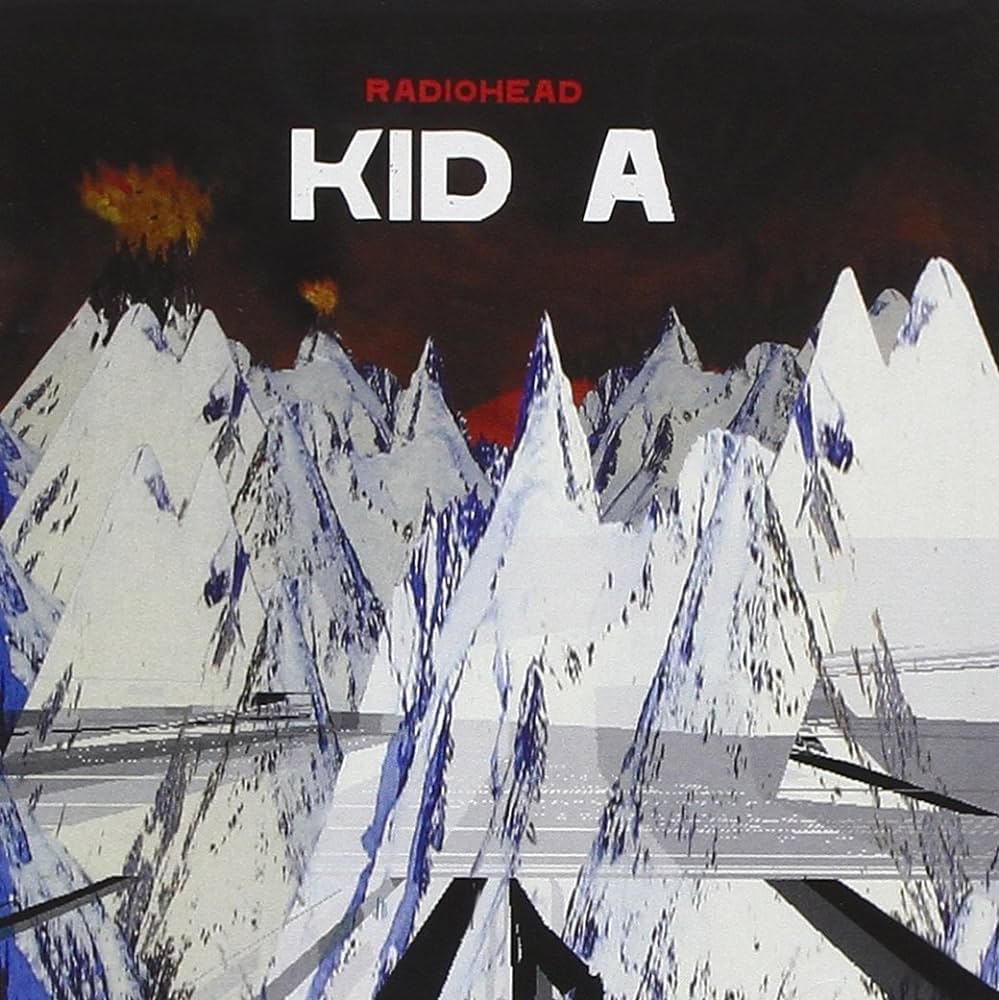
Dear Spirit of Cecilia readers, it’s time to dig into some prog/anti-prog/a-prog. Is Radiohead prog or not? I’m sure this question has been debated before. Let’s just say, Radiohead did something unique and did something unique several times. First, with Ok, Computer in 1997 and, then, again, in 2000 with Kid A. The following dialogue reflects our thoughts about such innovation and creativity in the world.
Brad: Well, I’m happy to begin this conversation. In the mid 1990s, I had heard the single, “Creep.” Strangely, I was more familiar with the live Tears for Fears cover version than I was with Radiohead’s original, but I still knew the song pretty well. To this day, I like the song, but I don’t love it. And, if push comes to shove, I prefer the TFF version. The unedited, R-rated Radiohead version of the song does nothing for me.
The mid-1990s were kind of wild for me, in terms of my profession as well as in my life. I didn’t get married until 1998, when I was 30. For part of the mid 1990s, then (single), I was working in Bloomington, Indiana, while working on my PHD (I loved Bloomington and my job there), and, for part of it, I was working in Helena, Montana (a city I loved, in a job that I hated; well, let me clarify. I was working at the Montana Historical Society which I hated, but I was also teaching at Carroll College, which I loved).
One day in Helena, I went to a local alternative shop (comics, music, etc.) to buy the latest issue of The Batman Chronicles. On display, though, they had OK Computer, advertised as a “neo prog classic.” Despite money being tight, I bought the album, went back to my apartment, and was suitably blown away by it. Though I love Kid A more, I still have great fondness for Ok, Computer and always will. Though “Karma Police” was the big single from the album, it’s the beginning of “Subterranean Homesick Alien” that I love the most.
From there, I went back and bought the first two Radiohead albums–Pablo Honey and The Bends. I also bought the two eps–by special order–My Iron Lung and Airbag. For what it’s worth, it was the two non-prog songs from the early albums–”Blowout” and “Street Spirit” that most intrigued me.
Tad: Brad, thanks for kickstarting this conversation about two albums that I like a lot. I got into Radiohead around the time of The Bends. I thought that record was wonderful, because I have always had a soft spot for Beatlesque power pop. I didn’t really enjoy OK Computer, because I felt that they had betrayed their pop roots! Of course, with the passage of time and greater perspective, I love it now (except for Fitter, Happier).
When Kid A was about to be released, I remember they put out Everything In Its Right Place as a teaser on Amazon, I think (this was years before YouTube, remember!). I listened to that one track obsessively – I couldn’t get enough of it! But when the entire album was finally released and I got a chance to listen to it, I was completely turned off. To my ears, they had completely abandoned melody and replaced it with abrasive noise. It was literally years before I would return to it and give it another chance.
I guess I have a love/hate relationship with Radiohead. I spent the past couple of days listening to Kid A and Amnesiac (along with the bonus tracks on their 2009 respective reissued editions). There are moments of incredible beauty on both albums: Everything In Its Right Place, Optimistic, Pyramid Song, Knives Out, come to mind. But Thom Yorke’s vocals grate on me in so many places. He sounds querulous and whiny; it’s as if he can’t find any joy in life at all. “Catch the mouse/crush its head/throw it in the pot”…. Is that a rant against meat eaters? I don’t know, but he sounds so desperate!
Also, Stanley Donwood’s artwork is extremely off putting to me. There is a condescension and disdain for normal people who are just trying to raise a family, earn an honest living, and not make waves. Maybe I’m reading too much into it, though. Tell me where I’m wrong, please!
Brad: Tad, thanks so much for your good thoughts. You and I almost always agree, so it’s really interesting to me when we diverge from one another. My views are almost completely opposite of yours, but I suppose timing has a lot to do with it. I mentioned earlier that I came across OK Computer really by chance – seeing it in a display in an alternative shop in Helena, Montana, of all places.
I was in my second year at Hillsdale when Kid A came out. It was the fall semester, and I remember so clearly getting the album. I not only played Kid A repeatedly, but I poured over the lyrics, the art, the booklet, anything that would offer even a smidgen more information about the band and the album. I absolutely loved it when I discovered there was a second booklet, locked under the cd tray.
I played Kid A so much–especially in the background during office hours–that it became a conversation piece with my students and me. So, the album is associated–for me at least–with extremely good memories.
And, I actually like Donwood’s artwork. I even own two books of his art, one of which I have proudly displayed on our living room bookshelf!
Carl: I know, for a fact, that I cannot be objective at all about either album! And there is some freedom in admitting that.
I can relate quite well, Tad, to two of your remarks: the one about having a “love/hate relationship with Radiohead” and your observation that “there are moments of incredible beauty on both albums…” Amen, amen!
For me, setting aside “Fitter, Happier,” which is either an act of genius or an act of cynical annoyance, I think OK Computer is one of the most beautiful, gut-wrenching albums ever recorded—regardless of genre. I don’t recall Radiohead being on my radar at all back in 1997, when I walked into CD World (R.I.P.) in Eugene, OR, and heard it on a listening station.
I was immediately transfixed by the album, which I bought and then listened to hundreds (no exaggerations) of times over the next couple of years. I would listen to it often while driving to and from Portland, from the fall of 1997 to spring of 2000, for MTS classes.
Oddly enough, the stark—but somewhat hopeful—lyrics seemed to go well with my studies, although I don’t know how to explain it. But, again, it was the sheer gorgeous quality of the album, with its amazing melodies, detailed arrangements, astonishing sonics, and the elastic voice of Thom Yorke. And the guitars! I soon bought both Pablo Honey and The Bends, and while the debut album was “okay,” I thought the sophomore release was a remarkable work, with several songs that rivaled what came along on OK Computer.
I mention the guitars because my first reaction to Kid A was simply, “What the hell is this?! Where are the guitars?!” It threw me for a loop so deep and big that I actually refused to listen to it for quite some time. For whatever reason, it did not connect with me at all.
Oddly enough, it was through some acoustic/instrumental covers of Radiohead songs—by pianists including Christopher O’Riley, Brad Mehldau, and Eldar Djangirov—that I warmed up to the album. And while it will never, for me, equal its predecessor, I now recognize just how great it is. Once again, it’s the beauty of the music—in songs such as “Morning Bell”, “Everything In Its Right Place”, and “How To Disappear Completely”—that comes to the fore.
Tad: Carl, you expressed my initial misgivings about Kid A so much better than I did. “Where are the guitars?” Yes!!! I also gained a greater appreciation for the songs on Kid A, composition-wise, through listening to Christopher O’Riley’s classical piano versions. I love the album now. As far as Donwood’s artwork, I just get such negativity from it, but that’s my personal reaction.
Looking back, it’s hard to understand these days just how influential Radiohead was. Everyone was compared to them. I don’t think there would be a Coldplay without Radiohead. Remember the British band Travis? They were a poppy, “safe” version of Radiohead. One of my favorite European groups is Kent, from Sweden. They were obviously heavily influenced by Radiohead.
What is amazing to me is how Radiohead kept their audience, no matter how left-field and out-there their music got. I also appreciate how innovative they were in marketing themselves. Remember when they released In Rainbows online, for basically free? They anticipated streaming music years before it existed.
Brad, I wish I had the same experience you had of stumbling across OK Computer and incorporating Radiohead’s music into your life. I think I feel the same way about earlier artists such Roxy Music, Depeche Mode, and New Order. I can’t imagine not having them available, and their music means so much to me on an emotional level. Listening to them still transports me to different times of my life.
Kevin: The confluence of artists assembled in the conglomerate called Radiohead is remarkable. It is rare for a musical group to emerge that gels together. It is yet rarer for one to collectively seek something new and striking, something visionary. It is the rarest of all to have one that can consistently break new territory in a way that feels always new.
In the summer of 1997, having just completed a recital and performer diploma in classical guitar, I began work on my second progressive rock album. I was seeking to break such new ground working on compositions, lyrics, instrumentation, arrangements. It was a joy and yet painful to continually do this work on my own while seeking sympathetic artists to this vision. In particular I was seeking a drummer who could capture the raw talent of my original co-conspiriator, my brother Colin.
Colin and I had literally grown together in our listening, writing, and performer during my latter school days at home. We didn’t need conversation to know when things worked—we just clicked. I didn’t realize just how rare this was until some years later when we did find a chance to regroup and perform again.
In 1997 we were thousands of miles apart and still living in the days when long-distance calls were as rare as they were expensive. But during one such rare call, I remember him mentioning that I had to get the new Radiohead album OK Computer. He knew my tastes. He knew my aversion to new music of the 90s—for the most part I found grunge to be over-blown and entitled. There were exceptions, but it all seemed unjustifiably angry and sulking and focused on screaming in the darkness because they couldn’t be bothered to look for the light switch.
OK Computer, he assured me, was “different. You have to give it a listen!”
The opening distorted guitar line of “Airbag” gripped my attention immediately. It was melodic but angular, technically adept but rough at the edges, weirdly familiar yet strangely weird. One thing was abundantly clear—these guys had it. The playing was exciting, inventive, and in-the-pocket— except when the haunting character android made its presence felt—and then it was oddly off-kilter, but consistently the band worked its magic together, as a multiple pulsing organism.
The album is brilliant and it set a new standard for creativity in the popular music realm. I could write a book on this album alone. Their use of texture, tone, timing, timbre, text, and contrast appears to flow effortlessly from their collective creative pen. These skills fully come to the fore on OK Computer, where there is a loose narrative (dare I say “Concept”) to the album. But equally on Kid A the stops and starts within and between tracks, the intros and endings, the attentiveness to sonic space. Historically there are moments of brilliance throughout the progressive rock catalog, but here, in Radiohead, was something for a new millennium. Even the contrast between OK Computer and Kid A is extraordinary.
Then there are the melodic and harmonic moments of sheer genius! The way the melodies weave from one section to another, the shift of harmonic focus from a single altered note, the blurring of lines between keys and major/minor constructions. You all know my fondness for Talk Talk’s latter work, which expresses through minimal chords and melodies and achieves artistic triumphs using very basic musical theorems combined with an incredible musical instinct. Radiohead uses maximalism in their approach and since it is a vision more of a collective than a single artist, the result is almost overwhelming to the senses. After a good listen to either of the albums of this essay I literally have to give my ears a rest—it’s so intense.
And yet, listening back, while I still love the creativity, the craft, the brilliance, the technical adeptness, I have to agree with Tad. The dark vision and tone and word with no hint of redemption anywhere suffocates. It’s one thing to work with chiaroscuro, the renaissance artistic technique of using darkness to emphasize the light. Radiohead accels at contrast from a sonic standpoint. I just wish the texts and the vision equally offered an understanding of the beauty of life and not only its tensions. I love the experience of Radiohead’s extraordinary works of human imagination, but in the end I crave the light.
Brad: All right, friends and neighbors, this concludes our discussion of Radiohead–and not just Radiohead, but classic Radiohead–OK Computer and Kid A. As is obvious, we don’t all agree, but we love one another! Here’s hoping you love us as well.
[Dear Spirit of Cecilia Readers, as some of you might know, our website is named not only for St. Cecilia, the patron saint of music, but also for my deceased daughter, Cecilia Rose. Today would’ve been her 17th birthday. We visited her grave just now, and, as my wife so wisely noted, in some ways, it’s been a hundred years since she died, and, in some ways, it’s been 24 hours.
I can be perfectly fine on August 7 and August 9, but I’m always rather down on August 8. Every year without exception. It’s like a huge weight is on my shoulders, and I can only describe this feeling as a form of depression.
Weird how time works. I say this as a professional historian who thinks about the steadiness, the fluctuations, and the chaos of time on a daily basis.
Anyway, here’s a piece I wrote about her on what would’ve been her eleventh birthday. As much as I love the Catholic Church and God, I still can’t but be confused by His Providence. Cecilia Rose was always His, but I just can’t fathom why he would give Dedra and me charge over her, only to take her away at the last moment. All I can do is trust in Him and His ways.
Happy Feast of Little Cecilia Rose, our precious saint.
Yours, Brad]
HOPE ON A ROSE: Had things worked or happened differently, I would be celebrating the eleventh birthday of my daughter, Cecilia Rose Birzer, today. I can visualize exactly what it might be like. A cake, eleven candles, hats, cheers, goofiness, photos, and, of course, ice cream. I imagine that she would love chocolate cake–maybe a brownie cake—and strawberry ice cream. Her many, many siblings cheer here, celebrating the innumerable smiles she has brought the family. As I see her at the table now, I see instantly that her deep blue eyes are mischievous to be sure, but hilarious and joyous as well. Her eyes are gateways to her soul, equally mischievous, hilarious, and joyous. She’s tall and thin, a Birzer. She also has an over abundance of dark brown curls, that match her darker skin just perfectly. She loves archery, and we just bought her first serious bow and arrow. No matter how wonderful the cake, the ice cream, and the company, she’s eager to shoot at a real target.
She’s at that perfect age, still a little girl with little girl wants and happinesses, but on the verge of discovering the larger mysteries of the teenage and adult world. She cares what her friends think of her, but not to the exclusion of what her family thinks of her. She loves to dance to the family’s favorite music, and she knows every Rush, Marillion, and Big Big Train lyric by heart. She’s just discovering the joys of Glass Hammer. As an eleven-year old, she loves princesses, too, and her favorite is Merida, especially given the Scot’s talents and hair and confidence. She has just read The Fellowship of the Ring, and she’s anguished over the fate of Boromir. Aragorn, though—there’s something about him that seems right to her.
If any of this is actually happening, it’s not happening here. At least not in this time and not on this earth. Here and now? Only in my dreams, my hopes, and my broken aspirations.
Eleven years ago today, my daughter, Cecilia Rose Birzer, strangled on her own umbilical cord. That which had nourished her for nine months killed her just two days past her due date.
On August 6, 2007, she came to term. Very early on August 8, my wife felt a terrible jolt in her belly and then nothing. Surely this, we hoped, was Cecilia telling us she was ready. We threw Dedra’s hospital bag into the car as we had done four times before, and we drove the 1.5 miles to the hospital. We knew something was wrong minutes after we checked in, though we weren’t sure what was happening. Nurses, doctors, and technicians were coming in and out of the room. The medical personnel were whispering, looking confused, and offering each other dark looks. Finally, after what seemed an hour or more, our beloved doctor told us that our child—a girl, it turned out—was dead and that my wife would have to deliver a dead child.
We had waited to know the sex of the baby, but we had picked out names for either possibility. We had chosen Cecilia Rose for a girl, naming her after my great aunt Cecelia as well as St. Cecilia, the patron saint of music, and Rose because of St. Rose of Lima being the preferred saint for the women in my family and because Sam Gamgee’s wife was named Rosie.
I had never met my Aunt Cecelia as she had died at age 21, way back in 1927. But, she had always been a presence in my family, the oldest sister of my maternal grandfather. She had contracted tetanus, and the entire town of Pfeifer, Kansas, had raised the $200 and sent someone to Kansas City to retrieve the medicine. The medicine returned safely to Pfeifer and was administered to my great aunt, but it was too late, and she died an hour or two later. Her grave rests rather beautifully, just to the west of Holy Cross Church in Pfeifer valley, and a ceramic picture of her sits on her tombstone. Her face as well as her story have intrigued me as far back as I can remember. Like my Cecilia Rose, she too had brown curly hair and, I suspect, blue eyes. She’s truly beautiful, and her death convinced her boyfriend to become a priest.
The day of Cecilia Rose’s death was nothing but an emotional roller coaster. A favorite priest, Father Brian Stanley, immediately drove to Hillsdale to be with us, and my closest friends in town spent the day, huddled around Dedra. We cried, we laughed, and we cried some more–every emotion was just at the surface. I’m more than certain the nurses thought we were insane. Who were these Catholics who could say a “Hail Mary” one moment, cry the next, and laugh uproariously a few minutes later? Of course, the nurses also saw just how incredibly tight and meaningful the Catholic community at Hillsdale is. And, not just the Catholics—one of the most faithful with us that day was a very tall Lutheran.
Late that night, Dedra revealed her true self. She is—spiritually and intellectually—the strongest person I know. She gave birth with the strength of a Norse goddess. Or maybe it was just the grace of Mary working through her. Whatever it was, she was brilliant. Any man who believes males superior to females has never seen a woman give birth. And, most certainly, has never seen his wife give birth to a dead child. Cecilia Rose was long gone by the time she emerged in the world, but we held her and held her and held her for as long as we could. With the birth of our other six children, I have seen in each of them that unique spark of grace, given to them alone. Cecilia Rose was a beautiful baby, but that spark, of course, was absent, having already departed to be with her Heavenly Father.
For a variety of reasons, we were not able to bury her until August 14. For those of you reading this who are Catholic, these dates are pretty important. August 8 is the Feast of St. Dominic, and August 14 is the Feast of St. Maximilian Kolbe.
Regardless, those days between August 8 and August 14 were wretched. We were in despair and depression. I have never been as angry and confused as I was during those days. Every hour seemed a week, and the week itself, seemed a year. I had nothing but love for my family, but I have never been that angry with God as I was then and, really, for the following year, and, frankly, for the next nine after that. We had Cecilia Rose buried in the 19th-century park-like cemetery directly across the street from our house. For the first three years after her death, I walked to her grave daily. Even to this day, I visit her grave at least once a week when in Hillsdale. In the first year after her death, I was on sabbatical, writing a biography of Charles Carroll of Carrollton. Every early afternoon, I would walk over to her grave, lay down across it, and listen to Marillion’s Afraid of Sunlight. Sometime in the hour or so visit, I would just raise my fist to the sky and scream at God. “You gave me one job, God, to be a father to this little girl, and you took it all away.” In my fury, I called Him the greatest murderer in history, a bastard, an abortionist, and other horrible things. I never doubted His existence, but I very much questioned His love for us.
Several things got me through that first year: most especially my wife and my children as well as my friends. There’s nothing like tragedy to reveal the true faces of those you know. Thank God, those I knew were as true in their honor and goodness as I had hoped they would be. A few others things helped me as well. I reread Tolkien, and I read, almost nonstop, Eliot’s collected poetry, but especially “The Hollow Men,” “Ash Wednesday,” and the “Four Quartets.” I also, as noted above, listened to Marillion. As strange as it might seem, my family, my friends, Tolkien, Eliot, and Marillion saved my life that year. I have no doubt about that. And, nothing gave me as much hope as Sam Gamgee in Mordor. “Sam saw a white star twinkle for a while. The beauty of it smote his heart, as he looked up out of the forsaken land, and hope returned to him that in the end the Shadow was only a small and passing thing: there was light and high beauty forever beyond its reach.” As unorthodox as this might be, we included Tolkien’s quote in the funeral Mass.
A year ago, my oldest daughter—the single nicest person I have ever met—and I were hiking in central Colorado. We were remembering Cecilia Rose and her death. Being both kind and wise, my daughter finally said to me, “You know, dad, it’s okay that you’ve been mad at God. But, don’t you think that 10 years is long enough?” For whatever reason—and for a million reasons—my daughter’s words hit me at a profound level, and I’m more at peace over the last year than I’ve been since Cecilia Rose died. I miss my little one like mad, and tears still spring almost immediately to my eyes when I think of her. I don’t think any parent will ever get over the loss of a child, and I don’t think we’re meant to. But, I do know this: my Cecilia Rose is safely with her Heavenly Father, and, her Heavenly Mother, and almost certainly celebrating her birthday in ways beyond our imagination and even our hope. I have no doubt that my maternal grandmother and grandfather look after her, and that maybe even Tolkien and Eliot look in on her from time to time. And, maybe even St. Cecilia herself has taught my Cecilia Rose all about the music of the spheres. Indeed, maybe she sees the White Star. Let me re-write that: I know that Cecilia Rose sees the White Star. She is the White Star.
Happy birthday, Cecilia Rose. Your daddy misses you like crazy, but he does everything he can to make sure that he makes it to Heaven–if for no other reason than to hug you and hug you and hug you.
Admittedly, I might have given this way too much thought, but I wonder if there’s a historical sub-genre of music that we all mislabeled at the time. The historical orthodoxy is that we went from prog to punk to new wave and post-punk and, then, by the mid 1990s, into third-wave prog.
Could there have existed a third way, though, a melding of prog and new wave and post-punk? As such, I think of albums by traditional prog groups such as Yes (Drama and, to a lesser extent, 90125), Genesis (Abacab), or Rush (Moving Pictures, Signals, Grace Under Pressure, and, especially, Power Windows) that all benefitted greatly from new wave and post-punk.
But, I can also think of a number of new wave bands that employed very serious prog elements such as Modern English (After the Snow), Tears for Fears (The Hurting, Songs from the Big Chair), The Fixx (Reach the Beach, Phantoms, and Walkabout), Ultravox (Vienna, Rage in Eden, and Lament), Thomas Dolby (The Flat Earth), New Order (Low-Life), XTC (Skylarking), Echo and the Bunnymen (Over the Wall, Ocean Rain), Simple Minds (Sons and Fascination,Sister Feelings Call, and New Gold Dream), and Talk Talk (Colour of Spring). One might also think of a band like B-Movie.
Maybe, just maybe, Yes and Thomas Dolby have far more in common than we thought.
And, if there was such a sub-genre of New Wave Prog, it would help us understand shoegaze (Cocteau Twins, My Bloody Valentine, Lush) in the late 1980s and early 1990s as well as bands such as Catherine Wheel and even early No-man and Porcupine Tree.
A reader responded to me over at my other website, Stormfields. Here’s the note he left–
Dear Dr. Birzer,
Your piece on “The Killing Fields” was timely in an Internet sense, in that the film has been prominently on Netflix of late and a lot of folks may be rewatching or encountering it for the first time (me). Your essay made me want to contact you directly. I’m fine with doing so here. I completely agree with perhaps 90% of your take on the film; the other 10% I vehemently disagree with, because it is Reaganite revisionism.
The issue you DO touch on– the culpability of the U.S. in regimes like KR coming to power– is where we disagree. The Cambodian genocide never happens if the U.S. doesn’t decide to fight (and lose) a catastrophic proxy war in Vietnam. Wars destabilize nearby countries. This was OUR fault. The movie, in fact, makes this very clear, putting it in lines spoken by Sam Waterston’s Sydney Schanberg. The intensification of conflicts and wars makes groups like KR MORE paranoid and ruthless in their aims.
You also have quite a lot of nerve to call the KR “racist” because they were slaughtering ethnic minorities (although, curiously, they idolized the Chinese Mao). What was the U.S., then, who are estimated to have killed some 3 million people in Vietnam? I always return to the General Westmoreland’s response in “Hearts and Minds”: “Life is cheap in the Orient.” What could be a more racist justification for wanton slaughter of soldiers and civilians alike?
I have to admit my disbelief that you are trying to use this film as a rationale for your larger project of Christian nationalism. At the same time, it intrigues me that you would do so, and that you are actually interested in memory– unlike most of the Right in the U.S. right now. So I hope you’ll engage me in a dialogue.
My response.
Dear Roberto, thanks so much for your note. I appreciate your taking me and my arguments seriously.
Honestly, I don’t think we disagree on much. Maybe my wording was a little off. Here’s what I wrote in the unedited version of the piece regarding U.S. involvement:
The U.S. Role
In 1970, a military coup, possibly with the backing of the CIA, displaced the Cambodian king, and he and the Khmer Rouge became unlikely allies. The U.S., then fighting a war against North Vietnam, expanded into Cambodia in the early 1970s, through air power and infantry (U.S. infantry had gone into the country at least as early as 1969, a full year before the coup).
Disturbingly, the United States—unconstitutionally, illegally, and secretly (at least to the American public)—dropped nearly 540,000 tons of explosives on the beleaguered country, itself already fighting a civil war.
This tonnage was more than all the tonnage dropped on Japan during World War II. To state that the United States destabilized an already destabilized area of the world is the understatement of understatements. While one could never logically blame the atrocities of the Khmer Rouge on U.S. intervention in the region, it would be equally a mistake to dismiss what the U.S. did to the region in the years leading up to the Watergate crisis. A country wrecked by internal division became radicalized against the West, driving many would-be neutral Cambodians into the ranks of the Khmer Rouge.The United States ended its mass bombings in 1973 and abandoned its Cambodian embassy on April 12, 1975.
So, I’m most certainly not opposed to blaming the U.S. Clearly, our bombing was tragically immoral and unconstitutional. I do believe that the atrocities committed by the Khmer Rouge were made out of the free will of those involved. I hate indiscriminate bombing, but our bombing of Japan and Germany (again, sometimes deeply immoral such as the dropping of the atomic bomb on Nagasaki or the firebombing of Dresden) didn’t lead to radicalization but to pacification. So, there can’t be a direct correlation between U.S. bombing and population radicalization. Undoubtedly, though, our bombing served to move many more Cambodians into the ranks of the Khmer Rouge.
Please note, however, that I never criticize the movie for it blaming the U.S. I honestly don’t know what the causation was.
As to the racism of the U.S. in Cambodia and Vietnam, you’re quite possibly right. It’s not something I’ve given enough thought to, but I should. Given that we gave amnesty to huge numbers of Southeast Asians in the 1970s, though, our racism (if it existed) couldn’t be a blanket racism.
As to the change of being a Reaganite, I plead guilty, and I don’t think I’ve ever not said as much. I loved the man and still revere his memory as our last great president. I have his picture hanging proudly in my office (along with a portrait of John Paul II).
As to being a Christian nationalist–this one intrigues me. I’ve never been accused of being any such thing. You’re the first! I’m a practicing Roman Catholic (and, thus, a papist), so I can’t really be a nationalist. Further, my politics are extremely libertarian and, therefore, decentralized. I’ve published numerous articles–especially at The Imaginative Conservatism–attacking any form of nationalism.
Anyway, thank you again for comments. I hope my answer helps.
Spirit of Cecilia loves the prog group IZZ! It’s always a cause for rejoicing when they release a new album, and member John Galgano was kind enough to share an advance copy with us. It’s called Collapse the Wave, and it contains some of the best music they’ve ever recorded. Brad Birzer and Kevin McCormick share their thoughts on this new set of songs.
Brad: I always love doing these with you guys. Kevin, thanks for being my partner here.
I absolutely love IZZ. Indeed, the band represents best what we try to do at Spirit of Cecilia. Art for the sake of intellectual and spiritual edification, understanding the dignity of the human person, and playing like men and women possessed by the muses. Lyrics that read like T.S. Eliot wrote them based on the theology of John Paul II and the philosophy of C.S. Lewis. What’s not to love?
Every part of the band is incredible–from John Galgano’s excellent voice and bass to Laura Meade’s rather heavenly vocals. Tom Galgano (I love that this is a family affair)’s majestic keyboards and vocals, to Paul Bremner’s astounding guitar work, to the two profound drummers, Brian Coralian and Greg Dimideli. Amazing. Astounding. “This is the real thing.”
To be sure, IZZ and Glass Hammer are my two favorite rock bands from the U.S. If anything, I just can’t believe that IZZ isn’t HUGE! They deserve to be adored and well loved. Frankly, they should be as loved here in the States as Big Big Train is in the U.K. and Europe.
I also love how the band–though unique in its own sound–reflects the loves of the members of IZZ: Gentle Giant, Genesis, ELP, Yes, Jethro Tull, and others. In other words, they readily blend tradition with innovation, no mean feat in 2024.
My own history with the band goes back over a dozen years now. In fact, I was introduced to the band by their 2012 album, Crush of Night. I’m not sure, now, how I came across it. It was probably a submission to Progarchy, and I was reviewing for CatholicVote and The Imaginative Conservative, then, too. Man did I fall in love with that album or what? To me, it was (and remains) a perfect album. Composition, lyrics, mood . . . everything rock deserves. To this day, it remains one of my all-time favorite albums. And, it was a part of a trilogy of albums, including The Darkened Room from 2009 and Everlasting Instant from 2015. A trilogy of albums! Aside from Riverside and Glass Hammer, what band does this anymore? Dang, I loved it.
And, here’s just a sampling of the lyrics from Crush of Night:
I could run only half the way
Though she loved me more than I can say
How could I falter?
How could I fall?
Though I’d remember I would not call
When I was young she said, “Pick out the toys
That you want
I’ll see what I can do
Did I take care of you?
By the way
A dollar or two can go a very long way
Use it to buy anything you want.”
The droning sound of the rosary
Etched in my heart
More than a memory
In one of my more obnoxious (or daring!) moments, I wrote the band the year I was living in Colorado (2014-2015 academic year), and they responded by sending me several of their CDs! I still remember opening the mail box in Longmont and discovering such a rich treasure trove. It meant everything to me. This act of kindness predisposed me toward the band, of course, and I immediately back ordered everything–going all the way back to album no 1, 1998’s Sliver of the Sun. If these guys were going to support me, I was most certainly going to support them.
Two other things convinced me of IZZ’s greatness. First, I bought their live DVD, simply called IZZ LIVE, and I devoured it. [If amazon.com is to be believed, I ordered it on May 4, 2013] I couldn’t believe how cooly normal (and normally cool) these people looked. They didn’t look like long-haired metal heads but like normal, professional people. I would’ve been looking at a video of my history department colleagues. Yet, what they were doing on stage was definitely beyond normal. Cool, sure. But, not normal. Extraordinary passion and talent manifests itself in that DVD. It’s still one of my favorite live concerts, and I would’ve given a lot to have been there at the recording of it. Thank the Good Lord, they preserved the show.
Second, in 2012, I had also listened to and reviewed John Galgano’s gorgeous solo album, Real Life is Meeting. I thought Galgano was as great alone as he was in his band. The man simply brims with creativity and integrity. Then, we started corresponding through email and social media. Again, Galgano stunned me as a truly genuine person. I know almost as much about Galgano’s love of the Mets as I do about his love of prog!
But, Kevin, I’ll shut up for a minute and let you jump in.
Kevin: Well this is my first exposure to IZZ. What strikes me immediately is the variety of music on this new release, Collapse the Wave. The opening, “We Are 3rd,” is an expansive track that covers a lot of prog ground in its eight and a half minutes running. The keys and drums harken to mid-era Genesis with the guitars and melody lines more-styled on Yes’s similar mid-era work. The bass lines offer an excellent grounding to the dense textures and carry wonderful counter-melodies. And then about two-thirds of the way into it the tune opens up to expose a piano ostinato and glockenspiel in tandem and highlights the lyric:
Coming to the brink of change
The past is shifting out of range
The wind is at our back
It’s a beautiful moment and definitely one my favorite sections on the record.
Musically there is a great deal of variety on the record. “We Are 3rd” and “Brace for Impact” have a relatively heavy guitar leads, but with many contrasting sections. “Brace for Impact” in particular has moments reminiscent of King Crimson’s angularities, which almost reprises in the final track “And We Will Go.” Elsewhere we hear solo piano accompanying voice in both “So Many Voices” and “Deep Inside.” The latter piece shifts into a folk-like arrangement with acoustic guitar and bass.
The title track, “Collapse the Wave” shows hints of jazz meeting Kansas at their most jam-bandish, eventually settling into an almost reggae back beat, the drums holding a tight groove. There are moments that even feel like latter-day XTC—a sound heard again later on the album in “Soak Up the Sunlight.”
I really like the acoustic passages used by IZZ on this record. The aforementioned piano echoes later in the guitar intro to “Sometimes Sublime.” They definitely know how to shift between contrasting styles and thus melding them into their own sound.
Brad: You’ve covered the music brilliantly, Kevin. Thank you! I love your analysis. I will admit, I’d not thought of Kansas and being a jam band. But, relistening to “Collapse the Wave,” I totally agree. This could be something (updated, of course) off of Leftoverature.
And, speaking of jam bands, maybe there’s a bit of Phish in here! Oh, those East Coasters. . .
I already noted this above, but when it comes to IZZ, I especially appreciate the vocals and the lyrics. That the band has three vocalists gives us a Yes “Leave It” or Yes, “All Good People” vibe. As much as I love the Galgano voices, I’m especially taken with Laura Meade. Her solo album from last year, The Most Dangerous Woman in America, remains a favorite, even though it’s a bit poppier than IZZ. It’s hard not to fall in love with her–arguably one of the greatest vocalists in rock music today.
Well, there is so much more we could say about IZZ and Collapse the Wave. But, probably the best thing we can do is recommend it. And, we HIGHLY recommend it. Yes, I’m shouting at you. It comes out in a just a few days, and you can pre-order it here: https://izzmusic.bandcamp.com/album/collapse-the-wave
“Every one knows the story of the attack on Fort Wagner; but we should not tire yet of recalling how our Fifty-Fourth, spent with three sleepless nights, a day’s fast, and a march under the July sun, stormed the fort as night fell, facing death in many shapes, following their brave leaders through a fiery rain of shot and shell, fighting valiantly for “God and Governor Andrew,”–how the regiment that went into action seven hundred strong came out having had nearly half its number captured, killed, or wounded, leaving their young commander to be buried, like a chief of earlier times, with his body-guard around him, faithful to the death. Surely, the insult turns to honor, and the wide grave needs no monument but the heroism that consecrates it in our sight; surely, the hearts that held him nearest see through their tears a noble victory in the seeming sad defeat; and surely, God’s benediction was bestowed, when this loyal soul answered, as Death called the roll, “Lord, here am I, with the brothers Thou has given me!”
The future must show how well that fight was fought; for though Fort Wagner still defies us, public prejudice is down; and through the cannon-smoke of that black night the manhood of the colored race shines before many eyes that would not see, rings in many ears that would not hear, wins many hearts that would not hitherto believe.
When the news came that we were needed, there was none so glad as I to leave teaching contrabands, the new work I had taken up, and go to nurse “our boys,” as my dusky flock so proudly called the wounded of the Fifty-Fourth. Feeling more satisfaction, as I assumed my big apron and turned up my cuffs, than if dressing for the President’s levee, I fell to work on board the hospital-ship in Hilton-Head harbor. The scene was most familiar, and yet strange; for only dark faces looked up at me from the pallets so thickly laid along the floor, and I missed the sharp accent of my Yankee boys in the slower, softer voices calling cheerily to one another, or answering my questions with a stout, “We’ll never give it up, Ma’am, till the last Reb’s dead,” or, “If our people’s free, we can afford to die.””–“The Brothers,” ATLANTIC MONTHLY (November 1863).
The Tangent (For One) launch “The Single,” next track taken from ‘To Follow Polaris’The Tangent recently announced the release of the new studio album ‘To Follow Polaris’ on May 10th, 2024. That’s not necessarily a surprise, that’s what the band are known for. But at the same time, it’s something else too. As Andy jokes, playing on the Jaws strapline, he says “well this time it’s actually no personnel”.Today, a brand new track aptly titled ‘The Single’ has been released, and you can watch the video here: https://youtu.be/mwdbLOerLH4Andy comments of the track: “’The Single’ was originally recorded by my previous band Po90 some 25 years ago now, on an album called ‘The Time Capsule’. In the spirit of that time capsule, I opened it a quarter of a century later and recorded this updated version of it with new lyrics added to the older version. The old Po90 version was the track that in a way defined what the Tangent would be and giving it the Tangent treatment was a great pleasure. It’s a song about the documenting of history and the new ways this is going to happen, both good and bad…”
In a year when members of The Tangent could be seen onstage all over the world with Steve Hackett, Soft Machine, Karnataka, David Cross, It Bites, Cyan and others, plus on recordings by those artists and The Anchoret, The Michael Dunn Project, Argos and Retreat From Moscow, it became clear that there was not going to be time to get together for anything more than one gig in April 2023.
So the band agreed that the band’s leader/main writer Andy Tillison would keep the material coming and would make an album by The Tangent entirely alone. It would still be The Tangent. Just for one. “Besides Which” Andy says, “I’ve always wanted to do this, use what I have learned from Luke, Jonas, Steve, Theo and many other alumni and take it to final production. Now was the time!”
What transpired over the following year is in one sense an “absolutist” solo album and is entirely the work of one person in all aspects including artwork, layout, design, lyrics, composition, performance, recording, production, mixing, mastering and authoring. But in another sense it’s totally Tangent. “I could not have begun to make this record without having had the experiences of working with the band. So although the different instruments are not attempted to be played in the actual style of the normal lineup, they are inspired by the kind of things these guys do”
‘To Follow Polaris’ will be available as a Limited Deluxe Collector’s Edition CD Mediabook (including bonus track and extensive 24-page booklet, Gatefold 180g 2LP vinyl (also including bonus track), & as Digital Album. Pre-order now here: https://thetangent.lnk.to/ToFollowPolaris1.The North Sky 11:36 2.A ‘Like’ In The Darkness 08:19 3.The Fine Line 08:04 4.The Anachronism 21:01 5.The Single (From A Re-Opened Time Capsule) 05:51 6.The North Sky (Radio Edit) 03:42 7.Tea At Bettys (Bonus Track) 17:32Produced between January and November 2023, the album features Andy using his multiple keyboards system as normal, but adds to the mix his first ever released performance on Bass Guitar and his second on stick driven (electronic) drums. Add electric and acoustic guitars and electronic wind controller and this is a full band recording in every sense of the word. A recording which shows Andy’s lifelong influence by artists such as Yes, Van Der Graaf Generator, Porcupine Tree, Groove Armada, Earth Wind & Fire, Roger Waters and his bands, Return To Forever, Deep Purple, Gentle Giant, Steely Dan and any band featuring the keyboard player Dave Stewart.Conceptually Andy claims the album is, ahem, “highly optimistic” but regular listeners to his work will anticipate correctly that this optimism will not be ill founded or over-easy and will be highly critical of obstacles to that optimism and the album will look as much into the dark as it does into the light.The album is intended to be thought of as a regular Tangent album – but not as the future of the band. It’s everyone’s intention to make the FOURTEENTH album as The Tangent. For Five.The Tangent online: www.thetangent.org https://www.facebook.com/groups/alltangentmembers/INSIDEOUT MUSIC online: www.insideoutmusic.com www.youtube.com/InsideOutMusicTV www.facebook.com/InsideOutMusic www.twitter.com/InsideOutUSA www.insideoutmusicshop.comINSIDEOUTMUSIC Spotify Playlist: http://spotify.com/progrockessentials






 The Tangent recently announced the release of the new studio album ‘To Follow Polaris’ on May 10th, 2024. That’s not necessarily a surprise, that’s what the band are known for. But at the same time, it’s something else too. As Andy jokes, playing on the Jaws strapline, he says “well this time it’s actually no personnel”.Today, a brand new track aptly titled ‘The Single’ has been released, and you can watch the video here:
  Produced between January and November 2023, the album features Andy using his multiple keyboards system as normal, but adds to the mix his first ever released performance on Bass Guitar and his second on stick driven (electronic) drums. Add electric and acoustic guitars and electronic wind controller and this is a full band recording in every sense of the word. A recording which shows Andy’s lifelong influence by artists such as Yes, Van Der Graaf Generator, Porcupine Tree, Groove Armada, Earth Wind & Fire, Roger Waters and his bands, Return To Forever, Deep Purple, Gentle Giant, Steely Dan and any band featuring the keyboard player Dave Stewart.Conceptually Andy claims the album is, ahem, “highly optimistic” but regular listeners to his work will anticipate correctly that this optimism will not be ill founded or over-easy and will be highly critical of obstacles to that optimism and the album will look as much into the dark as it does into the light.The album is intended to be thought of as a regular Tangent album – but not as the future of the band. It’s everyone’s intention to make the FOURTEENTH album as The Tangent. For Five.The Tangent online:
 Spirit of Cecilia
You must be logged in to post a comment.