All posts by kruekutt

Grateful for my beloved wife, son, daughter-in-law, grandchildren and siblings. Also a lover of theology, music, history, philosophy, classic novels, science fiction, fantasy and Looney Tunes.

In Concert: Alison Krauss Warms Our Cold, Cold Hearts

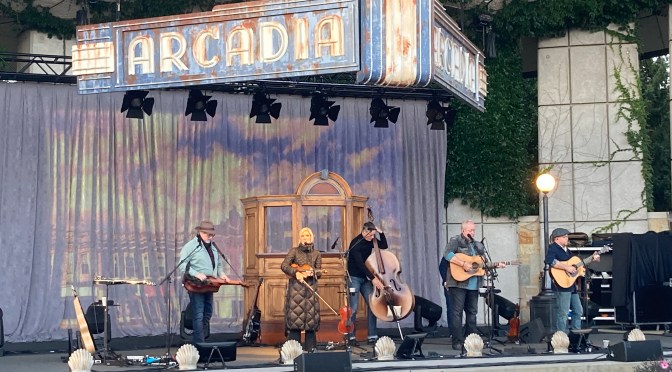
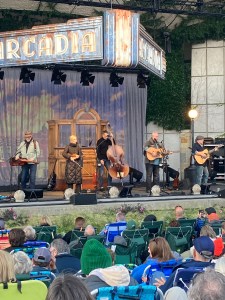
Alison Krauss & Union Station featuring Jerry Douglas, Meijer Gardens Amphitheatre, Grand Rapids, Michigan, September 5, 2025.

Over three decades, Alison Krauss has parleyed her singing and fiddling skills into an international career that (with the help of a Coen Brothers movie or two) brought bluegrass back to the masses and boosted her into an orbit of musical celebrity shared by few. But in the wake of her second collaboration with rock god Robert Plant, Krauss went back to her beginnings, reconvening her long-time band Union Station after a ten-year hiatus, with a new album and a six-month tour on the agenda. And that’s how, on the first genuinely chilly evening of Meijer Gardens’ concert season, Krauss and company wound up onstage in winter gear, getting down to business with relish, drawing a sold-out audience huddled beneath layers of Gore-Tex and fuzzy blankets toward their blossoming circle of musical warmth and light.

Not that Krauss & Union Station’s music is all sunshine, lollipops and rainbows. The tunes featured from their new album Arcadia were about (in this order): loneliness; a factory fire disaster; loneliness again; a mysterious stranger terrorizing a small town; and getting shut down on the make. In fact, some of the most compelling vocal moments were the darkest – Krauss’ spooky solo turn on “Ghost In This House”, Russell Moore’s bone-chilling folk narrative “The Hangman”. And there was melancholy galore in the mainstays of the band’s back-catalog: “Every Time You Say Goodbye”, “Let Me Touch You For A While” (“our one sexy song”, according to Krauss), revamped 1970s soul classic “Now That I’ve Found You”, and a spare, devastating cover of Willie Nelson’s “Angel Flying Too Close To The Ground.”

But while sad songs say so much, they weren’t the only emotion on offer; for every heartbreaker, there was an anthem to survival and resilience like the new “One Ray of Shine” and the classic “Forget About It.” In these tunes especially, Krauss showed her consummate range and interpretive skill, pattering out the verses to draw us into the story, then launching into the high lonesome choruses (often cradled by Union Station’s understated vocal harmony) to finish the job. While that sweet, supple voice is Krauss’ foremost calling card, she’s also consistently savvy with her vocal gift, knowing how to blend in tart, savory, even spicy flavors as the music requires.

So there were humor and high spirits aplenty to set off all the sadness too. Whether commiserating with us about the weather (“You all look like Paw and Laura under the blankets in the back of the wagon”), or slyly teasing her bandmates (guitarist/banjo player/songwriter Ron Block was introduced as “our sexy librarian — and a recovering vegetarian”), Krauss combined downhome deadpan with a mischievous gleam in her eye whenever she addressed the audience. And when Union Station launched into hoedowns “Choctaw Hayride”, “Sawing On the Strings” and Bill Monroe’s “Cluck Old Hen”, she leaned right in, hunkering down on rhythm fiddle as Block, violin/mandolin wizard Stuart Duncan and dobro legend Jerry Douglas tore it up over Barry Bales’ resonating bass.

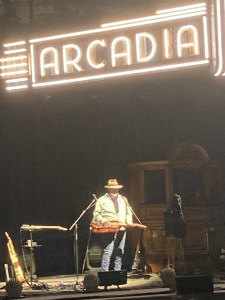
Douglas proved equally riveting in his extended solo spot, a weird and wonderful medley of Paul Simon’s brooding “American Tune” and Chick Corea’s festive “Spain”. Extra kudos go to Russell Moore as well: slotting into the male lead vocal spot formerly held by long-time stalwart Dan Tyminski, he brought home the bacon on both the back catalog and the upbeat “(Crazy ‘Bout A) North Side Gal” (which, in Krauss’ words, “covered three important topics – geographical location; mental wellness; and gender.”)

Ultimately, a concert by Alison Krauss & Union Station comes down to first-rate musicians playing and singing deceptively simple yet deeply affecting music, at the highest level of technical brilliance and visceral commitment, to stunning effect. But if anything, the extended encore, where the sextet gathered around a single microphone to harmonize with minimal instrumentation, sounded even richer depths. As the gentle love song “When You Say Nothing At All”, the weeper “Whiskey Lullaby”, the traditional spiritual “Down to the River to Pray” and Block’s moving confession of faith “There Is A Reason” wafted into the chill of the night, it settled over the rapt crowd like a bluegrass benediction to provide a thoroughly satisying finish. Put simply: hear and see them live if you can.

— Rick Krueger

Setlist:

  • Looks Like the End of the Road
  • Granite Mills
  • Choctaw Hayride
  • Sawing on the Strings
  • Rain Please Go Away
  • Every Time You Say Goodbye
  • Cluck Old Hen
  • The Lucky One
  • Ghost in This House
  • I Don’t Believe You’ve Met My Baby
  • Baby, Now That I’ve Found You
  • Wish I Still Had You
  • Angel Flying Too Close to the Ground
  • Let Me Touch You for Awhile
  • American Tune (Jerry Douglas solo)
  • Spain (Jerry Douglas solo)
  • Dust Bowl Children
  • The Boy Who Wouldn’t Hoe Corn
  • Lie Awake
  • The Hangman
  • Orange Blossom Special
  • One Ray of Shine
  • Restless
  • North Side Gal
  • Forget About It
  • Paper Airplane
  • Gravity
  • When You Say Nothing at All
  • Whiskey Lullaby
  • Down to the River to Pray
  • A Living Prayer
  • When He Reached Down His Hand for Me
  • There is a Reason

Vacationing with the Sublime

Sublime, noun or adj. 9. Of a feature of nature or art: that fills the mind with a sense of overwhelming grandeur or irresistible power; that inspires awe, great reverence, or other high emotion, by reason of its beauty, vastness, or grandeur.

– Oxford English Dictionary

Since 2019, my wife and I have made biennial efforts to route our long vacation toward one of the USA’s national parks. (She saw the Ken Burns film; I read Neil Peart’s travel books.) For this year’s trip, we ended up circling the Great Lakes, with a side quest to visit college friends in upstate New York. And while our trek had plenty of normal vacation fun — and even a few proggy moments — it struck me looking back how much time we spent in the presence of the sublime. (It cropped up on our 2024 vacation, too!)

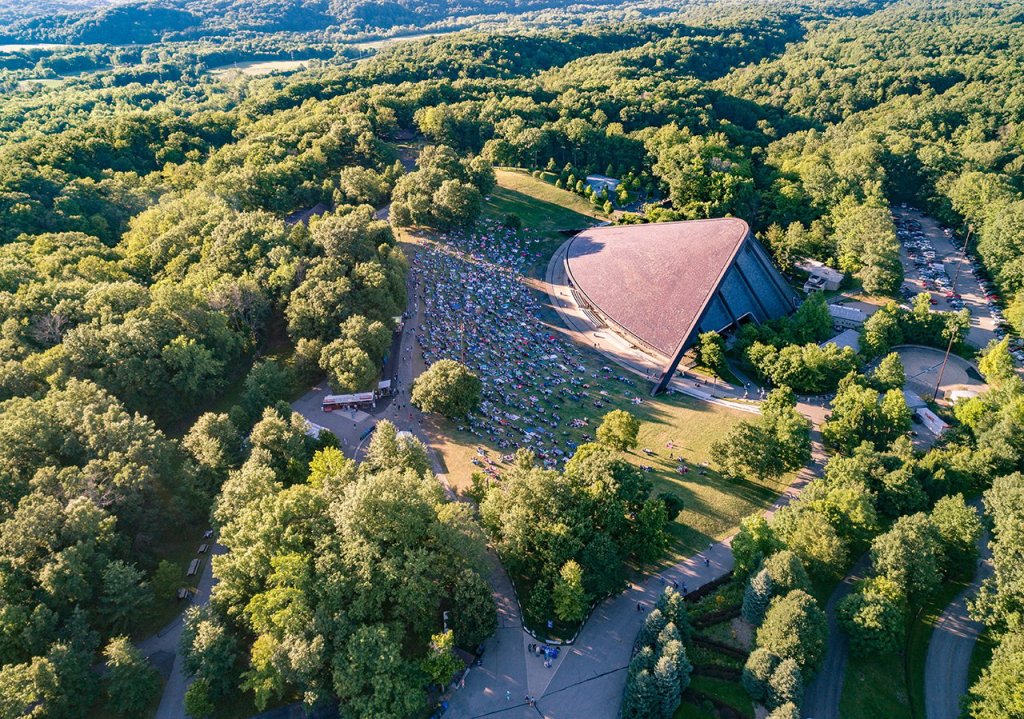
The core destination on our eastward journey was Ohio’s Cuyahoga Valley National Park. A unlooked-for haven of forests, rivers, byways and trails situated between Cleveland and Akron, entering the park cast us back to the era when mule-drawn shipping plied the Ohio & Erie Canal, passing settlements and small towns on the way to the Mississippi River. But our initial destination within Cuyahoga Valley, Blossom Music Center, casts a distinctly modern silhouette on this pastoral scene.

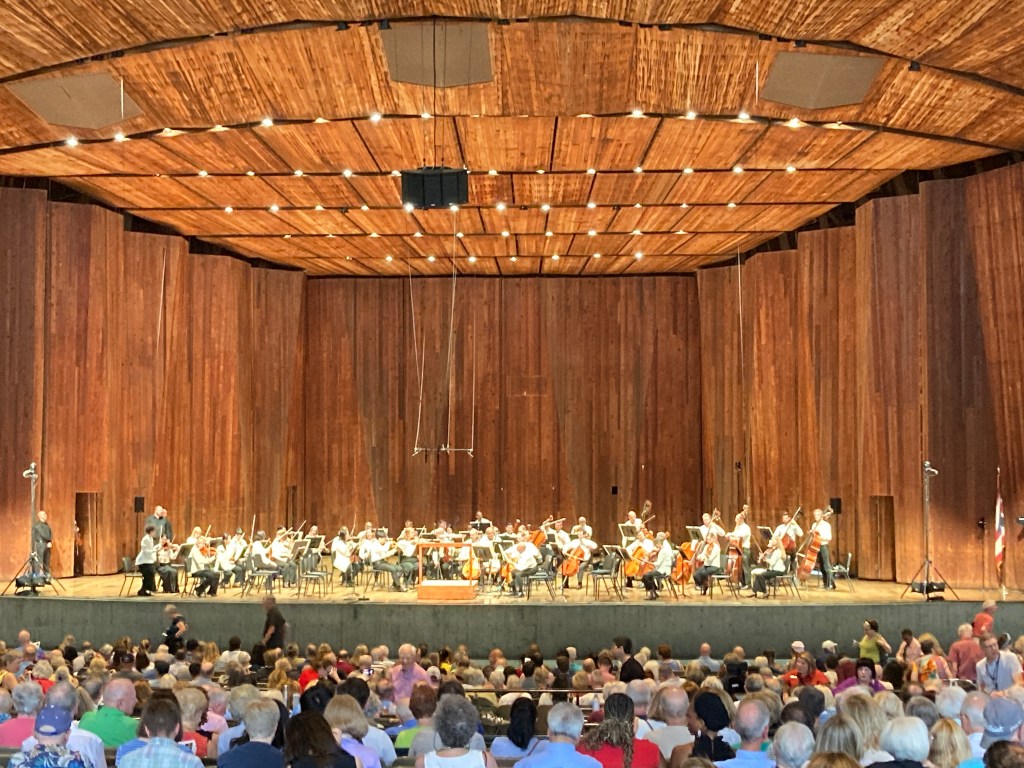
The Cleveland Orchestra has long been considered one of America’s top five symphony organizations, alongside New York, Boston, Philadelphia and Chicago. Since the late 1960s, they’ve played summer concerts on Blossom’s 800-acre grounds. On the Saturday night we attended, 4,000 folks filled the pavilion and dotted the expansive lawn as a remarkably youthful orchestra took to the faux-rustic stage for a challenging program.

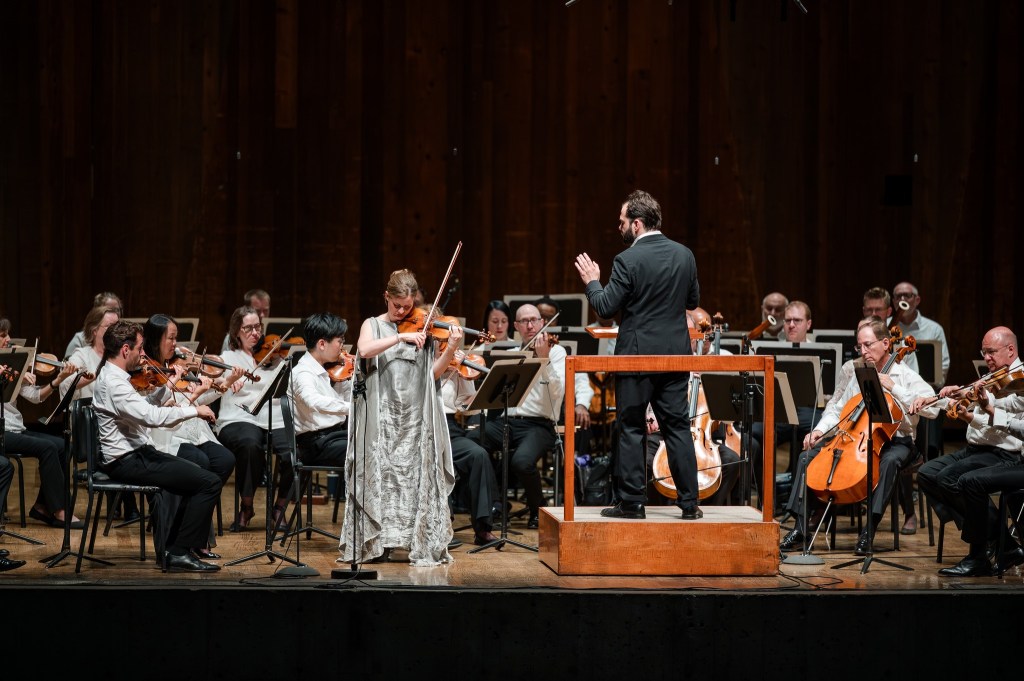
With young Czech conductor Petr Popelka on the podium, German violin phenom Veronika Eberle tackled one of the monuments of her instrument’s repertoire, Beethoven’s Violin Concerto. Twice as long as any similar work of the period, the Concerto stands out for its focus on cooperation between soloist and orchestra instead of contention. Eberle proved more than equal to the broad, lyrical span of the work, graciously in tune with her colleagues through the Allegro’s subtle, sonorous build, the Larghetto’s placid thematic variations and the vivacious, folksy Rondo. A well-deserved standing ovation led to Eberle dashing off a Bartok duet with concertmaster Joel Link. Then Popelka proved himself a maestro to watch and hear with a sprightly, energetic reading of Schumann’s “Spring” Symphony. Music, audience and surroundings came together for a thoroughly delightful evening. The rain that had threatened throughout even held off until after the concert!

(Click here to hear Eberle’s recording of the Beethoven with the London Symphony Orchestra. Click here to hear Popelka conduct symphonic works by Czech composer Biedrich Smetana. Young musicians like these fill me with hope for the future of orchestras and their historic repertoire! A month remains in TCO’s Blossom season; full info is here.)

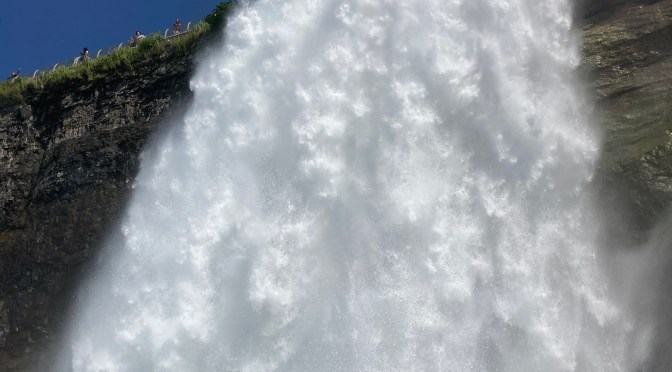
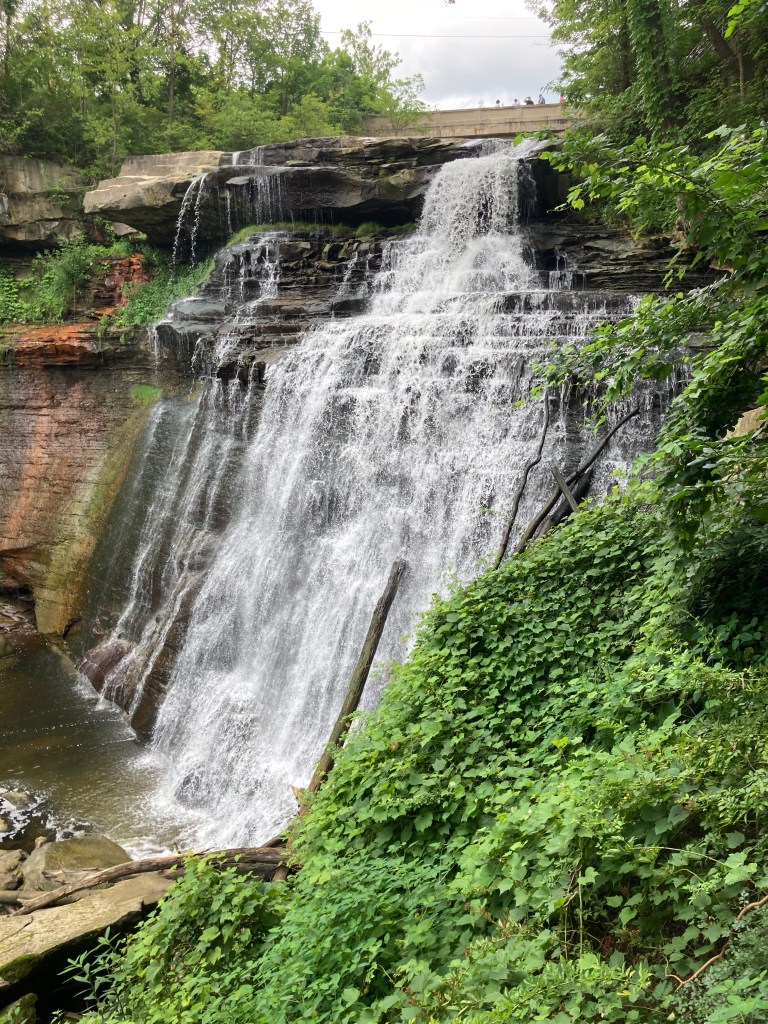
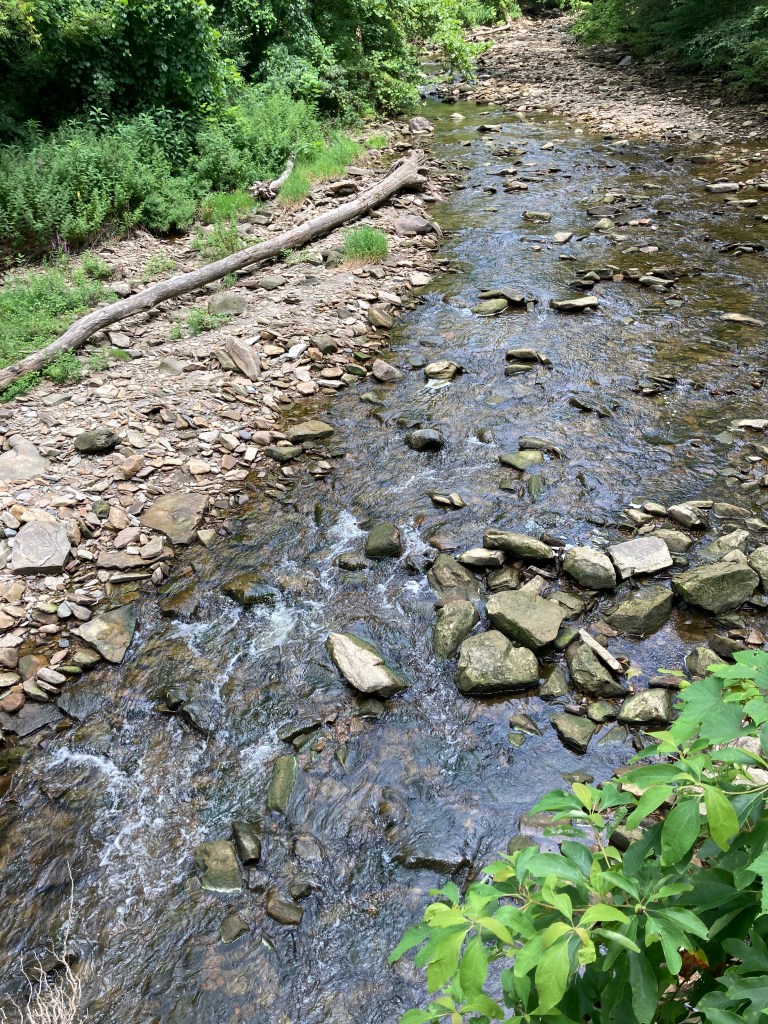
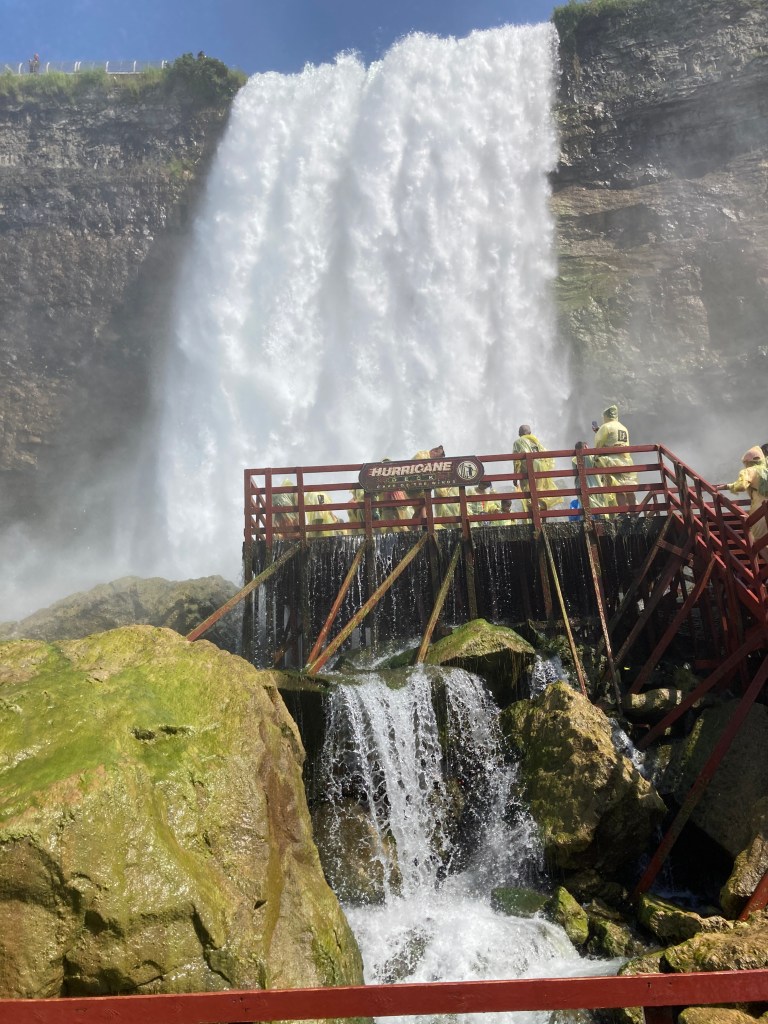
After an evening’s rest, the park called and we answered, hiking to and around the breathtaking Brandywine Falls (a hop, skip and jump from our B&B):

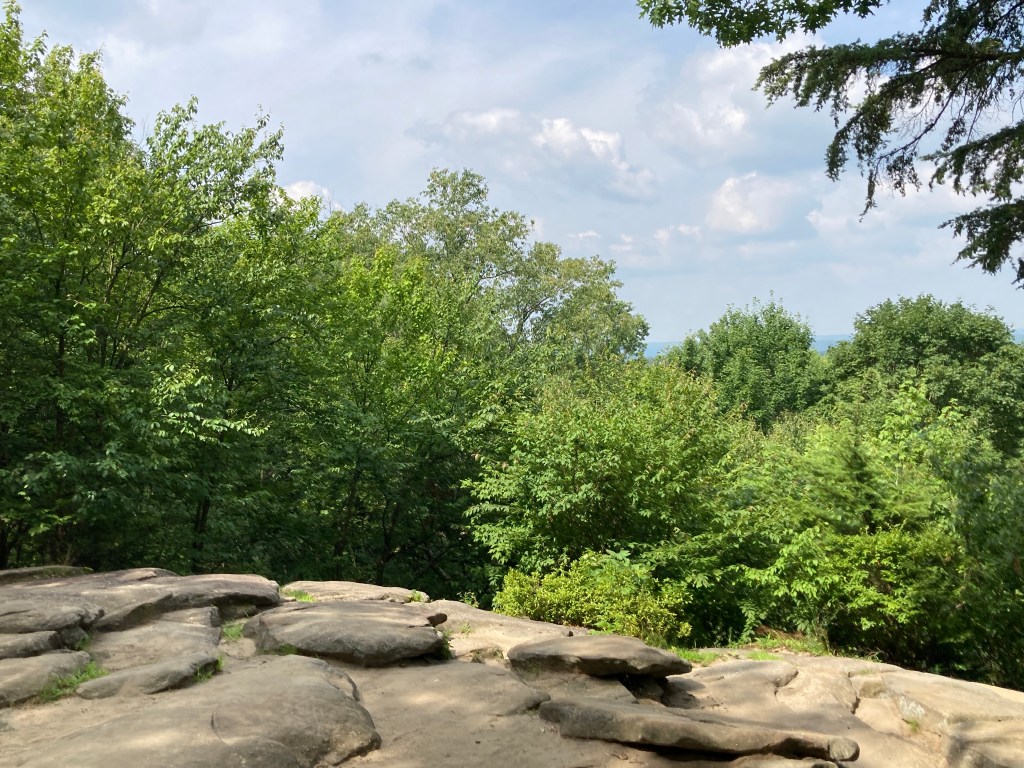
On our outbound journey the next day, we hiked The Ledges, a massive rock outcropping with its own ecosystem, actual bat caves, and a spectacular overlook of the Valley’s forests.

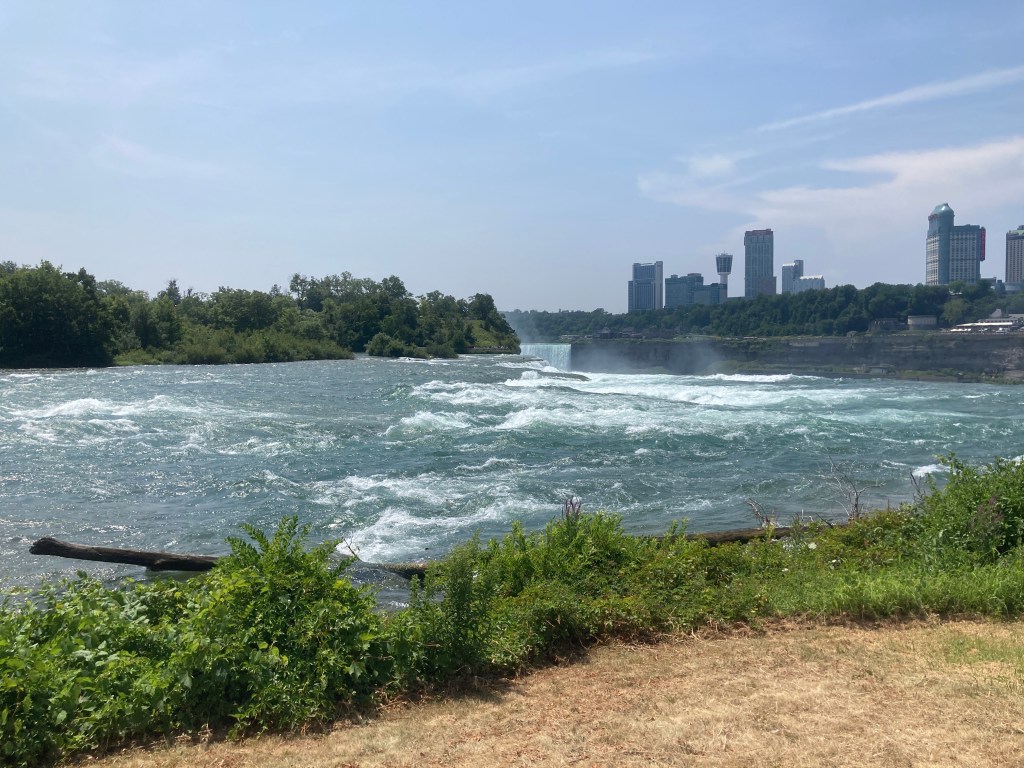
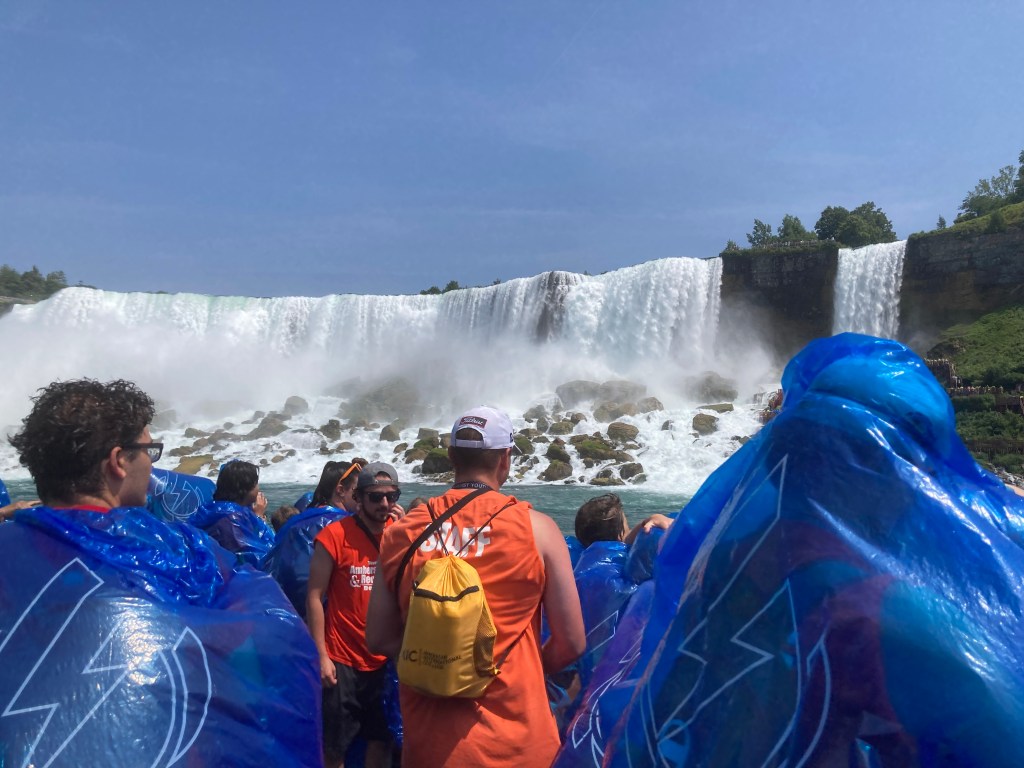
Following time with our friends, we tackled the sublimest of the Sublime for our wedding anniversary: the American side of Niagara Falls, experienced from multiple angles via New York’s expansive state park (the oldest in the country), a boat trip on the Maid of the Mist, and a river-level viewing platform where the now-obliterated Cave of the Winds once beckoned.

And it’ll surprise no one that, cutting back through Canada to head home, we stopped at the annual Stratford Festival for a taut, spellbinding production of Shakespeare’s The Winter’s Tale. One of the Bard’s late tragicomic romances, this one’s got it all: just in the first half, there’s jealousy and skullduggery, messages from the gods, false accusations with fatal results, plus the most notorious stage direction in theatrical history, “Exit, pursued by a bear.” How Shakespeare fashions a happy ending from of these tangled threads (hint: a flash-forward of 16 years is involved) is a marvel in and of itself, but a company that can pull off such a drastic vibe shift is even greater cause for wonder. As usual, Stratford was up to the task, with veterans (Graham Abbey’s hapless Leontes, Sara Topham’s noble Hermione, Yonna McIntosh’s searing Paulina, Tom McCamus’ country clod facing off with Geraint Wyn Davies’ citified rogue Autolycus) and new recruits (an enthusiastic Marissa Orjalo and a passionate Austin Eckert as young lovers Perdita and Florizel, Christo Graham’s show-stealing Clown) giving it their all under Antoni Cimolino’s sure-footed direction. If there’s finer theater on this continent, I’d be hard-pressed to find it. (The Winter’s Tale runs through September 27 at Stratford; see it for yourself!)

— Rick Krueger

In Concert: The War and Treaty’s Shock, Awe and Ecstasy

The War and Treaty with the Grand Rapids Symphony, Frederik Meijer Gardens Ampitheater, Grand Rapids Michigan, August 1, 2025.

From the moment Michael Trotter Jr. & Tanya Trotter hit the stage, they aim to overwhelm. Treading tested paths blazed by their forebears — classic soul duos like Ike & Tina Turner come to mind — even the name of their act — The War and Treaty — zeroes in on their music’s target — the ups, downs, triumphs and tribulations of life as lovers, together or apart. Having built an intense local following from their indie start in Albion, Michigan through their current major label success, the Trotters took no prisoners on this summer night; backed by their tight seven-piece band and supported by an orchestra for only the second time, they delivered their core message to a willing, welcoming crowd throughout two engaging sets of shock, awe and ecstasy.

A typical War and Treaty tune like “Stealing a Kiss” or “Teardrops in the Rain” (both from their latest release Plus One) starts at a low simmer: Michael or Tanya take the first verse, building the tension inherent in whatever tale they’re spinning; their partner turns up the heat with an answer verse. By the time the pair hit a harmonized bridge, they’re coming to a boil; all that’s left is a steamy duet chorus to take themselves and the audience even higher. Whether song is about meet-hot attraction (“Carried Away”), break-up regrets (“Reminiscing”), or even post-messup healing (“Home”) it’s a sure-fire approach that pulls you right in. Anchored by Michigan native Max Brown on guitar and driven by brothers Terrence “Slim” Holmes on organ and Johnathan “Bam” Holmes on drums, every song was driven by a potent, bluesy groove laced with down home touches; responding to conductor Duo Shen’s deft baton, the Grand Rapids Symphony furnished sweetness and spice as required — whether from silky strings, plaintive woodwinds or smoky brass.

Not that The War and Treaty couldn’t stoke the flames on their own; sending the orchestra on a break, the Trotters and their band consolidated their hold on the crowd with a handful of tunes never before heard in the States. The uptempo scat-swing of “Crazy”, the drop-beat reggae of “Bare Knuckles” and the confessional ballad “Hey Judith” (a song for Tanya’s late mom) testified to the couple’s omnivorous taste and impressive range — and the band’s intense jamming provided flexible, sturdy support for even more intense vocal flights of fancy.

One costume change (and the return of the Symphony) later, it all came to a head in an exhilarating final run — gathering momentum with “America the Beautiful” sung and arranged a la Ray Charles’ classic version, then slamming into the double-time, tambourine-whacking gospel of “Call You By Your Name” and the call-and-response finale (complete with audience participation) “Can I Get an Amen”. Though Nashville is their current base of operations, you can tell that The War and Treaty think of West Michigan as home; returning for the second local gig of their biggest year to date, they came, saw, and conquered, leaving a transported crowd hungry for more.

— Rick Krueger

In Concert: Billy Strings’ Down-Homecoming

Billy Strings, Van Andel Arena, Grand Rapids Michigan, May 30, 2025

It took a while for my wife and I to wrap our heads around Billy Strings’ triumphant return to his home turf this past weekend. Why? Let me count the ways:

  • Strings’ two shows completely sold out, with around 12,000 people in attendance each night – so the concourse of our downtown sports arena was absolutely jam-packed. Restroom breaks were epic-length adventures; trips for concessions or merch were silently scratched. It’s not that we hadn’t navigated similar conditions before, but . . .
  • In the six years since our last show at said arena (if you must know, it was Jeff Lynne’s ELO), the majority of concerts booked there have shifted from classic rock to country, with the occasional rap and metal nights. Different genres, different, much younger clientele than the crusty old geezer I seem to have become . . .
  • Different clientele, different — uh, “atmosphere”. The designated standing room (the front half of the main floor) became a giant moshpit in record time, and the rowdy vibe plus a certain aroma seemed to filter throughout the arena. In our upper bowl section, the couple right in front of us seemed a bit, let’s say, chemically enhanced: standing most of the first set when they weren’t making multiple food and drink runs; constantly talking and shifting position. (It could have been worse; two guys a couple rows further down stood and danced out of rhythm all night.) I had to fight to keep my dad’s words out of my head; whenever we played pinochle, he’d eventually say: “Are we gonna talk or are we gonna play cards?” It wasn’t pretty.
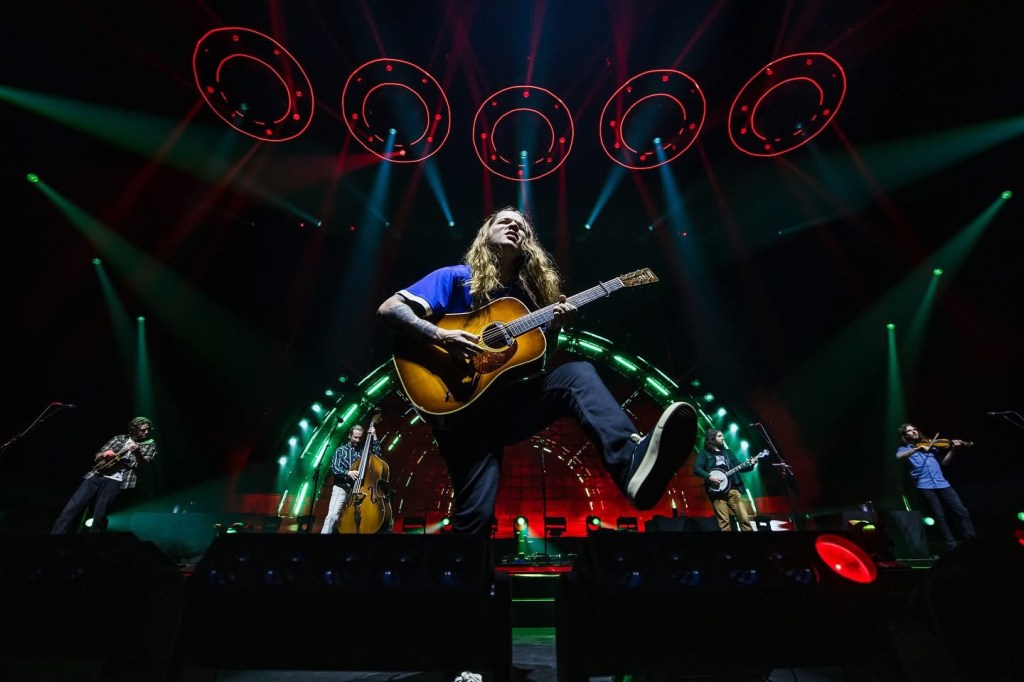
  • With all that distracting us, we weren’t really braced for when Strings took center stage side by side with his acoustic quintet and kicked off. The sound was crystal clear but formidably loud, even without drums; the lights pulsed, strobed and flashed at Taylor Swift-level candlepower and speed. We used to love this stuff; now we felt instantly overwhelmed!
  • And the music got real wild and wooly, real quick. Straight bluegrass opener “The Fire On My Tongue” plowed into “Hide and Seek”, giving way to a dark, full-blown psychedelic freak-out. As Strings piled on echo and fuzztone, the band s-t-r-e-t-c-h-i-n-g out a gnarly one-chord vamp almost beyond its breaking point, I looked over at my wife — and she was not enjoying herself. And then the music went on, nonstop, for another half-hour! My prog side was thoroughly digging it; the part of me that had talked her into coming thought Strings might be reading our minds as he plowed into a double-time, pickin’ and grinnin’ take on Jimi Hendrix: “Is this love, baby, or is it – confusion?

But then, Strings chilled things out, talking directly to the crowd. About how happy he was to be back, about memories of the local places he had played in his younger days. Then he gracefully started up what he’d called “a song about looking at the windshield, not the rearview”. Midway through “Away from the Mire”, the psychedelia was back — but this time it felt inviting, beckoning us in with open arms and a smile.

The two of us relaxed (it helped that both we and that couple in front of us were able to slip into nearby empty seats after intermission) — and just like that, we were off to the races! And as we mellowed out, we could see and hear what we’d been missing. Which is worth mentioning in full:

  • Strings is just an awe-inspiring musician — a virtuoso guitarist with immaculate taste and his own spin on multiple traditions, a first-rate vocalist who sings from the heart, and a songwriter with his own strikingly mature viewpoint, capturing the lives of desperate people in extremes of gloom, craziness and joy. His band members (banjoist Billy Failing, mandolinist Jarrod Walker, bassist Royal Masat and fiddler Alex Hargreaves) are equally fabulous players and harmony singers, running buddies in every sense of the term. These guys have got range — as they demonstrated at the front of the stage to close the first set, infusing bluegrass classics and “Richard Petty” (Strings’ self-improvement gospel according to NASCAR) with simple, unforced pleasure.
  • The second set was served up in shorter chunks, surprisingly drawn more from Strings’ back catalog than his new Highway Prayers. (The luscious title track from Home and Renewal’s devastating love song “In the Morning Light” were high points for me). Plus, Billy took impressive solo turns, unreeling one bluegrass cover after another on banjo and guitar — though I could swear he also snuck a Slayer riff in there somewhere!
  • Again, you could tell Billy was glad to be there from the multiple shout-outs, thank yous and anecdotes he continued to share in the back half of the show. By the end, he was fully fired up again, roughriding through “Heartbeat of America”, then dashing across the stage while belting out his trouble-in-a-small-town classic “Dust in a Baggie”. A couple of quickfire quintet covers for the encore, and just like that, 2 1/2 hours had flown by. (And astoundingly, Strings’ equally long second night setlist was completely different!)

I might be getting too cranky for 21st-century arena shows, but actually I’m here to tell you this: Billy Strings is the real deal. His respect for his musical forbears, his unabashed instrumental brilliance, his gritty evocations of small-town vice, his poetic contemplations of the bigger picture, his killer instinct for maximum musical impact — he’s got it all, brought into focus onstage with fearsome chops, a high lonesome voice and a generous soul. If you love the tradition he comes from — or if you just love good music — find some way to experience this guy, on record, streamed or live. (Personally, I’m hoping for an outdoor show next time!)

This show, along with all of Billy Strings’ concerts, is available for streaming or downloading at nugs.net.

— Rick Krueger

Set 1:

  • The Fire on My Tongue
  • Hide and Seek>Pyramid Country>My Love Comes Rolling Down (Doc Watson Family cover)
  • Lumpy, Beanpole & Dirt (Bad Livers cover)>Love or Confusion (Jimi Hendrix Experience cover)
  • Away From the Mire
  • Freedom – front of stage
  • Close By (Bill Monroe and the Bluegrass Boys cover) – front of stage
  • Sally Johnson (traditional cover) – front of stage
  • Richard Petty – front of stage

Set 2:

  • In the Clear>Everything’s the Same
  • West Dakota Rose (Chris Henry cover) – Billy on solo banjo
  • Georgia Buck (Doc Watson cover) – Billy on solo guitar
  • Let the Cocaine Be (Doc & Merle Watson cover) – Billy on solo guitar
  • Salty Sheep
  • Home
  • Red Daisy
  • Hellbender
  • In the Morning Light
  • Greenville Trestle High (Doc Watson cover)
  • Heartbeat of America
  • Dust in a Baggie

Encore:

  • Wait a Minute (The Seldom Scene cover)
  • Roll On Buddy Roll On (Bill Monroe and the Bluegrass Boys cover)

In Concert: A Great Orchestra, A Hot Conductor, A Thrilling Night

The Chicago Symphony Orchestra, Friday, May 2, 2025.

It had been more than 15 years since I had heard the Chicago Symphony Orchestra live – and nearly 25 since I had heard them on their home ground, Orchestra Hall in Symphony Center. So last year, when the CSO announced that young conducting phenomenon Klaus Mäkelä (referenced in my highlights of 2024 post) had accepted the post of Music Director Designate, I decided that a renewed acquaintance with one of the USA’s top orchestras was long overdue.

Orchestra Hall, dating all the way back to 1904, is a unique venue in and of itself: its wide but thin stage and steeply raked balconies make for a intimate (if not always comfortable) concert experience. Renovations in the 1990s added gallery seats above and behind the stage, as well as a suspended shell to soften and deepen a challenging acoustic. So it wasn’t hard to imagine the musicians feeling like they were in a fishbowl as they clambered atop multilevel risers in front of a full house.

But beyond the typical pre-concert buzz, there was a question in the air. By and large, Mäkelä has made his reputation in post-Romantic and 20th-century music — well-regarded recordings of Sibelius and Stravinsky, Chicago guest shots focused on big pieces by Shostakovich and Mahler. Would his take on the core classical repertoire — works the CSO has performed since its start in the 1890s, conducted by everyone from founding conductor Theodore Thomas to previous Music Director Riccardo Muti — measure up?

That question was answered in a flash, as Mäkelä and CSO Artist in Residence Daniil Trifonov whipped up a fresh, appealing reading of Johannes Brahms’ Piano Concerto No. 2. None of the overbearing, ponderous sludge that unimaginative historians accuse Brahms of here! Trifonov’s playing was always flowing, supple and strong, with no hints of pounding or cloudy tone; CSO principals Mark Almond (horn) and John Sharp (cello) made the most of their lyrical solo moments with warm tone and deep expressiveness; and the orchestra sounded lithe and limber in the extended opening, energetically playful in Brahms’ scherzo, chastely gorgeous in a delectable Andante, and delightfully bouncy in the closing Allegretto. All the while, Mäkelä was sculpting the overall sound, focusing balances, dynamics and timing for maximum emotional impact. The scattered spontaneous applause after every movement (the grinning conductor and pianist had to restrain themselves before pouncing on the finale) was proof that the music hit home, even before the final ovation and the outsized reaction to Trifonov’s encore (a Chopin prelude lasting less than a minute).

After intermission came a centennial tribute to the CSO’s late Principal Guest Conductor Pierre Boulez (who conducted the orchestra the last time I’d heard them — a dark, lush program of Ravel and Bartok in Ann Arbor, back in 2010). Well executed by brass septet and precisely conducted by Mäkelä, Boulez’s Initiale lived up to its billing — a tart, postmodern appetizer announcing itself pointedly, quickly tying itself into contrapuntal knots, then breaking loose for a final flourish. Complete with a tuba mute (which always makes me smile)!

But it was the last work on the program, Antonin Dvořák’s Symphony No. 7, that really showed what Mäkelä and the CSO can accomplish together. The orchestra’s tone was at its richest, its dynamic range wider and its rhythmic flow freer than in the Brahms. Mäkelä threw himself into the piece with greater animation and more sweeping body language — but also with a greater willingness to let the players take the reins, dropping his beat to focus on accents and phrasing for surprisingly long stretches. The powerful resonance of Dvořák’s opening themes and their punchy development, the breadth of feeling in his Andante, the infectious swing of the Scherzo’s cross-rhythms, and the hard-won, dramatic climax — they were all there in vibrant technicolor, fully formed, overflowing with life and vigor. You could tell that Mäkelä dug leading the CSO, and they obviously dug playing with him. And the audience absolutely loved it, leaping to its feet as Makela acknowledged the symphony’s featured musicians, brought the orchestra up for their bow — and modestly pointed to Dvořák’s score as the applause continued.

When he becomes the CSO’s Music Director in the fall of 2027 (while at the same time taking over Amsterdam’s Concertgebouw Orchestra), Klaus Mäkelä will be 31. Based on last Friday night’s concert, he’s got an amazing head start — both on a lifetime of personal musical growth, and building a potentially astounding rapport with one of the top orchestras in the world. Believe me, I’ll be back to Chicago much sooner next time!

— Rick Krueger

A 2024 Coda: kruekutt’s Highlights in Classical & Jazz

To complement Brad, Tad & Carl’s fine “Best of” selections, herewith a sampler of favorites and notable releases from the year in both classical music and jazz. As often as I drift away from both genres, I return to them on a regular basis — and it happened again to fine effect in 2024! Listening links are included in the album titles.

Highlights in Classical Music

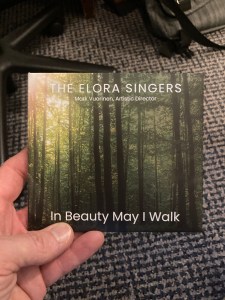
If you followed my series To the True North this past summer, you learned how impressed I was by Canada’s Elora Singers and their annual Festival. The Singers’ latest album In Beauty May I Walk was released in time for this year’s closing festival weekend; a collection of contemporary works drawing inspiration from the theme of revelation, it offers an absorbing balance of breathtaking precision and deeply felt emotion. Eriks Esenvalds “In Paradisum” and “Only in Sleep”, Jonathan Dove’s title piece and Stephanie Martin’s “A Frost Sequence” are highlights, but every composition (whether musing on nature, the search for God or time’s inevitable passage) draws in the listener and cuts to the heart. Never indulging in sentimentality, conductor Mark Vuorinen and the Singers nonetheless lay bare the human condition and affirm life’s inherent value; this is choral singing at its finest, and an official 2024 Favorite. (The Singers’ recent Christmas album Radiant Dawn is well worth hearing this time of year, too.)

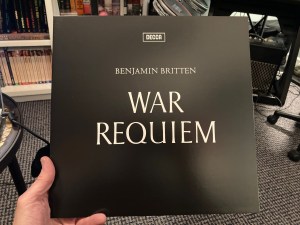
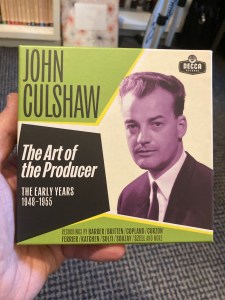
This year was the centennial of John Culshaw, who pioneered stereo recordings of opera and classical music as a producer for Decca Records in the decades following World War II. Unbeknownst to me, Decca had already completed new high-definition transfers of two Culshaw classics: the first complete set of Richard Wagner’s marathon operatic cycle The Ring of the Nibelungs (with the Vienna Philharmonic plus a bevy of postwar vocal talent, conducted by a young Georg Solti; consistently considered one of the recording industry’s greatest achievements); and the recorded premiere of Benjamin Britten’s War Requiem (the composer’s shattering anti-war masterwork, this album changed my life) — longtime Favorites which I snapped up new versions of straightaway. Now the actual centenary sees the release of John Culshaw, The Art of the Producer – The Early Years, 1948-1955. The first impression of this 12-disc set, recorded entirely in mono, is how fresh and vivid everything sounds; whether working live or in controlled conditions, Culshaw’s keen ear and finely honed production skills place you in the room with the performers. Wagner operas staged live at Bayreuth, Britten performing at his own Aldeburgh Festival and Samuel Barber conducting his music in the studio stand out, but even an underprepared Brahms German Requiem (with Solti squeezing the best he can out of overmatched forces) has its charms. Beyond sheer documentary value, this set demonstrates how essential Culshaw’s sonic discernment, organizational skills and empathetic rapport with artists was in developing the lifelike recorded sound we take for granted today.

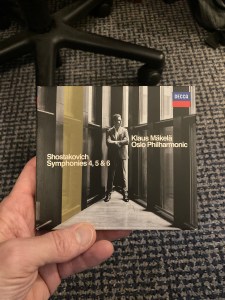
Even as it’s been swallowed up by one multinational conglomerate after another over the decades, Decca has maintained its commitment to both vivid, dynamic sound and talented artists in development. The latest case in point: the youthful Finnish conductor Klaus Mäkelä, who’s quickly made waves in the orchestral world with fully grounded yet remarkably fresh readings of 20th-century classics, from Jean Sibelius’ organically evolving symphonies to Igor Stravinsky’s kaleidoscopic early ballets. At the helm of the Oslo Philharmonic for Symphonies 4, 5 & 6 by quintessential Russian modernist Dmitri Shostakovich, Mäkelä reaches new heights: the 4th’s macabre, Mahlerian grotesquerie (suppressed for a quarter-century due to Soviet disapproval) and the 6th’s journey from ethereal beauty to dry, exhausted humor unfold relentlessly, while a less- pressurized-than-usual 5th revels in cool control that builds to an appropriately tumultuous climax, all captured for maximum impact. Recently headhunted to lead both Amsterdam’s Concertgebouw Orchestra and the Chicago Symphony (where I’ll be seeing him conduct next spring), Mäkelä is a classical superstar in the making, and this double set (definitely on the Favorites list) shows both his already prodigious skills and his rich potential.

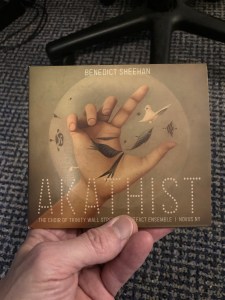
Finally, toward year’s end I stumbled across a wonderfully eclectic oratorio, Benedict Sheehan’s Akathist. Setting a lengthly Russian Orthodox prayer that literally thanks God for everything, Sheehan’s musical approach is anything but predictable: chant from both Western and Easter traditions rubs elbows with Baroque polyphony, Romantic impressionism, Gospel and jazz. And yet, the broad, inevitable arch of the piece readily encompasses the multiplicity of text and texture, gathering up protest against the wounds of the world, cameraderie as comfort amidst pain, and overwhelming gratitude for blessings great and small into a moving, integrated whole. The assembled forces of The Choir of Trinity Wall Street, Artefact Ensemble and Novus NY pull off this music with style and panache to spare. Not just a Favorite; if there’s an essential classical recording for 2024, I’d argue this is it.

(Highlights in jazz follow the jump . . .)

Continue reading A 2024 Coda: kruekutt’s Highlights in Classical & Jazz

In Concert: Sierra Ferrell Drives Us Crazy

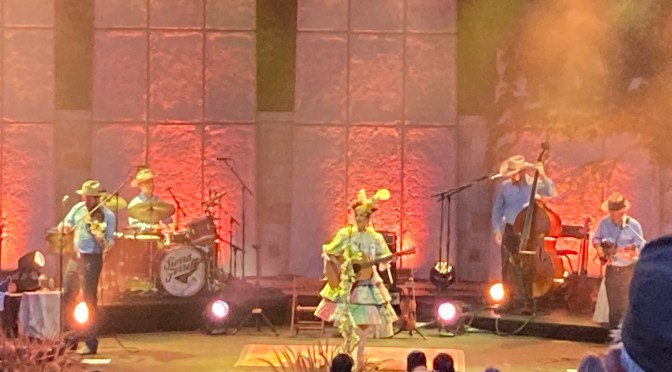
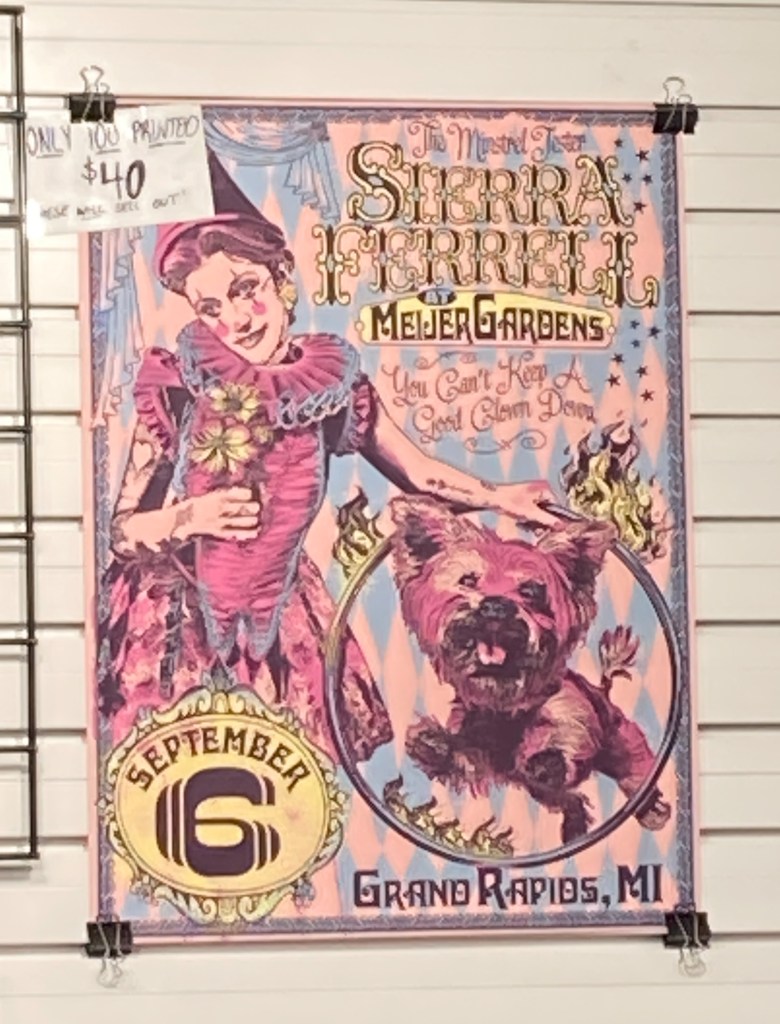
Sierra Ferrell, Meijer Gardens Amphitheatre, Grand Rapids Michigan, September 6, 2024.

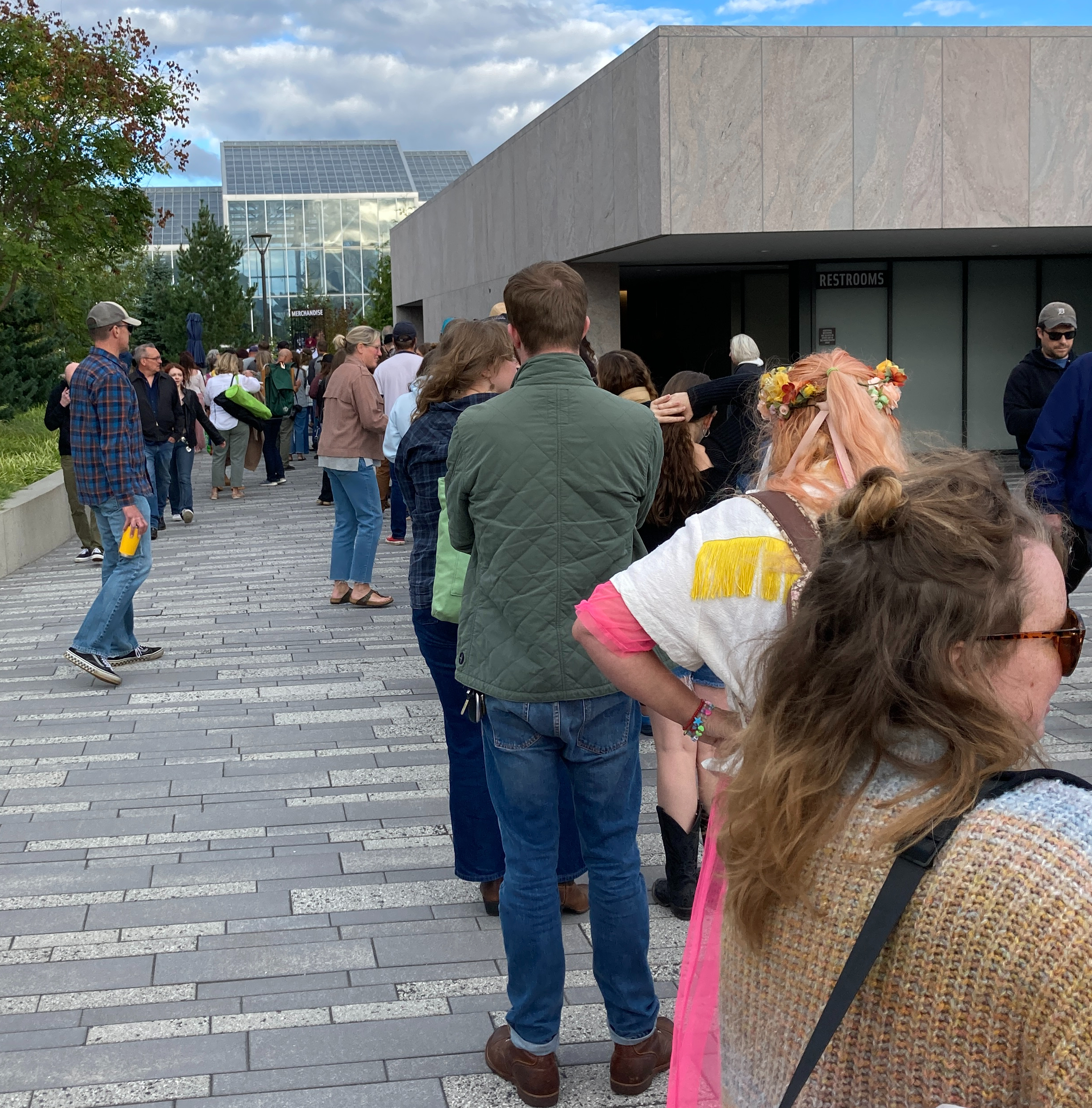
Even in the face of a predicted temperature plunge, the atmosphere at Meijer Gardens heated up as another sell-out crowd filed in for an evening with Americana siren Sierra Ferrell. You could sense the anticipation in an audience skewing considerably younger than the venue’s usual demographic — guys decked out in Deadhead or jam band shirts (with Michigan’s Billy Strings well represented) and the occasional Nudie suit, women clad in hoop skirts and adorned with flower crowns and facial glitter, cowboy boots all around — forming the longest merch line I’ve seen in these parts for many a moon.

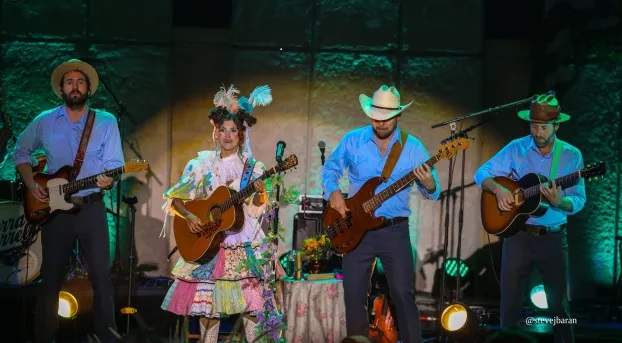
And once opener Meredith Axelrod had reeled us in with a giggly, appealingly skewed acoustic set, Ferrell wasted no time fulfilling her fans’ wildest dreams. Planted center stage at a flower-draped mike stand, resplendent in patchwork fringe dress, pancake make-up and feathers in her hair, she laid out her credentials with opener “I Could Drive You Crazy” — an unstoppably catchy, flirtatious chant, simple as a playground taunt, that morphs from Appalachian fiddle drone to “We Will Rock You” stadium stomp in less than four minutes. At which point the crowd — already on its feet and packed close to the stage — followed suit and went understandably nuts.

As she dove into a generous sampling from her two Rounder albums Long Time Coming and the new Trail of Flowers, it quickly became obvious that Ferrell is that rare real thing – a consummate performer who’s a genuine triple threat. As a singer, she’s got a powerhouse voice and the expressiveness and sensitivity that only come with experience and maturity. Her songs ring true no matter how old-timey her inspiration, packed with appealing melodies and clever, thoughtful lyrics, spanning country music’s historic shifts from cowboy songs and Western swing to bar-room weepers and Bakersfield honky-tonk. And her stage presence – whew! Giddy, yearning, heartbroken and vengeful by turns, Ferrell is all the way into her onstage role, her oversize persona more than a match for her outlandish outfit, a vaudeville turn that doesn’t hide a strong yet vulnerable heart.

Her broadest performance came on the solo murder ballad “Rosemary”, strategically placed mid-set, but Ferrell’s bluegrass-inflected backing band raised the show to an even more impressive level. On fiddle and Fender Telecaster, Oliver Bates Craven was the perfect soloist, peeling off one winning lick after another; mandolist/acoustic guitarist (and Michigan native) Joshua Rilko kept every tune gliding forward or jingle-jangling around as required; Geoff Saunders laid down a nimble, satisfying groove on electric and stand-up basses; and drummer Matty Meyer displayed a great feel for dynamics and drive, matching Ferrell mood for mood. And when the band gathered around one mike and chimed in on rich vocal harmonies for Tim O’Brien’s “The Garden”, the Osborne Brothers’ “Lonesome Feeling” and Ferrell’s open-hearted gospel throwdown “Lighthouse” — well, you could feel the sigh of delight from the 2,000 souls listening in.

But then, the whole night seemed like a non-stop highlight reel: the homespun household wisdom of “Give It Time” setting up the compulsive Spanish tinge of “Why’d Ya Do It”; an intense cover of “Me and Bobby McGee” that just kept building as Ferrell channeled Dolly Parton’s tenderness, then Janis Joplin’s fire. Then there was the closing run that showed off Ferrell’s versatility with Trail of Flowers‘ opening hat trick: “American Dreaming” (lovelorn, resigned road anthem); “Dollar Bill Bar” (femme fatale Ferrell turns the tables on the latest pick-up artist to cross her path); and “Fox Hunt” (stark string-band music that catches both the thrill of the chase and the desperation of a starving mountain man). Put simply, this was a great show; beneath the flamboyant trappings, there’s an elemental presence about Sierra Ferrell and her music that, on this night, proved outright irresistible. If you’re looking for downhome music with a sense of the past that cuts to the bone and revs up a rousing good time, don’t hesitate to check out her albums and see her live!

Setlist:

  • I Could Drive You Crazy
  • I’ll Come Off the Mountain
  • Jeremiah
  • Give It Time
  • Why’d Ya Do It
  • Chitlin Cookin’ Time in Cheatham County
  • Money Train
  • Rosemary
  • The Garden
  • Lonesome Feeling
  • Lighthouse
  • The Sea
  • The Bells of Every Chapel
  • Far Away Across the Sea
  • Me and Bobby McGee
  • American Dreaming
  • Dollar Bill Bar
  • Fox Hunt
  • Years
  • In Dreams

— Rick Krueger

At the Stratford Festival: Get That Hope (To the True North, Part 8)

Daddy wants to win the lottery, Mommy is still bitter about getting knocked up at twenty, Simeon has war-related PTSD, and Rachel just wants to get out of her parents’ place and have a home of her own, but first there are a few things she’s got to get off her chest. It’s Jamaica’s Independence Day, Toronto is sweltering, and everyone is on edge–then the air-conditioner breaks.

— publishers’ blurb for Get That Hope

If the above sounds like a downer — well, on stage it didn’t turn out that way! While playwright/screenwriter Andrea Scott explicitly claims Eugene O’Neill’s famously depressing Long Day’s Journey into Night as inspiration for Get That Hope, her new play (currently in previews for its world premiere next month) has too much of the milk of human kindness to leave its audience shattered. There’s misapprehension and conflict shot throughout her bittersweet portrait of the Jamaican-Canadian Whyte family, but as individuals’ secrets are revealed and each character gathers the courage to be honest, the play becomes an affirmation of how the ties that seem to confine can also bind together — in love (however clumsily and reluctantly expressed), in sympathy, in mutual support.

With only five characters, each actor has to make their portrayal count — and each steps up to the challenge. Conrad Coates’ Richard Whyte works hard to be carefree as the head of the family– maybe a little too hard, as he dismissively tries to keep the lid on everyone’s tensions and just have a party. Kim Roberts (a pioneer in Canadian stage, film and TV) vividly portrays the challenges Richard’s wife Margaret faces, both to recover her health and to relate to the household’s adult children. Celia Aloma as Richard’s daughter Rachel bears the brunt of the Whytes’ situation; providing most of the family income, she longs for respect and independence. And son Simeon, sketched with quiet intensity by Savion Roach, wrestles with demons acquired while serving overseas, locked into inaction by his suppressed pain, fear and frustration. Jennifer Villaverde’s Millicent Flores — the family’s Filipino neighbor, Margaret’s care worker, everybody’s confidant — seems to be the glue holding the Whytes together; but a secret that’s only revealed as Act II begins threatens to blow all these tense relationships completely apart.

Misunderstanding between generations and cultures breaks out in the open; Rachel slams into her parents for not living up to her expectations, Richard and Margaret react with disbelief and defensiveness, Millicent has to stand up for herself while Simeon confronts his own emotional paralysis. What’s true to life here — what Scott, director Andre Sills and the company bring home powerfully — is that none of these problems are solved with a pat therapeutic answer, or even a melodramatic apology. Everyone in this circle stands their ground — but everyone also realizes that all they have is each other. And as painful as their vulnerabilities are, leaning on each other, letting go of built-up resentment, is how they’ll get through whatever might come their way, with the play’s final moments hinting at both further suffering and (just perhaps) reasons to hang on.

I found Get That Hope to be a solid slice-of-life drama, resonant in its forthright assertion of how we need each other in the face of adversity — whether it’s eaten at you for years or comes at you from out of nowhere. Come to this new play with an open mind and heart; you won’t be disappointed.

— Rick Krueger

Get That Hope is currently in previews at the Stratford Festival’s Studio Theatre; it officially opens on August 10, playing through September 28. For production information and ticket availability, click here.

At the Stratford Festival: Romeo & Juliet (To the True North, Part 7)

This is why my wife and I return to Stratford. The bells and whistles of featured musicals like Something Rotten are typically engaging, farcical fun; our mileage will vary on time-travel takes on classics (like the current “Summer of Love” production of Twelfth Night) and unsubtly Urgent Cultural Message plays (looking at you, La Cage aux Folles). But what draws us here again and again is what Sam White’s production of Romeo and Juliet provides in plenty: Shakespeare’s archetypal tragedy, presented with unwavering commitment, designed with minimalist period flair, expertly staged and acted. This is a refreshingly down and dirty exploration of a play that resonates down the centuries, not only in its high-spirited vision of young love, but in its taut portrayal of the fears and passions that ultimately thwart its star-crossed lovers.

Members of the company in Romeo and Juliet. Stratford Festival 2024. Photo: David Hou.

A sung prologue sets the table for a whirlwind first half, with White’s deft command of the intimate, surprisingly bare Festival Theatre stage was powerfully evident. Whether in the opening scene’s street brawl or at the masquerade where Romeo meets Juliet, crowd movements are vibrant, organic, purposeful, frequently cued by Graham Hargrove & Jasmine Jones-Ball’s thrusting onstage percussion. Individuals’ speeches fluently unpack each character’s motivation and reactions: a blustering Tybalt (Emilio Vieria), a cautious Benvolio (Steven Hao), the exasperation of Prince Escalus (Nick Dolan), the defensive crouch of the senior Capulets and Montagues — all establish the underlying powder keg of anger and resentment, ready to go off at an antagonist’s tiniest slight to personal honor.

Jonathan Mason as Romeo and Vanessa Sears as Juliet in Romeo and Juliet. Stratford Festival 2024. Photo: David Hou.

Which is the reason Jonathan Martin’s lovesick Romeo and Vanessa Sears’ passionate Juliet stand out; in clans obsessed with judgment and rejection of the other, their soliloquies mark how they crave hope, yearn for a lasting acceptance. And when they find each other, the attraction is immediate, magnetic, unstoppable. The inspired duet of their balcony scene exhilarates; their capricious browbeating of Friar Laurence (consummate Festival veteran Scott Wentworth) into a clandestine wedding feels inevitable in the sweep of their mounting passion. But then, the explosion: with the hair-trigger murders of Andrew Iles’ Mercutio by Tybalt and Tybalt by Romeo — tumbling over each other in a brutal, riveting flash of violence — fear wins out, tragedy gathers momentum. Blackout!

From left: Emilio Vieira as Tybalt, Andrew Iles as Mercutio and Derek Kwan as Tybalt Follower in Romeo and Juliet. Stratford Festival 2024. Photo: David Hou.

This was the moment when my stomach knotted — and even though I’ve known this play since high school, as the second half slammed one door after another and the lovers’ scheming grew more desperate, it refused to untwist. When Graham Abbey’s Capulet compels Juliet’s consent to marry Austin Eckert’s Paris by callous words and physical force; when Juliet threatens suicide, then grasps at the straw of Friar Laurence’s stupefying potion; when Glynnis Ranney’s Nurse keens an anachronistic snatch of Henry Purcell (testimony to White’s love for opera) over Juliet’s grave; when Romeo’s turbulent emotions solidify around his own suicide mission, the tension ratchets up and up, to unbearable heights.

Scott Wentworth as Friar Laurence in Romeo and Juliet. Stratford Festival 2024. Photo: David Hou.

Which is why the final bloodbath in the Capulet vault — as Paris, then Romeo, then Juliet die at the hands of misdirected honor and folly under pressure, to the belated horror of Capulets, Montagues and Prince alike — ultimately feels inescapable, and remarkably universal. In White’s sure, determined hands, this tragedy could be playing out anywhere at anytime, be it Renaissance Mantua or 21st-century Detroit (where her mother kickstarted her passion for Shakespeare at the age of 8, as a disciplinary consequence for catching her listening to Salt’n’Pepa). As she tosses out to close her program notes: “Remember what happens when we don’t love our neighbor as ourselves. Just saying.”

I’m deeply grateful for this production of Romeo & Juliet — its primal commitment to Shakespeare as an artist speaking across and into multiple cultures, its understated opulence and fleet pace, its vivid characterizations and exuberant performances, its cataclysmic clash of the deepest forces at work in our fallen, idealistic, conflicted psyches and societies. For those with ears to hear and eyes to see, it’s a thrill, a warning, and maybe even a necessary passage from heights of joy through depths of despair to chastened, repentant grief. Above all, it’s well worth your time and travel to experience.

— Rick Krueger

Romeo & Juliet plays at Stratford’s Festival Theatre through October 26. Click here for production information. Click here for ticket availability.

At the Stratford Festival: Something Rotten! (To the True North, Part 6)

I thought there were three genuinely great things about the Tony Award-winning musical Something Rotten, as currently playing at the Stratford Festival:

1. Mark Uhre’s frenetic take on struggling Elizabethean playwright Nick Bottom. Between his oversized desire for fame, his strained interactions with enterprising wife Bea (a confident Starr Dominque) and poetic little brother Nigel (Henry Firmston in the boy-next-door role), and his obsessive drive to take down William Shakespeare and win the Renaissance fame game, Nick is desperation personified, thoroughly uncomfortable in his own skin and all the funnier for it. Uhre plays him as a live-action version of Daffy Duck, spluttering with unbounded rage at his situation, and thus completely susceptible to any bizarre idea that crosses his path – like inventing the musical – and thus totally willing, no matter how insane the consequences that follow, to “commit to the bit”.

2. The thing is, in this universe, Nick’s right! Framing Shakespeare as a vain, manipulative rock star (continuing the parallel, think Bugs Bunny without redeeming qualities) is Something Rotten’s masterstroke. Trailed by his own theme song and a crew of dancing Bard Boys, basking in the adulation of a solo stadium gig (with hilariously low-tech special effects), scheming against Nick to the point of donning a fatsuit disguise and a Northern accent, stealing Nigel’s best lines and passing them off as his own, Jeff Lillico is a utter hoot, England’s greatest dramatist as an egotistical, over-the-top pantomime villain. Even when he lets his guard down in his big solo “Hard to Be the Bard”(“I know writing made me famous, but being famous is just so much more fun”) , this is a Shakespeare you can love to hate.

3. Speaking of over-the-top, director Donna Feore and her creative team absolutely chose the right path by leaning into the Broadway musical’s inherent absurdities, as foreseen by cut-rate soothsayer Nostradamus (Festival veteran Dan Chameroy in a giddy, disheveled supporting turn):

You could go see a musical
A musical
A puppy piece, releasing all your blues-ical
Where crude is cool
A catchy tune
And limber-legged ladies thrill you ’til you swoon
Oohs, ahhs, big applause, and a standing ovation
The future is bright
If you could just write a musical

Dan Chameroy as Nostradamus with members of the company in Something Rotten!. Stratford Festival 2024. Photo: David Hou.

Every possible cliché you can think of is there onstage for those six minutes: Sung recitatives (with self-mocking asides)! Bawdy double-entendres and suggestive choreography! Costume changes (including nonsensical hats and wigs)! Jazz hands! Synchronized high-kicking (with callbacks goofing on Feore’s 2016 Festival production of A Chorus Line)! It all worked to perfection at this matinee, the capacity audience (including your scribe) yelling and applauding for more (which the company obligingly provided) as if Pavlov had just rung his biggest, shiniest bell. And the places Nick and Nostradamus find themselves going in the second act’s big number scale even zanier heights. Complete the sentence yourself: “When life gives you eggs . . .” Then imagine the costumes!

Where Something Rotten falls short? Compared to the sublime ridiculousness of the main story, the supporting characters’ arcs bog down in vapid sentimentality and already-stale contemporary memes. Bea’s occasional empowerment shoutouts pale in comparison to what she actually does out of love for her husband and his brother, subtly undercutting her role as the true hero of the piece. Nigel’s emergence from Nick’s shadow is a bit of a damp squib; his main solo turn “To Thine Own Self Be True” proves an shallow, unearned manifesto of self-actualization instead of a rite of passage. And the meet-cute romance between Nigel and Portia (Olivia Sinclair-Brisbane, winningly portraying a budding poetry fangirl under the thumb of Juan Chioran, a Puritan father given to pre-Freudian slips) sputters, toggling between aren’t-we-transgressive smuttiness and, in “We See the Light”, a Big Message about tolerance, tediously staged as a clumsy cross between Sister Act and Rent — Feore’s only directorial misfire.

But that said, Something Rotten’s full-on commitment to farce and totally bonkers energy (with Feore, Uhre, Lillico and Chameroy setting the pace for a young, frisky cast) carries the day. Productions about Shakespeare at the Stratford Festival are typically on or about at the same level as their productions of Shakespeare, and this delightfully nutty escape into a toe-tapping alternate version of the Renaissance is no exception.

Members of the company in Something Rotten!. Stratford Festival 2024. Photo: David Hou.

— Rick Krueger
Something Rotten continues at Stratford Festival’s Theatre, with its run now extended through November 17th. Click here for ticket availability.