Category Archives: Art

Lonely Robot Finally Comes Home

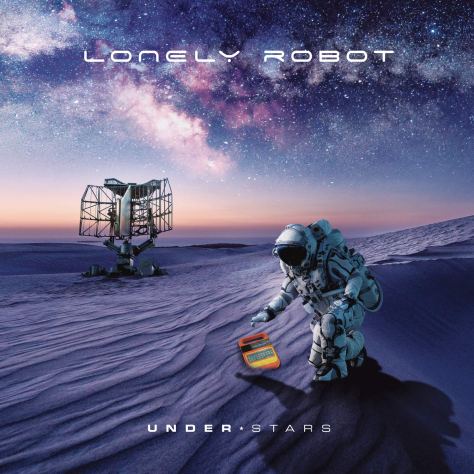
Under Stars

John Mitchell (Arena, Frost*, Kino, It Bites) has just released Under Stars, and it is a fitting conclusion to his Lonely Robot trilogy. Full of oblique lyrics sung by Mitchell in his gruff tenor, every song is a melodic tour de force. The trilogy is ostensibly about an astronaut (the lonely robot?) who eventually finds his way back home after some surrealistic detours. In John’s words, “It represents the human condition. I’m not suggesting that human beings behave like robots, but so many people lead regimented lives and it’s easy to get stuck in a rut and not realise or know how to get out of it.”

Please Come Home
The First Album Of The Trilogy

A recurring theme throughout the trilogy is the call to “Please come home.” In Under Stars, he finally makes it. The album begins with “Terminal Earth”, in which a Vangelis-inspired instrumental emerges out of radio static. In “Ancient Ascendant”, the astronaut is chided for his aloofness: “Ancient ascendant, well I think that we should talk/We may be evolutionary but it’s a backward walk.” “Icarus” features some tasty vintage early-80s sounding synths, while the title track is a beautiful ballad that tugs at the heartstrings. It also happens to contain one of Mitchell’s finest guitar solos – lean, clean, and lyrical.

In “The Only Time I Don’t Belong Is Now”, the astronaut gradually comes to terms with his humanity, and he cries out, “I know that I’m alive without a doubt/The seasons changing, history waiting/The only time I don’t belong is now.”

“When Gravity Fails” takes on superficial social media virtue-signaling with the lines, “Checking in with false empathy/Do you feel #proud, proud?” In “How Bright Is The Sun”, he laments, “We’re basking in the progress; we’re blinded by the cost/And in the forward motion, we’ve never been so lost.”

BIg Dream
The Second Album

The album’s overarching theme seems to be the necessity of embracing one’s common bond with all of humanity. The astronaut tried to separate himself from everyone through a sense of superiority, but he only succeeded in realizing his own incompleteness. As the final song, “An Ending” reassures him (in a reprise of the theme from the first album), “Please come home, lonely robot/Your heart is beautiful, programmed to receive.” No man is an island, indeed.

Taken together, the Lonely Robot Trilogy is a magnificent achievement by one of rock’s most talented artists. John Mitchell has an unerring ear for a seductive melody, and the instrumental chops to back it up. The thematic material might be pretentious in another’s hands, but Mitchell’s lyrics are elusive enough to suggest multiple meanings on several levels. This is music for thoughtful persons, who happen to appreciate finely crafted melodies.
 

IZZ–42, The Universe, and all that

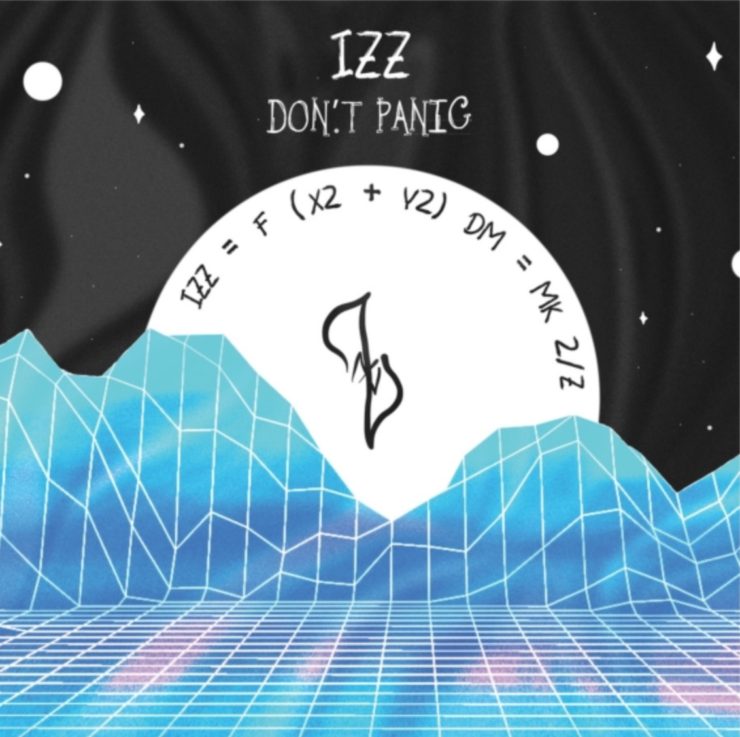
If there’s a rock band more criminally ignored than IZZ, I have yet to encounter it.  To give you an idea of the sheer sonic glory of their new album, imagine the perfect follow-up to both GOING FOR THE ONE and DRAMA, and you’d come very close to discovering the glory of DON’T PANIC.  And, throw some classier King Crimson and ELP in as well.

Admittedly, I’ve been a fan of IZZ for years now, but this album even took me by surprise.  I knew it would be more than solid when it arrived on my doorstep, but I had no idea just how much of a ride I was going to get. 

I could follow those bass lines to Neptune and back.

One of the single best aspects of the album is simply that the band clearly loves making music—music as a thing in and of itself as well as music as a communal activity. There’s joy perfectly meshed with seriousness on this album, and the band never shies away from proclaiming its love of . . . well, love. Few albums more distastefully destroy cynicism than DON’T PANIC.  Even the very title is calming in a hyperkinetic, uplifting way! 

Squire-esque bass lines, unusual but harmonic rhythms, and complex vocals really define the album, musically. Yet, it all works; it’s all gorgeous.

Don’t let the Yes comparison above throw you off.  There’s no doubt that the members of IZZ love Yes and probably learned much of their craft form the English-prog rock gods.  But, IZZ takes the Yes vibe into a whole new realm, especially in the interplay of male-female vocals.

I really didn’t think the band could top their previous trilogy (which inspired me to say my rosary more often than not—no joke) and John Galgano’s solo album, REAL LIFE IS MEETING, but DON’T PANIC is the more than worthy successor to all of the previous efforts. Now, I have to convince myself to be content with this one for a while, because, frankly, I’m already eager for the next one.

Patience, Bradley, patience.

WWDC 2019 preview: iOS 13 wish list | Macworld

File handling on iOS is too inconsistent. You can save and open files in various places on iCloud drive or even on your local device, but the rules about when you can save files and where you can save them aren’t clear. The user can’t create folders arbitrarily, which is frustrating. The On My Device area is especially confusing—so much so that even technically savvy users don’t understand that your iOS apps can save files to your iPhone or iPad without also syncing them with iCloud Drive. (A major feature if you’re out of iCloud space or on a metered or slow Internet connection.) You can’t create or open Zip archives using the Files app. With a little bit of focus on the details, Apple can clean this experience up and make it much better than it is today.
— Read on www.macworld.com/article/3397042/ios-13-wish-list.html

Best of Yes, Post 1983

For most music fans, and especially prog rockers, Yes existed between 1969 and 1983.

Some would even end Yes around 1979.

Amazingly enough, though, Yes still exists. And, while the band has never produced a perfect album since 1983’s 90125, it has produced a number of tracks equal to the best of the “classic Yes” period.

The two best albums of this later period were Magnification (2001) and Fly from Here-Return Trip (2018).

For those interested (and with ears to hear), here are my favorites from 1987-present.

  • Birthright (Anderson Bruford Wakeman Howe, 1989)
  • Dreamtime (Magnification, 2001)
  • Endless Dream (Talk, 1994)
  • Evensong (Union, 1991)
  • Fly From Here (Fly From Here-Return Trip, 2018)
  • Homeworld (The Ladder, 1999)
  • I’m Running (Big Generator, 1987)
  • In the Presence Of (Magnification, 2001)
  • Into the Storm (Fly From Here-Return Trip, 2018)
  • Life on a Film Set (Fly From Here-Return Trip, 2018)
  • Magnification (Magnification, 2001)
  • Minddrive (Keys to Ascension 2, 1997)
  • New Language (The Ladder, 1999)
  • Order of the Universe (Anderson Bruford Wakeman Howe, 1989)
  • Shoot High Aim Low (Big Generator, 1987)
  • Silent Talking (Union, 1991)
  • Spirit of Survival (Magnification, 2001)
  • Subway Walls (Heaven and Earth, 2014)
  • Themes (Anderson Bruford Wakeman Howe, 1989)

Seeking the Humane: Big Big Train’s “Grand Tour” ~ (Birzer’s Second Review)

If all of this sounds too intelligent and too good to be a part of popular culture, it’s because it is! No, no, no. This is not pop. This is art. True, good, real, and beautiful. Imagine, for a moment, how many other manifestations of secular culture take seriously a Christian saint, let alone analyze the very stones used in the art of Byzantium? Truly, what this band offers us is a precious gem. And, while the members of the band (at least as far as I know) are not religious, they certainly take the religion of the past quite seriously. Not just Theodora, but the band has also written gorgeously on its previous releases about St. Edith, the granddaughter of King Alfred, the first great English king, the first to codify Anglo-Saxon common law, and the blessed recipient of Marian visions.
— Read on theimaginativeconservative.org/2019/05/big-big-train-grand-tour-bradley-birzer.html

What Hath the train Wrought, Part II

Part II of our symposium. A second indepth look at the philosophy and emotions behind Big Big Train’s latest album, GRAND TOUR.

***

Beginning with genteel blushings and awed whispers, David Longdon’s vocals—so plaintive and so earnest and so full of wonder—begin Grand Tour by sharing hard-earned wisdom.

After all, this story begins far from home, and the craft in question flies along shadowed paths beyond all human sight, but never beyond human imagination. By whatever measure of success or failure, the craft made the attempt. And, by necessity, so did those who launched it in the first place.

Whatever the fate of that craft, it was made by human hands, and those hands should be celebrated. And, thus we should celebrate not just the act of creation but the very life that gave the very intelligence to act.

We are, after all, ALIVE!

And thus begins Big Big Train’s latest album, Grand Tour, a masterpiece even among masterpieces. Ostensibly, this hook—which catches onto the eighteenth-century ideal of English travel throughout the European continent and, especially, into and around the Mediterranean and Aegean—ties the latest album together. By employing such a story, the band can travel not only across space but also back through time. The album explores ideas and as well as biographies.

This is, simply put, an album for the intelligent and meaningful person.

With track three, “The Florentine,” the band looks at the very core of the Italian Renaissance and one of its four greatest figures, Leonardo.

On track four, “Roman Stone,” the band digs deep back into western civilization, finding the very stones that created the Roman Republic and the various Mediterranean powers of the ancient world. There is both regret at the loss and admiration at the gain. See what we once were, the band claims. See what we could’ve been, the band asks. After all, things that have broken have often been made whole again. Sometimes even with the very material that had fallen into ruin becomes the cornerstone.

[please scroll down a bit and go to PAGE 2]

What Hath the Train Wrought, Part I

Given that this site’s patron is also the patron saint of music, it seems meet and just to review our favorite music. Thus, I give you the awesome Tad Wert’s first entry into the symposium, “What Hath the Train Wrought,” a deep look at Big Big Train’s GRAND TOUR.–Brad, editor

***

“GRAND TOUR” by Tad Wert

There are and can exist but two ways of investigating and discovering truth. The one hurries on rapidly from the senses and particulars to the most general axioms, and from them, as principles and their supposed indisputable truth, derives and discovers the intermediate axioms. This is the way now in use. The other constructs its axioms from the senses and particulars, by ascending continually and gradually, till it finally arrives at the most general axioms, which is the true but unattempted way. 
–Francis Bacon, Novum Organum

Never let it be said that Big Big Train doesn’t think big. Their latest opus, Grand Tour, is a massive undertaking, taking the listener on a voyage from the cliffs of Dover to Italy, Constantinople, and out to interstellar space. Along the way, we pay our respects to Leonardo da Vinci, Saints Theodora and Justinian, exiled Prospero and Ariel, and Percy Bysshe Shelley. Oh, and we mustn’t forget to say hello to Francis Bacon, the first “modern” thinker.

If this project were attempted by any other artist, they would be ridiculed for their pretentiousness. To BBT’s credit, they have done their research, and every song on this amazing album is filled with respect, appreciation, and love for their subjects. In the 18th and 19th centuries, every well-educated European took a “Grand Tour”, which included visits to famous cultural and religious sites, such as Rome, Florence, Paris, etc. Thanks to BBT, we can embark upon our own grand tour via their artistry.

[Please go to the next page]

An Ode to Progressive Rock | The American Conservative

Its most famous member is Dave Gregory, formerly the lead guitarist for XTC. Like every member of the band, Gregory is an extraordinary musician pursuing a high art. He is also, I’m happy to note, a true gentleman and, like everyone in the band, a perfectionist. From the beginning of its existence, BBT has honed its complex song structures, riveting melodies, and gorgeous historical, poetic, and mythic lyrics. Almost all of the band’s songs celebrate excellence, innovation, and struggle. Typical themes include World War I and II ace fighters, beekeepers, medieval saints, architects, and survivors of trauma. Lyrically, the band is levels above almost anything being written in popular culture today, and, in the rock-pop world, certainly well beyond Elvis, Madonna, and Lady Gaga.
— Read on www.theamericanconservative.com/articles/an-ode-to-progressive-rock/

The Latest Edda: Bjorn Riis’s A Storm is Coming

Bjorn Riis’s A STORM IS COMING (Karisma, 2019).

The latest edda.

The sheer amount of creativity that comes out of northern Europe never fails to astound or move me. From the moment the Scandinavians became Scandinavians, some 1,200 plus years ago, they seem to have existed to hunt, to farm, and to create. Even the very word “edda”—so properly associated with northern mythology—is not native to Norse, but is a word that seems to have sprung out of the moment rather than out a specific culture. We remember edda as a story, but it more properly means a divine outburst of creativity. From the creation of the AllThing (the world’s first congress) to Sigrid Undset, the Scandinavians keep shocking into life a western culture that wants to die but won’t. What is it? Is it the cold? The bleak winters? The harrowing landscapes? The daring raids? I don’t know, but I do know I thank the good Lord for their existence.

When a small package recently arrived from Norway—labeled Karisma—I was thrilled. Nothing I ever receive from that small but mighty label is unimportant. Indeed, it has to rank as one of the most important labels in the rock world, equal to Kscope, Insideout, and Sound Resources. That I found the new Bjorn Riis solo album in that package made the arrival even better. Frankly, it made it perfect. From the moment I first encountered Riis’s band, Airbag, roughly ten years ago—thanks to the recommendation of my English friend, Richard Thresh—I liked the band. Granted, their first album sounded like a sequel to Pink Floyd’s ANIMALS, but it was gorgeous, nonetheless, and it had the very James Marsh/Talk Talk-esque cover, of the eyeball crying blood. What a combination of excellent things. Since 2009, Riis has proven his genius time and time again through Airbag (IDENTITY; ALL RIGHTS REMOVED; GREATEST SHOW ON EARTH; and DISCONNECTED), each more lyrically existential and more musically creative than the last.

As much as I fell for Airbag, I fell even more in love with this solo work. LULLABIES IN A CAR CRASH; COMING HOME; and FOREVER COMES TO AN END.  If you put Mark Hollis, Roger Waters, and Steven Wilson into the same room, you might come out with something close to Bjorn Riis, but still not quite there. Riis takes the best from each, but his music is very much his own.

Riis’s latest, A Storm is Coming, is more volatile and less longingly melodic than previous albums. It’s still brilliant, though. It can move from silence to a wall of sound and back to delicate piano line in a matter of moments. The title fits. The storm is coming, and Riis offers an album that looks not into the storm, but out from it. Let me revise what I just said a bit—there’s loving melody all over this album, but it feels less sustained (intentionally) than on previous albums. Honestly, I couldn’t really listen to track five, “This House,” without noting that it is melodic—in a David Gilmour fashion—to the nth degree.

I’m seeing several websites label this as an EP, but it’s 52 minutes long, so I can’t imagine what one of Riis’s LPs might look like. Yes, this is a full-fledged album. No doubt about it. 

And, it’s a thing of eddaic glory. Enjoy.