Category Archives: Music

Another Miracle: The Flower Kings at 25

Interior art, Flower Kings, WAITING FOR MIRACLES (Sony/Inside Out, 2019).

Looking death straight in the eye

You will never feel that much alive

—Roine Stolt

For anyone in the prog world, Roine Stolt is a grand and solid name, a trusted master of the craft and a man as honest about his opinions as anyone ever has been in the rock world. From The Flower Kings to Transatlantic to Anderson-Stolt to Steve Hackett’s band, Stolt is anywhere and everywhere excellence is. 

Simply put, when I think of Stolt, I imagine that other master of amazing things, Tom Bombadil. And, yes, that means Goldberry is nearby. “He is.”

The new Flower Kings, WAITING FOR MIRACLES, is a thing of beauty, delicate yet everlasting.  Sounding a bit like FLOWER POWER and SPACE REVOLVER, the new album has everything a fan loves: mystery, lingering, soaring, contemplating, undulation.

This is glorious and mighty prog.

The album opens with the fragile and compelling “House of Cards,” moving immediately into the Tennyson-esque rage against fate, “Black Flag.” Followed by ten-minute “Miracles for America,” a plea for the future of the free world, and then another ten-minute track, “Vertigo,” disk one is nothing if not dizzying.  If there’s a rock anthem on the album, it’s track no. five, “The Bridge,” which might very well have topped the rock charts in 1983, with its reminder of the theme of the album, “waiting for miracles.” “Ascending to the Stars,” track six of disk one, gives us a mysterious and dark Flower King, an instrumental and orchestra joy somewhat reminiscent of Kansas in its heyday. Despite its name, “Wicked Old Symphony” is the poppiest of the tracks on disk one, a track that hints at the Beatles as well as early 1970’s America. “The Rebel Circus,” track eight, is another wildly wacky and infectious instrumental, followed by the intense and aptly-named, “Sleeping with the Enemy.” The final track of disk one, “The Crowning of Greed,” is a poem, at once reflective in theme, and progressive in tone.

Disk two is much shorter than disk one, and I have no idea if it’s meant to be a “bonus disk” or a continuation of the album. That track one of disk two is a reprise of track one of disk one does nothing to answer my confusion about all of this. Track two, “Spirals,” is a feast of electronica and reminds us once again of the theme of the album: “Call on miracles—For America.” “Steampunk,” the third track of disk two, seems to take us back into the world of adventures. If “Black Flag” followed the voyages of Ulysses, “Steampunk” has us follow Aeneas. The final full track of the album, “We Were Always Here,” is a rather beautiful rock song, reminding us of life and its unending beauties. “It’s so simple in its purities/All that genius—life energies/like forgotten springs of melody.” Disk two ends with the 52-second long bluesy circus piece, “Busking at Brobank.”

Overall, WAITING FOR MIRACLES, is a joy.  It’s not just a joy as a Flower Kings album, it’s a joy as a rock album. Anyone serious about his or her rock music should add this to the collection. One final note—while I’m not wild about the cover art (too political for my tastes), I absolutely love the interior art, making a physical purchase of WAITING a must.

P.S. I proudly bought my copy from my favorite store, Burning Shed.

In Praise of Compact Discs

Compact Disc edit

Now that sales of physical music product have cratered, and streaming is the default delivery mode for the majority of music fans, I want to raise a glass to the lowly compact disc. The decision by Tool to release their long-awaited Fear Inoculum only via streaming and digital download is probably the final nail in the CD’s coffin.

It’s hard to convey what a magical technological leap forward the compact disc was for serious consumers of music in the early 1980’s. I came of age in the ’70s, when the only choice was vinyl or cassette tape (8-track was so horrible, I never gave it a thought). I bought hundreds of LPs, and every time I opened a new one, I prayed that it wouldn’t have a scratch or skip. By the late ’70s, record companies were pressing records on such thin vinyl that you were all but guaranteed to have a warped album to deal with. To this day, whenever I listen to Kraftwerk’s Autobahn, I expect to hear a skip at the 2:34 mark, because that is where my LP had a scratch.

When compact disc players’ price dropped below $400, I jumped at the chance to buy one. The first CD I bought? Roxy Music’s Avalon. I still have it. What a relief to not have to get up every 20 minutes to turn the record over! What a relief to know that I could listen to an entire album without a skip, pop, or wiggle! CDs took up much less space than LPs, and those plastic jewel boxes were so cool.

Suddenly, albums that were 2-disc sets in vinyl were now single-disc CDs. It’s almost as if Bob Dylan knew that one day there would be the right medium for Blonde on Blonde. I’m currently working my way through Keith Jarrett’s monumental Sun Bear Concerts. When it was released in 1978, it was a ten LP set, and his brilliant long-form improvisations were interrupted by the time limitations of an LP’s side. On CD, it is five discs (plus an encore one), and every performance is complete. I get to immerse myself in the flow of Jarrett’s genius without the rude interruption of the needle hitting the end of the grooves.

Yes, I know that analog vinyl sounds “warmer” than digital CDs. However, with a nice amp and speakers, CDs sound incredible: beautiful stereo separation, and amazing dynamic range. (If you can find a copy, check out the jazz group Flim and the BBs’ Tricycle on DMP from 1983. You will jump out of your chair when the full group kicks in on the first track.) I will trade an uninterrupted Beethoven’s Ninth for some subjective “warmth” any day.

NME recently reported that vinyl sales are outperforming CD sales for the first time since 1986. My 2017 Mazda 3 came with Bluetooth and USB ports, but no CD player. At my local used books/music/movies store the “bargain” bins for CDS are overflowing with 25 cent copies of stuff from the ’80s and ’90s. Heck, it looks like even Blu-Rays are on the path to extinction, now that Samsung is not manufacturing players for them any more.

My only question is this: what if someone at Spotify, or Google, or Amazon, or Apple decides that that album or movie you really like is not acceptable in polite circles any more? When you only own a license to stream something, it can be taken away very easily, and there isn’t a blessed thing you can do about it.

Laughing Stock’s Sunrise: No Laughing Matter

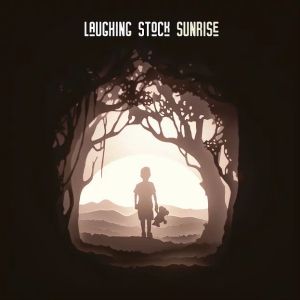
You have to admire a group that name themselves after one of the most legendary albums in prog history, and Norway’s Laughing Stock live up to their namesake.  Jan Mikael Sørensen, Håvard Enge, and Jan Erik Kirkevold Nilsen have released a very fine album that leaves me wanting more.

They certainly reference all the right artists, calling to mind Pink Floyd one moment, King Crimson another, Porcupine Tree, Close to the Edge-era Yes, and of course, Talk Talk (literally singing in the song Echoes, “I still believe in you”). What is so  appealing about Laughing Stock is their ability to absorb and honor those influences while forging a distinctive sound of their own. Not quite pop, not quite prog, not quite folk, but a wonderful combination of them all.

The album begins with a clanging alarm bell on Sunrise, which is followed by a television playing in the background, a la Wish You Were Here. Somber vocals – accompanied by acoustic guitar – chant, “Stay awake, take me to daybreak – sunrise.” Drums, mellotron, bass, and guitar are gradually added to the mix to great effect.

The album is a song cycle chronicling daylight hours, Sunset, Fading Light, a Darkest Hour, and finally, Another Sunrise. The third track, Afraid, is a great song, where they sing “I’m afraid, afraid of the morning/When dreams are fading away/I’m afraid, afraid of the light/Rising daylight, come out to play/What the hell is wrong?” A loping guitar riff pushes the song along as bits of sitar weave in and out of the background. It’s slightly unsettling, yet very attractive.

In Sunset, they sing, “I am falling for you” over a gorgeous acoustic guitar, drums, and bass melody. Beach Boys -like harmonies abound, and everything seems to be at peace. It’s a beautiful track. As a matter of fact the entire album is a beautiful piece of work – primarily acoustic, featuring slower tempos with deliberate pacing. Not until Darkest Hour do we hear some serious rock, and it is excellent. Imagine King Crimson and Porcupine Tree getting together for a slow jam session, and that gives you an idea of its atmosphere.

Sunrise is being released on Apollon records. It’s the perfect thing to listen to at the end of a long day when you want to relax and unwind. However, it’s definitely not background music, as their sophisticated lyrics conjure grown-up themes. Highly recommended!


lush simple minds: street fighting years

Thirty years ago, Simple Minds released a gem, Street Fighting Years. It sounded almost nothing like the previous albums–the bombastic Once Upon a Time; the fay New Gold Dream; or the mesmerizing Sons and Fascination. Far more Peter Gabriel in restrained rage than Ultravox or U2, Street Fighting Years lived up to its title: a lush, nuanced, and political affair, all managed by the incomparable Trevor Horn.

Sadly, it was the last album on which keyboardist Michael MacNeil played a central role, giving the band a much needed depth.

At times Celtic, at times Norse, and at times just Simple Minds, Street Fighting Years was a last cry before the wilderness of grunge and techno swamped us all.

The Elegant Art-Pop of Manuel Schmid und Marek Arnold

One of the most delightful aspects of prog music is the convoluted networks of artists that can lead one to discover surprising hidden treasures. My latest vein of musical gold is an album by German artists Manuel Schmid and Marek Arnold. Their album, Zeiten, is my favorite of 2019 so far. (It was released in December 2018, and I wasn’t aware of it until March of this year, so I’m counting it as a 2019 release.)

How did an American fan of prog rock find this relatively obscure album that is sung entirely in German? Even Schmid’s official website is in German, so it’s incomprehensible to me. Well, I am a big admirer of the Australian group, Southern Empire. Sean Timms is their keyboardist and main songwriter. He is also a member of another excellent prog group, Damanek. Damanek includes multi-instrumentalist Marek Arnold. I noticed that Arnold’s newest project was Zeiten, and, voila!, I found this gem of an album

Zeiten is entirely sung in German, but that hasn’t detracted from my enjoyment of it one bit. I wish I could tell you what the songs are about, but based on the official video for Kleines Glück, I would say they are about relationships. Zeiten itself means “times” or an era in one’s life. All I know is that every song is perfectly crafted jewel.

Schmid and Arnold’s melodies are beautiful and delicate, catchy without being cloying, and deceptively complex. The instrumentation is primarily keyboards based, and mostly acoustic. There are very tasteful synth flourishes and electric guitar solos, but none of them overwhelm the beauty of the underlying melodies. Stiller Schrei features Schmid singing with a string quartet, and it is comparable to a work by Schubert.

Schmid has a wonderful voice – warm, clear, and strong without any histrionics. Arnold supplies sympathetic accompaniment with keyboards, synths, and sax. Their talents combine to create some of the most seductive music I’ve ever heard.

Here is the video for Kleines Glückwhich I assume is a bittersweet meditation on memories of childhood:


1980s Synthpop Redux

Early ’80s synthpop, an often maligned style of music, is having a resurgence in popularity. Maybe it’s the nostalgia generated by Netflix hits like Stranger Things, but there is a new appreciation for music that was first produced in the early 1980s by artists like Orchestral Manoeuvres In The Dark, Howard Jones, Gary Numan, Ultravox, Camouflage, early Tears For Fears, and Depeche Mode. If you’re like me, and you’ve always had a soft spot in your heart for those groups, then today’s new synth wizards are a lot of fun to listen to.

Gunship,  from the UK, has two albums out, and they are both excellent. Their latest, Dark All Day, is very melodic with prominent rhythm.  The video for the title track has over 3 million views, so there is definitely an audience for their style of music.

The Fixt label curates a synthwave playlist on Spotify called Neon that features their stable of artists. You can hear the latest tracks from Soul Extract, The Bad Dreamers, 3Force, and many others there.

Two of my favorite synthwave artists are also on Fixt: The Anix and Scandroid. Scandroid is a project of Fixt label founder Klayton, and he is an unabashed lover of classic synthpop new wave. He even included a fine cover of Tears For Fears’ “Shout” on his first album.

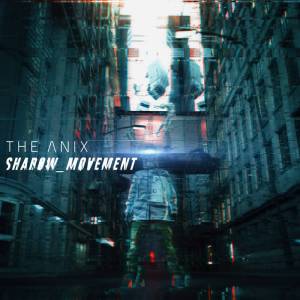
The Anix is darker and more modern sounding.  Their excellent album, Shadow Movement, is set in a dystopian future, and it features catchy melodies linked to relentless beats.

Finally, LA-based I Will Never Be The Same is the brainchild of Josh Atchley. His music combines Nine Inch Nails industrial style with the melodicism of Depeche Mode and The Cure. Add a dash of Pink Floyd and Led Zeppelin, and you have an irresistible mix. Take a listen to “Last Goodbye”:

These recommendations barely scratch the surface of the fun and interesting music that synthwavers are releasing now. Check them out, and let us know your current guilty pleasures in the comments below!


Jesus Christ The Exorcist

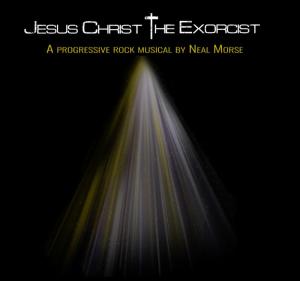
Just when you think you have Neal Morse figured out, he throws another curve ball. His latest project is “a progressive rock musical”, and it is unlike anything else he has produced.

First, Neal himself is not a prominent voice here. He only sings the part of Pilate, along with very minor contributions as a demon and a disciple. Second, this really is a musical, where one song flows seamlessly into another. To fully appreciate it, the listener needs to set aside the time to listen to it in one setting. Third, stylistically this is the most diverse set of songs Neal has written. In his own words, “There are touching ballads, rousing ensemble pieces, classical elements, and dramatic Broadway musical type songs, as well.”

The role of Jesus is performed by Ted Leonard, and he is perfect for it – authoritative one minute, combative the next, and achingly tender in other settings. It’s one of Leonard’s finest performances. Another standout performer is Nick D’Virgilio as Judas, where he manages to convey his initial excitement at Jesus’ early miracles, and then his confusion and disillusionment when he realizes his rabbi isn’t going to overthrow the Roman oppression of Israel. His anguish in “Dark Is The Night” is palpable as he sings,

Jesus there must be some other way
Of conquering the enemy
How can you help us
If you are dead and gone?

Speaking of Jesus, Morse’s version is definitely not the same as the Jesus Christ Superstar from the early ’70s. Where Andrew Lloyd Webber’s Jesus was the happy, hip leader of a group of countercultural provocateurs, Morse’s is a man of action. As I listened to Jesus Christ The Exorcist, the Gospel of Mark came to mind: to the point, not a lot of parables or theological discussions, but many examples of active ministry. Morse’s Jesus is the one in the title: an exorcist waging spiritual battle against the devil and his demons. In many ways, it’s a refreshing portrait. Morse strips the story of Jesus down to the bare essentials – his baptism, temptation, casting out seven demons from Mary, saving the madman of the Gadarenes, the Last Supper, his arrest, trial, crucifixion, and resurrection. If someone who had no idea who Jesus Christ was listened to this album, he or she would have a pretty good understanding afterwards.

What about the music? Neal still has the gift of beautiful melody, and “Love Has Called My Name” is one of the catchiest songs he’s ever composed. There are some fairly heavy tracks (“Get Behind Me Satan”, for example), some singer/songwriter songs (the aforementioned “Dark Is The Night”), some blues (“The Woman of Seven Devils”), and some very nice prog (“Jesus’ Temptation”). “There’s A Highway” sounds like it could be blasting out of a late-70s FM rock radio station.

The vocal performances are uniformly excellent, especially Talon David as Mary Magdalene. Neal wrote and produced the entire piece, as well as playing guitar, keyboards, bass, and percussion. Eric Gillette from the Neal Morse Band plays drums (!), and long-time collaborator Randy George is on bass. Paul Bielatowicz plays lead guitar. There’s also a string orchestra, horns, male chorus, female chorus, and a kitchen sink (just kidding!).

If you’re a fan of Neal, you probably already have this. If his occasional flights of prog excess have made you wary of his music, give this a try – it covers more familiar musical territory. Even if you are not a Christian, give it a listen. It’s actually not as “preachy” as Morse’s earlier Testimony albums, and his gift for composing a memorable melody really shines here, making Jesus Christ The Exorcist one of the most enjoyable musical experiences of 2019.


Spirit of Talk Talk

In the mail today: a new paperback edition of Spirit of Talk Talk, the 2012 history/coffee table book/tribute to this indefinable British band.

To quote publisher Rocket88’s blurb:

Filled with art director James Marsh’s fabulous designs and photos from every stage of the band’s career, the book includes a preface by founder member Simon Brenner, contributions and tributes from musicians, friends and fans, plus a heartfelt afterword honouring founder and leader Mark Hollis.

Eight pages of new material include brief interviews with band members Lee Harris and Paul Webb (who didn’t contribute to the original edition), more photos and the above mentioned afterword by music journalist Chris Roberts.

Talk Talk came a long way from the Duran Duran clones that I saw open for Elvis Costello back in the summer of 1982.   On first perusal, Spirit of Talk Talk is every bit as enigmatically beautiful as the music they made on The Colour of Spring, Spirit of Eden and Laughing Stock.  The book can be ordered direct from Rocket88 or through the best online music shop in the world, Burning Shed.

Lonely Robot Finally Comes Home

Under Stars

John Mitchell (Arena, Frost*, Kino, It Bites) has just released Under Stars, and it is a fitting conclusion to his Lonely Robot trilogy. Full of oblique lyrics sung by Mitchell in his gruff tenor, every song is a melodic tour de force. The trilogy is ostensibly about an astronaut (the lonely robot?) who eventually finds his way back home after some surrealistic detours. In John’s words, “It represents the human condition. I’m not suggesting that human beings behave like robots, but so many people lead regimented lives and it’s easy to get stuck in a rut and not realise or know how to get out of it.”

Please Come Home
The First Album Of The Trilogy

A recurring theme throughout the trilogy is the call to “Please come home.” In Under Stars, he finally makes it. The album begins with “Terminal Earth”, in which a Vangelis-inspired instrumental emerges out of radio static. In “Ancient Ascendant”, the astronaut is chided for his aloofness: “Ancient ascendant, well I think that we should talk/We may be evolutionary but it’s a backward walk.” “Icarus” features some tasty vintage early-80s sounding synths, while the title track is a beautiful ballad that tugs at the heartstrings. It also happens to contain one of Mitchell’s finest guitar solos – lean, clean, and lyrical.

In “The Only Time I Don’t Belong Is Now”, the astronaut gradually comes to terms with his humanity, and he cries out, “I know that I’m alive without a doubt/The seasons changing, history waiting/The only time I don’t belong is now.”

“When Gravity Fails” takes on superficial social media virtue-signaling with the lines, “Checking in with false empathy/Do you feel #proud, proud?” In “How Bright Is The Sun”, he laments, “We’re basking in the progress; we’re blinded by the cost/And in the forward motion, we’ve never been so lost.”

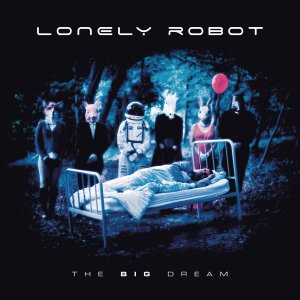
BIg Dream
The Second Album

The album’s overarching theme seems to be the necessity of embracing one’s common bond with all of humanity. The astronaut tried to separate himself from everyone through a sense of superiority, but he only succeeded in realizing his own incompleteness. As the final song, “An Ending” reassures him (in a reprise of the theme from the first album), “Please come home, lonely robot/Your heart is beautiful, programmed to receive.” No man is an island, indeed.

Taken together, the Lonely Robot Trilogy is a magnificent achievement by one of rock’s most talented artists. John Mitchell has an unerring ear for a seductive melody, and the instrumental chops to back it up. The thematic material might be pretentious in another’s hands, but Mitchell’s lyrics are elusive enough to suggest multiple meanings on several levels. This is music for thoughtful persons, who happen to appreciate finely crafted melodies.