Category Archives: Music

Jesus Christ The Exorcist

Just when you think you have Neal Morse figured out, he throws another curve ball. His latest project is “a progressive rock musical”, and it is unlike anything else he has produced.

First, Neal himself is not a prominent voice here. He only sings the part of Pilate, along with very minor contributions as a demon and a disciple. Second, this really is a musical, where one song flows seamlessly into another. To fully appreciate it, the listener needs to set aside the time to listen to it in one setting. Third, stylistically this is the most diverse set of songs Neal has written. In his own words, “There are touching ballads, rousing ensemble pieces, classical elements, and dramatic Broadway musical type songs, as well.”

The role of Jesus is performed by Ted Leonard, and he is perfect for it – authoritative one minute, combative the next, and achingly tender in other settings. It’s one of Leonard’s finest performances. Another standout performer is Nick D’Virgilio as Judas, where he manages to convey his initial excitement at Jesus’ early miracles, and then his confusion and disillusionment when he realizes his rabbi isn’t going to overthrow the Roman oppression of Israel. His anguish in “Dark Is The Night” is palpable as he sings,

Jesus there must be some other way
Of conquering the enemy
How can you help us
If you are dead and gone?

Speaking of Jesus, Morse’s version is definitely not the same as the Jesus Christ Superstar from the early ’70s. Where Andrew Lloyd Webber’s Jesus was the happy, hip leader of a group of countercultural provocateurs, Morse’s is a man of action. As I listened to Jesus Christ The Exorcist, the Gospel of Mark came to mind: to the point, not a lot of parables or theological discussions, but many examples of active ministry. Morse’s Jesus is the one in the title: an exorcist waging spiritual battle against the devil and his demons. In many ways, it’s a refreshing portrait. Morse strips the story of Jesus down to the bare essentials – his baptism, temptation, casting out seven demons from Mary, saving the madman of the Gadarenes, the Last Supper, his arrest, trial, crucifixion, and resurrection. If someone who had no idea who Jesus Christ was listened to this album, he or she would have a pretty good understanding afterwards.

What about the music? Neal still has the gift of beautiful melody, and “Love Has Called My Name” is one of the catchiest songs he’s ever composed. There are some fairly heavy tracks (“Get Behind Me Satan”, for example), some singer/songwriter songs (the aforementioned “Dark Is The Night”), some blues (“The Woman of Seven Devils”), and some very nice prog (“Jesus’ Temptation”). “There’s A Highway” sounds like it could be blasting out of a late-70s FM rock radio station.

The vocal performances are uniformly excellent, especially Talon David as Mary Magdalene. Neal wrote and produced the entire piece, as well as playing guitar, keyboards, bass, and percussion. Eric Gillette from the Neal Morse Band plays drums (!), and long-time collaborator Randy George is on bass. Paul Bielatowicz plays lead guitar. There’s also a string orchestra, horns, male chorus, female chorus, and a kitchen sink (just kidding!).

If you’re a fan of Neal, you probably already have this. If his occasional flights of prog excess have made you wary of his music, give this a try – it covers more familiar musical territory. Even if you are not a Christian, give it a listen. It’s actually not as “preachy” as Morse’s earlier Testimony albums, and his gift for composing a memorable melody really shines here, making Jesus Christ The Exorcist one of the most enjoyable musical experiences of 2019.


Spirit of Talk Talk

In the mail today: a new paperback edition of Spirit of Talk Talk, the 2012 history/coffee table book/tribute to this indefinable British band.

To quote publisher Rocket88’s blurb:

Filled with art director James Marsh’s fabulous designs and photos from every stage of the band’s career, the book includes a preface by founder member Simon Brenner, contributions and tributes from musicians, friends and fans, plus a heartfelt afterword honouring founder and leader Mark Hollis.

Eight pages of new material include brief interviews with band members Lee Harris and Paul Webb (who didn’t contribute to the original edition), more photos and the above mentioned afterword by music journalist Chris Roberts.

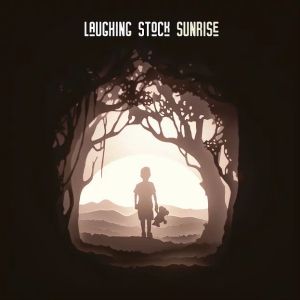
Talk Talk came a long way from the Duran Duran clones that I saw open for Elvis Costello back in the summer of 1982.   On first perusal, Spirit of Talk Talk is every bit as enigmatically beautiful as the music they made on The Colour of Spring, Spirit of Eden and Laughing Stock.  The book can be ordered direct from Rocket88 or through the best online music shop in the world, Burning Shed.

Lonely Robot Finally Comes Home

Under Stars

John Mitchell (Arena, Frost*, Kino, It Bites) has just released Under Stars, and it is a fitting conclusion to his Lonely Robot trilogy. Full of oblique lyrics sung by Mitchell in his gruff tenor, every song is a melodic tour de force. The trilogy is ostensibly about an astronaut (the lonely robot?) who eventually finds his way back home after some surrealistic detours. In John’s words, “It represents the human condition. I’m not suggesting that human beings behave like robots, but so many people lead regimented lives and it’s easy to get stuck in a rut and not realise or know how to get out of it.”

Please Come Home
The First Album Of The Trilogy

A recurring theme throughout the trilogy is the call to “Please come home.” In Under Stars, he finally makes it. The album begins with “Terminal Earth”, in which a Vangelis-inspired instrumental emerges out of radio static. In “Ancient Ascendant”, the astronaut is chided for his aloofness: “Ancient ascendant, well I think that we should talk/We may be evolutionary but it’s a backward walk.” “Icarus” features some tasty vintage early-80s sounding synths, while the title track is a beautiful ballad that tugs at the heartstrings. It also happens to contain one of Mitchell’s finest guitar solos – lean, clean, and lyrical.

In “The Only Time I Don’t Belong Is Now”, the astronaut gradually comes to terms with his humanity, and he cries out, “I know that I’m alive without a doubt/The seasons changing, history waiting/The only time I don’t belong is now.”

“When Gravity Fails” takes on superficial social media virtue-signaling with the lines, “Checking in with false empathy/Do you feel #proud, proud?” In “How Bright Is The Sun”, he laments, “We’re basking in the progress; we’re blinded by the cost/And in the forward motion, we’ve never been so lost.”

BIg Dream
The Second Album

The album’s overarching theme seems to be the necessity of embracing one’s common bond with all of humanity. The astronaut tried to separate himself from everyone through a sense of superiority, but he only succeeded in realizing his own incompleteness. As the final song, “An Ending” reassures him (in a reprise of the theme from the first album), “Please come home, lonely robot/Your heart is beautiful, programmed to receive.” No man is an island, indeed.

Taken together, the Lonely Robot Trilogy is a magnificent achievement by one of rock’s most talented artists. John Mitchell has an unerring ear for a seductive melody, and the instrumental chops to back it up. The thematic material might be pretentious in another’s hands, but Mitchell’s lyrics are elusive enough to suggest multiple meanings on several levels. This is music for thoughtful persons, who happen to appreciate finely crafted melodies.


IZZ–42, The Universe, and all that

If there’s a rock band more criminally ignored than IZZ, I have yet to encounter it.  To give you an idea of the sheer sonic glory of their new album, imagine the perfect follow-up to both GOING FOR THE ONE and DRAMA, and you’d come very close to discovering the glory of DON’T PANIC.  And, throw some classier King Crimson and ELP in as well.

Admittedly, I’ve been a fan of IZZ for years now, but this album even took me by surprise.  I knew it would be more than solid when it arrived on my doorstep, but I had no idea just how much of a ride I was going to get. 

I could follow those bass lines to Neptune and back.

One of the single best aspects of the album is simply that the band clearly loves making music—music as a thing in and of itself as well as music as a communal activity. There’s joy perfectly meshed with seriousness on this album, and the band never shies away from proclaiming its love of . . . well, love. Few albums more distastefully destroy cynicism than DON’T PANIC.  Even the very title is calming in a hyperkinetic, uplifting way! 

Squire-esque bass lines, unusual but harmonic rhythms, and complex vocals really define the album, musically. Yet, it all works; it’s all gorgeous.

Don’t let the Yes comparison above throw you off.  There’s no doubt that the members of IZZ love Yes and probably learned much of their craft form the English-prog rock gods.  But, IZZ takes the Yes vibe into a whole new realm, especially in the interplay of male-female vocals.

I really didn’t think the band could top their previous trilogy (which inspired me to say my rosary more often than not—no joke) and John Galgano’s solo album, REAL LIFE IS MEETING, but DON’T PANIC is the more than worthy successor to all of the previous efforts. Now, I have to convince myself to be content with this one for a while, because, frankly, I’m already eager for the next one.

Patience, Bradley, patience.

Catch the Myth, Catch the Mystery…

Mystery Lies and Butterflies
Mystery’s Latest Album – 2018’s Lies & Butterflies

Now that it appears Geddy, Neil, and Alex are on permanent hiatus, what’s a devoted Rush fan to do? Fortunately, there are some excellent choices available. My top recommendation is another Canadian band, Mystery.

Led by guitarist Michel St-Pere, they have been releasing wonderful albums on a regular basis since the 1990s. As is the case with many groups in the prog genre, their lineup has changed over the years, but the high level of musicianship, top-notch production, and inviting songcraft has been consistent. Past members include drummer Nick D’Virgilio (Spock’s Beard, Big Big Train) and vocalist Benoit David (Yes).

The first time I heard of Mystery was through Tony Rowsick’s indispensable podcast, ProgWatch. He posted an excellent interview with St-Pere in April of this year (you can listen to it here), and he included lots of songs from the band’s long career. My curiosity was piqued, so I followed them on Spotify. After listening obsessively to Mystery music for several days, I went ahead and ordered hard copies of some of their albums.

Call me a throwback, but I still like owning CDs of artists that are special, if only to enjoy the artwork and reading the lyrics. Besides, there is no guarantee that a particular artist’s work will always be available via streaming.

Anyway, after listening to the entire Mystery discography, I recommend the new listener begin with The World Is A Game. It features Benoit David on vocals, and D’Virgilio on drums. Song-for-song, it is an incredibly strong collection, and it ends with one of their finest songs ever, “Another Day”.

Mystery World Is A Game
2012’s The World Is A Game – Mystery’s masterpiece (so far)

Next, the live album, Second Home, is a very good set of songs from more recent releases, and it features Mystery’s current vocalist, Jean Pageau. Finally, their most recent release, Lies and Butterflies, continues the streak of outstanding melodic prog rock.

As I’ve already mentioned, fans of Rush should love this stuff, as well as admirers of Genesis, Pink Floyd, Dream Theater, and Neal Morse. St-Pere is a terrific player who wields his guitar with admirable restraint. His lyrics touch on contemporary issues like isolation in the midst of social media, ignorance and prejudice, finding truth in a world full of deception.

Here’s a concert video of “Another Day”. I love the joy St-Pere (on the left) radiates as his band effortlessly performs this complex piece.

Best of Yes, Post 1983

For most music fans, and especially prog rockers, Yes existed between 1969 and 1983.

Some would even end Yes around 1979.

Amazingly enough, though, Yes still exists. And, while the band has never produced a perfect album since 1983’s 90125, it has produced a number of tracks equal to the best of the “classic Yes” period.

The two best albums of this later period were Magnification (2001) and Fly from Here-Return Trip (2018).

For those interested (and with ears to hear), here are my favorites from 1987-present.

  • Birthright (Anderson Bruford Wakeman Howe, 1989)
  • Dreamtime (Magnification, 2001)
  • Endless Dream (Talk, 1994)
  • Evensong (Union, 1991)
  • Fly From Here (Fly From Here-Return Trip, 2018)
  • Homeworld (The Ladder, 1999)
  • I’m Running (Big Generator, 1987)
  • In the Presence Of (Magnification, 2001)
  • Into the Storm (Fly From Here-Return Trip, 2018)
  • Life on a Film Set (Fly From Here-Return Trip, 2018)
  • Magnification (Magnification, 2001)
  • Minddrive (Keys to Ascension 2, 1997)
  • New Language (The Ladder, 1999)
  • Order of the Universe (Anderson Bruford Wakeman Howe, 1989)
  • Shoot High Aim Low (Big Generator, 1987)
  • Silent Talking (Union, 1991)
  • Spirit of Survival (Magnification, 2001)
  • Subway Walls (Heaven and Earth, 2014)
  • Themes (Anderson Bruford Wakeman Howe, 1989)

Seeking the Humane: Big Big Train’s “Grand Tour” ~ (Birzer’s Second Review)

If all of this sounds too intelligent and too good to be a part of popular culture, it’s because it is! No, no, no. This is not pop. This is art. True, good, real, and beautiful. Imagine, for a moment, how many other manifestations of secular culture take seriously a Christian saint, let alone analyze the very stones used in the art of Byzantium? Truly, what this band offers us is a precious gem. And, while the members of the band (at least as far as I know) are not religious, they certainly take the religion of the past quite seriously. Not just Theodora, but the band has also written gorgeously on its previous releases about St. Edith, the granddaughter of King Alfred, the first great English king, the first to codify Anglo-Saxon common law, and the blessed recipient of Marian visions.
— Read on theimaginativeconservative.org/2019/05/big-big-train-grand-tour-bradley-birzer.html

What Hath the train Wrought, Part II

Part II of our symposium. A second indepth look at the philosophy and emotions behind Big Big Train’s latest album, GRAND TOUR.

***

Beginning with genteel blushings and awed whispers, David Longdon’s vocals—so plaintive and so earnest and so full of wonder—begin Grand Tour by sharing hard-earned wisdom.

After all, this story begins far from home, and the craft in question flies along shadowed paths beyond all human sight, but never beyond human imagination. By whatever measure of success or failure, the craft made the attempt. And, by necessity, so did those who launched it in the first place.

Whatever the fate of that craft, it was made by human hands, and those hands should be celebrated. And, thus we should celebrate not just the act of creation but the very life that gave the very intelligence to act.

We are, after all, ALIVE!

And thus begins Big Big Train’s latest album, Grand Tour, a masterpiece even among masterpieces. Ostensibly, this hook—which catches onto the eighteenth-century ideal of English travel throughout the European continent and, especially, into and around the Mediterranean and Aegean—ties the latest album together. By employing such a story, the band can travel not only across space but also back through time. The album explores ideas and as well as biographies.

This is, simply put, an album for the intelligent and meaningful person.

With track three, “The Florentine,” the band looks at the very core of the Italian Renaissance and one of its four greatest figures, Leonardo.

On track four, “Roman Stone,” the band digs deep back into western civilization, finding the very stones that created the Roman Republic and the various Mediterranean powers of the ancient world. There is both regret at the loss and admiration at the gain. See what we once were, the band claims. See what we could’ve been, the band asks. After all, things that have broken have often been made whole again. Sometimes even with the very material that had fallen into ruin becomes the cornerstone.

[please scroll down a bit and go to PAGE 2]

What Hath the Train Wrought, Part I

Given that this site’s patron is also the patron saint of music, it seems meet and just to review our favorite music. Thus, I give you the awesome Tad Wert’s first entry into the symposium, “What Hath the Train Wrought,” a deep look at Big Big Train’s GRAND TOUR.–Brad, editor

***

“GRAND TOUR” by Tad Wert

There are and can exist but two ways of investigating and discovering truth. The one hurries on rapidly from the senses and particulars to the most general axioms, and from them, as principles and their supposed indisputable truth, derives and discovers the intermediate axioms. This is the way now in use. The other constructs its axioms from the senses and particulars, by ascending continually and gradually, till it finally arrives at the most general axioms, which is the true but unattempted way. 
–Francis Bacon, Novum Organum

Never let it be said that Big Big Train doesn’t think big. Their latest opus, Grand Tour, is a massive undertaking, taking the listener on a voyage from the cliffs of Dover to Italy, Constantinople, and out to interstellar space. Along the way, we pay our respects to Leonardo da Vinci, Saints Theodora and Justinian, exiled Prospero and Ariel, and Percy Bysshe Shelley. Oh, and we mustn’t forget to say hello to Francis Bacon, the first “modern” thinker.

If this project were attempted by any other artist, they would be ridiculed for their pretentiousness. To BBT’s credit, they have done their research, and every song on this amazing album is filled with respect, appreciation, and love for their subjects. In the 18th and 19th centuries, every well-educated European took a “Grand Tour”, which included visits to famous cultural and religious sites, such as Rome, Florence, Paris, etc. Thanks to BBT, we can embark upon our own grand tour via their artistry.

[Please go to the next page]