
Category Archives: Philosophy
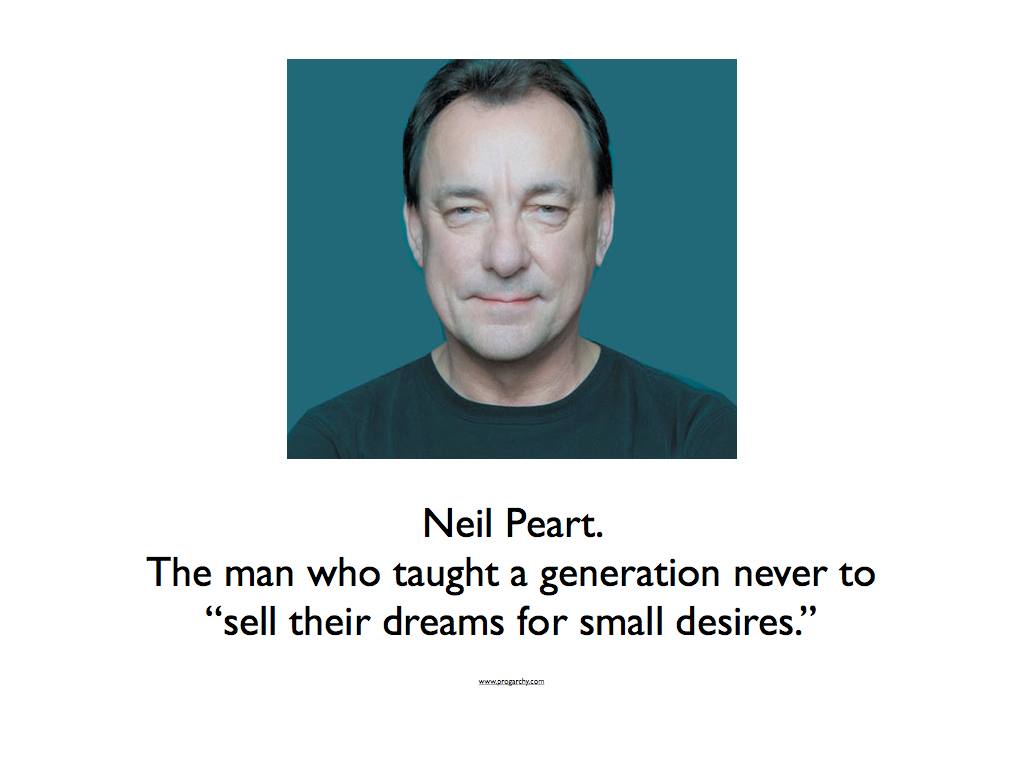
Exit The Warrior: Neil Peart, 1952-2020
There are drummers, and then there are really good drummers. And then there is Neil Peart. It’s almost fitting of Peart that his death was not announced until today, January 10th, three days after his actual death on January 7th. Whereas others did things in simple time and merely kept the beat, Peart’s timing – in drums and in life – was never conventional. Hence the announcement of his death not on the day he died, but three days later. The beats never fell quite where they were expected.
There is not much I can say about Peart, the drummer, that hasn’t already been said. Just about every superlative imaginable has been used to describe his drumming, and a few have probably even been made up. Peart was simply so good at what he did that new words needed to be invented if one wanted to give an adequate description. And still, it fell short. You just had to listen to him play, and if were lucky, see him. Peart set a standard the drummers everywhere have been trying to live up to, with only a few able to even get within the ballpark. That’s not a criticism of those that can’t.
Part of the reason Peart was such an incredible talent on the drums has to do with his own philosophy for living. Whether by temperament or practice, Peart was a Stoic’s Stoic. He comported himself in a way that would have made Epictetus and Marcus Aerelius proud. Far from indulging in the perks of fame and fortune and losing his head, Peart shied away from the excesses of the rock star lifestyle. Instead of flying in a fancy jet between tour dates, as would be common for rockers of his stature, Peart rode his motorcycle between cities, choosing instead to indulge himself in nature and the world around him. Instead of chasing groupies and destroying hotels, Peart would sit quietly in his room, reading books, filling his head with knowledge.
And as an artist, he valued his integrity above all else. He was never content to simply go through the motions for a given song or a given album. It had to be his best. Nor would Peart, the chief lyricist of Rush, chase hits with sappy love songs and the like. He deplored the excess commercialization of rock music, as spelled out in the lyrics of one of Rush’s more popular songs, The Spirit of Radio.
From a personal perspective, the timing of the arrival of both Rush and Peart into my life was most serendipitous. In the spring of 1979, I purchased their breakthrough album, 2112. As Rush fans are well aware, 2112 revolves around themes of the individual vs. the collective, totalitarianism, and the human spirit’s unshakeable yearning to be free. Around that same time, I was having numerous, lengthy conversations with my maternal grandmother who, along with my grandfather, aunt, and mother, were defectors from the communist hellhole known as East Germany. Whereas Peart’s lyrics from 2112 introduced me to a fictional world in which the human spirit was crushed by a totalitarian government, the talks with my grandmother introduced me to one that was all too real. Individually, 2112 and the talks with my grandmother both left strong impressions on my. Together, those impressions reinforced one another to leave an indelible mark.
My story is just one of perhaps millions with regard to the influence of Neil Peart. The impact drummers have on their fans is through their drumming, and little more. They set an example of how to play drums. Peart, on the other hand did so much more. He set an example on how to live, how to maintain one’s self when the surrounding world is pulling in different directions, how to maintain one’s integrity through the ups and downs that life throws at all of us. And thankfully, so much of that is recorded for posterity.
Thank you, Neil, for being a shining example for all of us.
RIP, Neil Peart
soc videocast 2: c.s. Lewis and time
C.S. Lewis, Time, and the Human Person. Spirit of Cecilia Videocast 2.
https://www.youtube.com/watch?v=nMk-Xf5pwno
US DRIVE FOR TEST SCORES…ugh!
BY RICHARD K. MUNRO
RE: “US Drive for Test Scores has stifled student’s creativity” by Theodora Kalikow.
I am only a humble rural school master (I chiefly teach immigrant kids) but I want you to know that I think you are on to something. Public schools have a public purpose that goes beyond the achievement of a small academic elite. Non mihi, non tibi sed nobis. (Not for me alone not for you alone but for all)
Diane Ravitch’s books have had a great influence on me as an individual and as a teacher. Books such as the LANGUAGE POLICE, LEFT BACK, and the LIFE AND DEATH OF THE AMERICAN SCHOOL SYSTEM remain compelling reading. Dr. Ravitch of course is more than a statistics maven; she is a woman of learning and culture who cares deeply about America, America’s schools and our civic culture. Hence she has edited splendid books which I use as supplements in my English and history classes: the AMERICAN READER and the ENGLISH READER. I think those books should be on the required curriculum of every college in America they are that good. I enjoy re-reading them myself and find myself referring back to them all the time. That , to me is the mark of an enduring classic. Many of Ravitch’s books are and will be classics.
In that spirit, we taught academic subjects such as reading, English, writing, mathematics, science, history, international languages and so on, but we also provided field trips, sports and physical education, music and art, plus opportunities for leadership, volunteering and community involvement.
Of course, we need high academic standards but we also need well-rounded individuals who gain REAL LIFE EXPERIENCE not merely academic knowledge.
Of course we have a responsibility to what I call the “AP elite” but we also need to help all students begin to assimilate to American life and prepare for life as adults and citizens. This is why I as a teacher am the advisor to the Hispanic Bible Club which meets three times a week during my lunch hour and our Academic Decathlon team during my Monday lunch hour. In other years I have volunteered to help the “We the People” Constitution team. The experience students get in running club meetings, doing fund raisers, having guest speakers in areas of their interest, seeing special movies going on class trips. Students who are involved in school activities are much less likely to commit suicide, use drugs or drop out of school. Students become closer to teachers –and learn a lot from them- in these informal voluntary setting. It is a great opportunity for teachers to mentor youth.
Excessive emphasis on standardized MC tests is providing students a diet of academic junk food. Standardized tests have the virtue in that they are easy to correct and easy thus to use in a common measuring stick but they do not accurately reflect true growth in the classroom and academic engagement.
In fact, I believe, standardized tests help destroy interest in reading and learning. It certainly makes me as a classroom teacher hate the “testing regime”. I give the tests they make me use because I am a good soldier but I believe the amount of time spent on these tests (about 20% of all class time) is excessive. I do feel for the students who struggle to concentrate on these mind-numbing tests on language conventions and reading comprehension of basically random, sterile, lifeless nothing prose.
I have seen the test regime bring CFA (Common Formative Assessments). As an ELD (English Language Development) teacher I believe foisting college prep multiple choice tests on immigrant kids –test that use language and vocabulary that the students have never seen- is harmful. I try to palliate the situation by using the CFA’s as “practice” for the CST’s (State Standards Tests) but I tell the students I will never consider them the full basis of their grades.
I never give multiple choice tests on my own preferring to encourage critical thinking and writing.
On a recent test on the origins of WWII for my ELD World History class the emphasis was understanding how dictators (fascist but also a communist –Stalin) and policies like appeasement led to WWII. Rather than merely asking a series of questions to mere sentences I had a series of political cartoons (from the 1930’s ) on themes such as the Japanese invasion of Manchuria, Hitler’s annexations of Austria and Czechoslovakia and the 1939 Russo-German Pact. I also included an extra credit part on Picasso’s Guernica which included a reproduction of the painting.
I found it very interesting that more students could explain Picasso’s painting rather than the Russo-German Pact which always confuses students because the focus of the book is the Axis Alliance and of course later Stalin becomes an Ally and an enemy of Hitler. Some of the responses were very interesting and moving; some knew it hung in a New York museum until Spain became a democracy and one girl even remembered it hung in the Reina Sofia annex at the Prado. That was just a fact I mentioned in passing in class discussion but it shows to me that the students enjoyed moving away from the big picture policy questions to a more humanist viewpoint.
I felt it was very important to make some mention (even though it is not on the California History Standards ) of Franco, the Spanish Civil War and Picasso’s Guernica.
I use Guernica a motif for total war in which there are no front lines and civilians including women and children can be targets.
I link this to the modern phenomenon of terrorism where every body is a target. Teaching about Picasso is cross curricular; linking the Spanish Civil War and WWII to the origins of modern terrorism is, in my view, one of purposes of history. The standardized tests are not like this at all and focus on superficial knowledge and “gotcha” artificial questions such as “all of the above’ or which one does NOT belong.
Standardized tests DO HAVE SOME VALUE, especially when they are authentic instruments like the CSET (elementary school teacher’s exams) Praxis or AP exams. All of these exams have written portions which in my view authentic those tests and validate the broad “dip stick” value of batteries of multiple choice tests. The foreign language tests in AP and Praxis require a spoken and listening portion.
But standardized tests should not be the ultimate goal. They are not education in themselves nor do they represent what is the best of what education is. The goals of education should not be high test scores or high grades (both can be achieved by fakery and cheating) but
1) the formation of character and self-control.
2) the cultivation of intellect
3) the development of judgment
4) inspiration of delight in the right things; that is to say the elevation of tastes
5) teaching about citizenship (civic virtue) and the common good. This includes teaching the youth to have a sense of gratitude for our great and free nation and the sacrifices of patriots and heroes who made this freedom possible.
Education can never be merely about individual achievement; it also must be about developing a sense of common democratic values and respect for due process of law and respect for others. Vijaya Lakshmi Pandit wrote in THE SCOPE OF HAPPINESS:
<< Education is not merely a means for earning a living or an instrument for the acquisition of wealth. It is an initiation into a life of the spirit, a training of the human soul in the pursuit of truth and the practice of virtue.>>
I always tell my students that there are two educations: One is the practical one; how to make a living (most of us have to do this. The other, perhaps more important is HOW TO LIVE and HOW TO UNDERSTAND LIFE, LOVE and DEATH.
I believe this with every fiber of my body.
I very much appreciated your remarks and hope your college uses holistic measures for the admittance of your students not only GPA’s.
first spirit of cecilia videocast
Musings on Mark Hollis
New beautifully-written article in PROG magazine by the co-author of Spirit of Talk Talk.
“I never met Mark Hollis but always had the feeling that he was a co-tunneller under the surface of what pop music might mean,” tweeted Peter Hammill upon hearing of Mark’s death, aged 64, in late February. Musicians united in respect, emphasising the range of Talk Talk’s reach, from prog to pop to post-rock to all who seek to tweak the envelope. “Real originality is a rare commodity in music,” Peter Gabriel, who’d seen the young Talk Talk open for his Six Of The Best reunion show with Genesis at a rain-sodden Milton Keynes in October ’82, told The Guardian. “Mark created very personal pictures with his music and magical voice: a wry, unique and soulful take on the world.”
Cosmograf man’s new label announce first signing: The Bardic Depths | Louder
New progressive rock duo The Bardic Depths are the first signing to Cosmograf man Robin Armstrong’s new label Gravity Dream. The band consist of multi-instrumentalist Dave Bandana and noted US historian Brad Birzer, who many here will know from the respected Progarchy website, who has supplied the lyrics and concept behind the duo’s forthcoming new album The Bardic Depths, which will be released on March 27.
“The album is about friendship and its ability to get us through anything including war, with the concept centring on the literary friendship formed between J.R.R Tolkien and C. S Lewis between 1931 and 1949, “ the Lanzarote based band leader Bandana tells Prog.
— Read on www.loudersound.com/news/cosmograf-mans-new-label-announce-first-signing-the-bardic-depths
The Pagan Roots of the Christian Logos ~ The Imaginative Conservative
Any understanding of human dignity in the twenty-first century demands an understanding of the Judeo-Christian Logos (Memra in Hebrew). Without it, there is only chaos and darkness, dispiritedness and confusion, blackness and the abyss. One only has to witness the evil sown by the attempted coup against the Judeo-Christian Logos in the last century by Mars, Demos, and Leviathan and its agents in the ideological struggles of that fell time to realize how fragile and yet how necessary a vital comprehension of the concept is. Progressivism, fascism, socialism, communism, and democracy all despised the Logos, seeing it, properly, as that which stifled all utilitarianism as well as all materialistic ambitions.
— Read on theimaginativeconservative.org/2020/01/pagan-roots-christian-logos-bradley-birzer.html
GeRtrude himmelfarb and victorians I knew and loved
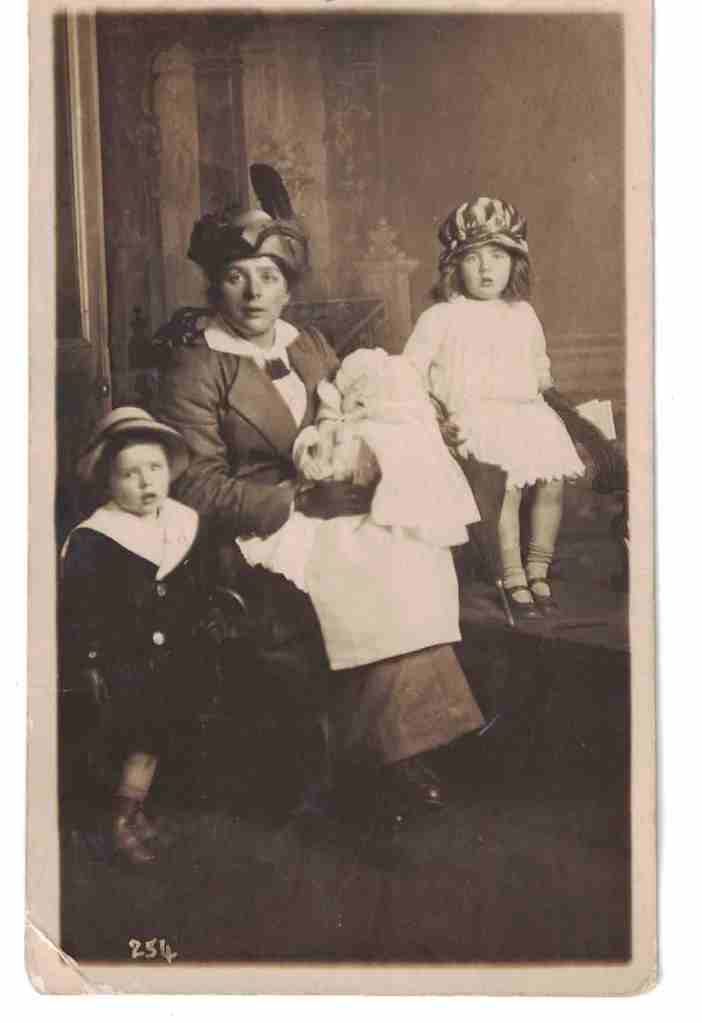


A very warm eulogy to Himmelfarb the scholar and author and Bea Kristol the wife, companion, friend and woman. I have read many of her books and have never ceased to be impressed by her learning and analysis. The Victorian age is not that far away from me. My grandparents were born in the Victorian Age. My grandfather told me about the The 1897 Diamond Jubilee; he was a boy apprentice in the Merchant Marine and saw some of the celebrations in India and China. He remembered her death in 1901. He told me that Queen Victoria was almost universally loved and admired especially in Scotland. Soldiers loved Queen Victoria because she honored them and the bravest among them with the Victoria Cross. She symbolized the motherland.When I think of my parents and grandparents I think of people who took responsibility for their lives. They were not wealthy or even middle-class but they worked hard to be RESPECTABLE lower upper working class even if that mean long stints at sea and working as birds of passage in Latin America, Canada and the United States. I never once heard my grandparents curse or use foul language. And to them the family was indeed, as Himmelfarb wrote, a :”sacred place”. My grandparents had little formal education; they could not read or write their native language but were reasonably literate in English. They were, by today’s standards, good readers. Both my grandmothers studied the Bible or Missal assiduously. My grandfather quoted Burns and Kipling freely. They were country folk by birth and so there were no doubts in their generation as to belief in God, his Commandments and heaven. They were tempted by Socialist and Marxist ideas in their youth but disagreed fundamentally with Socialism on issues like patriotism, the Empire and Christianity (all of which my grandparents were sure were benevolent and good). Both my grandfathers were heavy drinkers -when they got the chance- but their wives were completely teetotal.
It was the practice for the men not to drink heavily except Saturday nights. They routinely turned over all their wages to their wives (so did the children) and the wives handed out money for some amusement such as picnics, attendance at the movies, concerts or ball games. My paternal grandfather was proud of the history of his Regiment and showed me in the atlas they many places they fought and who among kinsmen and friends won decorations especially the Victoria Cross. They emulated and admired middle-class ethics and values. Courage, politeness, civility , graciousness, generosity and integrity were bywords for Victorians like my grandparents. The highest compliment was to be considered lady-like and for a man to a “a Highland gentleman.” So Himmelfarb was exactly right that the Balmoralism of the Queen and the Victorian values she represented were emulated by working class people.
I know they were all united by their love of the monarchy, the flag, the Empire and Commonwealth. My grandparents were separated only by war and be death. To them marriage vows were sacrosanct. I remember one of the worst things my grandfather would say of a man was “he has naepoosh” (no push/no ambition). The highest honor was to be a “leal n’ true mon.” (what Bea Kristol would probably call a “mensch”. It is not an exaggeration to say they probably attended church or religious gatherings over 200 times a year. My grandfathers were avid readers of newspapers and enjoyed military bands, concerts and recordings of famous artists like Marjorie Kennedy-Fraser, Caruso, Rachmaninoff or John McCormack. They were very proud to be British in origin (they became naturalized Americans) and very proud to have served as soldiers of the Queen in many famous Regiments (most now disbanded and with Yesterday’s Seven Thousand Years). When King and Country needed them in 1914 they answered the call (An Gairm) from far off India, Australia, America, Canada and so in Glasgow alone 200,000 men volunteered for service. A large percentage were men who were Canadian citizens or USA citizens who returned for what they considered “the cause of True honour” -defending the motherland.
They did not have much education but they valued education opportunities for their children and grandchildren. Thanks to my grandparents (maternal and paternal) my father was the first in his family to graduate from high school and then go to college (Brooklyn College as the fates would have it). My mother was the first in her family ever to graduate from high school and she went on to become a RN. My parents succeeded in life and their children and grandchildren too in part because of the values that were passed on.
Himmelfarb is right that poverty is “a matter of mind and spirit as of the pocket.” My father’s mother scrubbed and washed the steps of her tenement regularly. Her home was always immaculate. She made sure her husband and children had clean clothes to wear especially on a Sunday. She had to do all the washing by hand with a washboard and usually with cold water. She was proud that she always gave something at church. She and her generation sacrificed to send money to help build the Oban Cathedral (finished in 1959). Most of the money came from overseas Gaels. Wherever they went they help build churches and communities.
And yet these were people who suffered cold and real hunger many days of their lives. It was very common, at the end of the month or in a bad season, not to eat at all for days or merely eating turnips and porridge and hot tea without sugar. When my grandmother came to America by steamer everyone survived on crackers, butter, marmalade and hot tea, two or three times a day. But she never complained and always said grace at meals. One of the virtues she taught us was to HAVE GRATITUDE. Americans today could learn much by studying the lives and morals of Victorians and the works of Gertrude Himmelfarb. Victorians were brave, hard-working, tough, generous, noble, loyal, loving and ambitious. Even their failings leaned towards virtue’s side. They were not great, prosperous and free by accident. Himmelfarb recognized that the key to their greatness was moral principles and moral character which informed their lives and actions.


You must be logged in to post a comment.