
Cicero took this line of argumentation much further—and with much greater depth—in his famous dialogue, On the Laws. Here, though, Cicero’s speaker claimed that through reason the universe is one with God, offering a sort of intelligent pantheism. “Thus we can assume that the universe must possess wisdom and that the element which holds together all that exists excels in perfect reason. From this we see that the universe is in fact God and that the vital force of the universe is held together by this divine nature.” In and through its own reason, the universe also moves toward perfection, order, and harmony. From its beginning, the universe was good and wise, and it only moves towards an even greater goodness, truth, and beauty. In our contemplation of the good, the true, and the beautiful, we humans become better. “Humans have emerged for contemplating and imitating the universe. We are certainly not perfect, but we are a part of perfection.”
— Read on theimaginativeconservative.org/2019/12/how-think-about-god-pagan-mere-christianity-bradley-birzer.html
Category Archives: Philosophy
$7.50, J.R.R. Tolkien’s Sanctifying Myth – ISI Books
Even as Peter Jackson’s blockbuster film versions of The Lord of the Rings and The Hobbit have brought J. R. R. Tolkien’s imaginative creations to the masses, the underlying meaning of Middle-earth has remained o
— Read on isibooks.org/j-r-r-tolkien-s-sanctifying-myth-2124.html
Hobbes’ “Leviathan”: A Collectivist Horror ~ The Imaginative Conservative
Perhaps no modern thinker best represented these changes than did Thomas Hobbes. In his seminal work, Leviathan, Hobbes called for the creation of a “mortal god”—the Leviathan—to counter and augment the will of the “immortal god.” In his view of society, man was utterly and completely depraved, incapable of anything but self-interest and cannibalism. “Hereby it is manifest that during the time men live without a common power to keep them all in awe, they are in that condition which is called war, and such a war as is of every man against every man,” he wrote. “For war consists not in battle only, or the act of fighting, but in a tract of time wherein the will to contend by battle is sufficiently known; and therefore the notion of time is to be considered in the nature of war as it is in the nature of weather.” As such, when men are left to their own devices, Hobbes laments, there can exist no industry, no agriculture, “no navigation; nor use of the commodities that may be imported by the sea; no commodious building; no instruments of moving, and removing, such things as require much force; no knowledge of the face of the earth; no account of time; no arts; no letters; no society; and which is worst of all, continual fear and danger of violent death; and the life of man, solitary, poor, nasty, brutish, and short.” The immortal god, Hobbes admits, has bestowed upon each of the natural right and liberty of self-preservation. Rather, however, than seeing this right as extending to all of mankind, we selfishly hoard the natural right for ourselves and use it as a pretext for violence upon and against our neighbor.
— Read on theimaginativeconservative.org/2019/12/hobbes-leviathan-collectivist-horror-bradley-birzer.html
American Cicero – Books – ISI Books
Aristocrat. Catholic. Patriot. Founder.
Before his death in 1832, Charles Carroll of Carrollton—the last living signer of the Declaration of Independence—was widely regarded as one of the most important Founders.
— Read on isibooks.org/books/american-cicero.html
QUICK HITS: Bradley Birzer A weekly rapid-fire interview – Hillsdale Collegian
Where did you attend college? Notre Dame for undergrad. Indiana University for graduate school. How did you propose to your wife? I wrote out 95 reasons why she should marry me and posted them on the cathedral door in Helena, Montana because she was Lutheran. I took her there at about 20 minutes to midnight on February 12th of 1998. She said yes. If you were on a desert island, what three books would you bring? “The Lord of the Rings,” the Bible, and “City of God.” You’re on a desert island and get access to one website. What do you choose? The Imaginative Conservative. Would you rather climb Mount Everest or go to the bottom of the ocean in a submarine? Everest. Do you have any superstitions? I believe in ghosts.
— Read on hillsdalecollegian.com/2019/12/quick-hits-bradley-birzer-a-weekly-rapid-fire-interview/
Amazon’s mystifying paper catalogs – Six Colors
When I was a kid, I loved, loved the Sears Wish Book. It was a catalog full of toys and games and pajamas and other stuff kids might want to put on their gift-request lists. I can still smell the ink on the paper of the Wish Book. I want that Star Wars toy and this video game and, no, I don’t want that pillow, c’mon mom, who wants a pillow for Christmas?
Clearly someone at Amazon has been thinking of the power of colorful print catalogs to promote products, because last month, we got an 89-page catalog from Amazon in our mailbox, titled “Play Together: Amazon’s Ultimate Wish List for Kids!”
— Read on sixcolors.com/post/2019/12/amazons-mystifying-paper-catalogs/
Living in the Same Spiritual World: C.S. Lewis & Charles Williams ~ The Imaginative Conservative
That spring, Williams and Lewis formally met one another, in person, and discovered an immediate kinship of ideas and personalities.[8] Despite the geographical distance between them, the two continued to read each others’ works and correspond about them. Indeed, Lewis liked Williams’s 1937 novel, Descent into Hell, as much as he had Place of the Lion, if not more. “I think this is the best book you have given us yet,” he assured Williams.[9] Again, a year later, in 1938, Lewis approved of Williams’s following book, He Came Down from Heaven, seeing in it timeless truths equal to those of “Plato, Augustine, or Pascal.”[10] Playfully, Lewis teased Williams for his many successes. “Damn you, you go on getting steadily better ever since you first crossed my path: how do you do it? I begin to suspect that we are living in the ‘age of Williams’ and our friendship with you will be our only passport to fame. I’ve a good mind to punch your head when we next meet.[11]
— Read on theimaginativeconservative.org/2019/12/living-same-spiritual-world-c-s-lewis-charles-williams-bradley-birzer.html
Liberty Classroom Black Friday
Tom Woods–the man behind so many great things in this crazy world–is holding a massive sale for his online college, Liberty Classroom. I’ve been privileged to be a part of this for the last several years, and I find it one of the most satisfying things I do.
Here’s hoping you’ll subscribe.
Bydan free: the immortal memory of robert burns
By Richard K. Munro
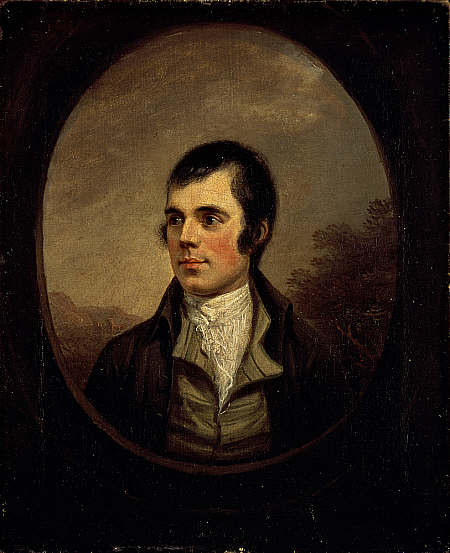
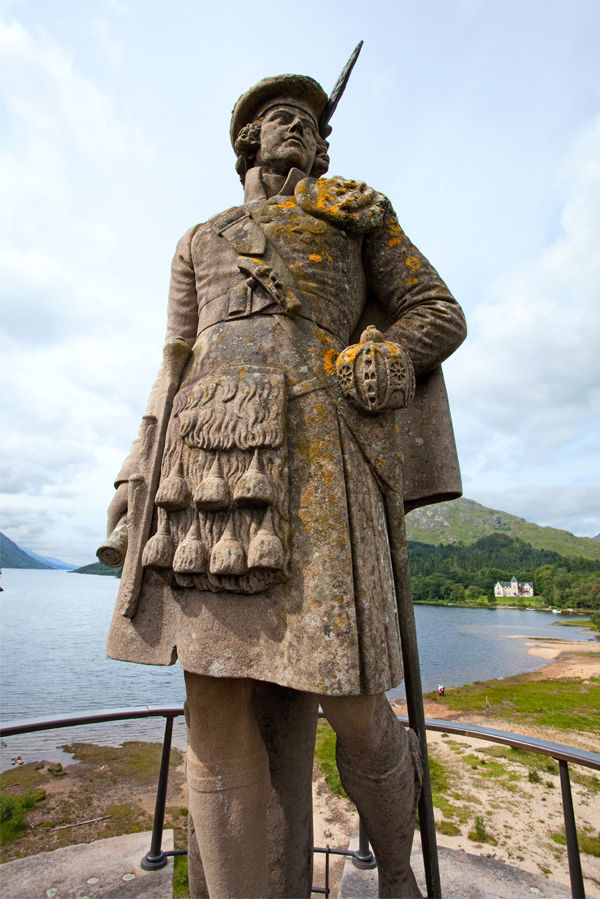
the shore of Loch Shiel. Without Robert Burns and Walter Scott we should probably little remember Scottish history and heroes. If strangers look on Scotland as nation -with its own flag, garb, unique musical tradition, legal system, currency, history, culture and today proudly its own parliament, we owe this primarily to four men (and the good women behind them): James MacPherson , Adam Ferguson, Robert Burns and Walter Scott.
Robert Burns, the Bard of Auld Ayr, has been compared to Theocritus , Mark Twain, Finley Peter Dunne, José Hernandez -author of Martin Fierro-Shaw and Shakespeare. Burns was a voluminous reader in English, Scots, and French on the scale of a Jefferson though he had little Latin and less Gaelic. The Principal of Edinburgh University, at the peak of the Scottish Enlightenment, said “Burns was “one of the most extraordinary men I ever met with, his poetry surprised me very much , his prose surprised me still more and his conversation surprised me more than both his poetry and his prose.” As a peerless songwriter Burns has been compared to Stephen Foster, the Beatles, Lerner and Loewe, all of whom he influenced. But what importance can Burns, a romantic poet of the 18th century Scottish Enlightenment have to us in this modern unromantic technical commercial world that seems to love not honor, nor romance, nor poetry, nor courage nor art? Why is love for Burns reborn every generation from the Victoria falls, Scotland to Victoria, Canada? From Tobermory on the isle of Mull to Moscow, Shanghai and Taipei ? From Perth, gateway to the Highlands, to Perth, Australia ? From Edinburgh to Dunedin, New Zealand? From London to New York from Atlanta, to Dallas, Texas and San Francisco? What then is the peculiar prophetic flavor of the poetic wine of Robert Burns ? What is the secret of his enduring popularity?

When Burns appeared the spirit of Scotland was divided and at a low ebb. King Edward I, (Long Shank)s had long before ,in 1296, removed her symbols of royalty and nationality the famous Stone of Scone or Lia Fail. In his rage against the independent minded Scots Long Shanks removed a prophecy in Latin and Gaelic from the Lia Fail or stone of destiny. But the text was preserved in secret and it was rhymed in the Saxon tongue by Sir Walter Scott:
Unless the prophets faithless be
and the Seer’s words be vain
Where’re is found this sacred stone
The Scottish race shall reign!
From Cromwell’s invasion to the Glen Coe Massacre and the bloody aftermath of Culloden, Scotland experienced on disaster after another including internecine religious strife. Scotland suffered great hunger, poverty and humiliation. The Highland Clearances, had begun. “I remember the day I left my home, I had no choice I had to go , o Fuadach na Gaidheal-scattering of the Gael am goirt agus searbh –the pain and the bitterness -but the blood is strong and the heart is Highland. The brig Caledonia lies stormbound on the Lawrence awaiting God’s hand to see her free. Slowly gliding river widening her final journey homeward {to Scotland} without me. “Slan leibh Alba gu brath! Fare ye well forever my Scotland! The heart of the Scottish Highlands bled deep flowing out into to sea like a river never to return, and it was Lochaber No more for many a heart!
Smollet has written:
…immediately after the decisive action at Culloden the Duke of Cumberland took possession of Inverness; where six and thirty deserters…were ordered to be executed…he set off detachments on all hands to hunt down the fugitives and lay waste the country with first and sword. The castles of Glengary and Lochiel were plundered and burned; every house, hut or habitation met with the same fate without distinction and all the cattle and provisions were carried off; the men were either shot upon the mountains like wild beasts or put to death in cold blood without form of trial; the women after having seen their husbands and their fathers murdered were subjected to brutal violation and then turned out naked with their children to starve on the barren heaths. One whole family was enclosed in a barn and consumed in ashes. Those ministers of vengeance were so alert in the execution of their office that in a few days there was neither house cottage man nor beast to be seen within the compass of fifty miles. All was ruin, silence and desolation.”
Prince Charlie was gone and he would not come back again. “Burned are our homes exile and death, scattered the loyal men.”
Was there one free heart who remembered the Declaration of Arbroath?
For so long as one hundred men remain alive, we shall never under any conditions submit to the domination of the English. It is not for glory or riches or honours that we fight but only for liberty, which no good man will consent to lose but with his life!
Was there one true Scottish heart who remembered Barbour’s Bruce?\
Ah Freedom is a noble thing.
..freedom all solace to man
gives…may nocht knaw …
the anger, na the wrechit doom that is
Yes, there was one. A lad born in Ayr named Robert Burns.
To go to that rude cottage of Ayr the birthplace of Burns so near the Brig o’ Doon, is to experience a secular epiphany as to the essential equality of all humanity. It is to experience awe at the true mystery of talent and genius. It is an affirmation at what secret treasures can be found hidden anywhere among any class, gender or race IF individuals are given a proper upbringing and decent education and chance to develop, discover and explore their God-given gifts.
As Burns’ father knew it is hard to be poor . At the age of 19 Burns’ father was a homeless migrant farm laborer but he was proud he could read, write and cipher and always carried the Guid Auld Beuk (the Bible) with him. Burns said of his father “even his faults leaned towards virtue’s side.” Despite the challenges of grinding poverty, Agnes Brown (Mrs. Burns) and her husband kept their entire family of seven under one roof and surrounded the children’s lives with care and tender love. Both mother and father displayed a piety that was neither excessive nor harsh unlike the extreme Calvinism that was the mode of the established clergy of his time.
In Burn’s house physical labor was incessant, food and fuel were scarce. But education and religion were not neglected; they were held rather by the Burns family as an essential, sacred duty. And Mrs Burns “sang so sweet” Rab oft “couldna” sleep as she crooned “the Auld Scots sangs” to him. Burns had no shame of his very humble origin:
From scenes like these old Scotia’s grandeur springs
That makes her loved at home, revered abroad
Princes and lords are but the breath of kings
An honest man’s the noblest work of God.
As John Masefield has written
I have seen flowers in stony places
and kindness done by men with ugly faces
and the gold cup won by the worst horse at the races;
So I trust too.
Wordsworth recognized that Burn’s leading characteristic was his utter sincerity and almost absolute truthfulness. Wordsworth acknowledged few masters but of Burns he said:
Whose light I hailed when it first shone
and showed my youth
How verse may build a princely throne
On humble truth.
Indeed this is the basis of Burn’s power. Burns saw through the hollowness and pretence of the men and women he met, especially the established clergy and propertied upper classes whose rank Burns said was just , after all, ” the gunieas’s stamp”.
couplit to foul thirldom…
{O we} should think freedom more to
praise tha all the gold in world that is.!
Sir Walter Scott, who met Burns as a boy at Adam Fergusson’s home in Edinburgh, said meeting Burns was like meeting Vergil in person. He described Burns as a man of “dignified plainness and simplicity…his person was strong and robust…there was a strong expression of sense and shrewdness ..his eye was large and of a dark cast, which glowed (I say literally glowed)…when he spoke with feeling or interest. I never saw such another eye in a human head, though I have seen the most distinguished men of my time.”
Oh, yes, journey to Burn’s humble birthplace near the Auld Kirk of Alloway, where Burn’s father is buried next to his Agnes Brown his beloved bride. Journey to walk the scenes of Tam O’ Shanter’s fancies with “Cutty Sark”. Cross the Brig O’Doon like Tam -before it is too late! Go to Poosie Nancy’s in – Mauchline- to have a dram in Burn’s corner as I have done. Souther Johnnie’s convivial spirit dwells there and bids Rob to toast one more time and share a funny story!
Journey to the graves -side by side- of Holy Willy and Mary Morrison -the toast o’ the town- to come close to the truth which fascinated, inspired and instructed Lincoln.
It is not well-known today but Lincoln “could quote …large portions of Burn’s Poems from memory.” Lincoln, had many immigrant Scottish friends, such as his partner Judge Stuart and it is said that Lincoln had a great talent for mimicry. It is said Lincoln could render Burns perfectly with an authentic “Scotch accent.” Lincoln delighted in Tam O’Shanter and the story of Brig O’Doon. He loved the patriotic poetry of Burns and he was surely moved by the anti-slavery sympathy of Burns.
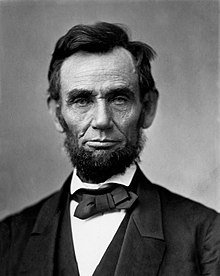
This is from Burns’ Slave’s Lament:
It was in sweet Senegal
that my foes did me enthral
For the lands of Virginia -ginia O!
Torn from that lovely shore
and Must never see it more
and alas I am weary, weary, O!
***
the Burden I must bear
while the cruel scourge I fear
In the lands of Virginia -inia O!
and to think of friends dear
with the bitter, bitter tear
and alas ! I am weary, weary O!
That Lincoln would have been acquainted with the life of one of his favorite poets is beyond doubt and there was much in Burn’s biography with which the young Lincoln could strongly identify except perhaps Burn’s predilection to strong drink which Lincoln left to his partner Billy Herndon.
Burns inspired the small and helped them remember the people from which they came: ; women reformers and teachers, naturalists like John Muir and Rachel Carson, pioneer farmers in the outback, Manitoba, Canada and the Ohio Valley. Burns cheered the hearts of Master plasterer Jos Munro working in White Star Ships and Cunard Line Ships, Montreal, New York and London. It is said he always carried a volume of Burns with him. Shipmasters at sea used Burns as a sort of Scottish catechism and read him to a young cabin boy sent to sea for truancy: Thomas Munro, Sr., my grandfather. He told me how the Scottish sea captain circa 1895 had few books -the Bible, some volumes of Walter Scott, some Shakespeare and Burns and he read them out loud to the boy apprentices and yes, after a few drams would sing some of the songs and these songs and poems my father and grandfather taught to us. Burns was carried in the heart and on the lips of Scottish Rabbi’s in the temples of the Gorbals, the ancient Jewish quarter of Glasgow and by ministers, soldiers, doctors in India and Egypt. Burns was carried on lip and in the heart through the Kalahari Desert and on the Zambezi River by David Livingstone, and by missionary priests in China. The Chinese scholar Yuan Kejia has said -for Burns is much loved in China in translation- “Burns is great because he is just like all of us. He loves what we love and hates what we all hate. He stands for the democratic spirit .”
Burns inspired railway engineers and football players of the River Plate at Munro, Argentina. In two world wars Burns inspired and united Churchill and the common Jock and Donald fighting the foe at Ypres, Dunkirk or El Alamein. My own grandfather remembered Burn’s Night January 25 1915 in the trenches of Ypres. Their company commander Captain Dick Donald Porteous of the 1st Battalion Argyll and Sutherland Highlanders sang Scottish songs of Burns as well as songs in Spanish and French while playing the guitar and accompanied by the “box” (accordion) after interludes of piping.


Burns inspired the great connecting them to the small: Walter Scott, Byron, Queen Victoria, Gladstone and the common men and women of Highlands and Lowlands who roamed the world o’er.
Thomas Jefferson admired the poetry and literature of Scotland greatly even to the point of reading Gaelic poetry in translation:” the words a’told and the writing bold: the tale the tells of the love twixt Diarmad and Grainne.” Jefferson was so moved by MacPherson’s Fingal he wrote “I am not ashamed to own that I think this rude bard of the North -the greatest Poet that has ever existed.” Ironically, Jefferson was referring referring to MacPherson’s Ossian- not Burns-. Jefferson came to admire Burns far more and gave Washington a book of Burns’ verses that is still on display at Mt. Vernon.
Burns was a lover who could match fellow Scot James Bond kiss for kiss and conquest for conquest. Young Robert dearly loved the lasses but he praised as well their minds, their characters and respected their opinions. He was a loving husband and father.
His close friend Maria Riddel said:
“others, perhaps, may have ascended to prouder heights in the regions of Parnassus but none certainly ever outshone Burns in the charms…of fascinating conversation, the spontaneous eloquence of social argument or the unstudied poignancy of brilliant repartee…his form manly; his action energy itself…such was the irresistible power of attraction that encircled him though his appearance and manner were always peculiar he never failed to delight and excel… his features were stamped with the hardy character of independence….his voice…sonorous … captivated the ear with the melody of poetic numbers, perspicacity of …reasoning or ardent sallies of enthusiastic patriotism….he as seldom, indeed never, implacable in his resentments…he was candid and manly in the avowal of his errors and HIS AVOWAL was a reparation…”
Others Englished their names and manners , kept silent or kow-towed to snobbish landed gentry in fear but Burns courageously spoke out for justice, for mercy, for humanity, for memory, for respect. He elevated the views of the common man:
What though on hamely fare we dine
Wear hoddin grey an a’ that
Gie fools their silks and knaves their wine
A man’s a man for a’ that.
Burns spoke of for Scotland’s law and about days of infamy:
The lovely lass of Inverness
nae joy nor pleasure can she see
For e’en to morn cries Alas!
And ay the saut tear blin’s her e’e:
Drumossie moor, Drumossie day
A waefu’ day it was to me!
For there I lost my father dear
My father dear and brethren three
Their winding sheet the bluidy clay
Their graves are growin green to see
and by them lies the dearest lad
That ever blest a woman’s e’e
Now wae to thee , thou cruel lord
A bluidy man I trow thou be
For monie a heart thou has mad sair
That ne’er did wrang to thine or thee!
That cruel lord was the German the Duke of Cumberland; in other age the cruel lord was Kaiser Bill or Adolf Hitler.
Burns furthermore wrote:
What force or guile could not subdue, through many warlike ages
Is wrought now by a coward few
For hireling traitor wages,
The English steel we could disdain,
Secure in Valor’s station
But English Gold has been our band
Such a parcel of rogues in a nation.
****
Why should we idly waste our prime
repeating our oppressions?
Come rouse to arms! ‘Tis now the time
To punish past transgressions
‘Tis said the Kings can do no wrong
Och, their murderous deeds deny it
and since from us their power is sprung
We have a right to try it.
Now each true patriot’s song shall be
Welcome Death or Libertie….
Those despots long have trode us down
and Judges are their engines
such wretched minions of a Crown…
The Golden Age we’ll then revive
each man will be a brother
in harmony we all shall live
and share the earth together,
In virtue trained, enlightened Youth
Will love each fellow creature
and future years shall prove the truth
That man is good by nature
{Given half a chance!}
Burns questioned the legitimacy of the 1707 Union with England. How could it be legitimate when most Scots had been disenfranchised or non-jurors ? Burns, like his contemporary Irishman William Paterson, signer of the U.S. Constitution, recognized the Union as an unequal and often corrupt partnership ; a crooked political deal between German Princes and Tory lords more akin to a rape than a marriage of mutual consent.
Nonetheless, London was where the money and patronage were. And “English was the language of the banks and the long-range guns.” The elite of the Scottish Enlightenment tried to out-English the English and had become for all intents and purposes North Britons and inhabitants of northern province of the English Empire. Many were of the Anglican Communion (Scottish Episcopalians).
Among these learned anglicized cosmopolitans appeared four men from the North forever proud to be Scotsmen . If strangers look on Scotland as nation -with its own flag, garb, unique musical tradition, legal system, currency, history, culture and today proudly its own parliament, we owe this primarily to four men (and the good women behind them): James MacPherson , Adam Ferguson, Robert Burns and Walter Scott.
The greatest and most unexpected of these four and the causeway between Highlands and Lowlands, Old World and New, was Robert Burns. Burns poetry and prose is infused with the enlightened democratic influences of Locke, Ferguson, and Jefferson. MacPherson and Ferguson represented the link to Scotland’s Gaelic heritage and predated Burns. All of the Scottish Enlightenment was an influence on Burns as was the Scottish poet Allan Ramsay but Burns always remained a man of independent mind. Burns reflected the thought and philosophy the Scottish School of Common Sense led by Thomas Reid and the Rev. Adam Fergusson, the greatest Highland teacher and thinker of his day, the former chaplain to the Black Watch, whom Burns knew at Edinburgh. Ferguson’s History of Civil Society is a remarkable book, the first English language book ever use the word “civilization” . Ferguson’s history is a defense of the inestimable value of traditional cultures everywhere, and by implication Scottish and Highland culture. ” The boasted refinements”, wrote Ferguson , “of the polished age, are not divested of danger… They open a door, perhaps ,to disaster…they enervate the minds of those who are placed to defend them…they reduce the military spirit of entire nations….{preparing.}..mankind for a government of force.”
Ferguson influenced Burns deeply with the Gaelic concept of the “dualchas araid”: -a splendid ancient heritage -a priceless pearl- which should be preserved and passed on . In his tour of the Highlands Burns came to realize the Highlander was not a savage but an ancient Christian people imbued with concept of “siobhaltachd”(civility), Highland hospitality, generosity, deep humanity and courtesy which owed as much to Celtic heritage as to the church and Greco-Roman ideas of civilitas . Ferguson believed in capital and progress but was concerned that “in every commercial state, notwithstanding any pretension to equal rights, the exhalation of the few must depress the many.” In addition, without the right to bear arms ,said Ferguson in 1767, the end result would not be liberty but tyranny. If liberty were threatened what could expected of pleasuring loving youth raised in the city without manly sport or military training? Would they have the strength and courage to face danger and the suicidal ferocity of more warlike peoples? Ferguson and Burns believed in teaching the tales of the sword and gun, and breathtaking courage glory of the steadfast Highland Regiments at Ticonderoga and Fontenoy where Ferguson himself led the Black Watch under fire. The “bairns an’ young’ anes” , needed to be taught of the guid-anes (Goodjins) of history like Wallace, Hancock, Washington and the Bruce as well as the “bad anes” (badjins) like Long Shanks ,The Butcher Cumberland, Tarleton, Himmler and Hitler.
Wrote Burns:
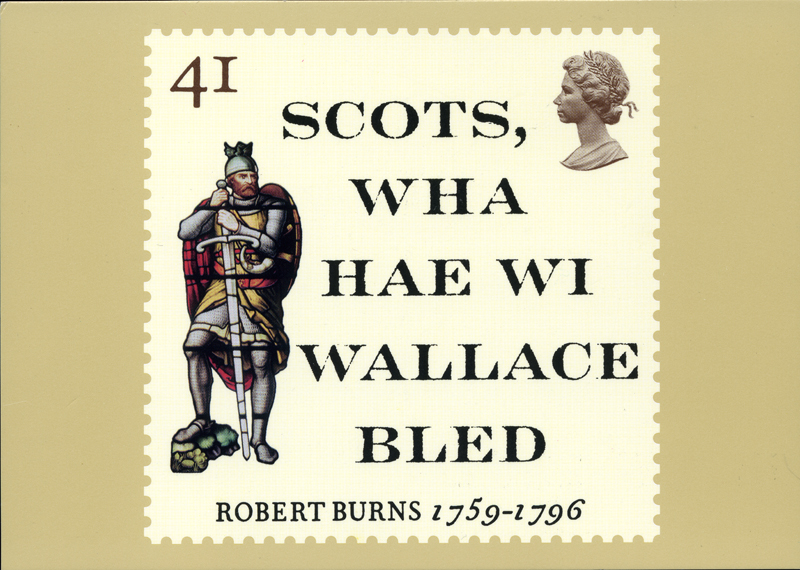
At Wallace’s name, what Scottish blood
But boils up in a spring-tide flood
Oft have our fearless fathers strode
By Wallace’s side
Still pressing onward, red-wat shod
or glorious dy’d!
Burn expresses the sentiment again perfectly in a letter to George Thompson dated by Adam Ferguson August 30 1793: in my yesternight’s evening walk, warmed…to a pitch of enthusiasm on the theme of liberty and independence which I threw into a kind of Scots Ode…that one might suppose to be the gallant Royal Scot’s address to his heroic followers on that eventful morning {of the Battle of Bannockburn)…..So may God ever defend the cause of Truth and Liberty as he did on that day! Amen! …. P.S. the recollection of that glorious struggle for Freedom, associated with the glowing ideas of other struggles of the same nature,not quite so ancient, roused by rhyming mania.” Burns ,naturally, was referring to the American and French Revolutions.
I have seen the original manuscript in Burns own clean hand :
“By oppressions woes and pains,
by your sons in servile chains,
we will drain our dearest veins
but they shall be free!
Lay the proud usurper low,
tyrants fall in every foe,
liberty’s in every blow,
let us do or die.”
Ferguson and Burns both bitterly opposed the disarmament of Highlanders, the prohibition of the bagpipes, Highland Garb, tartan, and the depreciation of the Gaelic and traditional Scottish culture. Fergusson himself was convinced that by owning weapons and learning to use them a commercial people can keep alive a collective sense of honor, valor, and physical courage, traditions that no society, no matter how rich, sophisticated and advanced can afford to be without. The wise man knows the world is a dangerous place.
Burns , Ferguson and his mates of the Black Watch would have agreed: Am fear nach gleidh h-airm san sith cha bhi iad aige am a’chogadh” (the man who keeps not arms in peace will find none on him when war comes.”) I remember the ironic, defiant sign posted in a Quonset hut long ago by my Marine D.I. at Quantico, Virginia :”Gun control means hitting your target.” I am sure the jocks of today’s Black Watch who stand poised to root out terror side by side with our American forces would be in full agreement.
Friend and foe alike respect and sometimes fear dauntless courage and the vitality it represents. But as Burns and Ferguson recognized It is this very reservoir of courage and manliness which guarantees our liberty and the long term peace of our society. Burns himself belonged to a local Scottish militia unit and extolled their virtues of ancient masculine pursuits as climbing, hunting, fishing, shooting and soldiering. Were not the Highlands “the birthplace of valor and country of worth? Was not the Garb of Auld Gaul a manly attire of a soldierly but gentlemanly race?
A Highland lad my love was born,
the lowland laws he held in scorn
but he still was faithfu’ to his clan
My gallant, braw John Highland man!
With hi philibeg an’ tartan plaid
An guid claymore down by his side
The ladies hearts he did trepan
My gallant braw John Highland man
But Och, the catch’d him at the last
And bound him in a dungeon fast
My curse upon them every one
They’ve hanged my braw John Highlandman…
…There is not a lad in a’ the lan’
Was match for my John Highlandman!
Ferguson , wrote, perhaps thinking of Highland Bards like, Ian Lom or the MacLain poets:
“the most admired of all poets lived beyond the reach of history, almost of tradition. The artless song of the savage the heroic legend of the bard, have sometimes a magnificent beauty, which no change of language can improve…under the supposed disadvantage of a limited knowledge and a rude apprehension, the simple poet has impressions that more than compensate the defects of his skill. The best subjects of poetry, the characters of the violent and brave, the generous and intrepid, great dangers, trials of fortitude and fidelity….are delivered in traditions that animate like truth because they are equally believed…he delivers the emotions of the heart, in words suggested by the heart for he knows no other…”
Ferguson could have been writing a prophecy of Burns’s own achievement. To Ferguson and Burns one must fight the good fight in peace as well as war for freedom, justice and a civilized, decent way of life where the weak are secure and the strong and rich serve the common good. For their character the young needed not just material security but must to be taught civic virtue and religion. A well-rounded person contributes to human well-being in general and the good of society and is not consumed merely by selfish individual or material interests. Ferguson and Burns thought there was a great societal and educational danger in the unbridled self-interest of the satanic mills of Glasgow and Manchester whose managers sought to maximize productivity and profits with no regard to the human cost. Both staunchly opposed all forms of slavery and forced labor. Division of labor and industrialization created wealth but is also the cause of ignorance, alienation, the destruction of family ties, the exploitation of child labor, misery and additional vices like madness, drunkenness, class envy and urban violence. Laborer’s “art requires no exertion of genius” said Ferguson and so “are degraded by the object they peruse.” Young people and workers needed not just material things but also cultural and spiritual help to give their souls balance, compassion and composure. Ferguson and Burns thought it strange that the English would study avidly the languages of India or praise the ancient Greeks and Romans while ignoring the culture, language, steady virtues and courage of the Highlanders who lived just beyond the hills!
Burns’ sympathies were with enlightened Whig opinion and the American variety of that opinion as represented by Jefferson, Hancock, Henry and Washington who swore with Burns that taxation with representation was tyranny!
Och, the Highlandmen hate tolls’ an’ taxes…
While Terra firma on her axis
Diurnal turns
Count on a friend in faith an’ practice
in Robert Burns!
***
Burns had little or no Gaelic but he read McPherson’s translations and adaptations . In addition to writing his own lyrics, Burns was a preserver, without pay, of ancient airs and songs of Scotland. Burns heard Gaelic song in the Highlands and no doubt at Ferguson’s Edinburgh home. Ferguson himself was a native speaker of Gaelic and polyglot. These ancient Celtic rhapsodies were interpreted for Burns and brought him into contact with centuries of verses praising the country, the mist-covered mountains, the flowers the birds…
Beneath the milk-white thorn that scents the evening gale…
…..flow gently sweet Afton, among they green braes, flow gently, I’ll sing a song in thy praise…
{Och} But pleasures are like poppies spread, you seize the flower, its bloom is shed
or like the snow-fall in the river a moment white then melts forever..”
In a sense Burns is a Scottish Hemingway literary but appealing to men. Unlike Hemingway however, Burns is equally appealing to women whom Burns did not recognize as inferior to men or merely sex objects but something complementary. If not as physically strong they were if anything, worthier in some ways than men and worthy of love, protection and sacrifice:
For you sae douce ye sneer at this
ye’re nought but senseless asses, O
the wisest man the warl’ e’er saw
he dearly lov’d the lasses, O
Auld Nature swear, the lovely dears
Her noblest works she classes, O
Her prentice han’ she try’d on man
and THEN she made the lasses, O.!
Green grow the rashes, O
Green grow the rashes O
The sweetest hours that e’er I spend
Are spent among the lasses, O!
and
But truce with kings, and truce with constitutions,
With bloody armaments and revolutions;
Let Majesty your first attention summon:
Ah! ça ira ! The Majesty of Woman!
The Regiment and male bonding was great but family life, led by a good woman was the center of all that was good and clean:
To make a happy fireside clime
To weans and wife
That is the true pathos sublime
Of human life.
Of Burns it has been said that “there is nothing in his letters or poems which goes beyond a sincere deism -nothing that is any way Christian.” Burns, like Fergusson, represents the Scottish Common Sense School of the Enlightenment. An important part of Lincoln’s affinity to the poet was Burn’s free thinking and honest religious doubt for religious dogma as opposed to faith in God. Both men read Paine’s Age of Reason whose defiant anti-clerical deism was widely regarded as a little more than atheism. But was Burns an atheist? The areligious skepticism of Hume was shunted aside by Burns, Ferguson and many Scots as faith and reason were seen as compatible: one only needed to balance the heart and the head. And certainly the women of Burn’s household were deeply religious. Burns has been claimed as merely a pale Deist but Burns himself wrote ” I will deeply imbue the mind of every child of mine with religion” and “I am so convinced that an unshaken faith in the doctrines of religion is not only necessary by making us better men but also making us happier me, that I shall take care that every little creature that shall call me father shall be taught them.” Although Burns did not agree with rigid Calvinists he nonetheless attended church regularly with his wife and family and studied the Bible and quoted Jesus whom he referred to as “our Saviour:”
What Burns despised was intolerance and a perverted “Holy Willie Hypocrisy”. Burns praised the Rev. John MacMath as part of a “candid liberal band…of public teachers…as Christians too renowned an’ manly preachers.” When in Edinburgh Burns met the Roman Catholic Bishop John Geddes and struck up a friendship with him. Burns praised the “Popish Bishop” as he called Geddes, as a man completely free from social snobbishness. Burns lack of prejudice is remarkable in those bleak years before the Catholic Emancipation.
Perhaps you remember the poem “To a Mouse” which seems at first glance a simple poem about nature. With Burn’s eyes as the “lord” of the farm he realizes that the mouse is like the lowest born joat-flitter (migrant worker). The picture is winter and it is very cold. It is remarkable that the poet of that brutal and often barbaric time is showing a kind heart to a small wild animal as if nature herself were sacred. He parallels our world and the world of the lowly mouse. You might recall that he said “The best laid schemes o’ mice and men gang aft agley (go oft ary). The Gaels of old were of the opinion that the work of the poets was important to health of language and the health of people’s mind. I believe that. J.S. Blackie a well-known classical and Gaelic scholar of the 19th century said the function of the poet was to be calling back to Nature and truth the spoiled children of convention and affectation -“a’ gairm air ais gu Nadur agus Firinn a’ chlann truaillte tionalais agus faioncholtais.” Of course in Gaelic faoincholtas (convention) means fashionable or vain (faoin)-foolish -imitation. Burns had that genius to wake us up to reality and away from our self-indulgent complaining about petty things.
Perhaps you remember the poem about the small little wild beast:
…wee, sleekit, cow’rin tim’rous beastie…wi’ a panic is {his} breastie…
Still thou art blest, compared wi’ me!
the present only toucheth thee
But och! I backward cast my e’e
On prospects drear
an’ foward tho’ I canna see
I guess an ‘ fear!
I have translated for my own amusement many poems and fragments of Burns into Spanish:
{Ratoncillo) estás dichoso y bienaventurado comparado a mí
El presente sólo te toca
Pero ¡Ay! echo un vistazo atrás
a panoramas deprimientes
Y hacia adelante aunque no puedo ver nada
Con nada calculo y me temo lo peor. (translation R. K. Munro)
Looking back to depressing panoramas what a state! And forward I can see nothing; I count on “nothing ” and what fear is upon me!
The fourth stanza, addressed to the mouse is poignant as a “wee bit sigh stir’s” the poet’s bosom:
Thy wee-bit housie, too, in a ruin!
Its silly wa' the win's are strewin!
An naething, now, to big a new ane,
      o foggage green!
And bleak December's win ensuin,
      Bith snell an keen!
Compared to Burns my life is a utopia…how about yours?
But Mousie, thou are no thy lane,
In proving foresight may be in vain:
The best-laid schemes o' mice and men
          Gang aft agley,
An lea'e us nought but grief an pain
          for promised joy!
But just like the mouse we will not be alive forever nor forever young (my hair no longer thick but thin and is turning white). All living creatures are alike in this respect both man and beast We should remember this and “it’s I am thinking we should all be reading Burns from time to time” as my Auld Pop would say, or at the very least singing his songs and reciting his poems! In October 1785 Burn’s younger brother John Burns died at age fourteen. And shortly after in November 1785 Burns’ father had died. Burns’ own health and financial condition were in a precarious state.
In the year of our Lord, 2003 , a new Scottish Parliament was inaugurated representing the autonomy and nationhood of Scotland within the Union of the United Kingdom. The Scottish Flag flies proudly alone at the Edinburgh tattoo, and yes the Stone of Destiny, an lia fail, the stone of Scone, was returned to Scotland with great fanfare in 1997- forever snatched from the tomb of Long Shanks. It took seven hundred years but Braveheart,Robert the Bruce, Burns, Scotland and liberty triumphed, in the end, over Long Shanks. Burns looks firmly towards the future and democracy but he never forgot his own and his people’s past. Had he lived he might well have emigrated to America as did his direct descendants. Burns speaks to the world, if they would hear, about the true meaning of liberty and the nobility of man -and woman too- those who dwell in every land and every walk of life. Burns suffered with the poor and oppressed be they colonials , blacks slaves from Senegal , Scots, Chinese or English or French or American factory workers. “Man’s inhumanity to man”, he wrote , “makes countless thousands mourn.” Wrote Burns: “Whatever mitigates the woes or increases the happiness of others, this is my criterion of goodness; and whatever injures society at large, or an individual in it, this is my measure of iniquity.” Burns preaches not irreligion but tolerance for skeptics as well as for all faiths and denominations. Burns sings not just of woman’s beauty but of her rights and of her mind and the equality of these tender souls created in the image of God.
All that Scotland had done and suffered, the memory of her heroic but disastrous history, the heads bloodied but unbowed, the strong valiant, manhood of her Highland men, the deep sonsie lyric womanhood and pragmatism of her lassies, the memory of “dualchas araid”, the splendid ancient Gaelic heritage, the songs of the Hebrides, the beauty of Scotland’s nature and her scenery -of Highlands, lowlands and Islands, may have vanished without trace without the unconquerable spirit of Robert Burns.
And the British people and people ‘round the world would have been for the poorer.
Yes, all this could have been utterly destroyed by mindless uniformity, the depressing deracination of the urban poor, the manufactured ugliness of slum upon slum and a numb proletarian anomie, had Scotland been left without the Scottish and Celtic renaissance led by Burns.
Truly the pen and the heart and the lips are mightier than the sword! Burns himself was the torch of this new land of light and liberty we celebrate today. Burns was the patriot and literary hero whose truthful art overcame and oppression, woes and shame . Burns turned the tide back for Scotland which afterwards Walter Scott carried to a full flood winning over the heart of Queen Victoria, Jefferson and Lincoln, Highlander and Lowlander alike, young and old, rich and poor, “Let Kings and courtiers rise and fa’ this world has many come but ‘brightly beam aben them a’ the star of Robbie Burns! “
LADIES AND GENTLEMEN MAY WE LONG TOAST THE IMMORTAL MEMORY OF ROBERT BURNS!


You must be logged in to post a comment.