
A review of the 2-CD remastered version of Rush, Hemispheres, 40th Anniversary Edition. Please note: I have NOT seen the deluxe edition yet. It should be arriving soon.
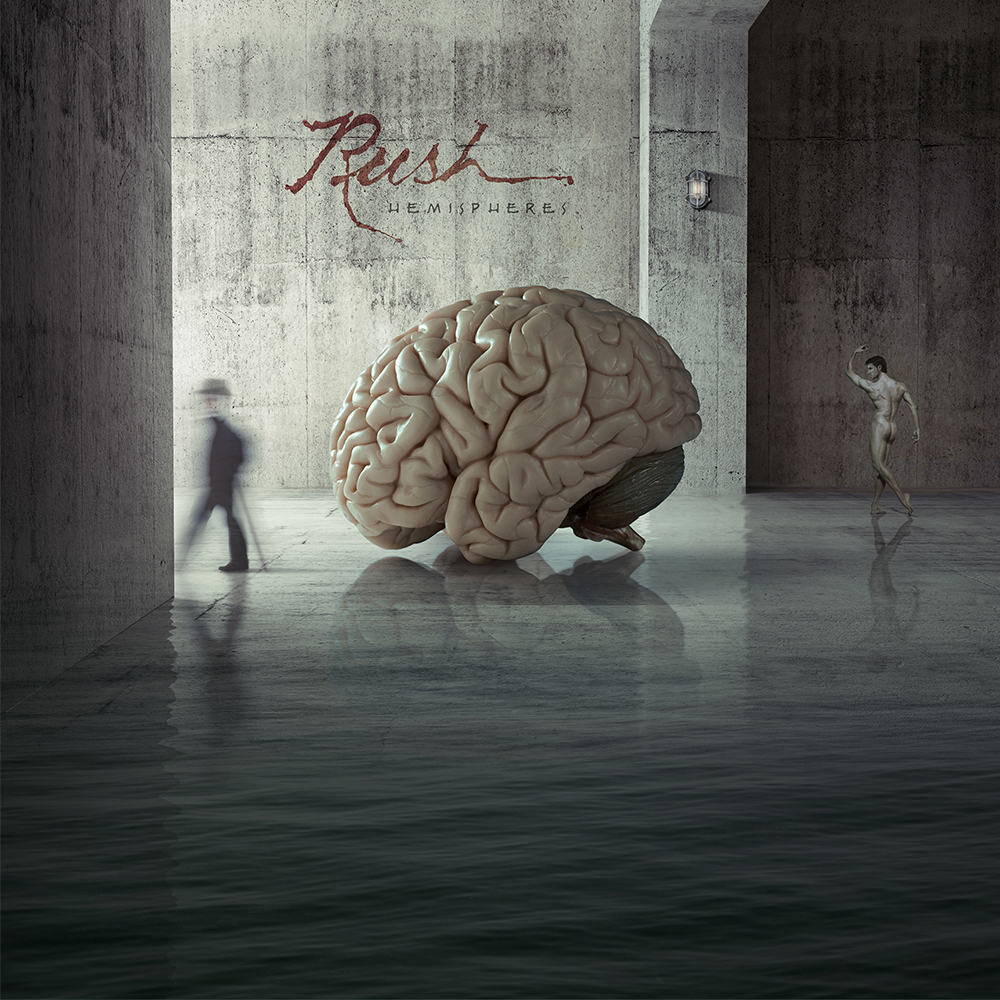
Hemispheres represents Rush at its most progressive best—that is, until 2012’s Clockwork Angels.
Indeed, Hemispheres represents Rush at its earliest progressive best. Caress of Steel might be more wacky; 2112 might be more anthemic; and A Farewell to Kings might be more diverse in tone; but Hemispheres is an album without flaw. Even though much of the album came about at the last minute and with little thought, Geddy and Alex were certainly at the height of their musical experimentation, and Neil had moved from writing short stories and prose poem to write a full novel and creating its own logically consisted internal world. Having already explored the mystical fiction of J.R.R. Tolkien, the bizarre individualism of Ayn Rand, Peart now embraced the work of one of the most complicated and best philosophers of the modern age, Friedrich Nietzsche. What made all the glorious pieces of this majestic moment in Rush history come together, though, was certainly Terry Brown’s flawless production and Hugh Syme’s surreal art.

It would be hard to exaggerate Brown’s productions skills. On Caress, everything felt like a razor’s edge cutting through the haze of psychedelia. 2112 felt righteously angry, a call to arms to protect all that is good in western civilization. Farewell felt justly wise and statesmanlike, three intelligent men challenging the corruption so comfortably residing in their midst. Hemispheres, however, perfectly combines classical myth and 1970s era space opera, allowing a narrative that explains the Aristotelian notion of moderation while clothed in the tragic prose of Nietzsche and yet still giving us a Skywalker-esque hero in Cygnus. “Let the love of truth shine clear.” The first side ends with the apotheosis of Cygnus, becoming not just the god of moderation, but the most integrated and indispensable man yet to emerge in the universe. [Make sure to go to page 2–by clicking below]


 Spirit of Cecilia
You must be logged in to post a comment.