My Number 2 Album of the Year . . .

. . . comes from the outpouring of archival jazz releases I’ve been writing about lately. This, from my point of view, is the very best of that harvest: an astounding, life-affirming 1962 concert, buried in the archives of Ella Fitzgerald’s manager, completely forgotten until now, then released this fall as The Lost Berlin Tapes.

Back in West Berlin on the heels of two first-class live albums recorded there (1960’s Mack the Knife: Ella in Berlin and 1961’s Ella Returns to Berlin) plus a solid studio record based on classic swing and bop (1962’s Clap Hands, Here Comes Charlie!) Fitzgerald and her virtuosic “fellas” — Paul Smith on piano, Wilfred Middlebrooks on bass, Stan Levey on drums — are at their absolute peak, in tune with each other and with an extroverted, enthralled Sportpalast Arena audience.

Every single note of this concert radiates warmth and inner joy, even when Ella detours into torch songs like “Cry Me A River” and Billie Holiday’s “Good Morning Heartache.” And when she and the fellas swing on “Jersey Bounce,” jump on “Clap Hands, Here Comes Charlie,” dig deep into Ray Charles’ “Hallelujah, I Love Him So” (resulting in an immediate, complete encore!), they are unstoppable. And then she breaks into her trademark scat singing on “Mack the Knife,” playfully evoking Bobby Darin and Louis Armstrong’s versions, “forgetting” the words like she did for real two years before and making up her own, cruising to an utterly triumphant finish. Which she can’t help but top with the powerhouse down-tempo finale “Wee Baby Blues.”

I have had no finer feeling listening to music this year; I believe that whatever might ail your soul in these strange days, The Lost Berlin Tapes is mighty good medicine for it. Which is why you need to hear this, right now!

My #1 album? The polar opposite of this, but equally beautiful in its own way – The Revolutionary Army of the Infant Jesus’ extraordinary Songs of Yearning/Nocturnes. Get this limited edition double album (LP or CD) from Occultation Recordings on Bandcamp, before the first pressing is completely gone!

On Free Will ~ The Imaginative Conservative

The Stoics—who inherited so much from the pre-Socratics and from Socrates—wrestled repeated and incessantly (but not fruitlessly) over the issue of free will. If everything had a nature and if everything moral and just came from the right ordering of the universe, one must learn to conform to eternal dictates. Did these dictates harm or encourage our free will? Some Stoics were predestinarians, while others believed in the sovereign individual will choosing to become one with the Natural Law and the Heraclitan Logos. To be sure, all Stoics believed that any violation of the Natural Law was a sin, a violation against creation herself.

The next great moral treatises on free will can be found in Cicero’s On Duties and On the Laws. In the former, Cicero claimed, like Socrates had, that all decisions come down to the individual human person, either abiding by eternal moral laws or rejecting them. Cicero advocated for understanding and acknowledging what was eternally true, especially through manners and decorum. In the latter work, On the Laws, Cicero argued that all things are beholden to eternal truths, but they understand those eternal truths through the exercise of reason, which is the language of man to man, man to god, and god to god. It is, for all intents and purposes, the language of civility and order, that which binds the universe together in justice.
— Read on theimaginativeconservative.org/2020/12/free-will-bradley-birzer.html

Charles Carroll Biography for $6.25

My hardback biography of Charles Carroll of Carrollton, the only Roman Catholic signer of the Declaration of Independence, is on sale for only $6.25! Great stocking stuffers for the whole family.

On the Hunt for Classic Jazz: A Conversation with Zev Feldman

“There’s some very special moments when you’re hearing something privileged, and that’s one of the best parts of this job, hearing things for the first time.  An exclusive, if you will! We realized right then and there, ‘there is definitely music here that should be worth releasing!'” Speaking with Resonance Records co-president and “jazz detective” Zev Feldman over the phone, the joy and passion he brings to his calling — a worldwide hunt for unreleased archival recordings by titans of the genre — is almost palpable.

The focus of this conversation? One of Feldman’s latest efforts — Bill Evans Live at Ronnie Scott’s, out on LP on November 27 and CD December 4 (and recently reviewed in this space). As he sat in legendary drummer Jack DeJohnette’s home studio back in 2018, hearing the multitrack recordings of Evans, bassist Eddie Gomez and DeJohnette at the iconic London club during July 1968, his reaction was, first and foremost, that of a lifelong lover of the music.

“There’s so much beauty, lessons that I’ve learned from Bill.  He really helped me learn about the beauty and sometimes subtlety and just the way the chords and different things can come out. For a piano trio, with three guys, they have so much to say, and so much to express in the way that they communicate . . . Just these guys having a conversation up there – it’s amazing.  Different chemistry, different dudes; this is something that’s definitely got some hard hitting, some nice rough edges around here in a good way.”

Inspired by the Ronnie Scott’s tapes, Feldman set out to build a package that could not only stand with Resonance’s other Evans releases (including Some Other Time and Another Time by the same, rarely-recorded trio), but would fulfill “a responsibility, in taking the opportunity to make things as great as they can be.” Beyond the details of unearthing this recording, the album booklet is packed to the gills. Reflections from Gomez and DeJohnette (the latter in conversation with pianist Chick Corea) on their time together in Evans’ trio. A view of Evans’ London residency from the audience by British jazz writer Brian Priestley, who was there and raved about it . A unique illustration by brilliant commercial artist David Stone Martin, another of Feldman’s passions. And then there’s — Chevy Chase?

“I’m not sure the mainstream public is aware of this, or even most of Bill’s fans are aware of this, but Bill and Chevy were very good friends.  Chevy used to drive him home sometimes after gigs; they kept in touch over the years; Bill even had two kittens which he gave to Chevy, which he had their whole entire lives.  And Chevy is also a musician in his own right; some people may not be aware, but he’s also been a drummer and a pianist.” In other words, Chase brings to this release what Feldman and all the other contributors do: a long-standing delight in Evans’ music, filtered through his own unique perspective.

Continue reading On the Hunt for Classic Jazz: A Conversation with Zev Feldman →

Through Shaded Woods to The Primal Soul of Europe: A Conversation

In this exchange, Spirit of Cecilia’s Editor-in-Chief Brad Birzer and Arts Editor Tad Wert share first impressions of Lunatic Soul’s captivating new album, Through Shaded Woods.

Brad: The new Lunatic Soul album, Through Shaded Woods, does amazing things to my own lunatic soul, Tad.  I’m smitten. I find the music especially compelling–since it sounds very much like a cross between Riverside’s Wasteland (arguably, the band’s best album) and Jethro Tull’s Songs from the Woods.  Yet, however Tullish the album sounds (think Grumblewood, too), it’s a progression beyond Tull, acknowledging it without being slavish.

What do you think of it, so far?

Tad: Hi Brad! What a great album to discuss. I’ve listened to it a couple of times, and I really like it. My first impression was, “Hmm, Lunatic Soul does Songs From the Woods!”, so we are in agreement there. Do you think the title he gave this album is a deliberate reference? To my ears, there is a definite British folk feel to the songs, which is abetted by the primarily acoustic instrumentation. 

I love everything Mariusz Duda has produced, and this album is one of his best yet.

Brad: Agreed, Tad.  I think Duda is one of the single most talented persons in prog today, and I’ve felt this way since I first heard Riverside back in 2007 or so.  Indeed, it’s really hard to imagine the prog world and especially the so-called third wave of prog without Duda. I often like to think of him as an author, with the Riverside albums being the main story (the chapters) and the Lunatic Soul albums being the interludes. 

While all Lunatic Soul albums are good, this one is especially good, ranking–at least, as I see it–as probably the best of the lot since the first one was released.  It’s at least as good as the first album, if not slightly better.

My copy only arrived yesterday, but I’ve already listened to the album five times. I really like the folk elements of the album, but I don’t see them dominating it as much as informing it. I remember, for example, when Steven Wilson released his Storm Corrosion album, and I was shocked (not in a happy way) that such gothically-dark folk existed. The whole enterprise was depression-inducing, though I also find the effort, strangely, brilliant.  As chance would have it, I actually own two copies of Storm Corrosion. . . . but that’s for another post!

Duda’s new album, though, feels folky without being either superficial or too fraught with anger and unrelenting heaviness.

Through Shaded Woods also develops rather beautifully the ideas first expressed in Riverside’s song, “Wasteland” from the album of the same name.  It’s as though we paused the song at the 1:19 mark of that magnificent track and, then, with Through Shaded Woods, dove deep (as in really deep) into the song itself.

The artist enters his art. . .

As he explained (as posted at Burning Shed): “I think I have always wanted to create an album steeped in nature and woodlands.”  This makes perfect sense, and it means that Duda’s “folk” is Elvish and sylvan rather than dour and gothic. Duda claims he was influenced by paganism, but the album has a very Catholic, Franciscan, liturgical feel to it as well.

Tad: Yes, while I was listening to it yesterday, the words “primal rhythms” came to mind, and from that same quote via Burning Shed, he says, “… I wanted the album to include such ritualistic primal dances, shamanic, Slavic and Viking moods. I wanted to mix it all up and put it all together, making Through Shaded Woods the most intense, dynamic and most danceable album of my career.” I think he has succeeded!

I know that previous Lunatic Soul albums were understandably influenced by Duda’s personal losses of his Riverside bandmate Piotr Grudziński, and his father, and as such, they were very dark. The dynamism and irresistible beats of songs like “Summoning Dance” seem full of life and even joy. 

I consider Duda’s Lunatic Soul projects to be outlets for his acoustic side, while Riverside is where he satisfies his more electric tendencies. But in the nine-minute “Passage” the instrumentation and melody builds step by step from a simple, folksy riff to a roaring metal section that rivals anything Riverside has done in heaviness. And yet, it doesn’t feel like I’m being aurally assaulted by a phalanx of guitars. He still keeps the mood light, and it all works for me.

My favorite tracks (at least at this moment) are the inner trio of the title track with its insistent droning sound, “Oblivion” with its relentless drumbeat, and “Summoning Dance”, which is the ecstatic climax of all these “ritualistic primal dances”. Which songs do you enjoy most?

Brad: It’s funny, Tad, as many times as I’ve listened to this album now (even more than when I was writing above), I’m still thinking of it as a whole and having a hard time breaking it into tracks.  I suppose it’s the guitar sound that is so prominent in each song, helping making the album a whole. But, when pushed, I especially like track one, “Navvie,” because it introduces the album’s unique sound so perfectly. “The Passage,” track two, however, is a nearly perfect song, and I love track five–the most pagan of all the songs–”Summoning Dance.”

It’s a truly brilliant album, Tad.

Tad: It does have the feeling of an organic whole to it, doesn’t it? One song flows into the next and I can lose myself in the lush soundbed Duda has created. I wonder if there will be some cross-pollination between Lunatic Soul and Riverside in the future. If so, that will be all to the good! 

External craziness aside, inside the world of prog music, 2020 has been an exceptionally fine year. Every time I think I’ve heard the album of the year, another brilliant one is released.

I know that it has been incredibly difficult for artists to survive financially, and I hope that they can get out, play some shows, and make some money again. We may see more and more move to the subscription model that groups like Big Big Train are implementing. Whatever happens, I hope fans step up and support their favorite artists. Meanwhile, we’ll leave our readers with the video for “The Passage”:

Exiting Big Tech ~ The Imaginative Conservative

Big Tech want to impose upon us all a kind of insane and inhumane conformity. Yet, the critical point is that they do not impose themselves upon us as much as we let them impose themselves upon us. So, the most important thing we can do is exit… (essay by Bradley J. Birzer)
— Read on theimaginativeconservative.org/2020/11/exiting-big-tech-bradley-birzer.html

Thousands Upon Thousands of Words Later: A Personal Reflection on Writing ~ The Imaginative Conservative

As it turns out, I’m typing this essay on my latest acquisition, the Freewrite Traveler from Astrohaus. I actually helped crowdfund it back in late 2018, but it’s just now coming to market. It’s one sleek device, healthy for the hands and the mind. And, because there’s no access to Facebook, email, Twitter, or any other myriad distractions, healthy for the soul. The keyboard, though not exactly mechanical, is truly a thing of wonder. Indeed, to imagine this Traveler, think of a normal-sized keyboard attached to your Kindle. This is essentially what the Traveler is. It’s supposed to stay charged for several weeks (I’ve not had my long enough to verify this), and it’s the most portable device I own now—except for my Kindle.

Again, though, with the Traveler, there are no distractions from the internet or any part of the internet. It’s just you, a keyboard, and a screen. The Traveler automatically saves your work, and you, when ready, send it to your email account by simply hitting the “send” button. Astrohaus claims this setup allows for one to overcome writer’s block. Honestly, this claim seems totally weird to me. Facebook doesn’t block me from writing; it distracts me from writing. Or, to be more blunt, I let it distract me.
— Read on theimaginativeconservative.org/2020/11/thousands-upon-thousands-words-later-personal-reflection-writing-bradley-birzer.html

Jazz Piano: A Time-Lapse Round-up

For some unknown reason, my recent listening has tacked in the direction of mainstream jazz (although there’s still plenty of avant-garde, jazz/rock fusion and prog in the rotation). If I had to speculate, I’d say I might be looking for less tension and more release during my unobligated time — and for me, jazz offers that release with a cherry on top.

But what’s on offer in the current marketplace is a factor as well. Instead of baking sourdough bread or taking up acoustic guitar during the time of COVID, it’s as if jazz musicians and aficionados have all dug deep in their closets and simultaneously unearthed long lost vintage recordings — which record companies eager to fill their distribution pipelines have snapped up and launched into the wider world. A quintet of fresh releases by five masters of jazz piano serve as both cases in point and a unique, time-lapse look at the art form, from the late 1960s to today.

Currently, California-based Resonance Records is the leading exponent of this approach; in their catalog, veteran producer George Klabin and “jazz detective” Zev Feldman have assembled an impressive swath of previously unavailable live and studio sessions by giants of the genre, ranging from Nat King Cole’s swinging piano and vocal work through Sonny Rollins’ masterful extensions of bebop saxophone to an extraordinary big-band date by trail-blazing fusion bassist Jaco Pastorius. Feldman has also spearheaded a ongoing series of releases led by Bill Evans, whose graceful, innovative approach to jazz piano shaped the beating heart of Miles Davis’ Kind of Blue, then influenced generations of his peers throughout a fruitful solo career. The latest in this series, Live at Ronnie Scott’s (out November 27 on LP and December 4 on CD) may be Feldman’s best find yet.

Captured during a four-week residency at the legendary London club in July 1968, Evans and his trio partners (bassist Eddie Gomez and drummer Jack DeJohnette, whose archive yielded the unreleased multitrack tape) are simply amazing: in tune with each other at the highest level, fearless and incisive in their approach to Evans originals, bebop classics from Miles and Thelonious Monk and the Great American Songbook. Evans’ reputation stemmed from his elevated, impressionistic lyricism, and there’s heaping helpings of that on display, but there’s also plenty of sheer rhythmic brio (often concentrated in Gomez’s resonant feature spots) and effortless, subtly thrilling swing. Liner notes that include contributions by premier British critic Brian Priestly (in attendance at the moment of creation), Gomez, DeJohnette, Chick Corea and Chevy Chase (!) provide all the context you need if you’re a neophyte in this territory. Expansive, spirited and utterly joyful, a rich blend of Evans’ veteran smarts with Gomez and DeJohnette’s youthful vigor, Live at Ronnie Scott’s really shouldn’t be missed.

Continue reading Jazz Piano: A Time-Lapse Round-up →

Waxing Nostalgic Over Genesis

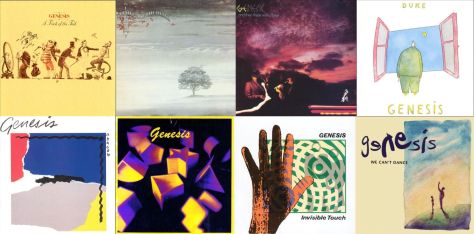
The Spirit of Cecilia dialogues continue; this one is focused on the Phil Collins-era of the massively popular music group, Genesis. Editor-In-Chief Brad Birzer and Arts Editor Tad Wert exchange thoughts and memories that were inspired by Birzer’s recent appearance on Political Beats.

Brad: Tad, I find it hard to believe that the last Phil Collins-Genesis album came out 29 years ago.  Thanks, by the way, for your comments regarding the show, Political Beats, that I did with Jeff and Scot.  I had an absolute blast talking with those guys about the Phil Collins-era of Genesis, 1976-1991.  I’m curious–in 2020–what you think of Genesis?  That is, what role do they play in the history of music, and, especially, in the history of progressive rock?

I just–as I was working on sociologist Robert Nisbet–watched and listened to Genesis, live in 1976, for the Trick of the Tail tour, with Bill Bruford on drums, and I was struck, yet again, by the beauty of the music and the vitality of the band. In some ways, they might’ve defined progressive rock.  That is, they might’ve been the quintessential prog band.

I also listened to Duke, which (aside from “Misunderstanding,” a song I despise) might also be one of those perfect (well, nearly) albums.  Thoughts?

Tad: I LOVE Genesis, in all of its incarnations. I consider their career to encompass three distinct groups or eras: the Gabriel years, the Hackett years, and the Collins years. If I consider each era on its own merits, there are many wonderful moments to enjoy in each one.

A small Genesis-related vignette: when I was 13 years old, my family spent a semester in Cambridge, England. My father had taken a sabbatical to do engineering research at the University there. I remember listening to Radio Caroline on a small transistor radio as I worked on my homework in the evening, and Selling England By The Pound was on heavy rotation on that pirate station. Even coming through the small, tinny speaker, I was struck by the exceptional music that flowed forth, and I was hooked.

When I was old enough to afford buying my own lps, A Trick of the Tail was one of the first I bought with my own money. I didn’t realize at the time that the vocalist on ATOTT was not the same as the one on SEBTP! “Dance On A Volcano” was one of the most challenging pieces of music my 14-year-old self ever encountered, but I loved it.

When Wind and Wuthering was released, I confess I wasn’t interested, because I was in my punk/New Wave phase (Ramones, Wire, and Elvis Costello!), and I had no time for prog rock “dinosaurs”. But then I heard “Turn It On Again” from Duke, and I thought, “This is something I can get into.” I bought the album and fell in love with the Phil Collins pop/rock juggernaut version of Genesis. 

So, to answer your question, yes, I think Genesis, unlike some other “big” groups of the ‘70s and ‘80s, will only grow in stature over time. Their curse in the ‘80s was to get so popular that they oversaturated the airwaves. Now that 29(!) years have elapsed, we have some space to objectively assess the quality of their music, and there are very few groups who consistently produced such challenging yet entertaining music.

What I found fascinating in your podcast conversation was the acknowledgement that the so-called “pop” releases in the ‘80s still contained some very sophisticated music.

Brad: Tad, I think our age difference is slight.  Abacab is the first album I bought from Genesis at the time of its initial release.  Then, I went back through the Phil Collins era, falling in love with And Then There Were Three especially. I can still remember listening to the tape I bought from Peaches in Kansas City and watching Bill Buckley (I’d never seen him before) on TV—Genesis and Buckley all in the same evening.

But, for me, 1981 was the year of Abacab and Moving Pictures.  They almost seemed to be two parts of a whole to my then young mind.  In 1982, I purchased Three Sides Live and, then, Duke.  I really liked Phil Collin’s first solo album as well. Indeed, I became as obsessed with Genesis as I was with Rush that year—beginning a life-long obsession with both. Soon, I had Trick of the Tail and Wind and Wuthering as well.  My debate colleague and one of my closest friends, Ron Strayer, and I used to listen to Genesis, over and over again, analyzing the lyrics and trying to figure out the song structures. We had every part of Genesis (1983) memorized, and we would shout out the lyrics as we drove around town in his yellow Toyota truck.

I have other odd memories as well—such as a video recording of Genesis in Concert, 1976, with Bill Buford as the drummer (mentioned above).  It appeared on USA network’s Nightflight, and I watched that so many times, the VHS tape began to fade.  I also had audio recordings of a few concerts that our local AOR station, Wichita’s KICT-95, often aired.  One of my prized possessions (which, stupidly, I sold) was the last release with Steve Hackett, an EP called Spot the Pidgeon.  

Funny what things stick in the mind.

I also remember the day Invisible Touch came out.  I had just received my college entrance letter (a huge thrill), and, for some reason, my high school girlfriend was put out with me because I wanted our date that night to be a serious listen of the new album!  She didn’t think that the highest form of a date, but I wanted to share that first listen with her.  Needless to write, she went home in a huff, somewhat disgusted by my priorities.

But, Tad, I’m not being very helpful in our discussion, just nostalgic. So, let me state—there was a reason Genesis meant so much to me. I loved both the seriousness and the playfulness of the band, and I often read things into the lyrics that might or might not have been there.  As a kid, I especially thought Abacab was full of hidden meanings, such as the title track being about someone committing adultery, or that the “Man on the Corner” was some kind of unrecognized prophet, or that Sarah Jane must be the kindest woman in the world. 

Ok, I’m still being nostalgic. . .

As to your question and comment regarding Genesis and pop.  I do think that once Steve Hackett left the band, the band became much more art rock rather than progressive rock.  After all, songs like “Lurker” and “Dodo” and, especially, “Mama,” should never have been hits!  They’re not pop, but they’re not prog, either.

Tad: Abacab is a very special album to me as well. I think the title track is one of the top songs they ever recorded. I also love “Man On The Corner”; it’s one of Collins’ finest vocal performances. When it was released, one of my college suitemates bought it in great anticipation. He was a big prog fan – listened to King Crimson, UK, Yes, and other British prog groups. When the Earth, Wind, and Fire horns came blasting out of his stereo on “No Reply At All”, he jumped up and yelled, “WTF is this?” and wouldn’t listen to another song. That’s how I acquired my copy of Abacab!

I also liked the tracks on the fourth side of American version of Three Sides Live. When I replaced my vinyl of that album with the CD, I was disappointed that they weren’t included. I loved “Paperlate”, “Evidence of Autumn”, and “Me and Virgil”. As a matter of fact, the only reason I bought the three-disc Platinum compilation was to have “Paperlate” on CD. I gave up ever finding a CD edition of the American album, when, lo and behold, a couple of months ago I found it in my favorite used record store!

It’s almost impossible for me to choose which album I think is better: Genesis or Invisible Touch. It depends on what mood I’m in, but I would probably give the nod to Invisible Touch. I think it more consistently excellent, even if songs like “Tonight, Tonight” are extremely dark. Genesis’ “Mama” has to be the most unlikely #1 hit ever released!

Here’s how I would rank the post-Gabriel era: 

  • A Trick of the Tail
  • Abacab
  • Invisible Touch
  • Genesis
  • Duke
  • Wind and Wuthering
  • And Then There Were Three
  • Calling All Stations
  • We Can’t Dance

The live albums I put in this order:

  • Three Sides Live
  • Seconds Out
  • The Way We Walk
  • Live Over Europe 2007

I also think the box set, Archives Volume 2 is essential.

I imagine you are outraged at my low ranking of And Then There Were Three, but I have had a hard time getting past the muddy production, and I’ve never been able to maintain interest through the whole set.

Brad: Tad, I’m not outraged in the least!  And, I’m in agreement with you about the rankings of the live albums, though I might switch one and two, depending on what day it is.

As to the studio albums, I would put them in this order:

  • A Trick of the Tail
  • Duke
  • Wind and Wuthering
  • Abacab
  • Genesis
  • And Then There Were Three
  • Invisible Touch
  • We Can’t Dance
  • Calling All Stations

We can definitely agree, Tad, that there’s a lot of aural excellence to be enjoyed!!

Tad: I could definitely move Duke up a few spots. Like you said, it depends on what day it is!

Regardless of how we rank these albums internally, I think it’s fair to say almost no other artist in rock has produced such consistently excellent music. I put And Then There Were Three relatively low among Genesis albums, but compared to other albums released in 1978, it is near the top. To my mind, only the Beatles show the same extraordinary quality control that Genesis had, and they were active for less than a decade. Genesis stuck together for more than 28 years! 

For our next dialogue, I think we owe it to Peter Gabriel to cover his solo career. Are you up for that, my friend?

The Christian Humanism of J.R.R. Tolkien ~ The Imaginative Conservative

For Tolkien, mythology touched the deepest part of our souls, and invites us to explore the beauty of creation and to discover and participate in the sacramental nature of life. Only in the True West could one find a proper understanding of order, virtue, and liberty. As Tolkien himself said, the mythology and purpose guiding The Lord of the Rings was nothing less than the return to Christendom. His Middle-earth mythology, he hoped, would serve as a wake-up call for the West, to return it to its pre-statist, pre-imperialist, pre-materialist phase. With the return of Aragorn the king, the “progress of the tale ends in what is far more like the re-establishment of an effective Holy Roman Empire with its seat in Rome,” Tolkien admitted in 1967.

Certainly Tolkien, as with most of the Augustinian Christian Humanists, had a Jacobite streak.
— Read on theimaginativeconservative.org/2020/11/christian-humanism-j-r-r-tolkien-bradley-birzer.html

Music, Books, Poetry, Film