Tag Archives: classic-rock

U2: Earnest or Ironic?

Dear Spirit of Cecilia Readers, two close friends—Kevin McCormick and Ivan Pongracic—and I recently had a lengthy email discussion about the virtues of U2.  You all know Kevin as he’s a regular here and one of the SOC editors.  Ivan, though, might not be as familiar.  He’s a fantastic guy and friend.  He’s a professor of economics at Hillsdale College, and he’s the lead guitarist of several surf bands, including Lords of Atlantis and The Madeira.  As you’ll see, he’s also the most passionate about U2.  Kevin and I tend to like the earlier albums.  Here’s a slightly (only slightly) abbreviated version of our conversation.  Yours, Brad

Version 1.0.0

Brad: Dear Ivan, since we talked a week or so ago, I’ve been listening to lots of U2.  My favorite album is definitely October.  Hope you’re doing well!  

Ivan: Excellent! But you remain your own man, a true individual – I think almost everybody thinks of October as a bit of a backward step between Boy and War, suffering from the dreaded “sophomore jinx” syndrome! So, the fact you’d consider it your favorite, well, you’re definitely unique! 🤣 (The same goes for “Zooropa”!). Have you, BTW, checked out “No Line on the Horizon”? 

Brad: Ivan, thanks for the note!  I’m glad to know I’m my own man!  Ha.  I’m including my great friend, Kevin McCormick, on this email—just to get his input on the best U2 album.

Version 1.0.0

Ivan: Hi Kevin!  Here’s my (three-tier) ranking:

Top tier: The Unforgettable Fire, The Joshua Tree, Achtung Baby, All That You Can’t Leave Behind, How To Dismantle an Atomic Bomb

Middle Tier: Boy, War, No Line on the Horizon

Bottom Tier: October, Rattle and Hum, Zooropa, Pop, and Songs of Innocence/Experience

(I should point out that there are tracks on October, R&H and Zooropa that I really love, I just find them overall a disappointment – but Gloria is amazing, and All I Want Is You is almost certainly my all-time favorite U2 song. The title track of Zooropa is killer, and there’s some good stuff on Pop, too. I can’t say the same about the last two albums, which have zero redeeming qualities, as far as I’m concerned.)

Brad: Thanks, Ivan.  For me, top tier would be October, Under a Blood Red Sky, The Joshua Tree.

Mid-tier would be War, Boy, Unforgettable Fire. Rattle and Hum (I love Desire)

Ivan: I’m telling you, my friend, you’ve really GOTTA do a deeper dive into their post-’90 catalog, especially Achtung Baby, All That You Can’t Leave Behind, and How To Dismantle an Atomic Bomb. Those are just amazing albums! 

Version 1.0.0

Brad: I also think that U2’s b-sides from 1980-1990 are stunning.  Love them.  Not as much as I love Cure b-sides, but close.

Kevin: Okay, here goes:

Top Tier: October, War, Unforgettable Fire,

Middle Tier: Boy, The Joshua Tree, Achtung Baby

I’m with Brad on the b-sides!!

Ivan: Kevin, et tu on nothing after ’91? 😁

Kevin: (I forgot to include Under a Blood Red Sky–top tier!). Here’s my honest response to the later albums. If they were made by any other band, I’d probably be more impressed. But there was such a shift toward the “rock star” thing, beginning with The Joshua Tree that it was a personal disappointment for a band that held great promise for something beyond a rock band. I don’t hold it against them anymore. That’s a tough road to travel. But it was a pretty personal thing at the time.  No doubt there were many influences that shaded my reception of those albums.  And you (Brad) and I have discussed it a lot. The Joshua Tree concert that I saw was really what changed things for me. To me, October has the real songs of innocence and that’s why I love it so much. Despite the rushed songwriting and lousy production, the album just shines with sincerity. And after reading Bono’s autobiography, I would say it’s much harder to keep that up once it has become your job and the salaries of other people depend on your success.

Version 1.0.0

Ivan: Quite funny how different our preferences are – even only on the ’80s albums!  I’m personally just blown away that Achtung Baby would do nothing for you, Brad. Well, de gustibus non disputandum est! (dammit! 😁)  And Kevin, I think I understand where you’re coming from. But I also followed them on that journey they took in the ’90s, which is that they were starting to realize that they had turned into a total caricature by the end of the ’80s, and the only way forward was to go in the opposite direction. I also remember Bono saying, who really wants a super-successful, rich and famous rock star that’s always miserable and hates his success? So, they embraced all the cliches, but in a mostly ironic way – most importantly embracing FUN along the way, which I thought was pretty brilliant. The Zoo TV tour was mind-blowingly innovative, too, really setting the stage for so much of what was to come with stadium tours over the past three decades, they did it first, going from very barebones stages and concerts to the most high-tech things available at the time. I think they absolutely had to do all that to avoid becoming even more of a joke than they were by the end of the ’80s, that super-earnest, save-the-world stuff had really worn thin. They thought that, and I think they were right.  That’s my take on it, anyway. 🙂 The bottom line is I think they continued to make some amazing music, even though it was quite different from their ’80s stuff. A feature, not a bug.

Kevin: Well said Ivan.  Yes, I think that Bono himself (and my brother, Colin😄) would agree with you. There’s no doubt that as an ensemble they learned to make really great music and hold themselves to a high standard. And they definitely invested a fortune on making great albums and producing incredible live shows. But that wasn’t what was so interesting about them to me. The same was true for me with R.E.M. I love the early stuff and dislike most of the later music. Not because I don’t hear some quality music in the later records, but because it lacks the charm of the earlier recordings. Not their fault. Just my preference. That early music is connected to much more than just my ears.

Ivan: Fair enough. I definitely appreciate the (potential) genius of innocence – but also the (potential) genius of experience, knowledge, and skill. They can both be wonderful. But the bottom line: the music either connects with you or it doesn’t, and nothing else matters. Obviously something that cannot be forced.   I think most of Bono’s lyrics in the ’80s are very naive, very black and white, and with Achtung Baby there’s a newfound depth. He’s now truly an adult, addressing adult themes and issues, and writing from the perspective of a great deal of shades of gray and ambivalence and complexity. And that’s a pretty remarkable thing, I think. (And all this is coming from a guy that almost never cares AT ALL about lyrics with any band! 🤣)   BTW, there are definitely similarities in the lyrics of AB to Rush’s Counterparts album, I think. 

Brad: Ivan, you’ve inspired me to re-listen to things.  Achtung, Zooropa, and Pop.  Here’s what I like:

On Achtung:

I really, really like: Until the End of the World (especially the bass), Who’s Going to Ride Your Wild Horses, Ultraviolet (my favorite), and Love is Blindness

On Zooropa:

I really like: Zooropa, Some Days Are Better Than Others (again, great bass), Dirty Day (the buildup is phenomenal), and The Wanderer

On Pop:

I absolutely love Please (but nothing else on the album)

Ivan: You’ve told me that Ultraviolet is your favorite Achtung Baby track by far. And it’s funny since to me that track is the most conventionally U2 track on that album, and it seems like a betrayal of the innovative, bold, groundbreaking spirit of that album, it seems like a retreat. To use another Rush analogy, Alex has often talked about how disappointed he was that they didn’t stick to the Spirit of Radio/Free Will format of short, to-the-point songs with the rest of Permanent Waves, that he felt it was a copout and disappointment that they did Natural Science and Jacob’s Ladder, which could have nicely fit on Hemispheres or A Farewell to the Kings, and he thought they made a decision to be done with that. Anyway, that’s how I see Ultraviolet, FWIW.

Version 1.0.0

Kevin: Okay Ivan, gotta reply to your last comment on Rush. Whatever Alex thinks in hindsight, I would argue that “Natural Science” is the best song Rush ever did, by far: conceptually, lyrically, musically, compositionally.  It is the summation of who Rush was/is. It doesn’t matter where they were “going” or where they wanted to be. Even “Moving Pictures” had “The Camera Eye” and “YYZ” is total prog. “Natural Science” captures it all in 9 1/2 minutes. Pure gold!

Ivan: Well, Kevin, I think you’re the first person I’ve met that feels that passionately about Natural Science! Wow. Alas, I can’t say I share your feelings about that track, though it’s fine, I don’t mind it – but on that album I much prefer the two big ones and Jacob’s Ladder, FWIW. (That may be a function of my relative “youth” 😁, as Brad mentioned, as my favorite Rush is ’80-’88, that’s the stuff I grew up with, and all the serious proggy stuff, 2112, AFTK, Hemispheres, was before my time, and still in general doesn’t do all that much for me (with a few notable exceptions.)  Anyway, I think your point certainly stands that the artists themselves may be biased about particular tracks in a way that the fans are not, and their own perceptions are not ultimately really relevant. But I do feel that way about Ultraviolet. I’ve never heard any of the U2 guys talk about that track in such a way, so this is just my personal perception, and I thought that Alex Lifeson tidbit was relevant, but I could be way off! 

Kevin: Ivan and Brad, I’ve enjoyed hearing our different perspectives (our “different strings” perhaps?🙃). I would never claim an objective take on any of the music I like: I’m totally partisan to what I connected with at a particular time.  And Ivan I agree–I think the Alex reference is very relevant to the discussion. Your observation is quite true: the creators of the art don’t often have an objective understanding of what they’ve created for most listeners. It’s too close for them to see it.  But it’s fun to talk with two people who actually know a lot about both Rush and U2 enough to discuss them in depth. I don’t suspect that there are a huge number of people who match that venn diagram.

Ivan: Thanks for the lovely email, Kevin, and I couldn’t agree more, much fun to talk about all this stuff with other knowledgeable individuals!  I was thinking a bit more about this whole conversation and reflecting on my own musical background. The Beatles were my formative musical love, the band that made me develop a passion for music – and their first two albums I was exposed to were Help (’65) and The White Album (’68). Well, those two are about as far apart as two albums of music can possibly be – and I loved them both equally. So, from the beginning I loved when bands dramatically changed their sounds, evolved and grew. I’ve always tried to give maximum grace to bands I loved that engaged in such things and tried to not get stuck in the past. It obviously doesn’t always work, but I’ve discovered that stuff that the fans sometimes react badly to may actually have a lot more merit than apparent at first, if I can just open my mind and my heart to it. That’s what I’ve tried to do with U2, and I was able to hang in there with them until this most recent period, where they finally lost me. And I think it’s definitely paid off with Rush in the past, too – even if they did some albums that I don’t love, they also eventually produced stuff like Counterparts and Clockwork Angels, which I think are really excellent.   Anyway, there you go! Maybe persuade you at least a bit to give some of the post-’91 U2 more of a chance (which Brad has already done – kudos to you, my friend!).

The Fantastical Prog of Terra Incognita (Uncharted Shores)

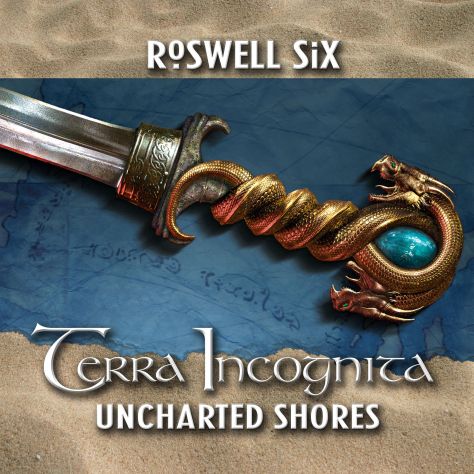
Hello, Spirit of Cecilia readers! Kevin J. Anderson has a Kickstarter campaign up and running for a gorgeous reissue of his Terra Incognita trilogy of fantasy novels and accompanying music that includes a new album from Roswell Six – Terra Incognita: Uncharted Shores.  Brad Birzer, Rick Krueger, and Tad Wert share their thoughts on it.

Tad: Brad and Rick, I understand this is the third Terra Incognita album, but they haven’t been on my radar. What’s the story behind this group, and how are they connected to author Kevin Anderson?

Rick: Tad and Brad, it’s great to join you two for a roundtable at long last!  I’m sure Brad knows a lot more about this project than I do.  But I first came across Kevin Anderson when he and Neil Peart wrote a novel based on the Rush album Clockwork Angels.  That one led to two more novels in the CA universe over the years, Clockwork Lives and Clockwork Destiny; all three of them were delightfully true to Peart’s concepts, with lots of clever Easter eggs from the Rush canon and enjoyable plot twists.  The only other novel of Anderson’s I previously read is The Dark Between the Stars, the first part of a science fiction trilogy that was nominated for a Hugo award back in 2015 – solid, sprawling space opera fun.   I’ve just downloaded his latest, Nether Station and am racing through it; he’s got that ever so slightly pulpy, lickety-split writing style down.  it’s about a deep space expedition that, little by little, gets kinda eldritch . . .

But that really just scratches the surface of what Anderson has done.  He’s most famous for continuing Frank Herbert’s Dune saga with Herbert’s son Brian; he’s also produced tie-in novels in the Star Wars, X-Files and DC universes; he’s an extremely prolific writer overall, whether it’s sci-fi, fantasy, horror or any combination of those genres – by his count, about 180 novels to date.  On top of all that, he and his wife Rebecca Moeste run their own publishing company, WordFire Press.

Through Brad’s connections with Anderson, I’m on WordFire’s mailing list, so I’ve noticed that he’s run a few Kickstarter campaigns over the years.  His latest campaign is a reissue of Terra Incognita, a fantasy trilogy originally published in 2009-2011. The thing that’s different about these books, though, is that the first two had soundtracks; apparently, Anderson has had a lot of contact with the music world over the years.  And maybe that’s where I should let Brad take over.

Brad: My dear friends, Tad and Rick, so great to do this with you guys!  And, to talk about one of my all-time favorite human beings, Kevin J. Anderson.  I’ve been reading Kevin’s works for years, but I only got to know him for the first time about 11 years ago.  I had a one-year position at the University of Colorado-Boulder (2014-2015 academic year), and that position came with some funding to bring speakers in.  As soon as I arrived in Longmont (where we lived for the year), I contacted Kevin (whom I had never met) and Dan Simmons.  I never heard back from Simmons, but Kevin immediately agreed to come speak for me.  He and his lovely (and equally talented) wife, Rebecca, came to Boulder, and Kevin gave an excellent speech on the art of writing fiction.  He called it his “pop-corn theory,” explaining that ideas happen all over the place.  I loved the speech.

And, I also loved Kevin and Rebecca.  We hit it off at dinner at an Indian restaurant right before Kevin’s talk.  He then invited us to his famous New Year’s Eve party for 2015.  Dedra and I happily drove to Monument to see Kevin’s impressive and rather Arthurian house!  Crazily enough, my car slid down his steep driveway and almost crushed the natural gas vein!  Thank the good Lord that disaster was averted and New Year’s Eve was a different kind of blast.  One of the great things about Kevin is he knows how to form communities.  He’s a natural leader.

We also really bonded over his friendship with Neil Peart.  In fact, it was Kevin who suggested I write the book about Peart’s lyrics, Cultural Repercussions, for his WordFire Press.  I was deeply honored to do so not just because of my love of Rush, but also because of my respect for Kevin.

And, Kevin has deep roots in the prog rock community.  Indeed, I can’t imagine a current writer who has greater or more legitimate ties to prog than does Kevin.  Rush’s Grace Under Pressure inspired Kevin’s first novel, Resurrection, Inc., and Kevin’s never been shy about his inspirations: Rush, Kansas, Styx . . . .

Rick, you brought up Clockwork Angels and its surrounding universe.  Admittedly, I love the Clockwork trilogy–the novels, the audiobooks, the graphic novels–and I think that Kevin really offered new insights into Rush and, frankly, into music.  To me, Clockwork Angels is Chestertonian, and I don’t understand why it’s not been made a Netflix series!

When I first encountered Kevin’s music project, Roswell Six, I was understandably impressed by the scope as well as the execution of the vast project.  Kevin has a great entrepreneurial spirit, but always with the artistic soul.  Roswell Six perfectly blends Kevin’s many loves and expertises.  I’ve been proudly listening to the first two CDs since they were first released, and I happily include them among my all-time favorite albums.  I’m especially taken with the first CD, 2009’s Beyond the Horizon.

When Kevin first announced this Kickstarter project–hardback editions of Terra Incognita as well as a re-release of the first two Roswell Six CDs, AND a brand-new third CD, I was absolutely thrilled.  I pledged during the second hour of the campaign.  And, that campaign has done exceedingly well.  Initially hoping to hit the $10,000 mark, the Kickstarter project, as of this writing, is at the $51,000 mark with 399 backers!  Incredible.  And, so well deserved.

So, what do you guys think of the music?

Tad: Okay, both of you have much more experience with Anderson’s work than I. When I saw that there was a companion novel to Rush’s Clockwork Angels, I immediately read it and enjoyed it very much. The Roswell Six albums slipped under my radar, though.

That said, I really like this third album, Terra Incognita (Uncharted Shores). To my ears, it’s pretty much straightforward, classic progrock. Fans of Kansas, Styx, Spock’s Beard, Threshold, Arena, et al. will love it. The fact that there are so many different vocalists brings to mind an Arjen Lucassen project – especially when the beautiful voice of Anneke van Geirsbergen appears in track 3, “A Sense of Wonder”. 

I like the acoustic, Celtic sounding “Haunted and Hunted” a lot. “Lighthouse” is another highlight for me, with its chugging rock riffing and excellent guitar soloing. “The Ballet of the Storm” is an instrumental that has a very nice intro played on violin that transforms into a warm piano/electric guitar duet underpinned by some excellent bass. 

“The Key to Creation” features the return of Anneke, and it has a fun 80s vibe to it – it’s got a relentless beat with a wall of synthesized sound. As a matter of fact, I think this is my favorite track on the album. It has a nice hook in the chorus that sticks in my ear. 

“Unexpected” keeps the musical quality high with, I believe, Dan Reed handling the vocals. I feel like these songs will take on more meaning when I have the chance to read the accompanying novels. They obviously follow a storyline. In many of the tracks, I can hear sounds of the sea, which makes sense, given the Uncharted Shores title!

Rick: Brad, what you said about Anderson’s connections in the music world helped me get my bearings for listening to Uncharted Shores; it definitely has that American heartland prog vibe with some nifty touches of funk (but also touches of European theatricality, as Tad pointed out).  KJA gave an interview this week with Michael Citro of Michael’s Record Collection where they go into the background behind the music; the basic tracks are written and performed by Bob Madsen (bass), Billy Connolly (guitar), Jerry Merrill (keys) and Gregg Bissonette (drums) – all artists working under the umbrella of The Highlander Company Records.  (Madsen’s band The Grafenberg Disciples announced themselves to the world a few years back with a tribute to Peart, “No Words”, that caught Anderson’s attention.)  And all that excellent violin work is by Jonathan Dinklage – he led the Clockwork Angels string section on those 2012 & 2013 tours.  Rush connections aplenty!

The guest vocalists take the whole thing up a notch as well.  Michael Sadler from Saga sings on the title song. “Hunted and Haunted” and “Lighthouse”; he’s played one of the “lead roles” for all three albums. Like you said, Tad, Ted Leonard and Anneke give it their all on their feature tracks.  But the big surprise for me was Dan Reed, who takes the villain role on “Mortal Enemies” and “Unexpected”; for a minute, I thought Steve Walsh had emerged from retirement!  Reed has this grizzled timbre, but a real purity of tone and expression underneath, and he absolutely sells the part.  And The Grafenberg Disciples vocalist Hans Eberbach brings it all home on “Not In My Name” –  gutsy and soulful by turns, and consistently dramatic (with Tull’s Doane Perry contributing a spoken-word cameo as a capper)!  I think that’s the track that’s my favorite so far.

But there isn’t a duff song on the new album, and it definitely grew on me the second time through.  I agree with you, Tad, that knowing the Terra Incognita storyline better will probably help, but the core emotions and throughline of the story come across loud and clear.  According to the Anderson/Citro interview, all the albums are being released through Sony (on InsideOut?) in the fall, but I decided not to wait; I’ve pledged for the ebooks and the digital albums, so my summer reading and listening are already lined up.  And when the CDs go to broad release – who knows?  It’d be far from the first time I’ve bought music twice!

Brad: Tad and Rick, so well stated!  And, yes, I pledged to buy all three albums as well, even though I already own the first two.  If you’ve not listened yet, I especially recommend the first track on Beyond the Horizon: Ishalem.  Incredible prog metal.  Very much in line with Ayreon or Dream Theater.

For those out there not totally familiar with Kevin, he has, as noted above, written extensively in the Star Wars, Dune, and X-Files franchises.  My favorite of his own books (that is, those not set in another mega genre/universe) are Nether Station (a sequel to H.P. Lovecraft’s Mountains of Madness) and Stake (a completely original novel questioning the existence of the supernatural).

Again, all praise to Kevin for bringing together so many beloved things: fantasy, science fiction, and prog rock!

Tad: Kevin Anderson’s Kickstarter link is here, for those interested!

My favorite pop and rock music of 2023

• Dimash Qudaibergen—Anything and Everything. This is the first time that the work of my favorite artist of a particular year is nearly impossible to find and buy. Good luck being able to track down CDs or even downloads. The reason for this strange situation highlights one of the many admirable and impressive qualities of this 30-year-old singer, performer, composer, multi-instrumentalist, and actor from Kazakhstan: he is fiercely independent and will not let himself be controlled by the usual powers in the music industry. Which means, in short, that Dimash (for the most part) has to be heard and viewed via YouTube and other online media (or, if you are able, in concert).

My introduction to Dimash came in early January 2023, when I watched this video of the then 22-year-old singer giving his first performance, of the French song “S.O.S d’un terrien en détresse”, on the popular Chinese show “I Am a Singer”. Like countless others, I was stunned, then transfixed, then ready for more (and, thankfully, there is much more).

Dimash has (depending on the source) a six or seven octave range, can sing in a variety of styles—operatic, popular, traditional, more—and usually does so in the course of a single song (and also sings in over a dozen languages). An exceptional example of this is the ambitious and powerful song “The Story of One Sky,” which Dimash wrote and performed, while also acting in the 12-minute-long video that came out in September 2022.

Although Dimash has had several successful concerts in North America, he is, as far as I can tell, mostly ignored by the American media. Meanwhile, the banal and brain-numbingly boring muzak of Taylor Swift has turned her into a sort of singer/songwriter goddess here in the United States. Neither fact is surprising. That said, those who have never heard Dimash before will, I am certain, be stunned, transfixed, and ready for more.

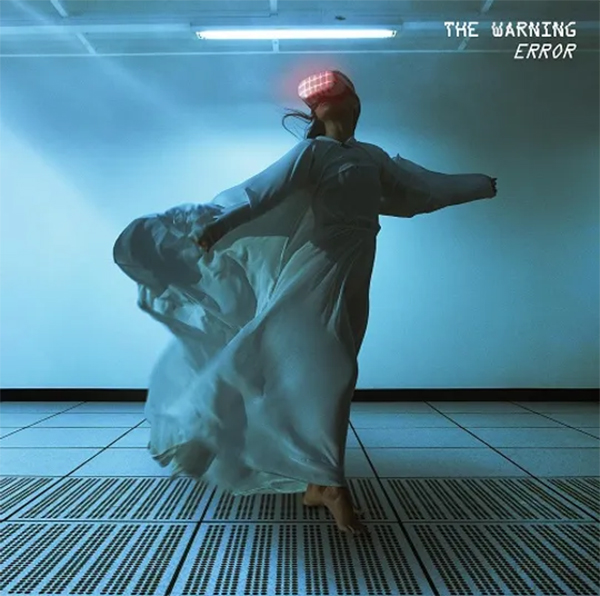
• The Warning—Error. This trio from Monterrey, Mexico consists of the three Villarreal Vélez sisters: Daniela (guitar, lead and backing vocals, piano), Paulina (drums, lead and backing vocals, piano), and Alejandra (bass guitar, piano, backing vocals). Now in their late teens and early twenties, the trio has been performing together for over a decade and has released three studio albums.

Error was released in 2022, but I include it here because, well, it’s so good and I first heard The Warning a few months ago. My first impression of these dynamic ladies was that they reminded me, in many ways, of Muse; it turns out that they have toured with Muse. Many of the same elements are there in abundance: great musicianship, exceptional hard rock songs that contain elements of metal and punk, fabulous vocals and harmonies, and lots of energy. Their August 2022 concert at “Teatro Metropólitan” is a perfect place to start, as The Warning is a captivating, well-honed live band. Favorites include “Disciple,” “Choke,” and “Money,” and their new single “More”.

But every song by the band is excellent, and many are great; there are clearly many hours of practice and work involved, and interviews reveal just how seriously the sisters take their craft. Lyrically, also, these three ladies are several cuts above, with an intriguing mixture of raw, cryptic, and even existential that belies their youth. A band to watch now and for years to come.

• Van Morrison—Accentuate the Positive. The timeless Irish singer and songwriter, now 78 years young, continues a pace of recording that would put most young artists to shame (he now has 45 studio albums, with several live albums). His 2022 release What’s It Going to Take? was widely blasted by the usual suspects for its strong pushback against government overreach and media-induced hysteria during the height of COVID, but I thought the album (featuring all original songs) was solid.  But there certainly was a dark and even dour aspect to it (how could there now be?) that is nowhere to be found on Morrison’s two 2023 releases, which consist of mostly covers of skiffle songs (Moving On Skiffle) and of rock and roll, R&B, and country favorites (Accentuate the Positive).

The latter is one of my favorites of the year; it is crisp, warm, energetic, and playful. Morrison’s voice is in great form, with a sinewy strength and casual slyness backed up by strong arrangements and adept, in-the-pocket playing. While projects like this can easily veer into nostalgic excess, there is an immediacy and lean focus here that avoids such dangers with ease. Besides, Morrison’s music has always looked back—there’s a reason he refers to “Jelly Roll” on his classic 1970 album Moondance—while pushing forward with creative restlessness, and that loving tension makes for another excellent addition to an already staggeringly great catalog.

• Bruce Soord—Luminescence. This is perhaps the most surprising pop/rock album of the year for me: a set of beautiful, contemplative songs that are sung and played with masterful control and understatement by the leader of the prog-rock group Pineapple Thief.

I’ve enjoyed Soord’s fine work over the years, but this release really grabbed me from the first listen. There is a rather timeless mixture of heaviness and lightness here—both lyrically and musically—that is easy to underestimate. But numerous listens prove that this is a keeper, an album that I’ll be listening to for years to come.

I say more about it in this recent Spirit of Cecilia discussion.

• Greta van Fleet—Starcatcher. The Michigan band’s 2021 The Battle at Garden’s Gate won me over, as their mix of classic rock, prog, folk, and more found its stride, with a number of well-written and attractive tunes.

Starcatcher builds on that success, but eschews a more commercial direction (certainly a temptation, I would think) for a more raw, semi-prog, and expansive course. The musicianship and vocal prowess continue to grow, and that means there are subtleties and layers here that reward multiple listens.

While the Led Zep comparisons will continue, it’s obvious to me that GVF is a band that has absorbed a wide range of influences (band members cite their love of jazz, Motown, world music, etc) and will continue to experiment and expand their musical and lyrical palette. To my ears, there is as much early Rush (and perhaps even early Queen) in the mix as Plant and Page. A strong release with many sonic pleasures contained within.

• Steven Wilson—The Harmony Codex. Speaking of sonic pleasures, this is one of the best-sounding releases of 2023, which comes as no surprise to anyone familiar with the many talents of Wilson, who is almost as famous for his mixing and producing as he is for his writing and playing.

I know that a fair number of Wilson/Porcupine Tree fans have strong (and even harsh) debates over the merits of respective Wilson albums, but I don’t have the time or energy for those squabbles. I simply enjoyed listening to this album many times after it was released, without any expectations or many comparisons.

The 11-minute prog-jazz-electronica-fest “Impossible Tightrope” is a favorite, perhaps because I listen to a fair amount of fusion-y, electronica-tinged jazz, or because I like strange rock-ish music that refuses to go where you expect it to go. This is an aural adventure, and as such, it delivers.

Also recommended:

• Soen—Memorial

• Extreme—Six

• Mystery—Redemption

• Big Wreck—Pages

90125 At 40

90125

Once again, the resident music aficionados of Spirit of Cecilia (Brad Birzer, Tad Wert, Erik Heter, Kevin McCormick, and Carl Olson) turn their gazes onto a prog classic – this time discussing Yes’ best-selling album, 90125.

Tad: Gentlemen, this album came out 40(!) years ago. In 1983, I was a senior at Vanderbilt University and compact disc players were just beginning to become affordable. Against all common sense, I bought a Sanyo player for $399 and three cds: Roxy Music’s Avalon, Pink Floyd’s The Final Cut, and Yes’ 90125. I still remember the awed looks on my dormmates’ faces when I popped in 90125 and “Owner of a Lonely Heart” came blasting out of my stereo without any preliminary hiss or scratching from a vinyl lp.

At the time, this album was a huge hit for Yes, and it jumpstarted their career after it had flagged somewhat (even though I would argue that its predecessor, Drama, was a terrific work). However, we now know that the recording of 90125 was not all sweetness and light. In fact, I believe it wasn’t even supposed to be a Yes album! But I’ll let someone else who is more knowledgeable give us the details of that.

Erik: Sometime around August, 1983, I was hanging out in the rec room of one of the barracks at the ASW (anti-submarine warfare) base in San Diego, a city where I had spent several months prior and would spend a few more learning the intricacies of submarine sonar.  Someone had left a music magazine hanging around, it might have been Rolling Stone, but I’m not 100% sure on that.  Anyway, I picked it up and started thumbing through it and saw a news item entitled “Yes – No.”  A picture of Steve Howe accompanied the short piece, which relayed the news that Yes was reforming, with Jon Anderson on vocals, Chris Squire on bass, Alan White on drums, and newcomer Trevor Rabin on guitar.  While much of the piece focused on Howe’s disapproval of the new lineup, I swept that aside for the news of a Yes reunion – I was absolutely thrilled.  

Later, in October of that year, I departed San Diego, training complete, and headed back to what was then home in Charlotte, NC, for a few weeks of leave before, in late November, I would make my way to my boat (the USS Olympia, SSN 717) that was then under construction in the shipyard at Newport News, VA.  During my leave, Yes released the first single from the new album, followed a few weeks later by the album itself.

Oddly, I was a little bit hesitant when I first heard Owner of a Lonely Heart. While the voice was familiar, as was the bass tone, this was something radically different from anything they had done before.  This one particular song was more commercial sounding than anything they had done, although it was hardly a lowest-common denominator hit.  And the guitar sound (especially that solo) was nothing like I’d ever heard on a Yes album.  There was, however, a bit of a fear that the sound of the album would be so unrecognizable as to not sound anything like Yes.  

That fear was firmly put to rest the night before the album’s release.  Listening to one of the local FM rock stations, a DJ started talking about the new Yes album, 90125, and decided to play another song off the album – Leave It.  I was hooked before they even finished the first verse with that huge, wall of sound vocal harmony that opened the song.  After that, I was ecstatic as I was bombarded to “doos” and “dums” and “deets” coming at me from different vocalists in a number of different directions in a vocal arrangement so complex, innovative, and interesting that only a band like Yes could even dream such a thing up, much less execute it so flawlessly.  This was the music I had been waiting for since the Drama album of three years prior.

The next day (of course!) I wasted no time getting to the mall record store to buy the first of many copies of the album in cassette format that I would own – many copies because I tended to wear them out from so many listens.  In my days of using a Sony Walkman, there isn’t another album that spent as much time being wound and rewound as 90125.  

The first listen to the full album was absolutely magical, revealing a perfect mix of sounds that were simultaneously familiar to Yes fans and yet totally new and different.  Moreover, the sound was very 1980’s contemporary.  And yet even now, 40 years later, the album holds up very well without sounding dated.  90125 showed that Yes could adapt to changing times, that they were anything but dinosaurs as critics had accused them of being.  It showed they could innovate in ways even Yes fans – accustomed to musical innovation – couldn’t have imagined.  It showed they could be commercially relevant in a new decade without devolving into banal hitmaking.  

Oh sure, there were many old school Yes fans that didn’t like the album, the ones who were probably hoping for a redux of Tales from Topographic Oceans.  You can count me out of that group though, because I am one old school fan that loved the album and couldn’t get enough of it.  And while there is some debate about whether the album itself should be classified as prog, the importance of 90125 to the genre cannot be overstated.  A whole new generation of fans was lured in by this album, fans that began venturing into the band’s back catalog and then into the wider world of prog.  Even when I consider the contemporaneous output of another one of my favorite bands – Rush – it’s hard for me to think of a single album that did more to keep the prog flame alive in the 1980’s after critics had gleefully – and, obviously, prematurely – declared the genre dead at the end of the 1970’s.

I’ll get into more of the particulars of the album itself in my next entry, but for now I’m going to turn the floor over to another one of the distinguished participants.

Carl: By reason of age, chance, and the mysterious forces of radio whims, “90125” was my introduction to Yes. I was fourteen and was just getting into pop and rock music, to the horror of my parents, who that same school year—1983-84—made me throw away some cassettes gifted by a friend. Those deeply subversive albums were by Elton John (early, mellow Elton), Pat Benatar, and Foreigner (4, of course). There was only one rock station that reached my small town in western Montana—a bucolic village with a population of 1100, no stop lights, no fast food, and (shockingly) no music scene. 

I recall, quite clearly, being at church youth group one evening and someone, after the more serious stuff, cranking said radio station in their car, doors open in the parking lot. “90125” came on. It immediately grabbed my attention. “What is that?!” I thought. And then came the breakdown, and I was hooked. This was interesting music! It took a while, but I eventually got a tape of the album, and I started to learn more about the convoluted history of Yes and its connections to another favorite group: Asia. Styx, Kansas, Supertramp, Queen, and ELP all followed. I was officially into prog! (And my parents finally gave up trying to control my musical tastes.)

 My years in college—split between Phoenix (1987-88), southern Idaho (1988-89), and Saskatchwan, Canada (1989-91) were filled with musical exploration, ranging from brief flirtations with metal and Bruce Springstreen to more serious dives into Pink Floyd, Rush, Rick Wakeman, Steve Howe, Steve Morse, Queensryche, Kerry Livgren, and so forth. But Yes was always a constant, and I gradually became acquainted with all the earlier work, as well as Trevor Rabin’s excellent solo album “Can’t Look Away” (1989), which I literally wore out. Then, in 1991, having moved to Portland and living with my cousin for a while, I bought my first CD: “90125”. That was a great choice, of course, because it’s a sonic marvel, with Trevor Horn (who I knew a bit about because of his previous work with Yes) at the helm. 

Erik mentioned Rabin’s guitars. As I’ve listened to the album a few times in recent days, they stand out the most to me; they mark the biggest difference between Yes with Howe and the “90125”-era Yes. That’s not a knock on Howe, of course, who is fantastic in countless ways. But the stylistic differences are immense. That, in turn, informs the songs, which are more anthemic and are simply BIG in sound and intention, while containing plenty of complicated parts, harmonies, and arrangements. We’ve all read about how the album came about, how many challenges there were, and how Anderson kind of slipped into the mix; it’s a tribute to Horn and the musicians that they could overcome so much discord and paralyzing circumstances to create one of the great prog-rock albums of the 1980s. 

If Rabin’s guitars set it apart, it is, in my view, Anderson’s vocal contributions that hold it together and make it a real Yes album. It would have been very good without Jon; it is a classic with him. And, again, there is the work of Horn, whose production genius is impossible to overstate. Ironically (or perhaps fittingly?), the same year (1991) I bought “90125” on CD, I discovered the first Seal album and was instantly hooked. It was, of course, produced by Horn, who has been at the helm for several Seal albums—the first three, for me, being one of the finest pop/rock trifectas ever created.

Kevin: Somehow my first memory of 90125 was the hype for the world-premier of their new music video on MTV. “Owner of a Lonely Heart” immediately received heavy rotation on the channel, in part due to the relatively-high production values for a single by an “old” group like Yes were in 1983. The avant-garde film-noir theme seemed an unlikely pairing with the lyrics but somehow it worked and captured a huge new following for the band. But it was simply a great new sound for the band and for the times.

I was fascinated with this new sound and found it to be an engaging blend of progressive and pop. Being in my mid-teens at the time, I don’t think I was as keenly aware of the importance of the “production” of a studio-recorded song, but I was aware that this was definitely a new adventure for Yes. I missed hearing Steve Howe’s guitar, but I also intuited that without Trevor Rabin in the mix this would be a completely different song.

I wholeheartedly concur with both Erik and Carl, that Rabin’s guitar really stands out on that opening track and throughout the album. I love the way the opening track begins with the “heavy distortion” Rabin sound and then quickly pulls back to the clean sound more reminiscent of Howe’s earlier contributions for the band. Whether intentional or not, it was a great way of signaling that this was something new and yet it retains those components that make it Yes.

I caught them live for this tour in Austin in 1984, and they did a great job of capturing that same energy on stage. Rabin seemed comfortable in his new role and had no trouble filling Howe’s shoes on the older material. It was a different style for those tunes, but they were well-played. This being my first chance to catch them live, I had no direct comparison, but I thought it was a tremendous performance.

But that brings up a component of this that I don’t want to miss.  I’ve read various articles about Rabin and Yes and their early incarnation as Cinema. Some accounts claim that Rabin came in with much of the album finished and the band just kind of recorded what he wrote. This is an unjust assessment and really underplays what makes the album so exciting.  I know this not because I was there, but because in 2003 Rabin released his demos as 90124. You can find some of them on YouTube–though I no longer see some of the tracks that better illustrate the point.

What is clear from the demos when compared to the final recording is that his ideas were seeds (some of them quite plain)  waiting to be nurtured and to sprout into full bloom. There was plenty of fluff needing to be pared down. There were plenty of tweaks needed. This was not a collection of hit songs waiting to be recorded; it was a mishmash of some good ideas that needed the rest of the band to make great. Not only did Squire and White bring these germs to life with a powerful rhythm section, but Trevor Horn’s production makes every track completely blossom. Then Jon Anderson arrived in the last few weeks of recording and, as Carl noted, turned a good album into “a classic.” His lyrical contributions alone changed the whole tenor of the work and his vocals are captivating in a way that is simply not there without him.

This was a band effort, an incredible symbiotic musical creation worthy of review forty years on. It will be remembered because it captured and launched the sound of the times both into the prog realm and beyond.

Tad: Kevin, thank you for providing the context in which Trevor Rabin’s contributions were made. It’s interesting to me how a consistent thread in all of our reminiscences has emerged: about how crucial Trevor Horn’s production was. I was a fan of his from his Buggles days – when he and Geoff Downes joined Yes for Drama I was really surprised, because I thought of them as synthpop artists, not progressive rockers! I ended up buying everything Horn produced for his ZTT record label: Frankie Goes To Hollywood (they have not aged well), Propaganda (amazing German group – A Secret Wish remains a favorite 80s album), Art of Noise, and Grace Jones (Slave to the Rhythm). Anyway, I agree that without Horn, 90125 would not be the success it is.

Okay, I’d like to share what my favorite moments on this album are! First, on “Owner of a Lonely Heart”, the opening muffled drum fill that is overtaken by Rabin’s clean guitar riffing, punctuated by Horn’s stabs of synthesized orchestral noise. That mix still sounds new and exciting to me 40 years later.

Second, the massive vocal harmonies on “Hold On” around the 4-minute mark, where they sing “Sunshine, shine on, shine on you”.

Third, the intro to “Changes” where a motif on vibes is played as various other instruments enter playing King Crimson-esque patterns until Rabin’s guitar takes control and gets the proper melody underway.

Fourth, all of “Leave It”. This song is such a vocal and instrumental tour de force! A wall of sound that leaves me wishing it would never end.

Finally, the moment at 5:30 into “Hearts” where the melody transforms from an aggressive, plodding riff to a beautiful, warmhearted tune that is carried by some of Jon Anderson’s finest vocals.

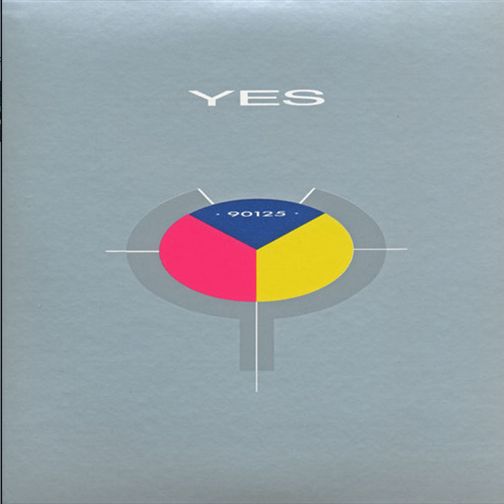
As is my wont, I need to remark on the artwork – what an iconic representation of early 80s fascination with technology! It’s obviously computer-generated graphics that, at the time, seemed futuristic and edgy. And the title came from the catalog number assigned to the album by the label. About as far as you can get from Roger Dean’s fantasy landscapes.

All in all, just a superb album, and I’m thankful all the musicians with their various agendas were able to gel into a cohesive unit and get it done.

Brad: Well, I’m late coming to this conversation, but I love seeing what Tad, Kevin, Erik, and Carl have all contributed.  Thanks to you each for such great thoughts.

I have this album on CD now as well, but I very much remember buying the vinyl back in early November 1983.  I loved the Apple-esque cover of the album (though, I grew up loving Roger Dean’s work, especially for Yessongs), and, like all of us, I was already taken with “Owner of a Lonely Heart.”  I had grown up with Yes (but had somehow misse free d Tormato and Drama, I wouldn’t come back to both until after 90125).  One of my fondest memories is listening to 90125, whole and complete, with my headphones on during that November and December of 1983.  The lights off in my bedroom, the headphones on, and Yes playing beautifully, me absorbing it all..

As much as I loved “Owner of a Lonely Heart” at the time, it was the album as a whole that really grabbed me.  I remember being utterly moved by “Hold On”–”constitution screwup, shattering the dreams” and thinking it one of the deepest songs I’d ever encountered.

Talk the simple smile, such platonic eye

How they drown in incomplete capacity

Strangest of them all, when the feeling calls

How we drown in stylistic audacity

Charge the common ground

Round and round and round, we living in gravity

Shake – We shake so hard, how we laugh so loud

When we reach, we believe in eternity

I believe in eternity.

These were (and remain) pretty heady lyrics for a sixteen year old.  Yes’s 90125 made me realize the possibilities of rock music, just as Rush’s Grace Under Pressure soon would

Then, “It Can Happen”:

You can mend the wires

You can feed the soul apart

You can touch your life

You can bring your soul alive

It can happen to you

It can happen to me

It can happen to everyone eventually

Followed by the brilliant “Changes.”  

Flip the record over.  

Side two, roaring into life with “Cinema.”  As I understand it, this was originally the introduction to what might have been a twenty-minute epic, “Time.”  As it was, though, it stood alone in its gorgeous production, leading into the magisterial “Leave It.”

“Our Song” is a great rocker.

​​Toledo was just another good stop

Along the good king’s highway

My fortification took me by surprise

And hit me sending me sideways

Spellbound – Roundly – Good for sunshine

Can’t help thinking

Singing the Rule Britannia

And this is where it grabs you

There’s method in the key of C

Toledo’s got to be the silver city

In this good country

“City of Love” and “Hearts” perfectly close the album.

Many moons cascade one river

They light from side to side

As we cross in close proximity

Like rivers our hearts entwine

How we talk – How we teach our children

How we move – We direct our eyes

All the senses tuned discovery

As and as and when our hearts decide

Be ready now – Be ye circle

Be the central force ye life

As the game extends the cycle

Be ready to move

Kevin, I’m jealous that you got to see them live  in 1984.  I’m sure that was an extraordinary concert, capturing all the energy of a reborn-band.  Speaking of which, I’ve always liked 9012-Live: The Solos, the live album that came out in 1985.  Again, it just exudes energy and creativity, a band at its best.

Erik: Great comments all, and a lot of fodder to work off of as I discuss the album proper.  

We’ve talked about Rabin’s guitar, it’s contrast to Howe’s work, and its impact on the music.  But there is another contribution that is also quite notable, and that’s Rabin’s contribution to the vocal landscape of this album.  I am adamant in my opinion that from a purely vocal perspective, the Rabin-era lineup is far and away the best Yes lineup.  Consider a few of the songs.  First, Leave It is simply not possible without Rabin.  Not only does he trade lead vocals with Anderson, but his contributions to the harmonies are critical.  Changes is another song that is not possible without Rabin, due to the lead vocalist role alternating between him and Anderson.  And the “talk the simple smile” section of Hold On is yet another harmony that would not sound anywhere near as good without Rabin’s contribution.

This ability to switch back and forth between Rabin and Anderson on lead vocals, as well as the ability to create the vocal harmonies that permeated 90125 made Rabin’s vocals an excellent addition to the Yes sound.  It’s almost as if Rabin was put on this Earth to harmonize with Anderson and Squire, because his voice fits with them so perfectly.  It’s another reason why the version of the pre-Rabin Yes classic I’ve Seen All Good People from 9012Live is my favorite version of this song – Rabin’s contributions to the vocal harmonies makes what is primarily a vocal-driven song all that much better.  

I’ll also throw in more on Horn’s production with regard to a couple of additional observations to go with those given above by Tad, Carl, and Kevin.  First, neither Rabin nor the band in general was all that fond of Owner of a Lonely Heart in its demo form, but Horn would have none of it.  While he wanted a reworking of the lyrics, he nevertheless recognized the song as a hit – in part due to the intro, and in part due the chorus – where the band did not.  Horn didn’t merely want this song on the album, he insisted on it.  Working with the band to rewrite some of the lyrics (for which Horn himself received partial credit) as well as arrangements on the final recording, Horn helped mold the song into the first #1 single Yes ever had, and one that propelled this album into the stratosphere (also, the band’s only #1 album).

Another aspect where Horn excelled as the producer of 90125 was the underappreciated role of track sequencing, upon which he conducted a clinic of how it’s done.  The sequence of songs begins by a delightful punch to the listener’s face (and ears!) with Owner of a Lonely Heart, especially with the intro guitar riff, before moving into the slow but heavy Hold On.  Similarly, the beginning of side 2 with the instrumental Cinema flowing seamlessly into Leave It is just chef’s kiss perfection.  And closing the album with Hearts was a fitting conclusion to Yes’s 80’s rebirth.  Overall, every track on the album feels like it is placed exactly where it should be.  While such sequencing always seems obvious to us in retrospect, the producer had to start with a collection of songs and figure out what would go where.  To ask Horn to do a better job than he did on 90125 is to ask the impossible.  

I also like Kevin’s observation with regard to Anderson’s impact on the album.  Like him, I’ve listened to the demos, and the contrast between those and the finished product is striking, with Anderson’s influence being undeniable.  It was his presence and his contributions that made 90125 truly a Yes album and not just an album performed by some musicians who had been in that band.  There are lyrical passages throughout the album that the seasoned Yes fan will instantly recognize as Anderson’s words.

As far as some of the other tracks go, I’ll first start with It Can Happen, a track which I absolutely love.  This is one track that encapsulates the old Yes spirit of the 1970’s into the new Yes sound of the 1980’s.  Tying to the previous paragraph, this song is one that really demonstrates Anderson’s imprint on the lyrics when compared to the pre-Anderson demo.

Hearts pulls off the same feat of encapsulating the old spirit in the new sound in a different form, hinting at some of Yes’s earlier long-form epics while keeping things economical.  I love the “explosion” in the middle of that song that leads into the “who would believe you, wise men do” section.  Our Song is a deep cut favorite, featuring a driving, tour de force performance by Squire on bass.  Changes was a perfect FM radio staple for the era, with an ear-catching introduction and huge, dynamic swings between the quiet and heavy sections, along Rabin singing lead on the verses while Anderson takes the lead role on the choruses.  

I’m going to cut myself off right here, because I could go on and on (and on) about this album and I need to give some space for the rest of you.  I enjoy reading your contributions as much as I like writing mine!  But in conclusion, when I think of albums of the 80’s that really define the decade (at least for me personally), this one is alway at or near the top. And as a Yes fan, I continued to be thrilled all these decades later that they were able to pull off an album like this, a commercial and artistic triumph that happened in the context of the band navigating a radically different musical landscape from the one in which they had achieved their previous great successes.

Tad: Erik, I think your remarks are the perfect way to conclude this discussion. Gentlemen, it’s been a blast revisiting this album!