
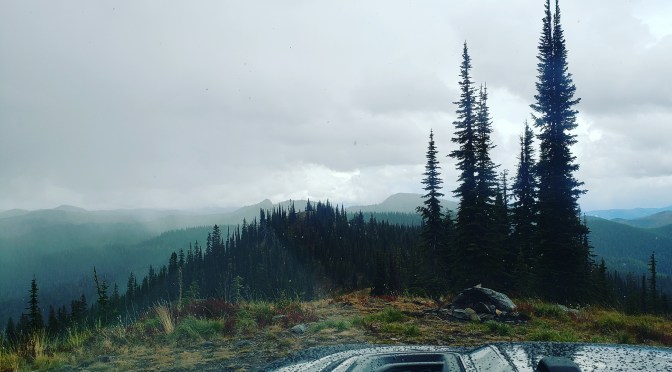
It was a late PNW September, and I was driving into the Salmo-Priest Wilderness. The plan was to get to this remote lookout tower at an altitude of over 6,000 ft. It stood out as an intriguing station at the intersection of Washington, Idaho, and the Canadian wilderness. The path leading to the tower was rated “white-knuckle” grade by this book on Washington’s Wild Roads. Such climbs typically lead to exquisite views, so this one caught my curiosity. The GPS was a bit lost, so I relied on a traditional map and Forest Road markers to identify the last segment of the climb.
Entrance to this last leg was flanked by overgrown shrubs. Even though less trodden, the road itself looked navigable. But a few miles into it, I encountered that familiar feeling of the vehicle slipping sideways. The road was quite weathered, because even a Wrangler with high clearance and 35-inch tires was losing traction. The first few seconds were disconcerting. An accident on a remote stretch could quickly become serious. But once 4WD was engaged, it was smooth sailing. Reaching the top, the Jeep and I were greeted with some chilling hail and snow. This was definitely among those exquisite PNW moments.
Often, the approach is to explore relatively risky back roads in the Jeep before attempting them on a motorcycle. But in hindsight, this particular road felt unsafe even on a capable machine like a Wrangler. In fact, even moderately rugged forest roads could be more dangerous than extremely difficult 4×4 trails. When nature remolds terrain, it does so in unexpected ways. Dedicated 4×4 trails are carefully maintained, and the risk is more predictable. But working through this uncertainty led to something unique and vivid.
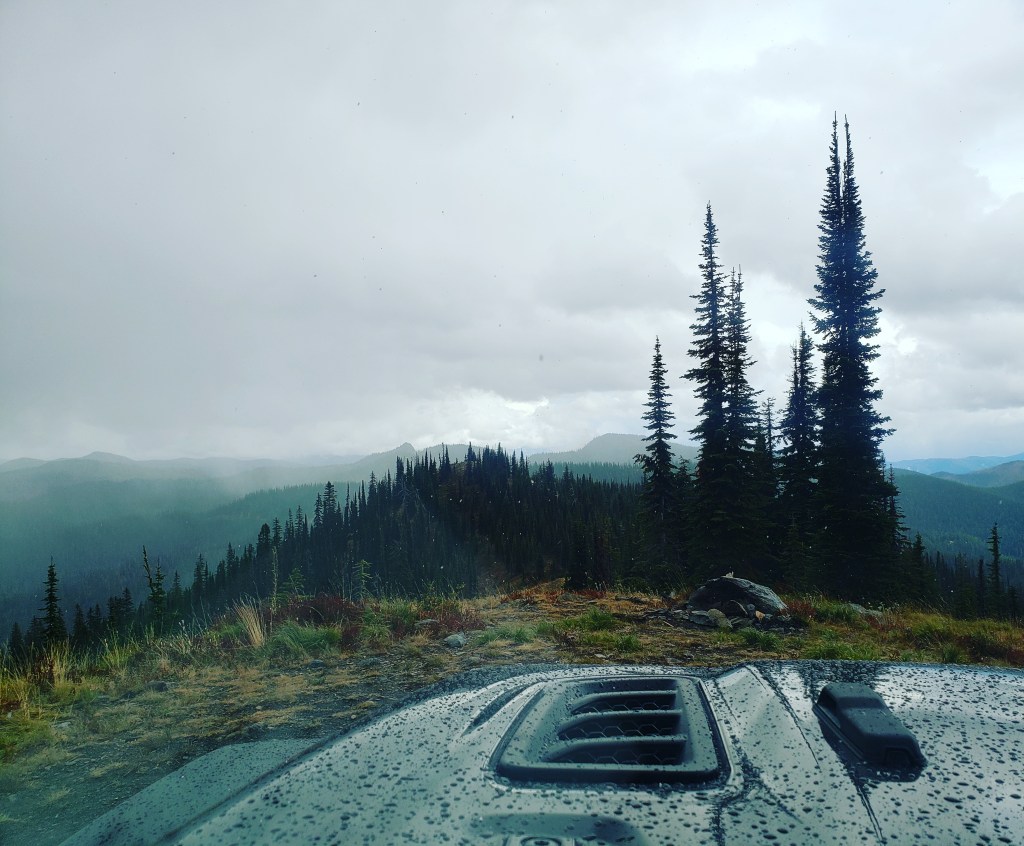
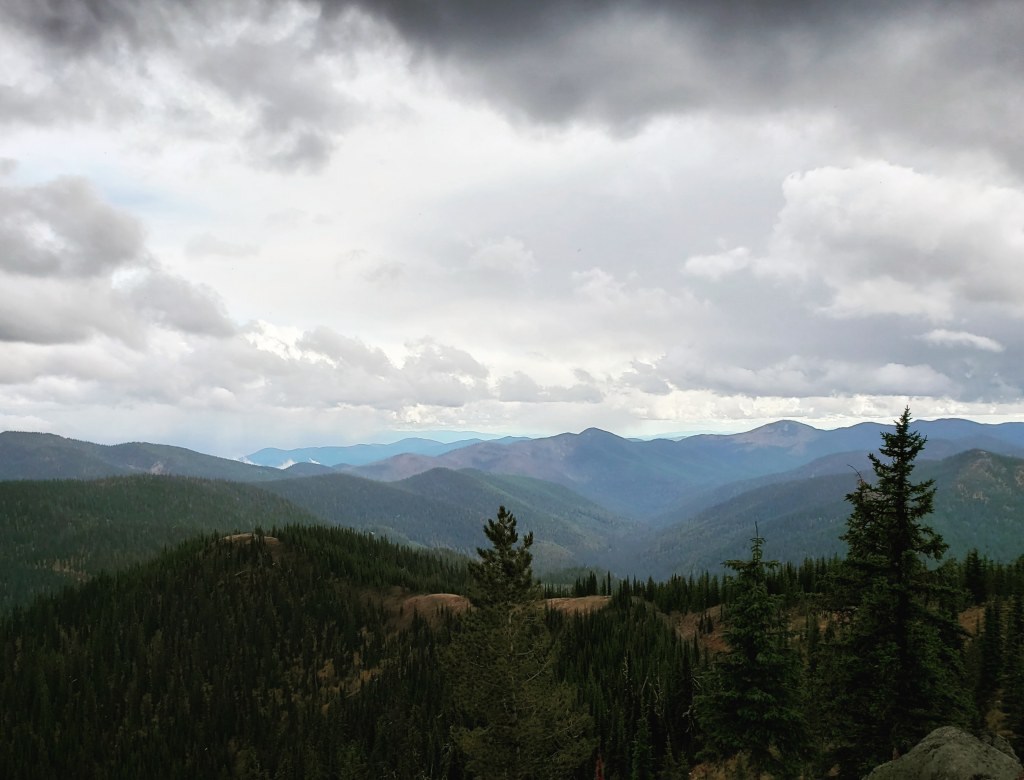
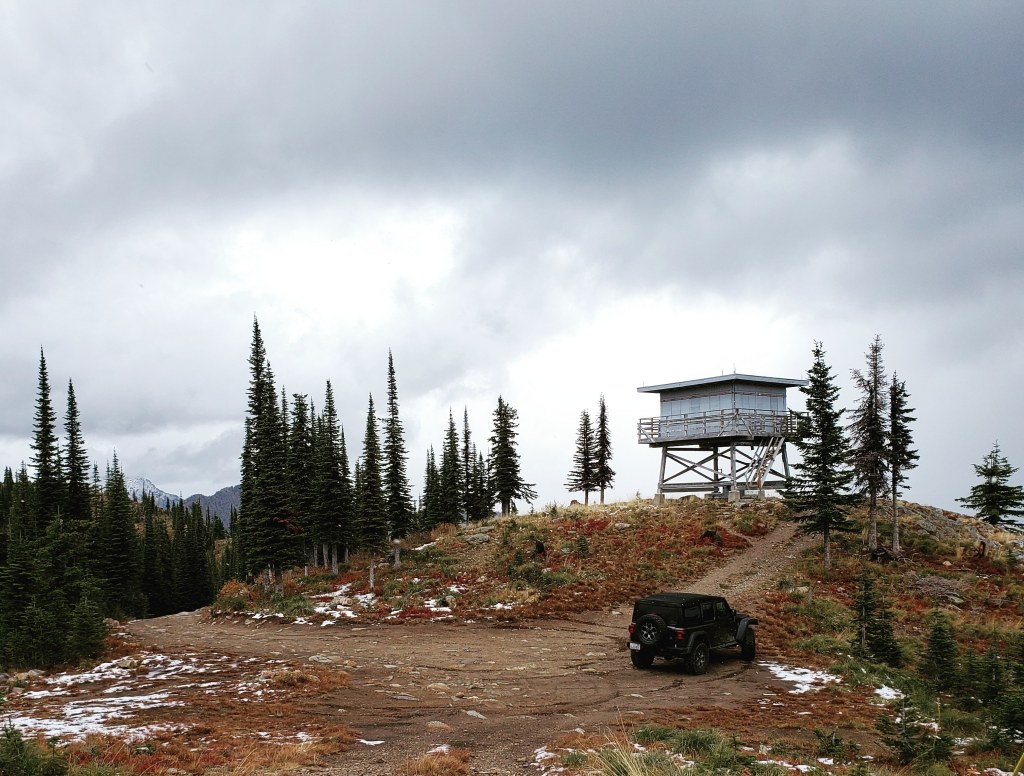
Standing at that altitude, in near-freezing temperatures, and with both international and state boundaries on the horizon, it was silence and splendid views all around. I finally climbed back into the Jeep, only to hear the rumbling of the hail landing on the windshield. With a backdrop of dusky autumn hues, catching some Black Sabbath on the trusty satellite radio made all this even better.
Several critical decisions in our lives are based on instinctive judgments; we might rationalize them later, but life is too complex for purely logical choices. For example, the risky climb along an unkempt road was based on instinctive assessment. We have a visceral drive for exploration – whether it’s in the sphere of ideas, back-country landscapes, or anything else. This includes exploration through study as well. My decision to read F. A. Hayek wasn’t based on a detailed assessment but on the same visceral drive.
When something makes sense without a clear articulation of why, it means the mind cannot fully model the situation. Even though it’s not fully understood, the situation is coherent enough to justify further exploration. The outcome of that exploration becomes feedback to the mental model. The next time a similar situation is encountered, the picture will be clearer. From this perspective, exploration is an evolutionary instinct. Those who expanded their horizons – physical or mental – simply acquired more tools for adaptation.
Going back to motorcycling, but this time it was in the Sierra Nevada wilderness. It was that same visceral drive for exploration that motivated a ride up this narrow, single-lane road. That led to a cliff-adjacent winding road through the High Sierra Mountains – from there into a picturesque memory of motorcycling at 10,000 ft. Like riding up that single-lane into the unknown, a persistent study of F.A. Hayek provided new insights. His explanations expanded my own mental models. This exploratory mode is unavoidable because new situations are a recurring feature of life. Overcoming that uncertainty demands making instinctive choices and learning from the feedback to discover a fully articulated reason.
Republished at ridersmodel.com


You must be logged in to post a comment.