For what it’s worth, I’ve been traveling since last Wednesday. I went from Michigan to Colorado, Colorado to Kansas, and now, I’m enroute back to Michigan. My soundtrack has been prog, prog, and then a bit more prog.
Version 1.0.0
A few days ago, the mighty Tad Wert and I reviewed Steven Wilson’s new album, The Overview. Though we questioned a few things about Wilson, we loved the album. During his review, however, Tad brought up the majesty of the universe as described in the Psalms.
Today, this was posted on Facebook: “An interesting review of Steven Wilson’s latest album, which I’ve added here as Andie/The Tangent get name-checked. Quite an enjoyable read, despite the reviewer’s annoying habit of adding somewhat superfluous (and potentially divisive) references to The Goat Herder’s Guide to the Galaxy.”
Being in the car for hours on end, I turned this comment over in my mind. Now, it’s worth noting, our website (the one you’re currently reading) is named after the Catholic patron saint of music, St. Cecilia. Of the five main editors of Spirit of Cecilia, three are practicing Catholics, one is a Methodist who leans toward Eastern Orthodoxy, and one is a skeptic. Frankly, I’m amazed at how restrained we are when it comes to the issue of religion.
Still, after reading the Facebook comment today, I had to ask: can a Progger be a Christian? For some, the immediate answer is to turn to Neal Morse or Glass Hammer. But, frankly, both artists are so open about their faith that each might appear to be the exception that proves the rule.
So, for the sake of a good argument, I offer all praise to Morse and to Glass Hammer, but I’m going to leave them out of the discussion.
Then, I gave it a bit more thought, and I realized that the Christian religion is deeply embedded in much (certainly not all) of the progressive rock tradition. So, I chose my songs from several different eras of prog.
Yes, Close to the Edge:
“My eyes convinced, eclipsed with the younger moon attained with love It changed as almost strained amidst clear manna from above I crucified my hate and held the word within my hand There’s you, the time, the logic, or the reasons we don’t understand”
Clearly referencing the Gospel of St. John.
Genesis, Supper’s Ready:
“There’s an angel standing in the sun And he’s crying with a loud voice “This is the supper of the mighty one” Lord of Lords, King of Kings Has returned to lead his children home To take them to the new Jerusalem”
Clearly referencing St. John’s Revelation.
Talk Talk, New Grass:
“Lifted up Reflective in returning love, you sing Errant days filled me Fed me illusion’s gate in temperate stream Welled up within me A hunger uncurbed by nature’s calling Seven sacraments to song Versеd in Christ, should strength desert me They’ll come, they come”
Again, a clear reference to the New Testament and, specifically, a liturgical understanding of Christianity.
Roine Stolt, Humanizzimo
“With the blood of Jesus on the nail We turn the balance on a scale In pain and fearless suffering Lies a message from the King of Kings”
Again, a clear reference to the passion of Christ.
“Lying ahull Ride out this storm Doused all the sails I let the boat drift
And so upon this tumbling sea Fathoms below Heavens above me
I’m setting sail for Les Marquises From cradle bound for Calvary”
I could be wrong, but this very much reminds me of Jesus calming the waters.
Every one of these songs requires some biblical literacy. Were Yes, Genesis, Talk Talk, Roine Stolt, Andy Tillison, and Big Big Train divisive? Without a doubt. Was Tad being divisive? I certainly doubt that was his intention.
So, back to the main question. Can a progger be a Christian? It seems so.
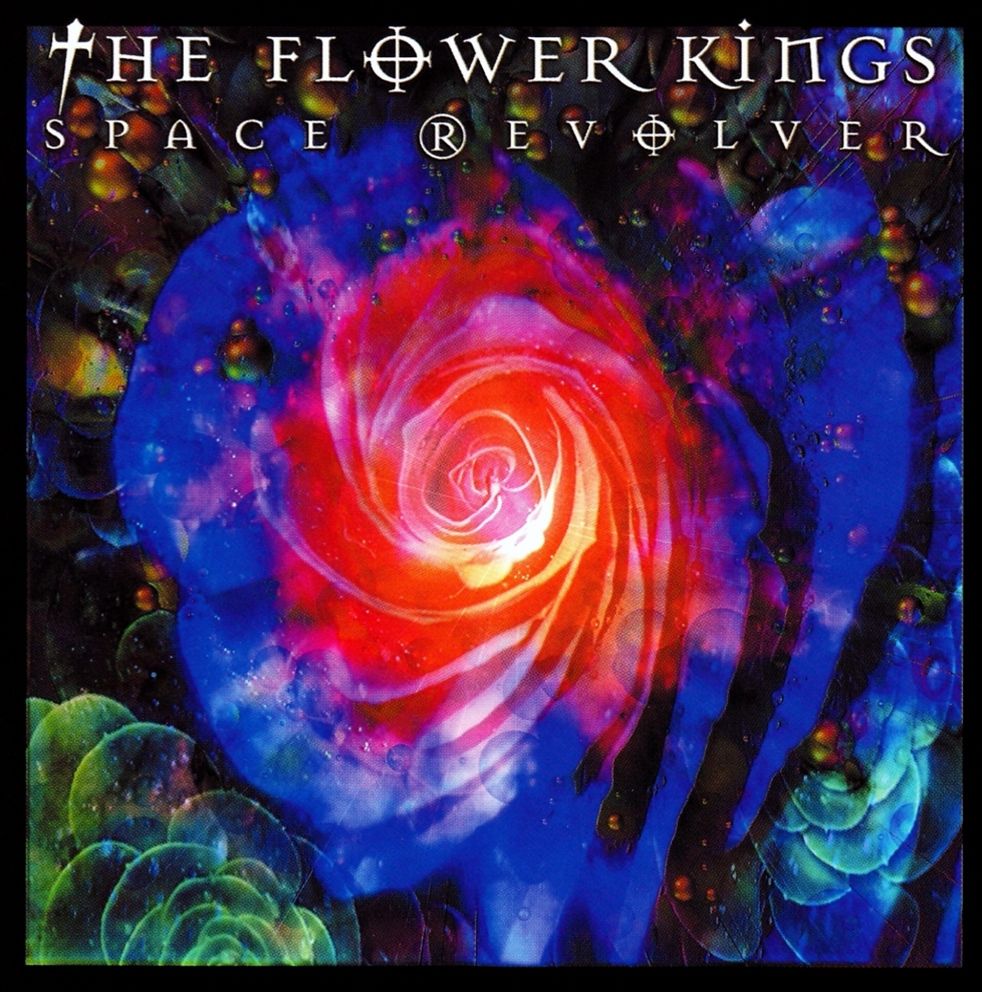
One of Brad Birzer’s favorite musical artists is The Flower Kings, and one of his favorite albums of theirs is Space Revolver. In this dialog, he and Tad Wert discuss that album and its place in their discography.
Tad: Brad, it’s good to be interacting with you again on Spirit of Cecilia! I chose this classic album, because I know it’s a favorite of yours.
My first exposure to The Flower Kings was their album, Stardust We Are, which I bought because of a Mojo Magazine article on “the new wave of progressive rock”. I have to admit that I tried repeatedly to listen to the whole album, and it never held my interest enough for me to do so. I know that you love Roine Stolt and his Flower Kings, so every time a new album was released, I gave it a try, but there were always other artists’ music that took my attention.
Then, last week, I found an inexpensive copy of Space Revolver, and I don’t know exactly why, but I picked it up. Once I heard the opening chords of I Am The Sun Pt. 1, I was immediately taken with this album! I think Stolt (in my humble opinion), had hit upon a very good balance between power and grace in his music. As I continued to listen to the rest of the album, I was gratified to hear that that high quality of songwriting continued throughout.
Brad: Dear Tad, it’s been too long, my friend. What have I been doing? Too much teaching of the American founding period and too much grading! Ha. No, of course, I love my teaching and my students, but they are distractions from my love of reviewing albums with you and my love of progressive rock! So glad to be done with the semester (and, frankly, it was a great one!!!) and back to reviewing with you. Ahh. . . the good life.
Yes, I’ve been a fan of The Flower Kings for a long time, now, and I’ve been an evangelist of the band just as long. Way back in the year 2000, a former student (now the head of our philosophy department) leant me a copy of Flower Power. I was immediately taken with it, and I bought everything available at the time by the band. I fell in love with everything. Absolutely everything, including Roine Stolt’s solo album, The Flower King (which, I assume is just a hippy-ish name for Jesus).
Crazily enough, the band released Space Revolver on July 4th of that year. Coincidence? I have no idea, but it struck me as a perfect Fourth of July album. Especially with those queer lines in the first track–”I left my heart in San Francisco. I left my mind in San Francisco Bay.” Wow, did I laugh hard or what!!! 24 years later, the line still cracks me up.
I’ve had the chance to correspond a bit with Stolt, and I even sent him some books on economics (by Wilhelm Roepke) before a longish tour he took. As far as I know, he took the books with him! How great is that? Frankly, I’d be happy to be his book supplier. At the time I sent him the Roepke books, he was really interested in an anti-Marxist form of economics, that is, the creation of more private property (small family farms) rather than less. Again, how great is that? “Ride this bitch, that is power!”
Anyway, Tad, this is a long way of saying, I love the music, and I love the band. I think the world of both.
Tad: Okay, Brad, your off-hand remark about the Flower King being Jesus is something that I’ve wondered about for a while: is Roine a Christian? The 1994 album, Roine Stolt’s The Flower King, is steeped in religious imagery, specifically Christian, and, of course, he has collaborated with Neal Morse in Transatlantic. Anyway, if true, it helps make sense of a lot of his music!
Also, here’s something else that came to me while listening to Space Revolver – to my ears, it is a huge leap forward in songwriting from Stardust We Are, and I was wondering what might have caused it. Then it hit me: Space Revolver was written and recorded a few months after Stolt was involved in the first Transatlantic album SMPTE! I think Neal Morse must have had an influence on Stolt; that opening piano riff in I Am The Sun Pt. 1 is very Morsian (to coin a word!). Chicken Farmer Song, Underdog, A Slave To Money, and A King’s Prayer all feature outstanding melodies – they’re downright power poppish in their catchiness. Even the jam that closes out A King’s Prayer is focused and tight, with nary a wasted note.
The tootling mellotron that opens I Am The Sun Pt. 2 is one of my favorite moments of the entire album. I hear it, and I can’t help but smile and bob my head. Actually, the whole atmosphere of this album is one of joy. Stolt seems to be having the time of his life, and he wants the world to know it.
I also want to single out Ulf Wallander’s soprano saxophone work for praise. I love that instrument, but in the wrong hands it can be very annoying. Wallander does a great job zipping off very pleasant improvisations that add a lot to the overall feel.
The only misstep on this album, in my opinion, is Hans Froberg’s You Don’t Know What You’ve Got, which sticks out like a sore thumb. It just doesn’t fit in with the rest of the album. That said, it’s not a bad song, it just doesn’t work for me in the context of the other tracks.
Okay, I’ve raved enough; your turn!
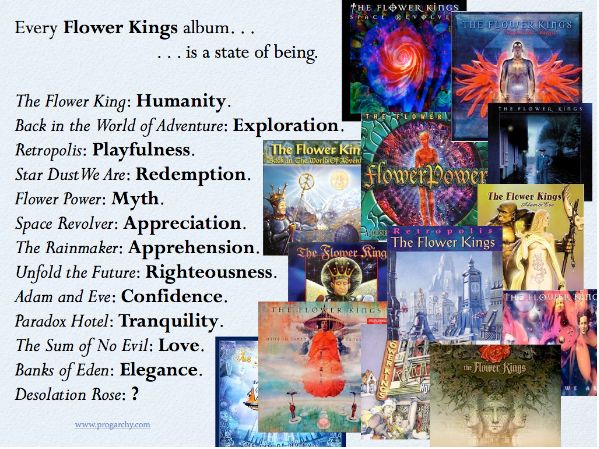
Brad: Tad, what a fun writeup. Thank you–I think you clearly identify the joy and playfulness that is so prevalent in Space Revolver. Stolt was clearly having the time of his life. I love all the other albums – in fact, I made a meme a years ago expressing what I loved about each album (see below) – and I’m especially taken with Flower Power (the first of theirs I heard) and Paradox Hotel. I really like Stardust We Are, too–but each of these other albums lacks the extreme playfulness of Space Revolver.
[I made the above meme back when Desolation Rose came out. I was rather blown away by the album when it was released, but mostly because it was so intense and lacked the characteristic mischievousness of the previous albums. Indeed, when we were really active at Progarchy, I even planned out a book on the Flower Kings (never realized, except for some snippets, here or there), following the meme’s albums’s themes. I was planning on arguing that The Flower Kings were to Europe what Big Big Train was to England and what Glass Hammer was to America.
The book would’ve come out before my Neil Peart biography and even before what you and I, Tad, wrote on Big Big Train. I was, at the time, emailing with Stolt, and I was rather taken with him (still am) as an artist and as a human being. He was extremely active on Facebook at the time, as was his wife, and they were always interesting. We disagreed radically on the meaning and legacy of President Obama, but, again, he was always a total and intelligent gentleman.
It’s about the time I sent him the Roepke book.
I did try to interview Stolt about Rush, but he very kindly responded that he didn’t know enough about the band to offer anything substantive. He was genuine, kind, and humane in his response.
One of many grand schemes never realized. . .]
Brad’s Flower Kings Collection
[Above photo, my fantasizing. In the middle of my then-Flower Kings collection, I’ve placed three of my own books, my biographies of (right to left) Christopher Dawson, J.R.R. Tolkien, and Charles Carroll of Carrollton. Yes, I desperately wanted my work to be tied to Roine Stolt and the Flower Kings. I thought–and still do–that if any of my biographies could reach the majesty of Stolt’s artistry, I would truly have made a mark on the world.]
A few responses to you directly, Tad. It’s funny, I had always assumed that Neal Morse was influenced by Roine Stolt, rather than the other way around. And, Stolt, to me, seems deeply influenced by King Crimson, Yes, and Genesis. This seems especially clear on his solo, The Flower King, and Retropolis, both of which came before Transatlantic. But, I assume this is like a chicken or the egg question. At this point (2024), the two must’ve influenced each other so completely that one can’t any longer disentangle which idea or person came first. Together, Stolt and Morse are the heart of rambunctious third-wave prog.
As to Stolt being Christian, I have no idea. In our brief correspondence, I obnoxiously asked him directly about his faith, and he never responded or hinted, one way or the other. Being Swedish, he was almost certainly raised nominally Lutheran, even if the Swedes only attend services on Easter and Christmas.
Regardless, Stolt employs Christian symbolism frequently, especially in the early The Flower King’s albums. Again, I think that “The Flower King” is a sort of hippie Cosmic Christ. Here are the lyrics from the first album:
Falling out of the sky, falling into a dream All I need is the heart where it all can begin It’s just a matter of time, it’s just a matter of trust It’s just a matter of faith when we all sleep in the dust
Don’t deny, just verify the genius of it all It’s the cycle of all living thing, hear the children Hear the children call !
“We believe in the light, we believe in love every precious little thing We believe you can still surrender you can serve the Flower King”
Going out into the grey, into purple and red See, all the beautiful shapes flowing out of my head It’s just a matter of time, it’s just a matter of trust It’s just a matter of faith when we all sleep in the dust
Don’t deny, just verify the genius of it all It’s the cycle of all living, hear the children Hear the children call !
“We believe in the light, we believe in love every precious little thing We believe you can still surrender you can serve the Flower King”
“We believe in the heart, we believe in healing in a house where angels sing We’ll unite the divided and the fallen one will serve the Flower King”
“We believe in the heart, we believe in healing in a house where angels sing We’ll unite the divided and fallen one will serve the Flower King”
Again, I don’t quite think this is the orthodox Jesus Christ of Christian faith, but a rather humanistic but still supernatural Flower King. When the band becomes “The Flower Kings,” they’re not divinizing themselves but rather becoming disciples.
What strikes me most, though, is that Stolt’s use of mythological symbols is not Lutheran, but deeply Roman Catholic.
On track four of Space Revolver, “Monster Within,” Stolt sings “Mother Mary, she’s left the building crying/silent tears rolling down her cheek.” Granted, this could just be a Beatles’ reference, but Mary, here, seems more supernatural than Paul McCartney’s mother. After all, Mary is the opposite of some kind of demagogue trying to seduce our children and who feeds on power and who controls the bats.
One of my favorite The Flower King’s albums, Unfold the Future, posits a war between the devil and Mary. On the final track:
Clueless
Living in a business cluster, predator to suit your needs Raven sitting on your shoulder, lurking the suburban weeds Think I saw you in the bank, think I saw you in a talkshow Swear I saw your mindless grin, justify the final blow
Swallowing the endless laughter, cultivate the deadly sins Getting even altogether, hiding from the Holy Mother This is how you raise the Cain, this is what you teach our children Back on duty dog eat dog, they’re clueless in the Devil’s playground
Then, of course, on Space Revolver, on track 6, “Underdog,” there’s that really weird line/sound byte: “John Paul’s pizza, the biggest pizza you’ve ever seen.” When this album came out, in the year 2000, the only John Paul that mattered was John Paul II.
So, is Stolt Christian? I have no idea, but he’s an awesome ally, a man of integrity, and a grand myth maker. Taken together, this is so much what I love about Stolt and the band. Never once I have listened to them without my imagination being stimulated, expanded, and made manifest!
Tad: Wow, Brad! I knew you were a fan of Stolt, but I wasn’t aware of all the thought you’ve put into his music. I now have a much greater appreciation for his overall oeuvre than before. I think you’re probably correct about who influenced whom – Morse had to be aware of Stolt while he was in Spock’s Beard, and Stolt had to be aware of Morse. They likely influenced and appreciated each other, which led to the formation of another outstanding prog group, Transatlantic.
I kind of like it that Stolt is mum about his faith; it allows different interpretations of his music. What’s important to me is that he seems to be a light-bearer, as opposed to a dark nihilist like so many Scandinavian death metal artists. Stolt is always positive and optimistic, even when he is singing about something he’s unhappy about. In that regard, Desolation Rose seems to be his “darkest” work, and it is still uplifting to my ears.
So here’s my takeaway on Space Revolver: it is the perfect introduction to The Flower Kings for someone who is new to them. In it, the group hits the perfect combination of melodicism, progginess, and improv jamming. Once you’ve absorbed this album, all the others make sense. They’ve had an amazingly productive run the past 30(!) years, and I hope they go for 30 more!
In this crazy post, Tad and Brad think hard and deep about Spock’s Beard’s fifth album, appropriately named V. Tad and Brad (my gosh, we rhyme) think the world of this album. As Tad will note, it’s what brought him back to the genre of progressive rock, and Brad will affirm that he loves all things, Spock’s Beard, never having actually left prog rock. Indeed, if truth be told, Birzer thinks that he first encountered Spock’s Beard, THE LIGHT, sometime in 1994, even though the official literature claims a 1995 release date. . .
Brad. My gosh, it was 2000, that year of mystery and chaos that saw the release of the fifth Spock’s Beard album, V. The album, even subconsciously, seems to think that prog needs a new release, a new introduction to the world. Even the opening track wants to invite all new adherents to all things proggy.
At the end of the day, you’ll be fine!!!!!!!!!!!!!!!!!!!!!!!!!
And, to be sure, prog was coming into its third phase. Spock’s Beard, The Flower Kings, and Porcupine Tree had all ushered the genre into its newest phase.
Tad: Brad, it’s hard to believe that V is more than 20 years old! Yes, this one album reintroduced me to the world of prog. I still remember exactly how I discovered it: at the time I read Mojo Magazine regularly, and they had an issue with a Genesis cover story. There was an inset article about “current prog artists to check out”. One of them was Spock’s Beard, so I went to Tower Records (remember when there were record stores?) and, low and behold, there was a copy of V. I popped it into my car’s CD player, and I couldn’t believe the incredible music that poured out!
Up to that point, I was listening to practically every style of music except prog. In high school, I enjoyed Yes, Genesis, ELP, Jethro Tull, Pink Floyd, etc., but once the 80s hit, I quit following that genre. I was flabbergasted to hear a band like Spock’s Beard unapologetically playing progressive rock, but with an updated, contemporary sounding style.
I think what impressed me the most was Neal Morse’s gift for melody. He obviously loved the Beatles, but he didn’t imitate them. Rather, he incorporated their sense of harmony and melody into massive epics that never seemed overlong. I remember in March of 2021 we went down to Florida for Spring Break, and all I listened to for a week was Spock’s Beard! And from there an entire new world of music opened up for me.
Brad: Wow, Tad, what a wonderful memory. Florida and Spock’s Beard! Very nice.
In the early 1990s, I remember wondering what had happened to progressive rock and encountering–through Tracks Records in Bloomington, Indiana–a revival of the genre through Spock’s Beard, The Light.
As I noted above, it seems–at least in memory–to be sometime in 1994. I was a graduate student at Indiana University, then, and I was quite the customer for Track’s. I remember the manager telling me about The Light, but I remember it in the fall of 1994.
For whatever reason, SB remembers the albums as coming out in 1995. Somewhere–and I don’t know where–there’s a discrepancy. At the time, I was thrilled with The Light, and I wanted more. From that point forward, I followed the band. Except for the embrace of the f-word, I absolutely loved The Light.
It’s funny, but since the band was so abrupt in its language, Neal Morse has since sent out a warning about the music. Honestly, though it was his attack on Catholicism–especially through his album Sola Scriptura, that warned me more than his embrace as had the f-word. I don’t mind my kids hearing the f-word, but it was his attack on Roman Catholicism that really chilled me.
As it was, the band, Spock’s Beard, produced some great prog rock and some real straight-forward rock after 1995. It was V, however, that really reminded us all that progressive rock was not only alive but thriving. It was, by far, the most progressive album the band had released since its second release, Beware of Darkness. Yet, to be sure, V is nothing compared to its successor, Snow, which really embraced not only progressive rock, but the Catholic Church (its priests, in particular) as well.
When V came out, I was blown away,. Album number 5 from the band was simply brilliant, and I was so glad to have the progressive rock genre come back in full force. Indeed, when you bring into account the early Flower Kings, it and Spock’s Beard really introduced us to the third wave of progressive rock. Both, somehow, brought us all into the fold of a whole new take on the classic genre.
Tad: Before we get into discussing the music, I want to give a shoutout to the artwork. At first glance, it looks like a businessman walking in a desert past a traffic sign (a sideways V) telling him to go forward while a forked lightning bolt (making a V) pierces the sky behind him. But on closer inspection, you realize he has two shadows (making a V), he must be on an alien planet! The whole scene is worthy of Hugh Symes’ best work for Rush. I love it!
Brad: Agreed. The art is excellent and reminiscent of Hugh Symes. A wonderful comparison.
What surprises me most, however, Tad, is how much of a solo album for Neal Morse this fifth album from Spock’s Beard actually is. If we take the liner notes seriously–and I have no reason not to–Morse wrote every lyric and every song with the exception of the excellent. THOUGHTS (Part II), the most Morse-like of all the tracks! Indeed, the original “Thoughts” appeared on the second Spock’s Beard album, Beware of Darkness, and is credited to. . . no surprise. . . Neal Morse! Indeed, looking over the first six Spock’s Beard’s albums, what is shocking is that all seem to have been written by Neal Morse and Neal Morse almost (not always) solo!
This means, of course, that V really is a Neal Morse album with Spock’s Beard as a mere backing band. I will admit, I’m rather shocked to realize this. I had always thought the band contributed much more to Spock’s than this.
As such, Testimony is a Neal Morse album without Spock’s as a backing band!
That said, and attributed, Spock’s Beard V is an astounding album, whether a Morse album or not. Everything just works perfectly on V. The art, the lyrics, the music, the sequence of songs. All of it, just perfect.
And, though Morse wrote all of this, I’m quite happy with the band. Nick D’Virgilio is especially great at drumming so appropriately for this album.
Tad: Yes, the first six Beard albums were almost entirely Neal Morse projects. I have a DVD, The Making of V, that chronicles his production of V, and it’s very illuminating. It’s clear he has a very specific vision of how he wants every song to sound. He meets with each member of the group to go over their parts. They make minor suggestions, but by and large he is calling all the shots. Even that little woo-wah guitar sound that Alan Morse makes 12 minutes into “At The End of the Day” is due to Neal’s urging.
Speaking of “At the End of the Day”, let’s dive into the songs on this album. “At the End of the Day” is one of my favorite opening tracks, ever. It has it all – driving rock, acoustic passage with soft vocals, and time changes all over the place! At 16:28 in length, it’s not a quick listen, but the time flies – I never get fatigued whenever I listen to it. As with every Morse composition, the catchy melodies fall over themselves as they spill out of my speakers – they are endlessly engaging and captivating. I love this song!
You mentioned “Thoughts (Part II)”, and this song led me to explore the music of classic Gentle Giant, because somewhere I read that the a cappella sections were inspired by that group (I think by “Knots”, off of their Octopus album). I also hear a lot of Kansas in this song. It is another highlight.
Actually, there isn’t a bad track on V. I skipped over “Revelation”, but it deserves some praise – at first listen, you think it’s a relaxed, soft rock ditty, but then it morphs into some of the heaviest rock Spock’s Beard ever produced.
Even though V was only released on CD, I’ve always thought of “All On A Sunday” as kicking off “side 2”. This is such a happy, welcoming song for me. Once again, Morse’s gift for a catchy melody really shines here. “Goodbye To Yesterday” is more sombre, but still beautiful. This song is a showcase for the Beard’s knack for gorgeous vocal harmonies. You can hear how good a singer Nick D’Virgilio is here.
I’ve rambled enough – you’re our resident lyrics expert; what do you think of Morse’s words on V?
Brad: Tad, thanks for such good thoughts. I think your analysis is simply awesome. Fantastic. The DVD “The Making of “V”” sounds excellent. I’ll have to check it out.
I must admit, Tad, when it comes to Neal Morse lyrics, I’m always a bit conflicted. I love his music–composition, tone, flow, etc.–but I find his lyrics less persuasive as it were. Some of this is simply poor bias on my part. I loved the music of The Light, but I was less than taken with the lyrics. As mentioned above, I just think the “f-word” is totally avoidable in songs. To me, its employment is always and everywhere a sign of a lack of imagination. Since then, I’ve been skeptical about his lyrics. I especially disliked the lyrics of Sola Scriptura.
Specifically, as to V, however, I generally like the lyrics, though I find them–again–unpersuasive. When I listen to Big Big Train, for example, I always assume my prevailing attitudes and ideas will be challenged. As I hear V, though, the lyrics are just random words that sound good with the music. In no way have I been challenged in basic assumptions or ideas. I’m more moved by the insertion of a dirty organ than I am by the words.
Here’s section III of the “Great Nothing.”
Come up breathing Up from the water Man, he was so submerged Where’s the feeling?
It must be way under Far from the spoken word
No, no – no corporate ladder No hometown parade The fat cats just keep getting fatter What does it matter The thing must be played…
One note timeless…
Don’t let the buzz get you down Don’t lose your memory or you’ll sink fast and drown But you can’t seem to sleep for the thoughts in your mind Since you can’t stand to think you have one hell of a time Hanging with submergers you drink yourself blind You think it’s fine
You’ve got time…
What is this all about? I have no idea, and, worse, I’m not that interested in knowing or figuring it out.
Again, Tad, don’t get me wrong. I really like Morse’s music, I just feel less taken with his lyrics. An exception to this is his lyrics for Testimony and Testimony 2. I loved and devoured these lyrics–as they told a story.
Tad: Brad, your points are well taken. As far as the lyrics to “The Great Nothing” go, I believe Morse wrote them as a tribute to his friend and fellow musician, Kevin Gilbert. He was enormously talented, but the music industry never knew how to promote him. He died not too long before V was recorded.
As I’ve mentioned before, I have a hard time paying attention to lyrics , except as they add to the overall sound of a song. It’s a failing of mine – I’m too lazy to get into them! Like you, though, I don’t have a lot of patience for gratuitous profanity when it occurs.
As far as “The Great Nothing” goes, I think, musically, it is one of the greatest songs Spock’s Beard ever recorded. It is one I never tire of listening to, with its various sections of melody. Dave Meros’ bass is outstanding on it, as is Nick D’Virgilio’s drums.
There is one section (the “You missed your calling” one) that sounds like something Paul McCartney could write – it’s that catchy. When I first heard this epic, I had to stop what I was doing and hit “Rewind” on my CD player several times!
They say that hindsight is 20/20, but I get the sense that Morse intended for V to close a chapter in Spock’s Beard’s career. I couldn’t wait for the next album, Snow, but I was very disappointed with it. It sounded so different from anything else they had recorded, and the story kind of creeped me out. Like you, I thought Testimony was a tremendous album – one of Morse’s all-time best. But that’s a topic for another post!
Brad: Thanks so much, Tad. You have excellent responses, of course, and I had no idea that Morse was referring to the work of Kevin Gilbert. Next time I listen to V, I’ll keep that in mind.
Tad: It’s always a blast to bounce thoughts and reactions with you, Brad! I hope our readers take some time to listen to V. It is not available on Spotify (apparently Morse doesn’t like their payment structure), but it is on Apple Music. Here is “The Great Nothing”, via YouTube:
Nick D’Virgilio, Neal Morse & Ross Jennings share first single and video for “Julia” from debut albumNick D’Virgilio (Big Big Train, ex-Spock’s Beard), Neal Morse (Transatlantic, NMB, ex-Spock’s Beard), and Ross Jennings (Haken, Novena) are pleased to announce their debut album titled ‘Troika’ will be released on Feb 25th, 2022. The album is now available for pre-order here: https://dvirgiliomorsejennings.lnk.to/Troika
Today, the band is also sharing the album’s first single “Julia”. You can watch the video by Christian Rios here: https://youtu.be/Y31eVTnMIxIRoss had this to say about the track: “With my original demo clocking in at around the 8-minute mark and possibly leaning too close to ‘prog epic’ than the singer/songwriter vibe we were attempting to present on this record, Neal arranged my lengthy ballad into something more concise, in-keeping with the album’s essence and writing in a powerful new chorus in the process!
“This one was all about the 3-part vocal harmony interplay and ‘pull-at-the-heartstring’ lyrics which deals with themes of regret and forgiveness in the context of a broken father-daughter relationship.” – Ross JenningsTracklisting: 1.Everything I Am (5:43) 2. Julia (6:07) 3. You Set My Soul On Fire (3:22) 4. One Time Less (4:53) 5. Another Trip Around The Sun (4:39) 6. A Change Is Gonna Come (4:24) 7. If I Could (4:02) 8. King For A Day (5:47) 9. Second Hand Sons (4:43) 10. My Guardian (3:43) 11. What You Leave Behind (4:16)
‘Troika’ will be available as Ltd. CD Edition / Gatefold 2LP+CD / Digital Album. Each format includes a bonus alternative version of the track ‘Julia’ and is available for pre-order here: https://dvirgiliomorsejennings.lnk.to/TroikaRecorded during lockdown, the process began with Neal Morse writing some acoustic songs that he thought would be enhanced by strong vocal harmonies. He already knew how well his voice blended with former Spock’s Beard band-mate and Big Big Train drummer/ vocalist, Nick D’Virgilio who came on board and, considering a third man, the Americans sought out Haken’s Ross Jennings from the UK to complete the trio. All three found they had songs that would benefit from the three part harmonic blend, and so they pooled their resources, inputting creatively into each others compositions.
Neal comments: “What a great pleasure it’s been to work on this album with these amazing artists! It was kind of funny… We had been working on the songs remotely for several months before I finally heard all of us singing together at the same time. The first time I brought the faders up, I knew we had the magic!“
Nick adds: “I’ve known and worked with Neal for over 30 years and I’ve been a big fan of Ross and the music he makes for a long time. I felt confident right away that this would be a fun project to be a part of. I was so right.”
Ross comments: “Receiving ‘The Call’ from Neal to participate in this project was somewhat of a prayer answered… As a long time fan of their work, I’ve been singing along to Neal’s & Nick’s records for years, so it felt really natural for my voice to slot right in.”
The tracks took shape with the musicians recording all of the music and vocals separately, yet the eclectic performances burst with the energy and excitement of the collaboration. Acoustic anthems, charged rockers and sensitive ballads are all part of the mix, and the unique blend of Ross, Neal and Nick’s voices and styles have created an album in which you will encounter these musicians in a way you’ve never heard before.D’Virgilio, Morse & Jennings ONLINE: https://www.facebook.com/ndvofficial/ https://www.nickdvirgilio.com/ https://www.instagram.com/ndvirgilio/ https://twitter.com/NDVmusic
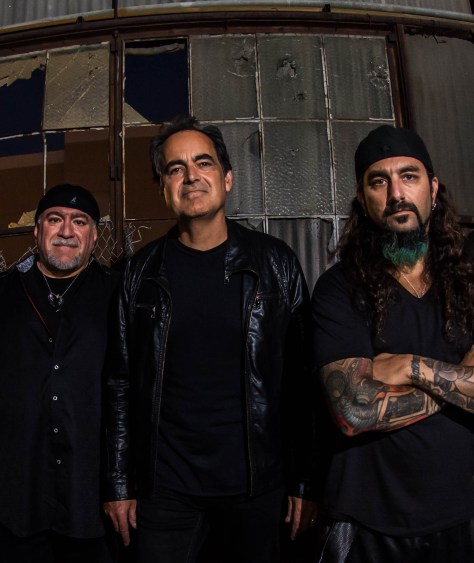
The three versions of the album. Photo from nealmorse.com
So, after much anticipation and perhaps some untoward eagerness on my part, Transatlantic’s Absolute Universe: The Ultimate Edition box set finally arrived yesterday. Or, maybe one should write more appropriately, it landed! And, yes, I was and am thrilled.
I had received a promo copy of two versions of the album—The Breath of Life (Abridged) and Forevermore (Extended)—and I’ve been playing them pretty much non-stop.
But, with The Ultimate Edition, I now have yet a third version of the album, Mike Portnoy’s blu-ray version. If you have to pick just one of the three, I’d highly recommend the blu-ray version as the best. Not only does it capture the spirit of The Breath of Life (which Morse mixed and curated) and Forevermore (which Stolt mixed and curated), but its sound is just nothing short of glorious. Each instrument is crystal clear as is the space between each.
Most astonishing of all sounds to emerge from the blu-ray version is Pete Trewavas’s bass. I’ve always thought of him as an excellent bassist, but I didn’t realize just how excellent until hearing the blu-ray version. Somewhat funny that he was the only band member NOT to mix and curate a version of this album.
In the latest Spirit of Cecilia dialogue, Editor-In-Chief Brad Birzer and Arts Editor Tad Wert exchange thoughts on the massive set of new releases from progrock’s supergroup, Transatlantic. There are several different versions of The Absolute Universe (you can check them out here), and each one has its own charms.
Brad: Tad, I just finished watching the Transatlantic Roine Stolt interview (available on Youtube as a part of a series), and I couldn’t help but think of you. I also couldn’t help but think–yet again–what a grand gentleman Stolt is. So interesting and intelligent. Prog musicians are articulate in general, to be sure, but Stolt is exceptional even among exceptional people. Does my soul good. He is, truly, The Flower King.
I know that you like the new album(s), The Absolute Universe, from Transatlantic, and I very much do as well. Indeed, I’m rather in love with the extended edition, and I’m growing very fond of the abridged version as well. The more I listen to each, the more I realize how different (and yet so complementary) each is to the other.
What’s interesting to me is that from the opening minute, you know it’s a Transatlantic album. There’s something about the instruments, the voices, and, especially, the energy that is uniquely Transatlantic.
As I’ve been devouring the new album(s) and anticipating the massive box set on its way in three or so weeks I’ve been waxing nostalgic. I bought the first Transatlantic album, SMPTe, shortly after it came out. A student (now a colleague in the philosophy department) had lent it–along with Flower Power by the Flower Kings–to me, and I was immediately taken with both. Since then, I’ve bought every Transatlantic album–studio and live–as they’ve come out. In many ways, my last twenty years have, in some way, been shaped by Transatlantic.
Then, of course, there’s the distinctive Transatlantic art. The great Transatlantic ship is wonderful, and the band has, probably, the best font for any band since Yes’s classic signature.
Tad: Brad, you and I are on the same wavelength. I have been immersing myself in both versions of The Absolute Universe (How’s that for a provocatively countercultural title?), and I am increasingly drawn to the extended version. It turns out that Roine is the main mastermind behind that set, while Neal Morse is the one who put together the abridged version.
I have not seen the Stolt interview, but Morse has begun his own podcast and his first guest is none other than Mike Portnoy! It is also on YouTube, and it is such a pleasure to watch and listen to two very close friends discuss all kinds of topics. I highly recommend you check it out.
I also grabbed my copy of SMPTe to listen to again, and it holds up incredibly well. I think it has stood the test of time – has it really been 21 years since it first came out? – and it can now be considered a progressive rock classic. Those first chords of All Of The Above are so stirring to me; I almost get emotional listening to them now. And as you mentioned, from the opening notes of Overture from The Absolute Universe, you know you’re listening to a Transatlantic album! When Portnoy’s drums kick in gear and start propelling the entire band – that is a very satisfying listening experience for me. Also, Morse’s organ playing the opening melody of Heart Like A Whirlwind (extended version)/Reaching For The Sky (abridged version) is a special moment.
I think you would agree with me that Morse dominated the first two Transatlantic albums (and probably the third) but on this one I get the sense that all the members had relatively equal input. I am especially pleased to hear Pete Trewavas stepping up and singing more lead vocals. His songwriting contributions are more accessible – in other words, poppier – than Stolt’s and Morse’s, which keeps things grounded. Hopefully this album will greatly expand their audience.
Brad: Excellent responses, Tad. I didn’t know about the divided duties regarding two different versions of The Absolute Universe. I must admit, while I love both versions, I’m still much more taken with the extended version. For two reasons, really. First, I love all of Stolt’s guitar and vocal parts. And, second, because my favorite track–”The World We Used to Know”–is only on the extended version. “The World We Used to Know” is the quintessential Transatlantic song, blending the old so perfectly with the new. It’s clear that the band is honoring Yes and Rush in the song, but the song remains completely a Transatlantic track, despite its influences.
If I were forced to rank Transatlantic’s first four albums, I would rank them: SMPTe; The Whirlwind; Bridge Across Forever; and Kaleidoscope, recognizing that each is great. That is, there’s not a huge difference between No. 1 and No. 4 in terms of quality. I have to give the first place to SMPTe, mostly because of the memories associated with my first listen to it, twenty-one years ago. Those opening chords still ring in my soul and play in my mind. It’s such a classic.
Now, after having given The Absolute Universe several spins, I would place it in the No. 2 spot. It might, in some ways, be better than No. 1, but I’m still too taken with SMPTe–even after 21 years–to rank it anything other than No. 1. Regardless, The Absolute Universe is truly special, and life is better because it exists.
Tad, what version did you end up buying? At first, I ordered individual copies of the abridged and the extended, along with the blu-ray. I quickly changed my mind, however, cancelled that order, and then ordered the deluxe package from Radiant Records. I was a bit hesitant at first to do this, given the money involved, but now that I’ve heard and devoured The Absolute Universe, I regret nothing!
One thing that strikes me as interesting. There’s definitely an overlap of style when one considers the Neal Morse Band, The Flower Kings, and Transatlantic, and these three bands have so critically defined Third-wave prog. Yet, they have hardly any imitators. It’s impossible to imagine the current prog movement without, for example, Steven Wilson and all of his imitators. Why isn’t the same true of Stolt, Morse, Portnoy, and Trewavas?
Tad: Good question, Brad, and one that had not occurred to me until you asked it. My first answer is because they are all such incredibly talented artists that any attempts at imitation would pale in comparison! But I also think Portnoy doesn’t get enough credit for his role as arranger and producer in Transtlantic, and he is simply inimitable in the music world. WIthout his energy and guidance, TA would not be near the artistic force they are.
Like you, the more I listen to both versions, the more I prefer the extended one, Forevermore. I go into greater detail why in my earlier post on this album.
My ranking is the same as yours, except I would place Bridge Across Forever ahead of The Whirlwind. I think the melodies are stronger on BAF. Also, I always get a kick out of Suite Charlotte Pike, because Charlotte Pike is a road near my home that I often drive on!
As far as what edition(s) I ordered, I went with both the extended and abridged versions, but I am very tempted to go for the big box like you did. I imagine some people might consider the release of so many different versions a crass commercial move, but it’s really not. Every version is a separate work that stands on its own, and I am grateful to Morse, Portnoy, Stolt, and Trewavas for bestowing so much music on us.
Prog supergroup Transatlantic (Mike Portnoy, Neal Morse, Pete Trewavas, and Roine Stolt) are releasing their fifth album next month, and it is an unprecedented project. Fans have a choice of not one, but TWO versions of the new album, entitled The Absolute Universe – a two-disc edition and a single-disc one, or a huge 5-LP, 3-CD, Blu-Ray boxset that includes both. In case you’re assuming the single-disc album is merely an edited, shorter version of the two-disc one, let me set you straight: these are two different albums that share some of the same musical themes and a few songs.
Let’s start with the single-disc version, The Breath of Life. The most obvious comparison is to Transatlantic’s third album, The Whirlwind, because TBOL is also one long song divided into sections. I think it is superior to The Whirlwind due to a greater variety of melodies and musical styles. The band has never sounded tighter, either. Portnoy’s drum work is phenomenal, particularly on the King Crimsonesque Owl Howl. All the members take lead vocals for various sections, and they all contribute music compositions. Trewavas’ Solitude is an especially nice passage, while Morse adds his unerring musical magic throughout the album.
Something I find fascinating is Morse’s statement in the liner notes that “everyone writes their own lyrics to their sections and we don’t usually discuss what it’s all about. Sometimes we’re writing about different things in different sections, but somehow it all works together in the end.” That four different personalities can combine to create as cohesive a work as The Absolute Universe is nothing short of miraculous.
Portnoy has stated that The Absolute Universe is a concept album, and that it touches on the events of 2020. For example, Morse’s lyrics
Where were you when everyone/Crashed and burned and fell/Into the silence of the sun/With nothing to be done
refers to his sense of God abandoning the world at the height of the pandemic.
Likewise, the lines
Where were all the seats preferred/And all the wise men winding up/The wisest of all words/And God’s love like dinner served/But now we wonder at the warning
is about lockdowns prohibiting gatherings and other social interaction.
TBOL ends on a high note with the exhilarating The Greatest Story Never Ends which segues into the spectacular finale of Love Made A Way, which is an acknowledgment that God actually has been present throughout all the tribulations of 2020. Musically, this song is one of the finest Transatlantic has ever recorded.
After listening several times to The Breath Of Life, I turned my attention to the double-disc Forevermore expecting to hear longer versions of the songs. Nope! This is a separate album from TBOL that happens to share a few musical sections. As good as TBOL is, Forevermore is even better. I can’t put my finger on exactly why I prefer it, except that it strikes me as more energetic and the songs that are unique to it are simply wonderful.
For example, if I only had TBOL, I would miss hearing Heart Like A Whirlwind, The Darkness In The Light, the delightfully poppy Rainbow Sky, and Stolt’s magnificent The World We Used To Know. Those are all essential Transatlantic songs now, and I would be much poorer for not having heard them.
So what’s my recommendation? Fans of Transatlantic will want to get both albums. True fanatics will splurge for the box set, which includes both versions on CD and vinyl, as well as a BluRay documentary of the making of The Absolute Universe. If I had to choose just one, I would pick Forevermore without hesitation. The good news is, you can’t really go wrong – it’s ALL great music, no matter what you go for.
You can pre-order The Absolute Universe at nealmorse.com.
Update: I neglected to mention that the BluRay also has a 5.1 mix of the album, and you can purchase it separately. For those fans with surround sound systems, that is probably the best deal!
Progrock artist Neal Morse has just released his latest solo album, Solo Gratia, and it has elicited varying reactions from your Spirit of Cecilia editors. Here is a friendly dialogue about Morse’s new opus between SoC’s Editor-In-Chief Brad Birzer, and Arts Editor Tad Wert
Tad: Brad, you know what a big fan I am of Neal Morse’s work, and I was excited to listen to the new album of his last week. One thing you can say about him: he’s never boring or predictable! When I first heard he was working on a new album to be called Solo Gratia, I immediately wondered if it was going to be a sequel to his 2007 Solo Scriptura. It turns out the answer is, “Yes and no”.
Musically, it begins with a reference to a theme from Scriptura, and there are several other musical references throughout (“In the name of God, you must die”, etc.). However, instead of continuing to chronicle Martin Luther and the Reformation, in Gratia Morse decided to go back to the very beginning of the church: the conversion of St. Paul! That was a big surprise for me, and a welcome one.
Brad: Thank you so much, Tad. I always love talking with you. One of the finest evenings of my life was when you, Dedra, and I attended Morsefest together. Morse is exceptional at every level, and no one performs live better than he does. I’m a huge fan of Morse’s work, and I’m pretty sure I have everything (even the fan releases) that the man has released.
That said, I’m never quite sure how to take some of Morse’s more explicitly religious albums. Of course, in one sense, everything since Snow has been religious. The distinction for Morse’s work is not which is religious and which isn’t, but, rather, which is blatantly religious, and which is only merely religious. Sola Gratia, of course, is blatantly religious. Overall, I like the album, but I was struck by two things.
First–and, of course, this isn’t my album, so Morse has every right to make the album he wants to make–I wanted an album about St. Paul. That is, I thought what are the last three songs of Sola Gratia would make up the content of the album as a whole. I’m not really that interested in following Saul through his sordid exploits when he was persecuting Christians. The album, in this way, reminds me of a Stephen Lawhead novel, Patrick. I wanted a novel about St. Patrick, instead, the first 95% of the novel was about what a wretch the guy was before his conversion.
Second, I find Sola Gratia–even for Morse–way too heavy. I have nothing against heavy when it comes to music, and much prog demands a certain amount of heaviness. But, Sola Gratia’s heaviness seems, to me, to just be some unmitigated anger. Again, I suppose the anger fits when it comes to Saul, but I really don’t want an album about Saul.
I do, however, hunger for an album about St. Paul. Can you imagine! A double CD about the teachings of Paul, to Corinth and beyond!
Tad: Brad, I hear you! I think my favorite Morse albums are One (solo) and The Grand Experiment (Neal Morse Band), neither of which are “blatantly religious”. After a few listens of Solo Gratia, I think Sola Scriptura is heavier overall, but In The Name Of The Lord and Building A Wall are pretty crushing. In his notes to the album, he mentions how getting a Telecaster guitar really had an effect on the sound.
I also hear the anger, and I suppose that is Neal putting himself into the shoes of Saul the persecutor of Christians. I think he balances Saul’s anger nicely with St. Stephen’s faith and martyrdom. Seemingly Sincere, Saul’s ruminations on Stephen’s unwavering faith and love, is one of my favorite tracks. Now I Can See/The Great Commission is the other. That said, there really aren’t any melodies in this set that immediately grab me like Neal’s compositions usually do. It may take some more listens to sink in.
To your point about wanting the album to begin with the last three songs, I think conversion stories are very important to Neal. He’s put out two albums that deal with just his own conversion! By spending so much time on the anger and hatred of Saul towards the early Church, he is emphasizing how miraculous his transformation into St. Paul was.
This was recorded during the lockdown, and I wonder how it would have turned out if Mike Portnoy and Randy George could have been with him in his studio while they were bouncing ideas off of each other.
Here’s my takeaway: Solo Gratia is not Neal’s finest album, but it’s not his worst, not by a long shot. It’s a solid effort that I hope sets the stage for more concept albums based on St. Paul and other founders of the Church.
I think Neal Morse is one of the most exciting and important artists working in music today. Since his embrace of Christianity almost twenty years ago, he has stayed true to his faith while writing and performing some of the most thoughtful and original music in all of rock. However, his upcoming release, with long-time collaborators Randy George (bass) and Mike Portnoy (drums), is a collection of covers. It is the third album in their wonderfully fun Cover to Cover series, and Inside Out music is rereleasing the first two volumes with it in remastered form.
The new volume, Cov3r to Cov3r, features songs originally performed by Yes, Jethro Tull, David Bowie, Ringo Starr, Gerry Rafferty, Badfinger, King Crimson, Squeeze, Tom Petty, and Lenny Kravitz. While some are obvious hits (their version of Rafferty’s Baker Street is killer) others are deeper cuts, like Crimson’s One More Red Nightmare.
I had the pleasure of chatting with him on the phone while he was out walking with his daughter, enjoying a beautiful summer day in Tennessee.
Thanks for sharing a little of your time with me to discuss yours, Mike’s, and Randy’s new covers album! I think we’re pretty close to the same age, and if I made a massive mixtape of my favorite songs from high school and college, it would include every song on all three volumes of Cover to Cover. How do you all decide which songs to record?
Thanks! Mike loves to do covers, and he is the driving force behind most of these songs. The first two volumes are mostly bonus tracks from earlier albums. We’d finish an album, and the record company would ask us to do some songs for bonus tracks. We all love covers, because they are a wonderful way to blow off some steam after playing long and complicated prog tunes. If we’re on the road, and I’m doing a soundcheck, I can start playing some Zeppelin, and Mike will come running out of the dressing room to join in!
My favorite moment on the new album is pairing up Squeeze’s Black Coffee in Bed with Tempted. Whose idea was that?
That was mine – I used to play Black Coffee in Bed back in the ‘80s, along with Petty’s Running Down a Dream.
When I first heard the opening track, Yes’ “No Opportunity Necessary, No Experience Required”, I was wondering, “Who the heck is that singing?” Then I saw in the promo notes that it’s Jon Davison!
Yeah, we got together with him through playing Cruise to the Edge. When we looked at recording that song, I asked myself, “Can I sing this?”, and I realized there’s no way! So we were really glad Jon agreed to sing it.
I think I actually like your version of Baker Street better than the original. I’ve watched the video for it several times and I get chills when you play your guitar solo. Who is the mystery sax player?
Thanks, man! That’s Jim Hoke, a local Nashville musician. He also does a great job on One More Red Nightmare, which is one of my favorite King Crimson songs.
Listening to all three volumes, it sounds like the three of you just had a blast recording these songs. What was it like recording during a pandemic?
We actually finished our recording before the pandemic hit. Mike recorded the drums in November, I did my stuff in December, and we mixed it in December and January. My “pandemic album” is my upcoming album, Solo Gratia, which I’m really excited about.
Are there any plans for you, Mike, and Randy to do some shows in support of Cover to Cover?
Well, we are going to play a bunch of covers the first night at Morsefest this September. Because of the virus, we have to limit the number of people who can be there in person, but we are also streaming it live, and we have some cool online VIP events planned, like charades and other interactive games.
I have the original versions of the first 2 Cover to Covers, and I notice you’ve changed the track order on the reissues. Why?
They are? I didn’t know that. Ha ha! Mike must have done that. He is the man for figuring out what the best order of tracks should be for albums. It’s his gift, you know, and we figure, let him use it!
I think Randy George is an unsung hero of the bass. I’ve always wondered, how did you two first connect?
Oh, that’s an interesting story. He actually called me up – we had a mutual friend, and he asked me if I was interested in playing on a solo album of his. I think I was too busy at the time, and I put it off. Then I had just left Spock’s Beard, I think it was around 2002, and he said he was willing to work with me if I had any projects. He drove all the way from Seattle to Tennessee to audition for my Testimony album, and we’ve been together ever since.
After Cover to Cover Vol 1 -3 is released in July, what other projects are you getting ready to unleash on the world?
Well, MorseFest is coming up in September, there’s a new Transatlantic album coming out next year, and I’m working on the mixes for my Solo Gratia album.
What are you listening to these days?
Ah, let’s see… mostly the Solo Gratia mixes. I am also listening to the audiobook of Andy Stanley’s Irresistible. As far as music goes, I was listening to Pandora’s Neal Morse station, and a really cool Frost* song came up. I’m a big fan of them.
One last question – what role should Christian artists play in today’s culture?
Well, I think we should be pointing people toward the Lord. I want people to experience God through my music; I’m trying to express the glory of God’s heart.
Yeah, I’m glad you didn’t get stuck in the CCM ghetto; you’re taking your music to whomever will listen to it.
You know, the old saying is true – God will provide. He has given me some incredible music for Solo Gratia. I’m the performer, but God is the director. I’m like a piece of glass reflecting his love and glory.
Can I make a request for Volume 4 of Cover to Cover? Something by Jellyfish, and something from Joe Walsh!
Ha Ha! Yeah, I know there are a lot of people who are fans of them, so that might happen one day.
Well, thanks so much for taking the time to talk with me, Neal.
Sure! Take care!
Cover to Cover Volumes 1 – 3 will be released July 24, 2020 on Inside Out Music, on CD, vinyl, and digital formats.
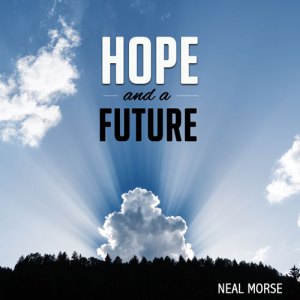
Neal Morse is giving away a collection of songs called Hope And A Future.
Here’s his letter explaining his motivation:
From Neal Morse:
“As we all crowd around our televisions and read our news feeds concerning the ever-changing nature of the coronavirus, I am sensing a wave of hopelessness, fear and uncertainty unlike anything I can remember.
“Many times there have been extreme difficulties in regions or nations, but this is a trial for all humanity…and, as in any time of testing, many will fall into the depths of hopelessness. When hope disappears, all seems lost.
“But it’s not.
“So I have been thinking…what can I do? How can I help? I shared that feeling with the Radiant team and we came up with this idea: a free collection of Neal Morse songs titled “Hope and a Future”.
“I’ve tried to interject elements of hope in my music for as far back as I can remember, so we have made a special album of songs from my entire catalogue, accenting the uplifting and affirming, to help you navigate these unchartered waters with peace and blessed assurance.
“Effective immediately, you can download this collection of songs free of charge from the Radiant website by clicking the button below.
“My deepest desire is that you will find something in these songs — a word, a phrase, a concept — that you can latch onto and will help you and your family through this season.
“Your download will also contain a document that we put together containing some great quotes regarding hope.
“In closing, let me encourage you with this. No matter the circumstances or how things appear, let “the love that never dies” fill your heart today and be the “wind at your back” that brings you to a “peaceful harbor” in the days ahead.”
With much love,
Neal
You can download the album (which comes with a very nice PDF booklet) here.




 Nick D’Virgilio (Big Big Train, ex-Spock’s Beard), Neal Morse (Transatlantic, NMB, ex-Spock’s Beard), and Ross Jennings (Haken, Novena) are pleased to announce their debut album titled ‘Troika’ will be released on Feb 25th, 2022. The album is now available for pre-order here:
 Tracklisting:



 Spirit of Cecilia
You must be logged in to post a comment.