Tag Archives: reading

Tolstoy’s Anna Karenina


Karenina

I could say 2024 is the year I rekindled my love of Russian literature: I reread Tolstoy’s War and Peace, and discovered the beauty of Turgenev’s Fathers and Sons. Like War and Peace, I read Tolstoy’s Anna Karenina when I was much younger – 21 years old. At the time, I thought it was a pretty good story, but a little melodramatic. Now, with the benefit of having been happily married for 38 years with two wonderful daughters, I can appreciate Tolstoy’s mastery of the novel form as he chronicles the tragic arc of marital infidelity. I now understand so much better the psychological and emotional torture his protagonists put themselves and those around them through.

Anna Karenina is a perfect example of why I enjoy reading classics so much: they are time machines. While reading it, I was able to get a glimmer of what life was like in 19th century Russia – the lifestyles of the peasants; the mores and conventions of the upper class; how hard life was for women, regardless of class; how perilous childhood was – if one survived infancy, he or she could easily die from illness or accident; how slow and difficult getting from one place to another was; the elaborate rules of courtship, and on and on. Tolstoy vividly conveys his world through small details that resonate over decades. I really feel like I have experienced a visit to pre-revolutionary Russia.

The story begins with one of the greatest opening sentences in all of literature: “Happy families are all alike; every unhappy family is unhappy in its own way.” We begin with Prince Stepan (Stiva) Oblonsky getting up one morning, bursting with good health and benevolent feelings for those around him. He is a government functionary who doesn’t really do anything, and he’s quite happy about it. He knows all the “right” people, he is considered quite a wit, and he has a bright future ahead of him. The only blot on his horizon is the fact that he has been having an affair with his children’s governess, and his wife has found out about it.

His best friend is Konstantin (Kostya) Levin, who is a man of simpler pleasures. He is a relatively successful landowner who is uncomfortable when he’s in the big city. He has come to Moscow to ask Kitty Shtcherbatskaya to marry him. Kitty is the sister of Stepan’s wife, Dolly. She is also in love with the dashing young military officer, Count Alexey Vronsky. He is an up-to-date man who considers wooing young noblewomen great sport:

In his Petersburg world all people were divided into utterly opposed classes. One, the lower class, vulgar, stupid, and, above all, ridiculous people, who believe that one husband ought to live with the one wife whom he has lawfully married; that a girl should be innocent, a woman modest, and a man manly, self-controlled, and strong; that one ought to bring up one’s children, earn one’s bread, and pay one’s debts; and various similar absurdities. This was the class of old-fashioned and ridiculous people.

But there was another class of people, the real people. To this class they all belonged, and in it the great thing was to be elegant, generous, plucky, gay, to abandon oneself without a blush to every passion, and to laugh at everything else.

LEO TOLSTOY. Anna Karenina (Kindle Locations 2797-2802). Delphi Classics. Kindle Edition.

Stepan’s sister, Anna Karenina, is coming to visit him – with the ulterior motive of reconciling Stepan and Dolly. She is married to an very important statesman, Alexei Karenin, and they have an eight-year-old son, Sergei (Seryozha). Vronsky happens to see her as she arrives at the Oblonsky’s and immediately is smitten with her.

Levin proposes to Kitty, but she turns him down, thinking Vronsky is about to propose to her. However, at a ball later on Kitty sees how Vronsky can’t keep his eyes off of Anna, and she realizes to her shame that she has been discarded.

Anna enjoys the attention Vronsky gives her at the ball, but realizes she must remove herself from Moscow and return to her husband and son in Petersburg. On the train home, she runs into Vronsky (who had deliberately followed her), and, to her horror, is gratified and excited to see him. Once in Petersburg, Vronsky slowly and methodically insinuates himself into a circle of oh-so-advanced nobles and thinkers that includes Anna. Here’s a typical conversation:

But why was it you didn’t come to dinner?” she said, admiring him.

“I must tell you about that. I was busily employed, and doing what, do you suppose? I’ll give you a hundred guesses, a thousand… you’d never guess. I’ve been reconciling a husband with a man who’d insulted his wife. Yes, really!”

“Well, did you succeed?”

“Almost.”

“You really must tell me about it,” she said, getting up. “Come to me in the next entr’acte.”

“I can’t; I’m going to the French theater.”

 “From Nilsson?” Betsy queried in horror, though she could not herself have distinguished Nilsson’s voice from any chorus girl’s.

“Can’t help it. I’ve an appointment there, all to do with my mission of peace.”

“Blessed are the peacemakers; theirs is the kingdom of heaven,’” said Betsy, vaguely recollecting she had heard some similar saying from someone. “Very well, then, sit down, and tell me what it’s all about.”

And she sat down again.

LEO TOLSTOY. Anna Karenina (Kindle Locations 3121-3133). Delphi Classics. Kindle Edition.

And so the die is cast for this classic tale of all-consuming passion and selfishness. Like a Shakespearean tragedy, the reader knows things cannot possible end well, yet he or she can’t stop reading. Anna and Vronsky are doomed, yet you can’t look away.

Even after their affair has been consummated, and Vronsky has told Anna she means the world to him, he really can’t think of anyone except himself. After he loses a horse race due to a riding mistake he commits that causes his horse to fall, he handles his setback poorly:

“A — a — a!” groaned Vronsky, clutching at his head. “Ah! what have I done!” he cried. “The race lost! And my fault! shameful, unpardonable! And the poor darling, ruined mare! Ah! what have I done!”

A crowd of men, a doctor and his assistant, the officers of his regiment, ran up to him. To his misery he felt that he was whole and unhurt. The mare had broken her back, and it was decided to shoot her. Vronsky could not answer questions, could not speak to anyone. He turned, and without picking up his cap that had fallen off, walked away from the race course, not knowing where he was going. He felt utterly wretched. For the first time in his life he knew the bitterest sort of misfortune, misfortune beyond remedy, and caused by his own fault.

LEO TOLSTOY. Anna Karenina (Kindle Locations 4795-4800). Delphi Classics. Kindle Edition.

Meanwhile, Konstantin Levin is doing what he enjoys most: managing his estate and not worrying about city matters. He even joins his peasants as they mow a meadow:

Another row, and yet another row, followed — long rows and short rows, with good grass and with poor grass. Levin lost all sense of time, and could not have told whether it was late or early now. A change began to come over his work, which gave him immense satisfaction. In the midst of his toil there were moments during which he forgot what he was doing, and it came all easy to him, and at those same moments his row was almost as smooth and well cut as Tit’s. But so soon as he recollected what he was doing, and began trying to do better, he was at once conscious of all the difficulty of his task, and the row was badly mown.

LEO TOLSTOY. Anna Karenina (Kindle Locations 5974-5978). Delphi Classics. Kindle Edition.

All of this happens in the first quarter of the novel, meaning Tolstoy spends the majority of it exploring the effects of Anna’s and Vronsky’s adultery on those around them. One of Tolstoy’s most striking talents is his ability to describe and analyze the psychological motivations of his characters. As I read of Anna’s anguish as she slowly realized the impossible situation she had put herself in, I was able to sympathize with her more and more. Conversely, as Vronsky’s true character came to light, he became more and more repugnant. Anna’s husband, Alexei Alexandrovich, develops from a stiff and priggish man into a compassionate and sensitive one. Konstantin Levin undergoes many changes as he struggles to understand a reason for living and working. Kitty Shtcherbatskaya matures into a thoughtful and intelligent young woman, whose faith never wavers.

Anna Karenina is also a study in contrasts: the decadent moral relativism of upper class society in Petersburg vs. the more traditional morality of Moscow; the spendthrift lifestyle the cities encourage vs. the economies of country life; the useless and parasitical occupations of the governing class vs. the difficult but productive work of the peasants; and, overarching the entire novel, the deeply satisfying holy marriage of Levin and Kitty vs. the decaying and troubled relationship Anna and Vronsky try to convince themselves is a marriage.

Where Levin and Kitty devote themselves to their newborn child and delight in his every move, Anna barely acknowledges her and Vronsky’s daughter. When Dolly visits Anna and asks to see little Annie, Anna doesn’t even know that she has some new teeth. While Levin and Kitty spend their honeymoon learning how to fuse their separate lives into one, and they sometimes quarrel, there is never any doubt about their abiding love for each other. Because Anna and Vronsky’s relationship is not grounded in a true marriage, she succumbs to paranoid jealousy, to the point that she cannot comprehend reality. The end result is truly tragic.

Tolstoy’s Anna Karenina deserves its reputation as one of the greatest novels ever written. In it, he plumbs psychological depths to a degree most authors couldn’t dream of doing. Whether he is describing the feelings of a nobleman, a peasant, a woman, a dilletante, or an intellectual, every character is fully fleshed out and someone the reader can have empathy with. Even Vronksy is revealed to truly and faithfully love Anna. No one is all bad, and no one is all good. Much like real life!

Standard Ebooks has an excellent (and free) edition of Anna Karenina that you can download here.


Turgenev’s Fathers and Children: The Eternal Generation Gap

Turgenev

Continuing my exploration of classic Russian literature (you can read my review of Tolstoy’s War and Peace here), I decided to check out Ivan Turgenenv’s Fathers and Children (also known as Fathers and Sons). A couple of years ago, I read Joseph Frank’s biography of my favorite Russian author, Fyodor Dostoyevsky, and, according to Frank, Dostoyevsky was friends with Turgenev and had spoken well of Fathers and Sons.

The novel opens with middle-aged widower Nikoloai Petrovitch Kirsanov anxiously awaiting the arrival of his son, Arkady, who has graduated from the university in Petersburg. When Arkady finally arrives at the depot, he introduces a new friend of his, Yevgeny Vassilyitch Bazarov, whom he has invited to stay at their estate.

As their carriages arrive at the Kirsanov estate, it’s clear things are not doing well. Turgenev paints a picture of poverty and decay – emaciated cows, serfs driving pell-mell to gin bars, decrepit and dilapidated buildings. At the house, they are greeted by Nikolai’s brother, Pavel Petrovitch, who is a bit of an aristocratic dandy. He is glad to see Arkady, but Bazarov immediately rubs him the wrong way. The next morning, Pavel Petrovitch is not pleased to learn that Bazarov is a “nihilist”.

To continue reading, click here.

Some Early Stories From Ray Bradbury

Bradbury

One of my all-time favorite authors is Ray Bradbury. Beginning with The Martian Chronicles, which I read when I was in junior high, I fell in love with his imaginative writings. Wildside Press has collected 15 science fiction tales that Bradbury wrote early in his career for pulp magazines, circa 1944 – 1951. While the first few stories aren’t the greatest things he’s written, for $0.99 the collection is still a great bargain. 

Included is a stone-cold Bradbury classic, The Creatures That Time Forgot, the story of a group of humans and their descendants who are stranded on a planet with properties that cause them to live their entire lives in the span of eight days. Born one day, reaching adulthood by the third day, they die of old age on the eighth. Even though it sounds implausible, even for science fiction, Bradbury makes it entirely believable and paints a realistic picture of the struggles a community would undergo to survive under such conditions. 

To continue reading, click here.

War and Peace

War and Peace

Book Number 38 of 2024

I know it’s been a while since I posted a book review, but I have a good excuse – my latest book is Leo Tolstoy’s War and Peace! Why did I choose to tackle this famously large tome? Well, I read War and Peace many years ago when I was a senior in college. One of my roommates was a Russian Studies major, and he got me hooked on Russian literature: Tolstoy, Dostoyevsky, and Bulgakov, primarily. I decided to reread War and Peace to see if the benefit of age and experience would increase my appreciation of it. I can definitely say “Yes” to that question!

My immediate takeaway is what a wonderful job Tolstoy does of describing his main characters’ development and maturation. The story revolves primarily around two families, the Rostovs, and the Bolkonskys. The Kuragins and Pierre Bezukhov are also major players. My Kindle edition had a helpful listing of the main characters, which I printed out and referred to often:

BEZUKHOVS
COUNT Cyril BEZUKHOV.
PIERRE, his son, legitimized after his father’s death, becomes Count Peter BEZUKHOV.
Princess CATICHE, Pierre’s cousin.

ROSTOVS
COUNT Ilya ROSTOV.
COUNTESS Nataly ROSTOVA, his wife.
Count NICHOLAS Rostov (Nikolenka), their elder son.
Count Peter ROSTOV (PETYA), their second son.
Countess VERA Rostova, their elder daughter.
Countess Nataly Rostova (Natasha), their younger daughter.
SONYA, a poor member of the Rostov family circle.
BERG, Alphonse Karlich, an officer of German extraction who marries Vera.

BOLKONSKYS
PRINCE Nicholas BOLKONSKY, a retired General-in-Chief.
PRINCE ANDREW Bolkonsky, his son.
PRINCESS MARY (Masha) Bolkonskaya, his daughter.
Princess Elizabeth Bolkonskaya (LISE), Andrew’s wife.
TIKHON, Prince N. Bolkonsky’s attendant.
ALPATYCH, his steward.

KURAGINS
PRINCE VASILI Kuragin.
Prince HIPPOLYTE Kuragin, his elder son.
Prince ANATOLE Kuragin, his younger son.
Princess HELENE Kuragina (Lelya), his daughter, who marries Pierre.

OTHERS
Princess Anna Mikhaylovna Drubetskaya.
Prince BORIS Drubetskoy (Bory), her son.
JULIE Karagina, an heiress who marries Boris.
MARYA DMITRIEVNA Akhrosimova (le terrible dragon).
BILIBIN, a diplomat.
DENISOV, Vasili Dmitrich (Vaska), an hussar officer.
Lavrushka, his batman.
DOLOKHOV (Fedya), an officer and desperado.
Count Rostopchin, Governor of Moscow.
ANNA PAVLOVNA Scherer (Annette), Maid of Honour to the ex-Empress Marya Fedorovna.
Shinshin, a relation of Countess Rostova’s.
Timokhin, an infantry officer.
Tushin, an artillery officer.
Platon KARATAEV, a peasant.

So what can I possibly add to all that’s been written about one of the most famous works of literature ever? Well, first of all, I’m not sure exactly what War and Peace is – it’s not strictly a novel, even though one could say that Pierre Bezukhov is the “hero” of it; it’s sort of an historical account of Napoleon’s invasion of Russia, covering the period from 1809 – 1813; it’s a philosophical treatise where Tolstoy uses various characters to espouse his religious and sociopolitical beliefs. Which is why, I think, War and Peace is such an enduring classic: the reader can enjoy it on multiple levels.

Superficially, it’s an adventure story. As it becomes clear that war with Napoleon is inevitable, all the young men in Russia are thrilled for the opportunity to display their bravery. Battles are grand fun:

“Now then, let’s see how far it will carry, Captain. Just try!” said the general, turning to an artillery officer. “Have a little fun to pass the time.” “Crew, to your guns!” commanded the officer. In a moment the men came running gaily from their campfires and began loading. “One!” came the command. Number one jumped briskly aside. The gun rang out with a deafening metallic roar, and a whistling grenade flew above the heads of our troops below the hill and fell far short of the enemy, a little smoke showing the spot where it burst. The faces of officers and men brightened up at the sound. Everyone got up and began watching the movements of our troops below, as plainly visible as if but a stone’s throw away, and the movements of the approaching enemy farther off. At the same instant the sun came fully out from behind the clouds, and the clear sound of the solitary shot and the brilliance of the bright sunshine merged in a single joyous and spirited impression.

LEO TOLSTOY. War and Peace (Kindle Locations 3473-3482). Delphi Classics. Kindle Edition.

However, it isn’t long before we are plunged into the horrific chaos and carnage that occurs during the battle of Borodino. No one knows what they are supposed to be doing, and men are getting slaughtered by bullets and cannonballs. Over and over again, Tolstoy explains that Napoleon and the Russian Supreme Commander, Kutuzov, are not in control of events, but merely fulfilling roles that the moment requires. As a matter of fact, in the second and final epilogue, Tolstoy spends fifty pages exploring the paradox of humanity exercising free will in a universe that seems to be moving with inevitability towards some end. Tolstoy believes that a benevolent God is in control, and he doesn’t give much credit to “great men” like Napoleon for affecting history.

As I mentioned earlier, Tolstoy uses characters to illustrate various beliefs. Pierre is the main person who develops and matures throughout the book. In the opening scene, he is at a fashionable salon party, and it is clear he is out of his depth. Everyone around him is having witty conversation and impressing each other. Pierre is physically large and clumsy, and verbally uncultured. To top things off, he is the illegitimate son of the fabulously wealthy Count Bezukhov. Also at this party is Prince Andrew Bulkonsky, who is another main character. He is married to Lise, who fits right in with fashionable Petersburg high society. Andrew, however, despises that social scene, and he no longer loves his wife.

The other main family are the Rostovs. The father, Count Ilya Rostov, is very popular in Moscow high society, because he and his wife throw extravagant parties. Unfortunately, they cannot afford them, and are increasingly mired in debt. The elder son, Nicholas, goes off to war as a superficially principled but callow youth. In one scene, he takes offense at something Prince Andrew says, but the older and wiser prince puts him in his place:

“And I will tell you this,” Prince Andrew interrupted in a tone of quiet authority, “you wish to insult me, and I am ready to agree with you that it would be very easy to do so if you haven’t sufficient self-respect, but admit that the time and place are very badly chosen. In a day or two we shall all have to take part in a greater and more serious duel, and besides, Drubetskoy, who says he is an old friend of yours, is not at all to blame that my face has the misfortune to displease you. However,” he added rising, “you know my name and where to find me, but don’t forget that I do not regard either myself or you as having been at all insulted, and as a man older than you, my advice is to let the matter drop.

LEO TOLSTOY. War and Peace (Kindle Locations 5253-5256). Delphi Classics. Kindle Edition.

Fortunately, as Nicholas gains experience in battle, he matures into a fine young man, even rescuing Prince Andrew’s sister, Mary, who is caught between the advancing French forces and rebellious serfs.

Nicholas’ sister, Natasha, is another major character. Early in the story, she is a charming 13-year-old who already turns heads. She is beautiful, talented, and sincere. As the book progresses, she undergoes trials that forge her into a strong and outstanding person.

All of these characters will come into contact with each other and separate multiple times, each time having undergone some degree of transformation and maturation.

Pierre is the one person who undergoes the most varied trials. Before his father, Count Cyril, dies, he makes Pierre legitimate so that he can inherit his estate. Suddenly, all of Petersburg high society that previously looked down on him, decides he is now the most fascinating man in Russia! He is taken under Prince Vasili Kuragin’s wing and married to Vasili’s daughter, Helene. Vasili takes advantage of Pierre, using his wealth to pay off his family’s debts, while Pierre’s marriage to the beautiful Helene is a disaster. There is no love on either side, and Pierre’s friend, Dolokhov, has an open affair with Helene.

Pierre dabbles in Masonic philosophy, then devotes himself to reforming his estates so that his serfs are treated better, then lives a life of dissipation with a group of high-living men. None of these satisfy him. He then gets caught in the middle of the horrifically bloody battle at Borodino. It isn’t until he spends time as a prisoner of the French and becomes friends with the wise and stoic peasant, Platon Karataev, that Pierre finally finds peace.

Meanwhile, there is a war going on! The French consider themselves to be invincible, and after they take the city of Smolensk, they turn to Moscow. They incur enormous losses at Borodino, but the Russians lose even more men. However, the French have been dealt a mortal blow. Even though the Russian general retreats beyond Moscow and leaves it undefended, he knows that the French are on their last legs.

There is a humorous scene where Napoleon marches triumphantly into Moscow, only to find it deserted. He can’t find any official delegation to surrender to him. He is disappointed and angered that the Russians didn’t fall at his feet the way the Austrians and Prussians did. The French soldiers disperse and begin sacking the city, while fires spring up everywhere. All military discipline is gone, and Napoleon realizes he is like a dog who has caught the car: he doesn’t have the resources to govern an ungovernable people. So, he turns and flees back to France. The rest of the book details the privations the Russian people and the ragged French armies undergo while the French retreat in chaotic fashion.

War and Peace is a fascinating, sprawling work that tries to capture an entire people’s character in a time of extreme distress. Most of the book’s characters are drawn from the Russian upper class, so they, for the most part, have no worries about money. They all own serfs, who are portrayed as happy and content with their lot. Throughout the book, each character wrestles with timeless questions: “What is the purpose of life?”, “How should a virtuous person live?” At one point, Tolstoy writes of Pierre,

He had the unfortunate capacity many men, especially Russians, have of seeing and believing in the possibility of goodness and truth, but of seeing the evil and falsehood of life too clearly to be able to take a serious part in it.

LEO TOLSTOY. War and Peace (Kindle Locations 11631-11633). Delphi Classics. Kindle Edition.

By the end of the tale, though, Pierre has peace and the answers to his anguish:

He could not see an aim, for he now had faith — not faith in any kind of rule, or words, or ideas, but faith in an ever-living, ever-manifest God. Formerly he had sought Him in aims he set himself. That search for an aim had been simply a search for God, and suddenly in his captivity he had learned not by words or reasoning but by direct feeling what his nurse had told him long ago: that God is here and everywhere. In his captivity he had learned that in Karataev God was greater, more infinite and unfathomable than in the Architect of the Universe recognized by the Freemasons. He felt like a man who after straining his eyes to see into the far distance finds what he sought at his very feet. All his life he had looked over the heads of the men around him, when he should have merely looked in front of him without straining his eyes.

In the past he had never been able to find that great inscrutable infinite something. He had only felt that it must exist somewhere and had looked for it. In everything near and comprehensible he had only what was limited, petty, commonplace, and senseless. He had equipped himself with a mental telescope and looked into remote space, where petty worldliness hiding itself in misty distance had seemed to him great and infinite merely because it was not clearly seen. And such had European life, politics, Freemasonry, philosophy, and philanthropy seemed to him. But even then, at moments of weakness as he had accounted them, his mind had penetrated to those distances and he had there seen the same pettiness, worldliness, and senselessness. Now, however, he had learned to see the great, eternal, and infinite in everything, and therefore — to see it and enjoy its contemplation — he naturally threw away the telescope through which he had till now gazed over men’s heads, and gladly regarded the ever-changing, eternally great, unfathomable, and infinite life around him. And the closer he looked the more tranquil and happy he became. That dreadful question, “What for?” which had formerly destroyed all his mental edifices, no longer existed for him. To that question, “What for?” a simple answer was now always ready in his soul: “Because there is a God, that God without whose will not one hair falls from a man’s head.”

LEO TOLSTOY. War and Peace (Kindle Locations 23766-23782). Delphi Classics. Kindle Edition.

War and Peace is deservedly a literary classic. It engages the reader, and forces him or her to wrestle with difficult questions. At the same time, it’s a lot of fun to read – I found myself truly caring about Andrew, Natasha, and Pierre, as well as a host of lesser characters. There’s a reason some works survive for centuries; they address, in an entertaining way, the eternal questions that humanity has been asking since time began.

I mentioned at the beginning of this post that I originally read War and Peace when I was 21 and in college. At the time, I enjoyed it because it was full of adventure and intrigue with some humor and romance thrown in. Now that I am on the downhill side of my life, I have a much greater appreciation for what Tolstoy is trying to convey. Life is so much more than worrying about what others think of you, or how much wealth you have accumulated. The Epilogue of War and Peace is one big joyous celebration of family: the delight of raising small children, the pleasure of good conversation with friends and relatives, the mutual love and respect of husband and wife. Tolstoy’s vision of the good life is one that we should still aspire to.

Thoughts on living a long life

By Richard K Munro

Sedona, Arizona picture taken by my son IAN MUNRO

“One ought, every day at least, to hear a little song, read a good poem, see a fine picture, and, if it were possible, to speak a few reasonable words.”
― Johann Wolfgang von Goethe, Wilhelm Meister’s Apprenticeship

That’s certainly is my motto FOR THE GOOD LIFE.

And this shall be for music when no one else is near
The fine song for singing, the rare song to hear!
That only I remember, that only you admire
Of the broad road that stretches and the roadside fire!

(R L STEVENSON)

***

O I had ance a true love, now I hae nane ava;
And I had three braw brithers, but I hae tint them a’.
My father and my mither sleep i’ the mools this day –
I sit my lane amang the rigs, aboon sweet Rothesay Bay.

It’s a bonnie bay at morning, and bonnier at noon,
But bonniest when the sun draps and red comes up the moon.
When the mist creeps o’er the Cumbraes and Arran peaks are gray,
And the great black hills, like sleeping kings, sit grand roun’ Rothesay Bay.

Then a bit sigh stirs my bosom, and wee tear blin’s my e’e,
And I think of that far countrie wha I wad like to be.
But I rise content i’ the morning to wark while I may –
I’ the yellow har’st field of Ardbeg, aboon sweet Rothesay Bay.

This old Scottish song, which I have known for most of my life, reminds us there is beauty in this world but also sadness, loneliness, loss, and separation.  But we should rise content each morning to work and study while we may and if we have lost loves and homelands we should be grateful that we have known friendship and love.

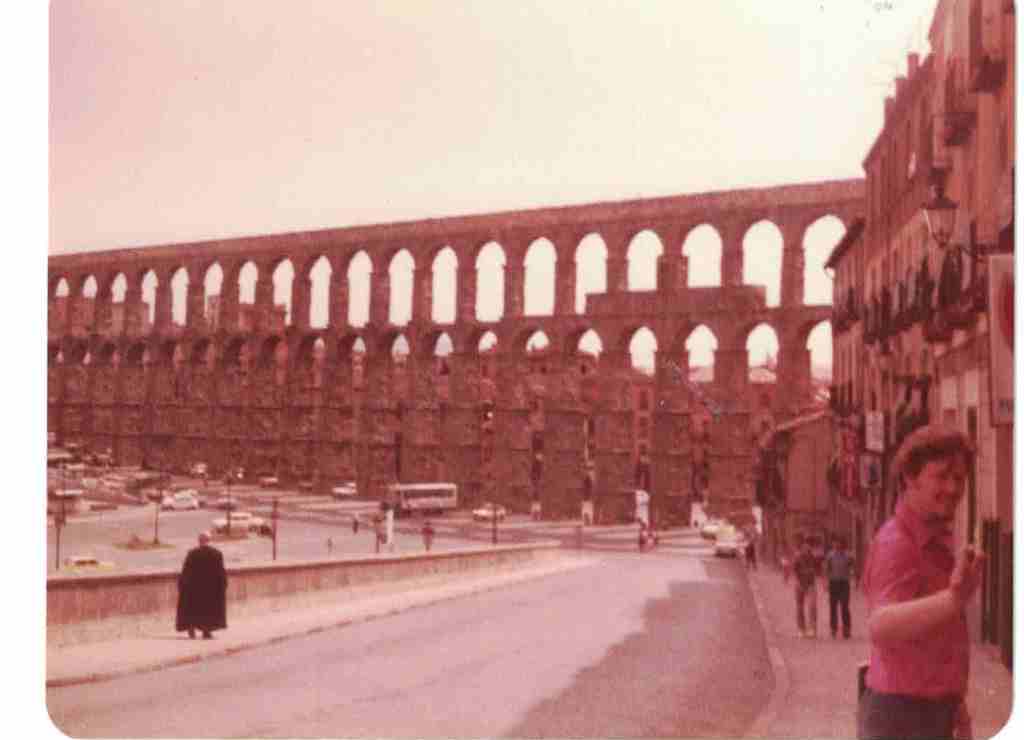
Working as a tour guide in Segovia Spain in the early 1980s. AMOR BRUJO TOURS and TRANSLATIONS
I don’t have a lot of cash on hand but I always have a leather purse with $20 worth of half dollars at hand and I have a bag with about $150 of change hidden away. I don’t normally carry a lot of cash. Most of my purchases are by credit card. I never use a debit card.

 I have a chance for a long life. 

Already I am grateful for the years I have lived (mostly in good health). I am 68 years old and older than many people I worked with, studied with or loved. I have known people who died in their teens, in their twenties, in their thirties in their forties, in their fifties, and in their early sixties.  I once saw a Sea Knight Helicopter fly away and cursed the fact I was not on it. It hit bad weather and crashed about 15 minutes later 23 Marines were killed including some people I knew. Our company commander canceled our trip and we had to march more than 20 miles back to camp in bad weather. Sometimes as Auld Pop used to say your number is up.

One lesson I have learned in life is that the body is a fragile vessel and that we are all mortal. Every day of good health is a gift.  I think being married has kept me reasonably happy and healthy. Choosing a good spouse is one of the most important decisions one can make for one’s happiness and health. I have been married for almost forty-two years to my best friend of the last fifty years. John Joseph Powell in The SECRET OF STAYING IN LOVE wrote: “It is an absolute human certainty that no one can know his own beauty or perceive a sense of his own worth until it has been reflected back to him in the mirror of another loving, caring human being.” 

Yes, no one can know true happiness unless they know the love of a husband and wife or of a child. I know when I first saw my grandchildren it was love at first sight! I do believe in enthusiasms and love at first sight.

Yes, no one can know true happiness unless they know the love of a husband and wife or of a child. I know when I first saw my grandchildren it was love at first sight!  I was happy the day I was married -but not as happy as my parents I think and I was happy when our children were born -a very special gift for which I am eternally grateful- but there is no joy like the surprise or extra-inning gift of grandchildren.    Children mean sacrifice and a lot of hard work but they pay dividends a hundred times over.  Hugh Heffner with his multitudinous and mostly sterile dud in the mud sex was really a chump, not a champion.   He thought he knew what life was but wasted most of his life in hedonistic trivialities. He thought he knew what love was but he knew only a fraction of the Four Loves.

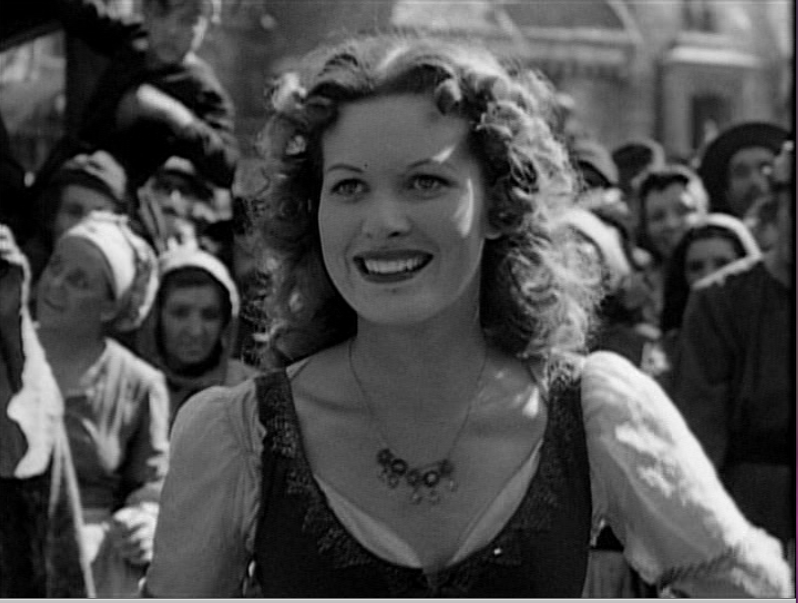
This is the actress MAUREEN O’ HARA (1939) as Esmeralda in the film HUNCHBACK OF NOTRE DAME.  Who with eyes and heart in breast could not fall in love with such a smile?

To be happy one has to be in reasonable health. One has to have something to do with your time. So it is important to have hobbies and intellectual interests and a few good friends.  One should be loved and have someone to love, have a roof over your head, some soup at the boil, some tasty food to eat,  One needs plenty of water to drink and wash, One thing l learned is that one can go days even weeks of light eating but one cannot go very long without water. So water is my favorite beverage!

To be happy one has to have some dreams and something to hope for. Many of my personal dreams are unrealized but I had fun trying to achieve those dreams. I hiked many mountains I climbed many ruins in Sicily, Crete, Madeira, in Portugal, Spain, Scotland, Greece and Italy. I kissed a few pretty girls and they kissed me back. I have gone deep sea fishing in the Atlantic and Pacific.  I played a lot of baseball and became in the words of a local athlete “decent”. I served honorably in the Marine Corps. I have published a few articles and one-act plays but never have written (a published book). I have written (privately) three volumes of essays and personal recollections that my daughter published. They are primarily for my grandchildren. I have taught many classes in history, literature, and languages and helped many students. I have coached sports teams and seen great athletes at play. All of our children and grandchildren are bilingual and were or are being raised as native speakers of Spanish and English. 

I love monumental public memorials and sculptures though  Shakespeare sang in the Sonnets of the immortality of literature:

“Not marble nor the gilded monuments

Of princes, shall outlive this powerful rhyme,

But you shall shine more bright in these contents

Than unswept stone, besmeared with sluttish time.”

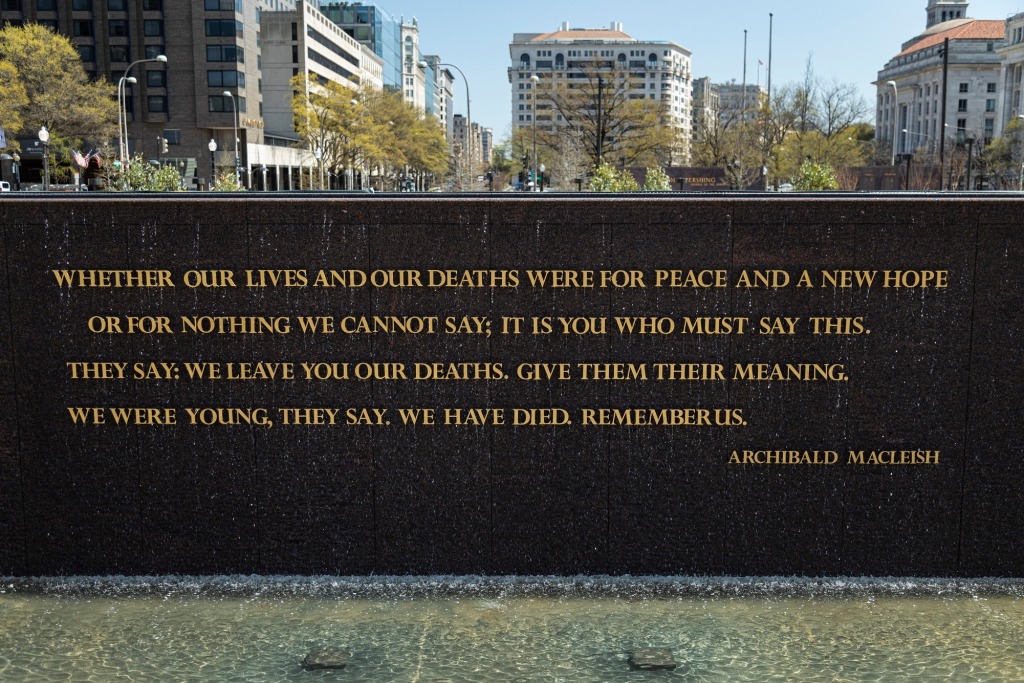
When I visit the cemetery or war memorials, I walk past hundreds or even thousands of names that represent life stories now silenced forever.  

Oh, they are the Silent Ones. May the many monuments that abound around the globe to those who have fought to protect our freedom and national independence remind us of duty,  the cardinal virtue of courage,  the inestimable value of valor, the honor evoked by such sacrifice!

Look at and contemplate {those}

” names …inscribed on the parchment of fame;

Heroes whose seeds were a noble example

That others might follow and honour thy name.”

I know that recorded history holds the adventures of a few who managed to be inscribed in the parchment of fame.   

I have never thought I needed to live a life worthy of being recorded. 

I never really sought fame or wealth but contentment and the quiet and security of a nice house and library. ] I enjoy quiet cafes, quiet rivers, quiet museums, and quiet walks in the park or in a forest.   I have always wanted to live an honorable life of service to my school, my country,  my family, and my God. “non mihi non tibi sed nobis as the Romans said, “not for me alone nor for thee all but for the common good of all.” 

I knew all about the world of books.  For most of my life, they were my biggest adventure.  Books could take you into a better world.  A world where there were fine songs for singing, moving laments, sports heroes, romance, adventures, tragedies, military adventures, explorations, mysteries, prayers, legends, and yes, even magic.  Of course,  the articles, stories, songs, and books ended eventually. Then you had to go back to being yourself. 

So in the final analysis bookish adventures are not enough.    A man craves the freedom to see places and do things. And when you are old you can look back and remember.   This is one of the reasons I enlisted in the Marine Corps , worked in construction as a laborer (I helped build Bill Gate’s home in Bothwell, Washington), and why I lived and traveled in Latin America, Spain, and Europe as much as I could.  I knew my time, my health, my freedom, and my financial independence were limited.  My father always said, “You have to take chances in life.  The door of opportunity opens and then closes.  If you don’t move ahead when you have the chance you can lose out forever. You have to decide if it is worth taking the chance.”

I realize I am the biggest threat to my emotional, financial, and physical health.

So what do I do? 

Number one I have a wife, children, life insurance, some savings, and some property.  I am not a doomsday prepper by any means but I believe in having emergency food, water, and medicine just in case of some natural catastrophe. I have a solar crank radio, a solar charger, flashlights, batteries, candles. a first aid kit, an emergency stove, extra medicine, and spare glasses. That is not excessive. If one wants to have a long life one must be prepared to take care of oneself in case of an accident or an emergency.

One thing I hope is that I do not outlive my wife, my children, or my grandchildren. I hope I live long enough so that my grandchildren have memories of me and get to know and love me. That is an important goal in my life. I look forward with joy to every spring. I love the birds who come to visit and feed in our garden. I love the plants and flowers that bloom. 

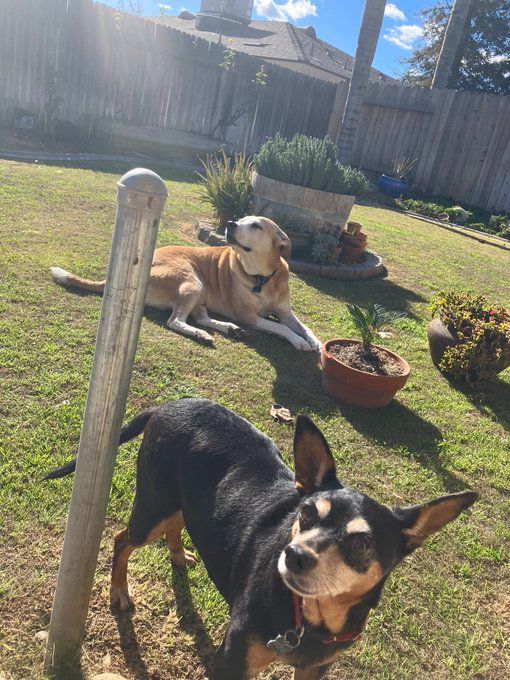
Leo and Laney enjoy our garden too Jan 2024

I do a lot of serious reading (classics, non-fiction, biography) but I enjoy lighter fare such as adventure tales, mysteries and westerns. I enjoy reading jokes and joke books.

I love reading about baseball and listening to games (chiefly) via MLB at Bat. I listen to games in Spanish and English. I first listened to baseball games in Spanish in the 1970s and it helped develop my Spanish. 

Otherwise, I don’t spend a lot of time on spectator sports. I glance at the newspaper but that’s about it. Most of the time I am happy to read about the final score.

I try to set time aside for PHYSICAL EXERCISE and JOY ( I try to walk daily in the park and clean the pool and garden). When the weather is good I swim once or twice a day. I love reading and listening to classical music so I have CD’s and a nice BOSE player, plus SPOTIFY plus ITUNES for my phone. 

I love to read the papers -The Wall Street Journal and our local paper every morning or Commentary magazine. I listen to LONDON TIMES radio reports as well as the Daily Telegraph and some Israeli news as well.

I spend some time on PERSONAL GROWTH. I love studying languages and spend about 2-3 hours a day studying new languages and reading ones I know. I have taken up a new hobby! Drawing. I always have drawn a little bit in my language studies but I have decided I can improve the quality of my notebooks! I enjoy singing or humming songs. I enjoy reciting poetry by heart just for fun. I also set aside time for relaxation. If I am tired or have a headache I rest and have some tea with lemon, Splenda or honey. I make a thermos of it to sip all afternoon. 

I love doing FACETIME with our grandchildren it is so wonderful to talk to them and see them so full of joy and happiness. It feels good to hear them say “YAYO, WHEN ARE YOU COMING TO VISIT?” 

I enjoy phone conversations with a few friends but am not really a phone person. I have to plan to call someone. Basically, I think calling can be an intrusion. And I know some people don’t like long or serious conversations. So my conversations with books are more satisfying than most phone chit-chatting.  But I call people who call me. People who don’t call me or write to me I pray for but don’t worry about. It’s sad when old friends drift away but the truth that’s life.

So I prefer to write on my blog,The Spirit of Cecilia or THE GILBERT HIGHET SOCIETY on FB or email people. I text some family and friends and share book titles via Audible.

I try to be moderate in what I eat and drink (I primarily drink water coffee and tea). I have a physical once or twice a year and take my medicines. 

I know that if one is to enjoy a LONG LIFE one has to do what one can to stay as healthy as possible. Then the chances for a happy long life are better. 

As a young man and in middle age I traveled a lot so I am happy that I had that experience. But now I really have lost my wanderlust. I only want to travel to visit our grandchildren. Most days I am at home, on the porch, in the garden, in my library, in the TV room , or listening to podcasts or books on tape in bed. My wife and I enjoy JEOPARDY and British mysteries and shows on Masterpiece Theater. I don’t drive very much anymore perhaps once a month or less!  I spend some time on Twitter (X) and Facebook and check my email at least every other day. I enjoy corresponding with people in Italy, Scotland, Israel , and throughout the English-speaking world.

I have always had the Munro motto in mind which is Dread God (and obey his commandments because that is the whole duty of man).  BIODH EAGAL DHE OIRRE in Gaelic or Reverence you unto God.      It is a very ancient motto and reminds us that Munro is a Christian name -it means the descendant of the Men of the Halo River the Roe (the Saint’s River) a place name in Ireland. That is probably the first Bible quote I ever knew and I heard it at least from 1959. I think It helps to have God and a little religion in your life. But that’s just my opinion. People should have freedom of conscience and choose their own paths. The only thing I go do is set a good example and invite people to consider the Good Life as I see it and seek it.

An ancient motto I have known since at least 1960 is NE OBLIVISCARIS  do not forget.  This was the Regimental motto of my grandfather’s old Regiment 1914-1919, the Thin Red Line of Heroes (The Argyll and Sutherland Highlanders)  At Balaklava in the Crimean War, the Argylls were called the Gaelic Rock.  If they had failed the entire British and Allied army may have been destroyed but they calmly spread out in a thin line of two, fixed bayonets and fired aimed volley after volley from their Enfield Rifles.  Their commander Sir Colin Campbell said, “Lads, we have to stop them or fall in the effort.”  The Argylls near him said to him laconically, “Aye,  we’ll stand until you give the order.”  The war correspondents who were present were astonished at their discipline and cool courage.    The Thin Red Line of Heroes became a symbol of the courage and professionalism of the British Army but especially the Scottish Highland Regiments. Many of my ancestors served in Highland Regiments.

And of course, I am a loyal man so SEMPER FIDELIS (always faithful) is a motto also. This is the motto of the US Marine Corps.

Another motto is CUIMHNICH AIR NA DAOINE BHON TAINIG TUSA  (REMEMBER THE PEOPLE YOU CAME FROM). 

I believe marriage is a sacrament and I have always been loyal to my wife and family putting their security and happiness above everything else.   

I face firmly towards the future but never forget the past.  I know in a long journey some things have to be left behind. 

I only wish for my granddaughters and future grandchildren that they will have strong faith, good values, a good education, and the warmth and security of a good family.

For that is the duty of a good man, a good father, and a good husband. If you live a good life you will want to live a long life and I think you have a better chance for achieving a long life. 

Daily writing prompt
What are your thoughts on the concept of living a very long life?

My Quiet Book Nook is the perfect place to read, write and study

by Richard K Munro

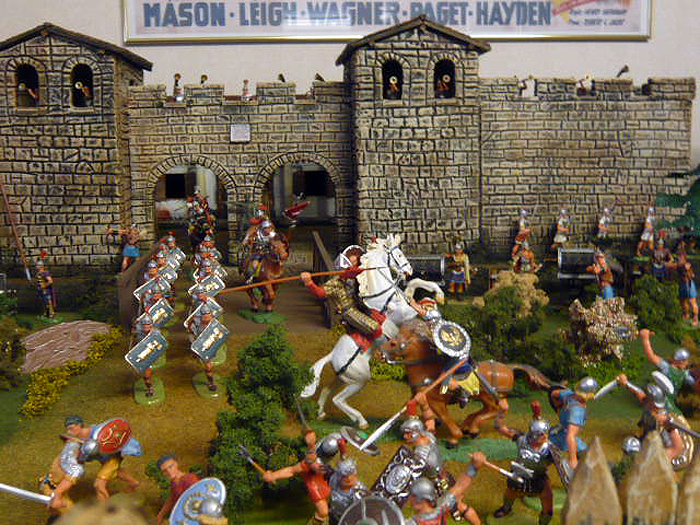
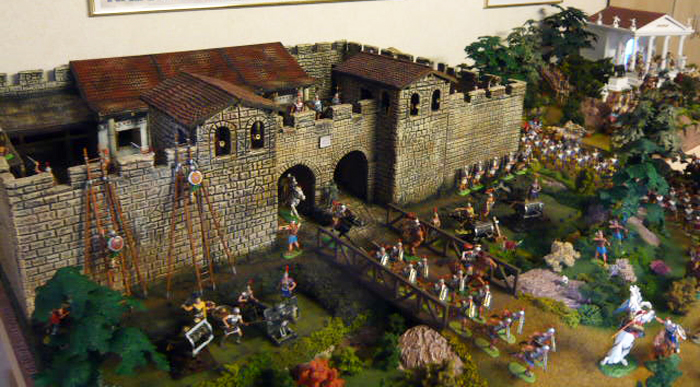
Elastolin diorama
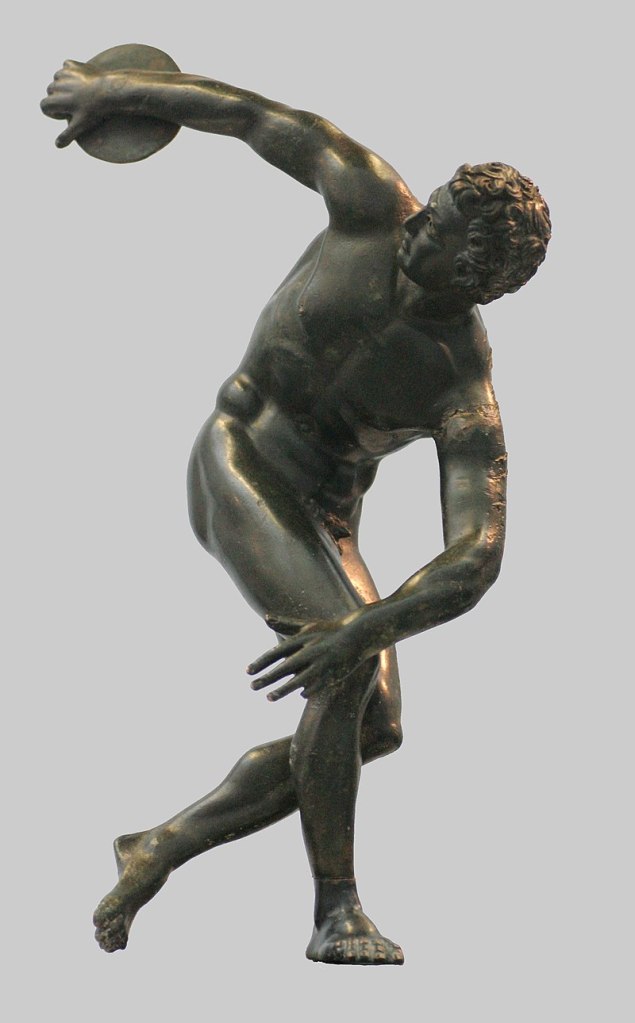
The Discus Thrower
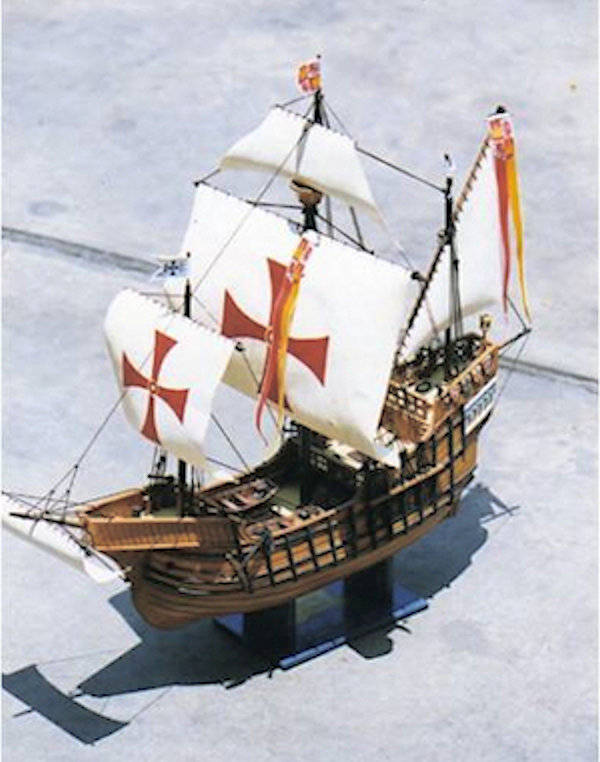
Santa Maria model circa 1992 made by RUTH, IAN and RICHARD MUNRO at CHRISTMAS

The perfect Book Nook or private library has at least one plush leather chair preferably with a rocker and nice padded as I have in the corner. It is an old friend I have owned it for over 30 years and my father enjoyed using it. I always let my father have my best chair and I would sit in my mother’s chair, my second-best chair. It is a carpeted room. My chair has its own special lamp. I have a ceiling fan for the summer plus some built-in lights. My room has a table for study plus two desks and many bookshelves, some decorated with fossils, busts, baseball memorabilia, and toy soldiers. I have an electric pencil sharpener I use almost daily. I have over 60 composition notebooks filled with language notes and about 20 blank ones for future use.  I have windows that look out towards the garden and in the summer, I see many birds and squirrels dancing about. We live in a very quiet neighborhood next to a nice park with trees, a pond, and paths to walk.  To the left of my desk, I have a French door that opens to the covered patio which has chairs and a table on which I study on find days in the spring, fall, and early winter. It has a screen door from which I can hear music in my rooms. I have no TV in my book nook but I have a radio on my BOSE CD player and many CD’s chiefly classical. And of course, I sometimes watch YouTube videos on my laptop (but not often).  My music is chiefly from SPOTIFY, but also via my phone and BOSE Microlink (Itunes) . In the Spring summer and Fall, I often listen to baseball games on the porch or in the library while reading or doing language studies. I used to listen to the radio a lot but now mostly listen to Audible books or podcasts.

There is plenty of storage for paper. I have a printer connected to the laptop.  In my library I have about ten reems on the shelves and two in a drawer under the printer. I have a larger supply in reserve in the garage. I have three chairs besides the leather chair. Next to the leather chair, I have a side table that belonged to my father with a drawer. Another chair belonged to my mother and is about 65 years old. I have boxes for index cards and coffee mugs filled with #2 pencils, colored pencils Bausch and Lomb magnifying glasses. In a wooden box, I have a chrome Cross Pen that belonged to my father. The box has a spare cartridge I use the pen to sign personal letters or important documents. I have a phone next to my laptop and a brass hand winding, Tiffany clock, hydrometer, barometer, and thermometer. It is my backup case of a blackout, and it serves as a paperweight. I have two staplers on my desk It was a retirement gift to my father in 1976. Next to the phone is a reproduction of Myron’s Discobolus or “discus thrower”, Greek: Δισκοβόλος, Diskobólos). I picked this up at the Vatican circa 1972; they have a wonderful full-sized marble Roman copy found, I believe, at Hadrian’s Villa.  The Greek original in bronze is lost but we know the work from numerous Roman copies.  Munich there is a fine Roman bronze reproduction of Myron’s Discobolus, 2nd century AD.  I have several busts of famous historical figures some American but mostly Greek, Roman, classical composers or literary figures.

I have a tall glass display case filled with a model of the SANTA MARIA, that my mother, my son and I put together one Christmas before her death (1992 I believe). My mother did the rigging. There are also “ruins” and dioramas of charging Elastolin Roman soldiers on food and horses, Huns, Goths, and Normans (the “Barbarians”. They date back to 1963-1971. There are a few I/R figures and French Starluxe mixed in. There are two chariots and some Roman siege weapons. On the mantle of my fireplace, I have cards, models, and toy soldiers. I have a Lewis and Clark Diorama I bought at a museum in Iowa in 2004 (it includes Sacagawea and York).  I have followed almost the entire trail of Lewis and Clark starting in 1982 and finishing in 2004. On the walls I have art reproductions and historical photographs I have collected over the past 60 years such as Churchill holding a tommy gun I have for example a full-size museum replica of ATHENA MOURNING.  At my main desk, I have books of quotations, reference books, and dictionaries. I use the Internet and electronic dictionaries but find book versions easier to study and for annotations.  I have a variety of English dictionaries. The one I use the most is the 4edtion American Heritage. One of my favorites is the Oxford Companion to English Literature – a nice leather-bound edition. It is the 5th edition edited by Margaret Drabble which is the last edition to have complete commentaries on Walter Scott and other classic authors. I have an extensive library of English language books chiefly classics, biographies, and histories but also baseball books and large-sized art reproduction books. I also have a modest library of Latin books (many bilingual), Greek books including the Bible (I am studying Greek presently, Gaelic books (chiefly song books and poetry but some history and nonfiction), many (hundreds) of Spanish books, some Portuguese books, some French books, some German books. I have a German-Spanish dictionary for example and a Latin-Spanish dictionary. One of my favorite reference books is MAMMALS of the WORLD (1964) which is very useful for ascertaining the indigenous names of mammals in many languages and of course which has curious animal facts and thousands of black-and-white photographs.

I can’t say I have been EXTREMELY productive as a writer in my life but I have read and studied much and been able to teach many. Review reading via rote rehearsal is effective but it is always better to note take and create study cards from notes and use colors and pictures whenever possible. ’

I know Spanish very well, for example, and often speak it but I read and review Spanish at least 20-30 minutes a day (I don’t usually take any notes). For new languages such as Italian or Greek, I take notes sentences dialogues, and translations and write new vocabulary, I draw colored pictures and copy words that give me difficulty three times over and highlight them with yellow. I probably practice 5-7 languages a day. I read Portuguese very well but found I speak it less well since I have not used it daily for more than 40 years. But I practice listening and speaking via Duolingo and so have regained most of my former fluency. I never lost my ability to read but found my writing had declined due to lack of practice and when speaking I tended to fall into Spanish. My book nook is my quiet refuge from the world.

Read, and then Ride

To paraphrase Charles Darwin — not the strongest, nor the most intelligent, but the ones most responsive to change tend to survive. Not just as a species, adaption is our key to even survive at everyday work, home, or for that matter in any social environment. Exact adaptive mechanism depends on the situation. But in general, explanation to a problem always helps. Essentially why did something happen? Explanations to that `Why` can through therapy, through study, or may be just through the bottle! To quote a character from Nolan’s Batman Begins – “you always fear what you don’t understand” – an explanation is simply a good start to figure out how to adapt.

Understanding that cause requires theory, and adequate explanations mandate good theories applied to correct contexts. Reading provides us with theories. But, hardest part is internalizing those theories and applying them to our context. Marvin Minsky famously said – “You don’t understand anything until you learn it more than one way”. It took me a while to grasp significance of this quote. Any relatively complex theory has several implicit assumptions. One way to discover those implicit assumptions is to apply those theories in multiple contexts. For instance, here is a theory — ‘”Apocalypse Now” is a great war movie’. But is it great because it’s a war movie? Not all war movies are great, so is it because it’s three hours long and well edited? But, then there are other movies which share same qualities and are not of the same grade. We can easily discover implicit assumptions in our thought by applying our theory to multiple contexts. No matter how big or small that thought, this is a great way to refine our own understanding. This is a lot similar to how basic scientific process works in a lab.

Beyond the question of movie reviews, we can apply this refining process to more abstract theories as well. Here’s such a theory – democracy is an effective process to make decisions. But, if we generalize that idea to all decision making processes, we’d soon be subjected to whims and fancies of majority rule. No individual or organization can function well by making all decisions via voting. We immediately discovered unknown implicit assumptions to our theory.  But, this process also depends on our ability to apply same idea to different contexts. That ‘transfer of learning’ seems uncommon. Probably because it requires higher levels of abstraction. We need to essentially infer voting as that abstract process and apply that to decisions in multiple contexts. In that sense, learning is a process of refining our theories, and accurately identifying all its applications, while progressively removing incorrect assumptions.

Eventually our ideas are a lot like arsenal, they need to be sharpened and our skills determine their best application. This learning is cognitively taxing, and developing those higher levels of cognition sort of takes time. But, Marvin Minsky is correct in stating – “You don’t understand anything until you learn it more than one way”.

Reading is definitely a great way to gain exposure to new ideas, but as we can see, internalizing them requires reflection. This is especially true for the challenges we face in our daily life. Because we are all battling different problems and have slightly different assumptions and beliefs about how the world works. So, no matter how good the book, new ideas need to always take root and evolve within our own mental context. They need to be refined and chiseled to fit our mental context and to our unique problems. For this some prefer meditation, or sleeping, but for restless minds it can be some activity — like rock climbing or hiking — or just motorcycling. Someone said — you are never on a motorcycle, you are always a part of it. In that sense, when you are a totally different entity, new ways of interpreting old ideas simply emerge. So, when I’m on a long ride, along with enjoying nature, the goal is to live up to Minsky’s sage advice.