
Tag Archives: Robin Armstrong

Cosmograf’s Middle Period: An Extraordinary Run of Excellent Albums

Hello Spirit of Cecilia Readers!  I hope you’ve been following us recently.  We’ve been quiet in the reviewing department but we’ve been very active with our Cecilia in Proghalla Progcasts.  Here’s hoping we can get Robin Armstrong to join us soon!  And, writing of Robin Armstrong, here below we review Cosmograf’s mid period, The Man Left in Space (2013), Capacitor (2014), The Unreasonable Silence (2016), and Hay Man Dreams (2017).  Here’s hoping you enjoy the albums as much as we do.

Brad: Tad, as always, it’s wonderful to be reviewing with you, my awesome friend and fellow progling.  It’s been too long since we last reviewed.  “Father, bless me, for I have sinned. . . it’s been too long since my last review.”

I’m so glad we’re reviewing the amazing Robin Armstrong and his rather stunning prog project, Cosmograf, which began around 2009, deep into third-wave prog.  

One thing we can state with certainty about Armstrong–he has an amazing ear, and he’s one of the greatest living audiophiles.  I would put him in the august company of Steven Wilson, Rob Aubrey, and Bruce Soord.  Everything he touches, he adds levels of perfection.  I would guess some of his mixing is tedious work, but he always does the work, regardless.  That level of perfection, of course, is something western civilization has been striving for since Aristotle challenged his son to pursue beauty no matter the cost!  Yet, over the course of history, so few human beings have risen to the challenge.  Armstrong has.

The first album I heard from Armstrong was The Man Left in Space, and, after falling in love with it, I went back and bought his first two albums.  Since then, I’ve been a completist.  At the time of The Man Left in Space, Armstrong was incredibly active on Facebook and social media in general (he’s much, much less active now), and I got to know him through mutual prog interests.  When he put out a call for an American-voice for narration of NASA for the album, I responded within minutes with some recordings and Armstrong immediately accepted them.  That was the first time my voice had ever appeared on an album, and, of course, I was absolutely thrilled.  And, it created a life-long loyal fan.

One of the many things I love about Man Left in Space is its homage–but never sycophantic–to Pink Floyd.  Of course, there are a lot of folks influenced by Pink Floyd, not just Armstrong, but Airbag, Steven Wilson, and Dave Kerzner.  I love them all.  One of the best things about all Pink Floyd-esque bands, they always take their time with their music.  They linger when they need to linger, building emotion and tension.  I attribute this mostly to David Gilmour’s classy and classic guitar playing.

Tad: Brad, it’s great to be in dialogue with you again, and I’m so glad we’re tackling Cosmograf! Like you, The Man Left In Space was my first exposure to Robin Armstrong’s magic, and I was immediately hooked. I love everything about his work: the impeccable production, the memorable melodies, the top-notch instrumental work, and his unassuming vocals. As a matter of fact, I think his vocals are my favorite aspect of his music: kind of everyman in quality, but conveying inner strength, if that makes sense. I even like the care he puts into the artwork for each album. Every album cover is unique, but of the highest quality. 
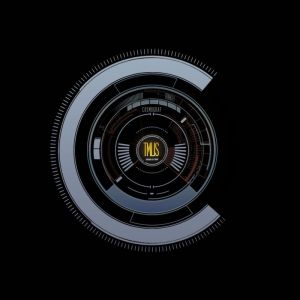
I was not as familiar with the following albums Capacitor, Unreasonable Silence, and Hay-Man Dreams, but I have really enjoyed immersing myself in them the past couple of weeks. 

Let’s start with The Man Left In Space. It’s a fairly straightforward story of an astronaut who awakens in a space capsule, and he gradually realizes he has no hope of returning home to earth. There are lots of cool spoken word passages with sound effects (including a Birzeresque voice with a Kansas accent!), before a beautiful acoustic guitar begins playing an addictive riff for the second track, “Aspire, Achieve”. I hear the Pink Floyd influence you refer to, while the background vocals and crunching electric guitar that comes crashing in remind me of classic Porcupine Tree. This is a wonderful track that I still think is one of Armstrong’s finest in his long career.

Brad: That Kansas accent!  Seems ubiquitous.  Ha.  Thanks, Tad–my first brush with prog fame.

I love “Aspire, Achieve” as well–such a stunning piece.  And, you’re right, there’s a lot of Porcupine Tree in the music, but not in the vocals.  Armstrong has an excellent voice, and his vocals are all his own.  For me, though, the standout track is “The vacuum that I fly through.”  That track gets me every time.  The guitar work, especially, is so very tasteful, as is the bass.

Tad: Tasteful, indeed, Brad! Ok, as far as Capacitor goes, it seems to be a kind of steampunk tale of a man who has figured out how to transfer his consciousness into inanimate objects? At least, that’s what it seems to be, to me. In the introductory track, “The Spirit Capture”, there is quite a bit of spoken word where someone asks, “What happens to the energy in our bodies when we die?” and there is dialog between people claiming that the energy is what ghosts are. “The weight of a man’s soul is 21 grams!” “Our spirits are captured for all mankind!” Very strange. I was reminded of Christopher Nolan’s movie, The Prestige, about a magician who works with Nikola Tesla to teleport himself. The only catch is that the magician’s original body dies every time. 
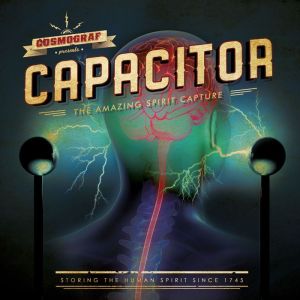
Anyway, Capacitor is very satisfying for me, musically speaking. It rocks a little harder than The Man Left In Space, and there is some tongue-in-cheek humor; in “The Reaper’s Song”, there is an announcement on a PA: “Thank you for boarding the Reaper Train’s 8 am service to Oblivion, calling at Greed, Stupidity, and Laziness.” Ha!

By the way, I think “The Reaper’s Song” is a fantastic track – a very good melodic hook in the main riff, and Armstrong’s vocals are excellent. Instrumentally, it builds nicely, until we are presented with a beautiful guitar solo, while there is an oblique reference, vocally and musically, to The Beatles’ “I Am The Walrus”. Very clever! 

I also like the next song, “The Drover”, a lot. Nice, gentle, acoustic guitar and piano intro, while Armstrong sings,

In a road close to me
The sight of the drover
An old man with a pipe
Looking over your shoulder
Swinging from a tree
Wonder what made him do it?

Wow! That was quite jarring when I first heard those lyrics! The beautiful melody makes me love this song, despite its very dark subject matter. In fact, it seems to me that death permeates all of the songs on this album. I don’t have the lyrics in front of me, but there is a very foreboding atmosphere throughout the entire album. “White Car” begins with a woman conducting a seance. The final track, “The Ghost Gets Made” is definitely spooky as well. Come to think of it, I’m listening to this album a few days before Hallowe’en, and it’s a very appropriate soundtrack for this time of year!

Brad: Tad, such great thoughts. Thank you. I will admit, Capacitor is my favorite album from Cosmograf.  From the opening moment to the conclusion, I find the album just riveting.  Truly, Armstrong at his best and most creative.  I love the subject matter, I love the lyrics, I love the flow of the album–in terms of instruments, I’m especially taken with the bass.  But, the keyboards are just outstanding–they remind me of later Traffic.  The flow, especially, is strong, as Armstrong moves so readily and easily between soft and hard passages, between lingering and intense.  It’s really a perfect prog album.  It reminds me a bit of Pink Floyd, a bit of Steven Wilson, and, though not cheesy, a bit of Alan Parsons.

You’ll laugh at me for this–but the album also reminds me of one of my favorite video games, Bioshock Infinite.  For what it’s worth, I’m not really a video game guy.  As I’ve gotten older, the first-person camera makes my stomach turn and I get motion sickness pretty easily.  Too bad–as there are days I’d love to just come home from work and blow some stuff up!  Ha.  Such a guy thing.  Anyway, Capacitor reminds me very much of Bioshock Infinite.

That said, Tad, I also really love The Hay-Man Dreams.  If Capacitor is his retro science-fiction story, The Hay-Man Dreams is his Bradbury-esque folk tale.  What are your thoughts?
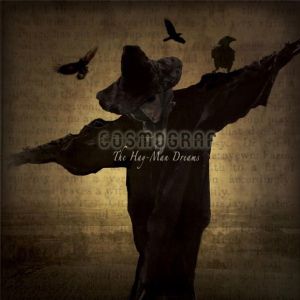
Tad: Okay, Brad, here is where I owe you a huge “Thank you”: I think The Hay-Man Dreams is Armstrong’s finest work, and I wouldn’t have heard it if not for your recommendation. From start to finish, there isn’t a misplaced note. Every musical moment is perfect, from the appropriately pastoral melodies and instrumentation to the elegant lyrics. Now, as far as the lyrics go, I’m not too sure what the concept underlying them is, but it seems that a man identifies with a scarecrow he sees in a field. He is alone and unable to feel, so he considers himself a “hay-man”. At least, that’s the impression I get.

Also, there’s a sense of unease and menace throughout:

The walkers tread the corn
They’re damaging the harvest
The gun has killed the fawn
There’s trouble in the forest

As I listen to The Hay-Man Dreams, I am reminded of one of my favorite television series: Midsomer Murders. Every episode is set in an idyllic English village where the most bizarre crimes occur. The Hay-Man Dreams would make a fitting soundtrack to it!

The third track, “The Motorway” is the best song in Cosmograf’s entire catalog, in my opinion. The acoustic guitar opening is simply delightful, and Armstrong’s vocals are full of yearning as he sings, “I want to feel a human touch/I want it really very much.” As the song progresses, it gets heavier and rocks harder. This song is a “Stairway to Heaven” for the 2010s!

Other highlights include the Beatlesque “Melancholy Death of a Gamekeeper” and the epic closing track, “Hay-Man”. Both are such stately and beautiful songs that I never tire of listening to. The former has some terrific guitar solos, and the latter features wonderful vocals by Rachel Hawnt. It also has this little spoken word interlude that I think is fantastic:

All winter through I bow my head
Beneath the driving rain
The north wind powders me with snow
And blows me black again
At midnight ‘neath a maze of stars
I flame with glittering rime
And stand above the stubble
Stiff as mail at morning-prime
But when that child called spring
And all his host of children come
Scattering their buds and dew upon
These acres of my home…

I did a little research, and they are from Walter de la Mare’s poem, The Scarecrow. How cool is that!

I can’t say enough good things about The Hay-Man Dreams – it’s an extraordinary album. Now I am very interested in your take on it. Ray Bradbury?

Brad: Well, when I hear The Hay-Man Dreams, I think of October and harvest, and I think of Ray Bradbury’s The October Country.  There’s a kind of folk horror–even in its praise of country life–in and on the album.  Or, at least, that’s what I hear.  A kind of Scarecrow (think Batman’s Scarecrow) or something out of the X-Files.  Whether it’s meant to or not, it sort of anticipates Steven Wilson’s latest, Requiem for a Village, at least in tone.

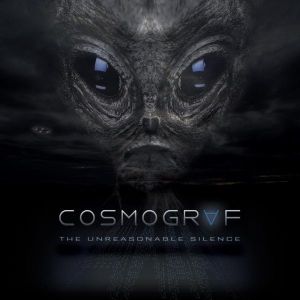
Have you had a chance to listen to The Unreasonable Silence?  Again, there’s that really creepy element to it–a kind of folk horror is the best way I can put it–in the same way that Capacitor and Hay-Man are creepy.
In each of these albums, Armstrong proves not only brilliant in composition but brilliant as an audiophile.  Again, when it comes to production, I would happily place him up there with Soord, Aubrey, and Wilson.

The Unreasonable Silence also combines the mystery and lingering of The Man Left Out in Space with the unrelenting drive of Capacitor.  I love it.

Really is there any aspect of Cosmograf in this middle period that isn’t just perfect?

Tad: Totally agree, Brad. I have listened to The Unreasonable Silence, and while I think it is very good, it doesn’t measure up to the other three, in my opinion. Maybe it’s because I find the subject matter disturbing: a man cuts himself off from his girlfriend, his job, everything, because he has had an encounter with aliens. At least, that’s what I think the album is about. With Cosmograf, nothing is clearcut.

One theme all four of these albums have in common is alienation: the man left in space is literally cut off from humanity, the steampunk inventor in Capacitor attempts to transfer his soul into a tree, the guy in The Unreasonable Silence disengages from all human contact due to a traumatic experience, and in Hay-Man a farmer, gamekeeper, motorway driver (are they all the same person?) identifies himself with an unfeeling scarecrow. I hope Robin Armstrong has at least one healthy relationship with someone in real life!

Again, Brad, thanks for suggesting we discuss this tetrad of albums; they are an amazing run for Cosmograf, and I am so glad we took a deep dive into them!


The Bardic Depths’ “Promises of Hope” Is a Triumph

cover

The Bardic Depths, a musical project begun by musician Dave Bandana and lyricist Brad Birzer (who also founded this blog!) have just released their second album, Promises of Hope.

Rock artists fear succumbing to the dreaded “sophomore slump”, but Bandana et al. need have no worries on that front. Promises of Hope shows tremendous growth from their eponymous debut album, which was an all-around delight itself. (Reviewed on Spirit of Cecilia here.) There is now a stable core of musicians involved: Bandana on vocals, guitars, keyboards; Gareth Cole on guitars, Peter Jones on vocals, sax, penny whistle, and Tim Gehrt on drums.

Like their debut, Promises of Hope is a concept album, this time relating a tale of divine intervention in an attempted suicide in a fantasy realm. Sounds heavy, I know, but this is some of the most life-affirming music I’ve ever heard. The opening song, And She Appeared, is roaring rocker that is reminiscent of classic ’70s Rush. Cole’s lead guitar trades wonderful solos with Richard Krueger’s galloping organ. It’s an exhilarating way to begin an album. Lyrically, it introduces the main character, a woman who is

“Halo’d wrapped in white
Radiant wrapped in white
Innocence made real
Beauty made manifest”

However, there is something tragic in the offing, because she brings “promises of hope, but never of victory.”

Regal Pride, the next song, features lead vocals by Peter Jones, as well as his excellent saxophone flourishes. Our heroine has been betrayed by a man of mystery, and the melody is suitably somber.

Track three, Consumed, is the best of the album. It features a stunning classical guitar intro by Kevin McCormick, and soon shifts into a beautiful British-folk melody that sounds timeless. Jones’ penny whistle and Donny O”Connell’s spritely violin add Celtic atmosphere while Cole pulls off two more excellent electric guitar solos. The heroine has lost hope, and she is consumed by a fire.

Next up is The Burning Flame, which has a very spacey intro that calls to mind Wish You Were Here-era Pink Floyd. McCormick contributes another excellent guitar solo, this time on electric, while Paolo Limoli provides wonderful piano and Fender Rhodes accompaniment. Jones takes lead vocals here, and they have a definite bluesy edge. This entire track is a gorgeous, slow burn (pun intended!) of song that I wish lasted far longer than six minutes. Fortunately, it segues into the extended instrumental, Colours and Shapes, where Jones’ sax continues the spacey blues mood.

In Why Are You Here? our heroine is confronted in the afterlife:

Why are you here?
Did you not respect?
Did you not cherish it?
Could you not love life?

This is another somewhat slow song, but one that is enlivened by Limoli’s tasteful piano fills and Cole’s terrific guitar solos. 

Things pick up with Returned, where the protagonist’s suicide is rejected by her Creator:

“You must return
You will make good
Rewrite this wrong
You must Love”

These lyrics are accompanied by a triumphant melody that is bursting with energy. The album’s co-producer, Robin Armstrong really shines here, lending his talents on keyboards, vocals, bass, and lead guitar.

With our heroine given a new lease on life, The Essence explodes out of the speakers with an insistent beat and infectious melody that is truly exhilarating. 

“Reconciling hope, reconciling all.
Reconciling everything.
It is the universe made real.”

Bandana’s vocals and synths are outstanding here; they convey the pure joy of the lyrics.

The final track, Imagine, is a coda addressed to all of us and the choices we must make:

“Imagine a world in which we are judged by
Our most insufferable, our sorriest…

A horror beyond time…

Imagine a world in which we are judged by
Our best and our glory, our gift and our love…

There is a word and it needs to be heard.
It is hope. It is what you promised to me.
Rise up and see, it is our victory.”

Krueger’s church organ is appropriately employed here, because this last song is a hymn to hope. As the song unfolds, the tempo increases inexorably, and I’m reminded of the final scene in C. S. Lewis’ Narnia book, The Last Battle, where the protagonists reach paradise. As they realize where they are, they cry out, “Further up and farther in!”

Some final thoughts on this special album:

Dave Bandana has said that Robin Armstrong really pushed him to do his best, and it shows. His vocals and keyboards are terrific throughout. Peter Jones is the secret weapon of The Bardic Depths – his singing and sax work are some of the best elements in the mix. Gareth Cole’s lead guitar is AMAZING!

Promises of Hope is an outstanding album with an inspiring concept. The melodies complement the lyrics perfectly. As good as their debut was, this is even better. The core group of Bandana, Cole, Jones, and Gehrt have gelled into a formidable ensemble, and I hope they plan to tour.

Promises of Hope is on Gravity Dream Music. Here is the official lyric video for The Essence

COSMOGRAF – ANNOUNCE NEW ALBUM – HEROIC MATERIALS


We are really pleased to announce that Cosmograf returns with their ninth new studio album, Heroic Materials to be released on 9th September 2022.
 
William ‘Billy’ May looks back on his life at the age of 99 and realises the world has completely changed since he was a young man put into an impossible scenario, defending his country from the air. He no longer recognises much of the modern world but understands that the human race must live in a different way in the future.
 
“This album is really about change, our refusal to accept it, but also recognising that it’s essential to our survival”, says Cosmograf’s Robin Armstrong. “The story centres on a WWII Spitfire pilot who laments a lost golden era, but reflects that the human race must change its ways in order to preserve our existence on the earth.” 

Robin is joined once again by drummer, Kyle Fenton, and there is a special guest appearance from ex-Big Big Train keyboard player Danny Manners, who plays piano on the 13 min title track, set in three parts.
 
The lead track from the album, British Made is released on our Bandcamp page today, and the video for the track is available to view on YouTube now. 
“British Made is really a nostalgic throw back to a golden era of motoring where design and craftsmanship was more important than carbon footprints.  I think it’s incredibly sad that we are coming to the end of this present journey with the motor car, as we reject fossil fuels for electric power, even if it’s for good reasons” says Robin.

The album sees the character wrestling with his memories of the war, and harbouring nostalgia for a past era but he realises that change is essential if we are to avoid climate catastrophe.

Heroic Materials will be available in CD, Deluxe Media book edition, Vinyl and Digital formats and pre-ordering is now live on the Gravity Dream Music website.

Heroic Materials Pre-order link: https://bit.ly/2YObrzH


The new single ‘British Made’ on YouTube: https://youtu.be/Lqj40KJLrtA

The Bardic Depths: Truth, Goodness, and Beauty in Dark Times

The bard – singer, poet, truth teller. The one who expressed a community’s hopes, fears, and values in a form that everyone could immediately grasp and be inspired by. Every tribe needs someone who can remind them of their virtues and warn them of dangers. The prog tribe has a new bard, The Bardic Depths, comprised of Dave Bandana (music) and Brad Birzer (lyrics), with an all-star supporting cast of musicians.

Their eponymous debut album, The Bardic Depths, explores how vital true friendship is for people to survive in a fallen and dangerous world. It focuses on The Inklings, a group of 20th century British writers/philosophers/professors: J. R. R. Tolkien, C. S. Lewis, and Owen Barfield. They were survivors of The Great War – that cataclysmic conflict that signaled the end of liberal western civilization.

Our journey begins with the song “The Trenches” and a spoken excerpt from the memoir of a veteran (C. S. Lewis, maybe?) of The Great War. As Birzer reads the soldier’s account of the appalling conditions in the trenches, Bandana lays down a bed of ominous synthesizers. At the point where the soldier remembers the first time he heard a bullet whistle past his head, we are treated to a beautiful guitar solo by Kevin McCormick as various voices call out, “This is war!”

The ancient Greek poet Homer is the primal bard of western civilization, and Birzer’s lyrics make the connection to him explicit, as Bandana sings, “So this is what Odysseus felt/So this is what Leonidas felt…” and ending with “So, this is what Ronald [Tolkien] felt/This is what Jack [Lewis] felt/This is what Owen [Barfield] felt”.

In the second track, “Biting Coals”, we gather in a cozy pub with Tolkien, Lewis, and Barfield to “meet, smoke, and drink”, and wonder “Where is fair Albion/What has happened to the West?” This track evokes the best moments of classic Floyd, with strummed acoustic guitars, Bandana’s warm and intimate vocals, and majestic washes of synths. This is a wonderful song that never rushes the moment, allowing the listener to contemplate along with The Inklings if there is a way forward for civilized men when everything that was once certain and established is no longer.

Next up are the three central “Depths” songs: “Depths of Time”, “Depths of Imagination”, and “Depths of Soul”. “Depths of Time” is the longest track on the album at 12:35, and it is a standout. The first four and a half minutes feature a languid sax (Peter Jones, Camel/Tiger Moth Tales) gracefully soloing over some Vangelis-sounding synths. Once again, nothing is rushed – the music is allowed to develop at its own pace which increases the listener’s anticipation. That anticipation is well satisfied with the middle section, “The Flicker”, featuring a compulsively catchy and disco-y melody and beat. An edit of this section is the album’s first single, and it’s a great choice, rivaling the radio-friendly Alan Parsons Project at their ‘70s-era best.


“Depths of Imagination” celebrates the Inklings’ literary gifts, and how they bounced ideas off of each other to improve their art. “In brotherhood, we share and shape/In brotherhood, we hone and create.” Musically, this is a straightforward rocker, with a propulsive guitar riff and wicked synthesizer solo that captures the excitement of artists creating and collaborating.

“Depths of Soul” is a simple, almost creedal recitation of the Inklings’ faith in beauty, truth, and the excellent, and their efforts to bring them to light through their art: “There is a glass through which we see darkly/There is the spotless mirror/There is the Light/There is the reflection/Here is the shadow/But there is no nothingness/All moves with grace/Or it moves not at all.” Peter Jones returns with another excellent performance on sax, trading licks with Gareth Cole’s guitar. The melody is leavened with a little Floyd influence, especially in the final bars. Very tasty, indeed!

Which brings us to the final two tracks, “The End” and “Legacies”. “The End” chronicles the splintering of the Inklings’ brotherhood, and their recognition that human frailty is inescapable. “To the world we sang/To the world we spoke/To the world we enchanted/Yet, there is always frailty.” Bandana’s music perfectly complements the sentiments of the lyrics – he creates a hushed, delicate atmosphere through piano, cello, and flute. Of course, all good things on this earth must end, and the Inklings’ friendship was no exception. As Bandanna sings of the Inklings’ dissolution, there is palpable sadness and regret.

If The Bardic Depths closed with “The End”, it would leave the listener without any catharsis. Fortunately, we have “Legacies”, a celebration of the incredible literary legacies of Lewis and Tolkien. It’s hard to imagine a world without Lewis’ Chronicles of Narnia and Space Trilogy, let alone Tolkien’s Lord of the Rings. Even though their fiction was set in fantasy worlds, they used them to hold up a mirror to our own world and remind countless readers of eternal truths that must never be forgotten. In the dark ages of the 20th century, Lewis, Tolkien, and Barfield nurtured the flame of Christendom. The music is appropriately joyous, featuring lush vocal harmonies worthy of Big Big Train. Gareth Cole and Robin Armstrong (Cosmograf) both contribute stellar guitar work on this standout track.

The Bardic Depths is set for release on March 20, 2020, on Robin Armstrong’s new label, Gravity Dream. Dave Bandana is the primary musician/vocalist/composer, and it features an impressive lineup of artists from the world of prog rock including the aforementioned Kevin McCormick and Peter Jones, as well as Tim Gehrt on drums (Streets/Steve Walsh), Gareth Cole on guitar (Tom Slatter/Fractal Mirror), and the marvelous Paolo Limoli on various keyboards. Mr. Armstrong himself contributes keyboards, guitars and vocals. It’s a very impressive debut, full of atmospheric musical passages and inspiring lyrics. This is an album to savor slowly and with appreciation, like a sip of single-malt scotch. And just as with a fine scotch, it has all kinds of hints and complexities that reward repeated hearings. Fans of classic Pink Floyd, Alan Parsons Project, and Cosmograf should definitely snap this one up. Even though 2020 is just getting underway, The Bardic Depths is a contender for one of the best albums of the year.

You can purchase The Bardic Depths here.