The 80s are my favorite decade for music, when it seemed like all kinds of new styles were being created. In 1983, you could turn on the radio and hear hard rock, roots rock, soul, melodic pop, and electronic music all mixed together. My favorite genre from that era was (and is) synthpop, as epitomized by artists such as Depeche Mode, Gary Numan, Orchestral Maneuvers in the Dark, and Ultravox. Richard Evans has documented the birth and rise of electronic music from 1978 through 1983 in his massive tome (528 pages!), Listening to the Music the Machines Make. It’s a fascinating history of this primarily British musical movement.
Instead of relying exclusively on contemporary interviews of the artists, Evans went back to articles, reviews, and interviews that were published in the music press at the time the music was being released. He does have some recent interviews to support what his research uncovers, but for the most part he unearths reactions and thoughts of the artists when the music was fresh and new. This makes for an honest account that doesn’t rely on the memories of people who were creating this music more than 40 years ago.
Evans begins with describing the effect David Bowie had on British popular music when he unveiled his Ziggy Stardust persona on the BBC television show, Top of the Pops. Bowie’s innovation was to seem to look forward into the future to explain his music. This perspective, along with the availability of inexpensive synthesizers, opened the floodgates for a new wave of music. The short-lived punk movement added its manic energy and DIY aesthetic. All of these elements combined to create the perfect atmosphere in which to create music that was experimental, yet accessible.
Like Evans, I date “The 80s” from about 1977 to 1987. In 1977, I bought the Ramones’ Leave Home album, Talking Heads ’77, The Cars’ debut, Wire’s Pink Flag, as well as many other new wave albums. It was clear to my adolescent ears that drastic changes were happening in music – changes that would challenge the laid-back music of artists like The Eagles or the arena rock of Journey and Foreigner for popularity. Very quickly, the old guard of pop/rock were being supplanted by a host of new, innovative artists.
For me, things didn’t really get interesting until 1980/81. The electronic music produced before then (with the exception of Gary Numan, who, unsurprisingly, was the first big selling synthpop artist) was very experimental and often crude. Cabaret Voltaire, Fad Gadget, and early Ultravox just weren’t very tuneful. However, beginning in 1981, this musical movement began to really shake up the British pop charts. Once Midge Ure joined Ultravox, they became a formidable hit machine. 1981 is also the year Spandau Ballet, Duran Duran, and Depeche Mode released early hits.
Evans obviously did exhaustive research to write this book; it is divided into three main sections: Revolution (1978 & 1979), Transition (1980 & 1981), and Mainstream (1982 & 1983). He also includes a couple of shorter bookend chapters: Inspiration 1977 and Reaction 1984 – 1993. He must have read every issue of New Musical Express, Smash Hits, Record Mirror, Flexidisc, Melody Maker, and ZigZag from 1977 through 1983! I, personally, would have gotten depressed, because one thing that comes across loud and clear from Evans’ comprehensive and meticulous research is the sheer pettiness and shallowness of the British music press. I could cite hundreds of examples, but here are two:
‘Landscape make my flesh crawl, put snakes in my stomach and make my bowels twitch’, wrote Sounds’ Mick Middles. (page 248)
‘The only recognisable feature of Duran Duran is the singer’s voice, otherwise they have no personality, no individuality, no quirks of style. I think this is what is known in some quarters as “good pop”.’ (page 257)
If there’s one common characteristic of practically every reviewer, it’s resentment. As soon as an artist gains popularity, the music media turn on them and try their best to tear them down. Poor Gary Numan, who was the first electronic artist to break big, comes in for a savaging the rest of his career whenever he released a new album. When Blancmange had some chart success, Ian Pye in Melody Maker wrote,
“The K-Tel answer to Simple Minds, the revolting Blancmange have found themselves a mould and of course a shape follows. Pink, soft, and powdery to taste, this will remind you of school dinners and other things too unpleasant to mention here.” (page 361)
Time and time again, the reviewers neglect to actually describe and critique the music, instead going for a clever putdown.
That said, it is entertaining to read what the contemporaneous reactions were to albums that are today considered classics. Duran Duran’s Rio is now counted as one of the essential albums of the 80s, but it was pretty much dismissed in 1981. Ultravox’s Rage In Eden garnered a little more respect, but not much. One group that the consensus seemed to get right was Depeche Mode. Their first album with Vince Clarke, Speak and Spell, was well-crafted but disposable pop, and their album after Clarke left, A Broken Frame, was fairly lightweight. However, by the time Alan Wilder was integrated into the group and they released Construction Time Again, they were recognized as a significant force to be reckoned with.
Even though I am a big fan of this era and style of music, I still learned many new facts about the various artists: for example, the history of The Human League/Heaven 17 personnel, and their beginnings before the Dare and Penthouse and Pavement albums. I also learned that Peter Saville used a color code to include messages on New Order’s Blue Monday‘s and Power, Corruption, and Lies‘ cover art. Fascinating stuff for music nerds like myself!
Evans is a very good writer; he takes what could have been a boring recitation of musical history and turns it into a very entertaining account of some interesting personalities. If you ever wondered what the backstory was to huge hits like The Human League’s Don’t You Want Me or Gary Numan’s Cars, then Listening to the Music the Machines Make is the perfect resource. Evans has spent untold hours revisiting decades-old British music publications and organized the material into an essential reference. This is a book I’ll be returning to often, and I appreciate all of the work he put into it.
If you are interested in actually listening to the music Evans documents in his book, there is a Spotify playlist for each of the book’s main sections. (Hey, this is the 21st century, right?) They contain practically every song mentioned. I had a blast listening to the songs while reading about them. You can access the playlists here.
In this post, Tad and Brad are joined by Kevin, as we assess the brilliance of Ultravox’s 1981 masterpiece, Rage in Eden. By the way, Tad usually does these intros, so forgive me (Brad!) for making a mess of it.
Brad: Tad and Kevin, so very glad to be doing this review with you. I have a feeling this will be a long one. It was, I must admit, Kevin who really introduced me to Ultravox in the fall of 1986, our freshmen year at Notre Dame. I had, of course, heard of “Vienna” as a single, but I knew very little about the band.
After telling him how much I loved progressive rock (especially Genesis, Kansas, and Yes), Kevin introduced me to Vienna (the album), Rage in Eden, Quartet, and Lament. I must reveal–I feel deeply in love with all of them, but especially with Rage in Eden and Lament.
At the time, Kevin mentioned to me that he loved the lyrics so much he hoped, one day, to write an entire book about “The Thin Wall.” This notion, of course, caught my attention.
But, I must also admit that my love of Ultravox has been deeply personal, too. I was a huge fan of Quartet, and I was listening to it when my wife and I drove to the hospital to deliver our fifth child way back in 2007. She (our baby) died in childbirth, and I still can’t listen to that album. I tried again, recently, and it only brought up terrible memories. In a weird way, I say this as a compliment to Ultravox, as the music means everything to me.
Relatively recently, though, Steven Wilson has remixed and remastered Midge Ure-era Ultravox: Vienna; Rage in Eden; and Quartet.
Tad and Kevin, what do you guys think of Rage in Eden?
Tad: Brad, I am looking forward to discussing this classic album with you and Kevin! I had just begun my junior year in college when it was released, and I still remember my jaw dropping when I first heard the urgent synth beat to “The Voice” fading in to full volume.
By fall of 1981, I was totally immersed in British new wave music, and I loved artists like Thomas Dolby, Gary Numan, The Human League, Depeche Mode, ABC, Howard Jones… well, I could go on forever! Anyway, to my ears there was something that immediately set Ultravox apart, and Rage In Eden became an album that transcended its moment in pop history. I think what struck me the most was the warmth of their music, which arose from three elements: Midge Ure’s powerful baritone vocals, Warren Cann’s excellent drums, and Billy Currie’s violin.
Other synthpop artists, like Gary Numan or Orchestral Manoeuvres In The Dark, could come up with killer hooks, but they also sounded cold and brittle. Ultravox had awesome synth lines that cracked and boomed, but underneath them was a human presence that lent their music accessibility.
Okay, I’ll stop for now and give Kevin a chance to jump in!
Kevin: Thanks Tad. So glad to be a part of this discussion. I came a bit later to this Ultravox album. I was intrigued by the Ultravox when I first caught the video for “Vienna” probably around 1982 or so. Not long after seeing it I found a copy of the album at Hogwild Records in San Antonio. I was completely taken with the sound. And shortly after that a musician friend suggested Rage in Eden. Upon hearing Rage In Eden again today I had the same uncanny sense about it that I was so drawn to so many years ago.
On the one hand, they are unmistakably a part of the early 1980’s oeuvre. The synth sounds by themselves place them among the artists you mention, Tad. And I would agree that unlike Numan and OMD, Ultravox had a warmth and a power that was much more appealing. And Midge Ure’s theatrical way of writing really sets their music apart. The textures and the lyrics are very much about establishing a sense of place and story. It’s as if you’ve stepped into the pages of a novel and UV is providing the soundtrack. And his stories and vocal delivery are so compelling that even after so many years the music is remarkably fresh and engaging.
Another thing that struck me when listening to Rage in Eden again, was the guitar work. The synths are clearly present throughout the mix, but it’s Ure’s guitar that really sets them apart from the schtick of the typical keyboard band. It’s the great blending of his angular phrasing and the sharp tone that shape the overall sonic impression. No doubt he and Edge (U2) were listening to each other, but Alex Lifeson and Geddy Lee of Rush were too. Ultravox was breaking new ground.
Brad: I’m in full agreement with you both. I love the music on Rage in Eden and I also think it’s angular, but I must admit, it’s the lyrics that do the most for me. Take the lyrics to the title track:
We sit and watch these lifeless forms Stark and petrified The high suspense of an empty stage drawing in clutching to its breast With murmured words we sigh and focus on the main facade
Beyond the hard reluctant windows News from magazines We wrote their names on books we’d borrowed as if to bring us closer still And threw it all away to focus on the main facade Rage in Eden jigsaw sequence But no-one could see the end
And they were the new gods And they shone on high Their heavy perfume on the night sucked them down in red tide All is through the looking glass focus on the main facade Rage in Eden jigsaw sequence But no-one could see the end
Disciples of the new way Portraits in the new sand See when they run their longest mile holding caps in wet hands Eyes upon them try to focus on the main facade Rage in Eden jigsaw sequence But no-one could see the end
These lyrics are simply astounding. As many times as I’ve listened to this album since 1986, they continue to grab me, wrestle with me, and turn me into something pathetically receptive.
Or, even better, the lyrics for “The Thin Wall,” here with Bovine Grace!
The sound is on the visions move The image dance starts once again They shuffle with a bovine grace and glide in syncopation Just living lines from books we’ve read With atmospheres of days gone by With paper smiles The screenplay calls a message for the nation
And those who sneer will fade and die And those who laugh will surely fall And those who know will always feel their backs against the thin wall The thin wall Thin wall
Grey men who speak of victory Shed light upon their stolen life They drive by night and act as if they’re moved by unheard music To step in time and play the part With velvet voices smooth and cold Their power games a game no more And long the chance to use it
And those who dance will spin and turn And those who wait will wait no more And those talk will hear the word And those who sneer will fade and die And those who laugh will surely fall And those who know will always feel their backs against the thin wall The thin wall Thin wall The thin wall
And those who dance The thin wall And those who talk The thin wall And those who sneer The thin wall And those who laugh The thin wall And those who know The thin wall And those who dance The thin wall And those who wait The thin wall And those who talk
Again, simply astounding. Words that actually mean something. Or, again, “Accent on Youth”:
What is this phase that I am going through O these precious years Please take my hand and let me breathe again Young depressive tears
We stumble blindly chasing something new and something sinful You take my time you live my life for me What have I done to rate this penalty You suck me dry My body cries We stumble blindly chasing instant thrills and lasting memories
Accent on youth Attention Ascends on you
I scream with frustration and lost control Open for the blows My hands fall limp and hang down by my side Take my soul and go We stumble blindly chasing dancing lights and others’ wishes
Just let me close my eyes and slip away Dream a dream alone You give me just enough rope for the task Let this man alone We stumble blindly chasing silhouettes and vacant faces So well rehearsed our moves once so graceful turn against us
We stalk dark passages, we’re looking for that sweet surrender Just let me close my eyes and slip away Dream a dream alone You give me just enough rope for the task
Let this man alone We stumble blindly chasing silhouettes and vacant faces So well rehearsed our moves once so graceful turn against us We stalk dark passages, we’re looking for that sweet surrender
After thirty-plus years of listening to these words, they still mean everything to me. If I had to find a comparison, I would say that, at the time, only The Fixx were writing lyrics as beautifully wrought and perfectly written for the angular music they were producing.
Tad: Kevin, now that you point it out, of course Ure must have been influenced by The Edge in his guitar style! His choppy, rhythmic lines are very similar to The Edge’s, yet still original. And his solos are so good – flowing and ascending inexorably to a satisfying conclusion. His solo on “Death in the Afternoon” is breathtaking.
Brad, thank you for sharing the lyrics to these songs. As many times as I’ve listened to this album, I’ve never delved into them very far. To me, they always conjured an overall atmosphere of drive and energy, while sounding somewhat claustrophobic (and I mean that in a good way).
I love the way Rage In Eden is sequenced – for example, after the slow dirge of the title track, “Death in the Afternoon” bursts out with incredible energy. The music of that track is paradoxically life-affirming, given its title. And how about the transition from the album’s longest song, “The Stranger Within” to “Accent on Youth”? The former song is one long, relentless groove with subtle synth accents in the background that hypnotically lulls the listener into a relaxed state, until the rapid beat of “Accent on Youth” ups the energy again with a beautiful melody sung with pure joy by Ure. That transition might be my favorite moment of the album.
However, I can’t pick a favorite song, because each one hinges on the next to create an organic whole. I think Conny Plank deserves a lot of credit for the frankly beautiful sound of this album. There is a depth to the soundstage that reveals new and delightful details in the mix. At times it is a massive wall of sound (“The Voice”), and at other times it is a wide-open space, (“Your Name Has Slipped My Mind Again”).
One last point I’d like to make – the album art is some of my all-time favorite. Peter Saville, who also worked with New Order and Factory records, came up with a gorgeous art deco style for Rage In Eden that complements the music perfectly. (See above) It looks sleek, modern, ancient, and classical all at the same time. Due to legal issues, his artwork that graced the 1981 vinyl version wasn’t used on a couple of reissues, but Chrysalis has recently reissued a 5 CD/DVD version that has the original art.
Brad: Tad, you’re most welcome! Good lyrics mean everything to me. So glad to know there are good writers out there. Ultravox is definitely among the best when it comes to words and lyrics. If, as Kevin said, the guitar is angular, so are the words and images the band presents.
And,Tad, I agree with you regarding the organic whole. Every song relies on every other song. A definite completeness to Rage in Eden.
Kevin, I hadn’t thought about The Edge getting his sound, in part, from Ultravox. But, as you pointed out, we do know that Rush was influenced by Ultravox. You can really hear it on “Vital Signs” on Moving Pictures and really all of Signals.
Kevin: I don’t doubt their influence on other bands and songwriters of the time. Ure didn’t invent the chopped chord technique—reggae and ska were everywhere in the English scene—but he brought into it his own colors within the context of the atmospheric keyboard parts. That blend IS the UV sound. And he was also working more with minor chords and almost jazzy voicings. That along with the mostly dry engineering, creates a sort of cubist tapestry.
Which is what makes the final track so striking. “Your Name Has Slipped My Mind Again” is drenched in reverb, echo, and sustain. It’s like a freeze frame at the end of an intense film but the credits don’t flow. Instead, it continues for four-and-a-half minutes frozen in time. None of the parts are synced until the refrain is sung. And then all you can recall of the lyric is the title line and the passionate “oh ohs.”
Which brings me back to the dramatic nature of the writing. He places you in a narrative that leaves you wondering, yet there is a clarity to the storyline. It’s not all smoke and mirrors—or Duran Duran-y drama for drama’s sake. As it concludes you have the distinct feeling that you’ve arrived somewhere with the narrator: somewhere quite mysterious, yet beautiful.
And this cinematic sensibility (which begins with the arrival of Midge Ure on Vienna (1980)) has Ultravoxcreatinggreat art and continuing the development of progressive rock. They pick up where Yes’s Drama (1980) leaves off and take the genre somewhere utterly new. Though at the time of the release of Rage in Eden Chris Squire and the boys were working on their own new band, Cinema, (which eventually drew in Jon Anderson and morphed into Yes’s90125) theirs was more of radio-friendly rock. Concurrently Genesis was heading into similar territory with Abacab and Genesis (1983). Ultravox, along with a handful of other like-minded groups, were much more the avant garde creativists and the real inheritors of the progressive rock aesthetic. Less than five years after the release of Ultravox’s Lament, Talk Talk would release their post-rock masterpiece Spirit of Eden.
Which reminds me—I’m glad that you focused in on the lyrics, Brad. Because there is something so compelling about Ure’s writing and the way he brings his sensibilities to each subject. There is a unique sense of place for each individual track on Rage in Eden. If you examine the tracks carefully in sequence you’ll notice that each one has either a slightly or sometimes greatly differing cadence. Which leads to another striking element on the album—the variety in the groove. Even though three of the tracks share a close tempo it’s never in sequence and the other six tunes are quite varied.
It’s interesting, Tad, that you mentioned the transition between “The Stranger Within” and “Accent on Youth.”Rage in Eden really shines in those transitions—like scene changes.
And remarkably, despite it being a classic New Wave album, it’s clear that at least the final track was recorded without a click track. The tempo imperceptibly varies a great deal—as much as 7bpm faster and slower and in that ethereal space. Yet Ure’s vocal, the drum, and the keyboard are pretty tightly in sync after the intro. Which makes it likely that at least these main parts were recorded live in the studio and not overdubbed. Coming on the heels of the incredible ascending key modulations at the end of “Accent on Youth” (one of my favorite musical moments on the whole album), into the great violin solo called “The Ascent”, then the cascading piano and the revved-up glissando at its culmination and suddenly…it cuts off into an echoing gunshot. The variability in the final track’s tempo along with the removal of the rhythmic pulse casts the listener into space—adrift—off a cliff and in descent. It’s one of the most powerfully visual moments on the whole record. A riveting conclusion to the whole album.
Tad: Beautiful insights, Kevin! Midge Ure himself would agree with you; he is quoted as saying, “I think ‘Rage in Eden’ was always one of my favourite albums. There’s a starkness about it, an austere, mystical distance, a coldness to it but a coldness that kind of works.”
I think with that, we can bring our celebration of Rage In Eden to a close. Even though it didn’t chart above 144 in the US, it had a huge influence on the New Wave music scene internationally. I hope our conversation has given Spirit of Cecilia readers some incentives to check out this classic work from the early 80s!
As I mentioned in Part 2 of this series, 2012 is when the floodgates open for prog releases. This post features 15 albums from that halcyon year, and it barely scratches the surface! So let’s dive into the great music 2012 had for us, in alphabetical order.
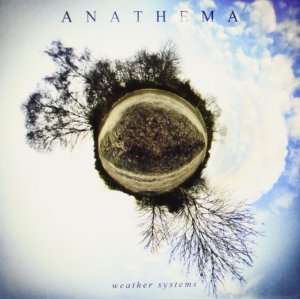
Anathema: Weather Systems
Anathema followed up the wonderful We’re Here Because We’re Here with the even better Weather Systems. Featuring a weather-related song cycle – “The Gathering Of The Clouds”, “Lightning Song”, “Sunlight”, and “The Calm Before The Storm” – Anathema produces a prog classic.
Big Big Train: English Electric Part 1
After a 2-year absence, Big Big Train returned in a big way with English Electric, Part 1. David Longdon is now fully integrated into the band, and his songwriting sparkles, particularly on joyous romps like “Uncle Jack”. One of BBT’s finest hours, ever.
Devin Townsend Project: Epicloud
All of the disparate styles Devin Townsend played with on previous albums is synthesized in this masterpiece. Power pop, metal, gospel -it’s all here in one big beautiful mess.
Echolyn: Echolyn (“Windows album”)
This album topped a lot of critics’ Best of 2012 lists, and rightly so. Every song is perfect, and “Some Memorial” may be the best they’ve ever done. This is a classic prog record that will still be lauded decades from now.
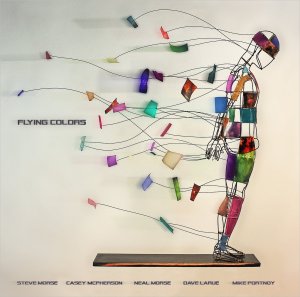
Flying Colors
This effort from the prog supergroup comprised of Neal Morse, Mike Portnoy, Steve Morse, Dave Larue, and Casey McPherson was a very impressive debut. Everyone participating subsumed his personality in service to the group, and the result was a lot of fun – reminiscent of the best of ’70s arena rock.
John Galgano: Real Life Is Meeting
This is a somewhat obscure gem by John Galgano, the bassist of Izz. It’s a quiet, beautiful, philosophical collection of songs that is truly charming. There is a lot of depth and solace in these songs.
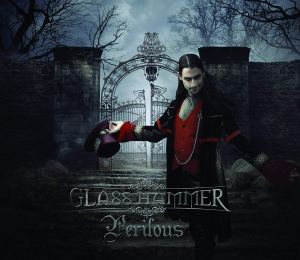
Glass Hammer: Perilous
Glass Hammer continued its winning streak with the third album to feature Jon Davison. Perilous is one long song chronicling the adventures of two children trapped in a, well, perilous land populated by malignant beings. The music is appropriately exciting and compelling.
It Bites: Map Of The Past
John Mitchell (Arena, Frost*, Lonely Robot) took over It Bites’ reins for this marvelous concept album about a young man confronting his past and his tortured relationship with his father. “Wallflower” is one of his finest songs.
Arjen Anthony Lucassen: Lost In The New Real
Arjen Lucassen (Ayreon, among many other projects) released this solo effort in 2012, and it featured his love of science fiction themes. Many years in the future a cryogenically preserved man is revived and brought up to date with all the changes that have occurred in society while he was frozen. Along the way, Arjen gives us a history of rock while an evil Rutger Hauer narrates. Great fun.
Mystery: The World Is A Game
I’ve written a full post on this excellent band, and this is one of their best albums. It’s a perfect introduction to Mystery if you’ve never heard them. “Another Day” is a 19 minute song that ranks with the best epics in the genre.
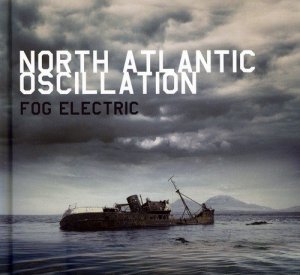
North Atlantic Oscillation: Fog Electric
The second album by Kscope’s North Atlantic Oscillation still has their impossibly angelic vocal harmonies from the debut, but there is an undercurrent of unease in songs like “Savage With A Barometer”. Utterly unique sound, and one of the best albums of the decade.
O.S.I.: Fire Make Thunder
The fourth (and final?) album from the Office Of Strategic Influence. Jim Matheos (Fates Warning) and Kevin Moore (Dream Theater, Chroma Key) collaborate on another fine collection that is somewhat somber but always melodic. If you need music for a rainy afternoon, O.S.I. is the perfect choice.
Producers: Made In Basing St.
Another supergroup, this time composed of, surprise, producers. Trevor Horn, Lol Creme, Stephen Lipson, and Ash Soan (with a uncredited Chris Braide on vocals) combine to produce a wonderful pop confection. Too bad they only lasted for one album.
Rush: Clockwork Angels
In 2012, we had no way of knowing this would be Rush’s final album, but what an album to go out on. It was meant to be the soundtrack to a Kevin Anderson sci-fi novel, but it works well as a standalone work of art. Rush pulled out all the stops on their tour supporting it, and it remains a high point of their career.
Ultravox: Brill!ant
This was a complete surprise – after decades of inactivity, the ’80s synth band Ultravox reunited in 2012 and put together this terrific set of songs. It was as if they never left, still at the top of their form. If you loved Vienna and Rage In Eden, then this is a must-have album.
That’s 15 albums from 2012, and I could have added many more. District 97, Downes Braide Association, Gazpacho, Headspace, Izz, KingBathmat, Pineapple Thief, Porcupine Tree, Storm Corrosion, Threshold, Time Morse, and Yppah all released outstanding records. Let us know what your favorites of 2012 were in the comments!













 Spirit of Cecilia
You must be logged in to post a comment.