Jerome K. Jerome’s first book, Three Men in a Boat, was published in 1889, and it is one of the funniest books I’ve ever read. Apparently, it began as a serious travelogue, and there are stretches of relatively boring descriptions of picturesque towns and villages along the Thames river. However, most of the book concerns the trials and tribulations of the narrator, “J”, his two friends, George and Harris, and a dog, Montmorency, as they take a two-week holiday on a small boat up the river.
I love British humor (P. G. Wodehouse is one of my all-time favorite authors), and I can’t believe I am just now discovering Jerome K. Jerome. He has a deadpan style of narration that heightens the absurdity of the situations he and his friends get themselves into. Throughout the book, Jerome drops small jibes that had me constantly chuckling:
We arranged to start on the following Saturday from Kingston. Harris and I would go down in the morning, and take the boat up to Chertsey, and George, who would not be able to get away from the City till the afternoon (George goes to sleep at a bank from ten to four each day, except Saturdays, when they wake him up and put him outside at two), would meet us there.
Jerome’s tale also offers a fascinating glimpse into the habits of vacationing Britishers in the Victorian era. Apparently, it was a common practice to rent a large rowboat, load it up with all kinds of provisions, and head up the Thames for days at a time. To propel the boat, they either sculled (rowed), or used a towline that was pulled by one or two people of the party along a towpath on the bank of the river. in Jerome’s time, steam launches were just coming into use, and he talks about how there was often conflict between the boaters who sculled or towed themselves, and the newfangled motorized boats.
Jerome also uses his narrative to go off on all kinds of tangents, retelling several hilarious stories of his friends’ lives. For example, he talks about a time one of his friends asked him to take home to London a couple of very ripe cheeses. Jerome brought them with him onto the train, and they smelled so awful that no one could stay in the same compartment with him:
From Crewe I had the compartment to myself, though the train was crowded. As we drew up at the different stations, the people, seeing my empty carriage, would rush for it. “Here y’ are, Maria; come along, plenty of room.” “All right, Tom; we’ll get in here,” they would shout. And they would run along, carrying heavy bags, and fight round the door to get in first. And one would open the door and mount the steps, and stagger back into the arms of the man behind him; and they would all come and have a sniff, and then droop off and squeeze into other carriages, or pay the difference and go first.
From Euston, I took the cheeses down to my friend’s house. When his wife came into the room she smelt round for an instant. Then she said:
“What is it? Tell me the worst.”
I said: “It’s cheeses. Tom bought them in Liverpool, and asked me to bring them up with me.”
And I added that I hoped she understood that it had nothing to do with me; and she said that she was sure of that, but that she would speak to Tom about it when he came back.
And here is an excerpt describing how entertaining Harris is at a dinner party. It’s rather long, but it’s so funny I had to include it in its entirety:
I will just give you an idea of Harris’s comic singing, and then you can judge of it for yourself.
Harris (standing up in front of piano and addressing the expectant mob): “I’m afraid it’s a very old thing, you know. I expect you all know it, you know. But it’s the only thing I know. It’s the Judge’s song out of Pinafore — no, I don’t mean Pinafore — I mean — you know what I mean — the other thing, you know. You must all join in the chorus, you know.”
[Murmurs of delight and anxiety to join in the chorus. Brilliant performance of prelude to the Judge’s song in “Trial by Jury” by nervous Pianist. Moment arrives for Harris to join in. Harris takes no notice of it. Nervous pianist commences prelude over again, and Harris, commencing singing at the same time, dashes off the first two lines of the First Lord’s song out of “Pinafore.” Nervous pianist tries to push on with prelude, gives it up, and tries to follow Harris with accompaniment to Judge’s song out “Trial by Jury,” finds that doesn’t answer, and tries to recollect what he is doing, and where he is, feels his mind giving way, and stops short.]
Harris (with kindly encouragement): “It’s all right. You’re doing it very well, indeed — go on.”
Nervous Pianist: “I’m afraid there’s a mistake somewhere. What are you singing?”
Harris (promptly): “Why the Judge’s song out of Trial by Jury. Don’t you know it?”
Some Friend of Harris’s (from the back of the room): “No, you’re not, you chuckle-head, you’re singing the Admiral’s song from Pinafore.”
[Long argument between Harris and Harris’s friend as to what Harris is really singing. Friend finally suggests that it doesn’t matter what Harris is singing so long as Harris gets on and sings it, and Harris, with an evident sense of injustice rankling inside him, requests pianist to begin again. Pianist, thereupon, starts prelude to the Admiral’s song, and Harris, seizing what he considers to be a favourable opening in the music, begins.]
Harris: “ ‘When I was young and called to the Bar.’ ”
[General roar of laughter, taken by Harris as a compliment. Pianist, thinking of his wife and family, gives up the unequal contest and retires; his place being taken by a stronger-nerved man.]
The New Pianist (cheerily): “Now then, old man, you start off, and I’ll follow. We won’t bother about any prelude.”
Harris (upon whom the explanation of matters has slowly dawned — laughing): “By Jove! I beg your pardon. Of course — I’ve been mixing up the two songs. It was Jenkins confused me, you know. Now then.
[Singing; his voice appearing to come from the cellar, and suggesting the first low warnings of an approaching earthquake.]
“ ‘ When I was young I served a term As office-boy to an attorney’s firm.’
(Aside to pianist): “It is too low, old man; we’ll have that over again, if you don’t mind.”
[Sings first two lines over again, in a high falsetto this time. Great surprise on the part of the audience. Nervous old lady near the fire begins to cry, and has to be led out.]
Harris (continuing): “ ‘ I swept the windows and I swept the door, And I—’ No — no, I cleaned the windows of the big front door. And I polished up the floor — no, dash it — I beg your pardon — funny thing, I can’t think of that line. And I — and I — Oh, well, we’ll get on to the chorus, and chance it (sings):
“ ‘ And I diddle-diddle-diddle-diddle-diddle-diddle-de, Till now I am the ruler of the Queen’s navee.’
Now then, chorus — it is the last two lines repeated, you know.
General Chorus: “And he diddle-diddle-diddle-diddle-diddle-diddle-dee’d, Till now he is the ruler of the Queen’s navee.”
And Harris never sees what an ass he is making of himself, and how he is annoying a lot of people who never did him any harm. He honestly imagines that he has given them a treat, and says he will sing another comic song after supper.
I can glean a few interesting facts about entertaining guests in a Victorian home from this passage: first, it seems to be common practice for guests to volunteer to perform at dinner parties; second, there was no shortage of people who were proficient piano players and familiar with the music of Gilbert and Sullivan; and third, people provided their own entertainment. The popularity of recorded music, then radio, and finally television put an end to that practice, which is a shame.
Jerome, Harris, George, and Montmorency have a generally pleasant and leisurely trip up the Thames, all the way to Oxford. Along the way, Jerome makes humorous observations of local cemeteries, pubs, inns, and other boaters. Montmorency, a fox terrier, tangles with other dogs and the tea kettle. There’s no plot whatsoever, and the intrepid voyagers eventually make it back to London in one piece. If you’re looking for something that is very funny and enjoyable, you couldn’t do much better than Three Men in a Boat. You can download a free digital version here.
A review of Philip Clark, Dave Brubeck: A Life in Time (New York: DaCapo Press, 2020). Xvii + 403 pp of text + discography, bibliography, and index.
I do not remember a time in my life when Dave Brubeck’s music did not provide the soundtrack. Indeed, his music is inextricably tied up to and with my own life. Some of my earliest memories come from staring at Brubeck’s album covers—Time Out and Time Further Out by S. Neil Fujita and Joan Miro, respectively—and trying to make sense of the abstractions. And, as family lore goes, even as a kid I loved dancing to music such as “Take Five,” even waking up the entire household in the middle of the night by blaring the stereo system at full volume. As was the case with probably many of us of my generation, Time Out was one of my father’s favorite albums and Brubeck one of his favorite musicians, rivaled only by Herb Alpert. To this day, I have stacks and stacks of Brubeck CDs and boxsets, and his music plays throughout the house and the office. Maybe not daily, but certainly weekly. When my older brother, Todd, and I get together, we still talk Brubeck. Even now, as I pour through various prog and jazz albums, I’m always on the lookout for Brubeck’s influences.
As a case in point, Pat Metheny’s latest, From This Place—arguably this jazz master’s best—reflects widely and deeply the compositional structure of Brubeck’s best album, 1964’s Time Changes. The resemblance is simply too obvious to ignore. Even the theme is critical. Brubeck’s album was inspired by a short story involving two cellmates and a crust of bread. The religious essence of the album is blatant, with Brubeck trying to find that which ties all humans together, regardless of ethnicity or race. It is, for all intents and purposes, a meditation on human decency and divine agency. Metheny’s latest calls us to be the best we can expect of ourselves as Americans.
In 2012, when Brubeck died around Christmas time of that year, I vowed that I would one day write a biography of him. Despite preliminary research and reading, I’ve really not dived into this project, but Brubeck remains a profound part of my life, nonetheless.
Two stories from Brubeck’s own life mean everything to me.
First, at Ronald Reagan’s last summit with Soviet leader Mikhail Gorbachev, held in Moscow in 1988, the Reagan administration insisted that Dave Brubeck represent America as her greatest cultural achievement. Brubeck’s producer, Russell Gloyd, recognized this grand achievement for what it was. “You have to put this in perspective,” he argued. “There was Perestroika, the whole awakening of the Soviet Union, the whole concept of what was taking place at that time in world history. This was the first time there was hope of a real chance for an understanding between the East and the West,” he continued. “For Dave to be the representative artist meant everything to everyone who was close to us.”
The atmosphere was tense. Reagan was exhausted from his trip, Gorbachev’s security was worried about assassination plots, and it was a ridiculously hot and humid day in Moscow. “I walked in thinking that this was the hardest room Dave had ever had to work in his life,” claims Gloyd. After a number of lackluster diplomatic niceties in the stuffy room, Brubeck walked up to the piano, sat down, and started playing “Take the ‘A’ Train.” “It brought down the house,” Gloyd reports. “People were up and cheering. I’ll never forget Bob Dole—he looked like a little kid. He had his one good hand raised above his head like he was at a football game. He’d turn around, and there was a Soviet general, loaded with medals, doing the same thing! They looked at each other like, ‘You like Brubeck? I like Brubeck! We like Brubeck.” It was, Gloyd notes, “the greatest single twenty-minute set in his life.” The Cold War became much less frigid that day.
Second, though he came from a Presbyterian family, Brubeck converted to Roman Catholicism as an adult. “I never had belonged to any church. I was never baptized before,” Brubeck remembered. “I was the only son in the family who wasn’t baptized a Presbyterian. It was just an oversight.” To be certain, religious music—from the African-American community as well as from the white/European community—had always intrigued and influenced him. He wrote liturgical-jazz pieces about Easter, Christmas, and Martin Luther King.
Though he had written a number of specifically religious themed albums and pieces, however, his greatest expression of his Christianity came when Our Sunday Visitor (headquartered in Huntington, Indiana) commissioned Brubeck to write a Mass. He, in very Brubeck fashion, entitled it, To Hope! A Celebration, and performed it—with Gloyd conducting—at Washington National Cathedral. The premier music review website, Allmusic, writes of it: This stunning work incorporates jazz interludes into the hypnotic Responsorial “The Peace of Jerusalem” and “Alleluia,” a particularly challenging section for the choir. The vocal soloists are impressive; tenor Mark Bleeke’s feature “While He Was At Supper” is especially moving. The overall effect of this beautiful work is absolutely stunning; it resists being labeled in any one category, it is simply great music.” Fundamentally optimistic about the human experience, Brubeck had said in a commencement address in 1982: “What is really important in the community, in the worst of times, is often music. It’s the cement for the community that holds it together, and the thing that gives it hope.”
Sadly, neither of these stories can be found in Philip Clark’s just published “biography,” Dave Brubeck: A Life in Time (New York: DaCapo Press, 2020). Though the cover proclaims this to be “the definitive investigative biography of jazz legend Dave Brubeck,” there is not a single mention of Brubeck’s 1988 trip to Moscow or his conversion to Catholicism. Just how definitive is this biography by Clark? Bizarrely, Brubeck is not even born until page 302.
When I first learned of the existence of this book—on February 19—I purchased it at a Books-a-Million within a few hours of the news. Rather than wait for the cheaper Amazon.com version, I had to have the book immediately. I was thrilled it existed, and I dove right into it. Alas, rarely have I been so disappointed by a book.
When it comes to writing—on a sentence by sentence basis—Clark is outstanding. According to the dust jacket, he has written for a vast number of music periodicals as well as for the London Guardian and the London Times. There’s no doubting his grammar or style. But when it comes to composing a book of this length, he is. . . to be polite. . . lacking. It turns out that Clark knew Brubeck relatively well and had interviewed him a number of times in the last twenty years of his life. Though we learn nothing of Brubeck’s Catholicism or his trip to Moscow—both so essential to his life—we do get editorial comments such as
“As the bus breaks for the London border, with the motorway to Brighton stretching ahead, [bassist] Moore falls into earnest conversation with Iola Brubeck. Heads nod remorsefully, then Moore’s grotesque caricature of President George W. Bush’s nervy Texas drawl hits a manic crescendo reminiscent of an operatic made scene.”
Or, this tidbit:
“As I wrote all these years later, that Brubeck’s accounts of his country’s gravest shame should have such damning relevance to Trump’s America felt unbearably poignant and tragic—time overlaps, but it is also cyclic.”
I am certainly no fan—in any way, shape, or form—of Presidents Bush or Trump, but I very much fail to understand why these things matter in a biography of Dave Brubeck, who was so much better and worthy of so much more than what Clark presents in this book.
Clark is at his best in the book when not writing the biographical parts. Indeed, Clark excels at explaining Brubeck’s techniques, his influences, and his influence. During parts of the book—especially Clark’s section on Brubeck’s influence on rock and progressive rock—I was riveted. Clark is also good when it comes to Brubeck’s defying the horrific racialist laws, habits, and customs of much of 1950s and 60s America. Brubeck was not only an optimist in his view of humanity, he was deeply humane in his understanding of the dignity of the human person. He never backed down from what he believed correct, and his actions on race relations are nothing short of heroic in his own lifetime.
If you’re looking for a fan-boy appreciation of Brubeck’s talents and his understandings of race relations, Dave Brubeck: A Life in Time, is a fine outing. If, however, you’re looking for the “definitive, investigative biography of jazz legend Dave Brubeck” run as far away from this book as possible. One of the greatest talents to come out of 20th-century America, Brubeck deserves so much better.
Until someone actually does the critically hard work of looking closely at Brubeck’s life through his music as well as through his letters and papers and getting into the very bright and endlessly creative soul of Brubeck, no definitive biography yet exists. The best book on Brubeck remains Fred M. Hall, It’s About Time: The Dave Brubeck Story (Fayetteville: University of Arkansas Press, 1996). It’s an excellent book, and the stories above come from Hall’s work.
Or, just listen to Brubeck’s music. He poured himself into his art—into every note.
Paul Johnson is my favorite historian (my dear friend, Brad Birzer, is my favorite living historian!). Johnson takes complicated subjects, makes them understandable, and he does it in an entertaining way. He’s British, but he has written a fantastic history of the United States, A History of the American People. Other excellent books of his are The Birth of the Modern: World History 1815 – 1830, and Modern Times: The World from the Twenties to the Nineties.
Creatorswas written after his book, Intellectuals, received some criticism for focusing too heavily on the hypocrisy of some of history’s most famous and influential intellectuals. As he explained, “I defined an intellectual as someone who thinks ideas are more important than people.” I, personally, appreciated learning about the moral failings of Rousseau, Marx, Ibsen, Sartre, and other thinkers who have been lionized by our intelligentsia. It’s the eternal story: “Do as I say, not as I do.”
Anyway, Creators is, on balance, a more positive and inspiring collection of portraits. In it, Johnson gives us brief descriptions of Chaucer, Durer, Shakespeare, J. S. Bach, Turner and Hokusai, Jane Austen, A.W.N. Pugin and Viollet-le-Duc, Victor Hugo, Mark Twain, Tiffany, T.S. Eliot, Balenciaga and Dior, and Picasso and Walt Disney. Throughout these portraits his admiration for these artists’ work shines clearly.
Johnson is the master of providing the interesting anecdote that humanizes and makes real his subject. For example, he writes that the composer Wagner
required a beautiful landscape outside his windows, but when he wrote music, the silence had to be absolute and all outside sounds, and sunlight, had to be excluded by heavy curtains of the finest and costliest materials. They had to draw with “a satisfying swish.” The carpets had to be ankle-deep; the sofas enormous; the curtains vast, of silk and satin. The air had to be perfumed with a special scent. The polish must be “radiant.” The heat must have been oppressive, but Wagner required it.
Johnson, Paul. Creators: From Chaucer and Durer to Picasso and Disney (p. 9). HarperCollins. Kindle Edition.
Johnson praises Chaucer for creating the very idea of English literature. Before him, all politics and creative arts were conducted in French and Latin. He was the first to proudly use English in his poetry, and his portrayals of various classes of people are unparalleled.
In my opinion, Creators is worth reading for his chapter on Shakespeare alone. Johnson does a wonderful job explaining how a man with humble beginnings could attain such incredible heights of literary excellence. Interestingly, he makes the case for Shakespeare not being an intellectual. In other words, for Shakespeare, people were more important than ideas.
He [Shakespeare] rarely allows his opinions open expression, preferring to hint and nudge, to imply and suggest, rather than to state. His gospel, however, is moderation in all things; his taste is for toleration. Like Chaucer, he takes human beings as he finds them, imperfect, insecure, weak and fallible or headstrong and foolish—often desperate—and yet always interesting, often lovable or touching. He has something to say on behalf of all his characters, even the obvious villains, and he speaks from inside them, allowing them to put forward their point of view and give their reasons.
Johnson, Paul. Creators: From Chaucer and Durer to Picasso and Disney (p. 54). HarperCollins. Kindle Edition.
I also learned that no one has created as many words and phrases that have entered common use as Shakespeare. Some estimate he coined as many as 6700 new words!
Like Harold Bloom, Johnson has nothing but praise for the two Henry IV plays and Hamlet. Johnson’s explication of the psychological and moral dilemmas explored in Hamlet is fantastic.
It is characteristic of this stupendous drama that the long passages of heroic reflection, which never bore but stimulate, are punctuated by episodes of furious action, the whole thing ending in a swift-moving climax of slaughter. No one can sit through Hamlet and absorb its messages—on human faith and wickedness; on cupidity, malice, vanity, lust; on regeneration and repentance; on love and hate, procrastination, hurry, honesty, and deceit; on loyalty and betrayal, courage, cowardice, indecision, and flaming passion—without being moved, shaken, and deeply disturbed. The play, if read carefully, is likely to induce deep depression—it always does with me—but if well produced and acted, as Shakespeare intended, it is purgative and reassuring, for Hamlet, the confused but essentially benevolent young genius, is immortal, speeding heavenward as “flight of angels sing thee to thy rest.” It is, in its own mysterious and transcendental way, a healthy and restorative work of art, adding to the net sum of human happiness as surely as it adds to our wisdom and understanding of humanity.
Johnson, Paul. Creators: From Chaucer and Durer to Picasso and Disney (p. 75). HarperCollins. Kindle Edition.
Johnson’s next subject, Johann Sebastian Bach, was a solidly middle class man who was confident in his extraordinary ability to compose music, even if he wasn’t recognized for it during his lifetime.
Bach was by far the most hardworking of the great musicians, taking huge pains with everything he did and working out the most ephemeral scores in their logical and musical totality, everything written down in his fine, firm hand as though his life depended on it—as, in a sense, was true, for if Bach had scamped a musical duty, or performed it with anything less than the perfection he demanded, he clearly could not have lived with himself. It is impossible to find, in any of his scores, time-serving repetitions, shortcuts, carelessness, or even the smallest hint of vulgarity. He served up the highest quality, in performance and composition, day after day, year after year, despite the fact that his employers, as often as not, could not tell the good from the bad or even from the mediocre.
Johnson, Paul. Creators: From Chaucer and Durer to Picasso and Disney (pp. 82-83). HarperCollins. Kindle Edition.
It’s almost a miracle that we have as many works of his today to perform, as they were scattered amongst his descendants after he died. If not for the efforts of Mendelssohn to restage Bach’s St. Matthew Passion in 1827, we might not have had the revival of his music that we enjoy so much today. Johnson uses this event to share another fun anecdote:
Afterward, at Zelter’s house, there was a grand dinner of the Berlin intellectual elite. Frau Derrient whispered to Mendelssohn: “Who is the stupid fellow sitting next to me?” Mendelssohn (behind his napkin): “The stupid fellow next to you is the great philosopher Friedrich Hegel!”
Johnson, Paul. Creators: From Chaucer and Durer to Picasso and Disney (p. 93). HarperCollins. Kindle Edition.
The chapter on the artists William Turner and Hokusai is very interesting. Both began drawing from the age of three. Turner was somewhat controversial because of his new and unusual way of painting light, but he ended up one of the most popular and wealthy artists in history. Unfortunately, time and bungling “restorers” have kept us from appreciating his radical use of color. Even his contemporaries could see how his paintings faded not long after he finished them.
Hokusai never profited much from his prodigious output, always begging benefactors for money. According to Johnson, he pretty much invented landscape art in Japan. He was quite a character:
There was a restless rootlessness to him, reflected in the fact that he changed his name, or rather the signature on his works, more than fifty times, more often than any other Japanese artist; and in the fact that during his life he lived at ninety- three different addresses. The names he used included Fusenko, meaning “he who does only one thing without being influenced by others”; “The Crazy Old Man of Katsushika”; and “Manji, the Old Man Mad about Drawing.” After he fell into a ditch, as a result of a loud clap of thunder, he signed himself “Thunder” for a time.
Johnson, Paul. Creators: From Chaucer and Durer to Picasso and Disney (p. 108). HarperCollins. Kindle Edition.
Johnson’s chapter on Jane Austen is the slightest one, not because of any fault of Johnson, but because we know so little of Austen. Her family suppressed most of her personal correspondence, and they tried to make her into a Victorian woman, rather than the Regency one she was. However, according to Johnson, we can glean some personality traits from the letters and reminiscences that do exist and conclude that she was fun-loving young woman, which was the source of her genius:
Laughter was the invariable precursor, in Austen’s life, of creative action—the titter, the laugh, the giggle, or the guffaw was swiftly followed by the inventive thought. Once Austen began to laugh, not with the melodramatic novels she read, but against them, she began to look into herself and say, “I can do better than that.”
Johnson, Paul. Creators: From Chaucer and Durer to Picasso and Disney (pp. 130-131). HarperCollins. Kindle Edition.
Pugin and Violett-le-Duc were both architects, the former responsible for the Gothic revival in England. We have Pugin to thank for the beautiful Houses of Parliament in London.
The chapter on Victor Hugo is a very interesting one. In it, Johnson poses the question,
That Hugo was phenomenally creative is unarguable: in sheer quantity and often in quality too, he is in the highest class of artists. But he forces one to ask the question: is it possible for someone of high creative gifts to be possessed of mediocre, banal, even low intelligence?
Johnson, Paul. Creators: From Chaucer and Durer to Picasso and Disney (p. 156). HarperCollins. Kindle Edition.
Johnson does not have a lot of admiration for Hugo, pointing out how contradictory his political opinions were, depending on what party was in power. He also kept many mistresses, well into his eighties!
Mark Twain comes in for more respectful treatment. Johnson posits that his genius was as a storyteller – to truly appreciate his work, we need to hear it “performed”. He also had a knack for making great literature out of almost nothing:
His creativity was often crude and nearly always shameless. But it was huge and genuine, overpowering indeed, a kind of vulgar magic, making something out of nothing, then transforming that mere something into entire books, which in turn hardened into traditions and cultural certitudes.
Johnson, Paul. Creators: From Chaucer and Durer to Picasso and Disney (p. 171). HarperCollins. Kindle Edition.
T. S. Eliot was a paradox – very conservative in his personal life, yet revolutionary in his poetry:
Eliot was never once (except on holiday) photographed without a tie, wore three-piece suits on all occasions, kept his hair trimmed, and was the last intellectual on either side of the Atlantic to wear spats. Yet there can be absolutely no doubt that he deliberately marshaled his immense creative powers to shatter the existing mold of poetical form and context, and to create a new orthodoxy born of chaos, incoherence, and dissonance.
Johnson, Paul. Creators: From Chaucer and Durer to Picasso and Disney (p. 204). HarperCollins. Kindle Edition.
The turning point in Eliot’s career came when he met Ezra Pound, who introduced him to lots of European literary stars and convinced him to emigrate to England. He married Vivian Haighwood, but it doesn’t sound like the relationship was much fun:
From the early days of their marriage they engaged in competitive hypochondria. Both became valetudinarians and were always dosing themselves, complaining of drafts, and comparing symptoms.
Johnson, Paul. Creators: From Chaucer and Durer to Picasso and Disney (p. 213). HarperCollins. Kindle Edition.
However, this dismal marriage, coupled with his job at Lloyd’s bank in London, spurred Eliot to create his masterpieces, The Waste Land and Four Quartets. As Johnson puts it, The Waste Land‘s strength is its elusiveness:
The greatest strength and appeal of the poem is that it asks to be interpreted not so much as the poet insists but as the reader wishes. It makes the reader a cocreator.
Johnson, Paul. Creators: From Chaucer and Durer to Picasso and Disney (p. 219). HarperCollins. Kindle Edition.
Four Quartets solidified Eliot’s position as the leading poet of the twentieth century, even though, in Johnson’s words, “they are not about anything”. What they are is evocative of a nihilistic mood that dominated mid-twentieth century western culture. The appalling meaninglessness and slaughter of WWI that led into WWII left a cultural elite with almost no hope Eliot was their spokesman.
I wish I could have been present at the gathering Johnson describes below!
The Four Quartets were much discussed when I was a freshman at Oxford in 1946, and they, too, were still fresh from the presses. I recall a puzzled and inconclusive discussion, after dinner on a foggy November evening, in which C. S. Lewis played the exegete on “Little Gidding,” with a mumbled descant from Professor Tolkien and expostulations from Hugo Dyson, a third don from the English faculty, who repeated at intervals, “It means anything or nothing, probably the latter.”
Johnson, Paul. Creators: From Chaucer and Durer to Picasso and Disney (p. 223). HarperCollins. Kindle Edition.
In his chapter on Picasso and Disney, Johnson praises Picasso for his incredible creativity and canny judgment:
… Picasso became the champion player, and held the title till his death, because he was extraordinarily judicious in getting the proportions of skill and fashion exactly right at any one time. He also had brilliant timing in guessing when the moment had arrived for pushing on to a new fashion. Although his own appetite for novelty was insatiable, he was uncannily adept at deciding exactly how much the vanguard of the art world would take.
Johnson, Paul. Creators: From Chaucer and Durer to Picasso and Disney (p. 253). HarperCollins. Kindle Edition.
But he also exposes a very dark side of Picasso; how he abused women and men, stabbed friends in the back, and seemed to have no moral sense.
He would create situations in which one mistress angrily confronted another in his presence, and then both rolled on the floor, biting and scratching. On one occasion Dora Maar and Marie-Thérèse Walter pounded each other with their fists while Picasso, having set up the fight, calmly went on painting. The canvas he was working on was Guernica.
Johnson, Paul. Creators: From Chaucer and Durer to Picasso and Disney (p. 256). HarperCollins. Kindle Edition.
Walt Disney, on the other hand, comes in for quite a bit of praise. I really enjoyed Johnson’s detailed explanation of just how revolutionary Disney was when it came to combining sound and animation in a film. Practically all animated content we enjoy today owes a debt to Disney. What was his strength as a creator? According to Johnson,
Whereas Picasso tended to dehumanize the women he drew or painted. Disney anthropomorphized his animal subjects; that was the essential source of his power and humor.
Johnson, Paul. Creators: From Chaucer and Durer to Picasso and Disney (p. 258). HarperCollins. Kindle Edition.
The final chapter, Metaphors in a Laboratory, addresses the idea of scientific creativity. Johnson argues that through the use of metaphors, scientists are able to communicate their ideas and spur others to innovate. A lot of this chapter rehashes persons and topics he covers in The Birth of the Modern – how Wordsworth and the scientist and inventor Humphrey Gray were great friends and shared ideas with each other, how the engineer Telford transformed the British landscape with canals, roads, and bridges of simplicity and beauty.
Creators is a wonderful celebration of one of the greatest human characteristics: the ability to create. Even though some of the creators were not the nicest people who lived (such as Picasso), their works survive to inspire others.
Who is MUCH more likely to die on the job? A woman? Or a man?
FACT: 93% of workplace deaths are to men. Why?
Because men take the dirtiest and most dangerous jobs and work the longest hours to make as much money as they can while they can. I know because it was what I did. I could have been in those workplace death certificates. I did some dirty and dangerous jobs.
They say your 20s are the best time of your life but for me, there were years of frustration and suffering and separation from loved ones. But I just stoically carried on. Getting your first full-time job is sometimes very difficult. People are surprised but I would say in my early life I was turned down for every job I applied for. I was too qualified or not qualified enough. It was humiliating and a chastening experience. So I left home and went West. I told my mother I would keep going until I got a full-time job and if I had to go to Alaska or Australia, I would do that. I ended up in Washington State and later California. But by following the economic magnet and moving where there were SOME job openings I got work and for over forty years I always worked. It was hard to leave home (essentially never returned) but working felt a lot better.
After I left the service I had very little money (a few thousand dollars) and an old Chrysler (free and clear). I worked in construction for five years. I started by unloading rail cars $6 an hour I recall (then stacking over 1000 bags of Owens-Corning fiberglass insulation); then I dug trenches under a place called Yesler Terrace with an e-tool.
The first day my partner and I got ZERO PAY. That’s right ZERO pay.
We were paid by the square foot of insulation installed.
But we worked Friday, Saturday and Sunday and finished the job (a job no one else wanted). Monday morning at 5AM we got another job.
And we gained the respect of the foreman (a tough ex-Marine) because we did not complain. We knew the job had to be done and we knew the terms of the contract.
We also knew it was no good to complain; to get more work you had to finish the job you were on satisfactorily. Even the guy I was with was surprised but I told him hauling loads and digging in the dirt was nothing new to me. In fact, the quiet of the Yesler Terrace underfloor was almost soothing compared to the noise and explosions of Marine Corps maneuvers.
We crawled into a little entrance with a long series of extension cords and a light. The kid I was with said to me, “what if there is an earthquake?”
And I told him, “Kid, if there is an earthquake we are dead and they will never find our bodies. But you can’t live forever. Let’s dig and get out of here as soon as possible. We can do this job if we work 10 hours a day.”
We finished Sunday evening about 6PM. We spent most of three days in the semi-darkness digging and then stocking (with tubes of insulation -Certainteed was the only thing we could fit in the trench) then installing the batts. It was a huge job. I think we made about $2 an hour. Piece work in construction or farm labor is the low end of the job market.
Above us were lounging welfare families. The kid asked me what I thought of them and I said,
“I feel sorry for them; they don’t know the pride and dignity of work. Anyone can run away. Anyone can be AWOL but its the man who stays and does the job who can be proud. If you work you get ahead; if you sweat you get; things at rest remain at rest. If you stay here with them you will be miserable and ashamed your whole life. Kid, get a job do a job. Be reliable and on time. Get what education you can and finish whatever level you start. High school, Certificate programs. Don’t have any kids until you are married and when you are married stay married. You may not get rich but you will never be poor if you are lucky enough to stay healthy. Quien joven no trabaja viejo duerme sobre paja……work when you are young so you are not homeless when you are old.”
I never got rich but I have a roof over my head, money in the bank and money coming in.
And it all started because I wasn’t afraid of dirty and dangerous jobs. I had a family to support and it was what I had to do. I still have the scars from those years. But later on, I really appreciated paid vacations, benefits and a regular hourly wage.
All Hallows Eve is Charles Williams’ seventh novel, and one of his best. In 2024, I began working my way through all of the novels of this member of The Inklings, the famous literary group of friends that included J. R. R. Tolkien and C.S. Lewis. Williams’ fiction is definitely darker and more philosophical than the writings of either of the his more well known colleagues.
All Hallows Eve begins with a startling scene: a young woman, Lester Furnival, is standing on a street in nighttime London, and there are none of the usual sounds and traffic around her. She soon realizes that she is dead. She and a friend, Evelyn Mercer, were supposed to meet each other for a get-together, but they were killed by a plane crashing into the area. It appears that Lester and Evelyn are in some sort of purgatory – they can interact with each other, but they do not perceive any other beings. The only way they know it’s night is when the lights come on in the houses around them. There is no sun or moon, just a diffuse, gray light.
Back in the land of the living, Lester’s grieving husband, Richard, visits his artist friend, Jonathan Drayton. Drayton is a talented painter who shows Richard his latest work: a painting of a charismatic religious leader who goes by the moniker Simon the Clerk, or Simon Leclerc. It has been commissioned by Lady Wallingford, a devoted disciple of Simon. Jonathan Drayton is in love with her daughter Betty, but she will not allow them to get engaged.
Lady Wallingford drops by to view the painting, and she is extremely disappointed. In her eyes, Simon looks malevolent, and the people in the congregation look like insects. Later, Simon himself visits Drayton to view the painting, and he proclaims it a masterpiece that captures him perfectly.
What follows is a very dark tale of necromancy and all-consuming greed for power. Simon was conceived and born during the French revolution, and he has plans for world domination that involve breaking through to the spiritual plane where Lester and Evelyn are. Lady Wallingford’s daughter, Betty, is the hinge through which this will happen. Things get very creepy as the story unfolds – I was put in mind of Rosemary’s Baby as the pieces fell into place.
As a favor to Jonathan, Richard Furnival agrees to attend a meeting of Simon’s followers, and see if he is legitimate. Simon uses some sort of spell to put everyone under his will. At the end of the meeting, Simon speaks to Richard, and Richard recounts their disturbing conversation to Jonathan:
“He [Simon] said: ‘I won’t keep you, Mr. Furnival. Come back presently. When you want me, I shall be ready. If you want your wife, I can bring her to you; if you don’t want her, I can keep her away from you. Tell your friend I shall send for him soon. Good-bye.” So then I walked out.
He lifted his eyes and looked at Jonathan, who couldn’t think of anything to say. Presently Richard went on, still more quietly: “And suppose he can?”
“Can what?” asked Jonathan gloomily.
“Can,” said Richard carefully and explicitly, “do something to Lester. Leave off thinking of Betty for a moment; Betty’s alive. Lester’s dead, and suppose this man can do something to dead people?
CHARLES WILLIAMS. All Hallows’ Eve (Kindle Locations 1850-1855). Delphi Classics. Kindle Edition.
As the story unfolds, there is a contrast between the characters who grow and mature, and the ones who degenerate. Betty, who is initially a slave to Simon’s will, gradually comes into her own and is able to resist him. Lester also matures spiritually as she learns to navigate the purgatory she is in. Both she and Richard remember their brief marriage, regret the mistakes they made, and come to a much deeper love than they had when she was alive. Even Jonathan’s art takes on a life of its own, becoming more transcendent.
On the other side, Lady Wallingford becomes less and less of an individual with actual agency, Evelyn undergoes a horrific degeneration into petty hatred, and Simon Leclerc reaps the rewards of his dark magic.
All Hallows Eve is one of Williams’ most accessible reads, as well. In a few of his earlier novels, particularly Descent Into Hell, his prose was very dense and unwieldy, and his dialog hard to follow. Every conversation in All Hallows Eve is terse and to the point. I thoroughly enjoyed this novel, even though it creeped me out at times. I wonder if the creators of Netflix’s Stranger Things are familiar with it, since there are definite similarities in the basic premise of both tales. Anyway, for fans of fantasy with a very dark edge (but a happy ending), I highly recommend All Hallow Eve.
A new year, and an opportunity to begin a new batch of books! I was given several titles for Christmas, and the first one I dove into was All That Moves Us.
Dr. Jay Wellons is a pediatric neurosurgeon at Vanderbilt’s Monroe Carrell Jr. Children’s Hospital here in Nashville, TN. His memoir, All That Moves Us, is one of the most moving books I’ve ever read. It consists of 23 short chapters, each one chronicling an important episode in Wellons’ life. He doesn’t pull any punches, either. In the prologue, he explains his efforts to separate two conjoined twins that resulted in both of their deaths.
Other chapters deal with triumphs such as two-year-old Allie:
Her brain MRI showed a large bleed in her brainstem, the pons specifically. The normal brain was compressed from the inside out, the pontine brain tissue now only a thin rim displaced by the blood clot, most likely from a hemorrhagic cavernous malformation. It was gigantic considering the small space. At that point in my career, I had never seen a hemorrhage quite that large in that part of the brain with the patient still alive. (page 103)
Miraculously, Wellons is able to save Allie, and seven years later, she continues to recover. He admires her indomitable will to survive and thrive.
Throughout the book, Wellons provides interesting autobiographical details: why he went into medicine, the enormous influence his father had on him, his own battle with a tumor in his leg, the joy he receives from his own children. It doesn’t hurt that he is an extraordinarily fine writer. As a matter of fact he was an English major as an undergraduate in college. I found that I couldn’t read more than two or three chapters at a time, they are that emotionally powerful.
I also got a glimpse into the life of a surgeon, and the various trials they face. While the gratitude from parents whose children he has saved is nice, Wellons tells of the time when he couldn’t save a middle-aged woman, and her family came at him in the hallway ready to physically attack him. A surgeon has to be sensitive to the feelings of the families of his patients, while always being truthful and informative.
Doctors are always on call, even when they aren’t anywhere near a hospital. In the chapter, Last Place, Wellons is on the interstate driving to a triathlon when he comes upon a terrible car accident. He immediately stops and does triage on the family in the car that was hit. If he hadn’t been there, the mother and father would have died. This experience gives him new respect for the incredibly difficult job first responders have.
Another chapter, Shock Wave, is particularly hard-hitting. It is about a teenaged girl who shot herself in the head, driven to such despair by social media bullying that death seemed preferable to the pain she was suffering. She survived the gunshot, but the bullet destroyed her optic nerves, permanently blinding her. However, she has chosen to use her condition to try to prevent others from making the same choice she did.
Alyssa will forever live with the profound effects of that day. Both she and her parents wanted her story told so that people might understand that social bullying is real. Her mom aske me to make sure that Alyssa has worked hard since that day to be a good young woman living out her faith. For all that she has endured, Alyssa loves the idea of being able to help others, and that is how she understands her purpose now. She does not remember much of her life before her injury. But she makes a point to say that sometimes we can inflict pain on one another without much thought. It can be awful. And then she says she knows we can do better. (page 189)
All That Moves Us is an incredibly powerful read. In every chapter, Wellons’ sincere care and compassion for his patients and their families is apparent. He also weaves his love and admiration for his Mississippi Air National Guard father throughout the book. His father passed away from ALS, and Wellons was able to spend time with him and properly express his gratitude for all he did for him. As for me, I am thankful that our medical system is able to produce amazing caregivers like Jay Wellons.
Walking across the sitting-room, I turn the television off Sitting beside you, I look into your eyes As the sound of motorcars fades in the night time I swear I saw your face change, it didn’t seem quite right And it’s hello babe, with your guardian eyes so blue Hey my baby, don’t you know our love is true
Coming closer with our eyes, a distance falls around our bodies Out in the garden, the moon seems very bright Six saintly shrouded men move across the lawn slowly The seventh walks in front with a cross held high in hand And it’s hey babe your supper’s waiting for you Hey my baby, don’t you know our love is true?
I’ve been so far from here Far from your warm arms It’s good to feel you again It’s been a long long time Hasn’t it?
I know a farmer who looks after the farm With water clear, he cares for all his harvest I know a fireman who looks after the fire
You, can’t you see he’s fooled you all Yes, he’s here again Can’t you see he’s fooled you all? Share his peace, sign the lease He’s a supersonic scientist He’s the guaranteed eternal sanctuary man Look, look into my mouth he cries And all the children lost down many paths I bet my life you’ll walk inside Hand in hand Gland in gland With a spoonful of miracle He’s the guaranteed eternal sanctuary We will rock you, rock you little snake We will keep you snug and warm
Wearing feelings on our faces while our faces took a rest We walked across the fields to see the children of the West But we saw a host of dark skinned warriors standing still below the ground
Waiting for battle
The fight’s begun, they’ve been released Killing foe for peace, bang, bang, bang Bang, bang, bang And they’ve given me a wonderful potion ‘Cause I cannot contain my emotion And even though I’m feeling good Something tells me I’d better activate my prayer capsule
Today’s a day to celebrate, the foe have met their fate The order for rejoicing and dancing has come from our warlord
Wandering in the chaos the battle has left We climb up the mountain of human flesh To a plateau of green grass, and green trees full of life A young figure sits still by a pool He’s been stamped “Human Bacon” by some butchery tool He is you
Social Security took care of this lad We watch in reverence, as Narcissus is turned to a flower A flower?
If you go down to Willow Farm To look for butterflies, flutterbyes, gutterflies Open your eyes, it’s full of surprise Everyone lies like the fox on the rocks And the musical box Oh, there’s Mum and Dad, and good and bad And everyone’s happy to be here
There’s Winston Churchill dressed in drag He used to be a British flag, plastic bag, what a drag The frog was a prince The prince was a brick, the brick was an egg, the egg was a bird (Fly away you sweet little thing, they’re hard on your tail) Hadn’t you heard? (they’re going to change you into a human being!) Yes, we’re happy as fish and gorgeous as geese And wonderfully clean in the morning
We’ve got everything, we’re growing everything We’ve got some in, we’ve got some out We’ve got some wild things floating about Everyone, we’re changing everyone You name them all, we’ve had them here And the real stars are still to appear (All change!)
Feel your body melt Mum to mud to mad to dad Dad diddley office, Dad diddley office You’re all full of ball Dad to dam to dumb to mum Mum diddley washing, Mum diddley washing You’re all full of ball
Let me hear your lies, we’re living this up to the eyes Ooh, aah, na-na-na Momma I want you now
And as you listen to my voice To look for hidden doors, tidy floors, more applause You’ve been here all the time Like it or not, like what you got You’re under the soil (the soil, the soil) Yes, deep in the soil (the soil, the soil, the soil!) So we’ll end with a whistle and end with a bang And all of us fit in our places
With the guards of Magog, swarming around The Pied Piper takes his children underground Dragons coming out of the sea Shimmering silver head of wisdom looking at me He brings down the fire from the skies You can tell he’s doing well by the look in human eyes Better not compromise, it won’t be easy
666 is no longer alone He’s getting out the marrow in your backbone And the seven trumpets blowing sweet rock and roll Gonna blow right down inside your soul Pythagoras with the looking glass reflects the full moon In blood, he’s writing the lyrics of a brand-new tune
And it’s hey babe, with your guardian eyes so blue Hey my baby, don’t you know our love is true? I’ve been so far from here, far from your loving arms Now I’m back again And babe, it’s gonna work out fine
Can’t you feel our souls ignite? Shedding ever-changing colours In the darkness of the fading night Like the river joins the ocean As the germ in a seed grows We have finally been freed to get back home
There’s an angel standing in the sun And he’s crying with a loud voice “This is the supper of the mighty one” Lord of Lords, King of Kings Has returned to lead his children home To take them to the new Jerusalem
I could say 2024 is the year I rekindled my love of Russian literature: I reread Tolstoy’s War and Peace, and discovered the beauty of Turgenev’s Fathers and Sons. Like War and Peace, I read Tolstoy’s Anna Karenina when I was much younger – 21 years old. At the time, I thought it was a pretty good story, but a little melodramatic. Now, with the benefit of having been happily married for 38 years with two wonderful daughters, I can appreciate Tolstoy’s mastery of the novel form as he chronicles the tragic arc of marital infidelity. I now understand so much better the psychological and emotional torture his protagonists put themselves and those around them through.
Anna Karenina is a perfect example of why I enjoy reading classics so much: they are time machines. While reading it, I was able to get a glimmer of what life was like in 19th century Russia – the lifestyles of the peasants; the mores and conventions of the upper class; how hard life was for women, regardless of class; how perilous childhood was – if one survived infancy, he or she could easily die from illness or accident; how slow and difficult getting from one place to another was; the elaborate rules of courtship, and on and on. Tolstoy vividly conveys his world through small details that resonate over decades. I really feel like I have experienced a visit to pre-revolutionary Russia.
The story begins with one of the greatest opening sentences in all of literature: “Happy families are all alike; every unhappy family is unhappy in its own way.” We begin with Prince Stepan (Stiva) Oblonsky getting up one morning, bursting with good health and benevolent feelings for those around him. He is a government functionary who doesn’t really do anything, and he’s quite happy about it. He knows all the “right” people, he is considered quite a wit, and he has a bright future ahead of him. The only blot on his horizon is the fact that he has been having an affair with his children’s governess, and his wife has found out about it.
His best friend is Konstantin (Kostya) Levin, who is a man of simpler pleasures. He is a relatively successful landowner who is uncomfortable when he’s in the big city. He has come to Moscow to ask Kitty Shtcherbatskaya to marry him. Kitty is the sister of Stepan’s wife, Dolly. She is also in love with the dashing young military officer, Count Alexey Vronsky. He is an up-to-date man who considers wooing young noblewomen great sport:
In his Petersburg world all people were divided into utterly opposed classes. One, the lower class, vulgar, stupid, and, above all, ridiculous people, who believe that one husband ought to live with the one wife whom he has lawfully married; that a girl should be innocent, a woman modest, and a man manly, self-controlled, and strong; that one ought to bring up one’s children, earn one’s bread, and pay one’s debts; and various similar absurdities. This was the class of old-fashioned and ridiculous people.
But there was another class of people, the real people. To this class they all belonged, and in it the great thing was to be elegant, generous, plucky, gay, to abandon oneself without a blush to every passion, and to laugh at everything else.
LEO TOLSTOY. Anna Karenina (Kindle Locations 2797-2802). Delphi Classics. Kindle Edition.
Stepan’s sister, Anna Karenina, is coming to visit him – with the ulterior motive of reconciling Stepan and Dolly. She is married to an very important statesman, Alexei Karenin, and they have an eight-year-old son, Sergei (Seryozha). Vronsky happens to see her as she arrives at the Oblonsky’s and immediately is smitten with her.
Levin proposes to Kitty, but she turns him down, thinking Vronsky is about to propose to her. However, at a ball later on Kitty sees how Vronsky can’t keep his eyes off of Anna, and she realizes to her shame that she has been discarded.
Anna enjoys the attention Vronsky gives her at the ball, but realizes she must remove herself from Moscow and return to her husband and son in Petersburg. On the train home, she runs into Vronsky (who had deliberately followed her), and, to her horror, is gratified and excited to see him. Once in Petersburg, Vronsky slowly and methodically insinuates himself into a circle of oh-so-advanced nobles and thinkers that includes Anna. Here’s a typical conversation:
But why was it you didn’t come to dinner?” she said, admiring him.
“I must tell you about that. I was busily employed, and doing what, do you suppose? I’ll give you a hundred guesses, a thousand… you’d never guess. I’ve been reconciling a husband with a man who’d insulted his wife. Yes, really!”
“Well, did you succeed?”
“Almost.”
“You really must tell me about it,” she said, getting up. “Come to me in the next entr’acte.”
“I can’t; I’m going to the French theater.”
“From Nilsson?” Betsy queried in horror, though she could not herself have distinguished Nilsson’s voice from any chorus girl’s.
“Can’t help it. I’ve an appointment there, all to do with my mission of peace.”
“Blessed are the peacemakers; theirs is the kingdom of heaven,’” said Betsy, vaguely recollecting she had heard some similar saying from someone. “Very well, then, sit down, and tell me what it’s all about.”
And she sat down again.
LEO TOLSTOY. Anna Karenina (Kindle Locations 3121-3133). Delphi Classics. Kindle Edition.
And so the die is cast for this classic tale of all-consuming passion and selfishness. Like a Shakespearean tragedy, the reader knows things cannot possible end well, yet he or she can’t stop reading. Anna and Vronsky are doomed, yet you can’t look away.
Even after their affair has been consummated, and Vronsky has told Anna she means the world to him, he really can’t think of anyone except himself. After he loses a horse race due to a riding mistake he commits that causes his horse to fall, he handles his setback poorly:
“A — a — a!” groaned Vronsky, clutching at his head. “Ah! what have I done!” he cried. “The race lost! And my fault! shameful, unpardonable! And the poor darling, ruined mare! Ah! what have I done!”
A crowd of men, a doctor and his assistant, the officers of his regiment, ran up to him. To his misery he felt that he was whole and unhurt. The mare had broken her back, and it was decided to shoot her. Vronsky could not answer questions, could not speak to anyone. He turned, and without picking up his cap that had fallen off, walked away from the race course, not knowing where he was going. He felt utterly wretched. For the first time in his life he knew the bitterest sort of misfortune, misfortune beyond remedy, and caused by his own fault.
LEO TOLSTOY. Anna Karenina (Kindle Locations 4795-4800). Delphi Classics. Kindle Edition.
Meanwhile, Konstantin Levin is doing what he enjoys most: managing his estate and not worrying about city matters. He even joins his peasants as they mow a meadow:
Another row, and yet another row, followed — long rows and short rows, with good grass and with poor grass. Levin lost all sense of time, and could not have told whether it was late or early now. A change began to come over his work, which gave him immense satisfaction. In the midst of his toil there were moments during which he forgot what he was doing, and it came all easy to him, and at those same moments his row was almost as smooth and well cut as Tit’s. But so soon as he recollected what he was doing, and began trying to do better, he was at once conscious of all the difficulty of his task, and the row was badly mown.
LEO TOLSTOY. Anna Karenina (Kindle Locations 5974-5978). Delphi Classics. Kindle Edition.
All of this happens in the first quarter of the novel, meaning Tolstoy spends the majority of it exploring the effects of Anna’s and Vronsky’s adultery on those around them. One of Tolstoy’s most striking talents is his ability to describe and analyze the psychological motivations of his characters. As I read of Anna’s anguish as she slowly realized the impossible situation she had put herself in, I was able to sympathize with her more and more. Conversely, as Vronsky’s true character came to light, he became more and more repugnant. Anna’s husband, Alexei Alexandrovich, develops from a stiff and priggish man into a compassionate and sensitive one. Konstantin Levin undergoes many changes as he struggles to understand a reason for living and working. Kitty Shtcherbatskaya matures into a thoughtful and intelligent young woman, whose faith never wavers.
Anna Karenina is also a study in contrasts: the decadent moral relativism of upper class society in Petersburg vs. the more traditional morality of Moscow; the spendthrift lifestyle the cities encourage vs. the economies of country life; the useless and parasitical occupations of the governing class vs. the difficult but productive work of the peasants; and, overarching the entire novel, the deeply satisfying holy marriage of Levin and Kitty vs. the decaying and troubled relationship Anna and Vronsky try to convince themselves is a marriage.
Where Levin and Kitty devote themselves to their newborn child and delight in his every move, Anna barely acknowledges her and Vronsky’s daughter. When Dolly visits Anna and asks to see little Annie, Anna doesn’t even know that she has some new teeth. While Levin and Kitty spend their honeymoon learning how to fuse their separate lives into one, and they sometimes quarrel, there is never any doubt about their abiding love for each other. Because Anna and Vronsky’s relationship is not grounded in a true marriage, she succumbs to paranoid jealousy, to the point that she cannot comprehend reality. The end result is truly tragic.
Tolstoy’s Anna Karenina deserves its reputation as one of the greatest novels ever written. In it, he plumbs psychological depths to a degree most authors couldn’t dream of doing. Whether he is describing the feelings of a nobleman, a peasant, a woman, a dilletante, or an intellectual, every character is fully fleshed out and someone the reader can have empathy with. Even Vronksy is revealed to truly and faithfully love Anna. No one is all bad, and no one is all good. Much like real life!
Standard Ebooks has an excellent (and free) edition of Anna Karenina that you can download here.
Andrew Klavan is one of my favorite writers and thinkers. He has written many mysteries, thrillers, and some very good nonfiction, as well as producing a weekly podcast on politics and culture. A Woman Underground is the fourth book in his Cameron Winter series, which just gets better and better with each installment.
Winter is a wonderfully deep and complex character – a professor of Romantic literature at a small midwestern college, he was an especially deadly counterintelligence assassin for some very dark and secret missions earlier in his life. Every novel in the series has flashbacks to Winter’s career as a deadly assassin, as he relates them to his therapist – a kindly, older woman who is very much attracted to him. Winter is incapable of maintaining any kind of relationship, because his parents, wealthy New Yorkers, had neither the time nor the inclination to care for him.
His nanny was a refugee from East Germany, and he never got over his childhood crush of her niece, Charlotte Shaefer. His unrequited love has served as an excuse to avoid any intimacy in his adult life. He is a deeply troubled man with a code of honor he tries to live by, even though he is not at all religious. Think of a Raymond Chandler character dropped into the 21st century.
A Woman Underground begins with Part 1: The Scent of Something Gone, Winter realizes that Charlotte may be trying to get in touch with him. One evening he comes home to his apartment and smells the lingering scent of her perfume in the hall. The next morning, he studies the building’s security video, and he sees a bundled up woman carrying a book. The book turns out to be a novel that is popular with right-wing extremists, and it features a heroine who is too similar to Charlotte to be a coincidence. Winter quickly tracks down the author. To avoid any spoilers, I won’t reveal any more details!
Klavan does a masterful job of balancing four(!) separate stories while keeping the reader glued to the page. First, there is the main plotline of Winter tracking down Charlotte. Then, there is a plotline involving an old mission Winter was assigned to bring back an agent who had disappeared in Turkey. When Winter is in therapy, he keeps returning to this story, even though his therapist knows he’s doing it to avoid facing what’s really causing his psychological distress. Third, there’s the plotline of the novel Charlotte was carrying when she tried to see Winter. In it, a small group of right-wingers try to decide what to do during the riots that caused so unrest and destruction in the summer of 2020. Cameron is reading this novel to try to pick up clues as to where Charlotte might be. The fourth subplot is some sexual shenanigans Winter’s colleague at the college gets himself into. Believe it or not, all four of these stories slowly come together into one.
A Woman Underground is a pivotal chapter in Cameron Winter’s development. Several things that had stunted his emotional and psychological maturity are dealt with and resolved. The path to that resolution, however, is a harrowing one. As Klavan describes him, he spends most of the book on the verge of a nervous breakdown. It is only through his therapist’s insightful and compassionate work that he is able to come out whole. By the end, it’s clear that Winter has emerged battered, but stronger and more resilient. I can’t wait to see what Andrew Klavan has in store for him. Bubbling under the surface of the various subplots is a potential global conspiracy that involves extremely powerful Americans who have been compromised. It’s enough to turn the most level-headed person into a paranoid lunatic, and the people Winter can completely trust are down to very few. Things are getting very interesting in Cameron Winter’s life!
I call excessive reliance on technology in eduction THE SCANTRON GOD. Quick, easy but ultimately corrupt and superficial. In my schooling, professional life, and career as a full-time classroom teacher I have experienced a sea change in my work, schooling, and writing due to technology. I began with paper and pencils and chalkboards and NO PHONES NO SMART WATCHES NO COMPUTERS almost no electronics or audiovisual and ended my teaching career with Smartboards, YOUTUBE, Smartphones, Laptops, and ZOOM classes. Some of the changes have been very beneficial. Others much less so.
For example, access to the internet, X, FB, and my blog has made it very easy to read news highlights, get access to shared articles and book reviews, and write. I have edited several best-selling books (for well-known authors) completely online all via WORD and email. In high school, I studied languages with tapes, 45 records, and textbooks. Cassettes in particular were very inefficient and fragile; I much preferred 33 or 45 records. Now I can study multiple languages on Duolingo on my phone with my Bose Microlink almost anywhere. I can listen to my audible books on my phone wherever I go and at any time. I can do my taxes electronically. I can read on my Barnes and Noble Nook on my PC, on my phone, or on my NOOK e-reader (Like a Kindle). I still like real dictionaries and real books but I rarely if ever buy paperbacks today (because the print is too small for me and on my NOOK I can adjust it). But I would say 90% of the books I buy are e-books the others are hardbacks. Similarly, I still listen to my CD collection but mostly to ITUNES or SPOTIFY (often via my phone). I long ago donated my 33 record collection not because the sound was inferior but because it became too expensive and difficult to have the necessary tuners and needles.
I still subscribe to paper copies of two magazines and one local paper but read the WSJ online on my pc or on my phone. The main reason I gave up on my paper subscription of the WSJ is because I could not count on it arriving on time if at all. One month 16 times the paper did not arrive! The WSJ offered to mail me copies but what good is that? I wanted to read TODAY’S NEWS, so I switched to online only. I have the added benefit of LISTENING to articles and reading comments from others. I still print out book reviews and articles that are interesting to me or of enduring interest. I read articles in magazines but almost always send letters to the editor via GMAIL. I enjoy reading physical copies of colorful illustrated magazines like SAN DIEGO ZOO , ANCIENT WARFARE, OR NATIONAL GEOGRAPHIC. But I have noticed the young people in my life do not subscribe to newspapers or magazines and rarely read anything serious. It seems to me that they are mesmerized by video games, TICTOK, and Instagram.
I learned to type on a manual Remington typewriter in high school in the early 70’s. There were no PCs then nor any internet. I typed all my college and graduate school papers myself. I did a lot of reading of periodicals and paperbacks. When I lived in Europe I had an entire suitcase with a private library of dictionaries, and some hardcovers but mostly paperbacks. I did a lot of writing and re-writing, but I was never late for an assignment and learned to type proficiently at 50, then 60 then 70 wpm in Spanish and English. Being an efficient typist makes correspondence and writing much easier even with a PC. I prefer a full sized keyboard for serious writing.
All of my tests in high school except for outside tests like AP tests or SATs were handwritten with number 2 pencils or pen. No multiple choice. In fact, in my entire career as a Spanish student 1970-1991 I never once had a computer test or a multiple-choice test. I remember my high school Spanish teacher used to say I want to know what you know, how you know it, and not what you can guess. I kept vocabulary notebooks with quotations and grammar notes. I made study cards from 3 by 5 index cards. We had to do dictations, long exams, essays, and oral reports.
One result was the AP Spanish test and Achievement Test in Spanish (SAT II) were, frankly easy for me. Later I was an AP Reader for ETS in Spanish and was one of the best-ranked scorers of essays and short answers. My knowledge of vocabulary, grammar, orthography, and accentuation was highly developed due to my highly qualified Spanish and Cuban teachers and their traditional instruction. I studied in Spain at the university and worked as a Tour Guide. My first class at NYU in 1974 was Don Quixote and all the other students were native Spanish speakers including a Spaniard (a soccer player) I got an A. In college and graduate school all my Spanish classes were civilization or literature classes. All my finals were in blue books done by pen or pencil.
I knew people who tried to cheat their way through Spanish but most of them dropped out after two years because the more advanced the work the more difficult it was to cheat and fake. With phones, cameras, and the internet it is easier to cheat and fake than ever. I never cheated in Spanish and tried to learn honestly because I enjoyed Spanish and wanted to learn. It took me a while to learn how to study and practice efficiently. I began to study verb paradigms and made color-coded study cards. I listened to Spanish-language commercials and sporting events. I learned the concept of the comparative study of cognates, partially false cognates, and false cognates. In my first two years, I averaged a B. But by my third, fourth, and fifth year, I was getting A’s on everything. Spanish became my favorite and my best subject even more than history, English, or biology.
Getting certified as a K-12 teacher in Spanish, Social Studies and English was easy for me because I had had many AP classes and was an avid reader. I always corresponded with my friends and family via letters. It is not an exaggeration that from 1966-1980 I wrote and received hundreds if not thousands of letters some of them twenty pages long. I had to study seriously to ensure my passing my CBEST (California basic tests for teachers) in the Math and English proficiency but I did it the first time.
I took the GRE in 1989 with paper and pencil and did well. Later, in 2004 I had to take it again online. I was working full time so didn’t have a lot of time to practice the computer format. Writing was easy because it was like email and word processing, which I did all the time. But Math was awkward because I was used to answering with paper and pencil skipping the ones that were harder and returning to finish the test and double-check my work. With the computer test, this was not possible, and I had trouble timing my test. I finished too fast, being afraid not to finish, and was sent down “pathways” and was unable to skip questions or go back. I was never a genius at math, but I got a 690 on my SAT in 1972. When I took the GRE in 2004 my math score fell over 200 points. It made me very aware that computer testing and ZOOM classes were an affective filter that threw curveballs at students not accustomed to electronic tests. Clearly the elite “laptop class” of the middle class and upper class have a considerable built-in advantage over poorer students.
I got my BA in 1978 and it was a disadvantage to miss out on the PC revolution. It took me a few years to catch up. But I couldn’t afford a PC or printer. I didn’t have a cellphone either (a flip phone ) until 2004. I carried dimes and quarters and a calling card for emergencies!
In the mid-1980s I got a job with a bank. At first, they had handwritten files but gradually they were transitioning to computers and computerized customer service. So that was my first introduction to the regular use of computers.
One change I saw right away with new technology was the ability of management to erase past histories and fake credit histories. I had a VIP in my portfolio, and he was a chronic collection problem. He would charge way beyond his limits and not pay for months at a time. I knew this because we still had files and paper advices. His file was as thick as an old Yellow Page phonebook (now also obsolete). But he never charged off and the bank NEVER reported any delinquencies for him on his lines of credit and credit card. The credit line was over $100,000 a lot of money to me today and in the 1980s even more. Mr. X who was a local celebrity who owned sports teams and billboards always paid off eventually but as far as I could see, he never had his interest rates increased or paid late penalties. The bank always corrected his delinquencies.
Yet little old ladies would find their VISA accounts closed if they were past due 30 days THREE TIMES. They could not have their credit reports revised very easily. When you included late charges they were charged 40% interest. Then our regional bank was bought out by a national bank and customer service went down to almost zero and interest and penalties skyrocketed. Technology made banking easier, but it also made it easier for people to engage in wire fraud, credit fraud and theft. This appears to be the case in the Shohei Ohtani gambling scandal where, apparently his translator accessed his accounts to pay off gambling debts unbeknownst to the slugger.
I know someone who lost over $10,000 in one afternoon after losing her debit card in Las Vegas. Somehow someone had accessed her PIN. This can happen easily if someone uses a camera to record your finger movements or a telescope to spy on you. And of course, as a debit card does not have the protection of a credit card; she lost all that money. So technology gives us great convenience but it makes theft and fraud easier. Especially for older people not as familiar with the technology.
I myself have LIFELOCK and have frozen my credit just to be safe. Someone accessed (via an insurance hack?) my social security number which puts me at risk for fraud. Some years ago I bought a $16 breakfast at DULLES AIRPORT in Washington DC. I used my credit card as I wanted to save my cash for the trip. Somehow someone stole the front and back of my card. By the time I reached my destination, the crooks had charged me $49.99 every hour on the hour and I only became aware of the problem when my card was dead -frozen. (fortunately, I always have a backup card and backup cash). I didn’t have to pay of course but the bank had over $5000 in losses. Sometime afterward someone applied for an Autozone card in my name and began charging up to the limit. Fortunately, by this time I had LIFELOCK and was notified and nipped the problem in the bud. They did not use my home address but an address I had never heard of. Once again, I did not have to pay anything but spent hours on phone calls and business letters to Synchrony Bank (Autozone was a private label for Synchrony Bank). Shortly afterward someone applied for an American Express card with my name but due to LIFELOCK this application was blocked. So technology is convenient but also has its vulnerabilities I never use a DEBIT card and have my accounts isolated from each other. I do not activate PINs for most of my accounts. I also monitor all my bank accounts and credit cards closely. I only use ATMs at major banks and pay cash for many casual purchases especially at airports or when traveling.
In the early 90s, I got a used IBM 286 with floppy disks and this helped me edit letters to the editor and free-lance articles. However, due to the Internet, the market for free-lance articles has almost dried up. I used to make $800-$1000 a year prior to 2005. But not anymore. Perhaps with YOUTUBE and substacks there are new ways to make money but there is no question the market has changed irrevocably.
In 1997 I finally got a phone (landline), PC, and internet in my classroom. So I began my teaching career without any phones or whiteboards but just a mimeograph machine and chalkboards. One advantage was one of total tranquility, especially before school and after school. No emails, no phone calls, no interruptions no announcements. I used to have to call the parents of my students at home in the evening or write them notes to request a personal meeting. My grades were private and done by hand in a grade book. We kept attendance by turning in absent sheets. Students more than 20 minutes later were considered cuts, not tardies.
I think it is much more difficult for students to cheat when none of the tests or quizzes are multiple-choice. Students had to clear their desks of everything including hats and could not have any phones or electronic devices out. Students had to respond to dictation and make class presentations. Whenever possible I quizzed students individually. I also required that students keep notebooks and do assigned homework. This was for practice but also as a way to see who was cheating on exams and quizzes. Usually, cheaters were greedy for perfect scores and had no classwork to offset their grades.
Essentially, I was completely in control of my classroom and classroom discipline. Students without passes who were late had to knock on the door and ask permission to enter. I often would let them stand outside a minute or two and would then open my door and spend of moment or two interrogating the students as to why they were late. Students who were not in their seats at the bell were marked tardy. In the first half of my career, I had few discipline problems. I went seven years without filling in a single referral. With technology and distractions and delays and declining respect and civility in part due to problems associated with technology, the last five years of my teaching career were much more stressful and saw serious fights and discipline problems. But most importantly academic standards have, overall, in my humble opinion, collapsed especially for average and poor students. (I realize there is an AP and laptop elite -they are doing as well as ever).
In my opinion, k-12 students should not be allowed to have or use phones during the school day. The phones should be collected and locked up at the entrance of the school. There is no need for every class period to be via computer. Every classroom has a phone for communication and virtually every teacher and school employee has a phone for emergencies. With smartphones everywhere you meet new pathologies. Such as
Instrusions in class. Students find out Mr X or Ms. Y is absent so they cut their class and intrude on another class. Substitutes have a list and photos of class lists but don’t recognize these students who are , usually, disrupting the class for fun. Often the teachers have to call security to try to establish order and of course the perpetrators can easily slip out of class. Most never get caught or punished in any way.
Groups and gangs can communicate to organize a fight during lunch or after school or a theft via smartphones.
Smartphones are a distraction as students are constantly sharing pictures, and answering messages. It goes without saying they use them to cheat. Students take pictures of exams and share them via the internet. A good classroom teacher has to stay one step ahead. I caught a lot of cheaters but I don’t fool myself to say I caught every one. I could tell when students were not engaged and not progressing in learning. This is when one individual quiz or a one on one interview were helpful.
4) Just like there is credit fraud there is also grade modification and fraud. This can come from students adult aides or even in some situations the administration. I always printed out my grades and kept them in a secure place in folders for three years. One has to be very security conscious. I never communicated with students EXCEPT on school email and or on the school phone. I never texted students though occasionally parents texted me when were were on a class trip or Saturday sports or events.
5) Zoom classes and zoom zombies. No question zoom classes are better than nothing but they are a very poor substitute for live classes. Zoom teaching favors laptop elites who respond well. In my experience, AP students behaved almost like college students or adults and concentrated during presentations and communicated with teachers. They completed all their assignments and tests. How ever the middle and bottom collapses. We have ZOOM ZOMBIES. Students are not required to turn on their camera. The only requirement is respond for daily attendance. Then many students just vanish from the face of the earth. They don’t participate or answer emails or complete any work. In my entire 34 year career SOME STUDENTS would REFUSE to take tests or show up to take tests but a very small minority. With ZOOM ZOMBIES 25% 33% 50% would not even attempt to answer one question. I had one student “with perfect attendance” who did not complete one sentence, one paragraph or one definition the entire academic year. Zoom classes are OK for highly motivated students but they are no substitute for face to face learning and teaching. Universities that switch to Zoom classes should be required at the very least to refund 50% of their tuition. 80% would be more like it. The worst thing about ZOOM classes is that unless I knew the student from before I had no relationship with those students. Tutoring (I used to tutor students at least 5 hours a week or more outside of class) dropped to almost zero.
6) AI computers and smartphones can be used for cheating. I feel personal phones should be restricted during school hours and prohibited absolutely during formal testing. I remember discovering GOOGLE TRANLATE. Students would turn in short essays that were merely pasted on translations from Google Translate. The problem was they could not read them aloud and did not know the vocabulary of their essays. I knew the students were cheating but I ignored this and thanked them for their work. I then said that was merely step one of the assignment. Step two was to create a glossary of the vocabulary in the essay. Step three was to use at least 15 new words in complete original sentences (in class). Students could use hard-cover dictionaries but no electronic devices. Step four was to make a presentation of examples of vocabulary to the teacher or to the class.
7) Teachers must have some oral questions and answering, oral presentations, dictations, and written exercises with paper and pencil in class. You cannot rely entirely on scantron tests or take-home assignments. When classes are 100% online as in some Canvas Zoom classes in my opinion one must schedule exams over a week and orally test each student. Otherwise the testing has no integrity and no validity.
Yes, in my life and career I have experienced great changes in the home, workplace and school. There is no going back to a world of ONLY pencils, chalk and pens. A world without phones, TVs, Internet, electronic statements and credit cards. But I don’t always want processed food and I sometimes want to use CASH and USE CHANGE. I enjoy podcasts but sometimes I want to listen to the radio alone or play the piano by myself or sing in the shower. I don’t want to go in my motorboat I might like to swim in a pool or at the beach.
In addition, I would argue that chalk, pencils, and pens are still valuable tools for learning and entertainment. Every day I read and study languages. I use colored pencils to fill in composition books. One page is for grammar notes or vocabulary. The other page is for sentences, paragraphs and translations. The target language is in BLUE PENCIL (red for important or spelling or pronunciation prompts. English notes are always in #2 pencil. If I make notes or comparison to other languages I will use other colors for example this word is similar to German or Spanish or Greek or is a false friend (false cognate). I also draw pictures of vocabulary -happy faces, sad faces, mountain peaks, sailboats, fruit, animals, furniture houses cars etc. I draw action words (verbs), colors, antonyms and synonyms. I know physically writing in COLORS and repeating words and keeping notebooks helps me learn and remember the Greek alphabet and new vocabulary words.
When I play with my grandchildren we use playdoh, magnetic letters and numbers, picture books. We look at maps. We still use colored chalk to write on the sidewalk and play games. I have sets of 8 by 10 color photo cards and I asked them questions. What color is it? What is it in Spanish? Do you know the English word? Usually they do. They have been introduced to Portuguese, French, German, Latin and Greek. For fun, orally I will quiz them on animals in different languages (and the sounds they make). I , explain that most scientific words and animal and plant words are the same in western languages because they are Greek or Latin in origin. PROBLEM or RICE , TIGER OR LION OR COCA COLA TEA or COFFEE or AUTO or COMPUTER are virtually universal vocabulary words. They have toy animals and toy dolls and toy kitchens. They enjoy the colors and physicality of this play and create their own stories and games.
As Mandel wrote “How many advances, liberations, revolutions, hailed as new epochs in human affairs, are really progressions from Scylla into Charybdis? “ Technological change is inevitable. We have cars and electric motorbikes. We have machine guns. Semi-automatic pistols. We have videogames. We have vaccines and antibiotics. We have birth control and abortion pills (RU486). We vote via computer. But we should be aware that every change is not necessarily for the better and when it comes to living healthy and happy lives. In learning and voting INTEGRITY and HONESTY are very important values perhaps the most important of all. If technology breeds theft and fraud and cheating and makes us less healthy and less safe we should be aware of it and limit it and control it for the good of the individual and society. Carl Sagan wrote “Many of the dangers we face indeed arise from science and technology—but, more fundamentally, because we have become powerful without becoming commensurately wise. The world-altering powers that technology has delivered into our hands now require a degree of consideration and foresight that has never before been asked of us.” One thing is certain technology is just a tool. It will not make us happy healthy or wise unless we lead balanced lives. A balanced life is not entirely dependent on drugs, chemicals, electronics and computers.

 Jerome K. Jerome’s first book, Three Men in a Boat, was published in 1889, and it is one of the funniest books I’ve ever read. Apparently, it began as a serious travelogue, and there are stretches of relatively boring descriptions of picturesque towns and villages along the Thames river. However, most of the book concerns the trials and tribulations of the narrator, “J”, his two friends, George and Harris, and a dog, Montmorency, as they take a two-week holiday on a small boat up the river.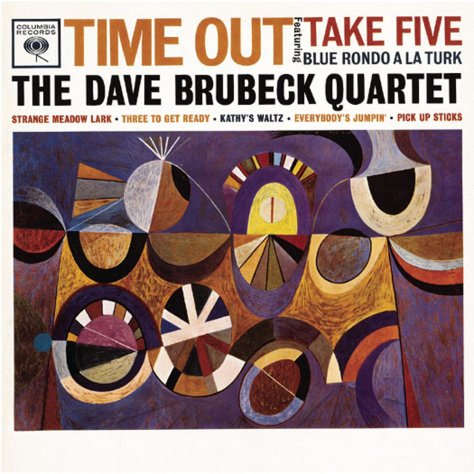



 Spirit of Cecilia
You must be logged in to post a comment.