“Both rings were round, and there the resemblance ceases”–J.R.R. Tolkien
[Originally delivered at an ISI Conference, “Modernists and Mist Dwellers,” on Friday, August 3, 2001.]
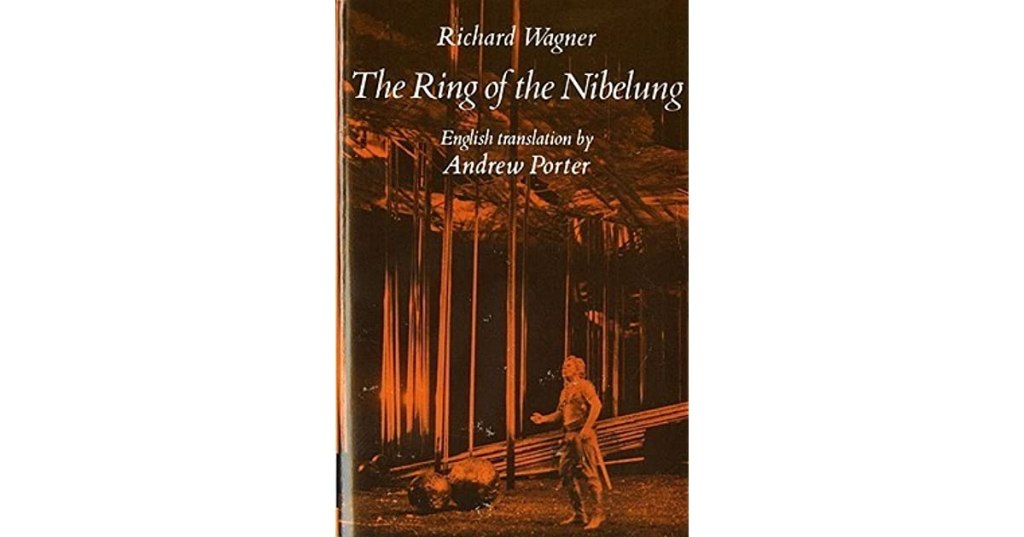
When the Swedish translation of The Lord of the Rings appeared in 1961, its author was appalled. Fluent in Swedish, J.R.R. Tolkien found no problems with the translation. Indeed, Tolkien often considered the various Scandinavian languages as better mediums for his Middle-earth stories than English, as the medieval Norse and Icelandic myths had strongly influenced them. His disgust, instead, came from the presumption found within the introduction to the Swedish edition. The crime: translator Åke Ohlmark had compared Tolkien’s ring to Wagner’s ring. “The Ring is in a certain way ‘der Niebelungen Ring,’” Ohlmark had written. Indignant, Tolkien complained to his publisher: “Both rings were round, and there the resemblance ceases.” The translator’s commentary was simply “rubbish,” according to Tolkien.[i]
Ohlmark was not the only critic to make the comparison. A Canadian English professor, William Blissett, reviewing The Lord of the Rings for the prestigious South Atlantic Quarterly, found several parallels between the two legends but was unwilling to preclude “any direct Wagnerian influence.”[ii] By the early 1960s, the comparison was becoming common. In his last interview before his death, Tolkien’s closest friend C.S. Lewis claimed to have wanted to write a new prose version of Wagner’s Ring Opera. Lewis feared, though, that “at the mention of the word Ring a lot of people might think it was something to do with Tolkien’s ‘Lord of the Rings.’”[iii] Since the first comparisons in the 1950s, many critics have used Wagner’s Ring against Tolkien. One famous English poet referred to The Lord of the Rings as “A combination of Wagner and Winnie-the-Pooh.”[iv]
[Scroll down a bit to go to page 2 of this lecture]
A few days ago, I felt absolutely snarky and thought, “why not write down exactly what I think of music from the 1980s.” In some ways, I feel I have the right to do this in a manner I could never for any other decade.
I was in seventh grade when a very disturbed fanboy tried to kill the fortieth president, and I was a first-semester senior in college when the Berlin Wall came down.
Yes, I’m very much a man of the 1980s. Reagan, Rush, Blade Runner. . . how I remember the 1980s. I came of age in that rather incredible decade.
Life continued after 1989, however, though I wasn’t so sure at the time that it would.
1990 proved to be one of the most interesting years in my personal life when it came to career choices as well as to music.
Last week I put forth my favorite 20 jazz albums of 2020. Here are my favorite 20 albums of everything else: rock, country, prog, and, yes, sacred music.
• “Companion” by Sainte Olympia: I’m biased here, as the singer, pianist, and songwriter here is my younger sister. Regardless, this is the anti-2020 album: contemplative, deceptively simply, deep, and rich with lyrical and melodic mystery. I’m both proud and moved by this release.
• “The Nashville Songbook” by Mandy Barnett: Now in her forties, Barnett’s magical voice has become even more magnificent over time. This lush and often hair-raising record reveals that Barnett is also a top tier interpreter of classic songs. Magical!
• “No One Sings Like You Anymore” by Chris Cornell: This was actually recorded in 2016, not long before his death. Cornell was multi-talented; what comes through here is, of course, that voice–but also a unique approach to interpreting songs, as all ten cuts are covers. ELO’s “Showdown” is a favorite.
• “Italian Ice” by Nicole Atkins: Speaking of voices, this New Jersey native has one of the finest pop/rock voices around and her music is always compelling. Ranging from atmospheric to anthemic, edgy to heart-breaking, this is perhaps Atkins’ best album, which is saying something.
• “Rise Radiant” by Caligula’s Horse: The talented Aussie prog-rockers never disappoint, as the Jim Grey (singer) and Sam Vallen (lead guitarist)-led unit is dynamic, soulful, restless, and intense. And, as always, featuring perfect production. Hard but melodic prog at its best.
• “La Vita Nuova” by Maria McKee: The former Lone Justice singer is now in her 50s and has made some major changes in her life, but the unreal voice and the stunning writing are still there. In fact, this is her best overall album since 1996’s “Life is Sweet”. Challenging and most rewarding. One of the very best of 2020.
• “The Women Who Raised Me” by Kandace Springs: The incredibly talented Nashville singer and keyboardist (she’s also a mechanic and visual artist) navigates the famous songs here with relaxed confidence and soulful, jazzy verve. Like fine wine. Impressive.
• “En Español” by The Mavericks: It’s entirely in Spanish, but the language barrier (for me, at least) disappears quickly as Raul Malo and Company bring an immediacy and intimacy that cannot be denied. The opening track “La Sitiera” grabs you from the first notes and the album never relents.
• “Nice ‘n’ Easy (2020 Mix)” by Frank Sinatra: Originally released in 1960, this #1 album captured Sinatra at the peak of his powers. The remaster brings a noticeable new clarity and definition, and highlights the many subtle aspects of a classic album. The 2020 release “Reprise Rarities” is also worth seeking out, although the material is not as consistently brilliant.
• “The Absence of Presence” by Kansas: My all-time favorite prog band does it again, following up 2016’s terrific “The Prelude Implicit” with another set of superbly crafted American prog. The longevity and quality of these Midwestern rockers continue to amaze.
• “Through Shaded Woods” by Lunatic Soul: A surprise for me, as the more electronica-oriented LS albums were enjoyable, but this driving, acoustic-based album is a revelation in urgency, mystery, and dusky beauty. Both lovely and a bit unsettling.
• “Color of Noize” by Derrick Hodge: Pure aural jazz-soul-R&B-electronica candy–but with plenty of musical meat and potatoes. Incredible playing and superb production. This is why headphones were invented.
• “Keaggy, Blazier, & Lunn” (An American Garage Band)” by Phil Keaggy. This was recorded years ago by Keaggy and drummer Bobby Blazier in a jam session, with bass by Gary Lunn dubbed in later. Yet it sounds completely organic and warm, a sophisticated jam session by one of the most eclectic and tasteful guitarists of all time.
• “Monovision” by Ray Lamontagne: I do like some of Lamontagne’s more experimental albums (“Ouroboros”!), but this is the sweet spot for me: the gentle, backwoods vibe that marries Americana and folk with early 1970s Van Morrison. This is fine whisky in musical form.
• “Revisiting This Planet” by Kevin Max: I was never a big Larry Norman fan (his voice bugs me), but Max wins me over with this modern, punchy, and on-point rendering of several Norman songs. Max is true to the music, but also makes the songs his own. Great stuff.
• “Panther” by Pain of Salvation: Daniel Gildenlöw has gone through a lot in recent years (nearly dying in 2017) and so this is a welcome return to full-blown form for the Swedish musician and crew. This is a prog diamond: hard, clear, and multi-faceted, featuring one of the best rock singers out there.
• “Inescapable” by Godsticks: Previous albums were good, but a bit repetitious. Not so here. Vocalist and guitarist Darran Charles has expanded his range, the songwriting is equally expansive, and the band is tight. A deeply personal and powerful album.
• “Fireworker” by Gazpacho: Arguably the most remarkable prog album of year. Huge, intimate, byzantine, beautiful, and never predictable. Those who think prog is about long solos and wonkiness need to listen to this masterpiece. Spellbinding.
• “Terminal Velocity” by John Petrucci: Fantastic instrumental album from Dream Theater legend. Yes, he’s a technical wizard, but Petrucci’s mastery of mood and attitude is at the forefront here. And it’s fun without ever being silly or derivative.
• “Liturgy by Saint John Chrysostom” by Benedict Sheehan: Glorious, glorious, glorious. Enough said. Just listen.
[Originally published at The Imaginative Conservative]
Should one generation ever consider itself greater than any other generation, past or future, Edmund Burke warned in his magisterial Reflections on the Revolution in France, the entire fabric of a civilization might very well unravel and, ultimately, disintegrate. Our modern ears have no right to discount Burke’s argument as simple hyperbole. What takes centuries to build and hone, however, can take moments to undo. We have witnessed numerous generations since Burke wrote this, and we have seen the arrogance of several, but most especially the Vatican II generation and the so-called “counter-culture” generation of the 1960s. To this day, we suffer from the arrogance of each. They each, in the name of toleration, progress, liberalism, and humanitarianism to submit to their teachings blindly. As one great Canadian and Stoic man of letters argued in the early 1980s, “They shout about love, but when push comes to shove, they fight for things they’re afraid of.”
Once a generation succeeds in separating itself from past and future, it harms not just civilization but the very dignity of man. The individual man, unanchored, becomes, Burke noted darkly, “would become little better than the flies of summer.”
At the beginning of his Histories, Herodotus notes that a normal person enjoys 26,250 days in his or her life, no day ever exactly like another. I’m not quite sure I want to count how many days I have left, assuming I could even know such a thing. It’s certainly very wise of the Good Lord not to let us know such things.
Still, as I think about my own days, some wisely spent, others squandered, I have only a few serious regrets.
One of my two most important—at least as it hovers over my being—is that I never actually met Dr. Russell Amos Augustine Kirk in person. I had the opportunity several times, but I never took advantage of these. There are lots of reasons why this happened (or, as the case really was, failed to happen), but they really all came down to the same thing—I took too much for granted while in my 20s. I seemed invulnerable as did those I loved and admired. As one of my other heroes, Neil Peart, once wrote, “We’re only immortal for a very short time.” My immortality seemed rather assured as did that of those whom I respected. Strange considering my own father died when I was only two months old. Yet, that happened before I was conscious of the world, and the whole story of his death had much more mythical significance than real influence.
Life has a funny way of teaching us each the lessons we so painfully need to learn, and I was rather shocked in the summer of 1994 when I heard that Russell Kirk had passed away. I was only 26, but I knew I had missed my chance to meet the great man, a man I had studied intensely for about six years at that point.
In his personal recollections of his mentor, hero, and friend, George Sayer remembered that J.R.R. Tolkien possessed the uncanny ability to match his facial expressions and speech patterns to and with the prevailing mood of any given conversations. “As I saw with him and the Lewis brothers in the pub, I remember being fascinated by the expressions on his face, the way they changed to suit what he was saying,” Sayers recollected. “Often he was smiling, genial, or wore a pixy look. A few seconds later he might burst into savage scathing criticism, looking fierce and menacing. Then he might soon again become genial.”[1] It was not affectation, but sincere intensity. The very same might (and should) be claimed of his writing ability. When the mood calls for levity, Tolkien writes with levity. When the mood calls for depth, Tolkien writes with depth. When the mood calls for contemplation, Tolkien writes contemplatively. As a twentieth-century author, he was an absolute master at this.
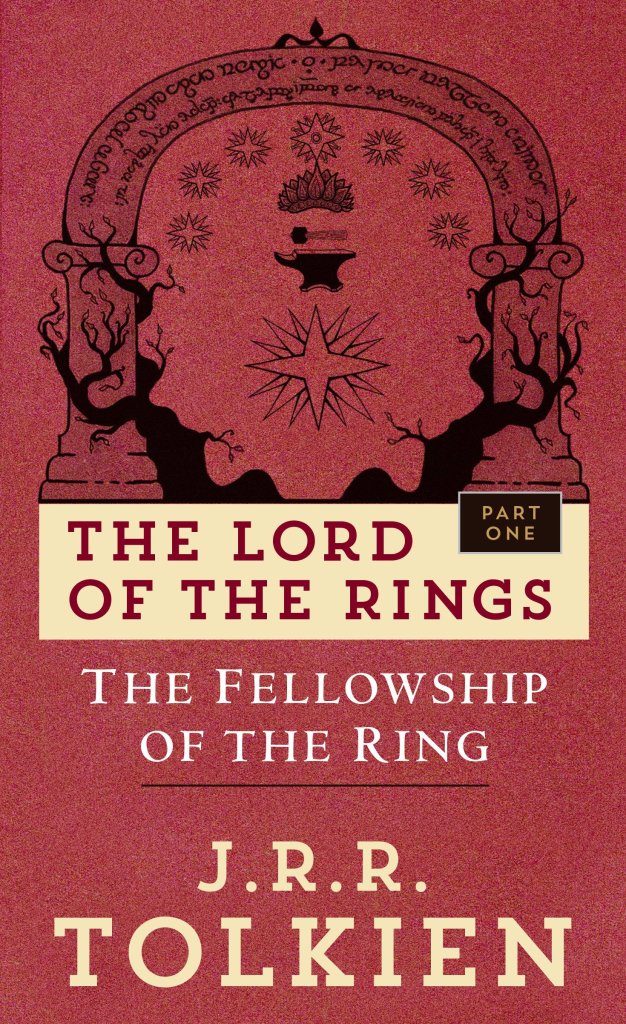
One can see Tolkien’s skill in the approach to Weathertop, chapter 11 of book one of The Fellowship of the Ring, “A Knife in the Dark.” Having slowly fled the social and near fatal disasters of Bree, September 30, the four hobbits, Bill the Pony, and Strider the Ranger make their way east of the village, en route to the Elvish safe haven of Rivendell. They won’t arrive in Rivendell until late on October 20, but they have no idea of just how long it will take. Dispirited, the party moves anxiously and uneasily, not sure who in the village had betrayed them to the demonic black riders. The same riders—at least four of them—attack Frodo and his party on the evening of October 6.
On October 4, after an agonizing journey through insect-ridden marshes, Frodo and his party spot Weathertop for the first time. Strider advises a roundabout route, thus approaching Weathertop from the north, a path better hidden from the spies of the enemies. On October 5, the hobbits feel refreshed after a good night’s sleep. “There was a frost in the air, and the sky was a pale clear blue,” Tolkien writes.[2] As the party nears Weathertop, they find themselves on “an undulating ridge, often rising almost to a thousand feet, and here and there falling again to low clefts or passes.” The last looks and leads into the east, seemingly endless in vista, and the party views “what looked to be the remains of green-grown walls and dikes, and in the clefts there stood the ruins of old works of stone.”
[Please scroll down a little bit to go to Page 2 of this post]
The Meaning of a Life: Steven Wilson’s Hand.Cannot.Erase.
An Incarnational Whole
One of the greatest things in this whirligig of a world—however fraught with a string of perilous and gut-wrenching disasters—is the mystery of the human person. And, until God so decides to end this existence, every person is a new reflection of the Infinite. From the Catholic Humanist perspective, every human is an unrepeatable center of dignity and freedom. Each person, born in a particular place and time, comes only once, a life to burn as brightly or not, for one’s self or for another, in the time allotted to each of us. “Dark and inscrutable are the ways in which we come into the world,” the grand Anglo-Irish statesman and philosopher, Edmund Burke, understood. Fewer truths have ever been spoken in such perfect formation of the English language.
Yet, speaking on the mystery of the person and personhood, Pope John Paul II put it even more beautifully in the penultimate month of 1996.
The mystery of the Incarnation has given a tremendous impetus to man’s thought and artistic genius. Precisely by reflecting on the union of the two natures, human and divine, in the person of the Incarnate Word, Christian thinkers have come to explain the concept of person as the unique and unrepeatable centre of freedom and responsibility, whose inalienable dignity must be recognized. This concept of the person has proved to be the cornerstone of any genuinely human civilization.
As someone who has had the privilege of teaching history and writing biography the entirety of his professional career, I hope and pray that John Paul II’s words and ideas each across everything I teach, think, and write. As such, I am always looking at and for new ways to understand the dignity of each individual person, however tragically flawed.
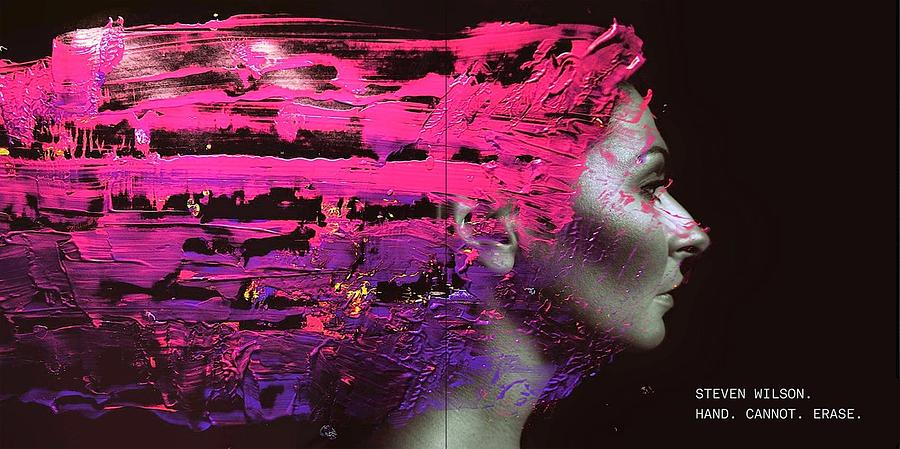
Nearly six years ago, such a statement and manifestation of dignity arrived in the most unusual of ways: in the form of a rock concept album by the rather devoutly atheistic, seemingly always grumpy, and unbelievably talented English musician, Steven Wilson. His album, a sixty-seven minute story about a lost soul, came out on February 27, 2015. In terms of lyrics and music, Wilson’s work is extraordinary by the standards of any genre. What should intrigue us most, however, is the subject matter and how Wilson fills it out. The subject matter is the uniqueness of each human person, and he focuses on the life of one lost soul.



 Spirit of Cecilia
You must be logged in to post a comment.