All posts by bradbirzer

By day, I'm a father of seven and husband of one. By night, I'm an author, a biographer, and a prog rocker. Interests: Rush, progressive rock, cultural criticisms, the Rocky Mountains, individual liberty, history, hiking, and science fiction.

Hope on a Rose

[originally published at The American Conservative–to honor my daughter’s eleventh birthday. This year, she would’ve been sixteen]

Had things worked or happened differently, I would be celebrating the eleventh birthday of my daughter, Cecilia Rose Birzer, today.  I can visualize exactly what it might be like.  A cake, eleven candles, hats, cheers, goofiness, photos, and, of course, ice cream.  I imagine that she would love chocolate cake–maybe a brownie cake–and strawberry ice cream.  Her many, many siblings cheer here, celebrating the innumerable smiles she has brought the family.  As I see her at the table now, I see instantly that her deep blue eyes are mischievous to be sure, but hilarious and joyous as well.  Her eyes are gateways to her soul, equally mischievous, hilarious, and joyous.  She’s tall and thin, a Birzer.  She also has an over abundance of dark brown curls, that match her darker skin just perfectly.  She loves archery, and we just bought her first serious bow and arrow.  No matter how wonderful the cake, the ice cream, and the company, she’s eager to shoot at a real target.  

She’s at that perfect age, still a little girl with little girl wants and happinesses, but on the verge of discovering the larger mysteries of the teenage and adult world.  She cares what her friends think of her, but not to the exclusion of what her family thinks of her.  She loves to dance to the family’s favorite music, and she knows every Rush, Marillion, and Big Big Train lyric by heart.  She’s just discovering the joys of Glass Hammer.  As an eleven-year old, she loves princesses, too, and her favorite is Merida, especially given the Scot’s talents and hair and confidence.  She has just read The Fellowship of the Ring, and she’s anguished over the fate of Boromir.  Aragorn, though.  There’s something about him that seems right to her.

If any of this is actually happening, it’s not happening here.  At least not in this time and not on this earth.  Here and now?  Only in my dreams, my hopes, and my broken aspirations.

Eleven years ago today, my daughter, Cecilia Rose Birzer, strangled on her own umbilical cord.  That which had nourished her for nine months killed her just two days past her due date.

On August 6, 2007, she came to term.  Very early on August 8, my wife felt a terrible jolt in her belly and then nothing.  Surely this, we hoped, was Cecilia telling us she was ready.  We threw Dedra’s hospital bag into the car as we had done four times before, and we drove the 1.5 miles to the hospital.  We knew something was wrong minutes after we checked in, though we weren’t sure what was happening.  Nurses, doctors, and technicians were coming in and out of the room.  The medical personnel were whispering, looking confused, and offering each other dark looks.  Finally, after what seemed an hour or more, our beloved doctor told us that our child–a girl, it turned out–was dead and that my wife would have to deliver a dead child.  

We had waited to know the sex of the baby, but we had picked out names for either possibility.  We had chosen Cecilia Rose for a girl, naming her after my great aunt Cecelia as well as St. Cecilia, the patron saint of music, and Rose because of St. Rose of Lima being the preferred saint for the women in my family and because Sam Gamgee’s wife was named Rosie.

I had never met my Aunt Cecelia as she had died at age 21, way back in 1927.  But, she had always been a presence in my family, the oldest sister of my maternal grandfather.  She had contracted tetanus, and the entire town of Pfeifer, Kansas, had raised the $200 and sent someone to Kansas City to retrieve the medicine.  The medicine returned safely to Pfeifer and was administered to my great aunt, but it was too late, and she died an hour or two later.  Her grave rests rather beautifully, just to the west of Holy Cross Church in Pfeifer valley, and a ceramic picture of her sits on her tombstone.  Her face as well as her story have intrigued me as far back as I can remember.  Like my Cecilia Rose, she too had brown curly hair and, I suspect, blue eyes.  She’s truly beautiful, and her death convinced her boyfriend to become a priest.

The day of Cecilia Rose’s death was nothing but an emotional roller coaster.  A favorite priest, Father Brian Stanley, immediately drove to Hillsdale to be with us, and my closest friends in town spent the day, huddled around Dedra.  We cried, we laughed, and we cried some more–every emotion was just at the surface.  I’m more than certain the nurses thought we were insane.  Who were these Catholics who could say a “Hail Mary” one moment, cry the next, and laugh uproariously a few minutes later?  Of course, the nurses also saw just how incredibly tight and meaningful the Catholic community at Hillsdale is.  And, not just the Catholics–one of the most faithful with us that day was a very tall Lutheran.

Late that night, Dedra revealed her true self.  She is–spiritually and intellectually–the strongest person I know.  She gave birth with the strength of a Norse goddess.  Or maybe it was just the grace of Mary working through her.  Whatever it was, she was brilliant.  Any man who believes males superior to females has never seen a woman give birth.  And, most certainly, has never seen his wife give birth to a dead child.  Cecilia Rose was long gone by the time she emerged in the world, but we held her and held her and held her for as long as we could.  With the birth of our other six children, I have seen in each of them that unique spark of grace, given to them alone.  Cecilia Rose was a beautiful baby, but that spark, of course, was absent, having already departed to be with her Heavenly Father.

For a variety of reasons, we were not able to bury her until August 14.  For those of you reading this who are Catholic, these dates are pretty important.  August 8 is the Feast of St. Dominic, and August 14 is the Feast of St. Maximilian Kolbe.

Regardless, those days between August 8 and August 14 were wretched.  We were in despair and depression.  I have never been as angry and confused as I was during those days.  Every hour seemed a week, and the week itself, seemed a year.  I had nothing but love for my family, but I have never been that angry with God as I was then and, really, for the following year, and, frankly, for the next nine after that.  We had Cecilia Rose buried in the 19th-century park-like cemetery directly across the street from our house.  For the first three years after her death, I walked to her grave daily.  Even to this day, I visit her grave at least once a week when in Hillsdale.  In the first year after her death, I was on sabbatical, writing a biography of Charles Carroll of Carrollton.  Every early afternoon, I would walk over to her grave, lay down across it, and listen to Marillion’s Afraid of Sunlight.  Sometime in the hour or so visit, I would just raise my fist to the sky and scream at God.  “You gave me one job, God, to be a father to this little girl, and you took it all away.”  In my fury, I called Him the greatest murderer in history, a bastard, an abortionist, and other horrible things.  I never doubted His existence, but I very much questioned His love for us.

Several things got me through that first year: most especially my wife and my children as well as my friends.  There’s nothing like tragedy to reveal the true faces of those you know.  Thank God, those I knew were as true in their honor and goodness as I had hoped they would be.  A few others things helped me as well.  I reread Tolkien, and I read, almost nonstop, Eliot’s collected poetry, but especially “The Hollow Men,” “Ash Wednesday,” and the “Four Quartets.”  I also, as noted above, listened to Marillion.  As strange as it might seem, my family, my friends, Tolkien, Eliot, and Marillion saved my life that year.  I have no doubt about that.  And, nothing gave me as much hope as Sam Gamgee in Mordor.  “Sam saw a white star twinkle for a while.  The beauty of it smote his heart, as he looked up out of the forsaken land, and hope returned to him that in the end the Shadow was only a small and passing thing: there was light and high beauty forever beyond its reach.”  As unorthodox as this might be, we included Tolkien’s quote in the funeral Mass.

A year ago, my oldest daughter–the single nicest person I have ever met–and I were hiking in central Colorado.  We were remembering Cecilia Rose and her death.  Being both kind and wise, my daughter finally said to me, “You know, dad, it’s okay that you’ve been mad at God.  But, don’t you think that 10 years is long enough?”  For whatever reason–and for a million reasons–my daughter’s words hit me at a profound level, and I’m more at peace over the last year than I’ve been since Cecilia Rose died.  I miss my little one like mad, and tears still spring almost immediately to my eyes when I think of her.  I don’t think any parent will ever get over the loss of a child, and I don’t think we’re meant to.  But, I do know this: my Cecilia Rose is safely with her Heavenly Father, and, her Heavenly Mother, and almost certainly celebrating her birthday in ways beyond our imagination and even our hope.  I have no doubt that my maternal grandmother and grandfather look after her, and that maybe even Tolkien and Eliot look in on her from time to time.  And, maybe even St. Cecilia herself has taught my Cecilia Rose all about the music of the spheres.  Indeed, maybe she sees the White Star.  Let me re-write that: I know that Cecilia Rose sees the White Star.  She is the White Star.

Happy birthday, Cecilia Rose.  Your daddy misses you like crazy, but he does everything he can to make sure that he makes it to Heaven–if for no other reason than to hug you and hug you and hug you.

My 200 Favorite Rock and Pop Albums

Over at my substack (just a few months old now), I posted my top 100 albums. I got some great responses there and on Facebook as to what I was missing (and some kind words about my choices as well). As such, I decided it would be best to expand my list to my favorite albums of all time–so I went for 200! I know a few things are missing, such as the Beatles. I was a huge fan of the Beatles back in college, but my enthusiasm for them died after reading a few biographies of the band. I realize that Sgt. Pepper’s and Magical Mystery Tour are both extraordinary, but I won’t go back to those album unless I’m preparing for something academic.

So, this list, is obviously deeply personal. But, these are the 200 albums I go back to, over and over again. I’ve tried to be faithful to my life as a 55-year old, recognizing what I’ve loved continuously. So, for example, I was a huge ELO fan as a kid, but that’s not stuck with me, even though I recognize the brilliance of Jeff Lynne.

So, I’m not trying to dismiss anything by their absences, only praise what I love. Another caveat–I’m leaving off surf bands (The Madeira and Lords of Atlantis) and jazz acts (Dave Brubeck and Miles Davis). I’m also leaving out The Shadows–of whom I’ve only recently become a fan.

One last note, I typed these out in Microsoft Word, and, for some reason, Word failed to alphabetize them or align them perfectly. I’m not sure how to fix the latter problem. The former problem just sort of cracks me up–so I’m leaving as is.

The List:

ABC, Lexicon of Love

Airbag, All Rights Removed

Airbag, Disconnected

Anathema, We’re Here Because We’re Here

Anathema, Weather Systems

Astra, The Black Chord

Ayreon, The Human Equation

Ayreon, Universal Migrator

Beach Boys, Pet Sounds

Big Big Train, English Electric

Big Big Train, Grimspound

Big Big Train, Second Brightest Star

Big Big Train, The Difference Machine

Big Big Train, The Grand Tour

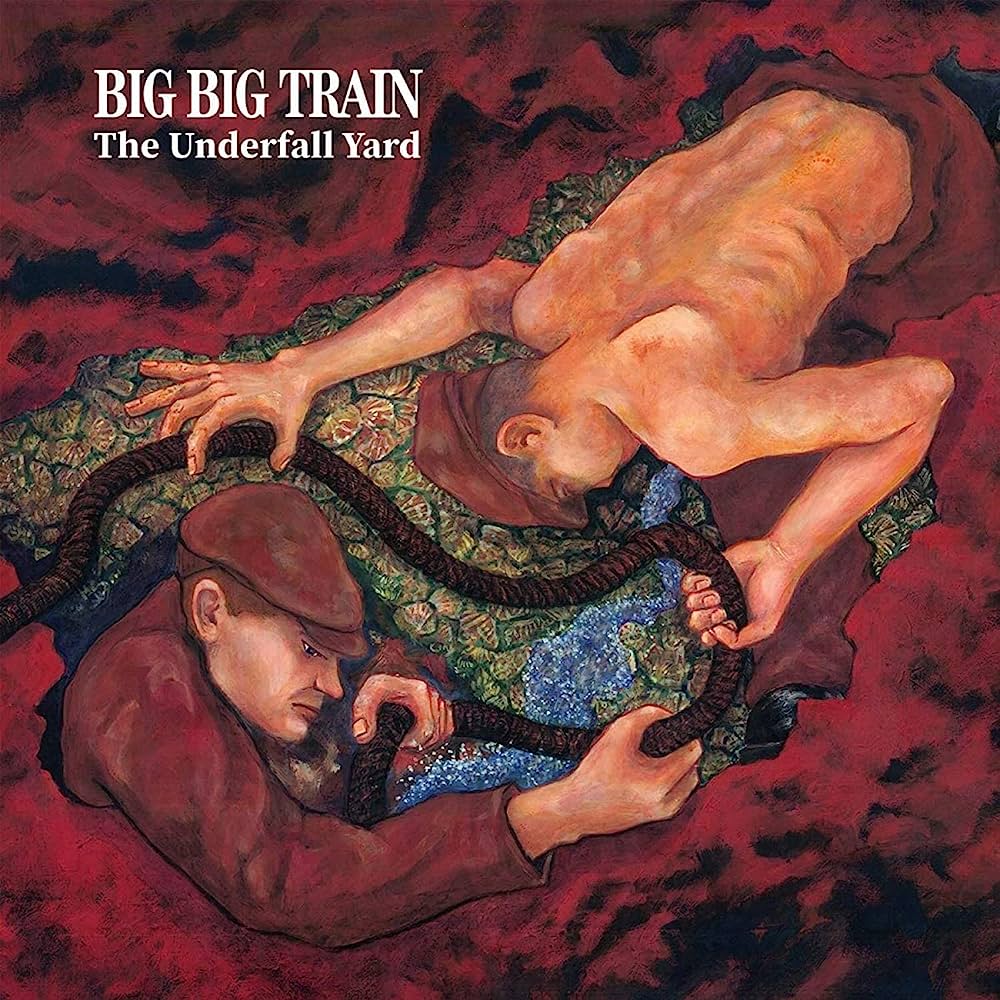
Big Big Train, The Underfall Yard

Blackfield

Blackfield II

Bryan Ferry, Boys and Girls

Catherine Wheel, Happy Days

Chicago, Chicago Transit Authority

Chris Squire, Fish Out of Water

Cosmograf, Capacitor

Cosmograf, Man Left in Space

Dave Kerzner, New World

Dave Kerzner, Static

Dave Matthews Band, Before These Crowded Streets

Dave Matthews Band, Crush

Days Between Stations, In Extremis

Echo and the Bunnymen, Heaven Up Here

Echo and the Bunnymen, Ocean Rain

Enochian Theory, Life and All it Entails

Flower Kings, Flower Power

Flower Kings, Paradox Hotel

Flower Kings, Space Revolver

Frost*, Day and Age

Frost*, Experiments in Mass Appeal

Frost*, Milliontown

Galahad, Beyond the Realms of Euphoria

Galahad, Empires Never Last

Gazpacho, Fireworker

Gazpacho, Night

Gazpacho, Tick Tock

Genesis, A Trick of the Tail

Genesis, Duke

Genesis, Foxtrot

Genesis, Lamb Lies Down on Broadway

Genesis, Selling England by the Pound

Glass Hammer, At the Gate

Glass Hammer, Dreaming City

Glass Hammer, Inconsolable Secret

Glass Hammer, Valkyrie

Haken, The Mountain

Iamthemorning, Lighthouse

Icehouse, Measure for Measure

INXS, The Swing

IZZ, Crush of Night

IZZ, Everlasting Instant

IZZ, I Move
Laura Meade, Most Dangerous Woman in America

IZZ, The Darkened Room

Jethro Tull, Benefit

Jethro Tull, Minstrel in the Gallery

Jethro Tull, Thick as a Brick

John Galgano, Real Life is Meeting

Kansas, Leftoverature

Kansas, Point of No Return

Kansas, Song for America

Kate Bush, Aerial 

Kate Bush, Hounds of Love

Kevin McCormick, Squall

Kevin McCormick, With the Coming of Evening

King Bathmat, Overcoming the Monster

Led Zeppelin I

Led Zeppelin II

Led Zeppelin IV

Led Zeppelin, Houses of the Holy

Love Spit Love

Lush, Spooky

Marillion, Afraid of Sunlight

Marillion, Brave

Marillion, FEAR

Marillion, Marbles

Mew, And the Glass Handed Kites

Moody Blues, Days of Future Passed

Muse, Origin of Symmetry

My Bloody Valentine, Loveless

NAO, Fog Electric

NAO, Grappling Hooks

NAO, Grind Show

NAO, The Third Day
NAO, United Wire

Natalie Merchant, Leave Your Sleep

Neal Morse, Testimony

Neal Morse, Testimony II
No-Man, Love You to Bits

New Order, Low-life

No-man, Schoolyard Ghosts

Nosound, Lightdark

OAK, False Memory Archive

Oceansize, Effloresce

Oceansize, Everyone Into Position

Oceansize, Frames

Ordinary Psycho, The New Gothick
Ordinary Psycho, Volume II

Pearl Jam, Vs.

Peter Gabriel III

Peter Gabriel, Security

Peter Gabriel, SO

Phish, Billy Breathes

Pink Floyd, Animals

Pink Floyd, Dark Side of the Moon

Pink Floyd, Meddle

Pink Floyd, Wish You Were Here

Porcupine Tree, Fear of a Blank Planet

Porcupine Tree, Lightbulb Sun

Porcupine Tree, Sky Moves Sideways

Pure Reason Revolution, The Dark Third

Queen II

Queen, A Night at the Opera

Radiohead, Kid A

Rhys Marsh, October After All

Riverside, Love, Fear, and the Time Machine

Riverside, Out of Myself

Riverside, Second Life Syndrome

Riverside, Wasteland

Roxy Music, Avalon

Rush, 2112

Rush, A Farewell to Kings

Rush, Clockwork Angels

Rush, Grace Under Pressure

Rush, Hemispheres

Rush, Moving Pictures

Rush, Permanent Waves

Rush, Power Windows

Rush, Snakes and Arrows

Sanguine Hum, Diving Bell

Sarah McLachlin, Fumbling Towards Ecstasy

Simon and Garfunkel, Bookends

Simple Minds, New Gold Dream

Simple Minds, Sons and Fascination

Simple Minds, Sparkle in the Rain

Sixpence None the Richer

Smashing Pumpkins, Siamese Dream

Sound of Contact, Dimensionaut

Steven Wilson, Grace for Drowning

Steven Wilson, Hand Cannot Erase

Steven Wilson, Insurgentes

Steven Wilson, Raven That Refused to Sing

Stone Temple Pilots, Tiny Music

Talk Talk, Laughing Stock

Talk Talk, Spirit of Eden

Talk Talk, The Colour of Spring

Tears for Fears, Elemental

Tears for Fears, Everybody Loves a Happy Ending

Tears for Fears, Songs from the Big Chair

Tears for Fears, The Hurting

The Connells, Boylan Heights

The Cure, Blood Flowers

The Cure, Disintegration

The Cure, Head on the Door

The Cure, P-ography

The Cure, Wish

The Fierce and the Dead, Spooky Action

The Fierce and the Dead, If It Carries On Like This

The Sundays, Reading, Writing, and Arithmetic

The Tangent, A Place in the Queue

The Tangent, Auto Reconnaissance

The Tangent, Le Sacre du Travail

The Tangent, Proxy

The Tangent, The Music that Died Alone

Thomas Dolby, Golden Age of Wireless

Thomas Dolby, The Flat Earth

Tim Bowness, Butterfly Mind

Tim Bowness, Flowers at the Scene

Tim Bowness, Late Night Laments

Tim Bowness, Lost in the Ghostlight

Tin Spirits, Scorch

Tin Spirits, Wired to Earth

Tori Amos, Little Earthquakes

Tori Amos, Under the Pink

Traffic, John Barleycorn Must Die

Traffic, Low Spark of High Heeled Boys

Traffic, Mr. Fantasy

Traffic, Traffic

Transatlantic, SMPT:e

Transatlantic, The Whirlwind

U2, October

U2, The Joshua Tree

U2, Unforgettable Fire

Ultravox, Rage in Eden

Ultravox, Vienna

Vertica, The Haunted South

XTC, Black Sea

XTC, Skylarking

Yes, 90125

Yes, Close to the Edge

Yes, Drama

Yes, Fragile

Yes, Relayer

Yes, The Yes Album

My third substack post, Time, Time Time

Travels

My wife, Dedra, and I just spent the past week in Pierre, South Dakota. I’m sure Pierre wouldn’t be for everyone, but I love it. I have my chair of contemplation there, and I take daily walks along the Missouri River. The people are incredibly nice (just like my upbringing in Kansas), and I always feel like a member of a small republic when I’m there.

To keep reading, please go here:

https://bradleyjbirzer.substack.com/p/time-time-time

Big Big Train: 2017

Now that summer break has arrived, I have so much more time to listen to great music.

I sit here (I have glorious reading chairs in Michigan as well as in South Dakota), and I read and read great books, and, thanks be to God, I listen and listen to great music.

Right now, I’m marveling at Big Big Train in 2017. What a year for the band and for fans. Not one but three releases that year: Grimspound; Second Brightest Star; and London Song.

Really, has any band so wonderfully treated its fan base before or since?

I would unhesitatingly recommend any of these three to anyone.

Held by Trees: LIVE


For Immediate Release

Two New EPs From Held By Trees Recorded at Peter Gabriel’s Real World Studios Released Exclusively by InnerSleeve.com

Featuring Paul McCartney/Pretenders guitar legend Robbie McIntosh!

Hot on the heels of their critically acclaimed debut album, “Solace”, instrumental project Held By Trees is excited to be releasing two new EPs this year on Sound Canyon Records through InnerSleeve.comrecorded at Peter Gabriel’s famous Real World Studios, the first EP is comprised of live versions of five tracks from “Solace”. The six-piece live iteration of Held By Trees brings together three of the Talk Talk/Mark Hollis alumni that contributed to “Solace” including renowned guitarist Robbie McIntosh. The band recorded playing all together in the ‘Big Room’ at Real World in November 2022, a week after their debut live performances.

The second EP is an entirely new suite of pieces themed on the transition from daylight to darkness. Entitled “Eventide”, it was tracked live at Real World Studios and then additional layers were added by musicians in America and Canada, by old friends of project leader David Joseph.

The twin EPs will be released on separate CDs and as two sides of one vinyl pressing by new American record label, Sound Canyon and their retail arm www.InnerSleeve.com

The new material sees Held By Trees continue to create instrumental music characterized by skilled improvisation over spacious, epic arrangements. The music draws on the influence of Van Morrison and John Martyn, alongside their usual late Talk Talk and Pink Floyd references. The live versions of “Solace” tracks bring a fresh intensity to the music, with a heavier vibe created by the band in real time.

The main musicians who worked on the new EPs are…
Laurence Pendrous – piano
James Grant – bass, double bass
Robbie McIntosh – guitar
David Joseph – guitar
Andy Panayi – flute, clarinet, saxophone
Paul Beavis – drums

Pre-orders available at https://www.innersleeve.com/en-gb/collections/held-by-trees

First 50 customers pre-ordering the bundle (both EP’s and the vinyl) will receive an exclusive signed poster and one lucky winner will receive a set of album cover cushion covers

Videos:
https://www.youtube.com/watch?v=uuam_koJkII
https://www.youtube.com/watch?v=qrUjGIrSAVM
https://www.youtube.com/watch?v=Nb6ZTLgEXhQ

Held By Trees and www.InnerSleeve.com will be celebrating the release with a launch show at the Half Moon in Putney London on September 21st 2023

WHAT THEY SAID….

A fascinating project… Rekindles the spirit of Talk Talk to startling effect… channels their psychedelic post-rock vibe to an almost eerie degree” – Prog Magazine

“…beautifully played throughout…” – Mojo Magazine

A tree is planted for every album sold… I’ll be planting a few trees – giving them out at Christmas!” – Guy Garvey, Elbow / BBC 6 Music

…beautiful, minimalist, instrumental delight” – Scottish Daily Express

Timely, important, beautiful music” – Under the Radar

A tantalising project evokes the spirit of latter-era Talk Talk and David Gilmour-led Pink Floyd…highly recommended for fans of Hollis’ sparse aesthetic” – Classic Pop Magazine

New heroes of post-rock/prog have arrived.” – Record Collector Magazine

“…Lovely but very different guitar work… somehow sparse but also slightly proggy as well which I know will sound very appealing, almost like a perfect combination…” – Elizabeth Alker – Unclassified, BBC Radio 3

“Solace” charted at Number 4 on the Indie Breakers Chart and Number 23 on the main Indie Chart

For more information: www.heldbytrees.co.uk UK

Latest from THE BAND WAGON

Have you seen the latest issue of PROG Magazine? As always, the magazine is filled with exciting news from new and old bands. But, in the latest issue of our eyes fell on the Q&A with Matt Dorsey. Having known Matt for years we are very excited about his debut solo release and pleased that he has allowed us to be a small part of it. Have you heard it? What do you think? We love it, but, then again, we might be biased … 😊
As always, if you know any independent bands or record labels looking for distribution assistance in North America, please feel free to put them in contact with us (sven@thebandwagonusa.com) or drop us a message telling us to check them out.
 HIGHLIGHTSVonn Zandus
Vonn Zandus is the new solo project from Joe Burns from UK proggers, Guranfoe. This project combines keyboards, synthesizers, drums, marimba and glockenspiel into ecstatic progressive music. There is really no better way to describe this rhythmically complex and melodically vibrant album. If you like vibrant instrumental prog, you should really give this one a try.
Vonn Zandus – The Band Wagon USA

Strange Horizon
Strange Horizon is back and kicking … you know what we mean 😊 The labels we attach to music can be strange and sometimes confusing and one of the reasons we often try to avoid them. Strange Horizon is described as Doom Metal or as they like Blytung Skandinavisk Heavy Metal. What we hear is 70’s inspired hard rock that … yes you know what we mean. No matter how you describe it, this is a great album, with lots of energy that begs to get turned up to 11.
Strange Horizon – The Band Wagon USA
Candles – YouTube

Nick Bohensky & Max N’Adamo
Some of you already know Nick and Max from the band The 16 Deadly Improvs. What you may not know is that they have more to offer. While waiting for the next installment from their band to finish up, these two decided they have more to give and have released the EP Imphilosible. Give them a listen, we know some of you will like this. Physically only available on Vinyl.
Nick Bohensky & Max N’Adamo – The Band Wagon USA
Forwards/Backwards by Nick Bohensky and Max N’Adamo – YouTube
Syllogism – YouTube

CURRENT PRE-ORDER CAMPAIGNS

Matt Dorsey – Let Go (CD)
Available Now!

Matt Dorsey – The Band Wagon USA

Dave Foster Band – Glimmer (CD, Black Vinyl, Yellow Vinyl)
CD Available Now! (Vinyl delayed until mid-May)

Dave Foster Band – The Band Wagon USA

Waking Dreams – Sliding Lines (CD & Vinyl)
Available Now!

Waking Dreams – The Band Wagon USA

Aisles – Beyond Drama (CD)
Available Now!

Aisles – The Band Wagon USA

Big Big Train – Ingenious Devices (Hoody)
April 19 deadline for pre-orders has passed
May 12 Release

Big Big Train – The Band Wagon USA

Howlin’ Sun – Maxime (CD, Black Vinyl, Transparent Orange Vinyl)
May 19 Release

Howlin’ Sun – The Band Wagon USA

Hex A.D. – Delightful Sharp Edges (CD, Black Vinyl, Transparent Orange Vinyl)
May 26 Release

Hex A.D. – The Band Wagon USA

Strange Horizon – Skur 14 (CD, Black Vinyl, Purple Vinyl)
May 26 Release

Strange Horizon – The Band Wagon USA
 
Rick Armstrong – Chromosphere (CD)
May/June Release

Rick Armstrong – The Band Wagon USA

Vonn Zandus – Unimortal (CD)
June 9 Release

Vonn Zandus – The Band Wagon USA

Big Big Train – Ingenious Devices (CD, Black Vinyl, Sky Blue Vinyl)
June 30 Release

Big Big Train – The Band Wagon USA

LAST BUT NOT LEAST
Rita is jetting off today to see some Scottish Heavy Metal band (aka Marillion) in Italy. She claims she is “working”, but Sven isn’t buying it. If you are going to be in Padua, stop by the merch desk and say hello. She’ll be the one who kinda looks like our logo 😉 She will be back on Monday, then home for a week before it is off to Montreal for the Marillion Weekend there. Rita will be working at the merch desk, along with running the charity event, helping supports acts Matt Dorsey and John Young, and orchestrating the John Young solo show on Sunday, May 14. Sven will be busy giving Rita grief for doing too much while performing his duties “herding cats” and whatever else bands and management need. If you catch a glimpse of us, come and say hi, we would love to meet you. Don’t be shy, we don’t bite. Unless we are hungry 😊

Are you following us on Facebook and Instagram? If not, we would appreciate if you would, thereby adding another way for us to communicate. It is a great way to see what we are putting up on our site and will usually be the first place you will see it.

Exodusters

Exodusters–Voting with one’s feet

                  One of the greatest rights any person can hold is the “right to exit,” that is, the right and ability to depart a bad situation in search of a better one.  With the failure and end of post-Civil War Reconstruction in 1877, numerous ex-slaves voted with their feet, leaving the South for the American West.  The 1870s and 1880s witnessed the beginning of the plains settlement boom, and blacks migrated in significant numbers to western Kansas, western Nebraska, and Oklahoma.  Known as Exodusters, these blacks shook the dust of southern prejudice off their feet.  The Homestead Act of 1862, one of the most liberal and republican of all American laws, did not discriminate on basis of race, and any black males or single black females were welcome to take up a government-provided homestead.  Though records were poorly kept, almost 40,000 blacks migrated to the new communities.  Like many or the original European-derived Great Plains communities, few of these black Gilded Age settlements remain at the beginning of the twenty-first century.  The most prominent of those still extant is Nicodemus in Graham County, Kansas.  It had been the earliest of the Exoduster communities, founded in 1877.

                  The two most prominent individuals in the great exodus from the South were Louisianan Henry Adams, a former slave, and Benjamin “Pap” Singleton.  Both men mixed self-help philosophy and God-given drive with entrepreneurial boosterism to promote the black settlements.  “What’s going to be a hundred years from now ain’t much account to us,” Singleton said, and the “whites has the lands and the sense, an’ the blacks has nothin’ but their freedom, an’ it’s jest like a dream to them.” The promoters sent advertising circulars to black churches, mostly located in the border states and upper South.  Most of the Exodusters came from Tennessee.

                  The enterprise faced many obstacles.  First, many southern whites feared the loss of exploitable, cheap labor.  Armed throughout river ports in the South, whites physically prevented innumerable blacks from migrating.  Second, unlike the many European immigrants to the high plains who had first lived in the steppes of Russia, the blacks from the South had no experience with dry farming.  Continental weather patterns and very little rain hindered black agricultural efforts at first.

                  Still, the new settlers overcame these difficulties and created thriving communities.  “When I landed on the soil I looked on the ground and I says this is free ground,” one black settler said. “Then I looked on the heavens and I says them is free and beautiful heavens. Then I looked within my heart and I says to myself, I wonder why I was never free before?”  A Great Bend, Kansas, newspaper editorialized: “We have been so long aiding white people coming here that certainly no one would think of refusing the freedom of the state to a few hundred colored people seeking liberty and a home.  Treat the colored people exactly the same as if they were white people in like circumstances.”  By 1890, blacks owned roughly 20,000 acres in Kansas.  Inspired by the philosophy of Booker T. Washington, another 50,000 blacks settled in Indian Territory in the 1890s.  The leader of the Oklahoma migrations, Edward McCabe, desired the creation of an independent black state.

                  Blacks participated in more western activities than just farming.  A goodly percentage worked as cowboys or on railroads.  Most famous among western blacks were the so-called “Buffalo Soldiers,” who fought in several important Indian battles between the Civil War and 1890.  Stripped down to peacetime size after the Civil War, the frontier army relied heavily–sometimes exclusively–on black soldiers.  Buffalo soldiers served in campaigns against the Sioux, the Cheyenne, the Comanche, the Kiowa, the Ute, and the Apache.  Black troops also protected the United States border against Mexican bandits.  Congress awarded fourteen medals of honor to black soldiers between 1870 and 1890.

–Brad Birzer

Reconstruction

Gaining a Nation, Losing the Republic: 

Reconstruction, 1863-1877

Bradley J. Birzer, Hillsdale College

For Sheldon Richman/The FREEMAN, January 2011

A dead president, carpetbaggers, scalawags, burning crosses, white hoods, an occupied South, Boss Tweed, Thomas Nast cartoons, the New York Democratic machine, and an imprisoned Jefferson Davis give us vivid images of the dozen years following the surrender of Robert E. Lee’s forces at Appomattox in April, 1865.  As every historian knows, often to his chagrin, these twelve years were tumultuous, confusing, and chaotic, especially in hindsight.  The time period, is also, of course, a let down after the tragedies and nobilities of the Civil War years.  Whereas men had clear purpose—no matter what side the person chose—during the war, political compromises and plunder defined Reconstruction.

A period of governmental corruption, monetary instability, gross expansion of political power, the solidification of public schooling, Anglo-Saxon racialist beliefs, manifest destiny, Indian Wars, and extreme violence, Reconstruction witnessed a giant leap toward a cohesive nation-state and far away from the founding vision of a decentralized federal republic.  

Plunder, Not Peace

A mere two months before John Wilkes Booth assassinated him, President Abraham Lincoln met with his two top generals, Ulysses S. Grant and William Tecumseh Sherman, on the steamship, The River Queen, just outside of Hampton Roads, Virginia.  Though Lincoln would call for “malice toward none” and “charity for all” in his second inaugural, delivered early March of the same year, he offered his fullest plan and desires for what a reconstructed union might look like in a private conversation with Grant and Sherman.  Lincoln, he assured them, wanted nothing more than 

to get the deluded men of the rebel armies disarmed and back to their homes. . . Let them once surrender and reach their homes, [and] they won’t take up arms again. . . . Let them all go, officers and all, I want submission and no more bloodshed. . . I want no one punished; treat them liberally all around.  We want those people to return to their allegiance to the Union and submit to the laws.[1]

While Lincoln had waged a terribly hard and total war, he also desired the softest peace possible.  Indeed, if one takes Lincoln’s words on The River Queen at face value, the United States of 1865 would look very much like the United States of 1860, with one exception: returning states would need to accept the emancipation of all slaves through the Thirteenth Amendment to the U.S. Constitution.  His architects of total war, Grant and Sherman, agreed completely with the president.  Neither of Lincoln’s generals knew how much longer the war would last, they explained to him, but they believed the war was rapidly approaching its an end with possibly only one or two major battles left.  They had reached endgame.

            When Booth cut down Lincoln at Ford’s Theater on Good Friday, two months later, he changed the entire course of American history.  Had Lincoln presided over the peace following the war, one has no reason to doubt, he would have reconciled constitutional relations with, among, and between the former Confederate states, officers, and citizens as quickly as politically possible.  The war, after all, had been viewed by almost all sides as a noble tragedy for the common good of the republic and the vision (no matter how varied) of the American founding fathers.  Men, for the most part, had chosen to fight, and they had chosen to fight, again and again.  Though a draft existed in the North, for example, after the summer of 1863, ninety-four percent of all Union soldiers had volunteered.  As General Joshua Chamberlain, the classicist from Maine’s Bowdoin College, had astutely observed of the surrender ceremonies in April, 1865:

Honor answering honor. . . . [as men] of near blood born, made nearer by blood shed. . . . On our part not a sound or a trumpet more, nor roll of drum; nor a cheer, nor word nor whisper of vain-glory, nor motion of man standing again at the order, but an awed stillness rather, and breath-holding.[2]

Just outside of Appomattox Courthouse, Robert E. Lee’s former Confederate forces, what remained of the Army of Northern Virginia, walked through two lines of Union soldiers.  The Union soldiers saluted the defeated for hours on end that day. “Reluctantly, with agony of expression,” Chamberlain recorded, the Confederate soldiers

tenderly fold their flags, battle-worn and torn, blood-stained, heart holding colors, and lay them down; some frenziedly rushing from the ranks, kneeling over them, clinging to them, pressing them to their lips with burning tears.[3]

Such a scene, of course, is a far cry from the militarization and politicization, the martial law and the intrusion of Leviathan that one normally associates with Reconstruction as it actually happened.  Though President Jefferson Davis’s final executive order called for all CSA troops to divide into terrorist cells and launch attacks against civilians and urban areas, Robert E. Lee countermanded the order through deed and word, telling the men to “be good citizens as they had been soldiers.”[4]

            With Lincoln’s death, though, the war became personal in a way that it had not been during the mass bloodshed of the previous four years.  To many in the country, especially in the North, Lincoln’s death transformed him into a full-fledged American martyr, and his reputation exploded.  Those who took most advantage of this loss and manipulated it to their advantage were the Radicals within the Republican party—Senator Benjamin Wade of Ohio, Senator Charles Sumner of Massachusetts, Representative Thaddeus Stevens of Pennsylvania, and Representative George Julian of Indiana, to name a few–men who had despised and resented Lincoln as a spineless moderate, lacking a proper nationalist and vindictive streak.  

The Radicals had attempted nothing less than a Congressional coup against Lincoln in December, 1862, had openly desired a military dictatorship throughout much of the war, and had proposed their own version of Reconstruction as early as 1863.  Their vision of post-war America involved remaking the entirety of the South in their own image, with extensive punishment for all involved.  Just as they had wanted Lincoln to wage an ever increasingly hard war, they wanted a peace imposed by the sword.  Lincoln’s death provided them with a symbol around which to rally Northerners against their southern brethren.  “Within eight hours of his murder Republican Congressmen in secret caucus agreed,” as Lincoln biographer, David Donald explained, “that ‘his death is a godsend to our cause.’”  As the leader of the Radicals, the Ohio Senator Ben Wade, stated, “there will be no more trouble running the government.”[5]  

Wade and his fellow Radicals would have no small part in nationalizing the United States over the next dozen years. “The New England reformers thought they had struck down evil incarnate when they crushed the Sable Genius of the South; and their horror at the corruption and chaos of the Gilded Age was intensified proportionately as they discovered the extent of their own previous naiveté,” the cultural critic and historian, Russell Kirk wrote.  “They had dreaded an era of Jefferson Davis; but now they were in an era” of the radicals and “of worse.”  The true reformers “awoke to find their fellow-Republicans, the oligarchs of their party, intent upon concrete plunder.”[6]

And, Leviathan Expands Again

            Not surprisingly, the size of government grew dramatically during the four years of the Civil War.  The Union printed greenbacks, founded the U.S. Secret Service (the second federal police force, the first having been set up after the passage of the Fugitive Slave Law of 1850) to protect the green fiat money, taxed incomes, promoted university education, built war factories and railroads, raised tariffs, declared—in some places—martial law and suspended freedoms of speech and habeas corpus, used troops to break labor strikes, and encouraged mobs to do what it believed it could not do openly.  In the South, President Jefferson Davis nullified the Confederate constitution almost from day one.  Davis often ignored Congress and his own Vice President, and he used the full power of his office to harass any political opposition.  Most notably, through fraud, Davis shut down the one opposition to develop, the classical liberal “Conservative Party” of North Carolina.  The CSA taxed incomes, excess profits, and licenses, and raised tariffs on imports as well as exports.  Because currency flowed only intermittently throughout the South, the CSA printed an outrageous amount of paper currency and established—to the horror of average southerners—the Tax-In-Kind men, empowered by the government to take whatever livestock, produce, and materiel they deemed necessary for the war effort.  Unlike the North, the South conscripted throughout much of the war, set prices, and enforced loyalty oaths.  The CSA, contrary to popular memory, also rigorously enforced its own laws against the several states making up the Confederacy.

            In terms of institutional history, very few of these laws continued into the period of Reconstruction.  With the collapse of the Confederate government, no confederate laws continued, of course.  With the end of the war, the Union repealed many, if not most, of its war measures.  The legacy and symbolism of such martial laws, however, remained into the Progressive period and beyond.  If Lincoln could centralize the Union and defeat the Confederacy and Slavery, could we not also use the federal government to wage war against poor standards, poverty, immigrants, or whatever thing the individual Progressive might resent?  In this, the memory and influence of Civil War legacy is a powerful one.  Perhaps no figure better represents this than John Wesley Powell, a Union officer who lost his arm in the 1862 Battle of Shiloh, and is often regarded as the father of American progressives.  Tellingly, through the Department of the Interior, the U.S. Geological Survey, and the Bureau of Ethnography, Powell crafted and promoted plans to remake the West (sometimes, physically) through the powers of the federal government.

            Believing the federal government under Lincoln had never gone far enough, the Radicals of Reconstruction expanded the scope and reach of the federal government as quickly as possible.   Not only did the Fourteenth Amendment to the U.S. Constitution nationalize the Bill of Rights, but it also repositioned virtually all federal law as superior to all state and local laws, thus attenuating even further the already difficult balance of federalism.  Most Reconstruction laws began in the Radical-controlled congressional Joint Committee on Reconstruction, dominated by Ben Wade.  Most importantly, through the impetus of the Joint Committee, Congress passed a series of haphazard laws establishing martial law over various districts of the South.  The rule of law, such that it was, was enforced through military rather than civilian courts.  Through a series of laws, Congress provided extensive funding for public schooling, welfare (direct aid) for freed slaves, and, sometimes, enforced the property rights of blacks.  None of this should suggest that somehow the Radicals were, as a whole, pro-black.  As the Pulitzer-prize winning historian T.H. Williams once noted, the Radicals “loved the Negro less for himself than as an instrument with which they might fasten Republican political and economic control upon the South.”[7]  In reality, the Radicals were little better in their promotion of rights, dignity, and liberties blacks than had been the plantation owners of the previous generations.  Each—white men of the North and South—desired to manipulate the black population for their own aggrandizement and profit.  As Robert Higgs has definitively shown in his path-breaking work, Competition and Coercion, American freedmen did exceedingly well in terms of culture, economics, and literacy in the fifty years after emancipation.  But, as Higgs persuasively argues, they did so through their own efforts and despite significant government and societal obstacles. 

Free from competitive counterpressures and strongly equipped to enforce compliance, public officials could discriminate pretty much as their pleasure or caprice might dictate.  Under these circumstances it was a definite blessing for the blacks that the governments of the post-bellum South were still quite limited in the range of functions to which they attended.  Such salvation as the black man found, he found in the private sector.[8]

By 1910, Higgs shows, one in four blacks owned his own land, two-parent stable families accounted for all black families, and 70% of all blacks were literate.  By any measure, these are impressive gains considering the overwhelming majority of American blacks had never had a choice over any one of these things before the passage of the Fourteenth Amendment.

Not surprisingly, given the abusive attitudes white Radicals held toward American blacks, corruption proved endemic to the entire Reconstruction effort. So much money flowed from Congress into the reconstructed South that manipulators and opportunists profited wherever and whenever possible, which was more often than not.  The Reconstruction governments simply had no manpower or will to prevent the corruption.  More often than not, they participated directly in the corruption, using it for political gain.  The famous nineteenth-century Scottish observer of America, James Bryce, recorded his own thoughts on the time period.  “Such a Saturnalia of robbery and jobbery has seldom been seen in any civilized country, and certainly never before under the forms of a free self-government,” he wrote in his The American Commonwealth, comparing the American officials of Reconstruction to Roman provincial governors in the last days of the Republic.  

Greed was unchecked and roguery unabashed. The methods of plunder were numerous. Every branch of administration became wasteful. Public contracts were jobbed, and the profits shared. Extravagant salaries were paid to legislators; extravagant charges allowed for all sorts of work done at the public cost. But perhaps the commonest form of robbery, and that conducted on the largest scale, was for the legislature to direct the issue of bonds in aid of a railroad or other public work, these bonds being then delivered to contractors who sold them, shared the proceeds with the governing ring, and omitted to execute the work. Much money was however taken in an even more direct fashion from the state treasury or from that of the local authority; and as not only the guardians of the public funds, but even, in many cases, the courts of law, were under the control of the thieves, discovery was difficult and redress unattainable. In this way the industrious and property-holding classes saw the burdens of the state increase, with no power of arresting the process.[9]

While almost all white leftist historians have downplayed or ignored this corruption since the 1960s, they do so at great peril to the dictates of honesty and truth.[10]

As they had failed to do with Abraham Lincoln in the attempted Congressional coup of December 1862, the Radicals tried to gain control of President Andrew Johnson’s cabinet.  When Johnson violated this law in February of 1868, the House of Representatives impeached the president on a vote of 126-47, following strict party lines.  The failure of the Senate to support the House’s impeachment somewhat attenuated the strength and confidence of the Radicals.  Indeed, though Radical regimes remained in power until 1876, the Radicals never again wielded the same kind of power as they had in the second half of the 1860s.[11]

The Lingering Agony of Nationalism

            In part, the Radicals also failed because the eighteenth president of the United States, Ulysses S. Grant, never accepted the fanatical premises upon which Radicalism had developed.[12]  A moderate Republican at best, Grant resented the post-war bloodthirstiness of the Radicals, few of whom had ever seen battle.  Despite this, Grant was a determined nationalist and, when he was not dealing with the corruption in his own administration, he was promoting “Americanness” wherever possible.  This became most clear in his policy toward the American Indians.  

U.S. Government relations the Indians had never been consistent.  It had gravitated between vicious brutality toward the Indians (as had been the case under Andrew Jackson) to respect and protection of Indian property (such as had been the case under Franklin Pierce).  After the Civil War, under the Johnson and Grant administrations, the U.S. Government waged a fierce war against the American Indians, confiscating their best property, relegating what remained of the tribe to the worst land.  The greatest atrocity committed by the federal government against American Indians came just at the very end of the Reconstruction period.  After a tragic misunderstanding, the military decided to round up, forcibly remove, and detain a sizeable minority of the Nez Perce Indians, a tribe faithfully allied to America since 1805.  When the Nez Perce understandably resisted, the government spared neither time nor expense to defeat them.  As the periodical, The Nation, reported:

How far the Indian insurrection on the Pacific Slope is for the present suppressed is not decided, but it were well, while its lesson is fresh, to realize that the Nez-Perces are not to blame for the expensive and sanguinary campaign, unless being goaded into a brief madness by the direct and endless oppression of our Federal authorities be blameworthy. . . . the neglect and bad faith of the general Government, continued for a quarter of a century, are apparent in the records of Congress.  There was swindling, not in petty matters and by individuals, requiring detection and proof, but on a grand scale by the United States itself.[13]

 It would be difficult to find a more telling example of government corruption and abuse of power during this period than its directing of the military against a peaceful, allied people, farmers and ranchers who had been occupying the same land—the Palouse and Camas Prairies of the Pacific Northwest—for nearly five hundred years.

Nation-building always and everywhere demands conformity and destruction of local and individual differences.  To overcome such divisions, the nation must create a religious type of myth and fundamental symbols to rally the population, and defend itself with unrelenting force.  The Reconstruction government did all of this without apology, and immigrants (especially Roman Catholics), blacks, and Indians suffered intensely.  “Nationalism in the sense of national greed has supplanted Liberalism,” one of the great classical liberals of the day, E.L. Godkin, noted in hindsight in 1900. “We hear no more of natural rights, but of inferior races, whose part it is to submit to the government of those whom God has made their superiors.”  Americans, Godkin argued, had forsaken the Declaration of Independence as well as the Constitution.  Further, he wrote, “The great party which boasted that it had secured for the negro the rights of humanity and of citizenship now listens in silence to proclamations of White Supremacy.”[14]

Men who had fought valiantly on the battlefields of the Civil War must have asked themselves what it all had meant, if anything?

Bradley J. Birzer is the Russell Amos Kirk Chair in American Studies and Professor of History, Hillsdale College, Michigan.  He is the author of several books, including his most recent about the American founding, American Cicero: The Life of Charles Carroll (ISI Books, 2010).  He dedicates this article—for his friendship and inspiration for over twenty years—to Larry Reed.


[1] Lincoln’s conversation quoted in Jay Winik, April 1865: The Month That Saved America (New York: HarperCollins, 2001), 68.

[2] Chamberlain quoted in Nesbitt, ed., Through Blood and Fire: Selected Civil War Papers of Major Joshua Chamberlain (Stackpole Books, 1996), 175.

[3] Chamberlain quoted in Mark Nesbitt, ed., Through Blood and Fire, 176.

[4] Jeffrey Hummel, Emancipating Slaves: Enslaving Free Men: A History of the American Civil War (Chicago, IL: Open Court, 1996), 282; and Robert E. Lee quoted in Bruce Catton, The American Heritage New History of the Civil War, 570.

[5] David Donald, Lincoln Reconsidered: Essays on the Civil War Era, 2nd ed., enlarged (New York: Vintage, 1956), 4.

[6] Russell Kirk, The Conservative Mind, 1st ed., (Chicago, IL: Regnery, 1953), pg. 295.

[7] T.H. Williams quoted in Donald, Lincoln Reconsidered, 105.  The obvious exception to this is Thaddeus Stevens.

[8] Robert Higgs, Competition and Coercion: Blacks in the American Economy, 1865-1914 (Chicago, IL: University of Chicago Press, 1980), 133.

[9] James Bryce, The American Commonwealth, with an Introduction by Gary L. McDowell (Indianapolis: Liberty Fund, 1995). Vol. 2: 335-336.

[10] Whether one should emphasize the corruption of the Reconstruction period is an issue hotly debated by historians over the previous century.  While few historians outright dismiss the extent of the corruption, most historians since the 1960s have chosen to see Reconstruction as a failed noble attempt, branding those who focus on the corruption as somehow lacking in idealism.  See especially Kenneth Stampp, “The Tragic Legend of Reconstruction,” the first chapter of his The Era of Reconstruction, 1865-1877 (New York: Alfred A. Knopf, 1965), 3-23.  Unfortunately, Stampp’s view has become orthodoxy among professional historians.

[11] James McPherson, Ordeal by Fire: The Civil War and Reconstruction 3d ed. (New York: McGraw Hill, 2001), 572-581.

[12] The best biography of Grant is Josiah Bunting III, Ulysses S. Grant: The 18th President, 1869-1877 (Times Books, 2004).

[13] The Nation (August 2, 1877).

[14] E.L. Godkin, “The Eclipse of Liberalism,” The Nation (August 9, 1900), 105. 

Real Life is Meeting by John Galgano (Bandcamp)

IZZ just released Real Life is Meeting by John Galgano, check it out here

“Doone Records is pleased to release, for the first time digitally, John Galgano’s solo album, Real Life is Meeting.

John Galgano is a founding member of art-rock group, IZZ, and has been one of the band’s primary songwriters and bass player since the band’s inception. Originally released in 2012, Real Life is Meeting presents nine tracks varying in styles and instrumentation, from the catchy, art-pop flavor of “Bigger on the Inside,” to the experimental, synth-based “The Only Thing,” to the bass-driven “Look Around” to the 19-minute piece “1000,” all the while taking the listener in unexpected directions.

Real Life is Meeting showcases Galgano’s humor, his introspective and confessional lyrics, and his surprising song structures. The result is a fluid and naked collection of philosophical musings set to music – meditations on what it means to be human in the 21st century.

Featuring IZZ mates Laura Meade, Brian Coralian, Greg DiMiceli & Paul Bremner. Produced & mixed by Shawn Bishop.”

To order, go here: https://izzmusic.bandcamp.com/album/real-life-is-meeting?from=fanpub_fb