
Howard: Character generation basically simulated your military career, where you picked up all kinds of interesting things like engineering, gambling, bribery, computers, administration, piloting, and gunnery. If you were dissatisfied with your skill set you could do another tour of duty before mustering out. Of course, another tour made your character older.
Todd: And possibly dead.
Howard: Yeah, there was a chance every tour of duty would kill you, which was a bitter twist when you were finally rounding out that hot shot space pilot. Traveller never sold quite as well as D&D—
— Read on www.tor.com/2020/01/10/traveller-a-classic-science-fiction-simulator/
All posts by bradbirzer
The Vatican’s Alliance with China: More Evil Than We Thought | The Stream
Pope Francis isn’t shy about denouncing Western countries for executing murderers. Or even giving them life sentences. He denounces the manufacture of weapons as “un-Christian.”
But what have we heard from Francis about China’s routine executions of criminals and dissidents? Its massive military spending, which dwarfs Hitler’s rearmament in the build-up to World War II?
Crickets.
Even with his Vatican surrounded by Fascist Italian soldiers, Pius XII clearly condemned such evils. (And helped save 800,000 Jews from slaughter.) That’s what we expect from a pope. Or used to.
— Read on stream.org/the-vaticans-alliance-with-china-more-evil-than-we-thought/
A Different Kind of Progressive | National Review
Sixty minutes long, The Underfall Yard praises the gentle ingenuity and social order of the late Victorian and Edwardian periods in England. Almost utterly English in its tone and expression, the album captures the mythic soul of an era. With a fragile but virtuous invocation of an autumnal twilight of a culture, the album begins with the appearance of the evening star, always a sign of hope. But, through the hour of immersion, the listener visits fallen aristocrats, bygone brickworks, and decaying railways.
The song that is most profound in its lyrics is “Winchester Diver,” the true story of a man, William Walker, who spent years fixing the flooded area that was ruining the foundations of Winchester Cathedral. Spending hours at a time in darkness, sustained by an oxygen tank, the diver could hear the Mass celebrated above him while encountering what he assumed were visions of demons and hell below him. In this purgatorial moment, progressive rock reaches its height — a connection of the earth and the sky, the water and the land, heaven and hell. The human person, filled with integrity and determination, finds himself surrounded on all sides by adversity. In the end, though, he perseveres. The cathedral remains in form as well as in spirit.
The final song, the 23-minute “The Underfall Yard,” expresses the same longings as the rest of the album — the longings of progressive rock and, ultimately, of the human condition.
— Read on www.nationalreview.com/2012/05/different-kind-progressive-bradley-j-birzer/
A Homeric Life: Neil Peart (1952-2020) | The American Conservative
When I got home that day, I took the cellophane off of the album, pulled it gently out of its sleeve, and then properly dusted each side of the album to avoid the unavoidable pops. Before playing the music, though, I studied the lyrics, the liner notes, and the sleeve photos. For some reason, the three members of the band—Geddy Lee, Alex Lifeson, and Neil Peart—looked really old to me, but I heartily approved. If old people could make rock music, they must be ok! Little did I know, then, that Peart was only fifteen years old than me.
The needle on my turntable descended and that first massive chord opening “Tom Sawyer” thundered throughout the house. I was a devout follower of the band from that moment through today.
— Read on www.theamericanconservative.com/articles/a-homeric-life-neil-peart-1952-2020/
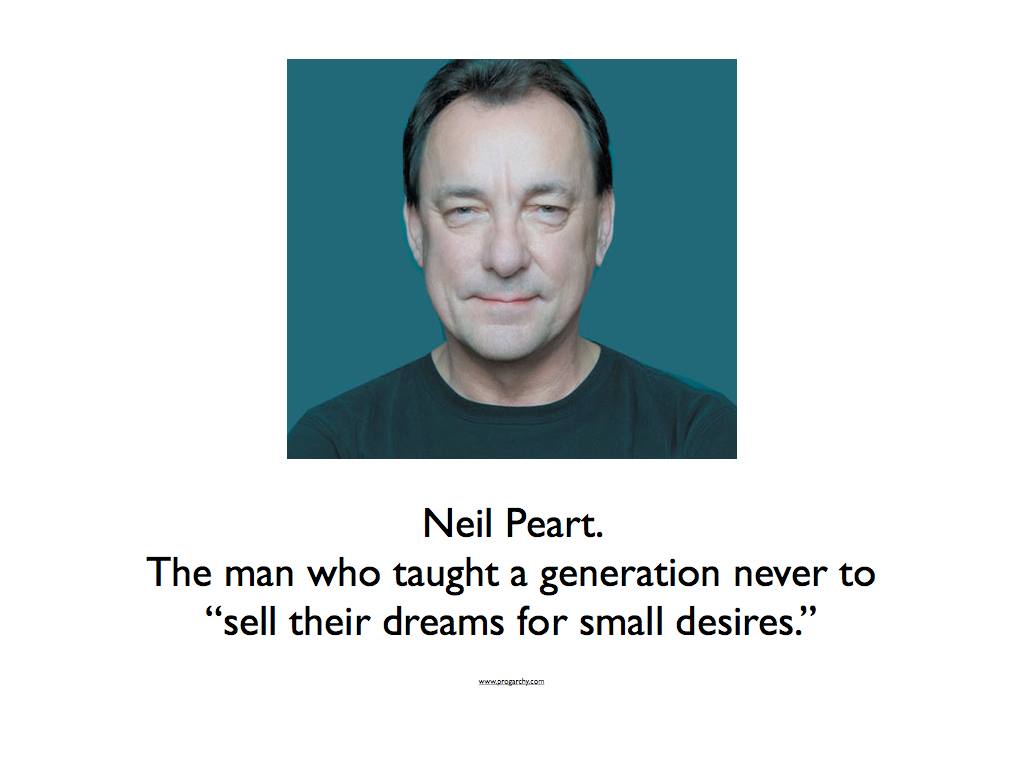
soc videocast 3: Neil Peart, rip
RIP, Neil Peart
soc videocast 2: c.s. Lewis and time
C.S. Lewis, Time, and the Human Person. Spirit of Cecilia Videocast 2.
https://www.youtube.com/watch?v=nMk-Xf5pwno
first spirit of cecilia videocast
Cosmograf man’s new label announce first signing: The Bardic Depths | Louder
New progressive rock duo The Bardic Depths are the first signing to Cosmograf man Robin Armstrong’s new label Gravity Dream. The band consist of multi-instrumentalist Dave Bandana and noted US historian Brad Birzer, who many here will know from the respected Progarchy website, who has supplied the lyrics and concept behind the duo’s forthcoming new album The Bardic Depths, which will be released on March 27.
“The album is about friendship and its ability to get us through anything including war, with the concept centring on the literary friendship formed between J.R.R Tolkien and C. S Lewis between 1931 and 1949, “ the Lanzarote based band leader Bandana tells Prog.
— Read on www.loudersound.com/news/cosmograf-mans-new-label-announce-first-signing-the-bardic-depths
The Pagan Roots of the Christian Logos ~ The Imaginative Conservative
Any understanding of human dignity in the twenty-first century demands an understanding of the Judeo-Christian Logos (Memra in Hebrew). Without it, there is only chaos and darkness, dispiritedness and confusion, blackness and the abyss. One only has to witness the evil sown by the attempted coup against the Judeo-Christian Logos in the last century by Mars, Demos, and Leviathan and its agents in the ideological struggles of that fell time to realize how fragile and yet how necessary a vital comprehension of the concept is. Progressivism, fascism, socialism, communism, and democracy all despised the Logos, seeing it, properly, as that which stifled all utilitarianism as well as all materialistic ambitions.
— Read on theimaginativeconservative.org/2020/01/pagan-roots-christian-logos-bradley-birzer.html
 Spirit of Cecilia
You must be logged in to post a comment.