All posts by Thaddeus Wert

High school math teacher and fan of all kinds of music, but most of all prog.

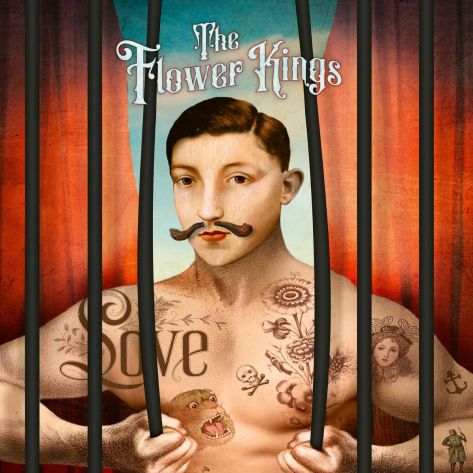
The Flower Kings’ Latest: A Hymn to Love

Hello Spirit of Cecilia Readers, it’s with great pleasure that Tad and Brad review the latest release from their beloved Flower Kings, Love (Insideout Music).  Here are their thoughts.

Brad: As always, a great pleasure to do this with you, my friend.  As you and I have talked before, I’ve been a Flower Kings fanatic (and yes, I mean a fanatic, a hyper fan!) for twenty-five years now.  A wonderful student–now one of my colleagues in the philosophy department at Hillsdale–let me borrow his copy of the band’s 1999 Flower Power.  I immediately fell in love with it, bought it, and bought my favorite album by the band, Space Revolver, to me one of the absolutely quintessential prog albums of all time.  Once I had Flower Power and Space Revolver, I bought everything before that: Stolt’s The Flower King, Back In the World of Adventures, Retropolis, Stardust We Are.  From Space Revolver to the present, I’ve bought every studio album, every DVD, every live album, every compilation, and both box sets on the day each has been released. I have two of their fan release albums, too, and two of their official bootlegs, but they’re really hard to come by.  Every once in a while they pop up on Ebay, andI pounce on them.  My point being, though, I’m a definite completist when it comes to Roine Stolt, just like I am with Steven Wilson.  Proudly so.  Both, absolutely amazing talents.

Through Facebook, I’ve had a few moments of correspondence with Stolt, and he’s a total gentleman.  Frankly, he’d be a blast over a beer.

But, Tad, let’s start with you.  You’re relatively new to the Flower Kings.  What made you change your mind about them, or what made you finally embrace them?

Tad: Brad, it is great to discuss this group’s music with you, and I have you to thank for introducing me to them. I knew about them for years, but I really didn’t get into their work until I picked up Space Revolver in a used record store. All of a sudden, things clicked, and I was able to appreciate what Stolt and his fellow Flower Kings were doing. I have since acquired all of their albums (but not the bootlegs and limited editions you have).

I have to say, they are some of the most prolific artists working today. They release an album practically every year, which are often two-disc sets. Even their single-disc albums are filled to the brim, including their latest, Love, which contains 71 minutes of music. What are your initial impressions of this one?

Brad: Tad, so glad you found and fell in love with Space Revolver.  Definitely a top-20 all time album for me, maybe even a top 15.  I certainly think it’s a classic of third-wave prog.  Everything just works on that album–the music, the shifts, the tone, the lyrics, the playfulness.  Yeah, I just love that album no matter how many times I’ve listened to it.

And, yes, I’m really happy with the new album.  It’s mellower, overall, than most previous Flower King’s releases, and it’s relatively tame, again compared to the band’s previous releases.

I had received the promo copy of the album from Inside Out, and I pretty much fell in love on the first listen, but, then, to make it even greater, my physical copy arrived.  I was so surprised to open up the CD and have the beautiful portrait of Mary and the Child staring up at me!  I’ve thoroughly enjoyed Stolt’s lyrics going all the way back to The Flower King (1994), and he’s always been respectful of Christianity.  His Christianity–at least as it comes across in his lyrics–is more mythic and symbolic than tangible and concrete.  Stolt especially loves making references to the “Holy Mother.”  I assume that’s Mary, but I’m not sure, of course.  Being Swedish, Stolt almost certainly comes for a Lutheran background.  As much as Luther loved Mary (he did, adamantly), Lutherans generally don’t put much emphasis on her.  So, one of the mysteries of Stolt and the Flower Kings.  

Here are two examples of Stolt’s rather hippyish and cosmic take on Christianity.  First, in his thank yous on Love, he writes “Remember: War is just fear and failure, FEAR manifested in small people with shady political or religious agendas–LOVE is always the winner.”

And, again, take the lyrics for track two of the album, “The Elder”:

You found your way – So come what may

You found your way – So come what may

So I have made it here

A distant light getting near

if you just knew where to begin

This holy mess you’re in – Waiting on a dream

I’ve made my peace with those who’d done me wrong

Those broken dreams that followed me along

So no more worries – If we could bury hate –

There’s nothing greater than the love we save

Betting on the love you save

Betting on the love you crave

So open up those doors – letting out the waters

And now you’re waiting on a tide

I once had a vision – behold them lights

The lights of salvation

So you look in his eyes – resurrection –

He’s risen – Came down upon me –

is it real what I’m feelin’

We can get much higher – We can start a fire

Turn away from lies – Looking eye to eye

We can catch a light – Brighten up this night

We will never die – We will never die

What you get is what you are

So give away a shiny star

Keep it closer to your heart

Do never sway – Don’t break no parts

What you give is what you are!

What was given – looking closer – Taint your soul

It’s unforgiven – cause the world has plans for you

Is it real – is it fiction? – Crucifixion

The world may soon just set you free

Here we are in silent trenches

Come this far – lived life let reckless

Waiting for the lights to change

I’m waiting for the outbound train

You found your way – So come what may

You’ve found your way

Notice, of course, the use of salvation, risen, resurrection, Crucifixion.  None of it is blatant theologically, but it is blatantly symbolically and mythically.

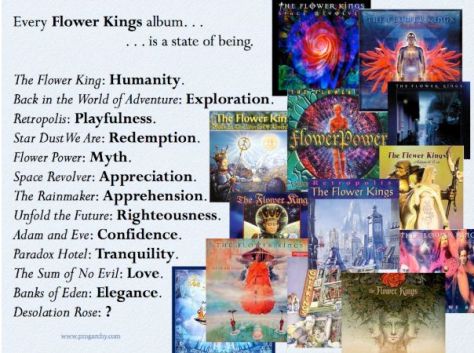
I once tried to outline all of the albums up through 2013.  It would be nice to update this, as the Flower Kings have released a lot since 2013.  But, here, at least is what I thought up to that point:

And, I have to note as well, Tad, that I once had huge aspirations of writing a book about the Flower Kings, using each album as a chapter and inspiration, a theme pregnant with whole worlds.

Tad: Brad, I love your Aristotelian classification of their discography! You have some updating to do, though, don’t you? I hope you follow through on that book – I think prog fans would love it.

I also noticed and appreciated those lyrics in “The Elder” the first time I heard that track. It is one of my favorites on the album. My overall impression of Love is one of all-encompassing joy and optimism – which is not surprising, given the album’s title! The first song, “We Claim The Moon”, bursts out with a happy sound of guitars and keyboards that conjures up classic Traffic. The line, “I’ll never get over the way you brought down the moon” brings to mind Jimmy Stewart and Donna Reed in It’s a Wonderful Life

I agree with you that this album is mellower, but, paradoxically, I think there is a lot of energy in the performances. The vocals on Love strike me as some of their best ever, with Hans Froberg and Roine Stolt trading leads and harmonizing beautifully, especially in “The Phoenix”. I love the way that track starts out acoustically with a celtic feel, and then features an outstanding guitar solo from Roine. 

Another highlight is the final song, “Considerations”, which is written by Michael Stolt and Jannica Lund. It is a truly majestic track that I admire more and more as I listen to it. The “Shine on, shine on love” section is one of my favorite musical moments.

I also appreciate the way the Kings have created a unified whole from these twelve tracks. Musical motifs reappear throughout the album, as well as lyrical themes – did you notice that “Love Is” (track 10) has the line, “How can you leave us now?”, which is the title of the album’s third track! It’s little details like that that tell me Love is meant to be listened to in its entirety to fully appreciate its message. And what a message – despite all the negative forces in our world, love can conquer all. I really appreciate how bravely Flower Kings go against the cultural grain of our time: instead of complaining about hatred and division, they choose to celebrate the power of human (and spiritual) love.

Brad: You put that all so beautifully, Tad.  I really like the idea that the album is really love calling on love, inspiring  us to be our best.  Frankly, I think that’s a perfect summation of Roine Stolt’s artistry and what he’s accomplished over the past 31 years.  All rather stunning and motivating.  And, so once again, I’m brought back to the beginning–I’m extremely proud to be a fanatic when it comes to the Flower Kings.

As always, we encourage you to buy your Flower Kings merchandise from the best online retailer, Burning Shed.

Trollope’s Phineas Finn: Victorian Political Drama

Phineas Finn is the second Anthony Trollope novel I’ve read (you can read my review of Can You Forgive Her? here), and the second in his Palliser series. In this novel, our hero, Phineas Finn, is a good natured, very attractive, and upstanding young man who is the son of an Irish country doctor. His father has paid his expenses while he studies under Mr. Low, a London barrister (lawyer). While dining at his club, young Finn is approached by his friend, Barrington Erle, and convinced to run for a seat in parliament for the borough of Loughshane. It’s a dead certainty he will win it, since there will be no serious opposition. The only problem is that members of parliament (MPs) do not get paid, and Phineas is entirely dependent on his father for his expenses!

Despite his father’s and Mr. Low’s very good arguments against running, Phineas decides to do it, and before he knows it, he is seated in Parliament. His longsuffering father agrees to continue his allowance until he can somehow figure out a way to pay his own way. Soon, he is swimming in the high society of London, but he manages to keep his head and remain humble. He becomes friends with another Irish MP, Laurence Fitzgibbon, a glib and somewhat dissolute young man who wastes no time convinces Finn to guarantee a bill for 250 pounds, assuring him that he will have the money in a couple of weeks, and there is nothing to worry about.

He also is befriended by Lady Laura Standish, who takes Phineas under her wing, because she sees such promise in him. She is another character of Trollope’s who illustrates the frustrating position upper class women in Victorian England were in: she is smart and well educated, and she has good ideas about what legislation should be passed by Parliament, but there is no way she can bring them to fruition, given she has no vote, let alone no way to run for parliament. Phineas is convinced he’s in love with Lady Laura and proposes to her, but she turns him down, because he is penniless, and she has given all of her money to her brother, Lord Chiltern, so he can settle some enormous debts he’s acquired through questionable life choices.

Lord Chiltern is a bit of a wild man – he despises social conventions and proper manners, preferring to spend his time hunting and traveling around England and Europe. He is in love with the beautiful Violet Effingham, who stands to inherit a large fortune when she marries. He has proposed to her three times (not very tactfully, it must be said), and she has flatly refused him because of his poor reputation and erratic behavior. To make things worse, Chiltern’s father has had nothing to do with him since his sister squandered her share of the family fortune to settle his obligations.

Lady Laura convinces Phineas to befriend Chiltern, in the hopes that he will be a moderating influence on him. They become friends, until Phineas meets Violet and decides he wants to marry her! The good friends become deadly rivals.

As a backdrop to all of this drama, Trollope chronicles all of the political intrigue involved in the passage of the Reform Bill of 1866. The reader is shown in exhausting detail how parliament works, and, by and large, it’s not pretty. What is interesting is how Finn, as a tyro MP, gradually gains confidence. At first, he is too terrified to even stand up and make a speech. Eventually, he finds his legs, and he becomes a trusted member of the Liberal party, led by the Prime Minister William Mildmay. Finn’s greatest asset is his ability to keep his mouth shut when necessary and to make pleasant conversation with the right people. Very soon, he is elevated to a paying position in the cabinet. Regardless of his rapid rise in society, he remains a very likeable character, due to his total lack of vanity.

As the novel progresses, Trollope uses various characters to illustrate different issues that were present in Victorian England. Phineas is an ambitious, yet talented and altruistic, young man from whose presence parliament would benefit, yet it is nearly impossible from him to affect legislation, even when he is made a government minister. The crisis of the novel occurs when he has to decide whether he will support a bill that will help his fellow Irish but goes against the policy of the governing party, of which he is a member. If he votes according to his conscience, he will be required to submit his resignation and lose his salary.

Lady Laura is the most tragic figure. Moments before Phineas proposes to her, she accepts Robert Kennedy’s offer of marriage. He is another MP, and one of the richest men in the UK. She feels that through him, she might be able to influence English politics. Unfortunately, Mr. Kennedy is an insufferable prig who insists Laura submit herself to the proper duties of a wife and have no independence at all. Their marriage degenerates to the point where they can barely communicate.

“Laura”, he said, “I am sorry that I contradicted you.”

“I am quite used to it, Robert.”

“No; – you are not used to it.” She smiled and lowered her head.
(ii, p. 109, Oxford Univ. Press Ed., 1991)

There is also a Madame Marie Goesler, a wealthy German widow, who moves in the highest circles of London society, but feels trapped by the fact that she can do nothing but attend parties and host them herself.

Phineas becomes very good friends with Joshua Monk, a “radical” MP who helps Phineas get his confidence during his first term in parliament. Mr. Monk, though, when he is offered and accepts a post in the government by the Liberals, loses his effectiveness as a debater, because he is forced to support the Liberals’ policies, even when he disagrees with them.

Trollope paints a fascinating and detailed picture of how politics worked in Victorian England. There was much frustration at the demands placed upon MPS to toe the party line, yet enforcing party discipline was the only way to get important legislation passed. Like today, opposing parties had to compromise, and everyone gave up something to get something in return. Near the end of the book, Monk’s and Finn’s bill to help Irish tenants fails on the second reading. Finn is dejected, but Monk makes this observation:

“Many who before regarded legislation on the subject as chimerical, will now fancy that it is only dangerous, or perhaps not more than difficult. And so in time it will come to be looked on as among the things possible, then among the things probable; – and so at last it will be ranged on the list of those few measures which the country requires as being absolutely needed. That is the way in which public opinion is made.”
(ii, p. 341)

Like almost all Victorian novels, Phineas Finn is long – 712 pages in the edition I read. However, it is an interesting complement to Charles Dickens’ David Copperfield, another tale of a self-made young man. While Dickens was the master of chronicling the travails and triumphs of England’s lower and middle classes, Trollope gives us accurate portraits of what it was like to move in the highest social strata of Victorian society. He isn’t afraid to point out the contradictions and injustices of the governing class, yet all of his characters are real. Phineas Finn is amazingly successful at first, but he has his flaws. His fellow MPs all exhibit human foibles – they each have good qualities as well as lesser ones. However, it’s the female characters that are the most fleshed out by Trollope – he has sincere sympathy for the plight they are in. They have very limited choices: either marry or be an “old maid”, but in neither case can a woman be an active political force. And once a young woman marries, she has no rights to any property or personal agency. If a young woman is due to inherit wealth, there is no guarantee she will be allowed to use it to live independently. However, lest one think Phineas Finn is all angst and frustration, Trollope sprinkles a lot of humor to leaven the drama. At heart, he loves his country and its people.

There are lots of free digital versions of Phineas Finn (you can download a nicely formatted one here.), but I really appreciated my Oxford University Press edition, because it had lots of helpful notes that explained the political events that were occurring at the time the novel is set in, as well as the meanings of slang phrases, references to other literary works, etc. I’ve read two of the six Palliser novels, so I guess I’d better get ready to tackle Phineas Redux next!

Andrew Klavan’s The Kingdom of Cain: Beauty from Darkness

Andrew Klavan is one of the most intelligent and thought-provoking cultural critics working today. It doesn’t hurt that he’s also an excellent mystery writer. His Cameron Winter series of novels has given me hours of great enjoyment, and he’s just getting started with it.

Besides mysteries, Klavan also writes nonfiction, including the bestselling The Truth and Beauty, where he discusses how nineteenth century romantic poetry reflects eternal Truths. His latest book, The Kingdom of Cain, is subtitled Finding God in the Literature of Darkness, and he isn’t kidding when he says Literature of Darkness! He focuses on three horrific and infamous crimes, and then he describes how each one led to extraordinarily beautiful and inspirational works of art. So how can the terrible crime of murder lead to great art? As he puts it in the Introduction,

The opposite of murder is creation – creation, which is the telos of love. And because art, true art, is an act of creation, it always transforms its subject into itself, even if the subject is murder. An act of darkness is not the same thing as a work of art about an act of darkness. The murders in Shakespeare’s Macbeth are horrific, but they are a beautiful part of the play. (p. 17)

To continue reading, click here.

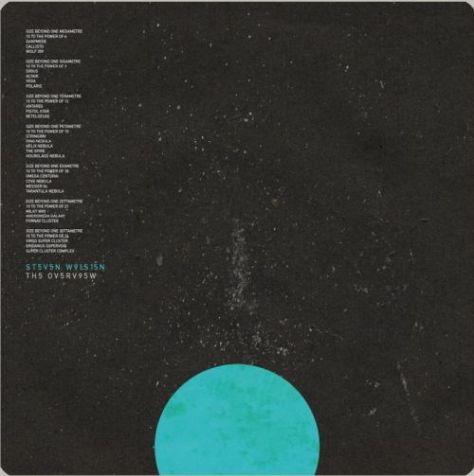
A Review of The Overview of Steven Wilson

Steven Wilson has released a new album, The Overview. Always surprising, rarely disappointing, Wilson is one of our favorite artists. Producer, songwriter, guitarist, singer, and remixer of countless classic albums, he truly is a man who can do it all. Brad Birzer and Tad Wert share thoughts on his latest opus.

Tad: Brad, you and I both have had a love/hate relationship with Steven Wilson. His almost obsessive focus on dark themes bothered me years back, but I couldn’t help but be seduced by his songwriting. The man writes and performs some of the most beautiful melodies ever recorded. His past few albums have been very good, in my opinion, albeit each very different. I’m interested in your thoughts on his latest, The Overview.

Brad: Thanks so much, Tad.  Glad to be reviewing with you!

I know I’ve had the chance to tell this story before, but I first encountered Steven Wilson through Porcupine Tree.  My wife and (then) two kids were shopping in Fort Wayne, Indiana, and a local alternative station was playing “Trains” from In Absentia.  This would’ve been the fall of 2002.  I immediately went to a local CD store and bought not only In Absentia but also Up the Down Stair.  One of my excellent students, Chase, found out about my new-found Porcupine Tree obsession and gifted me with the PT compilation boxset, Stars Die: The Delirium Years.  It was one of the coolest gifts I’ve ever received, and I was smitten.

From there, I dove into everything I could find related to Wilson and Porcupine Tree.  So, I’ve been a fan for twenty–three years now, and I’m amazed how much of my CD collection revolves around Wilson.  Whether it’s Porcupine Tree, No-Man, Blackfield, Storm Corrosion, Bass Communion, IEM, solo material, or one of the billion albums Wilson has remastered, my home is a repository and archive!  I also have several books on Porcupine Tree, Wilson’s deluxe autobiography, and a huge number of deluxe editions of the album releases.

You’re right, though, I do have a love/hate relationship with Wilson.  Let me note: I admire the man deeply.  But, a few things he’s said and done drive me a bit crazy.  It’s really hard to be his fan as he constantly wants to distance himself from us.  Even when we follow him album to album, genre to genre, he has to make skeptical comments about us, implying that we demand too much of him and hold him back musically.  And, from any objective standard–whether it’s Grace for Drowning or The Future Bites–the man just exudes progressive rock.  He’s always exploring, always changing, but he has tried to distance himself from the label.  I don’t get it, and I find his attitude incredibly frustrating.  Maybe he simply has a really restrictive view of progressive rock.  To me, progressive means exploration.

I also thought that as much as I loved The Raven Who Refused to Sing, the album seemed very much a remake of a Tangent album without acknowledging or giving Andy Tillison all due credit.

As far as I know, Tad, these are my only complaints.  And, given how much joy Wilson’s music has brought to me, they’re incredibly minor complaints.  Of all my loves re: the present scene of music, Steven Wilson is certainly at the top–along with Big Big Train, IZZ, The Tangent, Glass Hammer, and a few others.  I would especially rank Hand.Cannot.Erase as an all-time top five album for me.


And, I’ve not even gotten to The Overview yet. . .  Tad, what are your thoughts on what you like and dislike about Wilson?

Tad: Well, Brad, my experience was much the same as yours. I saw that Alex LIfeson played on Fear of a Blank Planet, so I got it cheap from BMG Music Club (remember those?), and I was hooked. I grabbed everything I could find that Wilson was involved with. I loved Porcupine Tree and Blackfield; NoMan not so much (at least until they put out Schoolyard Ghosts).

As I said earlier, I wish he would lighten up a little in the lyrics department. Life isn’t all bad! I guess that he finds depressing subjects more inspiring. On the plus side, I think he is an excellent guitarist and singer. His production work is unparalleled; I don’t think anything he’s produced will ever sound dated – it’s all timeless and of incredibly high quality.

Okay, let’s talk about the subject at hand: his new album, The Overview. It’s two long tracks, one more than 23 minutes long and one more than 18 minutes. You can’t get more proggy than that, can you? I think he wants the listener to hear this as an album, and not a playlist of tracks. Given this is the age of Spotify, that is pretty countercultural! 

On first impression, I think the section entitled “Objects: Meanwhile” is one favorite. It has a nice piano motif that builds throughout. The lyrics, well, they’re pretty depressing:

The tiniest lives fill their hives up with worry
To make it to church, well, she needs to hurry
When late she will bow down contrite
While a meteor trunks out the light

And there in an ordinary street
A car isn’t where it would normally be
The driver in tears, ‘bout his payment in arrears
Stll, nobody hears when a sun disappears
In a galaxy afar

That seems to be the overarching theme of this album – how insignificant humans and their concerns are, compared to the vastness of the universe. Wilson makes this explicit in the section “Perspective”, where a woman narrates ever-increasing numbers on a literal astronomical scale.

“A Beautiful Infinity/Borrowed Atoms/A Beautiful Infinity II” is the best section of the album, with its Floydian slide guitar and seductive melody. I love it. However, “A Beautiful Infinity II” continues the general theme of nihilism and hopelessness:

There’s no reason for any of thi
Just a beautiful infinity
No design and no one at the wheel
Just an existential mystery

I swear, if I ever got the chance to meet Mr. Wilson, I think I would share with him Psalm 19, which begins, 

The heavens declare the glory of God; the skies proclaim the work of his hands.
Day after day they pour forth speech; night after night they reveal knowledge.

That said, this section is some of my favorite Steven Wilson music ever. I have listened to this album from start to finish many times now, and this is the part I enjoy the most.

I suppose Wilson is saying that in an honest overview of the cosmos, humanity isn’t really worth much. In that regard, he echoes the psalmist who asks, “What is man, that thou art mindful of him?” Brad, I promise I didn’t begin this review planning to quote psalms, but they seem kind of appropriate, given the majesty of this album’s music!

Brad: Tad!  I love it.  The Psalms, BMG Music Club, nihilism.  Yes, I don’t disagree as I think the lyrics are depressing as well.  That’s par for the course with Wilson, though.  From what I can tell–in interviews and through his autobiography–he’s actually a really kind, upbeat person, but his art is always dark.  It’s dark, often, in terms of chord structures, and it’s dark in terms of his lyrics, and it’s generally dark in terms of the art that accompanies his album releases.

I suppose it’s one reason I love HAND.CANNOT.ERASE so much.  It’s dark, but it’s also deeply redemptive.  There’s a very healthy humanism at the heart of that story.

Despite the darkness of the lyrics on The Overview, I am pretty taken with them.  As probably you and most readers know, Andy Partridge of XTC wrote a chunk of the lyrics on the first track.  As such, they’re clever as all get out, while also being cynical.  Frankly, though, I like the perspective Partridge and Wilson offer–that as we go about our lives, making minute decision after minute decision, the universe in its incomprehensible majesty goes about its business as well.

I especially like these lyrics on the second track:

Snow is falling but it can’t be seen from here

And back on Earth, my loving wife’s been dead for years

I see myself in relation to it all

What seemed important now like dust inside the squall

Each moment for me is a lifetime for you

For whatever reason, they resonate with me.  It’s not that his wife’s death is any less tragic, it’s just that it’s placed against the backdrop of what seems infinite.  If anything, I actually found this a hopeful lyric.  After all, the man’s love for his wife continues, despite her absence.

I also really like Wilson’s musical approach to the whole album.  The way that he places various parts of the song together reminds me very much of Paul McCartney’s side two of Abbey Road.  Wilson, interestingly enough, has stated that while he admires the Beatles for what they accomplished, they were never an influence on him.  Still, it seems that in the construction of The Overview, they were, at least to a certain extent, an inspiration.

I did think that Rotem’s spoken word parts on the second track would wear on me, but, even after innumerable listens, I’m fine with it.

So, being a true Wilsonite, I bought the deluxe edition of The Overview.  It comes with a booklet as well as a blu-ray.  As I listen to the album, I generally listen to the blu-ray–which seems to bring the best out of the two tracks.  I hear things with the blu-ray that I don’t with just the CD release.

So, Tad, I’m loving the album.  It came out. . . what. . . six weeks ago?  And, I’m now on six weeks of immersing myself in it.  I find each listen a joy, and I keep discovering new things in it.  It’s a treasure.  Again, I would still rank Wilson’s Hand.Cannot.Erase as his best album and I would rank The Future Bites as my least favorite of his albums.  In the big scheme of things (ha–see what I did there!), The Overview sits comfortably close to Hand.Cannot.Erase.

Tad: Ah, Brad, this is why I enjoy these joint reviews with you – you provide proper perspective and rein in my first-take reactions to lyrics! I love your willingness to find hope in Wilson’s words, and now that you’ve pointed it out I can see it as well. I’d rather someone be hopeful than despairing, so I feel better about his emotional health. 

If I had to rank Wilson’s albums, I think I would put his first, Insurgentes at the top, but it depends on the mood I’m in. The Raven That Refused to Sing is awfully good, and To The Bone is a wonderful take on 80s pop/rock. I do agree that The Overview  is one of his best, and I have really enjoyed listening to it the past few weeks.

So, readers, it looks like The Overview gets two solid thumbs up from Spirit of Cecilia! Check it out on your favorite music streaming service, or better yet, buy a physical copy and keep Mr. Wilson in business. Thanks for stopping by!

Airbag’s The Century of the Self: Literate Rock for Freedom Lovers

Greetings, Spirit of Cecilia readers! Brad Birzer and Tad Wert have been impressed with the music of Norway’s Airbag. They combine excellent, Pink Floyd-adjacent melodies with thought-provoking lyrics. In the summer of 2024, they released their sixth studio album, The Century of the Self, which was one of the best albums of that year. Brad and Tad finally get around to discussing its merits – better late than never!

Tad: Brad, I absolutely adored Airbag’s previous album,  A Day at the Beach, and the lead-off track, Machines and Men, is one of the best songs they’ve ever done. Now that they’ve followed up that triumph with The Century of the Self, what strikes you right off the bat with that album?

Brad: Thanks so much, Tad.  It’s great–as always–to be reviewing with you.  Yes, I very much love and admire Airbag, and I have from their beginning, whether on Kscope (briefly) or Karisma.  They confirm what I’ve thought for ages, that is, a prog band is only as good as its bassist.  Great guitarist, too.  Great drummer as well.  Love the keyboards, too.  So, win-win-win-win.  What a great band.  An amazing band.  I had to throw “amazing” into the mix, as I’ve typed “great” one too many times!

Granted, they wear their Pink Floyd love on their sleeves, but, frankly, I think that makes them even better.  Very glad to have some Floydian music still being produced.  And, yet, whatever the Floyd influence, it serves as an inspiration for the band.  They’re not enslaved to it, but inspired by it.  Strangely and perhaps paradoxically, the Floydian influence makes Airbag even more unique.

I didn’t realize they were already on their sixth album.  Given their sheer output, as well as the solo output of Bjorn Riis, I find the music even more astounding.

So, what strikes me right off the bat?  An excellent question, Tad.  After having listened to the album a half a dozen times, I’m struck by two things.  The bass and the lyrics.  Both, extremely courageous.  How about you?

Tad: Brad, you and I agree that a good bassist is essential to a prog band. I think of what Yes might be without Chris Squire, and it would never have been as groundbreaking and influential as it ended up. Or how about Steve Babb’s work with Glass Hammer? He is the key to that group’s greatness.

Along the same lines, Anders Hovdan does a terrific job anchoring Airbag’s music. A lot of their songs take time to fully develop, and Hovdan’s insistent bass lines provide interest for the listener. I love the way the entire group take their time building up a song. They often start out quietly, and they inexorably build in energy and sound until there is a most satisfying release. Their melodies are not overly complex or complicated, but I would certainly classify them as “progressive rock.

That said, I think Bjorn Riis (guitars and vocals) seems to be the main driver of Airbag. His songs always intrigue me. I’ve told you before that I have to like a song’s melody before I worry about the lyrics, but when I first heard the opening track on The Century of Self, I was immediately struck by the lyrics. They’re brief enough to share in their entirety:

Did you come here to find some peace and hide?
Too much confusion in your head at times
Don’t want to bend, conform, you’ll never obey
Don’t want no part of this conspiracy

I see these people keeping their heads down
Denying everything they used to be
Don’t try to touch, don’t ever get too close
They’ll make you suffer and they’ll make you bleed

Who do you feel you are today?
Who will you crucify and slay?
It’s driving me insane

Did you believe they’d ever let you go?
There is no escape, there is no turning back
You’re canceled now, they’ll cancel everything
They’ll make us suffer and they’ll make us bleed

Who do you feel you are today?
Who will you crucify and slay?
It’s driving me insane

source: https://www.lyricsondemand.com/airbag/dysphoria

Brad, it seems to me this is a protest against the illiberalism of contemporary “cancel culture”, and that is a brave stand to take these days! So, I went back and looked through some of their previous songs, and there is definitely a consistent streak of individualism and a plea for personal freedom running through them. I think they are today’s version of a countercultural music group, and I admire them for that. I am really interested in your thoughts on their lyrics, since you are able to uncover deeper meaning from them than I usually do!

Brad: Yes, I totally agree, Tad.  There’s something quite special in Airbag’s lyrics that call out for us to be more individual than we’re comfortably being in the current morass of society.  I think Airbag is definitely protesting against the loss of free speech and free ideas that seems to have spread throughout Europe and the western world (America is not excluded).  I suppose part of this is my age, but it’s hard not to look back at the 1980s and especially 1989 as a golden era in western civilization.  Not only were we growing economically, but free societies were trouncing unfree societies.  Despotisms and authoritarianism and totalitarianism were on the run.  A pope and a president were beating the life out of them.  Now, we sit in silence as our “betters” tell us what to do and what not to do.  I wouldn’t have necessarily have expected protest to arise from Norway, but amen.  

Those lyrics are worth repeating, Tad:

Did you believe they’d ever let you go?
There is no escape, there is no turning back
You’re canceled now, they’ll cancel everything
They’ll make us suffer and they’ll make us bleed

And, then, of course, we’re not guiltless:  

Who do you feel you are today?
Who will you crucify and slay?
It’s driving me insane.

Track two, “Tyrants and Kings” continues the libertarian themes:

Join the cause
Say no to everything we fear
Get used to lying
You’re a prisoner now
Take no stand
There are no sides there’s only ours
You shoot to kill
You’re a soldier now

The “get used to lying” line brings to mind Solzhenitsyn’s note that all totalitarianism is built on lies.  The huge lie of the society and all the little lies that one must employ to survive.

Looking through the lyrics of the remaining three songs, they too speak to the loss of individual dignity.

So, bravo, Airbag!  Keep fighting the good fight.  And, thanks, too, for the killer bass lines.

Tad: Brad, thank you for highlighting the lyrics to “Tyrants and Kings”! Yes, Airbag is a band that appeals to me both in musical terms and lyrical ones. That is quite rare these days. And, like you, I’m impressed these Norwegians are reminding the rest of us what is truly important. 

So, gentle reader, if you are interested in excellent progressive rock with a Floydian flavor, and highly literate lyrics, do yourself a favor and check out Airbag’s latest album, The Century of the Self. You won’t be disappointed!

Ross Douthat’s Believe: Apologetics for a Skeptical Age

Ross Douthat is a New York Times columnist who opines regularly on issues of morality, faith, and culture. His latest book, Believe, is an interesting entry in the crowded catalog of Christian apologetics. 

Douthat chooses to devote most of his book to making the case for a higher reality than the one we can measure scientifically. As he puts it in the introduction,

Whatever mysteries and riddles inhere in our existence, ordinary reason plus a little curiosity should make us well aware of the likelihood that this life isn’t all there is, that mind and spirit are just an illusion woven by our cells and atoms, that some kind of supernatural power shaped and still influences out lives and universe. (p. 7)

Believe is not a long book – eight chapters, 206 pages – but it is packed with weighty argument and evidence for a “supernatural” reality. The chapter titles outline his thesis:

  1. The Fashioned Universe
  2. The Mind and the Cosmos
  3. The Myth of Disenchantment
  4. The Case for Commitment
  5. Big Faiths and Big Divisions
  6. Three Stumbling Blocks
  7. The End of Exploring
  8. A Case Study: Why I Am a Christian

What is welcoming about Douthat’s approach is his invitation to simply accept the evidence around you and acknowledge that some sort of creative intelligence is the likeliest explanation for our universe. He doesn’t even get into why he believes Christianity fits the bill until the final chapter. As a matter of fact, he posits that belief in any of the major religions – Judaism, Christianity, Buddhism, Islam – can lead a person to ultimate truth better than nonbelief:

Your choice might be the wrong one ultimately but the right one for you in that moment, or the wrong one but with enough that’s right in it to make an important difference in your life. And if, in the end, your initial conversion doesn’t convert you the the true faith, the religion you enter will have hopefully acquired enough truth and wisdom in its long development to make a ladder upward, from the mire of meaninglessness and the snares of indecision toward whatever the full plan of your life is meant to be. (p. 149)

In The Mind and the Cosmos chapter, Douthat points out that 

It isn’t merely that the universe appears improbably fine-tuned to enable our existence. It’s that our own consciousness seems improbably capable when it comes to discovering that fine-tuning, like a key fitted to a lock. (p. 61)

In other words, it’s a miracle that the universe is habitable for us and we are able to discern that habitability. 

From that basic argument, Douthat builds his case, eventually addressing three “stumbling blocks” that prevent people from believing in God: 

  1. Why Does God Allow So Many Wicked Things to Happen?
  2. Why Do Religious Institutions Do So Many Wicked Things?
  3. Why Are Traditional Religions So Hung Up on Sex?

His answers to these questions are thoughtful, comprehensive, and convincing. 

It isn’t until the last chapter that Douthat makes the case for Christianity as the best explanation for reality and how we should live. As he acknowledges, he’s a Christian because that was the dominant religion of the culture in which he was raised. At no point in the book does Douthat promote Christianity at the expense of the other major religions (although he is careful to warn the reader against getting involved in cults or Satanism!). This fair-minded approach is very effective, in my opinion, making his points hard to refute. 

Believe is the latest in a long line of Christian apologetics (the first of which is probably Augustine’s Confessions, but I’m not sure), but it is somewhat unusual in its acceptance of other ways of reaching the truth. Douthat is primarily concerned with winning people over to a belief in a Creator God who cares about his creation. Once one has made the commitment to that belief, Douthat is confident that a sincere seeker will eventually be rewarded with a greater understanding of how we should order our lives, and, as a result, live much more fulfilling lives.

Paul Johnson’s Creators – Praise for Artists of All Kinds

Paul Johnson is my favorite historian (my dear friend, Brad Birzer, is my favorite living historian!). Johnson takes complicated subjects, makes them understandable, and he does it in an entertaining way. He’s British, but he has written a fantastic history of the United States, A History of the American People. Other excellent books of his are The Birth of the Modern: World History 1815 – 1830, and Modern Times: The World from the Twenties to the Nineties. Creators was written after his book, Intellectuals, received some criticism for focusing too heavily on the hypocrisy of some of history’s most famous and influential intellectuals. As he explained, “I defined an intellectual as someone who thinks ideas are more important than people.” I, personally, appreciated learning about the moral failings of Rousseau, Marx, Ibsen, Sartre, and other thinkers who have been lionized by our intelligentsia. It’s the eternal story: “Do as I say, not as I do.” Anyway, Creators is, on balance, a more positive and inspiring collection of portraits. In it, Johnson gives us brief descriptions of Chaucer, Durer, Shakespeare, J. S. Bach, Turner and Hokusai, Jane Austen, A.W.N. Pugin and Viollet-le-Duc, Victor Hugo, Mark Twain, Tiffany, T.S. Eliot, Balenciaga and Dior, and Picasso and Walt Disney. Throughout these portraits his admiration for these artists’ work shines clearly. Johnson is the master of providing the interesting anecdote that humanizes and makes real his subject. For example, he writes that the composer Wagner
required a beautiful landscape outside his windows, but when he wrote music, the silence had to be absolute and all outside sounds, and sunlight, had to be excluded by heavy curtains of the finest and costliest materials. They had to draw with “a satisfying swish.” The carpets had to be ankle-deep; the sofas enormous; the curtains vast, of silk and satin. The air had to be perfumed with a special scent. The polish must be “radiant.” The heat must have been oppressive, but Wagner required it. Johnson, Paul. Creators: From Chaucer and Durer to Picasso and Disney (p. 9). HarperCollins. Kindle Edition.
Johnson praises Chaucer for creating the very idea of English literature. Before him, all politics and creative arts were conducted in French and Latin. He was the first to proudly use English in his poetry, and his portrayals of various classes of people are unparalleled. In my opinion, Creators is worth reading for his chapter on Shakespeare alone. Johnson does a wonderful job explaining how a man with humble beginnings could attain such incredible heights of literary excellence. Interestingly, he makes the case for Shakespeare not being an intellectual. In other words, for Shakespeare, people  were more important than ideas.
He [Shakespeare] rarely allows his opinions open expression, preferring to hint and nudge, to imply and suggest, rather than to state. His gospel, however, is moderation in all things; his taste is for toleration. Like Chaucer, he takes human beings as he finds them, imperfect, insecure, weak and fallible or headstrong and foolish—often desperate—and yet always interesting, often lovable or touching. He has something to say on behalf of all his characters, even the obvious villains, and he speaks from inside them, allowing them to put forward their point of view and give their reasons. Johnson, Paul. Creators: From Chaucer and Durer to Picasso and Disney (p. 54). HarperCollins. Kindle Edition.
I also learned that no one has created as many words and phrases that have entered common use as Shakespeare. Some estimate he coined as many as 6700 new words! Like Harold Bloom, Johnson has nothing but praise for the two Henry IV plays and Hamlet. Johnson’s explication of the psychological and moral dilemmas explored in Hamlet  is fantastic.
It is characteristic of this stupendous drama that the long passages of heroic reflection, which never bore but stimulate, are punctuated by episodes of furious action, the whole thing ending in a swift-moving climax of slaughter. No one can sit through Hamlet and absorb its messages—on human faith and wickedness; on cupidity, malice, vanity, lust; on regeneration and repentance; on love and hate, procrastination, hurry, honesty, and deceit; on loyalty and betrayal, courage, cowardice, indecision, and flaming passion—without being moved, shaken, and deeply disturbed. The play, if read carefully, is likely to induce deep depression—it always does with me—but if well produced and acted, as Shakespeare intended, it is purgative and reassuring, for Hamlet, the confused but essentially benevolent young genius, is immortal, speeding heavenward as “flight of angels sing thee to thy rest.” It is, in its own mysterious and transcendental way, a healthy and restorative work of art, adding to the net sum of human happiness as surely as it adds to our wisdom and understanding of humanity. Johnson, Paul. Creators: From Chaucer and Durer to Picasso and Disney (p. 75). HarperCollins. Kindle Edition.
Johnson’s next subject, Johann Sebastian Bach, was a solidly middle class man who was confident in his extraordinary ability to compose music, even if he wasn’t recognized for it during his lifetime.
Bach was by far the most hardworking of the great musicians, taking huge pains with everything he did and working out the most ephemeral scores in their logical and musical totality, everything written down in his fine, firm hand as though his life depended on it—as, in a sense, was true, for if Bach had scamped a musical duty, or performed it with anything less than the perfection he demanded, he clearly could not have lived with himself. It is impossible to find, in any of his scores, time-serving repetitions, shortcuts, carelessness, or even the smallest hint of vulgarity. He served up the highest quality, in performance and composition, day after day, year after year, despite the fact that his employers, as often as not, could not tell the good from the bad or even from the mediocre. Johnson, Paul. Creators: From Chaucer and Durer to Picasso and Disney (pp. 82-83). HarperCollins. Kindle Edition.
It’s almost a miracle that we have as many works of his today to perform, as they were scattered amongst his descendants after he died. If not for the efforts of Mendelssohn to restage Bach’s St. Matthew Passion in 1827, we might not have had the revival of his music that we enjoy so much today. Johnson uses this event to share another fun anecdote:
Afterward, at Zelter’s house, there was a grand dinner of the Berlin intellectual elite. Frau Derrient whispered to Mendelssohn: “Who is the stupid fellow sitting next to me?” Mendelssohn (behind his napkin): “The stupid fellow next to you is the great philosopher Friedrich Hegel!” Johnson, Paul. Creators: From Chaucer and Durer to Picasso and Disney (p. 93). HarperCollins. Kindle Edition.
The chapter on the artists William Turner and Hokusai is very interesting. Both began drawing from the age of three. Turner was somewhat controversial because of his new and unusual way of painting light, but he ended up one of the most popular and wealthy artists in history. Unfortunately, time and bungling “restorers” have kept us from appreciating his radical use of color. Even his contemporaries could see how his paintings faded not long after he finished them. Hokusai never profited much from his prodigious output, always begging benefactors for money. According to Johnson, he pretty much invented landscape art in Japan. He was quite a character:
There was a restless rootlessness to him, reflected in the fact that he changed his name, or rather the signature on his works, more than fifty times, more often than any other Japanese artist; and in the fact that during his life he lived at ninety- three different addresses. The names he used included Fusenko, meaning “he who does only one thing without being influenced by others”; “The Crazy Old Man of Katsushika”; and “Manji, the Old Man Mad about Drawing.” After he fell into a ditch, as a result of a loud clap of thunder, he signed himself “Thunder” for a time. Johnson, Paul. Creators: From Chaucer and Durer to Picasso and Disney (p. 108). HarperCollins. Kindle Edition.
Johnson’s chapter on Jane Austen is the slightest one, not because of any fault of Johnson, but because we know so little of Austen. Her family suppressed most of her personal correspondence, and they tried to make her into a Victorian woman, rather than the Regency one she was. However, according to Johnson, we can glean some personality traits from the letters and reminiscences that do exist and conclude that she was fun-loving young woman, which was the source of her genius:
Laughter was the invariable precursor, in Austen’s life, of creative action—the titter, the laugh, the giggle, or the guffaw was swiftly followed by the inventive thought. Once Austen began to laugh, not with the melodramatic novels she read, but against them, she began to look into herself and say, “I can do better than that.” Johnson, Paul. Creators: From Chaucer and Durer to Picasso and Disney (pp. 130-131). HarperCollins. Kindle Edition.
Pugin and Violett-le-Duc were both architects, the former responsible for the Gothic revival in England. We have Pugin to thank for the beautiful Houses of Parliament in London. The chapter on Victor Hugo is a very interesting one. In it, Johnson poses the question,
That Hugo was phenomenally creative is unarguable: in sheer quantity and often in quality too, he is in the highest class of artists. But he forces one to ask the question: is it possible for someone of high creative gifts to be possessed of mediocre, banal, even low intelligence? Johnson, Paul. Creators: From Chaucer and Durer to Picasso and Disney (p. 156). HarperCollins. Kindle Edition.
Johnson does not have a lot of admiration for Hugo, pointing out how contradictory his political opinions were, depending on what party was in power. He also kept many mistresses, well into his eighties! Mark Twain comes in for more respectful treatment. Johnson posits that his genius was as a storyteller – to truly appreciate his work, we need to hear it “performed”. He also had a knack for making great literature out of almost nothing:
His creativity was often crude and nearly always shameless. But it was huge and genuine, overpowering indeed, a kind of vulgar magic, making something out of nothing, then transforming that mere something into entire books, which in turn hardened into traditions and cultural certitudes. Johnson, Paul. Creators: From Chaucer and Durer to Picasso and Disney (p. 171). HarperCollins. Kindle Edition.
T. S. Eliot was a paradox – very conservative in his personal life, yet revolutionary in his poetry:
Eliot was never once (except on holiday) photographed without a tie, wore three-piece suits on all occasions, kept his hair trimmed, and was the last intellectual on either side of the Atlantic to wear spats. Yet there can be absolutely no doubt that he deliberately marshaled his immense creative powers to shatter the existing mold of poetical form and context, and to create a new orthodoxy born of chaos, incoherence, and dissonance. Johnson, Paul. Creators: From Chaucer and Durer to Picasso and Disney (p. 204). HarperCollins. Kindle Edition.
The turning point in Eliot’s career came when he met Ezra Pound, who introduced him to lots of European literary stars and convinced him to emigrate to England. He married Vivian Haighwood, but it doesn’t sound like the relationship was much fun:
From the early days of their marriage they engaged in competitive hypochondria. Both became valetudinarians and were always dosing themselves, complaining of drafts, and comparing symptoms. Johnson, Paul. Creators: From Chaucer and Durer to Picasso and Disney (p. 213). HarperCollins. Kindle Edition.
However, this dismal marriage, coupled with his job at Lloyd’s bank in London, spurred Eliot to create his masterpieces, The Waste Land and Four Quartets. As Johnson puts it, The Waste Land‘s strength is its elusiveness:
The greatest strength and appeal of the poem is that it asks to be interpreted not so much as the poet insists but as the reader wishes. It makes the reader a cocreator. Johnson, Paul. Creators: From Chaucer and Durer to Picasso and Disney (p. 219). HarperCollins. Kindle Edition.
Four Quartets solidified Eliot’s position as the leading poet of the twentieth century, even though, in Johnson’s words, “they are not about anything”. What they are is evocative of a nihilistic mood that dominated mid-twentieth century western culture. The appalling meaninglessness and slaughter of WWI that led into WWII left a cultural elite with almost no hope Eliot was their spokesman. I wish I could have been present at the gathering Johnson describes below!
The Four Quartets were much discussed when I was a freshman at Oxford in 1946, and they, too, were still fresh from the presses. I recall a puzzled and inconclusive discussion, after dinner on a foggy November evening, in which C. S. Lewis played the exegete on “Little Gidding,” with a mumbled descant from Professor Tolkien and expostulations from Hugo Dyson, a third don from the English faculty, who repeated at intervals, “It means anything or nothing, probably the latter.” Johnson, Paul. Creators: From Chaucer and Durer to Picasso and Disney (p. 223). HarperCollins. Kindle Edition.
In his chapter on Picasso and Disney, Johnson praises Picasso for his incredible creativity and canny judgment:
… Picasso became the champion player, and held the title till his death, because he was extraordinarily judicious in getting the proportions of skill and fashion exactly right at any one time. He also had brilliant timing in guessing when the moment had arrived for pushing on to a new fashion. Although his own appetite for novelty was insatiable, he was uncannily adept at deciding exactly how much the vanguard of the art world would take. Johnson, Paul. Creators: From Chaucer and Durer to Picasso and Disney (p. 253). HarperCollins. Kindle Edition.
But he also exposes a very dark side of Picasso; how he abused women and men, stabbed friends in the back, and seemed to have no moral sense.
He would create situations in which one mistress angrily confronted another in his presence, and then both rolled on the floor, biting and scratching. On one occasion Dora Maar and Marie-Thérèse Walter pounded each other with their fists while Picasso, having set up the fight, calmly went on painting. The canvas he was working on was Guernica. Johnson, Paul. Creators: From Chaucer and Durer to Picasso and Disney (p. 256). HarperCollins. Kindle Edition.
Walt Disney, on the other hand, comes in for quite a bit of praise. I really enjoyed Johnson’s detailed explanation of just how revolutionary Disney was when it came to combining sound and animation in a film. Practically all animated content we enjoy today owes a debt to Disney. What was his strength as a creator? According to Johnson,
Whereas Picasso tended to dehumanize the women he drew or painted. Disney anthropomorphized his animal subjects; that was the essential source of his power and humor. Johnson, Paul. Creators: From Chaucer and Durer to Picasso and Disney (p. 258). HarperCollins. Kindle Edition.
The final chapter, Metaphors in a Laboratory, addresses the idea of scientific creativity. Johnson argues that through the use of metaphors, scientists are able to communicate their ideas and spur others to innovate. A lot of this chapter rehashes persons and topics he covers in The Birth of the Modern – how Wordsworth and the scientist and inventor Humphrey Gray were great friends and shared ideas with each other, how the engineer Telford transformed the British landscape with canals, roads, and bridges of simplicity and beauty. Creators is a wonderful celebration of one of the greatest human characteristics: the ability to create. Even though some of the creators were not the nicest people who lived (such as Picasso), their works survive to inspire others.

John Wyndham’s The Kraken Wakes: Deep Sea Dystopia

The Kraken Wakes (1953) is John Wyndham’s sixth novel and the first to follow his masterpiece, The Day of the Triffids. Like its predecessor, The Kraken Wakes is the story of an apocalyptic event that threatens the survival of humanity. In this case, it isn’t mass blindness and carnivorous, mobile plants, but rather an unseen yet enormously powerful alien presence that makes its home in the deepest sections of our oceans.

Wyndham begins his tale with the two main characters, Mike and Phyllis Watson, watching icebergs in the English Channel slowly drift past them. Wait, what? Icebergs in the English Channel? Yes, and it isn’t until nearly the end of the book that we learn why that’s the case.

The story is told through the eyes of Mike Watson, a scriptwriter and journalist for the EBC (English Broadcasting Corporation). He divides his account into three large sections, Phase One, Phase Two, and Phase Three.

Continued here.

Trollope’s Can You Forgive Her? Another Victorian Classic

Ever since I read Charles Dickens’ first novel, The Pickwick Papers, I have been a fan of Victorian literature. Anthony Trollope was a contemporary of Dickens, and an incredibly prolific writer. Can You Forgive Her? is the first novel in his Palliser series. It begins with the dilemma facing Alice Vavasor: “What should a woman do with her life?” For an upper-class woman in Victorian England, the options were limited to marrying or living with relatives the rest of your life.

Alice is engaged to a man everyone (including her) acknowledges is a perfect catch. John Grey has a substantial estate in Cambridgeshire, he is definitely in love with her, he is intelligent, handsome, and doting. Yet, Alice looks upon a future with him with apprehension – she only sees herself trapped in a boring country estate with no intellectual or social stimulation. As she explains to her aunt McLeod,

People always do seem to think it so terrible that a girl should have her own way in anything. She mustn’t like any one at first; and then, when she does like some one, she must marry him directly she’s bidden. I haven’t much of my own way at present; but you see, when I’m married I shan’t have it at all.

ANTHONY TROLLOPE. Can You Forgive Her? (Kindle Locations 564-566). Delphi Classics. Kindle Edition.

It doesn’t help that she previously was in love with her cousin, George Vavasor, who cheated on her. He fancies himself a bohemian who is above such mundane institutions as marriage, and he and his sister, Kate, waste no time convincing Alice to break off her engagement with Grey.

Alice convinces herself she is unworthy of being John Grey’s wife, but to her consternation, he refuses to accept her rejection of him and insists she is still betrothed to him. He isn’t ugly or forceful in any way, he is simply confident that, given time, she will come to her senses and return to him.

Kate Vavasor is also unmarried, and she has an extended visit with her aunt, Arabella Greenow. Mrs. Greenow has recently lost her fabulously wealthy older husband, and Trollope’s account of how she flirts with two men – the boring but well-off farmer Mr. Cheesacre and the dashing but penniless Mr. Bellfield – while observing the proper mourning rituals is hilarious.

Yet another cousin of Alice, Lady Glencora Palliser, invites Alice up to her estate to spend a few weeks. Lady Glencora is very rich, very young, and recently married to Plantagenet Palliser, a very dull man who greatest ambition is to be Chancellor of the Exchequer. She once loved a dissolute young man, Burgo Fitzgerald, but her family intervened and made her marry the much more suitable Palliser. He doesn’t give her much attention, and she is fairly miserable.

Burgo is friends with George Vavasor, and he hopes to elope with Glencora to Italy. George doesn’t encourage him to do this, but he doesn’t discourage him, either. George is basically amoral, and he pursues whatever path will give him the most pleasure. He breaks up Alice and John Grey’s engagement, because he gets a kick out of it, not because he is in love with Alice. So the stage is set for all kinds of social intrigue and shenanigans; in other words, a perfect setting for a Victorian novel!

This is the first novel by Trollope I’ve read, and I’m impressed. He is very different from Dickens, though. Where it was always clear from his works that Dickens had a heart for the poor and downtrodden in Victorian England, Trollope obviously moved in a higher social setting. He chronicles the issues and conflicts facing the British governing class in the mid-nineteenth century.

Can You Forgive Her? is primarily concerned with the limited options available to upper class women of that time. Alice is principled (to a fault) and wants to make a difference in English society. Her only option, since she can’t vote – let alone run for Parliament – is to ally herself to someone who can run for office. That is a major reason why she breaks off her engagement to John Grey; he is quite happy to live a quiet and prosperous life in Cambridgeshire, taking no interest at all in politics.

Lady Glencora is forced into a marriage with the up and coming Plantagenet Palliser, and even though it is her fortune that makes possible his political career, she has no interest. She is the most interesting character in the novel. She yearns to be free of stuffy Victorian conventions, and she delights in tweaking her poor husband’s sensibilities. She’s never in danger of getting into any scandal, but she is very funny whenever she decides to do what she wants.

More serious is George Vavasor. Initially, he is a somewhat sympathetic character, in that he wants his former love, Alice, to renew their relationship. He is very clever in the ways he manipulates her and his sister, Kate, to get what he wants. As the novel progresses, he becomes more and more trapped in a downward spiral of greed, deceit, and fury. By the end of the book, he is truly evil.

Plantagenet undergoes character growth in a positive way, learning how to be a good husband to Lady Glencora restoring proper perspective to his life. He and Cora will return in later Palliser novels, and I look forward to seeing their marriage mature.

Aunt Greenow also develops into a worthy character. At first, she is comical in her flirtations with Mr. Cheesacre and Captain Bellfield, but when her niece Kate needs her, she is there with excellent advice and moral support.

The main negative of the novel is the indecision of Alice when it comes to accepting John Grey’s standing offer to resume their engagement. She drags her feet for increasingly poor reasons, and it gets tiresome to read of her inner struggles when there really isn’t much reason for them. However, as a portrait of upper class Victorian England, Can You Forgive Her? is a detailed and fascinating glimpse into a long gone era. I will definitely read the next novel in the series, Phineas Finn.

Glass Hammer’s Rogue: Joy in the Midst of Regret

Glass Hammer has returned with a new album, Rogue – due out April 11, 2025. Not surprisingly, given the history of this group, it is a stark departure from their previous several albums. Where the Skallagrim Trilogy rocked very hard, and their most recent work, Arise, was an exercise in space rock jamming, Rogue is jumps out of the gate with a burst of pure melodic bliss.

After listening to Rogue nonstop for four days, I am put in mind of some of Glass Hammer’s most enjoyable musical moments, such as Life By Light (Culture of Ascent), Having Caught a Glimpse (The Inconsolable Secret), and The Curse We Weave (Three Cheers for the Broken Hearted), among many, many others. I am tempted to say Rogue represents a return to form, except Glass Hammer has never fallen out of form – each release of theirs is a self-contained gem of excellence. Instead, let’s just say Rogue is a joyful celebration of beautiful melody.

What If, the first track, sets the stage as the protagonist decides to leave his cold and gray home in the north and head south to find a long-lost love – he is hoping to reignite an old romance that he ended years ago. It is a bouncy song that conveys the hopefulness of our hero as he sets out.

Summer! He’s weary of sleet and snow
Summer! Come now and do not go
He’s heading south to the land of his dreams

The Road South is where reality begins to set in. Has he made a mistake leaving his home? Is that a storm ahead? Musically, this song is reminiscent of classic Alan Parsons Project to me. Oliver Day’s lap steel guitar is outstanding – graceful and fluid without sounding shrill.

Tomorrow  is one of the most beautiful songs on the album. As our hero wrestles with the memories of all the wrongs he has committed in the past, a voice reassures him,

All will be fine
God is watching over all you do
His eye is on the sparrow and on you

The accompanying melody is appropriately soothing and calming.

Pretty Ghost and Sunshine feature the gorgeous vocals of Olivia Tharpe,  along with another pair of winning melodies. On Sunshine, Fred Schendel gives an outstanding performance on lap steel guitar.

Next up is my favorite track on the album, I Will Follow. This is a driving, upbeat, infectious song with an unshakeable earworm for a melody. It’s one of the best songs in the entire Glass Hammer catalog, featuring layered harmonies that should be listened to on headphones to be fully appreciated.

The Wonder Of It All has a synth-driven opening that I find very appealing. One thing I’ve enjoyed over the past few albums has been Glass Hammer’s incorporation of Tangerine Dream-like interludes that feature very cool rhythmic elements. Lyrically, this song seems to be a turning point for our hero:

Oh, I’m weary, yet I’m blessed
For all you’ve given me
The wonder of it all, I’d have to say
That I was here at all
I’ve done so little to deserve
This life you gave me

One Last Sunrise is a terrific instrumental, and Babb really shines on bass and Taurus pedals. I’ve said it before, and I’ll say it again: Steve Babb is one of the most inventive bassists working in music today.

Terminal Lucidity, at 10:19, is the longest track, and it is primarily instrumental. Synths, electric piano, and electric guitar weave a seductive web of melody that draw the listener in before an energetic jam gets going. Eventually, it becomes clear that our hero is on his deathbed: “Ashes to ashes, dust to dust/I can hear them calling me”. It was a stark and chilling moment when I first realized the true journey being taken!

Rogue closes with the triumphant and joyful All Good Things. Another uplifting melody (underpinned by Babb’s terrific bass work) brings the story to an emotionally satisfying ending:

This life you gave me
I’ll bring it home, you know
Sunshine in the morning sky
Descending from on high

It seems that, for all intents and purposes, Glass Hammer is now primarily a Steve Babb project. He handles some lead and backing vocals, bass, keyboards, Taurus pedals, guitars, and percussion. Longtime musical partner Fred Schendel plays guitar on Tomorrow and lap steel guitar on Sunshine. Babb has collected a stellar cast of supporting musicians: Thomas Jakob and Olivia Tharpe on vocals, Reese Boyd, David Walliman, and Atillio Calabrese all take a turn on lead guitar, and Oliver Day does a phenomenal job on guitar and lap steel throughout. Ariel Perchuk contributes some excellent synth solos, while Randall Williams and Evgeni Obruchkov provide drum work.

Rogue is one of the most ambitious albums Glass Hammer has attempted, and they pull it off with ease – it is an unalloyed triumph in all respects: conceptually, lyrically, and musically. Taken as a whole, this set of songs is the most satisfying Glass Hammer has provided in many years. I can’t stop listening to it! Meanwhile, the concept of a man wrestling with the demons of his past as he faces death would be daunting for anyone to tackle, but Glass Hammer does it with grace and hope. I can’t recommend Rogue enough to listeners who appreciate and are looking for melodic rock that has depth. It’s my favorite album of 2025, and I don’t see that changing any time soon.