All posts by Thaddeus Wert

High school math teacher and fan of all kinds of music, but most of all prog.

The Citadel of Fear – Classic Dark Fantasy

Francis Stevens is the pen name of Gertrude Barrows Bennett. The Citadel of Fear  was her first and most famous novel, published in 1918. It features a “lost city” in Central America, along the lines of Conan Doyle’s The Lost World. However, where the main threats in Doyle’s adventure were dinosaurs, Stevens’ tale features a lost civilization – the ancient city of Tlapallan – which is inhabited by peoples who still practice human sacrifice and worship the ancient Aztec gods.

You can read the rest of my review here.

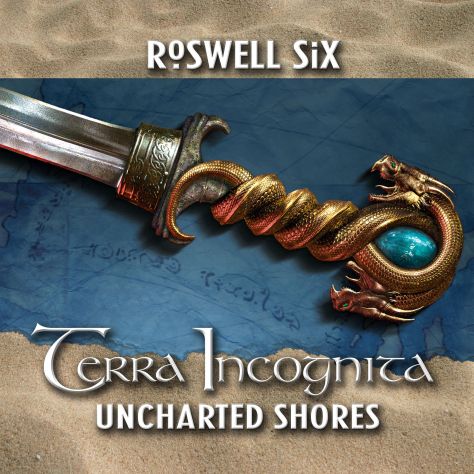
The Fantastical Prog of Terra Incognita (Uncharted Shores)

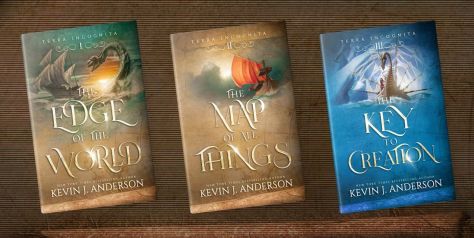
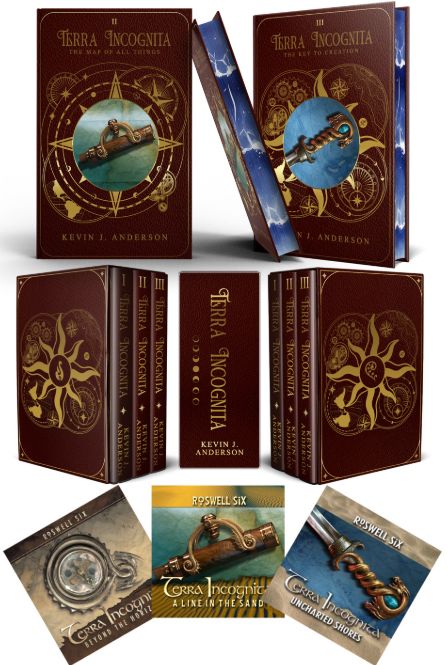
Hello, Spirit of Cecilia readers! Kevin J. Anderson has a Kickstarter campaign up and running for a gorgeous reissue of his Terra Incognita trilogy of fantasy novels and accompanying music that includes a new album from Roswell Six – Terra Incognita: Uncharted Shores.  Brad Birzer, Rick Krueger, and Tad Wert share their thoughts on it.

Tad: Brad and Rick, I understand this is the third Terra Incognita album, but they haven’t been on my radar. What’s the story behind this group, and how are they connected to author Kevin Anderson?

Rick: Tad and Brad, it’s great to join you two for a roundtable at long last!  I’m sure Brad knows a lot more about this project than I do.  But I first came across Kevin Anderson when he and Neil Peart wrote a novel based on the Rush album Clockwork Angels.  That one led to two more novels in the CA universe over the years, Clockwork Lives and Clockwork Destiny; all three of them were delightfully true to Peart’s concepts, with lots of clever Easter eggs from the Rush canon and enjoyable plot twists.  The only other novel of Anderson’s I previously read is The Dark Between the Stars, the first part of a science fiction trilogy that was nominated for a Hugo award back in 2015 – solid, sprawling space opera fun.   I’ve just downloaded his latest, Nether Station and am racing through it; he’s got that ever so slightly pulpy, lickety-split writing style down.  it’s about a deep space expedition that, little by little, gets kinda eldritch . . .

But that really just scratches the surface of what Anderson has done.  He’s most famous for continuing Frank Herbert’s Dune saga with Herbert’s son Brian; he’s also produced tie-in novels in the Star Wars, X-Files and DC universes; he’s an extremely prolific writer overall, whether it’s sci-fi, fantasy, horror or any combination of those genres – by his count, about 180 novels to date.  On top of all that, he and his wife Rebecca Moeste run their own publishing company, WordFire Press.

Through Brad’s connections with Anderson, I’m on WordFire’s mailing list, so I’ve noticed that he’s run a few Kickstarter campaigns over the years.  His latest campaign is a reissue of Terra Incognita, a fantasy trilogy originally published in 2009-2011. The thing that’s different about these books, though, is that the first two had soundtracks; apparently, Anderson has had a lot of contact with the music world over the years.  And maybe that’s where I should let Brad take over.

Brad: My dear friends, Tad and Rick, so great to do this with you guys!  And, to talk about one of my all-time favorite human beings, Kevin J. Anderson.  I’ve been reading Kevin’s works for years, but I only got to know him for the first time about 11 years ago.  I had a one-year position at the University of Colorado-Boulder (2014-2015 academic year), and that position came with some funding to bring speakers in.  As soon as I arrived in Longmont (where we lived for the year), I contacted Kevin (whom I had never met) and Dan Simmons.  I never heard back from Simmons, but Kevin immediately agreed to come speak for me.  He and his lovely (and equally talented) wife, Rebecca, came to Boulder, and Kevin gave an excellent speech on the art of writing fiction.  He called it his “pop-corn theory,” explaining that ideas happen all over the place.  I loved the speech.

And, I also loved Kevin and Rebecca.  We hit it off at dinner at an Indian restaurant right before Kevin’s talk.  He then invited us to his famous New Year’s Eve party for 2015.  Dedra and I happily drove to Monument to see Kevin’s impressive and rather Arthurian house!  Crazily enough, my car slid down his steep driveway and almost crushed the natural gas vein!  Thank the good Lord that disaster was averted and New Year’s Eve was a different kind of blast.  One of the great things about Kevin is he knows how to form communities.  He’s a natural leader.

We also really bonded over his friendship with Neil Peart.  In fact, it was Kevin who suggested I write the book about Peart’s lyrics, Cultural Repercussions, for his WordFire Press.  I was deeply honored to do so not just because of my love of Rush, but also because of my respect for Kevin.

And, Kevin has deep roots in the prog rock community.  Indeed, I can’t imagine a current writer who has greater or more legitimate ties to prog than does Kevin.  Rush’s Grace Under Pressure inspired Kevin’s first novel, Resurrection, Inc., and Kevin’s never been shy about his inspirations: Rush, Kansas, Styx . . . .

Rick, you brought up Clockwork Angels and its surrounding universe.  Admittedly, I love the Clockwork trilogy–the novels, the audiobooks, the graphic novels–and I think that Kevin really offered new insights into Rush and, frankly, into music.  To me, Clockwork Angels is Chestertonian, and I don’t understand why it’s not been made a Netflix series!

When I first encountered Kevin’s music project, Roswell Six, I was understandably impressed by the scope as well as the execution of the vast project.  Kevin has a great entrepreneurial spirit, but always with the artistic soul.  Roswell Six perfectly blends Kevin’s many loves and expertises.  I’ve been proudly listening to the first two CDs since they were first released, and I happily include them among my all-time favorite albums.  I’m especially taken with the first CD, 2009’s Beyond the Horizon.

When Kevin first announced this Kickstarter project–hardback editions of Terra Incognita as well as a re-release of the first two Roswell Six CDs, AND a brand-new third CD, I was absolutely thrilled.  I pledged during the second hour of the campaign.  And, that campaign has done exceedingly well.  Initially hoping to hit the $10,000 mark, the Kickstarter project, as of this writing, is at the $51,000 mark with 399 backers!  Incredible.  And, so well deserved.
So, what do you guys think of the music?

Tad: Okay, both of you have much more experience with Anderson’s work than I. When I saw that there was a companion novel to Rush’s Clockwork Angels, I immediately read it and enjoyed it very much. The Roswell Six albums slipped under my radar, though.

That said, I really like this third album, Terra Incognita (Uncharted Shores). To my ears, it’s pretty much straightforward, classic progrock. Fans of Kansas, Styx, Spock’s Beard, Threshold, Arena, et al. will love it. The fact that there are so many different vocalists brings to mind an Arjen Lucassen project – especially when the beautiful voice of Anneke van Geirsbergen appears in track 3, “A Sense of Wonder”. 

I like the acoustic, Celtic sounding “Haunted and Hunted” a lot. “Lighthouse” is another highlight for me, with its chugging rock riffing and excellent guitar soloing. “The Ballet of the Storm” is an instrumental that has a very nice intro played on violin that transforms into a warm piano/electric guitar duet underpinned by some excellent bass. 

“The Key to Creation” features the return of Anneke, and it has a fun 80s vibe to it – it’s got a relentless beat with a wall of synthesized sound. As a matter of fact, I think this is my favorite track on the album. It has a nice hook in the chorus that sticks in my ear. 

“Unexpected” keeps the musical quality high with, I believe, Dan Reed handling the vocals. I feel like these songs will take on more meaning when I have the chance to read the accompanying novels. They obviously follow a storyline. In many of the tracks, I can hear sounds of the sea, which makes sense, given the Uncharted Shores title!

Rick: Brad, what you said about Anderson’s connections in the music world helped me get my bearings for listening to Uncharted Shores; it definitely has that American heartland prog vibe with some nifty touches of funk (but also touches of European theatricality, as Tad pointed out).  KJA gave an interview this week with Michael Citro of Michael’s Record Collection where they go into the background behind the music; the basic tracks are written and performed by Bob Madsen (bass), Billy Connolly (guitar), Jerry Merrill (keys) and Gregg Bissonette (drums) – all artists working under the umbrella of The Highlander Company Records.  (Madsen’s band The Grafenberg Disciples announced themselves to the world a few years back with a tribute to Peart, “No Words”, that caught Anderson’s attention.)  And all that excellent violin work is by Jonathan Dinklage – he led the Clockwork Angels string section on those 2012 & 2013 tours.  Rush connections aplenty!

The guest vocalists take the whole thing up a notch as well.  Michael Sadler from Saga sings on the title song. “Hunted and Haunted” and “Lighthouse”; he’s played one of the “lead roles” for all three albums. Like you said, Tad, Ted Leonard and Anneke give it their all on their feature tracks.  But the big surprise for me was Dan Reed, who takes the villain role on “Mortal Enemies” and “Unexpected”; for a minute, I thought Steve Walsh had emerged from retirement!  Reed has this grizzled timbre, but a real purity of tone and expression underneath, and he absolutely sells the part.  And The Grafenberg Disciples vocalist Hans Eberbach brings it all home on “Not In My Name” –  gutsy and soulful by turns, and consistently dramatic (with Tull’s Doane Perry contributing a spoken-word cameo as a capper)!  I think that’s the track that’s my favorite so far.

But there isn’t a duff song on the new album, and it definitely grew on me the second time through.  I agree with you, Tad, that knowing the Terra Incognita storyline better will probably help, but the core emotions and throughline of the story come across loud and clear.  According to the Anderson/Citro interview, all the albums are being released through Sony (on InsideOut?) in the fall, but I decided not to wait; I’ve pledged for the ebooks and the digital albums, so my summer reading and listening are already lined up.  And when the CDs go to broad release – who knows?  It’d be far from the first time I’ve bought music twice!

Brad: Tad and Rick, so well stated!  And, yes, I pledged to buy all three albums as well, even though I already own the first two.  If you’ve not listened yet, I especially recommend the first track on Beyond the Horizon: Ishalem.  Incredible prog metal.  Very much in line with Ayreon or Dream Theater.

For those out there not totally familiar with Kevin, he has, as noted above, written extensively in the Star Wars, Dune, and X-Files franchises.  My favorite of his own books (that is, those not set in another mega genre/universe) are Nether Station (a sequel to H.P. Lovecraft’s Mountains of Madness) and Stake (a completely original novel questioning the existence of the supernatural).

Again, all praise to Kevin for bringing together so many beloved things: fantasy, science fiction, and prog rock!

Tad: Kevin Anderson’s Kickstarter link is here, for those interested!

SciFi/Fantasy Meets Prog (and the result is glorious)

Acclaimed author Kevin J. Anderson, is beginning a Kickstarter campaign tomorrow (March 11, 2025) to reissue his three-volume Terra Incognita project. The books have been previously published in paperback, but have been out of print. Anderson plans to rerelease them as a deluxe set of hardcovers in a slipcase.

Accompanying the books is a trio of albums featuring the cream of progressive rock. Just check out the lineup for the soon-to-be released third album, Uncharted Shores:

• Michael Sadler (SAGA)
• Dan Reed (Dan Reed Network)
• Doane Perry (Jethro Tull)
• Ed Toth (Doobie Brothers, Vertical Horizon)
• Jonathan Dinklage (Rush Clockwork Angels, Lady Gaga, Barbra Streisand)
• Greg Bissonette (David Lee Roth, Ringo Starr All Stars)
• Anneke van Giersbergen (European vocalist)
• Ted Leonard (Spock’s Beard, Pattern-Seeking Animals)

Be on the lookout for an in-depth review of this album soon. Meanwhile, check out the Kickstarter campaign – it will be the only means of acquiring this historic literary/musical project, and it only runs from March 11 through April 4!

[This post was updated to reflect the fact that all three novels have been published in paperback, and the personnel for the third Terra Incognita album was incorrect. The post now has the correct lineup.]

The Day of the Triffids: Classic Dystopian Fiction

I have been slowly reading John Wyndham’s works, and I finally hit paydirt! His earlier efforts, Foul Play Suspected, and Planet Plane, were not very good. However, his fourth novel, The Day of the Triffids, is a classic dystopian tale. It’s been made into a movie and TV miniseries, and even though it was published in 1951, it hasn’t aged one bit.

It is told through the eyes of biologist Bill Masen, who has made a career out of studying some strange plants called triffids. They grow to be 8 to 10 feet tall, they produce very useful and nutritious oil, and they are able to move about on their three main roots. Unfortunately, they are also carnivorous and have lethal stingers they can whip out and lash their victim with. It’s possible to “dock” a triffid – i.e. cut off it’s stinging lash – but that reduces the quality of its oil, as well as the yield of its seeds.

No one knows for sure where they came from, but they suddenly appeared all over the world at pretty much the same time. Masen believes they are the result of Soviet genetic engineering. Their benefits outweigh their risks, and Masen works for the main developer of triffid products. One day on the job, he is glancingly stung in the face and temporarily blinded. This accident turns out to be a Godsend, because while he is the hospital bandaged up and recovering, an extraordinary, bright green meteor shower occurs one evening. Everyone on earth is awestruck by its beauty, and Masen has to listen to his nurse describe it in great detail.

However, the next day, when he is scheduled to have his eye bandages removed, no one comes by his room. He calls for breakfast, and there is no reply. He takes the bandages off himself, and he soon realizes that everyone who watched the cosmic pyrotechnics is blind. What follows is a clear-eyed account of what would happen if 99% of humanity suddenly went blind, and there is a strange species of ambulatory plants that seem to be sentient and can kill.

You can read the rest of my review here.

Charles Williams’ All Hallows Eve – Stranger Things Meets Rosemary’s Baby

The First Edition

All Hallows Eve is Charles Williams’ seventh novel, and one of his best. In 2024, I began working my way through all of the novels of this member of The Inklings, the famous literary group of friends that included J. R. R. Tolkien and C.S. Lewis. Williams’ fiction is definitely darker and more philosophical than the writings of either of the his more well known colleagues.

All Hallows Eve begins with a startling scene: a young woman, Lester Furnival, is standing on a street in nighttime London, and there are none of the usual sounds and traffic around her. She soon realizes that she is dead. She and a friend, Evelyn Mercer, were supposed to meet each other for a get-together, but they were killed by a plane crashing into the area. It appears that Lester and Evelyn are in some sort of purgatory – they can interact with each other, but they do not perceive any other beings. The only way they know it’s night is when the lights come on in the houses around them. There is no sun or moon, just a diffuse, gray light.

Back in the land of the living, Lester’s grieving husband, Richard, visits his artist friend, Jonathan Drayton. Drayton is a talented painter who shows Richard his latest work: a painting of a charismatic religious leader who goes by the moniker Simon the Clerk, or Simon Leclerc. It has been commissioned by Lady Wallingford, a devoted disciple of Simon. Jonathan Drayton is in love with her daughter Betty, but she will not allow them to get engaged.

Lady Wallingford drops by to view the painting, and she is extremely disappointed. In her eyes, Simon looks malevolent, and the people in the congregation look like insects. Later, Simon himself visits Drayton to view the painting, and he proclaims it a masterpiece that captures him perfectly.

What follows is a very dark tale of necromancy and all-consuming greed for power. Simon was conceived and born during the French revolution, and he has plans for world domination that involve breaking through to the spiritual plane where Lester and Evelyn are. Lady Wallingford’s daughter, Betty, is the hinge through which this will happen. Things get very creepy as the story unfolds – I was put in mind of Rosemary’s Baby as the pieces fell into place.

As a favor to Jonathan, Richard Furnival agrees to attend a meeting of Simon’s followers, and see if he is legitimate. Simon uses some sort of spell to put everyone under his will. At the end of the meeting, Simon speaks to Richard, and Richard recounts their disturbing conversation to Jonathan:

“He [Simon] said: ‘I won’t keep you, Mr. Furnival. Come back presently. When you want me, I shall be ready. If you want your wife, I can bring her to you; if you don’t want her, I can keep her away from you. Tell your friend I shall send for him soon. Good-bye.” So then I walked out.

He lifted his eyes and looked at Jonathan, who couldn’t think of anything to say. Presently Richard went on, still more quietly: “And suppose he can?”

“Can what?” asked Jonathan gloomily.

“Can,” said Richard carefully and explicitly, “do something to Lester. Leave off thinking of Betty for a moment; Betty’s alive. Lester’s dead, and suppose this man can do something to dead people?

CHARLES WILLIAMS. All Hallows’ Eve (Kindle Locations 1850-1855). Delphi Classics. Kindle Edition.

As the story unfolds, there is a contrast between the characters who grow and mature, and the ones who degenerate. Betty, who is initially a slave to Simon’s will, gradually comes into her own and is able to resist him. Lester also matures spiritually as she learns to navigate the purgatory she is in. Both she and Richard remember their brief marriage, regret the mistakes they made, and come to a much deeper love than they had when she was alive. Even Jonathan’s art takes on a life of its own, becoming more transcendent.

On the other side, Lady Wallingford becomes less and less of an individual with actual agency, Evelyn undergoes a horrific degeneration into petty hatred, and Simon Leclerc reaps the rewards of his dark magic.

All Hallows Eve is one of Williams’ most accessible reads, as well. In a few of his earlier novels, particularly Descent Into Hell, his prose was very dense and unwieldy, and his dialog hard to follow. Every conversation in All Hallows Eve is terse and to the point. I thoroughly enjoyed this novel, even though it creeped me out at times. I wonder if the creators of Netflix’s Stranger Things are familiar with it, since there are definite similarities in the basic premise of both tales. Anyway, for fans of fantasy with a very dark edge (but a happy ending), I highly recommend All Hallow Eve.

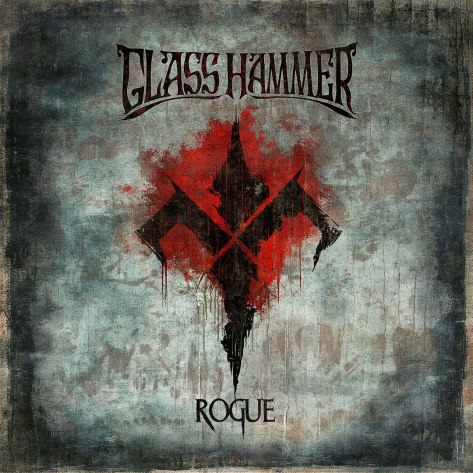
New Album In the Works from Glass Hammer

GLASS HAMMER GOES ROGUE WITH April 11th RELEASE

Glass Hammer’s “Rogue” spins the tale of one man’s fateful, final journey. “He leaves everything he knows behind,” explains composer Steve Babb. “And thinks he’s returning to a place where he once knew happiness, but in reality, his odyssey will sweep him away to somewhere completely unexpected.”

Babb explains that the ten-song album explores themes of regret, heartache, and the mortal salience that comes with age. “Life is fleeting,” he continues. “It’s a heavy topic for an album, but the music isn’t as heavy as our last few releases. Rogue is much more like the Glass Hammer albums our fans refer to as “classic.”

And who’s in the lineup? “It’s no secret that Glass Hammer reinvents itself every few albums,” says Babb. “It’s happened again! This time with a lot of new faces.”

Rogue features performances by Fred Schendel, Reese Boyd, and David Wallimann (GH guitarist 2006-2010). Vocalists Thomas Jakob (Netherlands) and Olivia Tharpe (USA) are new to the band. They’re joined by guitarist Oliver Day (UK), keyboardist Ariel Perchuck (Argentina), drummer Evgeni Obruchkov (Poland), and others. “It’s an international cast of characters,” Babb points out. “A super-talented group that our fans are sure to love.”

The hour-long Rogue is Glass Hammer’s twenty-second studio album. Fans can pre-order autographed copies, t-shirts and downloads on the band’s website. www.glasshammer.com

Steve Babb photo credit: Julie Babb

Track list:

  1. What If
  2. The Road South
  3. Tomorrow
  4. Pretty Ghost
  5. Sunshine
  6. I Will Follow
  7. The Wonder Of It All
  8. One Last Sunrise
  9. Terminal Lucidity
  10. All Good Things

Here’s the teaser video:

George Eliot’s Middlemarch – The GOAT of British Literature?

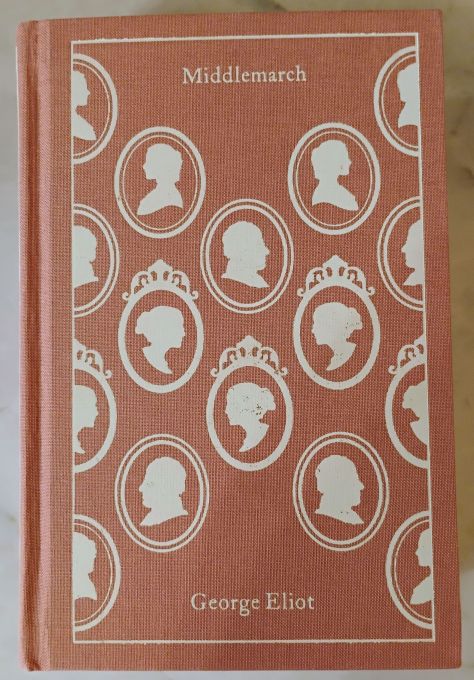
George Eliot’s masterpiece,  Middlemarch, is a massive and complex portrait of rural England at the time of the 1830s Reform Bills. The BBC lists it as the greatest British novel of all time. You can read my thoughts on it here.

Jay Wellon’s All That Moves Us: The Trials and Triumphs of a Pediatric Neurosurgeon

Moves Us

A new year, and an opportunity to begin a new batch of books! I was given several titles for Christmas, and the first one I dove into was All That Moves Us.

Dr. Jay Wellons is a pediatric neurosurgeon at Vanderbilt’s Monroe Carrell Jr. Children’s Hospital here in Nashville, TN. His memoir, All That Moves Us, is one of the most moving books I’ve ever read. It consists of 23 short chapters, each one chronicling an important episode in Wellons’ life. He doesn’t pull any punches, either. In the prologue, he explains his efforts to separate two conjoined twins that resulted in both of their deaths.

Other chapters deal with triumphs such as two-year-old Allie:

Her brain MRI showed a large bleed in her brainstem, the pons specifically. The normal brain was compressed from the inside out, the pontine brain tissue now only a thin rim displaced by the blood clot, most likely from a hemorrhagic cavernous malformation. It was gigantic considering the small space. At that point in my career, I had never seen a hemorrhage quite that large in that part of the brain with the patient still alive. (page 103)

Miraculously, Wellons is able to save Allie, and seven years later, she continues to recover. He admires her indomitable will to survive and thrive.

Throughout the book, Wellons provides interesting autobiographical details: why he went into medicine, the enormous influence his father had on him, his own battle with a tumor in his leg, the joy he receives from his own children. It doesn’t hurt that he is an extraordinarily fine writer. As a matter of fact he was an English major as an undergraduate in college. I found that I couldn’t read more than two or three chapters at a time, they are that emotionally powerful.

I also got a glimpse into the life of a surgeon, and the various trials they face. While the gratitude from parents whose children he has saved is nice, Wellons tells of the time when he couldn’t save a middle-aged woman, and her family came at him in the hallway ready to physically attack him. A surgeon has to be sensitive to the feelings of the families of his patients, while always being truthful and informative.

Doctors are always on call, even when they aren’t anywhere near a hospital. In the chapter, Last Place, Wellons is on the interstate driving to a triathlon when he comes upon a terrible car accident. He immediately stops and does triage on the family in the car that was hit. If he hadn’t been there, the mother and father would have died. This experience gives him new respect for the incredibly difficult job first responders have.

Another chapter, Shock Wave, is particularly hard-hitting. It is about a teenaged girl who shot herself in the head, driven to such despair by social media bullying that death seemed preferable to the pain she was suffering. She survived the gunshot, but the bullet destroyed her optic nerves, permanently blinding her. However, she has chosen to use her condition to try to prevent others from making the same choice she did.

Alyssa will forever live with the profound effects of that day. Both she and her parents wanted her story told so that people might understand that social bullying is real. Her mom aske me to make sure that Alyssa has worked hard since that day to be a good young woman living out her faith. For all that she has endured, Alyssa loves the idea of being able to help others, and that is how she understands her purpose now. She does not remember much of her life before her injury. But she makes a point to say that sometimes we can inflict pain on one another without much thought. It can be awful. And then she says she knows we can do better. (page 189)

All That Moves Us is an incredibly powerful read. In every chapter, Wellons’ sincere care and compassion for his patients and their families is apparent. He also weaves his love and admiration for his Mississippi Air National Guard father throughout the book. His father passed away from ALS, and Wellons was able to spend time with him and properly express his gratitude for all he did for him. As for me, I am thankful that our medical system is able to produce amazing caregivers like Jay Wellons.

The Lewis Carroll You May Not Know

While Lewis Carroll is justifiably famous for his books Alice In Wonderland and Through The Looking Glass, he was also an accomplished mathematician. In his biography, Lewis Carroll in Numberland, Robin Wilson focuses on that aspect of his life.

Lewis Carroll’s Other Life

Raphael and the Noble Task: A Modern Christmas Classic

Raphael

In 2000, when our daughters were 10 and 6, I saw a list of new Christmas-themed books that included Catherine Salton’s Raphael and the Noble Task. I found it at the local bookstore and was immediately taken with David Weitzman’s beautiful illustrations. I read it aloud to the family, and we all enjoyed it very much. Even though it’s technically a children’s book, it will appeal to readers of all ages, much like C. S. Lewis’ Narnia series.

Raphael and Alchemist
Raphael speaks with The Alchemist, another of his cathedral’s statues

I decided advent 2024 was as good a time as any to revisit this charming tale of a Gothic cathedral’s chimère (French for a statue of a chimera) named Raphael and his quest to find a Noble Task to justify his existence. Raphael is a griffin, placed above the cathedral’s main entrance. He has a lion’s body and legs, eagle’s wings, and the head and neck of a dragon. He is bored and lonely, and he visits the statue of an alchemist who refers to an older cathedral guardian named Parsifal who is no longer around. It is the alchemist who plants the idea of a noble task in Raphael’s head.

Once Raphael decides he needs to perform a noble task, he decides to ask other members of the cathedral statuary what he should do. He first goes to a couple of tomb effigies of a knight and his wife, but they’re so busy bickering they can’t help him. Next, he approaches a gargoyle who is near his niche, but, like all gargoyles, this one – named Madra-Dubh (Black Dog) – is very rude and condescending:

Raphael steeled his resolve. “You see, I’m trying to find something, and I think you might know where it is,” he said as quickly as possible.

“Oooh, and it’s trying to find something,” crowed Madra-Dubh as the others cackled gleefully. “Not good enough for the fawning idle-headed dewberry to sit in its donkey-spotted behind and do its right job, mark me! Nooo, it’s got to go thumping about pestering the working folk with foolish don’t-you-knows. Go drop some feathers, ye molting chicken-witted dragglebeak, and leave us in peace, then.” (pages 21 – 22)

Raphael eventually finds the scriptorium (library), and even though he can’t read, he sees an illustration in an illuminated manuscript. It depicts a knight in silver armor slaying a dragon. Because Raphael resembles the dragon, he begins to doubt his own integrity and wonder if he is actually evil. At this point in the story, there is beautiful scene set in a side chapel where Raphael, tortured by gnawing self-doubt, encounters a statue of Mary with her child Jesus, and he is immediately set at peace.

A young woman with a gentle expression gazed out at him from the darkness. Her plain blue gown fell in folds to her bare feet, and her hair was unbound, spreading over her shoulders in rippling veil. In her arms she cradled a baby, who reached up with one small hand to touch her face in a gesture of cam devotion. As Raphael stood wondering, his head cocked to one side, he felt as if his hurt and disappointment were being softly lifted away. For the young woman seemed to speak to him in a manner he did not fully understand; she did not move, nor did she actually say a word, but all the same, she told Raphael a long and beautiful story. In the icy darkness of that chapel, she spoke gently to Raphael alone. She spoke of joy in good times, and patience in hard, and of hope even in the bleakest hours of all. (page 41)

Once he has returned to his niche over the main portal, though, his self-doubt returns. And then one day, he sees a young woman in desperate straits hurry up the steps to leave her baby in the “foundling” box – a place for babies whose parents can’t feed them or care for them. In a flash Raphael has found his noble task!

What follows is great fun, as various communities in the cathedral all work together to help Raphael take care of his new charge. The gargoyles, the churchmice, and the pigeons all manage to put aside their differences and learn to cooperate.

Of course, the situation cannot last forever, and Raphael is faced with a terrible choice: his true noble task. Salton does a terrific job of weaving together the lives of the monks and other inhabitants of the village with the clandestine doings of the cathedral statuary, armies of mice, and flocks of pigeons. The whole tale is a marvelous allegory of how, despite the best of human (and chimère) intentions, without a little Divine intervention things would rapidly turn into tragedy. However, as Salton quotes Julian of Norwich at the very beginning of the book, “All shall be well, and all manner of things shall be well.”

Raphael and the Noble Task is a wonderful book for families to read aloud at Christmastime. It’s relatively short: 157 pages, and as I mentioned before, David Weitzman’s illustrations are fantastic. It deserves a place alongside other Christmas classics like Dickens’ A Christmas Carol  and O’Henry’s The Gift of the Magi.