So honored to talk with John J. Miller about Tolkien’s masterpiece, The Lord of the Rings. Here is part II: The Two Towers.
Episode 162: The Two Towers by J. R. R. Tolkien

So honored to talk with John J. Miller about Tolkien’s masterpiece, The Lord of the Rings. Here is part II: The Two Towers.
Episode 162: The Two Towers by J. R. R. Tolkien

Few bands in the prog world have done as much to shape the last quarter century of the genre as has Porcupine Tree. In many ways, they defined what is often called “third-wave prog,” giving it a certain psychedelic and hard edge.
The glorious Delerium Years, 1991-1997, boxset captures the earliest part of the band’s history in a rich way. Indeed, I would go so far as to say it’s the nicest boxset I now own, and I’m comparing it against/to boxsets/earbooks from Rush, Big Big Train, Spock’s Beard, Yes, Chris Squire, Ayreon, Dave Brubeck, Steven Wilson (solo), and others.
The Delerium Years comes with the latest mixes of the five major releases from the band: On the Sunday of Life; Up the Downstair; The Sky Moves Sideways; Signify; and the live Coma Divine. Each CD is individually packaged within the larger box set, though absent the individual booklets with lyrics and liner notes. One can find all the liner notes and lyrics in the book that comes with the set—more on this below. The Delerium Years also—rather wonderfully—includes the more experimental Voyage 34; Staircase Infinities; Insignificance; and Metanoia. Best of all, at least in terms of CDs is the inclusion of Transmission IV, a wild 40-minute improvisational rock epic, “Moonloop,” and a disk of previously unreleased tracks, The Sound of No One Listening. Though I love all the music, I’m most taken with “Moonloop.”
[Please scroll down to go to Page 2]
“Both rings were round, and there the resemblance ceases”–J.R.R. Tolkien
[Originally delivered at an ISI Conference, “Modernists and Mist Dwellers,” on Friday, August 3, 2001.]
When the Swedish translation of The Lord of the Rings appeared in 1961, its author was appalled. Fluent in Swedish, J.R.R. Tolkien found no problems with the translation. Indeed, Tolkien often considered the various Scandinavian languages as better mediums for his Middle-earth stories than English, as the medieval Norse and Icelandic myths had strongly influenced them. His disgust, instead, came from the presumption found within the introduction to the Swedish edition. The crime: translator Åke Ohlmark had compared Tolkien’s ring to Wagner’s ring. “The Ring is in a certain way ‘der Niebelungen Ring,’” Ohlmark had written. Indignant, Tolkien complained to his publisher: “Both rings were round, and there the resemblance ceases.” The translator’s commentary was simply “rubbish,” according to Tolkien.[i]
Ohlmark was not the only critic to make the comparison. A Canadian English professor, William Blissett, reviewing The Lord of the Rings for the prestigious South Atlantic Quarterly, found several parallels between the two legends but was unwilling to preclude “any direct Wagnerian influence.”[ii] By the early 1960s, the comparison was becoming common. In his last interview before his death, Tolkien’s closest friend C.S. Lewis claimed to have wanted to write a new prose version of Wagner’s Ring Opera. Lewis feared, though, that “at the mention of the word Ring a lot of people might think it was something to do with Tolkien’s ‘Lord of the Rings.’”[iii] Since the first comparisons in the 1950s, many critics have used Wagner’s Ring against Tolkien. One famous English poet referred to The Lord of the Rings as “A combination of Wagner and Winnie-the-Pooh.”[iv]
[Scroll down a bit to go to page 2 of this lecture]
A few days ago, I felt absolutely snarky and thought, “why not write down exactly what I think of music from the 1980s.” In some ways, I feel I have the right to do this in a manner I could never for any other decade.
I was in seventh grade when a very disturbed fanboy tried to kill the fortieth president, and I was a first-semester senior in college when the Berlin Wall came down.
Yes, I’m very much a man of the 1980s. Reagan, Rush, Blade Runner. . . how I remember the 1980s. I came of age in that rather incredible decade.
Life continued after 1989, however, though I wasn’t so sure at the time that it would.
1990 proved to be one of the most interesting years in my personal life when it came to career choices as well as to music.
[Scroll down a bit to go to Page 2 of this piece]
In his personal recollections of his mentor, hero, and friend, George Sayer remembered that J.R.R. Tolkien possessed the uncanny ability to match his facial expressions and speech patterns to and with the prevailing mood of any given conversations. “As I saw with him and the Lewis brothers in the pub, I remember being fascinated by the expressions on his face, the way they changed to suit what he was saying,” Sayers recollected. “Often he was smiling, genial, or wore a pixy look. A few seconds later he might burst into savage scathing criticism, looking fierce and menacing. Then he might soon again become genial.”[1] It was not affectation, but sincere intensity. The very same might (and should) be claimed of his writing ability. When the mood calls for levity, Tolkien writes with levity. When the mood calls for depth, Tolkien writes with depth. When the mood calls for contemplation, Tolkien writes contemplatively. As a twentieth-century author, he was an absolute master at this.
One can see Tolkien’s skill in the approach to Weathertop, chapter 11 of book one of The Fellowship of the Ring, “A Knife in the Dark.” Having slowly fled the social and near fatal disasters of Bree, September 30, the four hobbits, Bill the Pony, and Strider the Ranger make their way east of the village, en route to the Elvish safe haven of Rivendell. They won’t arrive in Rivendell until late on October 20, but they have no idea of just how long it will take. Dispirited, the party moves anxiously and uneasily, not sure who in the village had betrayed them to the demonic black riders. The same riders—at least four of them—attack Frodo and his party on the evening of October 6.
On October 4, after an agonizing journey through insect-ridden marshes, Frodo and his party spot Weathertop for the first time. Strider advises a roundabout route, thus approaching Weathertop from the north, a path better hidden from the spies of the enemies. On October 5, the hobbits feel refreshed after a good night’s sleep. “There was a frost in the air, and the sky was a pale clear blue,” Tolkien writes.[2] As the party nears Weathertop, they find themselves on “an undulating ridge, often rising almost to a thousand feet, and here and there falling again to low clefts or passes.” The last looks and leads into the east, seemingly endless in vista, and the party views “what looked to be the remains of green-grown walls and dikes, and in the clefts there stood the ruins of old works of stone.”
[Please scroll down a little bit to go to Page 2 of this post]
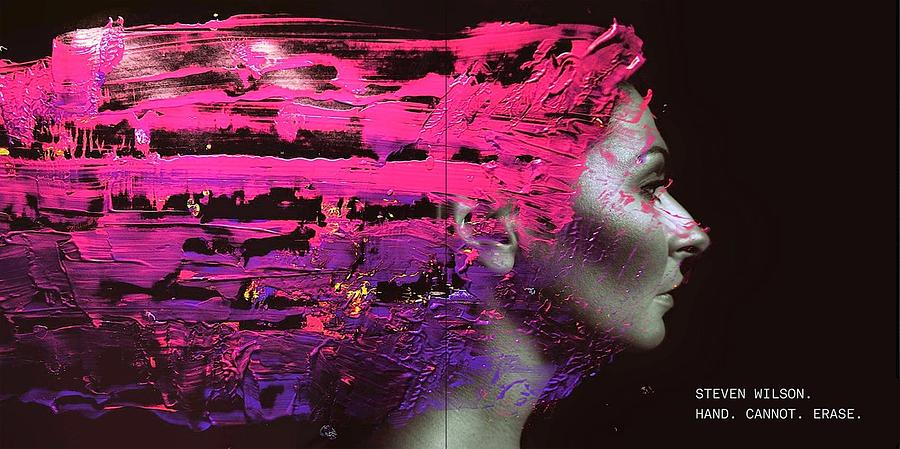
The Meaning of a Life: Steven Wilson’s Hand.Cannot.Erase.
An Incarnational Whole
One of the greatest things in this whirligig of a world—however fraught with a string of perilous and gut-wrenching disasters—is the mystery of the human person. And, until God so decides to end this existence, every person is a new reflection of the Infinite. From the Catholic Humanist perspective, every human is an unrepeatable center of dignity and freedom. Each person, born in a particular place and time, comes only once, a life to burn as brightly or not, for one’s self or for another, in the time allotted to each of us. “Dark and inscrutable are the ways in which we come into the world,” the grand Anglo-Irish statesman and philosopher, Edmund Burke, understood. Fewer truths have ever been spoken in such perfect formation of the English language.
Yet, speaking on the mystery of the person and personhood, Pope John Paul II put it even more beautifully in the penultimate month of 1996.
The mystery of the Incarnation has given a tremendous impetus to man’s thought and artistic genius. Precisely by reflecting on the union of the two natures, human and divine, in the person of the Incarnate Word, Christian thinkers have come to explain the concept of person as the unique and unrepeatable centre of freedom and responsibility, whose inalienable dignity must be recognized. This concept of the person has proved to be the cornerstone of any genuinely human civilization.
As someone who has had the privilege of teaching history and writing biography the entirety of his professional career, I hope and pray that John Paul II’s words and ideas each across everything I teach, think, and write. As such, I am always looking at and for new ways to understand the dignity of each individual person, however tragically flawed.
Nearly six years ago, such a statement and manifestation of dignity arrived in the most unusual of ways: in the form of a rock concept album by the rather devoutly atheistic, seemingly always grumpy, and unbelievably talented English musician, Steven Wilson. His album, a sixty-seven minute story about a lost soul, came out on February 27, 2015. In terms of lyrics and music, Wilson’s work is extraordinary by the standards of any genre. What should intrigue us most, however, is the subject matter and how Wilson fills it out. The subject matter is the uniqueness of each human person, and he focuses on the life of one lost soul.
[Please scroll down a bit to go to page 2]
It’s safe to say that I am the “jazz guy” here as I listen to jazz in some form or another on a daily basis, especially while working (along with some favorite classical works).
And so my first 20 favorites of 2020 are jazz.
(The next 20, to be posted separately, are “everything else”, which includes prog, singer-songwriter, instrumental rock, and a bit of country.)
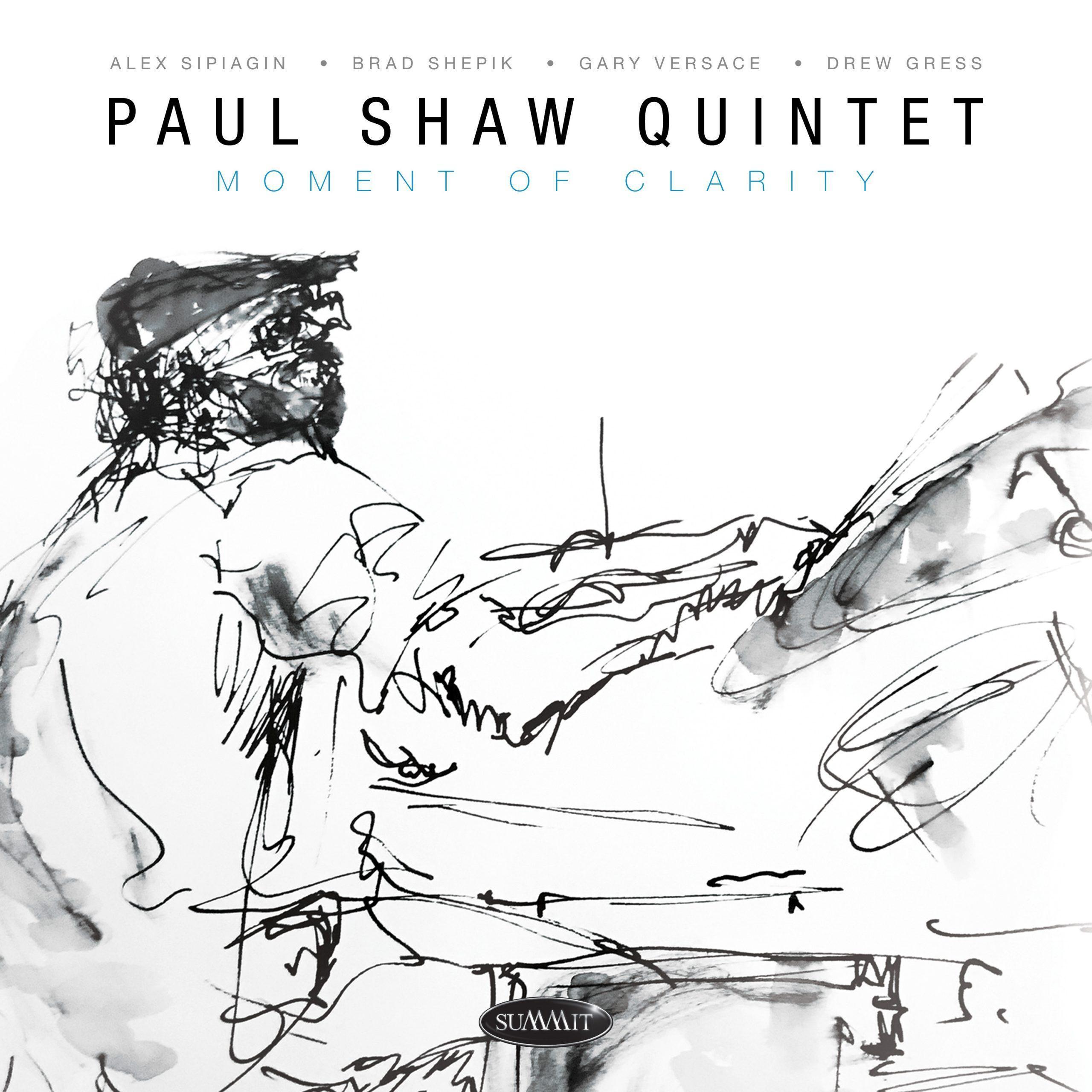
• “Moment of Clarity” by Paul Shaw Quintet: This beautiful album was my most played jazz release of 2020, a near perfect combo of interplay, melodic playing, and crisp production.
• “From This Place” by Pat Metheny: This epic album, which has a soundtrack quality to it, is one of my favorites of 2020 regardless of genre, with astounding playing at the service of deeply engaging songs. A masterpiece, in my opinion.
[Scroll down a bit to click on page 2 of this article. . .]

A few days ago, I attempted to create a “best of 2020” purely from memory. My oldest daughter was driving the Honda, and I was enjoying the thrill of the quickly-moving Illinois landscape out the passenger’s window. Honestly, at age 53, I should know better than to rely only on my memory, though, as a historian, I actually still have a pretty good one. But, no longer great. Just pretty good. Even as I was typing the list in the car, I knew I’d forget all kinds of great albums, but I tried it anyway. Pride and ego are funny things.
Anyway.
That list still stands (a few posts back), but I want to add some brilliant albums that I inadvertently failed to remember at the moment of writing.
Two albums this year get the spiritual successor to Talk Talk’s Laughing Stock award. First up is Tim Bowness’s extraordinary nuanced (so glorious), Late Night Laments, an album full of meaningful lyrics and sonic soundscapes that boggle the imagination. Bowness, unfortunately, gets overshadowed by his sometime writing partner, Steven Wilson, but, frankly, the two artists are equally extraordinary.
Following Bowness’s lead was the more recently-released Loma album, Don’t Shy Away. Again, incredible textures mixed with intriguing lyrics. Clearly, the band has spent a lot of good quality time listening to Talk Talk. Regardless, I owe Stephen Humphries (of the Christian Science Monitor) a huge thanks for introducing the band to me.
Nick D’Virgilio’s Invisible in an album full of surprises and full of soul. There’s conviction behind every word and every note. I wasn’t sure what to expect before the album arrived, but I fell in love with it on the first listen. D’Virgilio is also rock’s greatest living drummer, so I was especially pleased to be reminded that the guy is just incredibly talented in all kinds of ways.
[Scroll down a bit to click on page 2 of this article. . .]
By Mark Sullivan
My earliest memory is standing on my tiptoes putting Let it Be by The Beatles on my parent’s stereo. I must have been only four or five years old, and I don’t know why my parents let their pre-schooler touch their records. I wouldn’t have.
“I dig a pygmy, by Charles Hawtry on the deaf-aids. Phase one, in which Doris gets her oats.” Then the acoustic guitar, the bass drum, John and Paul singing in unison, and I’m in my happy place – laying on the floor listening to music. Looking up at the ceiling and lost in my imagination. Not much has changed in 45 years.
Besides The Beatles, my parent’s record collection consisted of 1970s staples such as Linda Rondstadt, Neil Diamond (laugh if you’d like), Emmy Lou Harris, Glen Campbell, Loretta Lynn, Bob Dylan, Charlie Parker, the Modern Jazz Quartet, Wes Montgomery, Herbie Mann, and The Moody Blues. I listened to all of those albums except Every Good Boy Deserves Favor by The Moody Blues. The cover freaked me out and planted the seeds of suspicion about Progressive Music (Prog).
Probably as a teenager I tried to listen to it. I imagine that I picked up the needle at “Desolation, creation.” It still sounds stupid, but if I would have stayed with it and listened to “The Story in Your Eyes,” things may have been different.
However, I wasn’t aware of Prog as a thing or deliberately avoiding it until I encountered the anti-Prog bible, The Worst Rock n’ Roll Records of All Time: A Fan’s Guide to the Stuff You Love to Hate by Jimmy Guterman and Owen O’Donnell in a used bookstore sometime in my early 20s. That book was everything a young music snob like me could want, take downs of stupid lyrics and bloated Prog bands on every page. I learned that you could always be cool by ripping on Prog.
[Scroll down a bit to click on page 2 of this article. . .]
The next Shakespeare@Stratford film to hit YouTube is the Festival’s 2018 production of The Tempest, premiering on Thursday, May 14 and running for three weeks. Here’s my review from when my wife and I saw the play live in October of that year.
This is the third production of The Tempest we’ve seen at Stratford, Ontario; since we started attending in 2004, the Festival has usually marketed the play as a chance to catch an actor of high skill and reputation (and often getting on in years) in the role of Prospero. 2005’s Tempest served as a grand farewell for William Hutt, the most accomplished classical actor in Canada’s theatrical history; the 2010 production was built on Christopher Plummer returning to the scene of his earliest triumphs. This time around, the hook was seeing Martha Henry (since Hutt’s passing, the current Greatest Living Canadian Actor) playing the exiled magician — part of a season with multiple productions (a gender-swapped Julius Caesar and a gender-fluid Comedy of Errors, along with the drag-rock musical The Rocky Horror Show) trendily exploring postmodern conceptions of freedom.
But any dreams or fears of a transgressive Tempest faded quickly; Henry forthrightly played Prospero as female — duchess of Milan, mother of Miranda, wizard ruler of an uncharted, enchanted island — with a few modest tweaks of the script not even scuffing the verse rhythms, and that was that. (After all, it’s a fairy tale; if you’re worried about the lines of descent for Renaissance Italian nobility being messed up, you’ve come to the wrong play.) Even better, this was an ensemble Tempest, with Henry clearly featured, but also clearly first among equals. Rather than chewing scenery a la Plummer or waxing grandiloquent like Hutt, she drove the plot without swallowing the stage, working to provide for her daughter, bring those who exiled her to book, reward virtue and punish wrong with formidable focus, aplomb and dry humor. And all the while, she genuinely wrestled with conflicting impulses: would she take vengeance on her adversaries, or show them mercy? It’s a tribute to Henry’s and director Antoni Cimolino’s conception that, even if you knew the play, the answer wasn’t telegraphed.
The strong cast also elevated this production, consistently playing off Henry’s indispensable work while fruitfully developing their own characters. Andre Morin’s Ariel did Prospero’s bidding with delight, while holding her to the promise of eventual freedom; Michael Blake’s Caliban chafed convincingly under her authoritarian rule. For once, the shipwrecked mariners were three-dimensional characters, not plot tokens — the King of Naples Alonso (David Collins) ripely autocratic, Prospero’s usurping brother Antonio (Graham Abbey) convincingly sociopathic, counselor Gonzalo (Rod Beattie) more of a sage and less of a fool than usual. Tom McCamus as butler Stephano and Stephen Ouimette as jester Trinculo clowned to perfection, nailing every laugh possible whether on their own, with Caliban or with the ensemble. The young lovers were the most pleasant surprise; Ferdinand and Miranda can feel like weak sauce in the wrong hands, but Sebastien Heins & Mamie Zwettler were spunky, passionate, intelligent, fully cognizant of their developing affections — strong & spot-on.
And yes, the special effects and pageantry (serious creature puppetry by the ensemble of Spirits & Monsters at key moments, Festival stalwarts Chick Reid and Lucy Peacock regally presiding over Act Four’s celebratory wedding masque) were impressive as always. But Stratford productions go deepest when they cut to the heart — and this Tempest showed us, beyond its numerous charms and delights, the depth of Prospero’s sacrifice. To become truly great as well as truly free, the exiled ruler must serve her enemies as well as her friends — forgiving wrongs, securing Naples and Milan’s future through Ferdinand and Miranda’s marriage, releasing the spirits of the island, and abjuring her “rough magic.” Martha Henry’s reading of Shakespeare’s Epilogue – bereft but relieved, slyly humorous in its appeal to the audience for final release through prayer and applause – communicated both the cost of Prospero’s renunciations, and their true worth. It was a lovely end to the best, most bracing production of The Tempest we’ve seen at the Festival.
Watch the premiere of The Tempest on the Stratford Festival’s YouTube channel tomorrow at 7 pm EDT; a pre-show chat with Martha Henry, Mamie Zwettler and Antoni Cimilono starts at 6:30 pm.
— Rick Krueger

 Spirit of Cecilia
You must be logged in to post a comment.