Category Archives: Music

The Best Albums of 2020

The first two months of 2020 seem like a decade ago. It was certainly a different world than the one we live in now. As I look over my listening habits during 2020, it is clear that all of the chaos of the year had me seeking somewhat calmer music than I normally listen to. That said, there was an abundance of excellent music to choose from. Artists who were prevented from touring channeled their energy into recording new albums, and we are the beneficiaries of that.

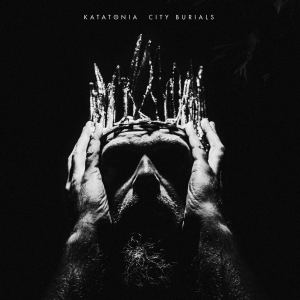
Number 11: Katatonia’s City Burials

Katatonia improved on 2017’s amazing Fall of Hearts with City of Burials. Jonas Renkse’s vocals are some of the finest in rock, and the rest of the band are worthy accompanists. While there are still some crunchingly hard tracks, the standout ones – like “Lacquer” – are full of stillness and hushed tones.

Number 10: Lunatic Soul’s Through Shaded Woods

There are all kinds of primal rhythms and timeless melodies happening here, and the result is Mariusz Duda’s finest release as Lunatic Soul . You can read more of our thoughts on it here

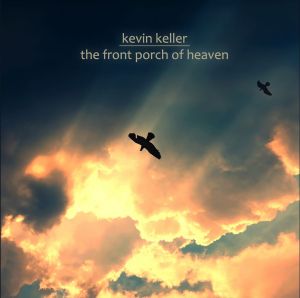
Number 9: Kevin Keller’s The Front Porch Of Heaven

Keller is one of the finest composers of classical music today. This song cycle was composed and recorded after he underwent open heart surgery. It is an extraordinary work that is life-affirming and encouraging. It is rare for instrumental pieces to communicate such feeling and reassurance.

Number 8: The Bardic Depths

Spirit of Cecilia’s own Brad Birzer and Dave Bandana joined forces for this tribute to J.R.R. Tolkien, C.S. Lewis, and Owen Barfield. The music runs the gamut from elegant spaciness to funky prog. It is a blast to listen to, and I hope Robin Armstrong’s Gravity Dream label plans to release more from them. You can read my full review here.

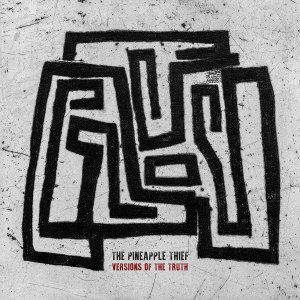
Number 7: Pineapple Thief’s Versions of the Truth

Bruce Soord has really come into his own with the past few PT albums. Having drummer Gavin Harrison on board has injected a huge dose of energy into their music, making Versions of the Truth their best album ever.

Number 6: Loma’s Don’t Shy Away

The most interesting sounding album in this list. Loma is an American trio who take loose jams and breathy vocals to create an utterly beautiful sound that is compulsively listenable.

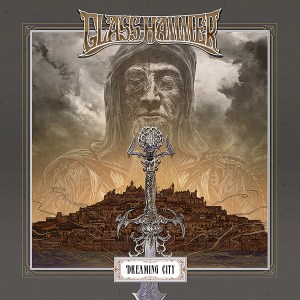
Number 5: Glass Hammer’s Dreaming City

Has Glass Hammer ever released a mediocre album? Not that I’m aware of, and I have 29 in my music collection. Dreaming City is one of the hardest-edged albums of their career, conjuring up memories of classic Rush, but maintaining that unique Glass Hammer sound. You can read my full review here.

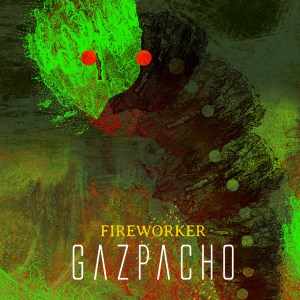
Number 4: Gazpacho’s Fireworker

A new direction for Gazpacho, as they incorporate choirs and orchestra into their sound. The “Fireworker” of the title is the primal presence in every human that we have to control if we are to be civilized. You can read more of our thoughts on this album here.

Number 3: Kyros’ Celexa Dreams

What do you get when you mash up the best of ’80s pop/rock with a contemporary prog sensibility? This fantastic album that has logged dozens of listens on my stereo. I can’t say enough good things about it, and I hope Kyros doesn’t take another four years to record a followup.

Number 2: Sanguine Hum’s A Trace of Memory

Recorded during UK’s lockdown, this sounds like all the members of Sanguine Hum were in telepathic communication instead of Zoom. A tremendously satisfying set of songs that reward repeated listens. You can read more of our thoughts on this album here.

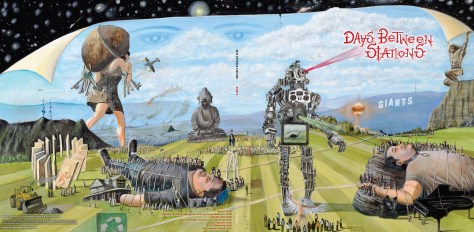
Number 1: Days Between Stations’ Giants

In my earlier review, I suggested this might be the album of the year, and you know what? I was right! Billy Sherwood, Colin Moulding, and Durga McBroom all join forces with Oscar Fuentes Bills (keyboards) and Sepand Samzadeh (guitar) to create a wonderfully fun and thoughtful work that is comparable to the best albums of the, well, giants of prog rock. This album is destined to be a classic that will be cited years from now.

So, those are my ten favorite albums of 2020. Honorable mentions go to Lonely Robot, Kansas, Pain Of Salvation, and Neal Morse. Meanwhile, I hope you have a Merry Christmas and a wonderful New Year.

Update: Mr. Bandana of Bardic Depths pointed out that I listed eleven albums (two number 7’s), so I’ve corrected that mistake. In my defense, I blame 2020. 

In The DropBox: Loma, Big Big Train, Glass Hammer, and Doncourt/Olsson

The first album in this batch of DropBox offerings is a wondrous work of art from a group called Loma. They are on the Sub Pop label, of all places, and with Don’t Shy Away they have come up with a subdued, spacious masterpiece. Emily Cross (vocals), Dan Duszynski , and Jonathan Meiburg have collaborated to create music that reminds me of the best of Talk Talk and Laurie Anderson. This is music that takes its time to develop, yet grabs the listener’s attention from the first note. Brian Eno is a fan, and he lends his talent to “Homing”. Cross’s breathy vocals are gently enchanting, while a chugging sax provides counterpoint. On “Jenny”, crickets chirp in the background as muffled drums beat and a guitar is slowly strummed. It’s so inviting – as if they asked the listener to join them in an intimate jam session on their back porch. This album came out of left field, and I can’t stop listening to it. If you are a fan of Kate Bush, Talk Talk, Brian Eno, or Over The Rhine, you owe it to yourself to check this one out.

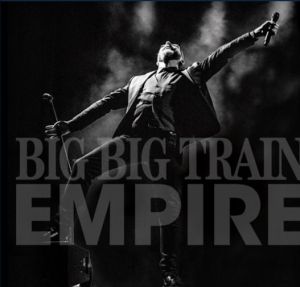
While St. Cecilia is the patron saint of this site, Big Big Train could be considered the patron group. It was mutual love of their music that brought many of Spirit of Cecilia’s contributors together, and we eagerly anticipate every new release of theirs. The latest from BBT is a recording of their November 2019 show at the Hackney Empire. It’s a very good performance, featuring songs from English Electric, Folklore, Grimspound, and The Grand Tour. For long-time fans, it’s also a bittersweet affair, since it includes the final performances of Dave Gregory, Rachel Hall, and Danny Manners. If you haven’t heard anything by BBT but were curious, this BluRay/CD package is a perfect introduction. David Longdon’s voice is in excellent form, and the band plays even the most challenging passages to perfection. Nick D’Virgilio’s drumming is exceptionally fine. The primarily acoustic “The Florentine” is a highlight with its lilting vocal harmonies and Hall’s ecstatic violin solo.

Back on this side of the big pond, Glass Hammer have released a download-only collection of favorite tracks from their early years. They have rerecorded them, and it is a lot of fun to hear these 20+ year old tracks given new life. I especially enjoy the ones from 1998’s On To Evermore, an album that is one of my favorites of GH, but which slipped under the radar for a lot of prog fans.

Finally, an album from Tom Doncourt and Mattias Olsson, Cathedral. The dark artwork matches the music perfectly, which was composed and recorded before Doncourt’s death in March of 2019. It includes Gregorian chant-like vocals, lots of mellotron and synths, as well as some hard rocking guitars in places. The highlight is the 12:34 long “Poppies In A Field”. Doncourt and Olsson obviously put a lot of thought into the arrangements of these songs, and I am impressed with how they are able to create a unique atmosphere. It is a fitting tribute to Doncourt, and if you are looking for an album to play on a rainy, gloomy Sunday afternoon, then Cathedral will fill the bill.

Okay, that’s the latest from the Spirit of Cecilia DropBox. A true masterpiece from Loma, some fan service from two old favorites, and an intriguingly dark work from Doncourt and Olsson. My next post will be my favorite albums of 2020. We have had a bumper crop of great music this year, so it might be a long one! Meanwhile, I’ll leave you with Loma’s video for “Fix My Gaze”:

A NonPrickly Conversation About Porcupine Tree

The latest dialogue between Spirit of Cecilia Editor-in-Chief and Arts Editor Tad Wert concerns one of the giants of prog and contemporary music in general: Steven Wilson. A restless soul who has been involved in many projects – No-Man, Porcupine Tree, Blackfield, among others – and revelatory remixes of classic albums, Birzer and Wert discuss his work with the late, lamented Porcupine Tree.

Brad: Tad, I’ve been thoroughly enjoying Rich Wilson’s biography of Porcupine Tree, Time Flies, from Rocket 88 books, the same publishers who brought us the Spirit of Talk Talk. Wilson is an excellent writer, and the research he did for the book is impeccable. I’ve learned quite a bit, including some fascinating tidbits such as that Steven Wilson and Tim Bowness approached not just members of Japan but members of Talk Talk(!) to become a band or a project around 1991.  The members of Talk Talk declined, but members of Japan became parts of No-man and Porcupine Tree, of course.  Can you imagine what a Wilson/Bowness/Japan/Talk Talk band might have been?  My heart pounds just thinking about it.

I first heard Porcupine Tree while driving through Fort Wayne in 2002.  Fort Wayne is one of the closest cities to us (it even has a Barnes and Noble’s bookstore), and one of the local stations was playing “Trains.” I was blown away, and–thanks to my very understanding wife–we had to stop at the local record store.  I bought In Absentia, Up the Down Stair, and Stupid Dream. One of my excellent students at the time, happened to be a PT fan, and he very graciously gave me a copy of Voyage 34 and Stars Die (the Delerium collection), about a year later. I was hooked, and I purchased the entire back catalogue at that point.

I’d heard Steven Wilson in other projects prior to this Eureka! Porcupine Tree moment in Fort Wayne, but I’d not really appreciated his genius until I heard “Trains” on the radio that day.  I was, to put it mildly, rather gobsmacked. This, it seemed to me, nineteen year ago, was exactly what prog should be in the twentieth-first century.

While I still love “Trains,” it was actually The Sky Moves Sideways that convinced me that Wilson was and is a true genius. At the time of its release, some folks even speculated that it was a secret Pink Floyd album, and, while I very much hear the Floydian influence, the album is so very Porcupine Tree to me that I have a hard time seeing it as anything other than a masterwork of the band and of Wilson.

Tad: Brad, Porcupine Tree, along with Spock’s Beard, reignited my love for prog that had lain dormant for decades. After losing interest in the 80’s and 90’s, I rediscovered this vital genre via a prog-themed issue of Mojo Magazine. While almost all of it was devoted to the “classic years” of prog, one page featured some contemporary artists. Spock’s Beard was one, and Porcupine Tree was another.

Based on that recommendation, I picked up Spock’s Beard’s V, and PT’s In Absentia. I was hooked as well! I bought all of the Beard’s music I could find, as well as Wilson’s. I remember the Spring Break of 2002, when I took my family down to Florida. I loaded my mp3 player with nothing but Beard and Porcupine Tree, and that was what I listened to exclusively the entire vacation.

I, too, was convinced that Steven Wilson is a genius, and I tracked down as many projects of his that I could find. This was before streaming services, so some of it was hard to find. I never really have enjoyed his early No-Man music, even though that was more popular than Porcupine Tree at the time. If only the Talk Talk collaboration had occurred!

Porcupine Tree, though, was another matter entirely. Wilson’s seemingly endless supply of captivating melodies kept me hooked for a couple for months. Then I began to listen to the lyrics. Wow, there is some disturbing stuff there!

Brad: Great story, Tad!  Seems like we had a similar trajectory, though I actually and amazingly encountered Spock’s Beard with the release of The Light.  There was an excellent cd shop in Bloomington, Indiana, that seemed to have everything imaginable.  I should’ve spent more time on the dissertation, but the music never stopped calling me. And, the fellowship money was necessary for rent, for food, and for CDs!

As to the lyrics, I agree, Tad.  Whenever PT gets loud and heavy in the music, the truly dark lyrics come out.  The lyrics for In Absentia, Deadwing, and Fear of the Blank Planet are some of the most disturbing I’ve ever heard.  PT, overall, seems to have gone in three phases, lyrically.  For the first several albums, the lyrics are atmospheric and dewey.  In the middle phase (Stupid Dream and Lightbulb Sun), they’re clever and poppy.  In their last, the heavy phase, they’re just downright dark.  Maybe they lighten a little bit for parts of The Incident, but only a little bit. Even when PT gets heavy on “Dislocated Day” on The Sky Moves Sideways, the lyrics get dark.

PT has just released a massive boxset, The Delerium Years: 1991-1997, which includes all of the major releases of those years plus a disk of rarities, some remixed work, the full forty-minute version of the rock improvisation, “Moonloop,” and, what I’m most eager to see, a 140-page hardcover book with liner notes by the always amazing and excellent (and a Hillsdale graduate) Stephen Humphries.  Honestly, the liner notes alone are, to me, worth the price of the boxset. It’s high on my Christmas wish list.  And, should Santa not deliver, I’ll get it anyway!  Bah humbug. Humphries, it should be noted, might be the best writer in rock right now. Certainly, he or Jerry Ewing.

As much as I love Porcupine Tree, though, I do wonder how much they’ve influenced prog as a genre.  I mean this in the sense that–well, Radiohead, for example, affected pop and rock for at least a full generation.  How many prog bands over the last 20 years have inserted dark lyrics and heavy musical parts in imitation of PT?  I’m guessing quite a few.  Quite a contrast, say, to The Flower Kings, who almost never go heavy or dark (with exceptions). Any thoughts on this, Tad?

Tad: Brad, you raise an interesting point – how influential was Porcupine Tree in prog? I would say that for most of the 2000’s, you couldn’t avoid comparing any new artist to them. I was very disappointed when WIlson disbanded PT for a solo career, but in retrospect it was a smart move career-wise. PT was so integral to the prog scene there was no way he could have broken out of it, and we wouldn’t have masterpieces like To The Bone today. 

And I think he will end up being even more influential in the long run as a solo artist. What’s working against him is the fragmentation of music in general. When Radiohead were at their peak, music distribution was still dominated by the major labels. With streaming, consumers can tailor their listening to extremely small niches and never hear “big” artists. My students are incredulous when I tell them I would not recognize a single Beyonce song if I heard it, because I’ve never listened to any pop radio or streaming channels.

Before we wrap up this dialogue, I want to give credit to Wilson for his prescient warnings regarding the internet and social media. “Every Home Is Wired” from 1996’s Signify (my favorite of PT’s early albums, by the way) is incredibly prophetic. For me, the web came into its own in 1995, when the first decent browser, Netscape, appeared. One year later, Steven Wilson could foresee the dark side of anonymous online interaction and surveillance. And, of course, the entire Fear of a Blank Planet was a jeremiad against the isolation of children imposed by gaming, social media, and medication. And how about that killer guitar solo by Alex Lifeson!? 

It’s interesting that Wilson resisted being on Spotify for years, but he eventually gave in. (For what it’s worth, Neal Morse – former leader of Spock’s Beard – still refuses to participate with Spotify. He created his own streaming channel of just his music for paying subscribers.) Curious readers of this post can now listen to the complete discography of Porcupine Tree in one convenient location, something that took me months and many dollars to achieve!

Brad: Tad, all of this (your response) is simply excellent, and I can only agree and agree and agree.  Let me be blunt, though: Lifeson’s solo on Anesthetize is my favorite of all of his guitar solos, believe it or not.  And, I say this as a Rush fan since 1981!  There’s something about that brilliant track which brings the best out of Lifeson. I should also note: Lifeson is my favorite rock guitarist. So, my praise of this solo–while possibly over the top–has some weight.  Well, at least in my mind.

So, let me conclude–especially after re-listening to PT’s entire catalogue (well, almost–I skipped a track, here and there)–I do think that Steven Wilson is a man of integrity and genius. The prog world (indeed, the world) is better because of him.  Whether he’s in Porcupine Tree, Blackfield, No-man, or in his own fascinating solo career, he’s never uninteresting!  Prophet, maybe.  Genius, yes.

Tad: Agreed! Definitely a genius. I wonder how popular he would have been if he were active in the early ‘70s. In some ways, he is the Todd Rundgren of our time – brilliant songwriter, musician, and producer!

For readers interested in exploring Wilson’s PT-era work, I have created a Spotify playlist of my favorite tracks, which I’ve embedded below. An excellent sampler of his solo work is the album Transience, which Wilson compiled himself. The Spotify link for that album is here.

My Number 2 Album of the Year . . .

. . . comes from the outpouring of archival jazz releases I’ve been writing about lately. This, from my point of view, is the very best of that harvest: an astounding, life-affirming 1962 concert, buried in the archives of Ella Fitzgerald’s manager, completely forgotten until now, then released this fall as The Lost Berlin Tapes.

Back in West Berlin on the heels of two first-class live albums recorded there (1960’s Mack the Knife: Ella in Berlin and 1961’s Ella Returns to Berlin) plus a solid studio record based on classic swing and bop (1962’s Clap Hands, Here Comes Charlie!) Fitzgerald and her virtuosic “fellas” — Paul Smith on piano, Wilfred Middlebrooks on bass, Stan Levey on drums — are at their absolute peak, in tune with each other and with an extroverted, enthralled Sportpalast Arena audience.

Every single note of this concert radiates warmth and inner joy, even when Ella detours into torch songs like “Cry Me A River” and Billie Holiday’s “Good Morning Heartache.” And when she and the fellas swing on “Jersey Bounce,” jump on “Clap Hands, Here Comes Charlie,” dig deep into Ray Charles’ “Hallelujah, I Love Him So” (resulting in an immediate, complete encore!), they are unstoppable. And then she breaks into her trademark scat singing on “Mack the Knife,” playfully evoking Bobby Darin and Louis Armstrong’s versions, “forgetting” the words like she did for real two years before and making up her own, cruising to an utterly triumphant finish. Which she can’t help but top with the powerhouse down-tempo finale “Wee Baby Blues.”

I have had no finer feeling listening to music this year; I believe that whatever might ail your soul in these strange days, The Lost Berlin Tapes is mighty good medicine for it. Which is why you need to hear this, right now!

My #1 album? The polar opposite of this, but equally beautiful in its own way – The Revolutionary Army of the Infant Jesus’ extraordinary Songs of Yearning/Nocturnes. Get this limited edition double album (LP or CD) from Occultation Recordings on Bandcamp, before the first pressing is completely gone!

On the Hunt for Classic Jazz: A Conversation with Zev Feldman

“There’s some very special moments when you’re hearing something privileged, and that’s one of the best parts of this job, hearing things for the first time.  An exclusive, if you will! We realized right then and there, ‘there is definitely music here that should be worth releasing!'” Speaking with Resonance Records co-president and “jazz detective” Zev Feldman over the phone, the joy and passion he brings to his calling — a worldwide hunt for unreleased archival recordings by titans of the genre — is almost palpable.

The focus of this conversation? One of Feldman’s latest efforts — Bill Evans Live at Ronnie Scott’s, out on LP on November 27 and CD December 4 (and recently reviewed in this space). As he sat in legendary drummer Jack DeJohnette’s home studio back in 2018, hearing the multitrack recordings of Evans, bassist Eddie Gomez and DeJohnette at the iconic London club during July 1968, his reaction was, first and foremost, that of a lifelong lover of the music.

“There’s so much beauty, lessons that I’ve learned from Bill.  He really helped me learn about the beauty and sometimes subtlety and just the way the chords and different things can come out. For a piano trio, with three guys, they have so much to say, and so much to express in the way that they communicate . . . Just these guys having a conversation up there – it’s amazing.  Different chemistry, different dudes; this is something that’s definitely got some hard hitting, some nice rough edges around here in a good way.”

Inspired by the Ronnie Scott’s tapes, Feldman set out to build a package that could not only stand with Resonance’s other Evans releases (including Some Other Time and Another Time by the same, rarely-recorded trio), but would fulfill “a responsibility, in taking the opportunity to make things as great as they can be.” Beyond the details of unearthing this recording, the album booklet is packed to the gills. Reflections from Gomez and DeJohnette (the latter in conversation with pianist Chick Corea) on their time together in Evans’ trio. A view of Evans’ London residency from the audience by British jazz writer Brian Priestley, who was there and raved about it . A unique illustration by brilliant commercial artist David Stone Martin, another of Feldman’s passions. And then there’s — Chevy Chase?

“I’m not sure the mainstream public is aware of this, or even most of Bill’s fans are aware of this, but Bill and Chevy were very good friends.  Chevy used to drive him home sometimes after gigs; they kept in touch over the years; Bill even had two kittens which he gave to Chevy, which he had their whole entire lives.  And Chevy is also a musician in his own right; some people may not be aware, but he’s also been a drummer and a pianist.” In other words, Chase brings to this release what Feldman and all the other contributors do: a long-standing delight in Evans’ music, filtered through his own unique perspective.

Continue reading On the Hunt for Classic Jazz: A Conversation with Zev Feldman

Through Shaded Woods to The Primal Soul of Europe: A Conversation

In this exchange, Spirit of Cecilia’s Editor-in-Chief Brad Birzer and Arts Editor Tad Wert share first impressions of Lunatic Soul’s captivating new album, Through Shaded Woods.

Brad: The new Lunatic Soul album, Through Shaded Woods, does amazing things to my own lunatic soul, Tad.  I’m smitten. I find the music especially compelling–since it sounds very much like a cross between Riverside’s Wasteland (arguably, the band’s best album) and Jethro Tull’s Songs from the Woods.  Yet, however Tullish the album sounds (think Grumblewood, too), it’s a progression beyond Tull, acknowledging it without being slavish.

What do you think of it, so far?

Tad: Hi Brad! What a great album to discuss. I’ve listened to it a couple of times, and I really like it. My first impression was, “Hmm, Lunatic Soul does Songs From the Woods!”, so we are in agreement there. Do you think the title he gave this album is a deliberate reference? To my ears, there is a definite British folk feel to the songs, which is abetted by the primarily acoustic instrumentation. 

I love everything Mariusz Duda has produced, and this album is one of his best yet.

Brad: Agreed, Tad.  I think Duda is one of the single most talented persons in prog today, and I’ve felt this way since I first heard Riverside back in 2007 or so.  Indeed, it’s really hard to imagine the prog world and especially the so-called third wave of prog without Duda. I often like to think of him as an author, with the Riverside albums being the main story (the chapters) and the Lunatic Soul albums being the interludes. 

While all Lunatic Soul albums are good, this one is especially good, ranking–at least, as I see it–as probably the best of the lot since the first one was released.  It’s at least as good as the first album, if not slightly better.

My copy only arrived yesterday, but I’ve already listened to the album five times. I really like the folk elements of the album, but I don’t see them dominating it as much as informing it. I remember, for example, when Steven Wilson released his Storm Corrosion album, and I was shocked (not in a happy way) that such gothically-dark folk existed. The whole enterprise was depression-inducing, though I also find the effort, strangely, brilliant.  As chance would have it, I actually own two copies of Storm Corrosion. . . . but that’s for another post!

Duda’s new album, though, feels folky without being either superficial or too fraught with anger and unrelenting heaviness.

Through Shaded Woods also develops rather beautifully the ideas first expressed in Riverside’s song, “Wasteland” from the album of the same name.  It’s as though we paused the song at the 1:19 mark of that magnificent track and, then, with Through Shaded Woods, dove deep (as in really deep) into the song itself.

The artist enters his art. . .

As he explained (as posted at Burning Shed): “I think I have always wanted to create an album steeped in nature and woodlands.”  This makes perfect sense, and it means that Duda’s “folk” is Elvish and sylvan rather than dour and gothic. Duda claims he was influenced by paganism, but the album has a very Catholic, Franciscan, liturgical feel to it as well.

Tad: Yes, while I was listening to it yesterday, the words “primal rhythms” came to mind, and from that same quote via Burning Shed, he says, “… I wanted the album to include such ritualistic primal dances, shamanic, Slavic and Viking moods. I wanted to mix it all up and put it all together, making Through Shaded Woods the most intense, dynamic and most danceable album of my career.” I think he has succeeded!

I know that previous Lunatic Soul albums were understandably influenced by Duda’s personal losses of his Riverside bandmate Piotr Grudziński, and his father, and as such, they were very dark. The dynamism and irresistible beats of songs like “Summoning Dance” seem full of life and even joy. 

I consider Duda’s Lunatic Soul projects to be outlets for his acoustic side, while Riverside is where he satisfies his more electric tendencies. But in the nine-minute “Passage” the instrumentation and melody builds step by step from a simple, folksy riff to a roaring metal section that rivals anything Riverside has done in heaviness. And yet, it doesn’t feel like I’m being aurally assaulted by a phalanx of guitars. He still keeps the mood light, and it all works for me.

My favorite tracks (at least at this moment) are the inner trio of the title track with its insistent droning sound, “Oblivion” with its relentless drumbeat, and “Summoning Dance”, which is the ecstatic climax of all these “ritualistic primal dances”. Which songs do you enjoy most?

Brad: It’s funny, Tad, as many times as I’ve listened to this album now (even more than when I was writing above), I’m still thinking of it as a whole and having a hard time breaking it into tracks.  I suppose it’s the guitar sound that is so prominent in each song, helping making the album a whole. But, when pushed, I especially like track one, “Navvie,” because it introduces the album’s unique sound so perfectly. “The Passage,” track two, however, is a nearly perfect song, and I love track five–the most pagan of all the songs–”Summoning Dance.”

It’s a truly brilliant album, Tad.

Tad: It does have the feeling of an organic whole to it, doesn’t it? One song flows into the next and I can lose myself in the lush soundbed Duda has created. I wonder if there will be some cross-pollination between Lunatic Soul and Riverside in the future. If so, that will be all to the good! 

External craziness aside, inside the world of prog music, 2020 has been an exceptionally fine year. Every time I think I’ve heard the album of the year, another brilliant one is released.

I know that it has been incredibly difficult for artists to survive financially, and I hope that they can get out, play some shows, and make some money again. We may see more and more move to the subscription model that groups like Big Big Train are implementing. Whatever happens, I hope fans step up and support their favorite artists. Meanwhile, we’ll leave our readers with the video for “The Passage”:

Jazz Piano: A Time-Lapse Round-up

For some unknown reason, my recent listening has tacked in the direction of mainstream jazz (although there’s still plenty of avant-garde, jazz/rock fusion and prog in the rotation). If I had to speculate, I’d say I might be looking for less tension and more release during my unobligated time — and for me, jazz offers that release with a cherry on top.

But what’s on offer in the current marketplace is a factor as well. Instead of baking sourdough bread or taking up acoustic guitar during the time of COVID, it’s as if jazz musicians and aficionados have all dug deep in their closets and simultaneously unearthed long lost vintage recordings — which record companies eager to fill their distribution pipelines have snapped up and launched into the wider world. A quintet of fresh releases by five masters of jazz piano serve as both cases in point and a unique, time-lapse look at the art form, from the late 1960s to today.

Currently, California-based Resonance Records is the leading exponent of this approach; in their catalog, veteran producer George Klabin and “jazz detective” Zev Feldman have assembled an impressive swath of previously unavailable live and studio sessions by giants of the genre, ranging from Nat King Cole’s swinging piano and vocal work through Sonny Rollins’ masterful extensions of bebop saxophone to an extraordinary big-band date by trail-blazing fusion bassist Jaco Pastorius. Feldman has also spearheaded a ongoing series of releases led by Bill Evans, whose graceful, innovative approach to jazz piano shaped the beating heart of Miles Davis’ Kind of Blue, then influenced generations of his peers throughout a fruitful solo career. The latest in this series, Live at Ronnie Scott’s (out November 27 on LP and December 4 on CD) may be Feldman’s best find yet.

Captured during a four-week residency at the legendary London club in July 1968, Evans and his trio partners (bassist Eddie Gomez and drummer Jack DeJohnette, whose archive yielded the unreleased multitrack tape) are simply amazing: in tune with each other at the highest level, fearless and incisive in their approach to Evans originals, bebop classics from Miles and Thelonious Monk and the Great American Songbook. Evans’ reputation stemmed from his elevated, impressionistic lyricism, and there’s heaping helpings of that on display, but there’s also plenty of sheer rhythmic brio (often concentrated in Gomez’s resonant feature spots) and effortless, subtly thrilling swing. Liner notes that include contributions by premier British critic Brian Priestly (in attendance at the moment of creation), Gomez, DeJohnette, Chick Corea and Chevy Chase (!) provide all the context you need if you’re a neophyte in this territory. Expansive, spirited and utterly joyful, a rich blend of Evans’ veteran smarts with Gomez and DeJohnette’s youthful vigor, Live at Ronnie Scott’s really shouldn’t be missed.

Continue reading Jazz Piano: A Time-Lapse Round-up

Waxing Nostalgic Over Genesis

The Spirit of Cecilia dialogues continue; this one is focused on the Phil Collins-era of the massively popular music group, Genesis. Editor-In-Chief Brad Birzer and Arts Editor Tad Wert exchange thoughts and memories that were inspired by Birzer’s recent appearance on Political Beats.

Brad: Tad, I find it hard to believe that the last Phil Collins-Genesis album came out 29 years ago.  Thanks, by the way, for your comments regarding the show, Political Beats, that I did with Jeff and Scot.  I had an absolute blast talking with those guys about the Phil Collins-era of Genesis, 1976-1991.  I’m curious–in 2020–what you think of Genesis?  That is, what role do they play in the history of music, and, especially, in the history of progressive rock?

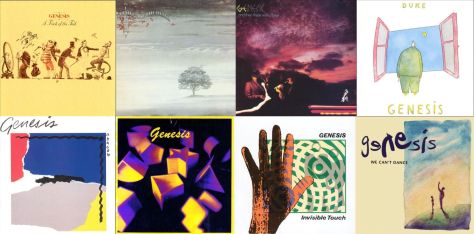
I just–as I was working on sociologist Robert Nisbet–watched and listened to Genesis, live in 1976, for the Trick of the Tail tour, with Bill Bruford on drums, and I was struck, yet again, by the beauty of the music and the vitality of the band. In some ways, they might’ve defined progressive rock.  That is, they might’ve been the quintessential prog band.

I also listened to Duke, which (aside from “Misunderstanding,” a song I despise) might also be one of those perfect (well, nearly) albums.  Thoughts?

Tad: I LOVE Genesis, in all of its incarnations. I consider their career to encompass three distinct groups or eras: the Gabriel years, the Hackett years, and the Collins years. If I consider each era on its own merits, there are many wonderful moments to enjoy in each one.

A small Genesis-related vignette: when I was 13 years old, my family spent a semester in Cambridge, England. My father had taken a sabbatical to do engineering research at the University there. I remember listening to Radio Caroline on a small transistor radio as I worked on my homework in the evening, and Selling England By The Pound was on heavy rotation on that pirate station. Even coming through the small, tinny speaker, I was struck by the exceptional music that flowed forth, and I was hooked.

When I was old enough to afford buying my own lps, A Trick of the Tail was one of the first I bought with my own money. I didn’t realize at the time that the vocalist on ATOTT was not the same as the one on SEBTP! “Dance On A Volcano” was one of the most challenging pieces of music my 14-year-old self ever encountered, but I loved it.

When Wind and Wuthering was released, I confess I wasn’t interested, because I was in my punk/New Wave phase (Ramones, Wire, and Elvis Costello!), and I had no time for prog rock “dinosaurs”. But then I heard “Turn It On Again” from Duke, and I thought, “This is something I can get into.” I bought the album and fell in love with the Phil Collins pop/rock juggernaut version of Genesis. 

So, to answer your question, yes, I think Genesis, unlike some other “big” groups of the ‘70s and ‘80s, will only grow in stature over time. Their curse in the ‘80s was to get so popular that they oversaturated the airwaves. Now that 29(!) years have elapsed, we have some space to objectively assess the quality of their music, and there are very few groups who consistently produced such challenging yet entertaining music.

What I found fascinating in your podcast conversation was the acknowledgement that the so-called “pop” releases in the ‘80s still contained some very sophisticated music.

Brad: Tad, I think our age difference is slight.  Abacab is the first album I bought from Genesis at the time of its initial release.  Then, I went back through the Phil Collins era, falling in love with And Then There Were Three especially. I can still remember listening to the tape I bought from Peaches in Kansas City and watching Bill Buckley (I’d never seen him before) on TV—Genesis and Buckley all in the same evening.

But, for me, 1981 was the year of Abacab and Moving Pictures.  They almost seemed to be two parts of a whole to my then young mind.  In 1982, I purchased Three Sides Live and, then, Duke.  I really liked Phil Collin’s first solo album as well. Indeed, I became as obsessed with Genesis as I was with Rush that year—beginning a life-long obsession with both. Soon, I had Trick of the Tail and Wind and Wuthering as well.  My debate colleague and one of my closest friends, Ron Strayer, and I used to listen to Genesis, over and over again, analyzing the lyrics and trying to figure out the song structures. We had every part of Genesis (1983) memorized, and we would shout out the lyrics as we drove around town in his yellow Toyota truck.

I have other odd memories as well—such as a video recording of Genesis in Concert, 1976, with Bill Buford as the drummer (mentioned above).  It appeared on USA network’s Nightflight, and I watched that so many times, the VHS tape began to fade.  I also had audio recordings of a few concerts that our local AOR station, Wichita’s KICT-95, often aired.  One of my prized possessions (which, stupidly, I sold) was the last release with Steve Hackett, an EP called Spot the Pidgeon.  

Funny what things stick in the mind.

I also remember the day Invisible Touch came out.  I had just received my college entrance letter (a huge thrill), and, for some reason, my high school girlfriend was put out with me because I wanted our date that night to be a serious listen of the new album!  She didn’t think that the highest form of a date, but I wanted to share that first listen with her.  Needless to write, she went home in a huff, somewhat disgusted by my priorities.

But, Tad, I’m not being very helpful in our discussion, just nostalgic. So, let me state—there was a reason Genesis meant so much to me. I loved both the seriousness and the playfulness of the band, and I often read things into the lyrics that might or might not have been there.  As a kid, I especially thought Abacab was full of hidden meanings, such as the title track being about someone committing adultery, or that the “Man on the Corner” was some kind of unrecognized prophet, or that Sarah Jane must be the kindest woman in the world. 

Ok, I’m still being nostalgic. . .

As to your question and comment regarding Genesis and pop.  I do think that once Steve Hackett left the band, the band became much more art rock rather than progressive rock.  After all, songs like “Lurker” and “Dodo” and, especially, “Mama,” should never have been hits!  They’re not pop, but they’re not prog, either.

Tad: Abacab is a very special album to me as well. I think the title track is one of the top songs they ever recorded. I also love “Man On The Corner”; it’s one of Collins’ finest vocal performances. When it was released, one of my college suitemates bought it in great anticipation. He was a big prog fan – listened to King Crimson, UK, Yes, and other British prog groups. When the Earth, Wind, and Fire horns came blasting out of his stereo on “No Reply At All”, he jumped up and yelled, “WTF is this?” and wouldn’t listen to another song. That’s how I acquired my copy of Abacab!

I also liked the tracks on the fourth side of American version of Three Sides Live. When I replaced my vinyl of that album with the CD, I was disappointed that they weren’t included. I loved “Paperlate”, “Evidence of Autumn”, and “Me and Virgil”. As a matter of fact, the only reason I bought the three-disc Platinum compilation was to have “Paperlate” on CD. I gave up ever finding a CD edition of the American album, when, lo and behold, a couple of months ago I found it in my favorite used record store!

It’s almost impossible for me to choose which album I think is better: Genesis or Invisible Touch. It depends on what mood I’m in, but I would probably give the nod to Invisible Touch. I think it more consistently excellent, even if songs like “Tonight, Tonight” are extremely dark. Genesis’ “Mama” has to be the most unlikely #1 hit ever released!

Here’s how I would rank the post-Gabriel era: 

  • A Trick of the Tail
  • Abacab
  • Invisible Touch
  • Genesis
  • Duke
  • Wind and Wuthering
  • And Then There Were Three
  • Calling All Stations
  • We Can’t Dance

The live albums I put in this order:

  • Three Sides Live
  • Seconds Out
  • The Way We Walk
  • Live Over Europe 2007

I also think the box set, Archives Volume 2 is essential.

I imagine you are outraged at my low ranking of And Then There Were Three, but I have had a hard time getting past the muddy production, and I’ve never been able to maintain interest through the whole set.

Brad: Tad, I’m not outraged in the least!  And, I’m in agreement with you about the rankings of the live albums, though I might switch one and two, depending on what day it is.

As to the studio albums, I would put them in this order:

  • A Trick of the Tail
  • Duke
  • Wind and Wuthering
  • Abacab
  • Genesis
  • And Then There Were Three
  • Invisible Touch
  • We Can’t Dance
  • Calling All Stations

We can definitely agree, Tad, that there’s a lot of aural excellence to be enjoyed!!

Tad: I could definitely move Duke up a few spots. Like you said, it depends on what day it is!

Regardless of how we rank these albums internally, I think it’s fair to say almost no other artist in rock has produced such consistently excellent music. I put And Then There Were Three relatively low among Genesis albums, but compared to other albums released in 1978, it is near the top. To my mind, only the Beatles show the same extraordinary quality control that Genesis had, and they were active for less than a decade. Genesis stuck together for more than 28 years! 

For our next dialogue, I think we owe it to Peter Gabriel to cover his solo career. Are you up for that, my friend?

A Sanguine Conversation on A Trace Of Memory

Sanguine Hum

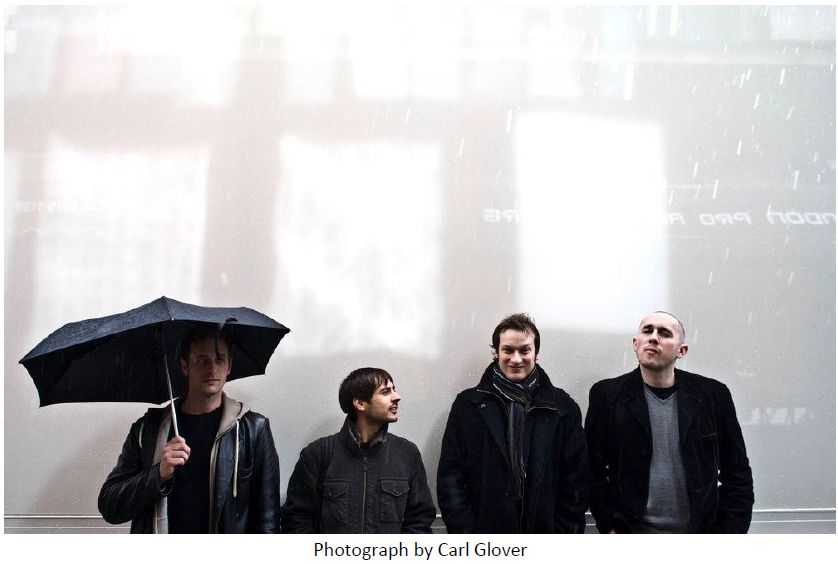
This latest back-and-forth on Spirit of Cecilia is dedicated to discussing the new Sanguine Hum album, A Trace of Memory. Join Editor-In-Chief Brad Birzer and Arts Editor Tad Wert as they discuss this fine collection of prog tracks.

Brad: Tad, we’ve been blessed with an abundance of prog for and in the second half of 2020.  COVID has its advantages.  Not many, of course, but it–or, at least, the resulting lockdown–has manifested itself as great works of prog art!  Just goes to show that even the nastiest things have their silver lining. I really enjoyed your review of Sanguine Hum’s latest, A Trace of Memory, and I’m wondering if we could talk about it a bit more.

From my perspective, this is pretty much a perfect album.  I think at one level, the music is simply fantastic–the flow, the energy, and the complexity. I think at another level, though, the vocals are sublime–in tone as well as in content. Sadly, I don’t have the lyrics in front of me, but they sound quite good.

Tad: Brad, I am so glad you chose this album for a dialogue. I enjoyed listening to your guest appearance on the Political Beats podcast covering the post-Peter Gabriel years of Genesis, and in it you stated that you considered A Trick of The Tail a perfect album. I agree with that assessment, and I agree with your calling A Trace Of Memory another perfect album! They are very different in tone, yet each is a perfectly sequenced, composed, and performed work. Where Genesis is more romantic – Ravel or Debussy-like – in their approach, Sanguine Hum comes from a more quirky and playful tradition – I am reminded of Stravinsky or Satie. 

I have loved Sanguine Hum’s music since their debut, Diving Bell. They have a knack for writing songs that are lengthy time-wise, yet never seem over-long. The 13-minute “The Yellow Ship” is a great example of this. My interest never flags for a second as I listen to it, and I have listened to it many, many times!

I think Joff Winks, Matt Baber, Brad Waissman, and Paul Mallyon (with Andrew Booker on two tracks) have an extraordinary amount of sympathetic understanding as they play. As I listen to this album, I don’t hear individuals playing music together; I hear one entity producing a glorious, melodic sound – that flow, energy, and complexity you mentioned.

Brad: I’d not made the connection between Stravinsky and Satie and Sanguine Hum.  I think you’re absolutely right, and I think it’s an excellent connection.

I’d be really curious to know how these guys write their music.  Do they each throw a piece in, thus forming a whole?  Or, does one member of the band compose things and allow the band to fill out that composition?  Or, do they just start noodling in the studio and then see how the songs emerge, spontaneously?  

Whatever technique the band uses, it works, and it does so very well. 

The intro track, “New Light,” especially lays out the tone of the album, pulling the listener into not just the song, but into all of A Trace of Memory

But, it’s the second track, “The Yellow Ship,” with its plaintive vocals that so appeals to the listener.  At least to this listener. It’s the best track of a perfect album.

“Thin Air,” track four, reminds me a bit of mid-period Radiohead, but, ultimately, proves more interesting than Radiohead. 

And, just when the band sounds like it might become imitative, it deviates and takes us into a new direction.  A perfect example of this deviation comes in track five, “Unstable Ground,” with its peculiar time signatures (that fit the title of the song) and ominous vocals.

One of the shortest songs on the album, “Still as the Sea,” actually feels as though we’re adrift in a boat, especially with the jazzy keyboards and guitar.

The driving power of track seven, appropriately entitled “Automaton,” is relentless.

Stepping back, though, I have to scratch my head.  Just what is it about this album that works?  Some of the appeal of the band comes from the distinctiveness of the keyboards and the guitar, as well as the intricacies of the drums and bass, but especially in their mutual interplay of all four on the album. 

Yet, for me, it always comes back to the melancholic vocals with Sanguine Hum. They’re good enough as a band to be purely instrumental, but who would waste those glorious vocals?

Tad: According to the press release, keyboardist Matt Baber says they wrote all of the music quickly in the summer of 2018. All of the songs credit Winks, Baber, and Waissman as writers, so I’m assuming it’s a joint effort, perhaps stemming from jam sessions. 

I agree that “The Yellow Ship” is the standout track; it may be the best thing they’ve ever recorded. I had not caught the Radiohead influence, but now that you mention it, it’s obvious! 

For me, Sanguine Hum has a unique combination of a jazz/art rock sensibility and wistful vocals, courtesy of Winks. He is definitely not a thunderous vocalist bellowing out high notes over crunching metal accompaniment. And yet, the gentle, almost hushed timbre of his singing conveys a lot of power. As a teacher, I’ve learned the trick of speaking quietly to gain and hold my students’ attention, and Winks’ vocals do the same thing for me.

As you said at the beginning of this conversation, 2020 has been an amazing year music-wise: Bardic Depths, Days Between Stations, Kyros, Gazpacho, Glass Hammer, and now Sanguine Hum have all released incredible albums. Spirit of Cecilia is going to have some interesting “Best Of 2020” lists!

Brad Birzer Talks Genesis

Beats

Our Founder and Editor-In-Chief, Bradley Birzer, is the guest on the latest episode of Political Beats. No, it’s not a podcast about politics, but rather political writers and pundits talking about music. And in this episode, boy, do they talk! Three and a half hours’ worth of conversation regarding the Phil Collins years of Genesis! You can find it on Apple Podcasts, Stitcher, and other podcasting platforms. Or, you can listen to it online by clicking here.