Category Archives: Music

The Sublime along the Grand: the Elora Gorge & Choral Evensong (To the True North, Part 2)

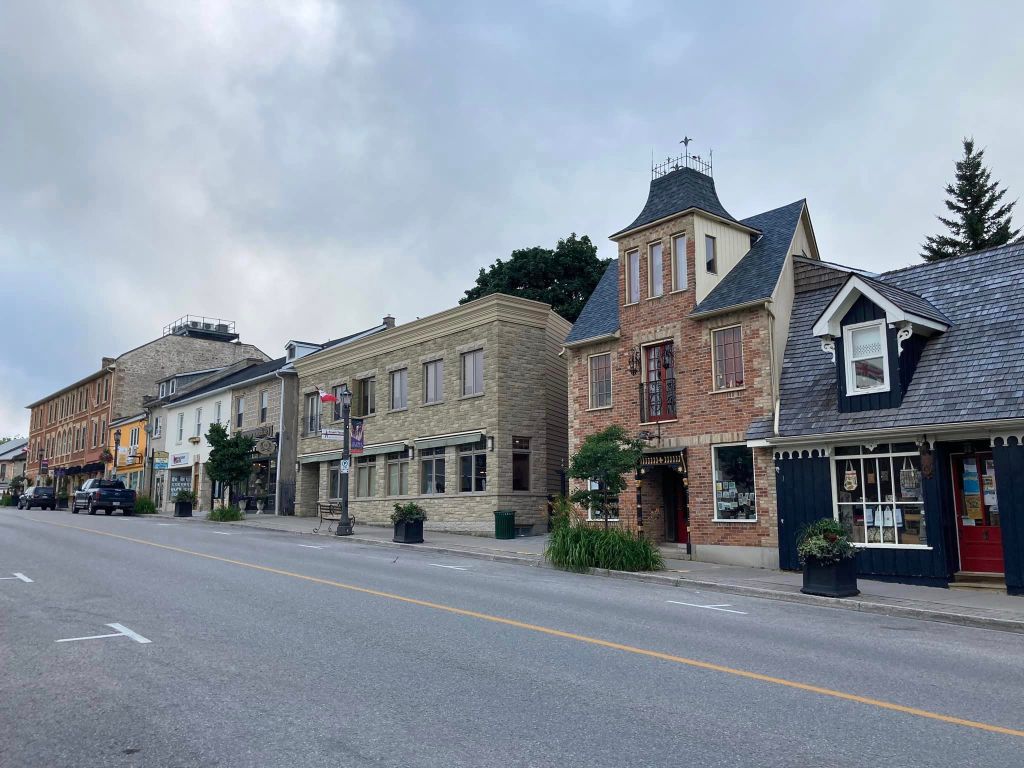
At first glance, Elora is a typical tourist-oriented village in Ontario’s Golden Horseshoe. Its town center sweeps downhill toward a historic mill on the Grand River, now the focus of redevelopment via a luxury hotel/spa complex. It boasts plenty of chichi boutiques, upscale brewpubs and posters about upcoming weekend festivals. A well-stocked local grocery store and the inevitable Shoppers Drug Mart speaks to the place’s practical streak; two enticing bookshops (one stocking new releases, one second-hand treasures) testify that food for the mind and soul are on the menu as well.

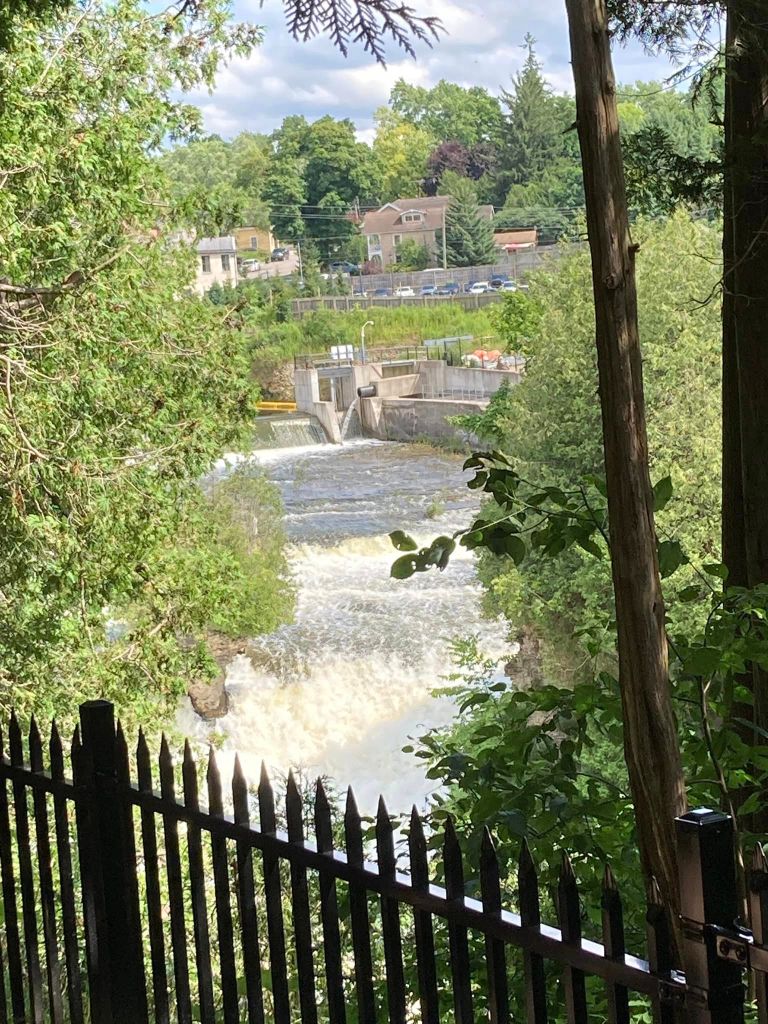
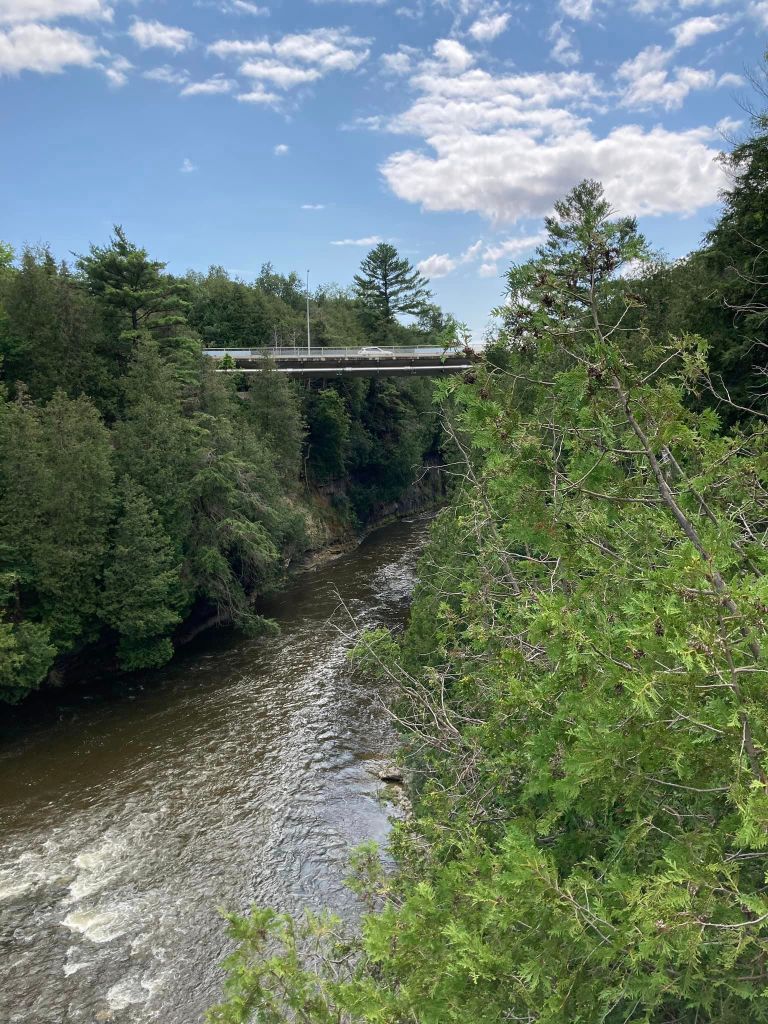
But taking the high concentration of limestone buildings in Elora as a clue reveals the true heart of its attraction. Just west of downtown, the Elora Gorge lies downstream from a 25-foot waterfall, its 72-foot cliffs towering over the path of the Grand for more than a mile. Whether viewing it from the village’s pedestrian footbridge, the elevated trails that wind through and around it, or down at the riverbank itself, the cliffs and crannies quickly bring the word sublime to mind.

Why? The Oxford English Dictionary definition states the substance of the sublime nicely:

Of a feature of nature or art: that fills the mind with a sense of overwhelming grandeur or irresistible power; that inspires awe, great reverence, or other high emotion, by reason of its beauty, vastness, or grandeur.

And that experience chimed perfectly with our day’s next activity – the final Choral Evensong of this year’s Elora Festival, held at the Church of St. John the Evangelist, less than two blocks from the Gorge. The past lies thick within St. John’s walls (constructed in 1875), from the communion set that Florence Nightingale donated to the parish’s first priest (on display behind the organ console) to what a church brochure calls its “strong history of liturgical worship and choral music.”

Led musically by the 21-strong Elora Singers, conductor Mark Vuorinen and guest organist Christopher Dawes, this Evensong unfolded in classic fashion: a long-established liturgical structure augmented with appointed hymns, psalms, readings and prayers. From the opening words of the ancient chant “To You, Before the Close of Day”, the congregation joined in with heart and voice as the choir processed to its stalls; the core texts of Confession, Creed and Lord’s Prayer were spoken with vigor and affection; a whimsical homily on Matthew 26 sharpened to a serious point, tracking remarkably well with Timothy Dudley-Smith’s hymn text on our daily callings “How Clear Is Our Vocation, Lord” (the text itself set to a robust tune by arch-British composer Charles Parry).

And throughout the service, we were given multiple tastes of the musical sublime, starting when Dawes’ rendition of Herbert Howells’ Psalm Prelude based on Psalm 33:3 (“Sing to Him a new song; play skillfully with a loud noise”) roared to life, filling the sanctuary with arresting, rhapsodic melody, thick, juicy chords and supple, flexible rhythms. Howells’ Evening Canticles for King’s College, Cambridge unfurled in similar romantic fashion, the Singers proving exquisitely sensitive to the musical and textual nuances. To quote the composer, in this Magnificat a humble Mary exalted her Son while the mighty were “put down from their seat without a brute force which would deny this canticle’s feminine association”; the Nunc Dimittis’ tenor solo (beautifully voiced by Singer Nicholas Nicolaidis) perfectly “characterize(d) the gentle Simeon” as he held the Christ Child and thanked God for His promised deliverance. So when the chorus and organ ramped up on each canticle’s concluding “Glory be to the Father”, the weight of praise seemed to encompass not just those in attendance, but the whole of creation, landing on “world without end, Amen” with breathtaking depth, substance and impact. But there was more!

Welsh composer William Mathias’ contrasting musical language –cheerful, quicksilver, rooted in a rumbustious sense of the dance — proved equally riveting on the anthem “Let the People Praise Thee, O God” (composed for the wedding of Prince Charles & Lady Diana Spencer and sung with joyous, sympathetic precision) and a closing organ Recessional so vivacious that it set toes tapping, even as the instrument’s festival trumpet echoed around, tumbling down scales like water streaming down the Gorge. It proved an exhilarating coda to the final hymn, “The Day Thou Gavest, Lord, Has Ended”. As John Ellerton’s stirring invocation of God’s presence in creation and the Church unrolled to Clement Schoefield’s majestic melody, the Elora Singers filled the center aisle with rich harmony and a soaring soprano descant to cap a worship service like few others I’ve experienced in my life.

In his new book Cosmic Connections: Poetry in the Age of Disenchantment, Canadian philosopher Charles Taylor explores the roots of what he calls “a language of insight”, a way of exploring “phenomena like value, morality, ethics and the love of art itself” beyond the reductive terms of mechanistic natural science that frame so much of our daily lives. I consider it a gift to have, on the same day, explored the language of Nature and the language of faith, in each instance pulled by the sublime toward a deeper connection with what has been before I was born and, Lord willing, what will continue beyond the hour of my death.

— Rick Krueger

To the True North!

Perhaps you might remember that, for twenty years now, my wife and I have been regular attendees at the Stratford Festival in Ontario, Canada. This week, we’re off to the north (and east) for another adventure in world-class theatre! But this time around, there’ll be additions to an already ambitious arts-going itinerary:

Now in its 45th season, the Elora Festival has established a reputation as Canada’s international choral festival, presenting world-class choirs and vocal ensembles over two weeks in July in the artists village of Elora, “Ontario’s most beautiful village”.

We’re looking forward to experiencing the Elora Festival for the first time, taking in these mouth-watering programs:

Then we’ll double back to Stratford – but before we settle into our theatre seats we’ll catch world-renowned Canadian pianist Angela Hewitt as she performs Bach, Beethoven, Scarlatti and Brahms (no pressure!) under the auspices of Stratford Summer Music.

And the plays on tap?

Watch this space for reviews and impressions, beginning later this week!

— Rick Krueger

In Concert: Bruce Hornsby Makes Noise in the Mandolin Rain

Bruce Hornsby and the Noisemakers with the Grand Rapids Symphony, Frederik Meijer Garden Amphitheater, July 11, 2024.

You know, you can’t wing it with an orchestra!

— Bruce Hornsby, fielding requests onstage

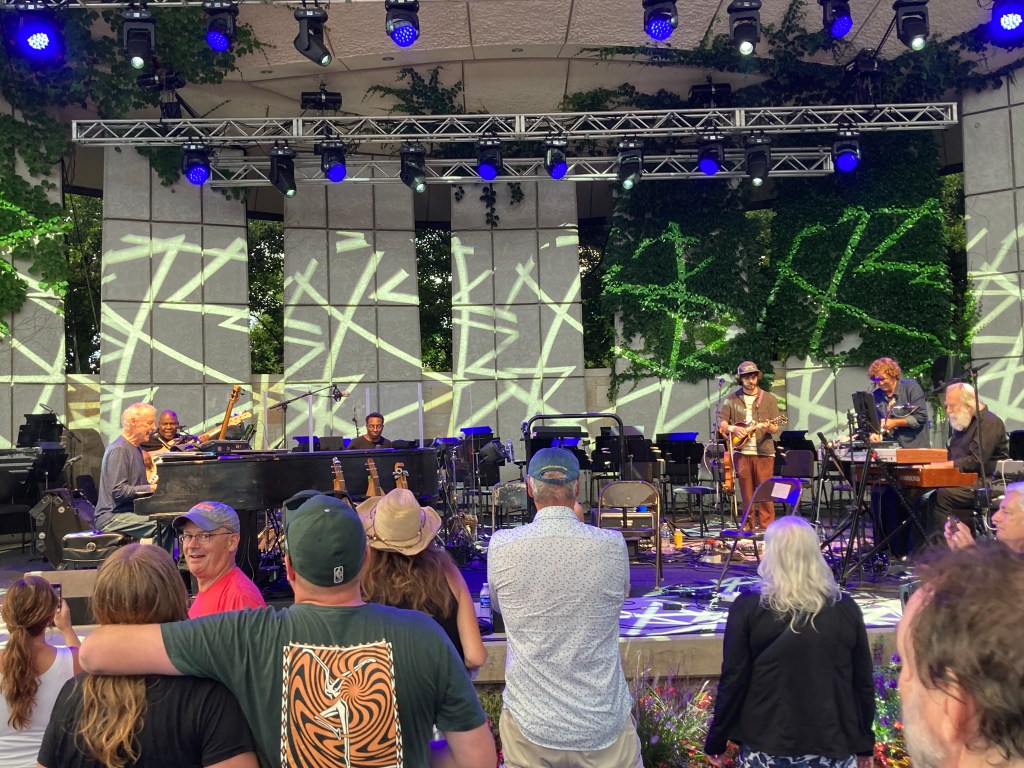
So far, so good: after a week where their shows were cancelled and rescheduled due to vocal troubles, Bruce Hornsby and his Noisemakers had hit the amphitheater stage. The Grand Rapids Symphony, ably conducted by Bob Bernhardt, were teasing out plush, precise orchestral backdrops for jauntily sardonic opener “Life in the Psychotropics”, Bon Iver collaborations “Cast Off” and “Meds” and a fresh, reflective arrangement of early hit “Every Little Kiss”.

The ballad “Here We Are Again” stood out as prime latter-day Hornsby: a haunting melody arching over extended harmonies and pointillistic piano/orchestral splatters, effortlessly meshed with lyrics unfolding a time-travel love story by way of cutting-edge physics. While Bruce’s singing had some rough edges, the performers were tuning in; the capacity crowd was listening raptly; the evening was gathering momentum.

Then the heavens opened: remnants of Hurricane Beryl that had been circling let loose persistent, soaking rain and uncomfortably close rumbles of thunder. As Hornsby launched into one of his solo piano hymns, management pulled the orchestra offstage. Calling an audible with the hit “Mandolin Rain”, Bruce then asked the audience to help with the high-pitched shout chorus he admitted he couldn’t manage; from his response, you could tell we’d covered it to his satisfaction.

And oddly enough, that was where the fun really started! Cued by the lyrics “listening to the bluegrass band”, John Mailander on mandolin and Gibb Droll on guitar served up a tasty breakdown, working off of Bruce’s hand signals and head nods; free associating on the playout, Hornsby served up an apropos snippet of early Paul McCartney: “That would be something/To meet you in the falling rain, mama”, indeed!

Then organist J.T. Thomas joined in the merriment for a groovily funky “Country Doctor”; unleashed from balancing with the orchestra, bassist J.V. Collier and drummer Chad Wright gleefully bumped up the low end up a notch. Even with Hornsby announcing a rain delay, from the eye contact and the smiles between all the musicians you could tell the Noisemakers didn’t want to call it a night.

The clouds and the rain stayed stuck in place, but after twenty minutes of roadies looking at the sky, checking weather apps, and bringing out multiple dulcimers, Bruce and the band came back to strut a bit more of their stuff: “Prairie Dog Town,” a outlandish mash-up of bro-country and hip-hop, followed by the streetball throwdown “Rainbow’s Cadillac” reimagined to the music of The Spinners’ “Rubberband Man”! “The Way It Is”, played straight up but stretched out with features by Mailander on fiddle, Droll, Thomas, and Wright served as an encore, a wry acknowledgment of circumstances beyond control, and a final showcase for what these superb players could do.

Ultimately, Bruce Hornsby and the Noisemakers made the best of a tough situation, keeping their drenched fans engaged until Meijer Gardens called a halt. With no tracks from the album they’re touring behind (1998’s Spirit Trail) and only a smattering of the symphonic goodies promised, the show certainly didn’t turn out as advertised; nevertheless, it turned out to be a surprising, satisfying night on the town.

— Rick Krueger

Bruce Hornsby, American Original

It’s been nearly forty years since pianist-singer-songwriter Bruce Hornsby had the number 1 song on Billboard’s Hot 100, the title track of his debut album, The Way It Is:

For all the ways this song fit right into the radio soundscape of the time — smooth drum machine propulsion, synthesized bass licks and string pads — two novelty factors made it stand out musically: Hornsby’s strong yet laid-back baritone, earnestly surveying our society’s gap between legal equality and ongoing, prejudiced perception; and his extended piano solo steeped in jazz, channeling the supple lyricism of heroes like Keith Jarrett. The man could unquestionably sing and play; and supported by his rootsy backing band The Range, he had no hesitation about going for his own sound, both in the studio and live.

More hits followed, but by the second time I saw Hornsby in concert in 1990 (the first live show I caught in my new hometown), the pop trajectory of his career was already tapering off. Still, as the hot new piano player on the scene, he’d already had a series of collaborations that yielded hauntingly lyrical recordings with Don Henley (“The End of the Innocence”) and Bonnie Raitt (“I Can’t Make You Love Me”) and pulled in stellar guests from the jazz, folk and bluegrass worlds for his third album with The Range, A Night on the Town. The single from that album “Across the River” (Hornsby’s last Top 20 hit) featured a spirited guitar solo by Jerry Garcia of The Grateful Dead; after Dead keyboard player Brent Mydland passed away unexpectedly that year, Hornsby joined the hippie legends for roughly 100 gigs — and the freedom from audience expectations he found in that band has been the guiding star for his musical path ever since.

Dissolving The Range, Hornsby consistently expanded the reach of his music in the 1990s — building extended jazz and bluegrass interludes into his new songs, writing in the idiom of classic soul a la The Drifters and Sam Cooke, recording with a head-spinning variety of all-stars from pop marquee names Phil Collins and Chaka Khan to killer players Branford Marsalis and Pat Metheny. Then came 1998’s Spirit Trail: with Hornsby sharpening his keyboard skills to master an intricate two-handed style and cracking open his Tidewater Country heritage for deepened lyrical content, the result was a double album of quirky, compelling character sketches set off by a dizzying variety of sonic frames — driving boogie-woogie, greasy funk, proto-classical minimalism, pensive Appalachian balladry — with fuller piano and grittier vocals at the forefront. To cop from another American original: the album was large, it contained multitudes.

Continue reading Bruce Hornsby, American Original

A Night at the Opry

“Country musicians first performed on radio in 1922, and, within a few years, radio stations initiated the first barn dances — ensemble variety programs with the relaxed, chatty atmosphere of a family gathering.”

— the Country Music Hall of Fame & Museum’s exhibit “The Dawn of Country.”

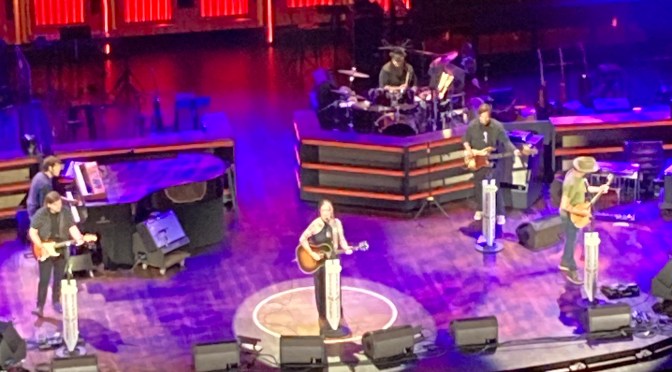
Heading south for our most recent vacation, we finished up in Nashville — and I wasn’t going to visit Music City without taking in at least one show. After catching Ringo Starr at the historic Ryman Auditorium proved prohibitively expensive, I pivoted to the spot all the travel guides (as well as local friends) had recommended in the first place — the weekly Saturday night performance at the Grand Ole Opry.

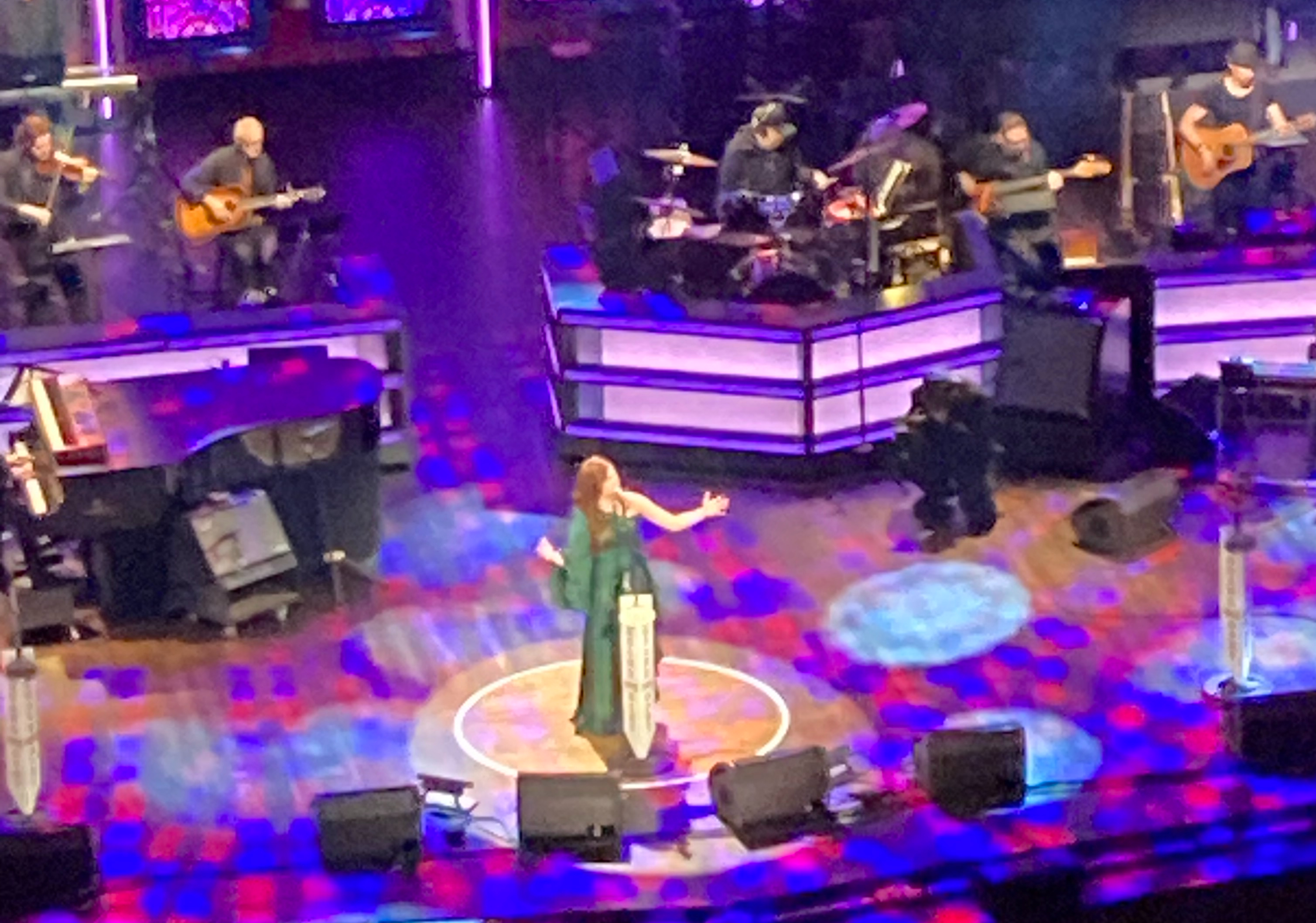
Make no mistake: coming up on its 98th year, the Opry is a well-tuned corporate machine, effortlessly parting multitudes from their cash with a smile — but it’s also an affordably priced, entertainingly old-school variety show. Broadcast live in multiple formats, the program consciously carries on traditions developed from its radio roots through country music’s ongoing breakout to the broader public (and if you’ve ever wondered where Garrison Keillor got the idea for A Prairie Home Companion, look no further). Regularly booking a mix of promising rookies and seasoned veterans, inviting rising stars to become “family members” and providing an environment open to impromptu guest shots and team-ups, the Opry deliberately claims a gatekeeper role, anointing a core of artists that cover a fairly broad spectrum of what country music is today. With no mass-culture superstars on the bill, September 23rd’s Opry was an enjoyable example of how all this works in practice.

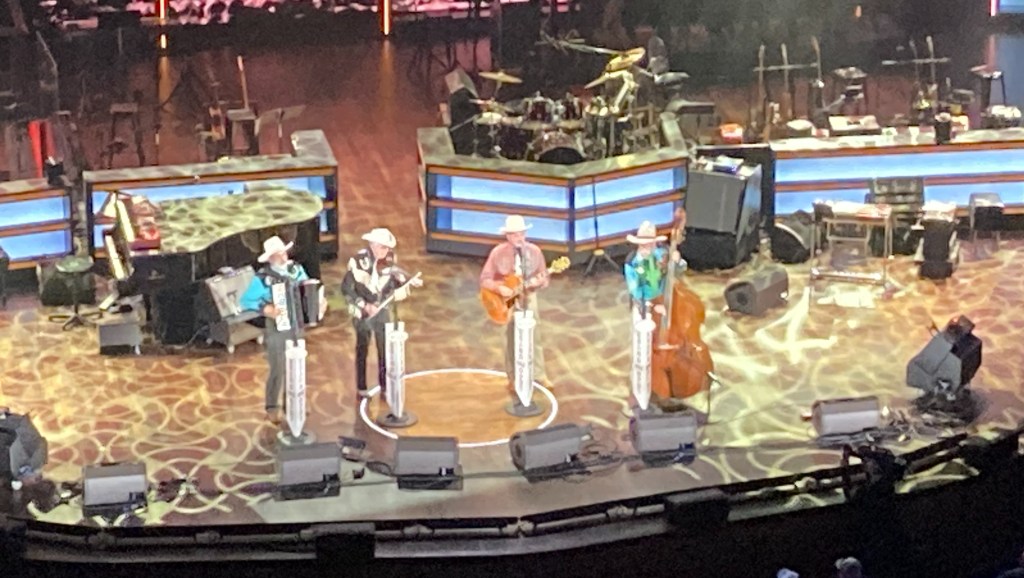
To kick it all off, throwback quartet Riders in the Sky stepped to the mikes, blending smooth harmonies and lively instrumental work into affectionate renditions of vintage cowboy songs and Western swing. There were plenty of corny antics, too; bassist Too Slim provoked fiddler Woody Paul into a face-slapping “Dueling Banjos” duet as guitarist Ranger Doug and accordionist Joey the Cowpolka King looked on in bemusement. (It’s no surprise that, in his true identity of satirical college journalist Fred LaBour, Too Slim convinced the counterculture that Paul McCartney was dead back in 1969.) But after we’d laughed ourselves silly, these long-time Opry members cooled us down with the gorgeous title track off their latest album Throw A Saddle On A Star, then whipped up a fiddle-focused hoedown for an exhilarating finish.

Making her second Opry appearance, vocalist Riley Clemmons was an engaging bundle of nerves, nearly beside herself with excitement that she’d been asked to return. But emotions of the moment and self-deprecating jokes about her advanced age of 23 aside, Clemmons was all business, making the most of her short set. An enthusiastic crooner in the Carrie Underwood mold, she put across her faith-based songs “Church Pew” (her new album’s title track) and “Jesus Cries” with plenty of heartfelt sentiment, ably backed by the Opry’s onstage band and backup singers.

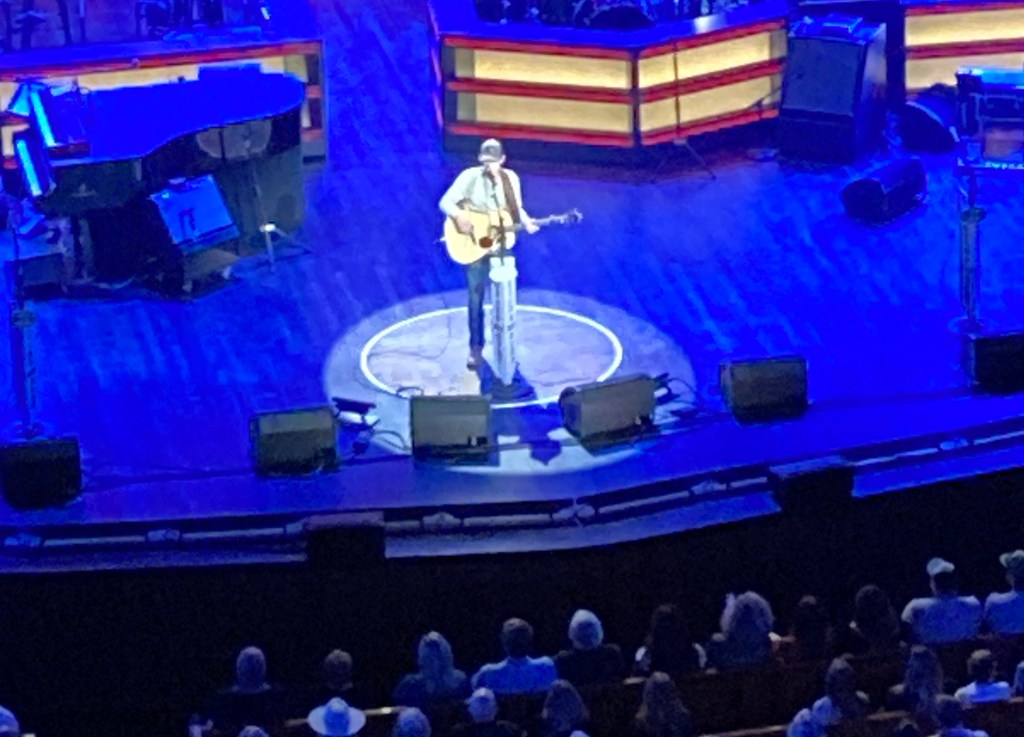
20-year-old singer/guitarist Sam Barber was next up, the first of two debut performers taking the leap from streaming services to the Opry stage. Exhibiting raw yet remarkably well-honed talent, Barber’s unsoftened Missouri accent (complete with occasional growl from the gut) and his determined strumming on “Straight and Narrow” (the first song he wrote, at the age of 16) grabbed the audience hard and strong in his acoustic solo slot.

Recent Opry inductee Charlie McCoy, one of those multi-instrumental Nashville cats who’s played on albums by everybody (Elvis, Dylan, Willie & Waylon, etc. etc. ) in the course of 12,000 sessions, brought the first half of the show to a rousing finish. After laconically drawling a humorous ditty about the consequences of “Thinking with My Heart” (“A heart doesn’t know how to figure out/ Whether to run or to jump/It ain’t got a clue; zero IQ/After all it’s just a pump”), McCoy pulled out his trademark harmonicas for a lyrical film score excerpt, then a lightning-fast “Orange Blossom Special” that nearly left the band eating his dust — and left the audience hungry for more. Cue the intermission!

Continue reading A Night at the Opry

North Atlantic Oscillation’s United Wire

United Wire

A favorite music artist of ours is North Atlantic Oscillation. This Scottish duo have created an utterly unique and beautiful sound that manages to combine Beach Boys harmonies, Radiohead melodicism, and shoegazer walls of sound. They recently released their fifth album, United Wire, and it is a triumph. With songs varying from hushed, angelic voices to dissonant-yet-attractive noise, it is another reason why NAO are unparalleled in their ability to meld disparate musical elements into a stunning and immensely satisfying listening experience.

Once again, Brad Birzer and Tad Wert take some time to share thoughts on a much-loved group:

Tad: Okay, Brad, I have been smitten with North Atlantic Oscillation since their debut album, Grappling Hooks. As a matter of fact, it was my favorite album of 2010! And rather than succumbing to the dreaded “sophomore slump”, I thought their second album, Fog Electric, was even better. The Third Day maintained the high quality of their music. I should probably mention Sam Healy’s excellent solo 2013 record, Sand, which, for all intents and purposes, sounds like an NAO album to me. 

They left KScope Music and released Grind Show in 2018, which was a bit of a disappointment. Their consistently excellent releases up to that point, and the tremendous growth they exhibited must have spoiled me! Grind Show, while good, didn’t blow me away like every other album of theirs. So it was with some trepidation that I bought United Wire. I needn’t have worried; this is a tremendous return to form, in my opinion. What are your thoughts on it?

Brad: Dear Tad (how’s that for a traditional introduction?), I love doing these with you, my friend.  If anything, I worry that I’ll bug you too much about such dialogues!  I could definitely do one or more a week over the next year.

That said, you bring out the best of me.  

And, for all you readers out there, Tad may have formally introduced himself under the “Tad:” bit, but he actually wrote the intro (above) to this piece as well, and I can’t think of a better way of introducing the true beauty and excellence of NAO than what he typed: “utterly unique and beautiful sound that manages to combine Beach Boys harmonies, Radiohead melodicism, and shoegazer walls of sound.”  In a million years, or armed with 1,000 monkeys and their typewriters, I could not have captured the band so perfectly.

I will also admit this as well, I love Sam Healy, and it’s incredibly hard for me to be objective about him.  Granted, I don’t know him well personally, but he and I have corresponded a bit, and I think he’s just freaking brilliant.  

And, generous.  An example: I tried like mad to purchase a copy of the latest release, United Wire, through the internet, and the site continuously rejected my credit card (for those of you who don’t know me, I’ve been employed by the same place since 1999, and my wife also has an income–we’re not un-well off!) repeatedly.  I mentioned this to Sam on Facebook, and a few weeks later, I found a copy of United Wire waiting for me in my Michigan mailbox. Gratis!

And, what happened?  On the first play, I fell in love with the album.  Several weeks later, it’s still in constant rotation, and I think the world of it.  Whether it’s NAO or SAND, Healy knows music.  He lives it, and he breathes it.

Tad, I must admit–we, for once, disagree on something–I really liked Grind Show.  I didn’t think it was as good as the first three NAO albums, but I definitely liked it.  For me, though, at least prior to United Wire, the true masterpiece, a PROG MUST OWN, was Fog Electric.  To me, one can’t consider him or herself a fan of progressive rock at all without actually loving Fog ElectricGrappling Hooks was brilliant pop (in the Tears for Fears vein), but Fog Electric was pure prog.

When Fog Electric first came out, admittedly at first, I didn’t get it.  Then, Kscope re-released it, and I was utterly blown away by it.  I would consider it, for me, a top fifteen ever rock album.  That is, going all the way back to Bill Haley and the Comets, NAO’s Fog Electric is one of the top fifteen albums of all time.

So, Tad, what do you think of NAO album no. five, United Wire?

Tad: Brad, I love United Wire. My credit card worked (ha!), and I bought the CD through MusicGlue, which also included a digital download. One of the options is a “merged” version, which has all of the tracks merged into one long one. I think that is the way NAO intended for the album to be listened to, and I really like it.

Matryoshka is my favorite track. It begins with a distorted and processed voice over a mechanized beat, and then it transforms into a beautiful piano-based coda that I wish would last forever. Then the distortion tries to take over again, but the piano wins in the end.

Brad: Tad, I’m not sure I have a favorite track.  I love the whole damned (sorry for the expletive) thing!!!!  I would agree with you that Sam intentionally made the bandcamp release (which I bought)  one long track.  The album really, really works.  As in, really, really, works!

Tad: Oh, I agree. As I mentioned earlier, I think the way we’re supposed to listen to it is as one continuous suite of songs. Sam Healy is a musical genius when it comes to composing melodies and arranging instrumental accompaniment. At first listen, you think there is something wrong with the tape speed, then you realize it’s been deliberately slowed down and sped up. And it works! Drum and percussion bang out frenetic beats while angelic vocals float serenely above the chaos. Underpinning everything are electronic ambiences that sometimes come to the fore, but usually remain in the background. There are layers and layers of sound that keep the music endlessly fascinating.

Well, I think we’ve made clear our love for this band in general and this album in particular. You can purchase your own copy of it at MusicGlue or BandCamp.

The Pineapple Thief Finds Their Way

TPT How Did We Find Our Way

The Pineapple Thief has just released a huge box set that reissues its first five albums along with two bonus albums. It’s entitled How Did We Find Our Way, and it includes remixed and remastered versions of Abducted At Birth, One Three Seven, Variations On A Dream/8 Days, 10 Stories Down/8 Days Later, and Little Man. There is also a Blu-ray disc that has 5.1 and Atmos mixes of seven albums. The discs come in a beautiful 64 page hardcover book with enlightening notes for every album from Bruce Soord, Jon Sykes, and Steve Kitch, as well as reminiscences of the band’s early years by French journalist Julien Monsenego.

Brad Birzer and Tad Wert are so excited about this release, they decided to do a joint dialogue/review:

Tad: Brad, it’s good to be doing another music review with you! 

I already had all the albums in this set from the versions KScope Music released earlier. However, based on the fact that there are quite a few unreleased bonus tracks in this new set, as well as the surround sound mixes, I bit the bullet and bought it. I have to say, I do not have any regrets! The new mixes are fantastic – they really open up the soundstage and allow every instrument to be heard clearly. What led you to splurge on it?

Brad: Dear Tad, my friend, it is great to be doing these reviews with you again.  Too much time has elapsed since our last such outing.  I blame myself–the summer has been wonderfully crazy.  Wonderful, but crazy!  Anyway, very glad we’ve got the band–so to speak–back together.

I’ve been a huge fan of The Pineapple Thief and Bruce Soord ever since Tightly Wound came out in 2008.  That was my introduction to Soord’s music.  So, coming up on fifteen years now.  That album, pop rather than prog, demonstrated to me the brilliance of Kscope.  I thought (and still think) that Soord created a genius album, a pop masterpiece, with Tightly Wound.  From there, I began to explore The Pineapple Thief’s music, going backwards in time.  Much to my joy, I found that I loved everything the band had done up to that point, but I was especially taken with One Three Seven and What We Have Sown (not included in this package).  Little Man, too, really grabbed me.  You might remember that 3000 Days came out right after Tightly Wound.  Though I’m not generally a “greatest hits” or compilation kind of guy, I loved 3000 Days, and it certainly introduced me to the best of Soord’s music. 

As to How Did We Find Our Way. . . I actually own all the early The Pineapple Thief cds as well, but I was happy to spend the money on these remixed and remastered versions, and I especially wanted the blu-ray.  So, I asked for the set for Father’s Day!  What are dads for???

Let me also state, at this point in our dialogue, that I absolutely love Kscope’s packaging.  When Porcupine Tree released their latest last year, I was sorely disappointed that they went with a company (Sony) other than Kscope.  I bought the album, of course, and I loved it, but I was very disappointed with the packaging.  Kscope, though, always does things with excellence, and I now have a very tidy collection of releases in this earbook (is this the right term) format from Gazpacho, The Pineapple Thief, and others.

Tad: Brad, it looks like our Pineapple Thief experience is remarkably similar. I too first heard them via KScope’s release of Tightly Wound, and I enjoyed it so much I sought out their earlier releases.

Okay, on to the current set: as I mentioned earlier, I think it’s worth buying just for the new mixes. In addition to them, though, we also get to hear all of these classic albums in 5.1 mixes, which is wonderful! I spent an entire afternoon reading and listening to them, and it was as if I was hearing them for the first time.

Also, there are quite a few very good bonus tracks that were not included on any of KScope’s reissues. One of my all-time favorite songs of Soord’s is Watch the World Turn Grey, which was included on the infamous 12 Stories Down – the album that Soord quickly pulled from the market because of mastering issues. It’s a beautiful little gem of a song that, for some reason, he never included in any reissue or compilation.

In the liner notes, Soord mentioned that, while going back and remixing his back catalog, he had neglected some songs that were actually quite good. Yes, Bruce! I’m glad we now have a complete set of early TPT tunes.

Speaking of the liner notes, I learned so much about the early history of The Pineapple Thief. I was really surprised to discover that the first three albums were basically solo albums recorded in his home. In the original albums’ credits, he made up names of musicians to make it look like The Pineapple Thief was a real group!

When Variations On A Dream was reissued by Kscope, I reviewed it on Amazon, and I wrote that Soord’s music would appeal to fans of minimalist composers like Steve Reich, Philip Glass, and Arvo Part. Sure enough, in his commentary here for that album, he says that seeing an ensemble performing some Reich compositions was an important formative experience for him.

Before this set, if I had to pick a favorite early Pineapple Thief album, I would go with Variations On A Dream. However, after my marathon listening session, I am now thinking Little Man is the best. It takes on real emotional heft for me, now that I know the context in which it was written and recorded. In his commentary, Soord explains it was put together in the aftermath of the tragic loss of his prematurely born son. 

Are you able to pick a favorite, Brad?

Brad: Tad, thanks so much for your enthusiastic and very interesting response.  Great that we came to the band at the same time.  Obviously, the band’s switch to Kscope introduced them to an entirely new audience.

You ask what my favorite album is.  I must admit, I’m not entirely sure.  I’ve been listening to these albums for at least fifteen years, so they kind of have become just a part of my life, at least autobiographically speaking.  Re-listening to them again, especially in this new package, I find that I’m still relatively neutral when it comes to ranking them.  That is, they all seem rather extraordinary to them. 

Of this new set, though, I can state unhesitatingly that my favorite music are/is the “leftover” albums–Eight Days and Eight Days Later.  I love the idea that Soord spontaneously recorded each of these after finishing massive album projects.  There’s something deeply special, original, and wholesome about music so created.  It’s almost like giving rock a jazz-sheen.

Before we finish this review and dialogue, I also want to note that I’m a rather proud The Pineapple Thief fan.  This set shows that Soord was inventive from the beginning and that he possessed, again from the beginning, an immense amount of integrity.  It makes the more recent albums–I especially love Your Wilderness–shine even more.  Truly, Soord has progressed, but really from excellence to excellence.

Tad: I agree that there is something very fresh and endearing about the Eight Days and Eight Days Later albums. In my aforementioned Amazon review from many years ago, I made the same point. Soord seems to work well under pressure, when he isn’t able to “fix” every little detail of the songs. I think that works to their benefit.

Brad, thanks again for resurrecting with me our dialogues on music. And thank you, Spirit of Cecilia followers for reading! We are already planning to discuss the recently released North Atlantic Oscillation album, United Wire, so stay tuned for that!

Kite Parade’s Retro Is Great From The Get-Go

Retro

Kite Parade is a project of multi-instrumentalist, singer/songwriter Andy Foster, and Retro is the second album from them. I always enjoy discovering new artists that immediately hit that pop/rock/prog sweet spot such as Jonas Lindberg & The Other Side, Frost*, or Lifesigns, and Kite Parade is an admirable addition to that elite list.

Right off the bat, the first song, Retro, evokes the best of ’80s rock with a pulsing synthbeat while snippets of TV ads play in the background. Foster’s vocals remind me a little of Kyros’s Adam Warne. He has an unerring sense of melody throughout the song that had me hitting replay several times. 

Speed of Light, the second track, kicks off with a funky bass groove and propulsive melody that reminds me of classic OSI (Office of Strategic Influence). The brief loping guitar solo midway through is excellent and sets things up for the final, exhilarating chorus. Both Nick D’Virgilio and Joe Crabtree play drums on the album, and it sounds like D’Virgilio is playing on this song.

The next track, Wonderful, is the single (scroll down to watch the official video), and at first I thought it was a letdown from the joyous pop/rock energy of the first two tracks. It starts off sounding like many a generic ballad, but it slowly builds energy throughout. Then, at the 2:50 mark, Foster puts a nice twist in the melody that takes the song to an entirely new level. Keys and guitars trade solos, adding layer upon layer of sound that make this a standout song. Great choice for a single, guys!

The next two songs, Shadows Fall and Under the Same Sun, continue the winning streak. The former is a mini-epic, clocking in at more than 9 minutes. However, Foster’s gift for providing endless musical hooks makes the time fly by. 

Retro closes with the 14+ minute-long Merry-Go-Round, which deftly avoids any “hmm, how much longer?” thoughts in the listener. As a matter of fact, the entire album is such an enjoyable experience, I listened to it three times in a row without a break.

We’re almost a third of the way into 2023, and so far Retro is my favorite album. It’s a perfect mix of, well, retro synths, catchy melodicism, tasty guitar riffs, and pleasing vocals. If you’re looking for some nice ear candy with a prog rock feel, you can’t do much better than Kite Parade.

Jazz for Record Store Day 2023 – Zev Feldman’s Quest Continues

Record producer Zev Feldman hasn’t slowed down one bit since we checked in with him about this time last year. For this year’s Record Store Day (Saturday, April 22nd), Feldman’s fingerprints are on no fewer than six releases of consistently excellent archival jazz — on four different labels, no less! All will be available on LP in limited quantities only at participating stores, beginning on RSD. CD and digital release dates vary; purchase links are included in the titles below.

Three of these releases come from the vaults of Baltimore’s Left Bank Jazz Society, which sponsored concerts by a multitude of great musicians for 50 years starting in 1964; two of them are the latest in a series from Cory Weeds’ Vancouver-based Reel to Real Recordings. On Bish at the Bank: Live in Baltimore, pianist Walter Bishop Jr. leads a quartet of first-class players — including saxophonist/flutist Harold Vick, bassist Lou McIntosh and drummer Dick Berk — through sets from 1966 & 1967 marked by thrillingly extroverted, thoroughly satisfying interplay. Confident and crisp, Bishop and his bunch leave a distinctive, sparkling mark on standards, blues and a hefty chunk of Miles Davis’ repertoire, based in classic bebop stylings but stretching the idiom to a John-Coltrane-tinged probing of “Willow Weep for Me” (complete with soprano sax).

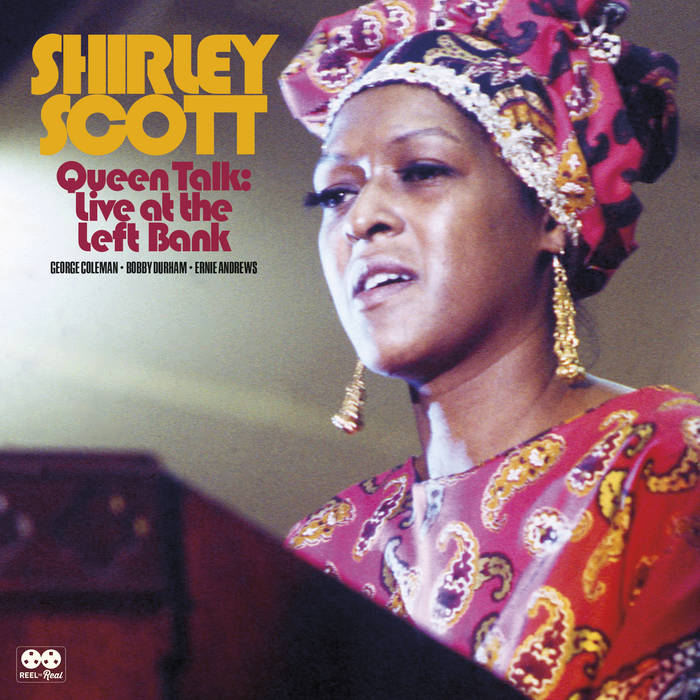
If Bishop’s music sparkles, organist Shirley Scott’s Queen Talk: Live at the Left Bank positively sizzles! Playing a classic Hammond B-3 (and providing her own bass lines on foot pedals) for this 1972 date, Scott, backed by George Coleman on tenor sax and Kenny Dorham on drums, leaps out of the gate ablaze on Coltrane’s “Impressions”, lays down smoky grooves that ground the contemporary hits “Never Can Say Goodbye” and “By the Time I Get To Phoenix”, and steps out in high style for the standards “Witchcraft” and “Like Someone in Love”. And when vocalist Ernie Andrews joins the party towards the end, full-fledged testifying breaks out and the blues prevail.

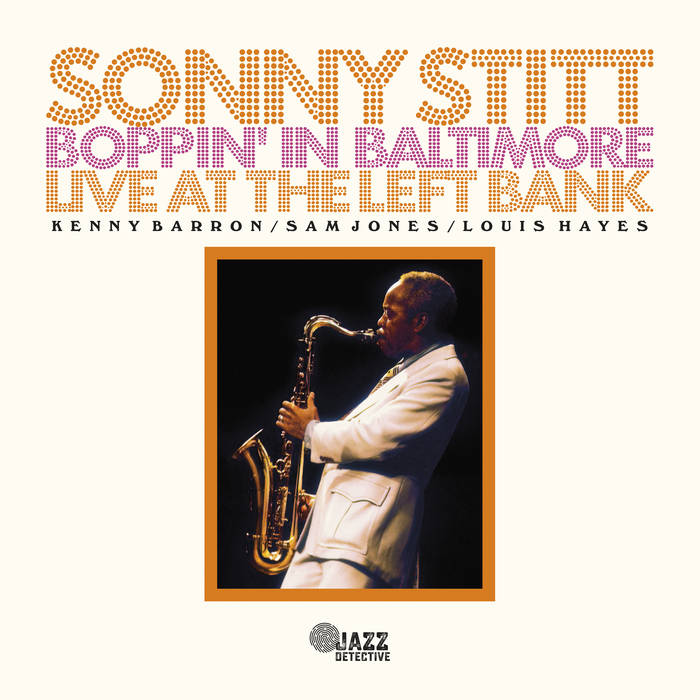
The third Jazz Society show, Sonny Stitt’s Boppin’ in Baltimore: Live at the Left Bank, is being released through Feldman’s new Deep Digs Music Group, on his fledgling Jazz Detective label. A giant on both alto and tenor sax, Stitt took the legacy of Charlie Parker to new heights of innovative expression; for this 1973 set, he brings a sweet, dancing touch to ballads “Lover Man” and “Stella By Starlight”, digs into the challenging changes of “Star Eyes” and “They Can’t Take That Away from Me” and turbocharges multiple 12-bar hard bop workouts. The veteran rhythm section of Kenny Barron on piano, Sam Jones on bass, Louis Hayes on drums meets the challenge of keeping up with Stitt with energy to spare, prodding his creativity onward and upward while asserting a presence all their own. Exhilarating stuff!

The other Jazz Detective release, Blue Room: The 1979 VARA Studio Sessions in Holland, provides an evocative distillation of the magic trumpeter/singer Chet Baker could conjure, taken from two Dutch studio sessions. Given room to explore on Wayne Shorter’s bossa nova “Beautiful Black Eyes” and the title ballad, Baker’s tone is rich and his improv work a thing of genuine beauty; his dashing up-tempo takes on “The Best Thing for You” and “That Old Devil Moon” build delightful momentum; and his vocals on “Oh You Crazy Moon” and “Candy” are finely shaded, with pensively inventive scat episodes. A variety of players provide empathetic backing; Phil Markowitz’s interactive piano and Jean-Louis Rassinfosse’s sturdy bass stand out.

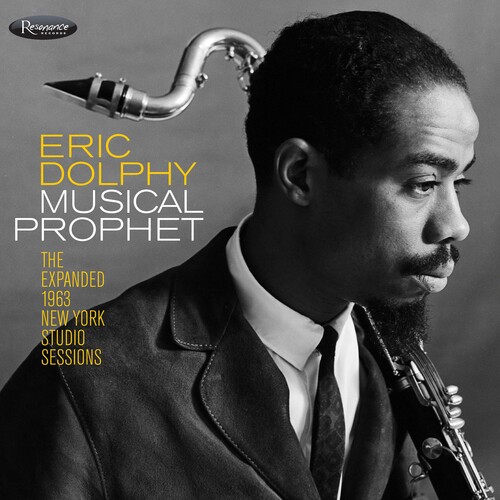
In lieu of a new release, Resonance Recordings (where Feldman made his initial impact and continues as Co-President) is offering a second LP edition of Eric Dolphy, Musical Prophet: The Expanded 1963 New York Studio Sessions. A fellow traveler with cutting-edge players such as Coltrane and bassist Charles Mingus, Dolphy brought a refined yet pungent new voice to the alto sax, flute and bass clarinet. This comprehensive set includes the solo albums Conversations and Iron Man (recorded by Jimi Hendrix’s future producer Alan Douglas with an all-star session group), plus outtakes and “A Personal Statement”, a flamboyant neoclassical piece by future smooth-jazz stalwart Bob James (?!?). Fusing primal hollers and sophisticated dissonance into a spicy musical gumbo, Dolphy was deprived of appropriate recognition by his early death; this multifaceted compilation lays out his unique contributions to jazz for all to hear.

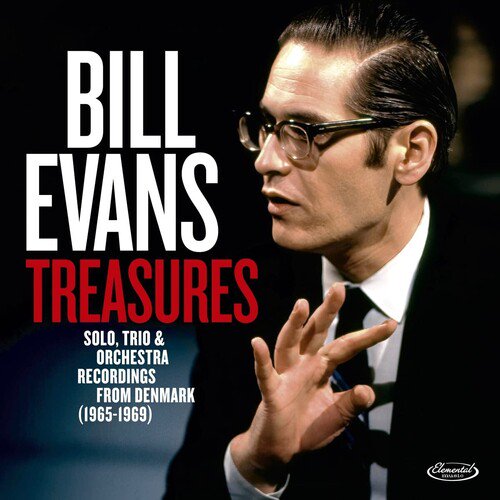
The final Feldman RSD release, Bill Evans’ Treasures: Solo, Trio & Orchestra Recordings from Denmark (1965-1969) on Elemental Music, was not yet available for review — but based on previous finds like 2020’s Live at Ronnie Scott’s and last year’s Morning Glory and Inner Spirit, it should be another winner. Kudos to Zev Feldman and to all involved for the cornucopia of great jazz from the past that makes every Record Store Day an eagerly anticipated event, and will enrich fans of the music for years to come.

— Rick Krueger

In Concert: The Maria Schneider Orchestra Looks Up – and Soars

The Maria Schneider Orchestra presented by The Gilmore Festival, Chenery Auditorium, Kalamazoo, Michigan, March 12, 2023.

On the final date of a tour celebrating both a Pulitzer-Prize nominated album (2020’s masterful Data Lords) and 30 years together, composer Maria Schneider and her 18-piece jazz orchestra got down to business with aplomb and obvious delight. Launching “Look Up” (featuring supple, soaring trombone from Marshall Gilkes and Gary Versace’s lyrical piano), the MSO quickly gathered itself and swung hard, from a hushed opening through yearning, full-bodied ensemble passages into the charming reggae-tinged coda. It proved an inspired invitation into Data Lords’ contrasting aural portraits of disc 1’s grim “The Digital World” and disc 2’s expansive “Our Natural World”, and the Gilmore Festival audience, at this outlying event from an organization usually devoted to keyboard music of all genres, ate it up.

Pivoting to the dark side with the sardonic, Google-themed “Don’t Be Evil” (“and they can’t even live up to that low bar,” Schneider commented) bassist Jay Anderson set up the mocking tango pulse, Ben Monder spun out a fiercely rocking web of guitar, trombonist Ryan Keberle peeled off growl after growl, and Versace took the mood from pensive meditation to harried protest as the orchestra built menacing riffs behind them all. In the title role of “Sputnik,” baritone saxophonist Scott Robinson ran through an astonishing gamut of melodies, textures and sounds, feeling his way into orbit through the barbed obstacle course of his bandmates’ hypnotic, obsessively repeated laments. Throughout the afternoon, Schneider’s compositions proved gripping and brilliantly tailored to her players, while her conducting brought the music’s sure-footed rhythms and the group’s precision-tooled backgrounds into pin-sharp focus.

Flipping back to the natural world, soprano saxophonist Steve Wilson conversed with Johnathan Blake’s percussion (including wood-fired pottery?!?) and Julien Labro’s accordion on the pointillist “Stone Song”, with Schneider cueing gleefully off-kilter orchestral hits. Halfway between the two domains, tenor saxophonist Donny McCaslin (best known, along with Monder, for his playing on David Bowie’s Blackstar) attempted contact in the tense, Morse code-based “CQ CQ Is Anybody There?” — only to be answered by the dissonant howls of Greg Gisbert’s distorted trumpet, wickedly role-playing as artificial intelligence. During these works, the orchestra and Schneider listened hard to each soloist, visibly reacting to particularly special moments of improvisation, and shaping their support to match the fleeting moods.

Release followed tension quickly, via the throwback chart “Gumba Blue” from the MSO’s debut album Evanescence (with features from Gisbert, tenor saxophonist Rich Perry and Versace). Then the highlight of the afternoon: Schneider’s setting of the Ted Kooser poem The Sun Waited for Me” (originally written for soprano Dawn Upshaw and classical orchestra) translated stunningly into the big band idiom, with Gilkes and Labro “singing” the now-wordless melody while McCaslin pirouetted above, below and around lush ensemble backings that mutated from classical chorale to gospel groove. A ravishing experience!

But then, Schneider took the mike: “Can you handle this? This is about the annihilation of humanity at the hands of artificial intelligence . . . Sometimes it feels good just to face these things head on!” Cue the jittery, pulsating title track of Data Lords, with trumpeter Mike Rodriguez and alto saxophonist Dave Pietro raging against the dying of the light, and Schneider stoking the Orchestra’s encroaching singularity to a fever pitch in a shuddering apocalypse of a climax! Good thing we wanted an encore; Schneider decided to leave us with “something peaceful”: “Sanzenin”, a final vista from the natural world, with Labro fluttering over the Orchestra’s muted portrayal of a Japanese garden.

In sum, the overall impact of the MSO was overwhelming. Schneider’s thoughtfully crafted tone poems, her intense focus and leadership, her orchestra’s breathtaking ensemble playing and consistently creative, exciting solo work made for a musical experience that was visceral, invigorating, moving and beautiful in the highest sense of that word. Only the Bach Collegium Japan’s 2003 Saint Matthew Passion and King Crimson in Chicago in 2017 have been more powerful live shows for me. If you want to experience this one for yourself, I heartily encourage you to pay what you want and livestream the concert between now and April 12th!

— Rick Krueger