Category Archives: Music

Placing a Transatlantic Call

In the latest Spirit of Cecilia dialogue, Editor-In-Chief Brad Birzer and Arts Editor Tad Wert exchange thoughts on the massive set of new releases from progrock’s supergroup, Transatlantic. There are several different versions of The Absolute Universe (you can check them out here), and each one has its own charms.

Brad: Tad, I just finished watching the Transatlantic Roine Stolt interview (available on Youtube as a part of a series), and I couldn’t help but think of you.  I also couldn’t help but think–yet again–what a grand gentleman Stolt is. So interesting and intelligent. Prog musicians are articulate in general, to be sure, but Stolt is exceptional even among exceptional people. Does my soul good. He is, truly, The Flower King. 

I know that you like the new album(s), The Absolute Universe, from Transatlantic, and I very much do as well.  Indeed, I’m rather in love with the extended edition, and I’m growing very fond of the abridged version as well.  The more I listen to each, the more I realize how different (and yet so complementary) each is to the other.

What’s interesting to me is that from the opening minute, you know it’s a Transatlantic album.  There’s something about the instruments, the voices, and, especially, the energy that is uniquely Transatlantic.

As I’ve been devouring the new album(s) and anticipating the massive box set on its way in three or so weeks I’ve been waxing nostalgic.  I bought the first Transatlantic album, SMPTe, shortly after it came out.  A student (now a colleague in the philosophy department) had lent it–along with Flower Power by the Flower Kings–to me, and I was immediately taken with both.  Since then, I’ve bought every Transatlantic album–studio and live–as they’ve come out.  In many ways, my last twenty years have, in some way, been shaped by Transatlantic.

Then, of course, there’s the distinctive Transatlantic art.  The great Transatlantic ship is wonderful, and the band has, probably, the best font for any band since Yes’s classic signature.

Tad: Brad, you and I are on the same wavelength. I have been immersing myself in both versions of The Absolute Universe (How’s that for a provocatively countercultural title?), and I am increasingly drawn to the extended version. It turns out that Roine is the main mastermind behind that set, while Neal Morse is the one who put together the abridged version. 

I have not seen the Stolt interview, but Morse has begun his own podcast and his first guest is none other than Mike Portnoy! It is also on YouTube, and it is such a pleasure to watch and listen to two very close friends discuss all kinds of topics. I highly recommend you check it out.

I also grabbed my copy of SMPTe to listen to again, and it holds up incredibly well. I think it has stood the test of time – has it really been 21 years since it first came out? – and it can now be considered a progressive rock classic. Those first chords of All Of The Above are so stirring to me; I almost get emotional listening to them now. And as you mentioned, from the opening notes of Overture from The Absolute Universe, you know you’re listening to a Transatlantic album! When Portnoy’s drums kick in gear and start propelling the entire band – that is a very satisfying listening experience for me. Also, Morse’s organ playing the opening melody of Heart Like A Whirlwind (extended version)/Reaching For The Sky (abridged version) is a special moment.

I think you would agree with me that Morse dominated the first two Transatlantic albums (and probably the third) but on this one I get the sense that all the members had relatively equal input. I am especially pleased to hear Pete Trewavas stepping up and singing more lead vocals. His songwriting contributions are more accessible – in other words, poppier – than Stolt’s and Morse’s, which keeps things grounded. Hopefully this album will greatly expand their audience.

Brad: Excellent responses, Tad.  I didn’t know about the divided duties regarding two different versions of The Absolute Universe. I must admit, while I love both versions, I’m still much more taken with the extended version.  For two reasons, really.  First, I love all of Stolt’s guitar and vocal parts.  And, second, because my favorite track–”The World We Used to Know”–is only on the extended version.  “The World We Used to Know” is the quintessential Transatlantic song, blending the old so perfectly with the new. It’s clear that the band is honoring Yes and Rush in the song, but the song remains completely a Transatlantic track, despite its influences.

If I were forced to rank Transatlantic’s first four albums, I would rank them: SMPTe; The Whirlwind; Bridge Across Forever; and Kaleidoscope, recognizing that each is great.  That is, there’s not a huge difference between No. 1 and No. 4 in terms of quality.  I have to give the first place to SMPTe, mostly because of the memories associated with my first listen to it, twenty-one years ago.  Those opening chords still ring in my soul and play in my mind.  It’s such a classic.

Now, after having given The Absolute Universe several spins, I would place it in the No. 2 spot.  It might, in some ways, be better than No. 1, but I’m still too taken with SMPTe–even after 21 years–to rank it anything other than No. 1. Regardless, The Absolute Universe is truly special, and life is better because it exists.

Tad, what version did you end up buying?  At first, I ordered individual copies of the abridged and the extended, along with the blu-ray.  I quickly changed my mind, however, cancelled that order, and then ordered the deluxe package from Radiant Records.  I was a bit hesitant at first to do this, given the money involved, but now that I’ve heard and devoured The Absolute Universe, I regret nothing!

One thing that strikes me as interesting.  There’s definitely an overlap of style when one considers the Neal Morse Band, The Flower Kings, and Transatlantic, and these three bands have so critically defined Third-wave prog.  Yet, they have hardly any imitators.  It’s impossible to imagine the current prog movement without, for example, Steven Wilson and all of his imitators.  Why isn’t the same true of Stolt, Morse, Portnoy, and Trewavas?

Tad: Good question, Brad, and one that had not occurred to me until you asked it. My first answer is because they are all such incredibly talented artists that any attempts at imitation would pale in comparison! But I also think Portnoy doesn’t get enough credit for his role as arranger and producer in Transtlantic, and he is simply inimitable in the music world. WIthout his energy and guidance, TA would not be near the artistic force they are. 

Like you, the more I listen to both versions, the more I prefer the extended one, Forevermore. I go into greater detail why in my earlier post on this album.

My ranking is the same as yours, except I would place Bridge Across Forever ahead of The Whirlwind. I think the melodies are stronger on BAF. Also, I always get a kick out of Suite Charlotte Pike, because Charlotte Pike is a road near my home that I often drive on!

As far as what edition(s) I ordered, I went with both the extended and abridged versions, but I am very tempted to go for the big box like you did. I imagine some people might consider the release of so many different versions a crass commercial move, but it’s really not. Every version is a separate work that stands on its own, and I am grateful to Morse, Portnoy, Stolt, and Trewavas for bestowing so much music on us.

Porcupine Tree’s Delerium Years: The Best Boxset You Don’t Own

Image borrowed from the Burning Shed website.

Few bands in the prog world have done as much to shape the last quarter century of the genre as has Porcupine Tree.  In many ways, they defined what is often called “third-wave prog,” giving it a certain psychedelic and hard edge. 

The glorious Delerium Years, 1991-1997, boxset captures the earliest part of the band’s history in a rich way.  Indeed, I would go so far as to say it’s the nicest boxset I now own, and I’m comparing it against/to boxsets/earbooks from Rush, Big Big Train, Spock’s Beard, Yes, Chris Squire, Ayreon, Dave Brubeck, Steven Wilson (solo), and others. 

The Delerium Years comes with the latest mixes of the five major releases from the band: On the Sunday of Life; Up the Downstair; The Sky Moves Sideways; Signify; and the live Coma Divine.  Each CD is individually packaged within the larger box set, though absent the individual booklets with lyrics and liner notes.  One can find all the liner notes and lyrics in the book that comes with the set—more on this below.  The Delerium Years also—rather wonderfully—includes the more experimental Voyage 34; Staircase Infinities; Insignificance; and Metanoia. Best of all, at least in terms of CDs is the inclusion of Transmission IV, a wild 40-minute improvisational rock epic, “Moonloop,” and a disk of previously unreleased tracks, The Sound of No One Listening. Though I love all the music, I’m most taken with “Moonloop.”

[Please scroll down to go to Page 2]

A Deluge Of Music From Transatlantic

Prog supergroup Transatlantic (Mike Portnoy, Neal Morse, Pete Trewavas, and Roine Stolt) are releasing their fifth album next month, and it is an unprecedented project. Fans have a choice of not one, but TWO versions of the new album, entitled The Absolute Universe – a two-disc edition and a single-disc one, or a huge 5-LP, 3-CD, Blu-Ray boxset that includes both. In case you’re assuming the single-disc album is merely an edited, shorter version of the two-disc one, let me set you straight: these are two different albums that share some of the same musical themes and a few songs.

Let’s start with the single-disc version, The Breath of Life. The most obvious comparison is to Transatlantic’s third album, The Whirlwind, because TBOL is also one long song divided into sections. I think it is superior to The Whirlwind due to a greater variety of melodies and musical styles. The band has never sounded tighter, either. Portnoy’s drum work is phenomenal, particularly on the King Crimsonesque Owl Howl. All the members take lead vocals for various sections, and they all contribute music compositions. Trewavas’ Solitude is an especially nice passage, while Morse adds his unerring musical magic throughout the album.

Something I find fascinating is Morse’s statement in the liner notes that “everyone writes their own lyrics to their sections and we don’t usually discuss what it’s all about. Sometimes we’re writing about different things in different sections, but somehow it all works together in the end.” That four different personalities can combine to create as cohesive a work as The Absolute Universe is nothing short of miraculous.

Portnoy has stated that The Absolute Universe is a concept album, and that it touches on the events of 2020. For example, Morse’s lyrics

Where were you when everyone/Crashed and burned and fell/Into the silence of the sun/With nothing to be done

refers to his sense of God abandoning the world at the height of the pandemic.

Likewise, the lines

Where were all the seats preferred/And all the wise men winding up/The wisest of all words/And God’s love like dinner served/But now we wonder at the warning

is about lockdowns prohibiting gatherings and other social interaction.

TBOL ends on a high note with the exhilarating The Greatest Story Never Ends which segues into the spectacular finale of Love Made A Way, which is an acknowledgment that God actually has been present throughout all the tribulations of 2020. Musically, this song is one of the finest Transatlantic has ever recorded.

After listening several times to The Breath Of Life, I turned my attention to the double-disc Forevermore expecting to hear longer versions of the songs. Nope! This is a separate album from TBOL that happens to share a few musical sections. As good as TBOL is, Forevermore is even better. I can’t put my finger on exactly why I prefer it, except that it strikes me as more energetic and the songs that are unique to it are simply wonderful.

For example, if I only had TBOL, I would miss hearing Heart Like A Whirlwind, The Darkness In The Light, the delightfully poppy Rainbow Sky, and Stolt’s magnificent The World We Used To Know. Those are all essential Transatlantic songs now, and I would be much poorer for not having heard them.

So what’s my recommendation? Fans of Transatlantic will want to get both albums. True fanatics will splurge for the box set, which includes both versions on CD and vinyl, as well as a BluRay documentary of the making of The Absolute Universe. If I had to choose just one, I would pick Forevermore without hesitation. The good news is, you can’t really go wrong – it’s ALL great music, no matter what you go for. 

You can pre-order The Absolute Universe at nealmorse.com.

Update: I neglected to mention that the BluRay also has a 5.1 mix of the album, and you can purchase it separately. For those fans with surround sound systems, that is probably the best deal!

Tolkien, Wagner, Nationalism, and Modernity

“Both rings were round, and there the resemblance ceases”–J.R.R. Tolkien

[Originally delivered at an ISI Conference, “Modernists and Mist Dwellers,” on Friday, August 3, 2001.]

     When the Swedish translation of The Lord of the Rings appeared in 1961, its author was appalled.  Fluent in Swedish, J.R.R. Tolkien found no problems with the translation.  Indeed, Tolkien often considered the various Scandinavian languages as better mediums for his Middle-earth stories than English, as the medieval Norse and Icelandic myths had strongly influenced them.  His disgust, instead, came from the presumption found within the introduction to the Swedish edition.  The crime: translator Åke Ohlmark had compared Tolkien’s ring to Wagner’s ring.  “The Ring is in a certain way ‘der Niebelungen Ring,’” Ohlmark had written. Indignant, Tolkien complained to his publisher: “Both rings were round, and there the resemblance ceases.”  The translator’s commentary was simply “rubbish,” according to Tolkien.[i]

     Ohlmark was not the only critic to make the comparison.  A Canadian English professor, William Blissett, reviewing The Lord of the Rings for the prestigious South Atlantic Quarterly, found several parallels between the two legends but was unwilling to preclude “any direct Wagnerian influence.”[ii]  By the early 1960s, the comparison was becoming common.  In his last interview before his death, Tolkien’s closest friend C.S. Lewis claimed to have wanted to write a new prose version of Wagner’s Ring Opera.  Lewis feared, though, that “at the mention of the word Ring a lot of people might think it was something to do with Tolkien’s ‘Lord of the Rings.’”[iii]  Since the first comparisons in the 1950s, many critics have used Wagner’s Ring against Tolkien.  One famous English poet referred to The Lord of the Rings as “A combination of Wagner and Winnie-the-Pooh.”[iv]

[Scroll down a bit to go to page 2 of this lecture]

Remembering 1990 in Music

A few days ago, I felt absolutely snarky and thought, “why not write down exactly what I think of music from the 1980s.”  In some ways, I feel I have the right to do this in a manner I could never for any other decade. 

I was in seventh grade when a very disturbed fanboy tried to kill the fortieth president, and I was a first-semester senior in college when the Berlin Wall came down. 

Yes, I’m very much a man of the 1980s.  Reagan, Rush, Blade Runner. . . how I remember the 1980s.  I came of age in that rather incredible decade.

Life continued after 1989, however, though I wasn’t so sure at the time that it would.

1990 proved to be one of the most interesting years in my personal life when it came to career choices as well as to music. 

[Scroll down a bit to go to Page 2 of this piece]

The (accidental) Christian Humanism of Steven Wilson

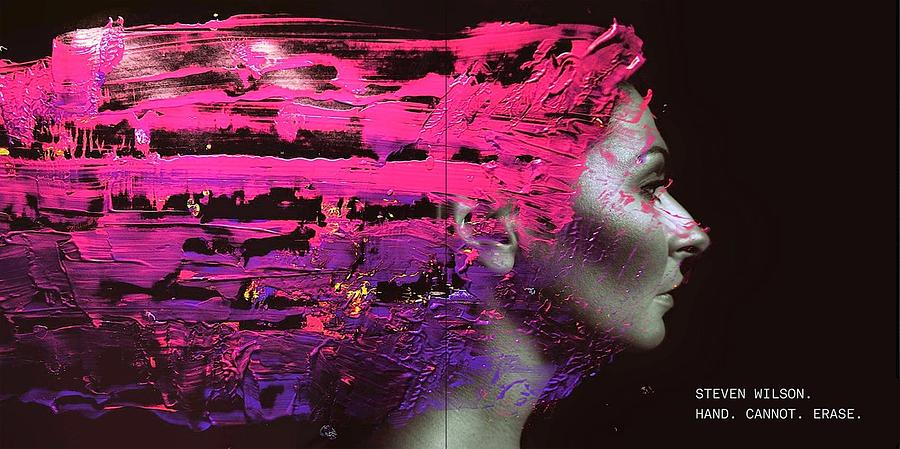
The Meaning of a Life: Steven Wilson’s Hand.Cannot.Erase.

An Incarnational Whole

One of the greatest things in this whirligig of a world—however fraught with a string of perilous and gut-wrenching disasters—is the mystery of the human person.  And, until God so decides to end this existence, every person is a new reflection of the Infinite.  From the Catholic Humanist perspective, every human is an unrepeatable center of dignity and freedom.  Each person, born in a particular place and time, comes only once, a life to burn as brightly or not, for one’s self or for another, in the time allotted to each of us.  “Dark and inscrutable are the ways in which we come into the world,” the grand Anglo-Irish statesman and philosopher, Edmund Burke, understood.  Fewer truths have ever been spoken in such perfect formation of the English language. 

Yet, speaking on the mystery of the person and personhood, Pope John Paul II put it even more beautifully in the penultimate month of 1996.

The mystery of the Incarnation has given a tremendous impetus to man’s thought and artistic genius. Precisely by reflecting on the union of the two natures, human and divine, in the person of the Incarnate Word, Christian thinkers have come to explain the concept of person as the unique and unrepeatable centre of freedom and responsibility, whose inalienable dignity must be recognized. This concept of the person has proved to be the cornerstone of any genuinely human civilization.

As someone who has had the privilege of teaching history and writing biography the entirety of his professional career, I hope and pray that John Paul II’s words and ideas each across everything I teach, think, and write.  As such, I am always looking at and for new ways to understand the dignity of each individual person, however tragically flawed.

Nearly six years ago, such a statement and manifestation of dignity arrived in the most unusual of ways: in the form of a rock concept album by the rather devoutly atheistic, seemingly always grumpy, and unbelievably talented English musician, Steven Wilson.  His album, a sixty-seven minute story about a lost soul, came out on February 27, 2015.  In terms of lyrics and music, Wilson’s work is extraordinary by the standards of any genre.  What should intrigue us most, however, is the subject matter and how Wilson fills it out.  The subject matter is the uniqueness of each human person, and he focuses on the life of one lost soul.

[Please scroll down a bit to go to page 2]

My favorite 40 (20+20) albums of 2020: Jazz

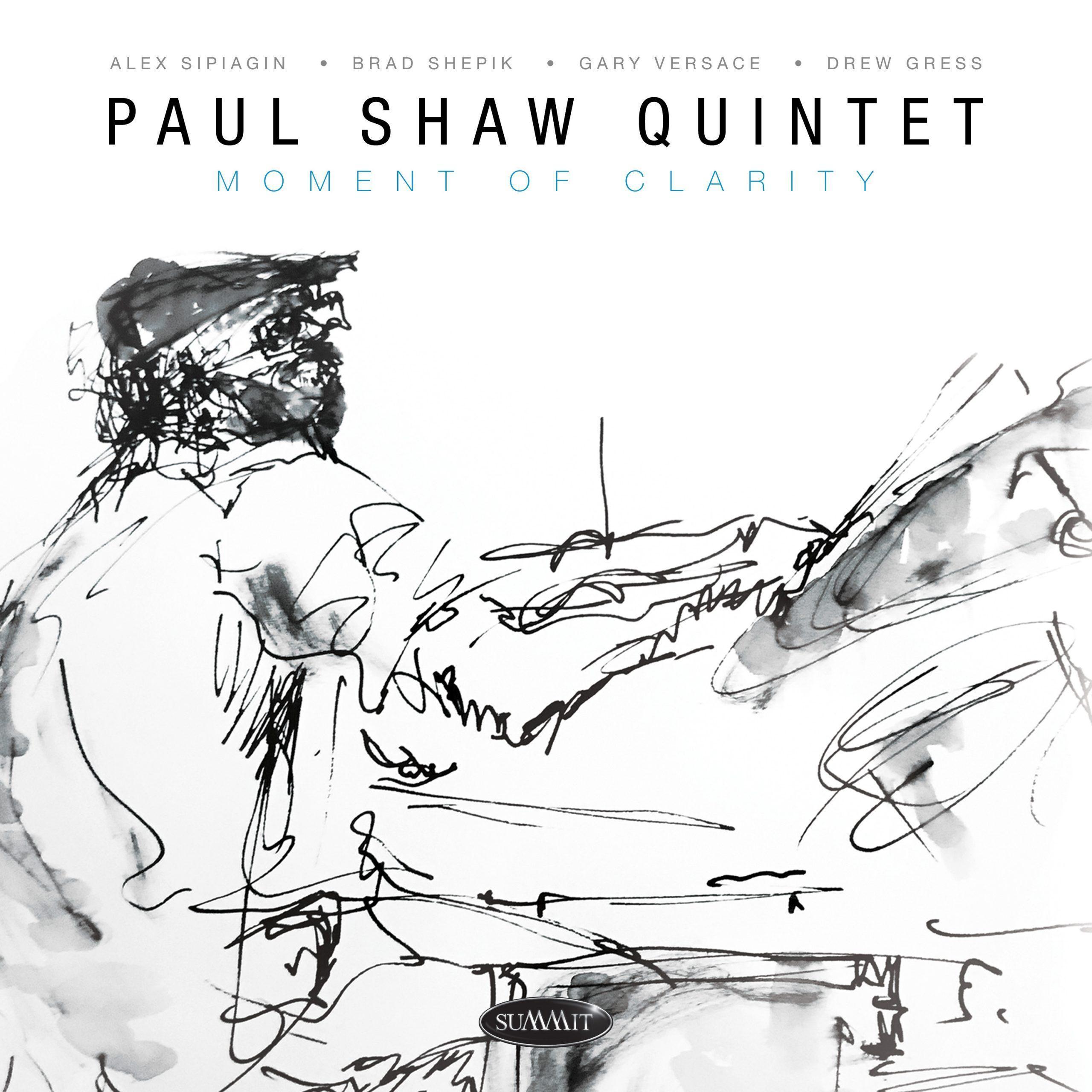
Moment of Clarity – Paul Shaw Quintet | Summit Records

It’s safe to say that I am the “jazz guy” here as I listen to jazz in some form or another on a daily basis, especially while working (along with some favorite classical works).

And so my first 20 favorites of 2020 are jazz. 

(The next 20, to be posted separately, are “everything else”, which includes prog, singer-songwriter, instrumental rock, and a bit of country.)

• “Moment of Clarity” by Paul Shaw Quintet: This beautiful album was my most played jazz release of 2020, a near perfect combo of interplay, melodic playing, and crisp production.

• “From This Place” by Pat Metheny: This epic album, which has a soundtrack quality to it, is one of my favorites of 2020 regardless of genre, with astounding playing at the service of deeply engaging songs. A masterpiece, in my opinion.

[Scroll down a bit to click on page 2 of this article. . .]

Best Prog of 2020, Part II

A few days ago, I attempted to create a “best of 2020” purely from memory.  My oldest daughter was driving the Honda, and I was enjoying the thrill of the quickly-moving Illinois landscape out the passenger’s window.  Honestly, at age 53, I should know better than to rely only on my memory, though, as a historian, I actually still have a pretty good one.  But, no longer great.  Just pretty good.  Even as I was typing the list in the car, I knew I’d forget all kinds of great albums, but I tried it anyway.  Pride and ego are funny things. 

Anyway. 

That list still stands (a few posts back), but I want to add some brilliant albums that I inadvertently failed to remember at the moment of writing.

Two albums this year get the spiritual successor to Talk Talk’s Laughing Stock award.  First up is Tim Bowness’s extraordinary nuanced (so glorious), Late Night Laments, an album full of meaningful lyrics and sonic soundscapes that boggle the imagination. Bowness, unfortunately, gets overshadowed by his sometime writing partner, Steven Wilson, but, frankly, the two artists are equally extraordinary. 

Following Bowness’s lead was the more recently-released Loma album, Don’t Shy Away.  Again, incredible textures mixed with intriguing lyrics.  Clearly, the band has spent a lot of good quality time listening to Talk Talk. Regardless, I owe Stephen Humphries (of the Christian Science Monitor) a huge thanks for introducing the band to me.

Nick D’Virgilio’s Invisible in an album full of surprises and full of soul.  There’s conviction behind every word and every note. I wasn’t sure what to expect before the album arrived, but I fell in love with it on the first listen. D’Virgilio is also rock’s greatest living drummer, so I was especially pleased to be reminded that the guy is just incredibly talented in all kinds of ways.

[Scroll down a bit to click on page 2 of this article. . .]

My Conflicted Relationship with Progressive Music (Prog)

By Mark Sullivan

My earliest memory is standing on my tiptoes putting Let it Be by The Beatles on my parent’s stereo. I must have been only four or five years old, and I don’t know why my parents let their pre-schooler touch their records. I wouldn’t have.

“I dig a pygmy, by Charles Hawtry on the deaf-aids. Phase one, in which Doris gets her oats.” Then the acoustic guitar, the bass drum, John and Paul singing in unison, and I’m in my happy place – laying on the floor listening to music. Looking up at the ceiling and lost in my imagination. Not much has changed in 45 years. 

Besides The Beatles, my parent’s record collection consisted of 1970s staples such as Linda Rondstadt, Neil Diamond (laugh if you’d like), Emmy Lou Harris, Glen Campbell, Loretta Lynn, Bob Dylan, Charlie Parker, the Modern Jazz Quartet, Wes Montgomery, Herbie Mann, and The Moody Blues. I listened to all of those albums except Every Good Boy Deserves Favor by The Moody Blues. The cover freaked me out and planted the seeds of suspicion about Progressive Music (Prog).

Probably as a teenager I tried to listen to it. I imagine that I picked up the needle at “Desolation, creation.” It still sounds stupid, but if I would have stayed with it and listened to “The Story in Your Eyes,” things may have been different. 

However, I wasn’t aware of Prog as a thing or deliberately avoiding it until I encountered the anti-Prog bible, The Worst Rock n’ Roll Records of All Time: A Fan’s Guide to the Stuff You Love to Hate by Jimmy Guterman and Owen O’Donnell in a used bookstore sometime in my early 20s. That book was everything a young music snob like me could want, take downs of stupid lyrics and bloated Prog bands on every page. I learned that you could always be cool by ripping on Prog.

[Scroll down a bit to click on page 2 of this article. . .]