The Bardic Depths | The Bardic Depths
— Read on thebardicdepths.bandcamp.com/releases
The download is now available for preorder.

The Bardic Depths | The Bardic Depths
— Read on thebardicdepths.bandcamp.com/releases
The download is now available for preorder.
SDE: What is it, do you think, about the album, that resonates so much with people? Is it just the fact that it’s got massive hit singles on it, or is it something more than that?
RO: I think… I mean, at the time it felt completely disjointed, that we were clutching at straws regarding available songs. We started off with two or three songs and bits of b-sides and within one month I came up with ‘Shout’, ‘Everybody Wants to Rule the World’, and ‘I Believe’. And I think it was when we did ‘Shout’ that we really moved to a completely different gear.
The secrets are in the arrangement and production, because it really is superb
One of the reasons it was called ‘Songs from the Big Chair’, I probably told you this a million times, is that it felt disparate; it wasn’t like The Hurting which was almost like a life work for us. Albeit we were teenagers. Hence the title ‘Songs’ because it just seemed to me like eight separate songs, and even the track ‘Listen’ was an Ian Stanley [keyboard player] demo and made while we were recording The Hurting. But I don’t know why… I think it was possibly the fact that we’d done our initial first demo’s in Ian’s house in Bath. And then he won a little bit of money from the publishing, we built the studio there in a bigger room, in his house. And I think it was almost like coming back to the West Country and even [producer] Chris Hughes had links to Bath, because his mum lived there. So, I think getting out of the huge studios and into this real intimate [setting], the birthplace of Tears for Fears almost, which was Ian Stanley’s house. I think that created this, you know, more of a calm but hot-housed environment. Plus, this massive input of new technology, like the Fairlight, the Synclavier and the Drumulator. We had all these cutting-edge sounds to play with and I think that the secrets are in the arrangement and production, because it really is superb.
— Read on www.superdeluxeedition.com/interview/tears-for-fears-roland-orzabal-in-the-big-chair-the-sde-interview/
BACKGROUND MAGAZINE – Critical and honest magazine for progressive rock and closely related music.
— Read on www.backgroundmagazine.nl/Specials/InterviewTheBardicDepths.html
In the past you made also albums with Salander and Birzer Bandana. Can you give us an inside how this got together?
I recorded the Salander albums with my friend Dave Curnow as a fun project. They were recorded in my home studio and mixed to a very basic level by me so we released them to BandCamp as pay as you like or pay nothing at all. When I moved out here, I continued writing so asked my professor friend and prog enthusiast Brad Birzer if he would write some lyrics for me. Two albums were made under the Birzer Bandana name. Again, recorded at home and mixed to a certain level but nowhere near professional quality although there are some good ideas there. I am thinking about trying to remix them.
BACKGROUND MAGAZINE – Critical and honest magazine for progressive rock and closely related music.
— Read on www.backgroundmagazine.nl/Specials/InterviewTheBardicDepths.html
In the past you made also albums with Salander and Birzer Bandana. Can you give us an inside how this got together?
I recorded the Salander albums with my friend Dave Curnow as a fun project. They were recorded in my home studio and mixed to a very basic level by me so we released them to BandCamp as pay as you like or pay nothing at all. When I moved out here, I continued writing so asked my professor friend and prog enthusiast Brad Birzer if he would write some lyrics for me. Two albums were made under the Birzer Bandana name. Again, recorded at home and mixed to a certain level but nowhere near professional quality although there are some good ideas there. I am thinking about trying to remix them.
We will return to this point shortly. Brad Birzer’s Beyond Tenebrae is subtitled Christian Humanism in the Twilight of the West, which lets the reader in on the main thrust of the work. As Russell Amos Kirk Professor of History at Hillsdale College, Dr. Birzer’s breadth of knowledge is more than equal to the task. Much of the book reads like a sophomore survey course, with Dr. Birzer taking the reader on a tour of people who express what he is trying to convey. He covers a lot of terrain in this survey, including characters expectable and unusual. There are scholars (Christopher Dawson, Eric Voegelin) and artists (Willa Cather, Flannery O’Connor, Ray Bradbury); social critics (Russell Kirk, Alexander Solzhenitsyn), and politicians (Ronald Regan, Edmund Burke); the prominent (J.R.R. Tolkien, C.S. Lewis), and the obscure (Dr. Birzer’s own grandparents, as well as one of his Notre Dame instructors). All are chosen because each exemplifies some aspect or principle of the true humanism that Dr. Birzer is trying to convey. The examples are woven into a tapestry to illustrate his points—indeed, if the book has a weakness, it is that the weaving is at points not as smooth as it could be. But even that serves to illuminate the point that comprehending humans as human means surrendering the wish for everything to work out as smoothly as a mathematical formula or well-designed computer algorithm.
— Read on theimaginativeconservative.org/2020/03/beyond-tenebrae-brad-birzer-roger-thomas.html
But it did not make me hate all the Jews, perhaps to the contrary.
By RICHARD K. MUNRO
OCTOBER 1969 When I knew for certain I would never attend Columbia University.

Dennis Prager has been a great influence on my faith life and in my appreciation for Jewish religious culture and traditions. Like my father he went to Brooklyn College and like my uncles went to Columbia; like them he was deeply alienated by Columbia’s increasing radicalism and secularism from mid 1960’s on. Like my father both in Glasgow and in Brooklyn, Prager came into close contact with persons of the Far Left as well as the Orthodox Jewish community. My parents had Jewish friends their entire lives. My father played football as a boy against Jewish schools in Glasgow and many Jews served in the British Army in WWI and WWII both in Scottish and English regiments. My father’s best friend and neighbor of almost 50 years was Manny Sussman, an emigrant from England who served in the RAF during WWII. They often discussed Commentary Magazine, the news of the day, books and authors. They attended concerts at the local YMHA (as it was called then).


Recently I wrote to an Israeli friend of mine about the resurgence of anti-Jewish hatred and propaganda. Anti-Semitism is like a many-headed hydra of ignorance and prejudice. Courage and knowledge are needed to combat it so as not to repeat the catastrophic mistakes and omissions of the past. I believe anti-Semitic hatred is like Socialism ultimately rooted in jealousy and deep envy.
There is a fable, recounted by Gilbert Highet in THE CLASSICAL TRADITION of a dispute between a spider and a bee.
The spider reproaches the bee, who has broken his web, with being a homeless vagabond with no possessions, living on loot; and he boasts that he himself is the architect of his own castle, having both designed it and spun the material out of his own body. (This was the reproach which the moderns aimed at the ancients, calling them copyists, the thieves of other’s thoughts. while themselves claimed to be entirely original in all they wrote). The bee replies that it is possible to rely exclusively on one’s own genius, but that any creative artist who does will produce only ingenious cobwebs, with the addition of the poison of selfishness and vanity; while the bee, ranging with infinite labour throughout all nature, brings home honey and wax to furnish humanity with sweetness and light.
p285-286 The Classical Tradition
Cultures like the Palestinian Arab culture which are too inward or closed, feeding and engendering on themselves alone are often marked with hubris and the deep venom of prejudice and hatred for others who are more successful politically, militarily, technically or economically. The bee is a metaphor for not only the indefatigable worker but the undogmatic cosmopolitan thinker who ranges with infinite labor throughout the whole world and its history and thought. Swift, to whom we owe the fable did not directly mention Horace but Highet detected in his work the echo of Horace’s poem in which “he compared himself to the hard-working bee, gathering sweetness from innumerable flowers.”
I have an ancient and proud heritage, but my people did not invent the alphabet nor the Ten Commandments.
I am in awe of the Gifts of the Jews, the Greeks and the Romans and the English people too and the Americans who are my adopted people. The life of the mind we owe to the Greeks. The life of political order and justice we owe to the Romans, English and Americans. The life of love and faith we owe to the Jews and the Great Teacher, Jesus of Nazareth, who was, of course, a Jew.
If we believe falsely that we owe nothing to others or other nations we are vain and wrong. Hamas apologists and so-called Palestinian nationalists cannot admit their own culpabiilty for their situation and cannot bring themselves to admit the Jews, not they, are the true indigenous people of the Holy Land. Judaism and Christianity thrived in the Holy Land long before the arrival of the Arabs and Islam in the 7th century AD.
It is truthful and humble to admit that the heritage of mankind is very diverse but there are great apogees of cultural achievement of which my race and line were only observers and minor players.
I could of course, “hate all the Jews” also because it is easy to do. I have suffered slights at the hands of individual Jews. I got turned down for a date once by a beautiful Jewish woman who thought I was “medieval” (too traditional). She laughed at me. Another time I accompanied a Jewish girl home to the South Bronx from a party at NYU -just as courtesy- and the father would not let me in and said to my daughter cannot and will not ever date a Goy. I was shocked and somewhat insulted as I was not even dating the young woman in question merely escorting her home. (Later in class the young woman apologized for her father and tried to explain his feelings). But it did not make me want to “hate all the Jews” but instead learn more about their traditions and culture.
My father had Scottish relatives who were killed in Palestine in the 1940s and probably were assassinated by Irgun gunmen. Very sad. We also had relatives killed in Northern Ireland by IRA gunmen. Very tragic when you think those soldiers were sympathetic to the plight of the Jews in Palestine and to the Irish in Northern Ireland. They had liberated the Concentration Camps in 1945 and as Catholic Gaels they sympathized with the plight of the Irish Catholics in Northern Ireland. But they were Unionists and British soliders and it was war. I am not going to hate all the Irish because of the actions of a few extremists. I am not going to hate all the Jews for all time because of one personal slight or the tragic death of a doomed British soldier long ago. He was just an orphan of Empire waiting out his military service and hoping to emigrate to Brooklyn to be sponsored by my family. And war killed him. It was not a Jewish conspiracy. He just as easily could have been killed by an Arab Nationalist. He just was doing his duty and was in the wrong place at the wrong time.
Perhaps one thing my primitive people (the Gaels) -we were as Toynbee noted the last White Barbarians of Europe- gave to the world was a sense of justice, deep loyalty, deep memory and deep courage in defense and above all a willingness to make the supreme sacrifice for our families, our communities our nation our gallant allies.
Yes, perhaps the Gael has been eclipsed by other more talented, more temperate and inspired nations in most fields of human endeavor. But in the ancient Mire-catha (Battle Frenzy) in the cause of his brothers and sisters, in the cause of freedom and Independence others perhaps equal the Gael in righteous combat but none surpasses him. ‘
We may not understand all the wisdom of the great but we love and revere great discoverers and minds greater than our own. Yes, many people surpass the Gaels in many things but in gratitude to our teachers, friends and forefolk and in remembrance of their achievements and sacrifice few equal our passion, devotion and love.
The great compliment, my grandfather taught me was to be a Highland Gentleman, a leal n’ true mon (an duine dileas).
A Highlander is leal n’ true to his word,to his Regiment,to his family clan, his Nation, his nation’s Allies, to his God. “Dread God and obey his commandments; that is the whole duty of man.” That is the Munro motto and the oldest Bible reference I ever knew.
From my earliest boyhood I knew the foundation of our civilization and moral culture began with the Old Book which my father called the Hebrew Scriptures.
I knew the Bible was not an English book at all but a translation from the Jews, Romans and Greeks.
I have tried to understand anti-Semitism but it never made any sense to me that any Christian should be an anti-Semite because Mary, Jesus and Joseph and all the apostles and their ancestors and family were Jews.
But I think my people (I am speaking of the Gaels or Scots) were a cosmopolitan hard-working people who ranged throughout the world. They knew English was not the only language nor the oldest language of the world so they learned other languages wherever they went.
They knew England was beautiful,admirable in many ways, successful, rich and powerful but it was not the only country in the world nor was it best at ALL THINGS; in fact the genius of the British people was that it adapted the best of many peoples.
They knew there was much to admire and love in other countries were they lived and worked -Canada, the USA, Australia, New Zealand, Chile, Cuba, Spain, Italy, India and Africa. It is, perhaps peculiar to the Scot (or Gael) of all classes, that he remembers and cherishes the memories of his forefolk good or bad; and there burns in him a sense of identity with the dead of his race and line even to the tenth or twentieth generation. “Cuimhnich air na daoine bho tainig tusa” (remember the people you came from was a saying I heard hundreds of times until it was etched into my memory and soul).
My Israeli friend said to me: “I’m not sure where to start so as to answer your beautifully written post, so I’ll start by saying that you are too modest!
Every nation has good people and bad people and, while it is true that the percentage of Jewish Nobel Prize winners is extremely high for the very small percentage of the Jewish population in the world, there is a beautiful IJewish saying (I learned from Dennis Praeger).:
“Behaving correctly comes before studying the Torah.”
We are (were?) the People of the Book, but it is far more important to be leal’n true like your brave nation, the Gaels .”
Aye an’ when one kens what that means and has meant it gars ane to greet. (stirs the bosom and brings tears to the eyes, aye saut tears blin’ the e’e).
“La a’bhlair, ‘s math na cairdean”
THE DAY OF BATTLE ‘TIS GOOD TO HAVE FRIENDS ; this every Highland soldier knew. And it was a terrible burden for the survivors to remember the courage, sacrifice, suffering, blood, toil, sweat and tears all for the sake of freedom and independence. Freeman’s blood and tears have always told our story. Bydan Free (forever free!)
NE OBLIVISCARSIS…not not forget. My father’s best friend TOMMY CRAIG killed in North Africa in 1942. The played soccer (football) together against Jewish and Protestant schools in Glasgow in the 1920s.
Yes, if there is one thing I learned from my father and grandfather who were both Scotsmen born and bred with deep roots in Gaeldom, it was that the highest and most noble virtue a man could aspire to was being a good man, a brave man, a loving man, a generous man and a man who was “leal n’ true” to those who loved him and whom he loved. Until the death. From my father and grandfather I learned poems and songs and traditions. They loved music and poetry:
OUT of the womb of time and dust of the years forgotten,
Spirit and fire enclosed in mutable flesh and bone,
Came by a road unknown the thing that is me forever,
The lonely soul of a man that stands by itself alone.
This is the right of my race, the heritage won by my fathers.
Theirs by the years of fighting, theirs by the price they paid,
Making a son like them, careless of hell or heaven,
A man that can look in the face of the gods and be not afraid.
Poor and weak is my strength and I cannot war against heaven.
Strong, too strong are the gods; but there is one thing that
I can
Claim like a man unashamed, the full reward of my virtues,
Pay like a man the price for the sins I sinned as a man.
Now is the time of trial, the end of the years of fighting,
And the echoing gates roll back on the country I cannot see
If it be life that waits I shall live forever unconquered.
If death I shall die at last strong in my pride and free.Vimy Ridge, 1916
From “CREED” in A Highland Regiment (1917)
Ewart Alan Mackintosh (TOSH)
Lieutenant Ewart Alan Mackintosh MC -TOSH- to his men (4 March 1893 – 21 November 1917) was a war poet and an officer in the Seaforth Highlanders from December 1914.
Mackintosh was killed whilst observing the second day of the second Battle of Cambrai, 21 November 1917. NE OBLIVISCARIS…do not forget.
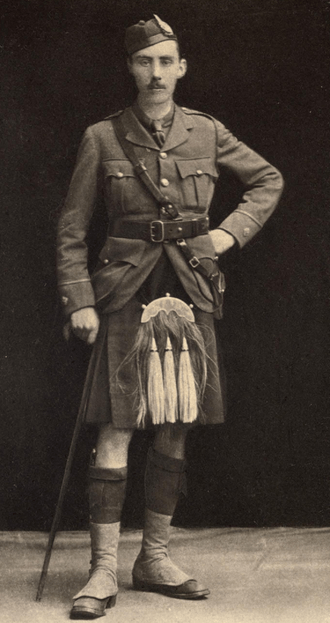


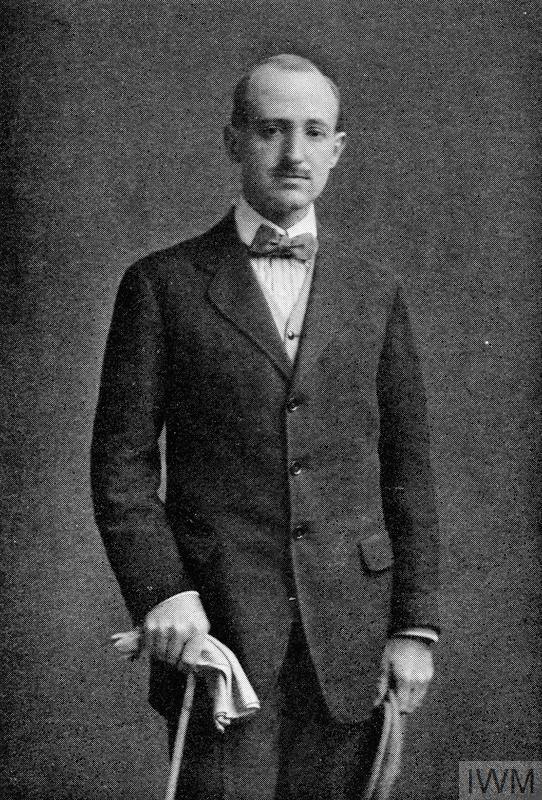
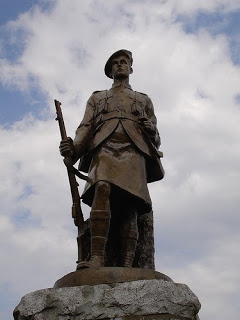
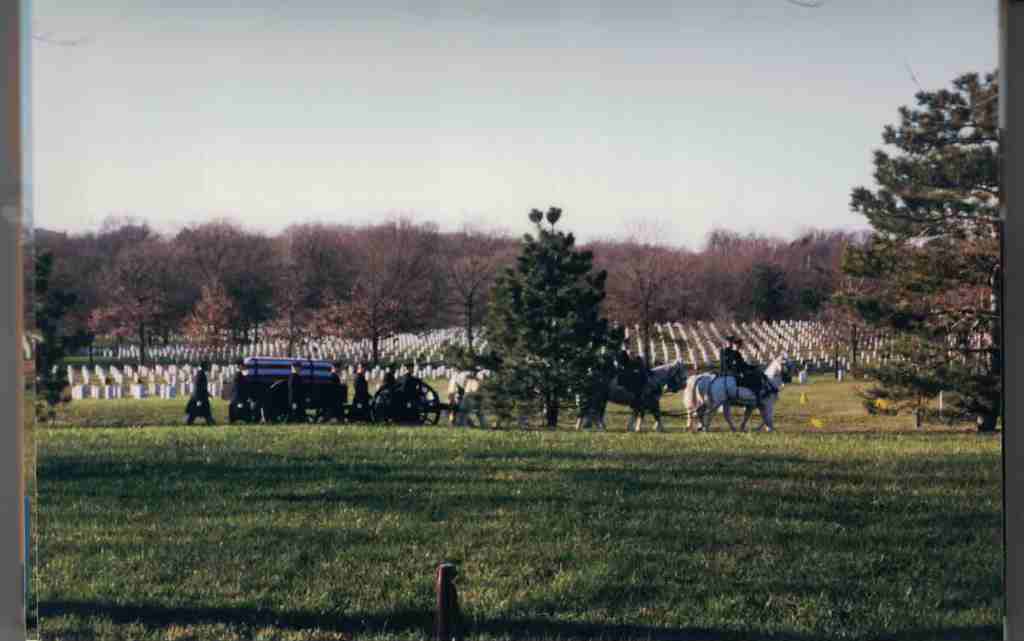
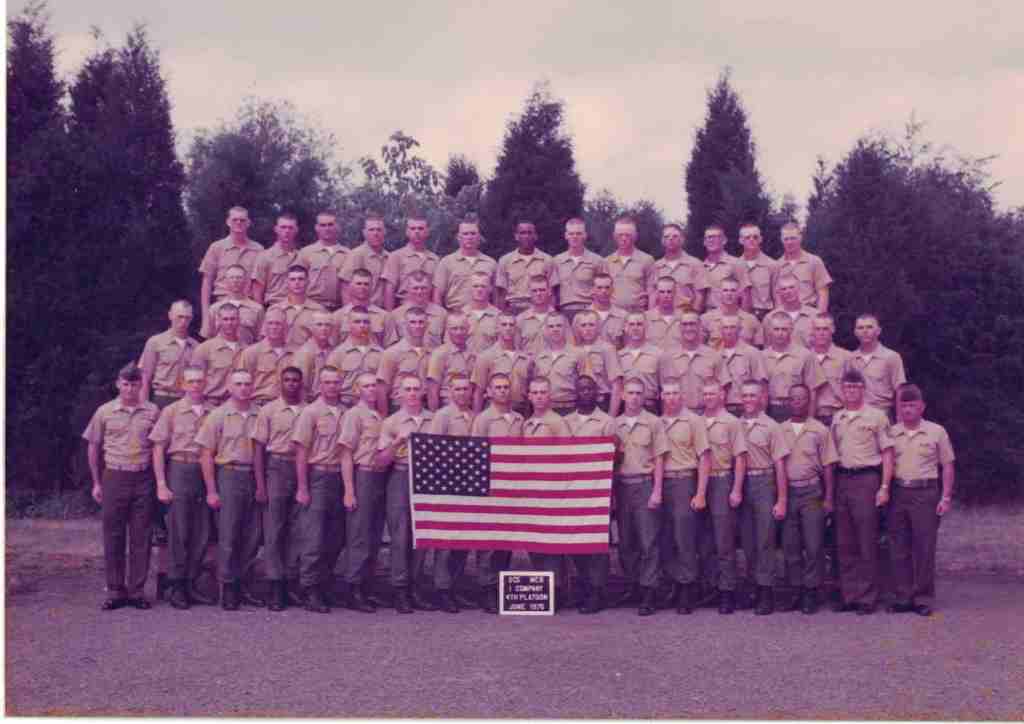

To begin, I want to offer the most profound thanks possible to several people: Martha Shernick, Ann Carlos, Doug Bamforth, and Steve Leigh. Also Kim Bowman and Clint Talbott and Christian Kopff. I’m a bit overwhelmed by the generosity and the kindness of everyone. I must state—and I hope this sounds as humble as I mean it to be—it’s wonderful to be wanted. Really, truly wonderful. So, thank you.
As to the now, I’ve been asked to speak just a bit about my position as the second holder of the titles Scholar in Residence and Visiting Scholar of Conservative Thought and Policy.
[Yes, try to say this five times in a row]
Two weeks ago, my college roommate and still one of my closest friends, asked me what it felt like to be entering a place with CONSERVATIVE tattooed on my forehead.
He knows me well, and he also knows that from our first conversations in the fall of 1986 (our first semester in college) I despise labels. I always have, and I probably always will. And, Kevin (my friend) agrees with me.
Almost all labels, even well intended ones, tend to allow us to categorize one another, to consider one aspect of an extremely (incomprehensibly) complex person as the sum total of that person, or, when not well intended, to dismiss another—more often than not in history because of the accidents of birth.
Regardless of intent, labels almost always diminish rather than elevate.
But, here I am in front of you, bearing the mark of “Conservative” in one of my two CU bestowed titles. Perhaps it’s emblazoned in neon or mere ink. I’m not sure.
And, I do bear the title proudly. And, why not? I have a great job, I’m surrounded by amazing people endowed with seemingly limitless amounts of energy (Martha, Ann, and Kim, in particular, seem like forces of nature; and I’m hoping to write a Celtic ode to them before the end of the academic year), and I’m speaking in what is arguably one of the prettiest spots in all of North America, if not in the world.
But, what about that label, “conservative”? Well, let me explain—as I see it—what a conservative is NOT.
A real conservative is not a loud, platinized, remade and plastically remolded talking head on Fox.
A real conservative is not that guy on the radio who seems to hate everything and everyone.
A real conservative is not the head of the Westboro Baptist Church.
And, a real conservative never wants to bomb another people “back to the stone age.”
My own tradition of conservatism—whether I live up to it or do it justice—is one that is, for all intents and purposes, humanist.
Indeed, I believe there is a line of continuity from Heraclitus to Socrates to Zeno to Cicero to Virgil to St. John to St. Augustine to the Venerable Bede, Alcuin, and the Beowulf poet, to Thomas Aquinas to Petrach to Thomas More to Edmund Burke.
The last one hundred years saw a fierce and mighty revival of the humanist tradition, embracing and unifying (more or less) T.E. Hulme, Paul Elmer More, Irving Babbitt, Willa Cather, G.K. Chesterton, Christopher Dawson, Sigrid Unset, Nicholas Berdayeev, Sister Madeleva Wolff, T.S. Eliot, Romano Guardini, Dorothy Day, Gabriel Marcel, Jacques Maritain, Etienne Gilson, J.R.R. Tolkien, C.S. Lewis, Leo Strauss, Flannery O’Connor, and Russell Kirk, to name a few.
George Orwell, both shocked and impressed by the movement, noted in December 1943 that it was nothing more than neo-reactionary: a strange mix of traditionalism in poetry and literature, religious orthodoxy in ethics, and anarchy in politics and economics.
I must admit, though I’ve never called myself a neo-reactionary, almost all of those who Orwell reluctantly admired are certainly heroes of mine.
But as I see it, the conservative or humanist—or, the conservative humanist, if you will, only possesses one job and one duty, when all is said and done, and she or he performs it to the best of her or his ability: a conservative attempts to conserve what is most humane in all spheres of life: in economics, in education, in the military, in the culture, in faith, in business, in government, and in community. The conservative is, at the most fundamental level, a humanist, reminding each and every one of us what it means to be human.
And, empirically, we can state that the record of humanity over the last 100 years (considering this is the 100th anniversary of the outbreak of World War I is a fitting time to announcing the beginning of our own “time of troubles” as Kirk liked to argue) is rather mixed.
Think of several persons over the past one hundred years:
Perhaps you are a Japanese American watching the California business and home of your parents auctioned off as you and your family are forcibly removed to the deserts of Idaho, under the sanction of Executive Order 9066 from the U.S. President.
Or, perhaps you’re in the second row of Carnegie Hall, listening to Miles Davis perform “Teo” in 1961.
Or, perhaps you are a nurse on the early morning shift at the Shima Medical Facility on August 6, 1945. Little do you know that at any moment the wind will increase to 600mph and the heat to 4,000 degrees Fahrenheit—all stamped with “Made in America” across them.
Or, could you are lounging on the couch in pure leisure with a wealthy Tennessee couple, as a young handicapped Georgian reads her latest story, “The Misfit.”
Or, perhaps you might be overwhelmed by the smell of bodies, alive, dead, and somewhere in-between, as a railway car carries you to a supposed “health resort” in semi-rural Poland.
Or, perhaps, you’re sitting next to a young man from St. Louis in an Irving Babbitt seminar at Harvard, the young man—you, like everybody else, calls him “Old Tom”—is joking about poems about cooking eggs, hippos, and waste lands.
Or, perhaps, you’re holding hands with hundreds of others, signing a hymn after Sunday service, facing very angry looking armed men with water cannons and attack dogs, hungering to “put you in your place.”
Perhaps, you’ve just escaped from the hell that is Pol Pot’s Cambodia, made it to America to resume not only a medical practice but even begin an acting career. Perhaps you’ve even won the Academy Award for Best Actor, 1985, only to be gunned down on the driveway in an LA gang slaying.
Perhaps you are holding your breath as the third movement ends and you anticipate the fourth as a five-hundred person choir in Bloomington, Indiana, along with a full orchestra pays homage to an early nineteenth century German composer.
Or, maybe it’s not all that dramatic, at least in terms of world changing events. Perhaps you’ve simply come home to the happy exclamations of children, rushing to you to tell you of the day and assume—quite rightly—that you will hug them with all the love that is in you.
This is humanity. This is the human condition. The tragic, the noble, the accidental, the willful, the good, the evil, the true, the false, the ugly, and the beautiful.
Each one of us in this room, each one of us at this university, each one of us in existence is unique in time and space, clothed with particular ethnicities, languages, religious faiths, and a million other things.
Yet, however different, each person is connected to every other person, from the beginning of time to the very end.
This continuity, this universal quality of human existence, is a blessing, pure and simple. When we speak, we speak not just to our neighbor, but to Socrates, and he to us. When we speak, we speak to our children and our grand children and their grandchildren. What Perpetua did in the Roman area or Thomas More in the Courts of Henry VIII do not become trapped only in that time and place, but resonate across, through, over, below, and next to the ages.
In a spirit of overwhelming gratitude, the humanist looks out upon the world, sighs in frustration at the horrors of the past, and cautiously anticipates what good can come next.
In our first duty—the duty to be human, we must be humane. We must love, and we must cherish. We must, when warranted, give thanks. We must celebrate creativity and peace.
Today, in this room, with this audience, and in this time and place, I thank you.

It’s that time again–the time (every two weeks) when Big Big Train updates its brand new, shining, glimmering, and more than meaningful web service, The Passenger’s Club.
Update #2 again reminds us of how important and how well done this web service is. In my previous update, I mentioned two other fan services that were, rather, lacking, and I’ll keep this one more positive. Let me just reiterate: BBT does it EXACTLY right.
The highlight of the new material is the achingly beautiful demo track, “Hope Prologue.” It contains everything that makes BBT. . . well, BBT. Soaring guitar, Mission-like flute, bizarre rhythms, tasteful keyboards and brass, and David Longdon’s simply perfect vocals. Even the lyrics–though all too brief–evoke mystery.
Two other additions are here as well. We get a fascinating look at the business side of the band, in Nick Shilton’s masterful “Building a Bigger Bigger Train” (which should’ve been titled, “Building a Better Better Train).
Finally, we also get a confessional video–thoughts from the band members on their first appearance and arrival in Peter Gabriel’s Real World Studios.
If you’ve subscribed to this service, amen. If not, do so immediately. I’m also really glad to see that BBT is not erasing what it released two weeks ago. The new material is an addition, not a replacement. Thus, all of the older material remains accessible.
As I’ve typed many, many times before: Ave, Spawtonius and friends!
Whether you’re a fan of BBT, specifically, or prog, generally, this service is excellent. Enjoy.
For those of you who are interested, here is our second single from our album, THE BARDIC DEPTHS (same name as the band).
This one is a fairly straight-forward rocker, “Depths of Soul,” about Tolkien, Lewis, and their ideas of grace. Here’s hoping you enjoy!

The bard – singer, poet, truth teller. The one who expressed a community’s hopes, fears, and values in a form that everyone could immediately grasp and be inspired by. Every tribe needs someone who can remind them of their virtues and warn them of dangers. The prog tribe has a new bard, The Bardic Depths, comprised of Dave Bandana (music) and Brad Birzer (lyrics), with an all-star supporting cast of musicians.

Their eponymous debut album, The Bardic Depths, explores how vital true friendship is for people to survive in a fallen and dangerous world. It focuses on The Inklings, a group of 20th century British writers/philosophers/professors: J. R. R. Tolkien, C. S. Lewis, and Owen Barfield. They were survivors of The Great War – that cataclysmic conflict that signaled the end of liberal western civilization.
Our journey begins with the song “The Trenches” and a spoken excerpt from the memoir of a veteran (C. S. Lewis, maybe?) of The Great War. As Birzer reads the soldier’s account of the appalling conditions in the trenches, Bandana lays down a bed of ominous synthesizers. At the point where the soldier remembers the first time he heard a bullet whistle past his head, we are treated to a beautiful guitar solo by Kevin McCormick as various voices call out, “This is war!”
The ancient Greek poet Homer is the primal bard of western civilization, and Birzer’s lyrics make the connection to him explicit, as Bandana sings, “So this is what Odysseus felt/So this is what Leonidas felt…” and ending with “So, this is what Ronald [Tolkien] felt/This is what Jack [Lewis] felt/This is what Owen [Barfield] felt”.
In the second track, “Biting Coals”, we gather in a cozy pub with Tolkien, Lewis, and Barfield to “meet, smoke, and drink”, and wonder “Where is fair Albion/What has happened to the West?” This track evokes the best moments of classic Floyd, with strummed acoustic guitars, Bandana’s warm and intimate vocals, and majestic washes of synths. This is a wonderful song that never rushes the moment, allowing the listener to contemplate along with The Inklings if there is a way forward for civilized men when everything that was once certain and established is no longer.
Next up are the three central “Depths” songs: “Depths of Time”, “Depths of Imagination”, and “Depths of Soul”. “Depths of Time” is the longest track on the album at 12:35, and it is a standout. The first four and a half minutes feature a languid sax (Peter Jones, Camel/Tiger Moth Tales) gracefully soloing over some Vangelis-sounding synths. Once again, nothing is rushed – the music is allowed to develop at its own pace which increases the listener’s anticipation. That anticipation is well satisfied with the middle section, “The Flicker”, featuring a compulsively catchy and disco-y melody and beat. An edit of this section is the album’s first single, and it’s a great choice, rivaling the radio-friendly Alan Parsons Project at their ‘70s-era best.
“Depths of Imagination” celebrates the Inklings’ literary gifts, and how they bounced ideas off of each other to improve their art. “In brotherhood, we share and shape/In brotherhood, we hone and create.” Musically, this is a straightforward rocker, with a propulsive guitar riff and wicked synthesizer solo that captures the excitement of artists creating and collaborating.
“Depths of Soul” is a simple, almost creedal recitation of the Inklings’ faith in beauty, truth, and the excellent, and their efforts to bring them to light through their art: “There is a glass through which we see darkly/There is the spotless mirror/There is the Light/There is the reflection/Here is the shadow/But there is no nothingness/All moves with grace/Or it moves not at all.” Peter Jones returns with another excellent performance on sax, trading licks with Gareth Cole’s guitar. The melody is leavened with a little Floyd influence, especially in the final bars. Very tasty, indeed!
Which brings us to the final two tracks, “The End” and “Legacies”. “The End” chronicles the splintering of the Inklings’ brotherhood, and their recognition that human frailty is inescapable. “To the world we sang/To the world we spoke/To the world we enchanted/Yet, there is always frailty.” Bandana’s music perfectly complements the sentiments of the lyrics – he creates a hushed, delicate atmosphere through piano, cello, and flute. Of course, all good things on this earth must end, and the Inklings’ friendship was no exception. As Bandanna sings of the Inklings’ dissolution, there is palpable sadness and regret.
If The Bardic Depths closed with “The End”, it would leave the listener without any catharsis. Fortunately, we have “Legacies”, a celebration of the incredible literary legacies of Lewis and Tolkien. It’s hard to imagine a world without Lewis’ Chronicles of Narnia and Space Trilogy, let alone Tolkien’s Lord of the Rings. Even though their fiction was set in fantasy worlds, they used them to hold up a mirror to our own world and remind countless readers of eternal truths that must never be forgotten. In the dark ages of the 20th century, Lewis, Tolkien, and Barfield nurtured the flame of Christendom. The music is appropriately joyous, featuring lush vocal harmonies worthy of Big Big Train. Gareth Cole and Robin Armstrong (Cosmograf) both contribute stellar guitar work on this standout track.
The Bardic Depths is set for release on March 20, 2020, on Robin Armstrong’s new label, Gravity Dream. Dave Bandana is the primary musician/vocalist/composer, and it features an impressive lineup of artists from the world of prog rock including the aforementioned Kevin McCormick and Peter Jones, as well as Tim Gehrt on drums (Streets/Steve Walsh), Gareth Cole on guitar (Tom Slatter/Fractal Mirror), and the marvelous Paolo Limoli on various keyboards. Mr. Armstrong himself contributes keyboards, guitars and vocals. It’s a very impressive debut, full of atmospheric musical passages and inspiring lyrics. This is an album to savor slowly and with appreciation, like a sip of single-malt scotch. And just as with a fine scotch, it has all kinds of hints and complexities that reward repeated hearings. Fans of classic Pink Floyd, Alan Parsons Project, and Cosmograf should definitely snap this one up. Even though 2020 is just getting underway, The Bardic Depths is a contender for one of the best albums of the year.
You can purchase The Bardic Depths here.
 Spirit of Cecilia
You must be logged in to post a comment.