
Track 1: “The Trenches.” Underscored by ambient whistling, rifle shots, and single notes struck on a piano, Brad Birzer’s voice fades in softly at first, repeating, and echoing over itself. He speaks C.S. Lewis’s description of his experience in World War I: “The frights, the cold, the smell of human excrement, the horribly crushed men still moving like crushed beetles…”
Then, cue an electric guitar intro, a chorus of “This is war!” and, finally, drop in some heavy metal drumming.
These are the opening lines and sounds of the progressive rock epic chronicling the meeting, developing relationship, and, ultimately, failed friendship between J.R.R Tolkien and Lewis. Birzer, professor of history, wrote this seven-track album, “The Bardic Depths,” in collaboration with progressive rock musician Dave Bandana.
— Read on hillsdalecollegian.com/2020/02/brad-birzer-writes-lyrics-for-progressive-rock-album/
New I Am The Manic Whale Coming Soon
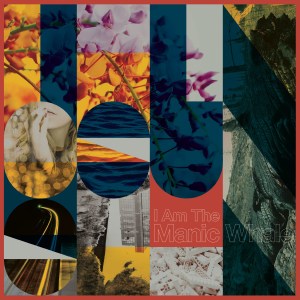
One of the highlights of 2017 was I Am The Manic Whale’s second album, Gathering the Waters.
Here’s their press release for the upcoming third album, Things Unseen:
|
|

T.E. Hulme on the Religious Attitude ~ The Imaginative Conservative
To transcend or to break through this delusion of progress, a true scholar, Hulme continued, must attempt to see the gaps in both senses, recognizing them and allowing them to exist. In other words, much like Friedrich Hayek will proclaim with the “knowledge problem” several decades later, true scholars must be humble and be content with knowing what we do not know. The modernist, of course, hates ignorance more than anything else, and in his blind zeal to know all things, he will create “knowledge” where no knowledge is possible, thus truly derailing centuries upon centuries of fine work and of understanding of the human person. Ironically, in his hatred of religion, the modernist merely creates a new, shallow, and false religion. The modern, Hulme understood, is nothing short of a full-fledge Gnostic, ultimately seeing the universe as pre-determined, mechanistic, and absent of free will.
— Read on theimaginativeconservative.org/2020/02/te-hulme-religious-attitude-bradley-birzer.html
Was he nae poet? Robert burns
http://robertburns.org/works/61.shtml’
FROM ” Epistles to J . Lapraik”
Lapraik was a minor Scottish songwriter and poet but he was a lover of Scottish songs and poems and hence a man after Burns’ heart. Here Burns describes his method at producing poetry straight from the heart. Burns shows great sincerity, honesty, modesty and courage. Burns had earlier made an apology in the Preface to the Kilmarnock Edition at his lack of Latin and Greek. Burns also had very little knowledge of French or Gaelic (but certainly more than many as proved by his French quotations and Gaelic names and titles). Burns states his natural response to the world might have more poetic relevance than the (by then) almost hackneyed references to classical allusions. Burns humorously compares his poetic talents to those of university educated scholars whom he says in brilliant imagery go in as “stirks” (Bullocks) and come out as asses! How amusing, now to think people thought Burns semi-literate and unable to distinguish between the genres of poetry or prose (he as a master of both). These epistles are rich in the “lallans” (lowland) vocabulary of the Scots. Only Shakespeare, I believe, had contributed as many unique phrases and vocabulary to English and Burns essentially translated an entire Scots tradition in English with his own unique combination of rich Scots expressions and English. He valued the harmonic poetic and music treasures of the Scots thus preserving forever ,as a kind of causeway, English literature and ancient Scots literature making them one tradition.
***
I am nae poet, in a sense;
But just a rhymer like by chance,
An’ hae to learning nae pretence;
Yet, what the matter?
Whene’er my muse does on me glance,
I jingle at her.
Your critic-folk may cock their nose,
And say, “How can you e’er propose,
You wha ken hardly verse frae prose,
To mak a sang?”
But, by your leaves, my learned foes,
Ye’re maybe wrang.
What’s a’ your jargon o’ your schools-
Your Latin names for horns an’ stools?
If honest Nature made you fools,
What sairs your grammars?
Ye’d better taen up spades and shools, (taken up spades and shovels)
Or knappin-hammers. (stone-breaking hammers)
A set o’ dull, conceited hashes
Confuse their brains in college classes!
They gang in stirks, and come out asses, (the go in bullocks…)
Plain truth to speak;
An’ syne they think to climb Parnassus (since)
By dint o’ Greek!
Gie me ae spark o’ nature’s fire,
That’s a’ the learning I desire;
Then tho’ I drudge thro’ dub an’ mire (puddles and mud)
At pleugh or cart, (plough/plow)
My muse, tho’ hamely in attire,
May touch the heart.
Burns who “jingled” at his Muse later (Second Epistle To J. Lapraik) has the Muse assume the form of a worn-out servant girl.
The tapetless, ramfeezl’d hizzie, (Heedless, wornout hussy or wench)
She’s saft at best an’ something lazy: (Soft)
Quo’ she, “Ye ken we’ve been sae busy
This month an’ mair,
That trowth, my head is grown right dizzie,
An’ something sair.”
***
Nature, according to Burns places little value on material wealth. Amusingly he says the rich will return as savage, hungry wolves and the poor as gentle souls united by love and friendship. Clearly the meek shall inherit the earth.
***
O mandate glorious and divine!
The ragged followers o’ the Nine,
Poor, thoughtless devils! yet may shine
In glorious light,
While sordid sons o’ Mammon’s line
Are dark as night!

Hungarian government urges defence of persecuted Christians | Catholic Herald
The world must raise their voices and stand up for persecuted Christians, Hungarian State Secretary for the Aid of Persecuted Christians Tristan Azbej said on Thursday.
Azbej was one of eight speakers at a side-event of the National Prayer Breakfast that was sponsored by the organization Save the Persecuted Christians.
“All of humanity should stand up and come to the aid of persecuted Christians,” said Azbej.
— Read on catholicherald.co.uk/news/2020/02/07/hungarian-government-urges-defence-of-persecuted-christians/

Available to Pre-Order Now …
From Robin Armstrong’s Gravity Dream Records:
‘The Bardic Depths’ is an all new progressive rock project formed from the writing team of multi-instrumentalist, Dave Bandana with lyrics and concept from Bradley Birzer, plus contributions from Peter Jones (Camel/ Tiger Moth Tales) – Saxophone/ Vocals, Tim Gehrt ( Streets/ Steve Walsh) – Drums, Gareth Cole (Tom Slatter/ Fractal Mirror) – Guitar and Robin Armstrong (Cosmograf) – Keyboards/ Guitar/ Bass, amongst a host of other amazing musicians from the progressive rock community around the world.
“The album is about friendship and its ability to get us through anything including war, with the concept centering on the literary friendship formed between J.R.R Tolkien and C. S Lewis between 1931 and 1949. “ says the Lanzarote based band leader Dave Bandana.
Friendship also provided the catalyst to enable such a wide cast of musicians to come together for the record, largely from the community provided by the Big Big Train Group on Facebook. The resulting album is an immersive combination of ethereal soundscape with Floydian undertones, and Talk Talk progressive pop sensibilities.
The Bardic Depths is available to pre-order now from Gravity Dream on CD or in an extremely limited CD/T-shirt bundle. It’s also available on CD from Burning Shed, who provide the tracklist:
1. The Trenches
2. Biting Coals
3. Depths of TIme
i) The Instant
ii)The Flicker
iii) The Moment
4. Depths of Imagination
5. Depths of Soul
6. The End
7. Legacies
And of course, there’s an album teaser on YouTube:
— Rick Krueger
Real Community: Hutchinson and Longmont
A years ago, while on a panel with that extraordinary radio personality, Mike Church, and a few folks from another website, I think I caused a bit of a stir by arguing that a real man’s existence was about protecting one’s family from the world, conserving what little order could be found in the family against the shattering disorders of the modern and post-modern abyss.
While I’ve always favored a republic and have been a republican as far back as I can remember, my republic would be a Harringtonian one of extremely well-armed small families and associations of friends and like-minded persons. In my Harringtonian vision, admittedly somewhat idyllic and medieval, communities would come together for cultural celebrations, book festivals, commerce, and a celebration of the sacraments.
It would also, to my mind, uphold the essence of the American founding as understood through the Northwest Ordinance.
And, in the just preservation of rights and property, it is understood and declared, that no law ought ever to be made, or have force in the said territory, that shall, in any manner whatever, interfere with or affect private contracts or engagements, bona fide, and without fraud, previously formed.
While I very much agree with our own John Willson that no “founding” ever existed, only foundings, I would not look askance at any one who claimed the above, taken from Article III of the profound 1787 law, serves as the “mission statement” of the founding of this republic. For those of us who love ordered liberty, we might speak in terms of commerce and business, but the right to associate applies as much to families, churches, and schools as it does businesses. If we do not have the right to form a family as we chose, the right to open a business means nothing. The right of association is all-encompassing. We have the right to form families, businesses, universities, and, even, websites dedicated to Russell Kirk’s vision of the good, the true, and the beautiful.
[Please continue to read on page 2]
Batman at 75
[From 2014]
“Happy Birthday, Batman”
Just a little over a year ago, I came out of the closet. I admitted it to the world and without reservations.
I was and remain a Batman devotee. Much to my surprise, a lot of The Imaginative Conservative readers are also rather fond of Batman. So, in my weirdness (at least in this particular one), I’m not alone.
[http://www.theimaginativeconservative.org/2013/08/batman.html]
Even more, I’m a Batman snob. No “pows”or “ka-pows,” no silly side kicks in Disney-lite costumes, no Bat dances, and no Bat “shark repellants.” I don’t want Adam West, Michael Keaton, or George Clooney as Batman. I don’t want the Batmobile driving up to the Burger King drive thru window to order something.
I want my Batman dark, serious, dedicated, persevering, swift, and, when necessary, brutal.
Happy 75th Birthday, Batman!
As you might very well know, today is Batman’s 75th birthday. On this day, three quarters of a century ago, Batman first appeared in Detective Comics 27 (cover date: May 1939). Here’s the official write up from the company, DC (Time-Warner) that owns the Batman name:
In celebration of Batman’s 75th anniversary, DC Entertainment is partnering with thousands of comic book retailers and bookstores across the nation to celebrate “Batman Day” on Wednesday, July 23. As part of the festivities, fans who visit participating retailers receive a free, special edition of DETECTIVE COMICS #27, featuring a reimagining of Batman’s 1939 comic book debut, designed by Chip Kidd with a script by The New York Times #1 bestselling author Brad Meltzer.
In addition to the comic book, DC Entertainment is providing retailers access to an assortment of other collectibles to help in the celebration of “Batman Day” including a Batman 75th anniversary cape, bookmarks featuring essential Batman graphic novels and four Batman masks designed by comic book artist Ryan Sook spotlighting a variety of the character’s iconic looks from his 75-year history.
[Please continue to read on page 2]
Making Sense of a Chaotic World: “Red Metal” ~ The Imaginative Conservative
Now, three decades after the fall of the Soviet Union, we have Red Storm Rising’s more than worthy successor, Red Metal, by Mark Greaney and Lt. Col. Hunter “Rip” Rawlings IV. While Lt. Rawlings is new to me, I have been reading Mr. Greaney’s novels for over a decade. He roared onto the literary scene during the revival of Tom Clancy co-authored books around 2010 and with his own extraordinary novel and hero (or anti-hero), The Grey Man, a year earlier. I have had the chance to praise Mr. Greaney several times, but never enough. Mr. Greaney is, in every way, our current and better Tom Clancy, taking thrillers into the twenty-first century. By this, I mean that Mr. Greaney fully understands that we live in a post-Communist world, a world of fundamentalisms as well as of nation-states and tenuous alliances. His own analysis of world affairs—though couched in fiction—is every bit as interesting as that coming out from any current periodical or think tank.
— Read on theimaginativeconservative.org/2020/02/making-sense-chaotic-world-red-metal-bradley-birzer.html
The Awesome 1980s
It’s hard not to laugh when my students think they’re imitating or comprehending the zeitgeist of—whether to honor or mock—the 1980s.
Though, in almost every way, it’s impossible to fault them for this.
The individual members of the incoming freshman class will have entered this world sometime in 1996 or 1997, a full seven to eight years after the collapse of the Berlin Wall. To their active and eager minds, the 1980s meant lots of repetitive electronic pop music, an MTV that actually played music videos, leg warmers, bright colors, big checks and plaids, baggy pants and oversize shirts, top siders, goofy hair styles, televangelists, “duck and cover” safety from nuclear weapons, general happiness and prosperity, and John Hughes movies. It was a time before time, an era without wardrobe malfunctions, wacky chief executives, or reality TV.
Not all of these memories are wrong, of course, just selective.
From what I can tell, most current students idealize the decade in much the same way my generation—coming of age in the 1980s—viewed the 1950s. That nearly perfect decade represented peace, prosperity, primitive rock music, American assertion of power without lots of consequent deaths, innocence and naiveté, white t-shirts with packs of cigarettes rolled up in one’s sleeve, poodle skirts, leather jackets, James Dean shades, motorcycles, Marlan Brando cool, and tail fins on huge cars.
Everything, of course, was in black and white as well in the 1950s.
Well, so we thought.
But, two things must be remembered by those of us who lived in the 1980s and who want to teach our students the truth.
[Please continue to read on page 2]


You must be logged in to post a comment.