Please forgive the brevity of this review. Maybe we could call it a micro-review. I’ve been a huge Tim Bowness fan ever since first encountering him through his extraordinary work in No-Man. Indeed, it was about 23 years ago that I first encountered him, finding him because of his association with Steven Wilson. Again, I’ve been a huge fan ever since. If anyone inherited the mantle of Mark Hollis, it’s either Tim Bowness or Kevin McCormick. Everything Bowness touches is just achingly beautiful. Gifted with a very handsome voice, he brings a certain longing to all his vocals. I should also note, like Hollis (Bowness has a better voice than Hollis, but I will never fault Hollis for that—he gave everything he had), Bowness understands the sheer importance of meaningful lyrics to music. Writing all of this right now, reminds me that I would love to write a long article on the many excellences of Tim Bowness. He deserves so much more than this micro-review. Sadly (or brilliantly actually), I’m in between big writing projects on the Declaration of Independence as well as on sociologist Robert Nisbet and on writer Ray Bradbury. That stated, my afternoon sound track has been Bowness’ s first album, My Hotel Year, originally released in 2004. I was surprised to find Bowness’s own negative recollection and assessment of the album on his personal website. “Along with Wild Opera, My Hotel Year is the least loved album I’ve ever made and, in some ways, it’s the album of mine I love least as well,” Bowness confesses. “Although 2003-2004 wasn’t a particularly bad time for me, the resulting album seemed lyrically sad and musically monochromatic. No matter what was done to sonically soften the blows, the album had an innate bleakness that seemed to dictate itself.” There’s no doubt that the album is lyrically sad, but it’s incredibly and movingly authentic. And, I would never call the music monochromatic. Rather, I would say that the music is presented in a rather cohesive fashion. That is, it’s an album rather than a collection of eleven songs. Every song bleeds into every other song, regardless of the silence between thetracks. While I like Bowness’s other albums better, I would encourage anyone and everyone to go back to this foundational album, My Hotel Year. For what it’s worth, I think it’s glorious, and it certainly inspired my other writing this afternoon. For that, I’m deeply grateful.
To order My Hotel Year, always buy from my favorite on-line retailer, The Burning Shed.
Greetings, music lovers and readers of Spirit of Cecilia! 2024 is fast coming to a close, and the SoC crew would like to share their favorite albums of the year. There was a lot of great new music, terrific deluxe reissues, and releases from old favorites. Hopefully, our lists will lead to some albums you will love as well.
Brad: Tad, thanks for starting us off and inviting everyone to participate. Always great to write with you! I’ll just start with an alphabetical listing of my favorite releases of 2024:
“Dogs” by Pink Floyd, as done by Tim Bowness and Giancarlo Erra
Airbag, The Century of the Self
BBT, Flare on the Lens
BBT, The Likes of Us
Bruce Soord, Caught in the Hum
David Gilmour, Luck and Strange
Frost*, Life in the Wires
IZZ, Collapse the Wave
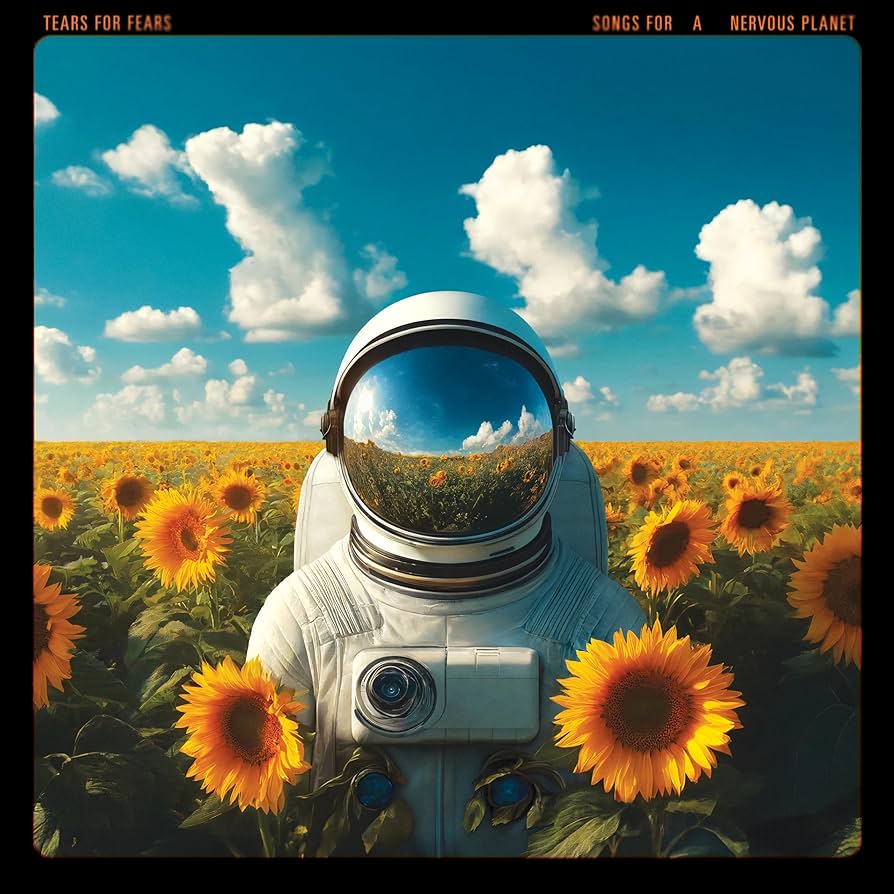
Tears for Fears, Songs for a Nervous Planet
The Bardic Depths, What We Really Like in Stories
The Cure, Songs of a Lost World
The Pineapple Thief, It Leads to This
The Pineapple Thief, Last to Run EP
The Tangent, To Follow Polaris
Tim Bowness, Powder Dry
And, I’m not even including vital re-releases such as the deluxe edition of Synchronicity by the Police; Fear of a Blank Planet by Porcupine Tree; Spectrum ‘97 by Phish; Lament by Ultravox; Bursting Out by Jethro Tull; or This Strange Engine by Marillion.
If I go just by my playlist numbers, I’d have to list “Dogs”, Frost*, IZZ, and, especially, The Cure. In fact, since The Cure first arrived, I’ve listened to almost nothing else. But, I went through such phases with Frost* and IZZ, too. And, really, I can’t recommend the single of “Dogs” highly enough. Bowness and Erra give it just the right beauty and creepiness that a proper Pink Floyd remake so desperately needs.
I must admit, though, I’m totally against the lyrical content of “Dogs.” I can’t believe our entrepreneurs are so bloodthirsty as this. Like or despise Elon Musk, for example, as you will, but he’s not bloodthirsty. In fact, if anything, I think he’d hate to “be dragged down by the stone.” And, he would hate to drag anyone else down by the stone. He definitely wants to win, but he wants to win fairly, by the rules established by society (unless all of society is corrupt, but let’s hope that Pink Floyd isn’t so Marxian as this). Maybe I’m wrong, however. Perhaps, I’m deaf, dumb, and blind, and that I keep pretending. . . Is this how Roger Waters saw his friendship/adversarial relationship with David Gilmour? If so, so very sad. For my money, give me Phish’s “Bouncing Around the Room” as the touchstone song dealing with entrepreneurship.
To be certain, though, I’m also a bit biased on the whole The Bardic Depths release. Given that I wrote the lyrics for it, I’m quite taken with it. Dave Bandanna did an amazing job in composing the music. So brilliant, so beautiful, so mystical, so joyful. Dave brings every song to life, and I’m always stunned to hear my own words given form and made manifest.
And, then, what’s not to love about the new David Gilmour? In fact, when he sings with his daughter, Romany, I’m completely taken. So much better than Dogs, co-written with Roger Waters.. Especially if you listen to something as glorious as “Between Two Points.” I would give anything to have such a relationship with my daughter that I could write something so gorgeous with her. Romany over Roger any day.
And, seriously, this brings me to all the incredible re-releases of 2024. Oh, to be “Prince Caspian” and float upon the waves. Oh, to be Prince Caspian. Dang, Phish was simply brilliant when they were.
I also want to single out Airbag. I don’t know their politics, but it strikes me that with this release, especially, they’re trying to combat conformism and cancel culture. I could be wrong, but I’m willing to take a chance that this is a brilliant counter-cultural masterpiece. One that shakes the conformists of the world to their very foundations. And, who wouldn’t love that bass playing and interplay with the drums? Genius. Thank God for the non-conformists of the world. Airbag sounds like Pink Floyd, in terms of legacy, but they are completely their own band.
If Airbag sounds anti-political, Robert Smith on the new Cure album, sounds confessional. Bless me, Father, I, Robert Smith, have sinned, and something wicked this way comes. Truly, the latest The Cure album is a masterpiece, a true sequel to Pornography and Disintegration. My love and respect for Smith only grows with age.
If Airbag is countering the world and Smith is confessing for us all, then IZZ is proclaiming the inherent goodness of each one of us. I’m not sure what the lyrics are all about on Collapse the Wave, but I feel that John Galgano and Laura Meade are asking us to look at our best selves. Rather than be dour, they find wonder. As far as I can tell, IZZ has been reading a lot of T.S. Eliot and a lot of John Paul II.
Tad: What a great list, Brad! Yours and mine overlap quite a bit, since we are often of like mind when it comes to music. Here is mine, based on how often I listened to each album:
8. Kyros – Mannequin
7. IZZ – Collapse the Wave
6. Jeff Johnson/Phil Keaggy – Spinning On a Cosmic Dime
5. Tears For Fears – Songs For a Nervous Planet
4. Airbag – The Century of the Self
3. Bardic Depths – What We Really Like In Stories
2. The Cure – Songs of a Lost World
1. Frost* – Life In the Wires
I’ve been a fan of Kyros’ music for several years now. They wed 80s sensibilities to 2020s expertise. Mannequin is another great collection of pop/prog.
Like you, I admire IZZ enormously. As far as I can tell, the lyrics to the title track are about quantum physics and faith. Who else but the Galgano brothers could pull off such an ambitious song? They definitely succeed.
Jeff Johnson and Phil Keaggy have collaborated several times before, and Spinning On a Cosmic Dime is the most lighthearted and fun of their albums. Johnson is a master of all keyboards – acoustic and electronic, while Keaggy is one of the finest guitarists alive today. When they get together, magic happens.
The Tears For Fears is primarily a live album, but the five new studio tracks are some of the best songs they’ve ever recorded.
You’ve already said everything I could want to say about the Airbag album. They continue to impress me with their social commentary, and their instrumental chops are outstanding. Their previous album, A Day At the Beach, is still my favorite, but The Century of Self is really, really satisfying.
The Bardic Depths’ new one is also a great album. Listening to it is like having a beer with C.S. Lewis, Tolkien, and the other Inklings. To my ears, it’s the most musically ambitious set of songs from TBD, and I have thoroughly enjoyed listening to it throughout 2024.
The Cure’s album came out of nowhere as far as I was concerned, and I approached it with some trepidation – there’s nothing worse than an old favorite trying to recapture the spark and failing miserably. Robert Smith et al. came up with a fantastic album that easily holds its own with their previous best. Amazing!
Frost*’s Life In the Wires is far and away the most-played album of 2024 for me. I have yet to tire of it, and every time I listen to it I find some new and delightful detail. Jem Godfrey sings all of the vocals on this one, and he is terrific. The beautiful melodies pouring out of my speakers are such a bountiful feast for my ears. The story is fascinating as well – a young man rebels against a world run by AI when he hears a pirate radio broadcast. After tracking it down to its source, it turns out to be an automated program. But then things get weird – he seems to sacrifice himself to become the new source of the radio broadcasts and spark an awakening of humanity. At least that’s how I read it.
So that’s what I spent my time listening to this past year. I also loved the Ultravox Lament box set and the Talk box set by Yes. It’s nice to have this often overlooked album get the treatment it deserves.
Brad: Yes, Tad, thanks for the reminder about Yes’s 30th anniversary edition of Talk. The last of the Trevor Rabin-Yes era albums, it’s simply beautiful. Clearly, the band was going for a progressive AOR sound at the time, but the production is so very clean. I love the packaging as well for it. Not overblown, but a solid release in terms of presentation. Don’t get me wrong, I love big box sets like Lament by Ultravox, but sometimes the smaller packaging works just as well. For me, Marillion’s and Jethro Tull’s releases–in terms of packaging–hit the sweet spot. Basically small books that fit perfectly on a book shelf.
Thanks, too, for the story about the new Frost*. I’ve listened to it numerous times, but I’d not figured out the lyrics. What a great story! Now, I’ll listen to it with different ears.
I’m so glad we agree on The Cure, on Airbag, and on Frost*. Three essentials of the year.
As it turns out, The Cure also released their brand new album as a live release–Songs from a Live World–as well. Gorgeous. Seriously, what else can Robert Smith do? He simply captures the mood of every era in which he finds himself. And, I, for one, am so fortunate to be alive when Robert Smith is alive.
I would also note that 2024 is an important anniversary date. Kevin McCormick’s gorgeous Squall came out in 1999, a mere 25 years ago! Even the rather snobbish All-Music recognized the brilliance of Squall. As far as I understand it, McCormick is working on a follow-up CD.
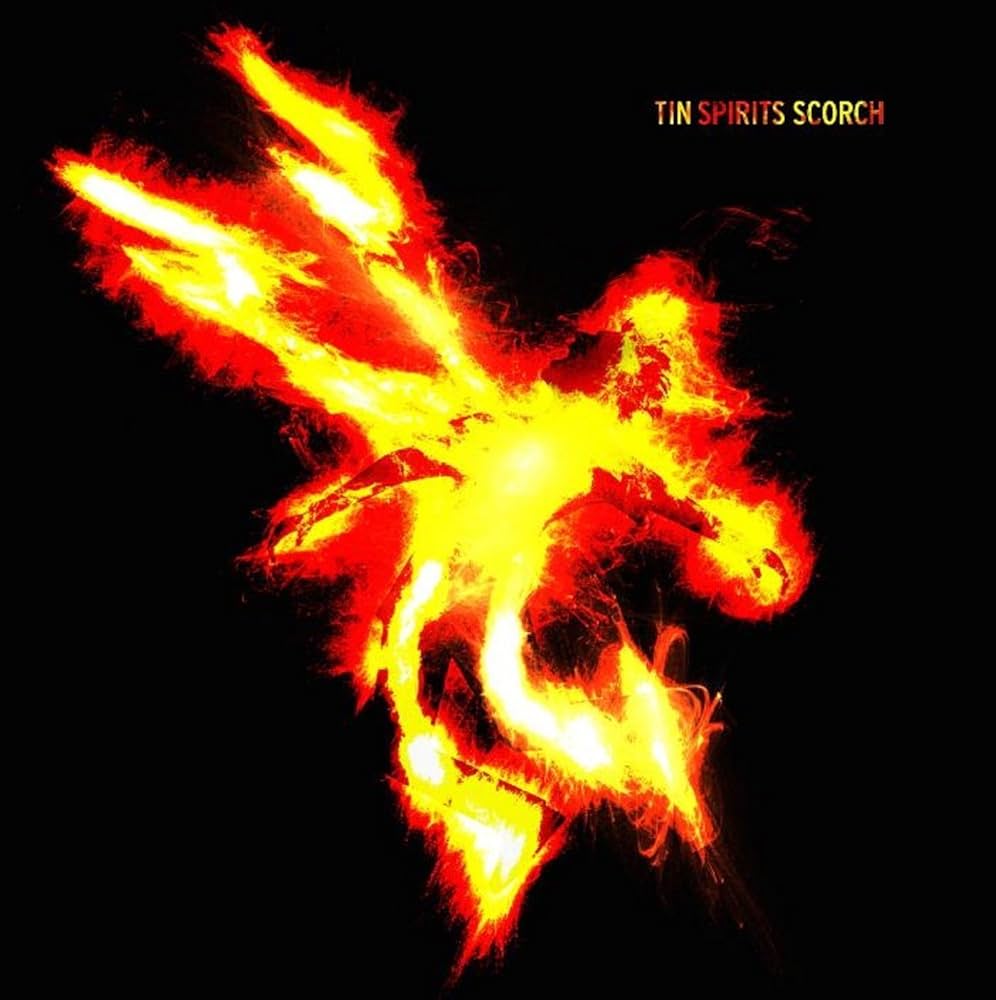
It’s also the ten-year anniversary of the genius Scorch by the Tin Spirits. A favorite album. Also, ten years ago, appeared the brilliant Demon by Gazpacho and Anathema’s mediocre to good Distant Satellites.
But, Holy Moses, it’s not just about Tin Spirits. If we go back to the twentieth anniversary of releases, 2004, we get to The Pineapple Thief, Variations on a Dream; Glass Hammer’s Shadowlands; Proto-Kaw, Before Came After; The Tangent, The World We Drive Through; Ayreon, The Human Equation; and Marillion, Marbles. Sheesh, what else do you want?
Carl: Full and necessary confession: 2024 turned out to be year in which I listened to little new prog rock, or rock of any kind. Not for any lack of new and worthy rock music, but 2024 also turned out to be the year in which I fell quite a ways down The Vinyl Rabbit Hole. I’ll likely say more about that in a separate post on my favorite jazz of 2024, but suffice to say that I’ve been haunting various thrift and record stores.
My most listened album of the year was released 30 years ago: Seal’s second album (1994), titled, inconveniently enough, Seal—just like his 1991 debut. A deluxe edition was released, with a remastered version of the album (fantastic), as well as alternative versions of the songs (also wonderful). I listened to this album countless times when it first came out, and I have never tired of it (or of his first or third, titled Human Being). Why has it resonated so strongly with me? I’m not entirely sure, but for me it is a perfect pop/rock album, and it sits squarely in the middle of a trio of albums that I continue to think is one of the finest three-in-a-row rock/pop album families you’ll ever hear.
I enjoyed the new albums by Frost* and Pineapple Thief and if I listened more closely, I’m confident that I would really like them. Both bands have consistently produced accessible, intelligent prog rock of the highest order, so I plan to revisit them in the weeks to come.
Caligula’s Horse’s Charcoal Grace is mysteriously but aptly titled, as the music has a dusky, burnt quality that also shines with many moments of delicate beauty. This Aussie band has been a longtime favorite, and this album adds to a discography rich with ridiculous chops and vocals at the service of exquisitely crafted songs. A keeper.
Keep Me Fed by The Warning, the talented sister trio out of Mexico, is (as they say) a banger. Or a series of bangers, the sort of swaggering, catchy hard rock—with sublime harmonies—that has been sorely missed in recent years. For my money, I prefer their live versions a bit more; they are dynamic performers whose young ages (20 to 25) defy (even bely) the band’s evident maturity and exuberant zest.
Speaking of all female bands, a somewhat guilty pleasure this year has been watching videos of the mind-melting Japanese metal band Lovebites. They have been compared to Iron Maiden and similar metal bands, which makes it all the more strange as I have never cared that particular genre. All five of these ladies are virtuosos, and Miyako Watanabe, one of the two guitarists, was a classical pianist until her late teens, when she picked up electric guitar for the first time. The live album Memorial For The Warrior Souls (2024) and the studio album Judgment Day (2023) are unrelentingly fast, in-your-face, melodic, and—yes—tremendous fun. Check them out live on YouTube and prepare to be amazed.
Myles Kennedy might just be the hardest working and (by all accounts) nicest rocker out there today, and his third solo album The Art of Letting Go is classic Kennedy—powerful, assured, dynamic, moving—with some nice little twists. His is one of the finest rock voices of the past couple of decades, but his guitar playing and song writing are just as polished, varied, and inviting.
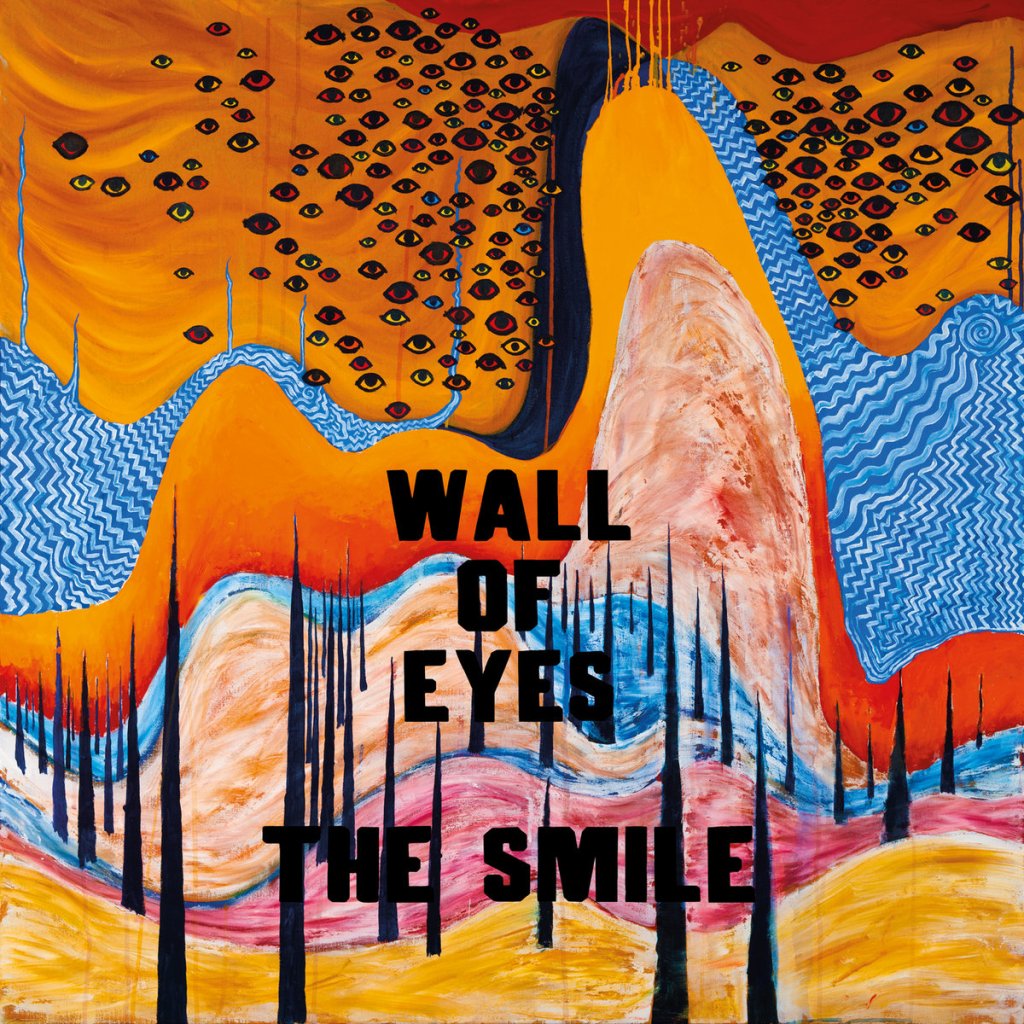
The Smile is like Radiohead if it didn’t have all of its members–and if it released albums more quickly. Which is what it is, with Thom Yorke (vocals, guitar, bass, keys) and Jonny Greenwood (guitar, bass, keys) joined by Tom Skinner (drums). Wall of Eyes (released in January) and Cutouts (same session, released in October) are quirky, dark, strangely fun, often weird, always melodic, and never, ever boring. Yorke’s voice is timeless and Greenwood’s playing, which is always so distinctive, is a revelation. And this album comes across to me as even more jazz influenced than their debut—but never in a direct, obvious way. Great stuff!
One of my favorite country artists, Dwight Yoakam, is back with his first new album in almost a decade. Brighter Days finds the Bakersfield legend firing on all cylinders, apparently reenergized by marriage and a young son. Dwight sounds half his age (68) and his band, no surprise, is tight and razor sharp. Every cut is worth the price, with the deceptively simple “I Spell Love” getting a nod from this fan.
Speaking of artists aging well, Van Morrison continues his remarkable output, with three albums: Beyond Words, New Arrangements and Duets, and Live at Orangefield. The first is all instrumental and is enjoyable, with some unexpected quirks. The second is a solid collection, featuring collaborations with Kurk Elling, Joss Stone, and Willie Nelson, all to good effect. But the live album, recorded a few years ago, is a revelation, captures a mid-70s Morrison at the top of his powers, featuring (as usual) a crack band and some other-worldly backing vocals. It rewards repeated listens and is a notable testament to Morrison’s brilliance as both a singer and songwriter.
Brad: Carl, excellent choices. I, too, like The Smile, and I, too, (thanks to you) listened to a lot of Seal II as well! I also bought Trevor Horn’s memoir, but I have yet to read it.
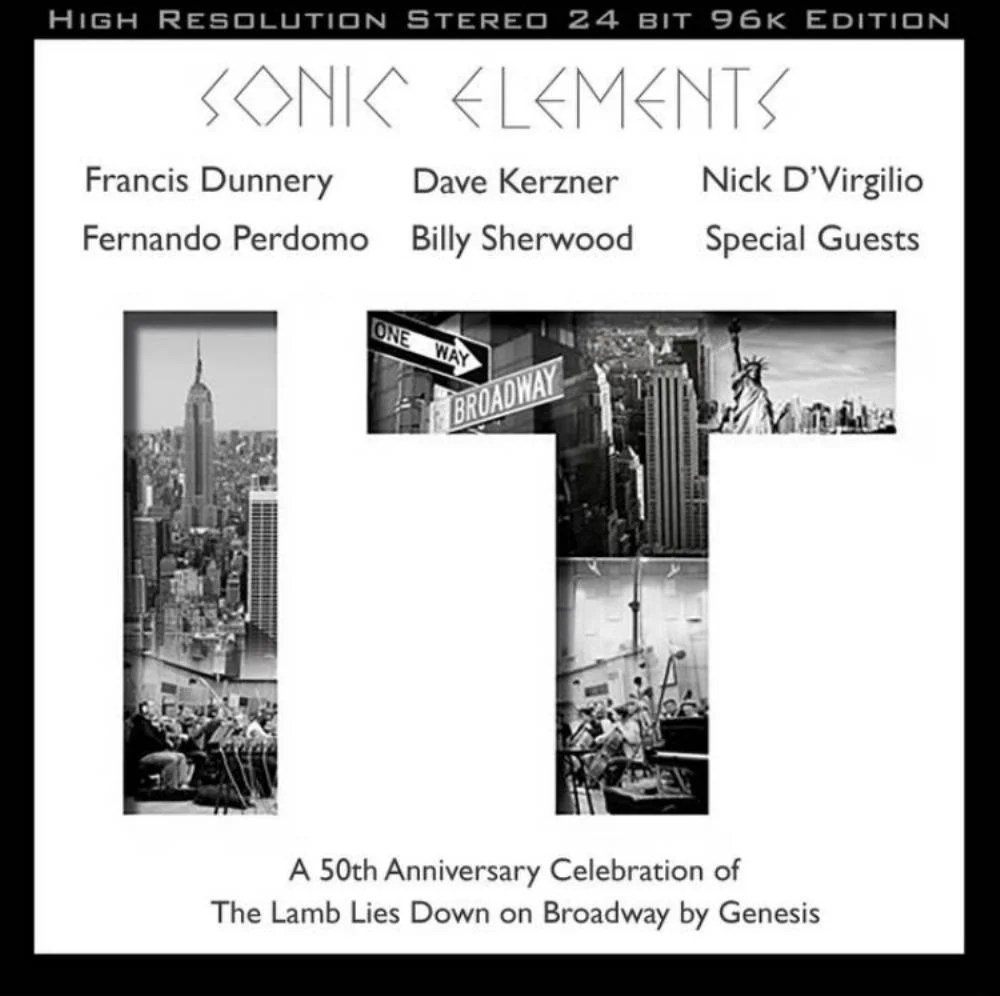
Well, folks, this pretty much wraps up 2024 for us. We have a lot to look forward to in 2025. It looks like The Cure will be releasing more music, there’s a new and final season of Stranger Things, and we’ll be celebrating the 50th anniversary of The Lamb Lies Down on Broadway by Genesis. Not only is there a 50th anniversary edition of The Lamb coming out, but the brilliant Dave Kerzner has re-recorded the entire album and is offering it as a 3-cd set plus hi-res download for only $49.99, plus shipping.
Big Big Train will be touring the U.S, and IZZ will be performing some stripped down shows–maybe even in Hillsdale!
I’m sure we’ll continue to give our hard-earned money to The Burning Shed and Rita Kay Drew’s The Band Wagon USA. I highly recommend supporting both of these truly excellent business enterprises. Amazingly enough, each is competitive with Amazon, even with overseas shipping costs.
Tad, Carl, Kevin, Erik, and I wish you all a Merry Christmas (remember, we’re only on day three of twelve), a Happy Hanukkah (remember, we’re also only on day three!), and Happy New Year, everyone!
In this post, Tad Wert, Carl Olson, Erik Heter, Kevin McCormick, and Bradley Birzer review that 1985 classic, Hounds of Love, by the inimitable Kate Bush! She was brilliant then, and she remains brilliant to this day. We are honored, and humbled, to consider her music as 1980’s perfection. God bless, the Fairlight!
Brad: Tad, Erik, Kevin, and Carl, so good to talk to you again. As always, a true pleasure. Hounds of Love was my introduction to Kate Bush. I realize that several of her albums had appeared before Hounds of Love, but it was Hounds of Love that awakened my soul to excellent music in 1985. At the time, I was a senior in high school. And, I mean this without hyperbole. I had loved Rush, Yes, Genesis, Thomas Dolby, ABC, and The B-52s prior to discovering Kate Bush, but it really was Hounds of Love that made me realize what music could accomplish. I really liked side one of the album, but I was deeply in love with side two: “The Ninth Wave.”
The fact that so many outlets gave it a high review suggested to me (then, as well as now) that prog was a delight for all concerned, even if they shunned prog in their formal reviews. Bush’s Hounds of Love was ultimate prog for those who hate prog!!!
Tad: Brad, thank you for suggesting we discuss this wonderful album! I have fond memories of it as well – for me, 1985 was one of the greatest years for music ever. Just consider some of the albums released that year: Arcadia’s So Red The Rose, Bryan Ferry’s Boys and Girls, Clannad’s Macalla, Cocteau Twins’ ep Aikea-Guinea, The Cure’s The Head On The Door, The Dream Academy’s eponymous debut, Joni Mitchell’s Dog Eat Dog, Marillion’s Misplaced Childhood, New Order’s Low-life, Orchestral Manoeuvres in the Dark’s Crush, Prefab Sprout’s Two Wheels Good, Propaganda’s A Secret Wish, R.E.M.’s Fables of the Reconstruction, Scritti Politti’s Cupid and Psyche ‘85, Simple Minds’ Once Upon a Time, Talking Heads’ Little Creatures, Tears for Fears’ Songs From the Big Chair, The Waterboys’ This Is The Sea, … I could go on and on! It was a watershed year, when it seemed like the sky was the limit when it came to what you could hear on the radio. Warm jangly guitar rock rubbed shoulders with icy British synthpop, while there was a revival of psychedelic rock happening (remember Prince’s Around The World In a Day?) and girl groups like the Bangles were breaking into the bigtime.
And yet, despite the incredibly high bar that was being set by all of these artists, Kate Bush’s Hounds Of Love really stood out as an exceptional work. Like you, Brad, this album was the first time I heard her music. I was working in a record store at the time, and when it came in, our import buyer immediately put it on the store sound system. As those whooping synths that introduce “Running Up That Hill” came blasting out of the speakers followed by her unique voice, I knew this was something special.
I confess that I was prejudiced against Ms. Bush at the time, due to my copy of The Rolling Stone Record Guide, which I considered the definitive authority on all things rock. I remember it brutally panned her earlier albums, and described her voice as sounding like a “Hoover vacuum cleaner”. I think 1985 was the year I tossed my book in the trash, because its biases against any music with a hint of complexity were too great to ignore! As time has passed, Rolling Stone Magazine’s original critical faves and pans have become simply embarrassing.
Anyway, rant over! I’m happy to say that “Running Up That Hill” was an immediate cure for my initial anti-Kate Bush prejudice.
Brad: And what a rant it is/was! Astounding, Tad. So glad you put her into context: Tears for Fears, Songs from the Big Chair; Brian Ferry, Boys and Girls; New Order, Low Life. Astounding stuff. From every direction, astounding stuff. And, as great as Tears for Fears, Brian Ferry, and New Order, Kate Bush still delivers the best. Well, I’m not sure that Hounds of Love is better than Songs from the Big Chair, but I can still admit that one is worthy of the other. What a year 1985 was! Incredible.
Carl: Yes, great rant! Before getting to Bush and Hounds of Love, I want to give a rousing “Hear, hear!” to this: “Rolling Stone Magazine’s original critical faves and pans have become simply embarrassing.” I clued into that after reading their stupid “reviews” of Queen and Kansas, two of my favorite groups of my late teens (and still on regular rotation, all these years later). Plus, the albums they seemed to laud and drool over were, for me, almost all incredibly boring (and usually overtly leftist politically, which only added to the boredom). C’est la vie!
I graduated from high school in 1987, and didn’t hear anything by Kate Bush until late 1988, when I saw the film “She’s Having a Baby.” The movie itself was so-so overall, but the delivery scene, during which Bush’s song “A Woman’s World”—specifically written and created by Bush for the John Hughes’s film—played, was powerful. I was simply stunned by the song, which was both strikingly ethereal and emotionally raw. It was simply beautiful. And that voice! There was no other voice like that.
I got a copy of The Sensual World album (1988) as soon as it came out–and then bought everything else by Bush, including The Hounds of Love. There simply wasn’t anyone else like Bush; her music was (and is) remarkably unique, idiosyncratic in the very best way. And while I certainly have favorite songs, Bush has always been an Album Artist for me. I’ll say more about a couple of songs later, but here’s my highest praise for Bush: really good artists, even great artists, will create wonderful and memorable albums. But the truly best artists create complete worlds. They transport you somewhere, somehow. And that’s what Bush has always done for me: she demands complete and absolute attention, with characters and narratives that are wild, rich, bewildering, poignant, and always engrossing.
Tad: Thanks, gentlemen, for affirming my anti-Rolling Stone polemic. Back to the music! Carl, you hit the nail on the head when you assert that Kate Bush creates complete worlds. Hounds of Love sounds like nothing else, and it transcends its time. From those afore-mentioned whooping synths to the spritely melody of “The Morning Fog”, we are invited to explore her world of maternal love, dreaming, cloudbusting, witchhunting, and Celtic dancing, among other things.
As I’m listening to this album again, it’s hard to pick out any individual song for special attention. Every track has its beautiful moments – each one adds to the overall atmosphere of ecstatic joy on side one, and mysterious suspense on side two. Side two is a suite entitled “The Ninth Wave”, and the back cover of the album has the following quote from Tennyson’s “The Coming of Arthur”:
“Wave after wave, each mightier than the last
‘Til last, a ninth one, gathering half the deep
And full of voices, slowly rose and plunged
Roaring, and all the wave was in a flame”
If any other artist quoted Alfred, Lord Tennyson, I would consider them unbearably pretentious, but not Ms. Bush. In her hands, it makes perfect sense.
Brad: I remember hearing Kate Bush for the first time–again, Hounds of Love–during the fall semester of my senior year of high school. Some friends and I, all deeply rooted in progressive rock, were always looking for New Wave music that somehow touched on all things prog. We found it in some of Thomas Dolby, U2, Wang Chung (To Live and Die in L.A. soundtrack), INXS, and in lots of Rush, post-Gabriel Genesis, and Yes, etc.
But, we also found side two of Kate Bush’s Hounds of Love to be extraordinary. Bush wasn’t just playing at being progressive, this side of the album, “The Ninth Wave,” as Tad noted above, was nothing but prog–-whole and complete and utterly compelling. To this day, I never get tired of side two of the album.
To be certain, I never tire of side one, either, but I’m more drawn to side two. “Running Up That Hill”–the opening track of the album–has been a Birzer family car mix staple for at least twenty years now. We, as a family, already loved Stranger Things, but we were completely blown away by Season 4’s gorgeous integration and employment of the song, itself always waiting to be fulfilled by the most noble heroism.
Additionally, my freshman year of college saw the release of Kate Bush’s greatest hits compilation, The Whole Story, and I devoured it. As it happened, my junior year of college, a good friend, Greg Scheckler, made a mixtape of all pre-Hounds of Love Bush. Why I’d not already explored her pre-1985 music at that point remains an autobiographical mystery to me. I still treasure that cassette that Greg made me, and I followed up by buying the complete catalogue of her work.
[To this day, I proudly own all of her CDs–separately and as a part of a comprehensive two-box set, complete with b-sides and live renditions]
Carl, I loved “She’s Having a Baby” when it came out. I saw it three or four times, believe it or not. I was a total John Hughes junkie! And, I loved “The Woman’s Work” from Kate.
Regardless, I despise Rolling Stone–aside from the articles by P.J. O’Rourke–and always have. Not only is it predictably leftist, but it’s predictably boring. Its weird hatred of Rush and then love of Rush at the end of the band’s career is nothing short of bizarre.
But, back to “The Ninth Wave.” Here, Kate Bush is at her absolute best, rivalled only by disk two of her later album, Aerial. As many times as I’ve listened to “The Ninth Wave,” I’ve never totally understood it. And, it’s in the mystery of the whole concept that titilates me. I think if I knew exactly what Kate Bush wanted, I’d be a bit disappointed.
As it is, it strikes me that a woman is lost, trying to navigate by various means–some supernatural (“Waking the Witch”), some by invoking the weirdest of the Beatles “(Watching You Without Me”), some by folklore (“Jig of Life”), and some by utterly natural means (“Hello, Earth”)–well, with a little German devil thrown in.
Hello earth Hello earth With just one hand held up high I can blot you out Out of sight Peek-a-boo, Peek-a-boo, little earth With just my heart and my mind I can be driving Driving home And you asleep On the seat I get out of my car Step into the night And look up at the sky And there’s something bright Traveling fast Look at it go Look at it go Hello earth Hello earth Watching storms Start to form Over America Can’t do anything Just watch them swing With the wind out to sea All you sailors (Get out of the waves, get out of the water) All life-savers, (Get out of the waves, get out of the water) All you cruisers, (Get out of the waves, get out of the water) All you fishermen Head for home Go to sleep, little earth I was there at the birth Out of the cloudburst The head of the tempest Murderer Murder of calm Why did I go? Why did I go? Tiefer, tiefer Irgendwo in der tiefe Gibt es ein licht Go to sleep little earth
All of it comes together in the album’s final track, the gentle and harmonious “The Morning Fog.” All seems well, as the protagonist is “born again” and remembers her unwavering love for her mother, her father, and her brothers. Indeed, all “loved ones.” What better way to end the album? No, not possible. It is the perfect ending to a perfect album.
That said, I still gravitate toward disc 2 of Aerial. . . .
Erik: Before I start in on the main topic, please let me chime in (pile on?) on the rant again on the vapid, droll, banal, and way-past-its-sell-by-date Rolling Stone, staffed by reviewers that write reviews for other reviewers in the hopes to look cool. I’d more trust Britney Spears’ opinion on the implications of quantum mechanics before I’d trust a music review from Rolling Stone at this point.
Now, to the subject proper. When Brad asked me to participate in this, I had to sheepishly admit that I had never heard Hounds of Love or any Kate Bush album for that matter, risking my credentials in the prog-lovers club. That turned out to not be entirely true, as once I looked at the track listing for this album, I quickly realized, thanks to the Netflix show Stranger Things and wider cultural echoes it made, that I had heard the first song on this album a number of times. But alas, that was the only song, so I’m going to be coming at this album from the perspective of a newcomer.
So far, I’ve only given it one listen (but have more planned tomorrow!). So for now, I’m going to add a few initial impressions.
To the surprise of exactly nobody, I will first start by saying Kate has an incredibly beautiful voice, with a vocal range that only a few possess. She can seamlessly transition between soft and subdued to exceptionally powerful and just as easily slide anywhere within that range. She uses her voice to such great effect as not only a vehicle to deliver her lyrics, but as an instrument in the larger orchestra. Some of the backing vocal arrangements in this album are simply otherworldly. I’m always a sucker for innovative vocal arrangements and good harmonies – think Good Vibrations by The Beach Boys, Leave It by Yes, and Seven Bridges Road by The Eagles. Kate has several tracks on this album with vocal arrangements – all of her own, multi-tracked voice – that stand with the best of any of them.
Another initial impression of this album is the way many of the songs combine catchy hooks associated with pop songs with the complexity of prog. The artists that can pull that off are few and far between, but Kate again shows another area in which she shines. Two tracks where this really hit me were The Big Sky and the album’s closer, The Morning Fog. The former includes some of the vocal arrangements that I have discussed above, and if I may paraphrase a line from a Eurythmic song, those arrangements have gotten into me like a poison dart. After even a single listen, I can’t get them out of my head – nor do I want to. “The Big Sky” also has a nice, thumping bass line that propels the listener along. With respect to the latter track, there is something about it that draws me in, and I can’t quite place my finger on it. The Morning Fog is somewhat subdued, but in a way that demands the listener’s attention. And in a glorious, wonderful contradiction, it sounds very much like something from 1985 while also sounding like nothing at all from 1985. I absolutely love that.
So there you have it – my very first impression of Hounds of Love – and boy, it’s a good one. I’m looking forward to digging into this and finding more hidden treasures. I’ll be sure to tell you about them in my next entry!
Tad: Erik, it is so nice to get the reactions and perspectives of someone who has never heard Hounds Of Love. I tend to have the same taste in music you do – I love a good hook! So, I agree that “The Big Sky” and “The Morning Fog” are exceptionally good tracks. When the chiming opening of “The Morning Fog” bursts out, after following the dense, dark, and mysterious “”Ninth Wave” songs, it is a cathartic moment for me. Brad, I love your characterization of it as a “born again” moment.
I’d like to mention Kate’s use of samples and processed vocals. That was something relatively new in 1985, and I think she does a nice job of employing them judiciously. They all serve the song, and they aren’t included for the sake of novelty. Let’s face it, by the mid-80’s there was an undeniable “sound” of echoing drums, soaring synths, and choppy guitars that, 40 years later, sounds pretty dated. Ms. Bush avoided that pitfall, and as a result Hounds Of Love is timeless in its allure.
Brad, like you, I’m not sure what the core meaning of “The Ninth Wave” is, and I don’t think I want to know. As you so aptly put it, the mystery of the concept is what’s key.
Kevin: One observation if I might sneak in here. I find Kate Bush’s storytelling craft to be most compelling. While there are many great songwriters over the last sixty years of modern popular music, Kate Bush uniquely approaches her subjects as a narrator walking her audience through wonderful short stories. If she’s then a songwriter, she’s just as much a screenwriter. Her albums play like great short films. Her lyrics are frequently dialogues with which she brings her listeners into intimate conversations or moments. What sets her music apart is her ability to lower her guard through her characters engaged in intense exchanges and fleeting moments. And she is totally invested in revealing that narrative–whatever the subject may be. It is no surprise that her first success was with the quite unusual (even to this day) and not-so-subtly literary “Wuthering Heights.” She’s a powerful storyteller and knows how to encase those stories in these extraordinary soundtracks.
Carl: Always fascinating to hear first impressions of great music (or books, art, film, etc.), Erik, and I enjoyed your observations!
Last night, I revisited the exceptional 2015 biography (nearly 500 pages long!) titled Under the Ivy: The Life & Music of Kate Bush by Graeme Thomson. I highly recommend it for anyone with any interest in Bush. Thomson highlights some aspects of Bush’s work and this album in particular that helped put a few of my final thoughts in perspective.
He reports (the book is very well sourced, as he talked to many of the musicians who worked with Bush over the years) that Bush writes most songs very quickly—sometimes in just hours or a few days—but that it is the production, playing, and arranging that takes months, even years. And part of that, which is so evident in Hounds of Love, is her ground-breaking use of the Fairlight, electronics, and using eclectic instrumentation and vocals.
He also emphasizes that Bush is remarkable for her vision of what she wants an album to be sonically, stylistically, etc. That should not be passed over too quickly, as there are many exceptional musical artists who simply don’t possess that quality. For example, the fantastic singer/songer-writer Seal (I’m a huge fan, as Brad knows well), has frankly admitted in recent interviews that he happily turned over song sequencing and related decisions to the legendary producer (and musician) Trevor Horn because he (Seal) simply doesn’t see that as an ability he possesses. Many have emphasized (rightly) that Bush set a new standard for women in “pop/rock” music; I’d say she simply set a new standard, regardless of sex.
Thomson also hits on something I was already going to mention, which is how deeply this album draws upon nature. Water, for example, is referenced throughout; it obviously has a huge role in the second half of the album. This is connected, without doubt, to both Bush’s Catholic upbringing (she no longer considers herself Catholic, but has spoken about Catholicism’s “powerful, beautiful, passionate images”) and her longtime interest in mythology, folklore, the occult, and so forth. Her eclectic musical tastes and styles seems to reflect her quite syncretistic approach to religion and spirituality.
As a practicing Catholic, I find this quite intriguing and if I ever had a chance to talk to her (completely theoretical, obviously), I would be most interested in her worldview and how that informs her artistry. And that is because she has always struck me as someone whose entire work flows from how she sees reality; that is, she doesn’t write and create music for a certain audience. She just creates—and what she has created has been one of most unique and timeless bodies of “popular” music we’ll ever have the privilege of hearing.
Erik: Carl, Bradley, Kevin, and Tad, thanks for all your kind words – and thanks even more for bringing me into this discussion. For in doing so, you have introduced me to something that has just blown me away in a way that only the truly great albums are capable of doing.
Between my last post and this one, I gave Hounds of Love a couple more listens, and did a little research as well. My initial impressions have only been reinforced, while new ones have come to me to lead to an even deeper appreciation.
For example, while I had read above that this album had (at least in its vinyl incarnation) a pop side and a progressive side, my additional listens made that all the more clear. While the first five tracks have more of a pop bent (and I don’t mean that in any disparaging sense at all), it’s the last seven tracks where Kate really begins experimenting. Her voice is positively lovely and mesmerizing in the opening track of this sequence, And Dream of Sheep. The next track, Under Ice, is haunting, ominous, and … beautiful, beginning with the staccato string section that dominates the song. Is she dreaming here? I’m not sure, but the ‘wake up!’ that sets the next track in motion suggests as much. Waking the Witch might be the most offbeat track on the album, with some interludes that are suggestive of similar ones from Pink Floyd’s Echoes. Watching You Without Me is another track that draws one in and demands to be listened to, while also having a subdued quality to it. It’s almost like a whisper. Kate then does another sharp turn into Celtic-flavored folk on Jig of LIfe – completely unexpected and yet it works so perfectly. Hello Earth is an incredible track, beginning with Kate in her beautiful, soft voice, and transitioning through different moods. The inclusion of just a touch of the Celtic folk from the track before and the addition of the choir add flavor to this song. And as I mentioned above, The Morning Fog that closes the album is a thing of pure beauty.
One of the things that really jumps out at me is the temporal context in which it was made. While 1985 produced some excellent music, the kind of music that appears on much of Hounds of Love, especially The Ninth Wave that makes up the second vinyl side was terribly out of fashion. Yet Kate was obviously undeterred, determined to make the album she wanted to make, to make music on her terms. Not only did she do it, but she managed to receive commercial success and critical acclaim in doing so at precisely a time few others would have (and I’m not referring to just the nimrods at Rolling Stone). Artistic integrity and having the courage of one’s convictions are beautiful things in and of themselves, and Kate shows it in spades here.
I was previously unaware that Kate was also the producer of this album. That really jumped out at me, since in taking on this role she assumed complete responsibility for the finished product. Many musical artists, even great ones, need the right producer to turn their creative inspiration into a finished product. To use one example, 90125 from Yes isn’t the same album without Trevor Horn. Self-producing is fraught with pitfalls. And yet, here is Kate, not merely avoiding these pitfalls, but taking on the role that bridges the gap between creative inspiration as an input and a masterpiece as an output, and executing flawlessly.
The producer’s role is even more impressive when you consider the technical innovations that are found on this album from start to finish. As Tad mentioned above, innovations such as samples and processed vocals were relatively new in 1985, so employing them on a project this ambitious was not without risk, to say the least. Combining synthesizers, Celtic folk instrumentation, and choral arrangements was equally risky. And these risks were taken in the context of making music that was unlike anything else contemporary to 1985. And despite all these risks, the album is a complete artistic triumph, a masterpiece that still reverberates, as evidenced by the resurgence of its leadoff track thanks to Stranger Things (which was insisted upon by one of its stars, 80’s child Winona Ryder, who described herself as “obsessed” with Kate Bush).
So guys, if you were trying to make me a Kate Bush fan, congratulations – mission accomplished. I’m going to spend more time absorbing this album, but I’ll happily take your recommendations on where to go next. Thanks again!!
Tad: And with Erik’s ringing endorsement of Kate Bush’s Hounds of Love, we’ll bring our symposium to a close. You can purchase a hard copy of this album from our friends at Burning Shed. Buying music from them helps support artists like Ms. Bush.
The trajectory (that is, the insanity) went something like this.
I bought the Gazpacho cd, Fireworking at St. Croix, and I was so taken with it, I ordered the blu-ray of the same title, which also includes a Soyuz (previous album) concert, three interviews, and some extras. This wasn’t enough, however. I was so taken with the blu-ray that I ordered the deluxe edition earbook which includes the CD (now expanded to two discs), the DVD, the blu-ray, all in a specially-packaged hardback book.
Ok, let me be totally honest. To be sure, the trajectory didn’t go just “something like this,” it went exactly like this. Now, I proudly own three versions of the same release. My home office just reeks of Fireworking at St. Croix!
My Gazpacho intensity actually goes back to 2007 when the band released one of the most epic of all third-wave prog releases, Night. I have no idea how many times I’ve listened to Night. It numbers well into the 100s, ranking up there with listens of Talk Talk, Big Big Train, and Rush. Since 2007, I have happily bought and collected every single Gazpacho album, studio as well as live, past, present, and, it seems, future.
I’ve listened to each album multiple times—too many to be counted, really—and I’ve somehow absorbed this Norwegian art-rock band into my very self. They actually refer to themselves as an anti-band, but, nonetheless, a band they are.
As it turns out—as I learned from the interviews on Fireworking at St. Croix—the band sees all of its release since Night as a single whole, each a part of a connected universe, a “Gazpacho-verse.” Combining Christian, pagan, and Darwinian imaginary and themes, the band seems to revel in a sort of mystic Gnosticism (lyrically speaking) and delightfully complex musical structures.
Fireworker (the studio album) and its live release, Fireworking at St. Croix, follow the story of the Fireworker, a sort of demon that both animates and dominates man. He, the Fireworker, is a sort of parasite as well as a lifeforce, guiding as well as riding evolution.
As noted above, the band’s lyrics tend to be rather Gnostic (but in a fun way). They’re also always mythic and thoughtful.
I’ve had Fireworking at St. Croix (in one form or another) since its release in the U.S., and I’ve been listening and watching it almost non-stop. There is a lot of great music out there, but this is really some of the best of the best.
Now, if I can only get to Europe and watch the band live. . .
As some of you might very well know, today is International Talk Talk Day. Sometime in 1987 or 1988—the memory fades—Kevin McCormick and I vowed that every April 5th, we would listen to the entirety of Talk Talk’s mid-period masterpiece, The Colour of Spring, as a reminder of three things.
First, that no matter how dark the world might become, beauty endures and promises—through the seasons—eternal renewal.
Second, that no matter where we are in the world, our friendship endures.
Third, that Mark Hollis (RIP) was a genius.
Since the late 1980s, Tad Wert has joined in the pledge. Please join us in celebrating that miracle that was Talk Talk.
Here she comes Silent in her sound Here she comes Fresh upon the ground Come gentle spring Come at winter’s end Gone is the pallor from a promise that’s nature’s gift Waiting for the color of spring Let me breathe Let me breathe the color of spring Here she comes Laughter in her kiss Here she comes Shame upon her lips Come wanton spring Come for birth you live Youth takes it’s bow before the summer the seasons bring Waiting for the color of spring
[Our friend and ally, Greg Spawton, has begun a book publishing firm, Kingmaker, and has announced the first book, Genesis, 1967-1975: The Peter Gabriel Years. Here’s the announcement, with the pre-order link at the bottom–}
Two of the almost constant elements of my life have been music and books. On the music side of things I am a member of Big Big Train, but involvement in book publishing remained an unfulfilled dream. However, last year I formed a company with journalist Nick Shilton which has a goal of publishing high-quality books about music. Our first book is now available for pre-order from our official store Burning Shed. The book has been written by Italian author and journalist Mario Giammetti and is called Genesis 1967 to 1975: The Peter Gabriel Years.
I have read of lot of books about rock bands and music in general and I have to say that this volume is an absolute gem. It tells the story of the early years of one of progressive rock’s most important bands. It is full of original interviews with band members and associates which have never before been published in English. There are photographs and insights in the book that cannot be found anywhere else. Most importantly, while the Genesis story is an interesting one full of personalities, the focus throughout the book remains on the most important thing of all: the music.
I would like to thank Mario for trusting us with his wonderful words. I would like to thank Octavia Brown who translated the book into English from the original Italian and has put her heart and soul into this project. I would like to thank Geoff Parks who proof-read the book with his customary eye for detail. Finally, I would like to thank Nick for being a most excellent publishing partner.
–Greg Spawton (of Kingmaker and Big Big Train)
If you would like to pre-order the book (a highly recommended course of action!) the Burning Shed link is here:
Interior art, Flower Kings, WAITING FOR MIRACLES (Sony/Inside Out, 2019).
Looking death straight in the eye
You will never feel that much alive
—Roine Stolt
For anyone in the prog world, Roine Stolt is a grand and solid name, a trusted master of the craft and a man as honest about his opinions as anyone ever has been in the rock world. From The Flower Kings to Transatlantic to Anderson-Stolt to Steve Hackett’s band, Stolt is anywhere and everywhere excellence is.
Simply put, when I think of Stolt, I imagine that other master of amazing things, Tom Bombadil. And, yes, that means Goldberry is nearby. “He is.”
The new Flower Kings, WAITING FOR MIRACLES, is a thing of beauty, delicate yet everlasting. Sounding a bit like FLOWER POWER and SPACE REVOLVER, the new album has everything a fan loves: mystery, lingering, soaring, contemplating, undulation.
This is glorious and mighty prog.
The album opens with the fragile and compelling “House of Cards,” moving immediately into the Tennyson-esque rage against fate, “Black Flag.” Followed by ten-minute “Miracles for America,” a plea for the future of the free world, and then another ten-minute track, “Vertigo,” disk one is nothing if not dizzying. If there’s a rock anthem on the album, it’s track no. five, “The Bridge,” which might very well have topped the rock charts in 1983, with its reminder of the theme of the album, “waiting for miracles.” “Ascending to the Stars,” track six of disk one, gives us a mysterious and dark Flower King, an instrumental and orchestra joy somewhat reminiscent of Kansas in its heyday. Despite its name, “Wicked Old Symphony” is the poppiest of the tracks on disk one, a track that hints at the Beatles as well as early 1970’s America. “The Rebel Circus,” track eight, is another wildly wacky and infectious instrumental, followed by the intense and aptly-named, “Sleeping with the Enemy.” The final track of disk one, “The Crowning of Greed,” is a poem, at once reflective in theme, and progressive in tone.
Disk two is much shorter than disk one, and I have no idea if it’s meant to be a “bonus disk” or a continuation of the album. That track one of disk two is a reprise of track one of disk one does nothing to answer my confusion about all of this. Track two, “Spirals,” is a feast of electronica and reminds us once again of the theme of the album: “Call on miracles—For America.” “Steampunk,” the third track of disk two, seems to take us back into the world of adventures. If “Black Flag” followed the voyages of Ulysses, “Steampunk” has us follow Aeneas. The final full track of the album, “We Were Always Here,” is a rather beautiful rock song, reminding us of life and its unending beauties. “It’s so simple in its purities/All that genius—life energies/like forgotten springs of melody.” Disk two ends with the 52-second long bluesy circus piece, “Busking at Brobank.”
Overall, WAITING FOR MIRACLES, is a joy. It’s not just a joy as a Flower Kings album, it’s a joy as a rock album. Anyone serious about his or her rock music should add this to the collection. One final note—while I’m not wild about the cover art (too political for my tastes), I absolutely love the interior art, making a physical purchase of WAITING a must.
P.S. I proudly bought my copy from my favorite store, Burning Shed.









 Spirit of Cecilia
You must be logged in to post a comment.