Tag Archives: progressive rock

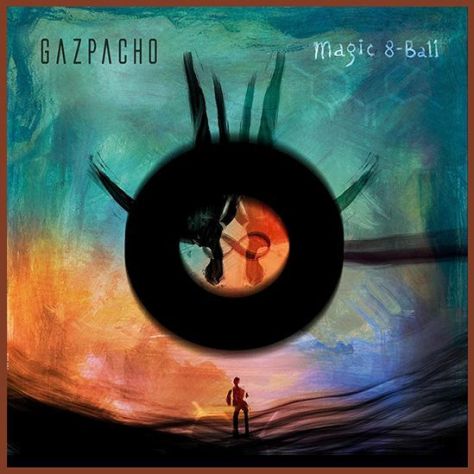
Gazpacho’s Magic 8 Ball: A Magical Musical Showcase

Greetings, Spirit of Cecilia readers! In this post, we share our thoughts on the latest album from a group we have long admired – Norway’s Gazpacho.

Tad: Brad, the first Gazpacho album I picked up was Missa Atropos (2010), and I have to admit, I couldn’t get into it. Jan-Henrik Ohme’s vocals seemed kind of weird, and none of the songs had memorable melodies, to my ears. However, on your recommendation, I bought their fourth album, Night (2007), and I fell in love with it. Their use of repetitive riffs throughout the entire album had a hypnotic effect on me, and it remains a favorite of mine.

They’ve just released their twelfth album (not counting a few live sets), Magic 8 Ball, and I think it is one of their best. It sounds like they have decided to embrace their talent for writing excellent “pop”-style songs, and this album includes eight thoroughly enjoyable tracks. After the deep and  philosophical musings of 2020’s Fireworker, Magic 8 Ball strikes me as a more lighthearted and accessible offering. I love it!

Brad: Tad!  Always a pleasure, my awesome friend.  And, to imagine that we get time to talk and write about things we absolutely love.  Life doesn’t get much better than this.

Yeah, I’m just a few years short of two decades of loving Gazpacho.  Sometime in the early 2000s, I really fell in love with Kscope and started purchasing everything the label was putting out.  To this day, I have a pretty strong Kscope collection.  

At the time, if you remember, the label was also putting out samplers.  On one of those samplers, in 2007, I was exposed to Gazpacho’s Night, and I purchased it immediately.  To say that I was taken with it would be an understatement.  Though I have loved everything Gazpacho has released, Night and Tick Tock remain my absolute favorites–standards by which I not only judge Gazpacho but all bands and all prog.  Once I encountered Night, I went back and purchased Bravo, When Earth Lets Go, and Firebird.  Those first three are much more art pop and art rock than their later stuff.  Beginning with Night, the only real way to describe their music is prog or post-prog.  

To be sure, I’ve never missed an album.  Each new release is a treat, to be sure.  Crazily enough, I even bought Introducing Gazpacho–a best of collection–simply because I wanted to support the band.  I even have a specific shelf in my home office in which I display my most prized music.  Gazpacho sits beautifully next to my Talk Talk, Big Big Train, Marillion, The Flower Kings, and Glass Hammer collections.

Somewhat infamously (at least in my household and with my wife), I was so taken with Fireworker at St. Croix, the previous Gazpacho album, that after purchasing the stand-alone CD, I purchased the blu-ray of the album.  Then, I was so taken with the blu-ray, I purchased the deluxe book/boxset of the album.  So, I have all three different versions of that glorious album!  So, yes, I’m a bit of a Gazpacho nut.

Now we have Magic-Eight Ball and it fits into its own category.  Indeed, this new album strikes me as a cross between their prog and post-prog albums post Night and their art pop albums, pre Night. The first five tracks really fit well within the prog and post-prog realm, but the last three tracks–especially “Magic Eight Ball” and “Immerwahr”–really feel like the first few albums.  That is, they’re more art pop or art rock than prog or post-prog.

That said, I really love this new album, though on my first few listens, I was a bit taken aback by “Magic Eight Ball” and “Immerwahr.”  I’m just no longer used to Gazpacho being pop!

Tad: Brad, I think you’ve hit on something – Magic 8 Ball really is a summation of what Gazpacho has done, going back to the beginning. Let’s talk about the songs themselves. The album opens with the stately “Starling”, which pulls me in with Ohme’s warm and intimate vocals. The instrumentation is primarily piano with some gorgeous violin work from Mikael Krømer. There is a sense of longing to the melody as it slowly builds in intensity. By the end of its 9-minute length, the guitars are roaring, but it’s never overwhelming. I love the gentle closing lyrics: Oh, let us be reborn. It’s one of my favorite opening tracks in the entire Gazpacho discography.

The second track, “We Are Strangers”,  is one of my favorites of the album, and it’s a great choice for a single. Don’t laugh, but when I first heard it, I kept thinking it reminded me of something, and then it hit me: the chord changes and Ohme’s vocals are very much in the vein of classic Duran Duran! I mean that as a compliment; I think Duran Duran made some of the best pop music of the ‘80s.

The third track, “Sky King” is another relatively hushed and intimate track. Once again, Gazpacho has come up with an incredibly beautiful melody that is sung with delicacy by Ohme. Even when Jon-Arne Vilbo’s guitars come crashing in, it sounds like Ohme is whispering in my ear. The mix of this album is masterful – every instrument is clearly delineated, even during moments of glorious guitar-heavy noise. 

So, three tracks in, and I’m already hopelessly in love with this album! 

Brad: Thanks, Tad.  An excellent analysis.  I love how track four, “Ceres,” begins with a haunted-sounding piano, and it continues throughout the song.  The rhythm of the song is extraordinary, especially the percussive elements mixed with the vocals.  The whole thing sounds simply driving, but in a properly gentle way.

Track five, the bizarrely titled “Gingerbread Men,” in contrast to the previous track, begins hesitatingly, playfully hinting at a loss of direction, before the guitar comes confidently in and persuasively centers the song.  There’s some really unusual sounds–maybe someone playing piano strings as percussion?  I like the lyrics, though I’m not sure what they’re supposed to mean:

Through the haze
Swallows flying high
While we sleep
In a world of steel
There’s no peace

It is my belief
That my life has been discreet
Door slammed shut
The big bad wolf of night
Fragments of hope in this endless climb
Lit up by traffic lights
Broken dreams
Parading gingermen
Aftermath
Turn away
From them

And:

And now the cars go by
Silver ghosts
Of all the gingermen
Washing out
Washed away
With the rain

You bettеr pack a suitcase
Escape beyond thе city limits
Or watch your old self disappear
Before the end is writ in dough
It can only be delayed

Track six, “Eight Ball” is shocking and discordant, only because it’s so poppy, contrasting with not only most of Gazpacho’s post-Night music but with the first half of this album in particular.  Indeed, “Eight Ball”’s actually downright whimsical, something that would not be out of place in an 1890’s carnival or early twentieth-century musical.  I’m getting Ray Bradbury vibes, mixed with some animated classic Disney!  Despite being poppy, “Eight Ball”’s really good, and it makes me realize that I should never box Gazpacho into any particular category.

The poppy feel continues with the seventh track, “Immerwahr,” though not the whimsy.  This sounds a lot like a Marillion song–especially with the guitar on it.  I especially like the lyrics:

Leaving Chekhov in the drawer
Throw the bankers at the window
Where the panic and the fear
Palest moonlight ever
Silver everywhere
Was the greater meaning
Hiding in the past
Did we send it all to bed
While the spirits of the poor
Jitterbug on judgement day

Track eight, “Unrisen,” finishes the album.  While more poppy than the first five tracks of the album, it’s the least poppy of the final three songs.  The strings are especially gorgeous, and I had no idea if they’re real or synthesized.  There’s a definite playful quality to the keyboards, too.  And, once again, I really like the lyrics, though I’m not sure what they mean.

Now you’re an astronaut lost in endless universe
Within thosе lines are older days of othеrs, I withhold the nameless why
In glass and velvet green

Mystic cryptic secret whispers
Let them be the dreamless sleep for you

See how they drift in clouds and
See how they smile
Higher, higher into the deep blue
Sail the sea of tranquility

They remind me of the lyrics from the earliest Gazpacho albums.

Tad, I’m not sure how to conclude this.  I really like the new Gazpacho, and I think it’s a fine addition to their output as a whole.  What really draws me to Gazpacho, though, are their concept albums.  As such, while I’ll certainly and happily return to Magic-Eight Ball, I’ll probably return more often to Night, Tick Tock, Missa Antropos, etc.

Tad: Brad, thank you for sharing those lyric excerpts. I have a hard time understanding the meaning of most Gazpacho songs; I think they aim more for a mood or atmosphere than for a specific message.

I’m glad you noted the whimsical nature of the title track – when I first heard it, I also thought of a carnival ride! It’s somewhat unique in their catalog, and I like it a lot. Now that you mention it, I think the entire album is suffused with whimsy, including the title. Did you ever have one of those magic 8 ball toys? You asked a question, shook it, and an answer would float up to a little window: “Maybe”, “Definitely so”, etc.

I’d like to also give some praise for the opening bars of the closing track, “Unrisen”. With the keyboards and violin accompanying Ohme’s vocals, it sounds downright baroque to my ears – like something Vivaldi or Thomas Tallis might have composed. I swear, I can even hear a harpsichord in the background! Anyway, that’s just an example of the many musical delights I’m enjoying on this album.

While I share your love for their concept albums, I think Magic 8 Ball is one of their strongest collection of tunes. They sound really energized and confident on every track, and I am impressed with how they keep pushing the envelope after twelve albums. Here’s to hoping they record many more!

Kate Bush’s Aerial Turns Twenty

Tad: Hello, Brad! Brad recently pointed out that Kate Bush’s album, Aerial, has turned 20 which is a good excuse to have a conversation about it. I have enjoyed seeing all the new fans Ms. Bush has acquired thanks to the inclusion of “Running Up That Hill” in the soundtrack of Stranger Things. That song is off my favorite album of hers, The Hounds of Love, but Aerial is a close second, in my estimation.

The two discs have different titles: Aerial: A Sea of Honey, and Aerial: A Sky of Honey. Listening to them recently rekindled my love for this sprawling set of songs. As a math teacher, I have to express my love for the track, “Pi”, in which Kate recites the digits of that ineffable irrational number and makes it sound seductive.

Brad: Hello, Tad!  So great to be talking with you.  A pleasure and an honor.  I’m writing this on the Feast of All Souls, the weather is gorgeous, and I got to sleep in an extra hour this morning.  It all seems so appropriate as I praise Kate Bush.

I have fond memories of first hearing about Bush in 1985.  I had missed her earlier albums, but I very well remember the release of Hounds of Love in the early fall of 1985.  It was my senior year of high school, and I was utterly blown away not only by side one–especially “Running Up That Hill,” “Hounds of Love,” “Big Sky,” and “Cloud Bursting.”  It was side two, “The Ninth Wave,” however, that completely gobsmacked me.  Here was pure unadulterated prog, all from an incredibly talented pop mistress.  I was in love (it didn’t hurt that Bush is incredibly attractive and possesses an angelic voice).

A year later, during my first semester at the University of Notre Dame, the compilation, The Whole Story, came out.  It, too, was excellent, and it made me start looking through Bush’s previous albums.  

Then, my very close friend, Greg Scheckler, now a renowned professional artist in New England, made for me a mixed tape of everything prior to Hounds of Love, complete with Greg’s own doodles.  It was glorious, and I wore that tape out!  Too bad–given Greg’s subsequent fame, his doodles might very well be worth something.  

Two years later, in the spring of 1988, one of my favorite movie directors, John Hughes, came out with one of his best films, She’s Having a Baby, and during the most emotional moment of the movie, Hughes used (and commissioned, I assume) Bush’s “This Woman’s Work.”  As much as I had loved Bush prior to this, this song and scene solidified my permanent loyalty to Bush.  Yes, at that point, I became obsessed with her as an artist.  And, I remain so to this day.

Though I very much liked The Sensual World and The Red Shoes, it was 2005’s Aerial that, once again, gobsmacked me.  Disk one was truly clever prog-pop, artistic to the nth degree, but it was disk two that blew me away.  42 minutes of pure prog, akin to what Bush had done with “The Ninth Wave,” but perhaps even better.  I loved side two, “A Sky of Honey,” that I played it on my iPod night after night as I fell asleep.  At the time, I was working on my biography of Christopher Dawson, and I was having a heck of a time shutting down my brain and sleeping.  Aerial: A Sky of Honey worked wonders on me–calming me down and serving as a potent but non-addictive Ambien!

Tad: Well, Brad, I didn’t immerse myself in Kate Bush’s music as much as you did – I think I was negatively influenced by that infamous Rolling Stone Record Guide that panned her work and compared her voice to a vacuum cleaner! Needless to say, I’ve revised my opinion of practically every artist those small-minded critics at RS dismissed.

Anyway, my thoughts on disc one of Aerial are all positive (with the exception of “Mrs. Bartolozzi”, which is a little too maudlin for me). “King of the Mountain” starts off sounding like a Windham Hill album with its synthesized/indigenous rhythms, and I absolutely love the way it transforms into a straight-ahead rocker. It’s a fantastic opener! I’ve already mentioned how much I like “Pi”, and the other highlight of the first disc is “How To Be Invisible”, another great rock song with a snaky, bluesy guitar hook that is wonderful. Her vocals dance over, under, and around the other instruments and demand I pay attention to her. It’s a wonderful song that I can listen to over and over again. “Joanni” and “A Coral Room” lower the temperature a bit and are a nice way to close out the disc.

I wonder if Ms. Bush would say she’s been influenced by Joni Mitchell? “A Coral Room” in particular sounds like late-70s Mitchell to my ears. 

Brad, give us your thoughts on disc one of Aerial, and start the discussion of disc two!

Brad: It’s worth remembering that when Aerial came out in November 2005, Bush hadn’t released anything since 1993’s The Red Shoes.  That’s a huge gap.  Beautifully, Bush spent those years raising her family rather than pursuing her career.  

Still, that was a long, long time for her fans to wait.  To be sure, though, it was worth waiting for.  

I really don’t know which album is better, Hounds of Love or Aerial.  When I list my all-time favorite albums (and I always list them without letting any artist/band have more than one entry), I always list Hounds of Love.  Most recently, I listed it as my 12th favorite album of all time.  I could just’ve as easily named Aerial.  I guess, in the long run, they’re pretty interchangeable in the grand scheme of excellence.

Like you, Tad, I thoroughly love disk one.  The Elvis-like confident sway of “King of the Mountain,” the quirky intensity of “Pi”, the Renaissance sound of “Bertie,” the insistence of the washing machine of “Mrs. Bartolozzi,” the truly clever pop of “How to be Invisible” with its incredible basslines, the profound and fetching tribute to St. Joan of Arc in “Joanni,” and the deep despair mixed with hope in the melancholic “A Coral Room” all contribute to this masterpiece of a release.

I think that what impresses me most about Bush is that she is always her own person, her own artist.  She sounds only, gloriously, like Kate Bush, even when she’s playfully imitating Elvis on the first track of the album.

But, for me, it’s disk two that makes this album truly extraordinary.  At 42 minutes, “A Sky of Honey” is simply perfection itself.  When folks talk about albums that demand headphones for a full appreciation, this is that album!  

From the child whispers and bird sounds of the opening moments to the anticipatory keyboards and string to Bush’s lush vocals with meaningful lyrics to the spoken expositions, this is a complete and total celebration of life in all its varied mysteries and profound wonders.  

Tad, as you and I have talked about, it’s often the bass that makes a great album a great album.  The bass work on “A Sky of Honey” is spectacular.  Combined with Bush’s vocal lilt, everything builds and builds until the music itself is ready to explode–the tension as thick as can be–in the last 15 or so minutes of the album.  Stunning.  Just simply stunning.

If Bush had released “A Sky of Honey” as a stand-alone album, I have no doubt that it would rank up there with Close to the Edge or The Colour of Spring.

Tad: Brad, you hit on something crucial when it comes to understanding Kate Bush; you said “she is always her own person, her own artist”. I remember reading an article about the recording of Hounds Of Love, and her record label was worried about marketing it, because it was so different from her earlier work. I believe she recorded it in her home studio, and she completely disregarded her label’s suggestions (to our benefit, I would add!). She is an artist who is fearless and blazes her own trail, not giving any thought to current musical fashions. Will people be listening to Taylor Swift’s music 50 years from now? I doubt it. Will people be listening to Kate Bush’s? Absolutely!

As far as my thoughts on “A Sky Of Honey”, I am in complete agreement with you. I think of it as a musical suite that chronicles a day – the chirping birds in the intro are greeting the dawn, and it closes with “Nocturn”. However, I’m not sure how the title track, “Aerial”, fits in with my theory! It’s a fairly raucous track that, as you so aptly describe it, is ready to explode.

Also, thank you for pointing out that “Joanni” is referring to St. Joan of Arc. Once I understood that, it clicked into place. 

And so, dear readers, if you aren’t familiar with Aerial, we recommend you check it out. It is timeless and beautiful music!

An Interview with Jonas Lindberg

Jonas Lindberg & The Other Side’s 2022 album, Miles From Nowhere, burst onto the prog scene and made a lot of “Best of” lists. They are about to release the follow-up, Time Frames, and it does not disappoint. Lindberg was kind enough to take a few minutes and chat with me via Zoom.

Hi Jonas, thanks for taking the time to talk with me about your new album. Miles from Nowhere was my favorite album of 2022, and I am liking Time Frames just as much. Was the recording process for Time Frames the same as for Miles From Nowhere?

Pretty much – the recording process is the same, which means I do a full production demo, and then remove the drums. So Jonathan [Lundberg] records the drums, and he sends them to me, and I record almost everything, and then I go around and record vocals and lead guitars with the others.

So, the difference this time is that I actually have a studio to work in! I actually have recorded this one entirely in the studio. With Miles From Nowhere, most of my overdubs were recorded in my living room. So that’s the difference!

Well, Miles From Nowhere still sounds good, for being recorded in your living room!

Yes, it’s about where to put the mikes, and to understand that the room sounds weird.

I came of age in the ’70s, and I loved artists like Todd Rundgren, Boston, and Styx, and I’m hearing a lot of that style of rock in your music. Am I off-base with that?

Probably not. I haven’t listened to a lot of that, really. My influences are more – in the progressive genre – more Spock’s Beard. But they have probably listened to those bands, you know. I got that question earlier – it’s like it’s a new generation of influences. Of course, Pink Floyd has always been a big influence for me.

Yes, I can definitely hear early Spock’s Beard in your music. 

So, what are some of the lyrical topics in Time Frames?

Well, I tend to write about things that have happened to me. If I don’t have a clear idea what I want to write about, I take something that is evident or around me at the time. Some of the lyrics ended up being about parenting, you know, or my daughter, because I was on parental leave when I wrote the lyrics. A lot of the lyrics come from thoughts or things that happened during that time. So that might be a kind of overarching topic. But then you also have something like “Galactic Velvet”, for example, that’s completely different – it’s about space! [Chuckle]

I’m glad you brought that up; that’s one of my favorite songs. I love Jenny Storm’s singing on that. 

Yeah, she’s awesome. She’s really easy to work with, and she’s also incredibly fast at getting the right takes. For example, she sings a part in “The Wind” – the epic – her performance there was done in three takes.

What other musicians besides Jenny are on the new album?

Well, mostly friends of mine from university days. Jonas [Sundqvist], who is the other lead vocalist, we’ve known each other going back twenty years ago. We’re always writing music together, and we hang out together. We found each other through a Sting project that he had, doing Sting covers. And we went to school with Nicklas Thelin, who plays guitars; we went to the same classes at university. There’s Jonathan on drums, who I got to know better when I moved down to Stockholm and we ended up playing in a few different projects. Around the same period I met Calle [Schönning], the other guitar player who plays most of the lead guitar on the album. He’s just an incredible guitar player. Everything he plays, you know, everything is great! And then, also of course, my brother, [Joel Lindberg] plays guitar on a couple of songs. And my girlfriend Maria Olsson plays percussion.

Do you guys have any plans to tour?

I hope so, but it’s hard to tour, because I don’t really have a booking agent to make that happen. So I’m kind of doing everything myself! Right now, I’m more focusing on releasing the album, and then I’m planning on doing at least one or a couple of release concerts, somewhere in Sweden some time next year – I’m aiming for springtime. Then we’ll have to take it from there and see what happens. – how the album is received, you know.

Maybe you could do a pay-per-view streaming concert, or something like that.

Yeah, some kind of live film I’ve had in my head. Just an idea, but I haven’t anything set in stone – I’m just sketching at this point.

What are you listening to right now, besides your own music?

Right now, I’m in a little Steven Wilson period. I’ve been listening back through his catalog. When I was mixing this album, The Overview came out. And, being a fan of Pink Floyd, I was like, “Oh! Yes! That’s perfect for me.” Then I started going back, and I found all these albums that I had never listened to. That’s what I’ve been doing, mostly.

I’ve been a Steven Wilson fan since his Porcupine Tree days. I think my favorite solo album of his is his first, Insurgentes.

I haven’t gotten that far back yet!

Anything else you’d like to share, Jonas?

Go check out the album at my website, and I hope you like it!

Many thanks to Jonas for taking the time to talk with me, and we wish him lots of success with this new album – it’s really good! If you love progressive rock with a classic rock feel, you will not be disappointed with Time Frames. It is already one of my favorite albums of the year.

Jonas Lindberg and the Other Side’s official website is:  www.lindbergmusic.com/shop

Here’s the video for the single “Faces Of Stone”:

Lifesigns Live In The Netherlands: Instantly Classic Prog

The British group, Lifesigns, released a 2-disc live album recorded in the Netherlands back in 2023. Brad and Tad have a conversation about why this is a fantastic live album and why Lifesigns is a fantastic group.

Tad: Brad, I’m so glad you suggested we review this album. It’s been out a couple of years, but it didn’t get the attention it deserves. I became a fan of Lifesigns when they released Altitude in 2021, which was one of my favorite albums of that year. Live In The Netherlands features live renditions of almost that entire album, which is definitely a plus!

On listening to it, I am impressed with how well they replicate the studio versions of the songs, while adding a lot of energy. 

Brad: Thanks so much, Tad.  From what I can tell, Lifesigns is pretty huge in Europe but just does get enough attention here in the U.S.  Our loss!  Back when we were at Progarchy, John Young got ahold of me and let me know about Lifesigns.  I knew about Young, of course–he’s a huge name in the prog and rock worlds–and I was honored, to be sure, to communicate with him.  He’s not only a gentleman, but I believe he is truly a good, good soul.  And, obviously, what a talent.  So, I’ve been proudly following Lifesigns from the beginning, being introduced to them with their first amazing album, the self titled Lifesigns.  

My first and lasting impression of that album is that it’s one of prog joy, much more closely related to, say, a Transatlantic album, than, say, Storm Corrosion.  There’s a real beauty as well as real innocence to the music that I deeply admire.  

When I say it’s related to Transatlantic, I don’t mean in sound, but in atmosphere.  While I wouldn’t call Lifesigns a Christian band, I would say they’re most certainly not adverse to Christianity and all it entails.  And, the fact that the openly Christian Dave Bainbridge is now a part of the band certainly doesn’t hurt this reputation.  It’s definitely not an in-your-face Christianity like some of Neal Morse’s work tends to be, but rather music and lyrics inspired by Christianity.  Again, the best way I can explain it is that Lifesigns radiates joy.

There’s also something humorous about what I just said.  When I became Facebook friends with John Young, back in 2013, I also became friends with the first bassist of the band, Nick Beggs.  Beggs, of course, is well known in the prog world, especially given his work with Steven Wilson.  Almost immediately after I became friends with Beggs, he posted a number of pictures of himself in the buff.  I will admit, I was utterly shocked and, in no uncertain terms, made my horror quite plain on social media!  Ha.  There’s a puritan streak in me, to be sure.  Young, however, gently reprimanded Beggs and suggested this might not be the best way to introduce the band to the public.  It all turned out well.

Tad: Brad, that is hilarious! Beggs is definitely a prankster, but he is an amazingly talented bassist.

Let’s talk about Lifesign’s Live In The Netherlands. It features an excellent playlist, with the first half of the show devoted to old favorites like “N” and “At the End of the World”. It’s the second half that really gets me excited, where they perform the entire Altitude album. They are an incredibly tight unit, and Dave Bainbridge really shines on guitar.

Like you, Altitude was a favorite of mine the year it came out, and I immediately picked up all of their other albums. I still think Altitude is their best, but they haven’t released a weak album to date. I love the title track, which runs a generous 15:49, but never lags. John Young does a fantastic job on keyboards and vocals. “Last One Home” is one of my all-time favorite songs, regardless of genre. I think it is just beautiful in its perfect melding of song and lyrics. The version on Live In The Netherlands is outstanding, with Bainbridge turning in a wonderful guitar solo reminiscent of Gilmour at his best. 

It’s interesting you find Lifesigns reminding you of Transatlantic, and I can certainly hear that in terms of atmosphere, as you say. When I listen to Lifesigns, I am reminded of the classic prog band, UK – especially their eponymous debut album that featured Alan Holdsworth on guitar. I think it’s because Young’s vocals remind me of the late, great John Wetton’s. Also, Young’s melodies have a way of turning a phrase that brings to mind late ‘70s prog. 

Anyway, I think for someone who enjoys melodic and uplifting prog, Lifesigns is hard to beat, and Live In The Netherlands is the perfect introduction to their music. It covers the best songs from their first two albums as well as including an excellent performance of their complete third album. Lifesigns doesn’t have much music on the streaming services, so I encourage people to support them by buying hard copies of their albums. 

Brad: Tad, what a great analysis.  I’d not thought of Lifesigns resembling late 1970s proggers like UK.  Now that you’ve said that, I can’t unsee it.  I think you’re absolutely right.  Maybe John Young has a particular 1970s sound that I’ve never quite realized. 

Again, for me, it’s best summed up as “joy” rather than overly precious or overly intricate or overly self-involved.  For whatever reason, John Young and his music inspires me to be a better person, to approach my own art with a love of life and a gratitude for all that made my own life possible.  Hence, I think of it as being Christian adjacent rather than out and out Christian.  Again, we know Bainbridge’s Christianity, but if someone told me that Young was also serious about his faith, I wouldn’t be surprised.

And agreed, Lifesign’s three (only three!) studio albums are all excellent, and I very much love the two live releases.  I suppose, if pushed, I would say that Lifesigns (the debut album from 2013) is my favorite, only because it was my introduction to them.  In terms of quality of music and lyrics and vocals, I would rank all three equally.  Again, this music just makes me want to be a better person. 

We haven’t explicitly mentioned Cardington, and I would like to praise that album as well for being every bit the equal of Lifesigns and Altitude.

If I had one complaint, it would be that I want more Lifesigns music!  Call me greedy, but I would love more than three albums over a decade.  Still, I’m sure that John has a ton of things going on, so I’m deeply appreciative of what we do have.

Though I’d not thought of this as having a late 1970s sound until you mentioned it, I would love for more prog to have this feel and atmosphere to it.  There are a hundred Radiohead and Porcupine Tree inspired bands, where are the John Young inspired bands?  I would love more of this kind of music: classy and classic, beautifully constructed, and majestically orchestrated.  The lyrics are perfect and compelling as is the music itself.

For me, Tad, Live in the Netherlands perfectly captures all of this.  Indeed, in terms of sound quality, I’m especially impressed, as the live album sounds just like the studio release, despite being in an uncontrolled environment.  I love the first set of older material and the second set of newer material.  My only complaint is that all of the banter has been removed from the live release.  I’m sure that John spoke to the audience, and I would love to know what he had to say.  Specifically, given what a gentleman he is, I’m sure that he’s an excellent frontman.

John, Jon, Steve, Frank, and Dave: if you’re reading this, please know that you are loved, and my desire to have more music from you is meant in the best possible way.  Thank you, hugely, for everything you’ve given us already.  Now, we just need to get all Americans to listen to you. . . .

Tad: From your keyboard to John Young’s ears, Brad! Yes, I wish they released more music, because the contemporary music scene needs more like it. And, dear readers, you can find all of Lifesigns’ music and merchandise at https://lifesignsmusic.co.uk/. Check them out!

Tim Bowness’s My Hotel Year: A Worthy and Meaningful Beginning

Please forgive the brevity of this review.  Maybe we could call it a micro-review.  I’ve been a huge Tim Bowness fan ever since first encountering him through his extraordinary work in No-Man.  Indeed, it was about 23 years ago that I first encountered him, finding him because of his association with Steven Wilson.  Again, I’ve been a huge fan ever since.  If anyone inherited the mantle of Mark Hollis, it’s either Tim Bowness or Kevin McCormick.  Everything Bowness touches is just achingly beautiful.  Gifted with a very handsome voice, he brings a certain longing to all his vocals.  I should also note, like Hollis (Bowness has a better voice than Hollis, but I will never fault Hollis for that—he gave everything he had), Bowness understands the sheer importance of meaningful lyrics to music.  Writing all of this right now, reminds me that I would love to write a long article on the many excellences of Tim Bowness.  He deserves so much more than this micro-review.  Sadly (or brilliantly actually), I’m in between big writing projects on the Declaration of Independence as well as on sociologist Robert Nisbet and on writer Ray Bradbury.  That stated, my afternoon sound track has been Bowness’ s first album, My Hotel Year, originally released in 2004.  I was surprised to find Bowness’s own negative recollection and assessment of the album on his personal website.  “Along with Wild OperaMy Hotel Year is the least loved album I’ve ever made and, in some ways, it’s the album of mine I love least as well,” Bowness confesses. “Although 2003-2004 wasn’t a particularly bad time for me, the resulting album seemed lyrically sad and musically monochromatic. No matter what was done to sonically soften the blows, the album had an innate bleakness that seemed to dictate itself.”  There’s no doubt that the album is lyrically sad, but it’s incredibly and movingly authentic.  And, I would never call the music monochromatic.  Rather, I would say that the music is presented in a rather cohesive fashion.  That is, it’s an album rather than a collection of eleven songs.  Every song bleeds into every other song, regardless of the silence between thetracks.  While I like Bowness’s other albums better, I would encourage anyone and everyone to go back to this foundational album, My Hotel Year.  For what it’s worth, I think it’s glorious, and it certainly inspired my other writing this afternoon.  For that, I’m deeply grateful.

To order My Hotel Year, always buy from my favorite on-line retailer, The Burning Shed.

The Flower Kings’ Latest: A Hymn to Love

Hello Spirit of Cecilia Readers, it’s with great pleasure that Tad and Brad review the latest release from their beloved Flower Kings, Love (Insideout Music).  Here are their thoughts.

Brad: As always, a great pleasure to do this with you, my friend.  As you and I have talked before, I’ve been a Flower Kings fanatic (and yes, I mean a fanatic, a hyper fan!) for twenty-five years now.  A wonderful student–now one of my colleagues in the philosophy department at Hillsdale–let me borrow his copy of the band’s 1999 Flower Power.  I immediately fell in love with it, bought it, and bought my favorite album by the band, Space Revolver, to me one of the absolutely quintessential prog albums of all time.  Once I had Flower Power and Space Revolver, I bought everything before that: Stolt’s The Flower King, Back In the World of Adventures, Retropolis, Stardust We Are.  From Space Revolver to the present, I’ve bought every studio album, every DVD, every live album, every compilation, and both box sets on the day each has been released. I have two of their fan release albums, too, and two of their official bootlegs, but they’re really hard to come by.  Every once in a while they pop up on Ebay, andI pounce on them.  My point being, though, I’m a definite completist when it comes to Roine Stolt, just like I am with Steven Wilson.  Proudly so.  Both, absolutely amazing talents.

Through Facebook, I’ve had a few moments of correspondence with Stolt, and he’s a total gentleman.  Frankly, he’d be a blast over a beer.

But, Tad, let’s start with you.  You’re relatively new to the Flower Kings.  What made you change your mind about them, or what made you finally embrace them?

Tad: Brad, it is great to discuss this group’s music with you, and I have you to thank for introducing me to them. I knew about them for years, but I really didn’t get into their work until I picked up Space Revolver in a used record store. All of a sudden, things clicked, and I was able to appreciate what Stolt and his fellow Flower Kings were doing. I have since acquired all of their albums (but not the bootlegs and limited editions you have).

I have to say, they are some of the most prolific artists working today. They release an album practically every year, which are often two-disc sets. Even their single-disc albums are filled to the brim, including their latest, Love, which contains 71 minutes of music. What are your initial impressions of this one?

Brad: Tad, so glad you found and fell in love with Space Revolver.  Definitely a top-20 all time album for me, maybe even a top 15.  I certainly think it’s a classic of third-wave prog.  Everything just works on that album–the music, the shifts, the tone, the lyrics, the playfulness.  Yeah, I just love that album no matter how many times I’ve listened to it.

And, yes, I’m really happy with the new album.  It’s mellower, overall, than most previous Flower King’s releases, and it’s relatively tame, again compared to the band’s previous releases.

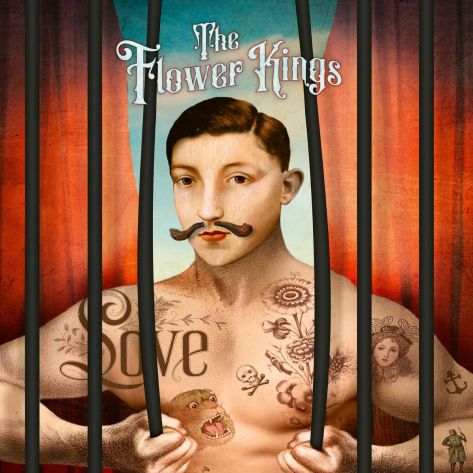
I had received the promo copy of the album from Inside Out, and I pretty much fell in love on the first listen, but, then, to make it even greater, my physical copy arrived.  I was so surprised to open up the CD and have the beautiful portrait of Mary and the Child staring up at me!  I’ve thoroughly enjoyed Stolt’s lyrics going all the way back to The Flower King (1994), and he’s always been respectful of Christianity.  His Christianity–at least as it comes across in his lyrics–is more mythic and symbolic than tangible and concrete.  Stolt especially loves making references to the “Holy Mother.”  I assume that’s Mary, but I’m not sure, of course.  Being Swedish, Stolt almost certainly comes for a Lutheran background.  As much as Luther loved Mary (he did, adamantly), Lutherans generally don’t put much emphasis on her.  So, one of the mysteries of Stolt and the Flower Kings.  

Here are two examples of Stolt’s rather hippyish and cosmic take on Christianity.  First, in his thank yous on Love, he writes “Remember: War is just fear and failure, FEAR manifested in small people with shady political or religious agendas–LOVE is always the winner.”

And, again, take the lyrics for track two of the album, “The Elder”:

You found your way – So come what may

You found your way – So come what may

So I have made it here

A distant light getting near

if you just knew where to begin

This holy mess you’re in – Waiting on a dream

I’ve made my peace with those who’d done me wrong

Those broken dreams that followed me along

So no more worries – If we could bury hate –

There’s nothing greater than the love we save

Betting on the love you save

Betting on the love you crave

So open up those doors – letting out the waters

And now you’re waiting on a tide

I once had a vision – behold them lights

The lights of salvation

So you look in his eyes – resurrection –

He’s risen – Came down upon me –

is it real what I’m feelin’

We can get much higher – We can start a fire

Turn away from lies – Looking eye to eye

We can catch a light – Brighten up this night

We will never die – We will never die

What you get is what you are

So give away a shiny star

Keep it closer to your heart

Do never sway – Don’t break no parts

What you give is what you are!

What was given – looking closer – Taint your soul

It’s unforgiven – cause the world has plans for you

Is it real – is it fiction? – Crucifixion

The world may soon just set you free

Here we are in silent trenches

Come this far – lived life let reckless

Waiting for the lights to change

I’m waiting for the outbound train

You found your way – So come what may

You’ve found your way

Notice, of course, the use of salvation, risen, resurrection, Crucifixion.  None of it is blatant theologically, but it is blatantly symbolically and mythically.

I once tried to outline all of the albums up through 2013.  It would be nice to update this, as the Flower Kings have released a lot since 2013.  But, here, at least is what I thought up to that point:
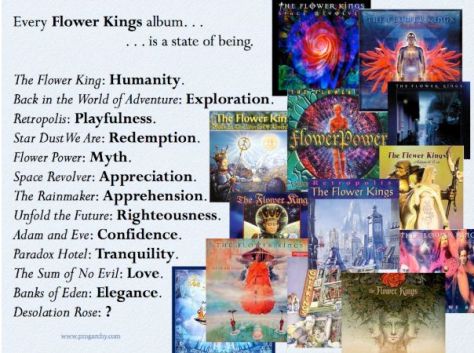
And, I have to note as well, Tad, that I once had huge aspirations of writing a book about the Flower Kings, using each album as a chapter and inspiration, a theme pregnant with whole worlds.

Tad: Brad, I love your Aristotelian classification of their discography! You have some updating to do, though, don’t you? I hope you follow through on that book – I think prog fans would love it.

I also noticed and appreciated those lyrics in “The Elder” the first time I heard that track. It is one of my favorites on the album. My overall impression of Love is one of all-encompassing joy and optimism – which is not surprising, given the album’s title! The first song, “We Claim The Moon”, bursts out with a happy sound of guitars and keyboards that conjures up classic Traffic. The line, “I’ll never get over the way you brought down the moon” brings to mind Jimmy Stewart and Donna Reed in It’s a Wonderful Life

I agree with you that this album is mellower, but, paradoxically, I think there is a lot of energy in the performances. The vocals on Love strike me as some of their best ever, with Hans Froberg and Roine Stolt trading leads and harmonizing beautifully, especially in “The Phoenix”. I love the way that track starts out acoustically with a celtic feel, and then features an outstanding guitar solo from Roine. 

Another highlight is the final song, “Considerations”, which is written by Michael Stolt and Jannica Lund. It is a truly majestic track that I admire more and more as I listen to it. The “Shine on, shine on love” section is one of my favorite musical moments.

I also appreciate the way the Kings have created a unified whole from these twelve tracks. Musical motifs reappear throughout the album, as well as lyrical themes – did you notice that “Love Is” (track 10) has the line, “How can you leave us now?”, which is the title of the album’s third track! It’s little details like that that tell me Love is meant to be listened to in its entirety to fully appreciate its message. And what a message – despite all the negative forces in our world, love can conquer all. I really appreciate how bravely Flower Kings go against the cultural grain of our time: instead of complaining about hatred and division, they choose to celebrate the power of human (and spiritual) love.

Brad: You put that all so beautifully, Tad.  I really like the idea that the album is really love calling on love, inspiring  us to be our best.  Frankly, I think that’s a perfect summation of Roine Stolt’s artistry and what he’s accomplished over the past 31 years.  All rather stunning and motivating.  And, so once again, I’m brought back to the beginning–I’m extremely proud to be a fanatic when it comes to the Flower Kings.

As always, we encourage you to buy your Flower Kings merchandise from the best online retailer, Burning Shed.

Assessing Neal Morse’s Cosmic Cathedral

Hello faithful Spirit of Cecilia readers.  As always, thank you for joining us for our latest review.  Up this time, Neal Morse’s new supergroup, Cosmic Cathedral and the band’s debut album, Deep Water.  In addition to Morse himself on keyboards, the band includes Phil Keaggy on guitar, Chester Thompson on drums, and Byron House on bass.  While this is a Morse-driven project, the band co-wrote much (but not all) of the music, and Morse shares credit, lyrically, with Keaggy on one song.  The CD comes out from Insideout Music/Sony.  Here at Spirit of Cecilia, Tad and Carl have especially praised the album.  In this review, Tad and Brad (wow, our names rhyme) assess the new album.

Brad: Well, I’m not sure I’m the proper person to start this conversation, especially given how much Tad and Carl like it.  I must admit, I’m still rather skeptical of the album.  Parts of it, I love.  In particular, I’m quite taken with the keyboards, the guitar work, bass (though, the bass needs to be higher in the mix), and drums.  Each of these musicians is, simply, spectacular.

I’ve seen other reviewers refer to the album and the band as espousing “Yacht Prog,” and, for better or worse, I can see that complaint, especially with the first half of the album.  I wouldn’t call it “Yacht Prog,” but I might be tempted to refer to it as “Adult Contemporary Prog,” a kind of gentle prog for the older set.

And, since I’m being negative, I’ll be negative about this as well.  The lyrics are a little too evangelical for my tastes.  As I hope is obvious–after all, we are dedicated to the Spirit of St. Cecilia, patron saint of music–I have no problem with one expressing his or her faith in his or her art!  My gosh, most of the best art in the history of the world has been inspired by faith.  But, when Morse sings “I sing for Jesus–it was for me He died/He unlocked the door to heaven/Now we can pass from death to life,” my soul cringes just a bit.  It’s not that I disagree with the theology or the sentiment, but I disagree with the lack of art in the statement.  Given the weight and gravity of the subject matter, these lyrics should have been deep, stirring, and beautiful–not yelled out in a vulgar fashion.

Again, though, there’s much I like about the album.  Though I didn’t like the first few moments of keyboard on the first track, “The Heart of Life,” once the guitar kicks in, the song simply rocks.  And, I really liked about a ⅓ of the Deep Water Suite.  Again, I was especially taken with the guitar work throughout the album and very much so on the suite.  It struck me as very much a Christian version of a Spock’s Beard epic.

I should also admit that I have really mixed feelings about Morse.  At times in my adult life, I’ve been quite taken with him–especially with the last Spock’s Beard album, Snow, as well as with several of his solo albums, Testimony, Lifeline, and Question Mark especially.  I also really like his work with Transatlantic.  I’ve seen him in concert several times, and I’ve been an off and on member of his Inner Circle fan club.  But, his blatant anti-Catholicism–especially on Sola Scriptura–really turns me off.  I don’t see that in Cosmic Cathedral, however.

Tad: Thanks for getting this conversation going, Brad! As you mentioned, I like this album a lot. I wasn’t prepared to enjoy it as much as I do, though. I pretty much buy anything Morse releases, but his previous album with The Resonance, No HIll For a Climber, didn’t really resonate (!) with me. I listened to it several times, but nothing was very memorable.

With Cosmic Cathedral, on the other hand, I think Morse has surrounded himself with an extraordinary group of musicians. Phil Keaggy is one of the greatest living guitarists, and Chester Thompson is a phenomenal drummer – I’ve been a fan of his since the days when he toured with Genesis. I was surprised that Morse tapped Byron House to play bass, since his background is primarily in country music (Foster and Lloyd, Emmylou Harris, Vince Gill, Buddy and Julie Miller, et al.), but he’s a great choice. I’ve admired his work for years, as he brought a jazz sensibility to every project he’s worked on. These three men really push Morse, I believe.

That said, I can see why you might label this album “Yacht Prog”. I could do without “I Won’t Make It”, and “Walking In Daylight” has a definite seventies laid-back vibe to it (but Keaggy’s guitar solo redeems it in the end). But I love the first track, “The Heart of Life”. It has such an energetic intro, and it never lets up. Thompson’s drumming is fantastically driving throughout. I have a ton of Keaggy albums, and I’ve never heard him let loose like he does on this track. Melody-wise, it’s immediately recognizable as a Morse composition – lots of buildup to a satisfying resolution. Lyrically, I think this song is fairly restrained – I agree that sometimes Morse can hit you with a two-by-four when a pat on the shoulder would suffice, but I have to admire his consistency – it’s been 22 (!) years since he recorded Testimony, and he has remained true to his convictions.

Brad: Tad, thanks so much for this.  I really appreciate your viewpoint.  After reading this, I went back to Morse’s Sola Scriptura.  Here’s a sample of his lyrics.

Giving up the time we’ve got to live a life completely

Giving over to the lust that rages in the mind

The Captain fills his place with gold while all the ship is sinking

Calls himself the Bishop-Prince and blood’s his favorite wine

Gardens grow as people know and sense the smell of slaughter

Every soul and Saxon senses something’s gone awry

The woman in the wilderness – the beast has nearly got her

Men surround the Bishop-Prince and sing their bloody cry

In the name of God you must die

All that’s not our truth is a lie

In the name of God you must die

In the name of God you must die

If you want some teeth, just ask why

In the name of God you must die

The pearl is trodden underfoot into the muck and mire

We’ll take the Roman Gods except the names will all be changed

The woman’s fed by ravens and her feet are in the fire

Cold and bare she’s holding there 1260 days

In the name of God you must die

All that’s not our truth is a lie

In the name of God you must die

In the name of God you must die

We won’t let a sleeping dog lie

In the name of God you must die

And the Captain calls

If they won’t pay they’ll soon be scratching the dungeon walls

From the highest height to the tenement halls – it’s true

Look out we’re comin’ for you!

In the name of God you must die

In the name of God you must die

He also calls the Catholic Church the “whore.”  

I have the reissue of his first album with Spock’s Beard.  The opening track uses the “F” word repeatedly.  In the reissue, Morse warns listeners that they shouldn’t play the album in front of their kids.  Honestly, I’d rather my kids hear the “F” word than his brutal and malicious attack on the Catholic Church.

Admittedly, I try not to think about these things when Morse releases new material, but it’s hard to forget.

The Genius Rages: Andy Tillison’s Le Sacre Du Travail (2013)

Genius

Andy Tillison is a genius.  It must stated as bluntly as possible.  Tillison is a genius.  He’s a musical genius and a lyrical genius, but he’s also just a genius genius.  Actually, this might seem redundant, but it’s not.  Only genius could properly modify genius when it comes to Tillison’s art.

As I mentioned in a previous post, anything Tillison releases is not just an event, but a moment.  A real moment, not a fleeting one.  A moment of seriousness and reflection.

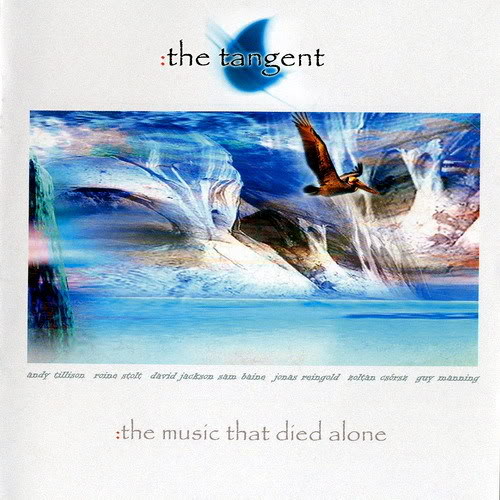
From the first I listened to The Tangent’s The Music That Died Alone, a full decade ago, I knew there was something special going on.  Not only did the cover art entrance me,  but the very depth and seriousness of the music captured my then 35-year old imagination.  I felt as though Tillison was speaking directly to me, asking me to remember the greatness of the musicians who came before 2003, but also inviting me–in a very meaningful fashion–to move forward with him.

cover_2458173122009

The Music That Died Alone really serves as a powerful nexus between past and present, present and future, up and down, and every which way.  Only the evocative power of the lyrics match the classiness and free flow (though, we all know what makes something seem free is often a highly disciplined mind and soul) of the music.

At the time I first heard them, I mentally labeled The Tangent a “neo-Canterbury band,” but I was too limited in my imagination, and I would discover this very quickly.  Indeed, each subsequent The Tangent album offers new pleasures and paths for adventure, but always with that power of that Tillison nexus, connecting the past and the future with beauty.

not as good

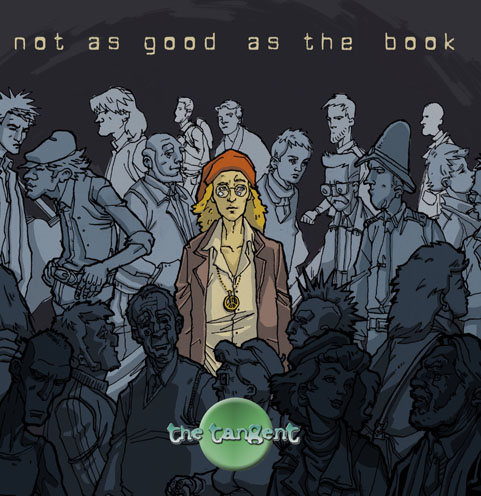
Tillison makes this connection literal in his very fine novella, “Not as Good as the Book: A Midlife Crisis in a Minor.”  The dedication lists close to 100 names, including numerous members (first names only) of the members of various bands from Yes to ELP to The Flower Kings to Spock’s Beard to XTC and to authors such as Arthur C. Clarke and J.R.R. Tolkien.  None of this is contrived.  Just pure Tillison expressions of gratitude.

Privileged (well, blessed, frankly, if you’ll pardon a blatant religious term) to receive a review copy of the new album, Le Sacre Du Travail (Out officially June 24, 2013 from InsideOut Music), I dove right into the music.  Full immersion.  With every album, Tillison has only improved.  Each album has bettered the already previous excellent album with even more classiness, more intensity, and more meaning.  Not an easy feat in this modern world of chaos and consumerist fetishes.

With this album, though, Tillison has moved forward the equivalent of several The Tangent albums.  Again, to be blunt, the album is mind-boggingly good.

Easy listening?  No.  Of course not.  It’s Tillison, it’s prog, and it’s excellent.  What part of those three things suggests easy.  No excellent thing is easy.  Can’t be.  It wouldn’t and couldn’t be excellent if easy.

Satisfying listening?  Oh, yes.  A thousand times, yes.

For one thing, Tillison has brought together some of the finest artists in the business.  I was convinced of the potential greatness of this new album when I first heard David Longdon (in my not so humble opinion, the finest voice in rock today) would appear on the album.  But, add a number of others in: Jonas Reingold (The Flower Kings), Jakko Jakszyk (Level 42), Theo Travis (Soft Machine), and Gavin Harrison (Porcupine Tree).  And, it doesn’t stop here.  Add Brian Watson (DPRP.net)’s spectacular art work and the cool dj voice of Geoff Banks (Prog Dog show).  Ok, this is one very, very solid lineup of the best of the best.

1913

Ten years ago, Tillison released the first The Tangent album.  100 years ago, Igor Stravinsky released what was arguably his masterpiece and certainly one of the finest pieces of music of the twentieth-century, The Rite of Spring.  While The Rite of Spring hasn’t pervaded our culture in the way the fourth movement of Beethoven’s 9th Symphony has, it’s a close second.  Every person, an appreciator of music or not, knows at least part of The Rite of Spring.

Imagine for a moment 1913.  It was, by almost every standard, the last great year of the optimism of western civilization.  Technology upon technology had produced innumerable advancements, almost everyone in the western world believed in unlimited progress, and even devout Christian artists (such as Stravinsky) had no problems embracing the greatest elements of paganism and folk culture.

In almost every way, Stravinsky explored not only the folk traditions of his era, but he embraced and, really, transcended the modernist movement in music.  He bested it.  His Rite is full of tensions and dissonance, but each of these is overruled and corrected by harmony and emergent joy.  The Rite, no matter how pagan, also has deep roots in the Judeo-Christian and Greco-Roman traditions.  The Rite–the ritual, the liturgy–has been a part of western civilization since the pre-Socratics debated about the origins of the cycles of the world and history: earth, water, air, or fire.

MARTIN STEPHEN COVER PIC

2013

Imagine for a moment 2013.  Well, ok, just look around.  Technology remains exponential in its growth, but few would praise the development of the Atomic Bomb, the gas chamber, or the aerial bomber.  But, then, there’s the iPod.  And, unless you’re Steven Wilson, you probably think your iPod is ok.  Certainly better than an Atomic Bomb.

Optimism?  No.  I don’t need to go into detail, but, suffice it state, T.S. Eliot might very well have been correct when in the late 1940s he claimed the western world in an advancing stage of darkness:

the tower overthrown, the bells upturned, what have we to do

But stand with empty hands and palms turned upwards

In an age which advances progressively backwards?

The U.S. and the U.K. are currently waging numerous wars, and there seems to be no end in sight.

The Rite of Work

As with the Stravinsky of 1913, the Tillison of 2013 surveys the cultural landscape.  Unlike his Russian counterpart, the Yorkshire man finds little to celebrate in this whirligig of modernity.

The “good guy anarchist,” as he described himself in a recent interview (and, not to be too political, but more than one progarchist would be in great sympathy with Tillison on this point), Tillison observes not the Rite of Spring, but the liturgy of work.  We get up, we commute, we sit in our cubicle, we commute again, we eat, we drink, we have sex, we watch a little t.v., and we sleep.  The cycle beings again every Monday, Tuesday, Wednesday, Thursday, and Friday.  Who made this deal, Tillison wisely asks.

Throughout it all–pure prog interspersed with very modernist musical elements from time to time–Tillison references much in our modern folk and popular culture, including The Sound of Music and Rush (2112):

In a Rush T-shirt, pony tail, 2112 tatooed on his hands

He’s a star through thick & thin

But he still gets that data in

A modern day warrior, today’s Tom Sawyer is a clerk

He’s a meta for disillusion

He’s a metaphor for life

But, interestingly enough, Tillison does all of this as a modern-day St. Thomas the Doubter.

But I don’t believe them, not ’til I see it

Until I put my finger in the holes

In every word, the lyrics rage against the conformity demanded in 2013–demanded by our corporations, our neighbors, and our governments.  What have we become. . . mere ants, living in a world of bird dung.  Certainly, whatever humanity remains has been given over to some institution radiating power.

And, yet, still somewhat in the persona of St. Thomas, Tillison asks us to reconsider our day-to-day rituals and liturgies.  Is it worth it that we squander what little time we have in the name of the mindless and soulless cycles of modern life?  By far the most powerful moment of an album of immense power (power in the good sense; not in the domineering sense):

‘Cos you can’t take it with you

There’s no luggage allowed

No you can’t take it with you

No matter how rich or proud

Your kids will sell it off on Ebay

For god’s sake don’t waste their time

‘Cos you can’t take it with you

You can leave just a little bit behind.

Summa

Well, what an album.  What an artist.  What a group of artists.  If any one ever again complains about the superficiality of rock music, consider handing them a copy of this CD.  No superficiality here.  Only beautiful–if at times gut wrenching–meaning.

Keep raging, Mr. Diskdrive.  Rage on.

To order the album (and you should, several times!), go here: http://www.thetangent.org/

Can a Progger Be Christian?

For what it’s worth, I’ve been traveling since last Wednesday.  I went from Michigan to Colorado, Colorado to Kansas, and now, I’m enroute back to Michigan.  My soundtrack has been prog, prog, and then a bit more prog.

Version 1.0.0

A few days ago, the mighty Tad Wert and I reviewed Steven Wilson’s new album, The Overview.  Though we questioned a few things about Wilson, we loved the album.  During his review, however, Tad brought up the majesty of the universe as described in the Psalms.

Today, this was posted on Facebook: “An interesting review of Steven Wilson’s latest album, which I’ve added here as Andie/The Tangent get name-checked. Quite an enjoyable read, despite the reviewer’s annoying habit of adding somewhat superfluous (and potentially divisive) references to The Goat Herder’s Guide to the Galaxy.”

Being in the car for hours on end, I turned this comment over in my mind.  Now, it’s worth noting, our website (the one you’re currently reading) is named after the Catholic patron saint of music, St. Cecilia.  Of the five main editors of Spirit of Cecilia, three are practicing Catholics, one is a Methodist who leans toward Eastern Orthodoxy, and one is a skeptic.  Frankly, I’m amazed at how restrained we are when it comes to the issue of religion.

Still, after reading the Facebook comment today, I had to ask: can a Progger be a Christian?  For some, the immediate answer is to turn to Neal Morse or Glass Hammer.  But, frankly, both artists are so open about their faith that each might appear to be the exception that proves the rule.

So, for the sake of a good argument, I offer all praise to Morse and to Glass Hammer, but I’m going to leave them out of the discussion.

Then, I gave it a bit more thought, and I realized that the Christian religion is deeply embedded in much (certainly not all) of the progressive rock tradition.  So, I chose my songs from several different eras of prog.

Yes, Close to the Edge:

“My eyes convinced, eclipsed with the younger moon attained with love
It changed as almost strained amidst clear manna from above
I crucified my hate and held the word within my hand
There’s you, the time, the logic, or the reasons we don’t understand”

Clearly referencing the Gospel of St. John.

Genesis, Supper’s Ready:

“There’s an angel standing in the sun
And he’s crying with a loud voice
“This is the supper of the mighty one”
Lord of Lords, King of Kings
Has returned to lead his children home
To take them to the new Jerusalem”

Clearly referencing St. John’s Revelation.

Talk Talk, New Grass:

“Lifted up
Reflective in returning love, you sing
Errant days filled me
Fed me illusion’s gate in temperate stream
Welled up within me
A hunger uncurbed by nature’s calling
Seven sacraments to song
Versеd in Christ, should strength desert me
They’ll come, they come”

Again, a clear reference to the New Testament and, specifically, a liturgical understanding of Christianity.

Roine Stolt, Humanizzimo

“With the blood of Jesus on the nail
We turn the balance on a scale
In pain and fearless suffering
Lies a message from the King of Kings”

Again, a clear reference to the passion of Christ.

The Tangent, Le Sacre du Travail:

“And all the blue plaques in all the buildings
Say they’re “Investors in Our Souls”
But I don’t believe them, not ’til I see it
Until I put my finger in the holes

Yet again, a clear reference to Doubting Thomas.

Big Big Train, The Wide Open Sea:

“Lying ahull
Ride out this storm
Doused all the sails
I let the boat drift

And so upon this tumbling sea
Fathoms below
Heavens above me

I’m setting sail for Les Marquises
From cradle bound for Calvary”

I could be wrong, but this very much reminds me of Jesus calming the waters.

Every one of these songs requires some biblical literacy.  Were Yes, Genesis, Talk Talk, Roine Stolt, Andy Tillison, and Big Big Train divisive?  Without a doubt. Was Tad being divisive? I certainly doubt that was his intention.

So, back to the main question. Can a progger be a Christian?  It seems so.

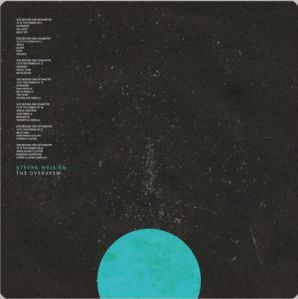
A Review of The Overview of Steven Wilson

Steven Wilson has released a new album, The Overview. Always surprising, rarely disappointing, Wilson is one of our favorite artists. Producer, songwriter, guitarist, singer, and remixer of countless classic albums, he truly is a man who can do it all. Brad Birzer and Tad Wert share thoughts on his latest opus.

Tad: Brad, you and I both have had a love/hate relationship with Steven Wilson. His almost obsessive focus on dark themes bothered me years back, but I couldn’t help but be seduced by his songwriting. The man writes and performs some of the most beautiful melodies ever recorded. His past few albums have been very good, in my opinion, albeit each very different. I’m interested in your thoughts on his latest, The Overview.

Brad: Thanks so much, Tad.  Glad to be reviewing with you!

I know I’ve had the chance to tell this story before, but I first encountered Steven Wilson through Porcupine Tree.  My wife and (then) two kids were shopping in Fort Wayne, Indiana, and a local alternative station was playing “Trains” from In Absentia.  This would’ve been the fall of 2002.  I immediately went to a local CD store and bought not only In Absentia but also Up the Down Stair.  One of my excellent students, Chase, found out about my new-found Porcupine Tree obsession and gifted me with the PT compilation boxset, Stars Die: The Delirium Years.  It was one of the coolest gifts I’ve ever received, and I was smitten.

From there, I dove into everything I could find related to Wilson and Porcupine Tree.  So, I’ve been a fan for twenty–three years now, and I’m amazed how much of my CD collection revolves around Wilson.  Whether it’s Porcupine Tree, No-Man, Blackfield, Storm Corrosion, Bass Communion, IEM, solo material, or one of the billion albums Wilson has remastered, my home is a repository and archive!  I also have several books on Porcupine Tree, Wilson’s deluxe autobiography, and a huge number of deluxe editions of the album releases.

You’re right, though, I do have a love/hate relationship with Wilson.  Let me note: I admire the man deeply.  But, a few things he’s said and done drive me a bit crazy.  It’s really hard to be his fan as he constantly wants to distance himself from us.  Even when we follow him album to album, genre to genre, he has to make skeptical comments about us, implying that we demand too much of him and hold him back musically.  And, from any objective standard–whether it’s Grace for Drowning or The Future Bites–the man just exudes progressive rock.  He’s always exploring, always changing, but he has tried to distance himself from the label.  I don’t get it, and I find his attitude incredibly frustrating.  Maybe he simply has a really restrictive view of progressive rock.  To me, progressive means exploration.

I also thought that as much as I loved The Raven Who Refused to Sing, the album seemed very much a remake of a Tangent album without acknowledging or giving Andy Tillison all due credit.

As far as I know, Tad, these are my only complaints.  And, given how much joy Wilson’s music has brought to me, they’re incredibly minor complaints.  Of all my loves re: the present scene of music, Steven Wilson is certainly at the top–along with Big Big Train, IZZ, The Tangent, Glass Hammer, and a few others.  I would especially rank Hand.Cannot.Erase as an all-time top five album for me.


And, I’ve not even gotten to The Overview yet. . .  Tad, what are your thoughts on what you like and dislike about Wilson?

Tad: Well, Brad, my experience was much the same as yours. I saw that Alex LIfeson played on Fear of a Blank Planet, so I got it cheap from BMG Music Club (remember those?), and I was hooked. I grabbed everything I could find that Wilson was involved with. I loved Porcupine Tree and Blackfield; NoMan not so much (at least until they put out Schoolyard Ghosts).

As I said earlier, I wish he would lighten up a little in the lyrics department. Life isn’t all bad! I guess that he finds depressing subjects more inspiring. On the plus side, I think he is an excellent guitarist and singer. His production work is unparalleled; I don’t think anything he’s produced will ever sound dated – it’s all timeless and of incredibly high quality.

Okay, let’s talk about the subject at hand: his new album, The Overview. It’s two long tracks, one more than 23 minutes long and one more than 18 minutes. You can’t get more proggy than that, can you? I think he wants the listener to hear this as an album, and not a playlist of tracks. Given this is the age of Spotify, that is pretty countercultural! 

On first impression, I think the section entitled “Objects: Meanwhile” is one favorite. It has a nice piano motif that builds throughout. The lyrics, well, they’re pretty depressing:

The tiniest lives fill their hives up with worry
To make it to church, well, she needs to hurry
When late she will bow down contrite
While a meteor trunks out the light

And there in an ordinary street
A car isn’t where it would normally be
The driver in tears, ‘bout his payment in arrears
Stll, nobody hears when a sun disappears
In a galaxy afar

That seems to be the overarching theme of this album – how insignificant humans and their concerns are, compared to the vastness of the universe. Wilson makes this explicit in the section “Perspective”, where a woman narrates ever-increasing numbers on a literal astronomical scale.

“A Beautiful Infinity/Borrowed Atoms/A Beautiful Infinity II” is the best section of the album, with its Floydian slide guitar and seductive melody. I love it. However, “A Beautiful Infinity II” continues the general theme of nihilism and hopelessness:

There’s no reason for any of thi
Just a beautiful infinity
No design and no one at the wheel
Just an existential mystery

I swear, if I ever got the chance to meet Mr. Wilson, I think I would share with him Psalm 19, which begins, 

The heavens declare the glory of God; the skies proclaim the work of his hands.
Day after day they pour forth speech; night after night they reveal knowledge.

That said, this section is some of my favorite Steven Wilson music ever. I have listened to this album from start to finish many times now, and this is the part I enjoy the most.

I suppose Wilson is saying that in an honest overview of the cosmos, humanity isn’t really worth much. In that regard, he echoes the psalmist who asks, “What is man, that thou art mindful of him?” Brad, I promise I didn’t begin this review planning to quote psalms, but they seem kind of appropriate, given the majesty of this album’s music!

Brad: Tad!  I love it.  The Psalms, BMG Music Club, nihilism.  Yes, I don’t disagree as I think the lyrics are depressing as well.  That’s par for the course with Wilson, though.  From what I can tell–in interviews and through his autobiography–he’s actually a really kind, upbeat person, but his art is always dark.  It’s dark, often, in terms of chord structures, and it’s dark in terms of his lyrics, and it’s generally dark in terms of the art that accompanies his album releases.

I suppose it’s one reason I love HAND.CANNOT.ERASE so much.  It’s dark, but it’s also deeply redemptive.  There’s a very healthy humanism at the heart of that story.

Despite the darkness of the lyrics on The Overview, I am pretty taken with them.  As probably you and most readers know, Andy Partridge of XTC wrote a chunk of the lyrics on the first track.  As such, they’re clever as all get out, while also being cynical.  Frankly, though, I like the perspective Partridge and Wilson offer–that as we go about our lives, making minute decision after minute decision, the universe in its incomprehensible majesty goes about its business as well.

I especially like these lyrics on the second track:

Snow is falling but it can’t be seen from here

And back on Earth, my loving wife’s been dead for years

I see myself in relation to it all

What seemed important now like dust inside the squall

Each moment for me is a lifetime for you

For whatever reason, they resonate with me.  It’s not that his wife’s death is any less tragic, it’s just that it’s placed against the backdrop of what seems infinite.  If anything, I actually found this a hopeful lyric.  After all, the man’s love for his wife continues, despite her absence.

I also really like Wilson’s musical approach to the whole album.  The way that he places various parts of the song together reminds me very much of Paul McCartney’s side two of Abbey Road.  Wilson, interestingly enough, has stated that while he admires the Beatles for what they accomplished, they were never an influence on him.  Still, it seems that in the construction of The Overview, they were, at least to a certain extent, an inspiration.

I did think that Rotem’s spoken word parts on the second track would wear on me, but, even after innumerable listens, I’m fine with it.

So, being a true Wilsonite, I bought the deluxe edition of The Overview.  It comes with a booklet as well as a blu-ray.  As I listen to the album, I generally listen to the blu-ray–which seems to bring the best out of the two tracks.  I hear things with the blu-ray that I don’t with just the CD release.

So, Tad, I’m loving the album.  It came out. . . what. . . six weeks ago?  And, I’m now on six weeks of immersing myself in it.  I find each listen a joy, and I keep discovering new things in it.  It’s a treasure.  Again, I would still rank Wilson’s Hand.Cannot.Erase as his best album and I would rank The Future Bites as my least favorite of his albums.  In the big scheme of things (ha–see what I did there!), The Overview sits comfortably close to Hand.Cannot.Erase.

Tad: Ah, Brad, this is why I enjoy these joint reviews with you – you provide proper perspective and rein in my first-take reactions to lyrics! I love your willingness to find hope in Wilson’s words, and now that you’ve pointed it out I can see it as well. I’d rather someone be hopeful than despairing, so I feel better about his emotional health. 

If I had to rank Wilson’s albums, I think I would put his first, Insurgentes at the top, but it depends on the mood I’m in. The Raven That Refused to Sing is awfully good, and To The Bone is a wonderful take on 80s pop/rock. I do agree that The Overview  is one of his best, and I have really enjoyed listening to it the past few weeks.

So, readers, it looks like The Overview gets two solid thumbs up from Spirit of Cecilia! Check it out on your favorite music streaming service, or better yet, buy a physical copy and keep Mr. Wilson in business. Thanks for stopping by!