Hello faithful Spirit of Cecilia readers. As always, thank you for joining us for our latest review. Up this time, Neal Morse’s new supergroup, Cosmic Cathedral and the band’s debut album, Deep Water. In addition to Morse himself on keyboards, the band includes Phil Keaggy on guitar, Chester Thompson on drums, and Byron House on bass. While this is a Morse-driven project, the band co-wrote much (but not all) of the music, and Morse shares credit, lyrically, with Keaggy on one song. The CD comes out from Insideout Music/Sony. Here at Spirit of Cecilia, Tad and Carl have especially praised the album. In this review, Tad and Brad (wow, our names rhyme) assess the new album.
Brad: Well, I’m not sure I’m the proper person to start this conversation, especially given how much Tad and Carl like it. I must admit, I’m still rather skeptical of the album. Parts of it, I love. In particular, I’m quite taken with the keyboards, the guitar work, bass (though, the bass needs to be higher in the mix), and drums. Each of these musicians is, simply, spectacular.
I’ve seen other reviewers refer to the album and the band as espousing “Yacht Prog,” and, for better or worse, I can see that complaint, especially with the first half of the album. I wouldn’t call it “Yacht Prog,” but I might be tempted to refer to it as “Adult Contemporary Prog,” a kind of gentle prog for the older set.
And, since I’m being negative, I’ll be negative about this as well. The lyrics are a little too evangelical for my tastes. As I hope is obvious–after all, we are dedicated to the Spirit of St. Cecilia, patron saint of music–I have no problem with one expressing his or her faith in his or her art! My gosh, most of the best art in the history of the world has been inspired by faith. But, when Morse sings “I sing for Jesus–it was for me He died/He unlocked the door to heaven/Now we can pass from death to life,” my soul cringes just a bit. It’s not that I disagree with the theology or the sentiment, but I disagree with the lack of art in the statement. Given the weight and gravity of the subject matter, these lyrics should have been deep, stirring, and beautiful–not yelled out in a vulgar fashion.
Again, though, there’s much I like about the album. Though I didn’t like the first few moments of keyboard on the first track, “The Heart of Life,” once the guitar kicks in, the song simply rocks. And, I really liked about a ⅓ of the Deep Water Suite. Again, I was especially taken with the guitar work throughout the album and very much so on the suite. It struck me as very much a Christian version of a Spock’s Beard epic.
I should also admit that I have really mixed feelings about Morse. At times in my adult life, I’ve been quite taken with him–especially with the last Spock’s Beard album, Snow, as well as with several of his solo albums, Testimony, Lifeline, and Question Mark especially. I also really like his work with Transatlantic. I’ve seen him in concert several times, and I’ve been an off and on member of his Inner Circle fan club. But, his blatant anti-Catholicism–especially on Sola Scriptura–really turns me off. I don’t see that in Cosmic Cathedral, however.
Tad: Thanks for getting this conversation going, Brad! As you mentioned, I like this album a lot. I wasn’t prepared to enjoy it as much as I do, though. I pretty much buy anything Morse releases, but his previous album with The Resonance, No HIll For a Climber, didn’t really resonate (!) with me. I listened to it several times, but nothing was very memorable.
With Cosmic Cathedral, on the other hand, I think Morse has surrounded himself with an extraordinary group of musicians. Phil Keaggy is one of the greatest living guitarists, and Chester Thompson is a phenomenal drummer – I’ve been a fan of his since the days when he toured with Genesis. I was surprised that Morse tapped Byron House to play bass, since his background is primarily in country music (Foster and Lloyd, Emmylou Harris, Vince Gill, Buddy and Julie Miller, et al.), but he’s a great choice. I’ve admired his work for years, as he brought a jazz sensibility to every project he’s worked on. These three men really push Morse, I believe.
That said, I can see why you might label this album “Yacht Prog”. I could do without “I Won’t Make It”, and “Walking In Daylight” has a definite seventies laid-back vibe to it (but Keaggy’s guitar solo redeems it in the end). But I love the first track, “The Heart of Life”. It has such an energetic intro, and it never lets up. Thompson’s drumming is fantastically driving throughout. I have a ton of Keaggy albums, and I’ve never heard him let loose like he does on this track. Melody-wise, it’s immediately recognizable as a Morse composition – lots of buildup to a satisfying resolution. Lyrically, I think this song is fairly restrained – I agree that sometimes Morse can hit you with a two-by-four when a pat on the shoulder would suffice, but I have to admire his consistency – it’s been 22 (!) years since he recorded Testimony, and he has remained true to his convictions.
Brad: Tad, thanks so much for this. I really appreciate your viewpoint. After reading this, I went back to Morse’s Sola Scriptura. Here’s a sample of his lyrics.
Giving up the time we’ve got to live a life completely
Giving over to the lust that rages in the mind
The Captain fills his place with gold while all the ship is sinking
Calls himself the Bishop-Prince and blood’s his favorite wine
Gardens grow as people know and sense the smell of slaughter
Every soul and Saxon senses something’s gone awry
The woman in the wilderness – the beast has nearly got her
Men surround the Bishop-Prince and sing their bloody cry
In the name of God you must die
All that’s not our truth is a lie
In the name of God you must die
In the name of God you must die
If you want some teeth, just ask why
In the name of God you must die
The pearl is trodden underfoot into the muck and mire
We’ll take the Roman Gods except the names will all be changed
The woman’s fed by ravens and her feet are in the fire
Cold and bare she’s holding there 1260 days
In the name of God you must die
All that’s not our truth is a lie
In the name of God you must die
In the name of God you must die
We won’t let a sleeping dog lie
In the name of God you must die
And the Captain calls
If they won’t pay they’ll soon be scratching the dungeon walls
From the highest height to the tenement halls – it’s true
Look out we’re comin’ for you!
In the name of God you must die
In the name of God you must die
He also calls the Catholic Church the “whore.”
I have the reissue of his first album with Spock’s Beard. The opening track uses the “F” word repeatedly. In the reissue, Morse warns listeners that they shouldn’t play the album in front of their kids. Honestly, I’d rather my kids hear the “F” word than his brutal and malicious attack on the Catholic Church.
Admittedly, I try not to think about these things when Morse releases new material, but it’s hard to forget.
Andy Tillison is a genius. It must stated as bluntly as possible. Tillison is a genius. He’s a musical genius and a lyrical genius, but he’s also just a genius genius. Actually, this might seem redundant, but it’s not. Only genius could properly modify genius when it comes to Tillison’s art.
As I mentioned in a previous post, anything Tillison releases is not just an event, but a moment. A real moment, not a fleeting one. A moment of seriousness and reflection.
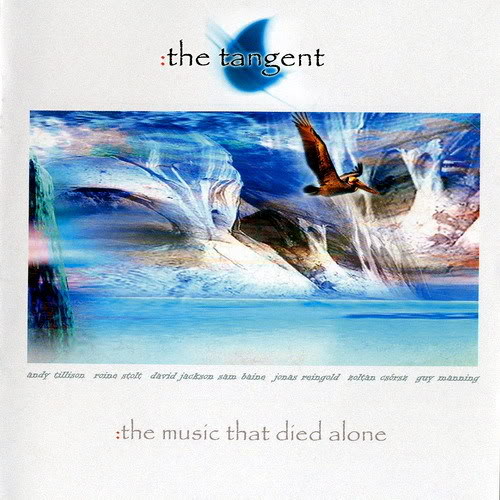
From the first I listened to The Tangent’s The Music That Died Alone, a full decade ago, I knew there was something special going on. Not only did the cover art entrance me, but the very depth and seriousness of the music captured my then 35-year old imagination. I felt as though Tillison was speaking directly to me, asking me to remember the greatness of the musicians who came before 2003, but also inviting me–in a very meaningful fashion–to move forward with him.
The Music That Died Alone really serves as a powerful nexus between past and present, present and future, up and down, and every which way. Only the evocative power of the lyrics match the classiness and free flow (though, we all know what makes something seem free is often a highly disciplined mind and soul) of the music.
At the time I first heard them, I mentally labeled The Tangent a “neo-Canterbury band,” but I was too limited in my imagination, and I would discover this very quickly. Indeed, each subsequent The Tangent album offers new pleasures and paths for adventure, but always with that power of that Tillison nexus, connecting the past and the future with beauty.
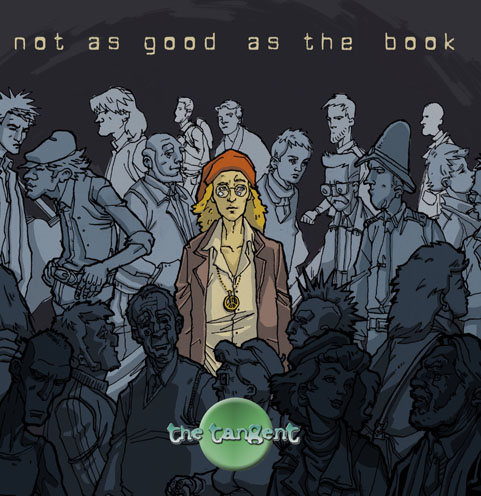
Tillison makes this connection literal in his very fine novella, “Not as Good as the Book: A Midlife Crisis in a Minor.” The dedication lists close to 100 names, including numerous members (first names only) of the members of various bands from Yes to ELP to The Flower Kings to Spock’s Beard to XTC and to authors such as Arthur C. Clarke and J.R.R. Tolkien. None of this is contrived. Just pure Tillison expressions of gratitude.
Privileged (well, blessed, frankly, if you’ll pardon a blatant religious term) to receive a review copy of the new album, Le Sacre Du Travail (Out officially June 24, 2013 from InsideOut Music), I dove right into the music. Full immersion. With every album, Tillison has only improved. Each album has bettered the already previous excellent album with even more classiness, more intensity, and more meaning. Not an easy feat in this modern world of chaos and consumerist fetishes.
With this album, though, Tillison has moved forward the equivalent of several The Tangent albums. Again, to be blunt, the album is mind-boggingly good.
Easy listening? No. Of course not. It’s Tillison, it’s prog, and it’s excellent. What part of those three things suggests easy. No excellent thing is easy. Can’t be. It wouldn’t and couldn’t be excellent if easy.
Satisfying listening? Oh, yes. A thousand times, yes.
For one thing, Tillison has brought together some of the finest artists in the business. I was convinced of the potential greatness of this new album when I first heard David Longdon (in my not so humble opinion, the finest voice in rock today) would appear on the album. But, add a number of others in: Jonas Reingold (The Flower Kings), Jakko Jakszyk (Level 42), Theo Travis (Soft Machine), and Gavin Harrison (Porcupine Tree). And, it doesn’t stop here. Add Brian Watson (DPRP.net)’s spectacular art work and the cool dj voice of Geoff Banks (Prog Dog show). Ok, this is one very, very solid lineup of the best of the best.
1913
Ten years ago, Tillison released the first The Tangent album. 100 years ago, Igor Stravinsky released what was arguably his masterpiece and certainly one of the finest pieces of music of the twentieth-century, The Rite of Spring. While The Rite of Spring hasn’t pervaded our culture in the way the fourth movement of Beethoven’s 9th Symphony has, it’s a close second. Every person, an appreciator of music or not, knows at least part of The Rite of Spring.
Imagine for a moment 1913. It was, by almost every standard, the last great year of the optimism of western civilization. Technology upon technology had produced innumerable advancements, almost everyone in the western world believed in unlimited progress, and even devout Christian artists (such as Stravinsky) had no problems embracing the greatest elements of paganism and folk culture.
In almost every way, Stravinsky explored not only the folk traditions of his era, but he embraced and, really, transcended the modernist movement in music. He bested it. His Rite is full of tensions and dissonance, but each of these is overruled and corrected by harmony and emergent joy. The Rite, no matter how pagan, also has deep roots in the Judeo-Christian and Greco-Roman traditions. The Rite–the ritual, the liturgy–has been a part of western civilization since the pre-Socratics debated about the origins of the cycles of the world and history: earth, water, air, or fire.
2013
Imagine for a moment 2013. Well, ok, just look around. Technology remains exponential in its growth, but few would praise the development of the Atomic Bomb, the gas chamber, or the aerial bomber. But, then, there’s the iPod. And, unless you’re Steven Wilson, you probably think your iPod is ok. Certainly better than an Atomic Bomb.
Optimism? No. I don’t need to go into detail, but, suffice it state, T.S. Eliot might very well have been correct when in the late 1940s he claimed the western world in an advancing stage of darkness:
the tower overthrown, the bells upturned, what have we to do
But stand with empty hands and palms turned upwards
In an age which advances progressively backwards?
The U.S. and the U.K. are currently waging numerous wars, and there seems to be no end in sight.
The Rite of Work
As with the Stravinsky of 1913, the Tillison of 2013 surveys the cultural landscape. Unlike his Russian counterpart, the Yorkshire man finds little to celebrate in this whirligig of modernity.
The “good guy anarchist,” as he described himself in a recent interview (and, not to be too political, but more than one progarchist would be in great sympathy with Tillison on this point), Tillison observes not the Rite of Spring, but the liturgy of work. We get up, we commute, we sit in our cubicle, we commute again, we eat, we drink, we have sex, we watch a little t.v., and we sleep. The cycle beings again every Monday, Tuesday, Wednesday, Thursday, and Friday. Who made this deal, Tillison wisely asks.
Throughout it all–pure prog interspersed with very modernist musical elements from time to time–Tillison references much in our modern folk and popular culture, including The Sound of Music and Rush (2112):
In a Rush T-shirt, pony tail, 2112 tatooed on his hands
He’s a star through thick & thin
But he still gets that data in
A modern day warrior, today’s Tom Sawyer is a clerk
He’s a meta for disillusion
He’s a metaphor for life
But, interestingly enough, Tillison does all of this as a modern-day St. Thomas the Doubter.
But I don’t believe them, not ’til I see it
Until I put my finger in the holes
In every word, the lyrics rage against the conformity demanded in 2013–demanded by our corporations, our neighbors, and our governments. What have we become. . . mere ants, living in a world of bird dung. Certainly, whatever humanity remains has been given over to some institution radiating power.
And, yet, still somewhat in the persona of St. Thomas, Tillison asks us to reconsider our day-to-day rituals and liturgies. Is it worth it that we squander what little time we have in the name of the mindless and soulless cycles of modern life? By far the most powerful moment of an album of immense power (power in the good sense; not in the domineering sense):
‘Cos you can’t take it with you
There’s no luggage allowed
No you can’t take it with you
No matter how rich or proud
Your kids will sell it off on Ebay
For god’s sake don’t waste their time
‘Cos you can’t take it with you
You can leave just a little bit behind.
Summa
Well, what an album. What an artist. What a group of artists. If any one ever again complains about the superficiality of rock music, consider handing them a copy of this CD. No superficiality here. Only beautiful–if at times gut wrenching–meaning.
For what it’s worth, I’ve been traveling since last Wednesday. I went from Michigan to Colorado, Colorado to Kansas, and now, I’m enroute back to Michigan. My soundtrack has been prog, prog, and then a bit more prog.
Version 1.0.0
A few days ago, the mighty Tad Wert and I reviewed Steven Wilson’s new album, The Overview. Though we questioned a few things about Wilson, we loved the album. During his review, however, Tad brought up the majesty of the universe as described in the Psalms.
Today, this was posted on Facebook: “An interesting review of Steven Wilson’s latest album, which I’ve added here as Andie/The Tangent get name-checked. Quite an enjoyable read, despite the reviewer’s annoying habit of adding somewhat superfluous (and potentially divisive) references to The Goat Herder’s Guide to the Galaxy.”
Being in the car for hours on end, I turned this comment over in my mind. Now, it’s worth noting, our website (the one you’re currently reading) is named after the Catholic patron saint of music, St. Cecilia. Of the five main editors of Spirit of Cecilia, three are practicing Catholics, one is a Methodist who leans toward Eastern Orthodoxy, and one is a skeptic. Frankly, I’m amazed at how restrained we are when it comes to the issue of religion.
Still, after reading the Facebook comment today, I had to ask: can a Progger be a Christian? For some, the immediate answer is to turn to Neal Morse or Glass Hammer. But, frankly, both artists are so open about their faith that each might appear to be the exception that proves the rule.
So, for the sake of a good argument, I offer all praise to Morse and to Glass Hammer, but I’m going to leave them out of the discussion.
Then, I gave it a bit more thought, and I realized that the Christian religion is deeply embedded in much (certainly not all) of the progressive rock tradition. So, I chose my songs from several different eras of prog.
Yes, Close to the Edge:
“My eyes convinced, eclipsed with the younger moon attained with love It changed as almost strained amidst clear manna from above I crucified my hate and held the word within my hand There’s you, the time, the logic, or the reasons we don’t understand”
Clearly referencing the Gospel of St. John.
Genesis, Supper’s Ready:
“There’s an angel standing in the sun And he’s crying with a loud voice “This is the supper of the mighty one” Lord of Lords, King of Kings Has returned to lead his children home To take them to the new Jerusalem”
Clearly referencing St. John’s Revelation.
Talk Talk, New Grass:
“Lifted up Reflective in returning love, you sing Errant days filled me Fed me illusion’s gate in temperate stream Welled up within me A hunger uncurbed by nature’s calling Seven sacraments to song Versеd in Christ, should strength desert me They’ll come, they come”
Again, a clear reference to the New Testament and, specifically, a liturgical understanding of Christianity.
Roine Stolt, Humanizzimo
“With the blood of Jesus on the nail We turn the balance on a scale In pain and fearless suffering Lies a message from the King of Kings”
Again, a clear reference to the passion of Christ.
“Lying ahull Ride out this storm Doused all the sails I let the boat drift
And so upon this tumbling sea Fathoms below Heavens above me
I’m setting sail for Les Marquises From cradle bound for Calvary”
I could be wrong, but this very much reminds me of Jesus calming the waters.
Every one of these songs requires some biblical literacy. Were Yes, Genesis, Talk Talk, Roine Stolt, Andy Tillison, and Big Big Train divisive? Without a doubt. Was Tad being divisive? I certainly doubt that was his intention.
So, back to the main question. Can a progger be a Christian? It seems so.
Steven Wilson has released a new album, The Overview. Always surprising, rarely disappointing, Wilson is one of our favorite artists. Producer, songwriter, guitarist, singer, and remixer of countless classic albums, he truly is a man who can do it all. Brad Birzer and Tad Wert share thoughts on his latest opus.
Tad: Brad, you and I both have had a love/hate relationship with Steven Wilson. His almost obsessive focus on dark themes bothered me years back, but I couldn’t help but be seduced by his songwriting. The man writes and performs some of the most beautiful melodies ever recorded. His past few albums have been very good, in my opinion, albeit each very different. I’m interested in your thoughts on his latest, The Overview.
Brad: Thanks so much, Tad. Glad to be reviewing with you!
I know I’ve had the chance to tell this story before, but I first encountered Steven Wilson through Porcupine Tree. My wife and (then) two kids were shopping in Fort Wayne, Indiana, and a local alternative station was playing “Trains” fromIn Absentia. This would’ve been the fall of 2002. I immediately went to a local CD store and bought not only In Absentia but also Up the Down Stair. One of my excellent students, Chase, found out about my new-found Porcupine Tree obsession and gifted me with the PT compilation boxset, Stars Die: The Delirium Years. It was one of the coolest gifts I’ve ever received, and I was smitten.
From there, I dove into everything I could find related to Wilson and Porcupine Tree. So, I’ve been a fan for twenty–three years now, and I’m amazed how much of my CD collection revolves around Wilson. Whether it’s Porcupine Tree, No-Man, Blackfield, Storm Corrosion, Bass Communion, IEM, solo material, or one of the billion albums Wilson has remastered, my home is a repository and archive! I also have several books on Porcupine Tree, Wilson’s deluxe autobiography, and a huge number of deluxe editions of the album releases.
You’re right, though, I do have a love/hate relationship with Wilson. Let me note: I admire the man deeply. But, a few things he’s said and done drive me a bit crazy. It’s really hard to be his fan as he constantly wants to distance himself from us. Even when we follow him album to album, genre to genre, he has to make skeptical comments about us, implying that we demand too much of him and hold him back musically. And, from any objective standard–whether it’s Grace for Drowning or The Future Bites–the man just exudes progressive rock. He’s always exploring, always changing, but he has tried to distance himself from the label. I don’t get it, and I find his attitude incredibly frustrating. Maybe he simply has a really restrictive view of progressive rock. To me, progressive means exploration.
I also thought that as much as I loved The Raven Who Refused to Sing, the album seemed very much a remake of a Tangent album without acknowledging or giving Andy Tillison all due credit.
As far as I know, Tad, these are my only complaints. And, given how much joy Wilson’s music has brought to me, they’re incredibly minor complaints. Of all my loves re: the present scene of music, Steven Wilson is certainly at the top–along with Big Big Train, IZZ, The Tangent, Glass Hammer, and a few others. I would especially rank Hand.Cannot.Erase as an all-time top five album for me.
And, I’ve not even gotten to The Overview yet. . . Tad, what are your thoughts on what you like and dislike about Wilson?
Tad: Well, Brad, my experience was much the same as yours. I saw that Alex LIfeson played on Fear of a Blank Planet, so I got it cheap from BMG Music Club (remember those?), and I was hooked. I grabbed everything I could find that Wilson was involved with. I loved Porcupine Tree and Blackfield; NoMan not so much (at least until they put out Schoolyard Ghosts).
As I said earlier, I wish he would lighten up a little in the lyrics department. Life isn’t all bad! I guess that he finds depressing subjects more inspiring. On the plus side, I think he is an excellent guitarist and singer. His production work is unparalleled; I don’t think anything he’s produced will ever sound dated – it’s all timeless and of incredibly high quality.
Okay, let’s talk about the subject at hand: his new album, The Overview. It’s two long tracks, one more than 23 minutes long and one more than 18 minutes. You can’t get more proggy than that, can you? I think he wants the listener to hear this as an album, and not a playlist of tracks. Given this is the age of Spotify, that is pretty countercultural!
On first impression, I think the section entitled “Objects: Meanwhile” is one favorite. It has a nice piano motif that builds throughout. The lyrics, well, they’re pretty depressing:
The tiniest lives fill their hives up with worry To make it to church, well, she needs to hurry When late she will bow down contrite While a meteor trunks out the light
And there in an ordinary street A car isn’t where it would normally be The driver in tears, ‘bout his payment in arrears Stll, nobody hears when a sun disappears In a galaxy afar
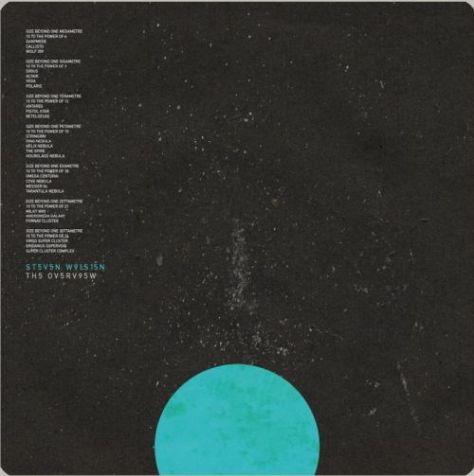
That seems to be the overarching theme of this album – how insignificant humans and their concerns are, compared to the vastness of the universe. Wilson makes this explicit in the section “Perspective”, where a woman narrates ever-increasing numbers on a literal astronomical scale.
“A Beautiful Infinity/Borrowed Atoms/A Beautiful Infinity II” is the best section of the album, with its Floydian slide guitar and seductive melody. I love it. However, “A Beautiful Infinity II” continues the general theme of nihilism and hopelessness:
There’s no reason for any of thi Just a beautiful infinity No design and no one at the wheel Just an existential mystery
I swear, if I ever got the chance to meet Mr. Wilson, I think I would share with him Psalm 19, which begins,
The heavens declare the glory of God; the skies proclaim the work of his hands. Day after day they pour forth speech; night after night they reveal knowledge.
That said, this section is some of my favorite Steven Wilson music ever. I have listened to this album from start to finish many times now, and this is the part I enjoy the most.
I suppose Wilson is saying that in an honest overview of the cosmos, humanity isn’t really worth much. In that regard, he echoes the psalmist who asks, “What is man, that thou art mindful of him?” Brad, I promise I didn’t begin this review planning to quote psalms, but they seem kind of appropriate, given the majesty of this album’s music!
Brad: Tad! I love it. The Psalms, BMG Music Club, nihilism. Yes, I don’t disagree as I think the lyrics are depressing as well. That’s par for the course with Wilson, though. From what I can tell–in interviews and through his autobiography–he’s actually a really kind, upbeat person, but his art is always dark. It’s dark, often, in terms of chord structures, and it’s dark in terms of his lyrics, and it’s generally dark in terms of the art that accompanies his album releases.
I suppose it’s one reason I love HAND.CANNOT.ERASE so much. It’s dark, but it’s also deeply redemptive. There’s a very healthy humanism at the heart of that story.
Despite the darkness of the lyrics on The Overview, I am pretty taken with them. As probably you and most readers know, Andy Partridge of XTC wrote a chunk of the lyrics on the first track. As such, they’re clever as all get out, while also being cynical. Frankly, though, I like the perspective Partridge and Wilson offer–that as we go about our lives, making minute decision after minute decision, the universe in its incomprehensible majesty goes about its business as well.
I especially like these lyrics on the second track:
Snow is falling but it can’t be seen from here
And back on Earth, my loving wife’s been dead for years
I see myself in relation to it all
What seemed important now like dust inside the squall
Each moment for me is a lifetime for you
For whatever reason, they resonate with me. It’s not that his wife’s death is any less tragic, it’s just that it’s placed against the backdrop of what seems infinite. If anything, I actually found this a hopeful lyric. After all, the man’s love for his wife continues, despite her absence.
I also really like Wilson’s musical approach to the whole album. The way that he places various parts of the song together reminds me very much of Paul McCartney’s side two of Abbey Road. Wilson, interestingly enough, has stated that while he admires the Beatles for what they accomplished, they were never an influence on him. Still, it seems that in the construction of The Overview, they were, at least to a certain extent, an inspiration.
I did think that Rotem’s spoken word parts on the second track would wear on me, but, even after innumerable listens, I’m fine with it.
So, being a true Wilsonite, I bought the deluxe edition of The Overview. It comes with a booklet as well as a blu-ray. As I listen to the album, I generally listen to the blu-ray–which seems to bring the best out of the two tracks. I hear things with the blu-ray that I don’t with just the CD release.
So, Tad, I’m loving the album. It came out. . . what. . . six weeks ago? And, I’m now on six weeks of immersing myself in it. I find each listen a joy, and I keep discovering new things in it. It’s a treasure. Again, I would still rank Wilson’s Hand.Cannot.Erase as his best album and I would rank The Future Bites as my least favorite of his albums. In the big scheme of things (ha–see what I did there!), The Overview sits comfortably close to Hand.Cannot.Erase.
Tad: Ah, Brad, this is why I enjoy these joint reviews with you – you provide proper perspective and rein in my first-take reactions to lyrics! I love your willingness to find hope in Wilson’s words, and now that you’ve pointed it out I can see it as well. I’d rather someone be hopeful than despairing, so I feel better about his emotional health.
If I had to rank Wilson’s albums, I think I would put his first, Insurgentes at the top, but it depends on the mood I’m in. The Raven That Refused to Sing is awfully good, and To The Bone is a wonderful take on 80s pop/rock. I do agree that The Overview is one of his best, and I have really enjoyed listening to it the past few weeks.
So, readers, it looks like The Overview gets two solid thumbs up from Spirit of Cecilia! Check it out on your favorite music streaming service, or better yet, buy a physical copy and keep Mr. Wilson in business. Thanks for stopping by!
Greetings, Spirit of Cecilia readers! Brad Birzer and Tad Wert have been impressed with the music of Norway’s Airbag. They combine excellent, Pink Floyd-adjacent melodies with thought-provoking lyrics. In the summer of 2024, they released their sixth studio album, The Century of the Self, which was one of the best albums of that year. Brad and Tad finally get around to discussing its merits – better late than never!
Tad: Brad, I absolutely adored Airbag’s previous album, A Day at the Beach, and the lead-off track, Machines and Men, is one of the best songs they’ve ever done. Now that they’ve followed up that triumph with The Century of the Self, what strikes you right off the bat with that album?
Brad: Thanks so much, Tad. It’s great–as always–to be reviewing with you. Yes, I very much love and admire Airbag, and I have from their beginning, whether on Kscope (briefly) or Karisma. They confirm what I’ve thought for ages, that is, a prog band is only as good as its bassist. Great guitarist, too. Great drummer as well. Love the keyboards, too. So, win-win-win-win. What a great band. An amazing band. I had to throw “amazing” into the mix, as I’ve typed “great” one too many times!
Granted, they wear their Pink Floyd love on their sleeves, but, frankly, I think that makes them even better. Very glad to have some Floydian music still being produced. And, yet, whatever the Floyd influence, it serves as an inspiration for the band. They’re not enslaved to it, but inspired by it. Strangely and perhaps paradoxically, the Floydian influence makes Airbag even more unique.
I didn’t realize they were already on their sixth album. Given their sheer output, as well as the solo output of Bjorn Riis, I find the music even more astounding.
So, what strikes me right off the bat? An excellent question, Tad. After having listened to the album a half a dozen times, I’m struck by two things. The bass and the lyrics. Both, extremely courageous. How about you?
Tad: Brad, you and I agree that a good bassist is essential to a prog band. I think of what Yes might be without Chris Squire, and it would never have been as groundbreaking and influential as it ended up. Or how about Steve Babb’s work with Glass Hammer? He is the key to that group’s greatness.
Along the same lines, Anders Hovdan does a terrific job anchoring Airbag’s music. A lot of their songs take time to fully develop, and Hovdan’s insistent bass lines provide interest for the listener. I love the way the entire group take their time building up a song. They often start out quietly, and they inexorably build in energy and sound until there is a most satisfying release. Their melodies are not overly complex or complicated, but I would certainly classify them as “progressive rock.
That said, I think Bjorn Riis (guitars and vocals) seems to be the main driver of Airbag. His songs always intrigue me. I’ve told you before that I have to like a song’s melody before I worry about the lyrics, but when I first heard the opening track on The Century of Self, I was immediately struck by the lyrics. They’re brief enough to share in their entirety:
Did you come here to find some peace and hide? Too much confusion in your head at times Don’t want to bend, conform, you’ll never obey Don’t want no part of this conspiracy
I see these people keeping their heads down Denying everything they used to be Don’t try to touch, don’t ever get too close They’ll make you suffer and they’ll make you bleed
Who do you feel you are today? Who will you crucify and slay? It’s driving me insane
Did you believe they’d ever let you go? There is no escape, there is no turning back You’re canceled now, they’ll cancel everything They’ll make us suffer and they’ll make us bleed
Who do you feel you are today? Who will you crucify and slay? It’s driving me insane
Brad, it seems to me this is a protest against the illiberalism of contemporary “cancel culture”, and that is a brave stand to take these days! So, I went back and looked through some of their previous songs, and there is definitely a consistent streak of individualism and a plea for personal freedom running through them. I think they are today’s version of a countercultural music group, and I admire them for that. I am really interested in your thoughts on their lyrics, since you are able to uncover deeper meaning from them than I usually do!
Brad: Yes, I totally agree, Tad. There’s something quite special in Airbag’s lyrics that call out for us to be more individual than we’re comfortably being in the current morass of society. I think Airbag is definitely protesting against the loss of free speech and free ideas that seems to have spread throughout Europe and the western world (America is not excluded). I suppose part of this is my age, but it’s hard not to look back at the 1980s and especially 1989 as a golden era in western civilization. Not only were we growing economically, but free societies were trouncing unfree societies. Despotisms and authoritarianism and totalitarianism were on the run. A pope and a president were beating the life out of them. Now, we sit in silence as our “betters” tell us what to do and what not to do. I wouldn’t have necessarily have expected protest to arise from Norway, but amen.
Those lyrics are worth repeating, Tad:
Did you believe they’d ever let you go? There is no escape, there is no turning back You’re canceled now, they’ll cancel everything They’ll make us suffer and they’ll make us bleed
And, then, of course, we’re not guiltless:
Who do you feel you are today? Who will you crucify and slay? It’s driving me insane.
Track two, “Tyrants and Kings” continues the libertarian themes:
Join the cause Say no to everything we fear Get used to lying You’re a prisoner now Take no stand There are no sides there’s only ours You shoot to kill You’re a soldier now
The “get used to lying” line brings to mind Solzhenitsyn’s note that all totalitarianism is built on lies. The huge lie of the society and all the little lies that one must employ to survive.
Looking through the lyrics of the remaining three songs, they too speak to the loss of individual dignity.
So, bravo, Airbag! Keep fighting the good fight. And, thanks, too, for the killer bass lines.
Tad: Brad, thank you for highlighting the lyrics to “Tyrants and Kings”! Yes, Airbag is a band that appeals to me both in musical terms and lyrical ones. That is quite rare these days. And, like you, I’m impressed these Norwegians are reminding the rest of us what is truly important.
So, gentle reader, if you are interested in excellent progressive rock with a Floydian flavor, and highly literate lyrics, do yourself a favor and check out Airbag’s latest album, The Century of the Self. You won’t be disappointed!
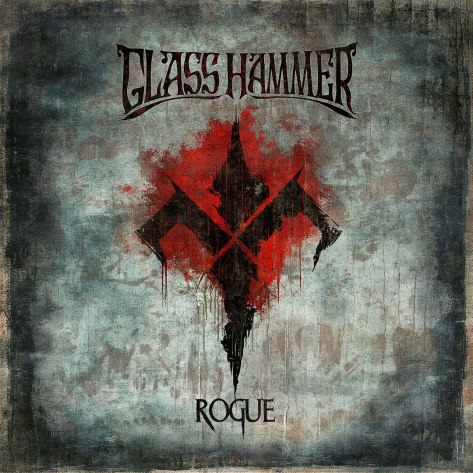
Glass Hammer has returned with a new album, Rogue – due out April 11, 2025. Not surprisingly, given the history of this group, it is a stark departure from their previous several albums. Where the Skallagrim Trilogy rocked very hard, and their most recent work, Arise, was an exercise in space rock jamming, Rogue is jumps out of the gate with a burst of pure melodic bliss.
After listening to Rogue nonstop for four days, I am put in mind of some of Glass Hammer’s most enjoyable musical moments, such as Life By Light (Culture of Ascent), Having Caught a Glimpse (The Inconsolable Secret), and The Curse We Weave (Three Cheers for the BrokenHearted), among many, many others. I am tempted to say Rogue represents a return to form, except Glass Hammer has never fallen out of form – each release of theirs is a self-contained gem of excellence. Instead, let’s just say Rogue is a joyful celebration of beautiful melody.
What If, the first track, sets the stage as the protagonist decides to leave his cold and gray home in the north and head south to find a long-lost love – he is hoping to reignite an old romance that he ended years ago. It is a bouncy song that conveys the hopefulness of our hero as he sets out.
Summer! He’s weary of sleet and snow
Summer! Come now and do not go
He’s heading south to the land of his dreams
The Road South is where reality begins to set in. Has he made a mistake leaving his home? Is that a storm ahead? Musically, this song is reminiscent of classic Alan Parsons Project to me. Oliver Day’s lap steel guitar is outstanding – graceful and fluid without sounding shrill.
Tomorrow is one of the most beautiful songs on the album. As our hero wrestles with the memories of all the wrongs he has committed in the past, a voice reassures him,
All will be fine
God is watching over all you do
His eye is on the sparrow and on you
The accompanying melody is appropriately soothing and calming.
Pretty Ghost and Sunshine feature the gorgeous vocals of Olivia Tharpe, along with another pair of winning melodies. On Sunshine, Fred Schendel gives an outstanding performance on lap steel guitar.
Next up is my favorite track on the album, I Will Follow. This is a driving, upbeat, infectious song with an unshakeable earworm for a melody. It’s one of the best songs in the entire Glass Hammer catalog, featuring layered harmonies that should be listened to on headphones to be fully appreciated.
The Wonder Of It All has a synth-driven opening that I find very appealing. One thing I’ve enjoyed over the past few albums has been Glass Hammer’s incorporation of Tangerine Dream-like interludes that feature very cool rhythmic elements. Lyrically, this song seems to be a turning point for our hero:
Oh, I’m weary, yet I’m blessed
For all you’ve given me
The wonder of it all, I’d have to say
That I was here at all
I’ve done so little to deserve
This life you gave me
One Last Sunrise is a terrific instrumental, and Babb really shines on bass and Taurus pedals. I’ve said it before, and I’ll say it again: Steve Babb is one of the most inventive bassists working in music today.
Terminal Lucidity, at 10:19, is the longest track, and it is primarily instrumental. Synths, electric piano, and electric guitar weave a seductive web of melody that draw the listener in before an energetic jam gets going. Eventually, it becomes clear that our hero is on his deathbed: “Ashes to ashes, dust to dust/I can hear them calling me”. It was a stark and chilling moment when I first realized the true journey being taken!
Rogue closes with the triumphant and joyful All Good Things. Another uplifting melody (underpinned by Babb’s terrific bass work) brings the story to an emotionally satisfying ending:
This life you gave me
I’ll bring it home, you know
Sunshine in the morning sky
Descending from on high
It seems that, for all intents and purposes, Glass Hammer is now primarily a Steve Babb project. He handles some lead and backing vocals, bass, keyboards, Taurus pedals, guitars, and percussion. Longtime musical partner Fred Schendel plays guitar on Tomorrow and lap steel guitar on Sunshine. Babb has collected a stellar cast of supporting musicians: Thomas Jakob and Olivia Tharpe on vocals, Reese Boyd, David Walliman, and Atillio Calabrese all take a turn on lead guitar, and Oliver Day does a phenomenal job on guitar and lap steel throughout. Ariel Perchuk contributes some excellent synth solos, while Randall Williams and Evgeni Obruchkov provide drum work.
Rogue is one of the most ambitious albums Glass Hammer has attempted, and they pull it off with ease – it is an unalloyed triumph in all respects: conceptually, lyrically, and musically. Taken as a whole, this set of songs is the most satisfying Glass Hammer has provided in many years. I can’t stop listening to it! Meanwhile, the concept of a man wrestling with the demons of his past as he faces death would be daunting for anyone to tackle, but Glass Hammer does it with grace and hope. I can’t recommend Rogue enough to listeners who appreciate and are looking for melodic rock that has depth. It’s my favorite album of 2025, and I don’t see that changing any time soon.
I’ve been into music—mostly progressive rock and jazz—for as long as I can remember. As I’ve mentioned before, my first love was YESSONGS—owned by two older brothers. I loved everything about it—the music, the lyrics, the art. It also just seemed like a super science-fiction project to my very young mind. I would’ve been six when YESSONGS came out.
After Yes, my second loves were Kansas and then Genesis. I encountered Kansas in 1975, sometime around age 8. In fact, living in Kansas, there was no escaping Kansas. Americans don’t often realize it, but Kansans are as proud of being Kansans and their fellow Kansans as Texans are about being Texan; they’re just not loud about it. So, yes, we lived and breathed LEFTOVERTURE and POINT OF NO RETURN.
Genesis, though, didn’t come to me until about 1978, me aged 10, when I fell in love with “Follow You, Follow Me” and purchased AND THEN THERE WERE THREE. That was one of the first albums I ever bought. Followed by DUKE, by ABACAB, by GENESIS. From there, worked backward to TRICK OF THE TALE and WIND AND WUTHERING and, especially, SECONDS OUT. I loved SECONDS OUT. I even had video recorded—through the USA Network—a concert from the SECONDS OUT period with Bill Bruford on drums.
I also really liked Peter Gabriel—especially SECURITY—but for some reason I was reluctant to take a deep dive into Gabriel-era Genesis. Honestly, I have no idea why, except that I so admired the Phil Collins period—especially TRICK and WIND.
I love the Peter Gabrel era of Genesis so much now, however, that I can barely remember a time when I didn’t love them.
So, right before I went to college (fall of 1986), I bought LAMB LIES DOWN ON BROADWAY. To state that my mind was boggled, would be an understatement. I knew “Carpet Crawlers” of course, but to listen to it in context truly floored me. At the time (remember, I was 18), I thought Lamb was either the greatest statement of prog ever written or a statement of chaos and madness. Either way, I wasn’t surprised that Gabriel chose to leave after making the album. Clearly, the album means something profound and deep in the history of prog.
It’s a strange album lyrically, as a young Puerto Rican male wants to escape from the corporate conformity imposed at every level of his life. Ah, you “progressive hypocrites.”
When Kevin McCormick—one of my all-time closest friends, a professional classical guitarist, a key contributor to this website—and I first talked Genesis (this would’ve been the fall of 1986), I expressed my love of Lamb, and he thought I was crazy. Only a true Genesis weirdo would like LAMB, just as only a true Yes weirdo would like TALES FROM TOPOGRAPHIC OCEANS. It was a funny conversation. Kevin, it should be noted, was the first friend I had who could talk music as much as I could. A high school friend, Joel, came close, but Joel was mostly into college rock and alternative music, not rock or prog. So, his opinion (or, given LAMB, his anti-opinion) really meant a great deal to me. Still, I continued to love LAMB as an act of mad genius.
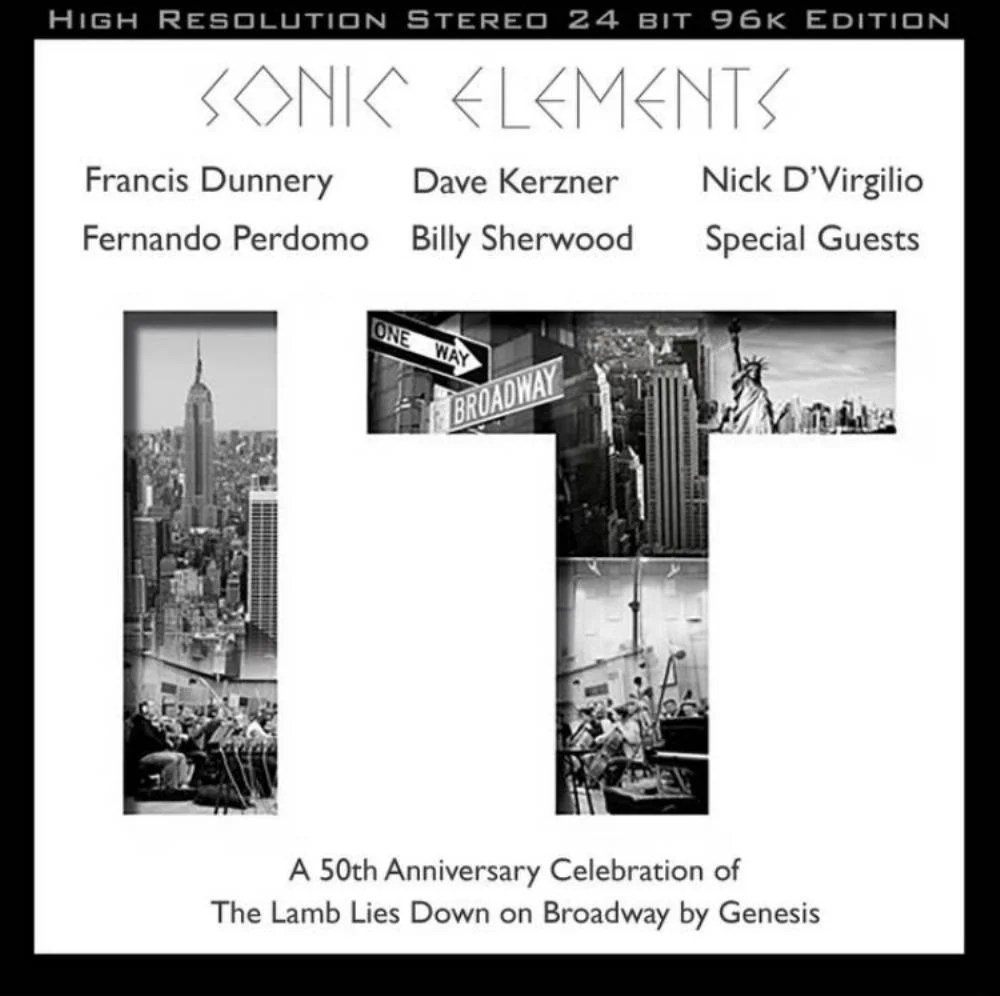
Jump forward fifty years. . . and the mighty and awesome Dave Kerzner has recreated and recorded a brand new version of LAMB simply called IT. If you don’t know the work of Kerzner, you really should. He’s the great touchstone or fountainhead of our era’s (third wave or beyond) progressive rock. From Sound of Contact, through his solo work (NEW WORLD DELUXE and STATIC), through his work with In Continuum, Kerzner is a genius. He knows how to write the best lyrics, and he also knows how to write the best hooks. But, there’s one thing about Kerzner that often doesn’t get recognized. He’s a perfectionist, an audiophile at the level of Steven Wilson. Don’t get me wrong, Steven Wilson has one of the best ears out there. But, Kerzner’s is equally good.
He just gets sound.
As far as I knew there’s nothing that Kerzner has released that I don’t proudly own. So, when I heard he was remaking LAMB, I was absolutely thrilled. And, there’s nothing about Kerzner’s version that doesn’t satisfy me. From his production to its use of real strings, it’s a glorious masterpiece, so very worthy of its now-fifty-year old original. Kerzner is exactly a year younger than me, and while I don’t know him, I wouldn’t be shocked if he and I encountered the album in much the same way.
In every way, Kerzner has done justice to LAMB. For 1975, it was immaculately produced, but that simply can’t compare to the immaculate production of 2025. IT—Kerzner’s version—replicates the entire album, again always advancing the production, especially with live orchestration. Additionally, Kerzner offers a third disc with alternative versions of the classic tracks.
Even the band of IT is an all-star cast of current prog royalty: Kerzner, Francis Dunnery, Nick D’Virgilio, Fernando Perdomo, Billy Sherwood, and special guests.
Spirit of Cecilia readers, it just doesn’t get better than this. Whether it’s genius or madness, who can say? Except to note, there’s always a bit of madness in all genius, and a bit of genius in all madness. LAMB/IT is smack-dab in the center. Since Kerzner first sent me the tracks via Bandcamp, I’ve been listening obsessively. That obsession—part madness and part genius—will continue for sometime, especially as we approach the end of the semester and with finals starting to loom larger. . . .
Glass Hammer’s “Rogue” spins the tale of one man’s fateful, final journey. “He leaves everything he knows behind,” explains composer Steve Babb. “And thinks he’s returning to a place where he once knew happiness, but in reality, his odyssey will sweep him away to somewhere completely unexpected.”
Babb explains that the ten-song album explores themes of regret, heartache, and the mortal salience that comes with age. “Life is fleeting,” he continues. “It’s a heavy topic for an album, but the music isn’t as heavy as our last few releases. Rogue is much more like the Glass Hammer albums our fans refer to as “classic.”
And who’s in the lineup? “It’s no secret that Glass Hammer reinvents itself every few albums,” says Babb. “It’s happened again! This time with a lot of new faces.”
Rogue features performances by Fred Schendel, Reese Boyd, and David Wallimann (GH guitarist 2006-2010). Vocalists Thomas Jakob (Netherlands) and Olivia Tharpe (USA) are new to the band. They’re joined by guitarist Oliver Day (UK), keyboardist Ariel Perchuck (Argentina), drummer Evgeni Obruchkov (Poland), and others. “It’s an international cast of characters,” Babb points out. “A super-talented group that our fans are sure to love.”
The hour-long Rogue is Glass Hammer’s twenty-second studio album. Fans can pre-order autographed copies, t-shirts and downloads on the band’s website. www.glasshammer.com
Greetings, music lovers and readers of Spirit of Cecilia! 2024 is fast coming to a close, and the SoC crew would like to share their favorite albums of the year. There was a lot of great new music, terrific deluxe reissues, and releases from old favorites. Hopefully, our lists will lead to some albums you will love as well.
Brad: Tad, thanks for starting us off and inviting everyone to participate. Always great to write with you! I’ll just start with an alphabetical listing of my favorite releases of 2024:
“Dogs” by Pink Floyd, as done by Tim Bowness and Giancarlo Erra
Airbag, The Century of the Self
BBT, Flare on the Lens
BBT, The Likes of Us
Bruce Soord, Caught in the Hum
David Gilmour, Luck and Strange
Frost*, Life in the Wires
IZZ, Collapse the Wave
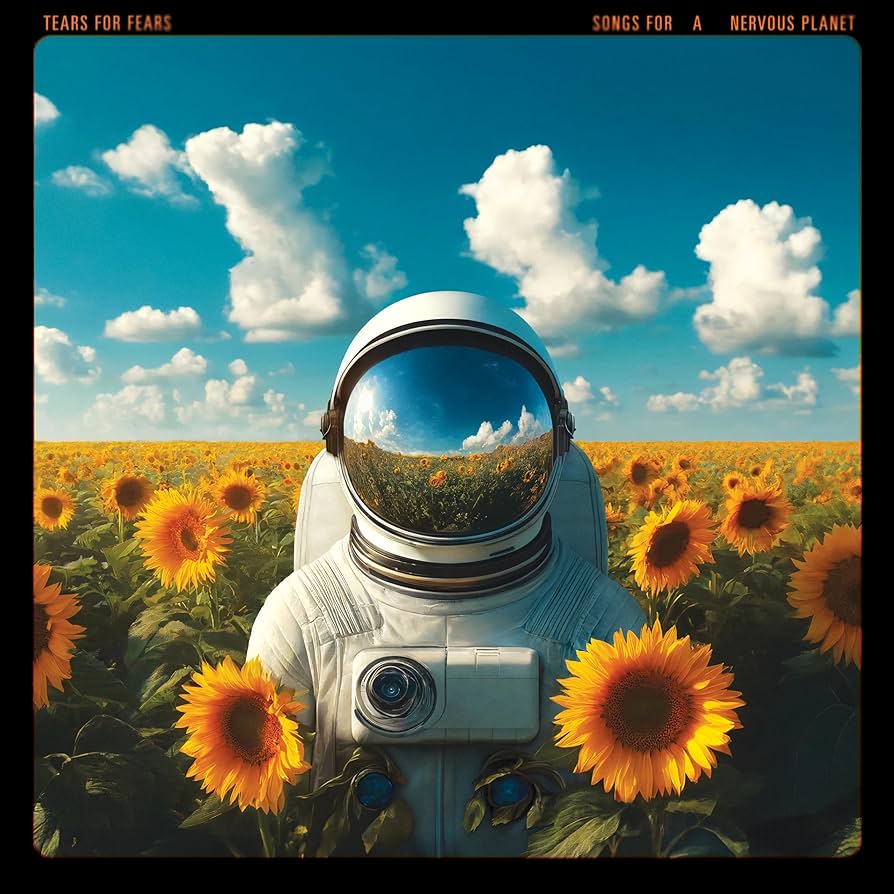
Tears for Fears, Songs for a Nervous Planet
The Bardic Depths, What We Really Like in Stories
The Cure, Songs of a Lost World
The Pineapple Thief, It Leads to This
The Pineapple Thief, Last to Run EP
The Tangent, To Follow Polaris
Tim Bowness, Powder Dry
And, I’m not even including vital re-releases such as the deluxe edition of Synchronicity by the Police; Fear of a Blank Planet by Porcupine Tree; Spectrum ‘97 by Phish; Lament by Ultravox; Bursting Out by Jethro Tull; or This Strange Engine by Marillion.
If I go just by my playlist numbers, I’d have to list “Dogs”, Frost*, IZZ, and, especially, The Cure. In fact, since The Cure first arrived, I’ve listened to almost nothing else. But, I went through such phases with Frost* and IZZ, too. And, really, I can’t recommend the single of “Dogs” highly enough. Bowness and Erra give it just the right beauty and creepiness that a proper Pink Floyd remake so desperately needs.
I must admit, though, I’m totally against the lyrical content of “Dogs.” I can’t believe our entrepreneurs are so bloodthirsty as this. Like or despise Elon Musk, for example, as you will, but he’s not bloodthirsty. In fact, if anything, I think he’d hate to “be dragged down by the stone.” And, he would hate to drag anyone else down by the stone. He definitely wants to win, but he wants to win fairly, by the rules established by society (unless all of society is corrupt, but let’s hope that Pink Floyd isn’t so Marxian as this). Maybe I’m wrong, however. Perhaps, I’m deaf, dumb, and blind, and that I keep pretending. . . Is this how Roger Waters saw his friendship/adversarial relationship with David Gilmour? If so, so very sad. For my money, give me Phish’s “Bouncing Around the Room” as the touchstone song dealing with entrepreneurship.
To be certain, though, I’m also a bit biased on the whole The Bardic Depths release. Given that I wrote the lyrics for it, I’m quite taken with it. Dave Bandanna did an amazing job in composing the music. So brilliant, so beautiful, so mystical, so joyful. Dave brings every song to life, and I’m always stunned to hear my own words given form and made manifest.
And, then, what’s not to love about the new David Gilmour? In fact, when he sings with his daughter, Romany, I’m completely taken. So much better than Dogs, co-written with Roger Waters.. Especially if you listen to something as glorious as “Between Two Points.” I would give anything to have such a relationship with my daughter that I could write something so gorgeous with her. Romany over Roger any day.
And, seriously, this brings me to all the incredible re-releases of 2024. Oh, to be “Prince Caspian” and float upon the waves. Oh, to be Prince Caspian. Dang, Phish was simply brilliant when they were.
I also want to single out Airbag. I don’t know their politics, but it strikes me that with this release, especially, they’re trying to combat conformism and cancel culture. I could be wrong, but I’m willing to take a chance that this is a brilliant counter-cultural masterpiece. One that shakes the conformists of the world to their very foundations. And, who wouldn’t love that bass playing and interplay with the drums? Genius. Thank God for the non-conformists of the world. Airbag sounds like Pink Floyd, in terms of legacy, but they are completely their own band.
If Airbag sounds anti-political, Robert Smith on the new Cure album, sounds confessional. Bless me, Father, I, Robert Smith, have sinned, and something wicked this way comes. Truly, the latest The Cure album is a masterpiece, a true sequel to Pornography and Disintegration. My love and respect for Smith only grows with age.
If Airbag is countering the world and Smith is confessing for us all, then IZZ is proclaiming the inherent goodness of each one of us. I’m not sure what the lyrics are all about on Collapse the Wave, but I feel that John Galgano and Laura Meade are asking us to look at our best selves. Rather than be dour, they find wonder. As far as I can tell, IZZ has been reading a lot of T.S. Eliot and a lot of John Paul II.
Tad: What a great list, Brad! Yours and mine overlap quite a bit, since we are often of like mind when it comes to music. Here is mine, based on how often I listened to each album:
8. Kyros – Mannequin
7. IZZ – Collapse the Wave
6. Jeff Johnson/Phil Keaggy – Spinning On a Cosmic Dime
5. Tears For Fears – Songs For a Nervous Planet
4. Airbag – The Century of the Self
3. Bardic Depths – What We Really Like In Stories
2. The Cure – Songs of a Lost World
1. Frost* – Life In the Wires
I’ve been a fan of Kyros’ music for several years now. They wed 80s sensibilities to 2020s expertise. Mannequin is another great collection of pop/prog.
Like you, I admire IZZ enormously. As far as I can tell, the lyrics to the title track are about quantum physics and faith. Who else but the Galgano brothers could pull off such an ambitious song? They definitely succeed.
Jeff Johnson and Phil Keaggy have collaborated several times before, and Spinning On a Cosmic Dime is the most lighthearted and fun of their albums. Johnson is a master of all keyboards – acoustic and electronic, while Keaggy is one of the finest guitarists alive today. When they get together, magic happens.
The Tears For Fears is primarily a live album, but the five new studio tracks are some of the best songs they’ve ever recorded.
You’ve already said everything I could want to say about the Airbag album. They continue to impress me with their social commentary, and their instrumental chops are outstanding. Their previous album, A Day At the Beach, is still my favorite, but The Century of Self is really, really satisfying.
The Bardic Depths’ new one is also a great album. Listening to it is like having a beer with C.S. Lewis, Tolkien, and the other Inklings. To my ears, it’s the most musically ambitious set of songs from TBD, and I have thoroughly enjoyed listening to it throughout 2024.
The Cure’s album came out of nowhere as far as I was concerned, and I approached it with some trepidation – there’s nothing worse than an old favorite trying to recapture the spark and failing miserably. Robert Smith et al. came up with a fantastic album that easily holds its own with their previous best. Amazing!
Frost*’s Life In the Wires is far and away the most-played album of 2024 for me. I have yet to tire of it, and every time I listen to it I find some new and delightful detail. Jem Godfrey sings all of the vocals on this one, and he is terrific. The beautiful melodies pouring out of my speakers are such a bountiful feast for my ears. The story is fascinating as well – a young man rebels against a world run by AI when he hears a pirate radio broadcast. After tracking it down to its source, it turns out to be an automated program. But then things get weird – he seems to sacrifice himself to become the new source of the radio broadcasts and spark an awakening of humanity. At least that’s how I read it.
So that’s what I spent my time listening to this past year. I also loved the Ultravox Lament box set and the Talk box set by Yes. It’s nice to have this often overlooked album get the treatment it deserves.
Brad: Yes, Tad, thanks for the reminder about Yes’s 30th anniversary edition of Talk. The last of the Trevor Rabin-Yes era albums, it’s simply beautiful. Clearly, the band was going for a progressive AOR sound at the time, but the production is so very clean. I love the packaging as well for it. Not overblown, but a solid release in terms of presentation. Don’t get me wrong, I love big box sets like Lament by Ultravox, but sometimes the smaller packaging works just as well. For me, Marillion’s and Jethro Tull’s releases–in terms of packaging–hit the sweet spot. Basically small books that fit perfectly on a book shelf.
Thanks, too, for the story about the new Frost*. I’ve listened to it numerous times, but I’d not figured out the lyrics. What a great story! Now, I’ll listen to it with different ears.
I’m so glad we agree on The Cure, on Airbag, and on Frost*. Three essentials of the year.
As it turns out, The Cure also released their brand new album as a live release–Songs from a Live World–as well. Gorgeous. Seriously, what else can Robert Smith do? He simply captures the mood of every era in which he finds himself. And, I, for one, am so fortunate to be alive when Robert Smith is alive.
I would also note that 2024 is an important anniversary date. Kevin McCormick’s gorgeous Squall came out in 1999, a mere 25 years ago! Even the rather snobbish All-Music recognized the brilliance of Squall. As far as I understand it, McCormick is working on a follow-up CD.
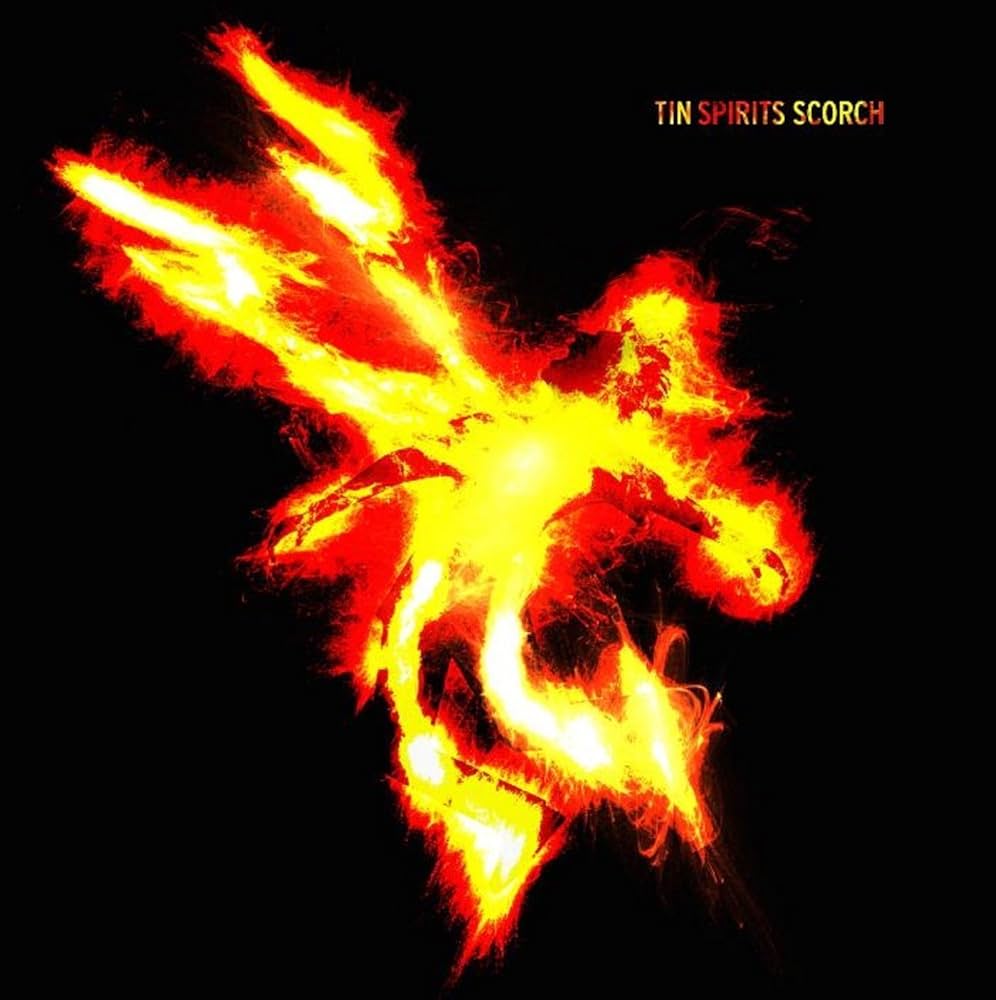
It’s also the ten-year anniversary of the genius Scorch by the Tin Spirits. A favorite album. Also, ten years ago, appeared the brilliant Demon by Gazpacho and Anathema’s mediocre to good Distant Satellites.
But, Holy Moses, it’s not just about Tin Spirits. If we go back to the twentieth anniversary of releases, 2004, we get to The Pineapple Thief, Variations on a Dream; Glass Hammer’s Shadowlands; Proto-Kaw, Before Came After; The Tangent, The World We Drive Through; Ayreon, The Human Equation; and Marillion, Marbles. Sheesh, what else do you want?
Carl: Full and necessary confession: 2024 turned out to be year in which I listened to little new prog rock, or rock of any kind. Not for any lack of new and worthy rock music, but 2024 also turned out to be the year in which I fell quite a ways down The Vinyl Rabbit Hole. I’ll likely say more about that in a separate post on my favorite jazz of 2024, but suffice to say that I’ve been haunting various thrift and record stores.
My most listened album of the year was released 30 years ago: Seal’s second album (1994), titled, inconveniently enough, Seal—just like his 1991 debut. A deluxe edition was released, with a remastered version of the album (fantastic), as well as alternative versions of the songs (also wonderful). I listened to this album countless times when it first came out, and I have never tired of it (or of his first or third, titled Human Being). Why has it resonated so strongly with me? I’m not entirely sure, but for me it is a perfect pop/rock album, and it sits squarely in the middle of a trio of albums that I continue to think is one of the finest three-in-a-row rock/pop album families you’ll ever hear.
I enjoyed the new albums by Frost* and Pineapple Thief and if I listened more closely, I’m confident that I would really like them. Both bands have consistently produced accessible, intelligent prog rock of the highest order, so I plan to revisit them in the weeks to come.
Caligula’s Horse’s Charcoal Grace is mysteriously but aptly titled, as the music has a dusky, burnt quality that also shines with many moments of delicate beauty. This Aussie band has been a longtime favorite, and this album adds to a discography rich with ridiculous chops and vocals at the service of exquisitely crafted songs. A keeper.
Keep Me Fed by The Warning, the talented sister trio out of Mexico, is (as they say) a banger. Or a series of bangers, the sort of swaggering, catchy hard rock—with sublime harmonies—that has been sorely missed in recent years. For my money, I prefer their live versions a bit more; they are dynamic performers whose young ages (20 to 25) defy (even bely) the band’s evident maturity and exuberant zest.
Speaking of all female bands, a somewhat guilty pleasure this year has been watching videos of the mind-melting Japanese metal band Lovebites. They have been compared to Iron Maiden and similar metal bands, which makes it all the more strange as I have never cared that particular genre. All five of these ladies are virtuosos, and Miyako Watanabe, one of the two guitarists, was a classical pianist until her late teens, when she picked up electric guitar for the first time. The live album Memorial For The Warrior Souls (2024) and the studio album Judgment Day (2023) are unrelentingly fast, in-your-face, melodic, and—yes—tremendous fun. Check them out live on YouTube and prepare to be amazed.
Myles Kennedy might just be the hardest working and (by all accounts) nicest rocker out there today, and his third solo album The Art of Letting Go is classic Kennedy—powerful, assured, dynamic, moving—with some nice little twists. His is one of the finest rock voices of the past couple of decades, but his guitar playing and song writing are just as polished, varied, and inviting.
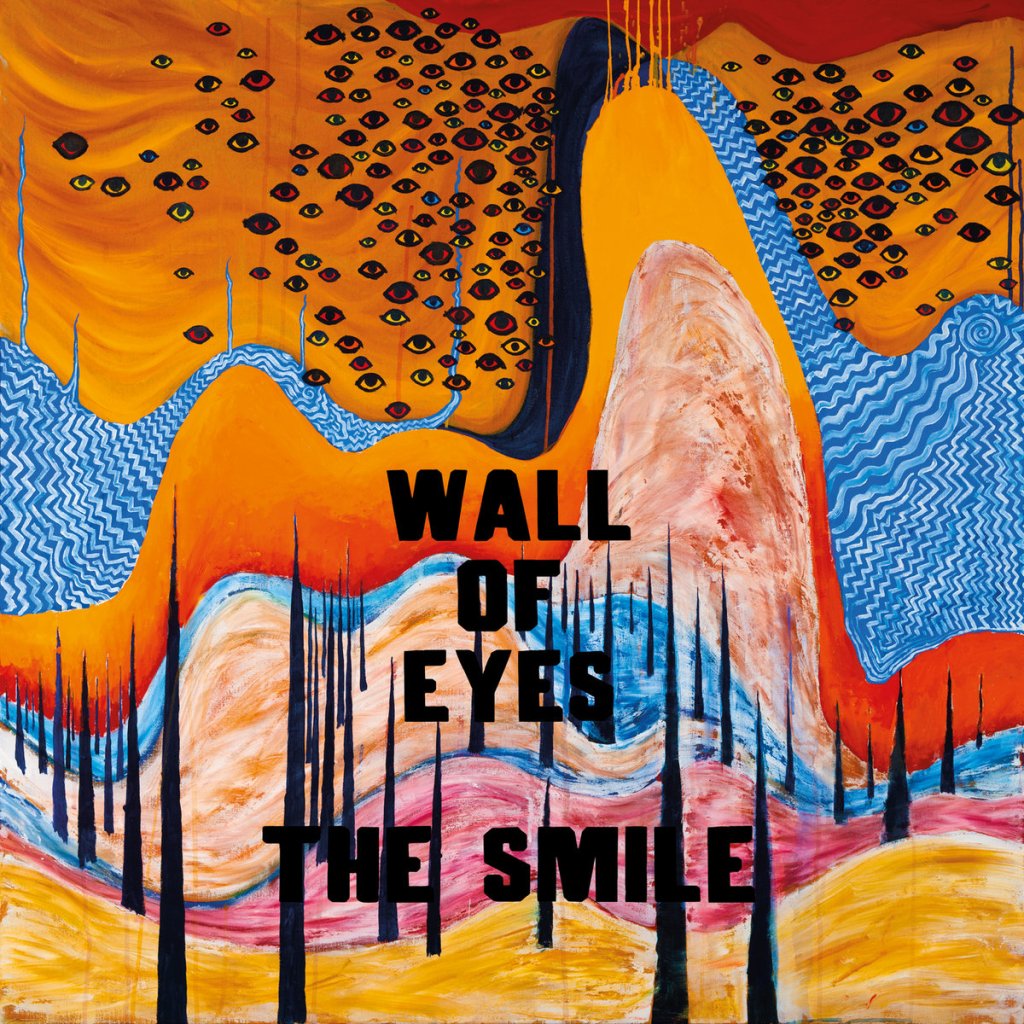
The Smile is like Radiohead if it didn’t have all of its members–and if it released albums more quickly. Which is what it is, with Thom Yorke (vocals, guitar, bass, keys) and Jonny Greenwood (guitar, bass, keys) joined by Tom Skinner (drums). Wall of Eyes (released in January) and Cutouts (same session, released in October) are quirky, dark, strangely fun, often weird, always melodic, and never, ever boring. Yorke’s voice is timeless and Greenwood’s playing, which is always so distinctive, is a revelation. And this album comes across to me as even more jazz influenced than their debut—but never in a direct, obvious way. Great stuff!
One of my favorite country artists, Dwight Yoakam, is back with his first new album in almost a decade. Brighter Days finds the Bakersfield legend firing on all cylinders, apparently reenergized by marriage and a young son. Dwight sounds half his age (68) and his band, no surprise, is tight and razor sharp. Every cut is worth the price, with the deceptively simple “I Spell Love” getting a nod from this fan.
Speaking of artists aging well, Van Morrison continues his remarkable output, with three albums: Beyond Words, New Arrangements and Duets, and Live at Orangefield. The first is all instrumental and is enjoyable, with some unexpected quirks. The second is a solid collection, featuring collaborations with Kurk Elling, Joss Stone, and Willie Nelson, all to good effect. But the live album, recorded a few years ago, is a revelation, captures a mid-70s Morrison at the top of his powers, featuring (as usual) a crack band and some other-worldly backing vocals. It rewards repeated listens and is a notable testament to Morrison’s brilliance as both a singer and songwriter.
Brad: Carl, excellent choices. I, too, like The Smile, and I, too, (thanks to you) listened to a lot of Seal II as well! I also bought Trevor Horn’s memoir, but I have yet to read it.
Well, folks, this pretty much wraps up 2024 for us. We have a lot to look forward to in 2025. It looks like The Cure will be releasing more music, there’s a new and final season of Stranger Things, and we’ll be celebrating the 50th anniversary of The Lamb Lies Down on Broadway by Genesis. Not only is there a 50th anniversary edition of The Lamb coming out, but the brilliant Dave Kerzner has re-recorded the entire album and is offering it as a 3-cd set plus hi-res download for only $49.99, plus shipping.
Big Big Train will be touring the U.S, and IZZ will be performing some stripped down shows–maybe even in Hillsdale!
I’m sure we’ll continue to give our hard-earned money to The Burning Shed and Rita Kay Drew’s The Band Wagon USA. I highly recommend supporting both of these truly excellent business enterprises. Amazingly enough, each is competitive with Amazon, even with overseas shipping costs.
Tad, Carl, Kevin, Erik, and I wish you all a Merry Christmas (remember, we’re only on day three of twelve), a Happy Hanukkah (remember, we’re also only on day three!), and Happy New Year, everyone!















You must be logged in to post a comment.