Tag Archives: progressive rock

Heart Land Mines, Vol. 1: Dave Kerzner’s Love Letter to the Past

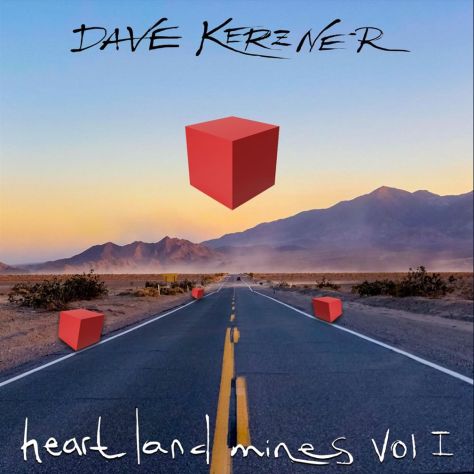
Heart Land Mines

In this, our latest dialogue, Brad Birzer and Tad Wert discuss the new album from the multi-talented Dave Kerzner, Heart Land Mines, Vol. 1. Kerzner has been involved in many different projects, all of them excellent. Besides his solo albums, he was also a member of Sound of Contact, Arc of Life, and In Continuum. He rivals Neal Morse and Mike Portnoy in the number and variety of musical ventures he participates in.

Tad: Brad, when I read Dave’s liner notes to Heart Land Mines, Vol. 1 and saw that these were songs from the 90s that he wrote after a relationship with a girlfriend broke up, I had low expectations. But I have really enjoyed this album from the first time I listened to it! It doesn’t hurt that Kerzner has a great ear for a musical hook – “Dreaming In LA” sounds like classic Bad Company to me, but better. 

This album is proggy – Kerzner’s voice has that laconic quality that always recalls David GIlmour – but it’s primarily a straightforward rock album that would be at home on an FM radio station in 1975. There’s a lot of acoustic guitar – “Back To One” sounds like an Eagles hit with its vocal harmonies. Anyway, maybe I’m emphasizing its retro qualities a little too much, but I find myself really taken with them!

Brad: Tad, thank you so much for asking me to do this review of Kerzner’s Heart Land Mines.  I’m sorry to be late in replying.  Since you first invited me to write this, I’ve been to the University of Louisville and back.  Not quite Tennessee, Tad, but still a beautiful city and state!  I gave lectures on sociologist Robert Nisbet and fabulist J.R.R. Tolkien, and I had a blast while I was there–especially seeing one of my long-time friends, Gary Gregg.  He’s not a progger, but he is a brilliant guy.

As far as I know, I have everything Kerzner has released (at least if bandcamp is to be believed), and I’ve been a huge fan of his since the deluxe edition of New World came out.  Wow, do I remember when that came out–I was utterly blown away by it.  Indeed, that album would rank as one of my all-time favorites, and I go back to it frequently.  I also really enjoyed Static and would also rank it very highly in my all-time lists.  His In Continuum albums also move me and have a high place in my rankings.

From my perspective, Kerzner is ELO progged up, and Pink Floyd popped up.  He has an infectious way about creating an ear-friendly riff while also complicating the matter in the proggiest fashion.  And, his production is always crystal clear and fetching.

For whatever reason, however, I’ve not been able to get into Heart Land Mines.  I’ve listened to it now three or four times, but it’s failed to grab me in the way that Kerzner’s previous albums have.  

I will say, however, that you’re absolutely right, if this were 1975, Kerzner would be huge on Album Rock Radio.  On the album, he clearly embraces the ethos and sound of Led Zeppelin, the Eagles, Bad Finger, etc.

Don’t get me wrong.  I really like Heart Land Mines, but it’s yet to become a part of my being in the way that his other albums have.  At this point, I’m happy to move on to his other albums and consider Heart Land Mines a labor of love, but not of genius.  

Please tell me why I’m wrong!

Tad: Brad, as always, you have the perfect phrase to describe an artist’s work: “ELO progged up, and Pink Floyd popped up” is Kerzner in a nutshell!

I wouldn’t say Heart Land Mines is a work of genius, but gosh, I think it’s a blast to listen to. It serves as a reminder of how far pop music has fallen since the 70s. We both agree Heart Land Mines would be a huge hit on mid-70s AOR. Today, it appeals to a niche audience. I know, I know – in the 70s guys our age were complaining about how great big band music was, and how awful radio was!

Anyway, I have enjoyed Kerzner’s semi-autobiographical musical journey here. He took what seems to be an ugly breakup of a relationship and turned it into a very catchy set of songs. “Manic Calm” has an irresistible guitar riff (I’m a sucker for a descending scale) that I can listen to over and over. “Eye Of The Storm” is the best Pink Floyd song since “High Hopes”. And I love the way he reprises a couple of songs to pull everything together into a cohesive package.

Like you, I’ve tried to buy everything Kerzner has put out, but it’s hard to keep up with the guy!  Sound of Contact’s eponymous album was near-perfect progressive rock, but it looks like personality clashes have kept them from ever getting together again. I have both of his In Continuum albums, and I like them a lot, but to my ears, neither of them have any melodies that are as memorable as some of the ones on Heart Land Mines

I agree that Heart Land Mines is a labor of love (or maybe broken love!), but I find it to be a thoroughly pleasurable listen. Sometimes, that’s all I want or need. I’ve always had a soft spot for power pop, and if a song’s melody doesn’t grab me, I have a hard time getting into it. Kerzner is a fantastic songwriter, I am so glad he decided to dust off these old tunes and record them.

Brad: thanks for the good words and the reminder, Tad.  You’re absolutely right, Heart Land Mines is a work of AOR genius, and it would’ve been a massive hit–along with Hotel California–in the 1970s.  Too bad for Kerzner that he’s temporarily out of joint!

For what it’s worth, I’ve given Heart Land Mines a few more listens since I wrote the first reaction, and the album very much continues to grow on me.  I would say that the album not only embraces The Eagles and Bad Company, but also, to a certain extent, Elvis Costello.  

Overall, it’s a delight of influences.  I even hear bits of Stone Temple Pilots and Steely Dan and other bands from the 1980s and the 1990s.

Kerzner is never shy about his debt to other bands, but these debts seem quite blatant and serious.  

Regardless, I’m so glad to live in the same world as Dave Kerzner  Whatever I think of this particular album, I know that my life is immensely better because of his music.

Tad: And on that note, I think we’ll bring this joint review to a close. Spirit of Cecilia readers, if you haven’t yet experienced the magic of Dave Kerzner’s music, you should check out his first solo album, New World; if you like it (and we think you will!), then Heart Land Mines is a worthy followup.

Here’s the official video for “Eye Of The Storm”:


Steven Hyden’s Radiohead’s Kid A

I had just turned 33 when Radiohead’s Kid A came out on October 2, 2000, and I was in my second full-year of teaching at Hillsdale College.  My wife and I had been married for two years, and we were expecting our second child.

Though I purchased it on CD, I pretty much wore it out playing it continuously for a year or so after its release (at least until Amnesiac came out the following late spring).  For whatever reason, I especially loved having Kid A on low volume during office hours.  It, more often than not, became a conversation piece with my students.  And, my students seemed to love the album as much as I did.

Admittedly, I was relatively new to Radiohead.  Like everyone else in the early 90s, I had heard “Creep”—Radiohead’s original and the Tears for Fears cover—innumerable times, but it never just grabbed me.  It always seemed like a nice alternative pop song, but nothing more.  At the time, I was even surprised that someone as innovative as Roland Orzabal played it, considering his original music. . . well, far more original.

In the fall of 1997, I purchased O.K. Computer in a small record shop in Helena, Montana.  To say that I was blown away by it would be a total understatement.  The album absolutely floored me, and, being a prog rock guy, I thought prog had found its answer to the disappearance of classic Yes and Peter-Gabriel era Genesis.  Admittedly, I became more than a little obsessed with Radiohead, purchasing then Pablo HoneyThe BendsMy Iron Lung,  and Airbag.  I had family and friends in Japan at the time, and I was able to get some Japanese releases of Radiohead, too.  In other words, I became a full-blown Radiohead obsessive.  To this day, I own every release (including several obscure ones) as well as several books by or about Radiohead.  I also religiously watched the video, Meeting People is Easy.

Yet, for whatever reason, I’ve hardly written about the band.  I’ve listed Radiohead albums—especially Kid A—as among my favorites, but I’ve never given them the writing space I’ve given to Talk Talk, Rush, Steven Wilson, Big Big Train, Kate Bush, or Tears for Fears.

To be sure, I have no idea how I missed Steven Hyden’s excellent 2020 book, This Isn’t Happening: Radiohead’s Kid A and the Beginning of the 21st Century.  In fact, crazily, I’d never heard of it until my wife gave it to me for Christmas.  Then, I devoured it.  A truly great read.

A music journalist, Hyden—ten years younger than yours truly—offers a memoir of growing up with Radiohead and being 23 when Kid A first appeared.  As he sees it, though Kid A preceded 9/11 by nearly a year, it perfectly captured the mood of the beginnings of the twenty-first century, a century, thus far, of political polarization, paranoia, and warfare.  This, then, is the essence of the book.  Throughout This Isn’t Happening, Hyden offers a beautiful essay on the meaning of music, the meaning of life, and the meaning of the world.  It’s all terribly subjective, of course, but it’s excellent as such.

As he brilliantly sums up in his conclusion:

“That’s what I hear now when I listen to Kid A—a desperation to not feel disconnected from one another, our environment, our very own souls or whatever the essence of who we are is.  Radiohead diagnosed this malaise at the heart of so many of us at the dawn of the twenty-first century.  And then they (perhaps unwittingly) offered themselves up as a remedy, crating music that has provided a common thread in our personal narratives, a rare constant presence amid so much change and disruption.  Even as everything else in your life has been turned over since the first time you heard ‘Creep,’ you still have your relationship with this band’s music.  Even when Radiohead themselves have felt lost, they’re provided ballast to so many of us for decades.  You can hear the common anxieties that bonded so many of us back then in Kid A—about technology, about globalism, about the precarious state of truth and decency in our political lives.  Radiohead conveyed these chaotic feelings with free-jazz horn sections and Aphex Twin-inspired glitches and other musical flourishes that might seem outdated now.  But, the vibe of this record—the uncertainty, the darkness, the abject fear that things will only grow worse—has felt like a constant in our world ever since.”

While I could relate to many of Hyden’s personal experiences, there were also several I couldn’t.  On the relatable side, I never once voted for a Bush—the original or Scrub—and I’ve been deeply opposed to the military conflicts after 9/11.  

On the unrelatable side, Hyden comes from a much more culturally left-wing position than I do, and I’m also coming out of a prog background rather than a pop one.  Hyden also references several music groups and movies I’ve never even heard of.  I suppose this is just a generational defect on my part.

Hyden also makes a convincing case that Kid A is a bold and revolutionary move in Radiohead’s discography.  To me, it was always a natural and fascinating evolution from OK Computer, in the way that Talk Talk’s Spirit of Eden evolved from The Colour of Spring.  After reading This Isn’t Happening, I’m now more on Hyden’s side.  Maybe Kid A truly was revolutionary for the band.

I only have one complaint, and it’s a fairly minor one.  At times, Hyden is prone to exaggeration.  Believe me, it’s part of the charm of the book, too.  But, when he makes statements such as 9/11 being “the worst tragedy in American history,” I have to scratch my head.  Worst in what way?  Numerically?  Far more—in fact, 52,000—died at the Battle of Gettysburg.  Morally?  I would call the internment of Japanese-Americans under Franklin Roosevelt, the enslavement of African-Americans, or the unwarranted decimation of the American Indian far more tragic.  Anyway, a minor complaint.

I don’t want to end on a negative note.  Again, I highly recommend this book—for anyone interested in music or, frankly, the world itself.  One of my favorite parts of This Isn’t Happening was the author hypothetically creating his own version of Kid A/Amnesiac.  It was thoughtful and thought-provoking, and I felt like a good friend had just made a mixed tape for me.  Thank you, Steven.

My Favorite Jazz of 2023

A couple photos of my “music corner”, with one of my favorite jazz albums of any year.

I listen to a fair amount of rock music (as well as some country, folk, pop, electronica), but the majority of the time I listen to classical and jazz. I rarely buy new classical albums, as I have my favorites and very little modern classical appeals to me.

But I am constantly listening to new jazz releases, sometimes several a day. Yet, despite that, it seems as if I barely scratched the surface, as 2023 saw numerous exceptional releases. Here are my favorites.’But I am constantly listening to new jazz releases, sometimes several a day.

Yet, despite that, it seems as if I barely scratched the surface, as 2023 saw numerous exceptional releases. Here are my favorites.

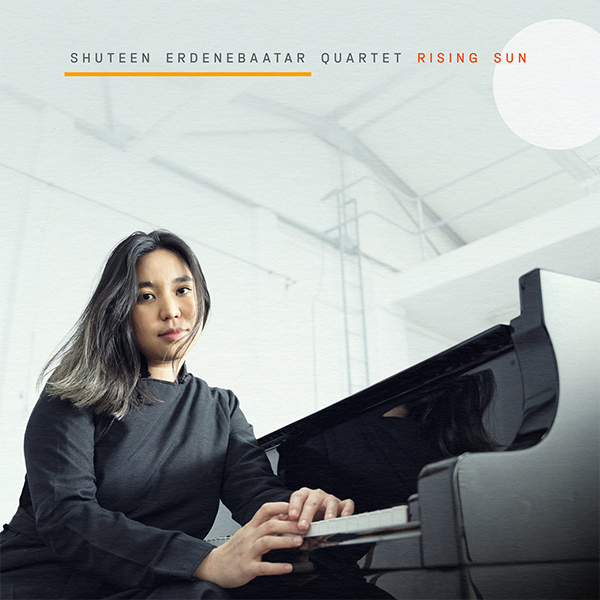
• Shuteen Erendenbaater—Rising Sun. Born in Mongolia, this 25-year-old composer, pianist and arranger has quietly (or so it appears to me) produced one of the finest debut albums in jazz in recent years. It is, in a word, impeccable. If that sounds too clinical, add lyrical, melodic, captivating, brilliant, and really, really great.

Erendenbaater certainly has “chops,” but what’s most impressive here is the songwriting and ensemble playing; she is obviously a mature and confident band leader. Anton Mangold, who plays soprano and alto saxophones and flute, is very much a co-star; his playing is perfectly suited to the songs and provides an edge and rawness that mixes sublimely with Erendenbaater’s elegant, beautiful lines. Yes, impeccable and impressive. The opening song, “In a Time Warp,” is a great place to start; here it is being performed live for Bavarian National Radio.

• Veronica Swift—Veronica Swift. It’s a real shame that the other Swift gets all the attention and fame, because this Swift has all the talent, versatility, and real swagger. Her 2019 album Confessions was top-notch and her 2021 Bitter Earth was brilliant and stunning. This self-titled album is eclectic, sophisticated, cocky, wild, and often startling; while not as poignant or emotionally wrenching as the edgy Bitter Earth, this is a chance for Swift to have some fun and to show that she can sing—well, let’s see—jazz (of course), rock, hard rock, pop, punk, R&B, Broadway, opera, and whatever else.

In fact, the idea behind the album is to rework songs in a style far removed from their original character. So, for example, the raw (okay, vulgar) Nine Inch Nails song “Closer” gets turned into a (PG-rated) face-melting funk/R&B tune with a scorching section of scatting (Swift is the finest scat singer around today and I think she rivals the great, including Ella and Mel Tormé). The Broadway tune “I Am What I Am” is reworked into a swinging jazz song that also features scatting—including a minutes of so of Swift scatting Bach. A favorite of mine is “Don’t Rain on My Parade”, from the 1964 musical Funny Girl and famously performed by a young Barbra Streisand, which Swift morphs into a Green Day-ish punk tune that is both smirky and joyous.

The presence of Freddie Mercury can be felt throughout, as two songs are Queen hits—”The Show Must Go On” and “Keep Yourself Alive”—reimagined, respectively, as a bossa nova-meets-Tin Alley tune and a bombastic blues number. Mercury would amused, I think, and impressed. I know that I am.

• Espen Ericksen Trio and Andy Shepperd—As Good As It Gets. The 2018 collaboration of the stellar Norwegian jazz trio and UK sax giant Andy Sheppard, titled Perfectly Unhappy, was a gorgeous, haunting work. This new release continues the Scandinavian-meets-Britain brilliance, with a strong fire underneath the inherent melancholy. In many ways, this reminds me of the great Keith Jarrett European group with Jan Garbarek: the shimmering piano work undergirds the longing saxophone journeys, everything propelled by a certain leisurely restlessness that is distinctly Nordic in tone and British in character.

• Benjamin Lackner—Last Decade. The legendary label ECM is both quite eclectic and yet almost immediately identifiable in terms of sound and aesthetic. The Germain-American pianist Lackner, joined by the fine Norwegian trumpet player Mathias Eick, has created a quintessential ECM album: slightly dark and pensive, perfectly played and with lots of space, featuring melodies that unfold with calm sureness. Lackner and Eick converse with attentive respect, like old friends discussing the mysteries of life, the songs expanding like sunlight slowing breaking through clouds, with moments of thoughtful intensity. One of the most beautiful albums of the year.

• Joe Locke—Makram. The vibraphonist Locke has long established himself as one of the finest players around. I’ve enjoyed many of his albums, but this is surely my favorite. The compositions are consistently great, the playing is the same, and the production is 10/10; the detail in each tune is impressive and captures the richness of the playing. A reader on Locke’s Bandcamp page says that the album “is almost overwhelming in its multitude of colors, moods and sheer energy. The joy of playing music on a very high level with virtuosic musical excursions by all musicians of this coherent band is exciting and just infectious.” Perfectly stated. A underrated jazz gem for 2023.

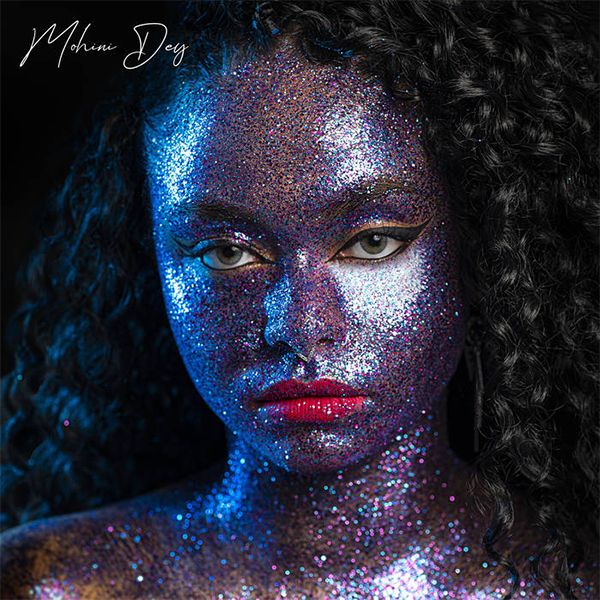
• Mohini Dey—Mohini Day. The Indian bass virtuoso, now in her late twenties, has been performing professionally since the age of 10. Little wonder: her technique, feel, playing, and musicality are simply stunning. She has played with a wide range of jazz, fusion, rock, funk, and world music groups, and seems to absorb and produce ideas and music like most people breathe air. Her debut album is, well, quite stunning. There is (of course) jazz, fusion, rock, funk, and world music. There is lots of energy (this is not background music); there are really good songs—this isn’t just a jam album. And the guest artists are of the highest order with, for example, Simon Phillips on drums and Guthrie Govan on guitar. There isn’t a dull or ordinary moment to be found.

Also recommended:

• Kurt Rosenwinkel—Undercover (Live at the Village Vanguard)

• Tingvall Trio—Birds

• Emil Brandqvist Trio—Layers of Life

• Joey Alexander—Continuance

• Yussef Dayes—Black Classical Music

• Jeremy Pelt—The Art of Intimacy, Vol 2: His Muse

• Walter Smith III—return to casual

• Kurt Elling and Charlie Hunter—SuperBlue: The Iridescent Spree

• Pat Metheny—Dream Box

• Affinity Trio—Hindsight

• Eric Alexander—A New Beginning: Alto Saxophone with Strings

My favorite pop and rock music of 2023

• Dimash Qudaibergen—Anything and Everything. This is the first time that the work of my favorite artist of a particular year is nearly impossible to find and buy. Good luck being able to track down CDs or even downloads. The reason for this strange situation highlights one of the many admirable and impressive qualities of this 30-year-old singer, performer, composer, multi-instrumentalist, and actor from Kazakhstan: he is fiercely independent and will not let himself be controlled by the usual powers in the music industry. Which means, in short, that Dimash (for the most part) has to be heard and viewed via YouTube and other online media (or, if you are able, in concert).

My introduction to Dimash came in early January 2023, when I watched this video of the then 22-year-old singer giving his first performance, of the French song “S.O.S d’un terrien en détresse”, on the popular Chinese show “I Am a Singer”. Like countless others, I was stunned, then transfixed, then ready for more (and, thankfully, there is much more).

Dimash has (depending on the source) a six or seven octave range, can sing in a variety of styles—operatic, popular, traditional, more—and usually does so in the course of a single song (and also sings in over a dozen languages). An exceptional example of this is the ambitious and powerful song “The Story of One Sky,” which Dimash wrote and performed, while also acting in the 12-minute-long video that came out in September 2022.

Although Dimash has had several successful concerts in North America, he is, as far as I can tell, mostly ignored by the American media. Meanwhile, the banal and brain-numbingly boring muzak of Taylor Swift has turned her into a sort of singer/songwriter goddess here in the United States. Neither fact is surprising. That said, those who have never heard Dimash before will, I am certain, be stunned, transfixed, and ready for more.

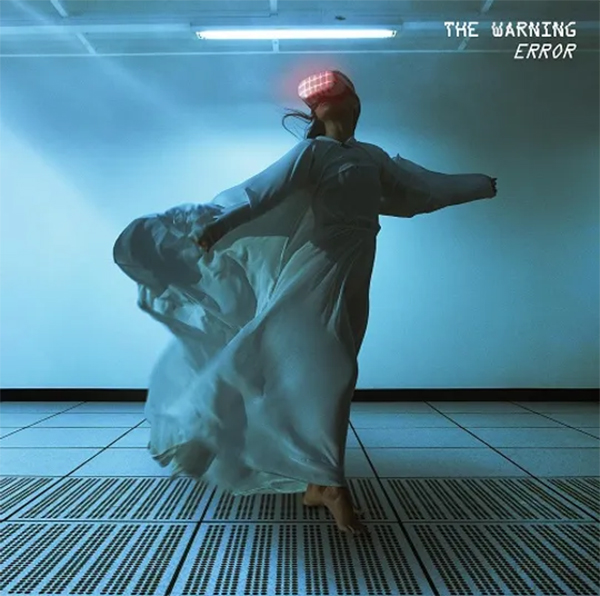
• The Warning—Error. This trio from Monterrey, Mexico consists of the three Villarreal Vélez sisters: Daniela (guitar, lead and backing vocals, piano), Paulina (drums, lead and backing vocals, piano), and Alejandra (bass guitar, piano, backing vocals). Now in their late teens and early twenties, the trio has been performing together for over a decade and has released three studio albums.

Error was released in 2022, but I include it here because, well, it’s so good and I first heard The Warning a few months ago. My first impression of these dynamic ladies was that they reminded me, in many ways, of Muse; it turns out that they have toured with Muse. Many of the same elements are there in abundance: great musicianship, exceptional hard rock songs that contain elements of metal and punk, fabulous vocals and harmonies, and lots of energy. Their August 2022 concert at “Teatro Metropólitan” is a perfect place to start, as The Warning is a captivating, well-honed live band. Favorites include “Disciple,” “Choke,” and “Money,” and their new single “More”.

But every song by the band is excellent, and many are great; there are clearly many hours of practice and work involved, and interviews reveal just how seriously the sisters take their craft. Lyrically, also, these three ladies are several cuts above, with an intriguing mixture of raw, cryptic, and even existential that belies their youth. A band to watch now and for years to come.

• Van Morrison—Accentuate the Positive. The timeless Irish singer and songwriter, now 78 years young, continues a pace of recording that would put most young artists to shame (he now has 45 studio albums, with several live albums). His 2022 release What’s It Going to Take? was widely blasted by the usual suspects for its strong pushback against government overreach and media-induced hysteria during the height of COVID, but I thought the album (featuring all original songs) was solid.  But there certainly was a dark and even dour aspect to it (how could there now be?) that is nowhere to be found on Morrison’s two 2023 releases, which consist of mostly covers of skiffle songs (Moving On Skiffle) and of rock and roll, R&B, and country favorites (Accentuate the Positive).

The latter is one of my favorites of the year; it is crisp, warm, energetic, and playful. Morrison’s voice is in great form, with a sinewy strength and casual slyness backed up by strong arrangements and adept, in-the-pocket playing. While projects like this can easily veer into nostalgic excess, there is an immediacy and lean focus here that avoids such dangers with ease. Besides, Morrison’s music has always looked back—there’s a reason he refers to “Jelly Roll” on his classic 1970 album Moondance—while pushing forward with creative restlessness, and that loving tension makes for another excellent addition to an already staggeringly great catalog.

• Bruce Soord—Luminescence. This is perhaps the most surprising pop/rock album of the year for me: a set of beautiful, contemplative songs that are sung and played with masterful control and understatement by the leader of the prog-rock group Pineapple Thief.

I’ve enjoyed Soord’s fine work over the years, but this release really grabbed me from the first listen. There is a rather timeless mixture of heaviness and lightness here—both lyrically and musically—that is easy to underestimate. But numerous listens prove that this is a keeper, an album that I’ll be listening to for years to come.

I say more about it in this recent Spirit of Cecilia discussion.

• Greta van Fleet—Starcatcher. The Michigan band’s 2021 The Battle at Garden’s Gate won me over, as their mix of classic rock, prog, folk, and more found its stride, with a number of well-written and attractive tunes.

Starcatcher builds on that success, but eschews a more commercial direction (certainly a temptation, I would think) for a more raw, semi-prog, and expansive course. The musicianship and vocal prowess continue to grow, and that means there are subtleties and layers here that reward multiple listens.

While the Led Zep comparisons will continue, it’s obvious to me that GVF is a band that has absorbed a wide range of influences (band members cite their love of jazz, Motown, world music, etc) and will continue to experiment and expand their musical and lyrical palette. To my ears, there is as much early Rush (and perhaps even early Queen) in the mix as Plant and Page. A strong release with many sonic pleasures contained within.

• Steven Wilson—The Harmony Codex. Speaking of sonic pleasures, this is one of the best-sounding releases of 2023, which comes as no surprise to anyone familiar with the many talents of Wilson, who is almost as famous for his mixing and producing as he is for his writing and playing.

I know that a fair number of Wilson/Porcupine Tree fans have strong (and even harsh) debates over the merits of respective Wilson albums, but I don’t have the time or energy for those squabbles. I simply enjoyed listening to this album many times after it was released, without any expectations or many comparisons.

The 11-minute prog-jazz-electronica-fest “Impossible Tightrope” is a favorite, perhaps because I listen to a fair amount of fusion-y, electronica-tinged jazz, or because I like strange rock-ish music that refuses to go where you expect it to go. This is an aural adventure, and as such, it delivers.

Also recommended:

• Soen—Memorial

• Extreme—Six

• Mystery—Redemption

• Big Wreck—Pages

90125 At 40

90125

Once again, the resident music aficionados of Spirit of Cecilia (Brad Birzer, Tad Wert, Erik Heter, Kevin McCormick, and Carl Olson) turn their gazes onto a prog classic – this time discussing Yes’ best-selling album, 90125.

Tad: Gentlemen, this album came out 40(!) years ago. In 1983, I was a senior at Vanderbilt University and compact disc players were just beginning to become affordable. Against all common sense, I bought a Sanyo player for $399 and three cds: Roxy Music’s Avalon, Pink Floyd’s The Final Cut, and Yes’ 90125. I still remember the awed looks on my dormmates’ faces when I popped in 90125 and “Owner of a Lonely Heart” came blasting out of my stereo without any preliminary hiss or scratching from a vinyl lp.

At the time, this album was a huge hit for Yes, and it jumpstarted their career after it had flagged somewhat (even though I would argue that its predecessor, Drama, was a terrific work). However, we now know that the recording of 90125 was not all sweetness and light. In fact, I believe it wasn’t even supposed to be a Yes album! But I’ll let someone else who is more knowledgeable give us the details of that.

Erik: Sometime around August, 1983, I was hanging out in the rec room of one of the barracks at the ASW (anti-submarine warfare) base in San Diego, a city where I had spent several months prior and would spend a few more learning the intricacies of submarine sonar.  Someone had left a music magazine hanging around, it might have been Rolling Stone, but I’m not 100% sure on that.  Anyway, I picked it up and started thumbing through it and saw a news item entitled “Yes – No.”  A picture of Steve Howe accompanied the short piece, which relayed the news that Yes was reforming, with Jon Anderson on vocals, Chris Squire on bass, Alan White on drums, and newcomer Trevor Rabin on guitar.  While much of the piece focused on Howe’s disapproval of the new lineup, I swept that aside for the news of a Yes reunion – I was absolutely thrilled.  

Later, in October of that year, I departed San Diego, training complete, and headed back to what was then home in Charlotte, NC, for a few weeks of leave before, in late November, I would make my way to my boat (the USS Olympia, SSN 717) that was then under construction in the shipyard at Newport News, VA.  During my leave, Yes released the first single from the new album, followed a few weeks later by the album itself.

Oddly, I was a little bit hesitant when I first heard Owner of a Lonely Heart. While the voice was familiar, as was the bass tone, this was something radically different from anything they had done before.  This one particular song was more commercial sounding than anything they had done, although it was hardly a lowest-common denominator hit.  And the guitar sound (especially that solo) was nothing like I’d ever heard on a Yes album.  There was, however, a bit of a fear that the sound of the album would be so unrecognizable as to not sound anything like Yes.  

That fear was firmly put to rest the night before the album’s release.  Listening to one of the local FM rock stations, a DJ started talking about the new Yes album, 90125, and decided to play another song off the album – Leave It.  I was hooked before they even finished the first verse with that huge, wall of sound vocal harmony that opened the song.  After that, I was ecstatic as I was bombarded to “doos” and “dums” and “deets” coming at me from different vocalists in a number of different directions in a vocal arrangement so complex, innovative, and interesting that only a band like Yes could even dream such a thing up, much less execute it so flawlessly.  This was the music I had been waiting for since the Drama album of three years prior.

The next day (of course!) I wasted no time getting to the mall record store to buy the first of many copies of the album in cassette format that I would own – many copies because I tended to wear them out from so many listens.  In my days of using a Sony Walkman, there isn’t another album that spent as much time being wound and rewound as 90125.  

The first listen to the full album was absolutely magical, revealing a perfect mix of sounds that were simultaneously familiar to Yes fans and yet totally new and different.  Moreover, the sound was very 1980’s contemporary.  And yet even now, 40 years later, the album holds up very well without sounding dated.  90125 showed that Yes could adapt to changing times, that they were anything but dinosaurs as critics had accused them of being.  It showed they could innovate in ways even Yes fans – accustomed to musical innovation – couldn’t have imagined.  It showed they could be commercially relevant in a new decade without devolving into banal hitmaking.  

Oh sure, there were many old school Yes fans that didn’t like the album, the ones who were probably hoping for a redux of Tales from Topographic Oceans.  You can count me out of that group though, because I am one old school fan that loved the album and couldn’t get enough of it.  And while there is some debate about whether the album itself should be classified as prog, the importance of 90125 to the genre cannot be overstated.  A whole new generation of fans was lured in by this album, fans that began venturing into the band’s back catalog and then into the wider world of prog.  Even when I consider the contemporaneous output of another one of my favorite bands – Rush – it’s hard for me to think of a single album that did more to keep the prog flame alive in the 1980’s after critics had gleefully – and, obviously, prematurely – declared the genre dead at the end of the 1970’s.

I’ll get into more of the particulars of the album itself in my next entry, but for now I’m going to turn the floor over to another one of the distinguished participants.

Carl: By reason of age, chance, and the mysterious forces of radio whims, “90125” was my introduction to Yes. I was fourteen and was just getting into pop and rock music, to the horror of my parents, who that same school year—1983-84—made me throw away some cassettes gifted by a friend. Those deeply subversive albums were by Elton John (early, mellow Elton), Pat Benatar, and Foreigner (4, of course). There was only one rock station that reached my small town in western Montana—a bucolic village with a population of 1100, no stop lights, no fast food, and (shockingly) no music scene. 

I recall, quite clearly, being at church youth group one evening and someone, after the more serious stuff, cranking said radio station in their car, doors open in the parking lot. “90125” came on. It immediately grabbed my attention. “What is that?!” I thought. And then came the breakdown, and I was hooked. This was interesting music! It took a while, but I eventually got a tape of the album, and I started to learn more about the convoluted history of Yes and its connections to another favorite group: Asia. Styx, Kansas, Supertramp, Queen, and ELP all followed. I was officially into prog! (And my parents finally gave up trying to control my musical tastes.)

 My years in college—split between Phoenix (1987-88), southern Idaho (1988-89), and Saskatchwan, Canada (1989-91) were filled with musical exploration, ranging from brief flirtations with metal and Bruce Springstreen to more serious dives into Pink Floyd, Rush, Rick Wakeman, Steve Howe, Steve Morse, Queensryche, Kerry Livgren, and so forth. But Yes was always a constant, and I gradually became acquainted with all the earlier work, as well as Trevor Rabin’s excellent solo album “Can’t Look Away” (1989), which I literally wore out. Then, in 1991, having moved to Portland and living with my cousin for a while, I bought my first CD: “90125”. That was a great choice, of course, because it’s a sonic marvel, with Trevor Horn (who I knew a bit about because of his previous work with Yes) at the helm. 

Erik mentioned Rabin’s guitars. As I’ve listened to the album a few times in recent days, they stand out the most to me; they mark the biggest difference between Yes with Howe and the “90125”-era Yes. That’s not a knock on Howe, of course, who is fantastic in countless ways. But the stylistic differences are immense. That, in turn, informs the songs, which are more anthemic and are simply BIG in sound and intention, while containing plenty of complicated parts, harmonies, and arrangements. We’ve all read about how the album came about, how many challenges there were, and how Anderson kind of slipped into the mix; it’s a tribute to Horn and the musicians that they could overcome so much discord and paralyzing circumstances to create one of the great prog-rock albums of the 1980s. 

If Rabin’s guitars set it apart, it is, in my view, Anderson’s vocal contributions that hold it together and make it a real Yes album. It would have been very good without Jon; it is a classic with him. And, again, there is the work of Horn, whose production genius is impossible to overstate. Ironically (or perhaps fittingly?), the same year (1991) I bought “90125” on CD, I discovered the first Seal album and was instantly hooked. It was, of course, produced by Horn, who has been at the helm for several Seal albums—the first three, for me, being one of the finest pop/rock trifectas ever created.

Kevin: Somehow my first memory of 90125 was the hype for the world-premier of their new music video on MTV. “Owner of a Lonely Heart” immediately received heavy rotation on the channel, in part due to the relatively-high production values for a single by an “old” group like Yes were in 1983. The avant-garde film-noir theme seemed an unlikely pairing with the lyrics but somehow it worked and captured a huge new following for the band. But it was simply a great new sound for the band and for the times.

I was fascinated with this new sound and found it to be an engaging blend of progressive and pop. Being in my mid-teens at the time, I don’t think I was as keenly aware of the importance of the “production” of a studio-recorded song, but I was aware that this was definitely a new adventure for Yes. I missed hearing Steve Howe’s guitar, but I also intuited that without Trevor Rabin in the mix this would be a completely different song.

I wholeheartedly concur with both Erik and Carl, that Rabin’s guitar really stands out on that opening track and throughout the album. I love the way the opening track begins with the “heavy distortion” Rabin sound and then quickly pulls back to the clean sound more reminiscent of Howe’s earlier contributions for the band. Whether intentional or not, it was a great way of signaling that this was something new and yet it retains those components that make it Yes.

I caught them live for this tour in Austin in 1984, and they did a great job of capturing that same energy on stage. Rabin seemed comfortable in his new role and had no trouble filling Howe’s shoes on the older material. It was a different style for those tunes, but they were well-played. This being my first chance to catch them live, I had no direct comparison, but I thought it was a tremendous performance.

But that brings up a component of this that I don’t want to miss.  I’ve read various articles about Rabin and Yes and their early incarnation as Cinema. Some accounts claim that Rabin came in with much of the album finished and the band just kind of recorded what he wrote. This is an unjust assessment and really underplays what makes the album so exciting.  I know this not because I was there, but because in 2003 Rabin released his demos as 90124. You can find some of them on YouTube–though I no longer see some of the tracks that better illustrate the point.

What is clear from the demos when compared to the final recording is that his ideas were seeds (some of them quite plain)  waiting to be nurtured and to sprout into full bloom. There was plenty of fluff needing to be pared down. There were plenty of tweaks needed. This was not a collection of hit songs waiting to be recorded; it was a mishmash of some good ideas that needed the rest of the band to make great. Not only did Squire and White bring these germs to life with a powerful rhythm section, but Trevor Horn’s production makes every track completely blossom. Then Jon Anderson arrived in the last few weeks of recording and, as Carl noted, turned a good album into “a classic.” His lyrical contributions alone changed the whole tenor of the work and his vocals are captivating in a way that is simply not there without him.

This was a band effort, an incredible symbiotic musical creation worthy of review forty years on. It will be remembered because it captured and launched the sound of the times both into the prog realm and beyond.

Tad: Kevin, thank you for providing the context in which Trevor Rabin’s contributions were made. It’s interesting to me how a consistent thread in all of our reminiscences has emerged: about how crucial Trevor Horn’s production was. I was a fan of his from his Buggles days – when he and Geoff Downes joined Yes for Drama I was really surprised, because I thought of them as synthpop artists, not progressive rockers! I ended up buying everything Horn produced for his ZTT record label: Frankie Goes To Hollywood (they have not aged well), Propaganda (amazing German group – A Secret Wish remains a favorite 80s album), Art of Noise, and Grace Jones (Slave to the Rhythm). Anyway, I agree that without Horn, 90125 would not be the success it is.

Okay, I’d like to share what my favorite moments on this album are! First, on “Owner of a Lonely Heart”, the opening muffled drum fill that is overtaken by Rabin’s clean guitar riffing, punctuated by Horn’s stabs of synthesized orchestral noise. That mix still sounds new and exciting to me 40 years later.

Second, the massive vocal harmonies on “Hold On” around the 4-minute mark, where they sing “Sunshine, shine on, shine on you”.

Third, the intro to “Changes” where a motif on vibes is played as various other instruments enter playing King Crimson-esque patterns until Rabin’s guitar takes control and gets the proper melody underway.

Fourth, all of “Leave It”. This song is such a vocal and instrumental tour de force! A wall of sound that leaves me wishing it would never end.

Finally, the moment at 5:30 into “Hearts” where the melody transforms from an aggressive, plodding riff to a beautiful, warmhearted tune that is carried by some of Jon Anderson’s finest vocals.

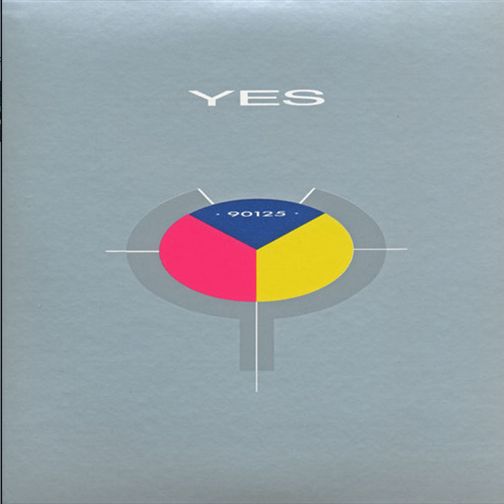
As is my wont, I need to remark on the artwork – what an iconic representation of early 80s fascination with technology! It’s obviously computer-generated graphics that, at the time, seemed futuristic and edgy. And the title came from the catalog number assigned to the album by the label. About as far as you can get from Roger Dean’s fantasy landscapes.

All in all, just a superb album, and I’m thankful all the musicians with their various agendas were able to gel into a cohesive unit and get it done.

Brad: Well, I’m late coming to this conversation, but I love seeing what Tad, Kevin, Erik, and Carl have all contributed.  Thanks to you each for such great thoughts.

I have this album on CD now as well, but I very much remember buying the vinyl back in early November 1983.  I loved the Apple-esque cover of the album (though, I grew up loving Roger Dean’s work, especially for Yessongs), and, like all of us, I was already taken with “Owner of a Lonely Heart.”  I had grown up with Yes (but had somehow misse free d Tormato and Drama, I wouldn’t come back to both until after 90125).  One of my fondest memories is listening to 90125, whole and complete, with my headphones on during that November and December of 1983.  The lights off in my bedroom, the headphones on, and Yes playing beautifully, me absorbing it all..

As much as I loved “Owner of a Lonely Heart” at the time, it was the album as a whole that really grabbed me.  I remember being utterly moved by “Hold On”–”constitution screwup, shattering the dreams” and thinking it one of the deepest songs I’d ever encountered.

Talk the simple smile, such platonic eye

How they drown in incomplete capacity

Strangest of them all, when the feeling calls

How we drown in stylistic audacity

Charge the common ground

Round and round and round, we living in gravity

Shake – We shake so hard, how we laugh so loud

When we reach, we believe in eternity

I believe in eternity.

These were (and remain) pretty heady lyrics for a sixteen year old.  Yes’s 90125 made me realize the possibilities of rock music, just as Rush’s Grace Under Pressure soon would

Then, “It Can Happen”:

You can mend the wires

You can feed the soul apart

You can touch your life

You can bring your soul alive

It can happen to you

It can happen to me

It can happen to everyone eventually

Followed by the brilliant “Changes.”  

Flip the record over.  

Side two, roaring into life with “Cinema.”  As I understand it, this was originally the introduction to what might have been a twenty-minute epic, “Time.”  As it was, though, it stood alone in its gorgeous production, leading into the magisterial “Leave It.”

“Our Song” is a great rocker.

​​Toledo was just another good stop

Along the good king’s highway

My fortification took me by surprise

And hit me sending me sideways

Spellbound – Roundly – Good for sunshine

Can’t help thinking

Singing the Rule Britannia

And this is where it grabs you

There’s method in the key of C

Toledo’s got to be the silver city

In this good country

“City of Love” and “Hearts” perfectly close the album.

Many moons cascade one river

They light from side to side

As we cross in close proximity

Like rivers our hearts entwine

How we talk – How we teach our children

How we move – We direct our eyes

All the senses tuned discovery

As and as and when our hearts decide

Be ready now – Be ye circle

Be the central force ye life

As the game extends the cycle

Be ready to move

Kevin, I’m jealous that you got to see them live  in 1984.  I’m sure that was an extraordinary concert, capturing all the energy of a reborn-band.  Speaking of which, I’ve always liked 9012-Live: The Solos, the live album that came out in 1985.  Again, it just exudes energy and creativity, a band at its best.

Erik: Great comments all, and a lot of fodder to work off of as I discuss the album proper.  

We’ve talked about Rabin’s guitar, it’s contrast to Howe’s work, and its impact on the music.  But there is another contribution that is also quite notable, and that’s Rabin’s contribution to the vocal landscape of this album.  I am adamant in my opinion that from a purely vocal perspective, the Rabin-era lineup is far and away the best Yes lineup.  Consider a few of the songs.  First, Leave It is simply not possible without Rabin.  Not only does he trade lead vocals with Anderson, but his contributions to the harmonies are critical.  Changes is another song that is not possible without Rabin, due to the lead vocalist role alternating between him and Anderson.  And the “talk the simple smile” section of Hold On is yet another harmony that would not sound anywhere near as good without Rabin’s contribution.

This ability to switch back and forth between Rabin and Anderson on lead vocals, as well as the ability to create the vocal harmonies that permeated 90125 made Rabin’s vocals an excellent addition to the Yes sound.  It’s almost as if Rabin was put on this Earth to harmonize with Anderson and Squire, because his voice fits with them so perfectly.  It’s another reason why the version of the pre-Rabin Yes classic I’ve Seen All Good People from 9012Live is my favorite version of this song – Rabin’s contributions to the vocal harmonies makes what is primarily a vocal-driven song all that much better.  

I’ll also throw in more on Horn’s production with regard to a couple of additional observations to go with those given above by Tad, Carl, and Kevin.  First, neither Rabin nor the band in general was all that fond of Owner of a Lonely Heart in its demo form, but Horn would have none of it.  While he wanted a reworking of the lyrics, he nevertheless recognized the song as a hit – in part due to the intro, and in part due the chorus – where the band did not.  Horn didn’t merely want this song on the album, he insisted on it.  Working with the band to rewrite some of the lyrics (for which Horn himself received partial credit) as well as arrangements on the final recording, Horn helped mold the song into the first #1 single Yes ever had, and one that propelled this album into the stratosphere (also, the band’s only #1 album).

Another aspect where Horn excelled as the producer of 90125 was the underappreciated role of track sequencing, upon which he conducted a clinic of how it’s done.  The sequence of songs begins by a delightful punch to the listener’s face (and ears!) with Owner of a Lonely Heart, especially with the intro guitar riff, before moving into the slow but heavy Hold On.  Similarly, the beginning of side 2 with the instrumental Cinema flowing seamlessly into Leave It is just chef’s kiss perfection.  And closing the album with Hearts was a fitting conclusion to Yes’s 80’s rebirth.  Overall, every track on the album feels like it is placed exactly where it should be.  While such sequencing always seems obvious to us in retrospect, the producer had to start with a collection of songs and figure out what would go where.  To ask Horn to do a better job than he did on 90125 is to ask the impossible.  

I also like Kevin’s observation with regard to Anderson’s impact on the album.  Like him, I’ve listened to the demos, and the contrast between those and the finished product is striking, with Anderson’s influence being undeniable.  It was his presence and his contributions that made 90125 truly a Yes album and not just an album performed by some musicians who had been in that band.  There are lyrical passages throughout the album that the seasoned Yes fan will instantly recognize as Anderson’s words.

As far as some of the other tracks go, I’ll first start with It Can Happen, a track which I absolutely love.  This is one track that encapsulates the old Yes spirit of the 1970’s into the new Yes sound of the 1980’s.  Tying to the previous paragraph, this song is one that really demonstrates Anderson’s imprint on the lyrics when compared to the pre-Anderson demo.

Hearts pulls off the same feat of encapsulating the old spirit in the new sound in a different form, hinting at some of Yes’s earlier long-form epics while keeping things economical.  I love the “explosion” in the middle of that song that leads into the “who would believe you, wise men do” section.  Our Song is a deep cut favorite, featuring a driving, tour de force performance by Squire on bass.  Changes was a perfect FM radio staple for the era, with an ear-catching introduction and huge, dynamic swings between the quiet and heavy sections, along Rabin singing lead on the verses while Anderson takes the lead role on the choruses.  

I’m going to cut myself off right here, because I could go on and on (and on) about this album and I need to give some space for the rest of you.  I enjoy reading your contributions as much as I like writing mine!  But in conclusion, when I think of albums of the 80’s that really define the decade (at least for me personally), this one is alway at or near the top. And as a Yes fan, I continued to be thrilled all these decades later that they were able to pull off an album like this, a commercial and artistic triumph that happened in the context of the band navigating a radically different musical landscape from the one in which they had achieved their previous great successes.

Tad: Erik, I think your remarks are the perfect way to conclude this discussion. Gentlemen, it’s been a blast revisiting this album!

Frost*: A Million Reasons to Love Milliontown

Milliontown

Greetings, Spirit of Cecilia readers! In this post, Brad Birzer and Tad Wert discuss a classic prog rock album that is a mutual favorite of theirs: Frost*’s debut, Milliontown.

Tad: Brad, I have you to thank for making me aware of this wonderful album. I think you mentioned it in some social media post years ago, and I replied, “What’s Frost*?”. You immediately sent me a link to a video of Jem Godfrey and Dec Burke playing an informal duet performance of Hyperventilate, and I was hooked. Fortunately, I was able to snag a copy of Milliontown before it became unavailable. 

So, Brad, to paraphrase John J. Miller, host of The Great Books podcast, “What makes Frost*’s Milliontown a great album?”

Brad: it’s always good to start with John J. Miller, bookmonger extraordinaire and a man possessing excellent taste in music!  He’s also great to have a beer with.  Someday, Tad, we have to get you up to Hillsdale so you can meet your true brothers!

As to what makes Milliontown such a great album–there are, throughout the album, a million things going on at once, and it all could’ve readily have devolved into pure chaos.  But Frost* always holds all things together.  Indeed, it’s the genius of the band.  And, by the time we’re immersed in the opening track, “Hyperventilate,” we’ve been happily flooded with a wall of sound as well as outrageous digressions.  Again, though, it all comes together as a beautiful whole.

I’m really glad I sent you that video of Godfrey and Burke.  To me, that clip captures the essence of Frost*.  Playful yet professional. 


Back to Milliontown as an album.  Strangely, the first time we hear a human voice on the album, it’s a distorted recording that opens track two, “No Me No You,” and then the singer sings with absolute urgency.

Things slow down considerably with “Snowman,” track number three.  This song has almost a ballad feel, something that could’ve been from Genesis’s And Then There Were Three.

Things revive, rather seriously, with track four, “Black Light Machine.”  Yet, the lyrics are dark–about a psychopath.  The lyrics here really get into Steven Wilson territory.  Still, this is probably the poppiest song on the album, even though it’s a little over 10 minutes in length.  Again, a paradox of Frost*–combining the poppiest tunes with the darkest lyrics.

The hyperness of Frost* continues with the penultimate track of the album, “The Other Me,” a funky prog song, sounding a bit like Thomas Dolby and a bit like mid-period Tears for Fears. [the order of these songs, by the way, is different on different releases of the album.  My review, here, reflects the song order as on 13 Winters]

And, of course, this brings us to the greatest track of the album, the magisterial 26-minute, “Milliontown,” Frost*’s equivalent of “Supper’s Ready” by Genesis.

So, Tad, what makes you think this is a great album?  And, what are your thoughts about the individual songs?

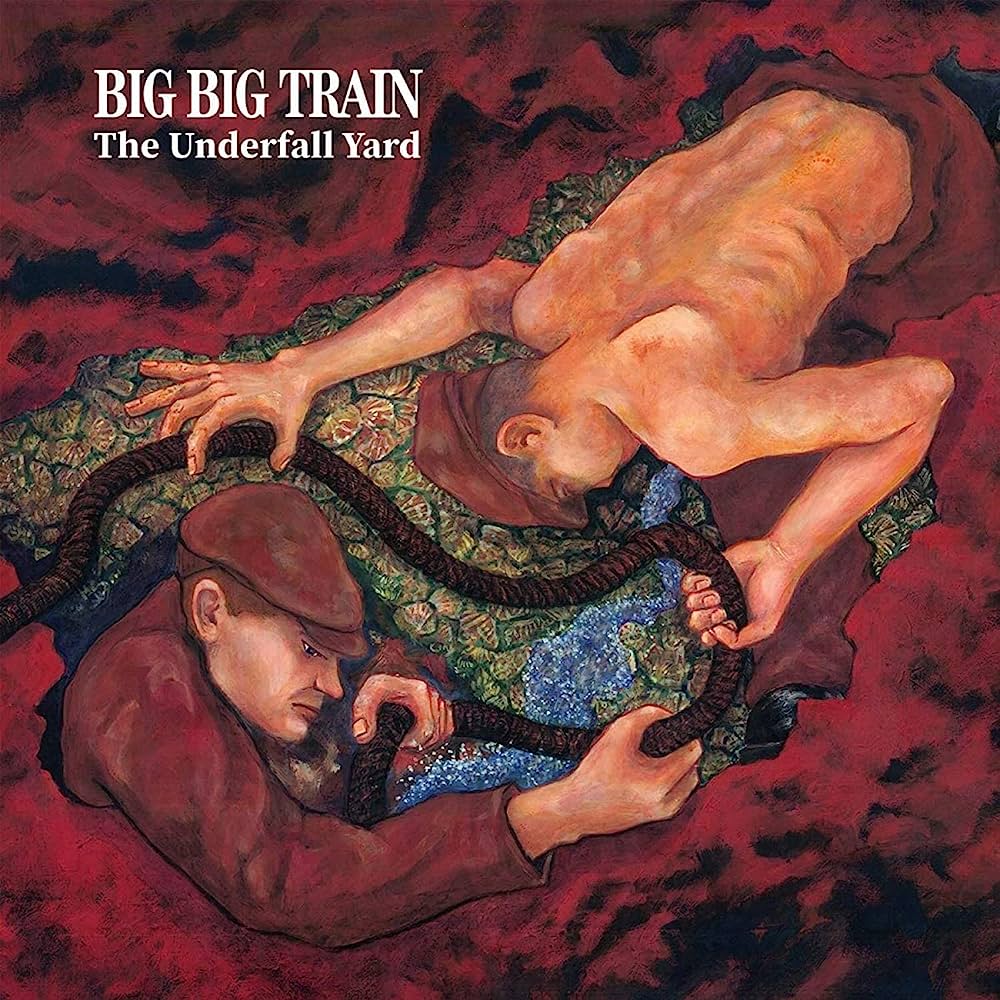
Tad: Brad, for me the test of whether an album is great or not is simple: do I listen to it again after my initial experience of it? When I get a new album, I typically enjoy it for a week or so, giving it half a dozen spins. After that, it gets filed away and I’m unlikely to pull it out again. Some albums, though, stand the test of time, and I never tire of them. Genesis’ Abacab, Yes’ Going For The One, Big Big Train’s The Underfall Yard (among other BBT masterpieces), Glass Hammer’s Ode To Echo, Spock’s Beard’s V, Gazpacho’s Night, Steven Wilson’s The Raven That Refused To Sing are all albums that I return to again and again, and I always find something new to delight in. Milliontown also falls into that group.

I think it’s the perfect balance of pop appeal with the – as you so aptly put it – barely controlled chaos that makes this album so compulsively listenable. “The Other Me” is a great example of this – it features a chorus that begs to be sung along to, while underneath all kinds of weird noises are percolating and bursting out at odd times. Atonal, screaming guitars compete with beautiful piano lines, while the vocals veer from a whisper to a scream. It is a raucous, glorious roar of music, and I love it.

“Snowman” is another favorite. As you mentioned, it slows things down, with its very simple, almost childlike melody, but I’m a sucker for a pretty tune, and this is one pretty tune! Jem Godfrey’s production is perfect, keeping things relatively spare and open, which allows the vocals to feel more intimate.

I agree with you that “Black Light Machine” is very poppy, and I love that. It’s just an aural rush of exhilaration, which, of course, belies its dark subject matter. No matter, I enjoy every second of its 10+ minute length. Dec Burke’s guitar solo is outstanding here, as well.

And then there is the epic title track. Wow! Burke’s vocals at the beginning are simply haunting, while Godfrey’s keyboards carry the gorgeous melody. I am in awe of how so many perfect melodies spill out in the course of this one song. Godfrey was definitely plugged into his muse when he composed this song. The time flies by every time I listen to it –  there’s a frantic, swirling climax of everyone hurtling to a final whoosh!, and when you think it’s over, Jem closes things out with a very sweet coda on solo piano.

In his notes to the reissue set of Frost*’s first three albums, he says that he wasn’t happy with the original mix of Milliontown, so he rerecorded some parts and remixed it. I have to agree that as good as the original version was, the new version that was released in 2020 is better. 

Like Glass Hammer, Frost* has featured a rotating cast of members, but the one constant, Jem Godfrey, has meant that there has always been a recognizable Frost* sound. I think the current guitarist/vocalist John Mitchell is a terrific partner for Godfrey, but Burke’s work on Milliontown is superb.

Brad: Wow, Tad, this is an awesome response.  You really nail the genius of Frost*. Thanks for your comments about the individual songs, especially.

And, you’re right, of course, the band really centers around Jem Godfrey and his rotating cast of brilliant musicians.  

Have you had a chance to listen to Island Live yet?  “Milliontown” sounds just as wonderful live as it does in the studio, though the vocals are a bit muted on the recording.

I’m also in complete agreement with you about what makes a great album.  I’m with you–most albums get a few weeks of time on my playlist, then get filed away.  I have shelves as well as boxes of CDs–my favorites displayed in a glass cabinet.  

Certain albums, though–and your list is very close to mine–find themselves in constant rotation, and I come back to them frequently.  I would also put Milliontown in that constant rotation category, though, frankly, every Frost* album fits in this category.  I probably come back to Falling Satellites and Day and Age as often as Milliontown, especially when I’m on not infrequent long car drives.

A few months ago, I posted my top 200 albums–all ones I consider more than mere moments of time.  Frost* featured prominently.

I’m eager to know what the band is doing next.

Tad: Brad, I just finished listening to Island Live, and you are right – it sounds wonderful. The 2-cd/Blu-ray is already sold out, and it just came out in June of this year!

I also listen to Falling Satellites and Day and Age as often as Milliontown – the former is more pop, albeit a far more elegant strain than what passes for “pop” today – while the latter was my favorite album of 2021. Mitchell’s love of classic Police really comes through on that album.

Well, Brad, I think we’ve done Milliontown justice – I hope readers who are unfamiliar with it are moved to check it out!

Rhys Marsh Finds Solace In “Towards the West”

Rhys-Marsh--Towards-The-West

Greetings, loyal Spirit of Cecilia readers! Brad Birzer and Tad Wert engage in another music-related discussion, this time focusing on Rhys Marsh’s latest album, Towards The West.

Tad: Brad, thank you for suggesting we do a dialogue on this album. As I listened to it, I was almost overwhelmed with its spare, emotional vulnerability. I visited Marsh’s website, and he explains there that he recorded this music not long after his father passed away. 

Brad: Thanks so much, Tad.  I’ve been a fan of Marsh’s for a while now, ever since I first heard his Karisma release, October After All.  And, I really like his work with Mandala.  

But, I’m in complete agreement with you.  Even the length of Towards the West is intimate–at only 38 minutes long.  The album feels like it could’ve been the funeral service for Marsh’s father.  It has an intimate aspect, but it also has a holy aspect to it.  

You’re absolutely right, I think, to call out its “spare, emotional vulnerability.”  The music strikes me very much as a mix between Mark Hollis’s solo album from 1998 and Kevin McCormick’s acoustic music.  It’s holy, haunting, and ethereal.

I really like the lyrics as well, and I’m glad Marsh decided to let the song lengths be whatever they needed to be.  So, on this album, we have 2 minute tracks and 10 minute tracks.  Every song is exactly what it needs to be.

What do you think of the lyrics, Tad?  I find Marsh one of the best lyricists out there.  Everything he writes is meaningful, and given that this is a tribute to his father, the lyrics are especially meaningful.  Certainly, I’d be honored if one of my kids wrote about me at this level!

Tad: Brad, I’m glad you mentioned the 38 minute length of Towards The West. One of the banes of the compact disc era, in my opinion, was the temptation to fill its 75-minute capacity with music. That’s great for classical music, but for rock – even prog with its epics – 75 minutes listening can be exhausting! So, yes, the relatively short length of Towards The West just adds to its heft. Okay, rant over.

As far as the lyrics go, I agree that Marsh has a true gift. You and I differ in this respect: I am drawn to melody first, then lyrics, whereas I believe you’re the converse of that. Marsh’s vocals here are extremely prominent in the mix, which means the lyrics are front and center. I listened to the album through headphones, and it was almost as if he were whispering in my ear. 

There are many gems to be treasured here. I particularly like “Your words will never fade/Our love will always stay”, from It’s Like You Always Said. That song also includes a cassette recording of Marsh’s father speaking. Another lyric is “We think of you and all the years we spent together/The things you’d say, and how we’d laugh…You picked me up when I was down and you helped me to see/The things that matter and those that don’t”, from We’ll See You Again. It sounds mundane, but it’s really profoundly touching when Marsh sings it. My own father loved nothing better than to crack a joke and make those around him laugh, so I could immediately connect with Marsh there.

Brad: Despite being a father to seven kids, I never knew my dad.  I was only two months old when he died.  My older brothers were age 8 and 5 when he passed away.  So, I love stories of dads!  I love hearing that your dad always wanted folks to laugh.  And, I really appreciate Marsh’s tribute to his father.  The album truly is moving, and the more I listen to it, the more taken I am with it.  It really does grab the listener from the opening notes and carries him/her through to the very end.  

I think my favorite part is toward the middle and end of “Cauterise” as the music builds up so perfectly, so beautifully.  By this point in the album, Marsh has earned the right to give us a wall of sound.  Especially after how spare the earlier parts of the album are.  It really is an amazing buildup.

And, again, this takes me back to an earlier point (made above).  This is truly an album.  Not just a collection of songs, but a coherent and cohesive concept album, a work of art from beginning to end.

I also really love the spiritual quality of “We’ll See You Again.”

Anyway, Tad, Towards the West  is truly one of my favorite releases of the year.  I’m not exactly sure what Marsh means by the title of the album, but it has a Tolkienian feel to me–Frodo, Bilbo, and Gandalf departing for the Blessed Realm.

Tad: Yes! Towards the West is an album, not a random collection of songs. Before we close, I’d like to single out Marsh’s choice of instrumentation for some appreciation. It’s primarily acoustic, with a lot of piano. Most of the time, things are relatively hushed and intimate; which, given the subject matter, makes sense. When Marsh introduces electric guitar and bass, it’s always in service to the overall sound already established. I love the rawness of the music in this album. These could be demos, in a way – very well-produced ones, at least.

Okay, Brad, I think we’ve done Mr. Marsh’s new opus justice. Those interested in purchasing a hard copy can do so at Burning Shed, linked here.

My 200 Favorite Rock and Pop Albums

Over at my substack (just a few months old now), I posted my top 100 albums. I got some great responses there and on Facebook as to what I was missing (and some kind words about my choices as well). As such, I decided it would be best to expand my list to my favorite albums of all time–so I went for 200! I know a few things are missing, such as the Beatles. I was a huge fan of the Beatles back in college, but my enthusiasm for them died after reading a few biographies of the band. I realize that Sgt. Pepper’s and Magical Mystery Tour are both extraordinary, but I won’t go back to those album unless I’m preparing for something academic.

So, this list, is obviously deeply personal. But, these are the 200 albums I go back to, over and over again. I’ve tried to be faithful to my life as a 55-year old, recognizing what I’ve loved continuously. So, for example, I was a huge ELO fan as a kid, but that’s not stuck with me, even though I recognize the brilliance of Jeff Lynne.

So, I’m not trying to dismiss anything by their absences, only praise what I love. Another caveat–I’m leaving off surf bands (The Madeira and Lords of Atlantis) and jazz acts (Dave Brubeck and Miles Davis). I’m also leaving out The Shadows–of whom I’ve only recently become a fan.

One last note, I typed these out in Microsoft Word, and, for some reason, Word failed to alphabetize them or align them perfectly. I’m not sure how to fix the latter problem. The former problem just sort of cracks me up–so I’m leaving as is.

The List:

ABC, Lexicon of Love

Airbag, All Rights Removed

Airbag, Disconnected

Anathema, We’re Here Because We’re Here

Anathema, Weather Systems

Astra, The Black Chord

Ayreon, The Human Equation

Ayreon, Universal Migrator

Beach Boys, Pet Sounds

Big Big Train, English Electric

Big Big Train, Grimspound

Big Big Train, Second Brightest Star

Big Big Train, The Difference Machine

Big Big Train, The Grand Tour

Big Big Train, The Underfall Yard

Blackfield

Blackfield II

Bryan Ferry, Boys and Girls

Catherine Wheel, Happy Days

Chicago, Chicago Transit Authority

Chris Squire, Fish Out of Water

Cosmograf, Capacitor

Cosmograf, Man Left in Space

Dave Kerzner, New World

Dave Kerzner, Static

Dave Matthews Band, Before These Crowded Streets

Dave Matthews Band, Crush

Days Between Stations, In Extremis

Echo and the Bunnymen, Heaven Up Here

Echo and the Bunnymen, Ocean Rain

Enochian Theory, Life and All it Entails

Flower Kings, Flower Power

Flower Kings, Paradox Hotel

Flower Kings, Space Revolver

Frost*, Day and Age

Frost*, Experiments in Mass Appeal

Frost*, Milliontown

Galahad, Beyond the Realms of Euphoria

Galahad, Empires Never Last

Gazpacho, Fireworker

Gazpacho, Night

Gazpacho, Tick Tock

Genesis, A Trick of the Tail

Genesis, Duke

Genesis, Foxtrot

Genesis, Lamb Lies Down on Broadway

Genesis, Selling England by the Pound

Glass Hammer, At the Gate

Glass Hammer, Dreaming City

Glass Hammer, Inconsolable Secret

Glass Hammer, Valkyrie

Haken, The Mountain

Iamthemorning, Lighthouse

Icehouse, Measure for Measure

INXS, The Swing

IZZ, Crush of Night

IZZ, Everlasting Instant

IZZ, I Move
Laura Meade, Most Dangerous Woman in America

IZZ, The Darkened Room

Jethro Tull, Benefit

Jethro Tull, Minstrel in the Gallery

Jethro Tull, Thick as a Brick

John Galgano, Real Life is Meeting

Kansas, Leftoverature

Kansas, Point of No Return

Kansas, Song for America

Kate Bush, Aerial 

Kate Bush, Hounds of Love

Kevin McCormick, Squall

Kevin McCormick, With the Coming of Evening

King Bathmat, Overcoming the Monster

Led Zeppelin I

Led Zeppelin II

Led Zeppelin IV

Led Zeppelin, Houses of the Holy

Love Spit Love

Lush, Spooky

Marillion, Afraid of Sunlight

Marillion, Brave

Marillion, FEAR

Marillion, Marbles

Mew, And the Glass Handed Kites

Moody Blues, Days of Future Passed

Muse, Origin of Symmetry

My Bloody Valentine, Loveless

NAO, Fog Electric

NAO, Grappling Hooks

NAO, Grind Show

NAO, The Third Day
NAO, United Wire

Natalie Merchant, Leave Your Sleep

Neal Morse, Testimony

Neal Morse, Testimony II
No-Man, Love You to Bits

New Order, Low-life

No-man, Schoolyard Ghosts

Nosound, Lightdark

OAK, False Memory Archive

Oceansize, Effloresce

Oceansize, Everyone Into Position

Oceansize, Frames

Ordinary Psycho, The New Gothick
Ordinary Psycho, Volume II

Pearl Jam, Vs.

Peter Gabriel III

Peter Gabriel, Security

Peter Gabriel, SO

Phish, Billy Breathes

Pink Floyd, Animals

Pink Floyd, Dark Side of the Moon

Pink Floyd, Meddle

Pink Floyd, Wish You Were Here

Porcupine Tree, Fear of a Blank Planet

Porcupine Tree, Lightbulb Sun

Porcupine Tree, Sky Moves Sideways

Pure Reason Revolution, The Dark Third

Queen II

Queen, A Night at the Opera

Radiohead, Kid A

Rhys Marsh, October After All

Riverside, Love, Fear, and the Time Machine

Riverside, Out of Myself

Riverside, Second Life Syndrome

Riverside, Wasteland

Roxy Music, Avalon

Rush, 2112

Rush, A Farewell to Kings

Rush, Clockwork Angels

Rush, Grace Under Pressure

Rush, Hemispheres

Rush, Moving Pictures

Rush, Permanent Waves

Rush, Power Windows

Rush, Snakes and Arrows

Sanguine Hum, Diving Bell

Sarah McLachlin, Fumbling Towards Ecstasy

Simon and Garfunkel, Bookends

Simple Minds, New Gold Dream

Simple Minds, Sons and Fascination

Simple Minds, Sparkle in the Rain

Sixpence None the Richer

Smashing Pumpkins, Siamese Dream

Sound of Contact, Dimensionaut

Steven Wilson, Grace for Drowning

Steven Wilson, Hand Cannot Erase

Steven Wilson, Insurgentes

Steven Wilson, Raven That Refused to Sing

Stone Temple Pilots, Tiny Music

Talk Talk, Laughing Stock

Talk Talk, Spirit of Eden

Talk Talk, The Colour of Spring

Tears for Fears, Elemental

Tears for Fears, Everybody Loves a Happy Ending

Tears for Fears, Songs from the Big Chair

Tears for Fears, The Hurting

The Connells, Boylan Heights

The Cure, Blood Flowers

The Cure, Disintegration

The Cure, Head on the Door

The Cure, P-ography

The Cure, Wish

The Fierce and the Dead, Spooky Action

The Fierce and the Dead, If It Carries On Like This

The Sundays, Reading, Writing, and Arithmetic

The Tangent, A Place in the Queue

The Tangent, Auto Reconnaissance

The Tangent, Le Sacre du Travail

The Tangent, Proxy

The Tangent, The Music that Died Alone

Thomas Dolby, Golden Age of Wireless

Thomas Dolby, The Flat Earth

Tim Bowness, Butterfly Mind

Tim Bowness, Flowers at the Scene

Tim Bowness, Late Night Laments

Tim Bowness, Lost in the Ghostlight

Tin Spirits, Scorch

Tin Spirits, Wired to Earth

Tori Amos, Little Earthquakes

Tori Amos, Under the Pink

Traffic, John Barleycorn Must Die

Traffic, Low Spark of High Heeled Boys

Traffic, Mr. Fantasy

Traffic, Traffic

Transatlantic, SMPT:e

Transatlantic, The Whirlwind

U2, October

U2, The Joshua Tree

U2, Unforgettable Fire

Ultravox, Rage in Eden

Ultravox, Vienna

Vertica, The Haunted South

XTC, Black Sea

XTC, Skylarking

Yes, 90125

Yes, Close to the Edge

Yes, Drama

Yes, Fragile

Yes, Relayer

Yes, The Yes Album

Spirit of Cecilia Progcast 3

A special (MEGA!) progcast, featuring Tad Wert, Kevin McCormick, Dave Bandana, and Brad Birzer. Nearly 3 1/2 hours long, we play Tin Spirits, SAND, NAO, Oak, Nosound, No-man, Memories of Machines, Sanguine Hum, The Tangent, Big Big Train, The Flower Kings, and The Bardic Depths. All of the music was chosen to impress Kevin, and we find out his reactions to it all. Additional bonus feature: Dave talks a lot about the making of the most recent The Bardic Depths album, Promises of Hope.

COSMOGRAF – ANNOUNCE NEW ALBUM – HEROIC MATERIALS


We are really pleased to announce that Cosmograf returns with their ninth new studio album, Heroic Materials to be released on 9th September 2022.
 
William ‘Billy’ May looks back on his life at the age of 99 and realises the world has completely changed since he was a young man put into an impossible scenario, defending his country from the air. He no longer recognises much of the modern world but understands that the human race must live in a different way in the future.
 
“This album is really about change, our refusal to accept it, but also recognising that it’s essential to our survival”, says Cosmograf’s Robin Armstrong. “The story centres on a WWII Spitfire pilot who laments a lost golden era, but reflects that the human race must change its ways in order to preserve our existence on the earth.” 

Robin is joined once again by drummer, Kyle Fenton, and there is a special guest appearance from ex-Big Big Train keyboard player Danny Manners, who plays piano on the 13 min title track, set in three parts.
 
The lead track from the album, British Made is released on our Bandcamp page today, and the video for the track is available to view on YouTube now. 
British Made is really a nostalgic throw back to a golden era of motoring where design and craftsmanship was more important than carbon footprints.  I think it’s incredibly sad that we are coming to the end of this present journey with the motor car, as we reject fossil fuels for electric power, even if it’s for good reasons” says Robin.

The album sees the character wrestling with his memories of the war, and harbouring nostalgia for a past era but he realises that change is essential if we are to avoid climate catastrophe.

Heroic Materials will be available in CD, Deluxe Media book edition, Vinyl and Digital formats and pre-ordering is now live on the Gravity Dream Music website.

Heroic Materials Pre-order link: https://bit.ly/2YObrzH


The new single ‘British Made’ on YouTube: https://youtu.be/Lqj40KJLrtA