
Tag Archives: review

Airbag’s The Century of the Self: Literate Rock for Freedom Lovers

Greetings, Spirit of Cecilia readers! Brad Birzer and Tad Wert have been impressed with the music of Norway’s Airbag. They combine excellent, Pink Floyd-adjacent melodies with thought-provoking lyrics. In the summer of 2024, they released their sixth studio album, The Century of the Self, which was one of the best albums of that year. Brad and Tad finally get around to discussing its merits – better late than never!

Tad: Brad, I absolutely adored Airbag’s previous album,  A Day at the Beach, and the lead-off track, Machines and Men, is one of the best songs they’ve ever done. Now that they’ve followed up that triumph with The Century of the Self, what strikes you right off the bat with that album?

Brad: Thanks so much, Tad.  It’s great–as always–to be reviewing with you.  Yes, I very much love and admire Airbag, and I have from their beginning, whether on Kscope (briefly) or Karisma.  They confirm what I’ve thought for ages, that is, a prog band is only as good as its bassist.  Great guitarist, too.  Great drummer as well.  Love the keyboards, too.  So, win-win-win-win.  What a great band.  An amazing band.  I had to throw “amazing” into the mix, as I’ve typed “great” one too many times!

Granted, they wear their Pink Floyd love on their sleeves, but, frankly, I think that makes them even better.  Very glad to have some Floydian music still being produced.  And, yet, whatever the Floyd influence, it serves as an inspiration for the band.  They’re not enslaved to it, but inspired by it.  Strangely and perhaps paradoxically, the Floydian influence makes Airbag even more unique.

I didn’t realize they were already on their sixth album.  Given their sheer output, as well as the solo output of Bjorn Riis, I find the music even more astounding.

So, what strikes me right off the bat?  An excellent question, Tad.  After having listened to the album a half a dozen times, I’m struck by two things.  The bass and the lyrics.  Both, extremely courageous.  How about you?

Tad: Brad, you and I agree that a good bassist is essential to a prog band. I think of what Yes might be without Chris Squire, and it would never have been as groundbreaking and influential as it ended up. Or how about Steve Babb’s work with Glass Hammer? He is the key to that group’s greatness.

Along the same lines, Anders Hovdan does a terrific job anchoring Airbag’s music. A lot of their songs take time to fully develop, and Hovdan’s insistent bass lines provide interest for the listener. I love the way the entire group take their time building up a song. They often start out quietly, and they inexorably build in energy and sound until there is a most satisfying release. Their melodies are not overly complex or complicated, but I would certainly classify them as “progressive rock.

That said, I think Bjorn Riis (guitars and vocals) seems to be the main driver of Airbag. His songs always intrigue me. I’ve told you before that I have to like a song’s melody before I worry about the lyrics, but when I first heard the opening track on The Century of Self, I was immediately struck by the lyrics. They’re brief enough to share in their entirety:

Did you come here to find some peace and hide?
Too much confusion in your head at times
Don’t want to bend, conform, you’ll never obey
Don’t want no part of this conspiracy

I see these people keeping their heads down
Denying everything they used to be
Don’t try to touch, don’t ever get too close
They’ll make you suffer and they’ll make you bleed

Who do you feel you are today?
Who will you crucify and slay?
It’s driving me insane

Did you believe they’d ever let you go?
There is no escape, there is no turning back
You’re canceled now, they’ll cancel everything
They’ll make us suffer and they’ll make us bleed

Who do you feel you are today?
Who will you crucify and slay?
It’s driving me insane

source: https://www.lyricsondemand.com/airbag/dysphoria

Brad, it seems to me this is a protest against the illiberalism of contemporary “cancel culture”, and that is a brave stand to take these days! So, I went back and looked through some of their previous songs, and there is definitely a consistent streak of individualism and a plea for personal freedom running through them. I think they are today’s version of a countercultural music group, and I admire them for that. I am really interested in your thoughts on their lyrics, since you are able to uncover deeper meaning from them than I usually do!

Brad: Yes, I totally agree, Tad.  There’s something quite special in Airbag’s lyrics that call out for us to be more individual than we’re comfortably being in the current morass of society.  I think Airbag is definitely protesting against the loss of free speech and free ideas that seems to have spread throughout Europe and the western world (America is not excluded).  I suppose part of this is my age, but it’s hard not to look back at the 1980s and especially 1989 as a golden era in western civilization.  Not only were we growing economically, but free societies were trouncing unfree societies.  Despotisms and authoritarianism and totalitarianism were on the run.  A pope and a president were beating the life out of them.  Now, we sit in silence as our “betters” tell us what to do and what not to do.  I wouldn’t have necessarily have expected protest to arise from Norway, but amen.  

Those lyrics are worth repeating, Tad:

Did you believe they’d ever let you go?
There is no escape, there is no turning back
You’re canceled now, they’ll cancel everything
They’ll make us suffer and they’ll make us bleed

And, then, of course, we’re not guiltless:  

Who do you feel you are today?
Who will you crucify and slay?
It’s driving me insane.

Track two, “Tyrants and Kings” continues the libertarian themes:

Join the cause
Say no to everything we fear
Get used to lying
You’re a prisoner now
Take no stand
There are no sides there’s only ours
You shoot to kill
You’re a soldier now

The “get used to lying” line brings to mind Solzhenitsyn’s note that all totalitarianism is built on lies.  The huge lie of the society and all the little lies that one must employ to survive.

Looking through the lyrics of the remaining three songs, they too speak to the loss of individual dignity.

So, bravo, Airbag!  Keep fighting the good fight.  And, thanks, too, for the killer bass lines.

Tad: Brad, thank you for highlighting the lyrics to “Tyrants and Kings”! Yes, Airbag is a band that appeals to me both in musical terms and lyrical ones. That is quite rare these days. And, like you, I’m impressed these Norwegians are reminding the rest of us what is truly important. 

So, gentle reader, if you are interested in excellent progressive rock with a Floydian flavor, and highly literate lyrics, do yourself a favor and check out Airbag’s latest album, The Century of the Self. You won’t be disappointed!

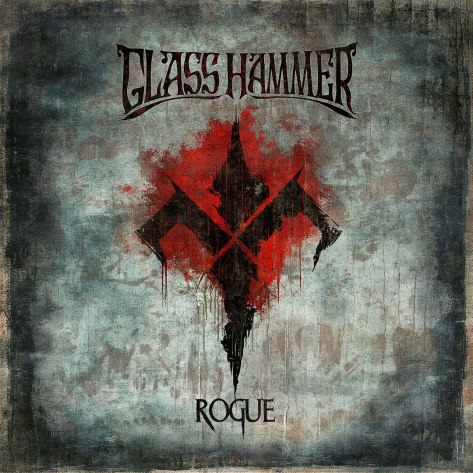
Glass Hammer’s Rogue: Joy in the Midst of Regret

Glass Hammer has returned with a new album, Rogue – due out April 11, 2025. Not surprisingly, given the history of this group, it is a stark departure from their previous several albums. Where the Skallagrim Trilogy rocked very hard, and their most recent work, Arise, was an exercise in space rock jamming, Rogue is jumps out of the gate with a burst of pure melodic bliss.

After listening to Rogue nonstop for four days, I am put in mind of some of Glass Hammer’s most enjoyable musical moments, such as Life By Light (Culture of Ascent), Having Caught a Glimpse (The Inconsolable Secret), and The Curse We Weave (Three Cheers for the Broken Hearted), among many, many others. I am tempted to say Rogue represents a return to form, except Glass Hammer has never fallen out of form – each release of theirs is a self-contained gem of excellence. Instead, let’s just say Rogue is a joyful celebration of beautiful melody.

What If, the first track, sets the stage as the protagonist decides to leave his cold and gray home in the north and head south to find a long-lost love – he is hoping to reignite an old romance that he ended years ago. It is a bouncy song that conveys the hopefulness of our hero as he sets out.

Summer! He’s weary of sleet and snow
Summer! Come now and do not go
He’s heading south to the land of his dreams

The Road South is where reality begins to set in. Has he made a mistake leaving his home? Is that a storm ahead? Musically, this song is reminiscent of classic Alan Parsons Project to me. Oliver Day’s lap steel guitar is outstanding – graceful and fluid without sounding shrill.

Tomorrow  is one of the most beautiful songs on the album. As our hero wrestles with the memories of all the wrongs he has committed in the past, a voice reassures him,

All will be fine
God is watching over all you do
His eye is on the sparrow and on you

The accompanying melody is appropriately soothing and calming.

Pretty Ghost and Sunshine feature the gorgeous vocals of Olivia Tharpe,  along with another pair of winning melodies. On Sunshine, Fred Schendel gives an outstanding performance on lap steel guitar.

Next up is my favorite track on the album, I Will Follow. This is a driving, upbeat, infectious song with an unshakeable earworm for a melody. It’s one of the best songs in the entire Glass Hammer catalog, featuring layered harmonies that should be listened to on headphones to be fully appreciated.

The Wonder Of It All has a synth-driven opening that I find very appealing. One thing I’ve enjoyed over the past few albums has been Glass Hammer’s incorporation of Tangerine Dream-like interludes that feature very cool rhythmic elements. Lyrically, this song seems to be a turning point for our hero:

Oh, I’m weary, yet I’m blessed
For all you’ve given me
The wonder of it all, I’d have to say
That I was here at all
I’ve done so little to deserve
This life you gave me

One Last Sunrise is a terrific instrumental, and Babb really shines on bass and Taurus pedals. I’ve said it before, and I’ll say it again: Steve Babb is one of the most inventive bassists working in music today.

Terminal Lucidity, at 10:19, is the longest track, and it is primarily instrumental. Synths, electric piano, and electric guitar weave a seductive web of melody that draw the listener in before an energetic jam gets going. Eventually, it becomes clear that our hero is on his deathbed: “Ashes to ashes, dust to dust/I can hear them calling me”. It was a stark and chilling moment when I first realized the true journey being taken!

Rogue closes with the triumphant and joyful All Good Things. Another uplifting melody (underpinned by Babb’s terrific bass work) brings the story to an emotionally satisfying ending:

This life you gave me
I’ll bring it home, you know
Sunshine in the morning sky
Descending from on high

It seems that, for all intents and purposes, Glass Hammer is now primarily a Steve Babb project. He handles some lead and backing vocals, bass, keyboards, Taurus pedals, guitars, and percussion. Longtime musical partner Fred Schendel plays guitar on Tomorrow and lap steel guitar on Sunshine. Babb has collected a stellar cast of supporting musicians: Thomas Jakob and Olivia Tharpe on vocals, Reese Boyd, David Walliman, and Atillio Calabrese all take a turn on lead guitar, and Oliver Day does a phenomenal job on guitar and lap steel throughout. Ariel Perchuk contributes some excellent synth solos, while Randall Williams and Evgeni Obruchkov provide drum work.

Rogue is one of the most ambitious albums Glass Hammer has attempted, and they pull it off with ease – it is an unalloyed triumph in all respects: conceptually, lyrically, and musically. Taken as a whole, this set of songs is the most satisfying Glass Hammer has provided in many years. I can’t stop listening to it! Meanwhile, the concept of a man wrestling with the demons of his past as he faces death would be daunting for anyone to tackle, but Glass Hammer does it with grace and hope. I can’t recommend Rogue enough to listeners who appreciate and are looking for melodic rock that has depth. It’s my favorite album of 2025, and I don’t see that changing any time soon.

New Album In the Works from Glass Hammer

GLASS HAMMER GOES ROGUE WITH April 11th RELEASE

Glass Hammer’s “Rogue” spins the tale of one man’s fateful, final journey. “He leaves everything he knows behind,” explains composer Steve Babb. “And thinks he’s returning to a place where he once knew happiness, but in reality, his odyssey will sweep him away to somewhere completely unexpected.”

Babb explains that the ten-song album explores themes of regret, heartache, and the mortal salience that comes with age. “Life is fleeting,” he continues. “It’s a heavy topic for an album, but the music isn’t as heavy as our last few releases. Rogue is much more like the Glass Hammer albums our fans refer to as “classic.”

And who’s in the lineup? “It’s no secret that Glass Hammer reinvents itself every few albums,” says Babb. “It’s happened again! This time with a lot of new faces.”

Rogue features performances by Fred Schendel, Reese Boyd, and David Wallimann (GH guitarist 2006-2010). Vocalists Thomas Jakob (Netherlands) and Olivia Tharpe (USA) are new to the band. They’re joined by guitarist Oliver Day (UK), keyboardist Ariel Perchuck (Argentina), drummer Evgeni Obruchkov (Poland), and others. “It’s an international cast of characters,” Babb points out. “A super-talented group that our fans are sure to love.”

The hour-long Rogue is Glass Hammer’s twenty-second studio album. Fans can pre-order autographed copies, t-shirts and downloads on the band’s website. www.glasshammer.com

Steve Babb photo credit: Julie Babb

Track list:

  1. What If
  2. The Road South
  3. Tomorrow
  4. Pretty Ghost
  5. Sunshine
  6. I Will Follow
  7. The Wonder Of It All
  8. One Last Sunrise
  9. Terminal Lucidity
  10. All Good Things

Here’s the teaser video:

Andrew Klavan’s A Woman Underground – Cameron Winter battles his demons

Woman Underground

Andrew Klavan is one of my favorite writers and thinkers. He has written many mysteries, thrillers, and some very good nonfiction, as well as producing a weekly podcast on politics and culture. A Woman Underground is the fourth book in his Cameron Winter series, which just gets better and better with each installment.

Winter is a wonderfully deep and complex character – a professor of Romantic literature at a small midwestern college, he was an especially deadly counterintelligence assassin for some very dark and secret missions earlier in his life. Every novel in the series has flashbacks to Winter’s career as a deadly assassin, as he relates them to his therapist – a kindly, older woman who is very much attracted to him. Winter is incapable of maintaining any kind of relationship, because his parents, wealthy New Yorkers, had neither the time nor the inclination to care for him.

His nanny was a refugee from East Germany, and he never got over his childhood crush of her niece, Charlotte Shaefer. His unrequited love has served as an excuse to avoid any intimacy in his adult life. He is a deeply troubled man with a code of honor he tries to live by, even though he is not at all religious. Think of a Raymond Chandler character dropped into the 21st century.

A Woman Underground begins with Part 1: The Scent of Something Gone, Winter realizes that Charlotte may be trying to get in touch with him. One evening he comes home to his apartment and smells the lingering scent of her perfume in the hall. The next morning, he studies the building’s security video, and he sees a bundled up woman carrying a book. The book turns out to be a novel that is popular with right-wing extremists, and it features a heroine who is too similar to Charlotte to be a coincidence. Winter quickly tracks down the author. To avoid any spoilers, I won’t reveal any more details!

Klavan does a masterful job of balancing four(!) separate stories while keeping the reader glued to the page. First, there is the main plotline of Winter tracking down Charlotte. Then, there is a plotline involving an old mission Winter was assigned to bring back an agent who had disappeared in Turkey. When Winter is in therapy, he keeps returning to this story, even though his therapist knows he’s doing it to avoid facing what’s really causing his psychological distress. Third, there’s the plotline of the novel Charlotte was carrying when she tried to see Winter. In it, a small group of right-wingers try to decide what to do during the riots that caused so unrest and destruction in the summer of 2020. Cameron is reading this novel to try to pick up clues as to where Charlotte might be. The fourth subplot is some sexual shenanigans Winter’s colleague at the college gets himself into. Believe it or not, all four of these stories slowly come together into one.

A Woman Underground is a pivotal chapter in Cameron Winter’s development. Several things that had stunted his emotional and psychological maturity are dealt with and resolved. The path to that resolution, however, is a harrowing one. As Klavan describes him, he spends most of the book on the verge of a nervous breakdown. It is only through his therapist’s insightful and compassionate work that he is able to come out whole. By the end, it’s clear that Winter has emerged battered, but stronger and more resilient. I can’t wait to see what Andrew Klavan has in store for him. Bubbling under the surface of the various subplots is a potential global conspiracy that involves extremely powerful Americans who have been compromised. It’s enough to turn the most level-headed person into a paranoid lunatic, and the people Winter can completely trust are down to very few. Things are getting very interesting in Cameron Winter’s life!

Frost*: Life In The Wires Is Perfection

Frost* is set to release their fifth studio album on October 18, Life In The Wires, which follows the excellent Day and Age of 2021. Once again, Jem Godfrey is the prime mover, this time handling all of the lead vocals in addition to keyboards and songwriting. John Mitchell returns on guitars, with Nathan King on bass and Craig Blundell on drums. There are nearly ninety(!) minutes of music here, and it is all terrific. Not a single moment is filler.

As Godfrey explains,

“It’s actually a sort of continuation from Day and Age. The first track on the new album starts with the end of the last track from that album “Repeat to Fade,” where the static comes up and a voice says “Can you hear me?” I remember putting that in when we did Day and Age as a possible little hook for the future; a character somewhere out there in Day and Age land trying to be heard. What does he want to say? Can anybody hear him? Day and Age kind of sets up the world that this character lives in and Life in the Wires tells his story”.

The album chronicles the adventures of a young man, Naio, who lives in the near future, in a world dominated by AI. One night, he hears a voice coming out of the static on an old AM radio asking, “Can you hear me?” From that initial contact, Naio goes on a quest to find out who is the person behind the Livewire radio broadcasts. Meanwhile, the AI that runs the world, “The All-Seeing Eye”, is on Naio’s trail, trying to prevent him from connecting with the mysterious man on the radio:

You wanna take me down for hearing voices on my radio
But I have seen your way of life and, thank you, I don’t want to know
You feed the people food and fear to keep them all compliant
But I won’t play your game so now you’ll fight to keep me silent

Interspersed between tracks are nuggets of speech from Livewire Radio broadcaster: “Hey, this is Livewire, voice of the free. And tonight we’re taking calls. Heh! I’m just kidding… Hahahaha!”

That’s the storyline, so what about the music? I have to say, I haven’t been this blown away by an album in years. Day and Age was my favorite album of 2021, and Life In The Wires is even better. Jem Godfrey is the master of crafting attractive and heartfelt songs, and every song on Life In The Wires delivers. Every style is visited here: ballads, straightforward rock, very heavy rock, and, of course, prog. I have listened to the entire album at least two dozen times, and I keep finding new things to delight in.

The boys of Frost* are a mean biker gang in their off-hours. Frost Band photo by Will Ireland

“Evaporator” is an extended, upbeat, almost funky tune with a nice 80s vibe. “Absent Friends” is a gorgeous and delicate piano-based ballad that reminds me of classic Aqualung (the group, not the Tull album). “School (Introducing the All Seeing Eye)” is a blistering instrumental where Mitchell shows off his chops.

Everything reaches a climax with the final three tracks, “Moral and Consequence”, “Life In The Wires (Part 2)”, and “Starting Fires”. “Moral and Consequence” has one of the most irresistible hooks I’ve ever heard. At the end of its more than 8 minutes, I was still begging for more, until the opening chords of “Life In The Wires (Part 2)”. This track is almost 16 minutes of near-perfect prog perfection. It calls to mind the best of Abacab – era Genesis, but, to my ears, it is better produced than that classic album. The closer, “Starting Fires” is simply beautiful – a somber and sweet melody sung to some spare musical backing. It seems as if Naio has connected with Livewire, and they are going to start a resistance to the Eye:

We’re making waves
We’re starting fires
We can’t go back
to Paradise

We’re starting fires

2024 is coming to close, and so far, Life In The Wires is the Album of the Year for me. We’ve been blessed with some great music this year, in particular The Bardic Depths album, What We Really Like In Stories, but my gosh, Frost* has put together an album for the ages.

Here is the official video for “Moral and Consequence”:

Some Early Stories From Ray Bradbury

Bradbury

One of my all-time favorite authors is Ray Bradbury. Beginning with The Martian Chronicles, which I read when I was in junior high, I fell in love with his imaginative writings. Wildside Press has collected 15 science fiction tales that Bradbury wrote early in his career for pulp magazines, circa 1944 – 1951. While the first few stories aren’t the greatest things he’s written, for $0.99 the collection is still a great bargain. 

Included is a stone-cold Bradbury classic, The Creatures That Time Forgot, the story of a group of humans and their descendants who are stranded on a planet with properties that cause them to live their entire lives in the span of eight days. Born one day, reaching adulthood by the third day, they die of old age on the eighth. Even though it sounds implausible, even for science fiction, Bradbury makes it entirely believable and paints a realistic picture of the struggles a community would undergo to survive under such conditions. 

To continue reading, click here.

Collapsing Waves: The Power of IZZ

Spirit of Cecilia loves the prog group IZZ! It’s always a cause for rejoicing when they release a new album, and member John Galgano was kind enough to share an advance copy with us. It’s called Collapse the Wave, and it contains some of the best music they’ve ever recorded. Brad Birzer and Kevin McCormick share their thoughts on this new set of songs.

Brad: I always love doing these with you guys.  Kevin, thanks for being my partner here.

I absolutely love IZZ.  Indeed, the band represents best what we try to do at Spirit of Cecilia.  Art for the sake of intellectual and spiritual edification, understanding the dignity of the human person, and playing like men and women possessed by the muses.  Lyrics that read like T.S. Eliot wrote them based on the theology of John Paul II and the philosophy of C.S. Lewis.  What’s not to love?

Every part of the band is incredible–from John Galgano’s excellent voice and bass to Laura Meade’s rather heavenly vocals.  Tom Galgano (I love that this is a family affair)’s majestic keyboards and vocals, to Paul Bremner’s astounding guitar work, to the two profound drummers, Brian Coralian and Greg Dimideli.  Amazing.  Astounding.  “This is the real thing.”

To be sure, IZZ and Glass Hammer are my two favorite rock bands from the U.S. If anything, I just can’t believe that IZZ isn’t HUGE!  They deserve to be adored and well loved.  Frankly, they should be as loved here in the States as Big Big Train is in the U.K. and Europe.

I also love how the band–though unique in its own sound–reflects the loves of the members of IZZ: Gentle Giant, Genesis, ELP, Yes, Jethro Tull, and others.  In other words, they readily blend tradition with innovation, no mean feat in 2024.

My own history with the band goes back over a dozen years now.  In fact, I was introduced to the band by their 2012 album, Crush of Night.  I’m not sure, now, how I came across it.  It was probably a submission to Progarchy, and I was reviewing for CatholicVote and The Imaginative Conservative, then, too.  Man did I fall in love with that album or what?  To me, it was (and remains) a perfect album.  Composition, lyrics, mood . . . everything rock deserves.  To this day, it remains one of my all-time favorite albums.  And, it was a part of a trilogy of albums, including The Darkened Room from 2009 and Everlasting Instant from 2015.  A trilogy of albums!  Aside from Riverside and Glass Hammer, what band does this anymore?  Dang, I loved it.

And, here’s just a sampling of the lyrics from Crush of Night:

I could run only half the way

Though she loved me more than I can say

How could I falter?

How could I fall?

Though I’d remember I would not call

When I was young she said, “Pick out the toys

That you want

I’ll see what I can do

Did I take care of you?

By the way

A dollar or two can go a very long way

Use it to buy anything you want.”

The droning sound of the rosary

Etched in my heart

More than a memory

In one of my more obnoxious (or daring!) moments, I wrote the band the year I was living in Colorado (2014-2015 academic year), and they responded by sending me several of their CDs!  I still remember opening the mail box in Longmont and discovering such a rich treasure trove.  It meant everything to me.  This act of kindness predisposed me toward the band, of course, and I immediately back ordered everything–going all the way back to album no 1, 1998’s Sliver of the Sun.  If these guys were going to support me, I was most certainly going to support them.

Two other things convinced me of IZZ’s greatness.  First, I bought their live DVD, simply called IZZ LIVE, and I devoured it.  [If amazon.com is to be believed, I ordered it on May 4, 2013] I couldn’t believe how cooly normal (and normally cool) these people looked.  They didn’t look like long-haired metal heads but like normal, professional people.  I would’ve been looking at a video of my history department colleagues.  Yet, what they were doing on stage was definitely beyond normal.  Cool, sure.  But, not normal.  Extraordinary passion and talent manifests itself in that DVD.  It’s still one of my favorite live concerts, and I would’ve given a lot to have been there at the recording of it.  Thank the Good Lord, they preserved the show.

Second, in 2012, I had also listened to and reviewed John Galgano’s gorgeous solo album, Real Life is Meeting.  I thought Galgano was as great alone as he was in his band.  The man simply brims with creativity and integrity. Then, we started corresponding through email and social media.  Again, Galgano stunned me as a truly genuine person.  I know almost as much about Galgano’s love of the Mets as I do about his love of prog!

But, Kevin, I’ll shut up for a minute and let you jump in.

Kevin: Well this is my first exposure to IZZ. What strikes me immediately is the variety of music on this new release, Collapse the Wave. The opening, “We Are 3rd,” is an expansive track that covers a lot of prog ground in its eight and a half minutes running. The keys and drums harken to mid-era Genesis with the guitars and melody lines more-styled on Yes’s similar mid-era work.  The bass lines offer an excellent grounding to the dense textures and carry wonderful counter-melodies. And then about two-thirds of the way into it the tune opens up to expose a piano ostinato and glockenspiel in tandem and highlights the lyric: 

Coming to the brink of change

The past is shifting out of range

The wind is at our back

 It’s a beautiful moment and definitely one my favorite sections on the record.

Musically there is a great deal of variety on the record. “We Are 3rd” and “Brace for Impact” have a relatively heavy guitar leads, but with many contrasting sections.  “Brace for Impact” in particular has moments reminiscent of King Crimson’s angularities, which almost reprises in the final track “And We Will Go.” Elsewhere we hear solo piano accompanying voice in both “So Many Voices” and “Deep Inside.”  The latter piece shifts into a folk-like arrangement with acoustic guitar and bass.

The title track, “Collapse the Wave” shows hints of jazz meeting Kansas at their most jam-bandish, eventually settling into an almost reggae back beat, the drums holding a tight groove. There are moments that even feel like latter-day XTC—a sound heard again later on the album in “Soak Up the Sunlight.”

I really like the acoustic passages used by IZZ on this record. The aforementioned piano echoes later in the guitar intro to “Sometimes Sublime.” They definitely know how to shift between contrasting styles and thus melding them into their own sound.

Brad: You’ve covered the music brilliantly, Kevin.  Thank you!  I love your analysis.  I will admit, I’d not thought of Kansas and being a jam band.  But, relistening to “Collapse the Wave,” I totally agree.  This could be something (updated, of course) off of Leftoverature.  

And, speaking of jam bands, maybe there’s a bit of Phish in here!  Oh, those East Coasters. . .

I already noted this above, but when it comes to IZZ, I especially appreciate the vocals and the lyrics.  That the band has three vocalists gives us a Yes “Leave It” or Yes, “All Good People” vibe.  As much as I love the Galgano voices, I’m especially taken with Laura Meade.  Her solo album from last year, The Most Dangerous Woman in America, remains a favorite, even though it’s a bit poppier than IZZ.  It’s hard not to fall in love with her–arguably one of the greatest vocalists in rock music today.

Well, there is so much more we could say about IZZ and Collapse the Wave.  But, probably the best thing we can do is recommend it.  And, we HIGHLY recommend it.  Yes, I’m shouting at you.  It comes out in a just a few days, and you can pre-order it here: https://izzmusic.bandcamp.com/album/collapse-the-wave

What are you waiting for???  Pre order it!

The Tangent’s PO90’s “The Single”


The Tangent (For One) launch “The Single,” next track taken from ‘To Follow Polaris’ The Tangent  recently announced the release of the new studio album ‘To Follow Polaris’ on May 10th, 2024. That’s not necessarily a surprise, that’s what the band are known for. But at the same time, it’s something else too. As Andy jokes, playing on the Jaws strapline, he says “well this time it’s actually no personnel”.Today, a brand new track aptly titled ‘The Single’ has been released, and you can watch the video here: https://youtu.be/mwdbLOerLH4Andy comments of the track: “’The Single’ was originally recorded by my previous band Po90 some 25 years ago now, on an album called ‘The Time Capsule’. In the spirit of that time capsule, I opened it a quarter of a century later and recorded this updated version of it with new lyrics added to the older version. The old Po90 version was the track that in a way defined what the Tangent would be and giving it the Tangent treatment was a great pleasure. It’s a song about the documenting of history and the new ways this is going to happen, both good and bad…”

Watch the previously released video for ‘The North Sky’ here: https://youtu.be/x5CAzcKZXvA

Watch Andy discuss the making of the new album here: https://youtu.be/Lbqa5QP77L4?si=b-Xji6zq8UheDJvF

In a year when members of The Tangent could be seen onstage all over the world with Steve Hackett, Soft Machine, Karnataka, David Cross, It Bites, Cyan and others, plus on recordings by those artists and The Anchoret, The Michael Dunn Project, Argos and Retreat From Moscow, it became clear that there was not going to be time to get together for anything more than one gig in April 2023.

So the band agreed that the band’s leader/main writer Andy Tillison would keep the material coming and would make an album by The Tangent entirely alone. It would still be The Tangent. Just for one.
“Besides Which” Andy says, “I’ve always wanted to do this, use what I have learned from Luke, Jonas, Steve, Theo and many other alumni and take it to final production. Now was the time!”

What transpired over the following year is in one sense an “absolutist” solo album and is entirely the work of one person in all aspects including artwork, layout, design, lyrics, composition, performance, recording, production, mixing, mastering and authoring. But in another sense it’s totally Tangent. “I could not have begun to make this record without having had the experiences of working with the band. So although the different instruments are not attempted to be played in the actual style of the normal lineup, they are inspired by the kind of things these guys do”

‘To Follow Polaris’ will be available as a Limited Deluxe Collector’s Edition CD Mediabook (including bonus track and extensive 24-page booklet, Gatefold 180g 2LP vinyl (also including bonus track), & as Digital Album. Pre-order now here: https://thetangent.lnk.to/ToFollowPolaris1.The North Sky 11:36
2.A ‘Like’ In The Darkness 08:19
3.The Fine Line 08:04
4.The Anachronism 21:01
5.The Single (From A Re-Opened Time Capsule) 05:51
6.The North Sky (Radio Edit) 03:42
7.Tea At Bettys (Bonus Track) 17:32Produced between January and November 2023, the album features Andy using his multiple keyboards system as normal, but adds to the mix his first ever released performance on Bass Guitar and his second on stick driven (electronic) drums. Add electric and acoustic guitars and electronic wind controller and this is a full band recording in every sense of the word. A recording which shows Andy’s lifelong influence by artists such as Yes, Van Der Graaf Generator, Porcupine Tree, Groove Armada, Earth Wind & Fire, Roger Waters and his bands, Return To Forever, Deep Purple, Gentle Giant, Steely Dan and any band featuring the keyboard player Dave Stewart.Conceptually Andy claims the album is, ahem, “highly optimistic” but regular listeners to his work will anticipate correctly that this optimism will not be ill founded or over-easy and will be highly critical of obstacles to that optimism and the album will look as much into the dark as it does into the light.The album is intended to be thought of as a regular Tangent album – but not as the future of the band. It’s everyone’s intention to make the FOURTEENTH album as The Tangent. For Five.The Tangent online:
www.thetangent.org
https://www.facebook.com/groups/alltangentmembers/INSIDEOUT MUSIC online:
www.insideoutmusic.com
www.youtube.com/InsideOutMusicTV
www.facebook.com/InsideOutMusic
www.twitter.com/InsideOutUSA
www.insideoutmusicshop.comINSIDEOUTMUSIC Spotify Playlist: 
http://spotify.com/progrockessentials

We Really Like The Bardic Depths’ “What We Really Like In Stories”!

Bardic Depths Stories

In this post, Kevin McCormick and Tad Wert discuss The Bardic Depths’ new album, What We Really Like In Stories. It is the third album from them, and it features songwriting by Dave Bandana and Gareth Cole, with lyrics by Bradley Birzer.

Tad: Kevin, it’s great to be reviewing this album with you! I know you and Brad go way back in your friendship – did you ever imagine he would someday be the lyricist for a British progressive rock group?

Kevin: Thanks Tad–great to be writing it with you as well.  It was definitely a surprise when Brad first mentioned he was writing lyrics for a rock recording—we had a good laugh! But in retrospect it seems a natural step. We shared a love of the early prog music from the start of our friendship and he writes constantly, albeit in a more academic setting than rock lyrics. So it’s not as much of a stretch as you might think. One of his favorite aspects of Tolkien’s and Chesterton’s writings are their poems. And he’s a huge fan of T.S. Eliot. But I think his collaboration with Dave on the Bardic Depths albums is a great fit and I’ve enjoyed watching the development of the concepts and sounds over the years. You know, the first album started out as just a friendly experiment. Dave had some music he had written and asked Brad for a lyric to put with it.

Tad: Kevin, I always enjoy learning the “behind the scenes” details of albums, so thanks for sharing those. 


Okay! Let’s talk about What We Really Like In Stories. As I mentioned, this is the third album from The Bardic Depths, and I think they just improve with every release. I really, really like this one. First, I think these are the best lyrics Brad has written yet. Every song is a tribute to an author, and taken as a collection they illustrate Brad’s love for various genres, primarily fantasy and science fiction. The title track refers to C. S. Lewis and J. R. R. Tolkien, who are responsible for two of the most popular fantasy series of the twentieth century: The Chronicles of Narnia and The Lord of the Rings, respectively. Birzer imagines them discussing their literary aims over a drink and a smoke in the local pub:

Could we write fiction
That might combine these things:
A love of history; a desire to debate the defenders of the modern world
Promote one’s philosophical and religious thoughts
Could a modern writer create art but not be over blatant?  

“You’ve Written Poetry My Boy” is about Ray Bradbury (The Martian Chronicles, Something Wicked This Way Comes, The Illustrated Man, among many others), and refers to some praise that Aldous Huxley gave him. “Vendetta” is dedicated to Alan Moore, who put together the graphic novel, V for Vendetta. “Old Delights” is a delightful little song in honor of midwestern American author Willa Cather, while “The Feast Is Over” recognizes the genius of pulp writer Robert E. Howard (Conan the Barbarian stories). “Stillpoint” pays tribute to Walter M. Miller (A Canticle for Leibowitz), and the last track is about British fantasist Robert Rankin. 

In other words, this is a very literate collection of songs, and they celebrate some of the greatest bards of modern times. I was an avid reader of Bradbury, Lewis, Tolkien, Howard, and Miller when I was in high school, so it is a joy to see them properly honored by The Bardic Depths. I’m not familiar with Rankin’s work, but I am certainly going to check him out now.

Kevin: Without a doubt this new album is a real step forward for the band.  Everything from the songwriting, to the instrumental performances, to the production is excellent. You can see the maturation process as the band really seems to blend and complement one another so well. The vocal harmonies are tight and solid. The lead lines are powerful and expressive and carry the songs into new spaces.

I think my favorite track at the moment is “You’ve Written Poetry My Boy.” It opens with a beautiful arpeggiating twelve-string guitar evoking memories of early Genesis. But it is soon joined by an equally-beautiful soprano sax (if this is a keyboard patch it’s an extremely natural sound). The unlikely pairing dance around each other’s lines and set up the entrance to the tune proper.  Again there are hints of Genesis here, but the band seems to have found a sound of their own.  And I love the variety in the instrumentation–string pads, piano, organ, and I think I hear some harpsichord in there. And then mid-song there is a shift to a minor section which briefly darkens the mood and serves as a platform for a sax solo, only to pass through back to the main theme. Shifts like this can be clunky sometimes in prog bands, but TBD avoid this pitfall by carefully crafting the transition compositionally.

Overall I must say that I hear hints and suggestions of so many great prog bands throughout this album. Those hints position the album in a space that sits well with other classic recordings yet still retains its own voice. Moments of the Floyd and Supertramp peak out here and there, and there’s a bluesy hard rock sensibility in the final track, “Whispers In Space,” and some even some techno in Stillpoint. Some of the vocal work has shades of Big Big Train. But again, there is a TBD color in the sound that holds everything together as a part of the larger work.

Tad: Kevin, I knew you had excellent taste – “You’ve Written Poetry My Boy” is my favorite track as well! And that is Peter Jones on clarinet and alto sax. I too hear glimmers of classic Genesis (the Steve Hackett years) in this song, and I find that very appealing. There’s no wonder they chose this track to be the first single.

I also want to give a shoutout to Gareth Cole’s guitar work throughout the album – it is truly stellar. His solos in Vendetta are spectacular – driving, melodic, and pure. His slide guitar in “The Feast Is Over” is terrific!

To wrap things up, I think we can agree that What We Really Like In Stories is a big leap forward for a group that improves upon excellence. They seem to have really gelled as a unit – Dave Bandana, Gareth Cole, and Brad Birzer are at the top of their form as far as songwriting goes, and Peter Jones’ vocal and instrumental contributions are wonderful. I also like Dave’s vocals on “The Feast Is Over” – he’s got an “everyman” sound that is quite inviting. 

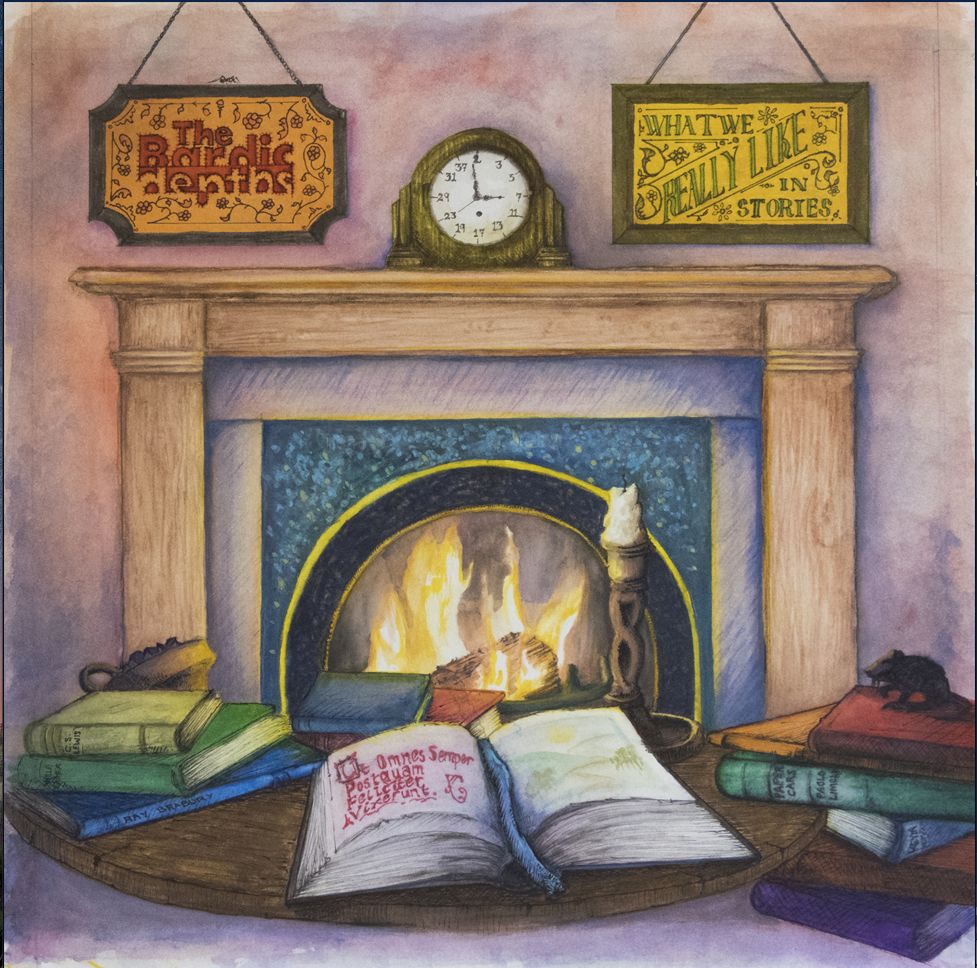
Before we close, I’d like to mention how interesting Kevin Thompson’s artwork is. The style is somewhat primitive and whimsical, which complements the songs perfectly. Stylistically, it reminds me of the cover art for the Beach Boys’ Smile album. Thompson’s painting is of a cozy room with a fire blazing away, and piles of books on a table. The authors are the ones featured in the songs, and there are needlepoint hanging that spell out the “The Bardic Depths” and “What We Really Like In Stories”. I’m intrigued by the clock on the mantel: the numbers aren’t the standard 1 through 12! Instead, they run 2, 3, 5, 7, 11, 13, 17, 19, 23, 29, 31, 37.

What We Really Like In Stories is a contender for album of the year in my book. The subject matter of the songs is thought-provoking while remaining playful, while the musicianship is first-rate. This is one album I’ll be enjoying for years to come.

Here’s the video for “You’ve Written Poetry My Boy”:

The Cure’s Disintegration: An Appreciation

disintegration

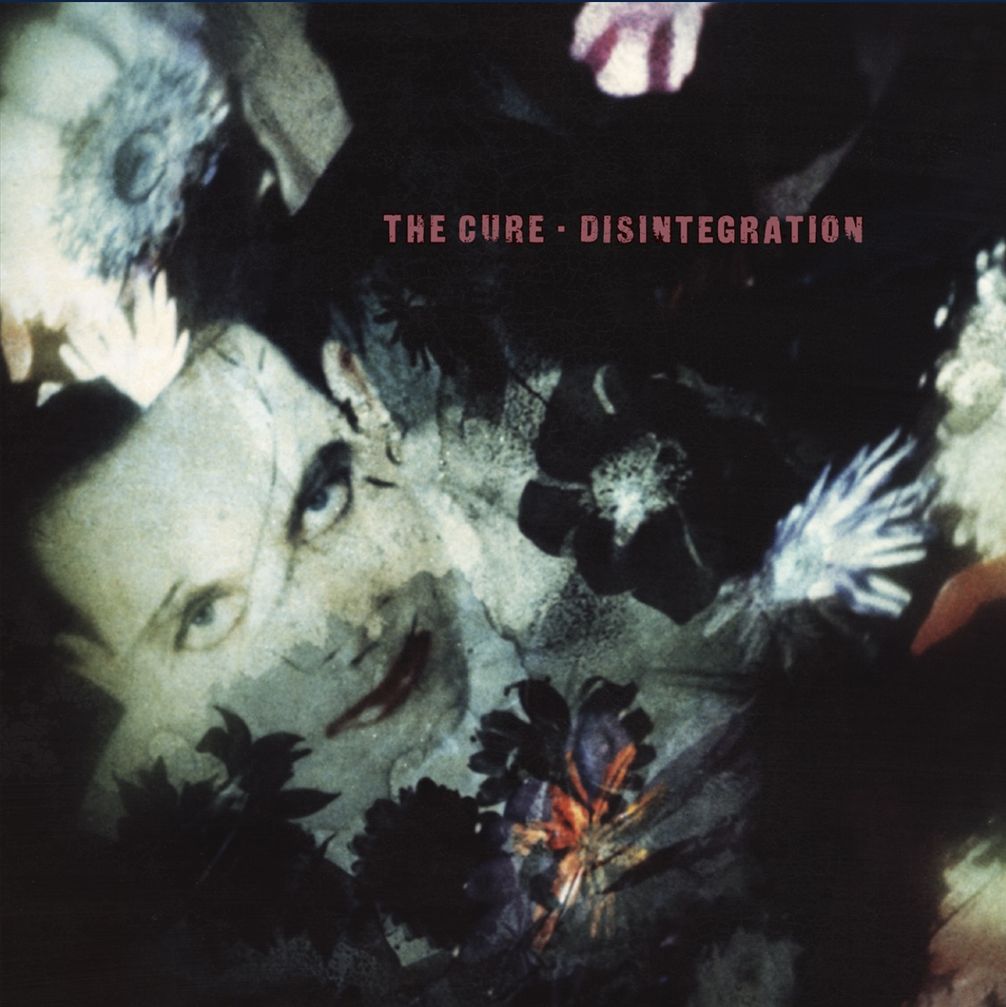
Greetings, Spirit of Cecilia readers! In this post, Brad Brizer and Tad Wert discuss their love for another classic album – in this case, The Cure’s Disintegration.

Tad: Brad, we’re reviewing this album at your suggestion, and I’m glad we’re giving it its due! I have to admit that Disintegration slipped by me at the time it was released. I was listening to the B-52s’ Cosmic Thing, Don Henley’s The End of Innocence, Paul McCartney’s Flowers In The Dirt, Todd Rundgren’s Nearly Human…in other words, a lot of “pop” music. Up to that point, the only Cure album I had listened to extensively was 1985’s The Head On The Door

However, many years later I eventually caught a bug that only The Cure could fix (did you catch that? 🙂 and I dove into their entire catalog. Disintegration is definitely a peak of their long career. For me, it’s rare that an album creates an overall mood and atmosphere as consistently good as Robert Smith and company do with this album.

Brad: Dear Tad, thank you so much for agreeing (happily, I take it!) to review Disintegration.  Ever since it came out–way back in 1989–I’ve been in love with the album.  Indeed, from my first listen, it grabbed me rather hard and has held on for thirty-five years.  It is, I think, the proggiest of The Cure’s albums, which helps explain why I like it so much.  A kind of pop-prog or prog-pop, in the vein (though sounding nothing like) Pet Sounds by the Beach Boys or Skylarking by XTC.

The Cure is also famous for truly poppy songs–such as “Friday, I’m in Love.”  I like these songs, but I don’t love them.  These are almost entirely absent from Disintegration, which is another plus to my mind.  I definitely much prefer a song like “Disintegration” to “Friday, I’m in Love.”  I’d be pretty disappointed if the former didn’t exist in my life, but if I never hear the latter again, I won’t be upset.

Even the poppier songs on Disintegration–such as “Love Song”–aren’t that poppy, and they fit perfectly into the flow of the album.  The album is almost perfectly produced, and the track order allows for the album to build and build (more on this in a later comment).

Again, I love this Disintegration as an album, and I always include it in my top 10 favorite albums of all time, along with several by Rush, Talk Talk, Kate Bush, Yes, Genesis, and Tears for Fears.

The album first came out in May 1989, at the very end of my junior year of college, and I was introduced to it by my great friend, Ron Strayer, then a student at the University of Kansas.  We had been debate partners throughout high school, and we often shared our loves in common–science fiction novels, movies, and music.  Ron’s tastes were always a little more poppier (in the alternative/college scene), and mine were always proggier (toward Genesis, Yes, etc.), but we mixed well.

This is, of course, the 35th anniversary of the album, but on the 20th anniversary, Roger O’Donnell of The Cure wrote an 11,000 (!!!) word reminiscence–complete with lots of great photos–of the making of the album.

I will admit, I’ve read this through twice, and I find it an amazing story.  A weird story, but an amazing one.

Tad: Brad, thanks for sharing O’Donnell’s memoir of the recording of Disintegration. I love learning about the background of great albums. One thing he mentioned, and I kind of agree with, was his disappointment with the mastering – he says it sounded compressed and flat. He suggests that the live versions recorded at Entreat Plus (available on the 3-disc Deluxe Edition) are better representations. I don’t know about that, but the live versions are very good – a more open sound.

Okay, let’s discuss the songs. The one track that I absolutely love is “Lullaby”. Referring again to O’Donnell’s piece, I was surprised to learn that the band had all of the instrumental tracks completed before Robert Smith sang any lyrics. That means they had no idea that “Lullaby”, with its bouncy melody would end up being such a creepy song about spiders and death! Still, it is my favorite song on the album.

I also love the majestic opener, “Plainsong”. It is a perfect mood-setter for the entire album, with its massive, dirge-like chords that never relent. “Lovesong” is a nice respite from all the gloom, but I prefer the darker songs. I especially like “Prayers for Rain” – it slowly builds and builds into a beautiful edifice of sound. “Homesick” is one of the prettiest songs The Cure ever recorded, and “Untitled” is a wonderful closing track. It sounds like a musical postscript to a long letter, if that makes sense. [Brad: yes, this makes perfect sense]

I’m looking at the track times of these songs, and I never realized how lengthy they are! “Lovesong” at 3:29 is the shortest, while half of them are longer than 6 minutes. It’s a credit to the strength of the songs that I never feel like the album drags or is too long.

Brad: Excellent response, Tad.  It’s funny (in a strange kind of way), I just finished Steven Hyden’s This Isn’t Happening: Radiohead’s Kid A . . . and I loved it.  

But, it struck me several times in reading the book that when The Cure is experimental–especially as they were with Disintegration–they’re as innovative as the best of them.  

You reminded me in email about our three-way conversation three years ago about whether or not The Cure were prog.  In some ways, bands like The Cure and Radiohead are beyond prog.  They simply are.  They’re unique, and the music they create, overall, transcends musical boundaries.  

Much of what The Cure has written has been very much in the pop vein, but much of it is just weird and experimental and wonderful and unique.  One of my favorite collections is The Cure, Join the Dots, a four-disk exploration of their b-sides.  Many of the b-sides are straight-up pop, but several are really experimental and proggy.  Needless to write, The Cure’s b-sides would be almost anyone else’s a-sides.

Back to Disintegration.  I’ve never noticed the mix as sounding flat or compressed, but I do love the dark consistency of the album.  From the opening track, “Plainsong,” to the final track, “Untitled,” it feels as though we’re barely breathing–perhaps just on the surface of a lake, grasping for air.  There’s a brilliant suffocation to the production of the album.  The album, in some mysterious way, just feels “alive” but, again, grasping.

I wonder if Disintegration just happens to be the last of the great analog recordings, while digital would become the norm after 1989?  I have no idea–just a thought.

Agreed, though, that The Cure sound amazing live.  I’ve never seen them in concert in real time, but I own all the DVD/Blu-ray concerts the band has released, and they are among my favorites.  Again, the pop songs are fun, but it’s the more intense, experimental songs live that really grab me.  I love watching the interplay of the band members, especially on the more complicated songs.

Earlier, I mentioned how much I love the flow of Disintegration.  The track order seems, in large part, to make this album.  You’re absolutely right to call much of it “dirge like.”  Again, I would call it grasping for life, perfect headphones in a dark room kind of music.  

I especially appreciate the sequence of the second half of the album: “Fascination Street” to “Prayers for Rain” to “The Same Deep Water as You” to “Disintegration” to “Homesick” to “Untitled.”  It’s as dark as dark can get, but so relentlessly driving.  Even the one moment of hope, when it starts to rain at the beginning of “The Same Deep Water as You,” and after “Prayers for Rain,” begs the question: did our prayers get answered only to have us drown?

Even the transition from “The Same Deep Water as You” to “Disintegration” is treacherous.  After all, the couple seems to die kissing in the former, but in the latter we have:

Yeah, I miss the kiss of treachery

The shameless kiss before I feed

The stench of a love for younger meat

And the sound it makes when it cuts in deep

The holding up on bended knees

The addiction of duplicities

As bit by bit, it starts the need

To just let go, my party piece

Brutal.  And, together, the two songs take up nearly 18 minutes of the album.

Tad: Brad, thanks for making me aware of Join The Dots; now I have something else to add to my wishlist!

I agree with you that The Cure is best when they aren’t trying to be anything except experimental. And your Radiohead comparison is most apt. I originally thought The Head On The Door and Kiss Me, Kiss Me, Kiss Me were better than Disintegration, but over time I’ve reversed my opinion. On the first two, I get the feeling they are deliberately striving for a more pop sound, while on Disintegration, they had no plans to make a bestseller (if O’Donnell’s memory can be trusted!). I hated Kid A when it first came out, thinking it was pretentious and noisy. Now, it is my favorite album of theirs.

You also capture the same feeling I have when I listen to Disintegration – it is almost suffocating in its density. I mean that in a good way, believe it or not. All of its songs are of a piece, and it is one of those albums that is an album – every track adds to the whole, and the sum is much greater than its parts. In this age of streaming, I don’t believe artists think in terms of albums any more – except for proggers. Maybe that’s why you and I are so enamored of that genre; it’s still creating suites of songs that should be listened to as albums, and not as separate tracks.

Well, my friend, I think we’ve done The Cure’s Disintegration justice. As the years go by, it seems to gain in stature, and rightfully so. And to our Spirit of Cecilia readers, thanks so much for stopping by. If you have any suggestions for what you’d like us to discuss, let us know in the comments!