Tag Archives: Steven Wilson

Tim Bowness’s My Hotel Year: A Worthy and Meaningful Beginning

Please forgive the brevity of this review.  Maybe we could call it a micro-review.  I’ve been a huge Tim Bowness fan ever since first encountering him through his extraordinary work in No-Man.  Indeed, it was about 23 years ago that I first encountered him, finding him because of his association with Steven Wilson.  Again, I’ve been a huge fan ever since.  If anyone inherited the mantle of Mark Hollis, it’s either Tim Bowness or Kevin McCormick.  Everything Bowness touches is just achingly beautiful.  Gifted with a very handsome voice, he brings a certain longing to all his vocals.  I should also note, like Hollis (Bowness has a better voice than Hollis, but I will never fault Hollis for that—he gave everything he had), Bowness understands the sheer importance of meaningful lyrics to music.  Writing all of this right now, reminds me that I would love to write a long article on the many excellences of Tim Bowness.  He deserves so much more than this micro-review.  Sadly (or brilliantly actually), I’m in between big writing projects on the Declaration of Independence as well as on sociologist Robert Nisbet and on writer Ray Bradbury.  That stated, my afternoon sound track has been Bowness’ s first album, My Hotel Year, originally released in 2004.  I was surprised to find Bowness’s own negative recollection and assessment of the album on his personal website.  “Along with Wild OperaMy Hotel Year is the least loved album I’ve ever made and, in some ways, it’s the album of mine I love least as well,” Bowness confesses. “Although 2003-2004 wasn’t a particularly bad time for me, the resulting album seemed lyrically sad and musically monochromatic. No matter what was done to sonically soften the blows, the album had an innate bleakness that seemed to dictate itself.”  There’s no doubt that the album is lyrically sad, but it’s incredibly and movingly authentic.  And, I would never call the music monochromatic.  Rather, I would say that the music is presented in a rather cohesive fashion.  That is, it’s an album rather than a collection of eleven songs.  Every song bleeds into every other song, regardless of the silence between thetracks.  While I like Bowness’s other albums better, I would encourage anyone and everyone to go back to this foundational album, My Hotel Year.  For what it’s worth, I think it’s glorious, and it certainly inspired my other writing this afternoon.  For that, I’m deeply grateful.

To order My Hotel Year, always buy from my favorite on-line retailer, The Burning Shed.

A Review of The Overview of Steven Wilson

Steven Wilson has released a new album, The Overview. Always surprising, rarely disappointing, Wilson is one of our favorite artists. Producer, songwriter, guitarist, singer, and remixer of countless classic albums, he truly is a man who can do it all. Brad Birzer and Tad Wert share thoughts on his latest opus.

Tad: Brad, you and I both have had a love/hate relationship with Steven Wilson. His almost obsessive focus on dark themes bothered me years back, but I couldn’t help but be seduced by his songwriting. The man writes and performs some of the most beautiful melodies ever recorded. His past few albums have been very good, in my opinion, albeit each very different. I’m interested in your thoughts on his latest, The Overview.

Brad: Thanks so much, Tad.  Glad to be reviewing with you!

I know I’ve had the chance to tell this story before, but I first encountered Steven Wilson through Porcupine Tree.  My wife and (then) two kids were shopping in Fort Wayne, Indiana, and a local alternative station was playing “Trains” from In Absentia.  This would’ve been the fall of 2002.  I immediately went to a local CD store and bought not only In Absentia but also Up the Down Stair.  One of my excellent students, Chase, found out about my new-found Porcupine Tree obsession and gifted me with the PT compilation boxset, Stars Die: The Delirium Years.  It was one of the coolest gifts I’ve ever received, and I was smitten.

From there, I dove into everything I could find related to Wilson and Porcupine Tree.  So, I’ve been a fan for twenty–three years now, and I’m amazed how much of my CD collection revolves around Wilson.  Whether it’s Porcupine Tree, No-Man, Blackfield, Storm Corrosion, Bass Communion, IEM, solo material, or one of the billion albums Wilson has remastered, my home is a repository and archive!  I also have several books on Porcupine Tree, Wilson’s deluxe autobiography, and a huge number of deluxe editions of the album releases.

You’re right, though, I do have a love/hate relationship with Wilson.  Let me note: I admire the man deeply.  But, a few things he’s said and done drive me a bit crazy.  It’s really hard to be his fan as he constantly wants to distance himself from us.  Even when we follow him album to album, genre to genre, he has to make skeptical comments about us, implying that we demand too much of him and hold him back musically.  And, from any objective standard–whether it’s Grace for Drowning or The Future Bites–the man just exudes progressive rock.  He’s always exploring, always changing, but he has tried to distance himself from the label.  I don’t get it, and I find his attitude incredibly frustrating.  Maybe he simply has a really restrictive view of progressive rock.  To me, progressive means exploration.

I also thought that as much as I loved The Raven Who Refused to Sing, the album seemed very much a remake of a Tangent album without acknowledging or giving Andy Tillison all due credit.

As far as I know, Tad, these are my only complaints.  And, given how much joy Wilson’s music has brought to me, they’re incredibly minor complaints.  Of all my loves re: the present scene of music, Steven Wilson is certainly at the top–along with Big Big Train, IZZ, The Tangent, Glass Hammer, and a few others.  I would especially rank Hand.Cannot.Erase as an all-time top five album for me.


And, I’ve not even gotten to The Overview yet. . .  Tad, what are your thoughts on what you like and dislike about Wilson?

Tad: Well, Brad, my experience was much the same as yours. I saw that Alex LIfeson played on Fear of a Blank Planet, so I got it cheap from BMG Music Club (remember those?), and I was hooked. I grabbed everything I could find that Wilson was involved with. I loved Porcupine Tree and Blackfield; NoMan not so much (at least until they put out Schoolyard Ghosts).

As I said earlier, I wish he would lighten up a little in the lyrics department. Life isn’t all bad! I guess that he finds depressing subjects more inspiring. On the plus side, I think he is an excellent guitarist and singer. His production work is unparalleled; I don’t think anything he’s produced will ever sound dated – it’s all timeless and of incredibly high quality.

Okay, let’s talk about the subject at hand: his new album, The Overview. It’s two long tracks, one more than 23 minutes long and one more than 18 minutes. You can’t get more proggy than that, can you? I think he wants the listener to hear this as an album, and not a playlist of tracks. Given this is the age of Spotify, that is pretty countercultural! 

On first impression, I think the section entitled “Objects: Meanwhile” is one favorite. It has a nice piano motif that builds throughout. The lyrics, well, they’re pretty depressing:

The tiniest lives fill their hives up with worry
To make it to church, well, she needs to hurry
When late she will bow down contrite
While a meteor trunks out the light

And there in an ordinary street
A car isn’t where it would normally be
The driver in tears, ‘bout his payment in arrears
Stll, nobody hears when a sun disappears
In a galaxy afar

That seems to be the overarching theme of this album – how insignificant humans and their concerns are, compared to the vastness of the universe. Wilson makes this explicit in the section “Perspective”, where a woman narrates ever-increasing numbers on a literal astronomical scale.

“A Beautiful Infinity/Borrowed Atoms/A Beautiful Infinity II” is the best section of the album, with its Floydian slide guitar and seductive melody. I love it. However, “A Beautiful Infinity II” continues the general theme of nihilism and hopelessness:

There’s no reason for any of thi
Just a beautiful infinity
No design and no one at the wheel
Just an existential mystery

I swear, if I ever got the chance to meet Mr. Wilson, I think I would share with him Psalm 19, which begins, 

The heavens declare the glory of God; the skies proclaim the work of his hands.
Day after day they pour forth speech; night after night they reveal knowledge.

That said, this section is some of my favorite Steven Wilson music ever. I have listened to this album from start to finish many times now, and this is the part I enjoy the most.

I suppose Wilson is saying that in an honest overview of the cosmos, humanity isn’t really worth much. In that regard, he echoes the psalmist who asks, “What is man, that thou art mindful of him?” Brad, I promise I didn’t begin this review planning to quote psalms, but they seem kind of appropriate, given the majesty of this album’s music!

Brad: Tad!  I love it.  The Psalms, BMG Music Club, nihilism.  Yes, I don’t disagree as I think the lyrics are depressing as well.  That’s par for the course with Wilson, though.  From what I can tell–in interviews and through his autobiography–he’s actually a really kind, upbeat person, but his art is always dark.  It’s dark, often, in terms of chord structures, and it’s dark in terms of his lyrics, and it’s generally dark in terms of the art that accompanies his album releases.

I suppose it’s one reason I love HAND.CANNOT.ERASE so much.  It’s dark, but it’s also deeply redemptive.  There’s a very healthy humanism at the heart of that story.

Despite the darkness of the lyrics on The Overview, I am pretty taken with them.  As probably you and most readers know, Andy Partridge of XTC wrote a chunk of the lyrics on the first track.  As such, they’re clever as all get out, while also being cynical.  Frankly, though, I like the perspective Partridge and Wilson offer–that as we go about our lives, making minute decision after minute decision, the universe in its incomprehensible majesty goes about its business as well.

I especially like these lyrics on the second track:

Snow is falling but it can’t be seen from here

And back on Earth, my loving wife’s been dead for years

I see myself in relation to it all

What seemed important now like dust inside the squall

Each moment for me is a lifetime for you

For whatever reason, they resonate with me.  It’s not that his wife’s death is any less tragic, it’s just that it’s placed against the backdrop of what seems infinite.  If anything, I actually found this a hopeful lyric.  After all, the man’s love for his wife continues, despite her absence.

I also really like Wilson’s musical approach to the whole album.  The way that he places various parts of the song together reminds me very much of Paul McCartney’s side two of Abbey Road.  Wilson, interestingly enough, has stated that while he admires the Beatles for what they accomplished, they were never an influence on him.  Still, it seems that in the construction of The Overview, they were, at least to a certain extent, an inspiration.

I did think that Rotem’s spoken word parts on the second track would wear on me, but, even after innumerable listens, I’m fine with it.

So, being a true Wilsonite, I bought the deluxe edition of The Overview.  It comes with a booklet as well as a blu-ray.  As I listen to the album, I generally listen to the blu-ray–which seems to bring the best out of the two tracks.  I hear things with the blu-ray that I don’t with just the CD release.

So, Tad, I’m loving the album.  It came out. . . what. . . six weeks ago?  And, I’m now on six weeks of immersing myself in it.  I find each listen a joy, and I keep discovering new things in it.  It’s a treasure.  Again, I would still rank Wilson’s Hand.Cannot.Erase as his best album and I would rank The Future Bites as my least favorite of his albums.  In the big scheme of things (ha–see what I did there!), The Overview sits comfortably close to Hand.Cannot.Erase.

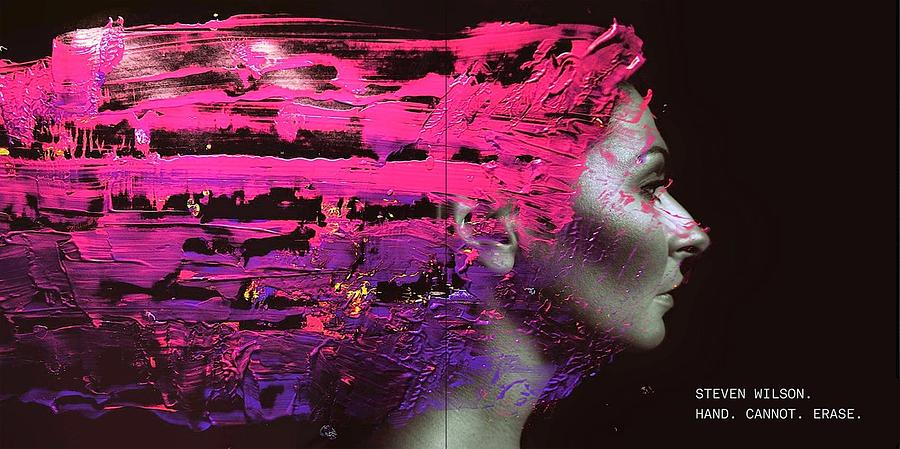
Tad: Ah, Brad, this is why I enjoy these joint reviews with you – you provide proper perspective and rein in my first-take reactions to lyrics! I love your willingness to find hope in Wilson’s words, and now that you’ve pointed it out I can see it as well. I’d rather someone be hopeful than despairing, so I feel better about his emotional health. 

If I had to rank Wilson’s albums, I think I would put his first, Insurgentes at the top, but it depends on the mood I’m in. The Raven That Refused to Sing is awfully good, and To The Bone is a wonderful take on 80s pop/rock. I do agree that The Overview  is one of his best, and I have really enjoyed listening to it the past few weeks.

So, readers, it looks like The Overview gets two solid thumbs up from Spirit of Cecilia! Check it out on your favorite music streaming service, or better yet, buy a physical copy and keep Mr. Wilson in business. Thanks for stopping by!

Haunted by No-Man’s Schoolyard Ghosts

Schoolyard Ghosts

Greetings, Spirit of Cecilia music lovers! In this post, Brad Birzer and Tad Wert revisit a classic No-Man album, Schoolyard Ghosts, from 2008.

Tad: Brad, I’m so glad you suggested we discuss this album. I picked it up when it first came out. I had just discovered Steven Wilson’s Porcupine Tree, and I was snapping up anything I could find that he was involved in. No-Man is certainly different from Porcupine Tree, but Wilson and Tim Bowness make beautiful music in their own way.

As I listened to this album once again, I was struck by how calming it is (with the exception of that raucous opening to “Pigeon Drummer”). For me, “Truenorth” is the standout track. When I first got Schoolyard Ghosts, I didn’t take the time to appreciate how great a song it is. It slowly unfolds for nearly 13 minutes, but it never lags. Tim’s vocals are so hushed and warm, while Steven’s acoustic guitar accompaniment is perfect.

Brad: Tad, thanks so much for such a brilliant opening to this dialogue.  I think you nailed it all very perceptively.   And, I’m with you on all of this.  

The best way to describe the music is, as you so aptly put it, “hushed and warm.”  Delicate and lush also come to mind as descriptives as well, though delicate might be taken as derogatory by some readers.  I certainly mean it in only the most positive sense.

This was my first No-man album, and, at the time it came out, I was buying basically everything that the label Kscope was producing.  I had already been a Steven Wilson fan–since 2002–but I’d not delved into No-man for some reason.  Porcupine Tree, yes.  Blackfield, yes.  But, bewilderingly, not No-man.  This, of course, all changed with Schoolyard Ghosts.

Indeed, Schoolyard Ghosts rather blew me away in 2008, and it continues to do so over a decade and a half later.  I never grow tired of this album.  I love the lilt of the instruments, Bowness’s plaintively gorgeous vocals, and the fine production of the music.  I also love the vocal harmonies that Bowness and Wilson create.

I can state now, in 2024, that I’m as much a fan of Tim Bowness as I am of Steven Wilson–which is saying a lot for anyone who knows me.

Since 2008, I’ve pretty much devoured everything that Bowness has written and released.  I’ve come to the conclusion that he’s our generation’s Mark Hollis.  He was definitely influenced by Hollis and Talk Talk.  One can hear it in his phrasing and in his lyrics.  It’s clear that Bowness is in love with words as much as he is with music.  

Bowness also reminds me very much of our own Kevin McCormick.  What an incredible team they would make.

Tad: Yes, Brad, the ghost of Mark Hollis is definitely present here! I find it interesting that Schoolyard Ghosts was your first introduction to No-Man. Mine was 1994’s Flowermouth, which was the only No-Man title available at my local used record store. It’s very poppy – almost like Pet Shop Boys – and as I completed my No-Man collection, it became clear that every album had its own unique identity. Initially, I was disappointed that Bowness and Wilson didn’t sound more like Porcupine Tree, but why should they? Wilson has always been a lover of many different genres, and No-Man was a completely different entity for him than PT. As a matter of fact, No-Man was more popular, sales-wise, than PT, which, at the time, was more of a side project.

Okay! Back to the topic at hand. I’ve been listening to the 5.1 surround mix of Schoolyard Ghosts, and it is really good. There are no obvious “whooshes” from front speakers to back and left to right, but rather various sounds pop up and fade away behind me, like the static that closes out “All Sweet Things”, the steel guitar in “Song of the Surf”, or some gentle beeps in “Streaming”. The percussion in the middle section of “Truenorth” has enhanced echo, which is nice.

Speaking of “Truenorth”, I have to say again that this is a near-perfect song! The 12:48 album version puts the single version to shame. I love the “Sweet surrender to the night” section that closes it out – it brings the song to such a melodically satisfying conclusion. 

The only – literally – jarring song on the album for me is “Pigeon Drummer”. In the right context, I can appreciate raucous dissonance, but “Pigeon Drummer” feels out of place on this album. Based on Wilson’s and Bowness’s delightful podcast, The Album Years, I know they both love avant-garde music and musique concrete. However, I think that song messes with the overall flow of the album. Tell me why I’m wrong, Brad!

Brad:  Tad, I’m really impressed that you go all the way back to 1994’s Flowermouth.  Do you remember how you came to it?  I’d love to read that story.

I don’t want to make too much of the Talk Talk connection, but I really feel that “Pigeon Drummer” is No-man’s take on “Desire” from Spirit of Eden.  In that context, to me at least, the song makes perfect sense as a necessary break in an otherwise very delicate and haunting flow.  It’s intentionally jarring, thus making the rest of the album even more beautiful.  In fact, one of the many things I love about this album is the intensity of the overall flow.

I’m in complete agreement with you regarding “Truenorth.”  It is a stunning piece of music, perhaps perfect, even.  It builds so well.  I must admit, it reminds me of an updated Traffic tune.  Not as jazzy as Traffic, of course, but still in a Steve Winwood/Dave Mason vein.  And, I love the lyrics:

You survived another winter
You survived where nothing grew

The days felt cold and never changing
So you just slept the whole way through

When you think about the future
It’s like the past, but hard and small

An old idea you stole from someone
A borrowed dream that’s born to fall

Take a taxi through the snow
Tell them you love them –
Don’t let go

Through the tunnel moving slow
Tonight’s there’s nowhere
You won’t go

You survived yourself
You survived inside the lost world
The dreams of love

And, to be sure, I really love the lyrics to the opening track, “All Sweet Things”:

The run-down streets, the civil wars
You don’t go there anymore –
It’s how you used to live

The trampled hopes, the made-up laws
The itchy feet, the pub quiz bores –
It’s so hard to forgive

Weekend slimmers count their chains
Still wanting someone else to blame
You watch them come and go

Empty nightclub escapades
They tell you more than words can say –
That open doors get closed

The empty rooms, the empty house
Someday soon, you’ll work it out –
Still finding the way back home

The schoolyard ghosts, the playtime fears
You take your pills, they disappear –
The people that you’ve known

I’m curious who wrote these, Bowness or Wilson.  Either way, they’re fantastic.

Tad: Brad, Flowermouth was my introduction to No-Man, because it was the only No-Man album I could find at the record store, and I couldn’t wait for it to be delivered from an online dealer! 

Thank you for sharing the lyrics to “Truenorth” and “All Sweet Things”. I think Bowness must have written the ones to “Truenorth” at least, because there is a sweetness (for lack of a better word) to them that I can’t see Wilson pulling off. His lyrics are usually much darker, which is why he might have had a  hand in “All Sweet Things”. 

“All Sweet Things” is my second-favorite song on Schoolyard Ghosts. It’s a nice opening track, because it sets the mood for the entire album. It has a beautiful melody which slowly unfolds. The mostly acoustic instrumentation is very warm (there’s that adjective again!) and inviting. 

I’ll concede your point in defending “Pigeon Drummer”. Without the tension it adds to the overall mix, the album would probably suffer from a sameness in style and atmosphere. You can’t appreciate calm beauty without a little harshness to get through!

Brad: Tad, thanks for such a great dialogue.  I was really happy to revisit Schoolyard Ghosts, and it’s always excellent “talking” music with you.  As you’ve pointed out here and elsewhere, modern music simply would not be where it is without Bowness and Wilson.  Each have contributed so much–as creative talents and as analysts.  The current issue of PROG magazine has an excellent article on early No-man.  As Wilson notes, the two would rather talk Spirit of Eden than hit the club scene.  Amen.

Tad: Amen, indeed!

Steven Wilson’s The Harmony Codex

Harmony Codex

The always intriguing Steven Wilson has a new album coming out September 29: The Harmony Codex. Brad Birzer and Tad Wert share their thoughts on this new work by one of modern music’s most gifted artists.

Tad: Brad, I think you’ll agree with me that one thing we can expect from Steven Wilson is the unexpected. When he was in No-Man with Tim Bowness, he created an interesting amalgam of ambient/techno/pop that was unique. As the leader of Porcupine Tree, he spearheaded the resurgence of progressive rock in the 2000s that wasn’t afraid to pay homage to the “dinosaurs” of the ‘70s like Pink Floyd, Genesis, Emerson Lake and Palmer, and Yes. His solo career has been a rollercoaster ride – which I have enjoyed – where he has produced music in practically every style. I think he has deliberately worked to escape being pigeonholed as a “Progressive Rock” artist, and he asks his fans to simply appreciate him for his music, whichever mode it happens to be.

Which is my long-winded way of introducing our thoughts on his latest work, The Harmony Codex. The first time I listened to it, I wasn’t particularly struck by any song, as I immediately was with his earlier album, To The Bone. But then I listened again, this time with headphones, and holy cow! This is an amazing album. It really came alive when I heard the songs in the soundstage Wilson has crafted.

Brad: Tad, thanks so much for staring us off on this conversation.  As always, my friend, it’s an honor to talk music with you.  

I have not yet listened to The Harmony Codex with headphones.  What an excellent idea.  Maybe tonight I will do that.

In the meantime, I have listened to the album (so graciously provided by Steven Wilson’s PR firm) numerous times since we received the review copy the other day.  In some weird way, it’s become a part of me this week.

I agree with you that it didn’t do much for me on the first listen.  In fact, I thought it way too overproduced.  Our own Carl Olson has likened it to Kate Bush, but it struck me as far more Tears for Fears, Elemental-period.  I’m not sure I would say this now after so many listens, but I also wouldn’t say at this point that it’s overproduced.  The album has truly grown on me to the point that I absolutely love it.  Again, I couldn’t imagine the past week without it.  I am jealous of those who were able to hear the album in an Atmos-equipped room.  That must’ve been quite the experience.

I guess this takes me back, personally, to my own musical “relationship” with Steven Wilson.  I first heard “Trains” on an album rock radio station while doing some shopping in northern Indiana over two decades ago.  I immediately went to a very good store in Fort Wayne and purchased In Absentia as well as Up the Downstair Case and Signify.  Yes, it was a very good CD shop!  A kind student, finding out my new found-love love, then gifted me with Stars Die: The Delerium Years.  

I fell in love with Wilson and then proceeded to buy everything I could from him–everything from his contribution to OSI, to his No-Man work with Tim Bowness, to his later Blackfield albums.  When his first solo album, Insurgentes, came out I was thrilled.  

I now, twenty-one years later, have a huge Steven Wilson collection.  Everything he has written directly as well as probably 95% of what he’s remixed for other bands.  And, of course, I happily own the deluxe edition of his autobiography, etc.

All of this is a very long way of admitting, I wasn’t sure what to expect from Wilson on this new album.  To me, the absolute height of his profound musical ability can be found in Hand.Cannot.Erase, what I think is my second favorite album of all time.  His lowest point, though, was The Future Bites.  At least to me, though I know there are good things on that album.  Yet, the whole project came off as cynical.

Still, I very much worried that The Harmony Codex would be The Future Bites, Part II.  I am so very thankful that Wilson took his music in a different direction.  While I think The Harmony Codex shares some production values with The Future Bites, it is an album that stands on its own, far closer to, say, Grace for Drowning than to The Future Bites.

Anyway, I eagerly await the deluxe edition of The Harmony Codex I ordered from Burning Shed.

Tad: Brad, my love affair with Wilson’s music followed almost exactly the same path as you – I bought Fear of a Blank Planet, because Alex Lifeson of Rush played on it. I was hooked, and I quickly picked up every album I could find that Wilson was connected to. It didn’t hurt that Snapper/KScope was reissuing all of No-Man and Porcupine Tree at the time. Like you, I was exposed to OSI through Wilson’s vocals on their debut!

As far as The Harmony Codex goes, I wouldn’t say it’s his best, but it is very satisfying to listen to. I would like to know who and what influenced him while he was composing the music for this album. I hear Middle Eastern motifs in the first track, Inclination, classical minimalism in the intro to Impossible Tightrope, which then morphs into a jazz/rock fusion workout that sounds like something Herbie Hancock might do in the early ‘70s. The title track sounds almost baroque in its melody. For me, the weakest song is the single, Rock Bottom, but the other songs have set a very high bar. I think my favorite is the closing track, Staircase: nine and a half minutes of beautiful music that held me riveted from beginning to end. The break that features the bass bursting out of the mix is incredible!

You’ll notice that I haven’t spoken much about the lyrics – as I mentioned in an earlier dialogue of ours, a song’s melody has to attract me before I’ll invest any time in pondering the words. Wilson’s lyrics can be problematic for me, particularly from earlier in his career, because they dwell on some very dark subjects. In Absentia, for all its pleasant melodies, is about a serial rapist/killer. And I agree Hand.Cannot.Erase is an outstanding work of art. However, its subject matter – a young woman who dies alone in her apartment and isn’t missed for months –  is so heartbreaking that I have a hard time listening to it! You’re the lyrics man, so what are your thoughts on Wilson’s words in The Harmony Codex?

Brad: Yeah, Wilson can be really, really creepy when it comes to his lyrics, and he’s previously been obsessed with truly dark subject matter.  On not just one album, but several, he follows killers, drug addicts, and other miscreants.  

Hand.Cannot.Erase works so well for me, because he does have some hope at the end of the album, and I think he nails grief perfectly on that album.

As such, I think the weakest song on the new album is “Actual Brutal Facts.”  I can’t quite make out all the lyrics, but the muffled distorted  voice weirds me out quite a bit.  I like the music to the song, but the lyrics seem chilling.  Maybe I’m wrong on this, as I’ll need to wait until I see the lyric sheet.  As it is, the song tires me out.

And, Tad, I must admit, I’ve not been able to understand all the lyrics on the new album, so I can’t really pass judgment on them.  I will have to wait for the physical album to pass any real judgments.

Wilson employs that same creepy voice on the final track, “Staircase,” but it doesn’t seem as oppressive on this one.  In fact, I agree with you, Tad, this is an excellent track.

Maybe my ultimate answer to you about the lyrics, Tad, is this.  My favorite track on the album is the instrumental, “Impossible Tightrope.”  In an interview, Wilson mentioned that he followed Mark Hollis’s lead (from Spirit of Eden and Laughing Stock) in recording far more than needed and then edited the various pieces and contributions together.  He said the “Impossible Tightrope” on the bonus cd of the deluxe edition will sound very different from the one released on the main album.

Tad: That’s very interesting that Wilson openly talks about late-era Talk Talk being a big influence – I hope he does a surround sound remix of Spirit of Eden. That would be a dream come true for me!

I’ve been listening to The Harmony Codex a lot the past 24 hours, and I have a new favorite track: “What Life Brings”. It’s the shortest one on the album, and it has the prettiest melody Wilson has composed in years. Just when you think it’s going to be a predictable, fairly pedestrian song, he introduces a slight modulation in the key that raises it up to a thing of beauty. Wilson is the master of that.

I agree with you about “Actual Brutal Facts” – it leaves me cold. It sounds like he’s trying his hand at hip hop, and it doesn’t work for me. That said, on the whole I think The Harmony Codex is one of Wilson’s better albums. It has a nice flow overall, while covering quite a few different styles of music. It’s definitely “proggier” than his previous two albums. Personally, I enjoy his explorations into various styles – he’s such a gifted musician, anything he does sounds good!

Brad, as always, it’s a blast to do a dialogue with you – your enthusiasm and brilliant writing raises the bar for me!

Porcupine Tree’s Delerium Years: The Best Boxset You Don’t Own

Image borrowed from the Burning Shed website.

Few bands in the prog world have done as much to shape the last quarter century of the genre as has Porcupine Tree.  In many ways, they defined what is often called “third-wave prog,” giving it a certain psychedelic and hard edge. 

The glorious Delerium Years, 1991-1997, boxset captures the earliest part of the band’s history in a rich way.  Indeed, I would go so far as to say it’s the nicest boxset I now own, and I’m comparing it against/to boxsets/earbooks from Rush, Big Big Train, Spock’s Beard, Yes, Chris Squire, Ayreon, Dave Brubeck, Steven Wilson (solo), and others. 

The Delerium Years comes with the latest mixes of the five major releases from the band: On the Sunday of Life; Up the Downstair; The Sky Moves Sideways; Signify; and the live Coma Divine.  Each CD is individually packaged within the larger box set, though absent the individual booklets with lyrics and liner notes.  One can find all the liner notes and lyrics in the book that comes with the set—more on this below.  The Delerium Years also—rather wonderfully—includes the more experimental Voyage 34; Staircase Infinities; Insignificance; and Metanoia. Best of all, at least in terms of CDs is the inclusion of Transmission IV, a wild 40-minute improvisational rock epic, “Moonloop,” and a disk of previously unreleased tracks, The Sound of No One Listening. Though I love all the music, I’m most taken with “Moonloop.”

[Please scroll down to go to Page 2]

The (accidental) Christian Humanism of Steven Wilson

The Meaning of a Life: Steven Wilson’s Hand.Cannot.Erase.

An Incarnational Whole

One of the greatest things in this whirligig of a world—however fraught with a string of perilous and gut-wrenching disasters—is the mystery of the human person.  And, until God so decides to end this existence, every person is a new reflection of the Infinite.  From the Catholic Humanist perspective, every human is an unrepeatable center of dignity and freedom.  Each person, born in a particular place and time, comes only once, a life to burn as brightly or not, for one’s self or for another, in the time allotted to each of us.  “Dark and inscrutable are the ways in which we come into the world,” the grand Anglo-Irish statesman and philosopher, Edmund Burke, understood.  Fewer truths have ever been spoken in such perfect formation of the English language. 

Yet, speaking on the mystery of the person and personhood, Pope John Paul II put it even more beautifully in the penultimate month of 1996.

The mystery of the Incarnation has given a tremendous impetus to man’s thought and artistic genius. Precisely by reflecting on the union of the two natures, human and divine, in the person of the Incarnate Word, Christian thinkers have come to explain the concept of person as the unique and unrepeatable centre of freedom and responsibility, whose inalienable dignity must be recognized. This concept of the person has proved to be the cornerstone of any genuinely human civilization.

As someone who has had the privilege of teaching history and writing biography the entirety of his professional career, I hope and pray that John Paul II’s words and ideas each across everything I teach, think, and write.  As such, I am always looking at and for new ways to understand the dignity of each individual person, however tragically flawed.

Nearly six years ago, such a statement and manifestation of dignity arrived in the most unusual of ways: in the form of a rock concept album by the rather devoutly atheistic, seemingly always grumpy, and unbelievably talented English musician, Steven Wilson.  His album, a sixty-seven minute story about a lost soul, came out on February 27, 2015.  In terms of lyrics and music, Wilson’s work is extraordinary by the standards of any genre.  What should intrigue us most, however, is the subject matter and how Wilson fills it out.  The subject matter is the uniqueness of each human person, and he focuses on the life of one lost soul.

[Please scroll down a bit to go to page 2]

A NonPrickly Conversation About Porcupine Tree

The latest dialogue between Spirit of Cecilia Editor-in-Chief and Arts Editor Tad Wert concerns one of the giants of prog and contemporary music in general: Steven Wilson. A restless soul who has been involved in many projects – No-Man, Porcupine Tree, Blackfield, among others – and revelatory remixes of classic albums, Birzer and Wert discuss his work with the late, lamented Porcupine Tree.

Brad: Tad, I’ve been thoroughly enjoying Rich Wilson’s biography of Porcupine Tree, Time Flies, from Rocket 88 books, the same publishers who brought us the Spirit of Talk Talk. Wilson is an excellent writer, and the research he did for the book is impeccable. I’ve learned quite a bit, including some fascinating tidbits such as that Steven Wilson and Tim Bowness approached not just members of Japan but members of Talk Talk(!) to become a band or a project around 1991.  The members of Talk Talk declined, but members of Japan became parts of No-man and Porcupine Tree, of course.  Can you imagine what a Wilson/Bowness/Japan/Talk Talk band might have been?  My heart pounds just thinking about it.

I first heard Porcupine Tree while driving through Fort Wayne in 2002.  Fort Wayne is one of the closest cities to us (it even has a Barnes and Noble’s bookstore), and one of the local stations was playing “Trains.” I was blown away, and–thanks to my very understanding wife–we had to stop at the local record store.  I bought In Absentia, Up the Down Stair, and Stupid Dream. One of my excellent students at the time, happened to be a PT fan, and he very graciously gave me a copy of Voyage 34 and Stars Die (the Delerium collection), about a year later. I was hooked, and I purchased the entire back catalogue at that point.

I’d heard Steven Wilson in other projects prior to this Eureka! Porcupine Tree moment in Fort Wayne, but I’d not really appreciated his genius until I heard “Trains” on the radio that day.  I was, to put it mildly, rather gobsmacked. This, it seemed to me, nineteen year ago, was exactly what prog should be in the twentieth-first century.

While I still love “Trains,” it was actually The Sky Moves Sideways that convinced me that Wilson was and is a true genius. At the time of its release, some folks even speculated that it was a secret Pink Floyd album, and, while I very much hear the Floydian influence, the album is so very Porcupine Tree to me that I have a hard time seeing it as anything other than a masterwork of the band and of Wilson.

Tad: Brad, Porcupine Tree, along with Spock’s Beard, reignited my love for prog that had lain dormant for decades. After losing interest in the 80’s and 90’s, I rediscovered this vital genre via a prog-themed issue of Mojo Magazine. While almost all of it was devoted to the “classic years” of prog, one page featured some contemporary artists. Spock’s Beard was one, and Porcupine Tree was another.

Based on that recommendation, I picked up Spock’s Beard’s V, and PT’s In Absentia. I was hooked as well! I bought all of the Beard’s music I could find, as well as Wilson’s. I remember the Spring Break of 2002, when I took my family down to Florida. I loaded my mp3 player with nothing but Beard and Porcupine Tree, and that was what I listened to exclusively the entire vacation.

I, too, was convinced that Steven Wilson is a genius, and I tracked down as many projects of his that I could find. This was before streaming services, so some of it was hard to find. I never really have enjoyed his early No-Man music, even though that was more popular than Porcupine Tree at the time. If only the Talk Talk collaboration had occurred!

Porcupine Tree, though, was another matter entirely. Wilson’s seemingly endless supply of captivating melodies kept me hooked for a couple for months. Then I began to listen to the lyrics. Wow, there is some disturbing stuff there!

Brad: Great story, Tad!  Seems like we had a similar trajectory, though I actually and amazingly encountered Spock’s Beard with the release of The Light.  There was an excellent cd shop in Bloomington, Indiana, that seemed to have everything imaginable.  I should’ve spent more time on the dissertation, but the music never stopped calling me. And, the fellowship money was necessary for rent, for food, and for CDs!

As to the lyrics, I agree, Tad.  Whenever PT gets loud and heavy in the music, the truly dark lyrics come out.  The lyrics for In Absentia, Deadwing, and Fear of the Blank Planet are some of the most disturbing I’ve ever heard.  PT, overall, seems to have gone in three phases, lyrically.  For the first several albums, the lyrics are atmospheric and dewey.  In the middle phase (Stupid Dream and Lightbulb Sun), they’re clever and poppy.  In their last, the heavy phase, they’re just downright dark.  Maybe they lighten a little bit for parts of The Incident, but only a little bit. Even when PT gets heavy on “Dislocated Day” on The Sky Moves Sideways, the lyrics get dark.

PT has just released a massive boxset, The Delerium Years: 1991-1997, which includes all of the major releases of those years plus a disk of rarities, some remixed work, the full forty-minute version of the rock improvisation, “Moonloop,” and, what I’m most eager to see, a 140-page hardcover book with liner notes by the always amazing and excellent (and a Hillsdale graduate) Stephen Humphries.  Honestly, the liner notes alone are, to me, worth the price of the boxset. It’s high on my Christmas wish list.  And, should Santa not deliver, I’ll get it anyway!  Bah humbug. Humphries, it should be noted, might be the best writer in rock right now. Certainly, he or Jerry Ewing.

As much as I love Porcupine Tree, though, I do wonder how much they’ve influenced prog as a genre.  I mean this in the sense that–well, Radiohead, for example, affected pop and rock for at least a full generation.  How many prog bands over the last 20 years have inserted dark lyrics and heavy musical parts in imitation of PT?  I’m guessing quite a few.  Quite a contrast, say, to The Flower Kings, who almost never go heavy or dark (with exceptions). Any thoughts on this, Tad?

Tad: Brad, you raise an interesting point – how influential was Porcupine Tree in prog? I would say that for most of the 2000’s, you couldn’t avoid comparing any new artist to them. I was very disappointed when WIlson disbanded PT for a solo career, but in retrospect it was a smart move career-wise. PT was so integral to the prog scene there was no way he could have broken out of it, and we wouldn’t have masterpieces like To The Bone today. 

And I think he will end up being even more influential in the long run as a solo artist. What’s working against him is the fragmentation of music in general. When Radiohead were at their peak, music distribution was still dominated by the major labels. With streaming, consumers can tailor their listening to extremely small niches and never hear “big” artists. My students are incredulous when I tell them I would not recognize a single Beyonce song if I heard it, because I’ve never listened to any pop radio or streaming channels.

Before we wrap up this dialogue, I want to give credit to Wilson for his prescient warnings regarding the internet and social media. “Every Home Is Wired” from 1996’s Signify (my favorite of PT’s early albums, by the way) is incredibly prophetic. For me, the web came into its own in 1995, when the first decent browser, Netscape, appeared. One year later, Steven Wilson could foresee the dark side of anonymous online interaction and surveillance. And, of course, the entire Fear of a Blank Planet was a jeremiad against the isolation of children imposed by gaming, social media, and medication. And how about that killer guitar solo by Alex Lifeson!? 

It’s interesting that Wilson resisted being on Spotify for years, but he eventually gave in. (For what it’s worth, Neal Morse – former leader of Spock’s Beard – still refuses to participate with Spotify. He created his own streaming channel of just his music for paying subscribers.) Curious readers of this post can now listen to the complete discography of Porcupine Tree in one convenient location, something that took me months and many dollars to achieve!

Brad: Tad, all of this (your response) is simply excellent, and I can only agree and agree and agree.  Let me be blunt, though: Lifeson’s solo on Anesthetize is my favorite of all of his guitar solos, believe it or not.  And, I say this as a Rush fan since 1981!  There’s something about that brilliant track which brings the best out of Lifeson. I should also note: Lifeson is my favorite rock guitarist. So, my praise of this solo–while possibly over the top–has some weight.  Well, at least in my mind.

So, let me conclude–especially after re-listening to PT’s entire catalogue (well, almost–I skipped a track, here and there)–I do think that Steven Wilson is a man of integrity and genius. The prog world (indeed, the world) is better because of him.  Whether he’s in Porcupine Tree, Blackfield, No-man, or in his own fascinating solo career, he’s never uninteresting!  Prophet, maybe.  Genius, yes.

Tad: Agreed! Definitely a genius. I wonder how popular he would have been if he were active in the early ‘70s. In some ways, he is the Todd Rundgren of our time – brilliant songwriter, musician, and producer!

For readers interested in exploring Wilson’s PT-era work, I have created a Spotify playlist of my favorite tracks, which I’ve embedded below. An excellent sampler of his solo work is the album Transience, which Wilson compiled himself. The Spotify link for that album is here.

Those Awkward Teenage Years – The 2010’s, pt. 8: 2017

Seven years down and three to go in our look back at the best music of 2010’s. This post features 18 fine albums no self-respecting prog aficionado should be without. Here they are, in alphabetical order.

All Them Witches: Sleeping Through The War

Southern spacey swamp rock (if that makes any sense!) that sounds relaxed and easygoing until the coffee kicks in. They really stretch out and mine some fine grooves on “Bulls” and “Alabaster”. If the Allman Bros. and Porcupine Tree had a child, it would sound like this.

Ayreon: The Source

A prequel to the Ayreon mythos, this 2-disc set is one of the most metallic in their catalog. It rocks incredibly hard, and as usual, Arjen manages to recruit an impressive cast of vocalists. The Ayreon arc of albums is one of the most impressive in rock, and The Source is a fine addition to it.

Richard Barbieri: Planets + Persona

This was my top album of 2017. It’s an all-instrumental affair by Porcupine Tree keyboardist Richard Barbieri. While it is mostly jazz influenced, it also contains entrancing songs like “Unholy” – a meditative song with wordless vocals that could be a prayer. Nothing is rushed on this record, and I still never tire of listening to it.

Big Big Train: Grimspound and The Second Brightest Star

We got an embarrassment of riches from Big Big Train in 2017. First, they released Grimspound which continued in the fine tradition of Folkore of celebrating unsung or forgotten heroes. “Experimental Gentlemen” and “A Mead Hall In Winter” are two outstanding tracks from this set.

A few months later, BBT released The Second Brightest Star, which was almost as good as Grimspound. The title track and “The Leaden Stour” are highlights.

BBT also gave away a digital-only release, London Story, which was a 34 minute track that combined several London-related songs. All of this activity was unprecedented for BBT and much appreciated by their fans.


Birzer Bandana: Becoming One

Spirit of Cecilia’s founder and editor Bradley Birzer got in on the prog action in 2017 with this collaboration he made with Dave Bandana. Birzer wrote the lyrics – based on the sci-fi novel A Canticle For Leibowitz – and Bandana played and sang. It is full of majestic synths and great melodies.

Damanek: On Track

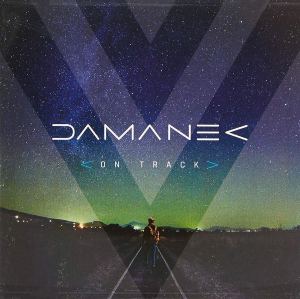
Damanek is led by Guy Manning, and On Track is one of the best albums of the decade. Very sophisticated songwriting and playing abounds on this debut. African rhythms and catchy choruses make for a very nice experience. Marek Arnold lends his sax to the proceedings as well.

Depeche Mode: Spirit

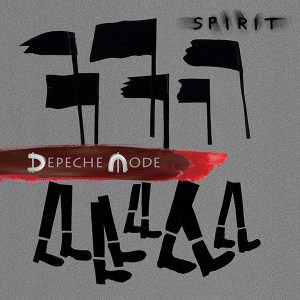
I was beginning to wonder if Depeche Mode was ever going to make a decent album after Playing the Angel. Fortunately, Spirit has some of their best tunes in years, and they sound energized. Let’s hope it lasts.

Downes Braide Association: Skyscraper Souls

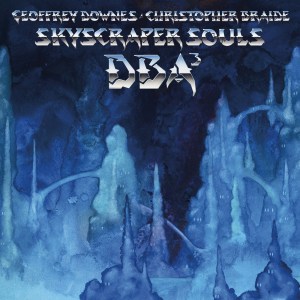
I didn’t catch this one until after 2017, but if I had I would have picked it as my favorite of the year. Geoff Downes (Buggles, Yes, Asia) and Chris Braide (Producers) join forces and produce an extraordinary album. The title track is one of the finest epics in the history of prog (and it even features vocals by Kate Pierson of the B-52s!). “Darker Times” has some of the most beautiful harmonies since the Beach Boys’ Surf’s Up. Chris Braide is a fantastic singer – pure and pitch perfect.

Glass Hammer: Untold Tales

This collection of songs from Glass Hammer’s vault turns out to be one of their most fun albums ever. The stomping “Troll” is a hilarious takedown of internet trolls, and “Cool Air” is a marvelous musical version of an H. P. Lovecraft story.

I Am The Manic Whale: Gathering The Waters

I Am The Manic Whale’s second album is even better than their first. More confident and risk-taking, they succeed on “Strandbeest” and “Stand Up”. If you like XTC and Frost*, you will enjoy IATMW.

Katatonia: The Fall Of Hearts

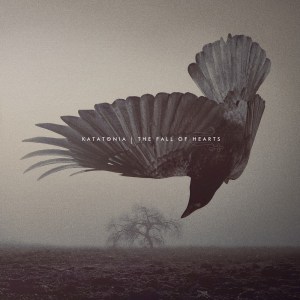
What a gorgeous album. It begins almost in midsong with Jonas Renske’s warm and hushed baritone singing, “You wait by the river/Days are long” and continues for more than a hour as one song flows into another. Even though there is a superficially languid feel to the music, I always sense the enormous power this band is capable of.

KXM: Scatterbrain

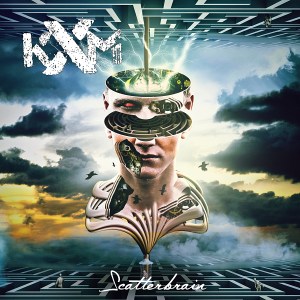
A supergroup composed of King’s X bassist/vocalist Dug Pinnock, Korn’s drummer Ray Luzier, and Lynch Mob’s George Lynch, this is a straight rock album with no apologies necessary. “Breakout” is a killer song.

Lonely Robot: The Big Dream

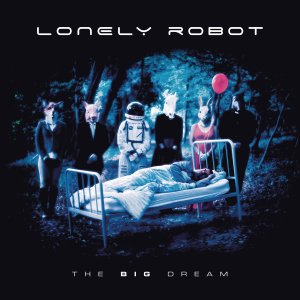
The second installment in John Mitchell’s Lonely Robot trilogy. “Awakenings”, “Sigma”, and “In Floral Green” are an incredible one-two-three punch early in the album.

Gary Numan: Savage: Songs For A Broken World

Gary Numan followed up the excellent Splinter with the even better Savage. There is a definite Middle Eastern vibe here, and Numan is still the master of the irresistible hook. His band lays down a massive groove on every track. It’s been fascinating to watch Numan struggle with his atheism – for someone who doesn’t believe in God, he sure does yell at Him a lot.

Slowdive

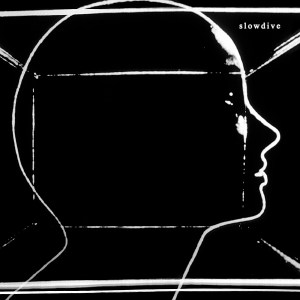
Slowdive were founding members of the “shoegaze” movement in the 90s. They disappeared after1995, and then suddenly showed up  in 2017 with this eponymous album. It is as good as their best work from 20 years ago. Here’s hoping they don’t wait another 20 to make another.

Threshold: Legends Of The Shires

Damien Wilson is no longer with Threshold, but that didn’t stop them from producing the fantastic double disc set Legends Of The Shires. “Stars and Satellites” is a fantastic song with layers of guitars and an unforgettable chorus.

Steven Wilson: To The Bone

Wilson embraces his love for ’80s new wave pop, and comes up with the most consistently enjoyable album of his solo career. His guitar solo on the title track is perfect: concise, melodic, and lyrical. “Pemanating” could be a Tears For Fears single, and “Blank Tapes” is unbelievably sweet and heartbreaking. A great, great record.

That’s our look at 2017, folks. Two more years to go! Honorable mentions for this year go to Dave Kerzner (Static), Godsticks (Faced With Rage), Lunatic Soul (Fractured), Sons Of Apollo (Psychotic Symphony), and Wobbler (From Silence To Somewhere). Add your choices in the comments!


Those Awkward Teenage Years – The 2010’s, pt. 6: 2015

We’re midway through the decade – thanks for joining us on our journey through the musical highlights of the 2010s!

In terms of music distribution, compact disc sales continued their steep decline. In 2000, 943 million CDs were sold. By 2015, that number had dropped to a little over 100 million. iTunes (and mp3s in general) was fading fast as Spotify, Amazon Music, and Apple Music attracted listeners to their streaming platforms. What these trends mean for artists remains to be seen. As it gets harder to earn income from recorded music, will that discourage new artists from getting started?

On the other hand – stepping back and taking a longer view of history – perhaps we’ll look at the 20th century as an aberration in terms of the financial rewards many recording artists were able to garner. For most of recorded history, musicians and composers have  had to struggle to survive, and even the the most gifted relied on wealthy patrons.

Fortunately for us in the 21st century, there is no shortage of great artists producing fine music, and 2015 was a good example. So here are the highlights of that year, in alphabetical order.

The Dear Hunter: Act IV: Rebirth In Reprise

Casey Crescenzo has released five of his planned six acts. Act IV: Rebirth In Reprise is my favorite so far. As usual, there is everything but the kitchen sink here. “A Night On The Town” is the key track as it swings like a Gershwin composition before an exhilarating rock motif takes over.

Gazpacho: Molok & NIght Of The Demon

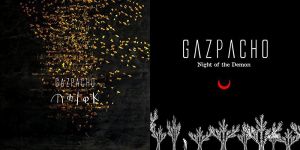
Another year, and not one, but two Gazpacho releases. Molok is another dark concept album about the ancient demon utilizing modern technology for his nefarious purposes (I think). The fact that Molok has some of the prettiest music Gazpacho has ever made makes the concept go down easy. Night Of The Demon is a live set where the band really cooks. It’s a perfect introduction to them, if you’re curious.

Glass Hammer: THe Breaking Of The World & Double Live

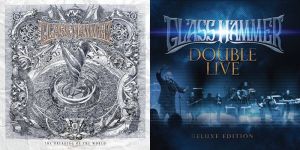
Another year, and not one, but two Glass Hammer releases. The Breaking Of The World is another peak for them (how do they keep doing that?) with essential songs “Mythopoiea”, “North Wind”, and “Nothing, Everything”.  Double Live is a terrific no-frills live performance. Susie Bogdanowicz and Carl Groves are excellent singing classics like “The Knight Of The North” and “If The Stars”, while the band rocks tighter than a tick.

I Am The Manic Whale: Everything Beautiful In Time

A new band from Reading, England, I Am The Manic Whale sprang fully formed from the brain of Michael Whiteman (the band name is an anagram of his). This is an impressive debut with songs celebrating subjects ranging from 10,000 year clocks to the joys of parenting messy toddlers. “Princess Strange” is an inspiring take on cyberbullying.  A true delight to listen to, and worthy of a large audience.

Karnatake: Secrets of Angels

Veteran proggers Karnataka enlisted new singer Hayley Griffiths for Secrets Of Angels, and she really lit a fire under them. Opening track “Road To Cairo” has a killer middle eastern riff that is as satisfying as Led Zep’s “Kashmir”. The title track is also excellent.

Dave Kerzner: New World

The keyboardist and composer from Sound Of Contact struck out on his own and produced this wonderful Floydian sci-fi epic. Put it on, and imagine you are back in 1977, hearing a fantastic new prog masterpiece.


Lonely Robot: Please Come Home

John Mitchell’s (Arena, Frost*, It Bites) first album in a trilogy about an astronaut lost in space. One of the best albums of the decade, Lonely Robot features John’s excellent vocals and stellar guitar work. Every song is memorable, but “Oubliette” and “Are We Copies?” are standouts.

Neal Morse Band: The Grand Experiment

The first album from The Neal Morse Band is one of the best of the decade. First, it is NOT a Morse solo record – this is a band effort with all members contributing to the songwriting. Second, Neal found a young multi-instrumentalist in Eric Gillette who is simply phenomenal and spurs everyone to new heights. “Alive Again” may just be the finest epic Neal has been involved in.

Riverside: Love, Fear, and the Time Machine

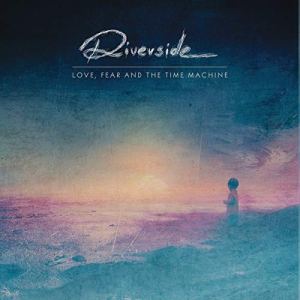
This was my favorite album of 2015, and I still listen to it fairly often.  Riverside pulled together their metal and hard rock roots with Mariusz Duda’s gentler Lunatic Soul excursions, and came up with a winning mix. Add in some nods to ’80s new wave, and this is a very fine record.

Rush: R40

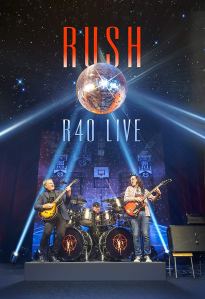
A document of Rush’s 40th anniversary tour, where they played songs from every phase of their long career. The stage set began filled to the brim with props and effects, and they gradually shed them as they worked their way back to the first shows they played in a high school auditorium.

Subsignal: The Beacons Of Somewhere

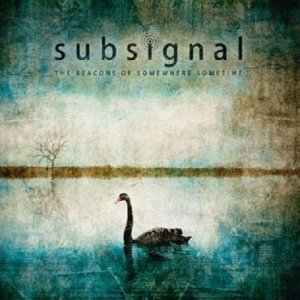
Subsignal’s The Beacons Of Somewhere was a highlight of 2015. Straight-ahead prog rock with awesome melodies. “Everything Is Lost” is an excellent song, as is the multi-part title track. Every time I listen to this marvelous album, I hear new details that delight.

Tesseract: Polaris

Tesseract toned down the more extreme metal aspects of their music for Polaris, and that made a huge difference. Daniel Tompkins has always been a terrific vocalist, but on this album he really shines.  “Dystopia” soars, and “Tourniquet” is a gorgeous cacophony of sound. “Phoenix” makes me want to drive 100 mph. A great album that earned Tesseract a well-deserved wider audience.

Steven Wilson: Hand.Cannot.Erase

Steven Wilson’s Hand.Cannot.Erase caused the biggest stir in progworld in 2015. It was his breakthrough album, catapulting him into the mainstream, and deservedly so. That said, the subject is so emotionally harrowing (the true story of a young woman who died alone in her apartment, and wasn’t discovered for three years) that I have a hard time enjoying it.

Yes; Progeny

A box set that contains recordings of seven concerts from 1972. Yes was touring in support of Close To The Edge, and this is a fascinating document of a young and hungry band at the peak of their powers. Yes, the setlist stays constant, but it is fun to hear how their performances evolved over a short period of time, and how they dealt with onstage setbacks, like a local FM radio station taking over their PA system!

Once again, I easily could have doubled the length of this post. I left off excellent albums by Bruce Soord, Downes Braide Association, Echlyn, Izz, and Perfect Beings, among others. Let us know what your Best of 2015 list is in the comments!

Those Awkward Teenage Years – The 2010’s, pt. 4: 2013

We’re continuing our look back at the decade that is ending in a few weeks with a fond recall of 2013. It was another exceptional year in terms of high quality music, and I have selected fifteen albums that represent just how good that year was for lovers of prog and rock. Once again, my choices are in alphabetical order.

The Beatles: Bootleg 1963

Okay, this is certainly not prog, but the Beatles were the greatest rock group of all time. This is a huge collection of studio outtakes from 1963 that was initially available for purchase for only a few hours on iTunes. Why only a few hours? Because the 50 year copyright on them was set to expire if they weren’t made commercially available. Once they were put on the marketplace, their copyright was safe, and the music label could continue to make money off of them.

That said, these tracks are a fascinating glimpse into how good John, Paul, George, and Ringo were from the beginning of their recorded career. They hit their harmonies effortlessly, and their musicianship is excellent. This collection is now available on Apple Music, and it is worth checking out if you are a even a casual Beatles fan.

Big Big Train: English Electric Part 2; Full Power

Big Big Train followed up 2012’s English Electric Part 1 with English Electric Part 2, which was, in some fan’s eyes, even better. It opens with the propulsive “East Coast Racer” and includes the tender “Curator of Butterflies”. “The Permanent Way” pulls together several themes from the two parts beautifully.

Later in 2013, BBT released a deluxe 2-disc edition of Parts 1 and 2 with a changed running order and extra tracks entitled Full Power. I suppose it is the definitive edition, but I prefer the original separate albums.

Cosmograf: The Man Left In Space

One of my favorite albums of the decade is Cosmograf’s The Man Left In Space. It is a concept album about the anguish an astronaut goes through as he realizes he will not be returning home from his space voyage. Great music, sensitive lyrics, and snippets of audio conversations create a claustrophobic soundscape that is redeemed by the uplifting finale, “When the Air Runs Out”.

David Bowie: The Next Day

After he released Reality in 2003, Bowie announced he was retiring from music. Ten years later, The Next Day appeared. Reality was a career high point, but The Next Day is a worthy successor. In it, Bowie explores all of his eclectic musical interests, and delivers a terrific set of songs. The album cover is simply a vandalized version of his 1978 classic, “Heroes”, as if to say, “What’s past is past. Listen to me now.”

Days Between Stations: In Extremis

Los Angeles-based Days Between Stations released their excellent second album, In Extremis in 2013. It features Colin Moulding of XTC fame on the catchy “The Man Who Died Two Times”, and “Eggshell Man” is one of the best epics of the decade.

Ludovico Einaudi: In A Time Lapse

Einaudi is a classical composer and pianist, and In A Time Lapse is a superb collection of his minimalist-tinged compositions. Unabashedly melodic and romantic, this album is a beautiful listening experience.

Flower Kings: Desolation Rose

One of the strongest sets of songs Roine Stolt and the Kings ever recorded. Here’s what I wrote about it in my 2013 review: Desolation Rose is a dark and brooding jeremiad on the dangers of corrupt media and government, perpetual war and violence, and religious fanaticism. Freedom is not a given, and Desolation Rose is a dire warning to those who would trade it for “security”, whether by indiscriminately believing what governments and mainstream media tell us, or by neglecting critical thinking when it comes to the claims of deceptive religious figures. Each song segues seamlessly into the next, reinforcing the overall impact of the lyrics. It may take a few listens for them to take hold, but once they do, they are very powerful.

Haken: The Mountain

The Mountain was Haken’s third album, and it was a breakthrough. Every song is excellent, and “Paraidolia” is one of the best in their entire catalog. This album was my favorite of 2013 (yes, I liked it even more than BBT’s Full Power). Today, Haken is one of the top bands in progworld. This album shows why they deserve all the accolades.

KingBathmat: Overcoming The Monster

KingBathmat is the brainchild of John Bassett, and for a while in the mid-’10s it looked like they were going to conquer the world. Overcoming The Monster is their best album, and it is a hard-driving metal/psychedelic/progressive melodic masterpiece. “Kubrick Moon” is one of the weirdest yet satisfying songs I’ve ever heard.

Gary Numan: Splinter – Songs From A Broken Mind

Most people in America think Gary Numan is that one-hit wonder guy with the song about cars. He’s actually had a long career, with many ups and downs, and Splinter is an incredible return to form. Trent Reznor owes a lot to Numan, as Splinter illustrates. A very strong album, performed very well. The bass is absolutely thunderous, and the hooks Numan sets up sink in and won’t let go.

Rush: Vapor Trails, remixed

Not a 2013 album, but a welcome rerelease. The original 2002 album was greeted rapturously, because no one knew if Rush would ever perform together after Neil Peart’s personal losses. Once the initial excitement subsided, it was clear that the mix on Vapor Trails was a disaster. With this version, these fantastic songs can be heard as the band intended.

Sand

Matt Healey (North Atlantic Oscillation) released this solo album that could be another NAO set. It is a wonderful album, including an ode to Halley’s telescope (“Elegy For The Old Forty-Foot”). I’m a fan of anything NAO does, and SAND is an essential part of their catalog.

Sanguine Hum: The Weight Of The World

Sanguine Hum’s second album is even better than their excellent debut. The title track is 15 minutes of endlessly delightful pop that flies by in no time. The Weight Of The World is a career high that they have yet to surpass.

Sound Of Contact: Dimensionaut

One of the best albums of the decade. Simon Collins (son of Phil, with his father’s vocal and drum chops) and Dave Kerzner formed the creative nucleus of this band and released a terrific concept album about a being who can travel through different dimensions. “Mobius Slip” is one of the most exhilarating 20 minutes in rock. Too bad Collins and Kerzner couldn’t patch up their differences to work together again. We’re all poorer for it.

Steven Wilson: The Raven That Refused To Sing

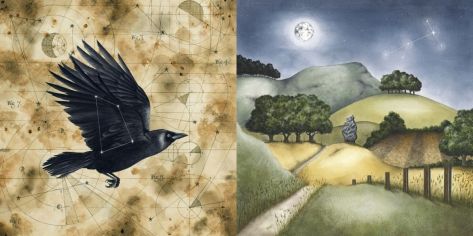
When I first heard Steven Wilson’s opening track to The Raven That Refused To Sing, I thought, “Hmm… Early ’70s Herbie Hancock fusion with Yes.” I’m not a fan of that particular mixture, but fortunately, track 2 is one of Wilson’s finest ever: “Drive Home”. I admire him for trying new things and never sitting still musically – that’s what keeps me interested in his work.

Other significant releases in 2013: Anathema’s concert set Universal, Blackfield’s IV, The Dear Hunter’s Migrant, Nosound’s Afterthoughts, and Tesseract’s Altered State. Let us know your favorites that we missed in the comments!