All posts by kruekutt

Grateful for my beloved wife, son, daughter-in-law, grandchildren and siblings. Also a lover of theology, music, history, philosophy, classic novels, science fiction, fantasy and Looney Tunes.

Peak Piano: Angela Hewitt at Stratford Summer Music (To the True North, Part 5)

Back in the 1990s, I began collecting CDs of J.S. Bach’s keyboard works, played by young Canadian pianist Angela Hewitt, The winner of 1985’s Toronto International Bach Competition, her playing was worlds away from the True North’s previous Bach-on-piano champion, the willfully eccentric Glenn Gould; dancing rhythmic vitality, crystal-clear delineation of melody and counterpoint, and a constantly spinning, singing line have always been Hewitt’s hallmarks. Even before she brought her Bach series to a culmination with an utterly dazzling take on the Goldberg Variations, I was long past fandom into near-adoration.

Since then, Hewitt has re-recorded key Bach works (including an even more impressive 2nd take on the Goldbergs), while moving on to Beethoven’s complete piano sonatas, selected Mozart sonatas and concertos, and a wide sweep of the keyboard and piano repertoire spanning centuries and continents, from Domenico Scarlatti to Olivier Messiaen. With more than 50 consistently superb albums and 40 years of international concerts to her credit, I’d argue that Angela Hewitt is the equal or better of any concert pianist active today (and I’m confident I’d win that argument). So hearing her in concert for the third time as part of our current Canadian odyssey was an absolute must.

This past Sunday, under the auspices of Stratford Summer Music, Hewitt filled the austerely midmod Avondale United Church with both an uncommonly focused audience and a involving, joyous program of serious fun. Playing her calling card right at the start, Hewitt hit the keyboard running with Bach’s Partita No. 6 in E Minor; its elevated Toccata and Fugue, poignant Sarabande, remarkable Corrente, genial Air, lilting Gavotte and surprisingly angular Gigue all unfurled with grace, clarity and strength. But the profound Sarabande — which Hewitt has referred to as Bach “alone in communion with his maker in a dialogue that is at once sorrowful, hopeful, passionate and at times exalted” — was the hushed essence of the work; you could hear a pin drop and feel the listeners breathing with Hewitt as she delved deeply into that movement’s grave, elegant mystery and wonder.

Ludwig van Beethoven’s “Moonlight” Sonata proved both a logical follow-up to the Bach and a welcome change of pace; as Hewitt brought delicacy and sympathetic spirit to the famous opening movement, you could hear both the musical DNA Beethoven inherited from Bach and how he developed it in his own dramatic fashion. And in Hewitt’s hands, the wistful Allegretto and the wildly spiraling climax of the Presto agitato were logical extensions of the opening, but also vivid declarations of Beethoven’s determination to “seize Fate by the throat”. From the prolonged blast of applause that followed, you would have thought that there was nothing more than Hewitt could show an audience already under her spell.

Which is why the sonatas by Domenico Scarlatti that opened the second half of Hewitt’s program were such a refreshing breather. The simple charm of Scarlatti’s D Major Sonata K. 430, the K. 380’s courtly E Major trumpetings and the gyrating tarantella of K. 159 in C Major turned out to be consummate palette-cleansers — substantive yet easily digested appetizers before the daunting final course of Johannes Brahms’ Variations and Fugue on a Theme of Handel.

My 2nd Brahms variation set in 24 hours, the Handels are not for the faint of heart, whether you’re hearing or performing them — in her brief pre-concert introduction, Hewitt mentioned how she had been discouraged from learning the piece when younger because “women can’t play it.” The next half-hour proved how totally wrong such a stupid comment could be: working from memory as she had throughout the recital, Hewitt dealt out Brahms’ 25-plus takes on the theme from Handel’s Keyboard Suite No. 1 with utter commitment and total command. Such lucid structural thinking, such immediately evident dedication to the work, such finely graded touch, and tone, and rubato, and dynamics! What a powerful musician Hewitt is, and how completely she inhabited the moment! It was a performance to revel in, even while looking forward to hearing her promised recording of the piece (scheduled this fall for a future release).

This time, when the music ended, the crowd leapt immediately to their feet, and the applause simply didn’t stop — at least until Hewitt provided a brief, lyrical encore from Mendelssohn’s Songs Without Words. In all probability, this concert will be firmly lodged in the “all-time Top Ten” I keep in my head; it’s hard to beat two hours of total connection between a thrillingly communicative artist & a raptly attentive audience. Brava!

— Rick Krueger
A Grand Night for Singing: The Elora Festival Closing Night Gala (To the True North, Part 4)

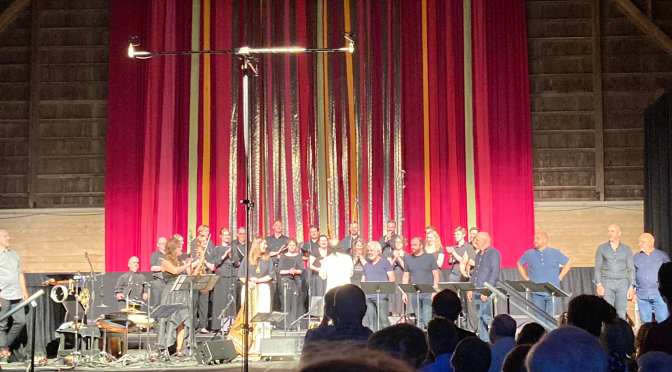
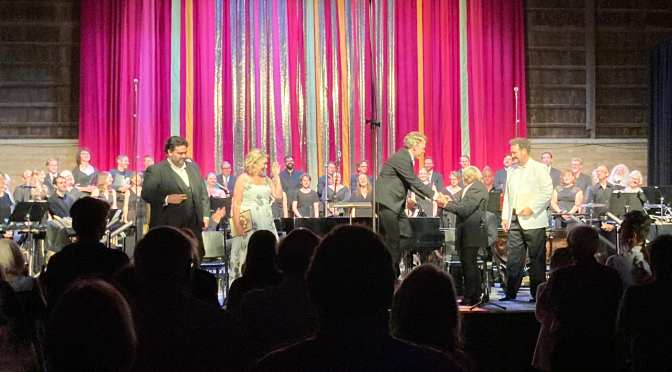
The Elora Singers had me at “hello” when, saluting a sell-out crowd in the town’s Gambrel Barn, they kicked off their 45th festival’s closing night gala with this:

Quick and bright yet wonderfully poignant, Gerald Finzi’s partsong has been the Singers’ unofficial theme tune since they returned to the post-pandemic concert stage. It deftly conveys their genuine delight in making music, made manifest even in the boilerplate welcome speeches of artistic director Mark Vuorinen and festival manager/alto Christine Stelmachovich. As the duo powered through the now-ubiquitous Land Acknowledgment, sponsorship recognitions, dad jokes, etc., their gratitude and glee at seeing an audience literally unable to fit inside the Barn’s walls was impossible to fake.

Then the stage was turned over to piano duo James Anagnoson & Leslie Kinton for a sweeping version of Johannes’ Brahms’ Variations on a Theme by Haydn. Kicking off with an exalted statement of the St. Anthony Chorale, Anagnoson & Kinton teased out Brahms’ imaginative shifts of tempo, texture and tonality throughout the variations, his accomplished use of counterpoint brought firmly to the fore. And when the duo built up the work’s finale (variations on a ground bass leading into a grandly restated chorale) to its tumultuous climax, they received an ovation not only well-deserved, but essential as a response to their first-rate performance.

Next came Toronto’s Elmer Iseler Singers, celebrating their 45th year as Canada’s premier professional vocal ensemble. Conducted by artistic director Lydia Adams (wonderfully gracious when we chatted briefly at intermission), the EIS exhibited their rich tone in a brief set on the lyrical theme of “rising” — bookended by seminal choral classics (James MacMillan’s O Radiant Dawn, Healey Willan’s Rise Up, My Love), investigating the compositional possibilities inherent in Hindu, Islamic and First Nations texts — and unleashing a devastatingly gorgeous, wordless take on Ukranian composer Myroslav Skoryk’s Melodia.

Finally, an hour of everything but the kitchen sink; how else to describe Carl Orff’s gargantuan cantata Carmina Burana, with all the previous forces plus five percussionists and three vocal soloists jammed onstage? Based on a medieval manuscript of secular poems (by disaffected monks?), Orff’s 1936 masterwork is a rhythm-dominated hour of songs about — well, sex and drink and the Middle Ages equivalent of rock’n’roll! Soprano Leslie Fagan as “the girl in the red dress”, tenor Andrew Haij in an infamously difficult cameo (as a swan roasting on a spit) and baritone Russell Braun as a variety of ne’er-do-wells played their parts to the hilt, flirting shamelessly with the front rows; the massed choir lamented the woes of Fortune (“Empress of the World”), raised way too many toasts in the tavern and egged on young lovers with a will. And even in this cut-down orchestration, the pianos and percussion slammed out one driving, kaleidoscopic groove after another. Having performed it multiple times with the Grand Rapids Symphony & Chorus, I can tell you that few classical works build up the momentum or bring the sonic spectacle this work does; with Vuorinen focusing Orff’s inventions to full intensity, the Eloras, Iselers and companions brought down the house, wild applause erupting almost before the final crescendo died away.

In short, this past Saturday proved a grand night for singing. What the Elora Festival accomplished this past weekend (and throughout the past month) is not just another set of rousing performances, but a lasting testimony to music’s ability to move, shake and thrill its creators, performers and listeners. Long may this choral festival bring the best of what’s sung and said to this beautiful village!

— Rick Krueger
Music Crossing Continents: Constantinople & A Filetta at the Elora Festival (To the True North, Part 3)

Park your car in the biggest paved lot you can find in Elora, Ontario — the one adjoining the horse racing track & casino just southwest of downtown. Then, cross the road to the municipal Gambrel Barn — transformed into an unlikely concert hall for three weekends in July.

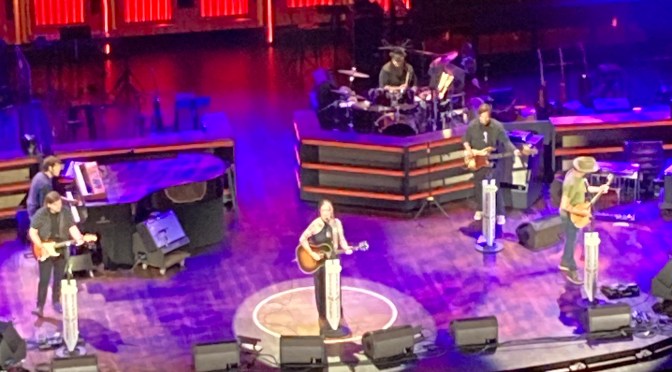
Filing onstage: Constantinople, an instrumental quartet from Montreal that plays medieval, Renaissance and Baroque instruments from Persia, Turkey, Japan, Europe and Ireland; A Filetta, a male vocal sextet from Corsica, an island ruled by France (Napoleon came from there) where the native language developed from Italian and Greek roots; and The Elora Singers, a impeccably polished, 21-voice Canadian choir. How, you might think, is this all gonna come together?

As it turns out, the answer last night was: in an exceptionally intense, immersive way. Introducing the program Clair-obscur, Constantinople’s music director Kiya Tabassin noted its title and content came into being just before 2020’s worldwide pandemic. After its first performances, in Tabassin’s words, its purpose became “to bring light (clair) to darkness (obscur)“. And over the next 90 minutes, the assembled forces proceeded to do just that, crossing a continent to meld the sounds of disparate times and places into a satisfying whole.

The music, mainly assembled by Tabassin and A Filetta’s leader Jean-Claude Acquaviva, proved thoroughly cosmopolitan and eclectic. The sextet’s singing was the obvious heart of the evening; their sturdy blend of dominant bass drones, fleet interweaving lines stacking up into glancing consonances and luxuriant melodic melismas were consistently riveting, whether voices were raised in a show of strength or hushed in breathtaking tenderness. Tabassin’s 3-stringed setar and Didem Basar’s kanun (a 78-stringed Turkish zither) danced lithely around and about the rugged vocal base, with forthright support from Tanya LaPerriere’s Baroque violin & viola and supple grounding in Patrick Graham’s ten-fingered, two-footed percussion; each player had their evocative solo moment and earned delighted applause from the crowd.

Atop this entrancing musical scaffold, the sung texts unfurled a dizzying collage of Senecan drama, Renaissance epic, Near Eastern poetry from Rumi and Hafez, traditional ponderings on the passion of Christ and Primo Levi’s meditation on the memory of the Holocaust. Here was history stripped of its timeline, collapsed into its component catastrophes and passions — pride, devotion, horror, absurdity, yearning for calm and deliverance – compounded into the moment’s expression and emotions. And when Tabassin raised his reedy voice to cavort over A Filletta’s firm foundations or the Elora Singers enriched the soundscape with supportive reinforcement and embellishments, the chamber effect broadened out to opulent symphonic proportions.

Clair-obscur (the nearest English equivalent would be chiaroscuro, the play of light and shadow in the art of painting) proved a unique mix of folk music and high art, calmly unhurried vocal prowess and upbeat improvisation, a journey through the heart of human life to a resting place of connection, catharsis and celebration. You can check out a sample of this program for yourself below (the complete concert, without The Elora Singers, can be found here):

— Rick Krueger
The Sublime along the Grand: the Elora Gorge & Choral Evensong (To the True North, Part 2)

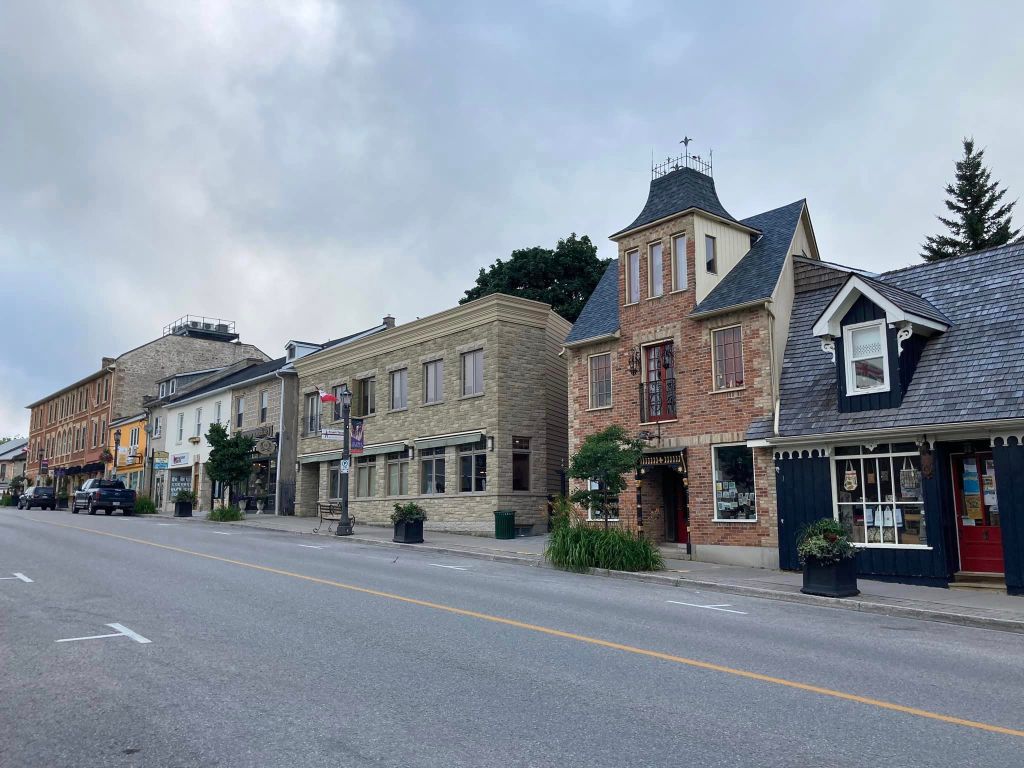
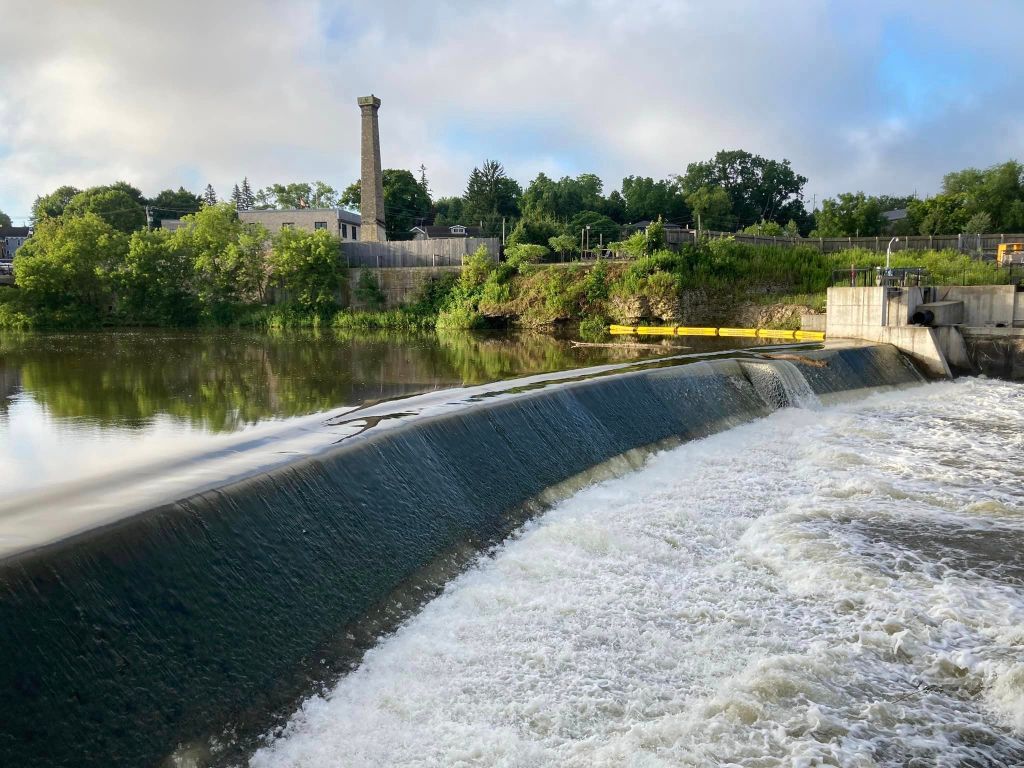
At first glance, Elora is a typical tourist-oriented village in Ontario’s Golden Horseshoe. Its town center sweeps downhill toward a historic mill on the Grand River, now the focus of redevelopment via a luxury hotel/spa complex. It boasts plenty of chichi boutiques, upscale brewpubs and posters about upcoming weekend festivals. A well-stocked local grocery store and the inevitable Shoppers Drug Mart speaks to the place’s practical streak; two enticing bookshops (one stocking new releases, one second-hand treasures) testify that food for the mind and soul are on the menu as well.

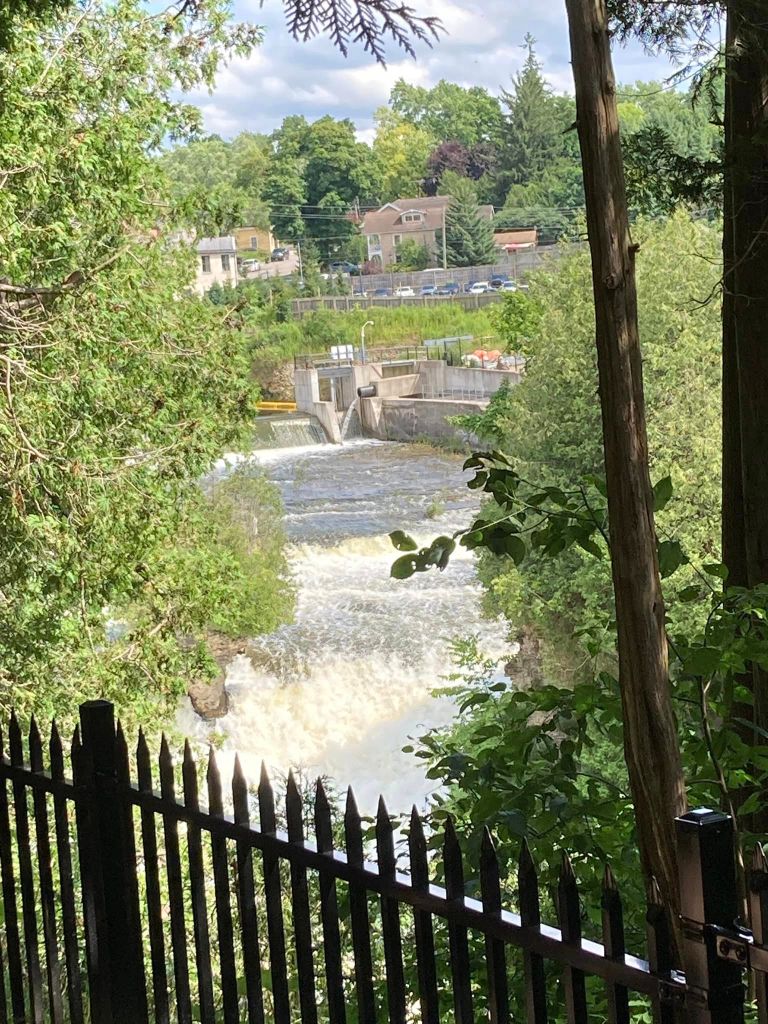
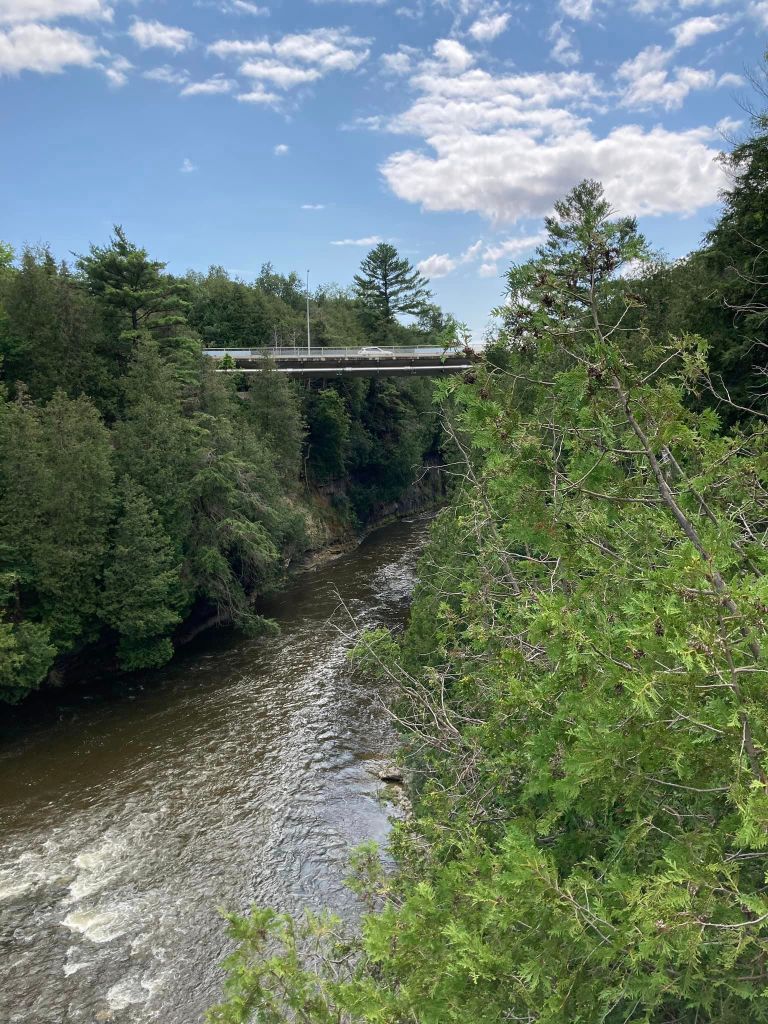
But taking the high concentration of limestone buildings in Elora as a clue reveals the true heart of its attraction. Just west of downtown, the Elora Gorge lies downstream from a 25-foot waterfall, its 72-foot cliffs towering over the path of the Grand for more than a mile. Whether viewing it from the village’s pedestrian footbridge, the elevated trails that wind through and around it, or down at the riverbank itself, the cliffs and crannies quickly bring the word sublime to mind.

Why? The Oxford English Dictionary definition states the substance of the sublime nicely:

Of a feature of nature or art: that fills the mind with a sense of overwhelming grandeur or irresistible power; that inspires awe, great reverence, or other high emotion, by reason of its beauty, vastness, or grandeur.

And that experience chimed perfectly with our day’s next activity – the final Choral Evensong of this year’s Elora Festival, held at the Church of St. John the Evangelist, less than two blocks from the Gorge. The past lies thick within St. John’s walls (constructed in 1875), from the communion set that Florence Nightingale donated to the parish’s first priest (on display behind the organ console) to what a church brochure calls its “strong history of liturgical worship and choral music.”

Led musically by the 21-strong Elora Singers, conductor Mark Vuorinen and guest organist Christopher Dawes, this Evensong unfolded in classic fashion: a long-established liturgical structure augmented with appointed hymns, psalms, readings and prayers. From the opening words of the ancient chant “To You, Before the Close of Day”, the congregation joined in with heart and voice as the choir processed to its stalls; the core texts of Confession, Creed and Lord’s Prayer were spoken with vigor and affection; a whimsical homily on Matthew 26 sharpened to a serious point, tracking remarkably well with Timothy Dudley-Smith’s hymn text on our daily callings “How Clear Is Our Vocation, Lord” (the text itself set to a robust tune by arch-British composer Charles Parry).

And throughout the service, we were given multiple tastes of the musical sublime, starting when Dawes’ rendition of Herbert Howells’ Psalm Prelude based on Psalm 33:3 (“Sing to Him a new song; play skillfully with a loud noise”) roared to life, filling the sanctuary with arresting, rhapsodic melody, thick, juicy chords and supple, flexible rhythms. Howells’ Evening Canticles for King’s College, Cambridge unfurled in similar romantic fashion, the Singers proving exquisitely sensitive to the musical and textual nuances. To quote the composer, in this Magnificat a humble Mary exalted her Son while the mighty were “put down from their seat without a brute force which would deny this canticle’s feminine association”; the Nunc Dimittis’ tenor solo (beautifully voiced by Singer Nicholas Nicolaidis) perfectly “characterize(d) the gentle Simeon” as he held the Christ Child and thanked God for His promised deliverance. So when the chorus and organ ramped up on each canticle’s concluding “Glory be to the Father”, the weight of praise seemed to encompass not just those in attendance, but the whole of creation, landing on “world without end, Amen” with breathtaking depth, substance and impact. But there was more!

Welsh composer William Mathias’ contrasting musical language –cheerful, quicksilver, rooted in a rumbustious sense of the dance — proved equally riveting on the anthem “Let the People Praise Thee, O God” (composed for the wedding of Prince Charles & Lady Diana Spencer and sung with joyous, sympathetic precision) and a closing organ Recessional so vivacious that it set toes tapping, even as the instrument’s festival trumpet echoed around, tumbling down scales like water streaming down the Gorge. It proved an exhilarating coda to the final hymn, “The Day Thou Gavest, Lord, Has Ended”. As John Ellerton’s stirring invocation of God’s presence in creation and the Church unrolled to Clement Schoefield’s majestic melody, the Elora Singers filled the center aisle with rich harmony and a soaring soprano descant to cap a worship service like few others I’ve experienced in my life.

In his new book Cosmic Connections: Poetry in the Age of Disenchantment, Canadian philosopher Charles Taylor explores the roots of what he calls “a language of insight”, a way of exploring “phenomena like value, morality, ethics and the love of art itself” beyond the reductive terms of mechanistic natural science that frame so much of our daily lives. I consider it a gift to have, on the same day, explored the language of Nature and the language of faith, in each instance pulled by the sublime toward a deeper connection with what has been before I was born and, Lord willing, what will continue beyond the hour of my death.

— Rick Krueger
To the True North!

Perhaps you might remember that, for twenty years now, my wife and I have been regular attendees at the Stratford Festival in Ontario, Canada. This week, we’re off to the north (and east) for another adventure in world-class theatre! But this time around, there’ll be additions to an already ambitious arts-going itinerary:

Now in its 45th season, the Elora Festival has established a reputation as Canada’s international choral festival, presenting world-class choirs and vocal ensembles over two weeks in July in the artists village of Elora, “Ontario’s most beautiful village”.

We’re looking forward to experiencing the Elora Festival for the first time, taking in these mouth-watering programs:

Then we’ll double back to Stratford – but before we settle into our theatre seats we’ll catch world-renowned Canadian pianist Angela Hewitt as she performs Bach, Beethoven, Scarlatti and Brahms (no pressure!) under the auspices of Stratford Summer Music.

And the plays on tap?

Watch this space for reviews and impressions, beginning later this week!

— Rick Krueger
In Concert: Bruce Hornsby Makes Noise in the Mandolin Rain

Bruce Hornsby and the Noisemakers with the Grand Rapids Symphony, Frederik Meijer Garden Amphitheater, July 11, 2024.

You know, you can’t wing it with an orchestra!

— Bruce Hornsby, fielding requests onstage

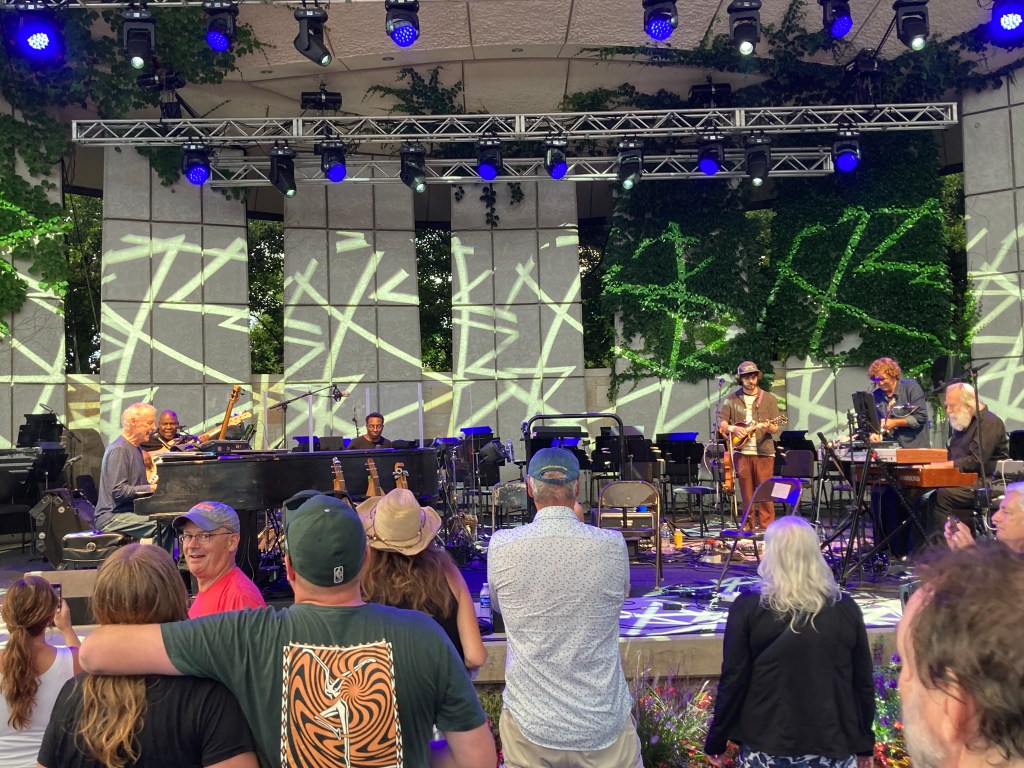
So far, so good: after a week where their shows were cancelled and rescheduled due to vocal troubles, Bruce Hornsby and his Noisemakers had hit the amphitheater stage. The Grand Rapids Symphony, ably conducted by Bob Bernhardt, were teasing out plush, precise orchestral backdrops for jauntily sardonic opener “Life in the Psychotropics”, Bon Iver collaborations “Cast Off” and “Meds” and a fresh, reflective arrangement of early hit “Every Little Kiss”.

The ballad “Here We Are Again” stood out as prime latter-day Hornsby: a haunting melody arching over extended harmonies and pointillistic piano/orchestral splatters, effortlessly meshed with lyrics unfolding a time-travel love story by way of cutting-edge physics. While Bruce’s singing had some rough edges, the performers were tuning in; the capacity crowd was listening raptly; the evening was gathering momentum.

Then the heavens opened: remnants of Hurricane Beryl that had been circling let loose persistent, soaking rain and uncomfortably close rumbles of thunder. As Hornsby launched into one of his solo piano hymns, management pulled the orchestra offstage. Calling an audible with the hit “Mandolin Rain”, Bruce then asked the audience to help with the high-pitched shout chorus he admitted he couldn’t manage; from his response, you could tell we’d covered it to his satisfaction.

And oddly enough, that was where the fun really started! Cued by the lyrics “listening to the bluegrass band”, John Mailander on mandolin and Gibb Droll on guitar served up a tasty breakdown, working off of Bruce’s hand signals and head nods; free associating on the playout, Hornsby served up an apropos snippet of early Paul McCartney: “That would be something/To meet you in the falling rain, mama”, indeed!

Then organist J.T. Thomas joined in the merriment for a groovily funky “Country Doctor”; unleashed from balancing with the orchestra, bassist J.V. Collier and drummer Chad Wright gleefully bumped up the low end up a notch. Even with Hornsby announcing a rain delay, from the eye contact and the smiles between all the musicians you could tell the Noisemakers didn’t want to call it a night.

The clouds and the rain stayed stuck in place, but after twenty minutes of roadies looking at the sky, checking weather apps, and bringing out multiple dulcimers, Bruce and the band came back to strut a bit more of their stuff: “Prairie Dog Town,” a outlandish mash-up of bro-country and hip-hop, followed by the streetball throwdown “Rainbow’s Cadillac” reimagined to the music of The Spinners’ “Rubberband Man”! “The Way It Is”, played straight up but stretched out with features by Mailander on fiddle, Droll, Thomas, and Wright served as an encore, a wry acknowledgment of circumstances beyond control, and a final showcase for what these superb players could do.

Ultimately, Bruce Hornsby and the Noisemakers made the best of a tough situation, keeping their drenched fans engaged until Meijer Gardens called a halt. With no tracks from the album they’re touring behind (1998’s Spirit Trail) and only a smattering of the symphonic goodies promised, the show certainly didn’t turn out as advertised; nevertheless, it turned out to be a surprising, satisfying night on the town.

— Rick Krueger

Bruce Hornsby, American Original

It’s been nearly forty years since pianist-singer-songwriter Bruce Hornsby had the number 1 song on Billboard’s Hot 100, the title track of his debut album, The Way It Is:

For all the ways this song fit right into the radio soundscape of the time — smooth drum machine propulsion, synthesized bass licks and string pads — two novelty factors made it stand out musically: Hornsby’s strong yet laid-back baritone, earnestly surveying our society’s gap between legal equality and ongoing, prejudiced perception; and his extended piano solo steeped in jazz, channeling the supple lyricism of heroes like Keith Jarrett. The man could unquestionably sing and play; and supported by his rootsy backing band The Range, he had no hesitation about going for his own sound, both in the studio and live.

More hits followed, but by the second time I saw Hornsby in concert in 1990 (the first live show I caught in my new hometown), the pop trajectory of his career was already tapering off. Still, as the hot new piano player on the scene, he’d already had a series of collaborations that yielded hauntingly lyrical recordings with Don Henley (“The End of the Innocence”) and Bonnie Raitt (“I Can’t Make You Love Me”) and pulled in stellar guests from the jazz, folk and bluegrass worlds for his third album with The Range, A Night on the Town. The single from that album “Across the River” (Hornsby’s last Top 20 hit) featured a spirited guitar solo by Jerry Garcia of The Grateful Dead; after Dead keyboard player Brent Mydland passed away unexpectedly that year, Hornsby joined the hippie legends for roughly 100 gigs — and the freedom from audience expectations he found in that band has been the guiding star for his musical path ever since.

Dissolving The Range, Hornsby consistently expanded the reach of his music in the 1990s — building extended jazz and bluegrass interludes into his new songs, writing in the idiom of classic soul a la The Drifters and Sam Cooke, recording with a head-spinning variety of all-stars from pop marquee names Phil Collins and Chaka Khan to killer players Branford Marsalis and Pat Metheny. Then came 1998’s Spirit Trail: with Hornsby sharpening his keyboard skills to master an intricate two-handed style and cracking open his Tidewater Country heritage for deepened lyrical content, the result was a double album of quirky, compelling character sketches set off by a dizzying variety of sonic frames — driving boogie-woogie, greasy funk, proto-classical minimalism, pensive Appalachian balladry — with fuller piano and grittier vocals at the forefront. To cop from another American original: the album was large, it contained multitudes.

Continue reading Bruce Hornsby, American Original

Fresh from the Vaults: Black Friday 2023 Jazz

Black Friday has come and gone, leaving a trail of vinyl & silicon breadcrumbs at indie record stores. And, as typical of previous years, there’s been more than a smattering of fine jazz released, as the archives of artists, legendary venues and European broadcasters give up their secrets to the delight of listeners worldwide. Four quite special sets caught my ear this time around . . .

Resonance Recordings continues its deep dive into the music of guitarist Wes Montgomery; Maximum Swing: The Unissued 1965 Half Note Recordings catches him live in New York City, backed by the Wynton Kelly Trio. Pianist Kelly and drummer Jimmy Cobb were key players on Miles Davis’ game-changing Kind of Blue; teaming with a round robin of bassists that includes once-and-future Miles sidemen Paul Chambers and Ron Carter, they launch plenty of lean, thrusting grooves and hypnotic vamps that give Montgomery room to take off. And does he ever: whether on untitled 12-bar jams, highlights of Miles’ book like “Impressions” and “No Blues”, standards from Broadway (“All the Things You Are”) and bebop (“Birks’ Works” and “Cherokee”), or his great original “Four on Six”, Wes is endlessly inventive, spinning out fleet, angular licks, spiky chordal excursions and his trademark octave lines in fluent, inspired fashion. The shape-shifting finale “Star Eyes” is a real highlight, but every track has its thrills, showing that this group’s classic album from the same year, Smokin’ at the Half Note, was only the tip of the iceberg.

Montgomery isn’t the only jazz legend whose riches producer Zev Feldman has been excavating; released on Elemental Music, Tales: Live in Copenhagen 1964 marks his 11th cache of buried treasure from Bill Evans (the main pianist on Kind of Blue). Plowing his own furrow after leaving Miles, Evans steered the piano trio format away from solos with backup toward a conversation of equals, an ideal he pursued the rest of his life. This album presents that ideal in perhaps its purest form; caught on tape by Danish radio and TV, bassist Chuck Israels and drummer Larry Bunker drive the music onward as much as their nominal leader, while Evans complements his partners’ vibrant ideas with shimmering backing and radiant flights of fancy. Multiple takes give up the secrets of pensive weeper “My Foolish Heart”, bittersweet waltz “How My Heart Sings” and speedy flagwaver “Sweet and Lovely”, grounded in a supple rhythmic bedrock, unlocking the melodic and harmonic possibilities only master players in tune with each other can find. Immediately, immensely appealing, but with subtle delights galore beneath the surface.

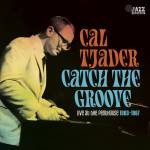
From the 1950s on, vibraphonist Cal Tjader won plaudits for his forward-looking emphasis on Latin rhythms – though recognition of his innovations faded as the sound became more mainstream. Feldman’s Jazz Detective label aims to right the balance with Catch The Groove: Live at the Penthouse 1963-67 — and succeeds brilliantly! In all six sets (originally broadcast from the Seattle club), Tjader lays down his jazz credentials through standbys like Ellington’s “Take The A Train”, Miles’ “On Green Dolphin Street” and Milt Jackson’s “Bags’ Groove”, then cooling down to a warm hush on ballads “It Never Entered My Mind” and “The Shadow of Your Smile”. But when percussionist Armando Peraza (later the beating heart of Carlos Santana’s most popular bands) brings the rhythms to a boil on “Morning of the Carnival”, “Cuban Fantasy” and Tjader originals “Davito” and “Leyte”, the results are spectacular! Throughout, the playing of Tjader and his sidemen is solid, strong and tasty — even heating up the Association’s “Along Comes Mary” for an unexpectedly spicey closer.

Before his passing earlier this year, one of piano giant Ahmad Jamal’s last public acts was to authorize Jazz Detective’s releasing three double-disc sets from the Penthouse archives; the last in the series, Emerald City Nights: Live at the Penthouse 1966-68, is another towering monument to his unique blend of conceptual chops and melodic mass appeal. Teaming with Jamil Nasser on bass and Frank Gant on drums, Jamal swiftly grasps the essence of every tune, then unfurls spontaneous variations that polish their inherent possibilities to a persistent dazzle. Catchy rhythmic vamps, daring harmonic reinventions, ample space for Nasser and Gant to strut their stuff — it’s all here, along with heaping helpings of precision filigree and gutbucket swing. You’ll never quite hear chestnuts like “Misty” and “Autumn Leaves” the same way again — and when Jamal turns the samba “Quiet Nights of Quiet Stars” into an uptempo barnburner and backspins a ballad like “Where Is Love” into hipster territory, you’re gonna want more! (Good thing there’s three volumes, eh?)

Beyond Feldman’s extensive explorations, we’ve also been gifted with the third in a series of Brubeck Editions, “new, officially authorized releases of great music featuring Dave Brubeck and his many musical collaborators”. The Dave Brubeck Quartet Live from the Northwest, 1959 gathers hotel and college dates from Multmonah, Oregon recorded by legendary engineer Wally Heider — although, with the game changing Time Out album in the can but as yet unreleased, there was nary a 5/4 tune on the horizon. Instead, Brubeck leans into standards and originals where he can sound like a one-man big band with his two-fisted block chords, launch into spontaneous counterpoint with saxophonist Paul Desmond, or ride the dynamics of “Basin Street Blues”, “These Foolish Things” and “The Lonesome Road” from a whisper to a roar — all hurtled along by the nimble propulsion of bassist Eugene Wright and drummer Joe Morello. The whole set is a marvelous example of four talents locked onto each other’s wavelengths, working as one; liner notes from Brubeck’s sons Darius, Dan, Matt and Chris offer up rich insights to underline the virtuoso interplay and effortless momentum on display.

— Rick Krueger
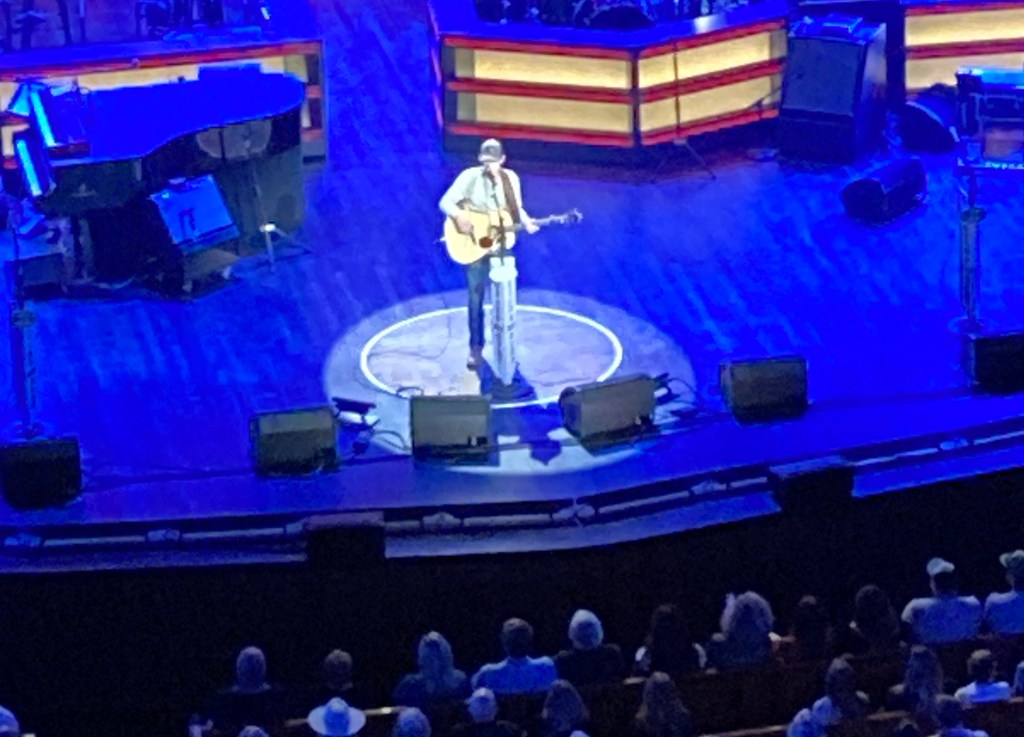
A Night at the Opry

“Country musicians first performed on radio in 1922, and, within a few years, radio stations initiated the first barn dances — ensemble variety programs with the relaxed, chatty atmosphere of a family gathering.”

— the Country Music Hall of Fame & Museum’s exhibit “The Dawn of Country.”

Heading south for our most recent vacation, we finished up in Nashville — and I wasn’t going to visit Music City without taking in at least one show. After catching Ringo Starr at the historic Ryman Auditorium proved prohibitively expensive, I pivoted to the spot all the travel guides (as well as local friends) had recommended in the first place — the weekly Saturday night performance at the Grand Ole Opry.

Make no mistake: coming up on its 98th year, the Opry is a well-tuned corporate machine, effortlessly parting multitudes from their cash with a smile — but it’s also an affordably priced, entertainingly old-school variety show. Broadcast live in multiple formats, the program consciously carries on traditions developed from its radio roots through country music’s ongoing breakout to the broader public (and if you’ve ever wondered where Garrison Keillor got the idea for A Prairie Home Companion, look no further). Regularly booking a mix of promising rookies and seasoned veterans, inviting rising stars to become “family members” and providing an environment open to impromptu guest shots and team-ups, the Opry deliberately claims a gatekeeper role, anointing a core of artists that cover a fairly broad spectrum of what country music is today. With no mass-culture superstars on the bill, September 23rd’s Opry was an enjoyable example of how all this works in practice.

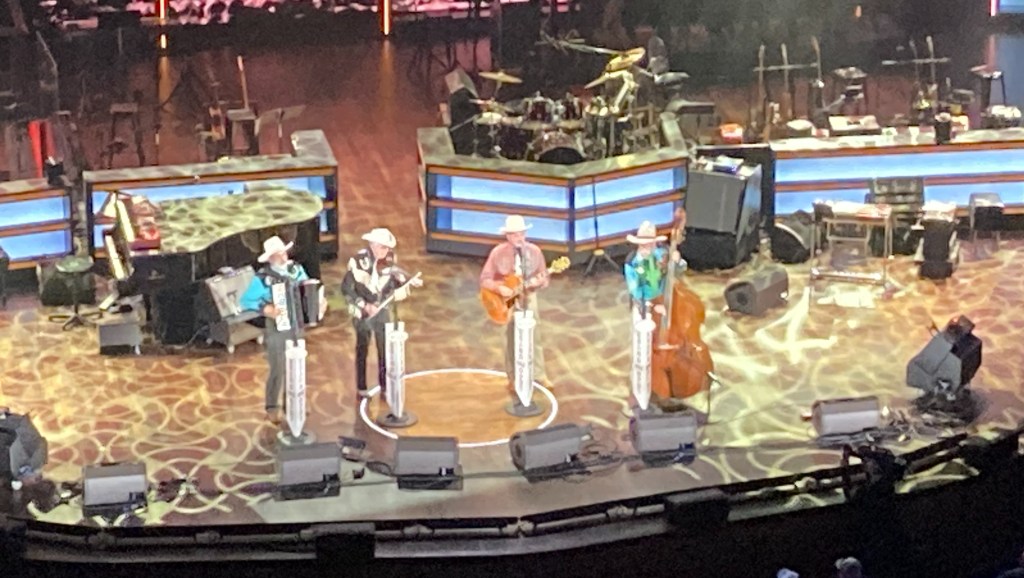
To kick it all off, throwback quartet Riders in the Sky stepped to the mikes, blending smooth harmonies and lively instrumental work into affectionate renditions of vintage cowboy songs and Western swing. There were plenty of corny antics, too; bassist Too Slim provoked fiddler Woody Paul into a face-slapping “Dueling Banjos” duet as guitarist Ranger Doug and accordionist Joey the Cowpolka King looked on in bemusement. (It’s no surprise that, in his true identity of satirical college journalist Fred LaBour, Too Slim convinced the counterculture that Paul McCartney was dead back in 1969.) But after we’d laughed ourselves silly, these long-time Opry members cooled us down with the gorgeous title track off their latest album Throw A Saddle On A Star, then whipped up a fiddle-focused hoedown for an exhilarating finish.

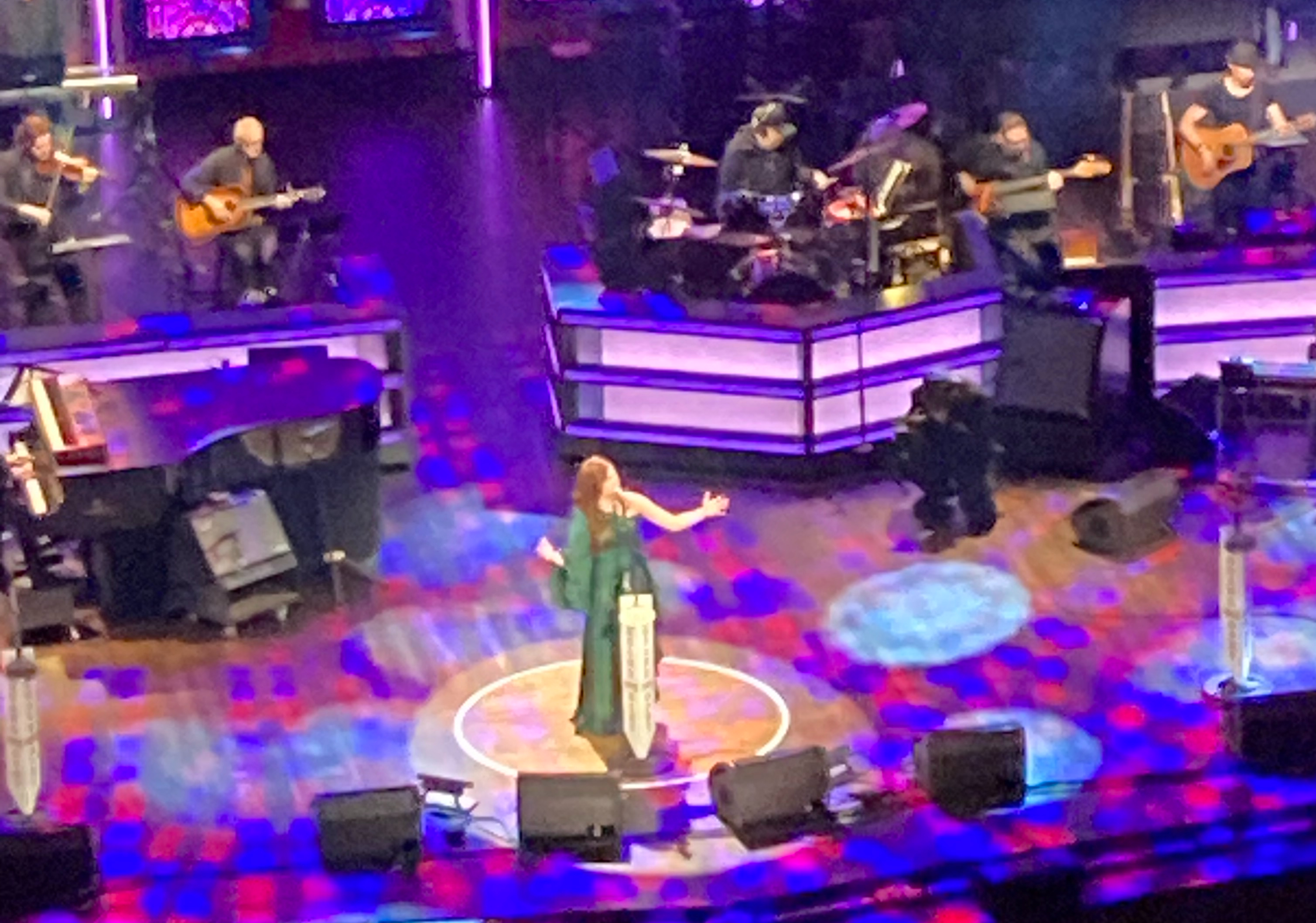
Making her second Opry appearance, vocalist Riley Clemmons was an engaging bundle of nerves, nearly beside herself with excitement that she’d been asked to return. But emotions of the moment and self-deprecating jokes about her advanced age of 23 aside, Clemmons was all business, making the most of her short set. An enthusiastic crooner in the Carrie Underwood mold, she put across her faith-based songs “Church Pew” (her new album’s title track) and “Jesus Cries” with plenty of heartfelt sentiment, ably backed by the Opry’s onstage band and backup singers.

20-year-old singer/guitarist Sam Barber was next up, the first of two debut performers taking the leap from streaming services to the Opry stage. Exhibiting raw yet remarkably well-honed talent, Barber’s unsoftened Missouri accent (complete with occasional growl from the gut) and his determined strumming on “Straight and Narrow” (the first song he wrote, at the age of 16) grabbed the audience hard and strong in his acoustic solo slot.

Recent Opry inductee Charlie McCoy, one of those multi-instrumental Nashville cats who’s played on albums by everybody (Elvis, Dylan, Willie & Waylon, etc. etc. ) in the course of 12,000 sessions, brought the first half of the show to a rousing finish. After laconically drawling a humorous ditty about the consequences of “Thinking with My Heart” (“A heart doesn’t know how to figure out/ Whether to run or to jump/It ain’t got a clue; zero IQ/After all it’s just a pump”), McCoy pulled out his trademark harmonicas for a lyrical film score excerpt, then a lightning-fast “Orange Blossom Special” that nearly left the band eating his dust — and left the audience hungry for more. Cue the intermission!

Continue reading A Night at the Opry

Jazz for Record Store Day 2023 – Zev Feldman’s Quest Continues

Record producer Zev Feldman hasn’t slowed down one bit since we checked in with him about this time last year. For this year’s Record Store Day (Saturday, April 22nd), Feldman’s fingerprints are on no fewer than six releases of consistently excellent archival jazz — on four different labels, no less! All will be available on LP in limited quantities only at participating stores, beginning on RSD. CD and digital release dates vary; purchase links are included in the titles below.

Three of these releases come from the vaults of Baltimore’s Left Bank Jazz Society, which sponsored concerts by a multitude of great musicians for 50 years starting in 1964; two of them are the latest in a series from Cory Weeds’ Vancouver-based Reel to Real Recordings. On Bish at the Bank: Live in Baltimore, pianist Walter Bishop Jr. leads a quartet of first-class players — including saxophonist/flutist Harold Vick, bassist Lou McIntosh and drummer Dick Berk — through sets from 1966 & 1967 marked by thrillingly extroverted, thoroughly satisfying interplay. Confident and crisp, Bishop and his bunch leave a distinctive, sparkling mark on standards, blues and a hefty chunk of Miles Davis’ repertoire, based in classic bebop stylings but stretching the idiom to a John-Coltrane-tinged probing of “Willow Weep for Me” (complete with soprano sax).

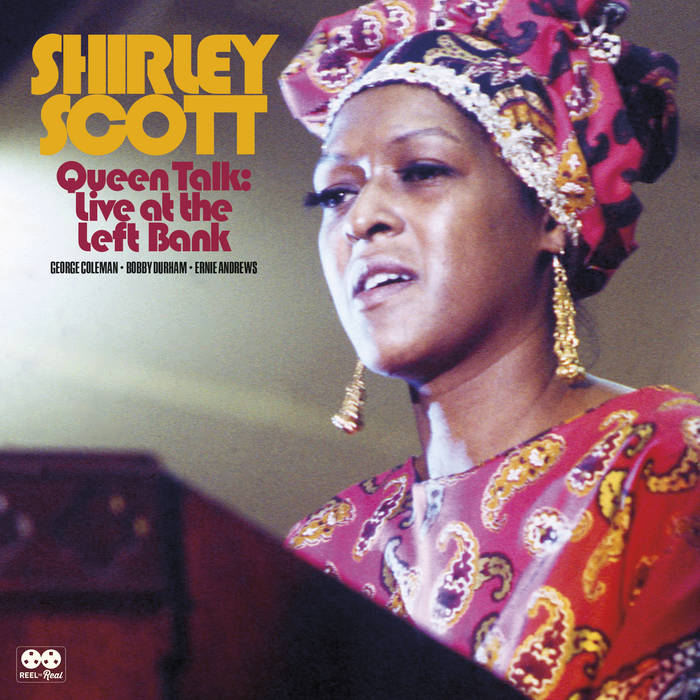
If Bishop’s music sparkles, organist Shirley Scott’s Queen Talk: Live at the Left Bank positively sizzles! Playing a classic Hammond B-3 (and providing her own bass lines on foot pedals) for this 1972 date, Scott, backed by George Coleman on tenor sax and Kenny Dorham on drums, leaps out of the gate ablaze on Coltrane’s “Impressions”, lays down smoky grooves that ground the contemporary hits “Never Can Say Goodbye” and “By the Time I Get To Phoenix”, and steps out in high style for the standards “Witchcraft” and “Like Someone in Love”. And when vocalist Ernie Andrews joins the party towards the end, full-fledged testifying breaks out and the blues prevail.

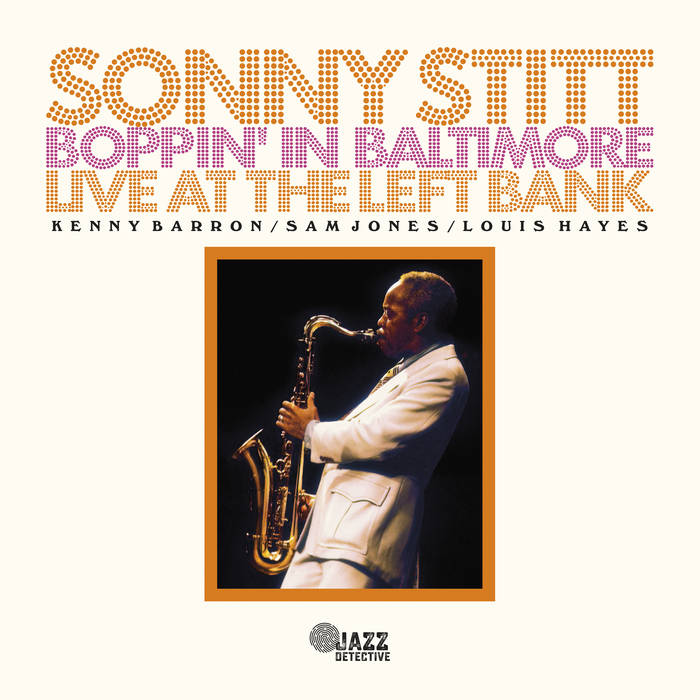
The third Jazz Society show, Sonny Stitt’s Boppin’ in Baltimore: Live at the Left Bank, is being released through Feldman’s new Deep Digs Music Group, on his fledgling Jazz Detective label. A giant on both alto and tenor sax, Stitt took the legacy of Charlie Parker to new heights of innovative expression; for this 1973 set, he brings a sweet, dancing touch to ballads “Lover Man” and “Stella By Starlight”, digs into the challenging changes of “Star Eyes” and “They Can’t Take That Away from Me” and turbocharges multiple 12-bar hard bop workouts. The veteran rhythm section of Kenny Barron on piano, Sam Jones on bass, Louis Hayes on drums meets the challenge of keeping up with Stitt with energy to spare, prodding his creativity onward and upward while asserting a presence all their own. Exhilarating stuff!

The other Jazz Detective release, Blue Room: The 1979 VARA Studio Sessions in Holland, provides an evocative distillation of the magic trumpeter/singer Chet Baker could conjure, taken from two Dutch studio sessions. Given room to explore on Wayne Shorter’s bossa nova “Beautiful Black Eyes” and the title ballad, Baker’s tone is rich and his improv work a thing of genuine beauty; his dashing up-tempo takes on “The Best Thing for You” and “That Old Devil Moon” build delightful momentum; and his vocals on “Oh You Crazy Moon” and “Candy” are finely shaded, with pensively inventive scat episodes. A variety of players provide empathetic backing; Phil Markowitz’s interactive piano and Jean-Louis Rassinfosse’s sturdy bass stand out.

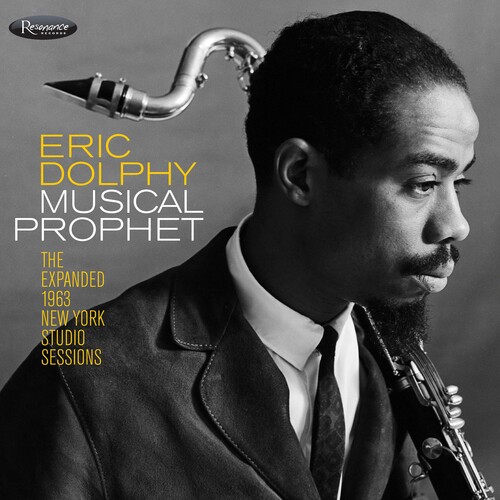
In lieu of a new release, Resonance Recordings (where Feldman made his initial impact and continues as Co-President) is offering a second LP edition of Eric Dolphy, Musical Prophet: The Expanded 1963 New York Studio Sessions. A fellow traveler with cutting-edge players such as Coltrane and bassist Charles Mingus, Dolphy brought a refined yet pungent new voice to the alto sax, flute and bass clarinet. This comprehensive set includes the solo albums Conversations and Iron Man (recorded by Jimi Hendrix’s future producer Alan Douglas with an all-star session group), plus outtakes and “A Personal Statement”, a flamboyant neoclassical piece by future smooth-jazz stalwart Bob James (?!?). Fusing primal hollers and sophisticated dissonance into a spicy musical gumbo, Dolphy was deprived of appropriate recognition by his early death; this multifaceted compilation lays out his unique contributions to jazz for all to hear.

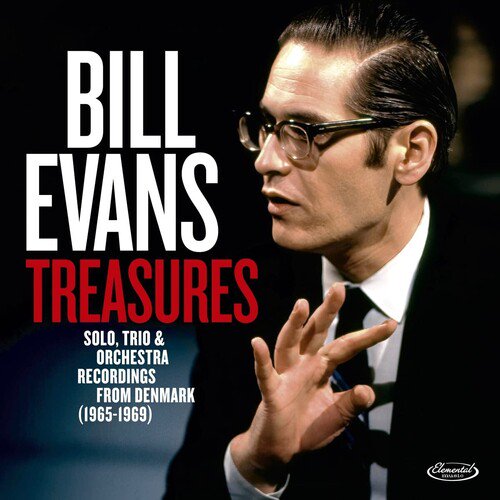
The final Feldman RSD release, Bill Evans’ Treasures: Solo, Trio & Orchestra Recordings from Denmark (1965-1969) on Elemental Music, was not yet available for review — but based on previous finds like 2020’s Live at Ronnie Scott’s and last year’s Morning Glory and Inner Spirit, it should be another winner. Kudos to Zev Feldman and to all involved for the cornucopia of great jazz from the past that makes every Record Store Day an eagerly anticipated event, and will enrich fans of the music for years to come.

— Rick Krueger