Happy St. Cecilia Day!

November 22nd is the Feast Day of our patron saint, Cecilia. Here’s a post by Brad Birzer from our archives (November 22, 2023) celebrating this day:

Today is a day full of symbol and meaning (as, admittedly, all days should be, from Creation to Apocalypse) and rich in history. Importantly, in the Catholic and Eastern Orthodox traditions, it’s the Feast of St. Cecilia, a martyr as well as the patron saint of music, a guardian of all that is beautiful in this vale of tears and sorrows.

My own family history is tied intimately to St. Cecilia. In the 1920s, my maternal grandfather’s oldest sister, Cecelia, contracted tetanus. The entire western Kansas farm community came together to collect the $200, a huge sum of money, necessary to purchase the shot. Some men then drove to Kansas City to purchase the shot. When they returned, they administered the medicine, but fate had outraced them across the Great Plains. Aunt Cecelia died a few days later, on May 19, 1927, just four months shy of her 21st birthday. She had also been seriously involved with a local boy torn between a love for her and a longing to enter the priesthood. Needless to write, he spent his career administering the sacraments.

Much to my regret, I never asked my grandfather about Aunt Cecelia, and my grandmother never knew her. The events of her life are now completely lost, outside of her tragic death which seems to have defined her very existence. I have visited Aunt Cecelia’s grave many times in my life; frankly, it’s one of my favorite spots in the known universe. She rests under a gravestone with her oval picture embedded in it. Though the porcelain containing the picture is cracked and chipped, the image intrigues me. Despite the distance from her to me, her eyes reveal much. She looks at me with penetrating intelligence and with more than a bit mischievousness. Aunt Cecelia has even visited me a time or two in my dreams, but she is always merely playful. She’s never spoken to me, even under the drug of Morpheus. Her grave faces east in the windswept and dramatic valley of Pfeifer, Kansas, under the shadow of the gothic church built stone by stone by my ancestors, Heilige Kreuz.

In some way I could never explain rationally, I love Aunt Cecelia. I’m eager to hear her speak to me, to tease me, and to look at me through those mischievous eyes.

I think of my grandfather, the single finest man I ever knew, and how close he had been to her, and I think she must have been a truly fascinating woman. From dreams to visits to the Pfeifer cemetery, she has always been a presence in my life, though hers had been so brief and had ended over forty years before mine began. My wife and I named our fifth daughter after her, slightly changing the spelling. Like her name sake, our Cecilia Rose’s life ended all too tragically and all too soon.

Yet, another reason to consider the importance of November 22. Famously, three prominent twentieth-century figures exited time and entered eternity forty-eight years ago today: John F. Kennedy; Aldous Huxley; and C.S. Lewis. The strange coincidence of their deaths ties them together. Kennedy will always be an enigma. In the public mind, he will remain an Arthurian symbol, though in corrupt form. His ruthless womanizing will (or should) always taint our memory of him. Indeed, justly, one should more readily associate him with Lancelot than with Arthur.

Despite his many oddities, Huxley gave us one of the most damning and accurate appraisals of modernity possible in his work of science fiction from the early 1930s, Brave New World. In this dystopian world, a sanitary but sexually-promiscuous and genetically-engineered population with names such as Benito, Shaw, and Marx, reverenced Henry Ford’s production methods by making the “sign of the T.” As one leader noted, “We have the World State now. And Ford’s Day celebrations, and Community Sings, and Solidarity Services.” With the exception of a small reservation of primitives—syncretic pagan-Roman Catholics—in New Mexico, the world resembles a factory. “Primroses and landscapes, he pointed out, have one grave defect: they are gratuitous. A love of nature keeps no factories busy.”

Five years younger than Huxley, C.S. Lewis also wrote of dystopias in his brilliant That Hideous Strength. Published two years before Orwell’s similar anti-totalitarian masterpiece, Lewis’s novel is a theistic 1984. The story revolves around a group of academic and bureaucratic conditioners–known as the N.I.C.E. (National Institute for Coordinated Experiments) who take over a small but elite English college as a prelude to a takeover of Britain. To stop “That Hideous Strength,” a new King Arthur emerges in the form of a philology professor, Dr. Ransom. With the aid of a small group of friends, he awakens Merlin from a fifteen-century sleep. Modernity perplexes Merlin. In a telling conversation,

This is a cold age in which I have awaked. If all this West part of the world is apostate, might it not be lawful, in our great need, to look farther . . . beyond Christendom? Should we not find some even among the heathen who are not wholly corrupt? There were tales in my day of some such: men who knew not the articles of our most holy Faith, but who worshipped God as they could and acknowledged the Law of Nature. Sir, I believe it would be lawful to seek help even there. Beyond Byzantium.

To which Ransom responds:

You do not understand. The poison was brewed in these West lands but it has spat itself everywhere by now. However far you went you would find the machines, the crowded cities, the empty thrones, the false writings, the barren books: men maddened with false promises and soured with true miseries, worshiping the iron works of their own hands, cut off from Earth their mother and from the Father in Heaven. You might go East so far that East became West and you returned to Britain across the great ocean, but even so you would not have come out anywhere into the light. The shadow of one dark wing is over all.

It would be difficult to ignore the prophetic elements of Huxley and Lewis, as our culture drowns in its sexualized and pornographic advertising, clothing, and entertainment.

Our Republican politicians continue to pander to the lowest common denominator as they gradually dismantle the Republic in favor of a flabby empire without purpose or meaning. Indeed, for many of our leaders, “democracy” has become a term of religious significance and intensity, and “freedom,” not the natural law as St. Paul told the Christians of Rome, “is written in the hearts of every man and woman on this earth.” Our Democratic politicians have no regard for the dignity of the human person as they advocate, without the slightest hint of remorse, the murder of the least of us.

With only a very few exceptions, our academics remain trapped in their own subjective realities, publishing only for each other.

Our corporations pursue their “dreams of avarice” as we walk through the Wal-marts of the world, mesmerized by Muzak and the shrines to the materialist gods, made, of course, in the People’s Republic of China.

Abroad, things remain wretched. Europe falls prey to a centralized bureaucracy of its own secular devising, mobs shout without purpose, and its citizens of a Christian heritage no longer seem capable of being fruitful and multiplying.

Russia, over two decades after the fall of communism, remains a nightmare—economically, culturally, and politically. Its leader at the beginning of the 21st century is a former member of the KGB, an operative, during the 1980s, in East Germany. As chess master Garry Kasparov claimed in early December, 2007, Putin and his followers are “raping the democratic system.” Things have not improved in the last four years.

Indeed, despite the western victory in the Cold War, systems of tyranny remain alive and well throughout Asia, Africa, and Latin America. Under the leadership of the three presidents following Ronald Reagan, the West failed to explain the demise of capitalism or lay a solid foundation for a post-Communist world. Instead, the leaders of the United States treated the fall of communism in Eastern Europe and Russia as just one more passing event in the history of the world. 1989 should be remembered in history as one of her greatest dates, an annus mirabilis, and, yet, scholars ignore its implications and the significance of its leaders, most of whom where Christian. Even more tragically, numerous governments throughout the world kill and torture Christians daily outside of the western hemisphere, while Cuba remains the important and tragic exception within this hemisphere.

It all seems terribly bleak right now, the world swirling around the abyss and Americans only pushing it faster and faster.

And yet, no matter how terrible things might look on this November 22, the symbols, history, and myths surrounding this day offer much in the way of hope. Communities “share symbols and myths that provide meaning in their existence as a people and link them to some transcendent order,” political theorist Don Lutz has written. “The shared meaning and a shared link to some transcendent order allow them to act as a people.” Indeed, the man “who has no sympathy with myths,” G.K. Chesterton argued, “has no sympathy with men.” One cannot, it seems, separate men from myths.

The choice is ours: We can choose corrupt symbols and myths suited to our pursuits, our lusts, our own wills, and our petty nationalisms, or we can choose those attached to what is eternally true and dignifies the uniqueness of each person, made in the Image of God. Indeed, no matter how corrupt and bleak and depressing the world may appear, we can always turn to the many Cecilias and the Laura Smiths of the world and see the goodness that is possible through grace and love. Properly remembered, these true symbols and true myths can re-orient our souls, our cultures, and perhaps even the world itself toward right order.

This day, of all days, should teach us this.

*****

All great systems, ethical or political, attain their ascendancy over the minds of men by virtue of their appeal to the imagination; and when they cease to touch the chords of wonder and mystery and hope, their power is lost, and men look elsewhere for some set of principles by which they may be guided. We live by myth. ‘Myth’ is not falsehood; on the contrary, the great and ancient myths are profoundly true. The myth of Prometheus will always be a high poetic representation of an ineluctable truth, and so will the myth of Pandora. A myth may grow out of an actual event almost lost in the remote past, but it comes to transcend the particular circumstances of its origin, assuming a significance universal and abiding. Nor is a myth simply a work of fancy: true myth is only represented, never created, by a poet. Prometheus and Pandora were not invented by the solitary imagination of Hesiod. Real myths are the product of the moral experience of a people, groping toward divine love and wisdom—implanted in a people’s consciousness, before the dawn of history, by a power and a means we never have been able to describe in terms of mundane knowledge.— Russell Kirk, “The Dissolution of Liberalism,” Commonweal (January 7, 1955), 374
Cecilia in Proghalla: Interview with Medievalist Charles Yost

Today, Rick and I had the great privilege of interviewing a favorite colleague, historian and Medievalist Charles Yost. Our interview focused on his forthcoming book, Taking Heaven by Violence: The Middle Ages and the Making of the West (Encounter, January 2027).

In our fifty-minute interview, we not only got to know Charles better, but we discussed, at length, exactly what makes the Medieval World and what makes western civilization, and, perhaps most importantly, what makes history. Incredibly brilliant and articulate, Charles put it best: “history is the curation of human memory through language.”

We agreed, to be sure, that history is the manifestation of the Logos and not the revelation of some progressive ideology.

To pre-order–and you should–please click here.

Cosmograf’s Middle Period: An Extraordinary Run of Excellent Albums

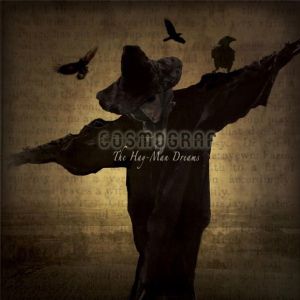
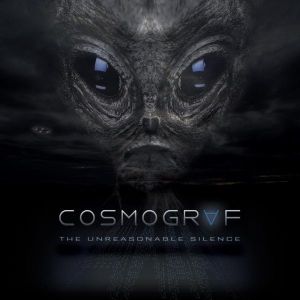
Hello Spirit of Cecilia Readers!  I hope you’ve been following us recently.  We’ve been quiet in the reviewing department but we’ve been very active with our Cecilia in Proghalla Progcasts.  Here’s hoping we can get Robin Armstrong to join us soon!  And, writing of Robin Armstrong, here below we review Cosmograf’s mid period, The Man Left in Space (2013), Capacitor (2014), The Unreasonable Silence (2016), and Hay Man Dreams (2017).  Here’s hoping you enjoy the albums as much as we do.

Brad: Tad, as always, it’s wonderful to be reviewing with you, my awesome friend and fellow progling.  It’s been too long since we last reviewed.  “Father, bless me, for I have sinned. . . it’s been too long since my last review.”

I’m so glad we’re reviewing the amazing Robin Armstrong and his rather stunning prog project, Cosmograf, which began around 2009, deep into third-wave prog.  

One thing we can state with certainty about Armstrong–he has an amazing ear, and he’s one of the greatest living audiophiles.  I would put him in the august company of Steven Wilson, Rob Aubrey, and Bruce Soord.  Everything he touches, he adds levels of perfection.  I would guess some of his mixing is tedious work, but he always does the work, regardless.  That level of perfection, of course, is something western civilization has been striving for since Aristotle challenged his son to pursue beauty no matter the cost!  Yet, over the course of history, so few human beings have risen to the challenge.  Armstrong has.

The first album I heard from Armstrong was The Man Left in Space, and, after falling in love with it, I went back and bought his first two albums.  Since then, I’ve been a completist.  At the time of The Man Left in Space, Armstrong was incredibly active on Facebook and social media in general (he’s much, much less active now), and I got to know him through mutual prog interests.  When he put out a call for an American-voice for narration of NASA for the album, I responded within minutes with some recordings and Armstrong immediately accepted them.  That was the first time my voice had ever appeared on an album, and, of course, I was absolutely thrilled.  And, it created a life-long loyal fan.

One of the many things I love about Man Left in Space is its homage–but never sycophantic–to Pink Floyd.  Of course, there are a lot of folks influenced by Pink Floyd, not just Armstrong, but Airbag, Steven Wilson, and Dave Kerzner.  I love them all.  One of the best things about all Pink Floyd-esque bands, they always take their time with their music.  They linger when they need to linger, building emotion and tension.  I attribute this mostly to David Gilmour’s classy and classic guitar playing.

Tad: Brad, it’s great to be in dialogue with you again, and I’m so glad we’re tackling Cosmograf! Like you, The Man Left In Space was my first exposure to Robin Armstrong’s magic, and I was immediately hooked. I love everything about his work: the impeccable production, the memorable melodies, the top-notch instrumental work, and his unassuming vocals. As a matter of fact, I think his vocals are my favorite aspect of his music: kind of everyman in quality, but conveying inner strength, if that makes sense. I even like the care he puts into the artwork for each album. Every album cover is unique, but of the highest quality. 

I was not as familiar with the following albums Capacitor, Unreasonable Silence, and Hay-Man Dreams, but I have really enjoyed immersing myself in them the past couple of weeks. 

Let’s start with The Man Left In Space. It’s a fairly straightforward story of an astronaut who awakens in a space capsule, and he gradually realizes he has no hope of returning home to earth. There are lots of cool spoken word passages with sound effects (including a Birzeresque voice with a Kansas accent!), before a beautiful acoustic guitar begins playing an addictive riff for the second track, “Aspire, Achieve”. I hear the Pink Floyd influence you refer to, while the background vocals and crunching electric guitar that comes crashing in remind me of classic Porcupine Tree. This is a wonderful track that I still think is one of Armstrong’s finest in his long career.

Brad: That Kansas accent!  Seems ubiquitous.  Ha.  Thanks, Tad–my first brush with prog fame.

I love “Aspire, Achieve” as well–such a stunning piece.  And, you’re right, there’s a lot of Porcupine Tree in the music, but not in the vocals.  Armstrong has an excellent voice, and his vocals are all his own.  For me, though, the standout track is “The vacuum that I fly through.”  That track gets me every time.  The guitar work, especially, is so very tasteful, as is the bass.

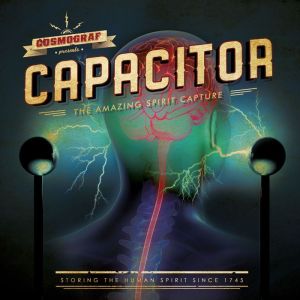
Tad: Tasteful, indeed, Brad! Ok, as far as Capacitor goes, it seems to be a kind of steampunk tale of a man who has figured out how to transfer his consciousness into inanimate objects? At least, that’s what it seems to be, to me. In the introductory track, “The Spirit Capture”, there is quite a bit of spoken word where someone asks, “What happens to the energy in our bodies when we die?” and there is dialog between people claiming that the energy is what ghosts are. “The weight of a man’s soul is 21 grams!” “Our spirits are captured for all mankind!” Very strange. I was reminded of Christopher Nolan’s movie, The Prestige, about a magician who works with Nikola Tesla to teleport himself. The only catch is that the magician’s original body dies every time. 

Anyway, Capacitor is very satisfying for me, musically speaking. It rocks a little harder than The Man Left In Space, and there is some tongue-in-cheek humor; in “The Reaper’s Song”, there is an announcement on a PA: “Thank you for boarding the Reaper Train’s 8 am service to Oblivion, calling at Greed, Stupidity, and Laziness.” Ha!

By the way, I think “The Reaper’s Song” is a fantastic track – a very good melodic hook in the main riff, and Armstrong’s vocals are excellent. Instrumentally, it builds nicely, until we are presented with a beautiful guitar solo, while there is an oblique reference, vocally and musically, to The Beatles’ “I Am The Walrus”. Very clever! 

I also like the next song, “The Drover”, a lot. Nice, gentle, acoustic guitar and piano intro, while Armstrong sings,

In a road close to me
The sight of the drover
An old man with a pipe
Looking over your shoulder
Swinging from a tree
Wonder what made him do it?

Wow! That was quite jarring when I first heard those lyrics! The beautiful melody makes me love this song, despite its very dark subject matter. In fact, it seems to me that death permeates all of the songs on this album. I don’t have the lyrics in front of me, but there is a very foreboding atmosphere throughout the entire album. “White Car” begins with a woman conducting a seance. The final track, “The Ghost Gets Made” is definitely spooky as well. Come to think of it, I’m listening to this album a few days before Hallowe’en, and it’s a very appropriate soundtrack for this time of year!

Brad: Tad, such great thoughts. Thank you. I will admit, Capacitor is my favorite album from Cosmograf.  From the opening moment to the conclusion, I find the album just riveting.  Truly, Armstrong at his best and most creative.  I love the subject matter, I love the lyrics, I love the flow of the album–in terms of instruments, I’m especially taken with the bass.  But, the keyboards are just outstanding–they remind me of later Traffic.  The flow, especially, is strong, as Armstrong moves so readily and easily between soft and hard passages, between lingering and intense.  It’s really a perfect prog album.  It reminds me a bit of Pink Floyd, a bit of Steven Wilson, and, though not cheesy, a bit of Alan Parsons.

You’ll laugh at me for this–but the album also reminds me of one of my favorite video games, Bioshock Infinite.  For what it’s worth, I’m not really a video game guy.  As I’ve gotten older, the first-person camera makes my stomach turn and I get motion sickness pretty easily.  Too bad–as there are days I’d love to just come home from work and blow some stuff up!  Ha.  Such a guy thing.  Anyway, Capacitor reminds me very much of Bioshock Infinite.

That said, Tad, I also really love The Hay-Man Dreams.  If Capacitor is his retro science-fiction story, The Hay-Man Dreams is his Bradbury-esque folk tale.  What are your thoughts?

Tad: Okay, Brad, here is where I owe you a huge “Thank you”: I think The Hay-Man Dreams is Armstrong’s finest work, and I wouldn’t have heard it if not for your recommendation. From start to finish, there isn’t a misplaced note. Every musical moment is perfect, from the appropriately pastoral melodies and instrumentation to the elegant lyrics. Now, as far as the lyrics go, I’m not too sure what the concept underlying them is, but it seems that a man identifies with a scarecrow he sees in a field. He is alone and unable to feel, so he considers himself a “hay-man”. At least, that’s the impression I get.

Also, there’s a sense of unease and menace throughout:

The walkers tread the corn
They’re damaging the harvest
The gun has killed the fawn
There’s trouble in the forest

As I listen to The Hay-Man Dreams, I am reminded of one of my favorite television series: Midsomer Murders. Every episode is set in an idyllic English village where the most bizarre crimes occur. The Hay-Man Dreams would make a fitting soundtrack to it!

The third track, “The Motorway” is the best song in Cosmograf’s entire catalog, in my opinion. The acoustic guitar opening is simply delightful, and Armstrong’s vocals are full of yearning as he sings, “I want to feel a human touch/I want it really very much.” As the song progresses, it gets heavier and rocks harder. This song is a “Stairway to Heaven” for the 2010s!

Other highlights include the Beatlesque “Melancholy Death of a Gamekeeper” and the epic closing track, “Hay-Man”. Both are such stately and beautiful songs that I never tire of listening to. The former has some terrific guitar solos, and the latter features wonderful vocals by Rachel Hawnt. It also has this little spoken word interlude that I think is fantastic:

All winter through I bow my head
Beneath the driving rain
The north wind powders me with snow
And blows me black again
At midnight ‘neath a maze of stars
I flame with glittering rime
And stand above the stubble
Stiff as mail at morning-prime
But when that child called spring
And all his host of children come
Scattering their buds and dew upon
These acres of my home…

I did a little research, and they are from Walter de la Mare’s poem, The Scarecrow. How cool is that!

I can’t say enough good things about The Hay-Man Dreams – it’s an extraordinary album. Now I am very interested in your take on it. Ray Bradbury?

Brad: Well, when I hear The Hay-Man Dreams, I think of October and harvest, and I think of Ray Bradbury’s The October Country.  There’s a kind of folk horror–even in its praise of country life–in and on the album.  Or, at least, that’s what I hear.  A kind of Scarecrow (think Batman’s Scarecrow) or something out of the X-Files.  Whether it’s meant to or not, it sort of anticipates Steven Wilson’s latest, Requiem for a Village, at least in tone.

Have you had a chance to listen to The Unreasonable Silence?  Again, there’s that really creepy element to it–a kind of folk horror is the best way I can put it–in the same way that Capacitor and Hay-Man are creepy.

In each of these albums, Armstrong proves not only brilliant in composition but brilliant as an audiophile.  Again, when it comes to production, I would happily place him up there with Soord, Aubrey, and Wilson.

The Unreasonable Silence also combines the mystery and lingering of The Man Left Out in Space with the unrelenting drive of Capacitor.  I love it.

Really is there any aspect of Cosmograf in this middle period that isn’t just perfect?

Tad: Totally agree, Brad. I have listened to The Unreasonable Silence, and while I think it is very good, it doesn’t measure up to the other three, in my opinion. Maybe it’s because I find the subject matter disturbing: a man cuts himself off from his girlfriend, his job, everything, because he has had an encounter with aliens. At least, that’s what I think the album is about. With Cosmograf, nothing is clearcut.

One theme all four of these albums have in common is alienation: the man left in space is literally cut off from humanity, the steampunk inventor in Capacitor attempts to transfer his soul into a tree, the guy in The Unreasonable Silence disengages from all human contact due to a traumatic experience, and in Hay-Man a farmer, gamekeeper, motorway driver (are they all the same person?) identifies himself with an unfeeling scarecrow. I hope Robin Armstrong has at least one healthy relationship with someone in real life!

Again, Brad, thanks for suggesting we discuss this tetrad of albums; they are an amazing run for Cosmograf, and I am so glad we took a deep dive into them!


The Haunting of Hill House: Good Reading for Halloween

My fellow Spirit of Cecilian, the brilliant and prolific Bradley Birzer, recently posted a fine essay on SubStack on the excellence of Shirley Jackson’s classic horror novel, The Haunting of Hill House. It was so interesting, I decided to read it myself. Besides, it’s Halloween season!

The story is narrated by 32-year-old Eleanor Vance, who is unmarried and has spent the past eleven years caring for her ailing mother. Her mother has recently passed away, and now she lives with her sister, her brother-in-law, and their children in a very unhappy arrangement. Desperate to strike out on her own, but too timid to do anything about it, Eleanor receives, out of the blue, a letter from a Dr. John Montague, who is doing research on psychical/supernatural phenomena. He is aware of a nearby house, Hill House, that has stood empty for years due to its very dark and troubling history.

To read the full review, click here.