Category Archives: Music

SciFi/Fantasy Meets Prog (and the result is glorious)

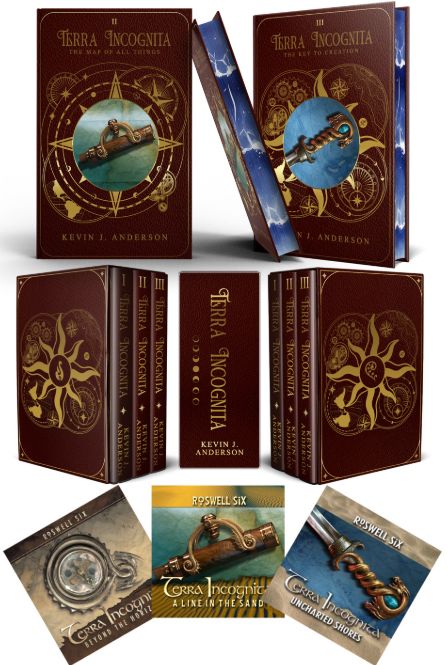
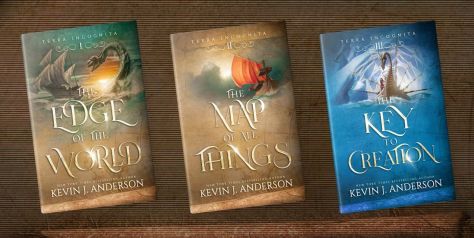
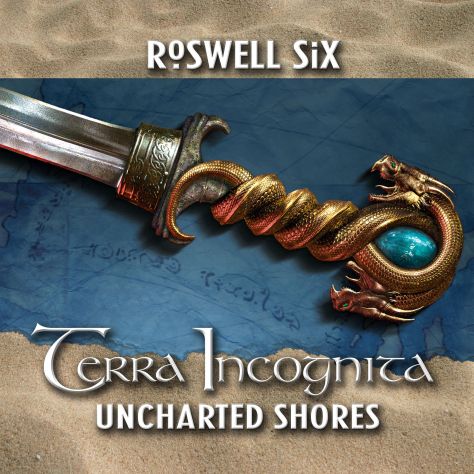
Acclaimed author Kevin J. Anderson, is beginning a Kickstarter campaign tomorrow (March 11, 2025) to reissue his three-volume Terra Incognita project. The books have been previously published in paperback, but have been out of print. Anderson plans to rerelease them as a deluxe set of hardcovers in a slipcase.

Accompanying the books is a trio of albums featuring the cream of progressive rock. Just check out the lineup for the soon-to-be released third album, Uncharted Shores:

• Michael Sadler (SAGA)
• Dan Reed (Dan Reed Network)
• Doane Perry (Jethro Tull)
• Ed Toth (Doobie Brothers, Vertical Horizon)
• Jonathan Dinklage (Rush Clockwork Angels, Lady Gaga, Barbra Streisand)
• Greg Bissonette (David Lee Roth, Ringo Starr All Stars)
• Anneke van Giersbergen (European vocalist)
• Ted Leonard (Spock’s Beard, Pattern-Seeking Animals)

Be on the lookout for an in-depth review of this album soon. Meanwhile, check out the Kickstarter campaign – it will be the only means of acquiring this historic literary/musical project, and it only runs from March 11 through April 4!

[This post was updated to reflect the fact that all three novels have been published in paperback, and the personnel for the third Terra Incognita album was incorrect. The post now has the correct lineup.]

New Album In the Works from Glass Hammer

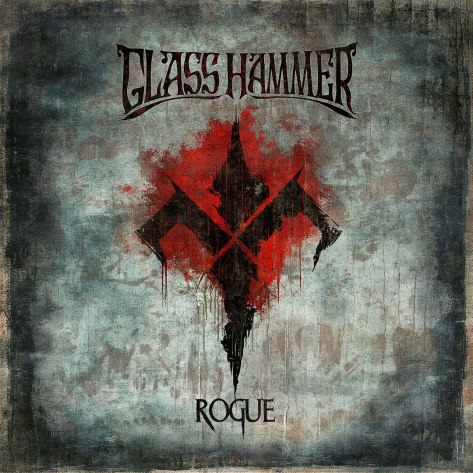
GLASS HAMMER GOES ROGUE WITH April 11th RELEASE

Glass Hammer’s “Rogue” spins the tale of one man’s fateful, final journey. “He leaves everything he knows behind,” explains composer Steve Babb. “And thinks he’s returning to a place where he once knew happiness, but in reality, his odyssey will sweep him away to somewhere completely unexpected.”

Babb explains that the ten-song album explores themes of regret, heartache, and the mortal salience that comes with age. “Life is fleeting,” he continues. “It’s a heavy topic for an album, but the music isn’t as heavy as our last few releases. Rogue is much more like the Glass Hammer albums our fans refer to as “classic.”

And who’s in the lineup? “It’s no secret that Glass Hammer reinvents itself every few albums,” says Babb. “It’s happened again! This time with a lot of new faces.”

Rogue features performances by Fred Schendel, Reese Boyd, and David Wallimann (GH guitarist 2006-2010). Vocalists Thomas Jakob (Netherlands) and Olivia Tharpe (USA) are new to the band. They’re joined by guitarist Oliver Day (UK), keyboardist Ariel Perchuck (Argentina), drummer Evgeni Obruchkov (Poland), and others. “It’s an international cast of characters,” Babb points out. “A super-talented group that our fans are sure to love.”

The hour-long Rogue is Glass Hammer’s twenty-second studio album. Fans can pre-order autographed copies, t-shirts and downloads on the band’s website. www.glasshammer.com

Steve Babb photo credit: Julie Babb

Track list:

  1. What If
  2. The Road South
  3. Tomorrow
  4. Pretty Ghost
  5. Sunshine
  6. I Will Follow
  7. The Wonder Of It All
  8. One Last Sunrise
  9. Terminal Lucidity
  10. All Good Things

Here’s the teaser video:

A 2024 Coda: kruekutt’s Highlights in Classical & Jazz

To complement Brad, Tad & Carl’s fine “Best of” selections, herewith a sampler of favorites and notable releases from the year in both classical music and jazz. As often as I drift away from both genres, I return to them on a regular basis — and it happened again to fine effect in 2024! Listening links are included in the album titles.

Highlights in Classical Music

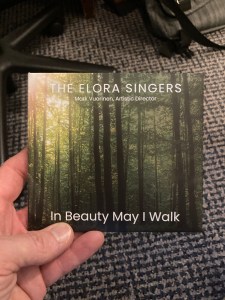
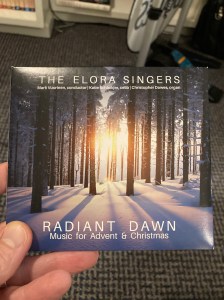
If you followed my series To the True North this past summer, you learned how impressed I was by Canada’s Elora Singers and their annual Festival. The Singers’ latest album In Beauty May I Walk was released in time for this year’s closing festival weekend; a collection of contemporary works drawing inspiration from the theme of revelation, it offers an absorbing balance of breathtaking precision and deeply felt emotion. Eriks Esenvalds “In Paradisum” and “Only in Sleep”, Jonathan Dove’s title piece and Stephanie Martin’s “A Frost Sequence” are highlights, but every composition (whether musing on nature, the search for God or time’s inevitable passage) draws in the listener and cuts to the heart. Never indulging in sentimentality, conductor Mark Vuorinen and the Singers nonetheless lay bare the human condition and affirm life’s inherent value; this is choral singing at its finest, and an official 2024 Favorite. (The Singers’ recent Christmas album Radiant Dawn is well worth hearing this time of year, too.)

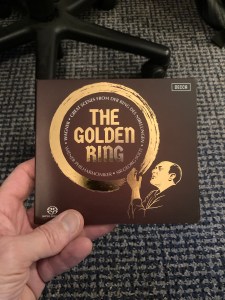
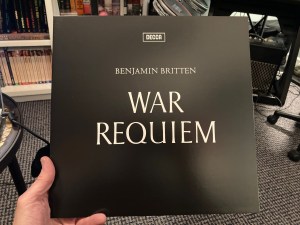
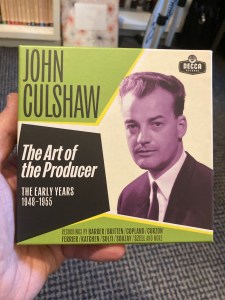
This year was the centennial of John Culshaw, who pioneered stereo recordings of opera and classical music as a producer for Decca Records in the decades following World War II. Unbeknownst to me, Decca had already completed new high-definition transfers of two Culshaw classics: the first complete set of Richard Wagner’s marathon operatic cycle The Ring of the Nibelungs (with the Vienna Philharmonic plus a bevy of postwar vocal talent, conducted by a young Georg Solti; consistently considered one of the recording industry’s greatest achievements); and the recorded premiere of Benjamin Britten’s War Requiem (the composer’s shattering anti-war masterwork, this album changed my life) — longtime Favorites which I snapped up new versions of straightaway. Now the actual centenary sees the release of John Culshaw, The Art of the Producer – The Early Years, 1948-1955. The first impression of this 12-disc set, recorded entirely in mono, is how fresh and vivid everything sounds; whether working live or in controlled conditions, Culshaw’s keen ear and finely honed production skills place you in the room with the performers. Wagner operas staged live at Bayreuth, Britten performing at his own Aldeburgh Festival and Samuel Barber conducting his music in the studio stand out, but even an underprepared Brahms German Requiem (with Solti squeezing the best he can out of overmatched forces) has its charms. Beyond sheer documentary value, this set demonstrates how essential Culshaw’s sonic discernment, organizational skills and empathetic rapport with artists was in developing the lifelike recorded sound we take for granted today.

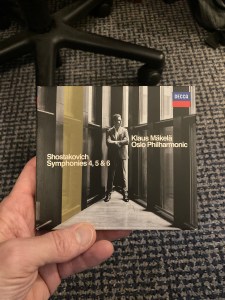
Even as it’s been swallowed up by one multinational conglomerate after another over the decades, Decca has maintained its commitment to both vivid, dynamic sound and talented artists in development. The latest case in point: the youthful Finnish conductor Klaus Mäkelä, who’s quickly made waves in the orchestral world with fully grounded yet remarkably fresh readings of 20th-century classics, from Jean Sibelius’ organically evolving symphonies to Igor Stravinsky’s kaleidoscopic early ballets. At the helm of the Oslo Philharmonic for Symphonies 4, 5 & 6 by quintessential Russian modernist Dmitri Shostakovich, Mäkelä reaches new heights: the 4th’s macabre, Mahlerian grotesquerie (suppressed for a quarter-century due to Soviet disapproval) and the 6th’s journey from ethereal beauty to dry, exhausted humor unfold relentlessly, while a less- pressurized-than-usual 5th revels in cool control that builds to an appropriately tumultuous climax, all captured for maximum impact. Recently headhunted to lead both Amsterdam’s Concertgebouw Orchestra and the Chicago Symphony (where I’ll be seeing him conduct next spring), Mäkelä is a classical superstar in the making, and this double set (definitely on the Favorites list) shows both his already prodigious skills and his rich potential.

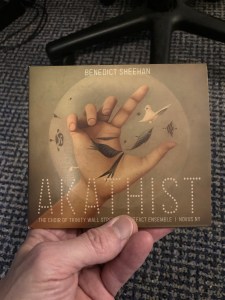
Finally, toward year’s end I stumbled across a wonderfully eclectic oratorio, Benedict Sheehan’s Akathist. Setting a lengthly Russian Orthodox prayer that literally thanks God for everything, Sheehan’s musical approach is anything but predictable: chant from both Western and Easter traditions rubs elbows with Baroque polyphony, Romantic impressionism, Gospel and jazz. And yet, the broad, inevitable arch of the piece readily encompasses the multiplicity of text and texture, gathering up protest against the wounds of the world, cameraderie as comfort amidst pain, and overwhelming gratitude for blessings great and small into a moving, integrated whole. The assembled forces of The Choir of Trinity Wall Street, Artefact Ensemble and Novus NY pull off this music with style and panache to spare. Not just a Favorite; if there’s an essential classical recording for 2024, I’d argue this is it.

(Highlights in jazz follow the jump . . .)

Continue reading A 2024 Coda: kruekutt’s Highlights in Classical & Jazz

Listening to the Music the Machines Make

Music Machines

Book number 48 of 2024

The 80s are my favorite decade for music, when it seemed like all kinds of new styles were being created. In 1983, you could turn on the radio and hear hard rock, roots rock, soul, melodic pop, and electronic music all mixed together. My favorite genre from that era was (and is) synthpop, as epitomized by artists such as Depeche Mode, Gary Numan, Orchestral Maneuvers in the Dark, and Ultravox. Richard Evans has documented the birth and rise of electronic music from 1978 through 1983 in his massive tome (528 pages!), Listening to the Music the Machines Make. It’s a fascinating history of this primarily British musical movement.

Instead of relying exclusively on contemporary interviews of the artists, Evans went back to articles, reviews, and interviews that were published in the music press at the time the music was being released. He does have some recent interviews to support what his research uncovers, but for the most part he unearths reactions and thoughts of the artists when the music was fresh and new. This makes for an honest account that doesn’t rely on the memories of people who were creating this music more than 40 years ago.

Evans begins with describing the effect David Bowie had on British popular music when he unveiled his Ziggy Stardust persona on the BBC television show, Top of the Pops. Bowie’s innovation was to seem to look forward into the future to explain his music. This perspective, along with the availability of inexpensive synthesizers, opened the floodgates for a new wave of music. The short-lived punk movement added its manic energy and DIY aesthetic. All of these elements combined to create the perfect atmosphere in which to create music that was experimental, yet accessible.

Like Evans, I date “The 80s” from about 1977 to 1987. In 1977, I bought the Ramones’ Leave Home album, Talking Heads ’77, The Cars’ debut, Wire’s Pink Flag, as well as many other new wave albums. It was clear to my adolescent ears that drastic changes were happening in music – changes that would challenge the laid-back music of artists like The Eagles or the arena rock of Journey and Foreigner for popularity. Very quickly, the old guard of pop/rock were being supplanted by a host of new, innovative artists.

For me, things didn’t really get interesting until 1980/81. The electronic music produced before then (with the exception of Gary Numan, who, unsurprisingly, was the first big selling synthpop artist) was very experimental and often crude. Cabaret Voltaire, Fad Gadget, and early Ultravox just weren’t very tuneful. However, beginning in 1981, this musical movement began to really shake up the British pop charts. Once Midge Ure joined Ultravox, they became a formidable hit machine. 1981 is also the year Spandau Ballet, Duran Duran, and Depeche Mode released early hits.

Evans obviously did exhaustive research to write this book; it is divided into three main sections: Revolution (1978 & 1979), Transition (1980 & 1981), and Mainstream (1982 & 1983). He also includes a couple of shorter bookend chapters: Inspiration 1977 and Reaction 1984 – 1993. He must have read every issue of New Musical Express, Smash Hits, Record Mirror, Flexidisc, Melody Maker, and ZigZag from 1977 through 1983! I, personally, would have gotten depressed, because one thing that comes across loud and clear from Evans’ comprehensive and meticulous research is the sheer pettiness and shallowness of the British music press. I could cite hundreds of examples, but here are two:

‘Landscape make my flesh crawl, put snakes in my stomach and make my bowels twitch’, wrote Sounds’ Mick Middles. (page 248)

‘The only recognisable feature of Duran Duran is the singer’s voice, otherwise they have no personality, no individuality, no quirks of style. I think this is what is known in some quarters as “good pop”.’ (page 257)

If there’s one common characteristic of practically every reviewer, it’s resentment. As soon as an artist gains popularity, the music media turn on them and try their best to tear them down. Poor Gary Numan, who was the first electronic artist to break big, comes in for a savaging the rest of his career whenever he released a new album. When Blancmange had some chart success, Ian Pye in Melody Maker wrote,

“The K-Tel answer to Simple Minds, the revolting Blancmange have found themselves a mould and of course a shape follows. Pink, soft, and powdery to taste, this will remind you of school dinners and other things too unpleasant to mention here.” (page 361)

Time and time again, the reviewers neglect to actually describe and critique the music, instead going for a clever putdown.

That said, it is entertaining to read what the contemporaneous reactions were to albums that are today considered classics. Duran Duran’s Rio is now counted as one of the essential albums of the 80s, but it was pretty much dismissed in 1981. Ultravox’s Rage In Eden garnered a little more respect, but not much. One group that the consensus seemed to get right was Depeche Mode. Their first album with Vince Clarke, Speak and Spell, was well-crafted but disposable pop, and their album after Clarke left, A Broken Frame, was fairly lightweight. However, by the time Alan Wilder was integrated into the group and they released Construction Time Again, they were recognized as a significant force to be reckoned with.

Even though I am a big fan of this era and style of music, I still learned many new facts about the various artists: for example, the history of The Human League/Heaven 17 personnel, and their beginnings before the Dare and Penthouse and Pavement albums. I also learned that Peter Saville used a color code to include messages on New Order’s Blue Monday‘s and Power, Corruption, and Lies‘ cover art. Fascinating stuff for music nerds like myself!

Evans is a very good writer; he takes what could have been a boring recitation of musical history and turns it into a very entertaining account of some interesting personalities. If you ever wondered what the backstory was to huge hits like The Human League’s Don’t You Want Me or Gary Numan’s Cars, then Listening to the Music the Machines Make is the perfect resource. Evans has spent untold hours revisiting decades-old British music publications and organized the material into an essential reference. This is a book I’ll be returning to often, and I appreciate all of the work he put into it.

If you are interested in actually listening to the music Evans documents in his book, there is a Spotify playlist for each of the book’s main sections. (Hey, this is the 21st century, right?) They contain practically every song mentioned. I had a blast listening to the songs while reading about them. You can access the playlists here.

Frost*: Life In The Wires Is Perfection

Frost* is set to release their fifth studio album on October 18, Life In The Wires, which follows the excellent Day and Age of 2021. Once again, Jem Godfrey is the prime mover, this time handling all of the lead vocals in addition to keyboards and songwriting. John Mitchell returns on guitars, with Nathan King on bass and Craig Blundell on drums. There are nearly ninety(!) minutes of music here, and it is all terrific. Not a single moment is filler.

As Godfrey explains,

“It’s actually a sort of continuation from Day and Age. The first track on the new album starts with the end of the last track from that album “Repeat to Fade,” where the static comes up and a voice says “Can you hear me?” I remember putting that in when we did Day and Age as a possible little hook for the future; a character somewhere out there in Day and Age land trying to be heard. What does he want to say? Can anybody hear him? Day and Age kind of sets up the world that this character lives in and Life in the Wires tells his story”.

The album chronicles the adventures of a young man, Naio, who lives in the near future, in a world dominated by AI. One night, he hears a voice coming out of the static on an old AM radio asking, “Can you hear me?” From that initial contact, Naio goes on a quest to find out who is the person behind the Livewire radio broadcasts. Meanwhile, the AI that runs the world, “The All-Seeing Eye”, is on Naio’s trail, trying to prevent him from connecting with the mysterious man on the radio:

You wanna take me down for hearing voices on my radio
But I have seen your way of life and, thank you, I don’t want to know
You feed the people food and fear to keep them all compliant
But I won’t play your game so now you’ll fight to keep me silent

Interspersed between tracks are nuggets of speech from Livewire Radio broadcaster: “Hey, this is Livewire, voice of the free. And tonight we’re taking calls. Heh! I’m just kidding… Hahahaha!”

That’s the storyline, so what about the music? I have to say, I haven’t been this blown away by an album in years. Day and Age was my favorite album of 2021, and Life In The Wires is even better. Jem Godfrey is the master of crafting attractive and heartfelt songs, and every song on Life In The Wires delivers. Every style is visited here: ballads, straightforward rock, very heavy rock, and, of course, prog. I have listened to the entire album at least two dozen times, and I keep finding new things to delight in.

The boys of Frost* are a mean biker gang in their off-hours. Frost Band photo by Will Ireland

“Evaporator” is an extended, upbeat, almost funky tune with a nice 80s vibe. “Absent Friends” is a gorgeous and delicate piano-based ballad that reminds me of classic Aqualung (the group, not the Tull album). “School (Introducing the All Seeing Eye)” is a blistering instrumental where Mitchell shows off his chops.

Everything reaches a climax with the final three tracks, “Moral and Consequence”, “Life In The Wires (Part 2)”, and “Starting Fires”. “Moral and Consequence” has one of the most irresistible hooks I’ve ever heard. At the end of its more than 8 minutes, I was still begging for more, until the opening chords of “Life In The Wires (Part 2)”. This track is almost 16 minutes of near-perfect prog perfection. It calls to mind the best of Abacab – era Genesis, but, to my ears, it is better produced than that classic album. The closer, “Starting Fires” is simply beautiful – a somber and sweet melody sung to some spare musical backing. It seems as if Naio has connected with Livewire, and they are going to start a resistance to the Eye:

We’re making waves
We’re starting fires
We can’t go back
to Paradise

We’re starting fires

2024 is coming to close, and so far, Life In The Wires is the Album of the Year for me. We’ve been blessed with some great music this year, in particular The Bardic Depths album, What We Really Like In Stories, but my gosh, Frost* has put together an album for the ages.

Here is the official video for “Moral and Consequence”:

In Concert: Sierra Ferrell Drives Us Crazy

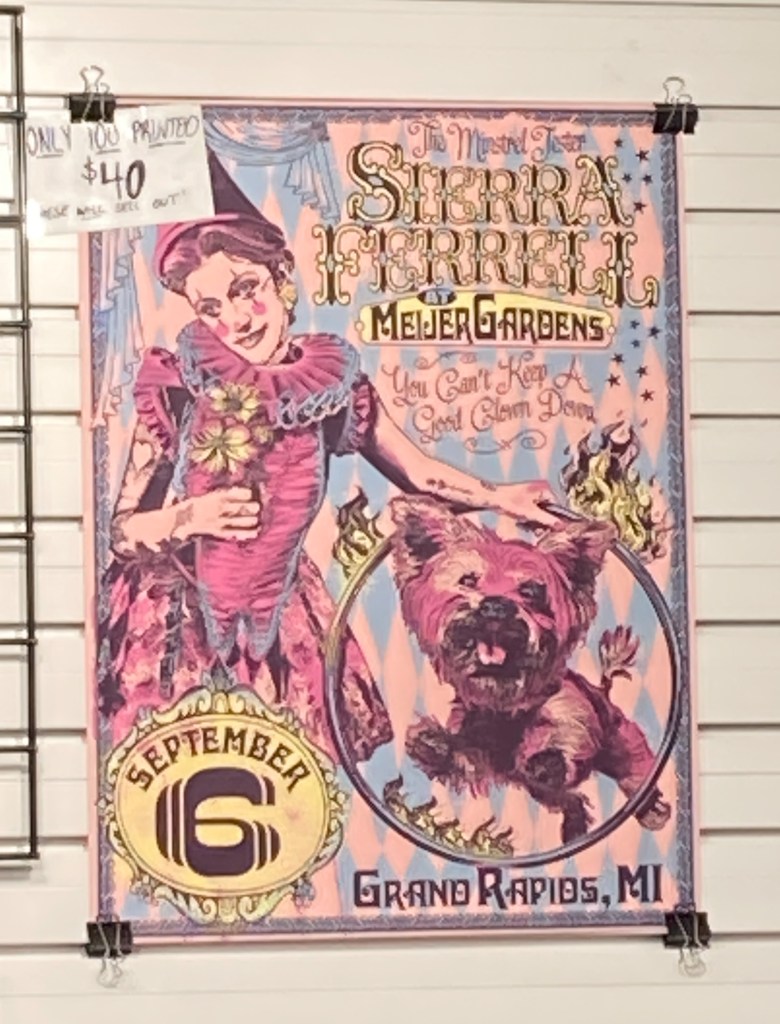
Sierra Ferrell, Meijer Gardens Amphitheatre, Grand Rapids Michigan, September 6, 2024.

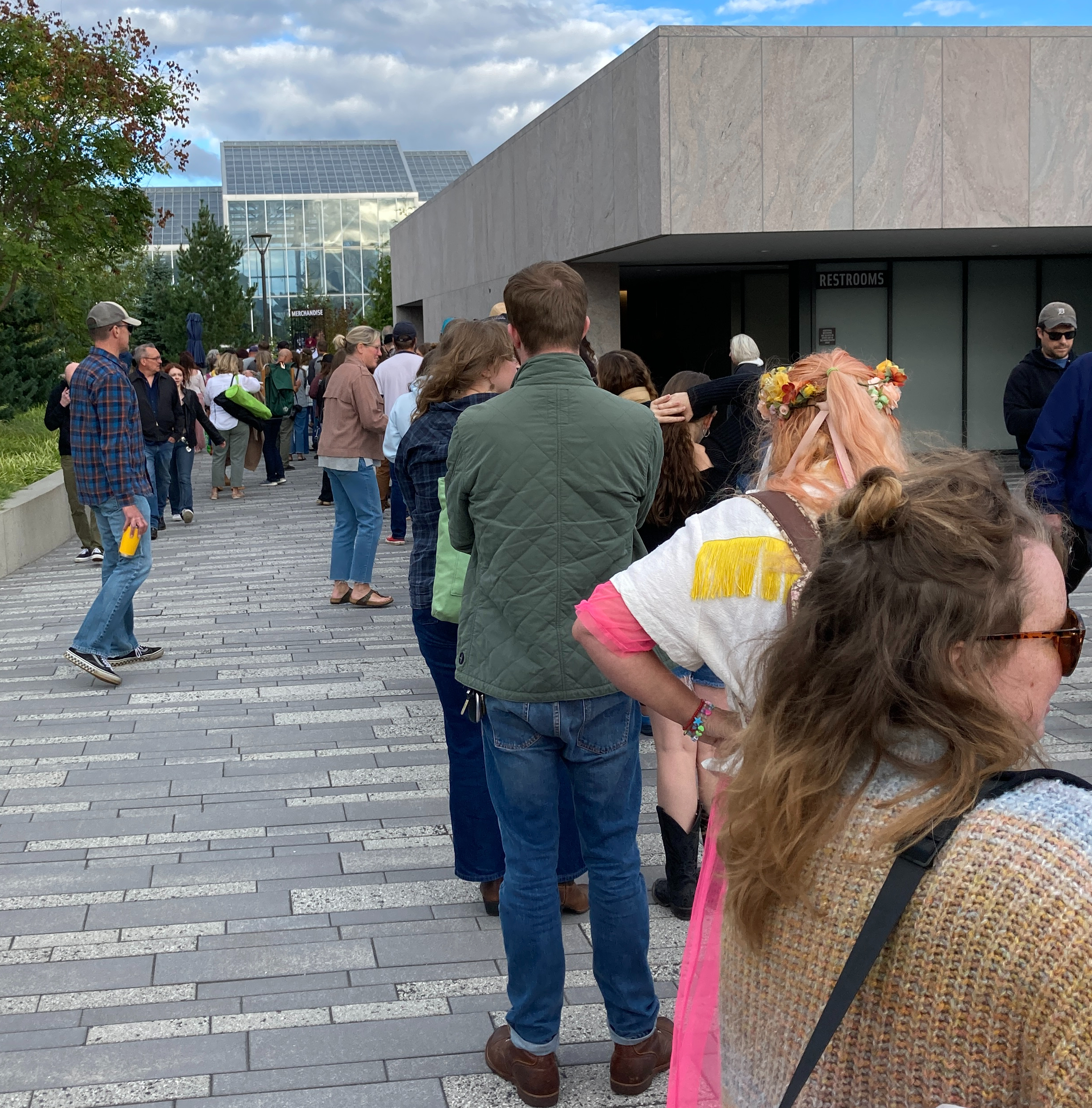
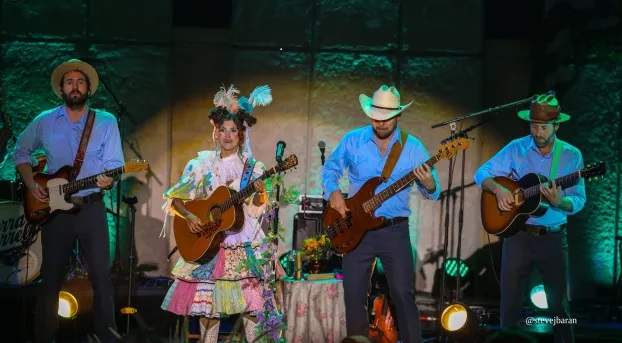
Even in the face of a predicted temperature plunge, the atmosphere at Meijer Gardens heated up as another sell-out crowd filed in for an evening with Americana siren Sierra Ferrell. You could sense the anticipation in an audience skewing considerably younger than the venue’s usual demographic — guys decked out in Deadhead or jam band shirts (with Michigan’s Billy Strings well represented) and the occasional Nudie suit, women clad in hoop skirts and adorned with flower crowns and facial glitter, cowboy boots all around — forming the longest merch line I’ve seen in these parts for many a moon.

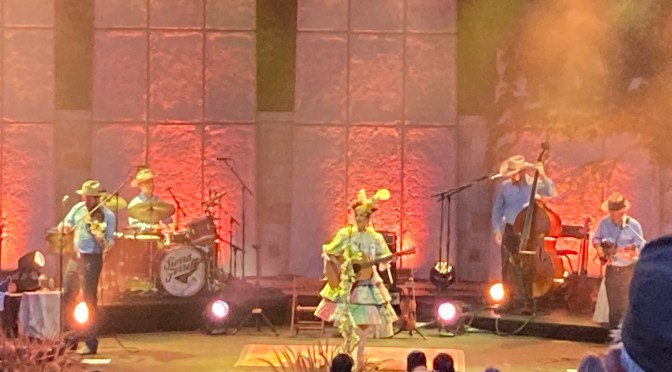
And once opener Meredith Axelrod had reeled us in with a giggly, appealingly skewed acoustic set, Ferrell wasted no time fulfilling her fans’ wildest dreams. Planted center stage at a flower-draped mike stand, resplendent in patchwork fringe dress, pancake make-up and feathers in her hair, she laid out her credentials with opener “I Could Drive You Crazy” — an unstoppably catchy, flirtatious chant, simple as a playground taunt, that morphs from Appalachian fiddle drone to “We Will Rock You” stadium stomp in less than four minutes. At which point the crowd — already on its feet and packed close to the stage — followed suit and went understandably nuts.

As she dove into a generous sampling from her two Rounder albums Long Time Coming and the new Trail of Flowers, it quickly became obvious that Ferrell is that rare real thing – a consummate performer who’s a genuine triple threat. As a singer, she’s got a powerhouse voice and the expressiveness and sensitivity that only come with experience and maturity. Her songs ring true no matter how old-timey her inspiration, packed with appealing melodies and clever, thoughtful lyrics, spanning country music’s historic shifts from cowboy songs and Western swing to bar-room weepers and Bakersfield honky-tonk. And her stage presence – whew! Giddy, yearning, heartbroken and vengeful by turns, Ferrell is all the way into her onstage role, her oversize persona more than a match for her outlandish outfit, a vaudeville turn that doesn’t hide a strong yet vulnerable heart.

Her broadest performance came on the solo murder ballad “Rosemary”, strategically placed mid-set, but Ferrell’s bluegrass-inflected backing band raised the show to an even more impressive level. On fiddle and Fender Telecaster, Oliver Bates Craven was the perfect soloist, peeling off one winning lick after another; mandolist/acoustic guitarist (and Michigan native) Joshua Rilko kept every tune gliding forward or jingle-jangling around as required; Geoff Saunders laid down a nimble, satisfying groove on electric and stand-up basses; and drummer Matty Meyer displayed a great feel for dynamics and drive, matching Ferrell mood for mood. And when the band gathered around one mike and chimed in on rich vocal harmonies for Tim O’Brien’s “The Garden”, the Osborne Brothers’ “Lonesome Feeling” and Ferrell’s open-hearted gospel throwdown “Lighthouse” — well, you could feel the sigh of delight from the 2,000 souls listening in.

But then, the whole night seemed like a non-stop highlight reel: the homespun household wisdom of “Give It Time” setting up the compulsive Spanish tinge of “Why’d Ya Do It”; an intense cover of “Me and Bobby McGee” that just kept building as Ferrell channeled Dolly Parton’s tenderness, then Janis Joplin’s fire. Then there was the closing run that showed off Ferrell’s versatility with Trail of Flowers‘ opening hat trick: “American Dreaming” (lovelorn, resigned road anthem); “Dollar Bill Bar” (femme fatale Ferrell turns the tables on the latest pick-up artist to cross her path); and “Fox Hunt” (stark string-band music that catches both the thrill of the chase and the desperation of a starving mountain man). Put simply, this was a great show; beneath the flamboyant trappings, there’s an elemental presence about Sierra Ferrell and her music that, on this night, proved outright irresistible. If you’re looking for downhome music with a sense of the past that cuts to the bone and revs up a rousing good time, don’t hesitate to check out her albums and see her live!

Setlist:

  • I Could Drive You Crazy
  • I’ll Come Off the Mountain
  • Jeremiah
  • Give It Time
  • Why’d Ya Do It
  • Chitlin Cookin’ Time in Cheatham County
  • Money Train
  • Rosemary
  • The Garden
  • Lonesome Feeling
  • Lighthouse
  • The Sea
  • The Bells of Every Chapel
  • Far Away Across the Sea
  • Me and Bobby McGee
  • American Dreaming
  • Dollar Bill Bar
  • Fox Hunt
  • Years
  • In Dreams

— Rick Krueger

At the Stratford Festival: Something Rotten! (To the True North, Part 6)

I thought there were three genuinely great things about the Tony Award-winning musical Something Rotten, as currently playing at the Stratford Festival:

1. Mark Uhre’s frenetic take on struggling Elizabethean playwright Nick Bottom. Between his oversized desire for fame, his strained interactions with enterprising wife Bea (a confident Starr Dominque) and poetic little brother Nigel (Henry Firmston in the boy-next-door role), and his obsessive drive to take down William Shakespeare and win the Renaissance fame game, Nick is desperation personified, thoroughly uncomfortable in his own skin and all the funnier for it. Uhre plays him as a live-action version of Daffy Duck, spluttering with unbounded rage at his situation, and thus completely susceptible to any bizarre idea that crosses his path – like inventing the musical – and thus totally willing, no matter how insane the consequences that follow, to “commit to the bit”.

2. The thing is, in this universe, Nick’s right! Framing Shakespeare as a vain, manipulative rock star (continuing the parallel, think Bugs Bunny without redeeming qualities) is Something Rotten’s masterstroke. Trailed by his own theme song and a crew of dancing Bard Boys, basking in the adulation of a solo stadium gig (with hilariously low-tech special effects), scheming against Nick to the point of donning a fatsuit disguise and a Northern accent, stealing Nigel’s best lines and passing them off as his own, Jeff Lillico is a utter hoot, England’s greatest dramatist as an egotistical, over-the-top pantomime villain. Even when he lets his guard down in his big solo “Hard to Be the Bard”(“I know writing made me famous, but being famous is just so much more fun”) , this is a Shakespeare you can love to hate.

3. Speaking of over-the-top, director Donna Feore and her creative team absolutely chose the right path by leaning into the Broadway musical’s inherent absurdities, as foreseen by cut-rate soothsayer Nostradamus (Festival veteran Dan Chameroy in a giddy, disheveled supporting turn):

You could go see a musical
A musical
A puppy piece, releasing all your blues-ical
Where crude is cool
A catchy tune
And limber-legged ladies thrill you ’til you swoon
Oohs, ahhs, big applause, and a standing ovation
The future is bright
If you could just write a musical

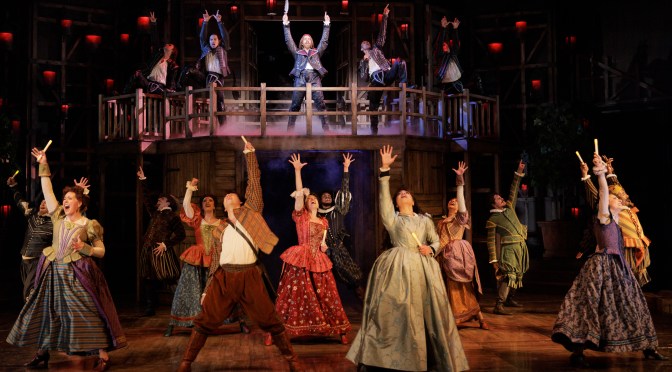
Dan Chameroy as Nostradamus with members of the company in Something Rotten!. Stratford Festival 2024. Photo: David Hou.

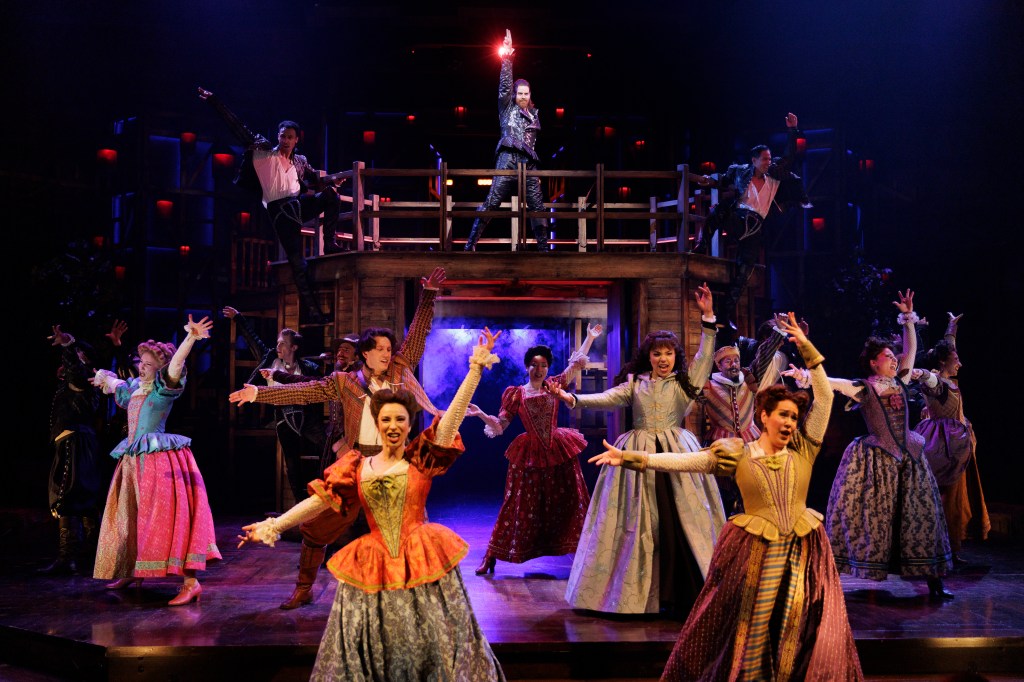
Every possible cliché you can think of is there onstage for those six minutes: Sung recitatives (with self-mocking asides)! Bawdy double-entendres and suggestive choreography! Costume changes (including nonsensical hats and wigs)! Jazz hands! Synchronized high-kicking (with callbacks goofing on Feore’s 2016 Festival production of A Chorus Line)! It all worked to perfection at this matinee, the capacity audience (including your scribe) yelling and applauding for more (which the company obligingly provided) as if Pavlov had just rung his biggest, shiniest bell. And the places Nick and Nostradamus find themselves going in the second act’s big number scale even zanier heights. Complete the sentence yourself: “When life gives you eggs . . .” Then imagine the costumes!

Where Something Rotten falls short? Compared to the sublime ridiculousness of the main story, the supporting characters’ arcs bog down in vapid sentimentality and already-stale contemporary memes. Bea’s occasional empowerment shoutouts pale in comparison to what she actually does out of love for her husband and his brother, subtly undercutting her role as the true hero of the piece. Nigel’s emergence from Nick’s shadow is a bit of a damp squib; his main solo turn “To Thine Own Self Be True” proves an shallow, unearned manifesto of self-actualization instead of a rite of passage. And the meet-cute romance between Nigel and Portia (Olivia Sinclair-Brisbane, winningly portraying a budding poetry fangirl under the thumb of Juan Chioran, a Puritan father given to pre-Freudian slips) sputters, toggling between aren’t-we-transgressive smuttiness and, in “We See the Light”, a Big Message about tolerance, tediously staged as a clumsy cross between Sister Act and Rent — Feore’s only directorial misfire.

But that said, Something Rotten’s full-on commitment to farce and totally bonkers energy (with Feore, Uhre, Lillico and Chameroy setting the pace for a young, frisky cast) carries the day. Productions about Shakespeare at the Stratford Festival are typically on or about at the same level as their productions of Shakespeare, and this delightfully nutty escape into a toe-tapping alternate version of the Renaissance is no exception.

Members of the company in Something Rotten!. Stratford Festival 2024. Photo: David Hou.

— Rick Krueger

Something Rotten continues at Stratford Festival’s Theatre, with its run now extended through November 17th. Click here for ticket availability.

Peak Piano: Angela Hewitt at Stratford Summer Music (To the True North, Part 5)

Back in the 1990s, I began collecting CDs of J.S. Bach’s keyboard works, played by young Canadian pianist Angela Hewitt, The winner of 1985’s Toronto International Bach Competition, her playing was worlds away from the True North’s previous Bach-on-piano champion, the willfully eccentric Glenn Gould; dancing rhythmic vitality, crystal-clear delineation of melody and counterpoint, and a constantly spinning, singing line have always been Hewitt’s hallmarks. Even before she brought her Bach series to a culmination with an utterly dazzling take on the Goldberg Variations, I was long past fandom into near-adoration.

Since then, Hewitt has re-recorded key Bach works (including an even more impressive 2nd take on the Goldbergs), while moving on to Beethoven’s complete piano sonatas, selected Mozart sonatas and concertos, and a wide sweep of the keyboard and piano repertoire spanning centuries and continents, from Domenico Scarlatti to Olivier Messiaen. With more than 50 consistently superb albums and 40 years of international concerts to her credit, I’d argue that Angela Hewitt is the equal or better of any concert pianist active today (and I’m confident I’d win that argument). So hearing her in concert for the third time as part of our current Canadian odyssey was an absolute must.

This past Sunday, under the auspices of Stratford Summer Music, Hewitt filled the austerely midmod Avondale United Church with both an uncommonly focused audience and a involving, joyous program of serious fun. Playing her calling card right at the start, Hewitt hit the keyboard running with Bach’s Partita No. 6 in E Minor; its elevated Toccata and Fugue, poignant Sarabande, remarkable Corrente, genial Air, lilting Gavotte and surprisingly angular Gigue all unfurled with grace, clarity and strength. But the profound Sarabande — which Hewitt has referred to as Bach “alone in communion with his maker in a dialogue that is at once sorrowful, hopeful, passionate and at times exalted” — was the hushed essence of the work; you could hear a pin drop and feel the listeners breathing with Hewitt as she delved deeply into that movement’s grave, elegant mystery and wonder.

Ludwig van Beethoven’s “Moonlight” Sonata proved both a logical follow-up to the Bach and a welcome change of pace; as Hewitt brought delicacy and sympathetic spirit to the famous opening movement, you could hear both the musical DNA Beethoven inherited from Bach and how he developed it in his own dramatic fashion. And in Hewitt’s hands, the wistful Allegretto and the wildly spiraling climax of the Presto agitato were logical extensions of the opening, but also vivid declarations of Beethoven’s determination to “seize Fate by the throat”. From the prolonged blast of applause that followed, you would have thought that there was nothing more than Hewitt could show an audience already under her spell.

Which is why the sonatas by Domenico Scarlatti that opened the second half of Hewitt’s program were such a refreshing breather. The simple charm of Scarlatti’s D Major Sonata K. 430, the K. 380’s courtly E Major trumpetings and the gyrating tarantella of K. 159 in C Major turned out to be consummate palette-cleansers — substantive yet easily digested appetizers before the daunting final course of Johannes Brahms’ Variations and Fugue on a Theme of Handel.

My 2nd Brahms variation set in 24 hours, the Handels are not for the faint of heart, whether you’re hearing or performing them — in her brief pre-concert introduction, Hewitt mentioned how she had been discouraged from learning the piece when younger because “women can’t play it.” The next half-hour proved how totally wrong such a stupid comment could be: working from memory as she had throughout the recital, Hewitt dealt out Brahms’ 25-plus takes on the theme from Handel’s Keyboard Suite No. 1 with utter commitment and total command. Such lucid structural thinking, such immediately evident dedication to the work, such finely graded touch, and tone, and rubato, and dynamics! What a powerful musician Hewitt is, and how completely she inhabited the moment! It was a performance to revel in, even while looking forward to hearing her promised recording of the piece (scheduled this fall for a future release).

This time, when the music ended, the crowd leapt immediately to their feet, and the applause simply didn’t stop — at least until Hewitt provided a brief, lyrical encore from Mendelssohn’s Songs Without Words. In all probability, this concert will be firmly lodged in the “all-time Top Ten” I keep in my head; it’s hard to beat two hours of total connection between a thrillingly communicative artist & a raptly attentive audience. Brava!

— Rick Krueger

A Grand Night for Singing: The Elora Festival Closing Night Gala (To the True North, Part 4)

The Elora Singers had me at “hello” when, saluting a sell-out crowd in the town’s Gambrel Barn, they kicked off their 45th festival’s closing night gala with this:

Quick and bright yet wonderfully poignant, Gerald Finzi’s partsong has been the Singers’ unofficial theme tune since they returned to the post-pandemic concert stage. It deftly conveys their genuine delight in making music, made manifest even in the boilerplate welcome speeches of artistic director Mark Vuorinen and festival manager/alto Christine Stelmachovich. As the duo powered through the now-ubiquitous Land Acknowledgment, sponsorship recognitions, dad jokes, etc., their gratitude and glee at seeing an audience literally unable to fit inside the Barn’s walls was impossible to fake.

Then the stage was turned over to piano duo James Anagnoson & Leslie Kinton for a sweeping version of Johannes’ Brahms’ Variations on a Theme by Haydn. Kicking off with an exalted statement of the St. Anthony Chorale, Anagnoson & Kinton teased out Brahms’ imaginative shifts of tempo, texture and tonality throughout the variations, his accomplished use of counterpoint brought firmly to the fore. And when the duo built up the work’s finale (variations on a ground bass leading into a grandly restated chorale) to its tumultuous climax, they received an ovation not only well-deserved, but essential as a response to their first-rate performance.

Next came Toronto’s Elmer Iseler Singers, celebrating their 45th year as Canada’s premier professional vocal ensemble. Conducted by artistic director Lydia Adams (wonderfully gracious when we chatted briefly at intermission), the EIS exhibited their rich tone in a brief set on the lyrical theme of “rising” — bookended by seminal choral classics (James MacMillan’s O Radiant Dawn, Healey Willan’s Rise Up, My Love), investigating the compositional possibilities inherent in Hindu, Islamic and First Nations texts — and unleashing a devastatingly gorgeous, wordless take on Ukranian composer Myroslav Skoryk’s Melodia.

Finally, an hour of everything but the kitchen sink; how else to describe Carl Orff’s gargantuan cantata Carmina Burana, with all the previous forces plus five percussionists and three vocal soloists jammed onstage? Based on a medieval manuscript of secular poems (by disaffected monks?), Orff’s 1936 masterwork is a rhythm-dominated hour of songs about — well, sex and drink and the Middle Ages equivalent of rock’n’roll! Soprano Leslie Fagan as “the girl in the red dress”, tenor Andrew Haij in an infamously difficult cameo (as a swan roasting on a spit) and baritone Russell Braun as a variety of ne’er-do-wells played their parts to the hilt, flirting shamelessly with the front rows; the massed choir lamented the woes of Fortune (“Empress of the World”), raised way too many toasts in the tavern and egged on young lovers with a will. And even in this cut-down orchestration, the pianos and percussion slammed out one driving, kaleidoscopic groove after another. Having performed it multiple times with the Grand Rapids Symphony & Chorus, I can tell you that few classical works build up the momentum or bring the sonic spectacle this work does; with Vuorinen focusing Orff’s inventions to full intensity, the Eloras, Iselers and companions brought down the house, wild applause erupting almost before the final crescendo died away.

In short, this past Saturday proved a grand night for singing. What the Elora Festival accomplished this past weekend (and throughout the past month) is not just another set of rousing performances, but a lasting testimony to music’s ability to move, shake and thrill its creators, performers and listeners. Long may this choral festival bring the best of what’s sung and said to this beautiful village!

— Rick Krueger

Music Crossing Continents: Constantinople & A Filetta at the Elora Festival (To the True North, Part 3)

Park your car in the biggest paved lot you can find in Elora, Ontario — the one adjoining the horse racing track & casino just southwest of downtown. Then, cross the road to the municipal Gambrel Barn — transformed into an unlikely concert hall for three weekends in July.

Filing onstage: Constantinople, an instrumental quartet from Montreal that plays medieval, Renaissance and Baroque instruments from Persia, Turkey, Japan, Europe and Ireland; A Filetta, a male vocal sextet from Corsica, an island ruled by France (Napoleon came from there) where the native language developed from Italian and Greek roots; and The Elora Singers, a impeccably polished, 21-voice Canadian choir. How, you might think, is this all gonna come together?

As it turns out, the answer last night was: in an exceptionally intense, immersive way. Introducing the program Clair-obscur, Constantinople’s music director Kiya Tabassin noted its title and content came into being just before 2020’s worldwide pandemic. After its first performances, in Tabassin’s words, its purpose became “to bring light (clair) to darkness (obscur)“. And over the next 90 minutes, the assembled forces proceeded to do just that, crossing a continent to meld the sounds of disparate times and places into a satisfying whole.

The music, mainly assembled by Tabassin and A Filetta’s leader Jean-Claude Acquaviva, proved thoroughly cosmopolitan and eclectic. The sextet’s singing was the obvious heart of the evening; their sturdy blend of dominant bass drones, fleet interweaving lines stacking up into glancing consonances and luxuriant melodic melismas were consistently riveting, whether voices were raised in a show of strength or hushed in breathtaking tenderness. Tabassin’s 3-stringed setar and Didem Basar’s kanun (a 78-stringed Turkish zither) danced lithely around and about the rugged vocal base, with forthright support from Tanya LaPerriere’s Baroque violin & viola and supple grounding in Patrick Graham’s ten-fingered, two-footed percussion; each player had their evocative solo moment and earned delighted applause from the crowd.

Atop this entrancing musical scaffold, the sung texts unfurled a dizzying collage of Senecan drama, Renaissance epic, Near Eastern poetry from Rumi and Hafez, traditional ponderings on the passion of Christ and Primo Levi’s meditation on the memory of the Holocaust. Here was history stripped of its timeline, collapsed into its component catastrophes and passions — pride, devotion, horror, absurdity, yearning for calm and deliverance – compounded into the moment’s expression and emotions. And when Tabassin raised his reedy voice to cavort over A Filletta’s firm foundations or the Elora Singers enriched the soundscape with supportive reinforcement and embellishments, the chamber effect broadened out to opulent symphonic proportions.

Clair-obscur (the nearest English equivalent would be chiaroscuro, the play of light and shadow in the art of painting) proved a unique mix of folk music and high art, calmly unhurried vocal prowess and upbeat improvisation, a journey through the heart of human life to a resting place of connection, catharsis and celebration. You can check out a sample of this program for yourself below (the complete concert, without The Elora Singers, can be found here):

— Rick Krueger