
Category Archives: Philosophy
Lunatic Soul Signs to InsideOut
  |
| Lunatic Soul – Sign to InsideOutMusic for upcoming album release. New single “The World Under Unsun” out now!  Lunatic Soul, the Polish outfit lead by Riverside’s main composer and vocalist/bassist Mariusz Duda are pleased to announce signing a new deal with InsideOutMusic for the release of their upcoming 8th studio album later in 2025. Lunatic Soul, the Polish outfit lead by Riverside’s main composer and vocalist/bassist Mariusz Duda are pleased to announce signing a new deal with InsideOutMusic for the release of their upcoming 8th studio album later in 2025.A first new single entitled “The World Under Unsun” – recorded, mixed and mastered by Magda and Robert Srzedniccy at Serakos Studio, Warsaw, Poland – is being released today and can be streamed here: https://lunaticsoulmusic.lnk.to/TheWorldUnderUnsunEU or here: https://youtu.be/qBwDf8lwYkUMariusz Duda checked in with the following comment about the single: “This is how the new Lunatic Soul album will begin. Precisely with these sounds. The track “The World Under Unsun” is a kind of opening credits to a long, 90-minute musical film that will be released this Autumn. This film is the eighth Lunatic Soul album. On the timeline of the story, it is set between “Fractured” and “Walking on a Flashlight Beam”. Darkness and melancholy return to my music – this time bathed in the black-and-gold light of an eclipsed sun. I’ve recorded an epic, long, and highly diverse album – the first double album in my career. I didn’t want to present fragments torn from context. I simply wanted to share how this journey begins. I hope you enjoy the track and that you’ll join me on this long journey in the Autumn”.And added the following words about signing to InsideOutMusic: “I would like to sincerely thank my friends at InsideOutMusic for their trust and for welcoming Lunatic Soul under their wings. I hope this opens a few more doors to deeper discovery of this solo effort – where I always seem to wander in some strange black hood. I also hope my solo music adds something intriguing and meaningful to the label’s catalog of sounds. :)” Lunatic Soul is the solo outfit of the creator, vocalist, and multi-instrumentalist Mariusz Duda. Duda is best known as the frontman of the Polish progressive rock band Riverside, where he is the main composer, lyricist, vocalist, and bassist. In 2008, he launched a separate outlet in which, as he says himself, he wanted to create something different and uncompromising.Lunatic Soul is inspired by artists such as Dead Can Dance, Peter Gabriel (especially his “Passion” album), Mike Oldfield, Clannad, Hedningarna and Depeche Mode. It’s an attempt to blend ambient music and electronic music with folk and rock influences. Duda plays almost all the instruments himself, with occasional guest appearances from invited musicians.While the artist doesn’t reject the label of progressive rock, he believes that “Lunatic Soul gives me more room for musical originality than Riverside”. For this reason, he doesn’t like Lunatic Soul being referred to as a “side project”. “To me, there’s nothing secondary about Lunatic Soul. Musically and conceptually, it’s an equally important musical world – if not more important. Here, I can do literally anything.”Since its inception in 2008, Lunatic Soul have released seven full-length albums. The upcoming eighth album will be released later in 2025 via Inside Out Music internationally and Mystic Production in Poland. All eight albums form what is known as the “The Circle of Life and Death”, a cohesive story in which a solitary artist-traveller journeys between life and death.Stay tuned for many more news about Lunatic Soul and their upcoming album to follow soon…  Lunatic Soul / Mariusz Duda photo by Oskar SzramkaLunatic Soul online: Lunatic Soul / Mariusz Duda photo by Oskar SzramkaLunatic Soul online:https://lunaticsoul.com https://www.facebook.com/lunaticsoulband/ https://www.instagram.com/lunaticsoulband/INSIDEOUT MUSIC online: www.insideoutmusic.com www.youtube.com/InsideOutMusicTV www.facebook.com/InsideOutMusic www.twitter.com/InsideOutUSA www.insideoutmusicshop.com Spotify Prog Rock Playlist Spotify Prog Metal Playlist |
Assessing Neal Morse’s Cosmic Cathedral
Hello faithful Spirit of Cecilia readers. As always, thank you for joining us for our latest review. Up this time, Neal Morse’s new supergroup, Cosmic Cathedral and the band’s debut album, Deep Water. In addition to Morse himself on keyboards, the band includes Phil Keaggy on guitar, Chester Thompson on drums, and Byron House on bass. While this is a Morse-driven project, the band co-wrote much (but not all) of the music, and Morse shares credit, lyrically, with Keaggy on one song. The CD comes out from Insideout Music/Sony. Here at Spirit of Cecilia, Tad and Carl have especially praised the album. In this review, Tad and Brad (wow, our names rhyme) assess the new album.

Brad: Well, I’m not sure I’m the proper person to start this conversation, especially given how much Tad and Carl like it. I must admit, I’m still rather skeptical of the album. Parts of it, I love. In particular, I’m quite taken with the keyboards, the guitar work, bass (though, the bass needs to be higher in the mix), and drums. Each of these musicians is, simply, spectacular.
I’ve seen other reviewers refer to the album and the band as espousing “Yacht Prog,” and, for better or worse, I can see that complaint, especially with the first half of the album. I wouldn’t call it “Yacht Prog,” but I might be tempted to refer to it as “Adult Contemporary Prog,” a kind of gentle prog for the older set.
And, since I’m being negative, I’ll be negative about this as well. The lyrics are a little too evangelical for my tastes. As I hope is obvious–after all, we are dedicated to the Spirit of St. Cecilia, patron saint of music–I have no problem with one expressing his or her faith in his or her art! My gosh, most of the best art in the history of the world has been inspired by faith. But, when Morse sings “I sing for Jesus–it was for me He died/He unlocked the door to heaven/Now we can pass from death to life,” my soul cringes just a bit. It’s not that I disagree with the theology or the sentiment, but I disagree with the lack of art in the statement. Given the weight and gravity of the subject matter, these lyrics should have been deep, stirring, and beautiful–not yelled out in a vulgar fashion.
Again, though, there’s much I like about the album. Though I didn’t like the first few moments of keyboard on the first track, “The Heart of Life,” once the guitar kicks in, the song simply rocks. And, I really liked about a ⅓ of the Deep Water Suite. Again, I was especially taken with the guitar work throughout the album and very much so on the suite. It struck me as very much a Christian version of a Spock’s Beard epic.
I should also admit that I have really mixed feelings about Morse. At times in my adult life, I’ve been quite taken with him–especially with the last Spock’s Beard album, Snow, as well as with several of his solo albums, Testimony, Lifeline, and Question Mark especially. I also really like his work with Transatlantic. I’ve seen him in concert several times, and I’ve been an off and on member of his Inner Circle fan club. But, his blatant anti-Catholicism–especially on Sola Scriptura–really turns me off. I don’t see that in Cosmic Cathedral, however.
Tad: Thanks for getting this conversation going, Brad! As you mentioned, I like this album a lot. I wasn’t prepared to enjoy it as much as I do, though. I pretty much buy anything Morse releases, but his previous album with The Resonance, No HIll For a Climber, didn’t really resonate (!) with me. I listened to it several times, but nothing was very memorable.
With Cosmic Cathedral, on the other hand, I think Morse has surrounded himself with an extraordinary group of musicians. Phil Keaggy is one of the greatest living guitarists, and Chester Thompson is a phenomenal drummer – I’ve been a fan of his since the days when he toured with Genesis. I was surprised that Morse tapped Byron House to play bass, since his background is primarily in country music (Foster and Lloyd, Emmylou Harris, Vince Gill, Buddy and Julie Miller, et al.), but he’s a great choice. I’ve admired his work for years, as he brought a jazz sensibility to every project he’s worked on. These three men really push Morse, I believe.
That said, I can see why you might label this album “Yacht Prog”. I could do without “I Won’t Make It”, and “Walking In Daylight” has a definite seventies laid-back vibe to it (but Keaggy’s guitar solo redeems it in the end). But I love the first track, “The Heart of Life”. It has such an energetic intro, and it never lets up. Thompson’s drumming is fantastically driving throughout. I have a ton of Keaggy albums, and I’ve never heard him let loose like he does on this track. Melody-wise, it’s immediately recognizable as a Morse composition – lots of buildup to a satisfying resolution. Lyrically, I think this song is fairly restrained – I agree that sometimes Morse can hit you with a two-by-four when a pat on the shoulder would suffice, but I have to admire his consistency – it’s been 22 (!) years since he recorded Testimony, and he has remained true to his convictions.
Brad: Tad, thanks so much for this. I really appreciate your viewpoint. After reading this, I went back to Morse’s Sola Scriptura. Here’s a sample of his lyrics.
Giving up the time we’ve got to live a life completely
Giving over to the lust that rages in the mind
The Captain fills his place with gold while all the ship is sinking
Calls himself the Bishop-Prince and blood’s his favorite wine
Gardens grow as people know and sense the smell of slaughter
Every soul and Saxon senses something’s gone awry
The woman in the wilderness – the beast has nearly got her
Men surround the Bishop-Prince and sing their bloody cry
In the name of God you must die
All that’s not our truth is a lie
In the name of God you must die
In the name of God you must die
If you want some teeth, just ask why
In the name of God you must die
The pearl is trodden underfoot into the muck and mire
We’ll take the Roman Gods except the names will all be changed
The woman’s fed by ravens and her feet are in the fire
Cold and bare she’s holding there 1260 days
In the name of God you must die
All that’s not our truth is a lie
In the name of God you must die
In the name of God you must die
We won’t let a sleeping dog lie
In the name of God you must die
And the Captain calls
If they won’t pay they’ll soon be scratching the dungeon walls
From the highest height to the tenement halls – it’s true
Look out we’re comin’ for you!
In the name of God you must die
In the name of God you must die
He also calls the Catholic Church the “whore.”
I have the reissue of his first album with Spock’s Beard. The opening track uses the “F” word repeatedly. In the reissue, Morse warns listeners that they shouldn’t play the album in front of their kids. Honestly, I’d rather my kids hear the “F” word than his brutal and malicious attack on the Catholic Church.
Admittedly, I try not to think about these things when Morse releases new material, but it’s hard to forget.
The Genius Rages: Andy Tillison’s Le Sacre Du Travail (2013)
Genius
Andy Tillison is a genius. It must stated as bluntly as possible. Tillison is a genius. He’s a musical genius and a lyrical genius, but he’s also just a genius genius. Actually, this might seem redundant, but it’s not. Only genius could properly modify genius when it comes to Tillison’s art.
As I mentioned in a previous post, anything Tillison releases is not just an event, but a moment. A real moment, not a fleeting one. A moment of seriousness and reflection.
From the first I listened to The Tangent’s The Music That Died Alone, a full decade ago, I knew there was something special going on. Not only did the cover art entrance me, but the very depth and seriousness of the music captured my then 35-year old imagination. I felt as though Tillison was speaking directly to me, asking me to remember the greatness of the musicians who came before 2003, but also inviting me–in a very meaningful fashion–to move forward with him.
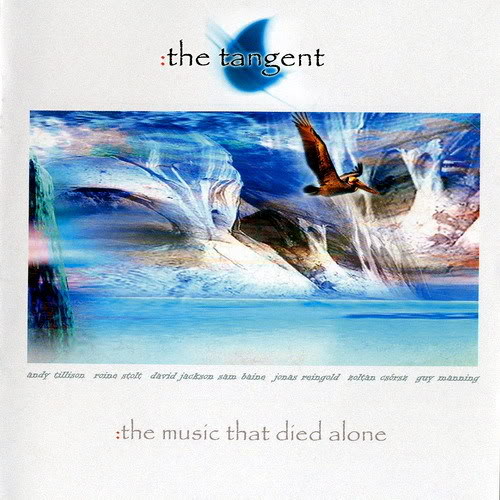
The Music That Died Alone really serves as a powerful nexus between past and present, present and future, up and down, and every which way. Only the evocative power of the lyrics match the classiness and free flow (though, we all know what makes something seem free is often a highly disciplined mind and soul) of the music.
At the time I first heard them, I mentally labeled The Tangent a “neo-Canterbury band,” but I was too limited in my imagination, and I would discover this very quickly. Indeed, each subsequent The Tangent album offers new pleasures and paths for adventure, but always with that power of that Tillison nexus, connecting the past and the future with beauty.
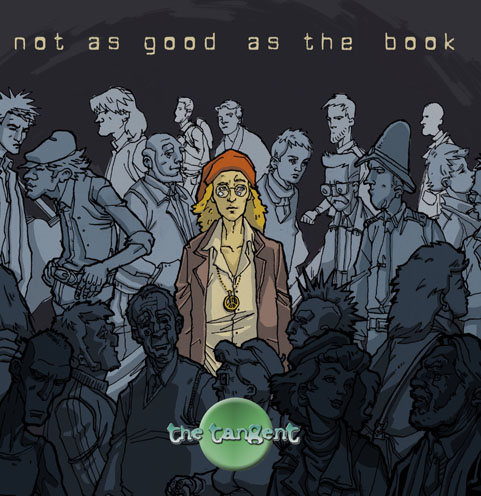
Tillison makes this connection literal in his very fine novella, “Not as Good as the Book: A Midlife Crisis in a Minor.” The dedication lists close to 100 names, including numerous members (first names only) of the members of various bands from Yes to ELP to The Flower Kings to Spock’s Beard to XTC and to authors such as Arthur C. Clarke and J.R.R. Tolkien. None of this is contrived. Just pure Tillison expressions of gratitude.
Privileged (well, blessed, frankly, if you’ll pardon a blatant religious term) to receive a review copy of the new album, Le Sacre Du Travail (Out officially June 24, 2013 from InsideOut Music), I dove right into the music. Full immersion. With every album, Tillison has only improved. Each album has bettered the already previous excellent album with even more classiness, more intensity, and more meaning. Not an easy feat in this modern world of chaos and consumerist fetishes.
With this album, though, Tillison has moved forward the equivalent of several The Tangent albums. Again, to be blunt, the album is mind-boggingly good.
Easy listening? No. Of course not. It’s Tillison, it’s prog, and it’s excellent. What part of those three things suggests easy. No excellent thing is easy. Can’t be. It wouldn’t and couldn’t be excellent if easy.
Satisfying listening? Oh, yes. A thousand times, yes.
For one thing, Tillison has brought together some of the finest artists in the business. I was convinced of the potential greatness of this new album when I first heard David Longdon (in my not so humble opinion, the finest voice in rock today) would appear on the album. But, add a number of others in: Jonas Reingold (The Flower Kings), Jakko Jakszyk (Level 42), Theo Travis (Soft Machine), and Gavin Harrison (Porcupine Tree). And, it doesn’t stop here. Add Brian Watson (DPRP.net)’s spectacular art work and the cool dj voice of Geoff Banks (Prog Dog show). Ok, this is one very, very solid lineup of the best of the best.
1913
Ten years ago, Tillison released the first The Tangent album. 100 years ago, Igor Stravinsky released what was arguably his masterpiece and certainly one of the finest pieces of music of the twentieth-century, The Rite of Spring. While The Rite of Spring hasn’t pervaded our culture in the way the fourth movement of Beethoven’s 9th Symphony has, it’s a close second. Every person, an appreciator of music or not, knows at least part of The Rite of Spring.
Imagine for a moment 1913. It was, by almost every standard, the last great year of the optimism of western civilization. Technology upon technology had produced innumerable advancements, almost everyone in the western world believed in unlimited progress, and even devout Christian artists (such as Stravinsky) had no problems embracing the greatest elements of paganism and folk culture.
In almost every way, Stravinsky explored not only the folk traditions of his era, but he embraced and, really, transcended the modernist movement in music. He bested it. His Rite is full of tensions and dissonance, but each of these is overruled and corrected by harmony and emergent joy. The Rite, no matter how pagan, also has deep roots in the Judeo-Christian and Greco-Roman traditions. The Rite–the ritual, the liturgy–has been a part of western civilization since the pre-Socratics debated about the origins of the cycles of the world and history: earth, water, air, or fire.

2013
Imagine for a moment 2013. Well, ok, just look around. Technology remains exponential in its growth, but few would praise the development of the Atomic Bomb, the gas chamber, or the aerial bomber. But, then, there’s the iPod. And, unless you’re Steven Wilson, you probably think your iPod is ok. Certainly better than an Atomic Bomb.
Optimism? No. I don’t need to go into detail, but, suffice it state, T.S. Eliot might very well have been correct when in the late 1940s he claimed the western world in an advancing stage of darkness:
the tower overthrown, the bells upturned, what have we to do
But stand with empty hands and palms turned upwards
In an age which advances progressively backwards?
The U.S. and the U.K. are currently waging numerous wars, and there seems to be no end in sight.
The Rite of Work
As with the Stravinsky of 1913, the Tillison of 2013 surveys the cultural landscape. Unlike his Russian counterpart, the Yorkshire man finds little to celebrate in this whirligig of modernity.
The “good guy anarchist,” as he described himself in a recent interview (and, not to be too political, but more than one progarchist would be in great sympathy with Tillison on this point), Tillison observes not the Rite of Spring, but the liturgy of work. We get up, we commute, we sit in our cubicle, we commute again, we eat, we drink, we have sex, we watch a little t.v., and we sleep. The cycle beings again every Monday, Tuesday, Wednesday, Thursday, and Friday. Who made this deal, Tillison wisely asks.
Throughout it all–pure prog interspersed with very modernist musical elements from time to time–Tillison references much in our modern folk and popular culture, including The Sound of Music and Rush (2112):
In a Rush T-shirt, pony tail, 2112 tatooed on his hands
He’s a star through thick & thin
But he still gets that data in
A modern day warrior, today’s Tom Sawyer is a clerk
He’s a meta for disillusion
He’s a metaphor for life
But, interestingly enough, Tillison does all of this as a modern-day St. Thomas the Doubter.
But I don’t believe them, not ’til I see it
Until I put my finger in the holes
In every word, the lyrics rage against the conformity demanded in 2013–demanded by our corporations, our neighbors, and our governments. What have we become. . . mere ants, living in a world of bird dung. Certainly, whatever humanity remains has been given over to some institution radiating power.
And, yet, still somewhat in the persona of St. Thomas, Tillison asks us to reconsider our day-to-day rituals and liturgies. Is it worth it that we squander what little time we have in the name of the mindless and soulless cycles of modern life? By far the most powerful moment of an album of immense power (power in the good sense; not in the domineering sense):
‘Cos you can’t take it with you
There’s no luggage allowed
No you can’t take it with you
No matter how rich or proud
Your kids will sell it off on Ebay
For god’s sake don’t waste their time
‘Cos you can’t take it with you
You can leave just a little bit behind.
Summa
Well, what an album. What an artist. What a group of artists. If any one ever again complains about the superficiality of rock music, consider handing them a copy of this CD. No superficiality here. Only beautiful–if at times gut wrenching–meaning.
Keep raging, Mr. Diskdrive. Rage on.
To order the album (and you should, several times!), go here: http://www.thetangent.org/

In Concert: Billy Strings’ Down-Homecoming
Billy Strings, Van Andel Arena, Grand Rapids Michigan, May 30, 2025
It took a while for my wife and I to wrap our heads around Billy Strings’ triumphant return to his home turf this past weekend. Why? Let me count the ways:
- Strings’ two shows completely sold out, with around 12,000 people in attendance each night – so the concourse of our downtown sports arena was absolutely jam-packed. Restroom breaks were epic-length adventures; trips for concessions or merch were silently scratched. It’s not that we hadn’t navigated similar conditions before, but . . .
- In the six years since our last show at said arena (if you must know, it was Jeff Lynne’s ELO), the majority of concerts booked there have shifted from classic rock to country, with the occasional rap and metal nights. Different genres, different, much younger clientele than the crusty old geezer I seem to have become . . .
- Different clientele, different — uh, “atmosphere”. The designated standing room (the front half of the main floor) became a giant moshpit in record time, and the rowdy vibe plus a certain aroma seemed to filter throughout the arena. In our upper bowl section, the couple right in front of us seemed a bit, let’s say, chemically enhanced: standing most of the first set when they weren’t making multiple food and drink runs; constantly talking and shifting position. (It could have been worse; two guys a couple rows further down stood and danced out of rhythm all night.) I had to fight to keep my dad’s words out of my head; whenever we played pinochle, he’d eventually say: “Are we gonna talk or are we gonna play cards?” It wasn’t pretty.
- With all that distracting us, we weren’t really braced for when Strings took center stage side by side with his acoustic quintet and kicked off. The sound was crystal clear but formidably loud, even without drums; the lights pulsed, strobed and flashed at Taylor Swift-level candlepower and speed. We used to love this stuff; now we felt instantly overwhelmed!
- And the music got real wild and wooly, real quick. Straight bluegrass opener “The Fire On My Tongue” plowed into “Hide and Seek”, giving way to a dark, full-blown psychedelic freak-out. As Strings piled on echo and fuzztone, the band s-t-r-e-t-c-h-i-n-g out a gnarly one-chord vamp almost beyond its breaking point, I looked over at my wife — and she was not enjoying herself. And then the music went on, nonstop, for another half-hour! My prog side was thoroughly digging it; the part of me that had talked her into coming thought Strings might be reading our minds as he plowed into a double-time, pickin’ and grinnin’ take on Jimi Hendrix: “Is this love, baby, or is it – confusion?“
But then, Strings chilled things out, talking directly to the crowd. About how happy he was to be back, about memories of the local places he had played in his younger days. Then he gracefully started up what he’d called “a song about looking at the windshield, not the rearview”. Midway through “Away from the Mire”, the psychedelia was back — but this time it felt inviting, beckoning us in with open arms and a smile.

The two of us relaxed (it helped that both we and that couple in front of us were able to slip into nearby empty seats after intermission) — and just like that, we were off to the races! And as we mellowed out, we could see and hear what we’d been missing. Which is worth mentioning in full:
- Strings is just an awe-inspiring musician — a virtuoso guitarist with immaculate taste and his own spin on multiple traditions, a first-rate vocalist who sings from the heart, and a songwriter with his own strikingly mature viewpoint, capturing the lives of desperate people in extremes of gloom, craziness and joy. His band members (banjoist Billy Failing, mandolinist Jarrod Walker, bassist Royal Masat and fiddler Alex Hargreaves) are equally fabulous players and harmony singers, running buddies in every sense of the term. These guys have got range — as they demonstrated at the front of the stage to close the first set, infusing bluegrass classics and “Richard Petty” (Strings’ self-improvement gospel according to NASCAR) with simple, unforced pleasure.
- The second set was served up in shorter chunks, surprisingly drawn more from Strings’ back catalog than his new Highway Prayers. (The luscious title track from Home and Renewal’s devastating love song “In the Morning Light” were high points for me). Plus, Billy took impressive solo turns, unreeling one bluegrass cover after another on banjo and guitar — though I could swear he also snuck a Slayer riff in there somewhere!
- Again, you could tell Billy was glad to be there from the multiple shout-outs, thank yous and anecdotes he continued to share in the back half of the show. By the end, he was fully fired up again, roughriding through “Heartbeat of America”, then dashing across the stage while belting out his trouble-in-a-small-town classic “Dust in a Baggie”. A couple of quickfire quintet covers for the encore, and just like that, 2 1/2 hours had flown by. (And astoundingly, Strings’ equally long second night setlist was completely different!)

I might be getting too cranky for 21st-century arena shows, but actually I’m here to tell you this: Billy Strings is the real deal. His respect for his musical forbears, his unabashed instrumental brilliance, his gritty evocations of small-town vice, his poetic contemplations of the bigger picture, his killer instinct for maximum musical impact — he’s got it all, brought into focus onstage with fearsome chops, a high lonesome voice and a generous soul. If you love the tradition he comes from — or if you just love good music — find some way to experience this guy, on record, streamed or live. (Personally, I’m hoping for an outdoor show next time!)
— Rick Krueger
Set 1:
- The Fire on My Tongue
- Hide and Seek>Pyramid Country>My Love Comes Rolling Down (Doc Watson Family cover)
- Lumpy, Beanpole & Dirt (Bad Livers cover)>Love or Confusion (Jimi Hendrix Experience cover)
- Away From the Mire
- Freedom – front of stage
- Close By (Bill Monroe and the Bluegrass Boys cover) – front of stage
- Sally Johnson (traditional cover) – front of stage
- Richard Petty – front of stage
Set 2:
- In the Clear>Everything’s the Same
- West Dakota Rose (Chris Henry cover) – Billy on solo banjo
- Georgia Buck (Doc Watson cover) – Billy on solo guitar
- Let the Cocaine Be (Doc & Merle Watson cover) – Billy on solo guitar
- Salty Sheep
- Home
- Red Daisy
- Hellbender
- In the Morning Light
- Greenville Trestle High (Doc Watson cover)
- Heartbeat of America
- Dust in a Baggie
Encore:
- Wait a Minute (The Seldom Scene cover)
- Roll On Buddy Roll On (Bill Monroe and the Bluegrass Boys cover)
Futility and Meaning in Willa Cather’s “O Pioneers!”
Vanity of vanities, says the Preacher,
vanity of vanities! All is vanity.
What does man gain by all the toil
at which he toils under the sun?
A generation goes, and a generation comes,
but the earth remains forever.
– Ecclesiastes 1:1-3
Imagine being a woman on the threshold of adulthood – ready to set out and make a life for yourself. For a woman in late nineteenth century Nebraska, that likely means marrying and settling down on your own farm. But then your father’s dying wish is that you carry on his life’s fruitless endeavors. He unshackles the albatross from his neck and chains it to yours, since your brothers have no imagination and your mother wishes she had never left her home country. And you have a young brother you must now essentially raise as your own child. A burden far too much for a 20-year-old woman to bear.
Willa Cather’s O Pioneers! masterfully portrays the ruggedness of a harsh landscape as it was broken and transformed by the blood, sweat, tears, and lives of European immigrants who moved to America in search of something better than they had. Cather’s depiction of their lives suggests they didn’t find it, but maybe they made a better life for their grandchildren, although the emergence of the Dust Bowl a few decades after this book ends suggests they didn’t. In fact, their very efforts to remake the landscape likely caused the ecological disaster that ensued, which then spurred a new emigration, this time to California. In the end, their efforts to remake the land were futile. Their life’s work literally blown away on the wind.
O Pioneers! is generally thought of as an homage to the strength of the American prairie and the strength of the people who supposedly conquered it. At face value, that is true. At the time of publication (1913), the widespread drought to hit the American prairie region was still decades away. It is also often held up as a pillar of feminist triumph, with a strong female lead who is fiercely independent in her efforts to tame the land. That is a superficial and ultimately inaccurate reading, since Alexandra Bergson ultimately realizes her life’s meaning cannot be found in toiling over the land or crunching numbers in an account book.
Cather’s greatest strength in this novel is her ability to say so much with so few words. This brevity reflects the openness of her prairie home. She’ll often use brief phrases in the voices of her characters to make brief but deep statements, often in the mouth of Carl Linstrum, Alexandra love interest. Carl is the one who leaves the Divide as a teenager once his family decides to give up and return to St. Louis. Carl spends his life drifting, working as an engraver and dabbling in art. As an aside, that gave me a chuckle as my Swedish great-grandfather Oscar Engstrom worked as an engraver, and I grew up surrounded by his framed watercolors. Though he died before my grandparents even met, he has cast a long shadow over me, inspiring my own interest in watercolor.
Perhaps Cather is reflecting herself in Carl’s character as someone who left Nebraska yet found herself haunted by it, as evidenced in her work. One of Carl’s more poignant quotes is telling:
Freedom so often means that one isn’t needed anywhere. Here you are an individual, you have a background of your own, you would be missed. But off there in the cities there are thousands of rolling stones like me. We are all alike; we have no ties, we know nobody, we own nothing. When one of us dies, they scarcely know where to bury him. Our landlady and our delicatessen man are our mourners, and we leave nothing behind us but a frock-coat and a fiddle, or an easel, or a typewriter, or whatever tool we got our living by.
All we have ever managed to do is pay our rent, the exorbitant rent that one has to pay for a few square feet of space near the heart of things. We have no house, no place, no people of our own. We live in the streets, in the parks, in the theaters. We sit in restaurants and concert halls and look about at the hundreds of our own kind and shudder.”
– O Pioneers! – Part II, Chapter IV
Today we might leave behind a smartphone, a video game console, and a pantry full of mass-manufactured chemicals masquerading as food. Apart from that, little has changed. We live lives of brutal obscurity. At best we might wave at our neighbors while taking the dog out, but deep down we know we won’t be missed when we move from one apartment to another or one job to another. We are cogs in a machine. Rolling stones that gather no moss. Carl (and Cather) comment on the same obscurity and brutality of life that Steven Wilson brilliantly analyzed in his album Hand. Cannot. Erase. just over 100 years after Cather wrote O Pioneers! Nothing is new under the sun.
Cather had the opportunity to experience both the ruggedness of the open land and the suffocating closeness of the city. She writes as someone who knows the futility of city life firsthand. And yet she never moved back to Nebraska, despite multiple novels ostensibly romanticizing rugged prairie life.
Or is she really romanticizing it? She did leave, after all, something her main character wanted so strongly for her little brother, Emil. Having not grown up in the Great Plains, I can’t exactly relate to Cather’s nostalgia. (I grew up in northern Illinois, though, and I will likely always have a soft spot in my heart for the flat fields of corn speckled with farms and distant treelines.) Yet after reading O Pioneers! I am left with a torn sentiment of the landscape so masterfully described, conquered, and lived in. It seemed to keep its more thoughtful inhabitants enthralled. They both hated and loved it. Both Alexandra and her father seemed to love it passionately, yet it is clear Alexandra is yoked to it.
As the book rolls through Alexandra’s life, the reader begins to wonder what she has to show for it? Yes, she has tamed the land, and she has even shown herself to be shrewd with business. She saw the potential her father saw in the land that others missed and even abandoned in hard times, buying their plots on credit and paying off the debt once the land soared in value. But beyond the land and some employees, what does she have? Two brothers who can’t stand her and another brother who doesn’t fit with the landscape, much like her lost, found, lost, and found again lover, Carl. She has no family of her own, no meaningful life beyond the day-to-day existence. It’s as if she, like her deceased father lying in his grave, is being swallowed up by the land while still alive. What is the point of her life? To continue fighting the land and the stubborn people who inhabit it?
Same old song
Just a drop of water in an endless sea
All we do
Crumbles to the ground though we refuse to seeDust in the wind
All we are is dust in the wind
– Kansas (Kerry Livgren) – “Dust in the Wind”
Every time Carl walks back into Alexandra’s life, a subtle sense of regret pops up, as if she knows life has more to it than what she has created. She wishes she could go with him wherever he might go, live how he lives, be with the only man who ever seemed to understand her. From the get-go in this story, he’s the only other character besides Emil who seems to have a strong sense of empathy (he rescues little Emil’s kitten from a telegraph pole on a blustery winter day). And yet his sensitivity is what makes those around Alexandra dislike him. Her brothers call her foolish for considering marriage at the age of forty.
Sadly it takes extreme tragedy for Alexandra to finally break free from the yoke her father placed on her and make her own choice. Or more accurately, it was an outside force that broke the yoke – the murder of Emil and Marie. Once this yoke is gone, then Carl is willing both to return and to stay, something he never seemed able to do before. While the story ends on the rosier implication that Alexandra has finally found peace with her lover returning to the Divide, she actually finds that peace a couple chapters earlier. The death of Emil rocks her world unlike anything else she has experienced. Her emotional breakdown culminates in her being caught out in an evening storm in the graveyard at the graves of her father and brother. Her friends find her and bring her home and put her to bed. As she nods off, she revisits a dream she has had repeatedly since her youth, yet this time the dream is fulfilled:
As she lay with her eyes closed, she had again, more vividly than for many years, the old illusion of her girlhood, of being lifted and carried away by some one very strong. He was with her a long while this time, and carried her very far, and in his arms she felt free from pain. When he laid her down on her bed again, she opened her eyes, and, for the first time in her life, she saw him, saw him clearly, though the room was dark, and his face was covered. He was standing in the doorway of her room. His white cloak was thrown over his face, and his head was bent a little forward. His shoulders seemed as strong as the foundations of the world. His right arm, bared from the elbow, was dark and gleaming, like bronze, and she knew at once that it was the arm of the mightiest of all lovers. She knew at last for whom it was she had waited, and where he would carry her. That, she told herself, was very well. Then she went to sleep.
O Pioneers! – Part V, Chapter I
This passage is the most important in the book, yet it is very easy to miss or dismiss: a dream following an exhausting physical and emotional experience. Yet Cather writes that this has been a recurring dream for Alexandra, one that only now in the midst of tragedy is made clear. Alexandra finds her peace, meaning, and purpose in the true source of peace, meaning, and purpose – Jesus Christ.
Why, might you ask, do I conclude that Cather is referring to Jesus in this passage? Let’s look at the description of Jesus in His glory as seen in the book of Revelation:
Then I turned to see the voice that was speaking to me, and on turning I saw seven golden lampstands, and in the midst of the lampstands one like a son of man, clothed with a long robe and with a golden sash around his chest. The hairs of his head were white, like white wool, like snow. His eyes were like a flame of fire, his feet were like burnished bronze, refined in a furnace, and his voice was like the roar of many waters. In his right hand he held seven stars, from his mouth came a sharp two-edged sword, and his face was like the sun shining in full strength.
– Revelation 1:12-16 (ESV)
Cather’s description of this “mightiest of all lovers” mirrors the description of Christ from Revelation. The description of his skin as a bronze color is a direct reference, and I think that is the clear giveaway. Everyone else in this story is almost assuredly of extremely fair skin. The major characters are either Scandinavian or Bohemian, not races known for dark complexions. In Cather’s description, this individual is shown with a white cloak that “was thrown over his face.” The description of Jesus in Revelation explains why his face might need to be covered in this interaction with Alexandra: eyes like a flame of fire and a face shining like the sun in full strength. Not exactly something which someone experiencing traumatic emotions would want to be confronted.1
With this encounter with Jesus, Alexandra is changed. Following this she travels to the prison in Lincoln to visit her brother and friend’s killer and offer him forgiveness. The grip the land has over her is loosened, allowing her finally to open her heart to Carl Linstrum and embrace the beauty, meaning, and purpose God gives us with love and marriage. Her breakdown in the cemetery and encounter with God in a dream shows her that what really matters is far more than what we build and grow with our hands and sweat. The people we love and the connections we make is what matters. How we treat others, how we care for those who need it, how we treat the world around us: those are things that matter. No matter what we build, it won’t ultimately give us the satisfaction we seek, no matter where we live or what we do. Carl Linstrum was right: “there are only two or three human stories, and they go on repeating themselves as fiercely as if they had never happened before; like the larks in this country, that have been singing the same five notes over for thousands of years” (Part II, Chapter IV). Or as Solomon put it, “there is nothing new under the sun” (Ecclesiastes 1:9).
- I came to this conclusion before consulting any secondary readings on O Pioneers! Some literary scholars (but not all) disagree with what I believe is an obvious interpretation of this passage. Many critics identify the person Alexandra sees in her dream as Death, going so far as to say that she had a death wish. David Stouck says as much, using rather bizarre language to describe the transformation Alexandra undergoes after the dream: “The final possibility of a marriage between Carl and Alexandra is perhaps sheer wish-fulfillment on the author’s part (that desire to be united with the eternal mother), but it is always held in perspective by the repeated account of Alexandra’s dream wherein only the mightiest of all lovers can carry her off, that lover being identified towards the end of the novel as none less than Death” (Stouck, 30). This is a remarkably inaccurate reading of this passage, especially considering how Alexandra’s behavior changes in the aftermath. Maire Mullins points out that it is following this dream that Alexandra goes to visit Frank Shabata in prison to offer him forgiveness for killing Emil and Marie. Mullins rightly recognizes the Christlike imagery in this dream. Mullins interprets the earlier dreams as Alexandra wrestling with her suppressed erotic desires. She argues that Alexandra spends the majority “of her life sublimating the erotic power that lies within her,” focusing on her farm instead. When she had these dreams Alexandra would try and block them out by taking a vigorous bath, even literally pouring cold water over herself in an effort to scrub out any hint of sexuality. Mullins accurately acknowledges the presence of Christ in the ultimate satisfying dream that Alexandra has, but she oddly claims the dream merges Christianity with Native American myths, a theme she tries to draw from other parts of the text. I believe this is reading something into the passage that simply is not there. Further, she limits the transformative power of Christ in Alexandra’s life. Mullins concludes that this encounter in the dream allows her to forgive Shabata and finally connect with Carl Linstrum through “the conscious connection to the erotic and spiritual power within.” This is the problem with the overarching feminist theory Mullins applies to her reading from the beginning of her article. It discounts the power of Christ to truly transform a person’s desires, instead limiting it to some vague sense of self-realization where Alexandra accepts her sexuality. In actuality, she finds the peace and meaning she has been searching for all along, finding that it is not in the land or in the sexuality she seeks to repress. It is in Jesus. With that ultimate realization, she is finally able to let Carl into her life since his presence will not impact her value or worth, just like her impact on the land will not impact her value or worth. Those things are inherent through her relationship to God. ↩︎
Works Cited
Mullins, Maire. “Alexandra’s Dreams: ‘The Mightiest of All Lovers’ In Willa Cather’s ‘O Pioneers!'” Great Plains Quarterly 25, no. 3 (2005): 147–59. http://www.jstor.org/stable/23533606.
Stouck, David. “O Pioneers!: Willa Cather and the Epic Imagination.” Prairie Schooner 46, no. 1 (1972): 23–34. http://www.jstor.org/stable/40629091.
Can a Progger Be Christian?
For what it’s worth, I’ve been traveling since last Wednesday. I went from Michigan to Colorado, Colorado to Kansas, and now, I’m enroute back to Michigan. My soundtrack has been prog, prog, and then a bit more prog.

A few days ago, the mighty Tad Wert and I reviewed Steven Wilson’s new album, The Overview. Though we questioned a few things about Wilson, we loved the album. During his review, however, Tad brought up the majesty of the universe as described in the Psalms.
Today, this was posted on Facebook: “An interesting review of Steven Wilson’s latest album, which I’ve added here as Andie/The Tangent get name-checked. Quite an enjoyable read, despite the reviewer’s annoying habit of adding somewhat superfluous (and potentially divisive) references to The Goat Herder’s Guide to the Galaxy.”
Being in the car for hours on end, I turned this comment over in my mind. Now, it’s worth noting, our website (the one you’re currently reading) is named after the Catholic patron saint of music, St. Cecilia. Of the five main editors of Spirit of Cecilia, three are practicing Catholics, one is a Methodist who leans toward Eastern Orthodoxy, and one is a skeptic. Frankly, I’m amazed at how restrained we are when it comes to the issue of religion.
Still, after reading the Facebook comment today, I had to ask: can a Progger be a Christian? For some, the immediate answer is to turn to Neal Morse or Glass Hammer. But, frankly, both artists are so open about their faith that each might appear to be the exception that proves the rule.
So, for the sake of a good argument, I offer all praise to Morse and to Glass Hammer, but I’m going to leave them out of the discussion.
Then, I gave it a bit more thought, and I realized that the Christian religion is deeply embedded in much (certainly not all) of the progressive rock tradition. So, I chose my songs from several different eras of prog.
Yes, Close to the Edge:
“My eyes convinced, eclipsed with the younger moon attained with love
It changed as almost strained amidst clear manna from above
I crucified my hate and held the word within my hand
There’s you, the time, the logic, or the reasons we don’t understand”
Clearly referencing the Gospel of St. John.
Genesis, Supper’s Ready:
“There’s an angel standing in the sun
And he’s crying with a loud voice
“This is the supper of the mighty one”
Lord of Lords, King of Kings
Has returned to lead his children home
To take them to the new Jerusalem”
Clearly referencing St. John’s Revelation.
Talk Talk, New Grass:
“Lifted up
Reflective in returning love, you sing
Errant days filled me
Fed me illusion’s gate in temperate stream
Welled up within me
A hunger uncurbed by nature’s calling
Seven sacraments to song
Versеd in Christ, should strength desert me
They’ll come, they come”
Again, a clear reference to the New Testament and, specifically, a liturgical understanding of Christianity.
Roine Stolt, Humanizzimo
“With the blood of Jesus on the nail
We turn the balance on a scale
In pain and fearless suffering
Lies a message from the King of Kings”
Again, a clear reference to the passion of Christ.
The Tangent, Le Sacre du Travail:
“And all the blue plaques in all the buildings
Say they’re “Investors in Our Souls”
But I don’t believe them, not ’til I see it
Until I put my finger in the holes“
Yet again, a clear reference to Doubting Thomas.
Big Big Train, The Wide Open Sea:
“Lying ahull
Ride out this storm
Doused all the sails
I let the boat drift
And so upon this tumbling sea
Fathoms below
Heavens above me
I’m setting sail for Les Marquises
From cradle bound for Calvary”
I could be wrong, but this very much reminds me of Jesus calming the waters.
Every one of these songs requires some biblical literacy. Were Yes, Genesis, Talk Talk, Roine Stolt, Andy Tillison, and Big Big Train divisive? Without a doubt. Was Tad being divisive? I certainly doubt that was his intention.
So, back to the main question. Can a progger be a Christian? It seems so.
Ross Douthat’s Believe: Apologetics for a Skeptical Age

Ross Douthat is a New York Times columnist who opines regularly on issues of morality, faith, and culture. His latest book, Believe, is an interesting entry in the crowded catalog of Christian apologetics.
Douthat chooses to devote most of his book to making the case for a higher reality than the one we can measure scientifically. As he puts it in the introduction,
Whatever mysteries and riddles inhere in our existence, ordinary reason plus a little curiosity should make us well aware of the likelihood that this life isn’t all there is, that mind and spirit are just an illusion woven by our cells and atoms, that some kind of supernatural power shaped and still influences out lives and universe. (p. 7)
Believe is not a long book – eight chapters, 206 pages – but it is packed with weighty argument and evidence for a “supernatural” reality. The chapter titles outline his thesis:
- The Fashioned Universe
- The Mind and the Cosmos
- The Myth of Disenchantment
- The Case for Commitment
- Big Faiths and Big Divisions
- Three Stumbling Blocks
- The End of Exploring
- A Case Study: Why I Am a Christian
What is welcoming about Douthat’s approach is his invitation to simply accept the evidence around you and acknowledge that some sort of creative intelligence is the likeliest explanation for our universe. He doesn’t even get into why he believes Christianity fits the bill until the final chapter. As a matter of fact, he posits that belief in any of the major religions – Judaism, Christianity, Buddhism, Islam – can lead a person to ultimate truth better than nonbelief:
Your choice might be the wrong one ultimately but the right one for you in that moment, or the wrong one but with enough that’s right in it to make an important difference in your life. And if, in the end, your initial conversion doesn’t convert you the the true faith, the religion you enter will have hopefully acquired enough truth and wisdom in its long development to make a ladder upward, from the mire of meaninglessness and the snares of indecision toward whatever the full plan of your life is meant to be. (p. 149)
In The Mind and the Cosmos chapter, Douthat points out that
It isn’t merely that the universe appears improbably fine-tuned to enable our existence. It’s that our own consciousness seems improbably capable when it comes to discovering that fine-tuning, like a key fitted to a lock. (p. 61)
In other words, it’s a miracle that the universe is habitable for us and we are able to discern that habitability.
From that basic argument, Douthat builds his case, eventually addressing three “stumbling blocks” that prevent people from believing in God:
- Why Does God Allow So Many Wicked Things to Happen?
- Why Do Religious Institutions Do So Many Wicked Things?
- Why Are Traditional Religions So Hung Up on Sex?
His answers to these questions are thoughtful, comprehensive, and convincing.
It isn’t until the last chapter that Douthat makes the case for Christianity as the best explanation for reality and how we should live. As he acknowledges, he’s a Christian because that was the dominant religion of the culture in which he was raised. At no point in the book does Douthat promote Christianity at the expense of the other major religions (although he is careful to warn the reader against getting involved in cults or Satanism!). This fair-minded approach is very effective, in my opinion, making his points hard to refute.
Believe is the latest in a long line of Christian apologetics (the first of which is probably Augustine’s Confessions, but I’m not sure), but it is somewhat unusual in its acceptance of other ways of reaching the truth. Douthat is primarily concerned with winning people over to a belief in a Creator God who cares about his creation. Once one has made the commitment to that belief, Douthat is confident that a sincere seeker will eventually be rewarded with a greater understanding of how we should order our lives, and, as a result, live much more fulfilling lives.
 Spirit of Cecilia
You must be logged in to post a comment.