The Rise and Fall of an American Boobacracy?

BY RICHARD K. MUNRO

JOHN MERROW
For generation after generation, most Americans have not learned to read with fluency.  Today most Americans apparently read only when they have to.  The numbers are daunting: 

  1. Roughly 21% of American adults are illiterate, and another 33% read at or below a 6th grade level; 
  2. Americans between the ages of 15 and 44 spend ten minutes or less a day reading books;
  3. More than half of adult Americans haven’t read a full book in over a year, and 
  4. Young people are reading less than half the number of books that older generations read. 

I included a few cartoons so we can laugh a little before we weep.

As a retired teacher I can tell you literacy has been gradually and continuously declining in America since the 1920s and 1930s.  My grandfather, for example, had very little formal education.   He went to sea as a boy apprentice circa 1894 at age 8.   Of course, in those days on British merchant ships the boy apprentices slept apart from the sailors and were tutored by the captain in reading, basic math, and navigation.   He was very good at basic math and tutored my cousin in high school and helped her graduate. She is grateful to this day. He died the day she graduated from high school.

They read the King James Bible, Scott, Shakespeare,  Dickens, and Burns.  One thing they did not do much of was writing so my grandfather was ashamed that he could not spell and write fluently.   He often would have a friend write letters for him and then he would copy them out line for line.     I suppose that way he improved his writing gradually over the years.  He had a very good-looking signature.    But I don’t think he ever read a book in his entire life.    He was an avid newspaper and magazine reader, however.  He loved to study maps and atlases.    He knew all the classes of naval vessels (he built a few) and he knew British aviation and German aviation and American aviation and production figures.   My father was a college graduate but he always believed his father had deep experience, knowledge, and wisdom even though he lacked degrees and diplomas.   I remember as a boy he read two or three newspapers every day (Daily News, Post, Herald-Tribune plus LIFE magazine and National Geographic).   He could smoke and read quietly for hours.  Of course, he read to me.  He read Kipling, he read comic books (Superman and Classics Illustrated), he read Greek Myths,  He knew some Gaelic but was almost completely illiterate in that language.   Similarly, he knew Scots very well but could not spell or write the way he spoke.  But my grandfather was no unusual.   His working friends all avidly read newspapers and political tracts (some were pro-Communist).   Similarly my father’s mother probably never read a single book in her whole life   But one book she knew very well was the Bible.   She was a devout Christian in the Roman Catholic tradition and it was not unusual for her to attend Mass seven days a week.    What she knew about art and music she mostly got from the church.   She had relatives who were teachers and priests and she had great respect for learning.   She was a very humble woman.  My father was greatly influenced by his uncle who was a teacher and later by his Jewish teachers and professors at Manual Training HS in Brooklyn and Brooklyn College.  

Unlike his father, my father was a very serious reader and an amateur linguist as well. He studied Latin and French in High School and German and French in College.  He taught himself SPANISH, TAGALOG, Italian, Ancient Greek and Modern Greek, as well as Russian.  His reading endurance was remarkable.   He read all of Dickens, all of Shaw, all of Stevenson, all of Twain. All of Shakespeare, All of Dante all of the Greek playwrights all of Cicero, all of Caesar, all of Xenophon all of Homer,  Cervantes,  all of Zola. of Balzac,  all of Victor Hugo.  All of Dante, all of Will Durant, All of Barzun, All of Gilbert Hight all of Orwell  I could go on. I was lucky enough to inherit most of his books I still have a long way to go but in 50 years have made some progress.

My wife is a reader my cousin is a reader we all read the newspapers and Reader’s Digest (for light reading)  My daughter a k-6 teacher reads dozens of books every year and belongs to book clubs.  Like her mother, she reads in Spanish and English.     Her small children are already playing with books and being read to.   They see their parents and grandparents reading,  My four-year-old granddaughter was going over a book of dinosaurs and animals and recognized dozens of animals in English and Spanish EXCEPT  Cheetah or Guepardo.    She said it was a leopard and I pointed out how big cats were different.   Jaguars, Leopards, Lions, and Pumas . She has a little toy Noah’s Arc and she lines up the animals and compares and contrasts them.  She knows colors and the things animals eats.   She loves going to the ZOO. This is how one develops readers.  By example and by reading with them and to them.

I told my students that you don’t get vocabulary by watching TV shows like “Friends”  I made a charter of vocabulary, and verb tenses of three different works  #1 was a random “Friends” episode #2 was a play by G B Shaw #3  was the vocabulary in a book like Tale of Two Cities, Tom Jones,  For Whom the Bell Tolls or 1984 by Orwell.    One could spend MONTHS  studying and commenting on the vocabulary and cultural allusions of the books. Years even.    Pyramus and Thisbe we see in OVID, FIELDING,  Cervantes, SHAKESPEARE, for example

  “Friends” had zero biblical allusions zero historical zero literary allusions and less than 8th-grade vocabulary.      Mostly it had low-brow off-color humor. But it was very clear the education and vocabulary one would receive from a TV show like this would be very limited. 

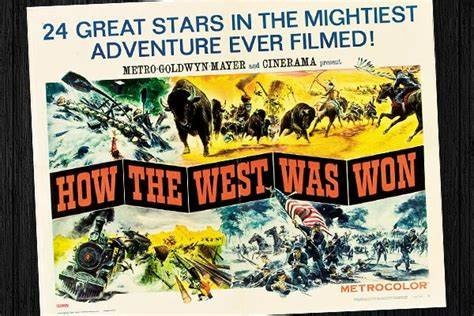
Of course, one could watch something a little higher up on the cultural scale, Laurence of Arabia,  Great Expectations,  the King’s Speech.    But it is not a coincidence that some of the greatest films are derived from plays and books. But generally, movies and documentaries are just summaries. ELMER GANTRY (1960_ was a fine film but only half or less than the book. FOR WHOM THE BELL TOLLS (1943) was a faithful adaptation of Hemingway’s novel but one needed the book to understand the background and the characters. It’s a rare movie that is better than the book. Three examples I can think of are John Ford’s GRAPES OF WRATH, John Ford’s THE MAN WHO SHOT LIBERTY VALANCE, John Houston’s TREASURE OF SIERRA MADRE and STANLEY KUBRICK’s PATHS OF GLORY. I read the original books but they were not nearly as memorable as the film versions.

So one should read to gain vocabulary, facts, and information.    This could be the nutritional value of foods or the rules of a game or how to plant a rose bush or olive tree. This could be on how to maintain basic hygiene to reduce illness and avoid the flu,  VD or Covid 19.  

One should read to sharpen your mind and learn from the experiences of those in history or stories.  Years ago I saw the FILM ENCHANTMENT with David Niven and Teresa Wright.  My mother encouraged me to read the book which I did the Rumer Godden novel, “Take Three Tenses” This book was very important for me and for my life because it taught me a very important lesson:  When you find love and happiness don’t let it pass you by.  Take a chance and tell the person how you feel don’t be full of regrets like the Old General who lost the love of his life basically so he could advance his career.   A few times I met women who were really worthwhile and special women.   Sometimes the mutual chemistry and magnetism were not there.   So the relationship never developed or we broke up.   But when you find that love, that friendship, that laughter that joy, that trust you have to take a chance.  You can’t put off love forever do it by your 20s or early 30s at the latest.   Rummer Godden may not be the greatest author in history but she knew about some important things and she woke me up to the fact what was I doing wasting my life with people and women who could not make me happy?   I knew who I loved and just needed to prove to her that I could make her happy and secure.   So we fell in love and lived happily ever after.  And I thank my mother (and David Niven) and Rummer Godden for teaching me the way to make good choices.  But it all started with reading.

Reading teaches empathy and makes one more compassionate for the sufferings of others.   I remember the book THE EDGE OF SADNESS and  THE KEYS TO THE KINGDOM and saw the glory and the tragedy of the life of priests and missionaries.    I had some interest in the priesthood and missionary work because I liked teaching and helping people.   But I could never be celibate because especially when I was 17-25 I just loved women and wanted to be with them!   I didn’t want all women however I would be happy with one.

Sometimes I have to travel by myself and wait in airports. I once spent five hours on a layover in Dallas and eight hours at Barajas Airport.  But neither were bad experiences because I had books to read.  There were clean bathrooms, cafés restaurants and places to sit.   So I read and drank coca-cola or coffee and then strolled and then snacked and then ate supper with a book or newspaper.  Before I knew it I was on my plane.   If I hadn’t anything to read it might have been dreadful but I always have a supply or reading materials old and new.  Reading is a great companion and sweet distraction.  Fernando Pessoa, the Portuguese poet was right when he said “literature is the most agreeable way of ignoring life.”     I once spent six weeks on Madeira. I had some hedonistic fun.  But what I enjoyed most was reading every morning and most afternoons in the garden of the small hotel where I was staying.   I had an entire suitcase of books that I carried around all over Portugal and Spain including one concise Oxford Dictionary and a small Collins Portuguese and Spanish dictionary.  When I finished with the books I mailed them by boat back to America and filled up my suitcase with the books I picked up.   The Casa Del Libro in Madrid naturally had a magnificent collection of Spanish,  Latin, Greek, and French books but they also had an entire floor dedicated to English language books.  They had a complete collection of Penguins and Everyman books plus many others.   I must have read hundreds of Penguins when I lived in Spain.  I still have a few by Walter Scott and Rex Warner and Michael Grant but most I gave away.  They were just disposable paperbacks after all.    I still have paperbacks and I still enjoy reading print versions of magazines Commentary, National Geographic,  Baseball Digest, and Reader’s Digest but I mostly read electronic versions of newspapers and books unless I really want to study and read a book deeply.   Some books I have on Audible books, hardcover, and e-book versions.    I enjoy adventure tales and westerns and many I listen to on Audible books.   But authors I meet on Audible books I often turn to and read their other books.  If a movie or audible book encourages you to get to know an author that’s great.  What one usually finds is reading is the most satisfying way to experience a book.   I know I remember MORE when I read a physical book than when I read an electronic book or listen to a book.   Having a physical book makes it easier to reference, write notes or re-read.  I find I rarely re-read e-books unless they are very special. One thing is certain. I cannot live without books. People who live without books are missing out on some of the best things in life.

‘Fragile’ at 50: Steve Howe Tells the Story Behind Yes‘s Landmark Album | GuitarPlayer

Steve Howe has no idea where the term progressive rock came from, but he makes one thing clear: It certainly didn’t start with him. “I never called us ‘progressive rock’ or ‘prog-rock,’” he says. “As I recall, when I first joined Yes, we all used to call our music different things. 

“There was ‘orchestral rock’ and ‘cinemagraphic rock.’ We never argued about it, but there were a lot of names and terms being tossed about.” So what term did he use to describe Yes’s music? 

Howe laughs. “I often called it ‘soft rock,’” he says. “I thought what I wrote was a sort of soft rock, but the phrase didn’t catch on, at least not with what we were doing. But progressive rock? Where that got started, I don’t know. I think it might have come after the fact.”
— Read on www.guitarplayer.com/players/fragile-at-50-steve-howe-tells-the-story-behind-yess-landmark-album

PLIGHT OF THE PENURIOUS ADJUNCT

By Richard K. Munro

I have been an adjunct professor on the fringes of Academe at Seattle University, Bakersfield College and UVA. I knew a friend who was an adjunct professor at NYU for 7 years. But pathways to a solid career in academia were few and far between it seemed to me.

One of the things I noticed was that marriage and family life were almost impossible under those circumstances. Molto honore poco contante as the Italians say. I was called Professor Munro for $22 an hour no benefits and no future pension. I would say it was an interesting experience, but I truly enjoyed teaching HS much more.

My HS AP students were superior (generally speaking) to my adult JC students. I also had greater freedom to choose my curriculum. At the JC one was mandated to teach the book everyone used. Most were overblown and overpriced. They charged students over $250 dollars for materials for Spanish 1a and 1B. Talk about price gouging. Another reason college is too expensive.

From my JC students I gained private police officers they were astonished that I used inexpensive materials $10.95 for Teacher Yourself Spanish books and CD’s and $7.95 for Collins dictionary. I told them all they needed were those tools, notebooks, colored pencils, and index cards and they could learn any language but they had to invest 3-5 years.

Of course, my colleagues at the JC didn’t really like HS teachers. They resented I took students away from them (AP students tested out). They always resented I taught police officers at 5AM. Working people found it difficult to advance via JC scheduled classes a 1Pm or 4PM what everyone wanted to teach. But to me it was interesting work (meeting people in a different lines of work) and it helped pay the mortgage in the summer.

I studied Spanish for five years in Junior High and High school plus four years in the university and four years in Graduate school (Summers in Spain) I loved studying in Spain (half my teachers were Spanish and the other half were Cuban Americans) and having the opportunity to travel in Western Europe. Of course, Spanish changed my life it was my one expertise besides typing that was always in demand. I worked for the Bank of America, the Marine Corps, and in construction. Knowing Spanish was always advantageous. It kept me in the Caribbean and the Mediterranean, everyone else went to Okinawa. I remember Woody Allen joked that being bisexual doubled your chance on a Saturday night; for me speaking another language doubled or tripled my chances for a date. I also think I might have been less garrulous and more polite as a non-native speaker.

JC students were easy to handle, however. I made a choice to be a very competitive k-12 teacher. Instead of a narrow education, I had a broad education. I was certified to teach in English, Spanish, and Social Studies with a bilingual certificate of competence. And I coached soccer and baseball. I enjoyed that when I was young.

At one time I gained 30 credits toward my Ph.D. at UVA but I cut my losses (maxed out my pay grade). It was not a matter of doing the academic work. It was just too costly for very few opportunities. I studied at the Curry School. D- intellectual atmosphere IMHO.

I had 35-year-old PhDs who had never heard of Barzun or Highet or even Will Durant. And you could forget about Spanish or French or British literature. Most seemed to have never read a real book in their lives. They loved the Pedagogy of Oppression by Paulo Freire (complete crap and an evil book). I was a TA for an adjunct who taught a class on intelligence (not in the Curry Schoo). and that was ok I graded about 300 final exams. As an AP teacher, I was good at that. UVA outside of the the Curry School was solid but compared to NYU or Oxford or Salamanca low wattage.

K-12 I earned great benefits for my family plus one year of sabbatical (I spent at UVA and traveled) plus a solid pension I am enjoying now.

I got an MA in Spanish literature in Spain and enjoyed that very much.

Most graduate work in Teacher Ed was merely jumping through hoops it didn’t thrill me. I could have easily gotten an MA in education (I think I was 15 credits short but I did a 5th-year certification and instead of an MA in education I chose an additional certificate in English. In the long run that turned out to be a very good choice.

K-12 education had its flaws -I found it frustrating that most Administrators didn’t really care about education or standards. To many, I was just a cog to fill in a schedule. I worked as a utility player. I taught over dozen preps in three subject areas. I stayed employed but was not happy not being able to teach one curriculum and really getting to know it.

I taught AP US history for five years and AP Spanish and Spanish Literature for 12 years but the demand was not there. They don’t even teach AP at my former school. Everything is via computer and via JC concurrent credit. The bottom line is kids don’t write essays, and don’t research. Now they say kids have AI do their essays and HW.

Brave New World!

The demand and summer schoolwork was in ESL so I gradually specialized in ESL Social Studies and ESL English (all levels).

The advantage was I had mostly immigrant students who were so grateful not to be in Venezuela, El Salvador, Egypt Burma Syrian Russia, or Iraq that they were very happy (and most serious students).

My favorite classes were Spanish for Native Speakers and English as a Second Language.

Most were very enthusiastic.

My least favorite classes were make-up summer school for football players in World History. Administrators would tell me x y and z needed an A or B to be eligible. My response was you should be talking to them not me. Of course, I never taught again for that administrator (he was later fired for indiscretions anyway).

Another least favorite class merely a potboiler was Spanish 1 for Americans. My only interesting students were a pair of Yemeni sisters who were fascinated by Arabic words in Spanish and made for me (I still have a series of posters in Arabic Spanish and English educational and moral quotes of Muhammed). Of course, they were model students. 100% attendance. They also became fluent in Spanish and work at their parent’s local 7-11. Each one had ten children I think.

We have a growing Muslim community. Every Muslim student I knew married and had children. I had one male student who had 8 children by the time he graduated from HS (his wife lived in Yemen and emigrated at age 16). As far as I know, she still speaks no English.

Too many American students just were goof-offs in my experience. It was all I could to tolerate them. OF course, the Administrators didn’t care as long as everyone got at least a D or C.

I also tutored a few football players, privately in Spanish but I did that as a favor.

My best private students were police officers and firemen. They WANTED to learn.

I also tutored the children of teachers in AP US government and AP US History and AP European History. I had a certain reputation everyone I had got a 5. But it was a great experience with kids who wanted to excel.

Unfortunately, I never taught AP European history in HS myself but two of my children studied it in HS (and got 5’s). My own children were AP Scholars. I respect AP because it is a rigorous curriculum. To get a 5 in AP Spanish Literature is no easy matter. To get 5s simultaneously in AP Calculus AP Environmental Science AP US History AP European History and AP English is rare and a true intellectual achievement.

But most Americans were intellectually lazy especially when it came to foreign languages, in my experience. Two of my children are teachers by the way -one is a K-6 Dual Immersion teacher and the other is a HS AP Spanish teacher (who teaches IN his class JC college-level classes also for some extra money. He also tutors Minor League Baseball players for good money for a MLB club. Like me, they went for financial security and tenure via k-12 education. I got tenure after #1 getting a clear credential #2 three years of certified satisfactory work. Of course, you CAN get laid off in k-12 education. But if you are a math teacher, science teacher, or bilingual teacher you will probably stay employed and get a lot of extra work.

I had a wonderful junior HS teacher in Ancient History and I asked him why he wasn’t a PhD in College – He knew Italian, Latin and Greek- He showed me his wife and family four kids -he said you have to make choices I chose personal happiness and family life.

I have no regrets.

Personally, I am very glad I did not hang out in graduate school for years.

Most of my graduate school was really in Spain in a non- college atmosphere. Most of the women I dated were museum docents American express travel agents, nurses or neighbors. Most were readers and well-educated esp by American standards a high school graduate in France or Spain or Italy was at least equivalent to most AA or BA’s in America.

Thinking back very few of the women I dated were college students. or even English-speakers. After age 21 I never dated an English-speaking American girl ever again. Most I met did not have my values and interests. Some of course only wanted to marry for money -big money. I suppose I was naive. I wanted to marry for love and friendship. My own wife had zero money. I didn’t care about that. I promised I would provide a secure life and would work hard. Most college educated American women I met wanted to give away sex -they would be angry if you turned them away but few I met were interested in marriage and children. To me, however marriage and family life were chief goals. I met a lot of semi-educated “Sangerites” (ZPG hard core). Sexual suicide.

For whatever reason, I was seen as very attractive to Latins in the Americas and in Europe.

I think that is because I came from an immigrant family.

My mother and her mother grew up on an Island with 300 people and my father’s mother grew up in rural Argyll. She went to Mass almost daily.

All were devoutly religious and very traditional wives and mothers. They were mostly horrified and shocked by the mores and manners of American women. They would not allow their children to be babysat by American teenagers for example. The mothers of the Latin and Greek women I dated always liked me and welcomed me. I courted the women I dated and showed them great respect. I always respected the parents and grandparents.

I was a gentleman and considered good marriage material. I used to attend religious services with the relatives and parents of the women I dated. They respected that. I didn’t mind attending Greek Orthodox, Evangelical services or Catholic services. I found it interesting. In the service I attended Jewish services and was very friendly with the Naval Chaplain (he lent me books).

I knew a Jewish business associate of my father’s -I liked him- but was shocked when he said he would not allow me to date his (very attractive) daughter. I told him if I dated a Jewish girl -for example, the grandchild of a Holocaust survivor or an Israeli it would be to marry her and if I would marry such a woman I would convert to Judaism and raise our children in the Jewish faith. I was sincere. He was amazed. I think I gained his respect. I believe a couple should have the same faith and raise the children in the faith of the most religious. One of my relatives, by the way, IS JEWISH now as he converted upon marriage a decision I deeply respect.

I lived happily ever after so it worked out for me.

Staying away from the Adjunct Life was a smart decision.

Nice place to visit but you wouldn’t want to live there.

TRUE EDUCATION and the VIRTUES

by Richard K. Munro

I agree with the Greco-Roman philosophers that wisdom is, eventually, chief among virtues. However, wisdom is a virtue which comes later in life and slowly. Wisdom is a slow growth. It is not, then, first among the virtues we can hope to impart or encourage in the youth.

Cicero said: “Beginning with the bonds of affection between family and friends, we are prompted to move gradually further out and associate ourselves firstly with our fellow citizens and then with every person on earth.”

So what is early education? Child rearing (or breeding) is the product of one’s personal associations in the home, in one’s neighborhood, one’s community and one’s school. Rearing or bringing up the youth presupposes properly coordinating the habits of the young and subordinating the wild, the unhygienic, the selfish and the baser instincts of our single but riven race. A people, a nation or a civilization must have its moral education, its code of civility and norms as well as its time of formal instruction or schooling.

There is a Spanish saying of which I am fond: “Para la virtud, la educación; para la ciencia la instrucción” which means “First teach virtue, manners, good habits and civility; then school for knowledge.” This saying has long fascinated me because it implies that formal education (instruction; schooling) must be preceded and accompanied by what we used to call “breeding” or “upbringing” or training in manners, socially acceptable behavior, politeness, or civility.

In America and the English-speaking world there is much confusion today as to the role of parents, community and school in the rearing, training and education of children and youth and this confusion is reflected in our opaque, modern usage with silly and synthetic expressions like “parenting”, “empowering” etc. which are cut off from the Aristotelian concepts which were once the basis of all Western schools.

In the division favored traditionally by the French and Spanish, we can clearly perceive the influence of Thomistic and Greek philosophy (particularly Aristotle and Plato). So in Spanish one can say without any irony that one’s grandparents were bien educados (polite, generous and courteous) but sin instrucción alguna (without formal schooling -even illiterate).

Himmler was formerly schooled, a wise Spanish nurse said to me, but muy maleducado (without social graces, without a moral conscience, boorish and rude, in short, a barbarian).

Haim Ginott made a very wise observation in his wonderful book Teacher and Child :

On the first day of the new school year, all the teachers in one private school received the following note from a principal:

Dear Teacher:
I am the survivor of a concentration camp. My eyes saw what no man should witness.
Gas chambers built by learned engineers
Children poisoned by educated physicians/
Infants killed by trained nurses.
Women and babies shot and burned
By high school and college graduates.
So I am suspicious of education.
My request is: Help your students become human.
Your efforts must never produce learned monsters, skilled psychopaths, educated Eichmanns.
Reading, writing and arithmetic are important only if they serve to make our children more humane.

Ginott is saying that moral and character education (what the Spanish know as ‘”educación”) is really more important even than academic achievement or excellence because it is what makes people respectful, merciful, decent and fully human or humane.

The Spanish language makes it very clear that education is a process of socialization and ethical development which is accompanied by and followed by “aprendizaje” (which means learning but also “apprenticeship”) which leads to a higher intellectual development called formal education or instruction (formación o instrucción).” The French have the same concept and a similar vocabulary and speak of ‘bonne éducation’ (good manners) or “politesse et civilité” (politeness and civility) as important virtues. Formal schooling is sometimes called “education” or “études” (studies) but especially “instruction et formation” (schooling and academic training). Language helps shape our ideas and our perspectives. It for this reason I believe the well-educated person will have training in one or more languages besides English. There is no question that foreign language study sharpens the mind as to the nuances and shades of meaning of words.

Defying Gravity

After couple of years of pandemic, 2022 was probably the year of transitioning back to normalcy. But, that brings its own changes, and I had to move back to California from PNW. We read a lot about California exodus, that people keep leaving the State, so it felt a bit like I was defying gravity. More than that, the sheer exercise of packing up everything and moving over a weekend was akin to defying the odds and gravity.

My possessions are minimal, and including the motorcycle everything fits well within half of a 15ft truck. But, no vendor except U-Haul would allow me to tow a 4DR lifted jeep using a 15ft truck. Looks like I might be in the minority, and there’s only a small market of 4DR Jeep owners with minimal material possessions to haul!

Even for someone in such a minority situation, market provided an option. Not because U-Haul is charitable to Jeep owners, but because they simply wanted to maximize utility of their equipment. They want to be inclusive because there is a market incentive; it’s like that same American institutional reconciling gene. Private firms also attempt to solve problems by reconciling diverse requirements, while also remaining sustainable.

U-Hauling 1000 miles while towing the Jeep was uneventful. But Northern California provided a rather chilling welcome, and please note this was mid-April weather! But, thankfully that was the last of the snow I saw for rest of the year. Summer and early fall was about motorcycling the Sierras, a totally different experience relative to Pacific Northwest! Colors and the layering of those expansive vistas were just different. Can bring tears into even the most hardened eyes.

Most of the decisions we take in life are based on instinct, we might rationalize them, but life is too complex for purely data driven choices. For example — even though there were other reasons it was pure instinct which eventually prompted me to move back to the Golden State. In general its instinct which motivates us to explore, that exploration could be in the sphere of ideas or back-country landscapes or anything else we might wish. Its instinct which made me study Friedrich von Hayek and his friends, or made me explore heavy metal.

It’s also instinct which made me ride up this narrow single lane, and cliff adjacent winding path going up High Sierra Mountains. But that pure instinct gifted me the experience of motorcycling at 9000 ft. Similarly, studying the works of Prof. Hayek gifted me an understanding of the world. We can apply this instinctive mode to a lot of critical decisions we make in our life. So, even though we have become more civilized, in a way we are still a lot like our cavemen ancestors, because it’s still our visceral choices which rule our life trajectories.

My favorite neo-soul, rock, prog, metal-ish, albums of 2022

Seal’s debut album, featuring the hit “Crazy”, was released on May 24, 1991. I first heard it in early September 1991, having just moved to Portland, Oregon. I was living with my cousin and his wife, who had the CD, probably because of “Crazy”. I still recall seeing it and, being curious and alone in the house, turning it on and turning it up (they had a nice stereo system). The funky groove of “The Beginning” was compelling out of the gate, but it That Voice—that’s what got my attention immediately. “Who the heck is this guy?” I thought. I was hooked. Turns out the album was produced by Trevor Horn (who I knew from my interest in Yes), who also produced “Seal” (1994) and “Human Being” (1998). Those three albums, for me, are about as perfect of a popular music trio as one will find. (Seal’s 1991 debut, for the record, has sold over 5 million copies.)

While Seal remains in very fine singing form (and has some fun moment’s as a coach on Australia’s “The Voice”), his material since 2000 has not, in my opinion, lived up to the heights set by those three first releases; there have certainly been strong moments, but a lack of consistency.

All of which is a preface to one of my favorite releases of 2022: the 45-song Seal Deluxe 1991. I wanted to splurge on the 4 CD, 2 vinyl set, but I instead opted for the less expensive digital download. There is much here for the devoted and casual fan. First, the album is immaculately produced and recorded; it is an aural treasure, with a really stunning mixture of electronic and acoustic sound. Secondly, That Voice. Seal is one of the finest pop vocalists of the past 30 years, able to navigate rock, funk, dance, soul, R&B, jazz, folk, and just about everything else. (He is also a great songwriter, as Rick Beato explains in detail here.) Third, the album is remixed (disc 1), there are acoustic versions and remasters of premixes of the album (disc 2), a wide range of remastered special remixes (disc 3), and a fascinating early live set from late 1991, in Dublin (disc 4).

The latter has excellent sound, catching Seal in a bit more raw form than his later (and also exceptional) 2005 live set from Paris and showing his willingness to experiment with different approaches. (I’m not sure of the personnel, but the drummer is on fire.) My wife and I saw Seal in concert on November 30, 1994, at the Schnitzer in Portland, and it was one of the finest live shows I’ve seen. The only complaint was that he played only uptempo tunes, foregoing crowd favorites such as “Violet”, which is a stunning piece of jazz-pop-folk. But when it comes to this exceptional set, I have no complaints at all. Is it possible that a similar compilation is in the works for “Seal” (1994)? One can dream (in metaphors or otherwise).

I know that I’d heard of o.R.k. in recent years, but I also know that “Screamnasium” is the first album I’ve heard by the band. Which is surprising, because this is the fourth release by the supergroup, which is fronted by Italian singer/all-around-creative-force LEF (short for Lorenzo Esposito Fornasari), the legendary Pat Mastelotto (King Crimson, Mr. Mister) on drums, Colin Edwin (Porcupine Tree) on bass, and Carmelo Pipitone (Marta sui Tubi) on guitar. This is not prog, although there are plenty of weird notes and chords and song structures. Imagine a crazy but cohesive love child of Soundgarden, Jeff Buckley, King Crimson, Muse, and … other stuff. The playing, singing, and writing is dynamic, powerful, and melodic. Like Soundgarden, the songs are both dark and oddly upbeat (the band insists the album is a work of optimism, which comes through more like flashes of light rather than via upbeat tunes). Pipitone lays down both wonderful, angular riffs and broad atmospherics, and the Edwin/Mastelotto rhythm section is supple, strong, and never simple. And the vocal performances by LEF are, at times, startling in their power, precision, clarity, and range. This is a keeper.

Speaking of Porcupine Tree, HeWhoPlaysAndWritesAndProducesEverything Steven Wilson regrouped with keyboardist Richard Barbieri and drummer Gavin Harrison for a somewhat surprising and completely stellar outing titled Closure/Continuation. It’s all there: the surging guitars, electronic swells, dynamic changes, warm production, distinctive vocals, perfect drumming. “Dignity” is a personal favorite, but every song here is above average. I’ve long appreciated Wilson’s special brand of genre-blurring genius, but this recent interview with Rick Beato took it to another level; it’s a must view for anyone with interest in music and creativity.

The Mars Volta is a group that has been rather maddening to me: some of their songs resonate immediately and deeply (“The Widow” for example, from Frances The Mute), but I’ve struggled with entire albums. There was something about frenetic approach that exhausted me, even while I was always impressed by the remarkable playing and singing. They won me over with “The Mars Volta”, which I suspect has polarized hardcore fans, as it is (gasp) very much a pop album. But, of course, a most distinctive one, as one would expect from guitarist/producer Omar Rodríguez-López and vocalist/lyricist Cedric Bixler-Zavala (vocals, lyrics). The songs are short and mostly “normal” in structure; there aren’t any wild guitar out bursts or dissonance. Instead, there is a restrained, focused artistry at work, with subtle (but often complex) rhythms, lovely soundscapes, a wealth of textures, and a distinct thread of Latin beats and sounds (and lyrics, from the multi-lingual Bixler-Zavala). “Vigil” is a personal favorite: it seems rather slight at first, but builds a gorgeous melody that is then punctuated by short bursts of guitar and a simple but very effective bridge. A remarkable example of a band achieving greater emotional power by focusing on the basics.

The last time King’s X put out an album, I was in my thirties and singer/bassist dUg Pinnock was in his late fifties (he’s now 72); that was 14 years ago. I’ve been a big fan of the band since I first heard “Gretchen Goes to Nebraska” in 1989. Their 1990 release “faith hope love” remains one of my favorite rock albums; it is, arguably, the creative high point for the band. But there have been plenty of highlights, even if Pinnock, guitarist Ty Tabor and drummer Jerry Gaskill have never received the recognition they deserved. “Three Sides of One” sounds both fresh and distinctly King’s X—the vocals and harmonies are fully intact and right up front; Tabor’s riffs and solos are strong and crisp, and the bottom end is as funky and robust as ever. There are a couple of so-so moments song-wise, but there are also very strong, peak moments, notably “Give It Up” and “All God’s Children”. Definitely one of the best musical surprises of 2022.

“Will of the People”, Muse’s 2022 follow-up to 2018’s “Simulation Theory” still has plenty of electronic “stuff” going on, but it feels decidedly warmer and more human than its predecessor, which veered into self-parody territory. Part of the warmth and immediacy is due to two simple but gripping ballads, “Ghosts (How Can I Move On?)” and “Verona”. (The official video for the latter is worth watching.) Of course, there are the big anthems—”Will of the People” and “Won’t Stand Down”—but they are also more immediate, with classic Muse riffs that morph into heavy metal and industrial sounds to great effect. Matt Bellamy’s vocals continue to amaze; yes, the range and power, but also the vulnerable ache and pull. The 2006 album “Black Holes and Revelations” remains my personal favorite, but this is a very solid album with several exceptional moments.

The Norwegian rock quintet Maraton somehow came onto my radar this year with “Unseen Color,” which has elements of Leprous and Gazpacho. Whereas Muse has, I think, struggled at times to use electronic beats and sounds in an organic fashion, Maraton uses them to powerful effect, blending guitar and heavy electronic soundscapes with near perfection. The songs are uniformly strong and often unusual, with lyrics touching on existential literature (Kafka!) and mathematics, carried by the exceptional vocals of Fredrik Bergersen Klemp. While the parallel is not immediately obvious, the production and melding of vocals and electronica reminds me of trip hop/drum and bass duo Lamb. Worth checking out!

Alter Bridge, which rose out (in part) of the ashes of Creed, is one of finest hard rock bands around, featuring the A-list vocals (and backing guitar) of Myles Kennedy, whose resume includes fusion jazz, singing lead for a guy named Slash, and a couple of great solo albums. Pawns & Kings is another notable release; in fact, it might be the band’s best, a perfect example of a band at the height of powers, confident in their identity and letting it fly. I think this is their most eclectic release, with the 8:22 cut “Fable of the Silent Son” demonstrating the full range of the band’s sonic mastery. Mark Tremonti, having released the best Sinatra tribute album in recent memory (more on that in my “favorite jazz of 2022” post, coming soon), shows that his guitar skills have not wavered and that his commitment to heaviness is, if anything, stronger than ever. As Rich Hobson of Classic Rock rightly sums it up: “Make no mistake about it – this is the Rolls-Royce of Alter Bridge records, and a high-water mark to which all rock hopefuls should aspire.”

2022: A Proggy Reflection

I loved Tad’s list of great albums of the year.  I’m in agreement with most of them, and I’m proud to be Tad’s friend and ally in this crazy world.  He’s a man of great insight.  

I will admit, I didn’t give as much time to music in 2022 as I normally do.  I was, for better or worse, spending almost all my free time on my own book manuscript, Tolkien and the Inklings: Men of the West (yes, this is a shameless plug!  Please look for it sometime between Thanksgiving and Christmas of 2023).  Whether such a use of my time was worth it or not, time will tell.  In that book, though, I thank not only Tad, Kevin McCormick, Carl Olson, and Erik Heter of Spirit of Cecilia fame, but I also thank Greg Spawton of Big Big Train, Steve Babb of Glass Hammer, John Galgano and Laura Meade of IZZ, and Andy Tillison of The Tangent (and a few others) for inspiration.  I couldn’t have written what I wrote during 2022 without such inspiration.

I would also note, importantly, that the website Progarchy reached its 10th anniversary.  Carl, Kevin, Erik, and a few others helped form it in 2012.  I’m very glad it’s thriving, especially under the loving care of Chris, Bryan, and Rick.  I’m no longer a part of Progarchy, but I wish them the best.

When it comes to 2022, let me start with a few non-music releases.  I absolutely loved Kevin J. Anderson’s (and Neil Peart’s) Clockwork Destiny.  Because of my friendship with Kevin, I was blessed and read the book in manuscript form.  I loved every moment of it, and I thought it was the perfect conclusion to the Clockwork trilogy.  Kevin is an amazing writer, and his imagination really knows no bounds.

I also read, with great enjoyment, Steven Wilson’s Limited Edition of One.  I still don’t quite get why he’s not totally satisfied with his community of fans, but the man’s “interestingness”, like Kevin’s imagination, knows no bounds.  Wilson could write an album about the Hillsdale phone book, and I’d be interested.  Remember phone books?  Of course not.  Regardless, Wilson’s Limited Edition of One (deluxe edition) was one of the greatest releases of the year.  I even gave it away as a gift to two of my closest friends.

I also read Rocket 88’s biography of Mark Hollis, A Perfect Silence.  It was detailed and interesting, but not great.  Hollis’s lyrics evoke imagination, but Ben Wardle’s book really just gave the nuts and bolts of the man’s life.  What about his mind?  His soul?  His heart?  He came from the lower class, but what did that mean about his faith and his view of the world?  All of this was missing from this good but flawed work.  It feels more like a reference work than a biography—with all due respect to Wardle, who clearly did his research.  I just wish he’d stretched his biographical imagination.

Though I didn’t spend as much time on music, as I normally do, I did, however, think the world of the following, released this past year:

Tim Bowness, Butterfly Mind.  Holy Moses, folks.  What more do anyone want?  Plaintive lyrics and progressive pop!  Incredible material from a true master.  Thank you, Tim.  What beauty, you’ve provided.

Cosmograf, Heroic Materials.  Admittedly, one of my all-time favorite artists is Robin Armstrong.  The man is one of the greatest audiophiles (next to Steven Wilson) of our era, and everything he produces matters.  This is an excellent release, a fine contribution to the Cosmograf discography.

Oak, The Quiet Rebellion of Compromise.  Ok, exactly does one say?  This is gorgeous music, whatever its genre (and, to be sure, I’m not sure what genre this is).  I loved the band’s second album, and this one seems like an extension of that one.  Glorious lyrics, glorious music.

Galahad, The Last Adventurer.  Stu Nicholson is a master of lyric writing.  Love this man, and his music.  Nothing he writes is unimportant, and in collaboration with Galahad, freaking brilliant.

The Cure, Wish (30th anniversary edition).  Supposedly, The Cure is about to release an album or two. What does it have to lose?  Everything Robert Smith does is genius, and I’m sure that whatever new the band releases will be genius as well.  Wish, though schizophrenic, is genius as well.  So much prog, and so much pop—all mixed together in one brilliant release.

IZZ, I Move (anniversary edition).  Along with Glass Hammer, IZZ is a favorite American prog band.  Here, we have a re-release of a masterpiece—again, masterful in music as well as lyrics.  Galgano and Meade sing their hearts out. IZZ also released a number of singles this year–all of which grabbed my heart and soul. Because they came as singles and not as a single album, though, they gone generally unremarked upon in the prog community. Please go to Bandcamp and give these beauties a listen.

Tears for Fears, Tipping Point. I’ve never hidden my love of Tears for Fears, probably my favorite pop band. I’ve been a rather diehard fan since first hearing them in 1985. This album is really good, but it’s not great. Had the band employed some proggy elements–especially in terms of song segues, such as they did on Songs from the Big Chair–this might very well have become their best album ever. As it is, Tipping Point feels like another collection of really good songs, but it doesn’t feel like a proper album.

Ultravox, Rage in Eden (40th edition).  I didn’t come to this album until it was five years old.  Yes, I heard it for the first time, sometime in the fall of 1986.  My great friend (and fellow Spirit of Cecilia writer), Kevin McCormick introduced it to me.  Wilson’s remix must be of the English version rather than the American version, for there’s at least one song missing.  Still, Wilson’s remix is wonderful, and I’m very glad to own this anniversary edition.

Glass Hammer, At the Gate.  What can I write about GH that I’ve not written before?  Everything this band does is important.  And, yet, each release—rather than fading away—becomes better and better.  I love to see such evolution in a band.  If critics identified early Glass Hammer, later ones might confuse the band with Rush.  Yet, what can be said definitively is 1) Glass Hammer honors those it loves; and 2) by doing so, always creates its own unique thing.  This is a superb ending to a recent trilogy.  See, also, Steve Babb’s first novel, the irrepressible Skallagrim – In the Vales Of Pagarna.

Ayreon, Universal Migrator, Parts 1 and 2.  I bought the deluxe (something, I’ve been doing more and more, as I get older) edition, and I’ve thoroughly enjoyed it.  There’s nothing substantially new from the original release, but it’s great to hear what modern technology can do with the spacing of instruments and the flow of the music itself.

Gazpacho, Fireworking at St. Croix. I fell in love with this album on my first listen, and then I went a bit crazy. I bought the blu-ray, fell in love with it, and then I bought the deluxe earbook. It certainly vies as one of my two favorite releases of 2022.

Porcupine Tree, Closure/Continuation. I’m guessing that if I could calculate all the albums I listened to in 2022, this would rank as number one (or, two, given how many times I also listened to Gazpacho (just mentioned). I think it’s a great album, but I would rank it in the middle of Porcupine Tree releases. It’s neat, and it’s wonderful that PT reformed. But, this album, as good as it is, doesn’t come close to the wonders of Fear of a Blank Planet or Sky Moves Sideways.

I also want to note, that I’ve very much enjoyed all of Roine Stolt’s remixing and systematic reissuing of albums of The Flower Kings throughout 2022.  The latest—which just arrived and which has made me very happy) is the remix of Unfold the Future.  I hope that Stolt has a chance to reissue the whole catalogue.

I would also like to note, I’ve really not had time to check out Dave Kerzner’s The Traveler, Shearwater’s The Great Awakening, or The Tangent’s Songs from the Hard Shoulder. I very much look forward to doing so.

Finally, I must also note that in 2022, I had a front-row seat to the making of Promises of Hope by the Bardic Depths. I never cease to be amazed by the creativity and imagination of Dave Bandana. So wonderful to see that man make brilliant things.

Here’s to a great and glorious and proggy 2023!

P.S. I want to thank, especially, Burning Shed and Bandwagon USA for feeding my prog habit!

The Best Music of 2022

2022 was an excellent year for prog music fans, with several old favorites releasing surprisingly strong new albums. Here are my favorites, in alphabetical order:

The Bardic Depths: Promises of Hope

cover

No sophomore slump for these guys! Promises of Hope is even better than their excellent debut. Dave Bandana’s composing and singing is terrific, and Brad Birzer’s lyrics plumb new depths. Let’s hope their partnership is a long and fruitful one.

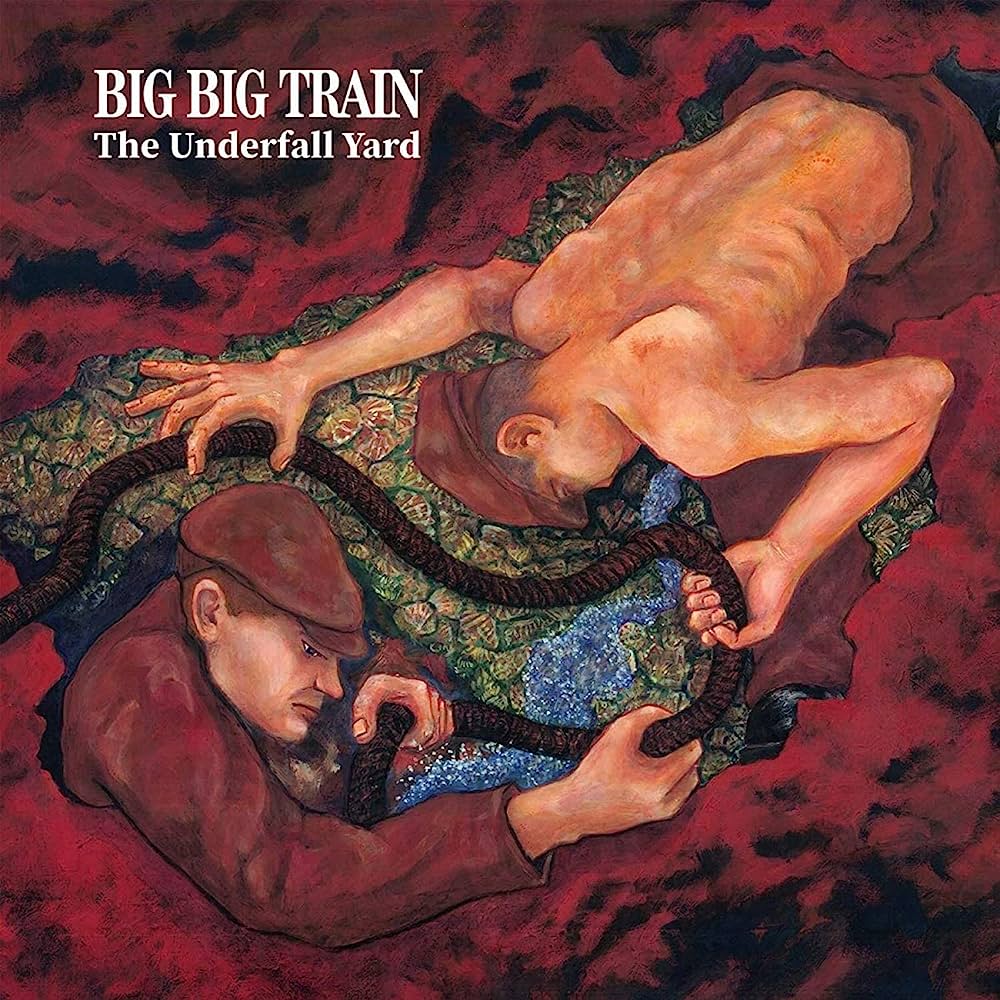
Big Big Train: Welcome to the Planet

BBT Welcome

This release came quickly after Common Ground, and is the last to feature the late David Longden, but it is by no means an “Odds and Sods” collection. It is a heartwarming album with some of BBT’s best-ever songs – Proper Jack Foster is an instant classic.

The Dear Hunter: Antimai

Dear Hunter Antimai

Casey Crescenzo’s Dear Hunter has one of the most unique sounds in music today, combining alt-pop, hot jazz, and prog jams. And it’s all good! Antimai is a concept album about a society where different classes of people live in concentric rings of a city. The poorest live in the outermost, and the most powerful live in the inner tower. I have listened to Antimai many times this year, and I always hear new and entrancing details.

Evership: The Uncrowned King, Act 2

Evership King 2

Evership’s Uncrowned King Act 2 concludes their musical interpretation of Harold Bell Wright’s allegory. If you are a fan of classic ’70s prog, then you will love this album.

Galahad: The Last Great Adventurer

Galahad Adventurer

These long-time prog vets released a very satisfying set of songs in  2022. Blood, Skin, and Bone is one of the best songs of the year – melodic, heavy, with an excellent message: how external factors influence how we react to each other. One of my most-listened-to albums of the past few months.

Glass Hammer: At The Gate

GH-2022-cover-1080px-PREVIEW

The concluding chapter in Glass Hammer’s Skallagrim saga is the best. You can read my review here. Glass Hammer is the finest American prog rock group, period. It is astounding how they have maintained such high quality over such a long career. As The Years Go By is another top song of 2022.

King’s X: Three Sides of One

Kings X 3 Sides

Fourteen(!) years after their last studio album, this hard rock/prog trio surprised everyone with one of their best albums ever. From the blistering funk of Let It Rain to the beautiful ballad Nothing But The Truth, King’s X have never sounded better. What a joy to hear them play again!

Jonas Lindberg and The Other Side: Miles From Nowhere

Digital 4

If I had to pick the single best album of 2022, Jonas Lindberg and the Other Side’s Miles From Nowhere would be it. It was released early in 2022, and I still listen to it regularly. It is full of delightful pop/rock hooks performed with excellent musicianship. I have listened to this album dozens of times, and I’m still not tired of it.

David Longden: Door One

Longden Door 1

This posthumous release of David Longden’s solo album only emphasizes what a loss the world suffered with his passing. It is not an unfinished set of sketches, but a complete and masterfully produced album. Love Is All is one of his finest songs, and a fitting conclusion to an amazing musical career.

The Porcupine Tree: Closure/Continuation

PT Closure

Another big surprise from a progrock veteran! I never thought Steven Wilson would work with Richard Barbieri and Gavin Harrison again, but here we are, and the music is pretty darn magnificent. Dignity is another PT classic, and here’s hoping there’s more music coming from them in the future.

Shearwater: The Great Awakening

Shearwater

This was a new discovery for me. I love late-era Talk Talk, and The Great Awakening sounds like something Mark Hollis would put together if he were still alive. No Reason is one of the most haunting songs I’ve ever heard. 

Tears for Fears: The Tipping Point

TFF Tipping Pt

Yet another surprise release from longtime musical veterans! Usually, when I hear a beloved artist from the ’80s is getting to put out new music, I get very apprehensive. Let’s face it, the ’80s were forty years ago, and the chances of rekindling the magic are very small. However, Tears for Fears’ The Tipping Point is one of the best albums of 2022, and one of the best of their career. Not a throwaway song in the bunch, and they sound as good as ever. Rivers of Mercy is my favorite, but every single song is a winner.

Devin Townsend: Lightwork

Devin Townsend Lightwork

Devin Townsend is one of the most fascinating artists working today. You never know what style his latest album will be: brutally hard rock, country, ambient, pop? Lightwork is a relatively quiet entry in his vast catalog, but it rewards repeated listens. The crunchy guitars crunch, the soaring vocals soar, and the endlessly satisfying melodies pour out of the speakers (or earbuds). So far, I think Lightwork is in Townsend’s top five best.

And there you have it: a baker’s dozen of great albums from the year 2022. The most satisfying trend is the number of great albums produced by artists after a long absence: King’s X, Porcupine Tree, and Tears for Fear. I hope they don’t wait as long to release their next albums!

WHY I LOVE HISTORY

Why I love history and think it is so important”

By Richard K. Munro

I love history because history is fascinating and so full of so many dramatic stories. History well told is beautiful and exciting.

And often “truth is stranger than fiction.”

The Roman poet Martial, who traveled to many lands and saw many wonders said, “He who loves history lives twice”. History, I believe, makes us wiser as history offers a multitude of examples about how leaders and societies react in the crises of domestic struggles, economic challenges, and war.

Winston Churchill said “Study history, study history. In history lies all the secrets of statecraft.” History provides essential knowledge about the emergence of our national instructions, our culture, our sports, our constitution, and our democratic values.

History is important because it helps us understand the present so we can analyze events more clearly and make better decisions now and in the future. History also provides all of us an identity as individuals and as a people so as to unify us as Americans.

Lincoln, the president who saved our union, said, “Fellow citizens, we cannot escape history.” We ignore it at our peril. Without history, we could lose our freedom, our national independence and our personal identity leaving us only with disunity, ignorance, and despair.

COLLEGE IS NOT FOR EVERYONE

by Richard K. Munro

College is not for everyone. And College is not for everyone right away. I did not go to college right after high school (unless you count a 10-week summer program with the U. of Northern Iowa) in Spain (I did earn 3 college credits). But then I stayed in Spain for a period of time. I got my BA from NYU. I should have gotten at MA (perhaps) at that time I took many graduate level classes in Spanish, political science and history for undergraduate credit. I commuted so NYU (much cheaper then) was economical (then). But graduate school in the liberal arts seemed then overpriced. I was tired of school (but not reading and learning). So, I served in the Marines and later traveled in Europe and Latin America. I worked in private industry for a period of time but after ten years returned to school to get a Teacher’s Certificate and get into an MA program with the University of Northern Iowa (in Spain). I had only a few marketable skills. One of the best things I did in high school was studying typing (at night school). I became competent and so typed all my own papers in college in English and Spanish. Working at the bank as I did for five years and in the military, it was useful to be able to type. Unfortunately, I came to the computer late but when I did word processing it was a strong skill for me.

Another expertise I had was being bilingual in Spanish and English. Living and studying in Spain greatly strengthened my Spanish (I also studied Portuguese) I worked in Spain as a tutor, translator, and tour guide. I transacted all my business in Spanish.

I do not regret traveling and visiting Portugal, Spain, France, Greece, Italy, Germany, Ireland and Britain. I mostly lived in Spain which was relatively inexpensive then. I could not afford to live in NYC in the 1970s but I could live in Madrid and my rent was $100 a month! I had no car but had a EURAIL PASS so I could travel inexpensively all-over Western Europe. In Madrid, Lisbon, Paris, and Barcelona I used the metro and public buses. i had no phone. I had no TV. I did have a radio cassette player. I had a PO box at American Express. I could also cash personal checks at AMEX. Most of my mail was sent to Madrid but I could also pick up mail in Funchal, Lisbon, Barcelona, Rome, Paris if I so desired. I loved living in Europe. I read a lot of books in English, Spanish esp. I went to plays, concerts and opera. I went to soccer games. I visited museums and historical sites all over Western Europe including battlefields. The only reason I came back from Europe, really, was because I wanted to get married and have a family.

I am grateful that America gave me (and my father and grandfather who were immigrants) economic and professional opportunity. I returned to college 2004-2005 on an ISI scholarship at UVA. I earned thirty post graduate credits (and maxed out my pay scale in preparation for my retirement) but cut my losses. I could have academically earned a PhD but to do so I would have had to sell my house cash in my retirement and struggle for years to finish the program and support my family. It just wasn’t in the cards. I had three children to help get through college. I paid my own way for graduate school.

We helped our kids (they worked too) for undergraduate. They paid their own way for graduate degrees which were career specific (engineering, or teaching certificates). If you have a clear career goal college could be a very good choice. If you have no clear goals, then I would suggest

1) working

2) doing 1 tour of service in the military

3) going to a Community College -you can transfer to a four year college later.

My son in law took TEN YEARS to get his BS in Engineering. He started at JC and got his AA degree and then finally went to college full time in Mechanical Engineering. He works for a major Aerospace manufacturer. He is highly skilled and only getting more so as his career progresses. After HS he worked at Sprouts but never gave up his goal. One of the advantages of doing a program over ten years is you can pay as you go. He borrowed no money for living expenses or tuition. My daughter worked on average 35 hours a week at IHOP when she was in college. With her AP credits she graduated in 4 years and gained a K-6 teaching credential with a bilingual certificate. Having her expertise helped her get a job right away. Most of us have to work for living. It is important for young people HS or beyond to GET WORK EXPERIENCE. For too many College is a debilitating hedonistic experience. If you have to work and study you will be more serious. If you are paying your own way and have bills to pay you will be more serioius.

  • Like

Music, Books, Poetry, Film