
“If economics only applied to circumstances favoring avaricious behavior, it would be wholly proper for scholars of the humane disciplines to hold economics in contempt. Fortunately for economists, the antecedent is false.”
https://egnatiavia.blogspot.com/2020/09/universalizing-economics.html
Nock and Nisbet on Society and State ~ The Imaginative Conservative
Both Nisbet and Nock find this sad state of affairs very human, but also very counter to the American tradition of strong societies that take care of alcoholism, crime, homelessness, and mental illness. In its expanded role, the State becomes a kind of Nanny, a mothering hen. Further, as the State grows, it reshapes the rules of society, giving itself the advantage in all conflicts with parts (or wholes) of the population. As Nock understood it in the 1930s, and Nisbet in the 1960s, the State desired—whether it openly admitted this or not—to assume all power over society and thus render society—and its myriads of conflicting authorities (in and through which the human person found freedom)—obsolete in the long run. Indeed, the State wanted to take the place of the Church as the only glue that holds all together. This was just as true, both Nock and Nisbet feared, in collectivist societies, whether they called themselves republican, fascist, or communist.
— Read on theimaginativeconservative.org/2020/09/nock-nisbet-society-state-bradley-birzer.html
Brass Spittoon: Bradley Birzer on Christian Humanism | Front Porch Republic
Stewart: One of the goals for your book is to rescue the term “humanism” for Christians who are suspicious of it based on the dominant strand that traces its lineage to the Humanist Manifesto of 1933. You offer five “canons of humanism” in order to recover an alternative variation of the tradition. Briefly, humanists are bonded by the following: 1) belief in human dignity; 2) defense of liberal education; 3) affirmation that humans are irreducibly spiritual and material; 4) citizenship in the Republic of Letters; 5) belief in “a power of some supernatural order” (1-11). What have Christians lost by holding this word in suspicion? Has suspicion of the word itself prevented the tradition as well?
Birzer: Great question, Matthew. Words matter, and, of course, as has happened so often in the English tradition, words evolve. Humanism became a serious “god-like” term—equivalent to liberty, democracy, etc.—in the nineteenth century. It became so popular by the 1890s and early 1900s that everyone wanted to claim humanism for their own. Like our current use of democracy, it had come to mean “everything that is good.” The height of such cultural capture of the term came in the late 1920s, when a wayward Protestant minister adopted the term for his own form of “religion.” That form of religion—devoid of anything supernatural and really, frankly, not so kind to the natural—eventually evolved into the powerful Humanist Manifesto of 1933, which its professions of desired secularism. Simply put, the writers of that manifesto captured the word and have held it in captivity—by their allies and their opponents—for nearly a century now. At its most simple definition, being a humanist means believing in the humanities, the liberal arts. At its most simple definition, then, being a Christian means being a follower of Jesus Christ. A Christian humanist, properly understand and at the most fundamental level, means being a follower of Jesus Christ and being a lover of the liberal arts. Of course, the implications for these things are immense, especially when one starts getting into the Word and the Incarnation
— Read on www.frontporchrepublic.com/2020/09/brass-spittoon-bradley-birzer-on-christian-humanism/
Reflections on Tocqueville: The Pervasiveness of Equality ~ The Imaginative Conservative
Several years ago, I read Edmund Burke’s Reflections on the Revolution in France and offered here at The Imaginative Conservative seventeen separate essays (observations) on that grand work. I now propose—over the course of the next half year—to do the same with Alexis de Tocqueville’s masterwork, Democracy in America. I will be reading it from page one and proceeding through both volumes. If you’d like to follow along, I’ll be using the two-volume 2012 Liberty Fund edition, available in a print edition as well as (free) in a download PDF/ebook edition.
— Read on theimaginativeconservative.org/2020/09/reflections-tocqueville-pervasiveness-equality-bradley-birzer.html
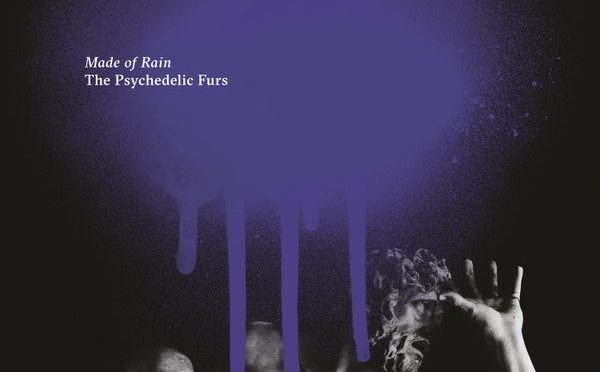
The Psychedelic Furs are Back!!
Until roughly 24 hours ago, I had no idea that The Psychedelic Furs even existed any longer. After all, the last official TPF album, the outstanding World Outside, came out in 1991. That was twenty-nine years ago!

After that, Richard Butler formed the extraordinary pop outfit, Love Spit Love. Then, he more or less disappeared. Well, it turns out—a huge thanks to Bill Huber for letting me know—The PF released a new album, Made of Rain, on the last day of July. So, the album is just at a month old now.
I’ve listened to almost nothing else since downloading a copy from amazon.
Let me be blunt. While this is no rehash of previous work, Made of Rain is everything a TPF album should be: odd; mysterious; cacophonous; fetching; catchy; deep; quirky; soulful; angry; melancholic; joyous; driven; clever; seeking; achingly beautiful; guttural; punctuated; jazzy; playful; and convicted.
I don’t have the lyrics in front of me, but Richard Butler sounds as good as ever. Indeed, if there’s a difference in his vocal quality from 2020 to 1991, I can’t hear it.
Twelve tracks make up the album, and each one of them is a gem. While some songs are immediately more striking than others, there’s not a dud track on the album. All of the music is smart pop, intricate and compelling. As with all TPF, there’s great guitar, bass, drums, and sax.
Made of Rain is a extraordinary achievement, and I’m so very glad to have Butler and Co. back in the music world.

Americana
So, recently I went riding around North Cascades. To the west of this wilderness is a set of towns hemming the US-Canada border. You can actually ride straight up to the boundary, and there were these twin roads separated by international lines. Speed limits posted in miles/hr on one side and km/hr on the other. But unlike the great wall of southern border, this was just more like a neighborhood fence. There were also strikingly similar ranches and farms on both the sides. But, of course, properties in the US had quite a few Trump/Biden signs. Thanks to the ongoing reality show.
Without being derisive we can all agree it’s sort of reality show right now. But this drama is not uniquely American, it’s quite common in all democracies. Electoral processes tend to exploit all our lower level instincts, and it’s only human to fall for it. Framers knew about this aspect to the masses, so they rightly engineered some institutional checks. In that sense, from cultural or Constitutional perspective, moving beyond baser instincts is something which makes Americans unique. That’s something which separates Americans, and in general the English tradition, from the rest.
So, minding your own business might be more American than political activism. Wearing no signs is probably more American than Black/Blue lives matter badge. Waving/burning flag probably makes you less of an American compared to not caring about the flag itself. Same is the case with worshiping political idols, celebrating defense, law enforcement etc. All these things are common across the world, nothing uniquely American about it. In short, American exceptionalism is about avoiding these very trappings. It’s about employing slightly higher levels of cognition, sensibility etc.
From the perspective of the framers, being American is about focusing on the underlying truth and not getting distracted by symbols or personalities. It’s about seeing subtle and often harsh truths, and acknowledging them. It’s about realizing world is more complex than we can comprehend. It’s about being aware that actions even with good intentions can have negative consequences. Eventually you don’t have to read extensive literature to be an American, you don’t even have to read the Constitution. In general, just being a decent, responsible individual would automatically make you a model citizen. Seems like, being a real American is not that difficult, but it’s still quite uncommon.
The Path to Liberal Economics
“Economics can and must be used to make sense of the human condition. The unity-in-diversity—one might say the catholicity—of human society is rendered intelligible by the rationality postulate.”
https://egnatiavia.blogspot.com/2020/08/the-path-to-liberal-economics.html
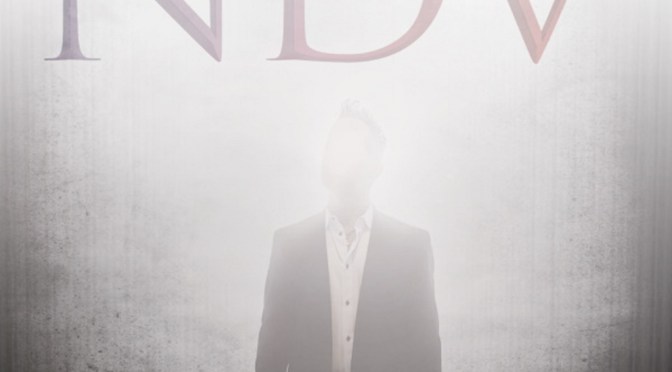
Profoundly Tangible: Nick D’Virgilio’s Invisible
Being a fundamentally HUGE (yes, it’s that large!) fan of Big Big Train, I wasn’t sure what to expect from Nick D’Virgilio’s solo album, Invisible. I proudly own his first album, Karma, his first EP, Pieces, every Spock’s Beard album, and Rewiring Genesis. To be sure, I presumed I would like Invisible, as I consider NDV our greatest living drummer, armed not only with rhythm (Holy Moses–that drum kit!) but with vocal prowess as well. And, from what I can tell from social media, he seems like a truly good and genuine person.

All of this adds up to high expectations for Invisible.
Well, it is even better than I expected. And, I expected a lot.
If you asked me to sum it up in a few words or even analyze it track by track, I couldn’t do it. This is a whole work of art—something to be digested in one sitting. Relentlessly captivating, it mixes progressive rock with classical with (ok, I was surprised by this one) with 1960’s style R&B with some mid-1970’s Styx with some punk-tinted Rush with broadway musicals with electronica with funk with straightforward rock and pop. Frankly, Invisible has it all. In this sense, it fits Andy Tillison’s definition of progressive—basically, “whatever I damn well want to throw in, I throw in” (my words, not Andy’s).
What most captures my imagination with the album, though, is NDV’s lyrics—so utterly earnest and so uplifting. In every song, NDV calls us to be our best. That NDV loves life is a certainty as certain that the sun will rise tomorrow, and his joy comes through every song.
If you’re looking for a new BBT or Spock’s Beard album, this isn’t it. And, that’s perfectly fine. Frankly, it doesn’t even really seem like a simple evolution from NDV’s previous solo efforts.
Invisible is . . . beyond all of this in ways that are very difficult to put into words.
But, if you’re looking for something gorgeous, something meaningful, something real, something inspiring. . . look no further. If anything, NDV has proven that real life is quite the opposite of being invisible. Rather, NDV calls us to be our best, to be tangible, and, frankly, to be the incarnate souls we’re meant to be.
To find out everything about NDV, click here: https://www.nickdvirgilio.com

Passion Incarnate: IZZ’s Half-Life (2020)
Well, let me admit, immediately and without hesitation, I’ve been a huge fan of IZZ since I first heard them a little over a decade ago. In everything they do, they combine passion, taste, and elegance. One might even describe their music as an earnest intensity. Lyrically, the band never dumbs itself down, but offers words of majestic inspiration and serious contemplation.

Their latest release is an EP, appropriately and rather cleverly entitled Half-Life, itself comprised of three new tracks and one live track. The three new tracks—entitled, in order, “The Soul of Music,” “Into the Sun,” and “Half Life”—offer grand progressive visions, reflecting, respectively, IZZ’s deep appreciation and love of Kate Bush and Chris Squire and Yes; Rick Wakeman and Big Big Train and ELP; and, perhaps most interestingly of all, Stranger Things(the Netflix series) and Kansas and Glass Hammer.
None of IZZ’s appreciation of other progressive rock acts gets in the way of that uniquely beautiful IZZ voice. Indeed, such appreciation on the part of IZZ of other bands only makes IZZ all the more interesting, honed, and glorious. And, just in case it might seem like the music overwhelms the listener, the lyrics simply soar, especially on “Half Life,” bringing the listener to the verge of tears in the last several second of the track.
The final track is a rather stunning live rendition “The Weight of It All” from the band’s Ampersand, Vol. 1, album.
In this current whirligig of viruses, protests, injustices, and anxious unrest, do yourself a grand, grand favor—treat yourself to the humane, cultivated, and class act that is IZZ. Your soul will thank you.
[To support IZZ (and for a mere $5), click here: https://izzmusic.bandcamp.com/album/half-life-ep]

Beauty Against the Data Lords: The Maria Schneider Orchestra
Beauty like that is strength. One could turn the world upside down with beauty like that.
Doestoevsky, The Idiot
Over the past three decades, Minnesota-born composer Maria Schneider has staked out her own unique territory, based in jazz but expanding beyond category. From classical training and an apprenticeship with master arranger Gil Evans, Schneider parleyed her vivid sense of musical color, vibrant compositions and power-packed conducting skills into the leadership of a 20-piece Jazz Orchestra. At the height of the 1990s jazz boom, Schneider’s ensemble maintained a weekly residence at the New York club Visiones and recorded three fine, critically acclaimed albums (Evanescence, Coming About and Allegresse) for the German label Enja.
Reacting nimbly to the Internet’s disruption of music’s value, Schneider pivoted to crowdfunding for her 21st-century recordings. Concert in the Garden, Sky Blue and The Thompson Fields (along with Winter Morning Walks, a classical song cycle composed for soprano Dawn Upshaw) inhabit a rareified sweet spot where composition and improvisation feed each other, fusing the potent swing of classic big bands and the lush warmth of orchestral tone poems to evoke a deep-rooted, constantly unfolding delight in the world of nature.
But in 2014, David Bowie recruited Schneider and her orchestra for the jolting noir single “Sue (Or In A Season Of Crime).” The collaboration didn’t just boost Schneider’s profile (and result in sax player Donny McCaslin and guitarist Ben Monder backing Bowie on his swan song Blackstar); it unlocked a grainier, more shaded musical vocabulary, evident in her most recent commissions. This expansion also mirrored Schneider’s dedicated activism on behalf of copyright owners, pushing back against Big Data’s predation on both creative content and personal information.
The new Maria Schneider Orchestra double album Data Lords is the magnificent result, their most complete statement to date. Conveying both the bleak potential of online life blindly lived and the bounteous beauty of the life around us we take for granted, Schneider conjures up slow-burning musical structures that, as they catch fire, blaze with fear and dread — but also with hope and joy. Throughout there’s a symphonic sweep, a supple rhythmic foundation and a seamless flow of inexhaustible melody.
Continue reading Beauty Against the Data Lords: The Maria Schneider Orchestra Spirit of Cecilia
You must be logged in to post a comment.