Greetings, Spirit of Cecilia readers! Brad Birzer and Tad Wert have been impressed with the music of Norway’s Airbag. They combine excellent, Pink Floyd-adjacent melodies with thought-provoking lyrics. In the summer of 2024, they released their sixth studio album, The Century of the Self, which was one of the best albums of that year. Brad and Tad finally get around to discussing its merits – better late than never!
Tad: Brad, I absolutely adored Airbag’s previous album, A Day at the Beach, and the lead-off track, Machines and Men, is one of the best songs they’ve ever done. Now that they’ve followed up that triumph with The Century of the Self, what strikes you right off the bat with that album?
Brad: Thanks so much, Tad. It’s great–as always–to be reviewing with you. Yes, I very much love and admire Airbag, and I have from their beginning, whether on Kscope (briefly) or Karisma. They confirm what I’ve thought for ages, that is, a prog band is only as good as its bassist. Great guitarist, too. Great drummer as well. Love the keyboards, too. So, win-win-win-win. What a great band. An amazing band. I had to throw “amazing” into the mix, as I’ve typed “great” one too many times!
Granted, they wear their Pink Floyd love on their sleeves, but, frankly, I think that makes them even better. Very glad to have some Floydian music still being produced. And, yet, whatever the Floyd influence, it serves as an inspiration for the band. They’re not enslaved to it, but inspired by it. Strangely and perhaps paradoxically, the Floydian influence makes Airbag even more unique.
I didn’t realize they were already on their sixth album. Given their sheer output, as well as the solo output of Bjorn Riis, I find the music even more astounding.
So, what strikes me right off the bat? An excellent question, Tad. After having listened to the album a half a dozen times, I’m struck by two things. The bass and the lyrics. Both, extremely courageous. How about you?
Tad: Brad, you and I agree that a good bassist is essential to a prog band. I think of what Yes might be without Chris Squire, and it would never have been as groundbreaking and influential as it ended up. Or how about Steve Babb’s work with Glass Hammer? He is the key to that group’s greatness.
Along the same lines, Anders Hovdan does a terrific job anchoring Airbag’s music. A lot of their songs take time to fully develop, and Hovdan’s insistent bass lines provide interest for the listener. I love the way the entire group take their time building up a song. They often start out quietly, and they inexorably build in energy and sound until there is a most satisfying release. Their melodies are not overly complex or complicated, but I would certainly classify them as “progressive rock.
That said, I think Bjorn Riis (guitars and vocals) seems to be the main driver of Airbag. His songs always intrigue me. I’ve told you before that I have to like a song’s melody before I worry about the lyrics, but when I first heard the opening track on The Century of Self, I was immediately struck by the lyrics. They’re brief enough to share in their entirety:
Did you come here to find some peace and hide? Too much confusion in your head at times Don’t want to bend, conform, you’ll never obey Don’t want no part of this conspiracy
I see these people keeping their heads down Denying everything they used to be Don’t try to touch, don’t ever get too close They’ll make you suffer and they’ll make you bleed
Who do you feel you are today? Who will you crucify and slay? It’s driving me insane
Did you believe they’d ever let you go? There is no escape, there is no turning back You’re canceled now, they’ll cancel everything They’ll make us suffer and they’ll make us bleed
Who do you feel you are today? Who will you crucify and slay? It’s driving me insane
Brad, it seems to me this is a protest against the illiberalism of contemporary “cancel culture”, and that is a brave stand to take these days! So, I went back and looked through some of their previous songs, and there is definitely a consistent streak of individualism and a plea for personal freedom running through them. I think they are today’s version of a countercultural music group, and I admire them for that. I am really interested in your thoughts on their lyrics, since you are able to uncover deeper meaning from them than I usually do!
Brad: Yes, I totally agree, Tad. There’s something quite special in Airbag’s lyrics that call out for us to be more individual than we’re comfortably being in the current morass of society. I think Airbag is definitely protesting against the loss of free speech and free ideas that seems to have spread throughout Europe and the western world (America is not excluded). I suppose part of this is my age, but it’s hard not to look back at the 1980s and especially 1989 as a golden era in western civilization. Not only were we growing economically, but free societies were trouncing unfree societies. Despotisms and authoritarianism and totalitarianism were on the run. A pope and a president were beating the life out of them. Now, we sit in silence as our “betters” tell us what to do and what not to do. I wouldn’t have necessarily have expected protest to arise from Norway, but amen.
Those lyrics are worth repeating, Tad:
Did you believe they’d ever let you go? There is no escape, there is no turning back You’re canceled now, they’ll cancel everything They’ll make us suffer and they’ll make us bleed
And, then, of course, we’re not guiltless:
Who do you feel you are today? Who will you crucify and slay? It’s driving me insane.
Track two, “Tyrants and Kings” continues the libertarian themes:
Join the cause Say no to everything we fear Get used to lying You’re a prisoner now Take no stand There are no sides there’s only ours You shoot to kill You’re a soldier now
The “get used to lying” line brings to mind Solzhenitsyn’s note that all totalitarianism is built on lies. The huge lie of the society and all the little lies that one must employ to survive.
Looking through the lyrics of the remaining three songs, they too speak to the loss of individual dignity.
So, bravo, Airbag! Keep fighting the good fight. And, thanks, too, for the killer bass lines.
Tad: Brad, thank you for highlighting the lyrics to “Tyrants and Kings”! Yes, Airbag is a band that appeals to me both in musical terms and lyrical ones. That is quite rare these days. And, like you, I’m impressed these Norwegians are reminding the rest of us what is truly important.
So, gentle reader, if you are interested in excellent progressive rock with a Floydian flavor, and highly literate lyrics, do yourself a favor and check out Airbag’s latest album, The Century of the Self. You won’t be disappointed!
Greetings, music lovers and readers of Spirit of Cecilia! 2024 is fast coming to a close, and the SoC crew would like to share their favorite albums of the year. There was a lot of great new music, terrific deluxe reissues, and releases from old favorites. Hopefully, our lists will lead to some albums you will love as well.
Brad: Tad, thanks for starting us off and inviting everyone to participate. Always great to write with you! I’ll just start with an alphabetical listing of my favorite releases of 2024:
“Dogs” by Pink Floyd, as done by Tim Bowness and Giancarlo Erra
Airbag, The Century of the Self
BBT, Flare on the Lens
BBT, The Likes of Us
Bruce Soord, Caught in the Hum
David Gilmour, Luck and Strange
Frost*, Life in the Wires
IZZ, Collapse the Wave
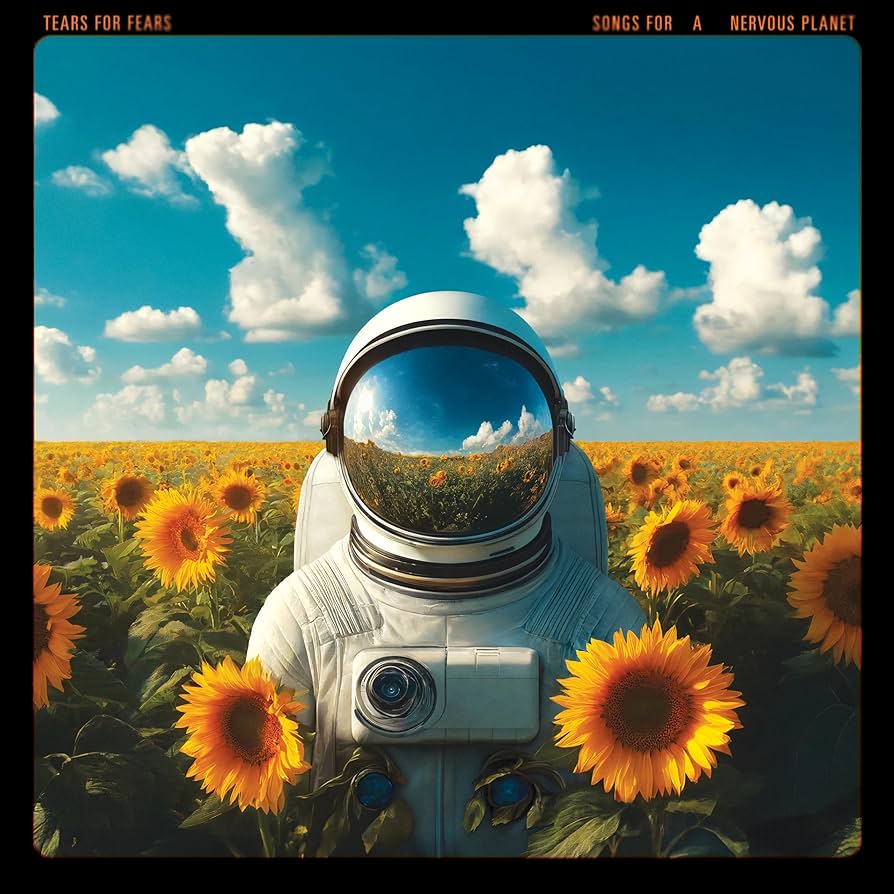
Tears for Fears, Songs for a Nervous Planet
The Bardic Depths, What We Really Like in Stories
The Cure, Songs of a Lost World
The Pineapple Thief, It Leads to This
The Pineapple Thief, Last to Run EP
The Tangent, To Follow Polaris
Tim Bowness, Powder Dry
And, I’m not even including vital re-releases such as the deluxe edition of Synchronicity by the Police; Fear of a Blank Planet by Porcupine Tree; Spectrum ‘97 by Phish; Lament by Ultravox; Bursting Out by Jethro Tull; or This Strange Engine by Marillion.
If I go just by my playlist numbers, I’d have to list “Dogs”, Frost*, IZZ, and, especially, The Cure. In fact, since The Cure first arrived, I’ve listened to almost nothing else. But, I went through such phases with Frost* and IZZ, too. And, really, I can’t recommend the single of “Dogs” highly enough. Bowness and Erra give it just the right beauty and creepiness that a proper Pink Floyd remake so desperately needs.
I must admit, though, I’m totally against the lyrical content of “Dogs.” I can’t believe our entrepreneurs are so bloodthirsty as this. Like or despise Elon Musk, for example, as you will, but he’s not bloodthirsty. In fact, if anything, I think he’d hate to “be dragged down by the stone.” And, he would hate to drag anyone else down by the stone. He definitely wants to win, but he wants to win fairly, by the rules established by society (unless all of society is corrupt, but let’s hope that Pink Floyd isn’t so Marxian as this). Maybe I’m wrong, however. Perhaps, I’m deaf, dumb, and blind, and that I keep pretending. . . Is this how Roger Waters saw his friendship/adversarial relationship with David Gilmour? If so, so very sad. For my money, give me Phish’s “Bouncing Around the Room” as the touchstone song dealing with entrepreneurship.
To be certain, though, I’m also a bit biased on the whole The Bardic Depths release. Given that I wrote the lyrics for it, I’m quite taken with it. Dave Bandanna did an amazing job in composing the music. So brilliant, so beautiful, so mystical, so joyful. Dave brings every song to life, and I’m always stunned to hear my own words given form and made manifest.
And, then, what’s not to love about the new David Gilmour? In fact, when he sings with his daughter, Romany, I’m completely taken. So much better than Dogs, co-written with Roger Waters.. Especially if you listen to something as glorious as “Between Two Points.” I would give anything to have such a relationship with my daughter that I could write something so gorgeous with her. Romany over Roger any day.
And, seriously, this brings me to all the incredible re-releases of 2024. Oh, to be “Prince Caspian” and float upon the waves. Oh, to be Prince Caspian. Dang, Phish was simply brilliant when they were.
I also want to single out Airbag. I don’t know their politics, but it strikes me that with this release, especially, they’re trying to combat conformism and cancel culture. I could be wrong, but I’m willing to take a chance that this is a brilliant counter-cultural masterpiece. One that shakes the conformists of the world to their very foundations. And, who wouldn’t love that bass playing and interplay with the drums? Genius. Thank God for the non-conformists of the world. Airbag sounds like Pink Floyd, in terms of legacy, but they are completely their own band.
If Airbag sounds anti-political, Robert Smith on the new Cure album, sounds confessional. Bless me, Father, I, Robert Smith, have sinned, and something wicked this way comes. Truly, the latest The Cure album is a masterpiece, a true sequel to Pornography and Disintegration. My love and respect for Smith only grows with age.
If Airbag is countering the world and Smith is confessing for us all, then IZZ is proclaiming the inherent goodness of each one of us. I’m not sure what the lyrics are all about on Collapse the Wave, but I feel that John Galgano and Laura Meade are asking us to look at our best selves. Rather than be dour, they find wonder. As far as I can tell, IZZ has been reading a lot of T.S. Eliot and a lot of John Paul II.
Tad: What a great list, Brad! Yours and mine overlap quite a bit, since we are often of like mind when it comes to music. Here is mine, based on how often I listened to each album:
8. Kyros – Mannequin
7. IZZ – Collapse the Wave
6. Jeff Johnson/Phil Keaggy – Spinning On a Cosmic Dime
5. Tears For Fears – Songs For a Nervous Planet
4. Airbag – The Century of the Self
3. Bardic Depths – What We Really Like In Stories
2. The Cure – Songs of a Lost World
1. Frost* – Life In the Wires
I’ve been a fan of Kyros’ music for several years now. They wed 80s sensibilities to 2020s expertise. Mannequin is another great collection of pop/prog.
Like you, I admire IZZ enormously. As far as I can tell, the lyrics to the title track are about quantum physics and faith. Who else but the Galgano brothers could pull off such an ambitious song? They definitely succeed.
Jeff Johnson and Phil Keaggy have collaborated several times before, and Spinning On a Cosmic Dime is the most lighthearted and fun of their albums. Johnson is a master of all keyboards – acoustic and electronic, while Keaggy is one of the finest guitarists alive today. When they get together, magic happens.
The Tears For Fears is primarily a live album, but the five new studio tracks are some of the best songs they’ve ever recorded.
You’ve already said everything I could want to say about the Airbag album. They continue to impress me with their social commentary, and their instrumental chops are outstanding. Their previous album, A Day At the Beach, is still my favorite, but The Century of Self is really, really satisfying.
The Bardic Depths’ new one is also a great album. Listening to it is like having a beer with C.S. Lewis, Tolkien, and the other Inklings. To my ears, it’s the most musically ambitious set of songs from TBD, and I have thoroughly enjoyed listening to it throughout 2024.
The Cure’s album came out of nowhere as far as I was concerned, and I approached it with some trepidation – there’s nothing worse than an old favorite trying to recapture the spark and failing miserably. Robert Smith et al. came up with a fantastic album that easily holds its own with their previous best. Amazing!
Frost*’s Life In the Wires is far and away the most-played album of 2024 for me. I have yet to tire of it, and every time I listen to it I find some new and delightful detail. Jem Godfrey sings all of the vocals on this one, and he is terrific. The beautiful melodies pouring out of my speakers are such a bountiful feast for my ears. The story is fascinating as well – a young man rebels against a world run by AI when he hears a pirate radio broadcast. After tracking it down to its source, it turns out to be an automated program. But then things get weird – he seems to sacrifice himself to become the new source of the radio broadcasts and spark an awakening of humanity. At least that’s how I read it.
So that’s what I spent my time listening to this past year. I also loved the Ultravox Lament box set and the Talk box set by Yes. It’s nice to have this often overlooked album get the treatment it deserves.
Brad: Yes, Tad, thanks for the reminder about Yes’s 30th anniversary edition of Talk. The last of the Trevor Rabin-Yes era albums, it’s simply beautiful. Clearly, the band was going for a progressive AOR sound at the time, but the production is so very clean. I love the packaging as well for it. Not overblown, but a solid release in terms of presentation. Don’t get me wrong, I love big box sets like Lament by Ultravox, but sometimes the smaller packaging works just as well. For me, Marillion’s and Jethro Tull’s releases–in terms of packaging–hit the sweet spot. Basically small books that fit perfectly on a book shelf.
Thanks, too, for the story about the new Frost*. I’ve listened to it numerous times, but I’d not figured out the lyrics. What a great story! Now, I’ll listen to it with different ears.
I’m so glad we agree on The Cure, on Airbag, and on Frost*. Three essentials of the year.
As it turns out, The Cure also released their brand new album as a live release–Songs from a Live World–as well. Gorgeous. Seriously, what else can Robert Smith do? He simply captures the mood of every era in which he finds himself. And, I, for one, am so fortunate to be alive when Robert Smith is alive.
I would also note that 2024 is an important anniversary date. Kevin McCormick’s gorgeous Squall came out in 1999, a mere 25 years ago! Even the rather snobbish All-Music recognized the brilliance of Squall. As far as I understand it, McCormick is working on a follow-up CD.
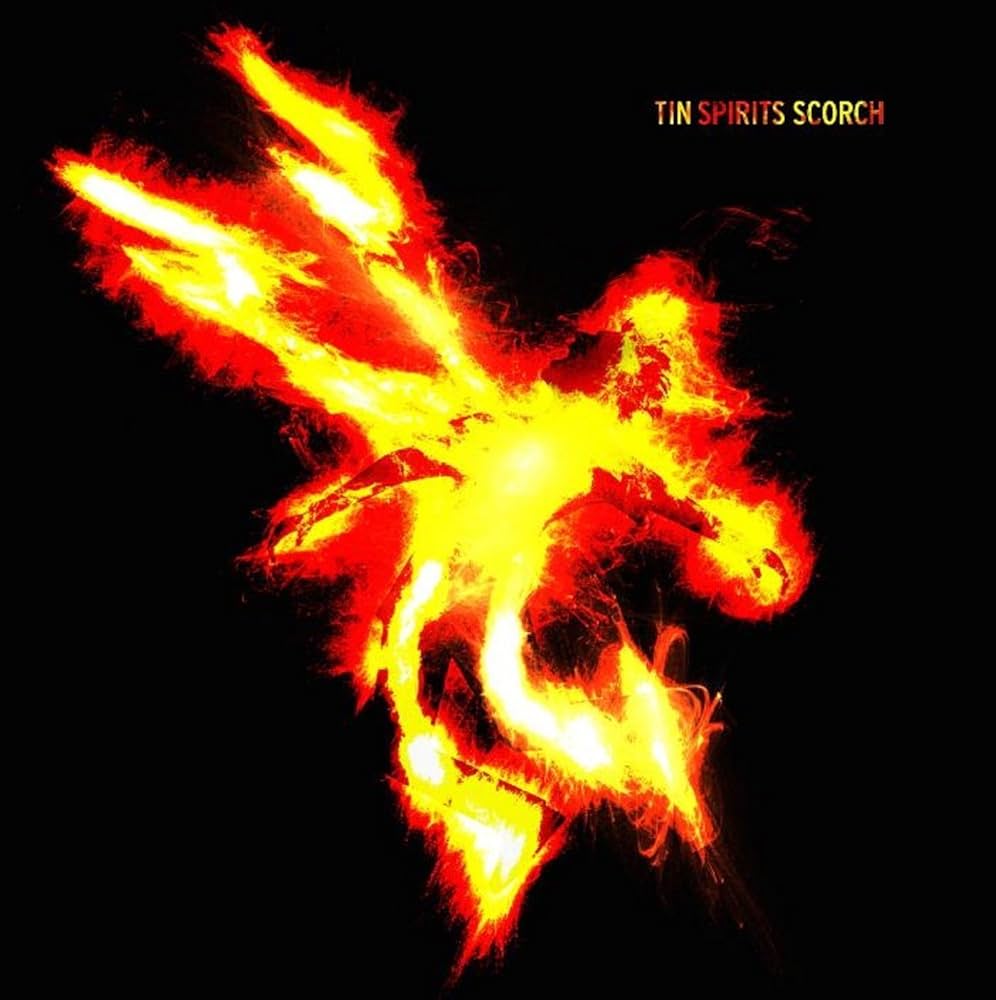
It’s also the ten-year anniversary of the genius Scorch by the Tin Spirits. A favorite album. Also, ten years ago, appeared the brilliant Demon by Gazpacho and Anathema’s mediocre to good Distant Satellites.
But, Holy Moses, it’s not just about Tin Spirits. If we go back to the twentieth anniversary of releases, 2004, we get to The Pineapple Thief, Variations on a Dream; Glass Hammer’s Shadowlands; Proto-Kaw, Before Came After; The Tangent, The World We Drive Through; Ayreon, The Human Equation; and Marillion, Marbles. Sheesh, what else do you want?
Carl: Full and necessary confession: 2024 turned out to be year in which I listened to little new prog rock, or rock of any kind. Not for any lack of new and worthy rock music, but 2024 also turned out to be the year in which I fell quite a ways down The Vinyl Rabbit Hole. I’ll likely say more about that in a separate post on my favorite jazz of 2024, but suffice to say that I’ve been haunting various thrift and record stores.
My most listened album of the year was released 30 years ago: Seal’s second album (1994), titled, inconveniently enough, Seal—just like his 1991 debut. A deluxe edition was released, with a remastered version of the album (fantastic), as well as alternative versions of the songs (also wonderful). I listened to this album countless times when it first came out, and I have never tired of it (or of his first or third, titled Human Being). Why has it resonated so strongly with me? I’m not entirely sure, but for me it is a perfect pop/rock album, and it sits squarely in the middle of a trio of albums that I continue to think is one of the finest three-in-a-row rock/pop album families you’ll ever hear.
I enjoyed the new albums by Frost* and Pineapple Thief and if I listened more closely, I’m confident that I would really like them. Both bands have consistently produced accessible, intelligent prog rock of the highest order, so I plan to revisit them in the weeks to come.
Caligula’s Horse’s Charcoal Grace is mysteriously but aptly titled, as the music has a dusky, burnt quality that also shines with many moments of delicate beauty. This Aussie band has been a longtime favorite, and this album adds to a discography rich with ridiculous chops and vocals at the service of exquisitely crafted songs. A keeper.
Keep Me Fed by The Warning, the talented sister trio out of Mexico, is (as they say) a banger. Or a series of bangers, the sort of swaggering, catchy hard rock—with sublime harmonies—that has been sorely missed in recent years. For my money, I prefer their live versions a bit more; they are dynamic performers whose young ages (20 to 25) defy (even bely) the band’s evident maturity and exuberant zest.
Speaking of all female bands, a somewhat guilty pleasure this year has been watching videos of the mind-melting Japanese metal band Lovebites. They have been compared to Iron Maiden and similar metal bands, which makes it all the more strange as I have never cared that particular genre. All five of these ladies are virtuosos, and Miyako Watanabe, one of the two guitarists, was a classical pianist until her late teens, when she picked up electric guitar for the first time. The live album Memorial For The Warrior Souls (2024) and the studio album Judgment Day (2023) are unrelentingly fast, in-your-face, melodic, and—yes—tremendous fun. Check them out live on YouTube and prepare to be amazed.
Myles Kennedy might just be the hardest working and (by all accounts) nicest rocker out there today, and his third solo album The Art of Letting Go is classic Kennedy—powerful, assured, dynamic, moving—with some nice little twists. His is one of the finest rock voices of the past couple of decades, but his guitar playing and song writing are just as polished, varied, and inviting.
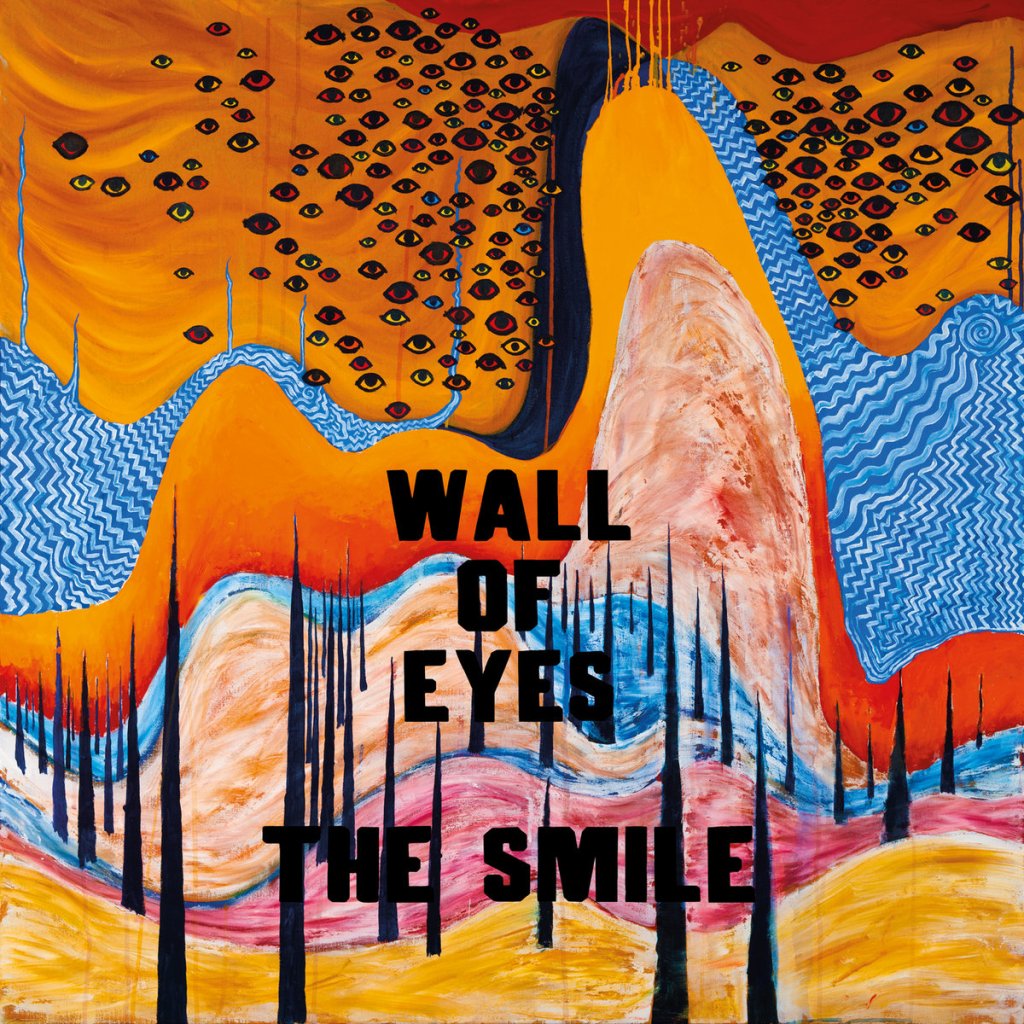
The Smile is like Radiohead if it didn’t have all of its members–and if it released albums more quickly. Which is what it is, with Thom Yorke (vocals, guitar, bass, keys) and Jonny Greenwood (guitar, bass, keys) joined by Tom Skinner (drums). Wall of Eyes (released in January) and Cutouts (same session, released in October) are quirky, dark, strangely fun, often weird, always melodic, and never, ever boring. Yorke’s voice is timeless and Greenwood’s playing, which is always so distinctive, is a revelation. And this album comes across to me as even more jazz influenced than their debut—but never in a direct, obvious way. Great stuff!
One of my favorite country artists, Dwight Yoakam, is back with his first new album in almost a decade. Brighter Days finds the Bakersfield legend firing on all cylinders, apparently reenergized by marriage and a young son. Dwight sounds half his age (68) and his band, no surprise, is tight and razor sharp. Every cut is worth the price, with the deceptively simple “I Spell Love” getting a nod from this fan.
Speaking of artists aging well, Van Morrison continues his remarkable output, with three albums: Beyond Words, New Arrangements and Duets, and Live at Orangefield. The first is all instrumental and is enjoyable, with some unexpected quirks. The second is a solid collection, featuring collaborations with Kurk Elling, Joss Stone, and Willie Nelson, all to good effect. But the live album, recorded a few years ago, is a revelation, captures a mid-70s Morrison at the top of his powers, featuring (as usual) a crack band and some other-worldly backing vocals. It rewards repeated listens and is a notable testament to Morrison’s brilliance as both a singer and songwriter.
Brad: Carl, excellent choices. I, too, like The Smile, and I, too, (thanks to you) listened to a lot of Seal II as well! I also bought Trevor Horn’s memoir, but I have yet to read it.
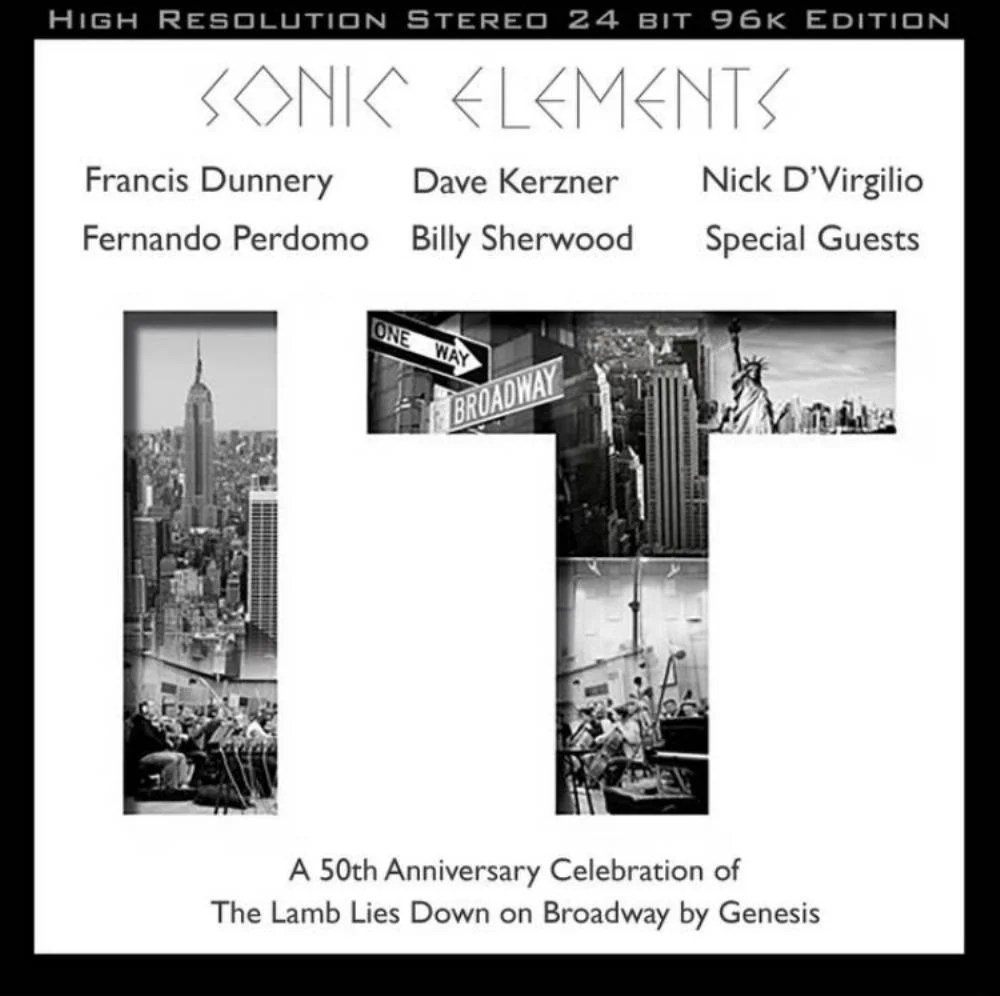
Well, folks, this pretty much wraps up 2024 for us. We have a lot to look forward to in 2025. It looks like The Cure will be releasing more music, there’s a new and final season of Stranger Things, and we’ll be celebrating the 50th anniversary of The Lamb Lies Down on Broadway by Genesis. Not only is there a 50th anniversary edition of The Lamb coming out, but the brilliant Dave Kerzner has re-recorded the entire album and is offering it as a 3-cd set plus hi-res download for only $49.99, plus shipping.
Big Big Train will be touring the U.S, and IZZ will be performing some stripped down shows–maybe even in Hillsdale!
I’m sure we’ll continue to give our hard-earned money to The Burning Shed and Rita Kay Drew’s The Band Wagon USA. I highly recommend supporting both of these truly excellent business enterprises. Amazingly enough, each is competitive with Amazon, even with overseas shipping costs.
Tad, Carl, Kevin, Erik, and I wish you all a Merry Christmas (remember, we’re only on day three of twelve), a Happy Hanukkah (remember, we’re also only on day three!), and Happy New Year, everyone!
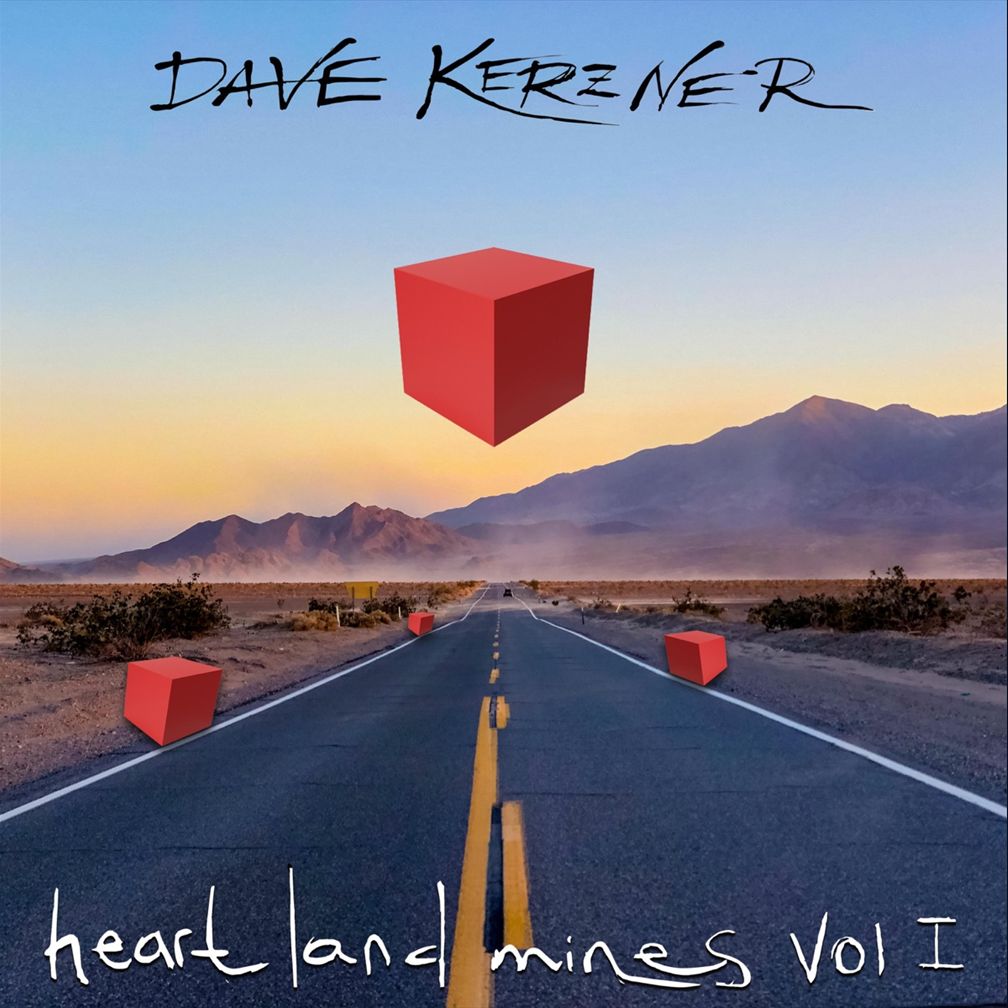
In this, our latest dialogue, Brad Birzer and Tad Wert discuss the new album from the multi-talented Dave Kerzner, Heart Land Mines, Vol. 1. Kerzner has been involved in many different projects, all of them excellent. Besides his solo albums, he was also a member of Sound of Contact, Arc of Life, and In Continuum. He rivals Neal Morse and Mike Portnoy in the number and variety of musical ventures he participates in.
Tad: Brad, when I read Dave’s liner notes to Heart Land Mines, Vol. 1 and saw that these were songs from the 90s that he wrote after a relationship with a girlfriend broke up, I had low expectations. But I have really enjoyed this album from the first time I listened to it! It doesn’t hurt that Kerzner has a great ear for a musical hook – “Dreaming In LA” sounds like classic Bad Company to me, but better.
This album is proggy – Kerzner’s voice has that laconic quality that always recalls David GIlmour – but it’s primarily a straightforward rock album that would be at home on an FM radio station in 1975. There’s a lot of acoustic guitar – “Back To One” sounds like an Eagles hit with its vocal harmonies. Anyway, maybe I’m emphasizing its retro qualities a little too much, but I find myself really taken with them!
Brad: Tad, thank you so much for asking me to do this review of Kerzner’s Heart Land Mines. I’m sorry to be late in replying. Since you first invited me to write this, I’ve been to the University of Louisville and back. Not quite Tennessee, Tad, but still a beautiful city and state! I gave lectures on sociologist Robert Nisbet and fabulist J.R.R. Tolkien, and I had a blast while I was there–especially seeing one of my long-time friends, Gary Gregg. He’s not a progger, but he is a brilliant guy.
As far as I know, I have everything Kerzner has released (at least if bandcamp is to be believed), and I’ve been a huge fan of his since the deluxe edition of New World came out. Wow, do I remember when that came out–I was utterly blown away by it. Indeed, that album would rank as one of my all-time favorites, and I go back to it frequently. I also really enjoyed Static and would also rank it very highly in my all-time lists. His In Continuum albums also move me and have a high place in my rankings.
From my perspective, Kerzner is ELO progged up, and Pink Floyd popped up. He has an infectious way about creating an ear-friendly riff while also complicating the matter in the proggiest fashion. And, his production is always crystal clear and fetching.
For whatever reason, however, I’ve not been able to get into Heart Land Mines. I’ve listened to it now three or four times, but it’s failed to grab me in the way that Kerzner’s previous albums have.
I will say, however, that you’re absolutely right, if this were 1975, Kerzner would be huge on Album Rock Radio. On the album, he clearly embraces the ethos and sound of Led Zeppelin, the Eagles, Bad Finger, etc.
Don’t get me wrong. I really like Heart Land Mines, but it’s yet to become a part of my being in the way that his other albums have. At this point, I’m happy to move on to his other albums and consider Heart Land Mines a labor of love, but not of genius.
Please tell me why I’m wrong!
Tad: Brad, as always, you have the perfect phrase to describe an artist’s work: “ELO progged up, and Pink Floyd popped up” is Kerzner in a nutshell!
I wouldn’t say Heart Land Mines is a work of genius, but gosh, I think it’s a blast to listen to. It serves as a reminder of how far pop music has fallen since the 70s. We both agree Heart Land Mines would be a huge hit on mid-70s AOR. Today, it appeals to a niche audience. I know, I know – in the 70s guys our age were complaining about how great big band music was, and how awful radio was!
Anyway, I have enjoyed Kerzner’s semi-autobiographical musical journey here. He took what seems to be an ugly breakup of a relationship and turned it into a very catchy set of songs. “Manic Calm” has an irresistible guitar riff (I’m a sucker for a descending scale) that I can listen to over and over. “Eye Of The Storm” is the best Pink Floyd song since “High Hopes”. And I love the way he reprises a couple of songs to pull everything together into a cohesive package.
Like you, I’ve tried to buy everything Kerzner has put out, but it’s hard to keep up with the guy! Sound of Contact’s eponymous album was near-perfect progressive rock, but it looks like personality clashes have kept them from ever getting together again. I have both of his In Continuum albums, and I like them a lot, but to my ears, neither of them have any melodies that are as memorable as some of the ones on Heart Land Mines.
I agree that Heart Land Mines is a labor of love (or maybe broken love!), but I find it to be a thoroughly pleasurable listen. Sometimes, that’s all I want or need. I’ve always had a soft spot for power pop, and if a song’s melody doesn’t grab me, I have a hard time getting into it. Kerzner is a fantastic songwriter, I am so glad he decided to dust off these old tunes and record them.
Brad: thanks for the good words and the reminder, Tad. You’re absolutely right, Heart Land Mines is a work of AOR genius, and it would’ve been a massive hit–along with Hotel California–in the 1970s. Too bad for Kerzner that he’s temporarily out of joint!
For what it’s worth, I’ve given Heart Land Mines a few more listens since I wrote the first reaction, and the album very much continues to grow on me. I would say that the album not only embraces The Eagles and Bad Company, but also, to a certain extent, Elvis Costello.
Overall, it’s a delight of influences. I even hear bits of Stone Temple Pilots and Steely Dan and other bands from the 1980s and the 1990s.
Kerzner is never shy about his debt to other bands, but these debts seem quite blatant and serious.
Regardless, I’m so glad to live in the same world as Dave Kerzner Whatever I think of this particular album, I know that my life is immensely better because of his music.
Tad: And on that note, I think we’ll bring this joint review to a close. Spirit of Cecilia readers, if you haven’t yet experienced the magic of Dave Kerzner’s music, you should check out his first solo album, New World; if you like it (and we think you will!), then Heart Land Mines is a worthy followup.
While we eagerly wait for the next installment of Tad Wert’s wonderful series, Those Awkward Teenage Years, and collectively shake our heads in disgust at the events (or pseudoevents) transpiring in Washington, DC, I’ve been thinking a lot about Pink Floyd. As most of you probably know, the band released its immense (and immensely expensive) boxset, The Later Years. Its coming and its arrival have, for a variety of reasons, sparked my imagination and stirred my soul. I’ve loved Pink Floyd since roughly 1979, and the band has inspired me personally in a variety of ways, most of them indescribably affecting me in ways I could never measure. From the unrelenting anger of “Another Brick” to the genteel heights of “High Hopes,” Pink Floyd has been a constant in my life, intellectually and emotionally.
The last actual Pink Floyd album, The Endless River, came out five years ago. There were, of course, the usual complaints and criticisms. So be it. Whatever the complaints and criticisms, I must disagree. The Endless River is not just a great Pink Floyd album, it’s one of the best rock albums of the last decade. In very large part, this excellence comes from intent—it is rather intentionally an homage to one of rock’s greatest and most innovative keyboardists, Rick Wright.
Musically, it is innovative, and the music breathes, lingering where it needs to linger and moving when it needs to move. If you’ve not listened to it in a while, give it another spin. It’s well worth many, many spins.
Believe me, it will be far healthier than dwelling on politics. And, it will probably be more productive, too.
We are well into our retrospective of the decade now, and in this post we will take a look at 2014. It was another fine year for music as some artists made their debut, and some seasoned veterans continued winning streaks. Once again, my selections are presented in alphabetical order.
Dave Bainbridge: Celestial Fire
Dave Bainbridge is a phenomenal guitarist who led the Celtic-prog band Iona in the ’90s. Celestial Fire is a massive album featuring several guest vocalists, including Damien Wilson (Threshold, Headspace, et al.). Bainbridge’s style is inventive and fluid, reminiscent of Alan Holdsworth, and Celestial Fire provides ample proof that he is one of the finest guitarists working today.
Elbow: The Take Off and Landing of Everything
Elbow has consistently produced excellent albums, and 2014’s The Take Off and Landing of Everything is one of their best. Singer Guy Garvey is blessed with a terrific voice, as well as a knack for literate lyrics. He broke up with his girlfriend while writing the songs for this album, and his emotional turmoil resulted in a beautiful work.
Flying Colors: Second Nature
Second Nature proved that Flying Colors were a real group with a bright future. All the members of this prog “supergroup” meshed perfectly, and they came up with one the most enjoyable listens of the year. The positive chemistry between them is obvious from the opening song, “Open Up Your Eyes” through the closing epic, “Cosmic Symphony”.
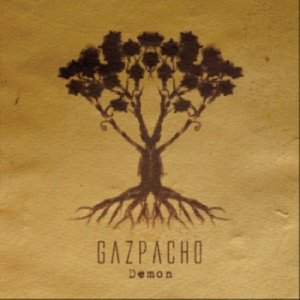
Gazpacho: Demon
Gazpacho released one of the darkest albums of 2014 with Demon. It purported to chronicle the tribulations of a demon hunter. The packaging and artwork is extraordinary – it looks like an old notebook filled with cryptic messages and arcane drawings. The music is excellent as well, creating an ominous sense of foreboding. Don’t listen to this one alone!
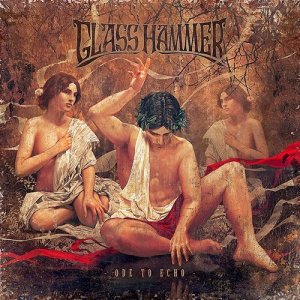
Glass Hammer: Ode To Echo
From darkness to light. Glass Hammer’s Ode To Echo is one of their finest albums from their long career. Vocalist Jon Davison transitioned out and Carl Groves took over with the welcome return of Suzie Bagdanowicz. Groves brings an interesting lyrical perspective to songs like “Garden Of Hedon” and “Ozymandias”. Song for song, I think Ode To Echo is one of Glass Hammer’s finest efforts, combining their pop sensibilities (“The Poropoise Song”) with their prog chops (“Misantrog”).
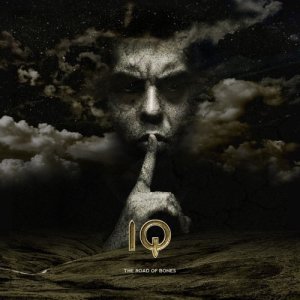
IQ: The Road Of Bones
You have to give thanks for bands like IQ, who have proudly waved the prog flag since 1981. The Road Of Bones is a 2-disc set that is uniformly excellent. While the tone of the album is quite dark, the strong musicianship and songs make The Road Of Bones a very enjoyable experience.
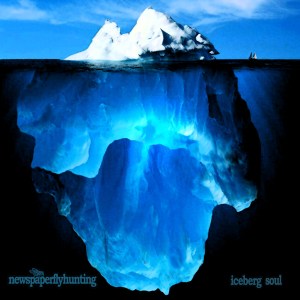
newspaperflyhunting: Iceberg Soul
Poland’s newpaperflyhunting made a splash in 2014 with Iceberg Soul. Postpunk minimalism, angular guitars, spacey vocals, and progressive themes all combine to make a very unique sound. You can buy their entire discography at bandcamp for less than $5! Give them a try if haven’t heard them.
North Atlantic Oscillation: The Third Day
The cover of North Atlantic Oscillation’s third album features a steampunkish compass/timepiece thingamajig, which is an apt visual for their music. Harmonies hearkening back to classic Beach Boys, crunching grungy guitars, massive bass lines, and delicate keyboard flourishes evoke rock’s distant past and indicate a promising way forward. Everything NAO has released is top-notch and utterly unique.
Perfect Beings
Based in Los Angeles and led by guitarist Johannes Luley, Perfect Beings debuted in 2014 with this delightful album. Sounding at times like long lost sons of the Beatles and Pink Floyd, Perfect Beings are unabashedly progressive while keeping their feet firmly planted in melodic rock. One of the best debuts of the decade.
The Pineapple Thief: Magnolia
Everything clicked on The Pineapple Thief’s tenth album, Magnolia. It contains a diversity of styles while remaining a cohesive work. It’s more well-produced pop than out-there prog, and that can be a good thing. “Alone At Sea” and “The One You Left To Die” are highlights.
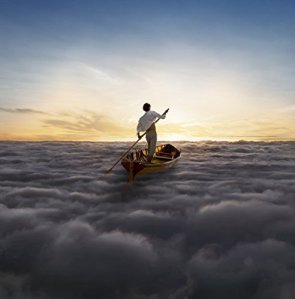
Pink Floyd: Endless River
The final album from one of the true giants of rock. It consists of outtakes and jams from when Richard Wright was still alive with some David Gilmour vocals added on top. Pretty much scraping the bottom of the barrel, compared to their earlier work.
Update: For a different opinion on Endless River, read Brad Birzer’s post.
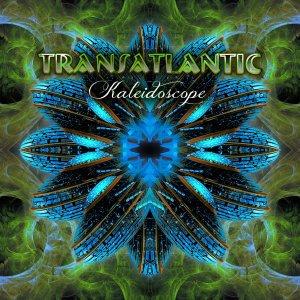
Transatlantic: Kaleidoscope
A tremendous album by the long-absent prog supergroup Transatlantic. Kaleidoscope sounds like they never left, even though their last album, The Whirlwind was released in 1999. Kaleidoscope contains all the elements that make Transatlantic so special – ballads, huge epics, and outstanding musicianship. Opener “Into The Blue” is a fantastic song, as well as the closing title cut.
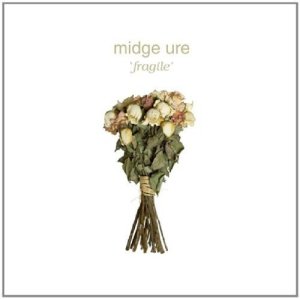
Midge Ure: Fragile
Coming off Ultravox’s triumphant Brill!ant, Midge Ure released the gentler Fragile in 2014. A true solo effort, Ure played, sang and produced everything. “Star Crossed” is one of the best songs he has ever written.
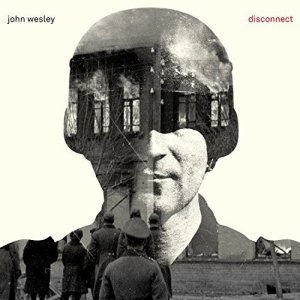
John Wesley: Disconnect
John Wesley is Steven Wilson’s go-to man when he needs a guitarist for his touring band. he is also a talented singer and songwriter in his own right, as Disconnect amply illustrates. Alex Lifeson even drops by to contribute a nifty guitar solo. Best track: “Mary Will”.
Yes: Heaven and Earth
We finish our look back to 2014 with a somewhat controversial album: Yes’ Heaven and Earth. Jon Davison left Glass Hammer to handle vocals for Yes, and he assisted with the songwriting on this record. Fans’ reactions to it were mixed. Personally, I think it is a fine record. It doesn’t come close to their ’70s classics, but that is an unrealistic expectation. When taken as a pleasant musical offering, it is a solid effort.
So that completes our survey of the 2014 musical landscape. We are halfway through the decade! As always, let us know your favorites from this year in the comments. Thanks for reading!
Greg West, at The Poached Egg, has a fascinating account of how a song from Pink Floyd’s classic Dark Side of the Moon album started him on a search for meaning that ultimately led to faith. Read the whole thing – it’s a nice example of how you can find evidence of God at work in the unlikeliest of places.













 Spirit of Cecilia
You must be logged in to post a comment.