Tag Archives: Yes

Can a Progger Be Christian?

For what it’s worth, I’ve been traveling since last Wednesday.  I went from Michigan to Colorado, Colorado to Kansas, and now, I’m enroute back to Michigan.  My soundtrack has been prog, prog, and then a bit more prog.

Version 1.0.0

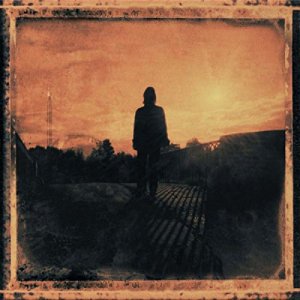
A few days ago, the mighty Tad Wert and I reviewed Steven Wilson’s new album, The Overview.  Though we questioned a few things about Wilson, we loved the album.  During his review, however, Tad brought up the majesty of the universe as described in the Psalms.

Today, this was posted on Facebook: “An interesting review of Steven Wilson’s latest album, which I’ve added here as Andie/The Tangent get name-checked. Quite an enjoyable read, despite the reviewer’s annoying habit of adding somewhat superfluous (and potentially divisive) references to The Goat Herder’s Guide to the Galaxy.”

Being in the car for hours on end, I turned this comment over in my mind.  Now, it’s worth noting, our website (the one you’re currently reading) is named after the Catholic patron saint of music, St. Cecilia.  Of the five main editors of Spirit of Cecilia, three are practicing Catholics, one is a Methodist who leans toward Eastern Orthodoxy, and one is a skeptic.  Frankly, I’m amazed at how restrained we are when it comes to the issue of religion.

Still, after reading the Facebook comment today, I had to ask: can a Progger be a Christian?  For some, the immediate answer is to turn to Neal Morse or Glass Hammer.  But, frankly, both artists are so open about their faith that each might appear to be the exception that proves the rule.

So, for the sake of a good argument, I offer all praise to Morse and to Glass Hammer, but I’m going to leave them out of the discussion.

Then, I gave it a bit more thought, and I realized that the Christian religion is deeply embedded in much (certainly not all) of the progressive rock tradition.  So, I chose my songs from several different eras of prog.

Yes, Close to the Edge:

“My eyes convinced, eclipsed with the younger moon attained with love
It changed as almost strained amidst clear manna from above
I crucified my hate and held the word within my hand
There’s you, the time, the logic, or the reasons we don’t understand”

Clearly referencing the Gospel of St. John.

Genesis, Supper’s Ready:

“There’s an angel standing in the sun
And he’s crying with a loud voice
“This is the supper of the mighty one”
Lord of Lords, King of Kings
Has returned to lead his children home
To take them to the new Jerusalem”

Clearly referencing St. John’s Revelation.

Talk Talk, New Grass:

“Lifted up
Reflective in returning love, you sing
Errant days filled me
Fed me illusion’s gate in temperate stream
Welled up within me
A hunger uncurbed by nature’s calling
Seven sacraments to song
Versеd in Christ, should strength desert me
They’ll come, they come”

Again, a clear reference to the New Testament and, specifically, a liturgical understanding of Christianity.

Roine Stolt, Humanizzimo

“With the blood of Jesus on the nail
We turn the balance on a scale
In pain and fearless suffering
Lies a message from the King of Kings”

Again, a clear reference to the passion of Christ.

The Tangent, Le Sacre du Travail:

“And all the blue plaques in all the buildings
Say they’re “Investors in Our Souls”
But I don’t believe them, not ’til I see it
Until I put my finger in the holes

Yet again, a clear reference to Doubting Thomas.

Big Big Train, The Wide Open Sea:

“Lying ahull
Ride out this storm
Doused all the sails
I let the boat drift

And so upon this tumbling sea
Fathoms below
Heavens above me

I’m setting sail for Les Marquises
From cradle bound for Calvary”

I could be wrong, but this very much reminds me of Jesus calming the waters.

Every one of these songs requires some biblical literacy.  Were Yes, Genesis, Talk Talk, Roine Stolt, Andy Tillison, and Big Big Train divisive?  Without a doubt. Was Tad being divisive? I certainly doubt that was his intention.

So, back to the main question. Can a progger be a Christian?  It seems so.

90125 At 40

90125

Once again, the resident music aficionados of Spirit of Cecilia (Brad Birzer, Tad Wert, Erik Heter, Kevin McCormick, and Carl Olson) turn their gazes onto a prog classic – this time discussing Yes’ best-selling album, 90125.

Tad: Gentlemen, this album came out 40(!) years ago. In 1983, I was a senior at Vanderbilt University and compact disc players were just beginning to become affordable. Against all common sense, I bought a Sanyo player for $399 and three cds: Roxy Music’s Avalon, Pink Floyd’s The Final Cut, and Yes’ 90125. I still remember the awed looks on my dormmates’ faces when I popped in 90125 and “Owner of a Lonely Heart” came blasting out of my stereo without any preliminary hiss or scratching from a vinyl lp.

At the time, this album was a huge hit for Yes, and it jumpstarted their career after it had flagged somewhat (even though I would argue that its predecessor, Drama, was a terrific work). However, we now know that the recording of 90125 was not all sweetness and light. In fact, I believe it wasn’t even supposed to be a Yes album! But I’ll let someone else who is more knowledgeable give us the details of that.

Erik: Sometime around August, 1983, I was hanging out in the rec room of one of the barracks at the ASW (anti-submarine warfare) base in San Diego, a city where I had spent several months prior and would spend a few more learning the intricacies of submarine sonar.  Someone had left a music magazine hanging around, it might have been Rolling Stone, but I’m not 100% sure on that.  Anyway, I picked it up and started thumbing through it and saw a news item entitled “Yes – No.”  A picture of Steve Howe accompanied the short piece, which relayed the news that Yes was reforming, with Jon Anderson on vocals, Chris Squire on bass, Alan White on drums, and newcomer Trevor Rabin on guitar.  While much of the piece focused on Howe’s disapproval of the new lineup, I swept that aside for the news of a Yes reunion – I was absolutely thrilled.  

Later, in October of that year, I departed San Diego, training complete, and headed back to what was then home in Charlotte, NC, for a few weeks of leave before, in late November, I would make my way to my boat (the USS Olympia, SSN 717) that was then under construction in the shipyard at Newport News, VA.  During my leave, Yes released the first single from the new album, followed a few weeks later by the album itself.

Oddly, I was a little bit hesitant when I first heard Owner of a Lonely Heart. While the voice was familiar, as was the bass tone, this was something radically different from anything they had done before.  This one particular song was more commercial sounding than anything they had done, although it was hardly a lowest-common denominator hit.  And the guitar sound (especially that solo) was nothing like I’d ever heard on a Yes album.  There was, however, a bit of a fear that the sound of the album would be so unrecognizable as to not sound anything like Yes.  

That fear was firmly put to rest the night before the album’s release.  Listening to one of the local FM rock stations, a DJ started talking about the new Yes album, 90125, and decided to play another song off the album – Leave It.  I was hooked before they even finished the first verse with that huge, wall of sound vocal harmony that opened the song.  After that, I was ecstatic as I was bombarded to “doos” and “dums” and “deets” coming at me from different vocalists in a number of different directions in a vocal arrangement so complex, innovative, and interesting that only a band like Yes could even dream such a thing up, much less execute it so flawlessly.  This was the music I had been waiting for since the Drama album of three years prior.

The next day (of course!) I wasted no time getting to the mall record store to buy the first of many copies of the album in cassette format that I would own – many copies because I tended to wear them out from so many listens.  In my days of using a Sony Walkman, there isn’t another album that spent as much time being wound and rewound as 90125.  

The first listen to the full album was absolutely magical, revealing a perfect mix of sounds that were simultaneously familiar to Yes fans and yet totally new and different.  Moreover, the sound was very 1980’s contemporary.  And yet even now, 40 years later, the album holds up very well without sounding dated.  90125 showed that Yes could adapt to changing times, that they were anything but dinosaurs as critics had accused them of being.  It showed they could innovate in ways even Yes fans – accustomed to musical innovation – couldn’t have imagined.  It showed they could be commercially relevant in a new decade without devolving into banal hitmaking.  

Oh sure, there were many old school Yes fans that didn’t like the album, the ones who were probably hoping for a redux of Tales from Topographic Oceans.  You can count me out of that group though, because I am one old school fan that loved the album and couldn’t get enough of it.  And while there is some debate about whether the album itself should be classified as prog, the importance of 90125 to the genre cannot be overstated.  A whole new generation of fans was lured in by this album, fans that began venturing into the band’s back catalog and then into the wider world of prog.  Even when I consider the contemporaneous output of another one of my favorite bands – Rush – it’s hard for me to think of a single album that did more to keep the prog flame alive in the 1980’s after critics had gleefully – and, obviously, prematurely – declared the genre dead at the end of the 1970’s.

I’ll get into more of the particulars of the album itself in my next entry, but for now I’m going to turn the floor over to another one of the distinguished participants.

Carl: By reason of age, chance, and the mysterious forces of radio whims, “90125” was my introduction to Yes. I was fourteen and was just getting into pop and rock music, to the horror of my parents, who that same school year—1983-84—made me throw away some cassettes gifted by a friend. Those deeply subversive albums were by Elton John (early, mellow Elton), Pat Benatar, and Foreigner (4, of course). There was only one rock station that reached my small town in western Montana—a bucolic village with a population of 1100, no stop lights, no fast food, and (shockingly) no music scene. 

I recall, quite clearly, being at church youth group one evening and someone, after the more serious stuff, cranking said radio station in their car, doors open in the parking lot. “90125” came on. It immediately grabbed my attention. “What is that?!” I thought. And then came the breakdown, and I was hooked. This was interesting music! It took a while, but I eventually got a tape of the album, and I started to learn more about the convoluted history of Yes and its connections to another favorite group: Asia. Styx, Kansas, Supertramp, Queen, and ELP all followed. I was officially into prog! (And my parents finally gave up trying to control my musical tastes.)

 My years in college—split between Phoenix (1987-88), southern Idaho (1988-89), and Saskatchwan, Canada (1989-91) were filled with musical exploration, ranging from brief flirtations with metal and Bruce Springstreen to more serious dives into Pink Floyd, Rush, Rick Wakeman, Steve Howe, Steve Morse, Queensryche, Kerry Livgren, and so forth. But Yes was always a constant, and I gradually became acquainted with all the earlier work, as well as Trevor Rabin’s excellent solo album “Can’t Look Away” (1989), which I literally wore out. Then, in 1991, having moved to Portland and living with my cousin for a while, I bought my first CD: “90125”. That was a great choice, of course, because it’s a sonic marvel, with Trevor Horn (who I knew a bit about because of his previous work with Yes) at the helm. 

Erik mentioned Rabin’s guitars. As I’ve listened to the album a few times in recent days, they stand out the most to me; they mark the biggest difference between Yes with Howe and the “90125”-era Yes. That’s not a knock on Howe, of course, who is fantastic in countless ways. But the stylistic differences are immense. That, in turn, informs the songs, which are more anthemic and are simply BIG in sound and intention, while containing plenty of complicated parts, harmonies, and arrangements. We’ve all read about how the album came about, how many challenges there were, and how Anderson kind of slipped into the mix; it’s a tribute to Horn and the musicians that they could overcome so much discord and paralyzing circumstances to create one of the great prog-rock albums of the 1980s. 

If Rabin’s guitars set it apart, it is, in my view, Anderson’s vocal contributions that hold it together and make it a real Yes album. It would have been very good without Jon; it is a classic with him. And, again, there is the work of Horn, whose production genius is impossible to overstate. Ironically (or perhaps fittingly?), the same year (1991) I bought “90125” on CD, I discovered the first Seal album and was instantly hooked. It was, of course, produced by Horn, who has been at the helm for several Seal albums—the first three, for me, being one of the finest pop/rock trifectas ever created.

Kevin: Somehow my first memory of 90125 was the hype for the world-premier of their new music video on MTV. “Owner of a Lonely Heart” immediately received heavy rotation on the channel, in part due to the relatively-high production values for a single by an “old” group like Yes were in 1983. The avant-garde film-noir theme seemed an unlikely pairing with the lyrics but somehow it worked and captured a huge new following for the band. But it was simply a great new sound for the band and for the times.

I was fascinated with this new sound and found it to be an engaging blend of progressive and pop. Being in my mid-teens at the time, I don’t think I was as keenly aware of the importance of the “production” of a studio-recorded song, but I was aware that this was definitely a new adventure for Yes. I missed hearing Steve Howe’s guitar, but I also intuited that without Trevor Rabin in the mix this would be a completely different song.

I wholeheartedly concur with both Erik and Carl, that Rabin’s guitar really stands out on that opening track and throughout the album. I love the way the opening track begins with the “heavy distortion” Rabin sound and then quickly pulls back to the clean sound more reminiscent of Howe’s earlier contributions for the band. Whether intentional or not, it was a great way of signaling that this was something new and yet it retains those components that make it Yes.

I caught them live for this tour in Austin in 1984, and they did a great job of capturing that same energy on stage. Rabin seemed comfortable in his new role and had no trouble filling Howe’s shoes on the older material. It was a different style for those tunes, but they were well-played. This being my first chance to catch them live, I had no direct comparison, but I thought it was a tremendous performance.

But that brings up a component of this that I don’t want to miss.  I’ve read various articles about Rabin and Yes and their early incarnation as Cinema. Some accounts claim that Rabin came in with much of the album finished and the band just kind of recorded what he wrote. This is an unjust assessment and really underplays what makes the album so exciting.  I know this not because I was there, but because in 2003 Rabin released his demos as 90124. You can find some of them on YouTube–though I no longer see some of the tracks that better illustrate the point.

What is clear from the demos when compared to the final recording is that his ideas were seeds (some of them quite plain)  waiting to be nurtured and to sprout into full bloom. There was plenty of fluff needing to be pared down. There were plenty of tweaks needed. This was not a collection of hit songs waiting to be recorded; it was a mishmash of some good ideas that needed the rest of the band to make great. Not only did Squire and White bring these germs to life with a powerful rhythm section, but Trevor Horn’s production makes every track completely blossom. Then Jon Anderson arrived in the last few weeks of recording and, as Carl noted, turned a good album into “a classic.” His lyrical contributions alone changed the whole tenor of the work and his vocals are captivating in a way that is simply not there without him.

This was a band effort, an incredible symbiotic musical creation worthy of review forty years on. It will be remembered because it captured and launched the sound of the times both into the prog realm and beyond.

Tad: Kevin, thank you for providing the context in which Trevor Rabin’s contributions were made. It’s interesting to me how a consistent thread in all of our reminiscences has emerged: about how crucial Trevor Horn’s production was. I was a fan of his from his Buggles days – when he and Geoff Downes joined Yes for Drama I was really surprised, because I thought of them as synthpop artists, not progressive rockers! I ended up buying everything Horn produced for his ZTT record label: Frankie Goes To Hollywood (they have not aged well), Propaganda (amazing German group – A Secret Wish remains a favorite 80s album), Art of Noise, and Grace Jones (Slave to the Rhythm). Anyway, I agree that without Horn, 90125 would not be the success it is.

Okay, I’d like to share what my favorite moments on this album are! First, on “Owner of a Lonely Heart”, the opening muffled drum fill that is overtaken by Rabin’s clean guitar riffing, punctuated by Horn’s stabs of synthesized orchestral noise. That mix still sounds new and exciting to me 40 years later.

Second, the massive vocal harmonies on “Hold On” around the 4-minute mark, where they sing “Sunshine, shine on, shine on you”.

Third, the intro to “Changes” where a motif on vibes is played as various other instruments enter playing King Crimson-esque patterns until Rabin’s guitar takes control and gets the proper melody underway.

Fourth, all of “Leave It”. This song is such a vocal and instrumental tour de force! A wall of sound that leaves me wishing it would never end.

Finally, the moment at 5:30 into “Hearts” where the melody transforms from an aggressive, plodding riff to a beautiful, warmhearted tune that is carried by some of Jon Anderson’s finest vocals.

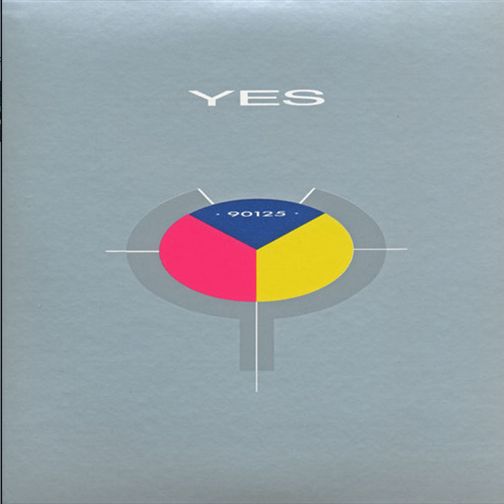
As is my wont, I need to remark on the artwork – what an iconic representation of early 80s fascination with technology! It’s obviously computer-generated graphics that, at the time, seemed futuristic and edgy. And the title came from the catalog number assigned to the album by the label. About as far as you can get from Roger Dean’s fantasy landscapes.

All in all, just a superb album, and I’m thankful all the musicians with their various agendas were able to gel into a cohesive unit and get it done.

Brad: Well, I’m late coming to this conversation, but I love seeing what Tad, Kevin, Erik, and Carl have all contributed.  Thanks to you each for such great thoughts.

I have this album on CD now as well, but I very much remember buying the vinyl back in early November 1983.  I loved the Apple-esque cover of the album (though, I grew up loving Roger Dean’s work, especially for Yessongs), and, like all of us, I was already taken with “Owner of a Lonely Heart.”  I had grown up with Yes (but had somehow misse free d Tormato and Drama, I wouldn’t come back to both until after 90125).  One of my fondest memories is listening to 90125, whole and complete, with my headphones on during that November and December of 1983.  The lights off in my bedroom, the headphones on, and Yes playing beautifully, me absorbing it all..

As much as I loved “Owner of a Lonely Heart” at the time, it was the album as a whole that really grabbed me.  I remember being utterly moved by “Hold On”–”constitution screwup, shattering the dreams” and thinking it one of the deepest songs I’d ever encountered.

Talk the simple smile, such platonic eye

How they drown in incomplete capacity

Strangest of them all, when the feeling calls

How we drown in stylistic audacity

Charge the common ground

Round and round and round, we living in gravity

Shake – We shake so hard, how we laugh so loud

When we reach, we believe in eternity

I believe in eternity.

These were (and remain) pretty heady lyrics for a sixteen year old.  Yes’s 90125 made me realize the possibilities of rock music, just as Rush’s Grace Under Pressure soon would

Then, “It Can Happen”:

You can mend the wires

You can feed the soul apart

You can touch your life

You can bring your soul alive

It can happen to you

It can happen to me

It can happen to everyone eventually

Followed by the brilliant “Changes.”  

Flip the record over.  

Side two, roaring into life with “Cinema.”  As I understand it, this was originally the introduction to what might have been a twenty-minute epic, “Time.”  As it was, though, it stood alone in its gorgeous production, leading into the magisterial “Leave It.”

“Our Song” is a great rocker.

​​Toledo was just another good stop

Along the good king’s highway

My fortification took me by surprise

And hit me sending me sideways

Spellbound – Roundly – Good for sunshine

Can’t help thinking

Singing the Rule Britannia

And this is where it grabs you

There’s method in the key of C

Toledo’s got to be the silver city

In this good country

“City of Love” and “Hearts” perfectly close the album.

Many moons cascade one river

They light from side to side

As we cross in close proximity

Like rivers our hearts entwine

How we talk – How we teach our children

How we move – We direct our eyes

All the senses tuned discovery

As and as and when our hearts decide

Be ready now – Be ye circle

Be the central force ye life

As the game extends the cycle

Be ready to move

Kevin, I’m jealous that you got to see them live  in 1984.  I’m sure that was an extraordinary concert, capturing all the energy of a reborn-band.  Speaking of which, I’ve always liked 9012-Live: The Solos, the live album that came out in 1985.  Again, it just exudes energy and creativity, a band at its best.

Erik: Great comments all, and a lot of fodder to work off of as I discuss the album proper.  

We’ve talked about Rabin’s guitar, it’s contrast to Howe’s work, and its impact on the music.  But there is another contribution that is also quite notable, and that’s Rabin’s contribution to the vocal landscape of this album.  I am adamant in my opinion that from a purely vocal perspective, the Rabin-era lineup is far and away the best Yes lineup.  Consider a few of the songs.  First, Leave It is simply not possible without Rabin.  Not only does he trade lead vocals with Anderson, but his contributions to the harmonies are critical.  Changes is another song that is not possible without Rabin, due to the lead vocalist role alternating between him and Anderson.  And the “talk the simple smile” section of Hold On is yet another harmony that would not sound anywhere near as good without Rabin’s contribution.

This ability to switch back and forth between Rabin and Anderson on lead vocals, as well as the ability to create the vocal harmonies that permeated 90125 made Rabin’s vocals an excellent addition to the Yes sound.  It’s almost as if Rabin was put on this Earth to harmonize with Anderson and Squire, because his voice fits with them so perfectly.  It’s another reason why the version of the pre-Rabin Yes classic I’ve Seen All Good People from 9012Live is my favorite version of this song – Rabin’s contributions to the vocal harmonies makes what is primarily a vocal-driven song all that much better.  

I’ll also throw in more on Horn’s production with regard to a couple of additional observations to go with those given above by Tad, Carl, and Kevin.  First, neither Rabin nor the band in general was all that fond of Owner of a Lonely Heart in its demo form, but Horn would have none of it.  While he wanted a reworking of the lyrics, he nevertheless recognized the song as a hit – in part due to the intro, and in part due the chorus – where the band did not.  Horn didn’t merely want this song on the album, he insisted on it.  Working with the band to rewrite some of the lyrics (for which Horn himself received partial credit) as well as arrangements on the final recording, Horn helped mold the song into the first #1 single Yes ever had, and one that propelled this album into the stratosphere (also, the band’s only #1 album).

Another aspect where Horn excelled as the producer of 90125 was the underappreciated role of track sequencing, upon which he conducted a clinic of how it’s done.  The sequence of songs begins by a delightful punch to the listener’s face (and ears!) with Owner of a Lonely Heart, especially with the intro guitar riff, before moving into the slow but heavy Hold On.  Similarly, the beginning of side 2 with the instrumental Cinema flowing seamlessly into Leave It is just chef’s kiss perfection.  And closing the album with Hearts was a fitting conclusion to Yes’s 80’s rebirth.  Overall, every track on the album feels like it is placed exactly where it should be.  While such sequencing always seems obvious to us in retrospect, the producer had to start with a collection of songs and figure out what would go where.  To ask Horn to do a better job than he did on 90125 is to ask the impossible.  

I also like Kevin’s observation with regard to Anderson’s impact on the album.  Like him, I’ve listened to the demos, and the contrast between those and the finished product is striking, with Anderson’s influence being undeniable.  It was his presence and his contributions that made 90125 truly a Yes album and not just an album performed by some musicians who had been in that band.  There are lyrical passages throughout the album that the seasoned Yes fan will instantly recognize as Anderson’s words.

As far as some of the other tracks go, I’ll first start with It Can Happen, a track which I absolutely love.  This is one track that encapsulates the old Yes spirit of the 1970’s into the new Yes sound of the 1980’s.  Tying to the previous paragraph, this song is one that really demonstrates Anderson’s imprint on the lyrics when compared to the pre-Anderson demo.

Hearts pulls off the same feat of encapsulating the old spirit in the new sound in a different form, hinting at some of Yes’s earlier long-form epics while keeping things economical.  I love the “explosion” in the middle of that song that leads into the “who would believe you, wise men do” section.  Our Song is a deep cut favorite, featuring a driving, tour de force performance by Squire on bass.  Changes was a perfect FM radio staple for the era, with an ear-catching introduction and huge, dynamic swings between the quiet and heavy sections, along Rabin singing lead on the verses while Anderson takes the lead role on the choruses.  

I’m going to cut myself off right here, because I could go on and on (and on) about this album and I need to give some space for the rest of you.  I enjoy reading your contributions as much as I like writing mine!  But in conclusion, when I think of albums of the 80’s that really define the decade (at least for me personally), this one is alway at or near the top. And as a Yes fan, I continued to be thrilled all these decades later that they were able to pull off an album like this, a commercial and artistic triumph that happened in the context of the band navigating a radically different musical landscape from the one in which they had achieved their previous great successes.

Tad: Erik, I think your remarks are the perfect way to conclude this discussion. Gentlemen, it’s been a blast revisiting this album!

The Spirit Of Cecilia Says, “Yes!”

Roger Dean’s logo for Yes, one of the most recognizable in rock

No site devoted to discussing progressive rock music (among many other topics!) can ignore for long a true giant of the genre: YES. Dating from the late ‘60s, Yes was one of the first prog groups to achieve mainstream success. More than fifty years later, they are still active, so Spirit of Cecilia has decided to divide our discussion of them into three parts. This post will focus on their music beginning with their 1969 eponymously titled debut album through 1973’s live album Yessongs. Let’s join Editor-In-Chief Brad Birzer, Arts Editor Tad Wert, and all around brilliant writer/musician Kevin McCormick as they attempt to analyze the music of one of the most influential and productive groups in rock history.

Brad: My earliest prog memory is of Yes.  I’m the youngest of three boys (with my oldest brother being eight years older and my older brother being five years older), and I was exposed to all kinds of music at a very young age.  In our house, we had classical, jazz, big band, musicals, and every variety of rock and pop. Sometime around 1973 or 1974 (the memory is somewhat fuzzy on the details–I was only five or six), I discovered the three-disk set of Yessongs.  I was stunned–especially by the artwork which I studied like a talisman. Later, when I was older, I appreciated the music.  But, at first, it was Roger Dean’s paintings that grabbed me fiercely. I count Yessongs as my first real prog love.  And, love it was. It wouldn’t be until Kansas’s Leftoverature and ELO’s Out of the Blue that I found albums to rival Yessongs in terms of artistic beauty.

Yes is certainly my earliest progressive rock love, and, from them, thanks to my brothers, I began to listen to Kansas, Jethro Tull, and Genesis.

While Yes has now experienced a massive history–indeed, is there a rock band that can quite match it in terms of malleability and lovegevity?–it’s the period of the Yes Album through Going for the One that seems nearly flawless.  To think about the albums of that period–The Yes Album, Fragile, Close to the Edge, Tales, Relayer, and Going for the One–is to be overwhelmed!  Such innovation and harmonic glory, all wrapped into a neat package.

When I was younger, Fragile was my favorite of the Yes albums.  But, ever since starting college, Close to the Edge has been my favorite.  Indeed, not just my favorite Yes album, but a favorite album.  If forced to rank it, it would compete (not necessarily defeat) Moving Pictures, The Colour of Spring, Spirit of Eden, and Selling England by the Pound.  If it’s fallen out of the top five for me, it’s only because Big Big Train released The Underfall Yard in 2009.

Kevin: Looking back at the early stages of Yes, it’s important to remember the context of the music of that time: it was all over the map.  There was a collision of styles brought together by much of the experimentation and cultural upheaval of the 1960’s.  Prior to this most musicians and audiences stayed in their respective corners. 

Continue reading The Spirit Of Cecilia Says, “Yes!”

Those Awkward Teenage Years – The 2010’s, pt. 6: 2015

We’re midway through the decade – thanks for joining us on our journey through the musical highlights of the 2010s!

In terms of music distribution, compact disc sales continued their steep decline. In 2000, 943 million CDs were sold. By 2015, that number had dropped to a little over 100 million. iTunes (and mp3s in general) was fading fast as Spotify, Amazon Music, and Apple Music attracted listeners to their streaming platforms. What these trends mean for artists remains to be seen. As it gets harder to earn income from recorded music, will that discourage new artists from getting started?

On the other hand – stepping back and taking a longer view of history – perhaps we’ll look at the 20th century as an aberration in terms of the financial rewards many recording artists were able to garner. For most of recorded history, musicians and composers have  had to struggle to survive, and even the the most gifted relied on wealthy patrons.

Fortunately for us in the 21st century, there is no shortage of great artists producing fine music, and 2015 was a good example. So here are the highlights of that year, in alphabetical order.

The Dear Hunter: Act IV: Rebirth In Reprise

Casey Crescenzo has released five of his planned six acts. Act IV: Rebirth In Reprise is my favorite so far. As usual, there is everything but the kitchen sink here. “A Night On The Town” is the key track as it swings like a Gershwin composition before an exhilarating rock motif takes over.

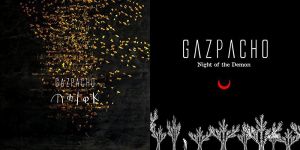
Gazpacho: Molok & NIght Of The Demon

Another year, and not one, but two Gazpacho releases. Molok is another dark concept album about the ancient demon utilizing modern technology for his nefarious purposes (I think). The fact that Molok has some of the prettiest music Gazpacho has ever made makes the concept go down easy. Night Of The Demon is a live set where the band really cooks. It’s a perfect introduction to them, if you’re curious.

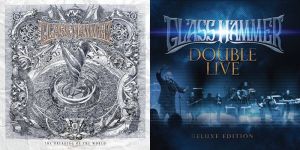
Glass Hammer: THe Breaking Of The World & Double Live

Another year, and not one, but two Glass Hammer releases. The Breaking Of The World is another peak for them (how do they keep doing that?) with essential songs “Mythopoiea”, “North Wind”, and “Nothing, Everything”.  Double Live is a terrific no-frills live performance. Susie Bogdanowicz and Carl Groves are excellent singing classics like “The Knight Of The North” and “If The Stars”, while the band rocks tighter than a tick.

I Am The Manic Whale: Everything Beautiful In Time

A new band from Reading, England, I Am The Manic Whale sprang fully formed from the brain of Michael Whiteman (the band name is an anagram of his). This is an impressive debut with songs celebrating subjects ranging from 10,000 year clocks to the joys of parenting messy toddlers. “Princess Strange” is an inspiring take on cyberbullying.  A true delight to listen to, and worthy of a large audience.

Karnatake: Secrets of Angels

Veteran proggers Karnataka enlisted new singer Hayley Griffiths for Secrets Of Angels, and she really lit a fire under them. Opening track “Road To Cairo” has a killer middle eastern riff that is as satisfying as Led Zep’s “Kashmir”. The title track is also excellent.

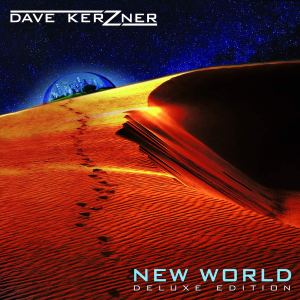
Dave Kerzner: New World

The keyboardist and composer from Sound Of Contact struck out on his own and produced this wonderful Floydian sci-fi epic. Put it on, and imagine you are back in 1977, hearing a fantastic new prog masterpiece.


Lonely Robot: Please Come Home

John Mitchell’s (Arena, Frost*, It Bites) first album in a trilogy about an astronaut lost in space. One of the best albums of the decade, Lonely Robot features John’s excellent vocals and stellar guitar work. Every song is memorable, but “Oubliette” and “Are We Copies?” are standouts.

Neal Morse Band: The Grand Experiment

The first album from The Neal Morse Band is one of the best of the decade. First, it is NOT a Morse solo record – this is a band effort with all members contributing to the songwriting. Second, Neal found a young multi-instrumentalist in Eric Gillette who is simply phenomenal and spurs everyone to new heights. “Alive Again” may just be the finest epic Neal has been involved in.

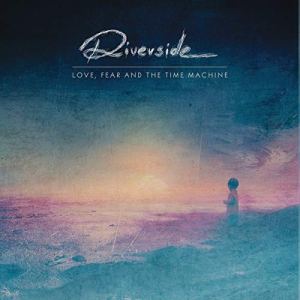
Riverside: Love, Fear, and the Time Machine

This was my favorite album of 2015, and I still listen to it fairly often.  Riverside pulled together their metal and hard rock roots with Mariusz Duda’s gentler Lunatic Soul excursions, and came up with a winning mix. Add in some nods to ’80s new wave, and this is a very fine record.

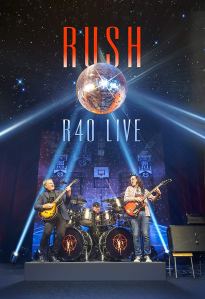
Rush: R40

A document of Rush’s 40th anniversary tour, where they played songs from every phase of their long career. The stage set began filled to the brim with props and effects, and they gradually shed them as they worked their way back to the first shows they played in a high school auditorium.

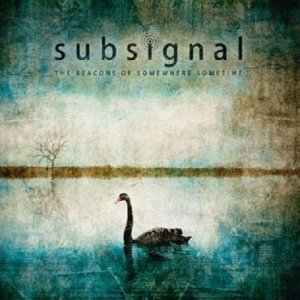
Subsignal: The Beacons Of Somewhere

Subsignal’s The Beacons Of Somewhere was a highlight of 2015. Straight-ahead prog rock with awesome melodies. “Everything Is Lost” is an excellent song, as is the multi-part title track. Every time I listen to this marvelous album, I hear new details that delight.

Tesseract: Polaris

Tesseract toned down the more extreme metal aspects of their music for Polaris, and that made a huge difference. Daniel Tompkins has always been a terrific vocalist, but on this album he really shines.  “Dystopia” soars, and “Tourniquet” is a gorgeous cacophony of sound. “Phoenix” makes me want to drive 100 mph. A great album that earned Tesseract a well-deserved wider audience.

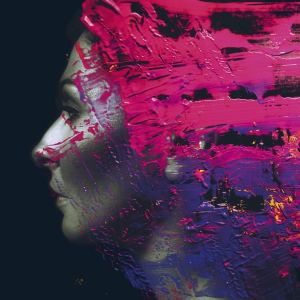
Steven Wilson: Hand.Cannot.Erase

Steven Wilson’s Hand.Cannot.Erase caused the biggest stir in progworld in 2015. It was his breakthrough album, catapulting him into the mainstream, and deservedly so. That said, the subject is so emotionally harrowing (the true story of a young woman who died alone in her apartment, and wasn’t discovered for three years) that I have a hard time enjoying it.

Yes; Progeny

A box set that contains recordings of seven concerts from 1972. Yes was touring in support of Close To The Edge, and this is a fascinating document of a young and hungry band at the peak of their powers. Yes, the setlist stays constant, but it is fun to hear how their performances evolved over a short period of time, and how they dealt with onstage setbacks, like a local FM radio station taking over their PA system!

Once again, I easily could have doubled the length of this post. I left off excellent albums by Bruce Soord, Downes Braide Association, Echlyn, Izz, and Perfect Beings, among others. Let us know what your Best of 2015 list is in the comments!
Those Awkward Teenage Years – The 2010’s, pt. 5: 2014

We are well into our retrospective of the decade now, and in this post we will take a look at 2014. It was another fine year for music as some artists made their debut, and some seasoned veterans continued winning streaks. Once again, my selections are presented in alphabetical order.

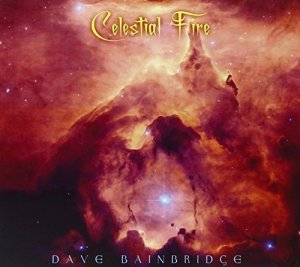
Dave Bainbridge: Celestial Fire

Dave Bainbridge is a phenomenal guitarist who led the Celtic-prog band Iona in the ’90s. Celestial Fire is a massive album featuring several guest vocalists, including Damien Wilson (Threshold, Headspace, et al.). Bainbridge’s style is inventive and fluid, reminiscent of Alan Holdsworth, and Celestial Fire provides ample proof that he is one of the finest guitarists working today.

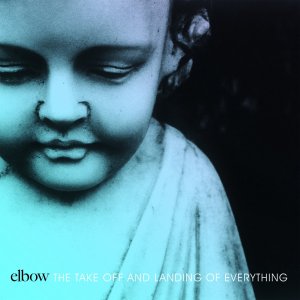
Elbow: The Take Off and Landing of Everything

Elbow has consistently produced excellent albums, and 2014’s The Take Off and Landing of Everything is one of their best. Singer Guy Garvey is blessed with a terrific voice, as well as a knack for literate lyrics. He broke up with his girlfriend while writing the songs for this album, and his emotional turmoil resulted in a beautiful work.

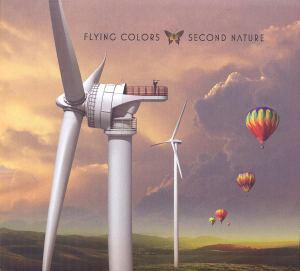
Flying Colors: Second Nature

Second Nature proved that Flying Colors were a real group with a bright future. All the members of this prog “supergroup” meshed perfectly, and they came up with one the most enjoyable listens of the year. The positive chemistry between them is obvious from the opening song, “Open Up Your Eyes” through the closing epic, “Cosmic Symphony”.

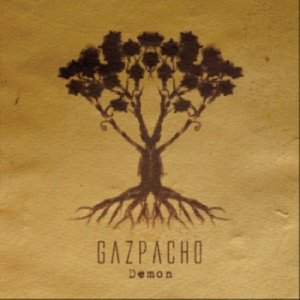
Gazpacho: Demon

Gazpacho released one of the darkest albums of 2014 with Demon. It purported to chronicle the tribulations of a demon hunter. The packaging and artwork is extraordinary – it looks like an old notebook filled with cryptic messages and arcane drawings. The music is excellent as well, creating an ominous sense of foreboding. Don’t listen to this one alone!

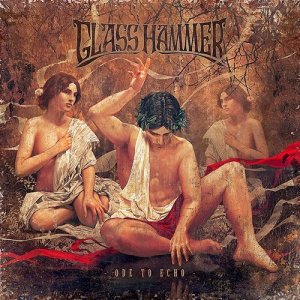
Glass Hammer: Ode To Echo

From darkness to light. Glass Hammer’s Ode To Echo is one of their finest albums from their long career. Vocalist Jon Davison transitioned out and Carl Groves took over with the welcome return of Suzie Bagdanowicz. Groves brings an interesting lyrical perspective to songs like “Garden Of Hedon” and “Ozymandias”. Song for song, I think Ode To Echo is one of Glass Hammer’s finest efforts, combining their pop sensibilities (“The Poropoise Song”) with their prog chops (“Misantrog”).

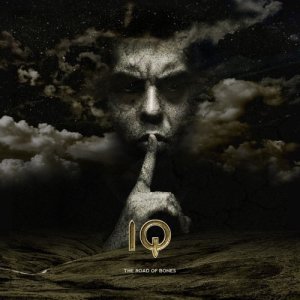
IQ: The Road Of Bones

You have to give thanks for bands like IQ, who have proudly waved the prog flag since 1981. The Road Of Bones is a 2-disc set that is uniformly excellent. While the tone of the album is quite dark, the strong musicianship and songs make The Road Of Bones a very enjoyable experience.

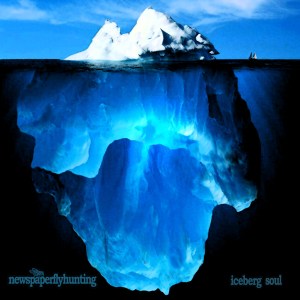
newspaperflyhunting: Iceberg Soul

Poland’s newpaperflyhunting made a splash in 2014 with Iceberg Soul. Postpunk minimalism, angular guitars, spacey vocals, and progressive themes all combine to make a very unique sound. You can buy their entire discography at bandcamp for less than $5! Give them a try if haven’t heard them.

North Atlantic Oscillation: The Third Day

The cover of North Atlantic Oscillation’s third album features a steampunkish compass/timepiece thingamajig, which is an apt visual for their music. Harmonies hearkening back to classic Beach Boys, crunching grungy guitars, massive bass lines, and delicate keyboard flourishes evoke rock’s distant past and indicate a promising way forward. Everything NAO has released is top-notch and utterly unique.

Perfect Beings

Based in Los Angeles and led by guitarist Johannes Luley, Perfect Beings debuted in 2014 with this delightful album. Sounding at times like long lost sons of the Beatles and Pink Floyd, Perfect Beings are unabashedly progressive while keeping their feet firmly planted in melodic rock. One of the best debuts of the decade.

The Pineapple Thief: Magnolia

Everything clicked on The Pineapple Thief’s tenth album, Magnolia. It contains a diversity of styles while remaining a cohesive work. It’s more well-produced pop than out-there prog, and that can be a good thing. “Alone At Sea” and “The One You Left To Die” are highlights.

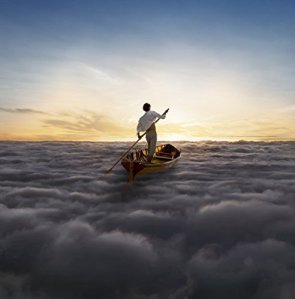
Pink Floyd: Endless River

The final album from one of the true giants of rock. It consists of outtakes and jams from when Richard Wright was still alive with some David Gilmour vocals added on top. Pretty much scraping the bottom of the barrel, compared to their earlier work.

Update: For a different opinion on Endless River, read Brad Birzer’s post.


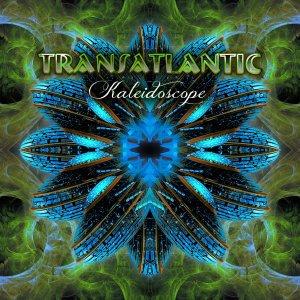
Transatlantic: Kaleidoscope

A tremendous album by the long-absent prog supergroup Transatlantic. Kaleidoscope sounds like they never left, even though their last album, The Whirlwind was released in 1999. Kaleidoscope contains all the elements that make Transatlantic so special – ballads, huge epics, and outstanding musicianship. Opener “Into The Blue” is a fantastic song, as well as the closing title cut.

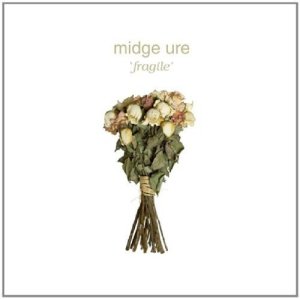
Midge Ure: Fragile

Coming off Ultravox’s triumphant Brill!ant, Midge Ure released the gentler Fragile in 2014. A true solo effort, Ure played, sang and produced everything. “Star Crossed” is one of the best songs he has ever written.

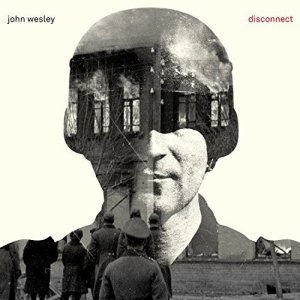
John Wesley: Disconnect

John Wesley is Steven Wilson’s go-to man when he needs a guitarist for his touring band.  he is also a talented singer and songwriter in his own right, as Disconnect amply illustrates. Alex Lifeson even drops by to contribute a nifty guitar solo. Best track: “Mary Will”.

Yes: Heaven and Earth

We finish our look back to 2014 with a somewhat controversial album: Yes’ Heaven and Earth. Jon Davison left Glass Hammer to handle vocals for Yes, and he assisted with the songwriting on this record. Fans’ reactions to it were mixed. Personally, I think it is a fine record. It doesn’t come close to their ’70s classics, but that is an unrealistic expectation. When taken as a pleasant musical offering, it is a solid effort.

So that completes our survey of the 2014 musical landscape. We are halfway through the decade! As always, let us know your favorites from this year in the comments. Thanks for reading!

Those Awkward Teenage Years – The 2010’s, pt. 2: 2011

In our continuing series of posts celebrating the music of the 2010’s, here is Chapter 2: 2011.

2011 was a relatively quiet year music- and prog-wise. I’ve chosen to highlight ten albums that have survived the test of time, and one or two might surprise. Once again, they are listed in alphabetical order.

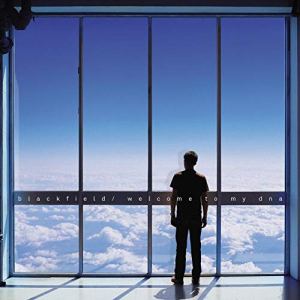
Blackfield: Welcome To My DNA

A Steven Wilson side project with Aviv Geffen, Welcome To My DNA is their third release. This was a very nice, radio-friendly collection of songs (with one terrible misstep: Geffen’s “Go To Hell”).  With the benefit of hindsight, one can see the influence this project had on Wilson’s excellent To The Bone years later.

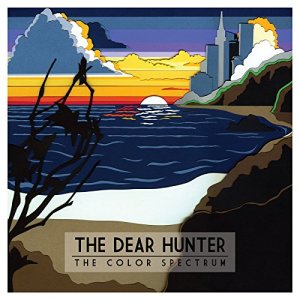
The Dear Hunter: The Color Spectrum

Casey Crescenzo took a break from his six-act arc of albums (still in progress, BTW) to record this nine EP collection of songs inspired by the color spectrum. It begins with black, and works through the rainbow to end at white. It sounds insufferably pretentious, but it works. Dear Hunter manages to master every conceivable style of rock, from hard-core industrial (black) to pleasant folk (yellow). If you missed this set, check it out. It is an amazing achievement.

Duran Duran: All You Need Is Now

Duran Duran were always far more than ’80s pinup boys. Simon LeBon is a fine lyricist, and their melodies stand the test of time. All You Need Is Now is a surprisingly strong album, where they come close to the peaks they reached in their heyday, after spending years wandering in the wilderness.

Glass Hammer: Cor Cordium

The second Glass Hammer album to feature vocalist Jon Davison, and it builds on the strengths of 2010’s If. Every track is a winner, with “To Someone” a particular highlight. Once again, the cover art is a hoot.

Neal Morse: Testimony 2

Neal Morse continued chronicling his conversion to Christianity, focusing this time on a miraculous healing of his infant daughter. As expected with Morse, the music is excellent as endlessly satisfying melodies pour forth. The bonus disc contains three of his finest compositions: “Absolute Beginners”, “Supernatural”, and the 26-minute epic “Seeds Of Gold”.

Radiohead: King Of Limbs

Radiohead releases are few and far between, so when King Of Limbs showed up in 2011, it caused a stir. The first five tracks are dominated by relentless rhythm – maybe they’d been listening a lot to Philip Glass and Steve Reich? Anyway, it isn’t until “Codex” that a real melody shows up. “Give Up The Ghost” and “Separator” close things out on a relatively gentle note.

Rush: Time Machine

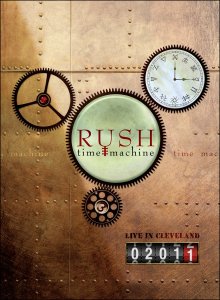
A DVD/CD set that documented Rush’s performance in Cleveland. Rush has released a lot of concert videos, and this is one of their best. They weren’t touring in support of a specific album, so they cover songs from every phase of their long career, and even preview a couple from the not-yet-released Clockwork Angels.

Sanguine Hum: Diving Bell

When I first heard this group, I was very excited. They managed to meld Devo-like rhythms to XTC-worthy tunes while creating a sound all their own. This was the strongest debut album of 2011, and is still a joy to listen to.

Steven Wilson: Grace For Drowning

Steven Wilson’s second solo album, and it put to rest any hopes of Porcupine Tree working together again. This was an ambitious two-disc set that ran a gamut of styles. Wilson is an inspired composer of seductive melodies (“Deform To Form A Star”), and he isn’t afraid to wear his influences on his sleeve, i.e. late-’60s Beach Boys or King Crimson. Like a lot of double albums, it might have been stronger as a single disc.

Yes: Fly From Here

Just when you think you’ll never hear anything new worth hearing from Yes, they surprise you with a strong album like Fly From Here. This one featured vocalist Benoit David, from the Canadian group Mystery, and it included Trevor Horn and Geoff Downes from Drama days. One of their best late-career efforts.

And that wraps up our musical look back to 2011. Not the most productive year with regard to prog, but just wait until 2012 – the floodgates are about to open!


Best of Yes, Post 1983

For most music fans, and especially prog rockers, Yes existed between 1969 and 1983.

Some would even end Yes around 1979.

Amazingly enough, though, Yes still exists. And, while the band has never produced a perfect album since 1983’s 90125, it has produced a number of tracks equal to the best of the “classic Yes” period.

The two best albums of this later period were Magnification (2001) and Fly from Here-Return Trip (2018).

For those interested (and with ears to hear), here are my favorites from 1987-present.

  • Birthright (Anderson Bruford Wakeman Howe, 1989)
  • Dreamtime (Magnification, 2001)
  • Endless Dream (Talk, 1994)
  • Evensong (Union, 1991)
  • Fly From Here (Fly From Here-Return Trip, 2018)
  • Homeworld (The Ladder, 1999)
  • I’m Running (Big Generator, 1987)
  • In the Presence Of (Magnification, 2001)
  • Into the Storm (Fly From Here-Return Trip, 2018)
  • Life on a Film Set (Fly From Here-Return Trip, 2018)
  • Magnification (Magnification, 2001)
  • Minddrive (Keys to Ascension 2, 1997)
  • New Language (The Ladder, 1999)
  • Order of the Universe (Anderson Bruford Wakeman Howe, 1989)
  • Shoot High Aim Low (Big Generator, 1987)
  • Silent Talking (Union, 1991)
  • Spirit of Survival (Magnification, 2001)
  • Subway Walls (Heaven and Earth, 2014)
  • Themes (Anderson Bruford Wakeman Howe, 1989)

Tim Morse III (Album Review)

Tim Morse, Tim Morse III (Cymbalick Music, 2018). Tracks: Wake Up; Labyrinth; The Marquis; The Path; The Mary Celeste; My Ally; and Circle/Talisman.

For any one who has followed progressive rock over the past twenty-plus years, the name Tim Morse means something.  Something very good.  Something very special.  Not only is Morse the author of one of the very best books ever published about Yes—Yes Stories: Yes In Their Own Words—but he’s a serious and truly gifted musician in his own right.

His latest cd, Tim Morse III, is nothing but a delight and a pleasure.  Morse is, to put it at its most basic, classy.  He has taste.  A lot of it. 

True to prog, he can jump from style to style as well, all with elegance and ease.  Tim Morse III has hints of Yes, Big Big Train, Lifesigns, Genesis, Glass Hammer, Steely Dan, Dave Brubeck, and others. When he needs a keyboard jam, there’s a keyboard jam. When he needs a guitar to soar, the guitar soars. While his vocal range isn’t huge, it’s quite solid, and he knows how to use his voice to its best. Heck, he even gives us cow bell on track six, the wonderfully nostalgic “My Ally.”

Most importantly, though, it’s clear that Morse loves what he does.  There’s an infectious optimism to his music that is absent in so much recent prog music. Without naming names, too many musicians have gone down the path of cynicism, outrage, and naval gazing. In short, they have become obsessed with their own worries and fears, calling their bloviatings about politics, art. It’s not, and it’s a sad moment in prog history.

Even when Morse is dark—such as on the second track, “Labyrinth,” or on the fifth track, “The Mary Celeste”—he doesn’t leave the listener there. We see the darkness, maybe even experience it, and, then, we move on.  The themes of this album are not some unrelenting and unremitting tenebrous existence but but a life of joy, forgiveness, love, and redemption.

Frankly, having spent way too much time over the last six months watching the news cycle and the social media circus that devolves from it, I’m finding Tim Morse III a breath of alpine air, clear, cool, and wholesome.

Actually, to be even more blunt, Morse’s music makes me want to be a better father, a better professor, and a better writer.