Pete Pardo of Sea of Tranquility conducts an in-depth interview of Steve Babb and Fred Schendel, the artists otherwise known as Glass Hammer. While focusing primarily on their newest album, Dreaming City (reviewed on Spirit of Cecilia here), they also cover a wide range of prog-related topics.
Part 1 of the interview:
Part 2 of the interview, in which Steve reveals which GH album is “the Seinfeld of prog rock”:
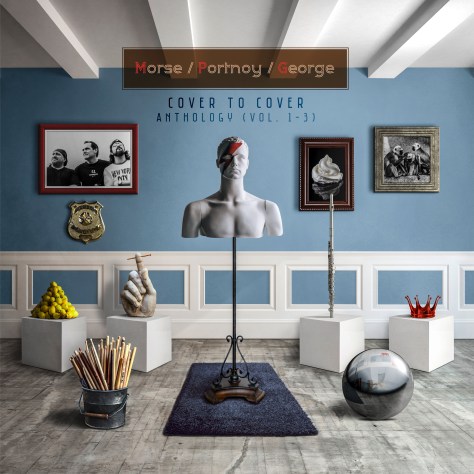
I think Neal Morse is one of the most exciting and important artists working in music today. Since his embrace of Christianity almost twenty years ago, he has stayed true to his faith while writing and performing some of the most thoughtful and original music in all of rock. However, his upcoming release, with long-time collaborators Randy George (bass) and Mike Portnoy (drums), is a collection of covers. It is the third album in their wonderfully fun Cover to Cover series, and Inside Out music is rereleasing the first two volumes with it in remastered form.
The new volume, Cov3r to Cov3r, features songs originally performed by Yes, Jethro Tull, David Bowie, Ringo Starr, Gerry Rafferty, Badfinger, King Crimson, Squeeze, Tom Petty, and Lenny Kravitz. While some are obvious hits (their version of Rafferty’s Baker Street is killer) others are deeper cuts, like Crimson’s One More Red Nightmare.
I had the pleasure of chatting with him on the phone while he was out walking with his daughter, enjoying a beautiful summer day in Tennessee.
Thanks for sharing a little of your time with me to discuss yours, Mike’s, and Randy’s new covers album! I think we’re pretty close to the same age, and if I made a massive mixtape of my favorite songs from high school and college, it would include every song on all three volumes of Cover to Cover. How do you all decide which songs to record?
Thanks! Mike loves to do covers, and he is the driving force behind most of these songs. The first two volumes are mostly bonus tracks from earlier albums. We’d finish an album, and the record company would ask us to do some songs for bonus tracks. We all love covers, because they are a wonderful way to blow off some steam after playing long and complicated prog tunes. If we’re on the road, and I’m doing a soundcheck, I can start playing some Zeppelin, and Mike will come running out of the dressing room to join in!
My favorite moment on the new album is pairing up Squeeze’s Black Coffee in Bed with Tempted. Whose idea was that?
That was mine – I used to play Black Coffee in Bed back in the ‘80s, along with Petty’s Running Down a Dream.
When I first heard the opening track, Yes’ “No Opportunity Necessary, No Experience Required”, I was wondering, “Who the heck is that singing?” Then I saw in the promo notes that it’s Jon Davison!
Yeah, we got together with him through playing Cruise to the Edge. When we looked at recording that song, I asked myself, “Can I sing this?”, and I realized there’s no way! So we were really glad Jon agreed to sing it.
I think I actually like your version of Baker Street better than the original. I’ve watched the video for it several times and I get chills when you play your guitar solo. Who is the mystery sax player?
Thanks, man! That’s Jim Hoke, a local Nashville musician. He also does a great job on One More Red Nightmare, which is one of my favorite King Crimson songs.
Listening to all three volumes, it sounds like the three of you just had a blast recording these songs. What was it like recording during a pandemic?
We actually finished our recording before the pandemic hit. Mike recorded the drums in November, I did my stuff in December, and we mixed it in December and January. My “pandemic album” is my upcoming album, Solo Gratia, which I’m really excited about.
Are there any plans for you, Mike, and Randy to do some shows in support of Cover to Cover?
Well, we are going to play a bunch of covers the first night at Morsefest this September. Because of the virus, we have to limit the number of people who can be there in person, but we are also streaming it live, and we have some cool online VIP events planned, like charades and other interactive games.
I have the original versions of the first 2 Cover to Covers, and I notice you’ve changed the track order on the reissues. Why?
They are? I didn’t know that. Ha ha! Mike must have done that. He is the man for figuring out what the best order of tracks should be for albums. It’s his gift, you know, and we figure, let him use it!
I think Randy George is an unsung hero of the bass. I’ve always wondered, how did you two first connect?
Oh, that’s an interesting story. He actually called me up – we had a mutual friend, and he asked me if I was interested in playing on a solo album of his. I think I was too busy at the time, and I put it off. Then I had just left Spock’s Beard, I think it was around 2002, and he said he was willing to work with me if I had any projects. He drove all the way from Seattle to Tennessee to audition for my Testimony album, and we’ve been together ever since.
After Cover to Cover Vol 1 -3 is released in July, what other projects are you getting ready to unleash on the world?
Well, MorseFest is coming up in September, there’s a new Transatlantic album coming out next year, and I’m working on the mixes for my Solo Gratia album.
What are you listening to these days?
Ah, let’s see… mostly the Solo Gratia mixes. I am also listening to the audiobook of Andy Stanley’s Irresistible. As far as music goes, I was listening to Pandora’s Neal Morse station, and a really cool Frost* song came up. I’m a big fan of them.
One last question – what role should Christian artists play in today’s culture?
Well, I think we should be pointing people toward the Lord. I want people to experience God through my music; I’m trying to express the glory of God’s heart.
Yeah, I’m glad you didn’t get stuck in the CCM ghetto; you’re taking your music to whomever will listen to it.
You know, the old saying is true – God will provide. He has given me some incredible music for Solo Gratia. I’m the performer, but God is the director. I’m like a piece of glass reflecting his love and glory.
Can I make a request for Volume 4 of Cover to Cover? Something by Jellyfish, and something from Joe Walsh!
Ha Ha! Yeah, I know there are a lot of people who are fans of them, so that might happen one day.
Well, thanks so much for taking the time to talk with me, Neal.
Sure! Take care!
Cover to Cover Volumes 1 – 3 will be released July 24, 2020 on Inside Out Music, on CD, vinyl, and digital formats.
I love “ambient”, “space”, or whatever you want to call that style of music that is primarily electronic and, well, spacey. That said, there’s a fine line between good space music and aural wallpaper. Too much of it is simply banal and trite with clichéd melodies performed on cheesy synths.
Brian Eno is generally considered one of the founders of space music, along with Vangelis, Steve Roach, Tangerine Dream, and others who worked in the 1970s and ’80s. There is a thriving ambient/space music scene today, as evidenced by such Spotify playlists as Atmospheric Calm.
In this post, I want to focus on one artist: Ulrich Schnauss. I first became aware of him when he joined England’s Engineers for their third album, in Praise of More. Intrigued by his effect on their shoegazey sound, I began investigating his solo work, and I was not disappointed. As a matter of fact, I can safely say I have listened to Schnauss’ new box set of his remastered first six albums more than anything else this year. (And what a year 2020 is turning out to be.)
Entitled Now Is A Timeless Present, it is a stunning collection of space, shoegaze, soaring pop, and electronica. Schnauss manages to consistently thread that needle necessary to keep the listener engaged and wanting more. Every album in it has its own identity, yet one can listen to it and understand how he has developed organically to become one of the finest practitioners of ambient working today.
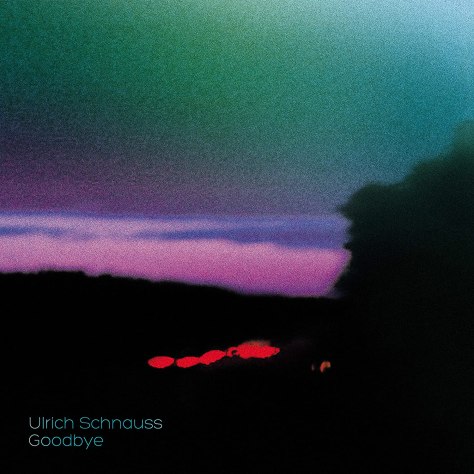
If I had to pick a favorite, it would be his third album, Goodbye, which features vocals that hover just outside the range of intelligibility, in the tradition of classic Cocteau Twins.
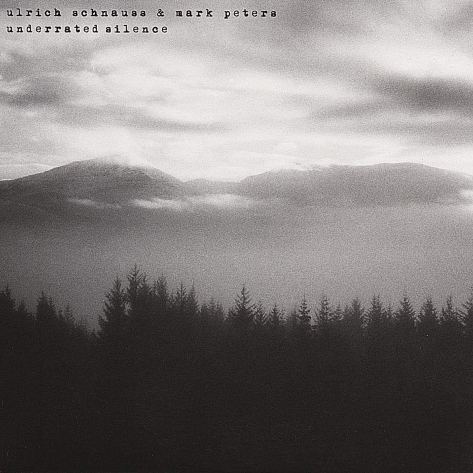
Schnauss has also collaborated with Engineers’ guitarist Mark Peters on two albums. I highly recommend their first, Underrated Silence.
He has also joined the latest iteration of Tangerine Dream, continuing that storied group’s career. His latest effort is another collaboration, this time with guitarist Jonas Munk, and it is also excellent. Entitled Passage, it features driving rhythms reminiscent of Tangerine Dream (no surprise there!) as well as beautiful melodies. I’ve posted the video for the opening track, Amaris, below.
If you want to hear more, I’ve put together a Spotify playlist of the tracks that I think are his best. The fact that it is almost 4 hours long indicates the consistently high quality of his music!
I have never before heard anything quite like this album. And since I first listened to it at a friend’s urging this past weekend, I find myself returning to it again and again. It resists description, yet compels a response; it’s utterly fresh but feels like it’s been around forever.
Working as a loose creative collective since the mid-1980s, Liverpool’s Revolutionary Army of the Infant Jesus have consistently pursued what they describe as “echoes of the sacred” in their work, striving to access a sonic space where transcendence can invade a stiflingly measured-out world. On their fourth album Songs of Yearning, they’ve discovered new room for rumors of glory to run, and the result is uniquely powerful, its resonance strikingly amplified by the shadows of doubt that now openly stalk our lives.
RAIJ’s music calls to mind much that I’ve heard and loved over the years — abstract soundscapes by Robert Fripp and Brian Eno; the “holy minimalism” of composers Arvo Pärt and Henryk Górecki; the sparse, charged post-rock Talk Talk found with Spirit of Eden and Laughing Stock, to name a few. But comparisons to other artists fall short of describing Songs of Yearning’s rich mix of reticent modesty and bold experiment. Dissecting the music into its component parts — a breathtaking gamut of sound sourced from liturgy, folksong, chamber music, pop & rock of all stripes, ambience, industrial noise, found dialogue and much more — won’t do the trick either. The only way to catch the breadth and depth of what’s here is to dive in:
Short and relatively direct as it is, “Celestine” unfolds the Revs’ approach with inviting clarity. The simple acoustic guitar pattern and the female vocal in French doubled by bells — they’re straightforward enough. But that flute — is it slightly out of tune, or carving out its own tonality? The acoustic bass and harmony vocals — how is it they sound now consonant, now dissonant, flickering in and out of sync by the second? And in the end, each layer goes its own way, ever so gently drifting apart harmonically and rhythmically, but still bound up in an organic, contemplative whole.
Thomas Munro, Srto his left “AMERICAN JOHNNY Robertson to his right the young boy is his nephew Jimmy Quigley 16 at the tjme.
Like most Highland natives, Auld Pop had a vague knowledge of a thing called barbecue, but had never actually eaten any. He was, however, intimately familiar with whisky. In fact from 1914-1933 he often made his own. I do not know and have no knowledge if he ever sold any of his poteen. I do know he used to say, “Prohibition? What’s that? No excise officer ever kept a Highland man from his dram.” “Does love make the world go around? Well aye, mon. “Strrruth! . But whisky maks it go around twice as fast. Aye! An’ gies a mon a sonsie gizz, aye! ThAAt’s a sonsie face – a jolly, smiling face!.
Thomas Munro, Sir AUGUST 1914
It’s Five O’clock. The soldiers were finally on leave from the Ypres Salient in 1915.
“Whisky is liquid sunshine,” said Robertson.
Munro said: “I hae always felt that distant train whistles heard in the dead of night are God’s way of letting us know the best days are fast runnin’ awa! .Time’s chariot is running by.
An’ the broken hairt it kens nae second spring again, though the weary warld dinna cease frae its greeting. Aye, we are a’ togither tonicht for a wee while. But the parting day is comin’. The whiskey, and romance eventually runs out and the night will soon turn to day. Aye. Ye are a leal n’ true mon, Johnny. You stood by me and Jimmy here in a very dark moment. You and the lads and the Dins- were willing to brave the shadows ‘ death. Medal o no’ yer the bravest mon o’ the Regiment. If Auld Port were here today, he wad understand.” Their Captain, Auld Port, had been killed a few days before on May 10, 1915. One of the finest and bravest men they ever knew and a fine officer.
“Aye”, said Johnny. “Aye,” said Jimmy Auld Pop said, “here’s a toast to the Ants and to Auld Port! TO AULD PORT! TO THE ANTS! they said. The Auts were the men of Company A, Argyll and Sutherland Highlanders. Many came from the St. Anthony’s parish in Govan.
It was dark that night in in the distance they could hear the thud of the German guns round Wipers (Ypres). Auld Port, Captain Dick MacDonald Porteous had led them in many a trench raid but would never do so again. That morning, as dawn broke Auld Port was killed. They told his parents it was a stray bullet. Auld Pop, who was there, said, “it was a Jairmen sniper for sure. Aye. “
He used to have conservations with his Argyll Squaddies, Jimmy Quigley and American Johnny Robertson. Hae ye a smoke?” he asked. “Aye!” said Johnny, ““Matches?” he asked. “Enough to burn Rome,” said Johnny. “Whiskey?” he said “Enough whiskey for the a river of pain, loss and sorrow For the Abhainn nam Manach itself -that’s the River Beauly for a Lallan laddie like ye, Johnny! “ “Are ye fou, Johnny lad? ” “No’ yet, Tommie!” “An’ ye, young Jimmy? “Chan eil fos tamuill beag Brathair mathair!” Johnny, and what’s That? I ken it’s yer mither-leed (language). Auld Pop: “He says, not for a little while yet, uncle!”“ Said Johnny To be or not to be, drunk on whisky, that is the question in the rright-true Saxon tongue. ( a distant train sounds its horn) Auld Pop grew thoughtful
May 1915 Lang Syne.
Lochaber No More (funerals for an Argyll. “LOCHABER NO MORE” that was known to be played during WW1 Military funerals with Gun Volley at specific parts of this tune.
Lyrics for “Lochaber No More” :
FAREWELL to Lochaber, farewell to the glen,
No more will he wander Lochaber again.
Lochaber no more! Lochaber no more!
The lad will return to Lochaber no more!
The trout will come back from the deeps of the sea,
The bird from the wilderness back to the tree,
Flowers to the mountain and tides to the shore, But he will return to Lochaber no more!
O why should the hills last, that never were young,
Unperishing stars in the heavens be hung;
Be constant the seasons, undrying the stream,
And he that was gallant be gone like a dream?
Brave songs will be singing in isles of the West,
But he will be silent who sang them the best; T
he dance will be waiting, the pipes will implore,
But he will return to Lochaber no more!
Child of the forest! profound is thy sleep,
The valley that loved thee awakes but to weep;
When our fires are rekindled at dawn of the morn,
Our griefs burn afresh, and our prayers are forlorn;
The night falls disconsolate, bringing no peace,
No hope for our dreams, for our sighs no release;
In vain come the true hearts and look from the door,
For thou wilt return to Lochaber no more!
Neil Munro
)
Argyll and Sutherland Highlander August 1914Making PoteenI can never forget the stories of Captain Dick MacDonald Porteous ASH a hero of 2nd Ypres (KIA May 10, 1915). He spoke fluent Spanish and French (he had been raised partially in Argentina and born in Dublin). “Port” the men called him. My grandfather said he was one of the finest men and bravest soldier he ever knew.
On Good Friday 2020, the Leipzig Bachfest presented a unique version of Bach’s St. John Passion in Bach’s home church, the Thomaskirche. It was a performance uncannily suited to these extraordinary times.
The actual Passion story will be performed by just three musicians. In this production, the Icelandic tenor Benedikt Kristjánsson tells the story of Jesus’ Passion on the basis of Bach’s Passion, taking on the role of the Evangelist and all the other characters – and also conducting the virtual choir. Harpsichordist Elina Albach and percussionist Philipp Lamprecht take the role of the orchestra. (Photo: Nino Halm).
All the viewers at home are invited to sing the chorales besides five singers in St. Thomas’ Church led by Thomaskantor Gotthold Schwarz, and the artists. Bach choirs who were invited to the 2020 Bachfest will be participating by video link.
At first, I found the idea of a chamber St. John Passion a bit disconcerting — like an unrealized idea of Emerson, Lake and Palmer, perhaps? But the Thomaskirche (with video inserts from the absent choirs) proved the perfect setting for the sparse instrumentation. And as the 90-minute work unwound, it became more and more moving; the musicianship, focus and dedication Kristjánsson, Albach and Lamprecht conjured up was inescapable — especially during a riveting version of the Passion’s finale. It brings me to tears every time I hear it, and this time was no exception:
Lord, let at last Thine angels come, To Abram’s bosom bear me home, That I may die unfearing; And in its narrow chamber keep My body safe in peaceful sleep Until Thy reappearing. And then from death awaken me, That these mine eyes with joy may see, O Son of God, Thy glorious face, My Savior and my fount of grace. Lord Jesus Christ, my prayer attend, my prayer attend, And I will praise Thee without end.
My suggestion: set aside an hour and a half today or tomorrow, hook up your computer or miscellaneous online device to a big screen and a good sound system, and let this powerful version of one of Bach’s greatest masterpieces rip. The stream is here; program (with the chorales printed out for singing) is here.
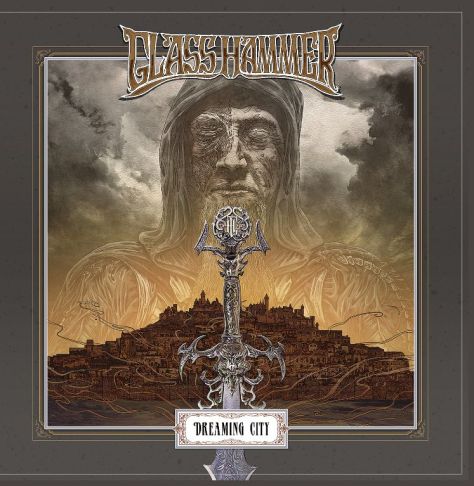
One thing I’ve learned in my eight years of being an avid Glass Hammer fan is to expect the unexpected. While every album of theirs is consistently excellent, there is not a consistent style that runs from their debut through to their latest offering, Dreaming City. So, I shouldn’t have been surprised at the onslaught of metal that greeted my ears when I cranked up the first track, The Dreaming City. Wait, is this the same group that gave us the light-hearted Chronomonaut last year? Yes, it is, and I like it. Actually, I love it! Under the massive guitar attack I can still hear Steve Babb’s melodic bass pounding away, and Fred Schendel’s keyboards providing bursts of furious punctuation.
The core group of Babb (lead vocals, bass), Schendel (guitars, vocals, keyboards), drummer Aaron Raulston, and singer Susie Bogdanowicz have augmented themselves with Reese Boyd (guitars, vocals), John Beagley (vocals), Brian Brewer (guitars), Joe Logan (vocals), James Byron Schoen (more guitar!), and Barry Seroff (flute). Dreaming City features the largest cast of contributors of any Glass Hammer album I am aware of, yet it doesn’t sound crowded or too busy. It’s a surprisingly lean production, with every instrument locked into the overall groove.
Dreaming City is the soundtrack to a very dark fantasy adventure, with the songs seamlessly flowing into each other, much like 2012’s Perilous. Our hero is a lowly thief, Skallagrim, who awakes in the land of Pagarna, ruled by an evil sorcerer who has kidnapped his love. While in the Dreaming City, he is surrounded by evil ones who want to kill him. At the last possible moment, a sword appears over his head, which he grasps and uses it to save himself.
The sword, named Terminus, is possessed by an angel who provides the hero strength and hope during his daunting quest to rescue his love:
“And the sword is hope that comes from without by divine design, not from within.”
I won’t relate any more of the story, but there is a wonderful twist to it at the end which took me by surprise.
Musically, this is one of the most diverse and satisfying set of songs Glass Hammer has blessed us with. They are brimming with confidence and invention, and every track is a delight to listen to. The aforementioned opener, The Dreaming City, is the heaviest thing GH has ever recorded, while The Lonely World is an aural dose of pure pop. The angelic-voiced Susie Bogdanowicz sings lead on the beautiful October Ballad, while the epic closing track, The Watchman On The Wall, is a glorious and triumphant song that recalls the heyday of Permanent Waves-era Rush.
I could rave about every single song, but I must single out Terminus for special praise. If Rush and The Alan Parsons Project had a love child, Terminus would be it. A propulsive beat and a fantastic synth line serve a hook-laden melody to combine for a compulsive listen. Other highlights include the atmospheric instrumental tracks, Threshold of Dreams and The Tower, both of which are reminiscent of classic Tangerine Dream. But, as I wrote, every single song is outstanding.
What is most impressive about Dreaming City is how all the tracks come together to create a most satisfying whole. This is an album to listen to in its entirety, as it tells the compelling tale of an unlikely hero thrust into a desperate quest to overcome evil, and in the process find hidden strength within himself – with a little divine assistance. In Babb’s words, “This is all about evil people robbing us of our joy – holding it hostage. There can be unfortunate episodes in life where that happens and you can barely even remember what “joy” was like – may even become resigned to the thought that you may never know it again in this life, but determine to look for it nonetheless. So this was an important story for me and I hope it brings encouragement to many.”
Dreaming City is an extraordinary and career-defining work from one of America’s finest rock groups, and I can’t wait to hear what unexpected delights they have in store for us in the future.
The Stunning Artwork for Love Over Fear, by Liz Saddington
It never fails – I post a “Best of 20_ _” list, and then up pops a masterpiece that I missed. That is the case with 2019 and Pendragon’s wonderful album, Love Over Fear. Ah well, better late than never, right?
Pendragon is a British prog band whose illustrious history stretches all the way back to 1978, when punk was all the rage, and prog was definitely not in vogue. Yet, despite wild swings in musical fashion, Pendragon has remained true to their vision, and they are all the more respected for it.
Nick Barrett (guitars, vocal, keyboards) is the one constant through the decades, and he writes all the songs on Love Over Fear. He is assisted by long-time bandmates Clive Nolan (keyboards) and Peter Gee (bass), as well as Jan Vincent Velazco (drums and percussion). A review copy of the album was in my DropBox, and I decided to give it a listen.
After five straight repeat listens, I ordered a hard copy. You won’t find them on Spotify, so if you want to hear this exceptionally fine album, support the band and order a copy for yourself at pendragon.mu.
What sets Love Over Fear apart from the embarrassment of riches that 2019 blessed prog fans with? First, the music. The first track, Everything, bursts forth from your speakers with all the exuberance of a Riding The Scree. Starfish and the Moon is a pensive piano-based ballad featuring a timeless melody and an airy guitar solo. Truth And Lies is a slow building, majestic song whose overdubbed acoustic guitars lulls the listener into a sense of languor until a wicked electric guitar solo takes over. 360 Degrees is the poppiest of the lot, with a hook (played on violin by Zoe Devenish) that lodges itself in your brain and won’t leave. If it had been released in 1982 (the year of C’mon Eileen), it would be a massive international hit single. Eternal Light is one of the most beautiful songs I have ever heard. It sends the listener up to the heights of heaven. Who Really Are We? is a viciously rocking track with a Kashmir-worthy guitar riff that crushes everything in its path. Heck, I could go on in a similar vein for every song on Love Over Fear. Every single track is exceptionally fine – I had a hard time getting through the album, because I kept hitting repeat.
Second, the words. After I had the actual CD in my hands, and I was able to peruse Barrett’s lyrics, I was blown away with his courage and vision. Love Over Fear is a cri de coeur against the current “cancel culture” that is having a reign of terror on social media, and a plea to learn from the wisdom previous generations accumulated through hard experience and suffering. Take these lines from Everything:
The spectrum is a lie
Love is the new hate
Hate is the new love
We’ve all been roundly deceived
And swallowed all the bait
Or how about these from Truth and Lies:
Farewell my trusted friends
These books they burn transcend
The hunger we have for the knowledge
For wisdom and the wise
Deeper and deeper down the rabbit hole
Deeper and deeper down the rabbit hole
The lie told often enough as sooth becomes the truth
And these from the centerpiece, Eternal Light:
Turn off that TV set and read a book instead
Read about the world and the universe
Don’t fill your snowflake head
With how beautiful I am
And, finally, from Who Really Are We?, a warning of the soft totalitarianism taking over the West:
The books of Solzhenitsyn
The wisdom of kings
Censored plays and words
And all that can bring
It seeks to divide us
While pretending to unite us
And neither they repented of their murders
And I see their gulag faces
Frozen to the floor
Love’s become the new hate’s become the new love
And therein lies the biggest deception of all
You can’t fight it
It’s the law
Nick Barrett is a 21st century prophet – proclaiming uncomfortable truths about our current culture. He is begging us to return to those thinkers who built civilization, and turn away from those who seek to tear it down. It doesn’t hurt that his jeremiad is wrapped in such appealing musical accompaniment. Love Over Fear isn’t one of the best albums of 2019; it is one of the best of the last decade. May love triumph over fear.
The Neal Morse Band has just released its document of last year’s Great Adventour, the tour in support of their The Great Adventure album. As usual, it is a generous package consisting of 2 CDs and 2 Blu-ray discs.
The Great Adventure is, in my opinion, the NMB’s best album so far, so I was eager to see the show they put on to showcase it. Live In Brno does not disappoint. They play the entire 2-CD album, and close with a spectacular Great Medley.
The show in Brno took place April 7, 2019, midway through their European tour, which followed a North American tour. There are signs of wear and tear on Neal’s voice, but he more than makes up for it with passion and emotion. It is interesting that as the NMB evolves, Neal has become somewhat less of a focal point in their live show, giving up many lead vocal spots to the incredibly talented Eric Gillette, as well as Bill Hubauer. That is fine with me, since Gillette has one of the finest voices in rock today. That said, this is definitely Neal’s production, as evidenced by his energetic moving about the stage, and his creative costume changes throughout the set. At various times he appears as a hooded mystery man, a ragged wanderer, a mad hatter, and other personae.
I’ve rarely seen a group of individuals lock together and perform as one coordinated unit the way Neal (keyboards, guitars, vocals), Randy George (bass), Bill Hubauer (keyboards, vocals), Eric Gillette (guitar, vocals), and the mighty Mike Portnoy (drums, vocals) do during this show. It really is amazing how tight and powerful they are on every single song.
And that is what makes The Great Adventure such an excellent album – the variety and high quality of every song. There is prog, metal, power pop, and balladry contained in this set, and the band successfully tackles these various styles with ease. The highlights are To The River, Hey Ho Let’s Go, Vanity Fair, The Great Despair, and A Love That Never Dies.
A Love That Never Dies is the final song, and as the audience joins with the band to sing the chorus it is a truly ecstatic moment. It’s no wonder Morse is visibly overcome with emotion.
The encore is a 25-minute medley of selections from every one of Neal’s albums beginning with Testimony and continuing through Similitude Of A Dream. What is clear is how consistently excellent Neal’s output has been since he began his solo career. He really hasn’t had a single clunker in his entire discography.
The Blu-ray video of the show is well-shot with lots of different perspectives of the stage. My only quibble is that the mix is a 2.0 stereo one. If an artist goes to the trouble of releasing something on Blu-ray, he should mix it to 5.1 channels.
The second Blu-ray has two almost hour-length videos documenting the North American and European tours with lots of behind-the-scenes footage. Interesting and fun, but not essential. It also includes the official music videos for I Got To Run, The Great Adventure, Welcome To The World, and The Great Despair.
Neal has released visual documents of practically every tour he has done, and The Great Adventour – Live In Brno 2019 is one of the best. Highly recommended for both the devoted fan and the curious.
The bard – singer, poet, truth teller. The one who expressed a community’s hopes, fears, and values in a form that everyone could immediately grasp and be inspired by. Every tribe needs someone who can remind them of their virtues and warn them of dangers. The prog tribe has a new bard, The Bardic Depths, comprised of Dave Bandana (music) and Brad Birzer (lyrics), with an all-star supporting cast of musicians.
Their eponymous debut album, The Bardic Depths, explores how vital true friendship is for people to survive in a fallen and dangerous world. It focuses on The Inklings, a group of 20th century British writers/philosophers/professors: J. R. R. Tolkien, C. S. Lewis, and Owen Barfield. They were survivors of The Great War – that cataclysmic conflict that signaled the end of liberal western civilization.
Our journey begins with the song “The Trenches” and a spoken excerpt from the memoir of a veteran (C. S. Lewis, maybe?) of The Great War. As Birzer reads the soldier’s account of the appalling conditions in the trenches, Bandana lays down a bed of ominous synthesizers. At the point where the soldier remembers the first time he heard a bullet whistle past his head, we are treated to a beautiful guitar solo by Kevin McCormick as various voices call out, “This is war!”
The ancient Greek poet Homer is the primal bard of western civilization, and Birzer’s lyrics make the connection to him explicit, as Bandana sings, “So this is what Odysseus felt/So this is what Leonidas felt…” and ending with “So, this is what Ronald [Tolkien] felt/This is what Jack [Lewis] felt/This is what Owen [Barfield] felt”.
In the second track, “Biting Coals”, we gather in a cozy pub with Tolkien, Lewis, and Barfield to “meet, smoke, and drink”, and wonder “Where is fair Albion/What has happened to the West?” This track evokes the best moments of classic Floyd, with strummed acoustic guitars, Bandana’s warm and intimate vocals, and majestic washes of synths. This is a wonderful song that never rushes the moment, allowing the listener to contemplate along with The Inklings if there is a way forward for civilized men when everything that was once certain and established is no longer.
Next up are the three central “Depths” songs: “Depths of Time”, “Depths of Imagination”, and “Depths of Soul”. “Depths of Time” is the longest track on the album at 12:35, and it is a standout. The first four and a half minutes feature a languid sax (Peter Jones, Camel/Tiger Moth Tales) gracefully soloing over some Vangelis-sounding synths. Once again, nothing is rushed – the music is allowed to develop at its own pace which increases the listener’s anticipation. That anticipation is well satisfied with the middle section, “The Flicker”, featuring a compulsively catchy and disco-y melody and beat. An edit of this section is the album’s first single, and it’s a great choice, rivaling the radio-friendly Alan Parsons Project at their ‘70s-era best.
“Depths of Imagination” celebrates the Inklings’ literary gifts, and how they bounced ideas off of each other to improve their art. “In brotherhood, we share and shape/In brotherhood, we hone and create.” Musically, this is a straightforward rocker, with a propulsive guitar riff and wicked synthesizer solo that captures the excitement of artists creating and collaborating.
“Depths of Soul” is a simple, almost creedal recitation of the Inklings’ faith in beauty, truth, and the excellent, and their efforts to bring them to light through their art: “There is a glass through which we see darkly/There is the spotless mirror/There is the Light/There is the reflection/Here is the shadow/But there is no nothingness/All moves with grace/Or it moves not at all.” Peter Jones returns with another excellent performance on sax, trading licks with Gareth Cole’s guitar. The melody is leavened with a little Floyd influence, especially in the final bars. Very tasty, indeed!
Which brings us to the final two tracks, “The End” and “Legacies”. “The End” chronicles the splintering of the Inklings’ brotherhood, and their recognition that human frailty is inescapable. “To the world we sang/To the world we spoke/To the world we enchanted/Yet, there is always frailty.” Bandana’s music perfectly complements the sentiments of the lyrics – he creates a hushed, delicate atmosphere through piano, cello, and flute. Of course, all good things on this earth must end, and the Inklings’ friendship was no exception. As Bandanna sings of the Inklings’ dissolution, there is palpable sadness and regret.
If The Bardic Depths closed with “The End”, it would leave the listener without any catharsis. Fortunately, we have “Legacies”, a celebration of the incredible literary legacies of Lewis and Tolkien. It’s hard to imagine a world without Lewis’ Chronicles of Narnia and Space Trilogy, let alone Tolkien’s Lord of the Rings. Even though their fiction was set in fantasy worlds, they used them to hold up a mirror to our own world and remind countless readers of eternal truths that must never be forgotten. In the dark ages of the 20th century, Lewis, Tolkien, and Barfield nurtured the flame of Christendom. The music is appropriately joyous, featuring lush vocal harmonies worthy of Big Big Train. Gareth Cole and Robin Armstrong (Cosmograf) both contribute stellar guitar work on this standout track.
The Bardic Depths is set for release on March 20, 2020, on Robin Armstrong’s new label, Gravity Dream. Dave Bandana is the primary musician/vocalist/composer, and it features an impressive lineup of artists from the world of prog rock including the aforementioned Kevin McCormick and Peter Jones, as well as Tim Gehrt on drums (Streets/Steve Walsh), Gareth Cole on guitar (Tom Slatter/Fractal Mirror), and the marvelous Paolo Limoli on various keyboards. Mr. Armstrong himself contributes keyboards, guitars and vocals. It’s a very impressive debut, full of atmospheric musical passages and inspiring lyrics. This is an album to savor slowly and with appreciation, like a sip of single-malt scotch. And just as with a fine scotch, it has all kinds of hints and complexities that reward repeated hearings. Fans of classic Pink Floyd, Alan Parsons Project, and Cosmograf should definitely snap this one up. Even though 2020 is just getting underway, The Bardic Depths is a contender for one of the best albums of the year.











 Spirit of Cecilia
You must be logged in to post a comment.